
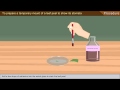
Guard Cells and Leaf Mounting Techniques

Interactive Video
•
Biology, Science, Chemistry
•
9th - 10th Grade
•
Practice Problem
•
Hard

Patricia Brown
FREE Resource
Read more
9 questions
Show all answers
1.
MULTIPLE CHOICE QUESTION
30 sec • 1 pt
What is the primary purpose of preparing a temporary mount of a leaf peel?
To study the leaf's stomata
To identify the leaf's species
To observe the leaf's color
To measure the leaf's thickness
2.
MULTIPLE CHOICE QUESTION
30 sec • 1 pt
Which part of the leaf is essential for obtaining the peel?
Upper epidermis
Lower epidermis
Leaf margin
Leaf vein
3.
MULTIPLE CHOICE QUESTION
30 sec • 1 pt
What is the role of saffron solution in the preparation process?
To preserve the leaf peel
To dry the leaf peel
To stain the leaf peel
To clean the leaf peel
4.
MULTIPLE CHOICE QUESTION
30 sec • 1 pt
Why is glycerin used when mounting the leaf peel on a slide?
To prevent the peel from drying
To dissolve the peel
To make the peel thicker
To enhance the peel's color
5.
MULTIPLE CHOICE QUESTION
30 sec • 1 pt
What is the correct angle to place the cover slip on the slide?
60 degrees
30 degrees
45 degrees
90 degrees
6.
MULTIPLE CHOICE QUESTION
30 sec • 1 pt
What should be avoided when placing the cover slip on the slide?
Using too much glycerin
Folding the peel
Using a stained peel
Using a dry slide
7.
MULTIPLE CHOICE QUESTION
30 sec • 1 pt
What is the structure of the epidermis as observed under the microscope?
Randomly arranged cells
Uniseriate layers of cells
No distinct cell walls
Multilayered cells
Access all questions and much more by creating a free account
Create resources
Host any resource
Get auto-graded reports

Continue with Google

Continue with Email

Continue with Microsoft
or continue with

%20(1).png)
Apple

Others
Already have an account?

