
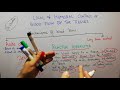
Vasodilation and Blood Flow Regulation

Interactive Video
•
Biology
•
9th - 10th Grade
•
Practice Problem
•
Hard

Patricia Brown
FREE Resource
Read more
10 questions
Show all answers
1.
MULTIPLE CHOICE QUESTION
30 sec • 1 pt
What is reactive hyperemia?
An increase in blood flow after a blockage is removed
A decrease in blood flow after a blockage
A constant blood flow regardless of blockages
A decrease in blood flow due to vasodilation
2.
MULTIPLE CHOICE QUESTION
30 sec • 1 pt
How much can blood flow increase after a blockage is removed?
Ten times
Four to seven times
It remains the same
Two to three times
3.
MULTIPLE CHOICE QUESTION
30 sec • 1 pt
What factors are set into motion due to lack of blood flow?
Decreased metabolism
Vasodilation
Increased heart rate
Vasoconstriction
4.
MULTIPLE CHOICE QUESTION
30 sec • 1 pt
Which substances are released to cause vasodilation?
Iron and zinc ions
Chloride and magnesium ions
Calcium and sodium ions
Adenosine and potassium ions
5.
MULTIPLE CHOICE QUESTION
30 sec • 1 pt
What role does oxygen deficiency play in reactive hyperemia?
It leads to vasodilation
It increases blood pressure
It has no effect
It causes vasoconstriction
6.
MULTIPLE CHOICE QUESTION
30 sec • 1 pt
How does reactive hyperemia compensate for blocked oxygen?
By decreasing blood flow
By reducing nutrient supply
By increasing blood flow
By maintaining the same blood flow
7.
MULTIPLE CHOICE QUESTION
30 sec • 1 pt
What is the purpose of acute control mechanisms?
To increase heart rate
To maintain constant blood flow
To quickly adjust blood flow
To decrease blood flow
Access all questions and much more by creating a free account
Create resources
Host any resource
Get auto-graded reports

Continue with Google

Continue with Email

Continue with Classlink

Continue with Clever
or continue with

Microsoft
%20(1).png)
Apple

Others
Already have an account?

