
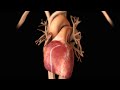
Understanding Arrhythmias and Heart Health

Interactive Video
•
Biology
•
9th - 10th Grade
•
Practice Problem
•
Hard

Patricia Brown
FREE Resource
Read more
10 questions
Show all answers
1.
MULTIPLE CHOICE QUESTION
30 sec • 1 pt
What is the normal range for heartbeats per minute in a resting adult?
100 to 120 beats per minute
60 to 100 beats per minute
120 to 140 beats per minute
40 to 60 beats per minute
2.
MULTIPLE CHOICE QUESTION
30 sec • 1 pt
What is the primary function of the cardiac conduction system?
To control the speed and rhythm of each heartbeat
To pump blood through the body
To filter oxygen from the blood
To regulate blood pressure
3.
MULTIPLE CHOICE QUESTION
30 sec • 1 pt
Which of the following is a type of arrhythmia characterized by a fast heartbeat?
Bradycardia
Tachycardia
Atrial flutter
Ventricular fibrillation
4.
MULTIPLE CHOICE QUESTION
30 sec • 1 pt
What is the most common type of arrhythmia?
Ventricular fibrillation
Atrial fibrillation
Supraventricular tachycardia
Atrial flutter
5.
MULTIPLE CHOICE QUESTION
30 sec • 1 pt
In which type of arrhythmia do the ventricles quiver instead of beating?
Focal atrial tachycardia
Supraventricular tachycardia
Ventricular fibrillation
Atrial fibrillation
6.
MULTIPLE CHOICE QUESTION
30 sec • 1 pt
What can cause a slow heartbeat in bradycardia?
Excessive exercise
Problems with the SA node
Increased oxygen levels
High blood pressure
7.
MULTIPLE CHOICE QUESTION
30 sec • 1 pt
What is a potential consequence of a slow heartbeat?
Insufficient oxygen-rich blood supply
Excessive oxygen supply
Rapid heart rate
Increased blood pressure
Access all questions and much more by creating a free account
Create resources
Host any resource
Get auto-graded reports

Continue with Google

Continue with Email

Continue with Classlink

Continue with Clever
or continue with

Microsoft
%20(1).png)
Apple

Others
Already have an account?

