
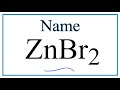
Zinc Compounds and Naming Conventions

Interactive Video
•
Chemistry
•
9th - 10th Grade
•
Practice Problem
•
Hard

Sophia Harris
FREE Resource
Read more
9 questions
Show all answers
1.
MULTIPLE CHOICE QUESTION
30 sec • 1 pt
What type of compound is ZnBr2?
Binary ionic compound
Covalent compound
Metallic compound
Ternary compound
2.
MULTIPLE CHOICE QUESTION
30 sec • 1 pt
What is the first step in naming ZnBr2?
Identify the non-metal
Write the name of the metal
Determine the charge of the metal
Find the electronegativity difference
3.
MULTIPLE CHOICE QUESTION
30 sec • 1 pt
How is the non-metal name modified in ZnBr2?
Replace the ending with 'ide'
Add 'ite' to the end
Add 'ate' to the end
Keep the original name
4.
MULTIPLE CHOICE QUESTION
30 sec • 1 pt
What is the official IUPAC name for ZnBr2?
Zinc dibromide
Zinc bromide
Zinc bromite
Zinc bromate
5.
MULTIPLE CHOICE QUESTION
30 sec • 1 pt
Why might ZnBr2 sometimes be called zinc dibromide?
It's a historical name
It's a common naming mistake
Because it contains two bromine atoms
Due to its covalent character
6.
MULTIPLE CHOICE QUESTION
30 sec • 1 pt
Why doesn't zinc require a Roman numeral in its name?
Zinc is a non-metal
Zinc has multiple oxidation states
Zinc always has a +2 charge
Zinc is not a transition metal
7.
MULTIPLE CHOICE QUESTION
30 sec • 1 pt
What is unique about zinc compared to other transition metals?
It is not found on the periodic table
It is always found in nature
It always has a +2 ionic charge
It has a variable charge
Access all questions and much more by creating a free account
Create resources
Host any resource
Get auto-graded reports

Continue with Google

Continue with Email

Continue with Classlink

Continue with Clever
or continue with

Microsoft
%20(1).png)
Apple

Others
Already have an account?

