Free Printable Accuracy and Precision Worksheets for Year 12
Wayground's free Year 12 accuracy and precision worksheets provide comprehensive printables and practice problems with answer keys to help students master the fundamental differences between precise and accurate measurements in scientific contexts.
Explore printable Accuracy and Precision worksheets for Year 12
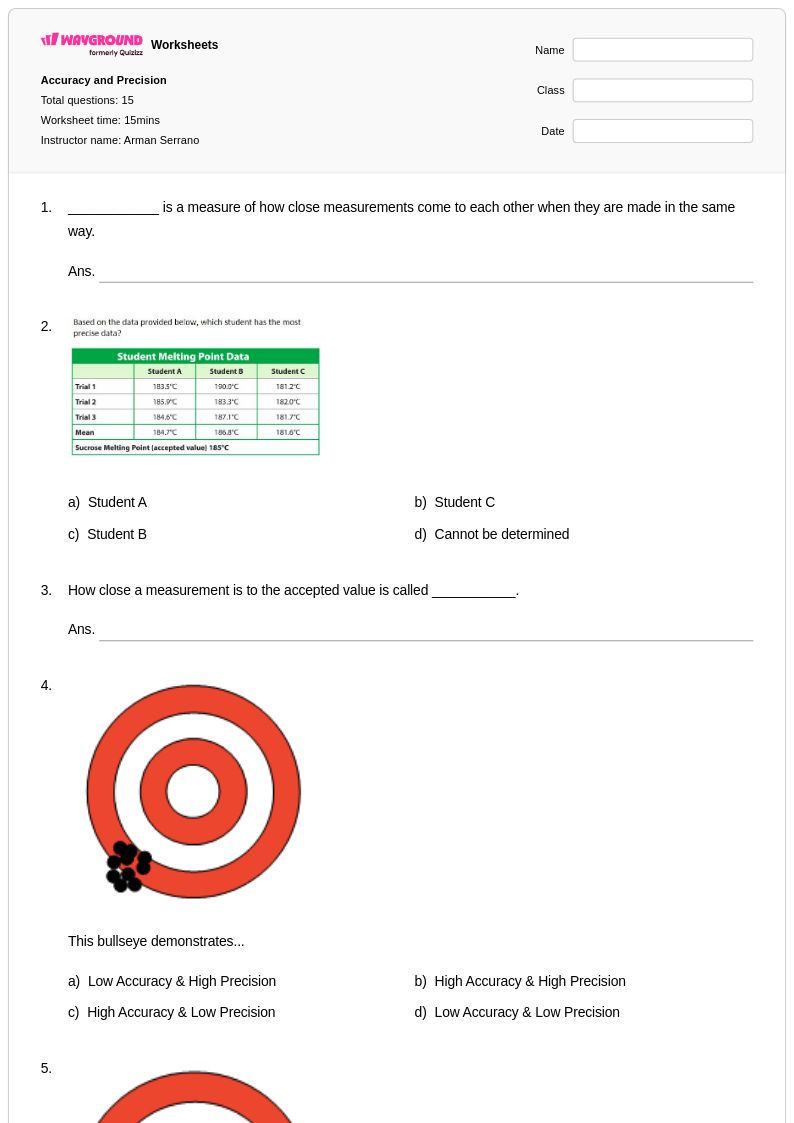
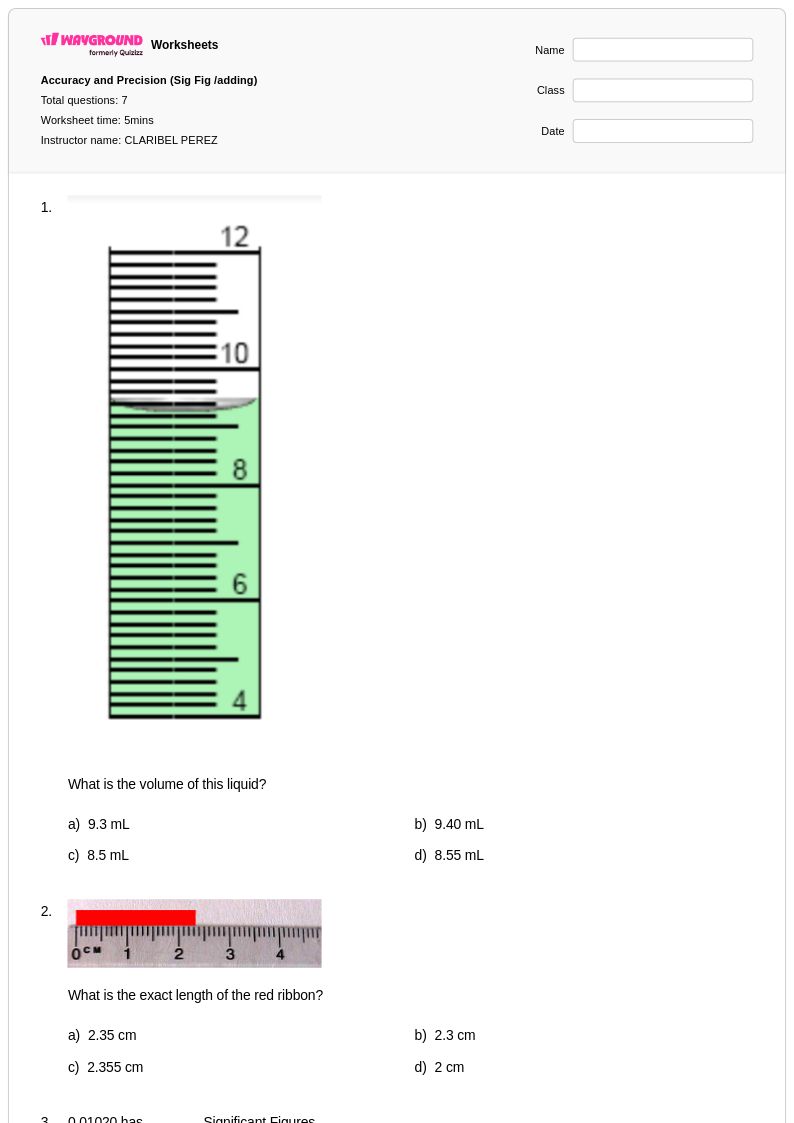
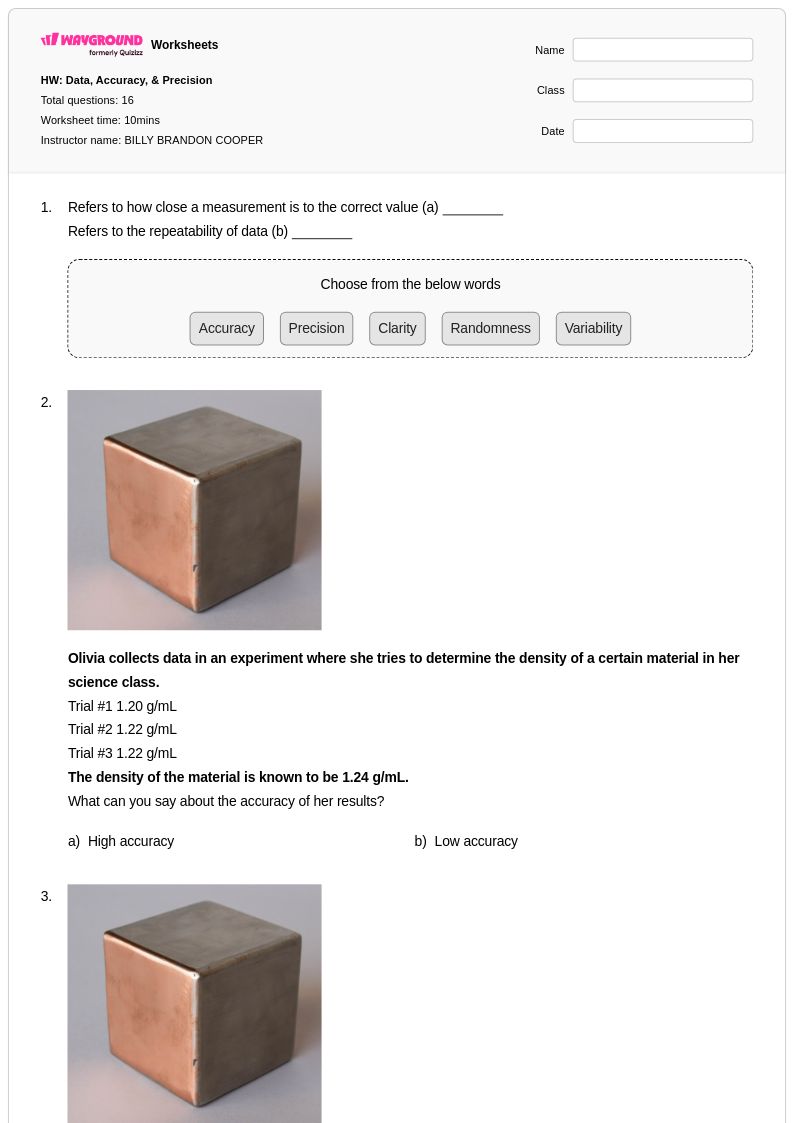
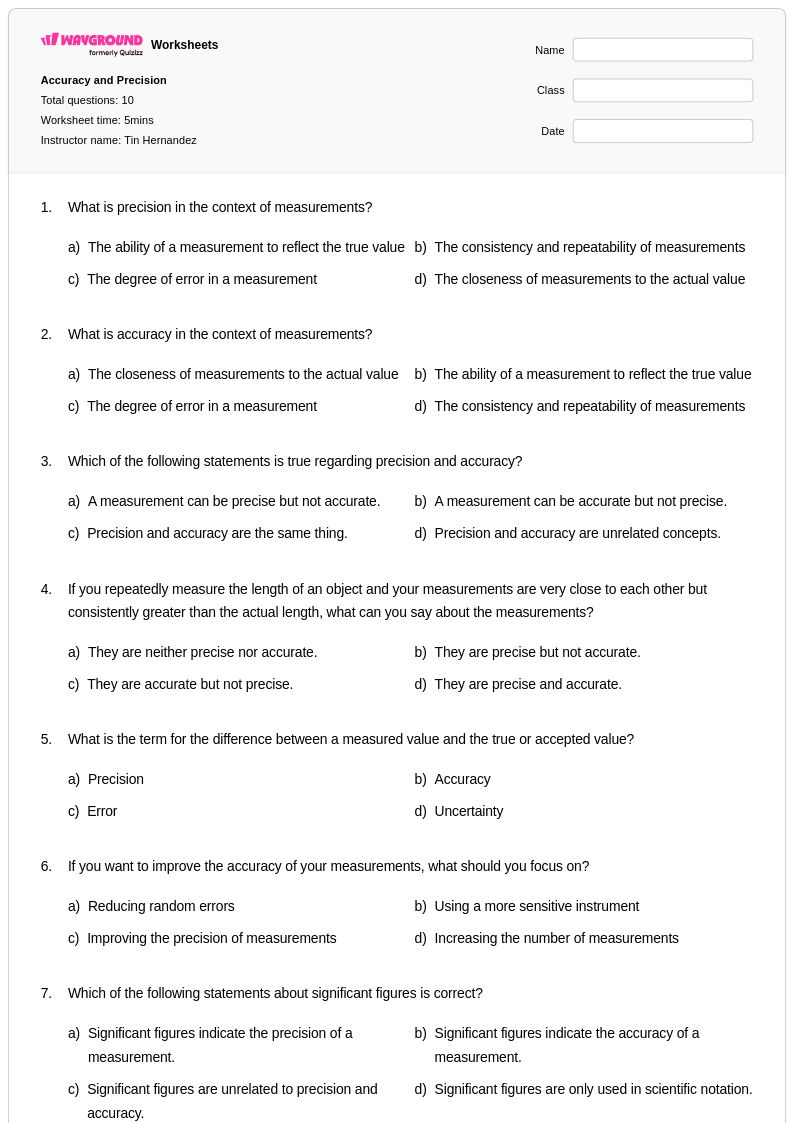
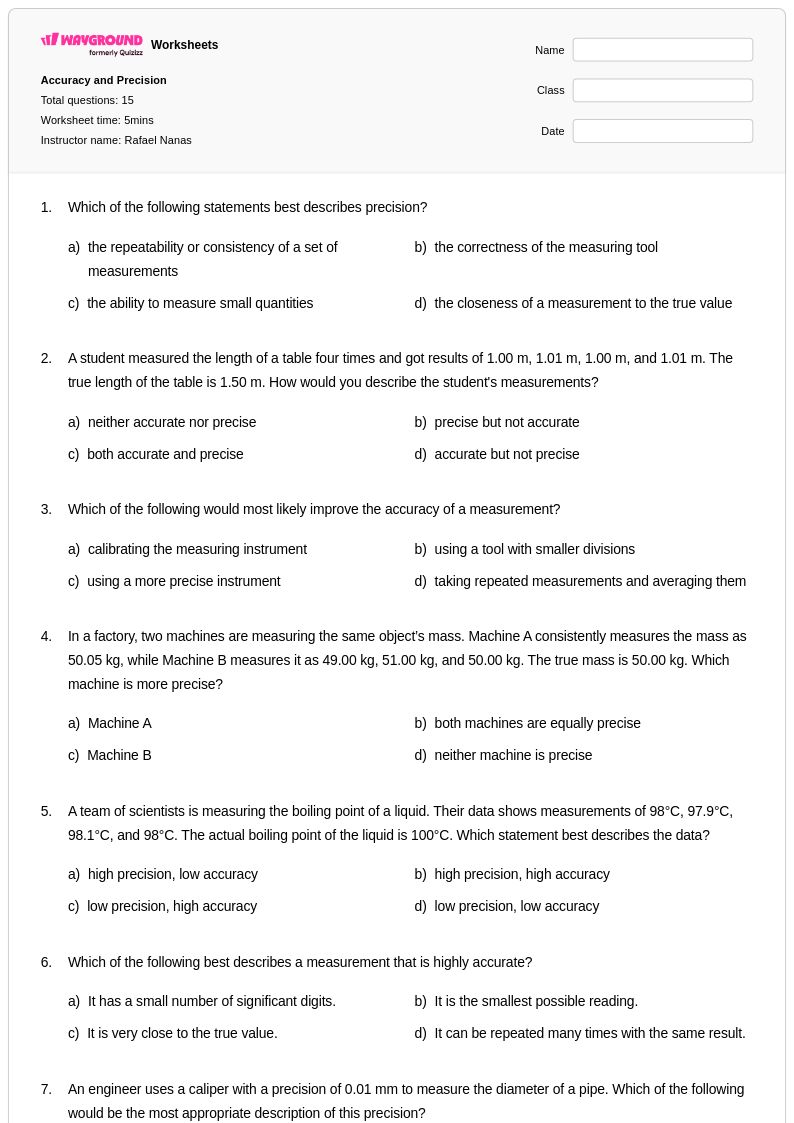
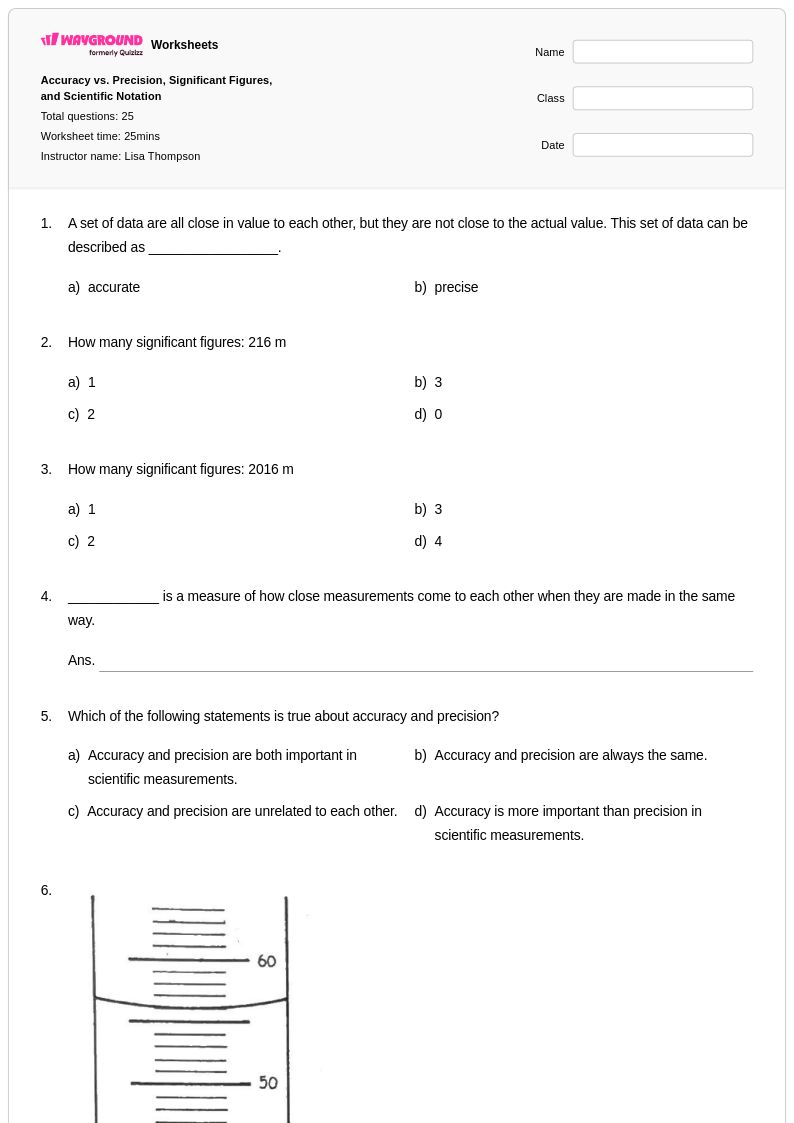
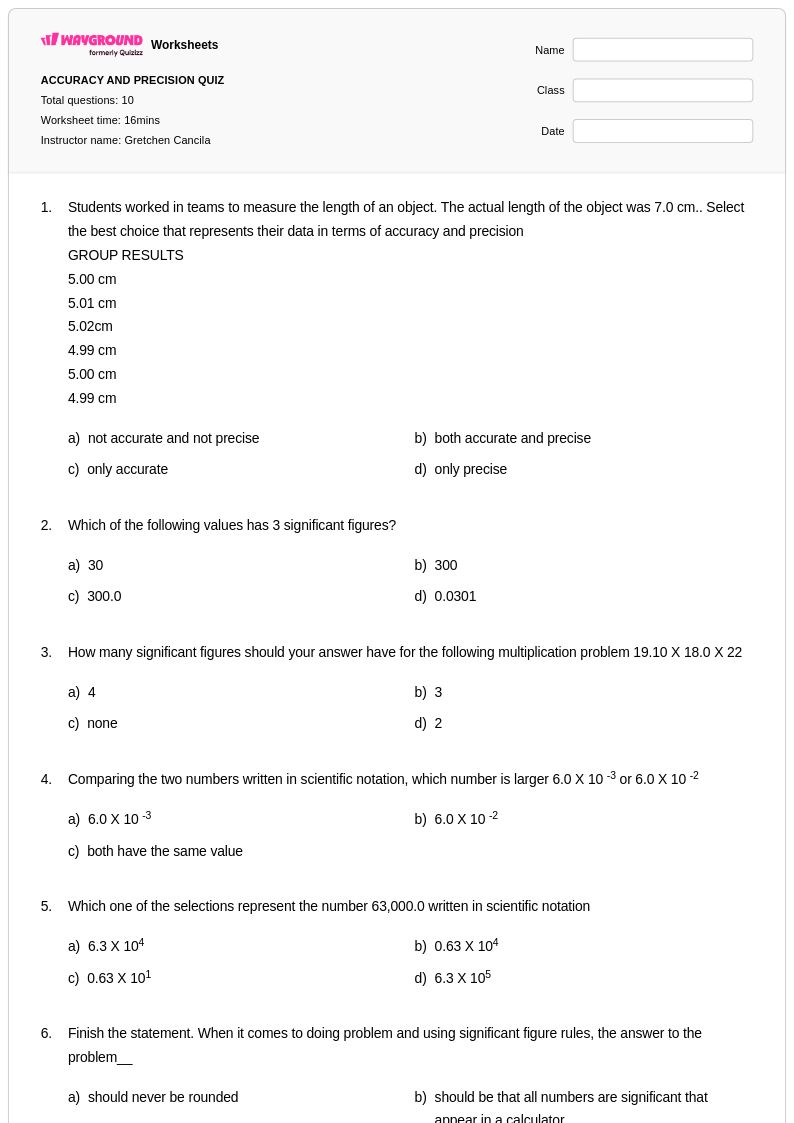
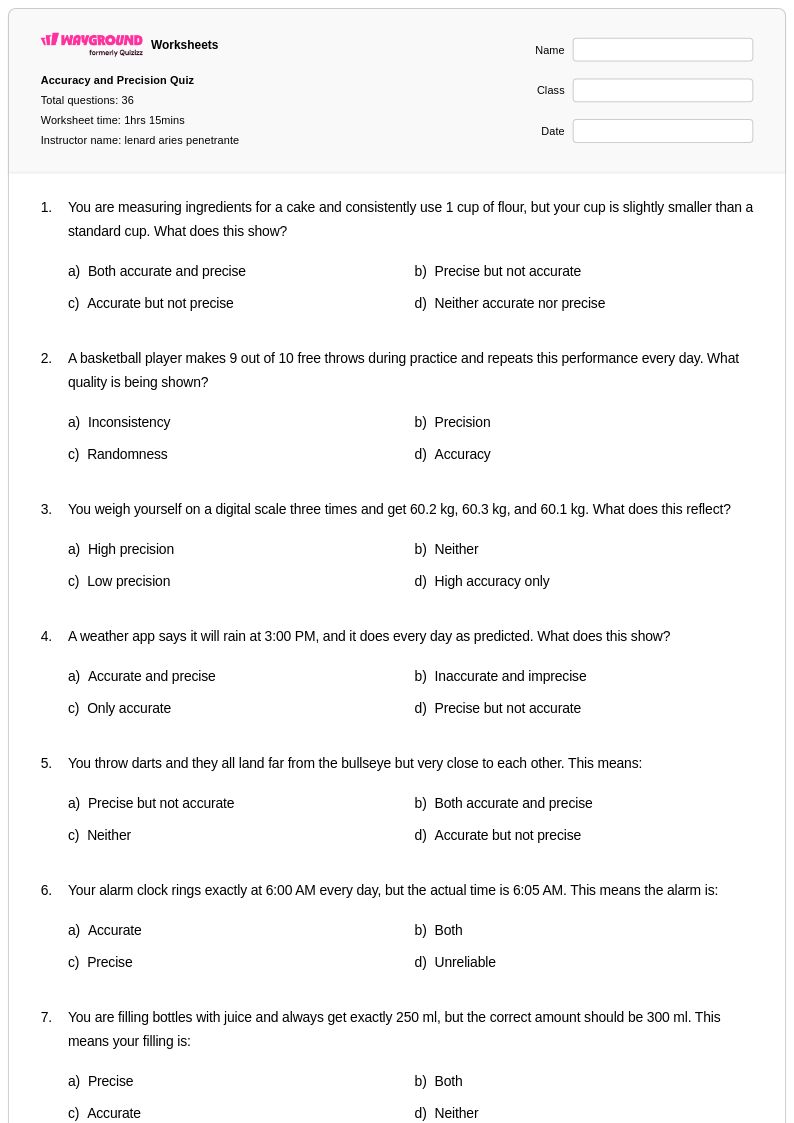
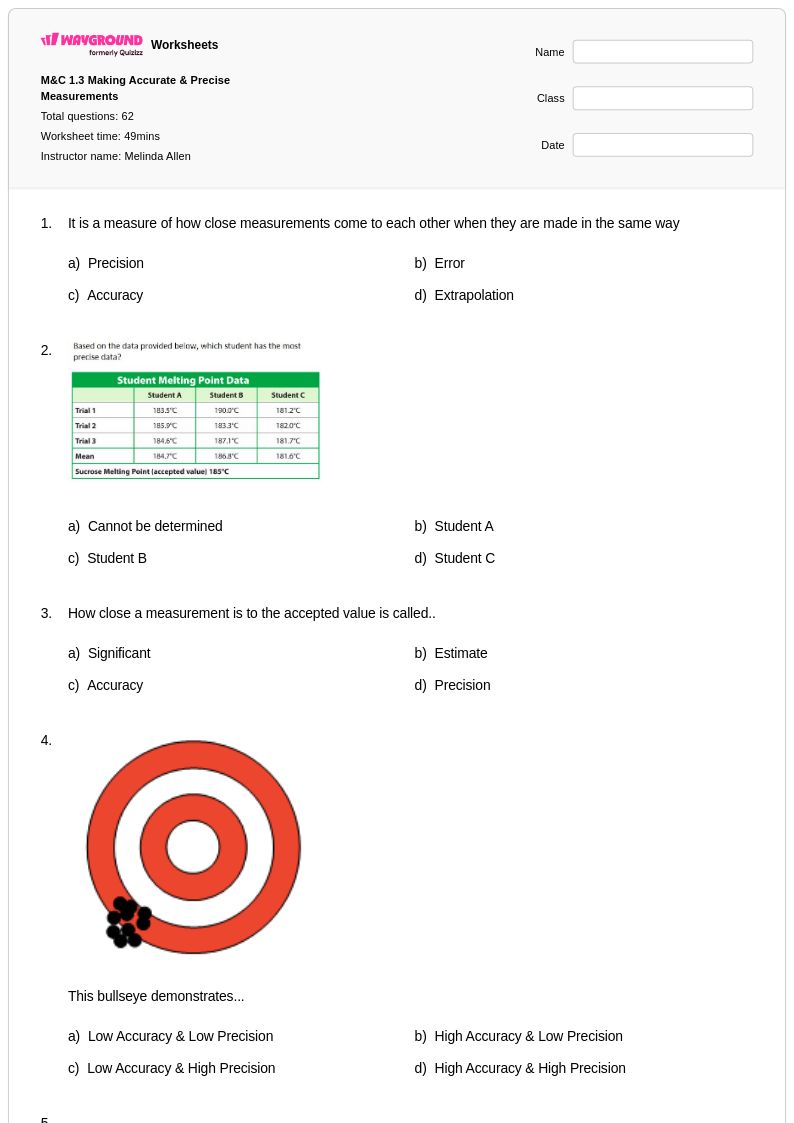
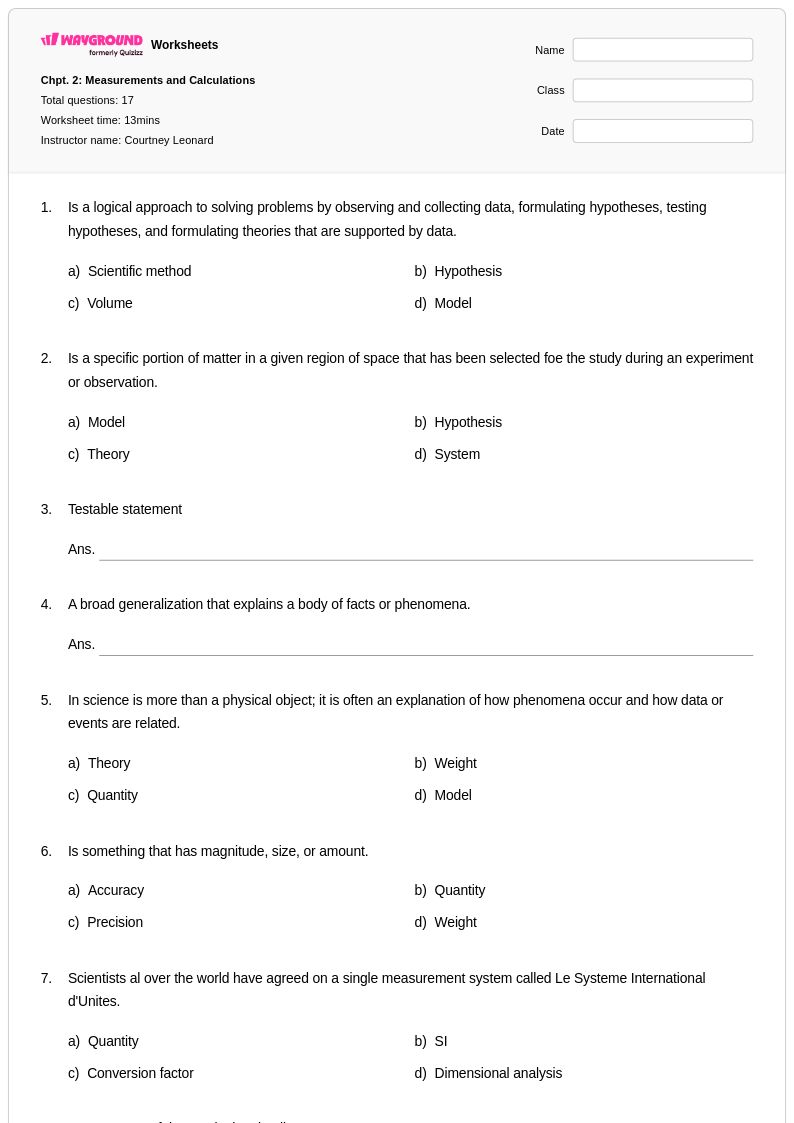
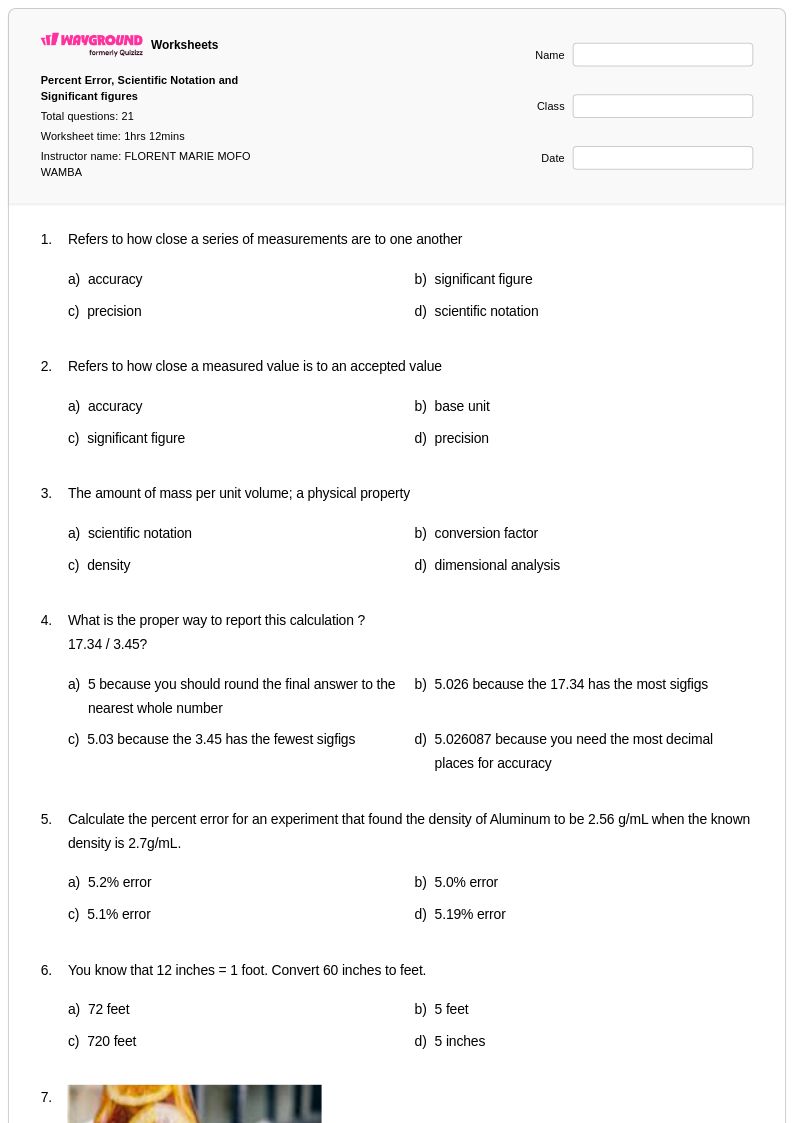
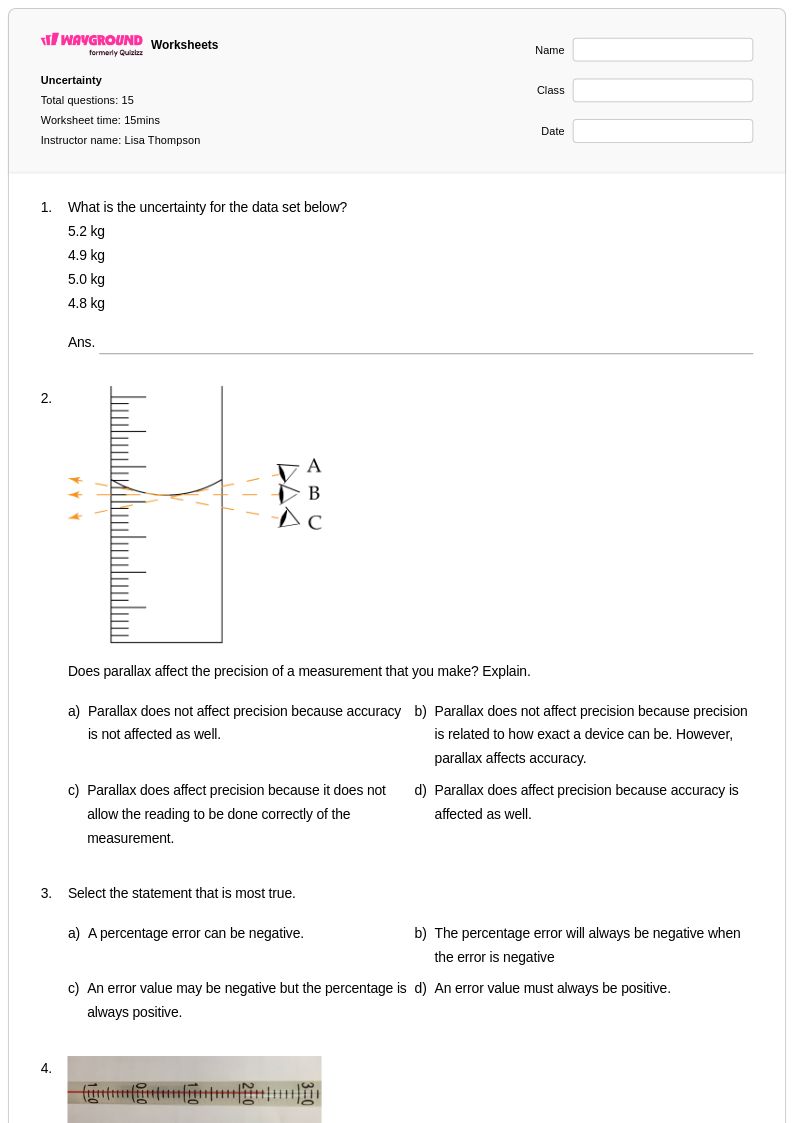
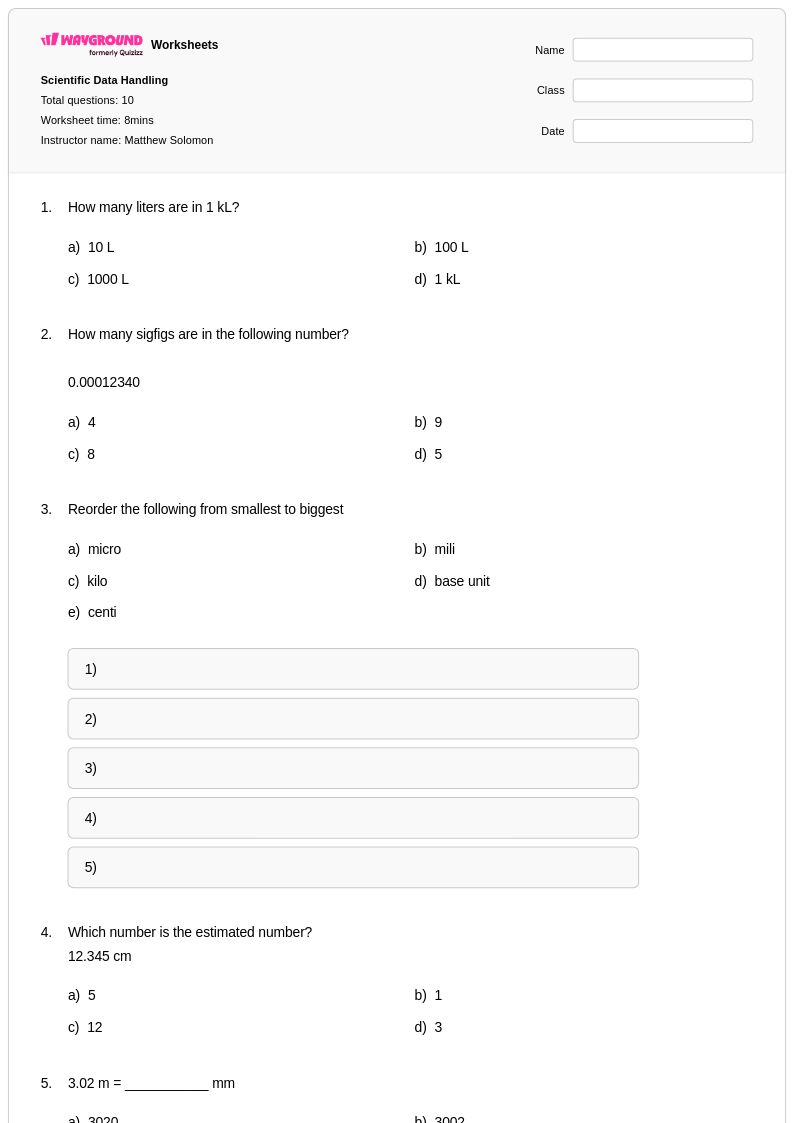
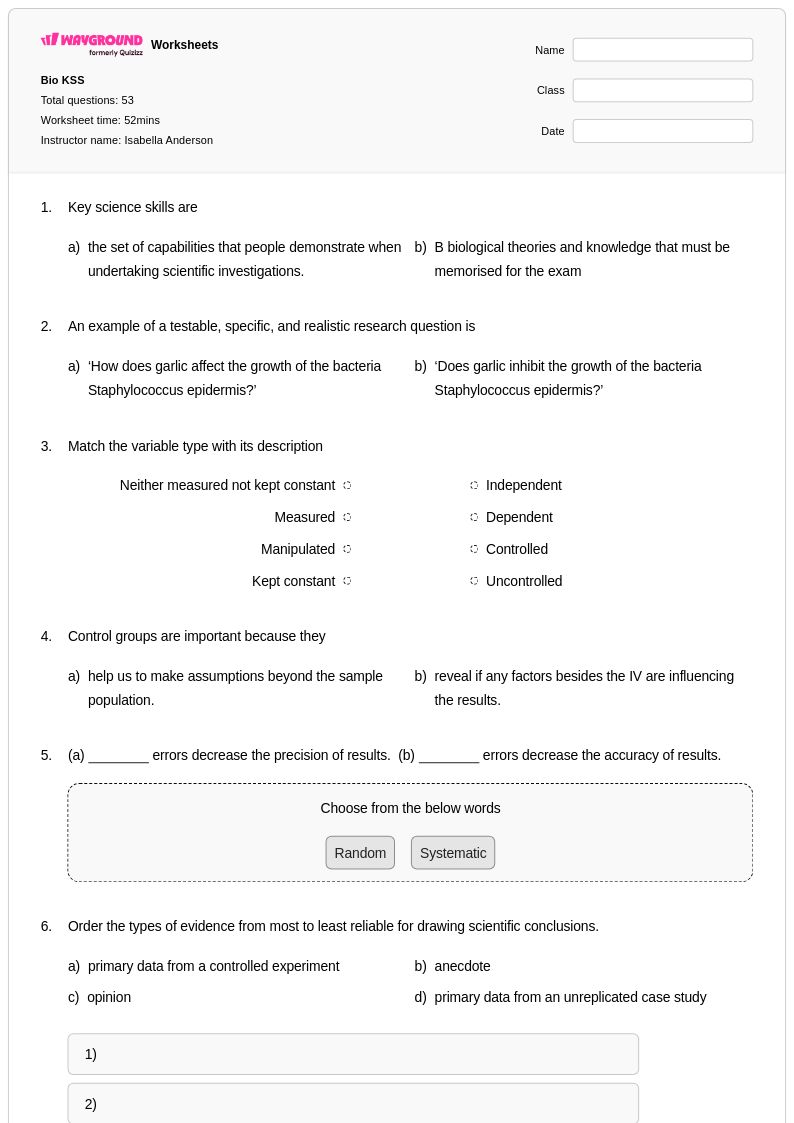
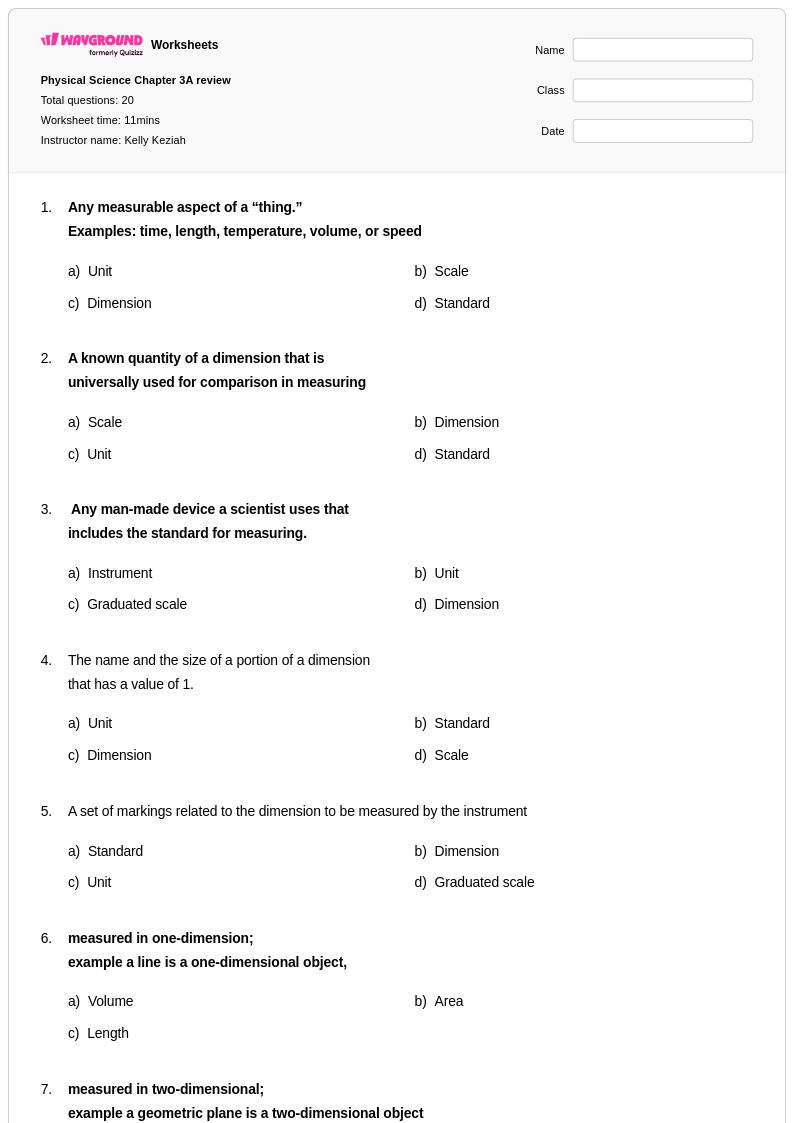
Accuracy and precision worksheets for Year 12 science students available through Wayground provide essential practice in distinguishing between these fundamental measurement concepts that are critical for advanced scientific analysis. These comprehensive worksheets strengthen students' ability to evaluate experimental data quality, calculate statistical measures of reliability, and interpret measurement uncertainty in laboratory settings. Students work through practice problems that require them to analyze data sets, determine which measurements are accurate versus precise, and calculate percent error and standard deviation. Each worksheet includes detailed answer keys that guide students through proper analytical techniques, and these free printables serve as valuable resources for both classroom instruction and independent study.
Wayground's extensive collection of teacher-created accuracy and precision worksheets offers educators access to millions of high-quality resources specifically designed to support Year 12 science curriculum objectives. The platform's advanced search and filtering capabilities allow teachers to quickly locate materials that align with specific learning standards and match their students' skill levels, while built-in differentiation tools enable customization for diverse learning needs. These worksheets are available in both printable pdf format and interactive digital versions, providing flexibility for various teaching environments and student preferences. Teachers can effectively use these resources for lesson planning, targeted remediation of measurement concepts, enrichment activities for advanced learners, and systematic skill practice that prepares students for college-level laboratory work and standardized assessments.
FAQs
How do I teach accuracy and precision in science class?
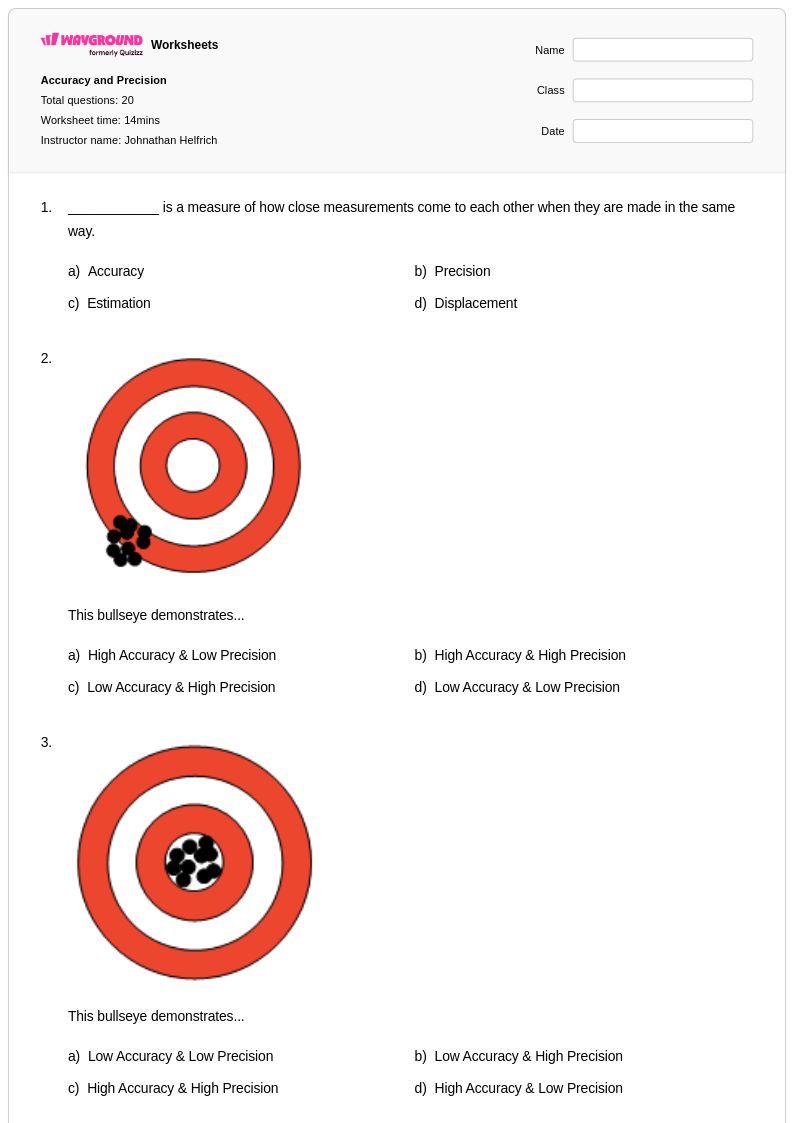
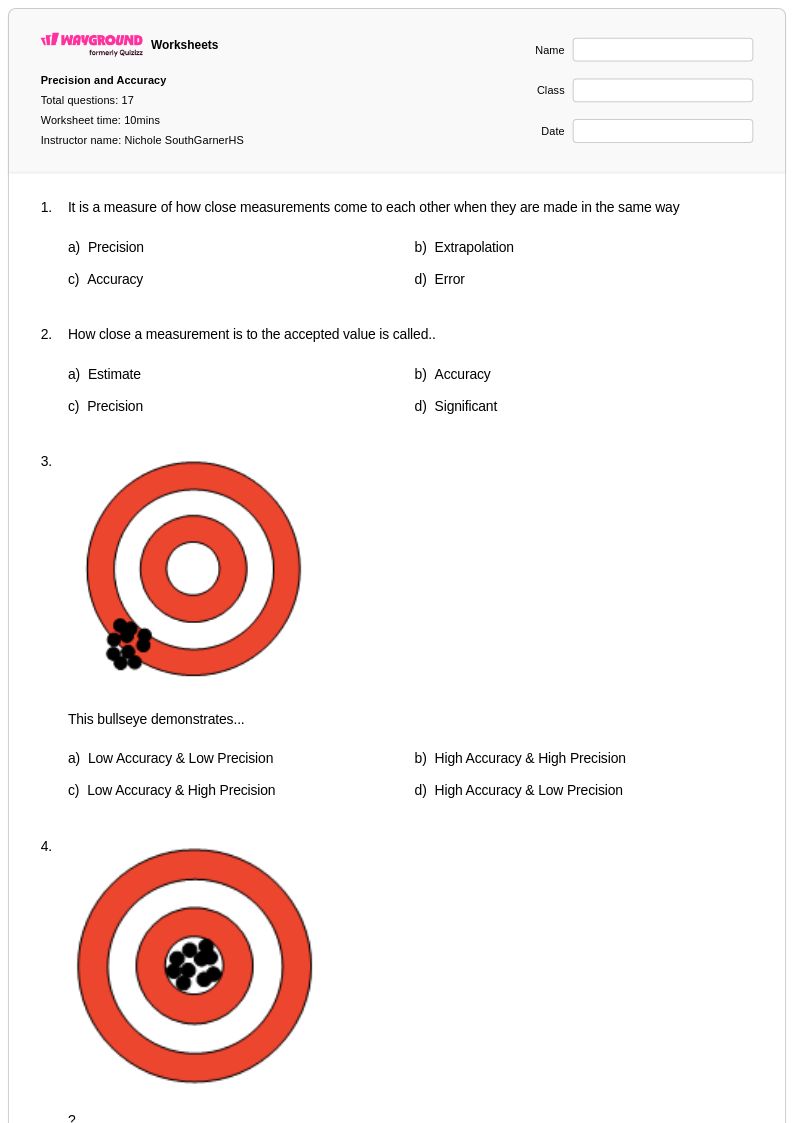
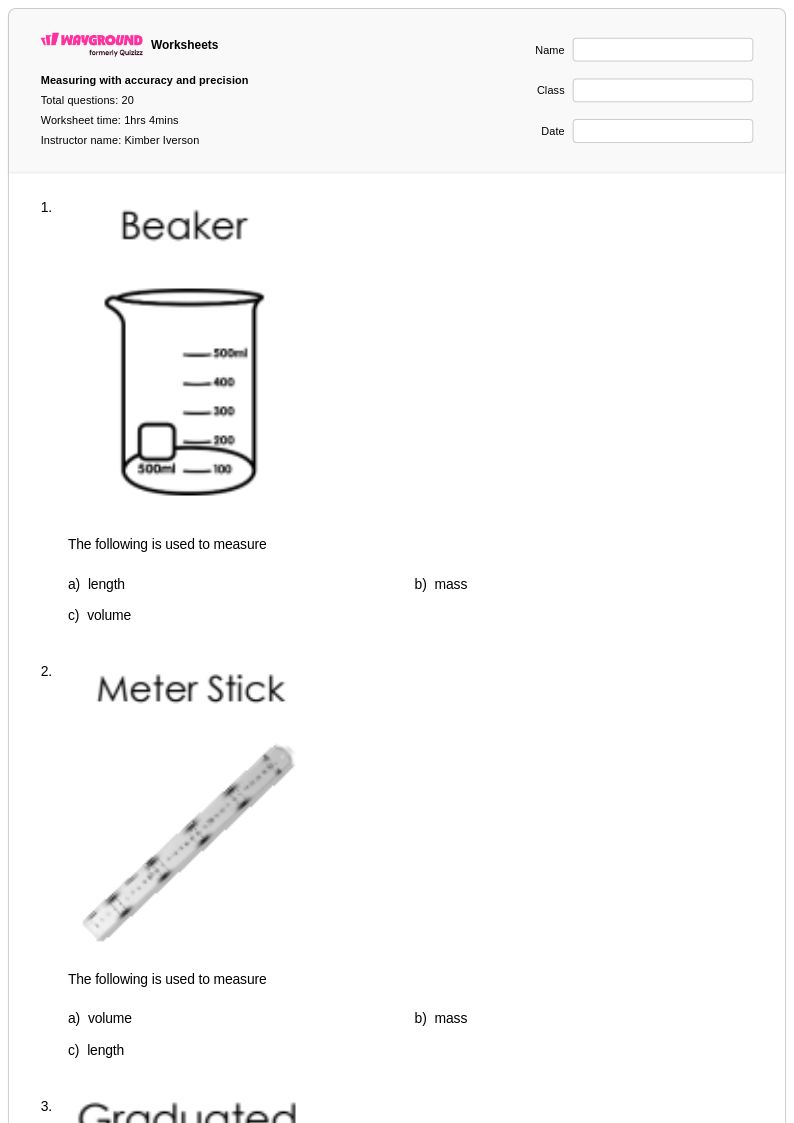
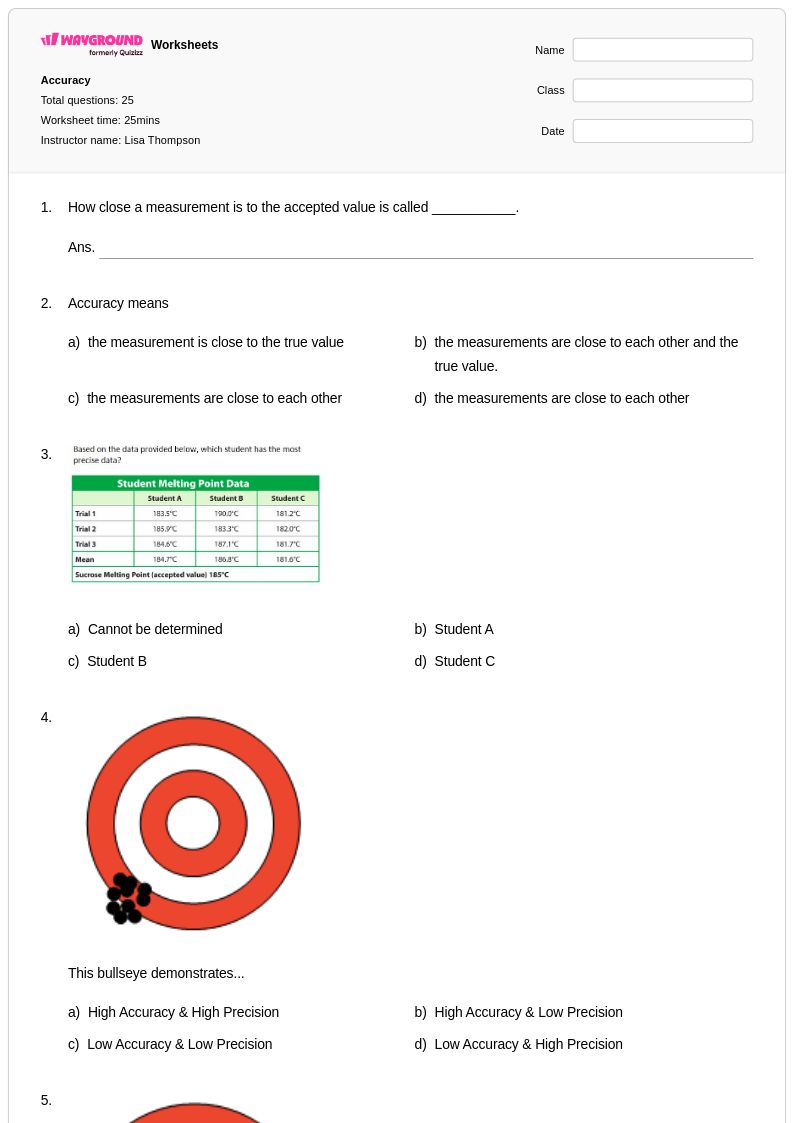
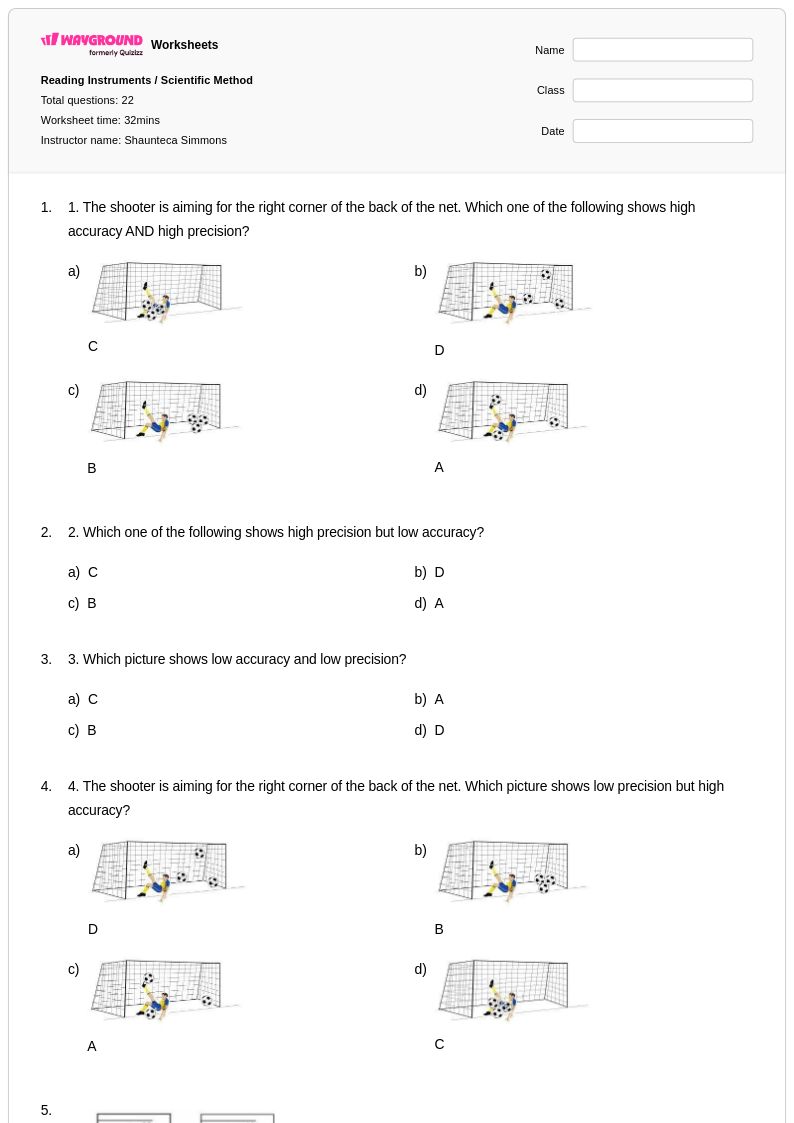
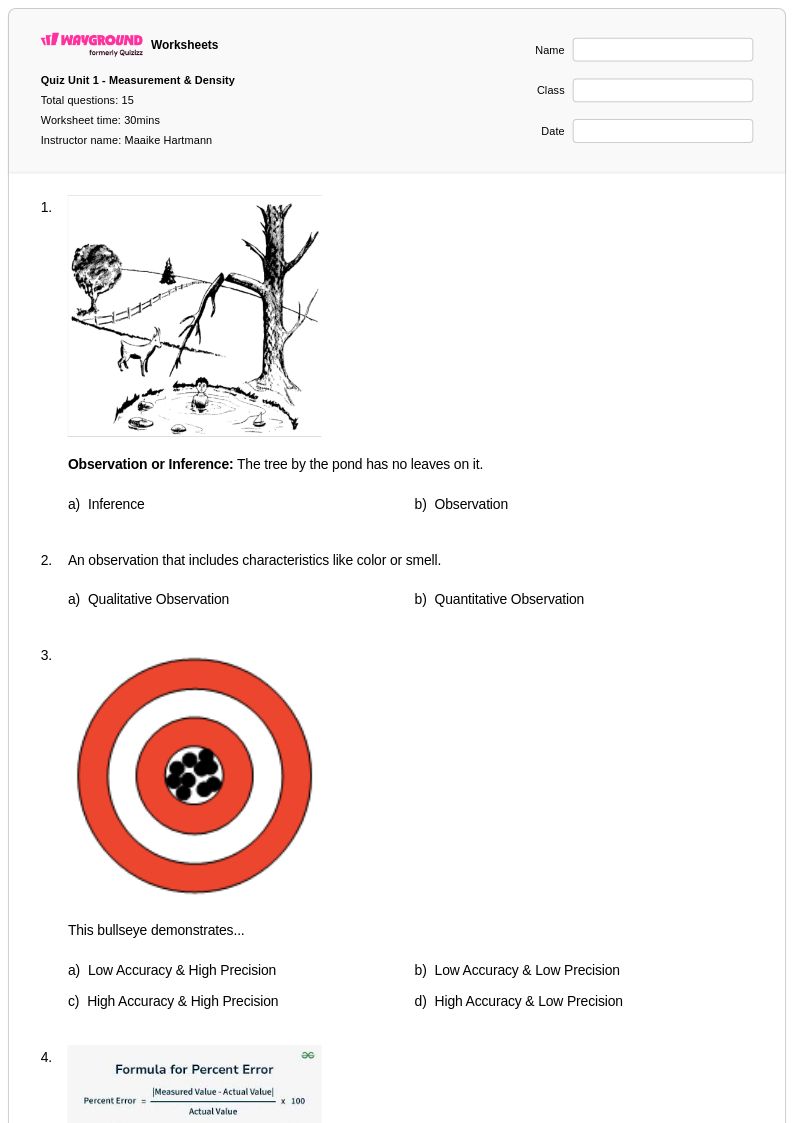
Start by using a concrete analogy such as a dartboard: a cluster of darts close together but far from the bullseye illustrates precision without accuracy, while darts spread around the bullseye illustrate accuracy without precision. From there, introduce measurement scenarios using laboratory tools like rulers, balances, and graduated cylinders so students connect the concepts to real lab practice. Explicit comparison of multiple data sets helps students internalize the distinction before they apply it independently.
What exercises help students practice accuracy and precision?
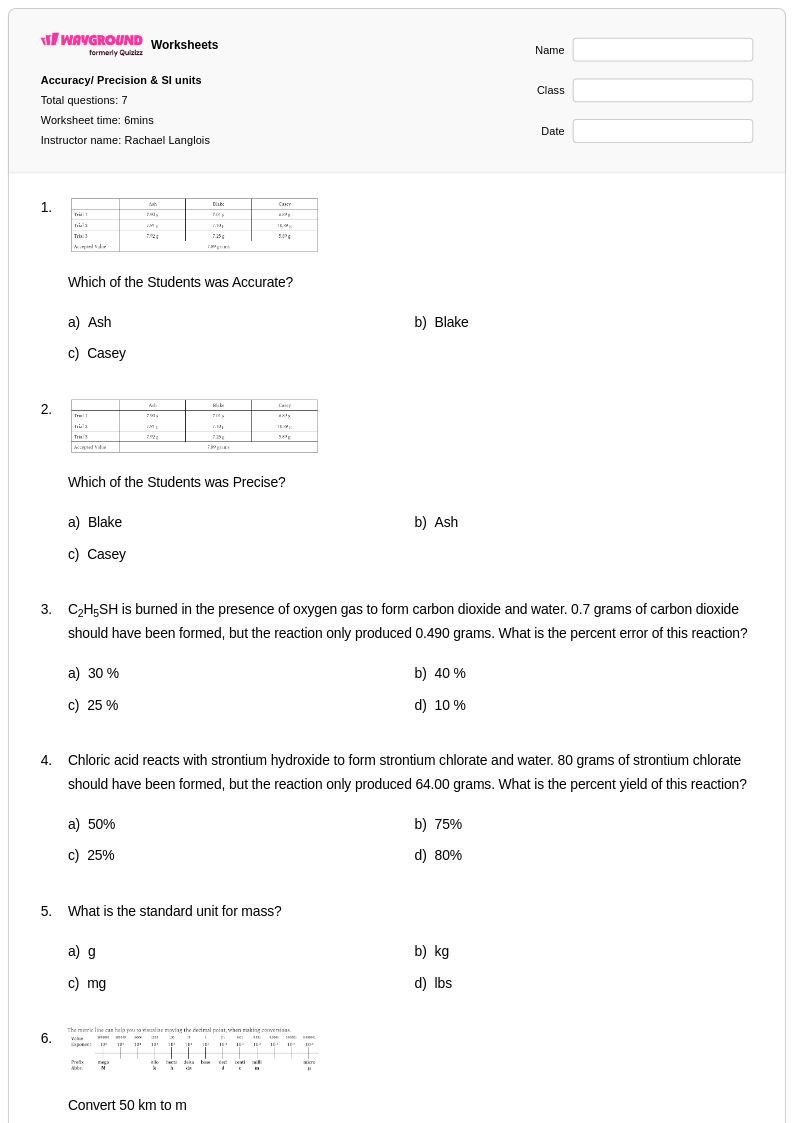
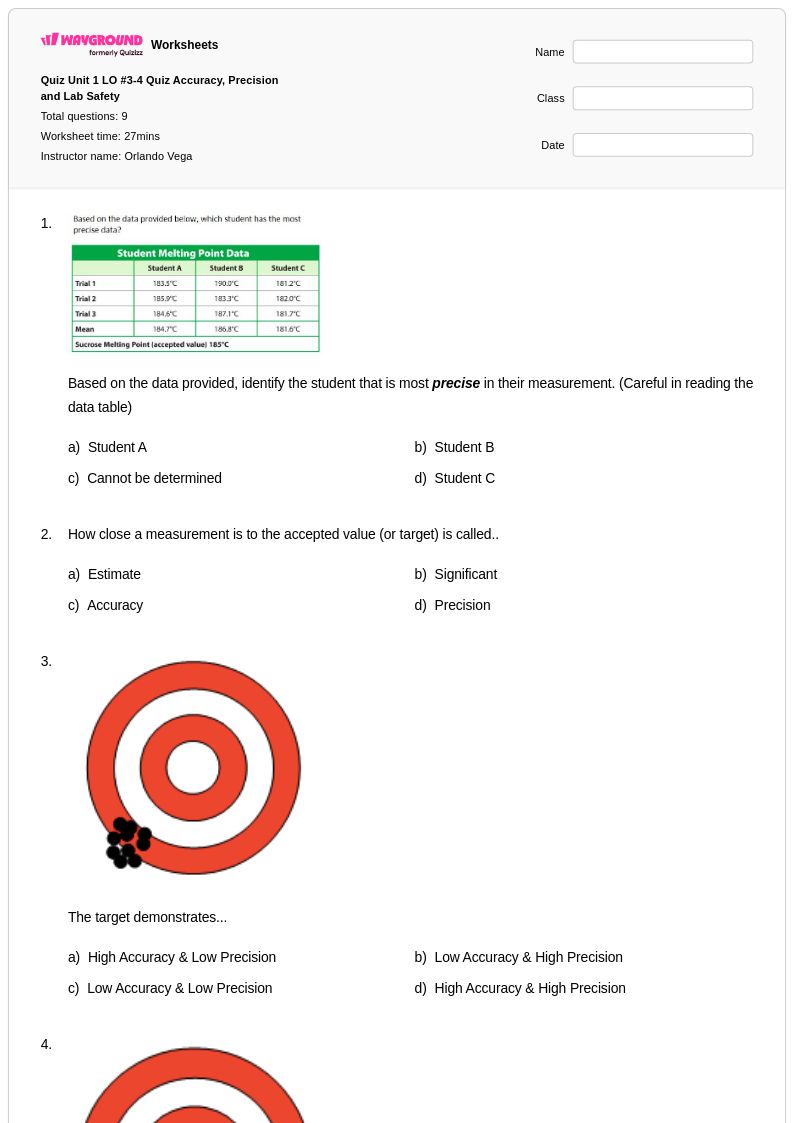
Practice problems that ask students to classify a given data set as accurate, precise, both, or neither are highly effective because they require conceptual judgment rather than rote recall. Exercises involving calculating percent error reinforce accuracy in a quantitative context, while problems asking students to evaluate repeated measurements build their ability to assess precision. Mixing dartboard diagrams with numerical data sets in the same worksheet ensures students can interpret both visual and numeric representations of these concepts.
What mistakes do students commonly make when learning accuracy and precision?
The most common misconception is treating accuracy and precision as synonyms, particularly because everyday language uses them interchangeably. Students also frequently assume that a more precise instrument automatically produces more accurate results, which is not true if the instrument is poorly calibrated. A third common error is confusing high precision with correctness — students need repeated exposure to data sets that are tightly clustered but far from the accepted value to break this assumption.
How can I use accuracy and precision worksheets to assess student understanding?
Worksheets that present mixed data sets — some accurate but not precise, some precise but not accurate, and some both — reveal whether students have genuinely internalized the distinction or are guessing. Including a short written-response section where students explain their classification forces deeper processing and surfaces persistent misconceptions. Reviewing answer patterns across the class quickly shows which students conflate the two terms and need targeted reteaching.
How do I use Wayground's accuracy and precision worksheets in my classroom?
Wayground's accuracy and precision worksheets are available as printable PDFs, making them straightforward to distribute for in-class practice, lab follow-up, or homework. They are also available in digital formats, allowing teachers to assign them in technology-integrated environments. Teachers can host the worksheets as a quiz directly on Wayground, which is useful for collecting student responses and reviewing results in one place. Complete answer keys are included, so grading and feedback require minimal additional preparation.
How do I differentiate accuracy and precision instruction for students at different levels?
For students who are still building foundational understanding, reducing the number of answer choices on classification questions lowers cognitive load without removing the core conceptual challenge. Advanced learners benefit from open-ended problems that ask them to design a measurement procedure that maximizes both accuracy and precision. On Wayground, teachers can apply accommodations such as reduced answer choices or read-aloud support to individual students, so the same worksheet can serve multiple learning levels simultaneously without requiring separate versions.