Master Year 4 adjectives with Wayground's free worksheets and printables, featuring engaging practice problems and answer keys to help students identify, use, and understand descriptive words in PDF format.
Explore printable Adjectives worksheets for Year 4
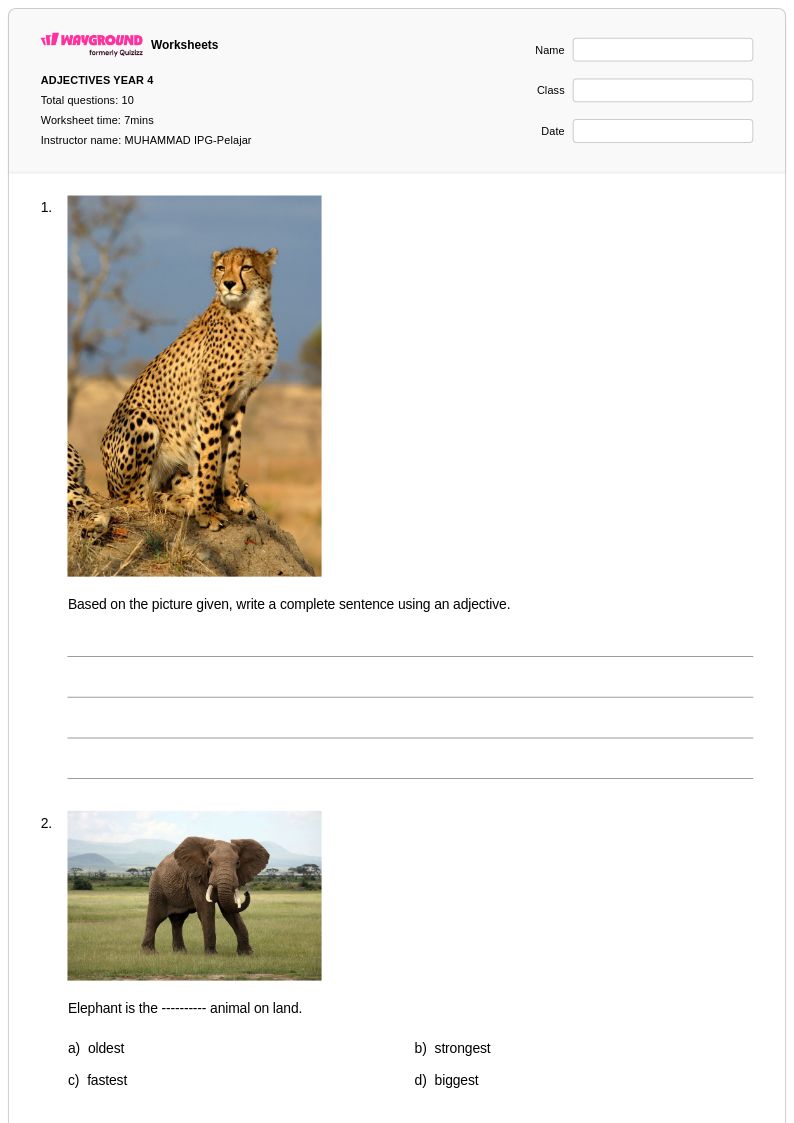
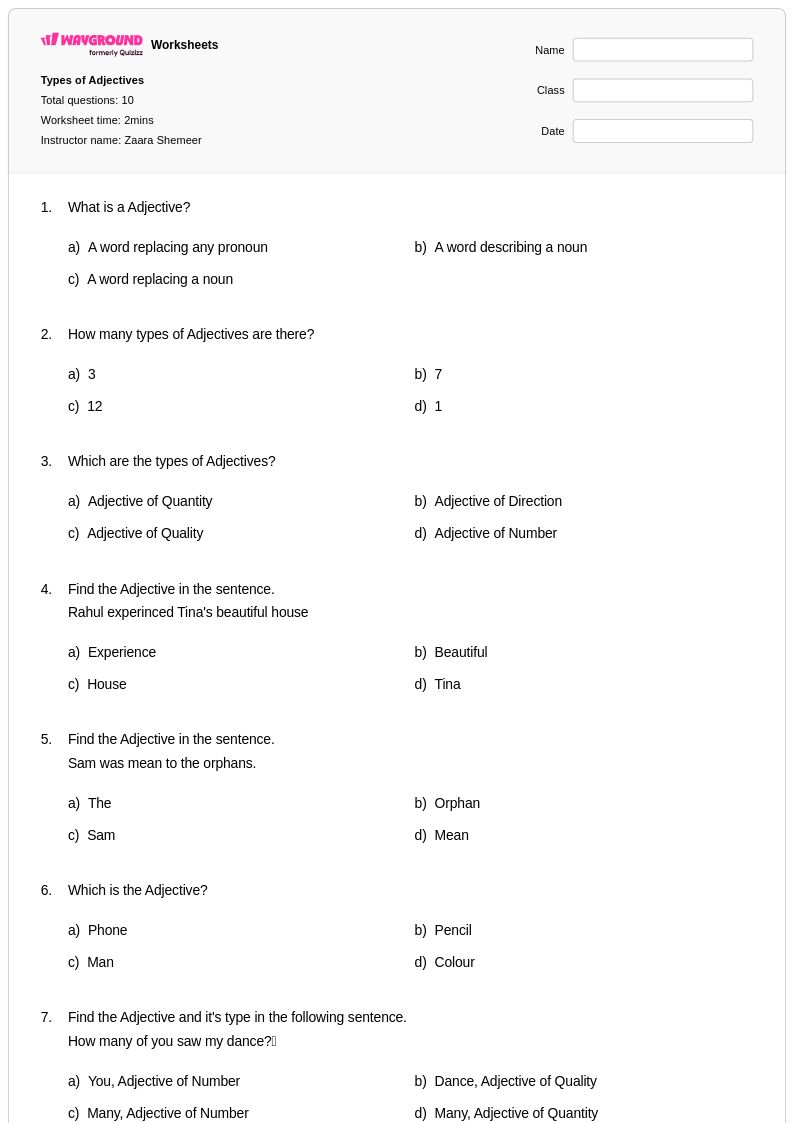
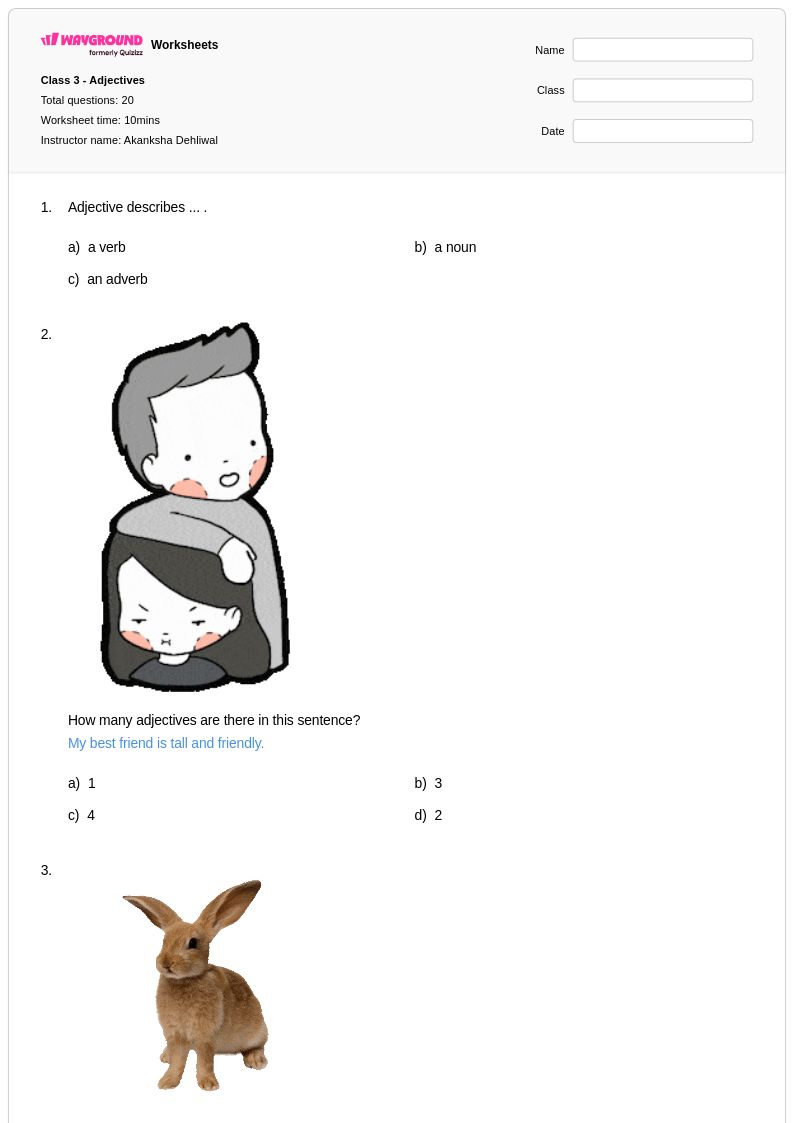
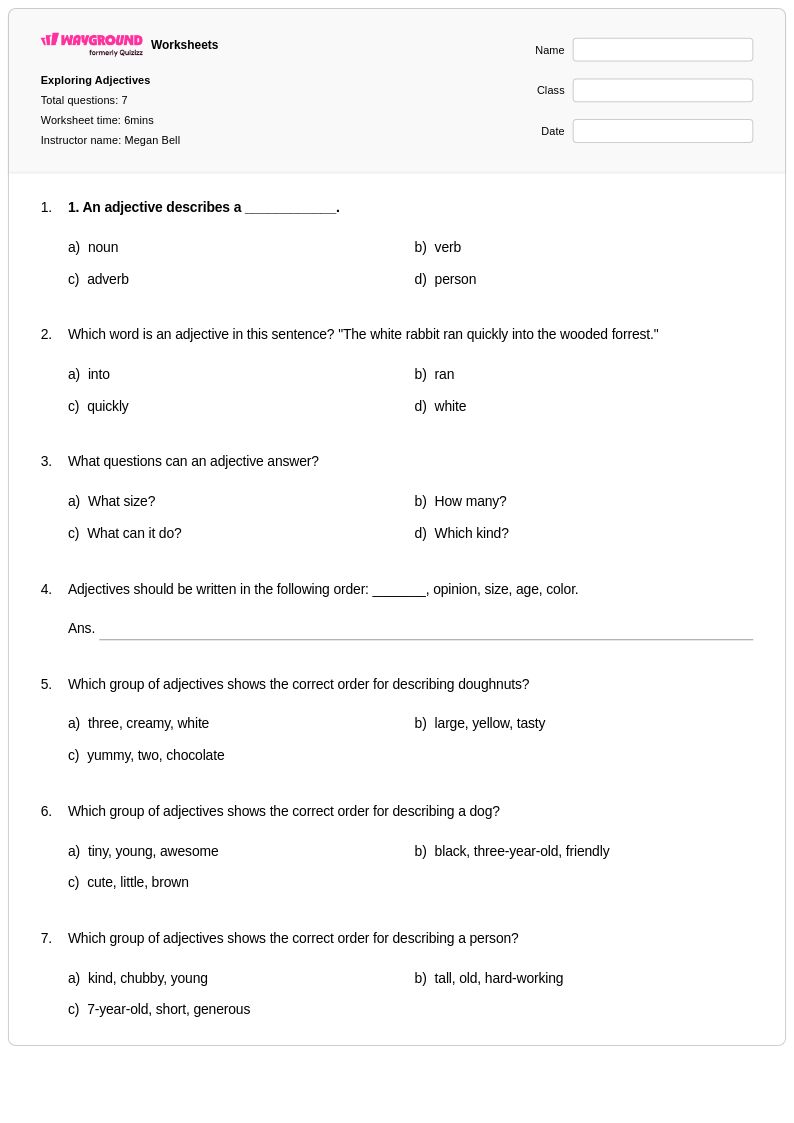
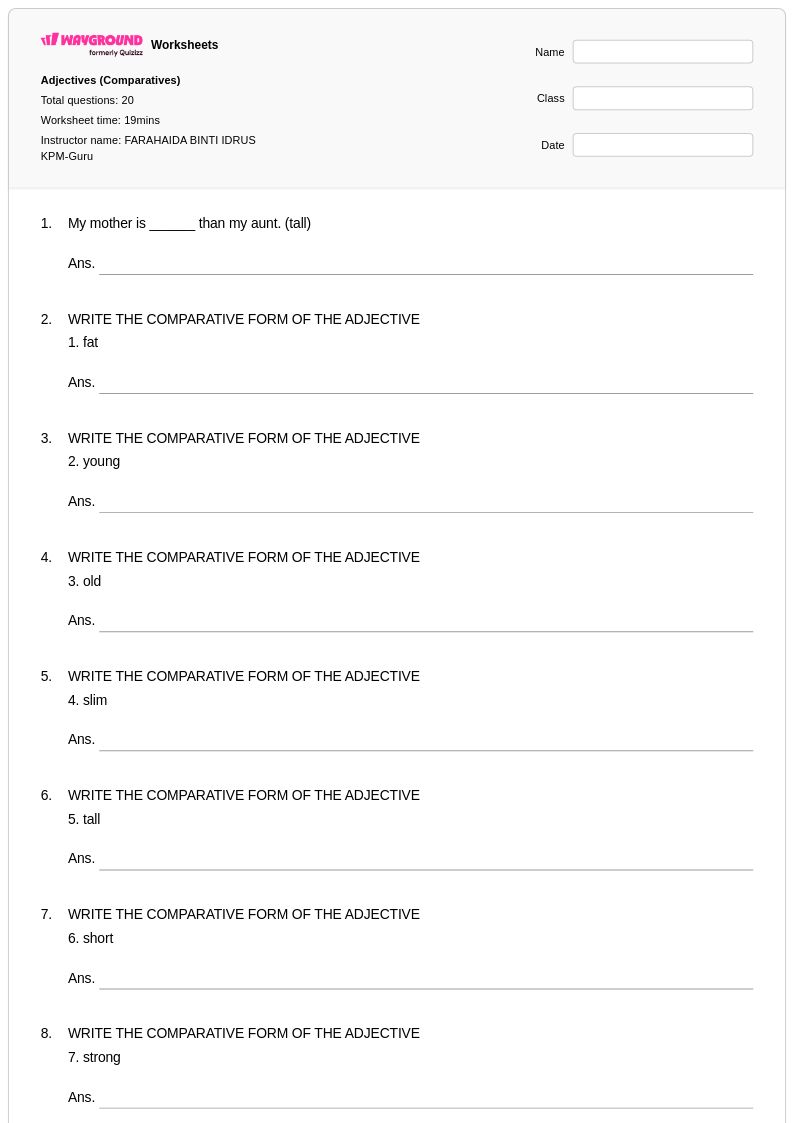
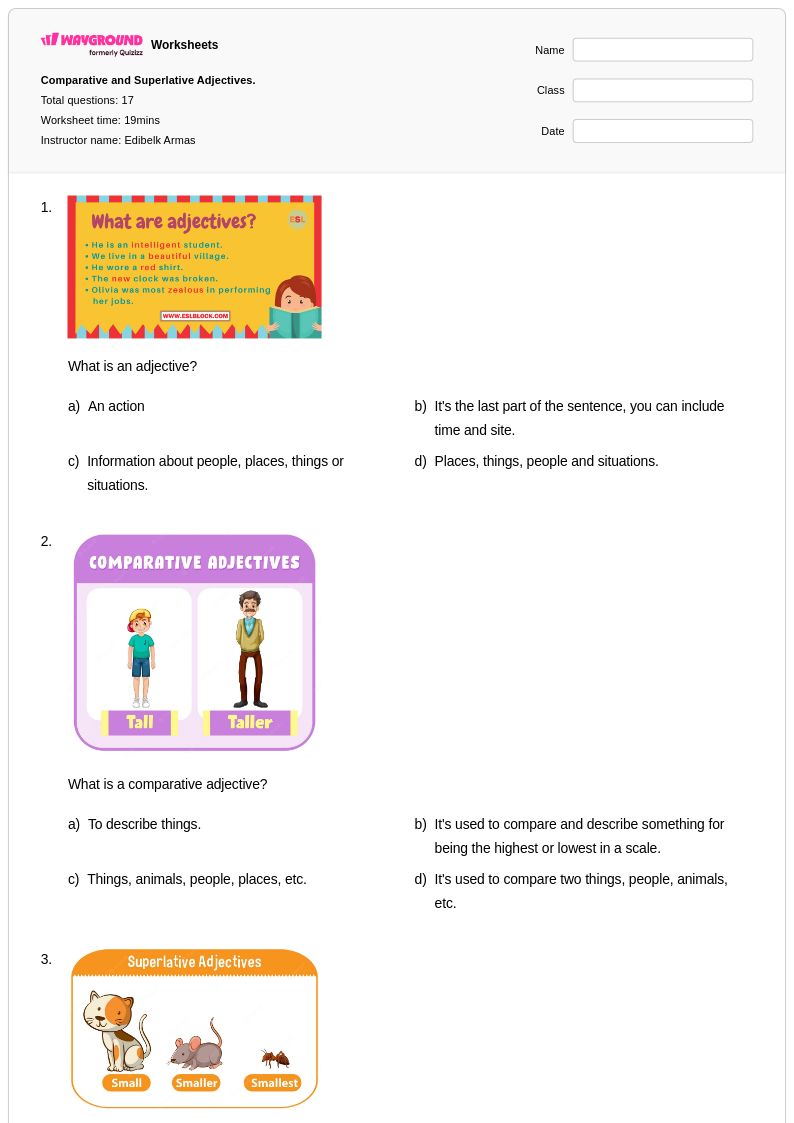
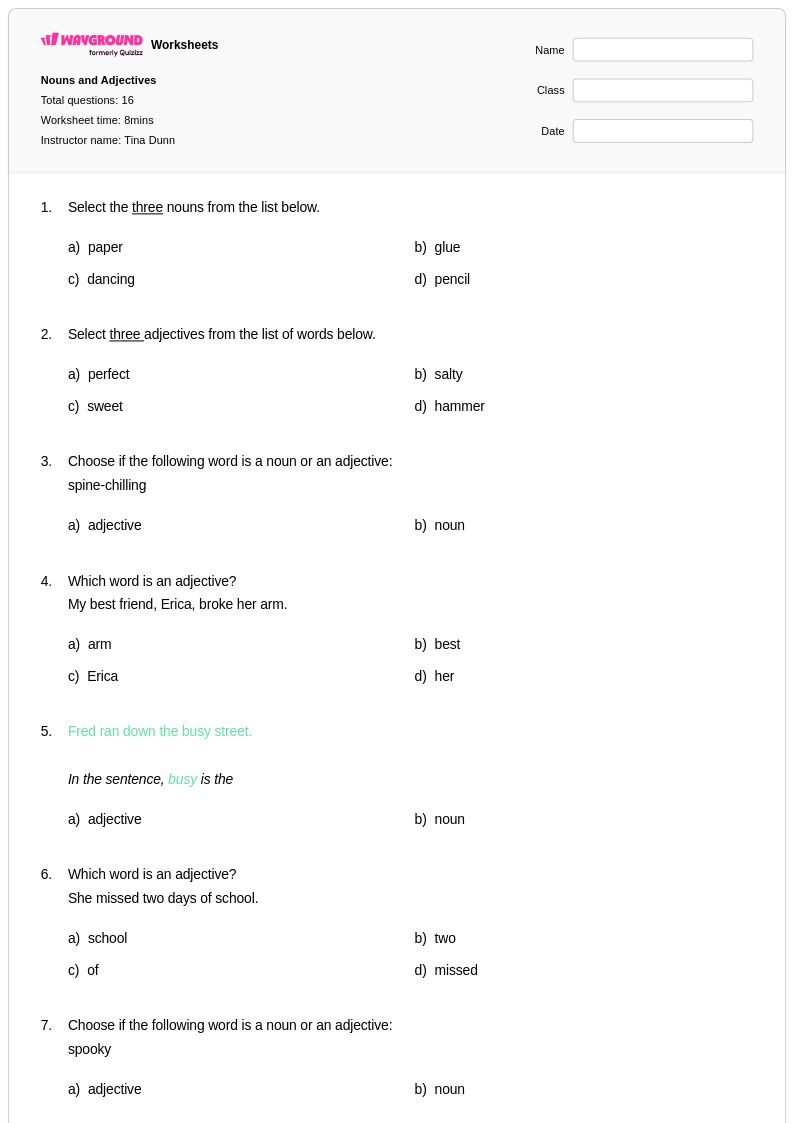
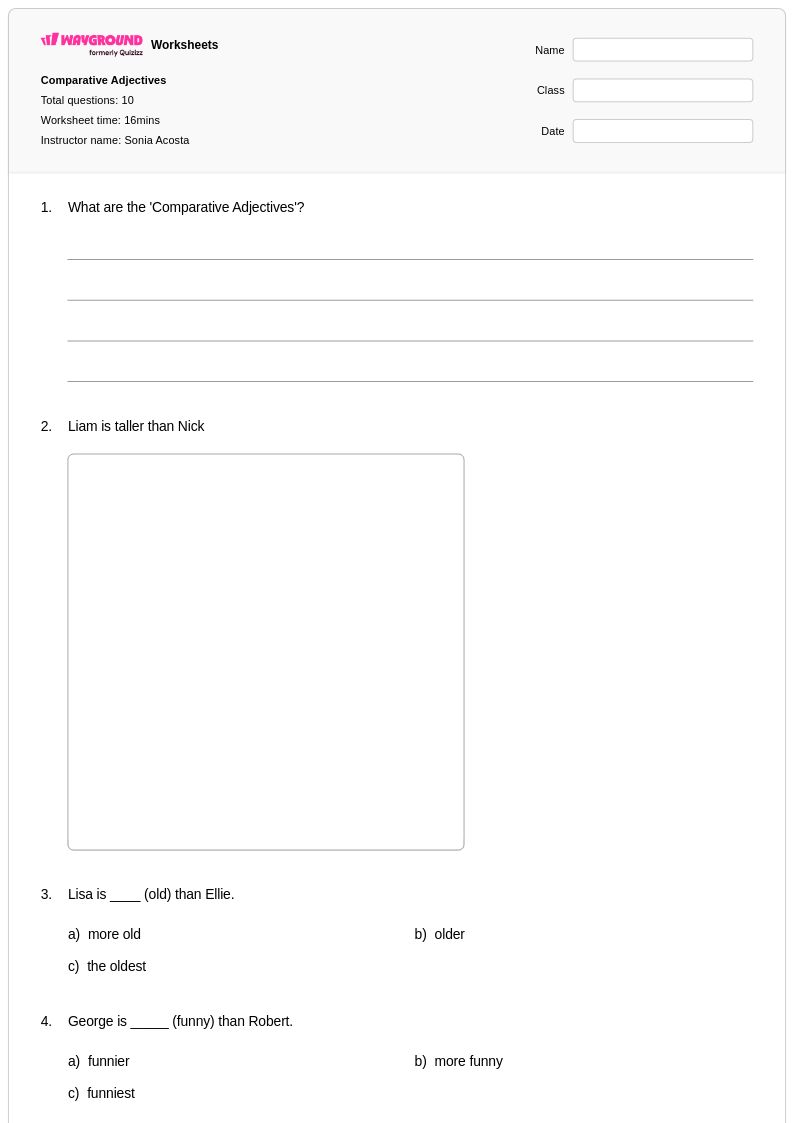
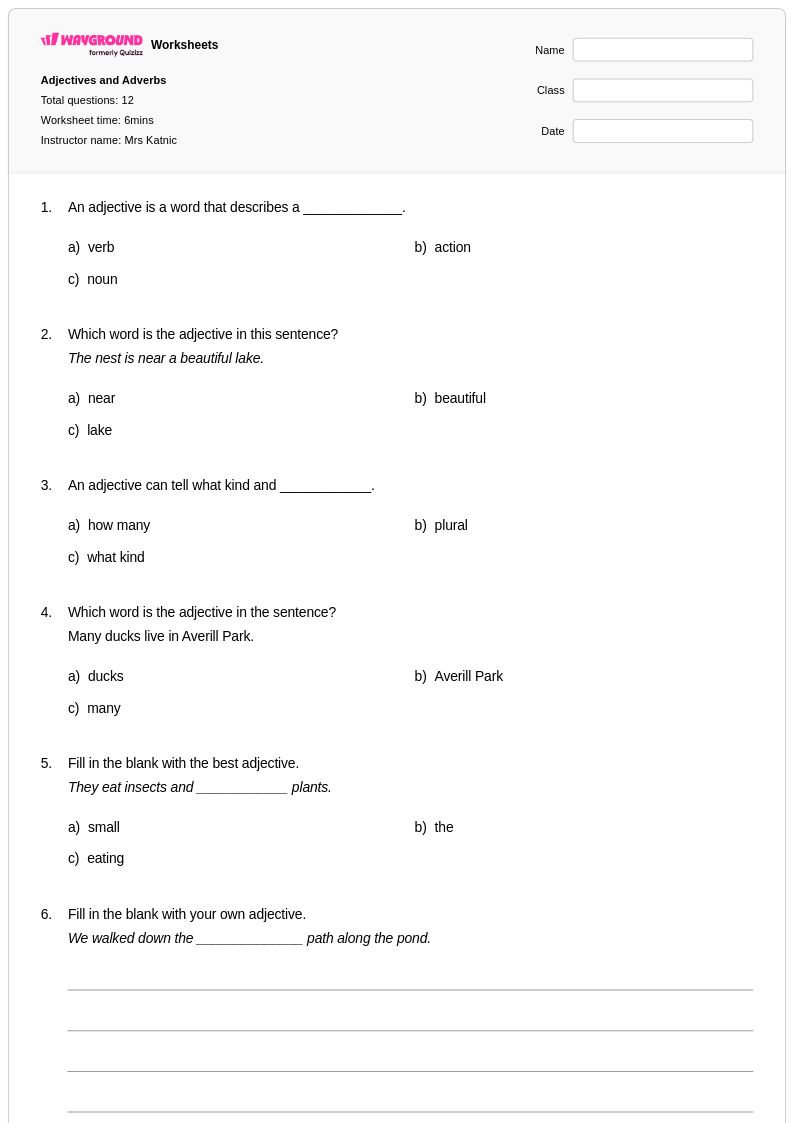
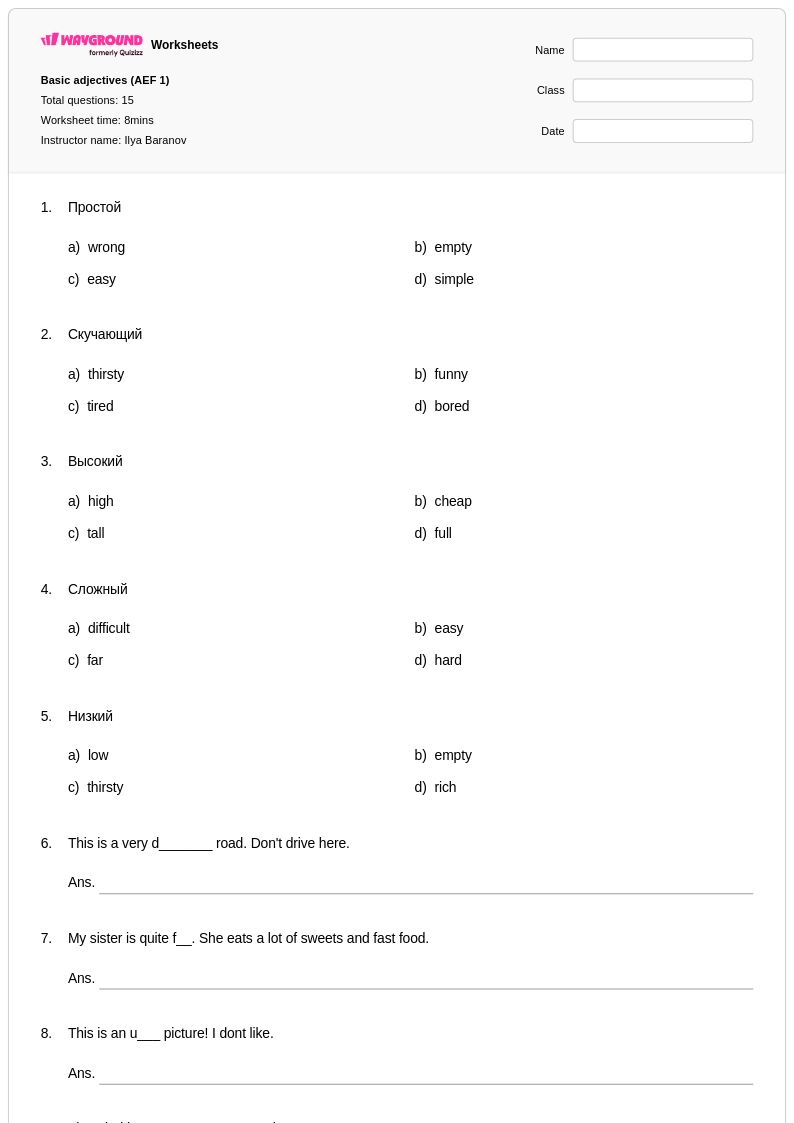
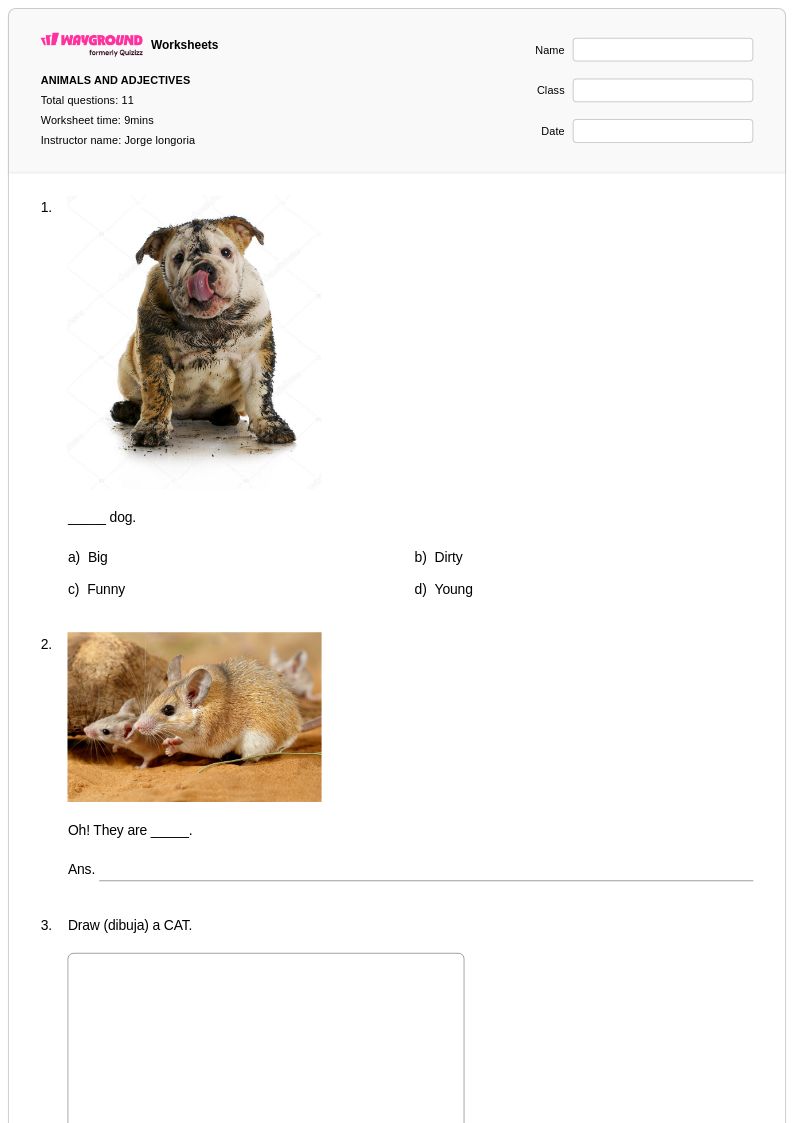
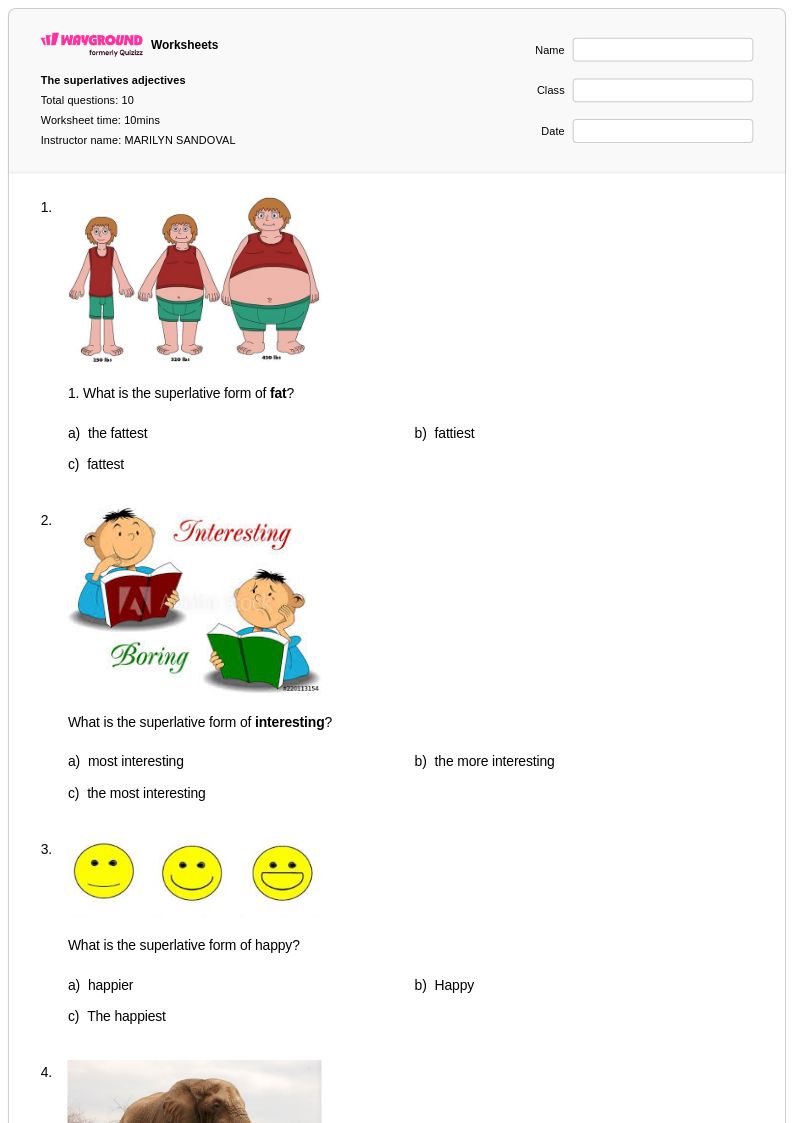
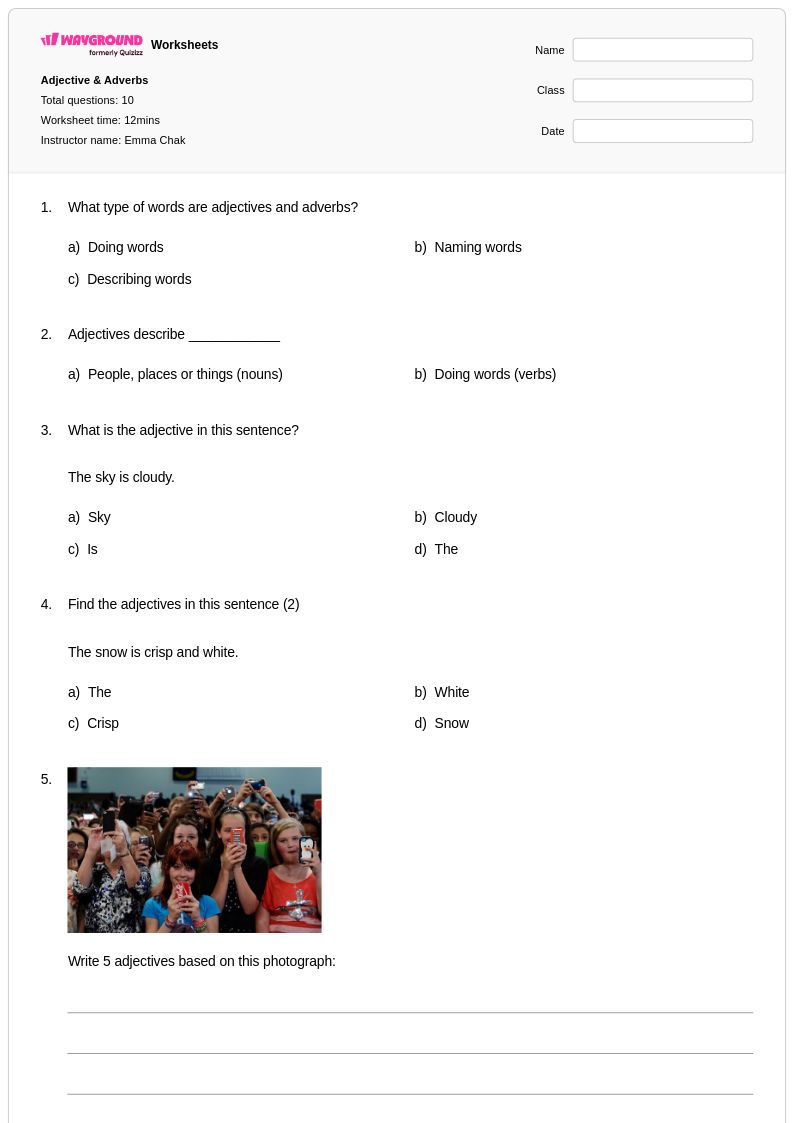
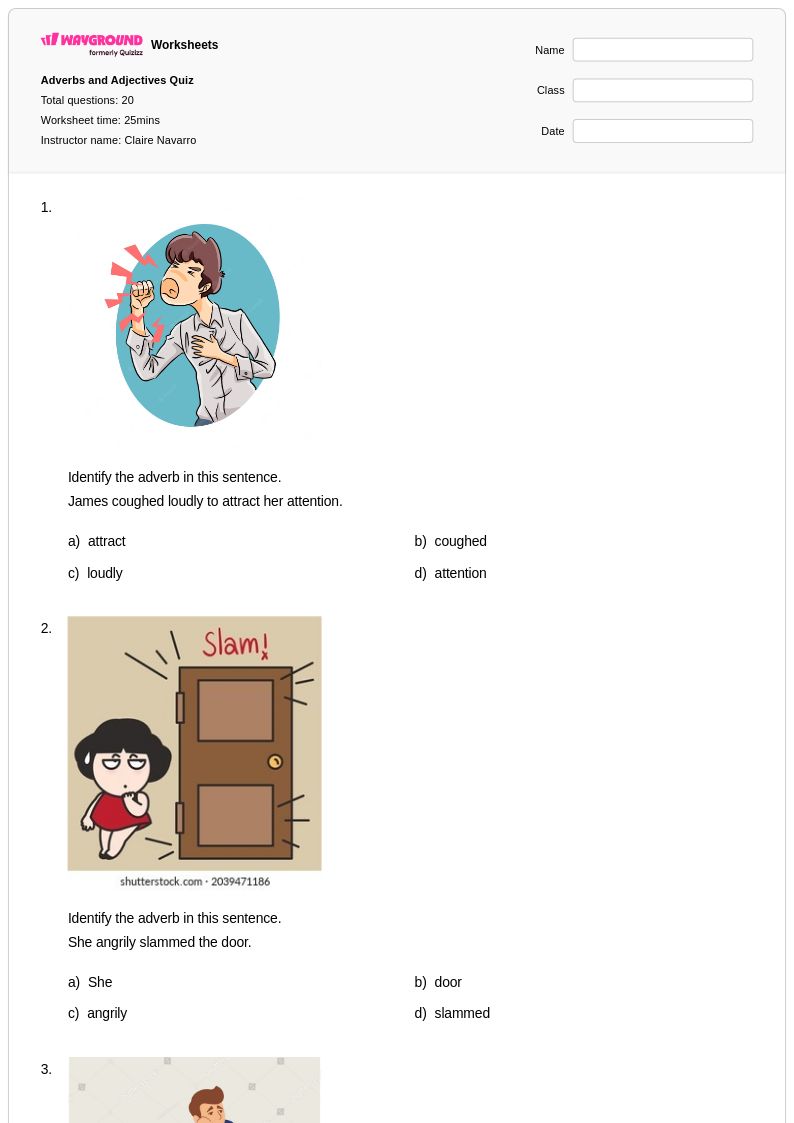
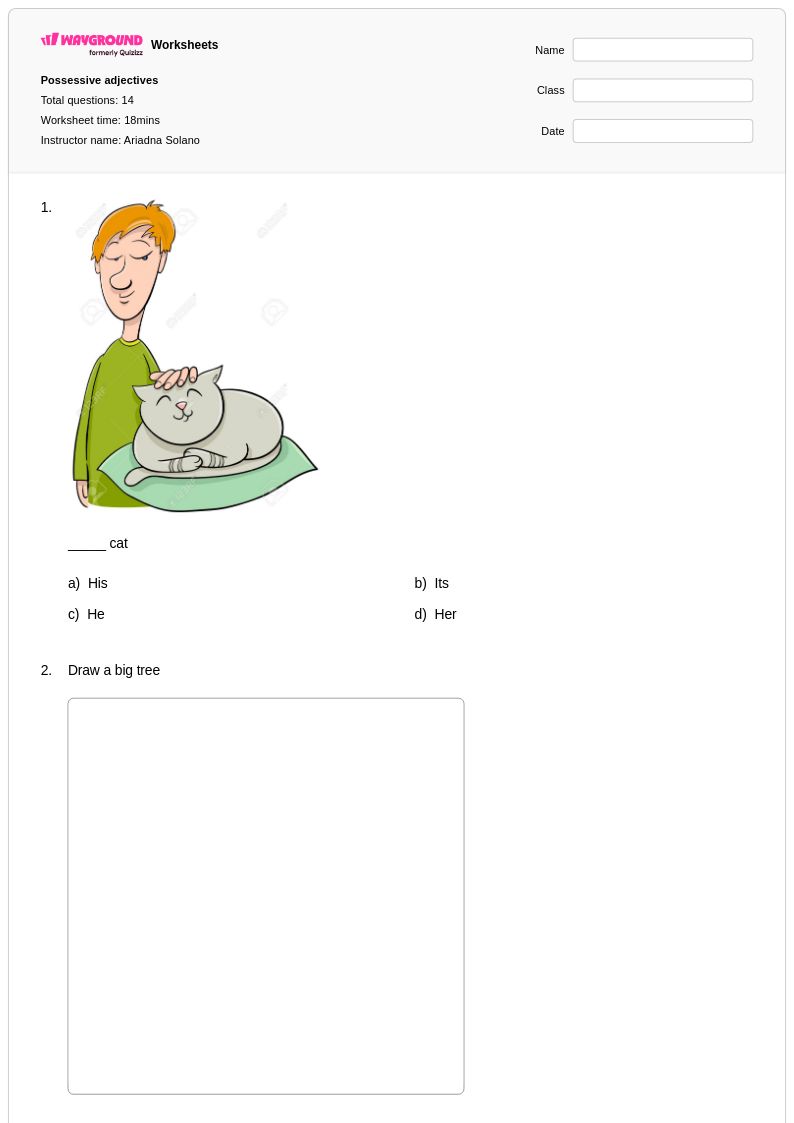
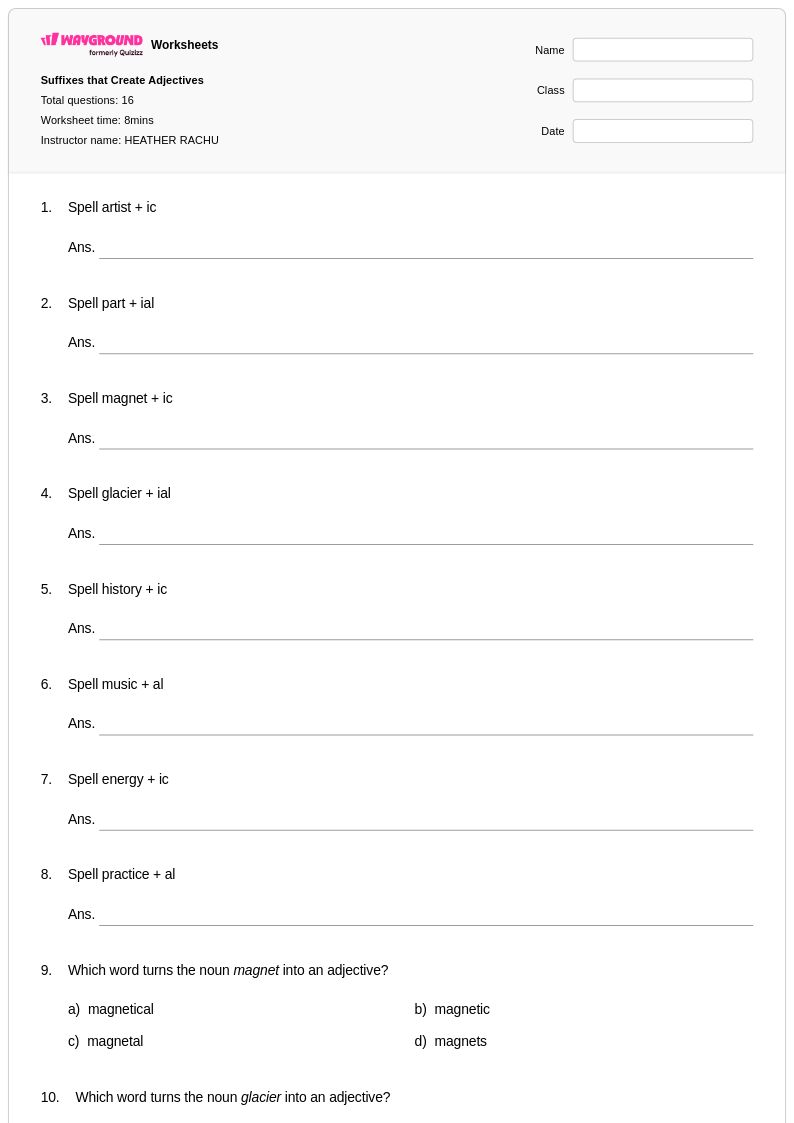
Adjectives worksheets for Year 4 students available through Wayground (formerly Quizizz) provide comprehensive practice in identifying, using, and understanding descriptive words that modify nouns and pronouns. These educational resources strengthen essential grammar skills by teaching students to recognize adjectives in sentences, distinguish between different types of adjectives including comparative and superlative forms, and apply descriptive language effectively in their own writing. The worksheet collection includes diverse practice problems that challenge students to categorize adjectives by type, complete sentences with appropriate descriptive words, and transform basic sentences into more vivid descriptions. Each printable resource comes with a detailed answer key to support independent learning and self-assessment, while the free pdf format ensures easy classroom distribution and home practice opportunities.
Wayground (formerly Quizizz) empowers educators with millions of teacher-created adjectives worksheets specifically designed for Year 4 instruction, featuring robust search and filtering capabilities that allow teachers to locate resources aligned with specific learning standards and curriculum requirements. The platform's differentiation tools enable instructors to customize worksheets for varying skill levels within their classrooms, supporting both remediation for struggling learners and enrichment activities for advanced students. Teachers can access these resources in both printable and digital formats, including downloadable pdf versions, making lesson planning more efficient and flexible for diverse teaching environments. This extensive worksheet library facilitates targeted skill practice, formative assessment opportunities, and systematic grammar instruction that builds students' confidence in identifying and using adjectives across various writing contexts.
FAQs
How do I teach adjectives to students who are just learning parts of speech?
Start by grounding adjectives in concrete sensory experience — have students describe a familiar object using sight, sound, smell, taste, and touch before introducing the grammatical term. Once students can generate descriptive words naturally, shift to explicit instruction: show how adjectives modify nouns and pronouns, and distinguish them from verbs and adverbs using mentor sentences. Building from function to form helps students internalize adjective use rather than just memorize a definition.
What exercises help students practice identifying adjectives in sentences?
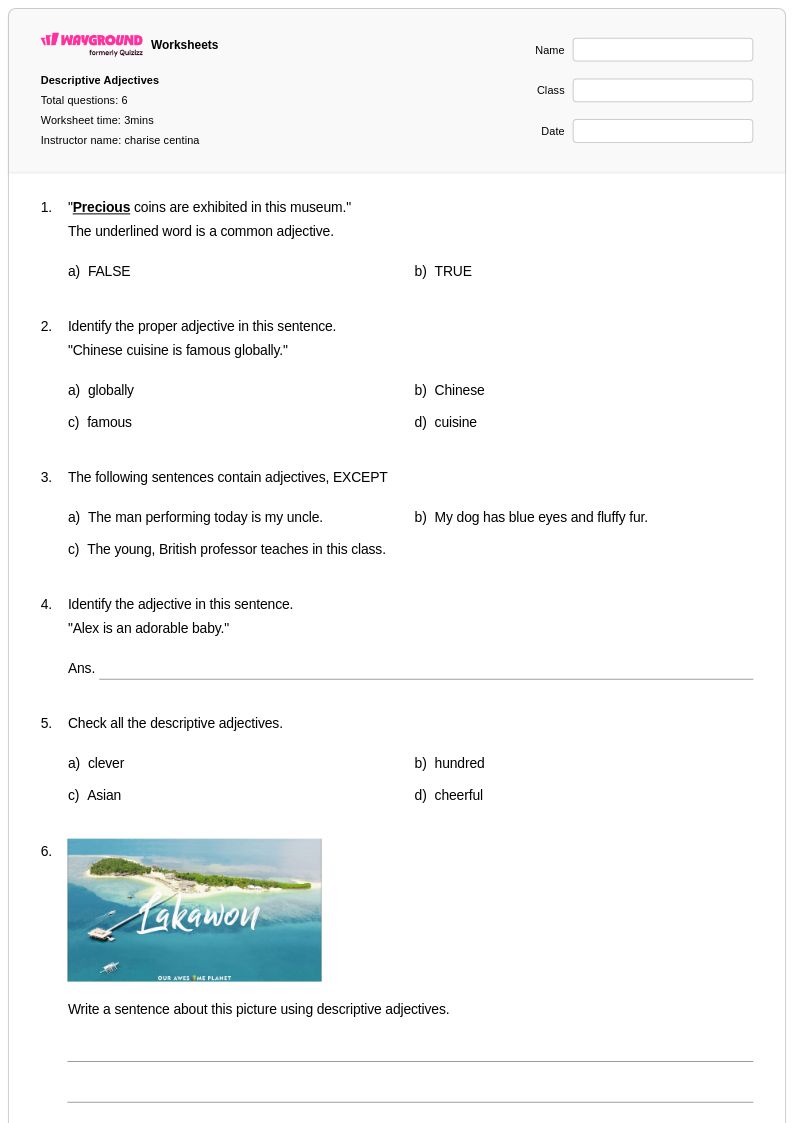
Sentence-level identification tasks are highly effective — present students with sentences and ask them to underline all adjectives and draw arrows to the nouns they modify. Comparative and superlative exercises, where students transform base adjectives into their degree forms, reinforce both recognition and application. Mixing these with close-reading passages where students highlight adjective placement in context helps transfer the skill to authentic reading and writing.
What mistakes do students commonly make when learning adjectives?
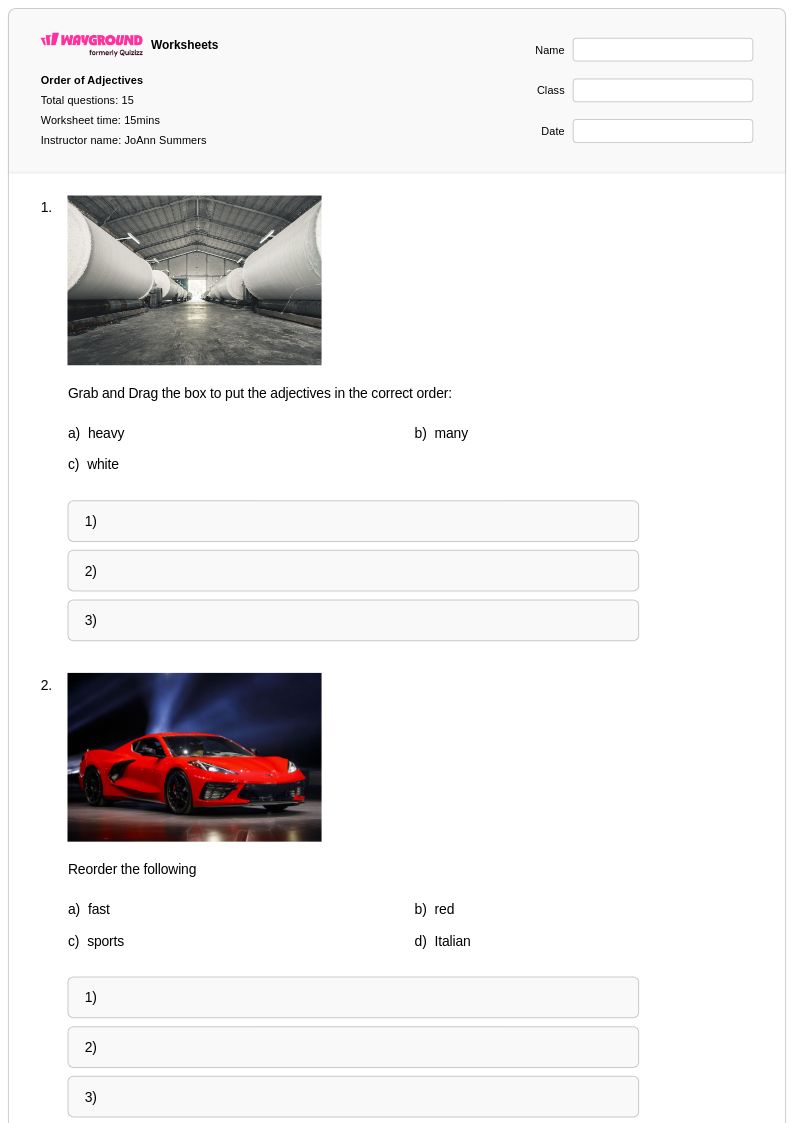
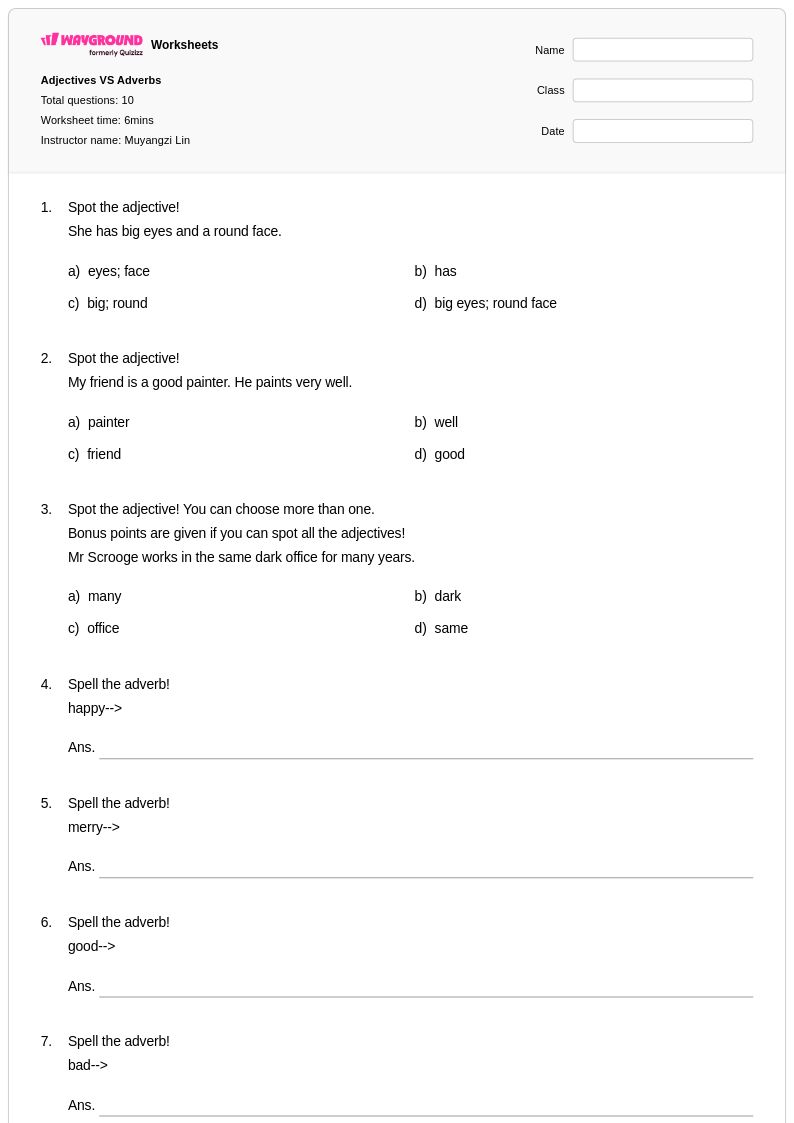
One of the most common errors is confusing adjectives with adverbs, particularly when students encounter words like 'fast' or 'hard' that can function as both. Students also frequently misplace adjectives in a sentence, especially when stacking multiple descriptors before a noun, leading to unnatural or ambiguous phrasing. Another persistent error involves forming irregular comparative and superlative forms incorrectly, such as writing 'more good' instead of 'better'.
How do I help students correctly use comparative and superlative adjectives?
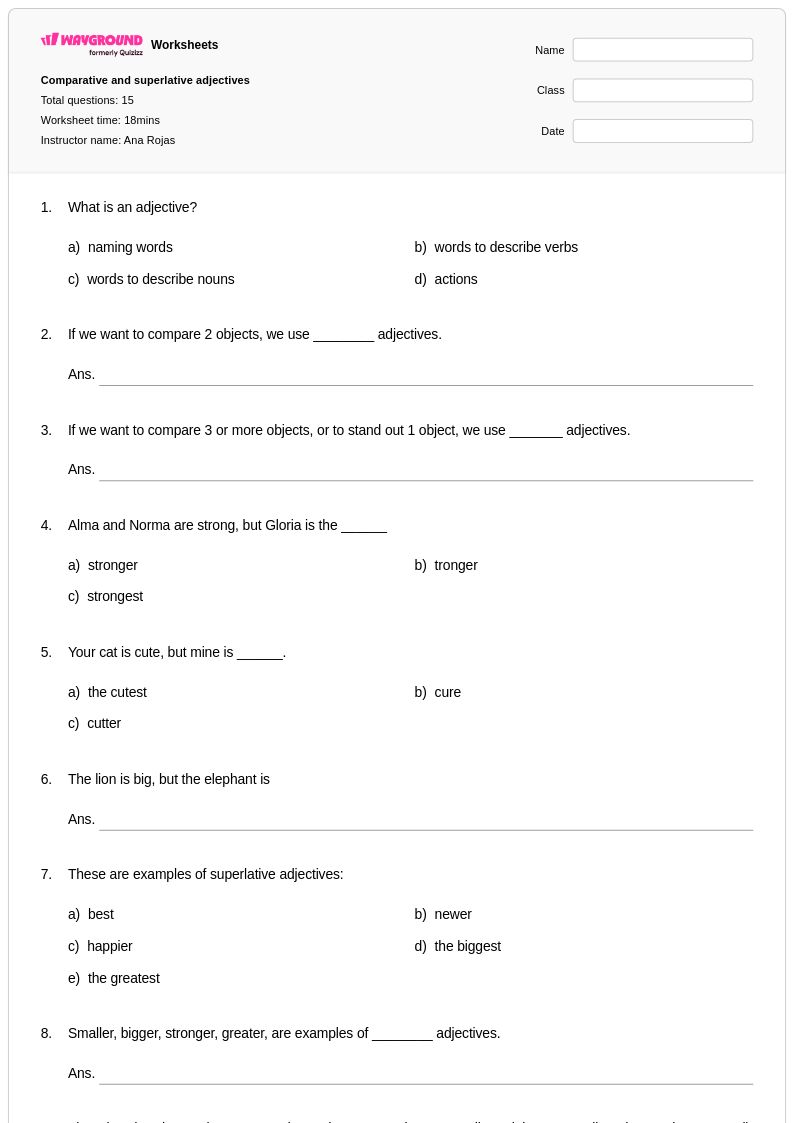
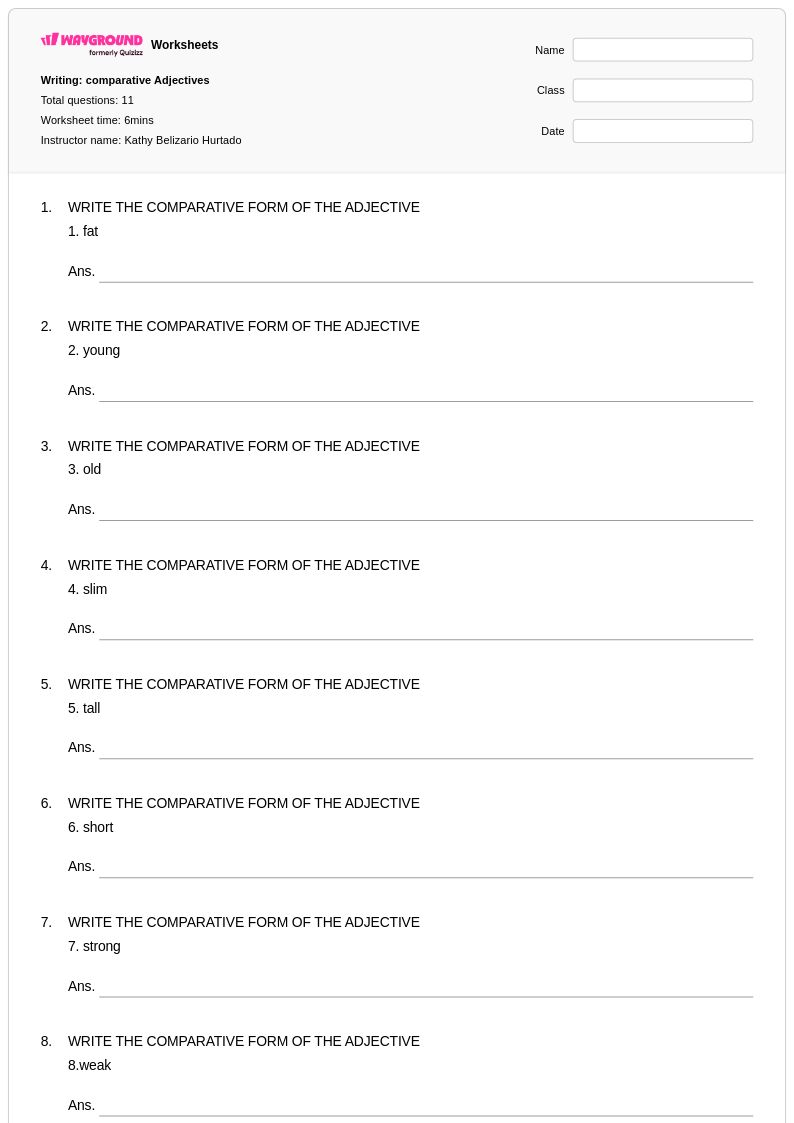
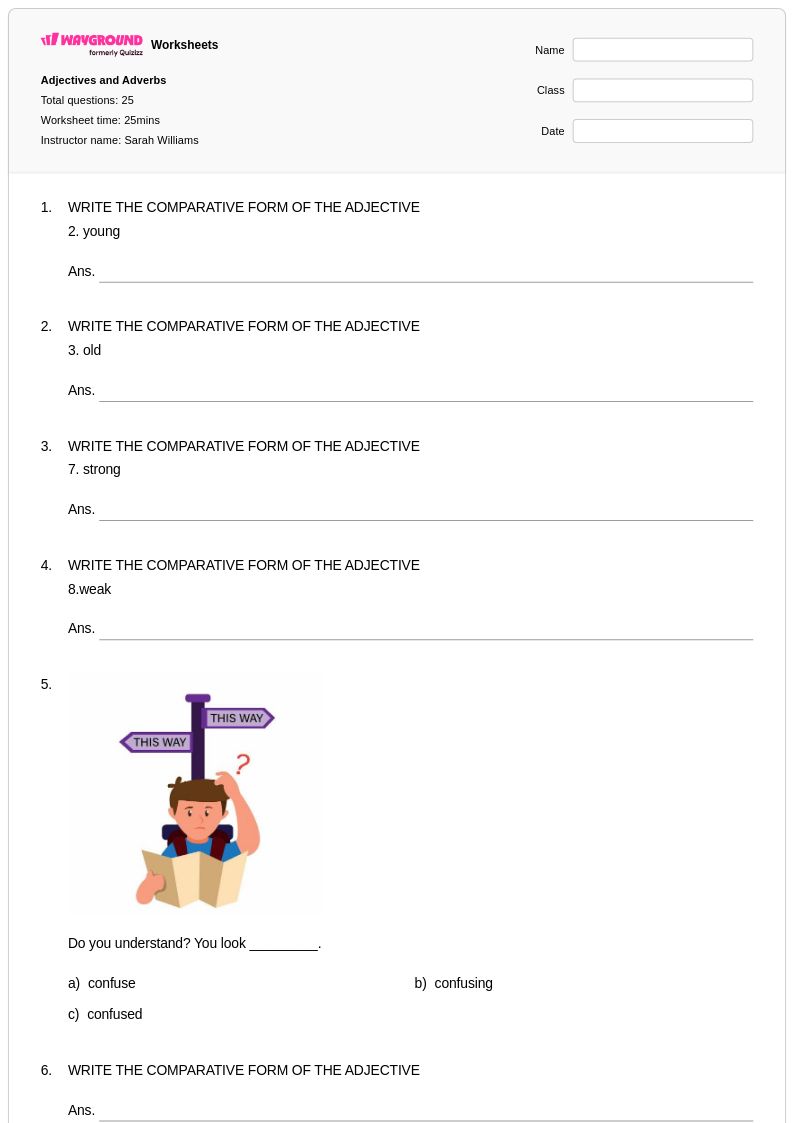
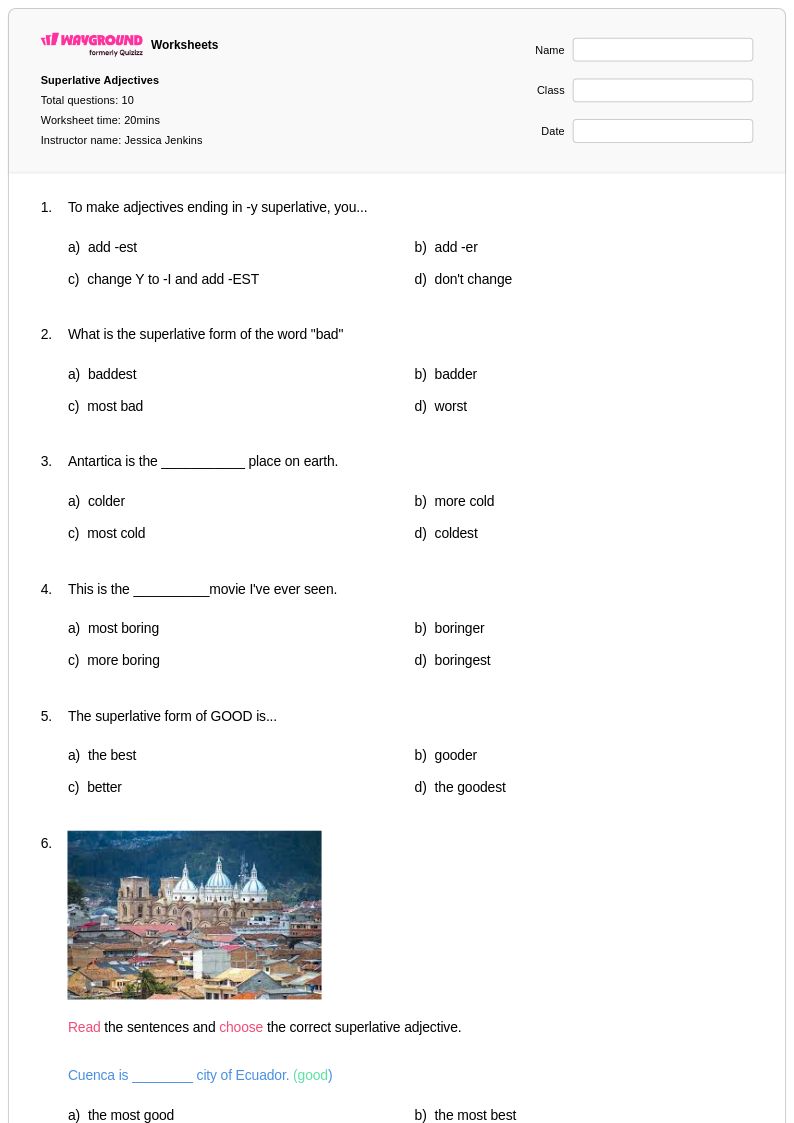
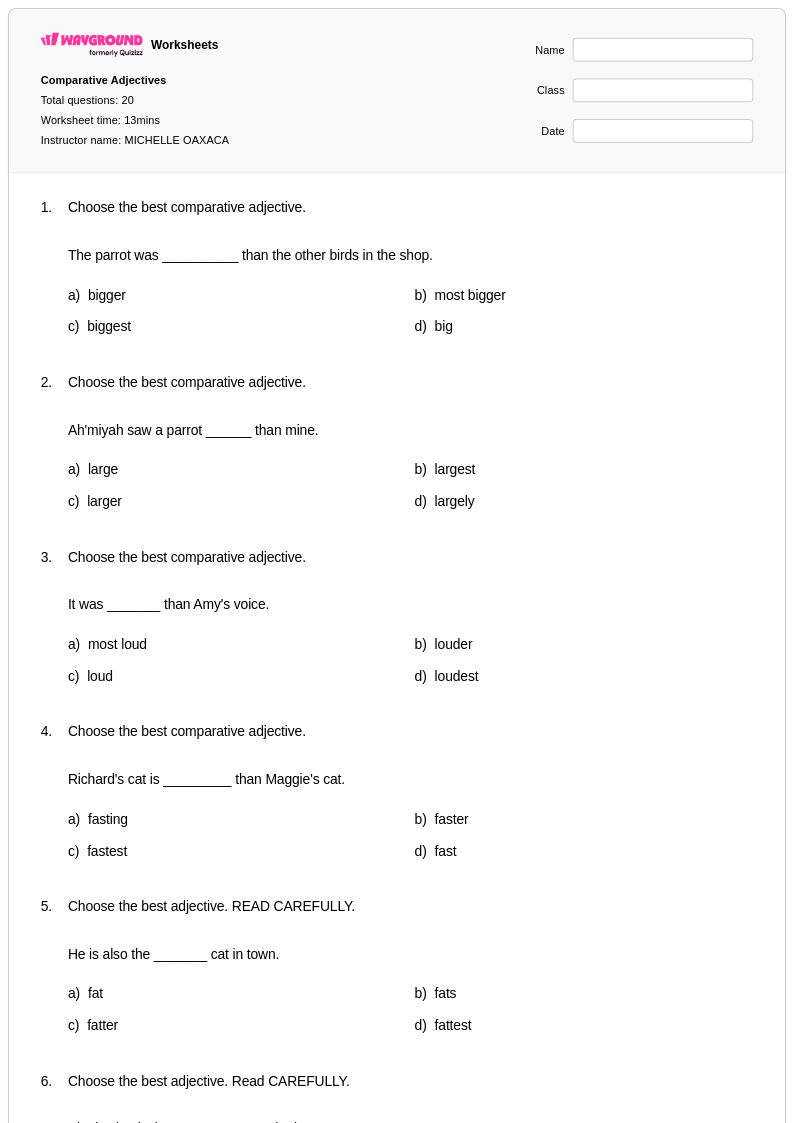
Teach the rule-based patterns first: add -er/-est for most one-syllable adjectives and use more/most for adjectives with two or more syllables. Then explicitly address the irregular forms — good/better/best, bad/worse/worst — since these cannot be inferred from the rules and must be memorized. Structured practice that requires students to choose between forms in context, rather than fill-in-the-blank in isolation, builds more durable accuracy.
How can I use Wayground's adjectives worksheets in my classroom?
Wayground's adjectives worksheets are available as printable PDFs for traditional classroom use and in digital formats for technology-integrated learning environments, so they fit whole-class instruction, small group work, or independent practice equally well. Teachers can also host worksheets as a quiz directly on Wayground, enabling interactive student submission and immediate feedback without additional setup. For students who need accommodations, Wayground supports features like read aloud, extended time, and reduced answer choices, all configurable per student from the platform's settings.
How do adjective worksheets support differentiated instruction?
Adjective worksheets can be tiered by complexity — foundational tasks focus on identifying adjectives in simple sentences, while advanced tasks ask students to analyze adjective choice in published writing or revise weak descriptions in their own drafts. Wayground allows teachers to apply individual accommodations such as read aloud, reduced answer choices, and extended time to specific students without disrupting the experience for the rest of the class. This makes it practical to run a single activity that meets multiple learning levels simultaneously.