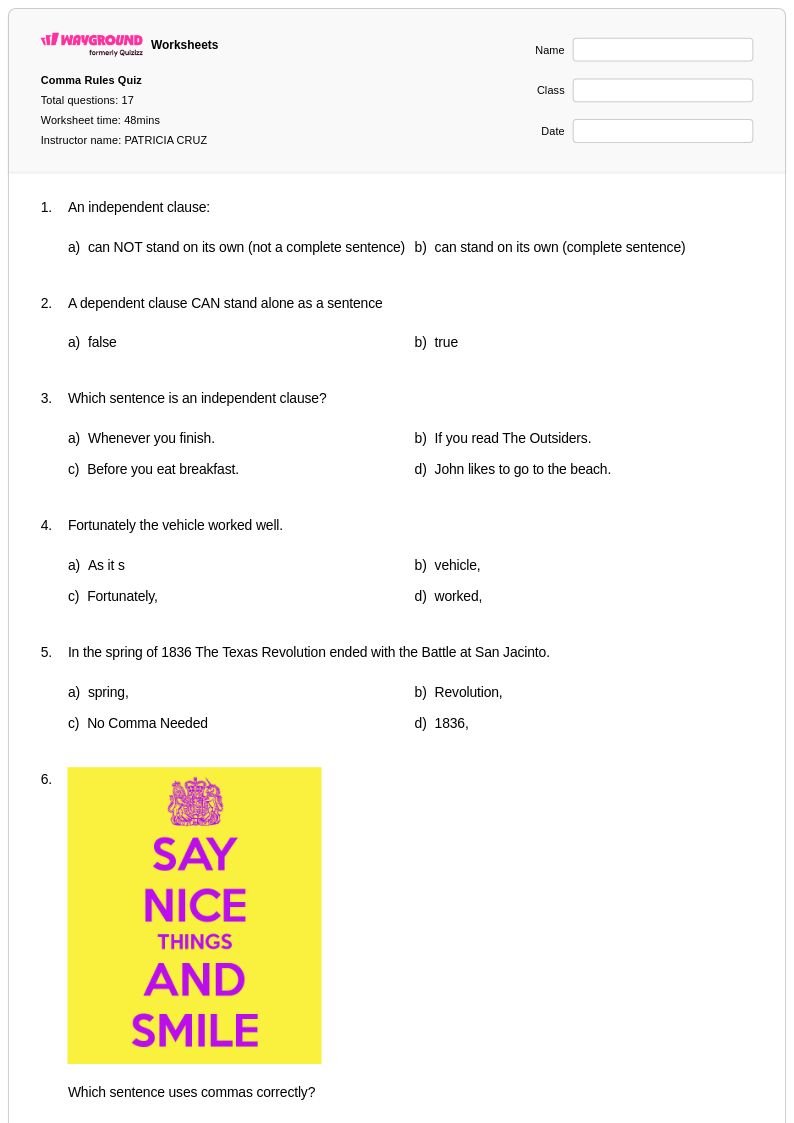
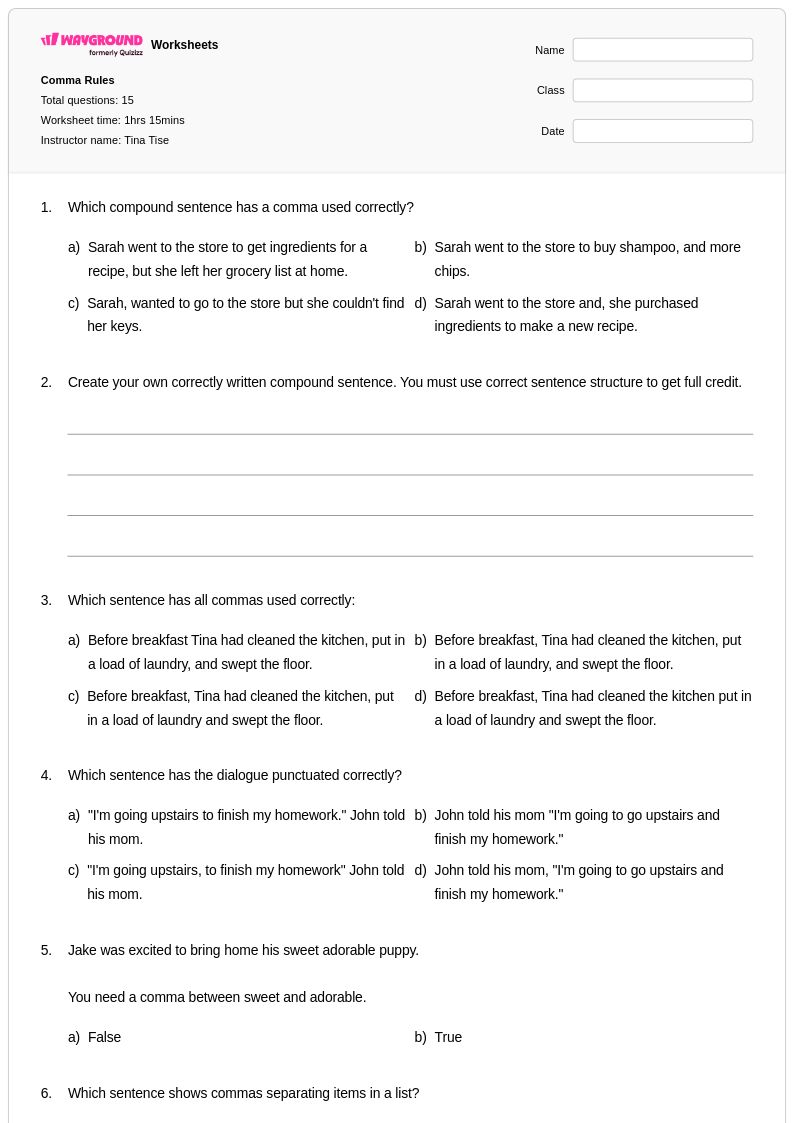
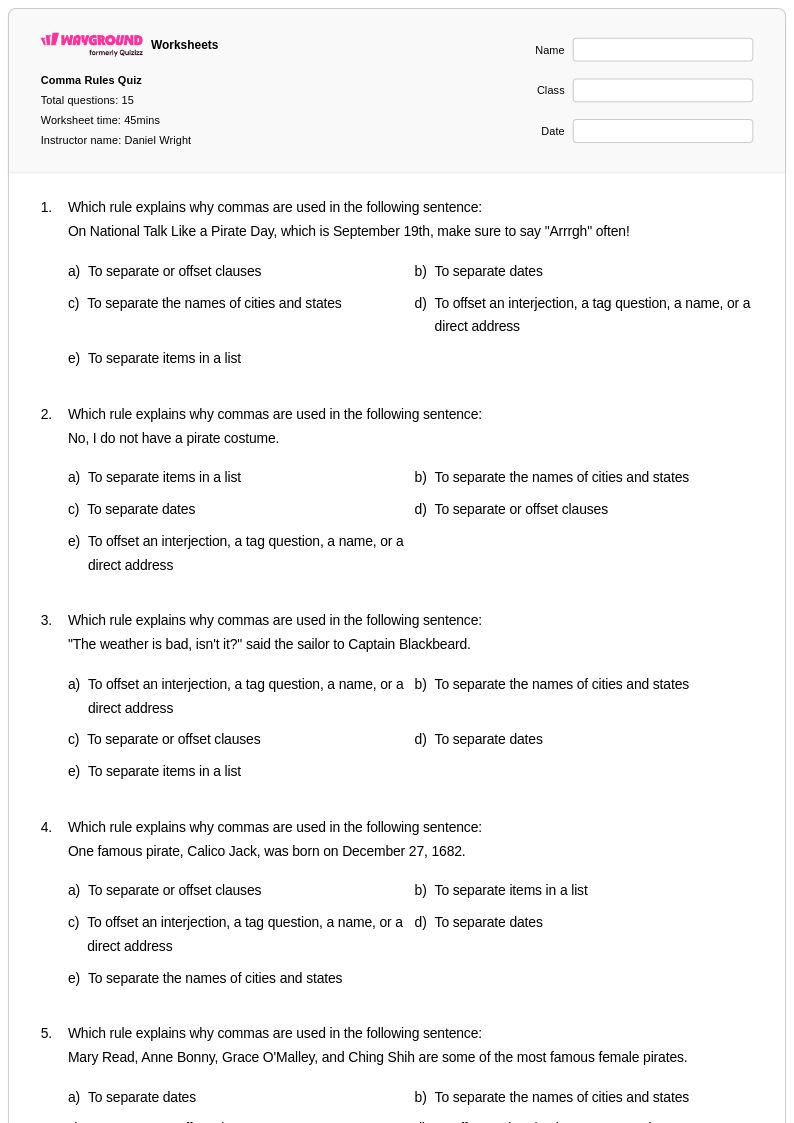
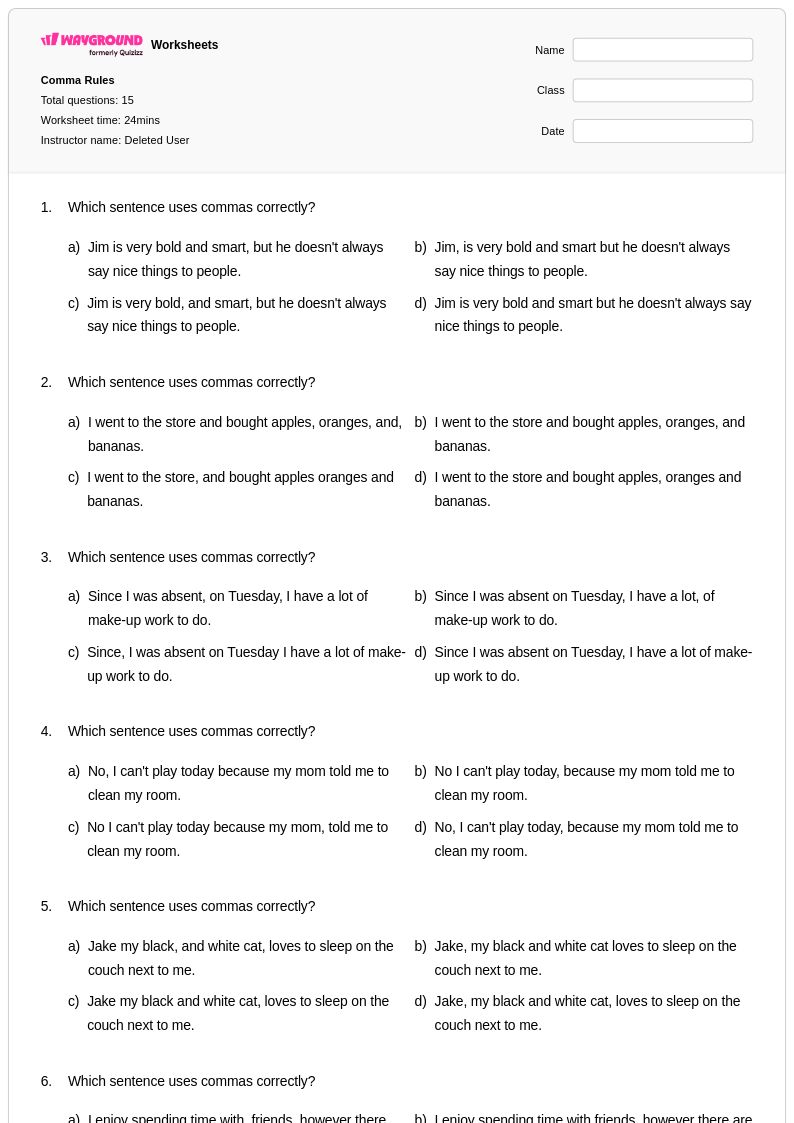
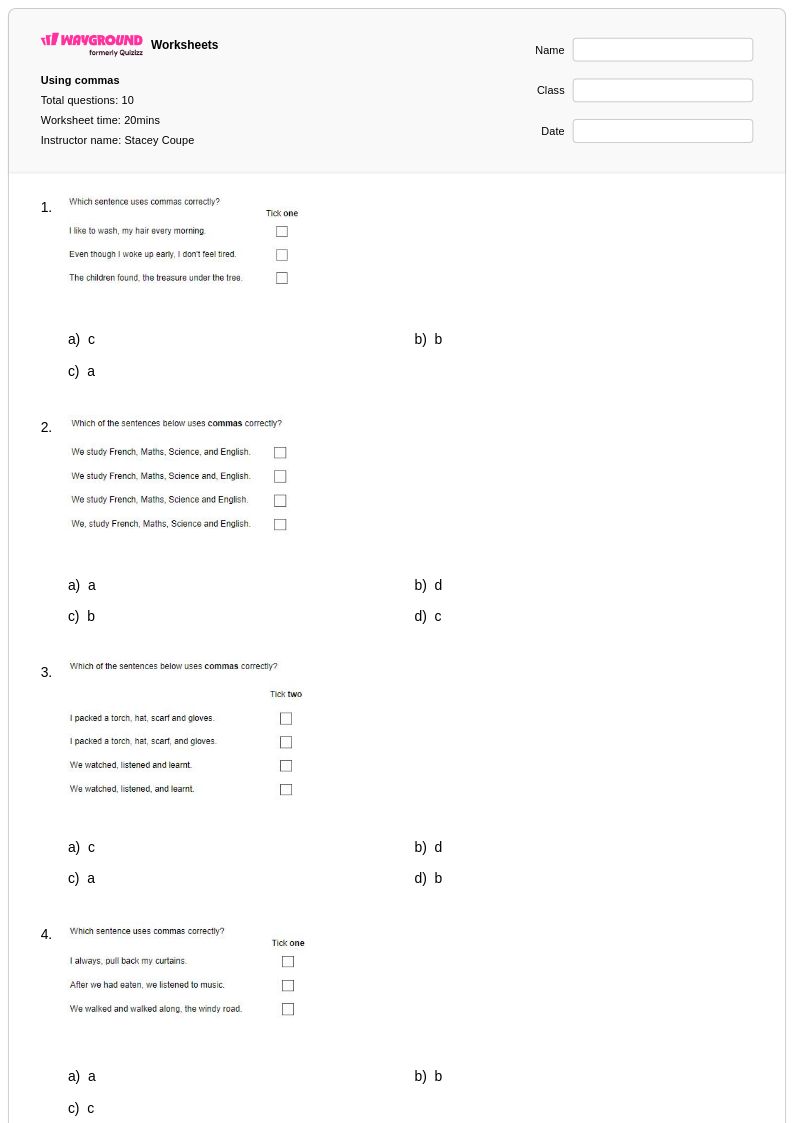
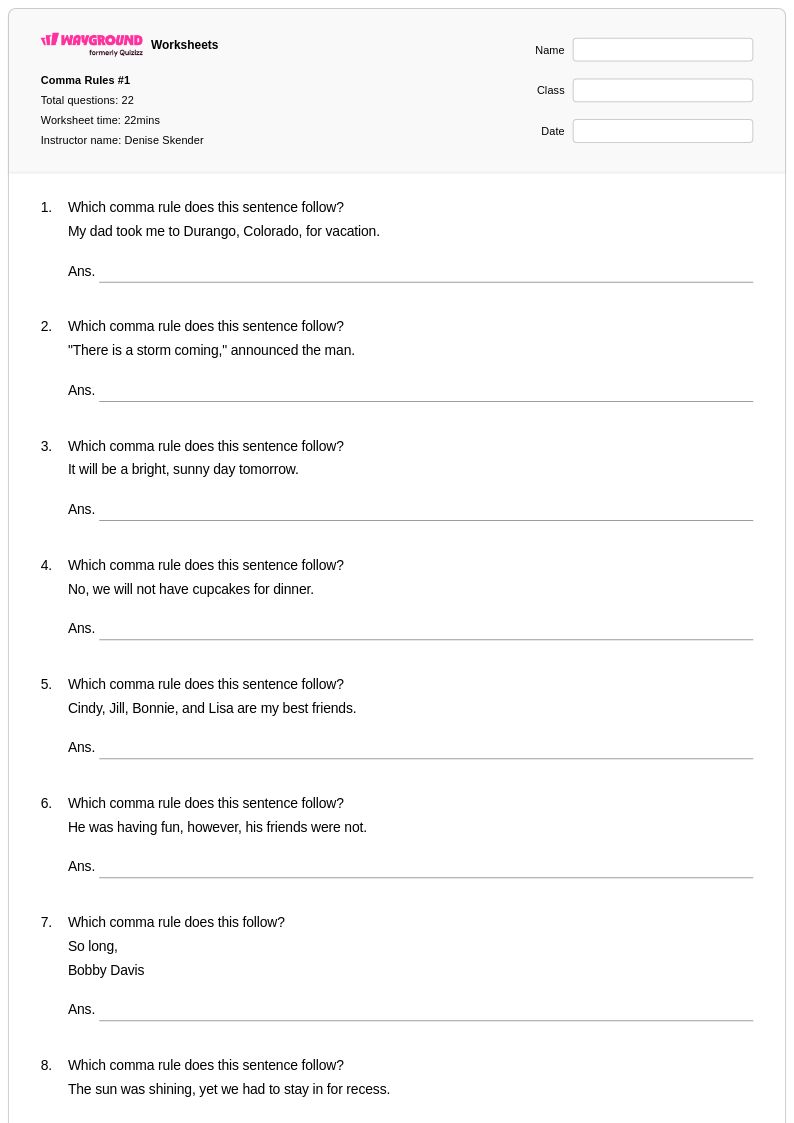
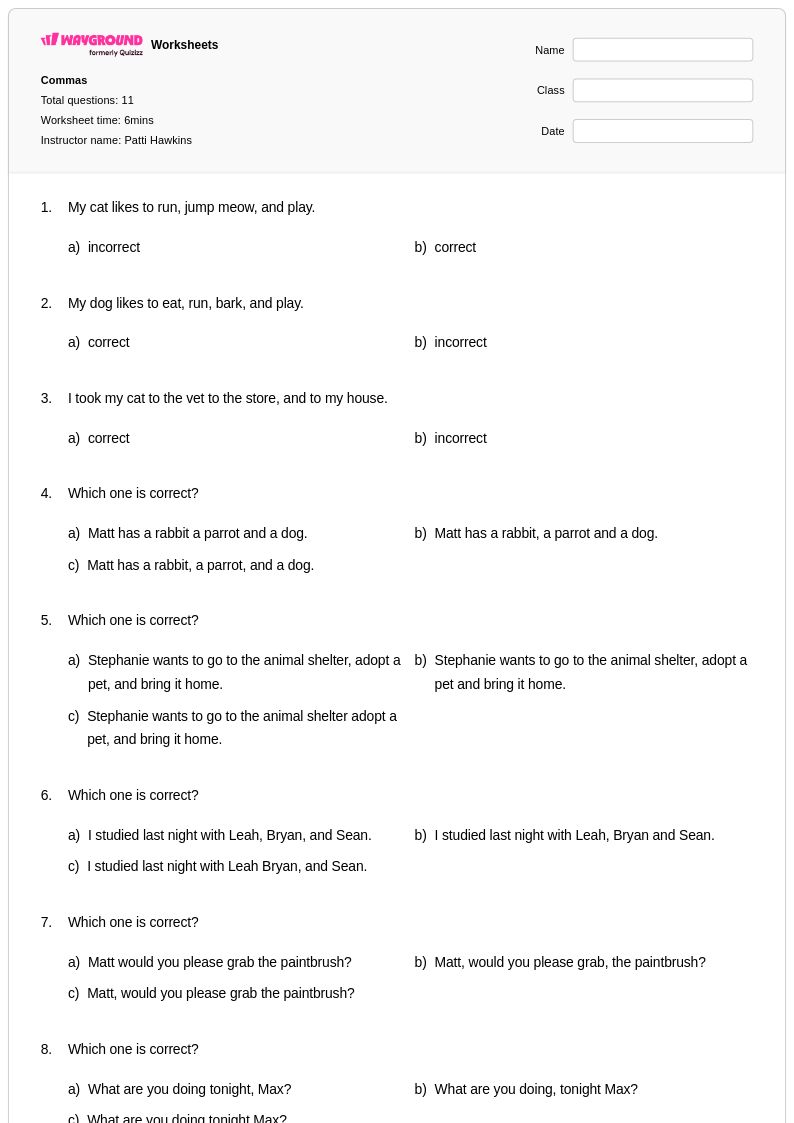
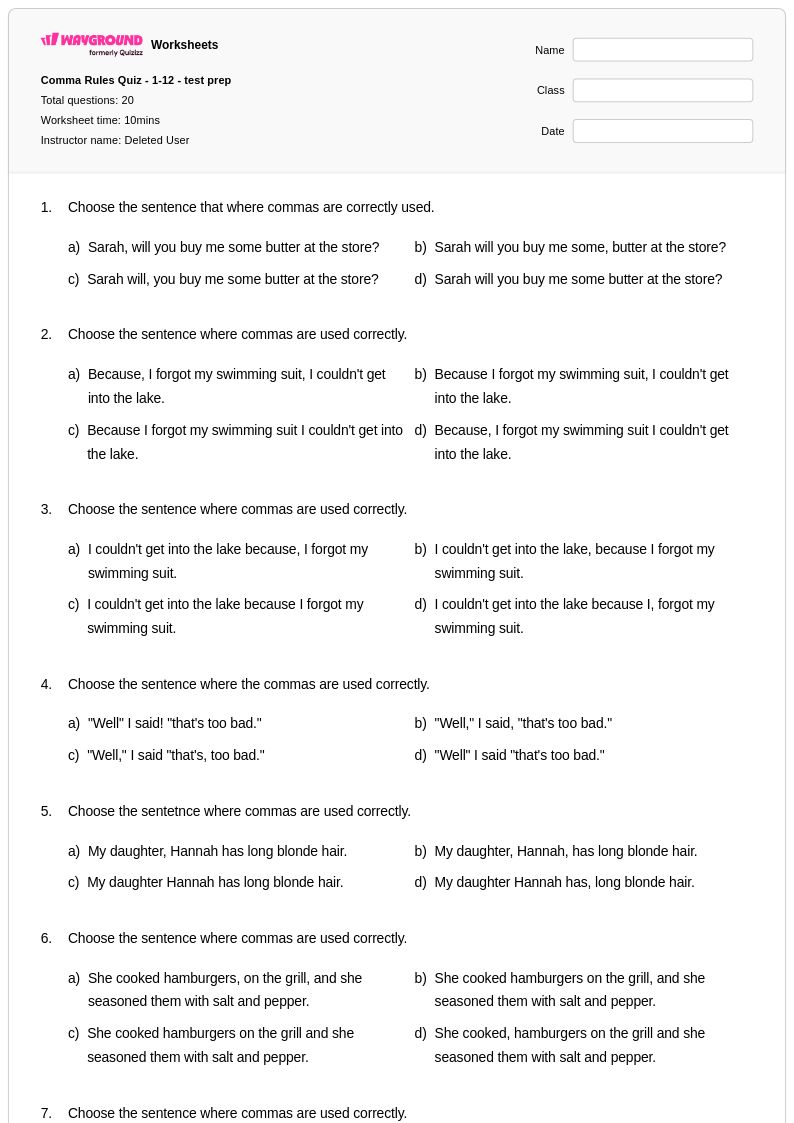
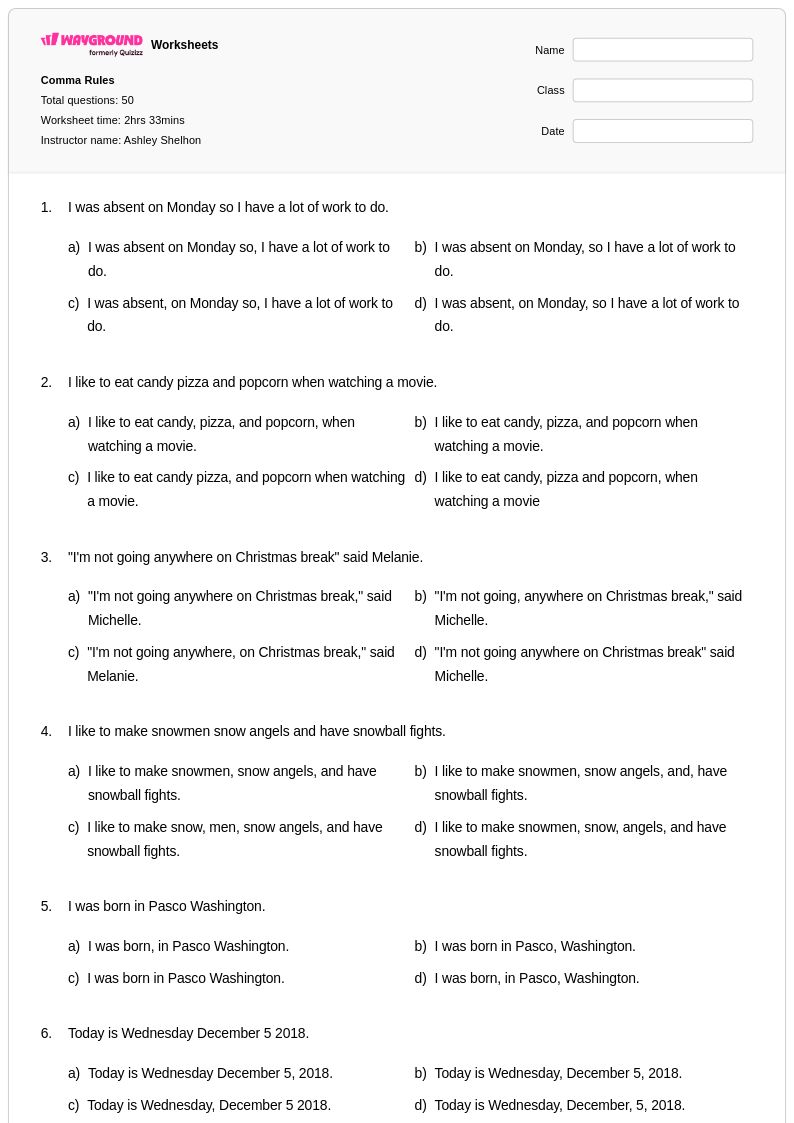
Year 4 comma rules worksheets from Wayground help students master essential punctuation skills through engaging printables and practice problems with complete answer keys.
Explore printable Comma Rules worksheets for Year 4
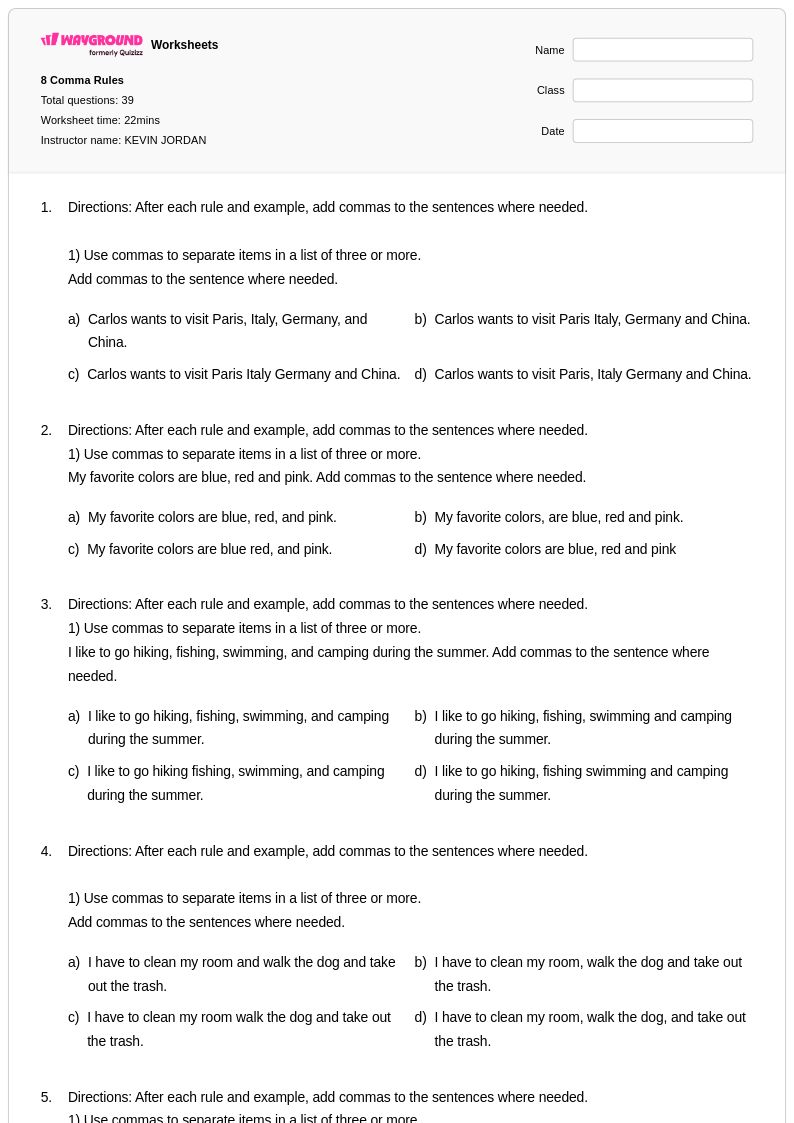
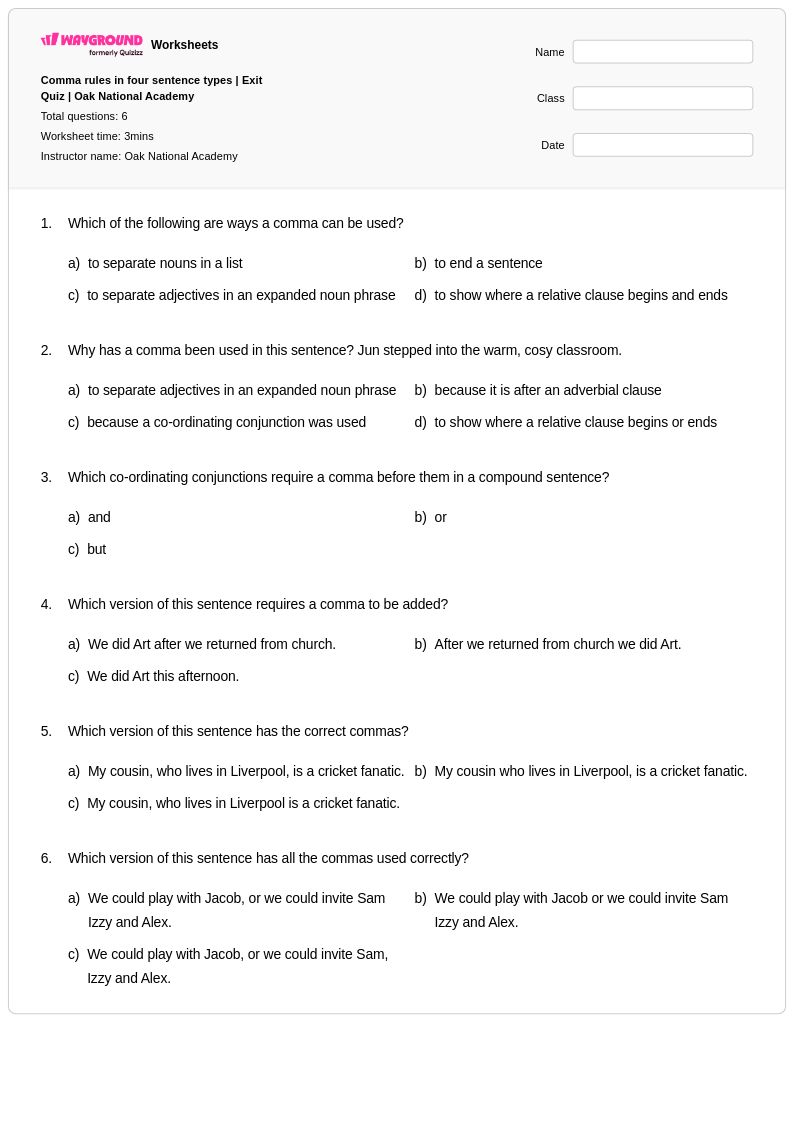
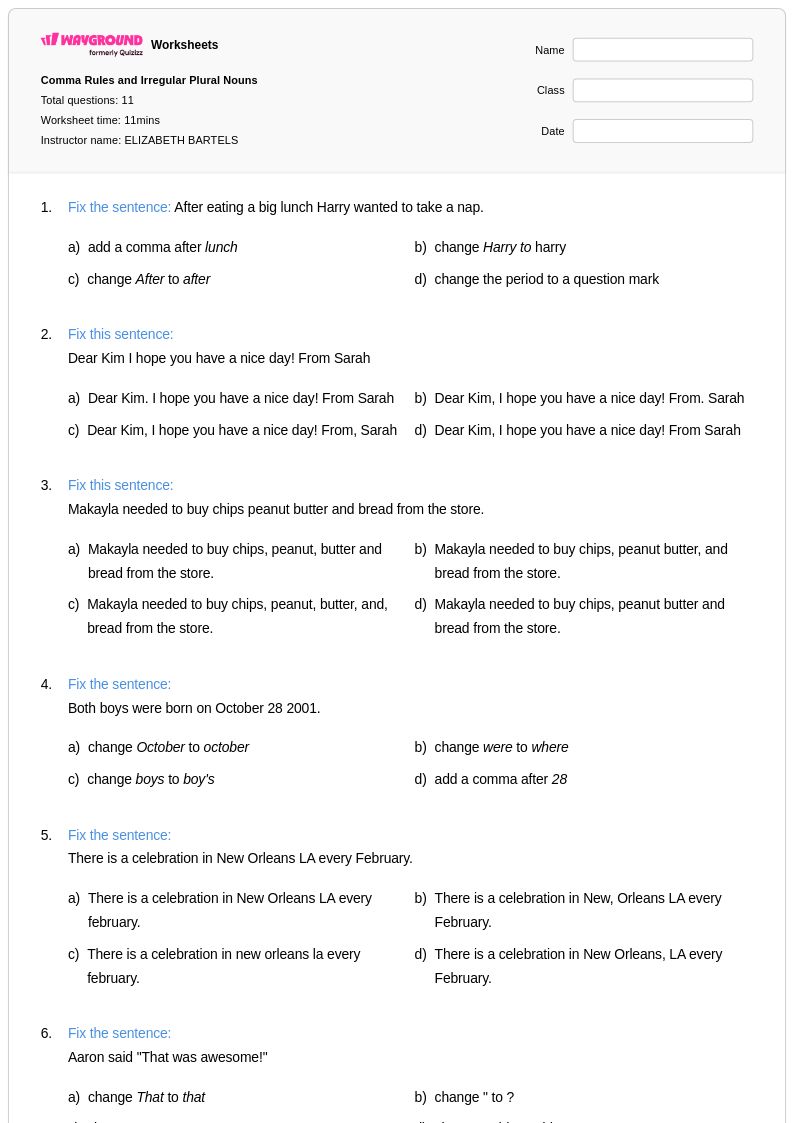
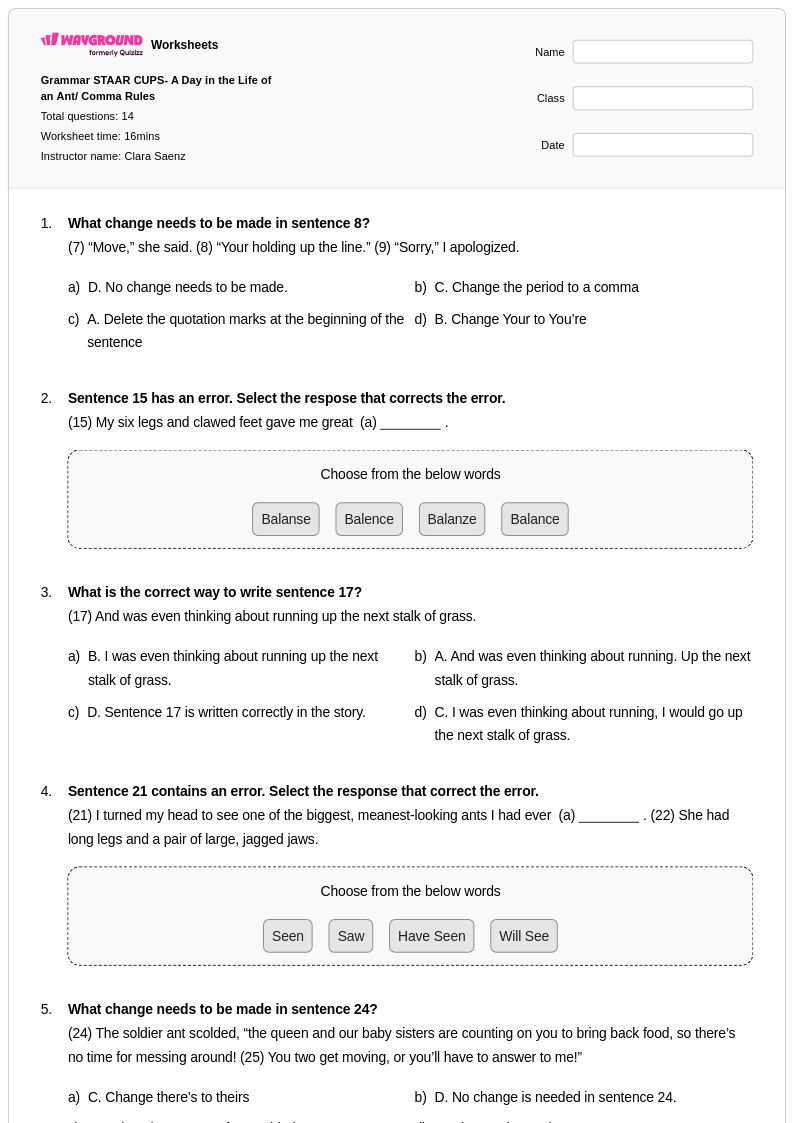
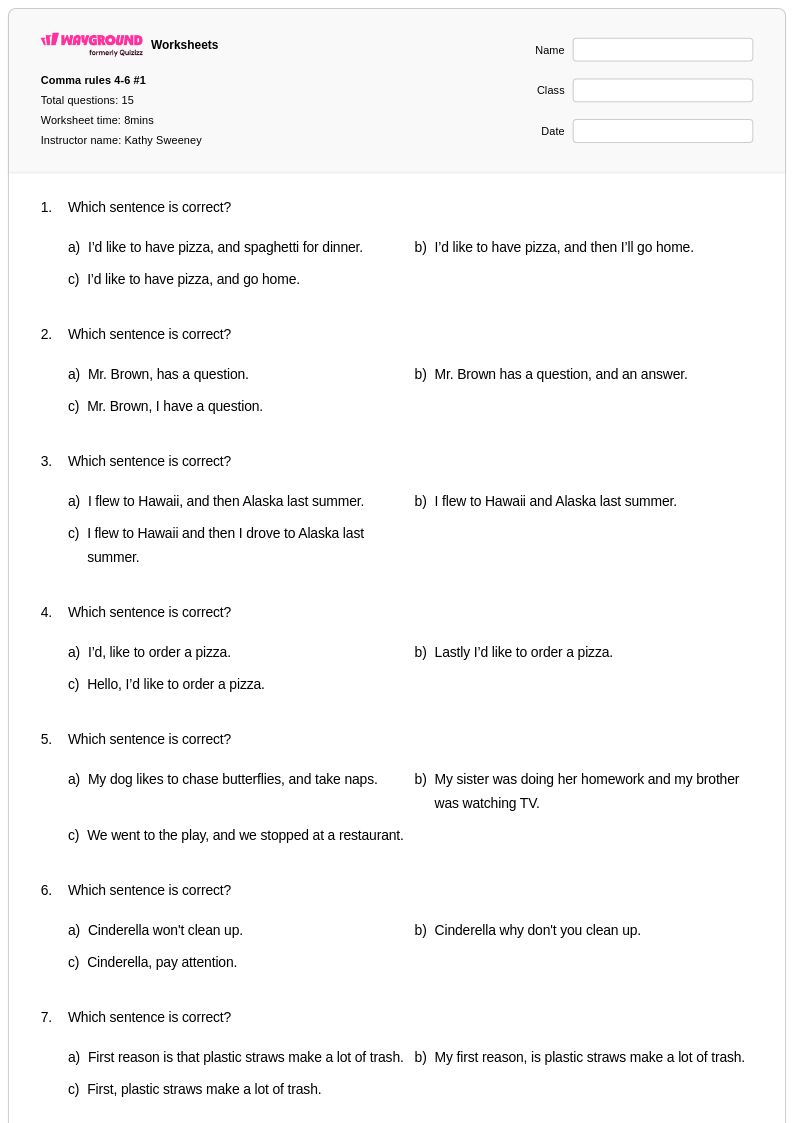
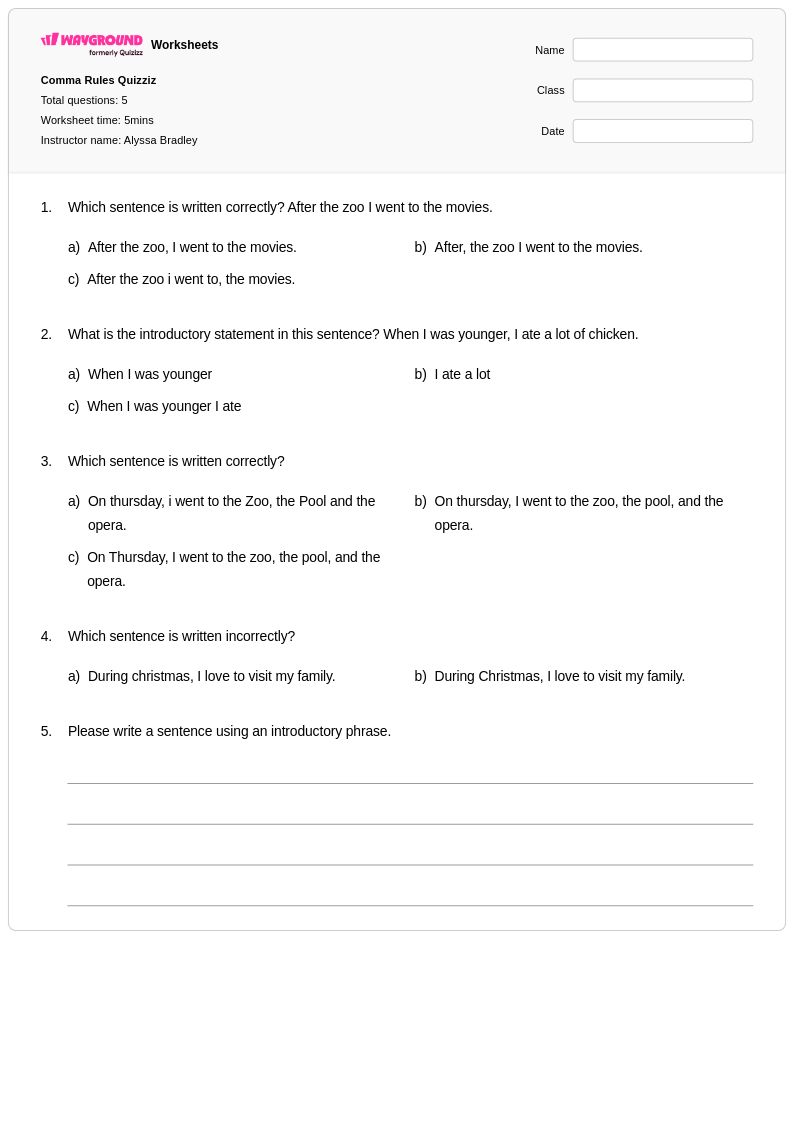
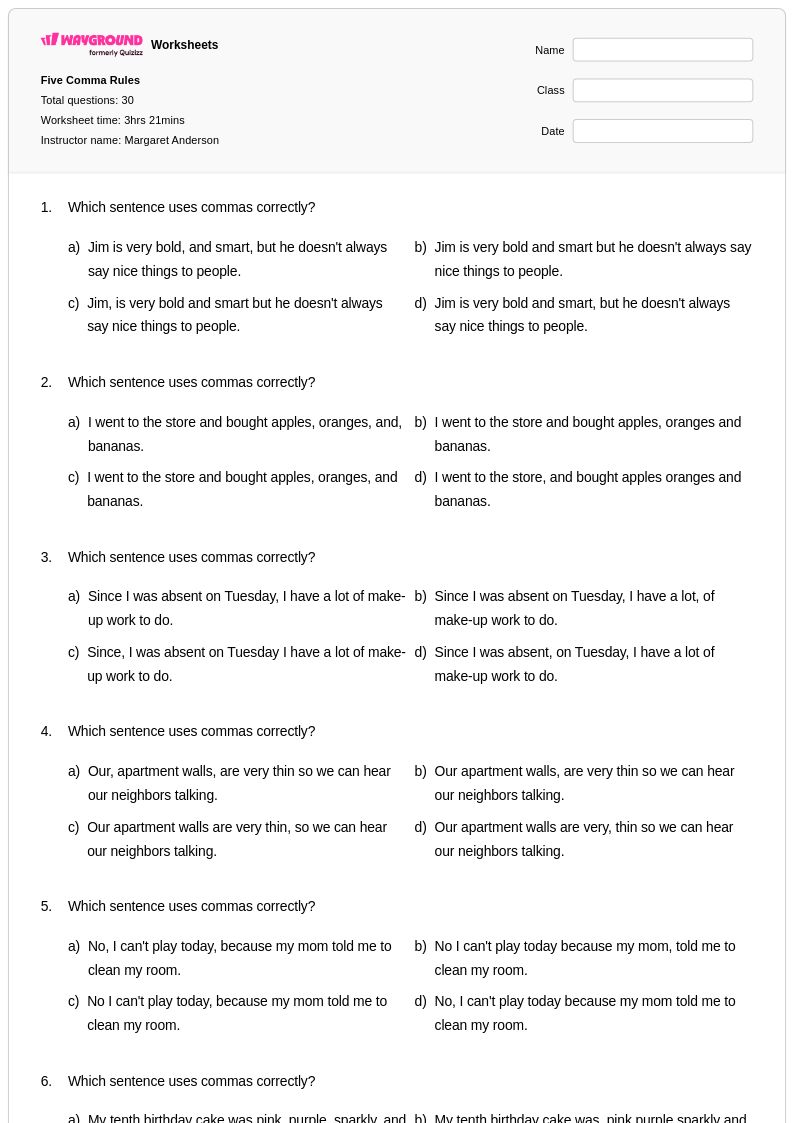
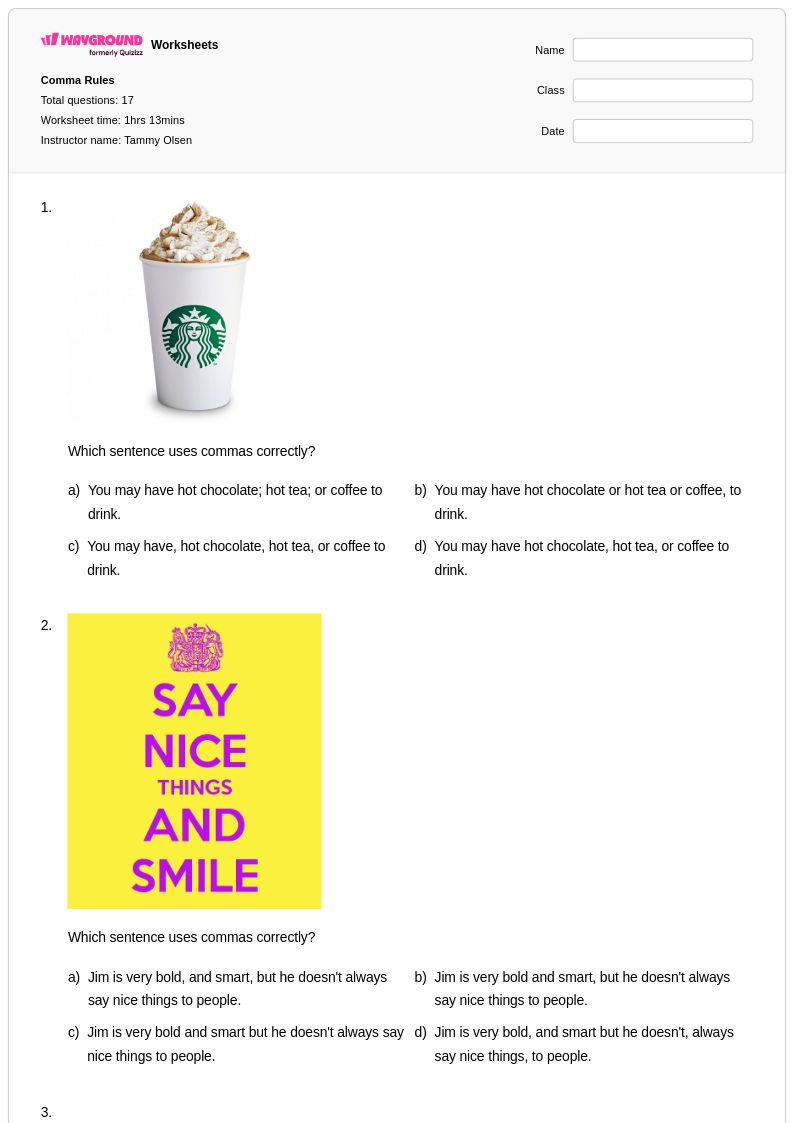
Comma rules worksheets for Year 4 students available through Wayground (formerly Quizizz) provide comprehensive practice with essential punctuation skills that form the foundation of clear written communication. These carefully designed printables focus on key comma applications including separating items in a series, setting off introductory words and phrases, combining sentences with coordinating conjunctions, and punctuating addresses and dates. Each worksheet collection includes detailed answer keys and structured practice problems that systematically build student confidence with comma placement rules. The free pdf format allows teachers to easily distribute materials for both classroom instruction and independent practice, ensuring students develop automatic recognition of when and where commas belong in their writing.
Wayground (formerly Quizizz) empowers educators with millions of teacher-created comma rules resources that streamline lesson planning and differentiated instruction for Year 4 grammar and mechanics. The platform's robust search and filtering capabilities enable teachers to quickly locate worksheets aligned with specific standards and learning objectives, while customization tools allow for seamless adaptation to meet diverse student needs. These digital and printable materials support targeted remediation for struggling learners, enrichment opportunities for advanced students, and consistent skill practice across varying ability levels. Teachers can confidently integrate these comma rules worksheets into their grammar instruction knowing that each resource has been developed by experienced educators who understand the developmental progression of punctuation skills at the fourth-grade level.
FAQs
How do I teach comma rules effectively in the classroom?
Teach comma rules by isolating one rule at a time rather than presenting all uses simultaneously. Start with high-frequency rules like commas in a series and after introductory elements, then progress to compound sentences and nonessential clauses. Using authentic mentor texts alongside targeted practice helps students see comma rules in context before applying them independently in their own writing.
What exercises help students practice comma placement?
Effective comma practice exercises include adding commas to unpunctuated sentences, identifying and correcting comma errors in flawed passages, and combining short sentences into compound or complex constructions that require commas. Exercises that isolate specific rules — such as a worksheet focused solely on introductory phrases — build stronger automaticity than mixed-rule practice alone.
What are the most common comma mistakes students make?
The most frequent comma errors include comma splices, where two independent clauses are joined with only a comma, and omitting commas after introductory elements such as prepositional phrases or dependent clauses. Students also commonly misplace or omit commas around nonessential appositives and relative clauses, and confuse when to use a comma before a coordinating conjunction in compound versus simple sentences.
How can I use comma rules worksheets to support struggling writers?
For struggling writers, target remediation by selecting worksheets that address one specific comma rule at a time rather than assigning comprehensive mixed-rule practice. On Wayground, teachers can apply accommodations such as Read Aloud so students can hear questions read to them, and Reduced Answer Choices to lower cognitive load during editing exercises. These settings can be assigned to individual students while the rest of the class works with default settings.
How do I use Wayground's comma rules worksheets in my classroom?
Wayground's comma rules worksheets are available as printable PDFs for paper-based practice and in digital formats for interactive online learning environments, making them usable in traditional classrooms, computer labs, or hybrid settings. Teachers can also host worksheets as a quiz directly on Wayground. Each worksheet includes a complete answer key, so they work equally well for guided instruction, independent practice, homework assignments, or self-paced review.
How do comma rules connect to broader writing skills?
Comma rules are directly tied to sentence clarity, readability, and meaning — a misplaced or missing comma can alter the interpretation of a sentence entirely. Consistent comma instruction reinforces students' ability to construct varied sentence structures, which improves both their editing skills and the overall sophistication of their written communication across all subject areas.