Free Printable Age of Exploration Worksheets for Year 9
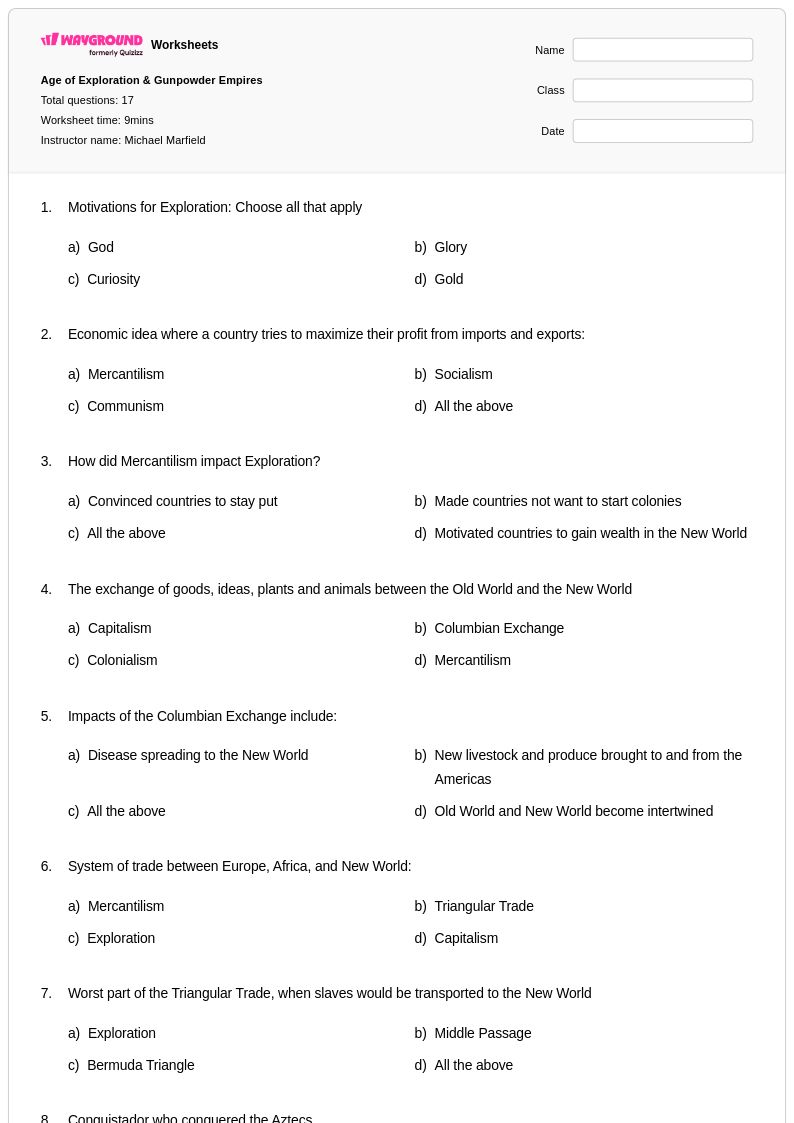
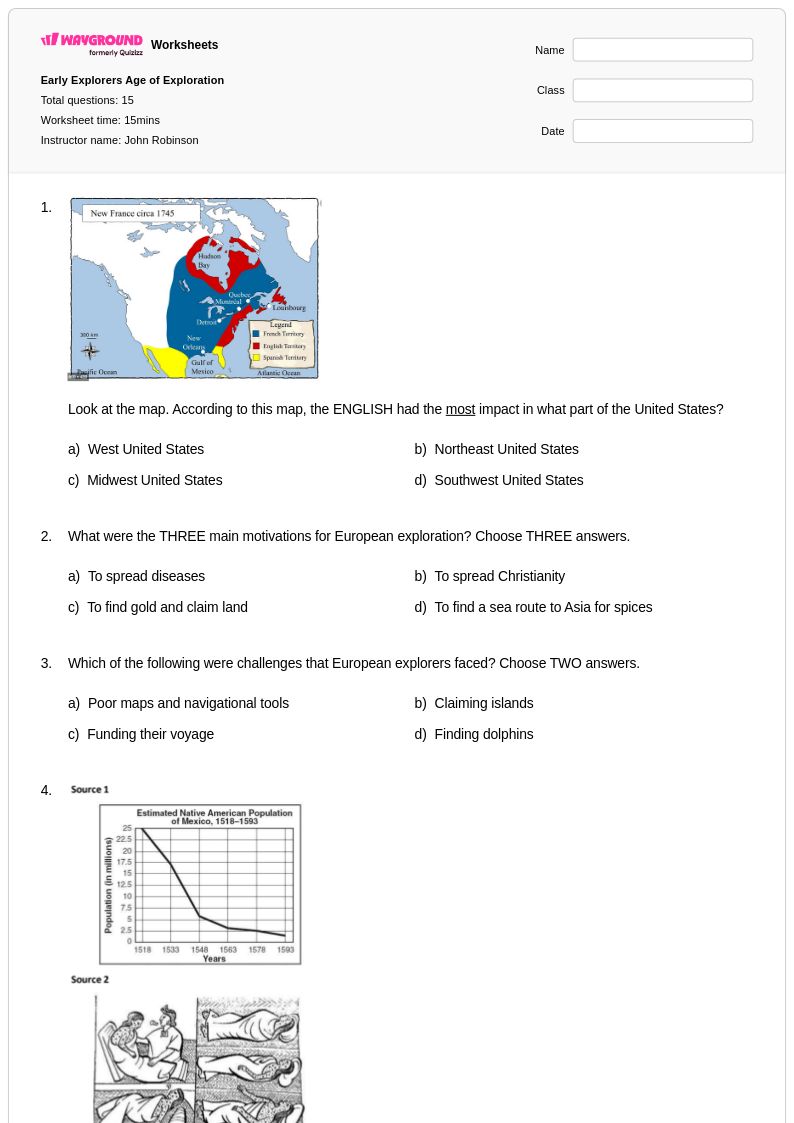
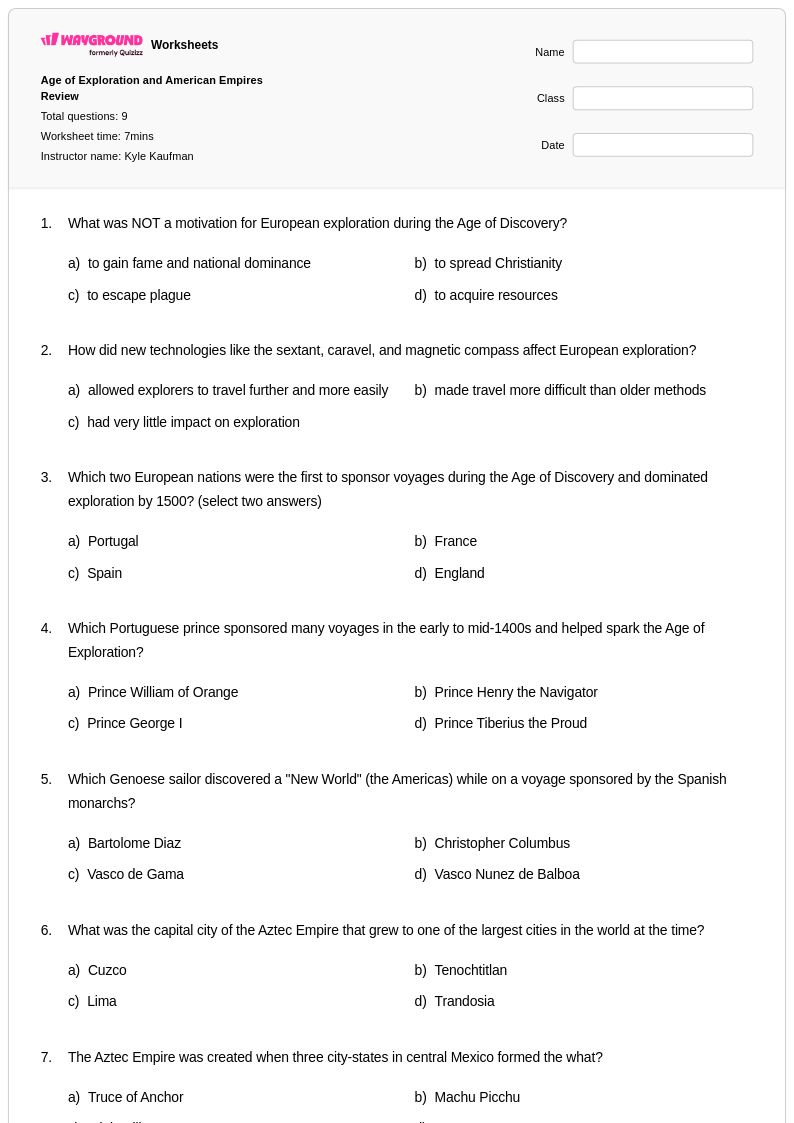
Explore Year 9 Age of Exploration worksheets and printables that help students master key explorers, trade routes, and colonial impacts through engaging practice problems with comprehensive answer keys.
Explore printable Age of Exploration worksheets for Year 9
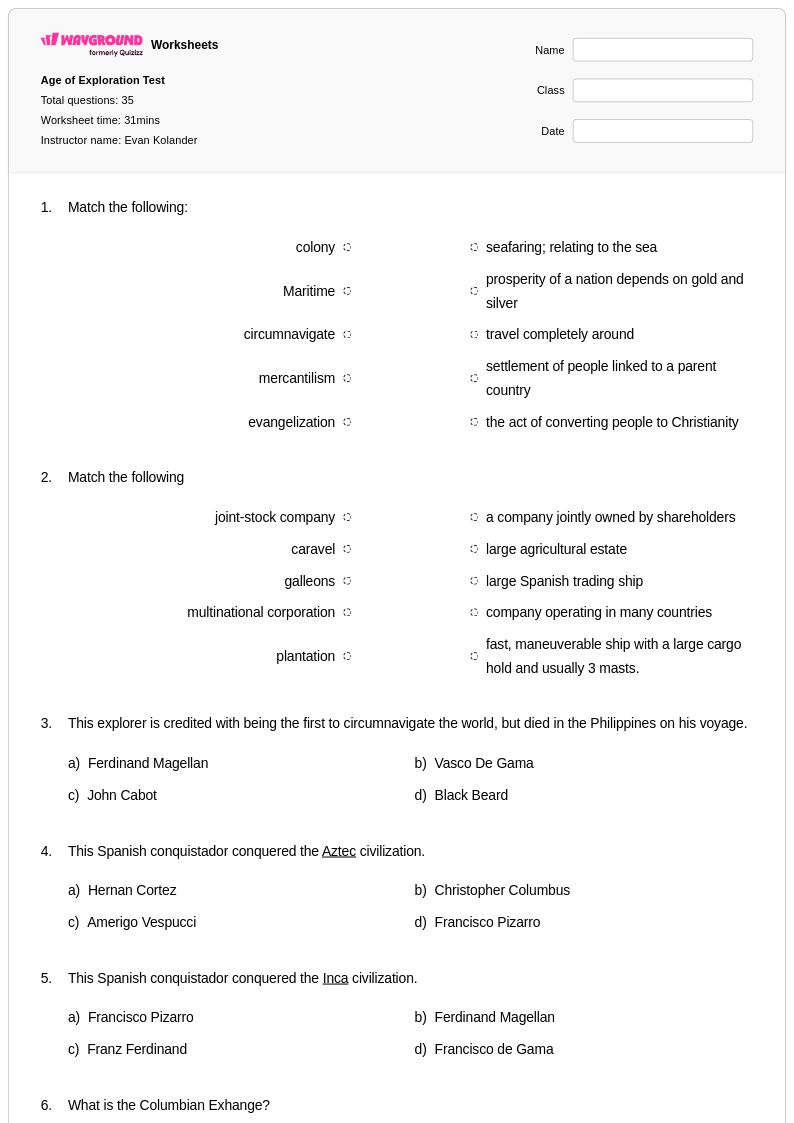
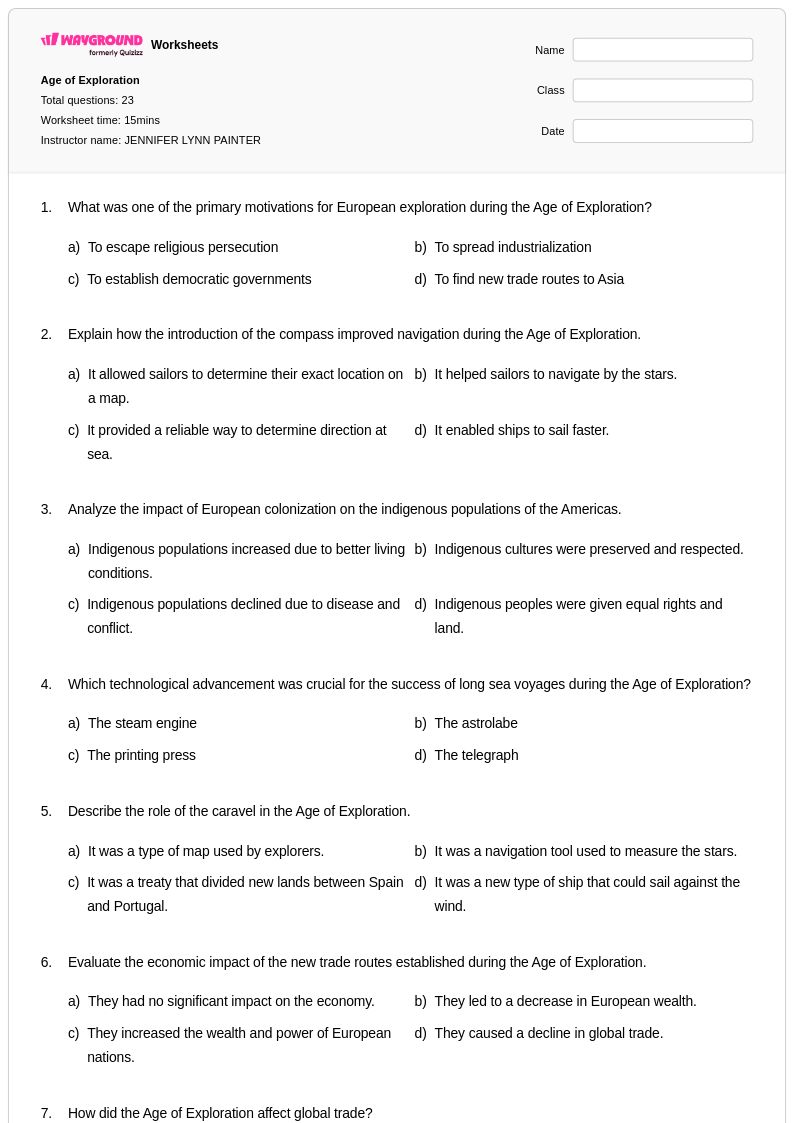
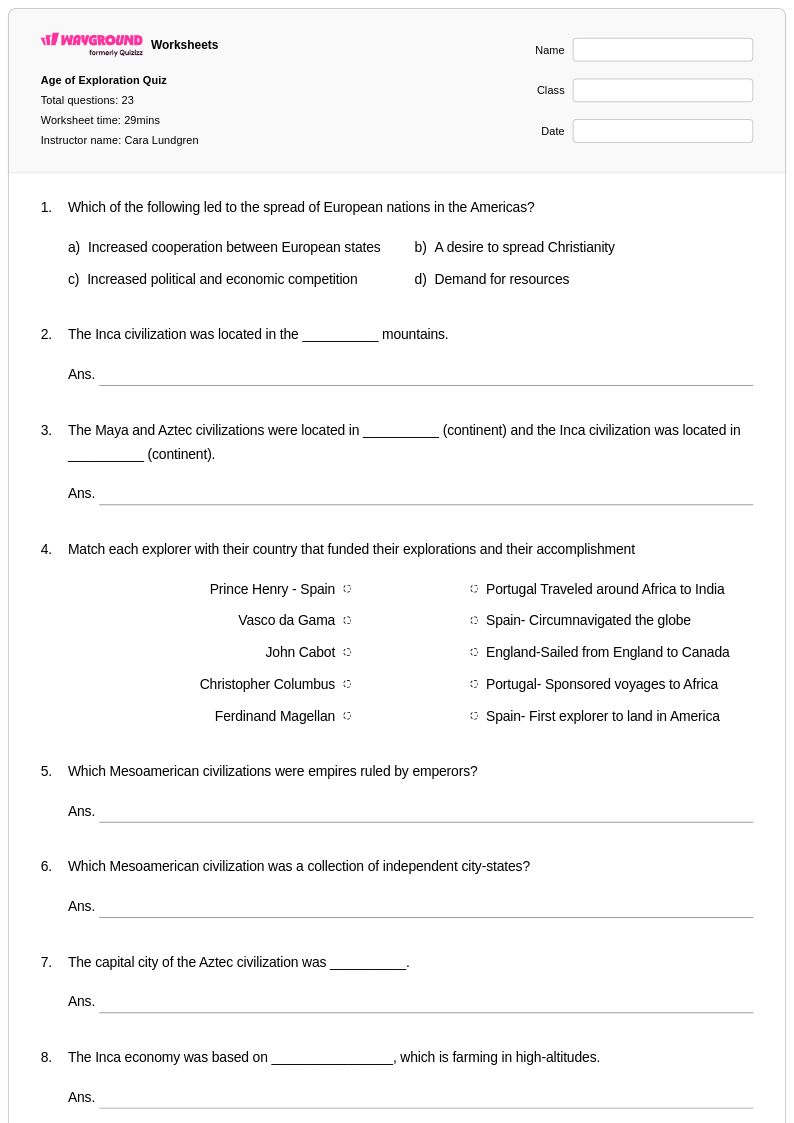
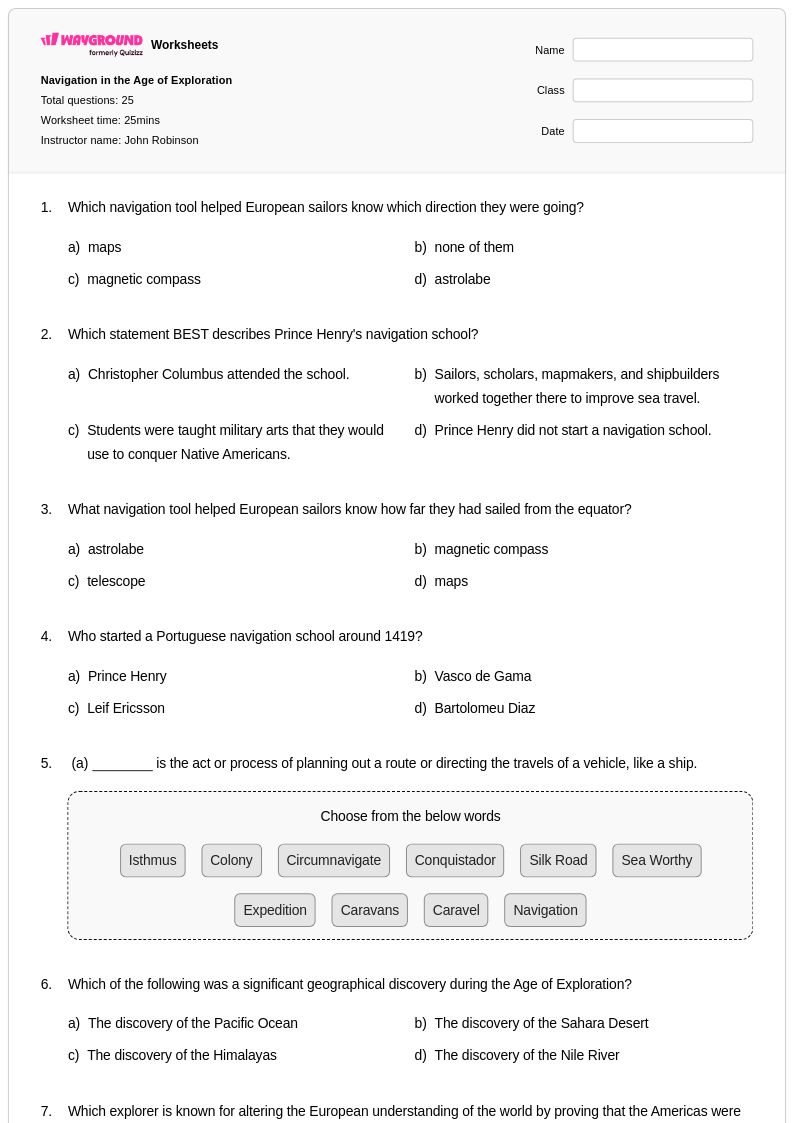
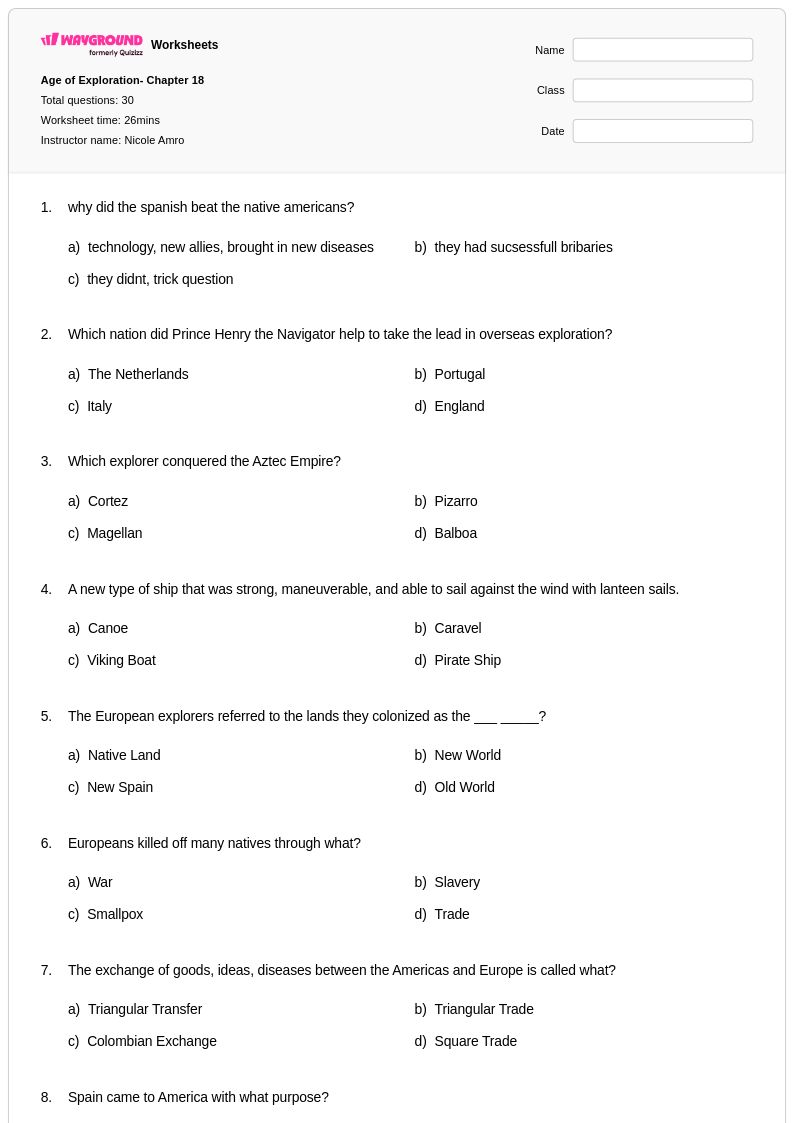
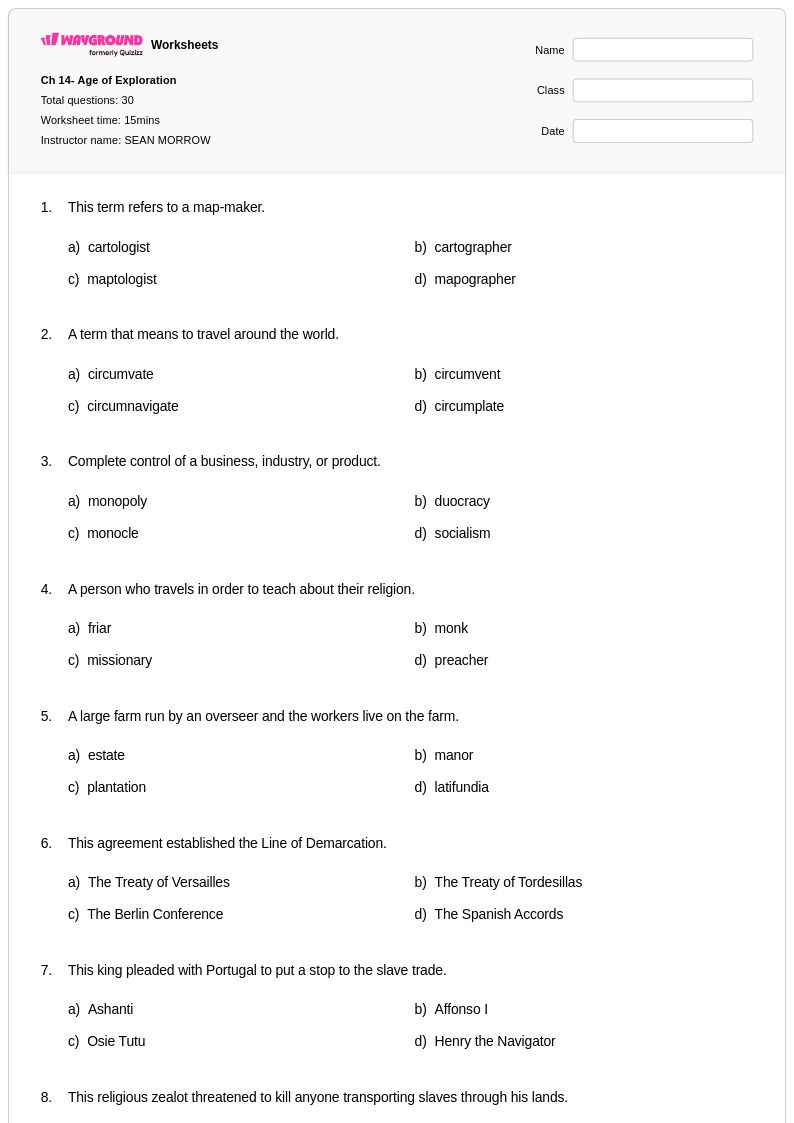
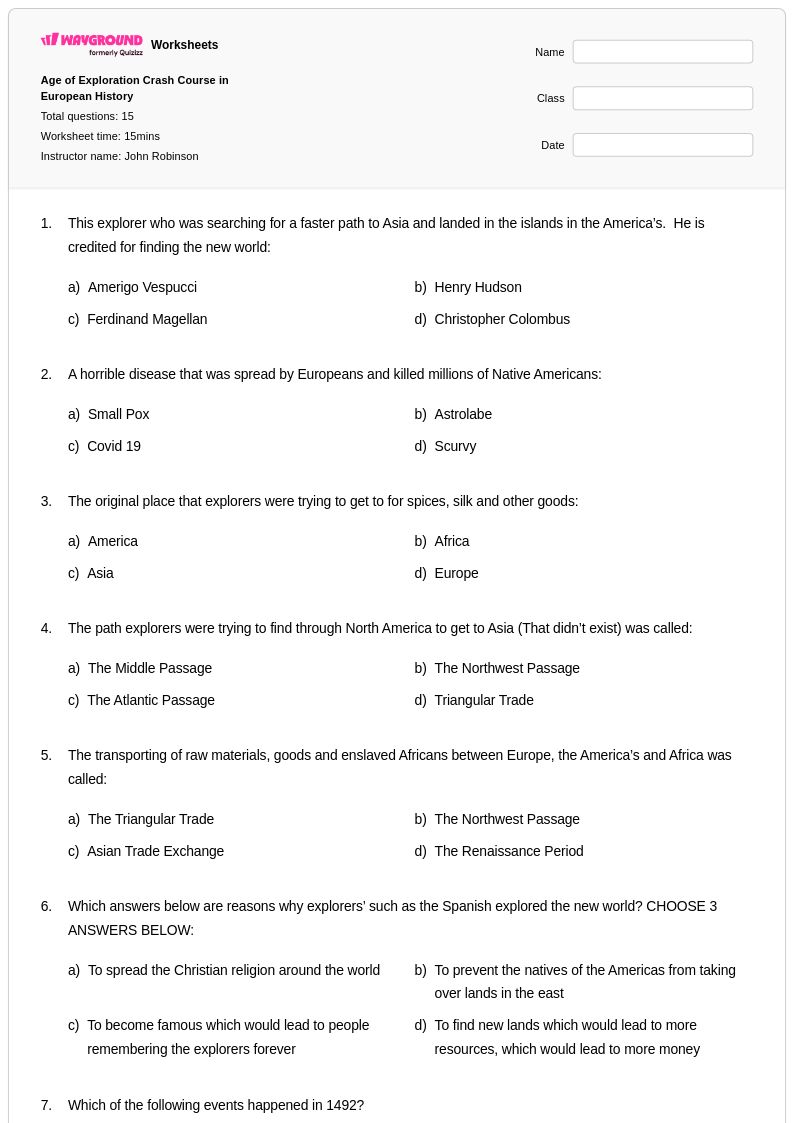
Age of Exploration worksheets for Year 9 students through Wayground (formerly Quizizz) provide comprehensive coverage of this pivotal period in world history, spanning the 15th through 17th centuries when European nations launched ambitious maritime expeditions that transformed global trade, politics, and cultural exchange. These expertly designed educational resources strengthen critical thinking skills as students analyze the motivations behind exploration, evaluate the technological innovations that made long-distance voyages possible, and examine the profound consequences of contact between European explorers and indigenous populations across the Americas, Africa, and Asia. Each worksheet collection includes detailed answer keys to support independent learning, while free printables offer teachers flexibility in classroom implementation, and practice problems reinforce essential concepts such as mercantilism, colonization patterns, and the Columbian Exchange through engaging activities that bring this transformative era to life.
Wayground (formerly Quizizz) empowers educators with millions of teacher-created resources specifically focused on Age of Exploration content, featuring robust search and filtering capabilities that allow instructors to locate materials perfectly aligned with their curriculum standards and learning objectives. The platform's differentiation tools enable teachers to customize worksheets based on individual student needs, while flexible formatting options provide both printable and digital versions, including convenient pdf downloads that streamline lesson planning and resource distribution. These comprehensive collections support diverse instructional approaches, from targeted remediation for students struggling with complex historical concepts to enrichment activities that challenge advanced learners to make deeper connections between exploration-era events and modern global interactions, ensuring that every Year 9 student can develop mastery of this crucial period in world history through consistent skill practice and meaningful engagement with primary and secondary sources.
FAQs
How do I teach the Age of Exploration in middle or high school history?
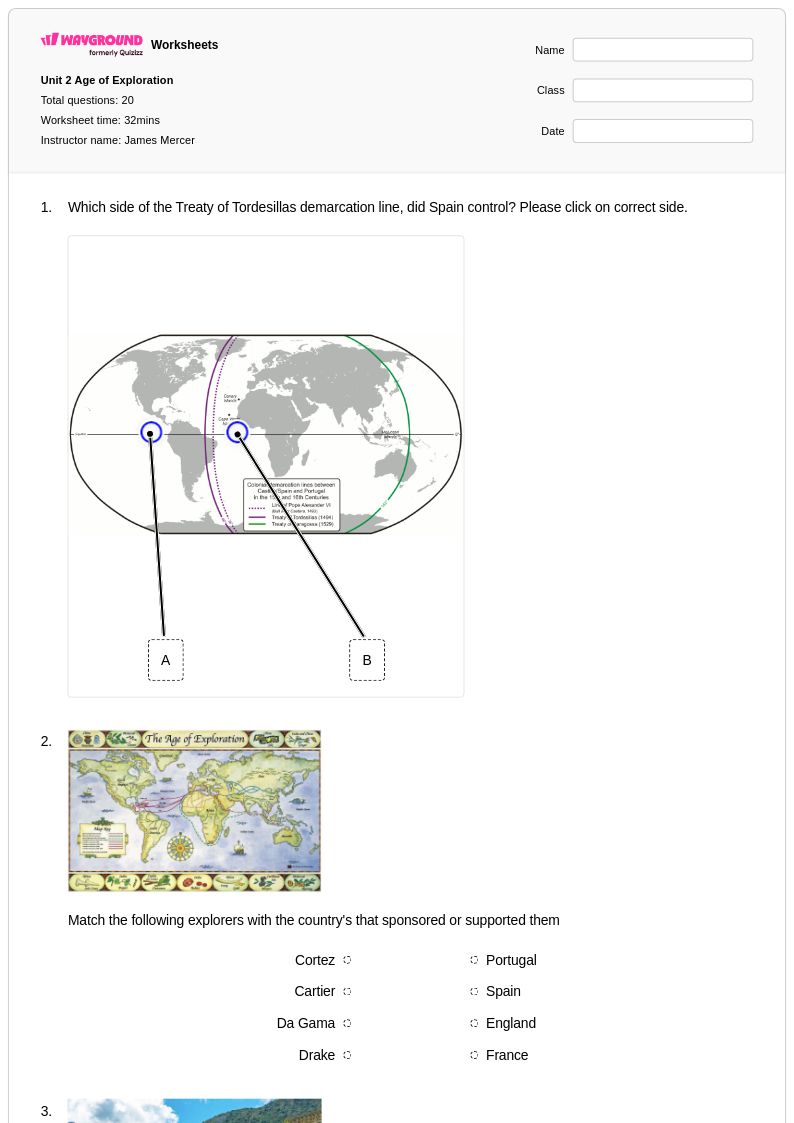
Teaching the Age of Exploration effectively means grounding students in the motivations behind European expansion before moving into specific voyages and figures. Start with the economic pressures and technological advances of the 15th century, then use map interpretation activities to trace routes taken by explorers like Columbus, Magellan, and Vasco da Gama. Connecting these journeys to their consequences, including shifts in global trade and the impact on indigenous populations, helps students see exploration as a process rather than a series of isolated events.
What kinds of exercises help students practice Age of Exploration content?
Effective practice for the Age of Exploration includes map labeling tasks, primary source analysis, and comparative studies of different explorers' motivations and outcomes. Students benefit from exercises that ask them to evaluate economic, technological, and cultural factors together rather than in isolation, since exploration was driven by intersecting forces. Structured worksheets that move from recall to analysis, such as those that ask students to explain why a specific route mattered or what a trade agreement meant for both parties, build the higher-order thinking this topic demands.
What misconceptions do students commonly have about the Age of Exploration?
One of the most persistent misconceptions is that European exploration was purely heroic or universally beneficial, which causes students to overlook its devastating consequences for indigenous populations. Students also tend to conflate individual explorers with national ambitions, missing how political and commercial interests shaped these voyages as much as personal curiosity did. Another common error is treating exploration as a European-only phenomenon, when in fact established trade networks in Africa and Asia were already shaping global exchange before Portuguese and Spanish ships arrived.
How do I use Age of Exploration worksheets to prepare students for assessments?
Age of Exploration worksheets work well for test preparation when they mirror the question types students will encounter, including map-based prompts, cause-and-effect analysis, and document interpretation. Assigning worksheets that cover specific explorers, geographic regions, or thematic concepts like colonization and cultural exchange allows teachers to target gaps systematically. Using answer keys for self-correction or peer review after practice sessions also reinforces content retention and helps students identify exactly where their understanding breaks down before a test.
How do I use Wayground's Age of Exploration worksheets in my classroom?
Wayground's Age of Exploration worksheets are available as printable PDFs for traditional classroom use and in digital formats for technology-integrated environments, giving teachers flexibility to assign them as in-class practice, homework, or assessment prep. Teachers can also host worksheets as a quiz directly on Wayground, which makes it easy to track student responses and review results. All worksheets include complete answer keys, so they support both independent student work and teacher-led instruction without additional preparation.
How can I differentiate Age of Exploration instruction for students with different learning needs?
Differentiation for the Age of Exploration can include scaffolded reading supports, modified question sets, and flexible pacing. On Wayground, teachers can apply individual accommodations such as Read Aloud, which allows questions and content to be read to students who need it, extended time for students who require additional processing time, and reduced answer choices to lower cognitive load for students working below grade level. These settings can be applied to specific students while the rest of the class receives default settings, and they carry over to future sessions without needing to be reconfigured each time.