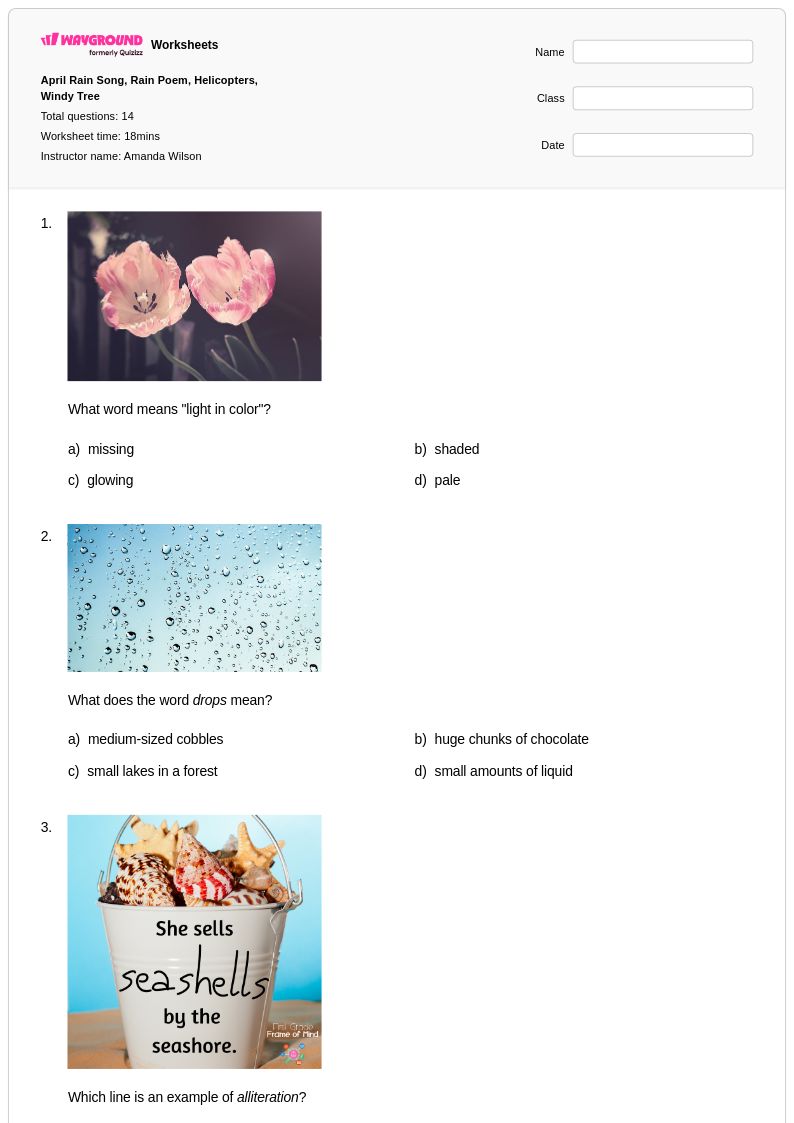
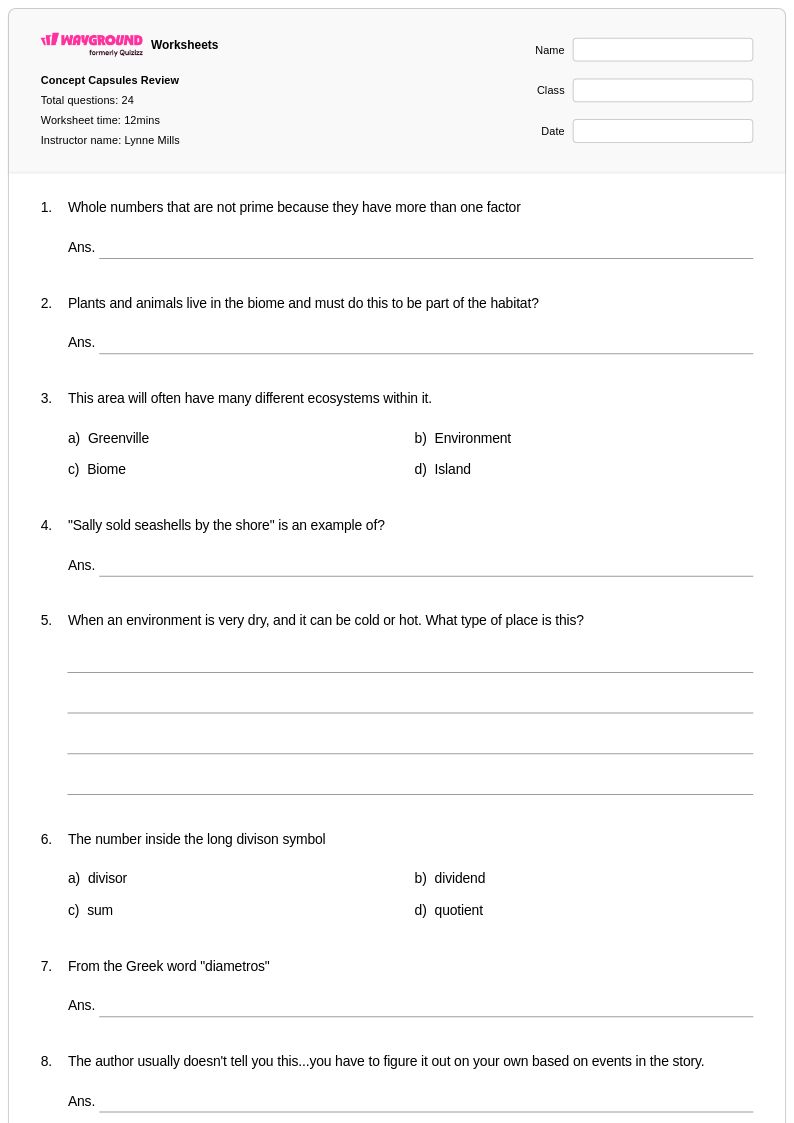
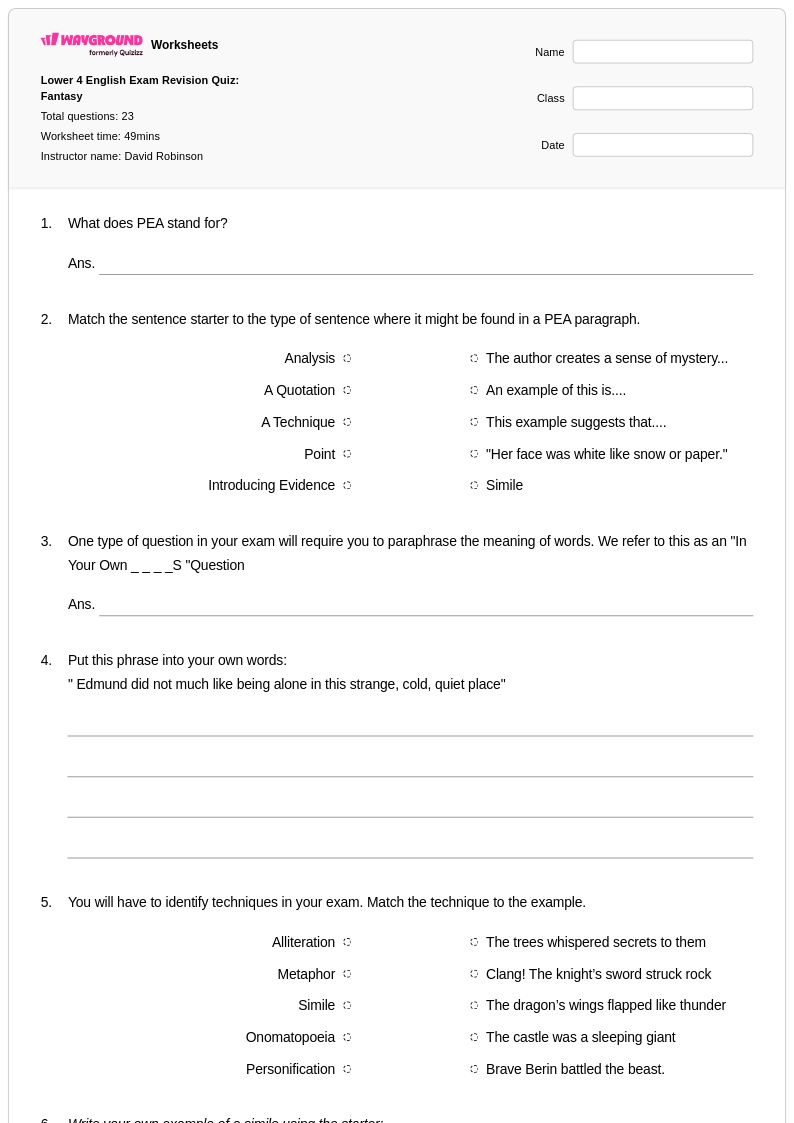
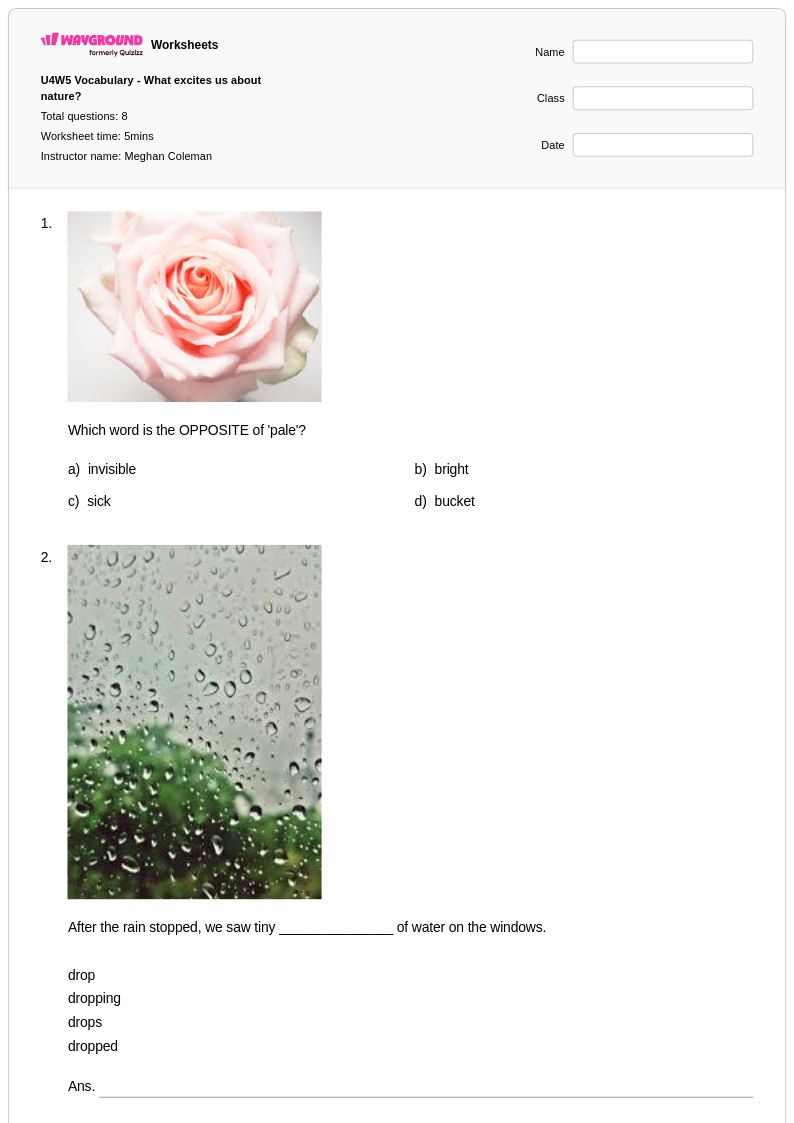
Year 2 alliteration worksheets from Wayground help students practice identifying and creating repeated beginning sounds through engaging printables, free practice problems, and comprehensive answer keys in PDF format.
Explore printable Alliteration worksheets for Year 2
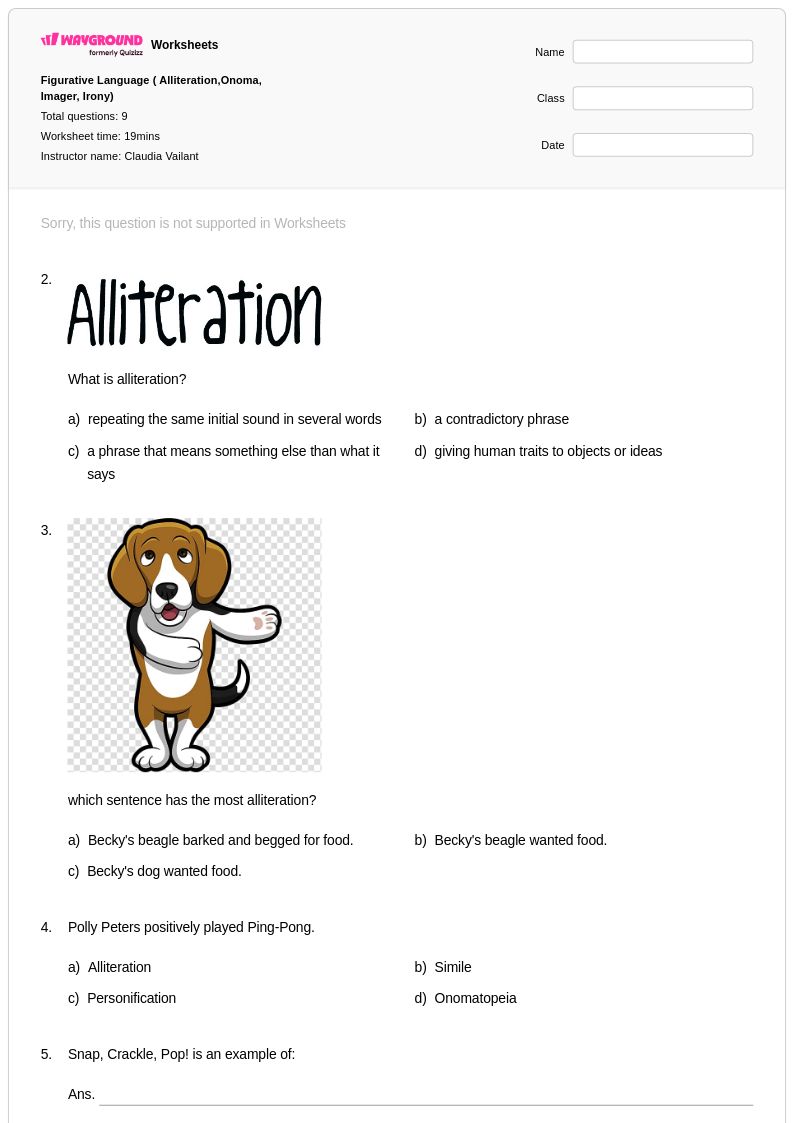
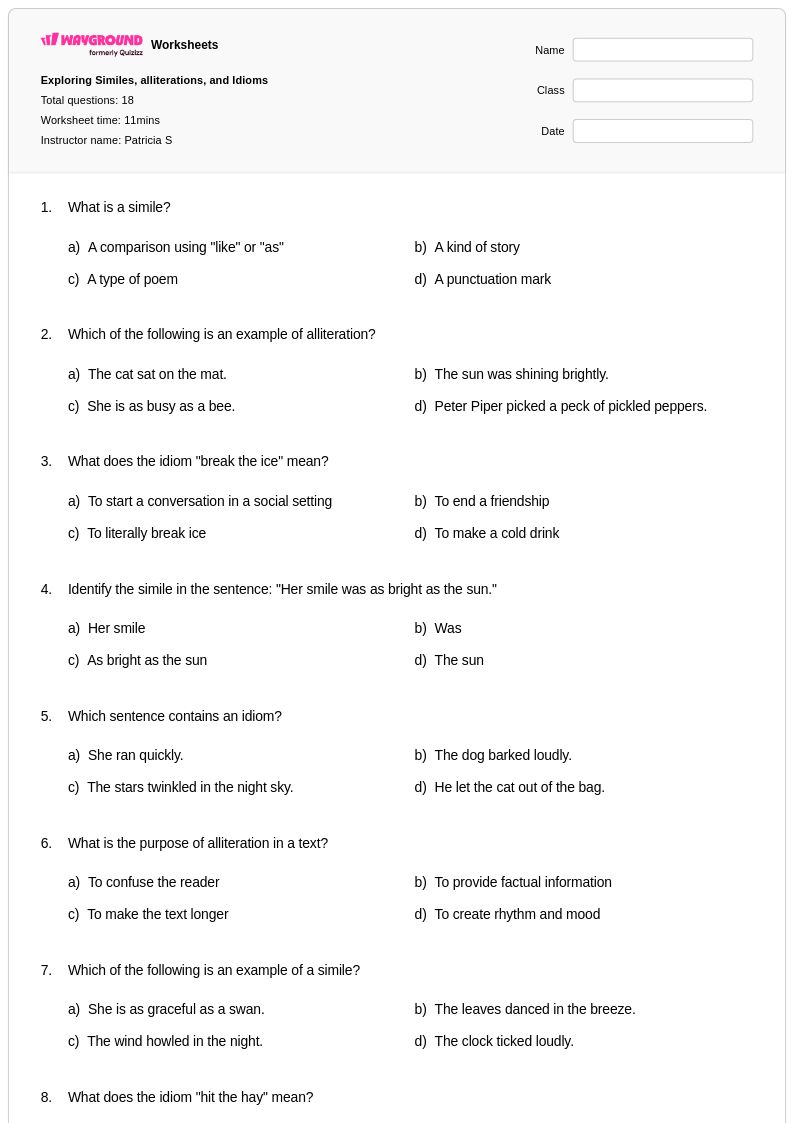
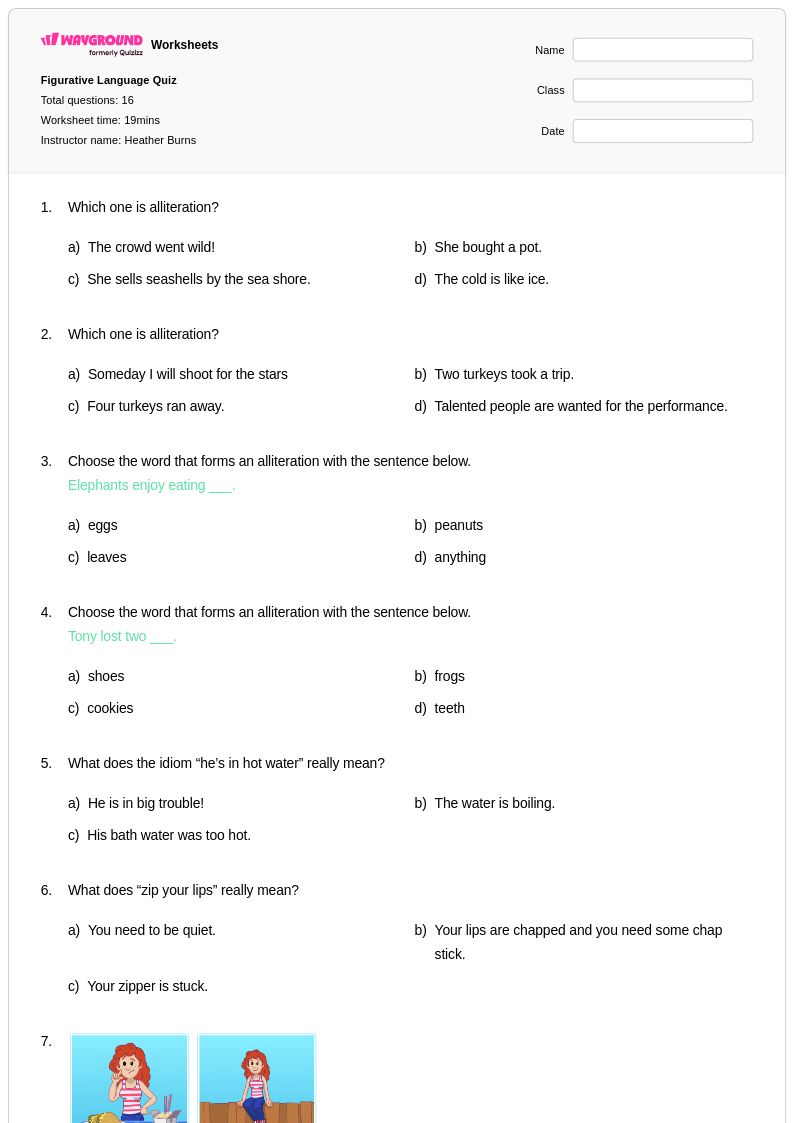
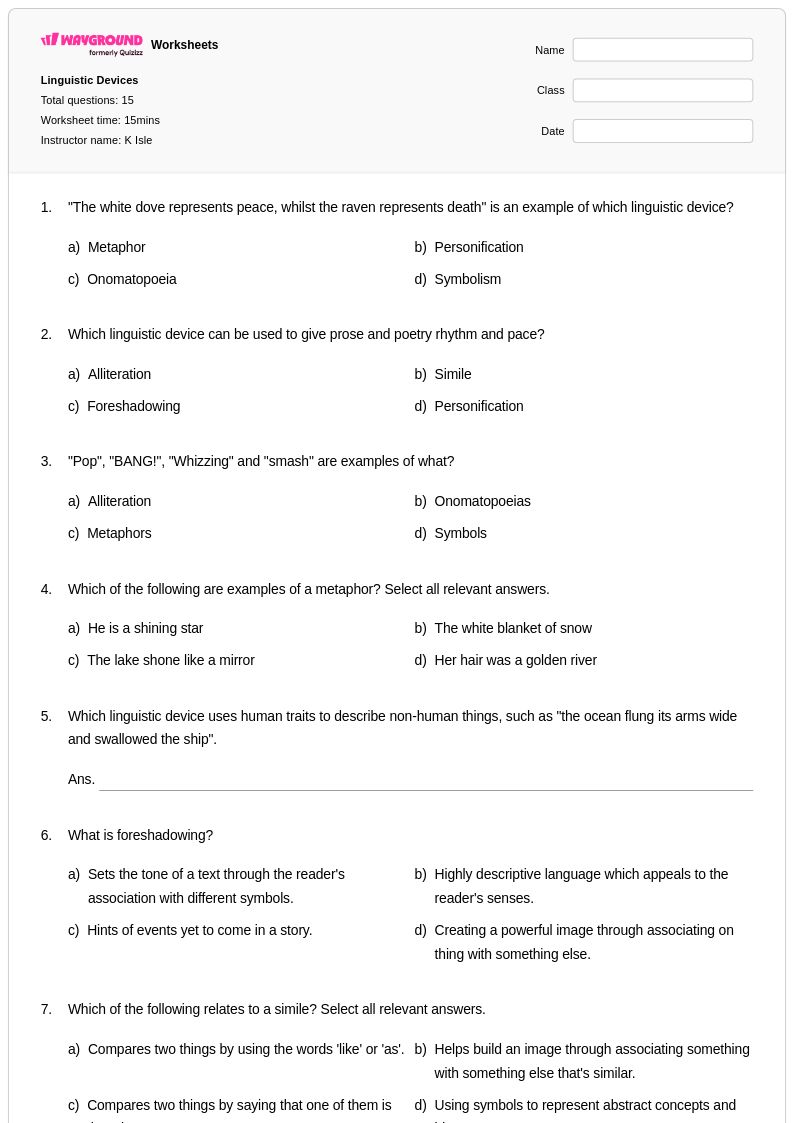
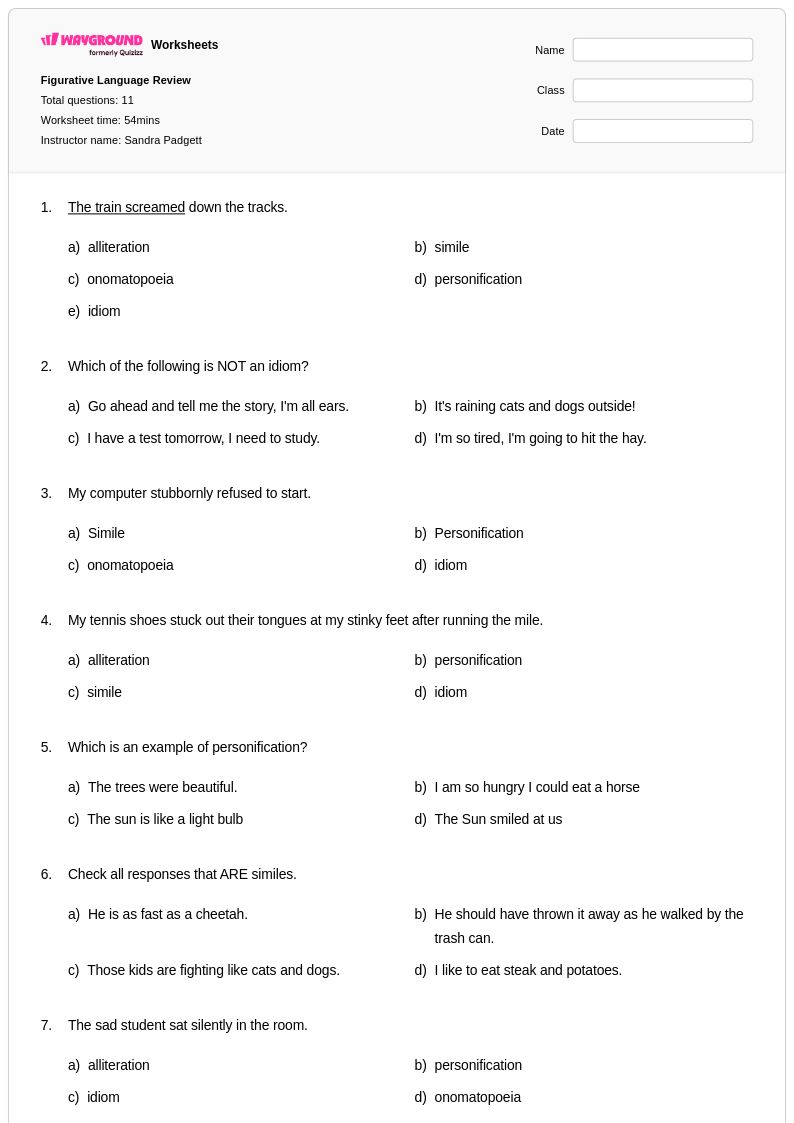
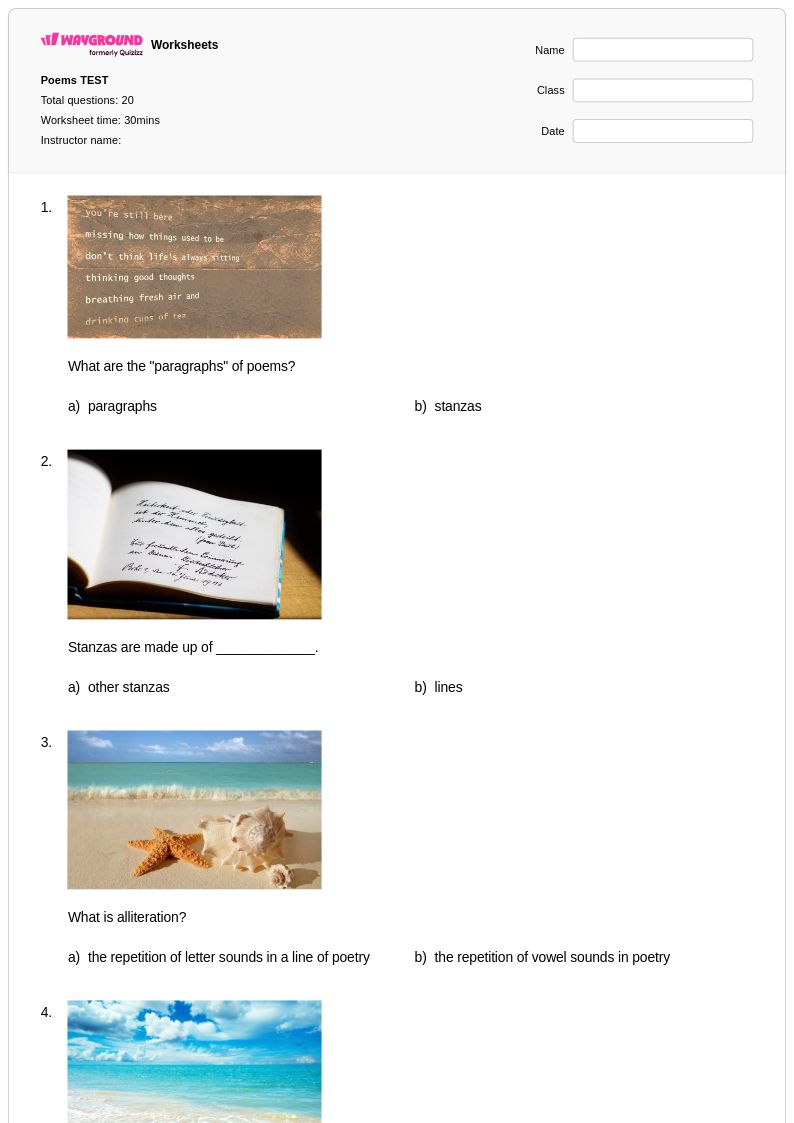
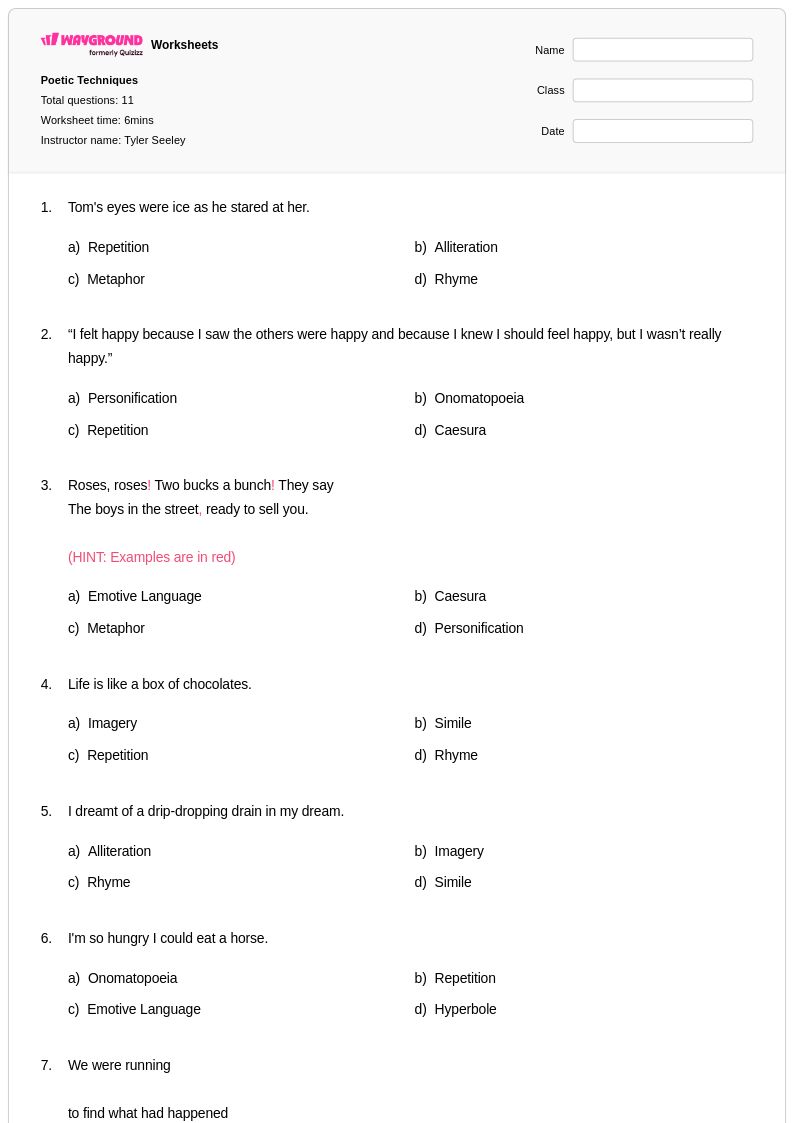
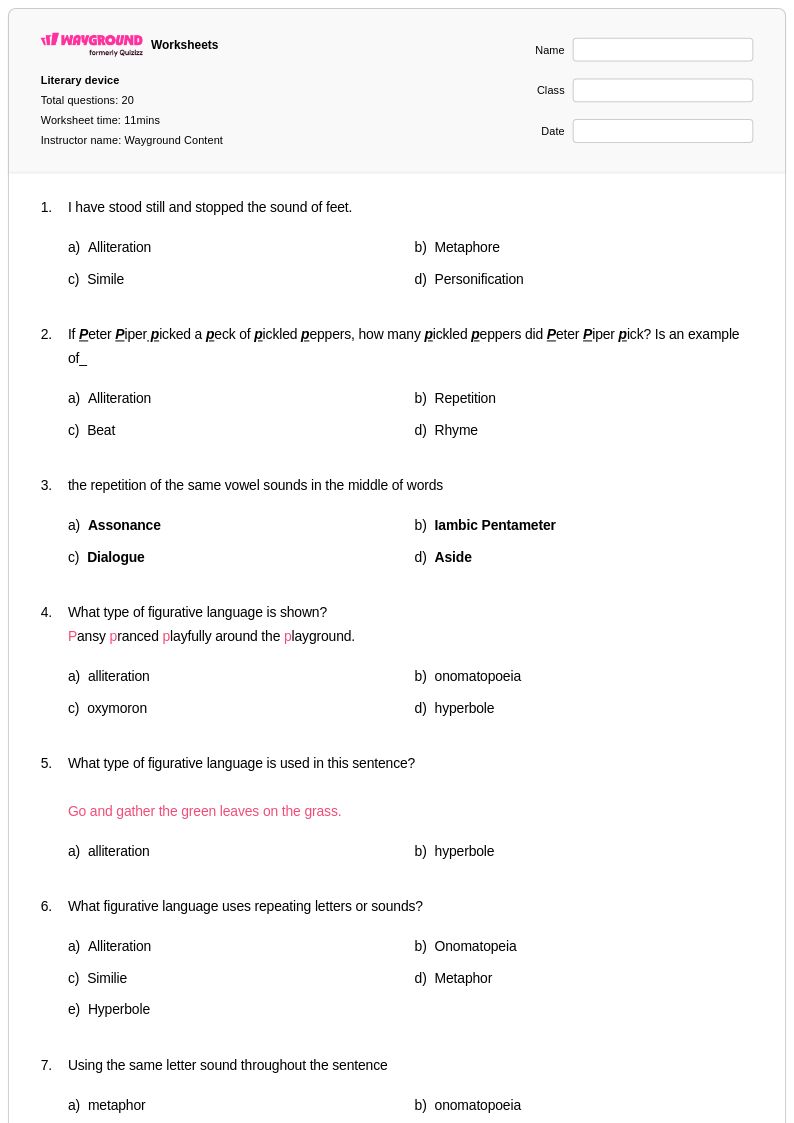
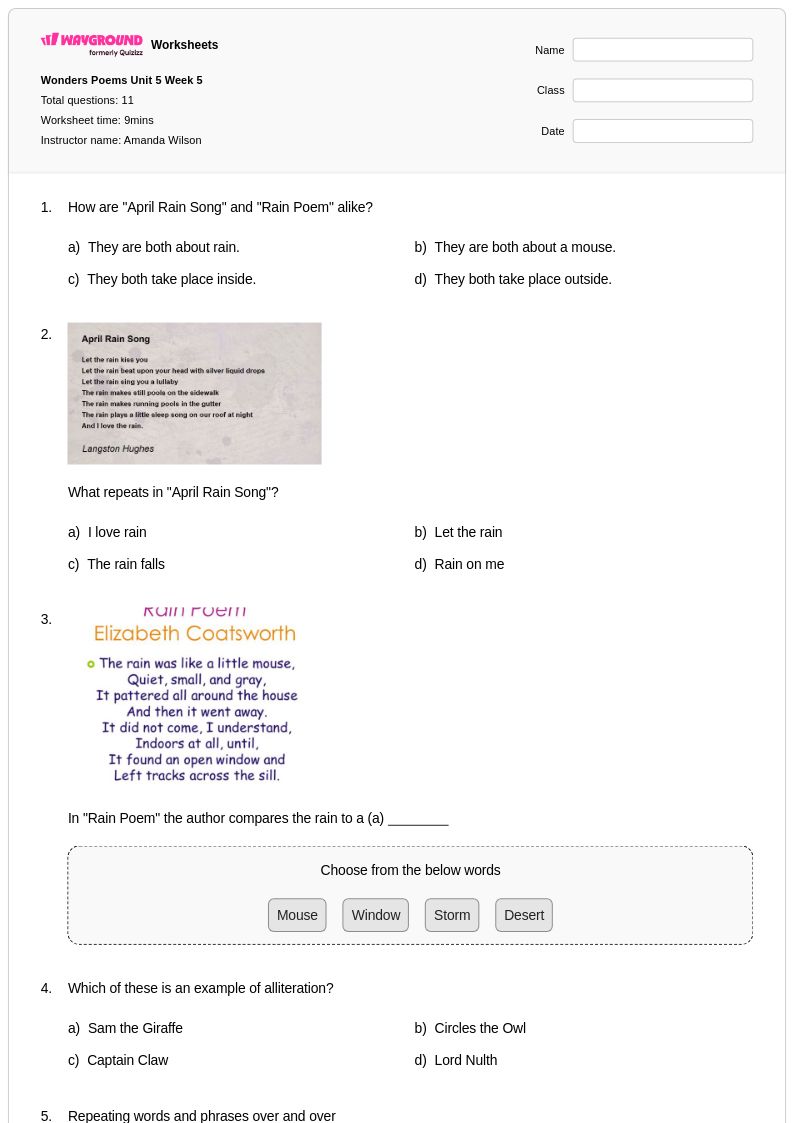
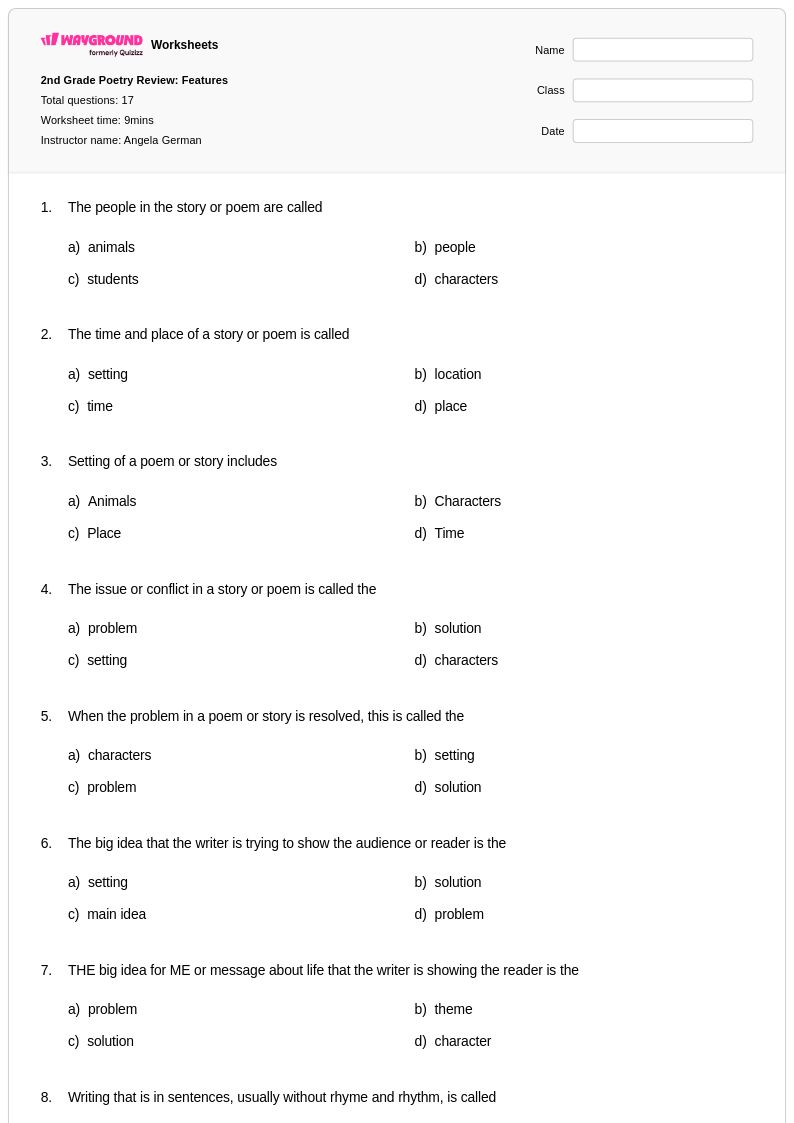
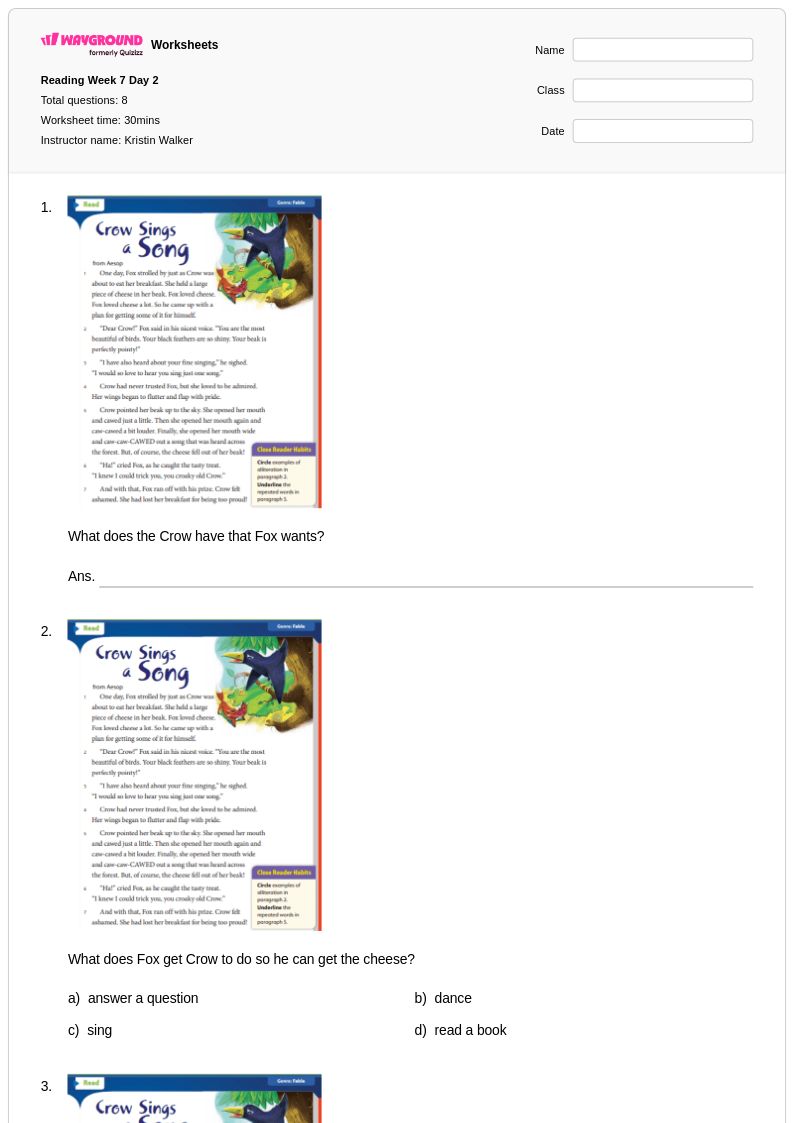
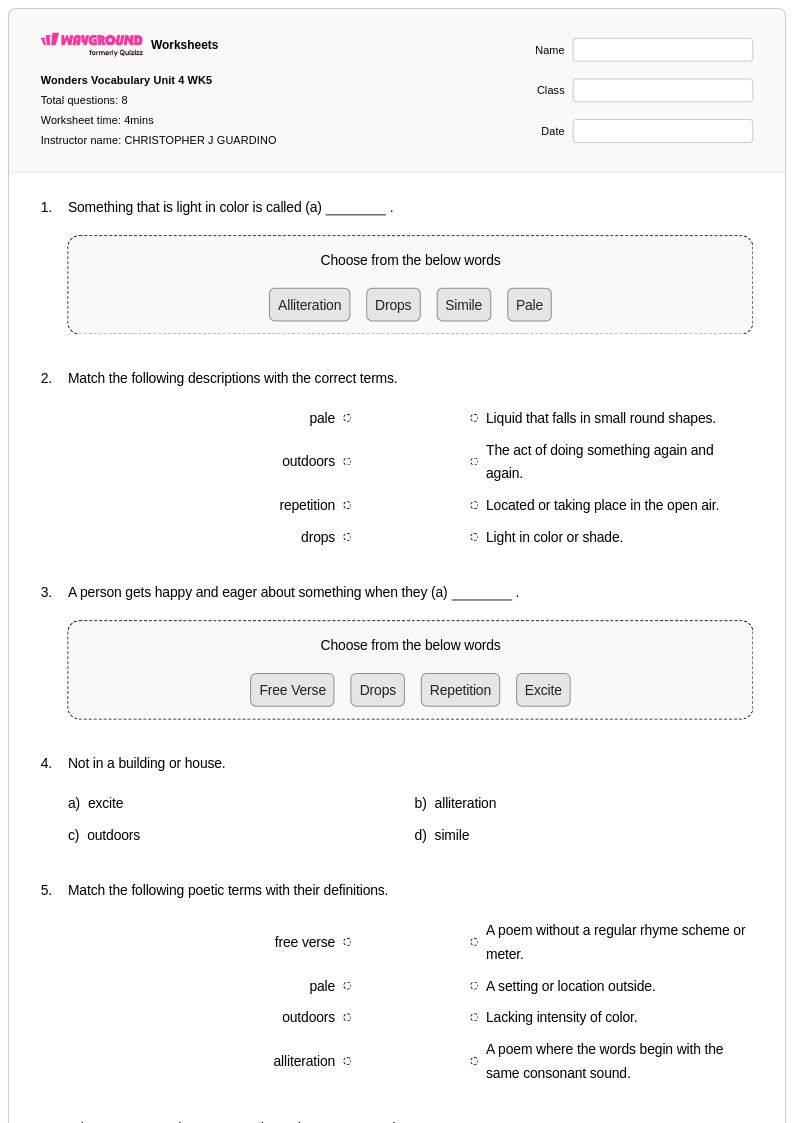
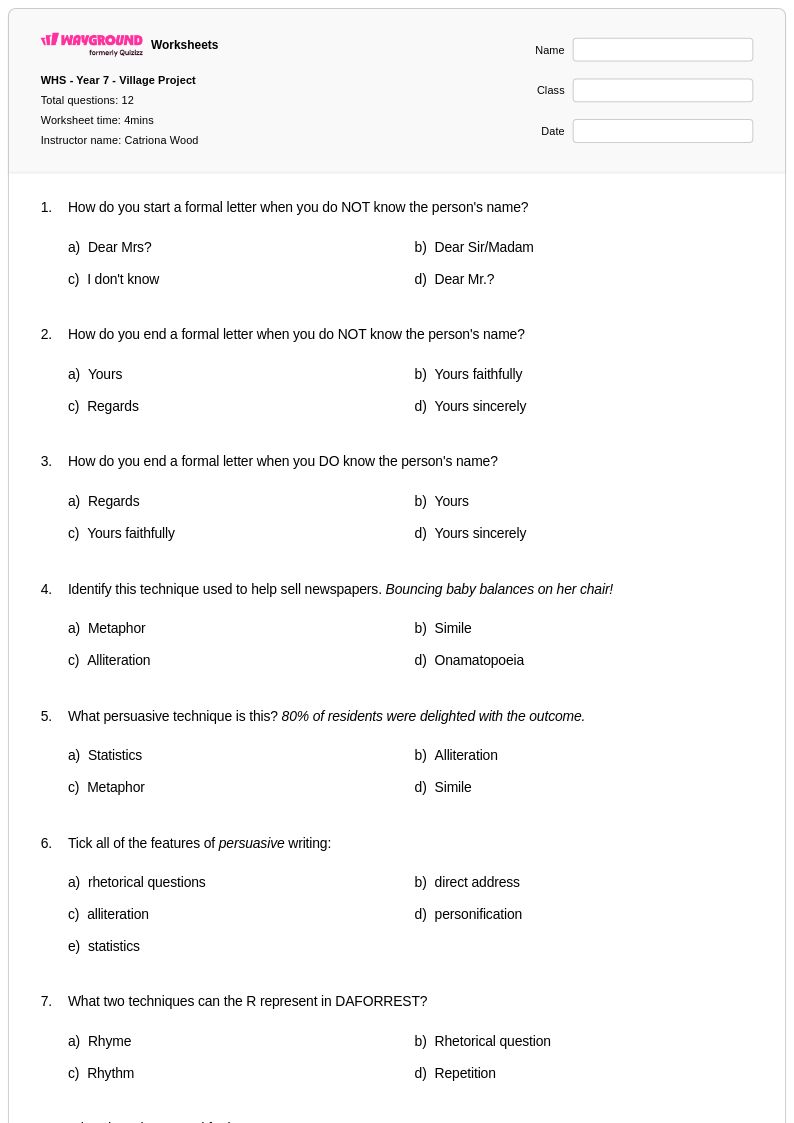
Alliteration worksheets for Year 2 students available through Wayground (formerly Quizizz) provide young learners with engaging practice in identifying and creating repetitive consonant sounds at the beginning of words. These carefully designed printables strengthen foundational phonemic awareness skills while introducing students to this important literary device in an age-appropriate manner. Each worksheet features colorful illustrations and simple sentences that help second graders recognize alliterative patterns in phrases like "silly snakes slither" or "bouncing baby bears." The collection includes varied practice problems that progress from basic identification exercises to creative writing activities, with comprehensive answer keys provided to support both independent learning and teacher-guided instruction. These free pdf resources make alliteration concepts accessible through repetition and visual cues that align with Year 2 developmental reading levels.
Wayground (formerly Quizizz) empowers educators with an extensive library of millions of teacher-created alliteration worksheets specifically curated for Year 2 instruction. The platform's robust search and filtering capabilities allow teachers to quickly locate materials that align with state literacy standards and complement their existing curriculum frameworks. These differentiation tools enable instructors to select worksheets that match individual student reading abilities, from emerging readers who need picture-supported examples to more advanced students ready for independent alliteration creation tasks. Available in both printable pdf format and interactive digital versions, these resources support flexible lesson planning whether used for whole-group instruction, small reading groups, or individual skill remediation. Teachers can customize existing worksheets or combine multiple resources to create comprehensive practice sets that reinforce alliteration recognition while building vocabulary and phonological awareness essential for Year 2 literacy development.
FAQs
How do I teach alliteration to students?
Start by defining alliteration as the repetition of the same consonant sound at the beginning of closely connected words, then use familiar examples like tongue twisters and brand names to make the concept concrete. From there, move students from identifying alliteration in published texts to analyzing its effect on rhythm and tone before asking them to create their own alliterative phrases. Grounding the skill in real examples — poetry, advertising, literature — helps students understand why writers use alliteration, not just what it is.
What exercises help students practice identifying alliteration?
Effective practice exercises include underlining or circling the repeated consonant sounds in provided sentences, sorting phrases into alliterative and non-alliterative categories, and completing sentence stems using alliterative words. Moving from simple identification tasks to more analytical work — such as explaining the effect of alliteration in a poem — builds both recognition and interpretive skill. Creative writing prompts that require students to write their own alliterative sentences add a productive layer of practice.
What mistakes do students commonly make when identifying alliteration?
The most common error is focusing on repeated letters rather than repeated sounds, which leads students to incorrectly identify words like 'city' and 'cat' as alliterative simply because both start with 'c.' Students also frequently confuse alliteration with assonance, misattributing repeated vowel sounds as the same device. Another common mistake is assuming all words in a sentence must start with the same sound, when alliteration only requires two or more closely placed words to share an initial consonant sound.
How do I use alliteration worksheets in my classroom?
Alliteration worksheets work well as guided practice after direct instruction, as independent review before a figurative language assessment, or as a warm-up activity at the start of a language arts lesson. On Wayground, these worksheets are available as printable PDFs for traditional classroom use and in digital formats for technology-integrated environments, including the option to host them as a quiz directly on the platform. This flexibility means the same resource can be used for whole-group instruction, small group work, or self-paced independent practice.
How is alliteration different from other sound devices like assonance and onomatopoeia?
Alliteration involves the repetition of initial consonant sounds in nearby words, while assonance refers to the repetition of vowel sounds within words, and onomatopoeia describes words that phonetically imitate the sound they represent. All three are sound devices used to create rhythm and effect in writing, but they operate on different phonetic elements. Helping students distinguish between these devices prevents common misidentification errors and deepens overall literary analysis skills.
How can I differentiate alliteration instruction for students at different skill levels?
For students who are just beginning, focus on simple two-word alliterative pairs using familiar consonant sounds before moving to full sentences or poetry analysis. More advanced students can analyze how authors use alliteration deliberately to create mood, emphasis, or rhythm in a specific passage. On Wayground, teachers can apply accommodations such as reduced answer choices or read-aloud support to individual students, allowing the same worksheet to serve learners across a range of skill levels without singling anyone out.