Free Printable American Government Worksheets for Year 8
Explore Year 8 American Government worksheets from Wayground that help students master foundational concepts through engaging printables, practice problems, and comprehensive answer keys available as free PDF downloads.
Explore printable American Government worksheets for Year 8
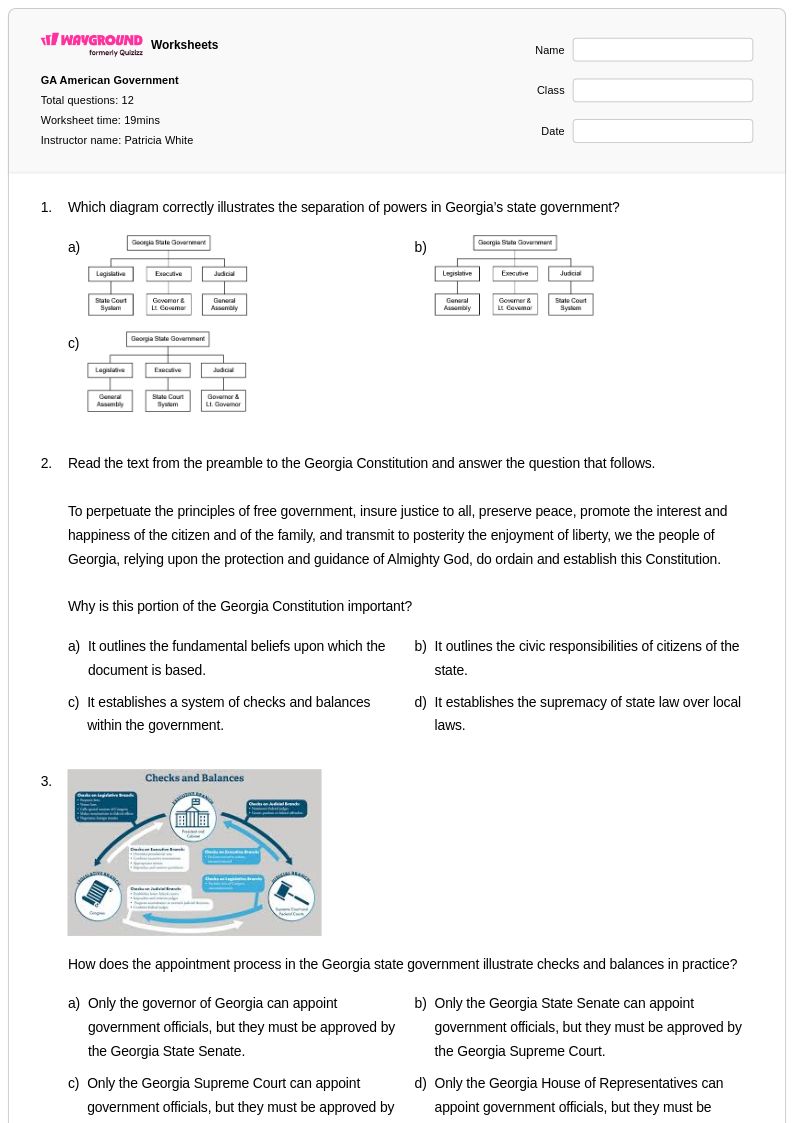
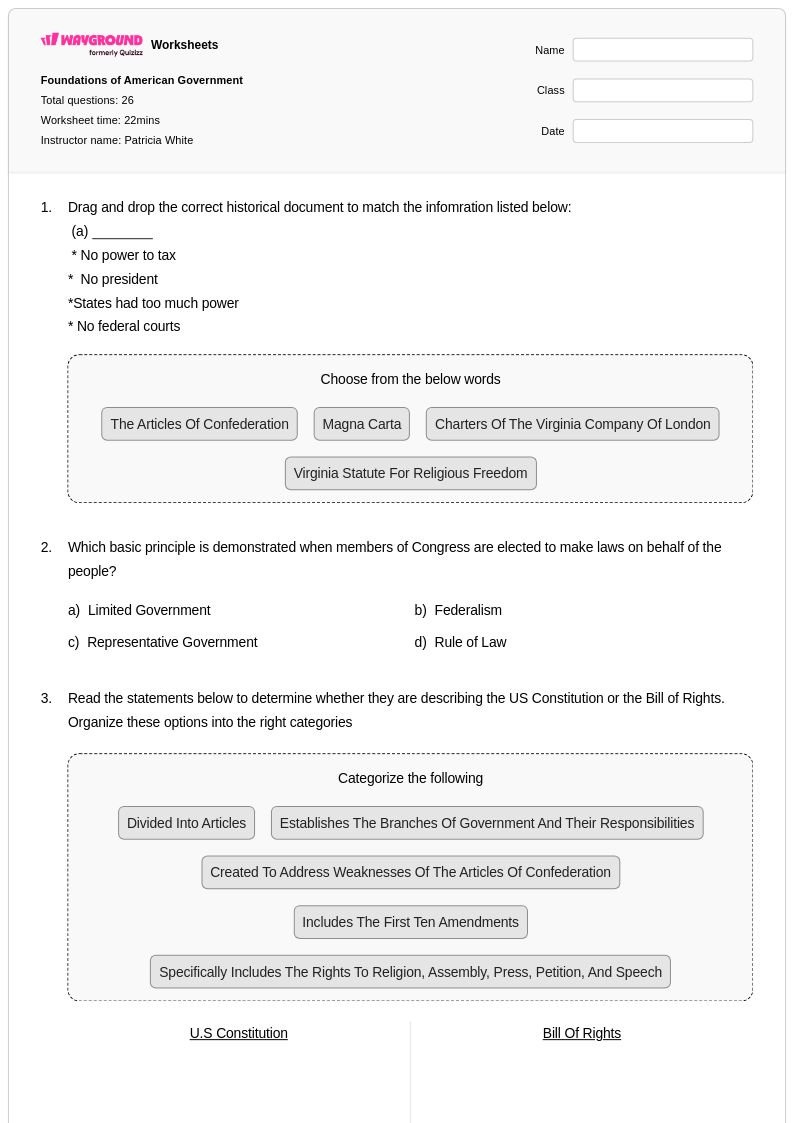
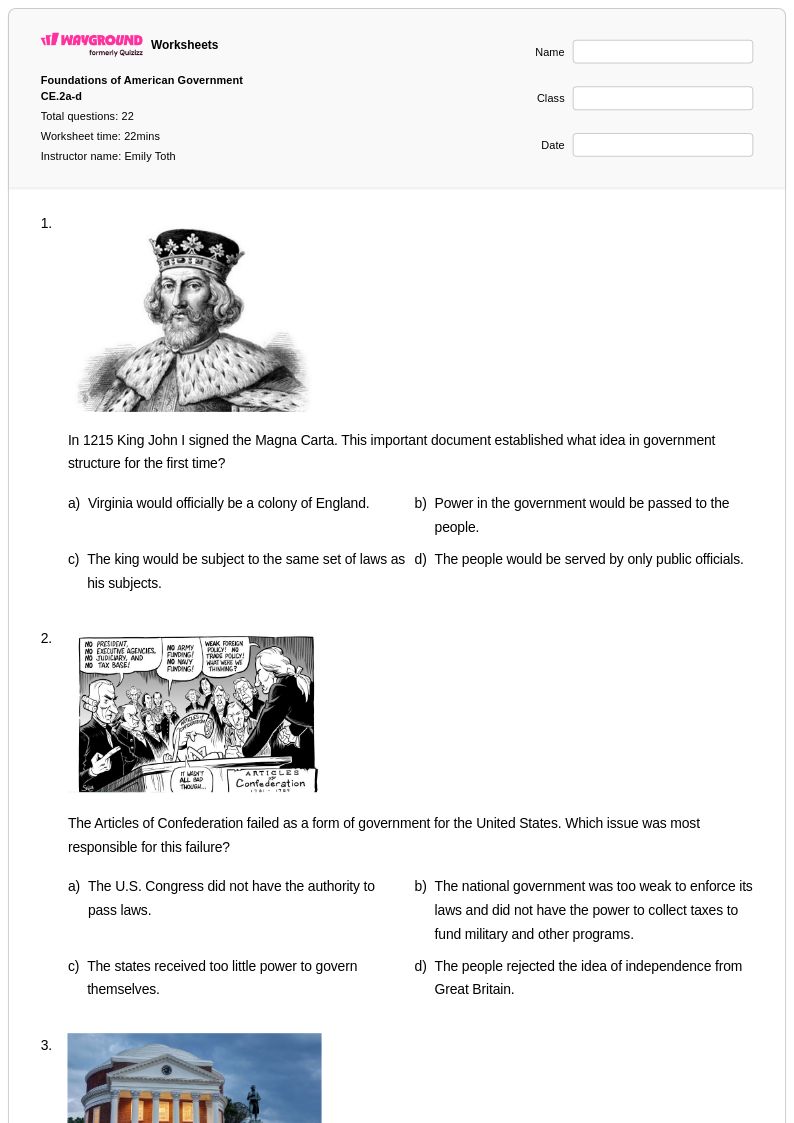
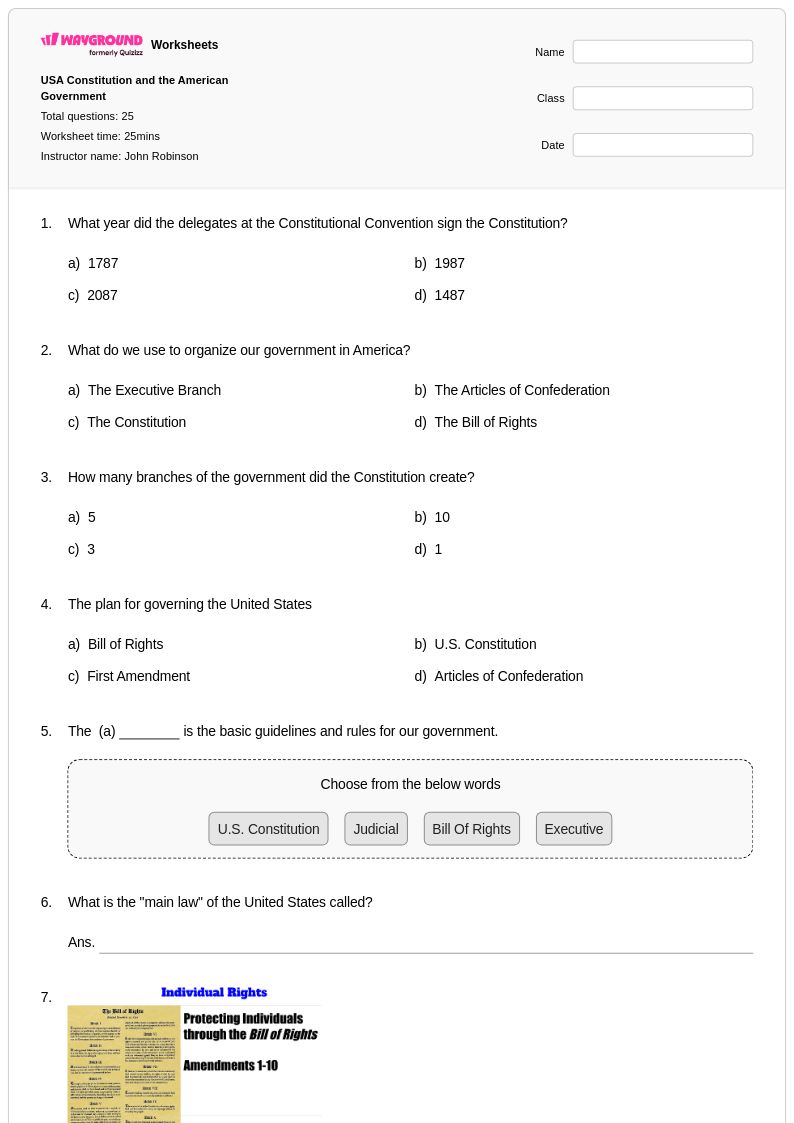
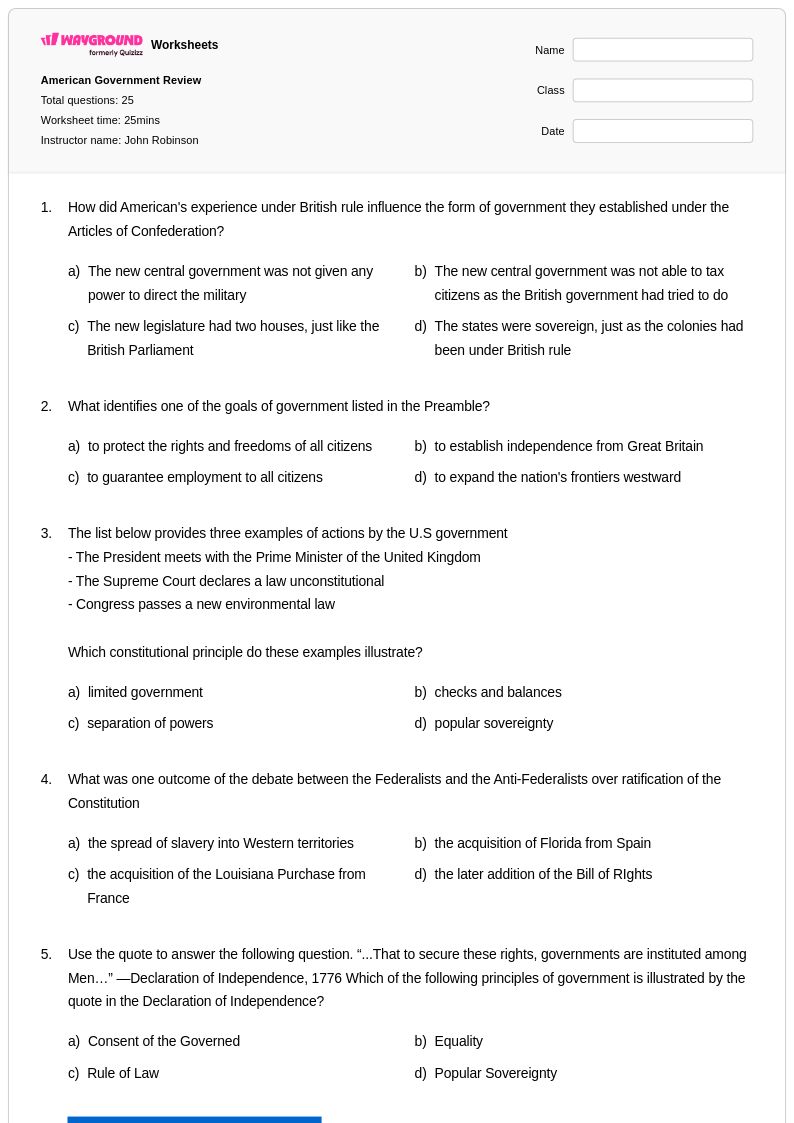
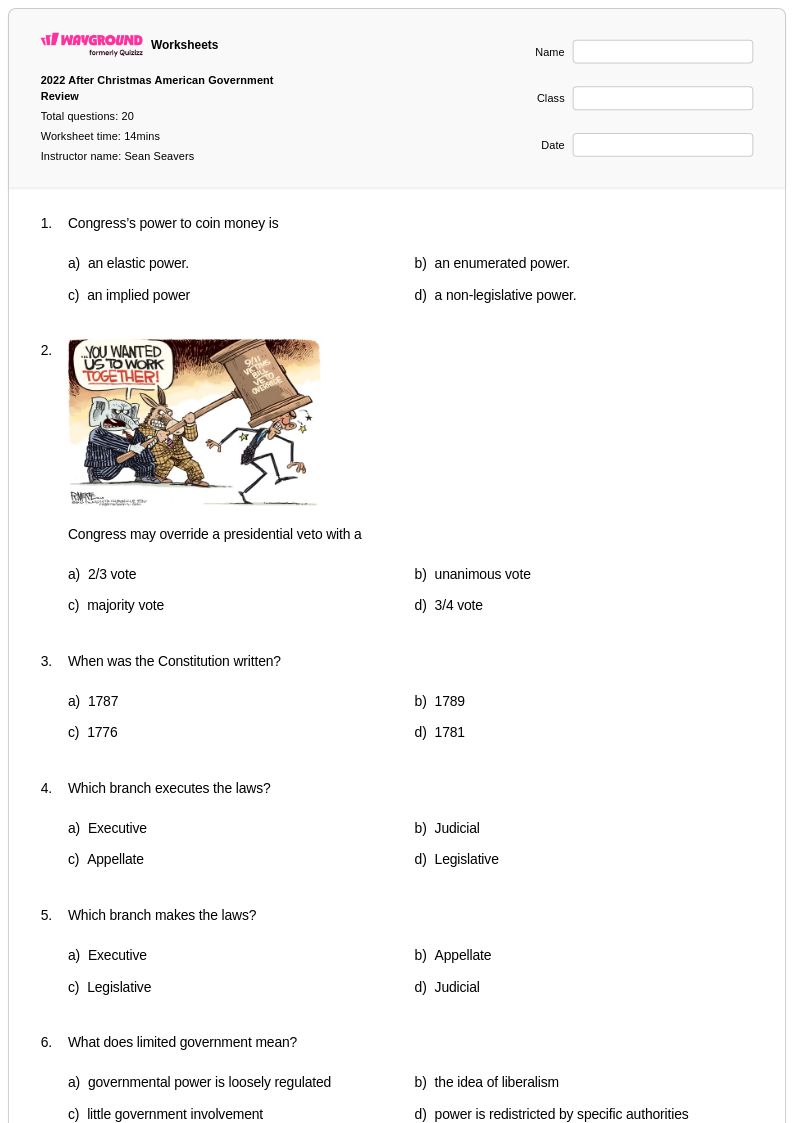
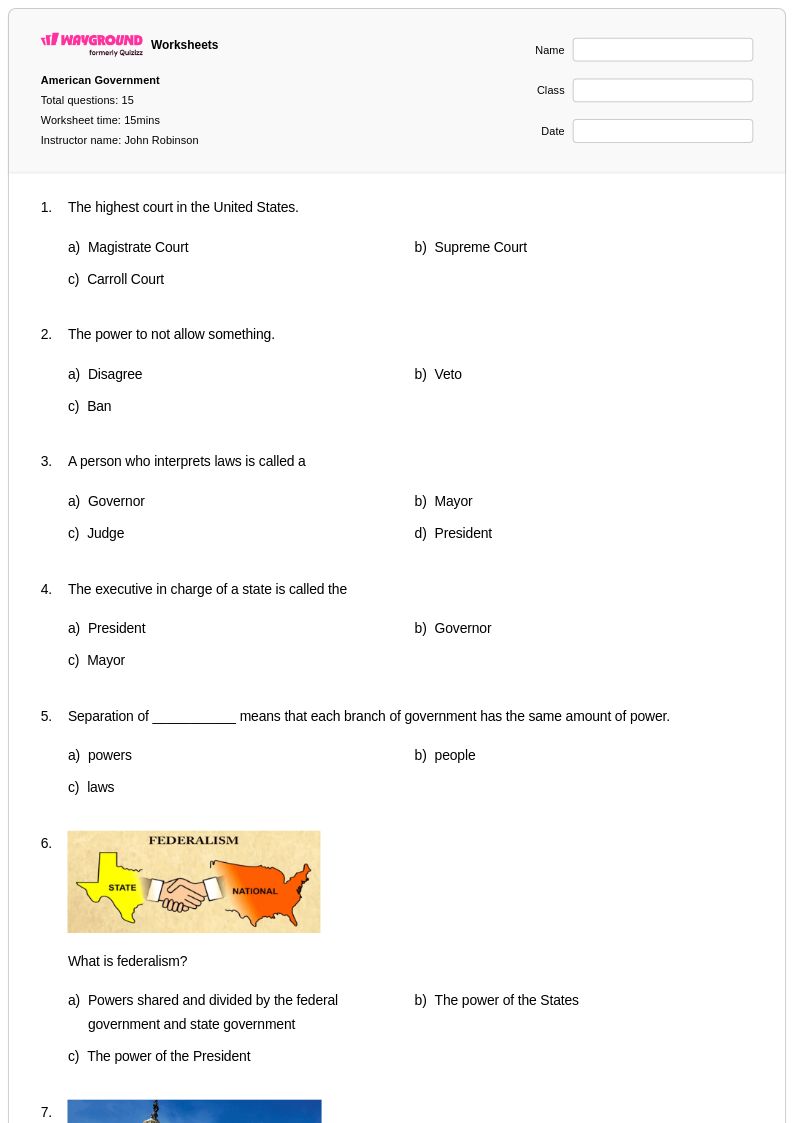
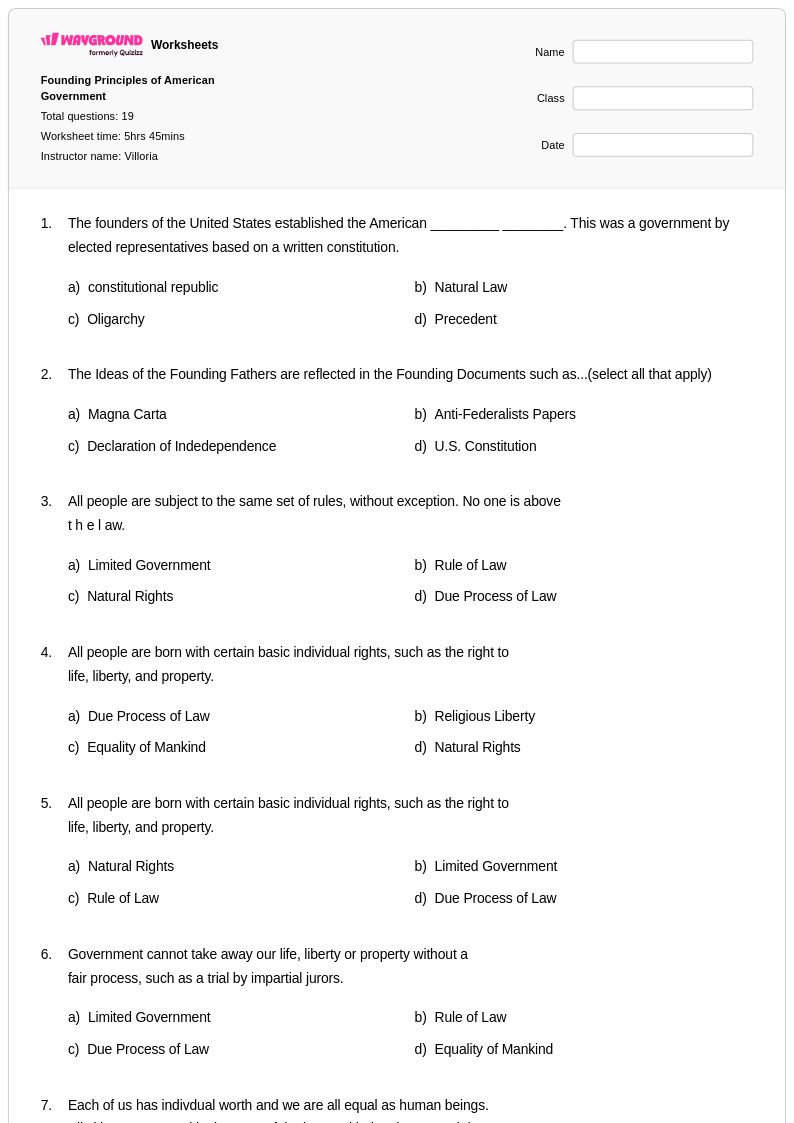
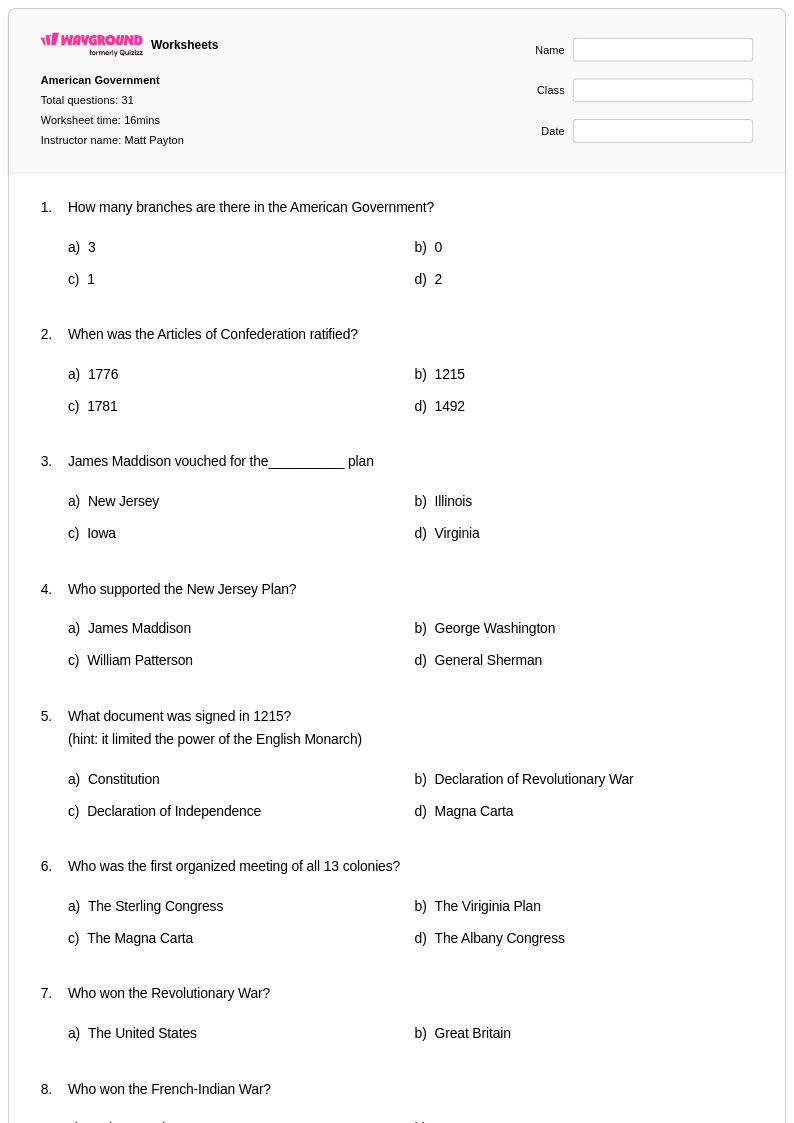
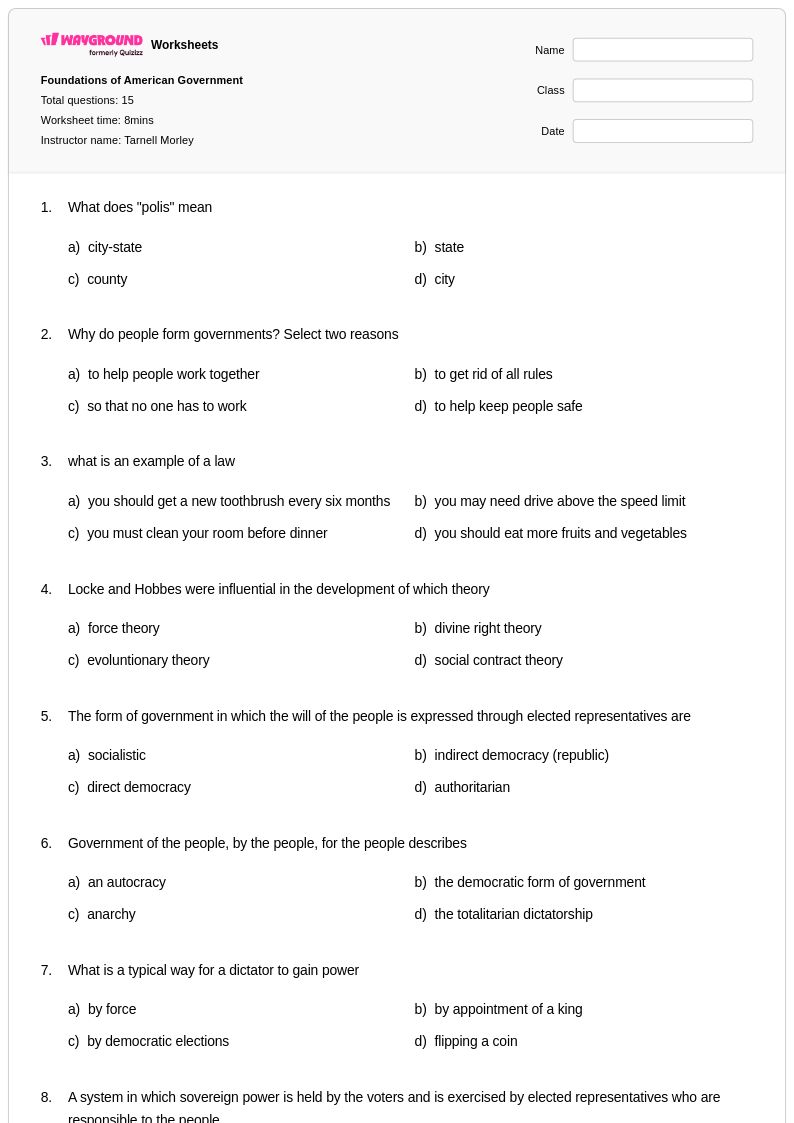
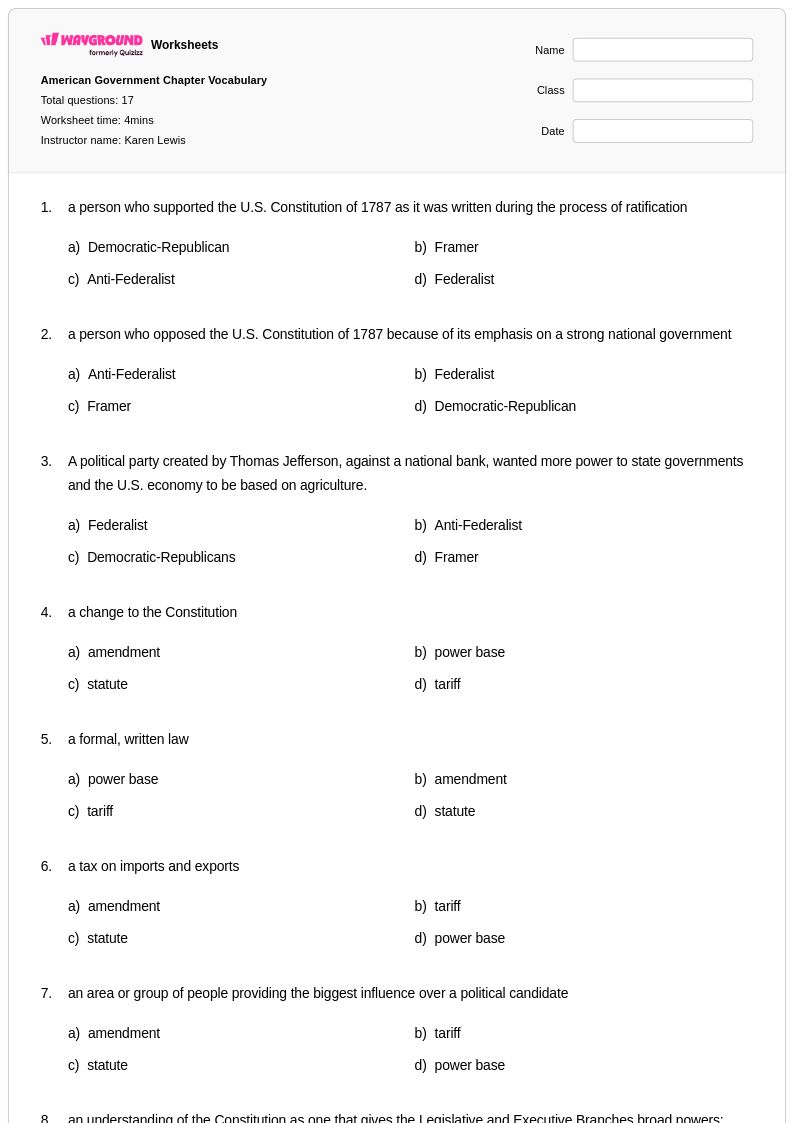
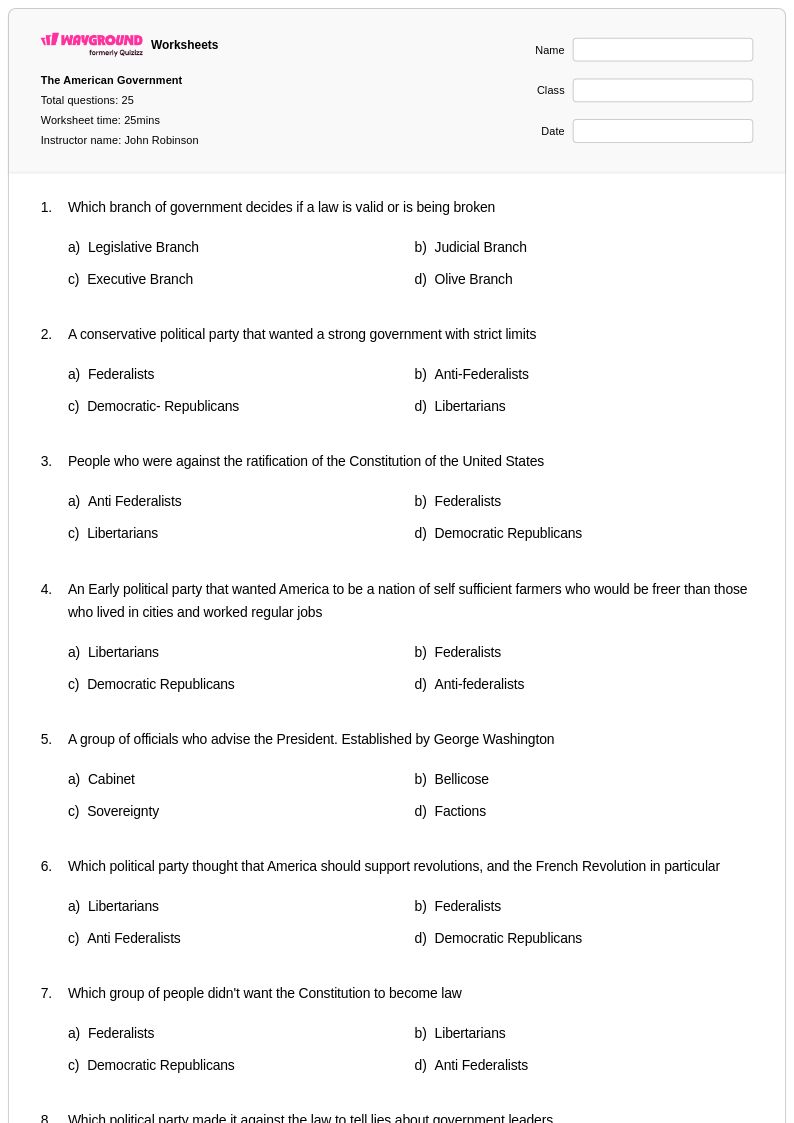
Year 8 American Government worksheets available through Wayground (formerly Quizizz) provide comprehensive coverage of foundational concepts essential for understanding the structure and function of the United States political system. These expertly crafted resources strengthen students' knowledge of constitutional principles, the three branches of government, federalism, checks and balances, and the rights and responsibilities of citizenship. Each worksheet collection includes detailed answer keys and is available in convenient pdf format, making them accessible as both free printables for classroom use and digital practice problems that can be assigned for homework or independent study. Students engage with authentic scenarios and real-world applications that help them analyze how American governmental institutions operate and interact in practice.
Wayground (formerly Quizizz) supports educators with millions of teacher-created American Government resources that are meticulously organized through advanced search and filtering capabilities, allowing instructors to quickly locate materials aligned with specific learning standards and curriculum requirements. The platform's differentiation tools enable teachers to customize worksheet difficulty levels and modify content to meet diverse learner needs, while flexible formatting options provide both printable pdf versions for traditional classroom activities and interactive digital formats for technology-enhanced instruction. These comprehensive features streamline lesson planning while providing targeted resources for remediation, enrichment, and systematic skill practice, ensuring that Year 8 students develop a thorough understanding of American governmental processes and democratic principles that will serve as the foundation for advanced civics study.
FAQs
How do I teach the three branches of government effectively?
Effective instruction on the three branches of government starts with concrete examples of how each branch exercises its powers and how those powers intersect. Using real legislative, executive, and judicial decisions as case studies helps students move beyond memorization toward genuine civic reasoning. Pairing direct instruction with structured practice on checks and balances gives students a framework for analyzing current events through a constitutional lens.
What worksheets help students practice constitutional principles and checks and balances?
Worksheets that present scenario-based questions are particularly effective for practicing constitutional principles and checks and balances, because they require students to apply structural knowledge rather than simply recall it. Practice problems that ask students to identify which branch holds a given power, or to evaluate whether a government action oversteps constitutional limits, build the analytical skills central to civics education. Including answer keys with these exercises allows students to self-check and reinforces accurate understanding of constitutional boundaries.
What common mistakes do students make when learning about federalism?
Students frequently confuse the division of powers between federal and state governments, often defaulting to the assumption that the federal government holds authority in all policy areas. Another common error is conflating the Supremacy Clause with total federal dominance, which leads students to overlook the reserved powers protected by the Tenth Amendment. Targeted practice problems that require students to categorize powers as delegated, reserved, or concurrent help correct these misconceptions before they calcify.
How can I assess whether students understand civil rights and civil liberties?
A key indicator of misconception is when students use the terms civil rights and civil liberties interchangeably. Formative assessments that ask students to classify specific protections, such as distinguishing First Amendment freedoms from equal protection claims, reveal whether students have internalized this distinction. Including document-based questions drawn from landmark Supreme Court cases gives teachers a clearer picture of students' ability to apply these concepts analytically rather than just define them.
How do I use American Government worksheets on Wayground in my classroom?
American Government worksheets on Wayground are available as printable PDFs for traditional classroom use and in digital formats for technology-integrated learning environments, making them flexible across different instructional setups. Teachers can also host worksheets as a quiz directly on Wayground, enabling real-time student responses and streamlined grading. For students who need accommodations, Wayground allows teachers to configure settings such as extended time, read aloud, and reduced answer choices on an individual basis, so all students can engage with the same civics content at an appropriate level.
How do I differentiate American Government instruction for students at different levels?
Differentiation in civics instruction works best when the core content stays consistent but the scaffolding varies based on student need. For struggling learners, reducing answer choices on multiple-choice questions or enabling read aloud support can lower barriers to engagement without simplifying the civics concepts themselves. Wayground's accommodation tools allow teachers to assign these settings to individual students while the rest of the class works under standard conditions, keeping differentiation private and manageable within a single assignment.
What topics should American Government worksheets cover to align with a full civics curriculum?
A comprehensive civics curriculum typically spans constitutional frameworks, the three branches of government, federalism, civil rights and liberties, electoral processes, the role of political parties and interest groups, and civic participation. Worksheets that address each of these areas give teachers targeted tools for both instruction and assessment at each unit transition. Standards-aligned resources are especially useful for ensuring that practice problems map directly onto the learning objectives teachers are responsible for covering.