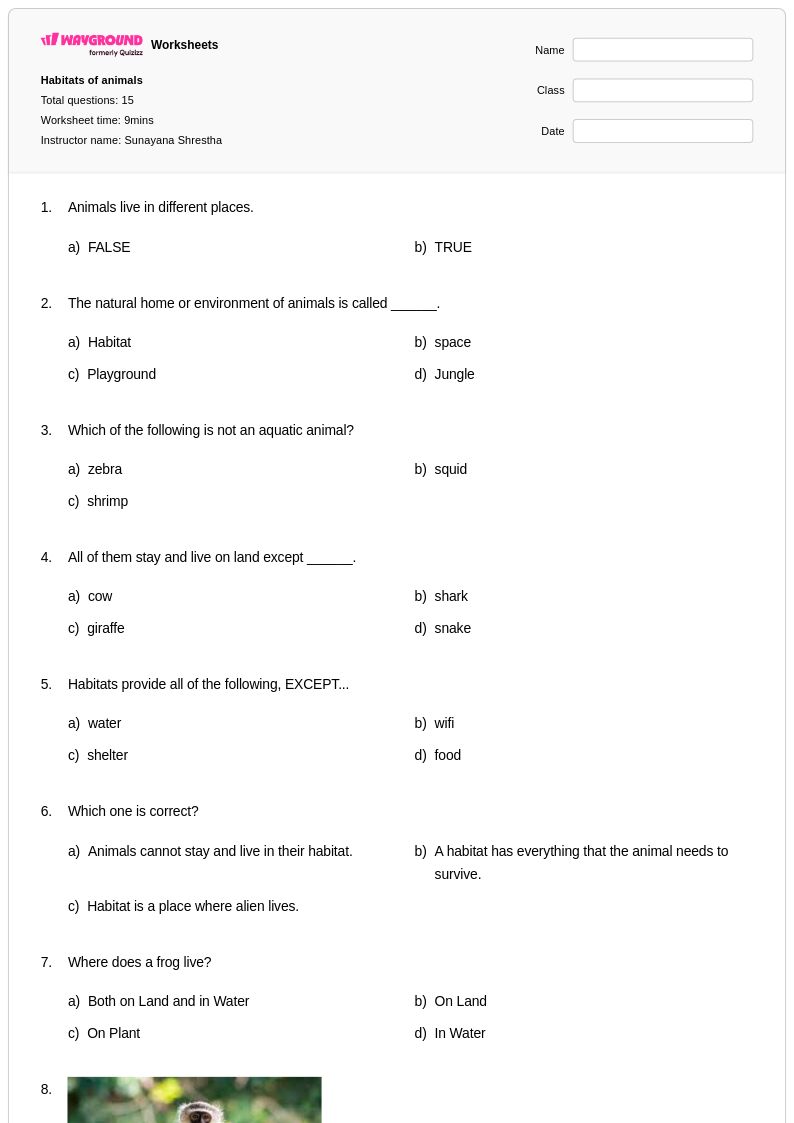
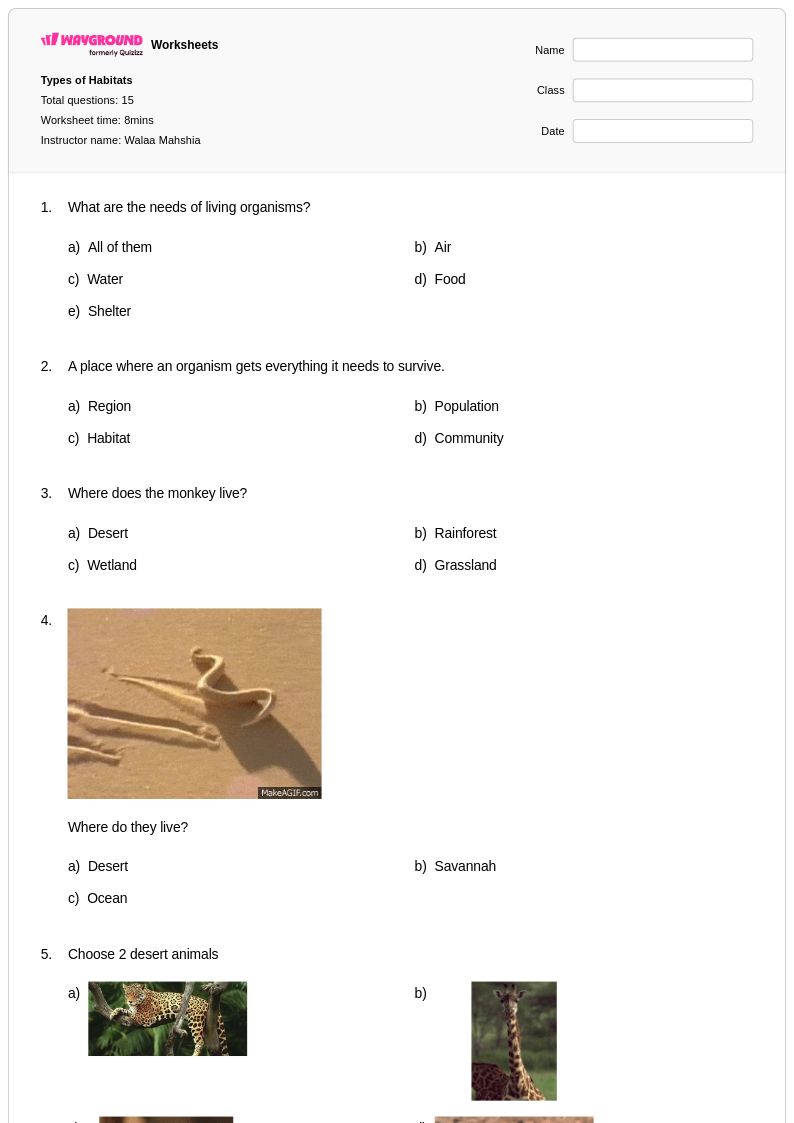
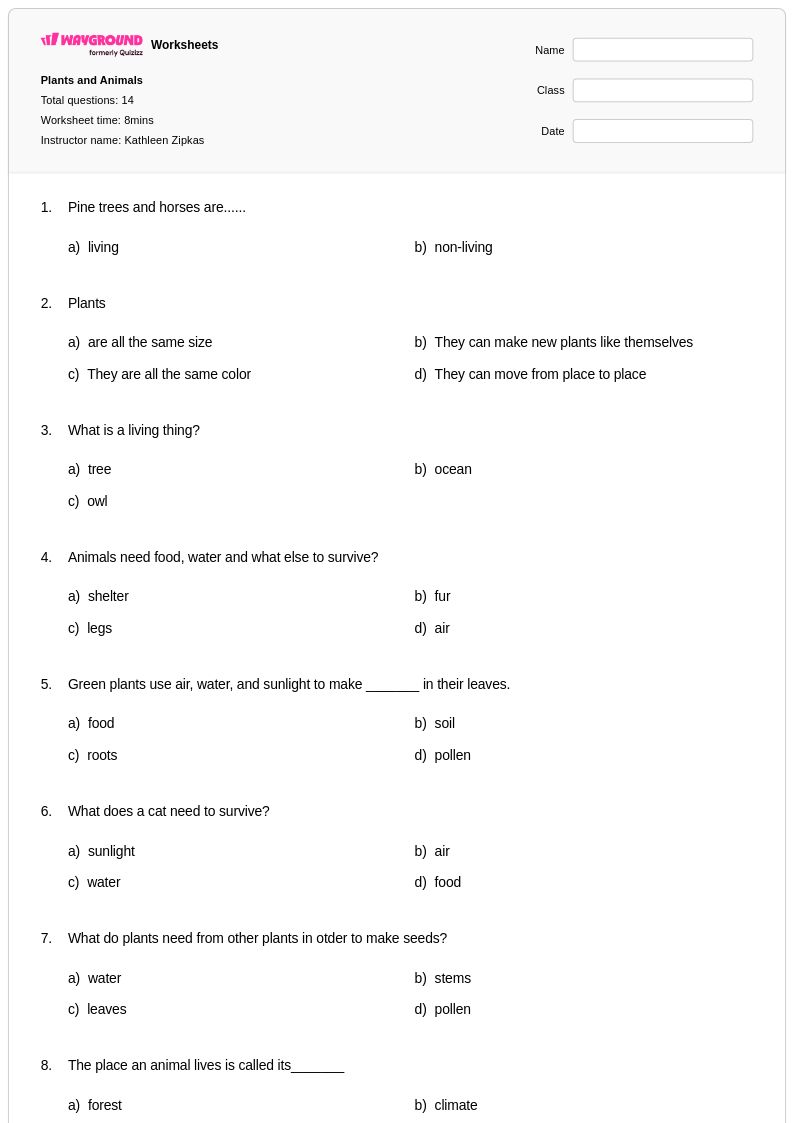
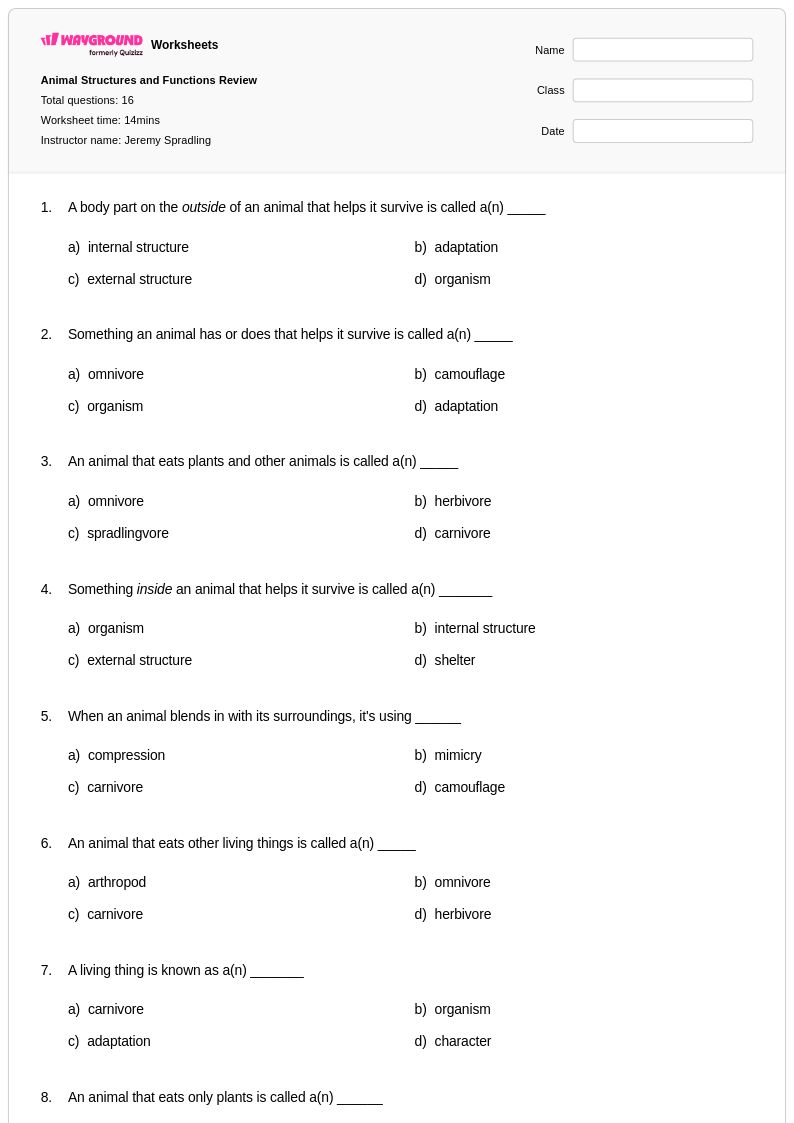
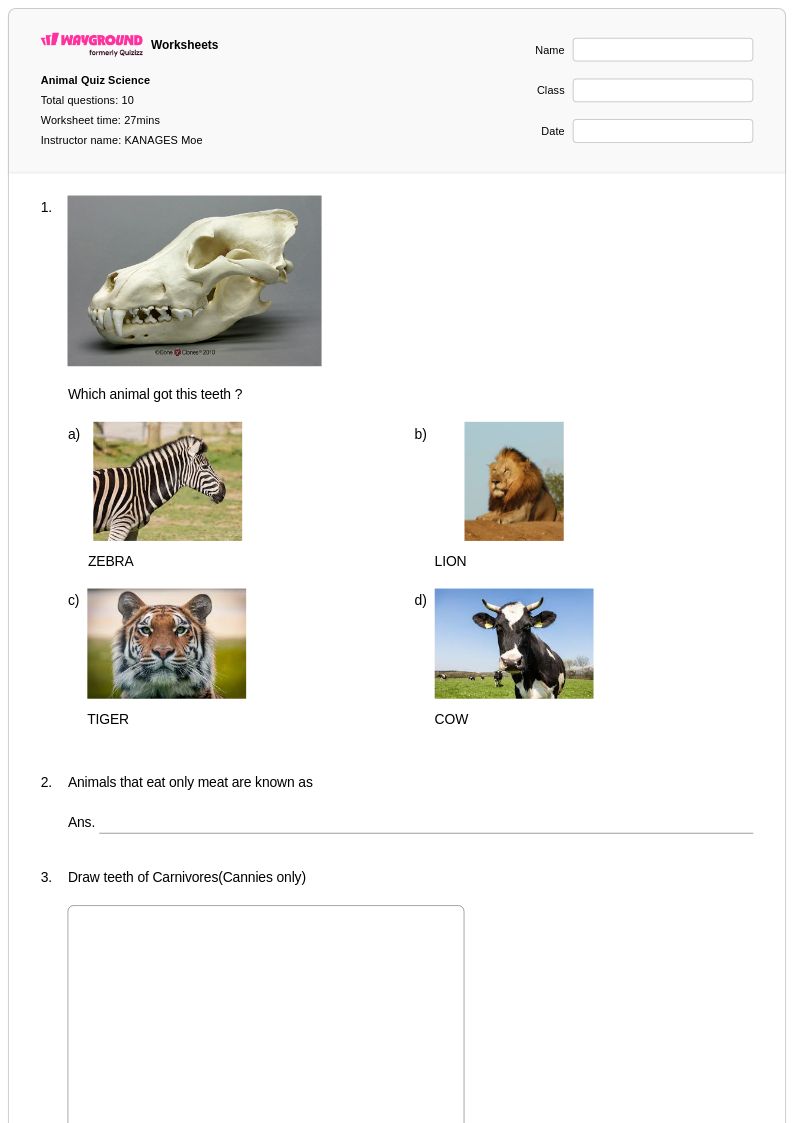
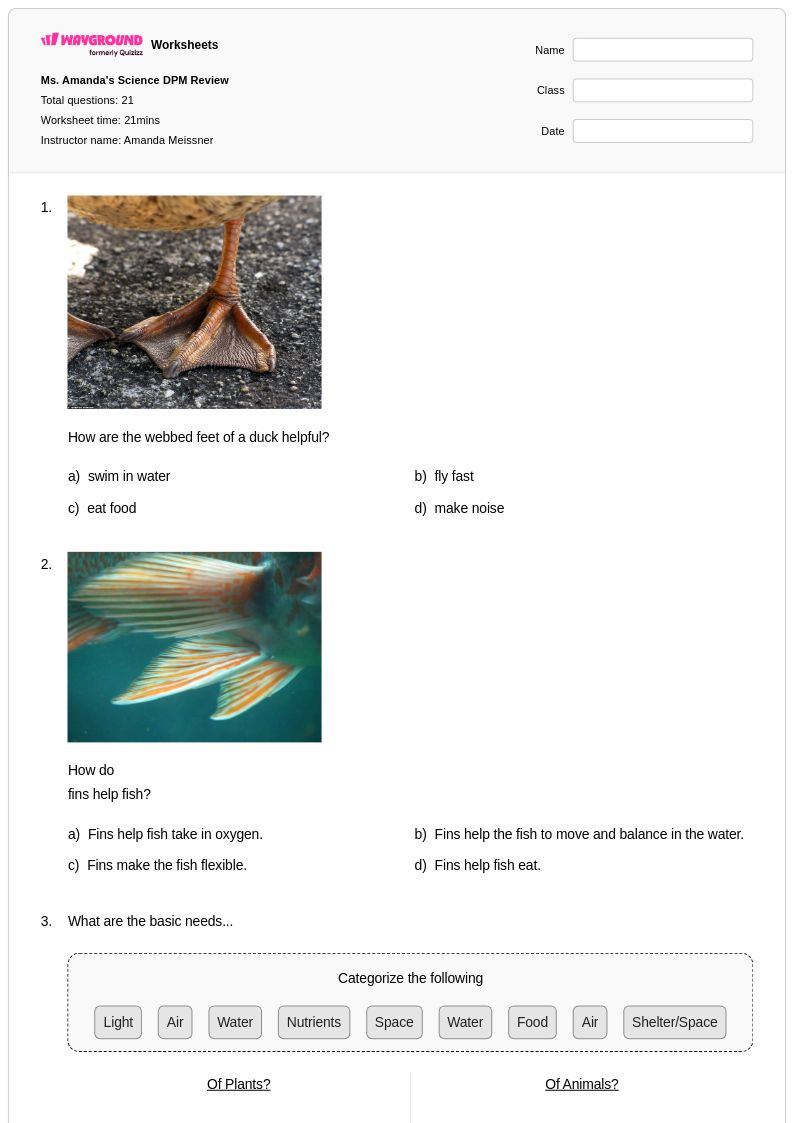
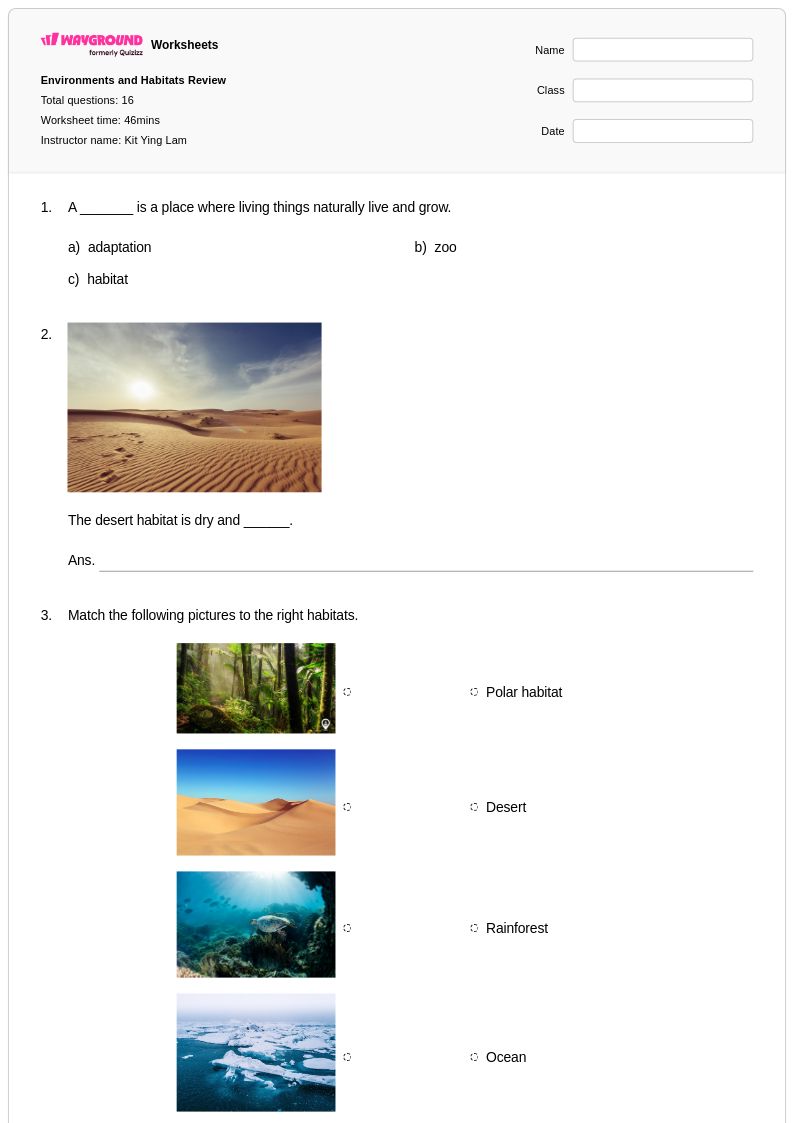
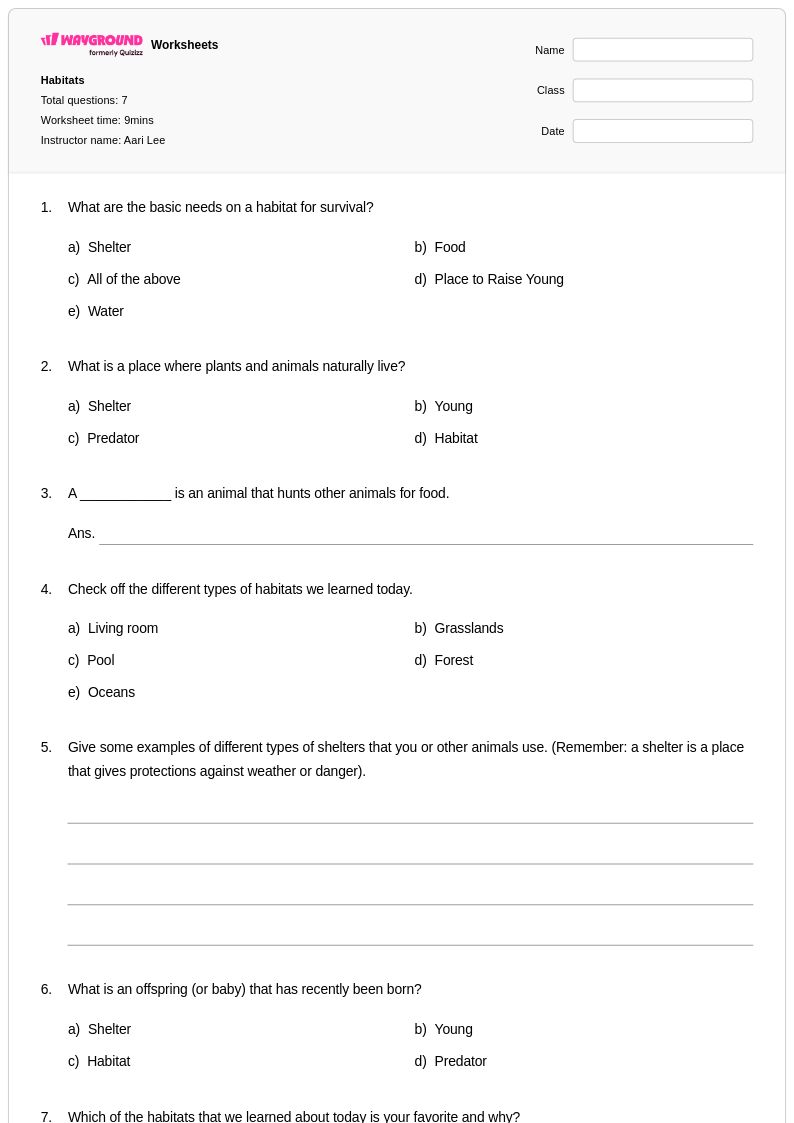
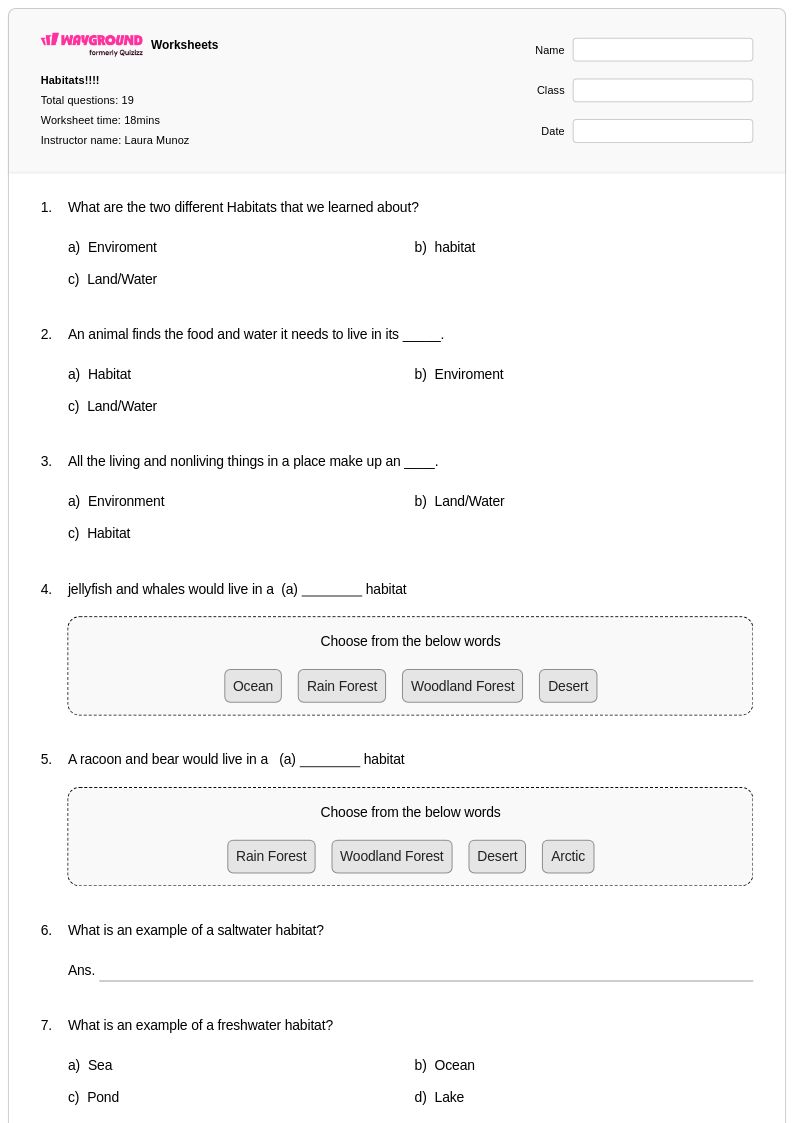
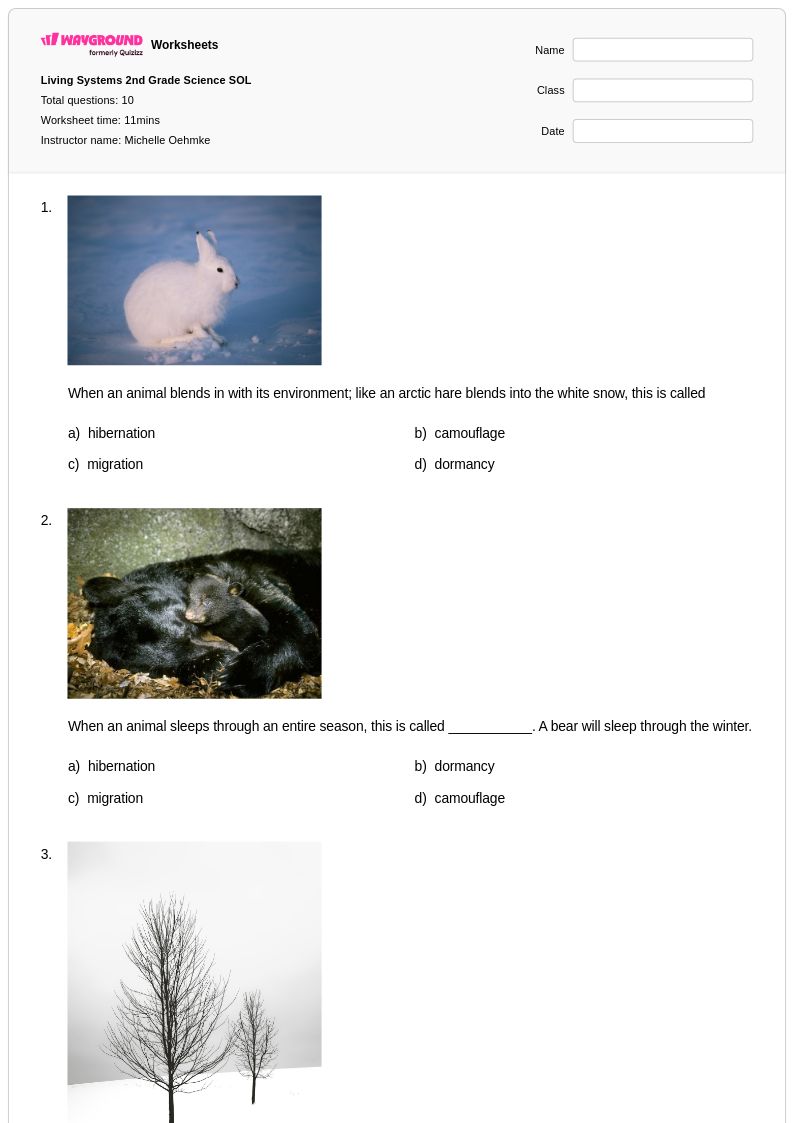
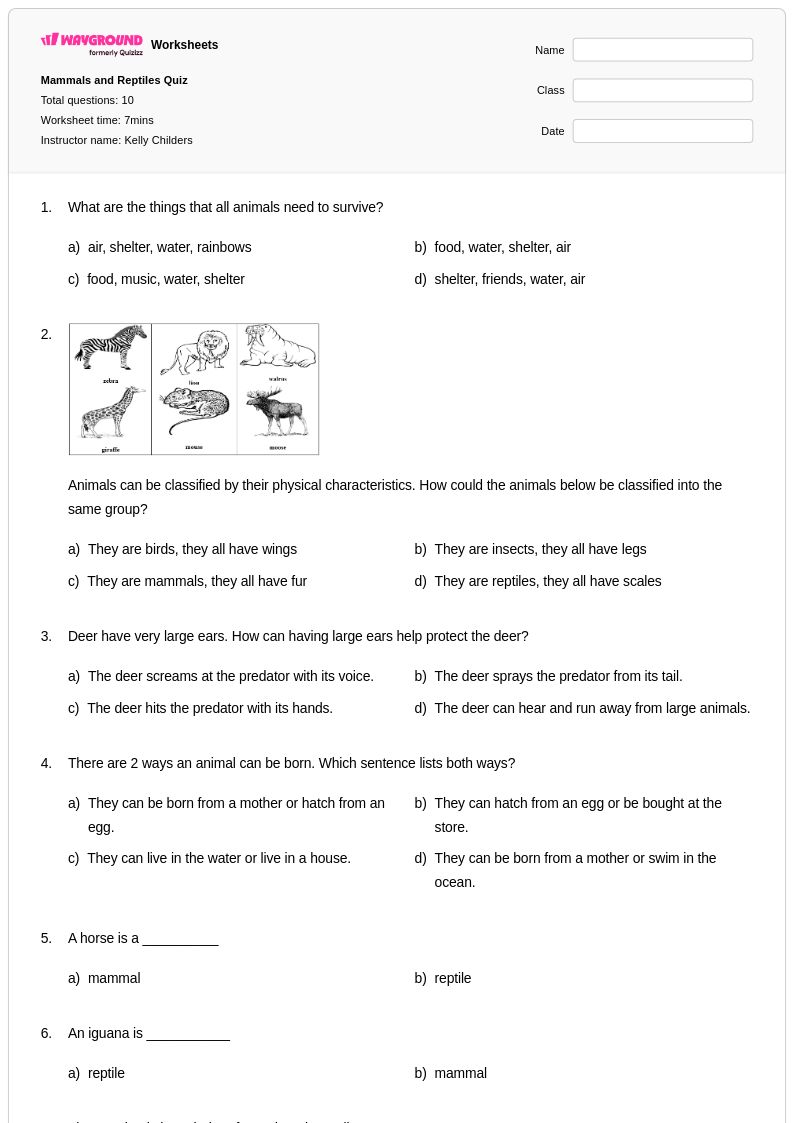
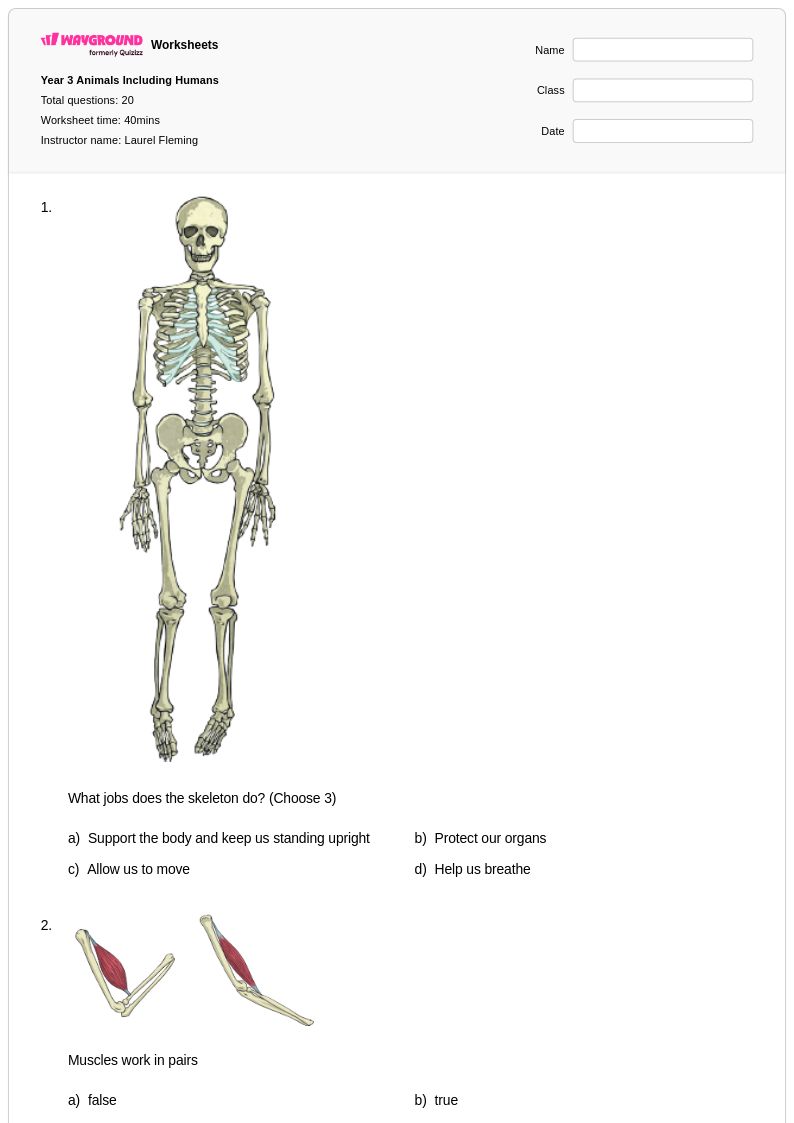
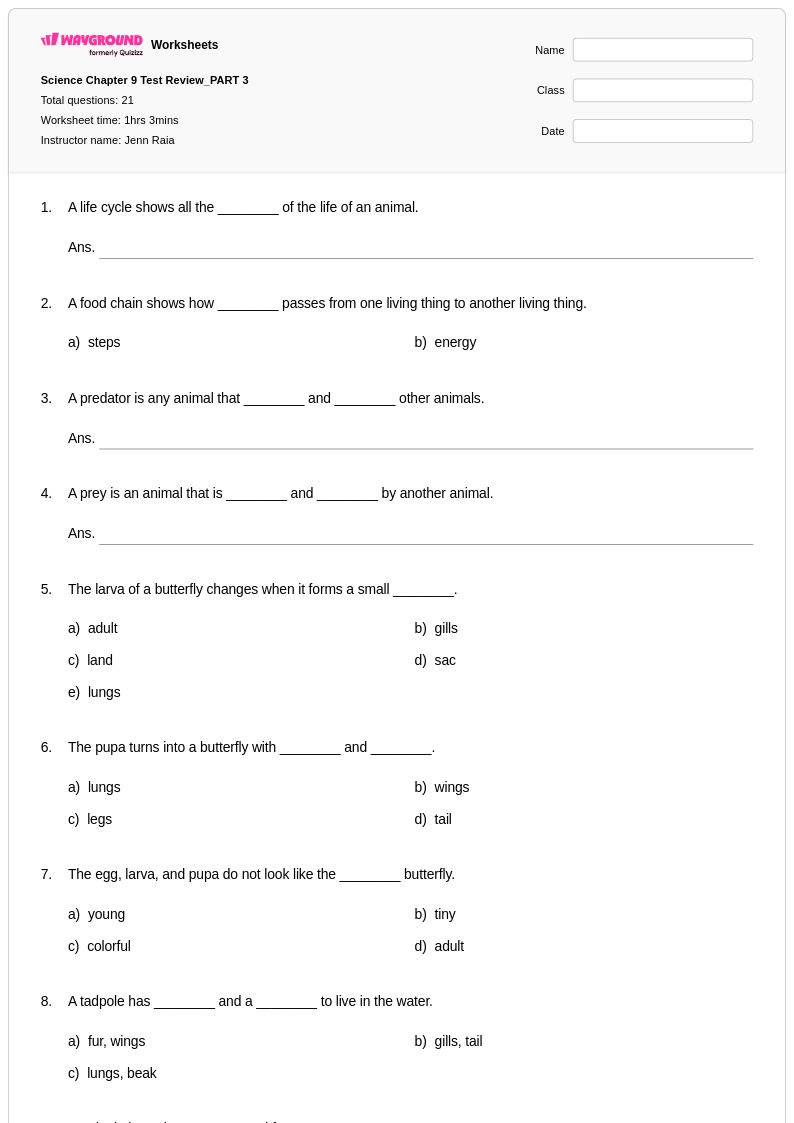
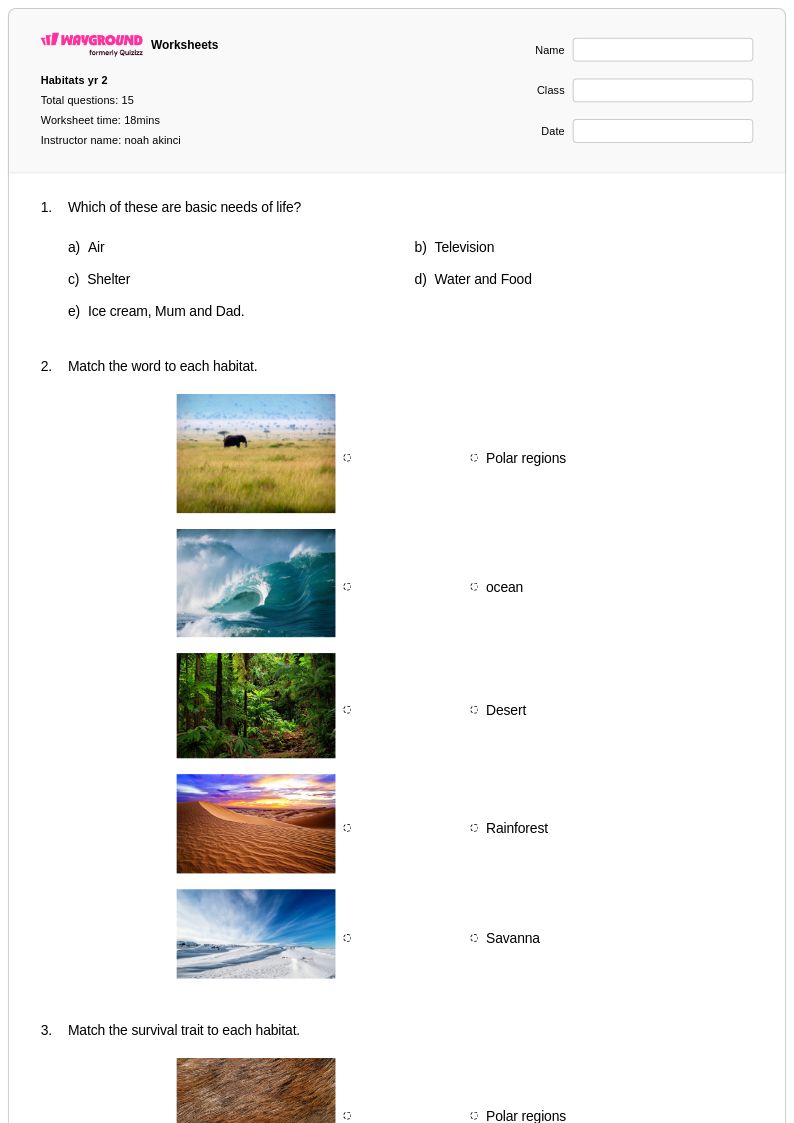
Explore free Year 2 animal needs worksheets and printables that help students discover what animals require to survive, complete with practice problems and answer keys for effective learning.
Explore printable Animal Needs worksheets for Year 2
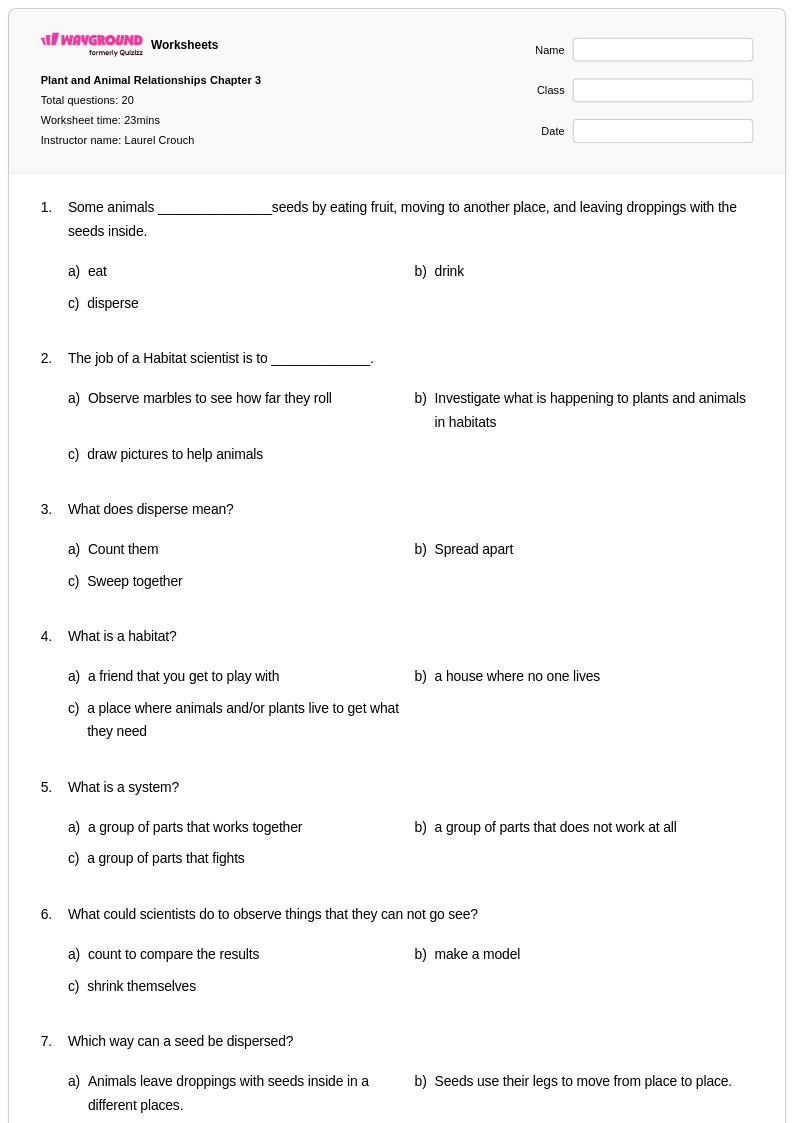
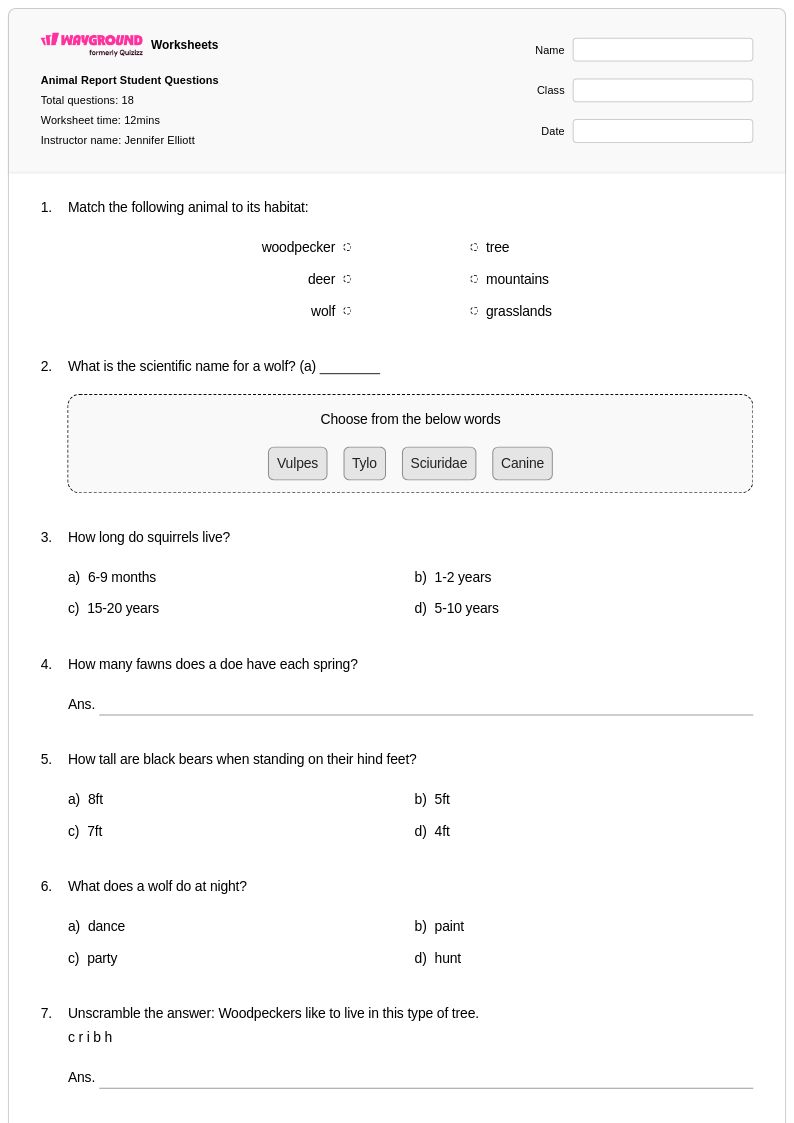
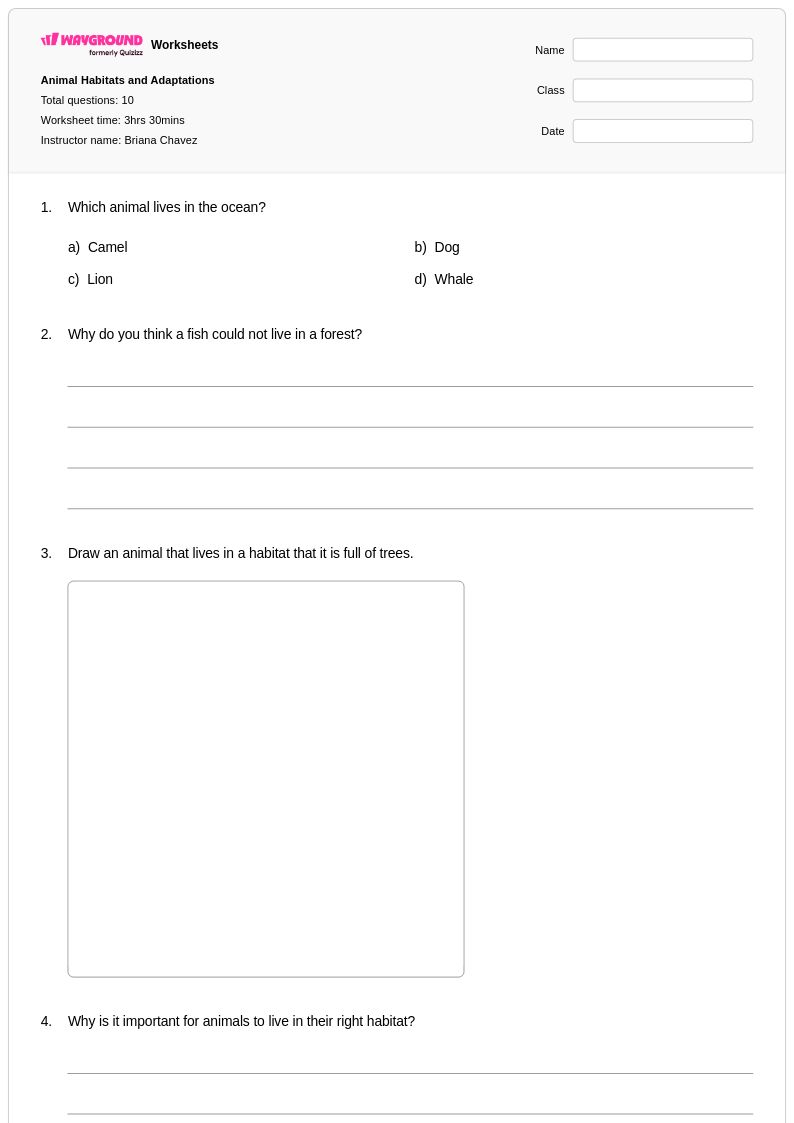
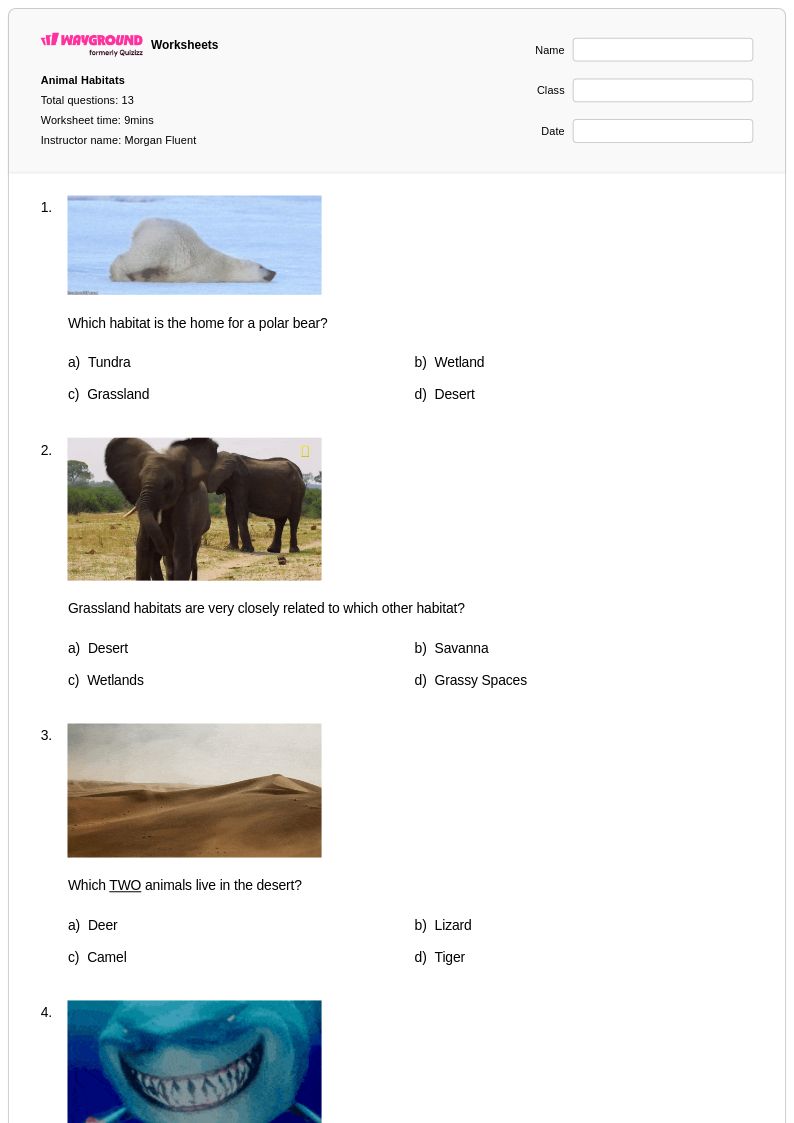
Animal needs worksheets for Year 2 students available through Wayground (formerly Quizizz) provide young learners with engaging opportunities to explore the fundamental requirements that all living creatures must have to survive and thrive. These carefully designed educational resources help second-grade students develop critical thinking skills as they identify and categorize the basic needs of various animals, including food, water, shelter, and air. The worksheets feature age-appropriate practice problems that guide students through scientific observation and reasoning, allowing them to connect classroom learning with real-world animal behaviors and habitats. Teachers can access comprehensive answer keys alongside these free printables, ensuring accurate assessment and meaningful feedback that supports student understanding of life science concepts.
Wayground (formerly Quizizz) empowers educators with an extensive collection of millions of teacher-created resources specifically designed to support Year 2 animal needs instruction across diverse learning environments. The platform's robust search and filtering capabilities enable teachers to quickly locate worksheets that align with specific curriculum standards and match their students' varying ability levels through built-in differentiation tools. These customizable resources are available in both printable pdf formats for traditional classroom use and digital formats for interactive learning experiences, providing maximum flexibility for lesson planning and implementation. Teachers can seamlessly integrate these materials into their instruction for targeted skill practice, remediation support for struggling learners, and enrichment activities for advanced students, creating a comprehensive approach to mastering essential life science concepts about animal survival needs.
FAQs
How do I teach animal needs to elementary students?
Start by anchoring instruction in animals students already know, such as pets or local wildlife, and ask them to identify what those animals need to survive. Introduce the five basic animal needs: food, water, shelter, air, and space, and use visual sorting activities to connect each need to specific animal behaviors or body features. Building from the familiar to the abstract helps younger learners form durable schema before moving to more complex species comparisons.
What activities help students practice identifying animal needs?
Matching and sorting exercises work well for early practice, asking students to connect animal characteristics or behaviors to the need they fulfill, such as a bear's den to shelter or a fish's gills to air. Scenario-based problems that ask students to determine whether an animal's needs are being met in a given habitat push higher-order thinking and are especially effective for reinforcing the concept of habitat suitability. These formats translate directly into worksheet practice that can be assigned independently or used in small groups.
What mistakes do students commonly make when learning about animal needs?
A frequent misconception is that animal needs are identical to human needs in form, leading students to assume all animals drink water the same way humans do or require the same type of shelter. Students also tend to conflate wants with needs, particularly when discussing space, since the purpose of space as a survival requirement is less intuitive than food or water. Explicitly comparing how different species meet the same need, such as how a whale and a desert lizard each obtain water, helps correct these errors.
How can I differentiate animal needs instruction for students at different levels?
For struggling learners, reduce the number of needs addressed in a single activity and use image-based prompts rather than text-heavy descriptions to lower the language barrier. Advanced students benefit from comparing survival strategies across ecosystems or analyzing what happens when one need goes unmet, which builds systems thinking. On Wayground, teachers can apply accommodations such as read aloud, reduced answer choices, and extended time to individual students, so the same worksheet can serve the whole class without requiring separate versions.
How do I use Wayground's animal needs worksheets in my classroom?
Wayground's animal needs worksheets are available as printable PDFs for traditional classroom use and in digital formats for technology-integrated environments, including the option to host them as a quiz directly on Wayground. Each worksheet includes a complete answer key, making it straightforward to assign as independent practice, homework, or a formative check-in. The digital format is particularly useful for remote or hybrid settings where immediate feedback supports self-paced learning.
How do animal needs connect to habitat and adaptation concepts?
Animal needs are the foundation for understanding both habitat and adaptation: a habitat is defined by its ability to meet an animal's needs, and adaptations are the structural or behavioral traits that allow an animal to meet those needs within a specific environment. Teaching these concepts together helps students see survival as an integrated system rather than a list of disconnected facts. For example, analyzing why a cactus wren nests inside a saguaro cactus ties shelter, protection, and habitat suitability into a single concrete example.