
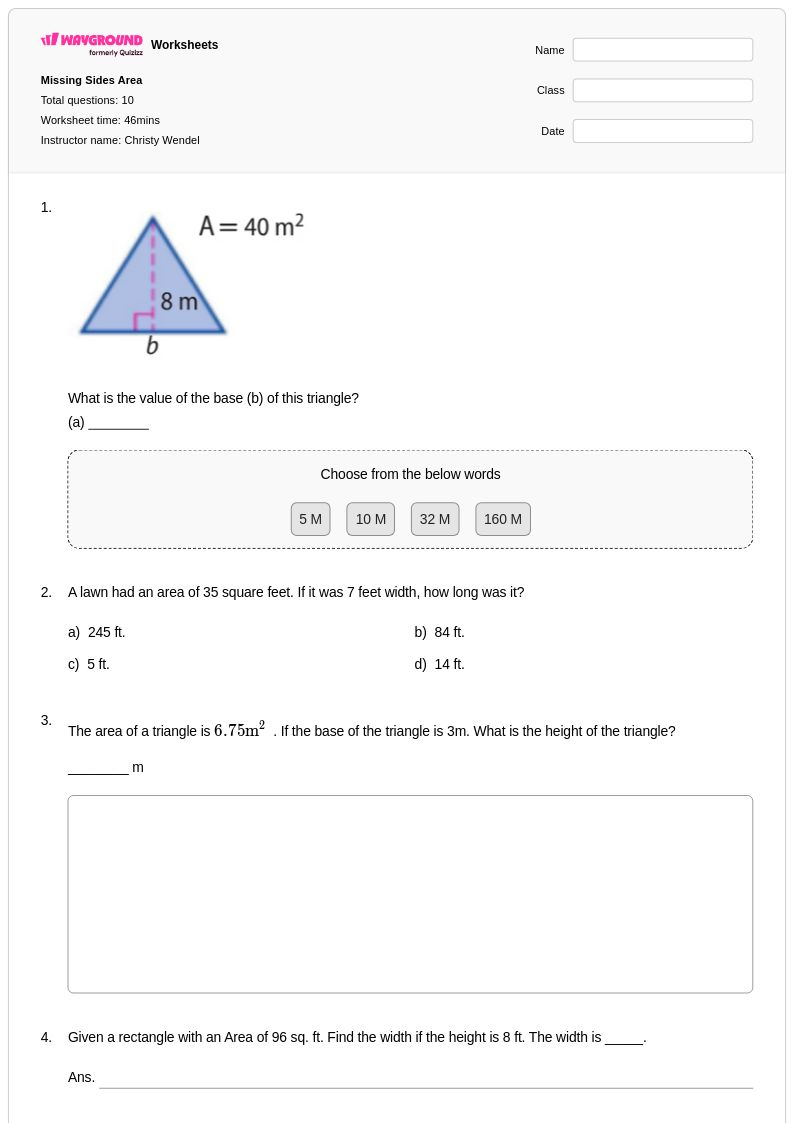
10 Q
6th - 8th
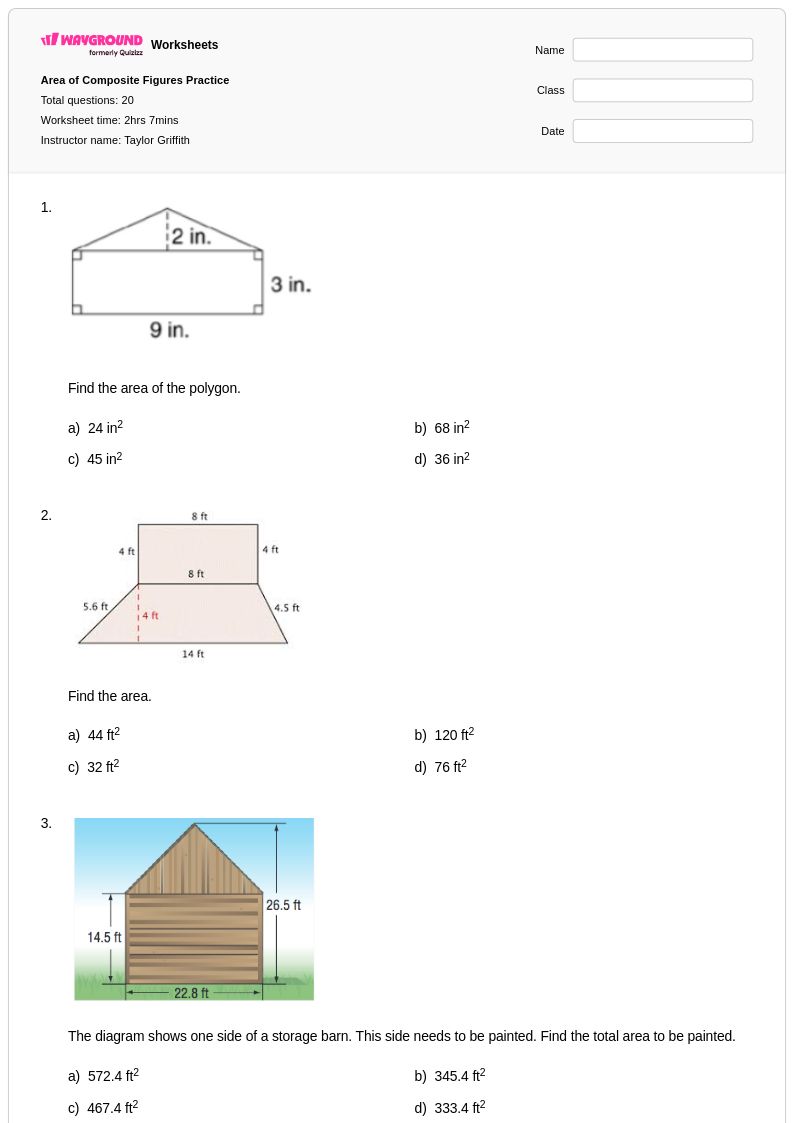
25 Q
6th - 8th
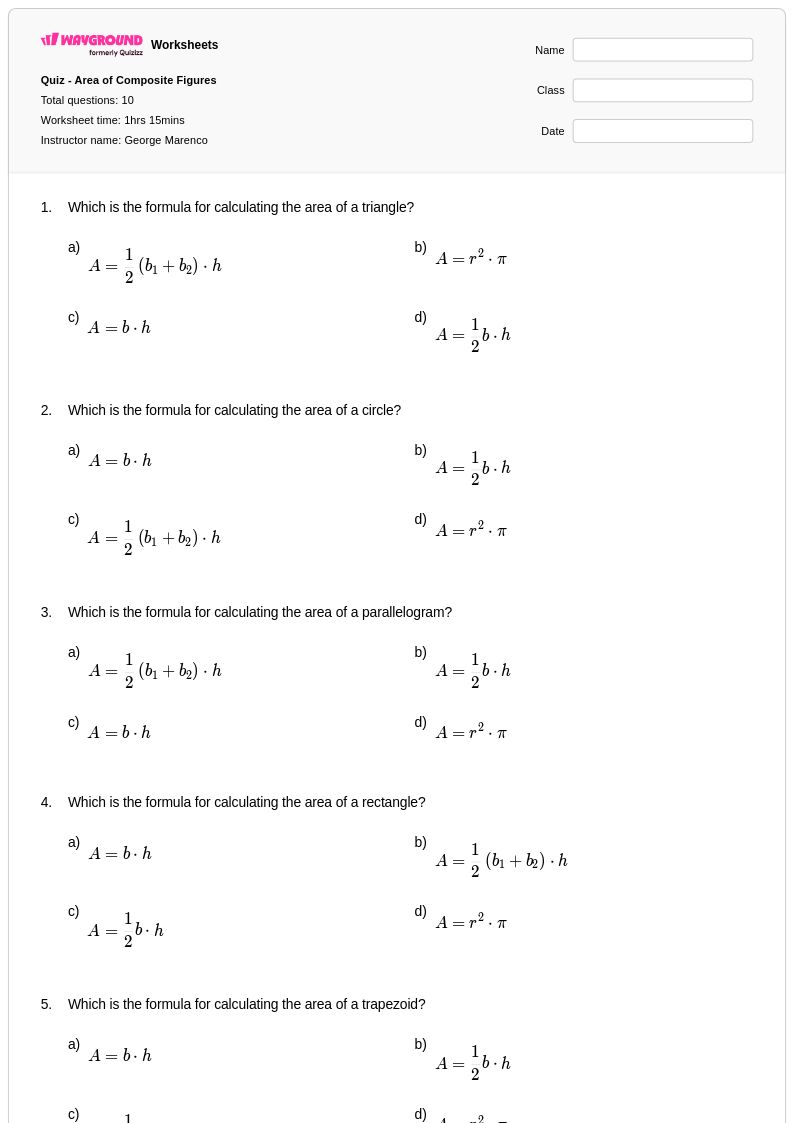
10 Q
7th
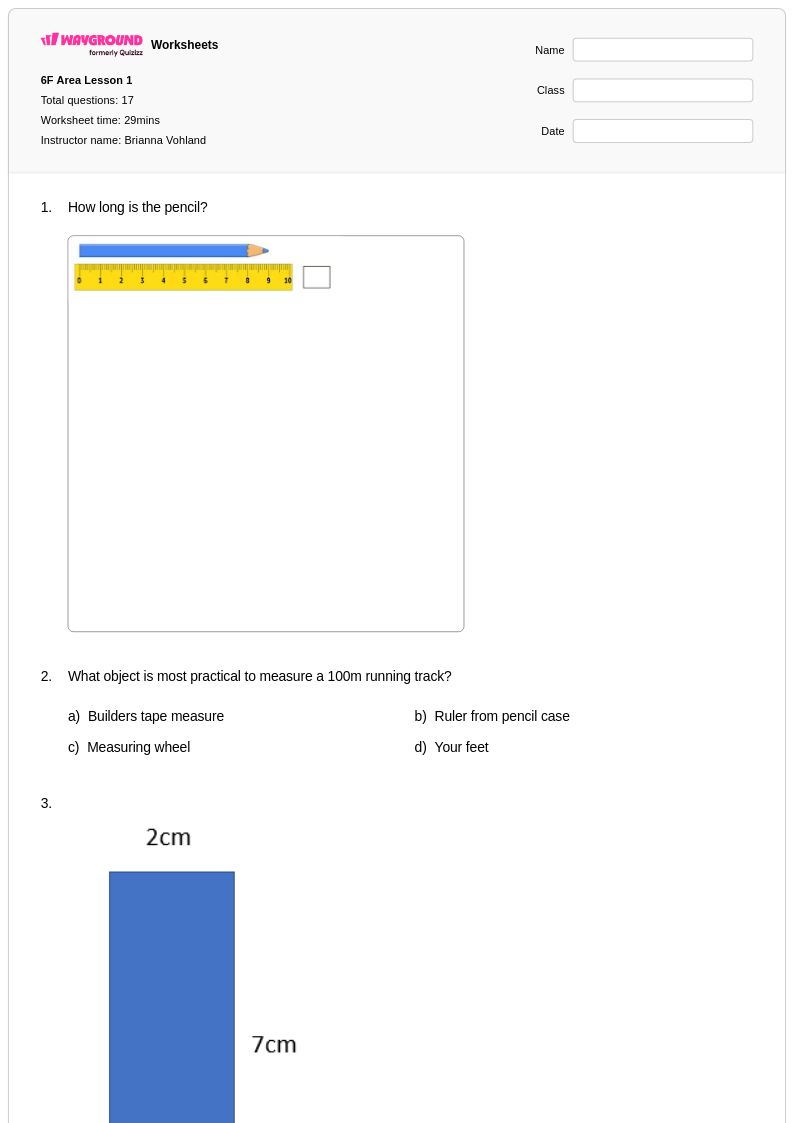
17 Q
6th - 8th
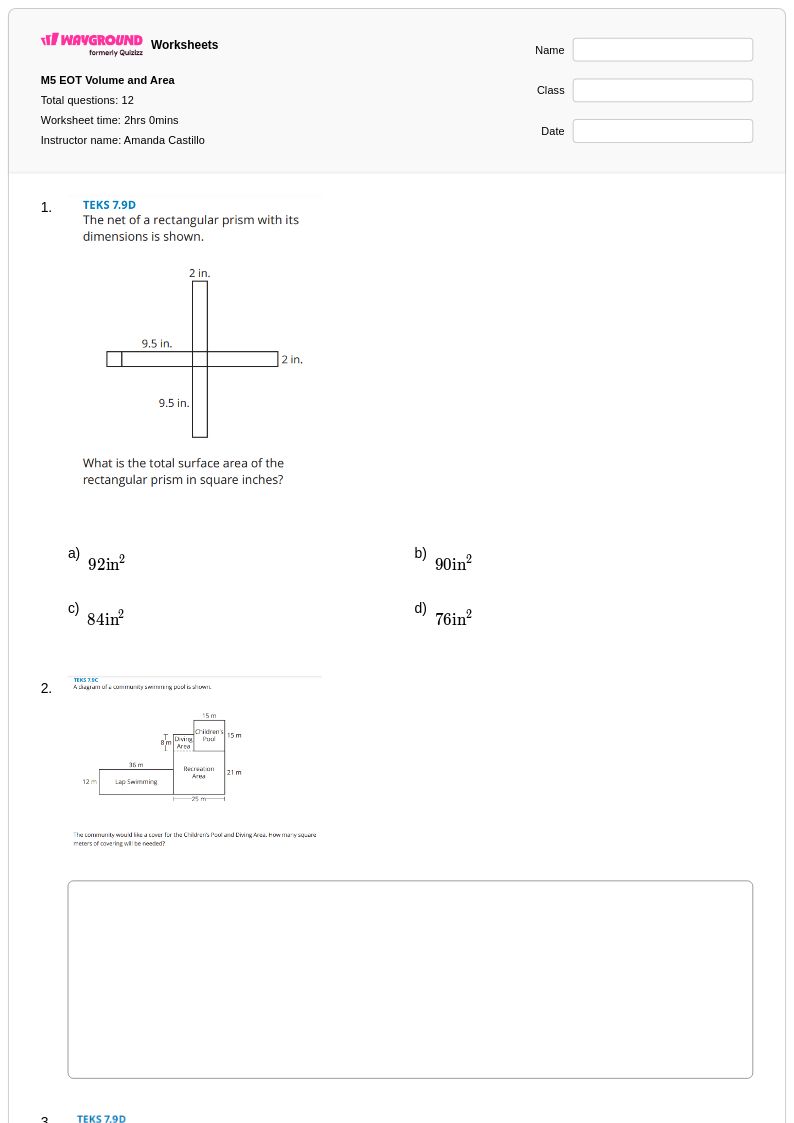
12 Q
7th
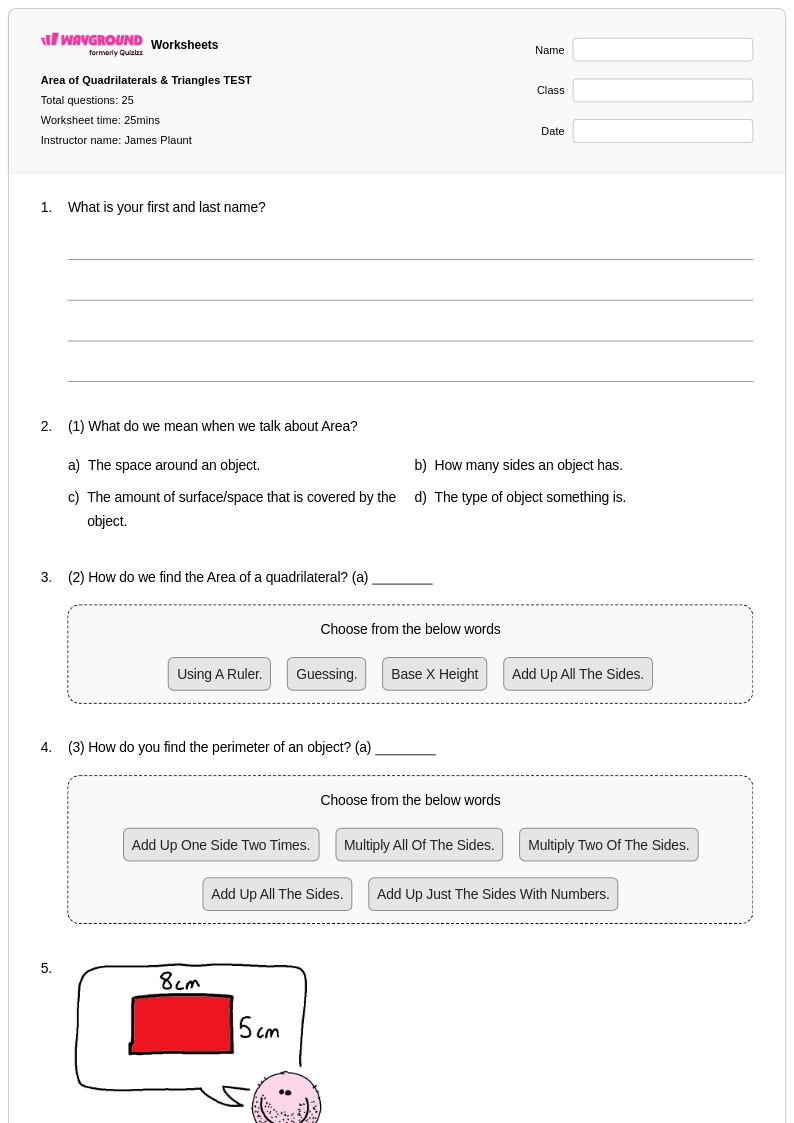
25 Q
6th - 8th
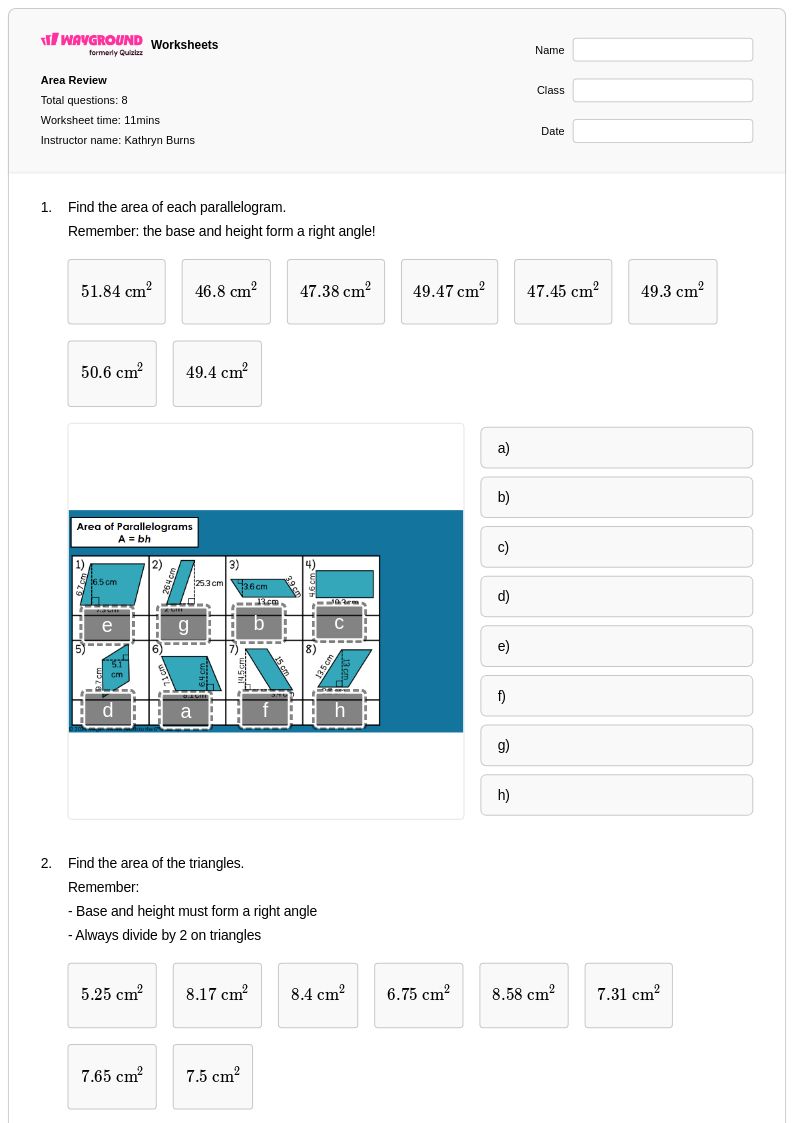
8 Q
6th - 8th
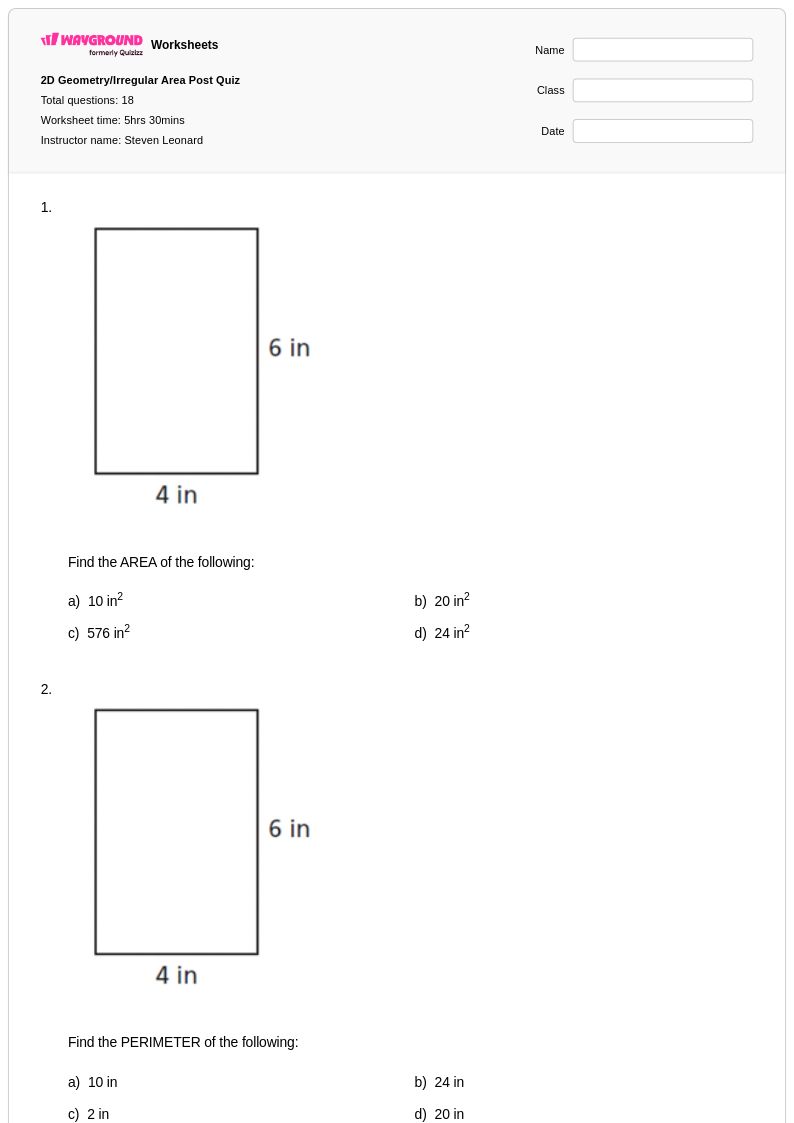
18 Q
7th
15 Q
7th
10 Q
7th
13 Q
7th
11 Q
7th
20 Q
7th
13 Q
6th - 7th
11 Q
7th - 9th

13 Q
7th
30 Q
6th - Uni
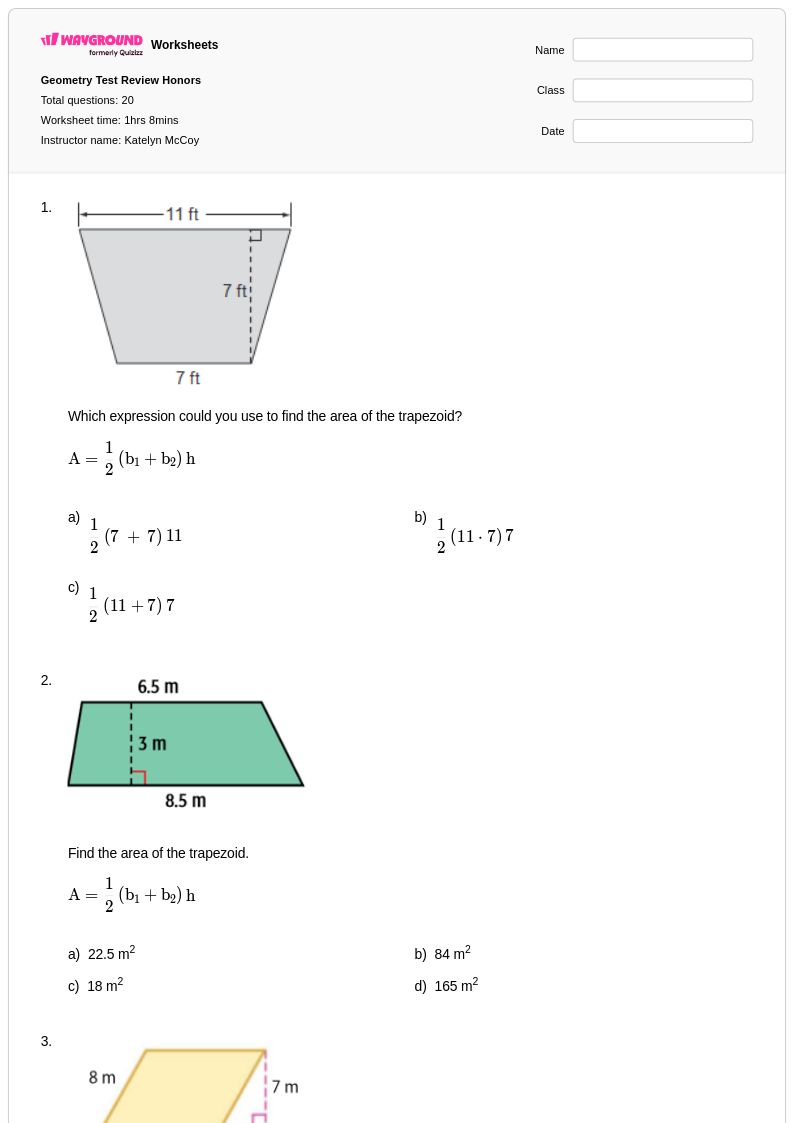
20 Q
6th - 8th
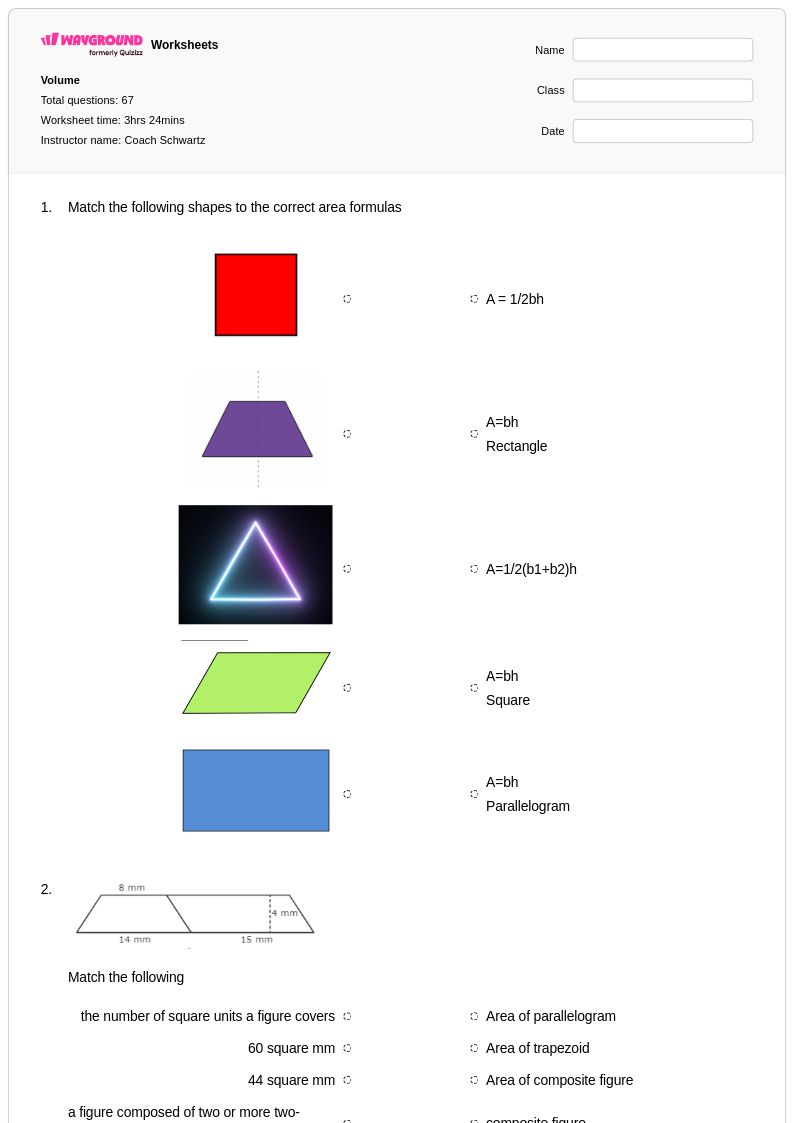
67 Q
7th
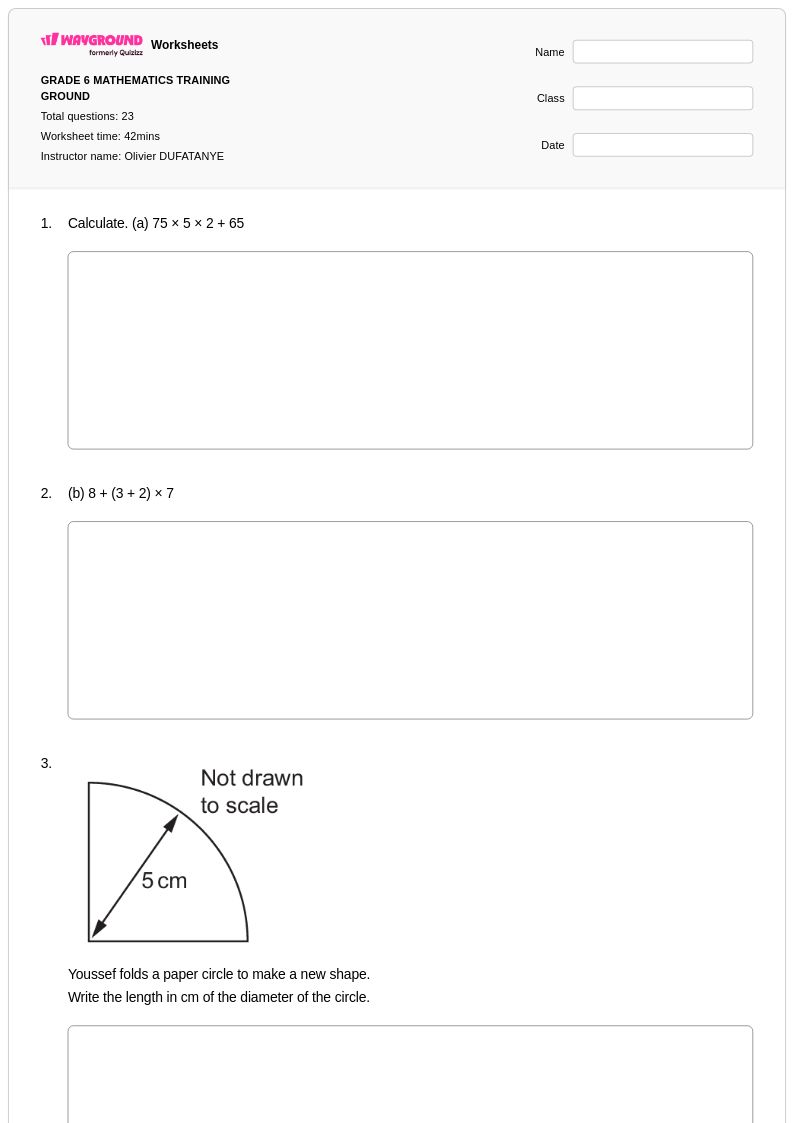
23 Q
6th - Uni
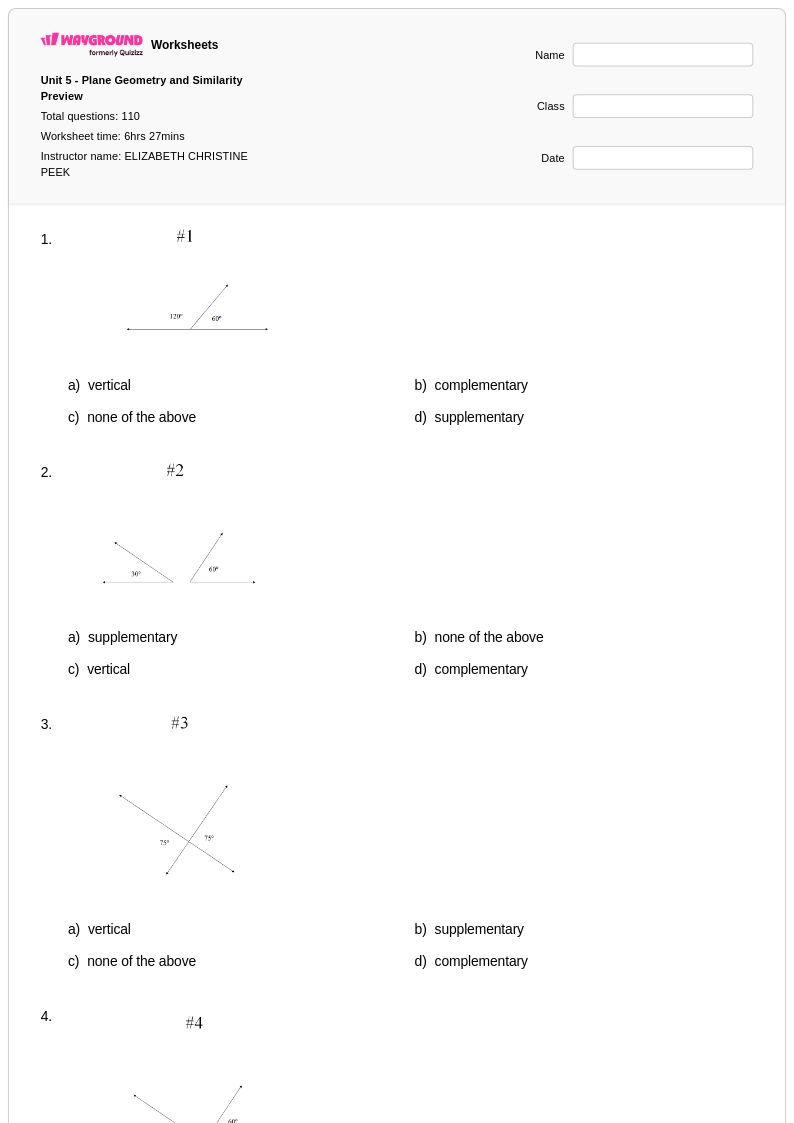
110 Q
7th
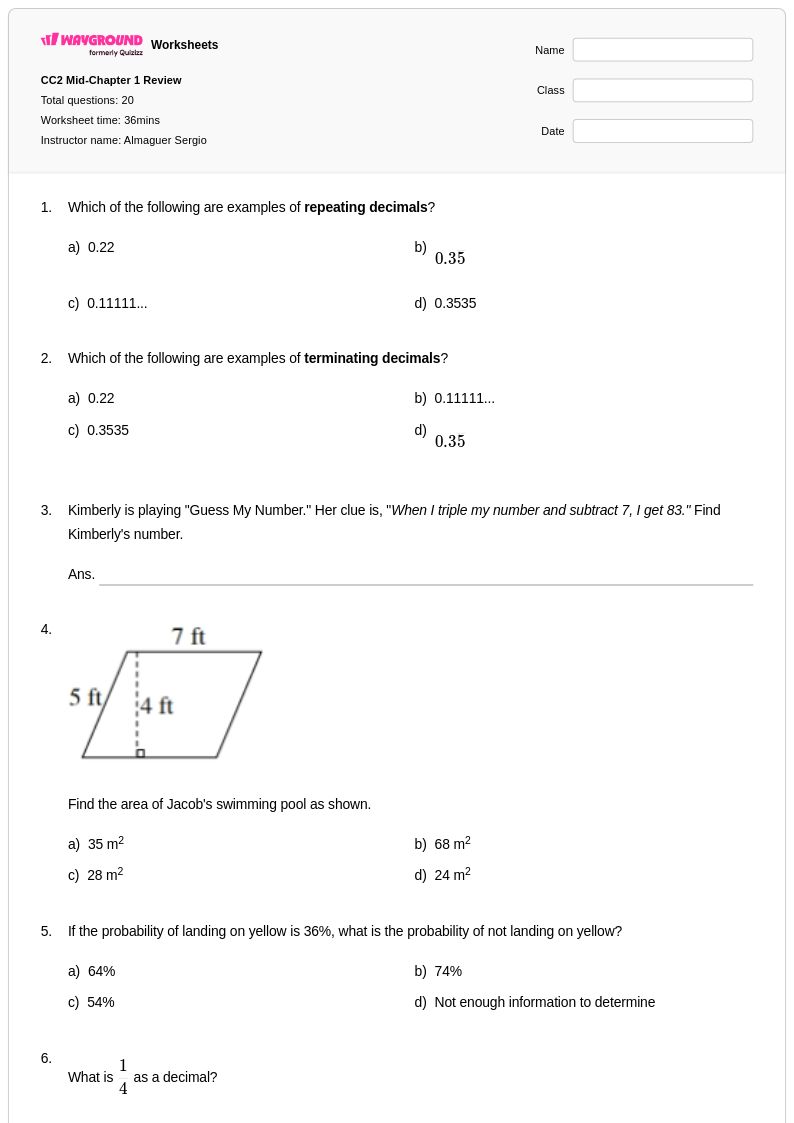
20 Q
7th
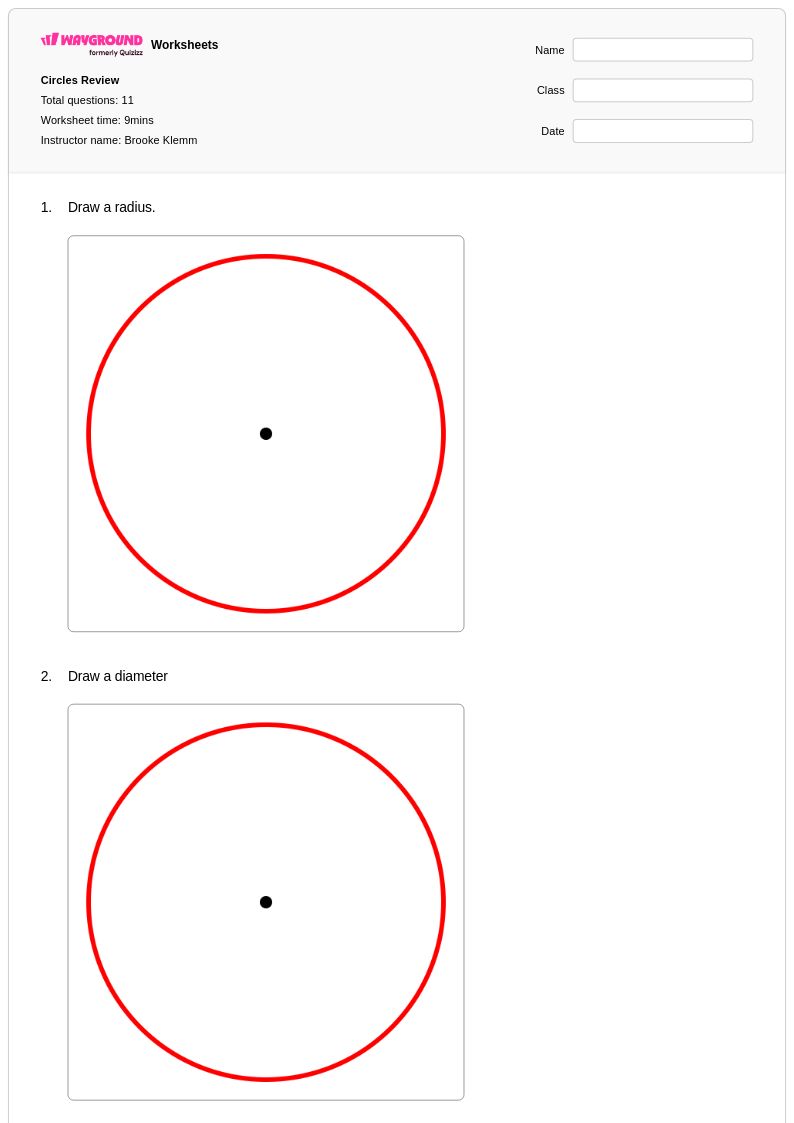
11 Q
7th
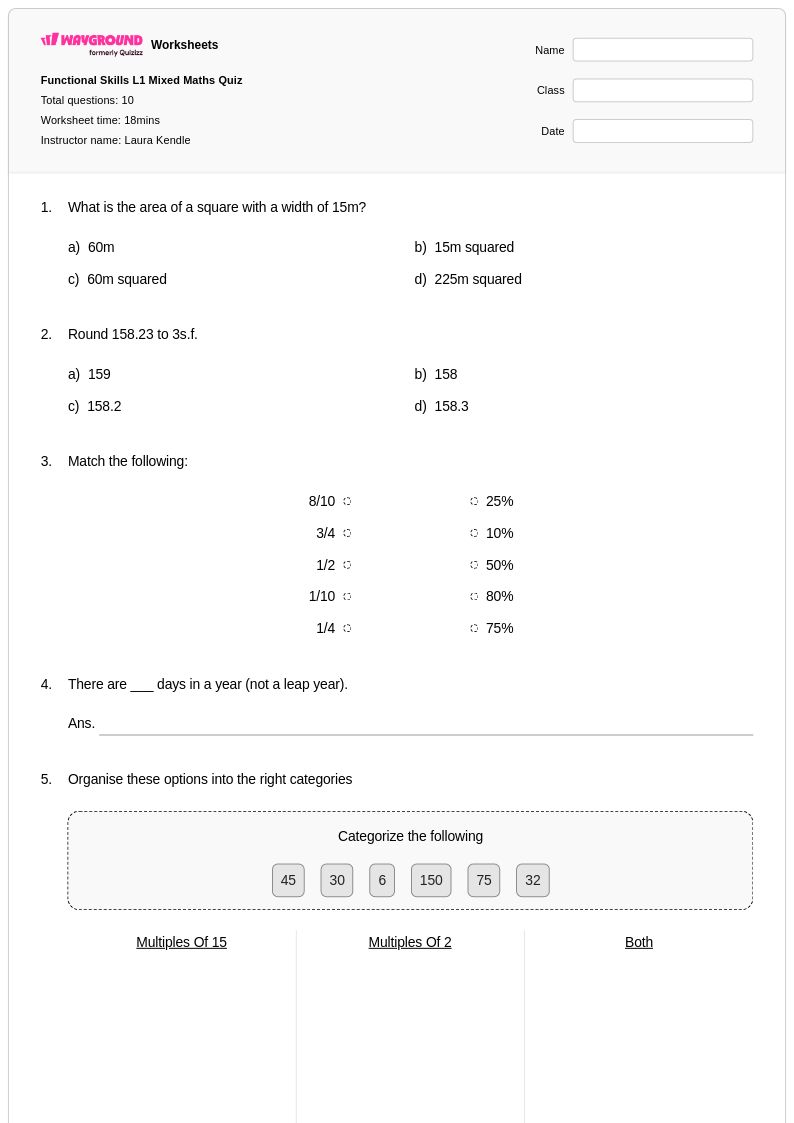
10 Q
6th - 8th
Explore Area Calculation Worksheets by Grades
Explore Other Subject Worksheets for year 7
Explore printable Area Calculation worksheets for Year 7
Area calculation worksheets for Year 7 students available through Wayground (formerly Quizizz) provide comprehensive practice with geometric measurement concepts that form the foundation of advanced mathematical thinking. These carefully designed resources help seventh-grade students master essential skills including calculating the area of triangles, parallelograms, trapezoids, and composite figures, while reinforcing understanding of square units and the relationship between perimeter and area. Each worksheet collection includes detailed answer keys that support independent learning and self-assessment, with free printable options that make it easy for educators to distribute practice problems both in classroom settings and for homework assignments. Students develop procedural fluency through systematic practice while building conceptual understanding of how area formulas connect to real-world applications in construction, design, and spatial reasoning.
Wayground (formerly Quizizz) empowers teachers with millions of educator-created area calculation resources that streamline lesson planning and provide targeted support for diverse learning needs. The platform's robust search and filtering capabilities allow instructors to quickly locate worksheets aligned with specific mathematical standards and learning objectives, while differentiation tools enable seamless customization for students requiring remediation or enrichment opportunities. Teachers can access these materials in both digital and printable PDF formats, facilitating flexible implementation across traditional and technology-enhanced learning environments. This extensive collection supports systematic skill practice through varied problem types and complexity levels, helping educators address individual student needs while maintaining rigorous academic standards that prepare seventh-grade learners for advanced geometric concepts in algebra and beyond.
FAQs
How do I teach area calculation to seventh graders?
What area practice problems should Grade 7 students work on?
Why do seventh graders get composite-area questions wrong?
How can teachers use Wayground area calculation worksheets?
How does Grade 7 area work connect to the Common Core curriculum?
How can I differentiate Grade 7 area worksheets?