Free Printable Argument Essay Worksheets for Year 11
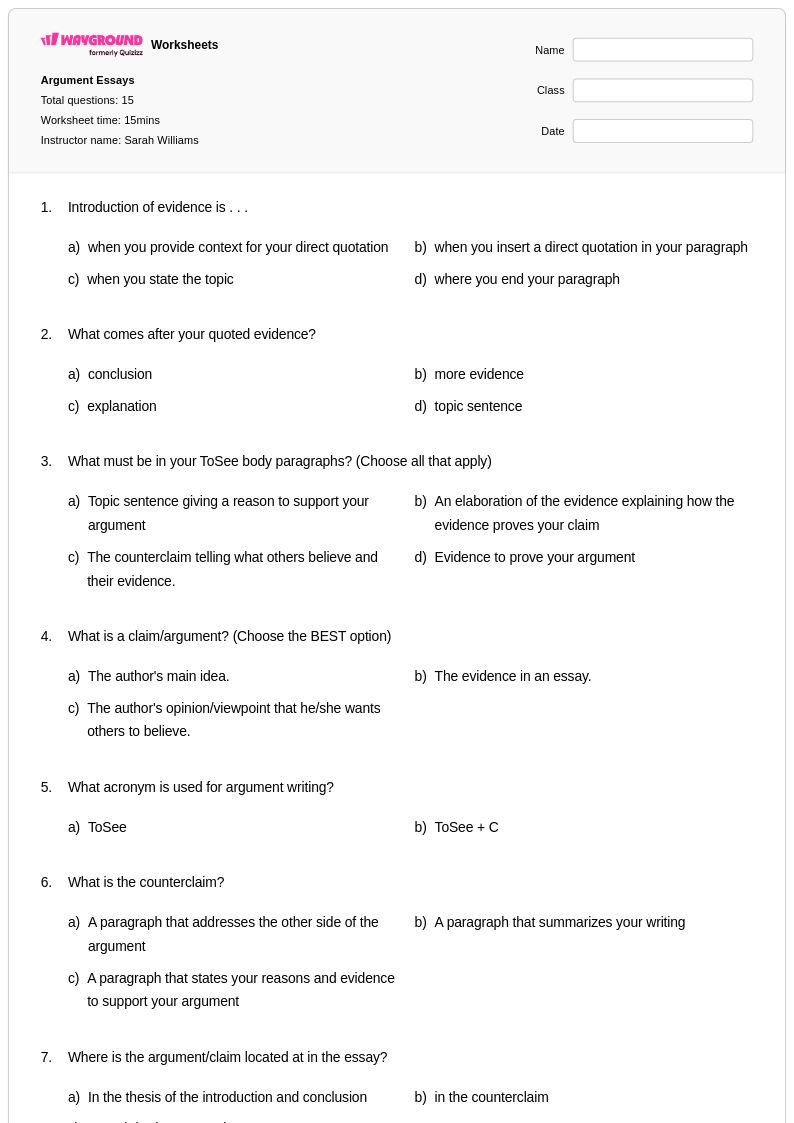
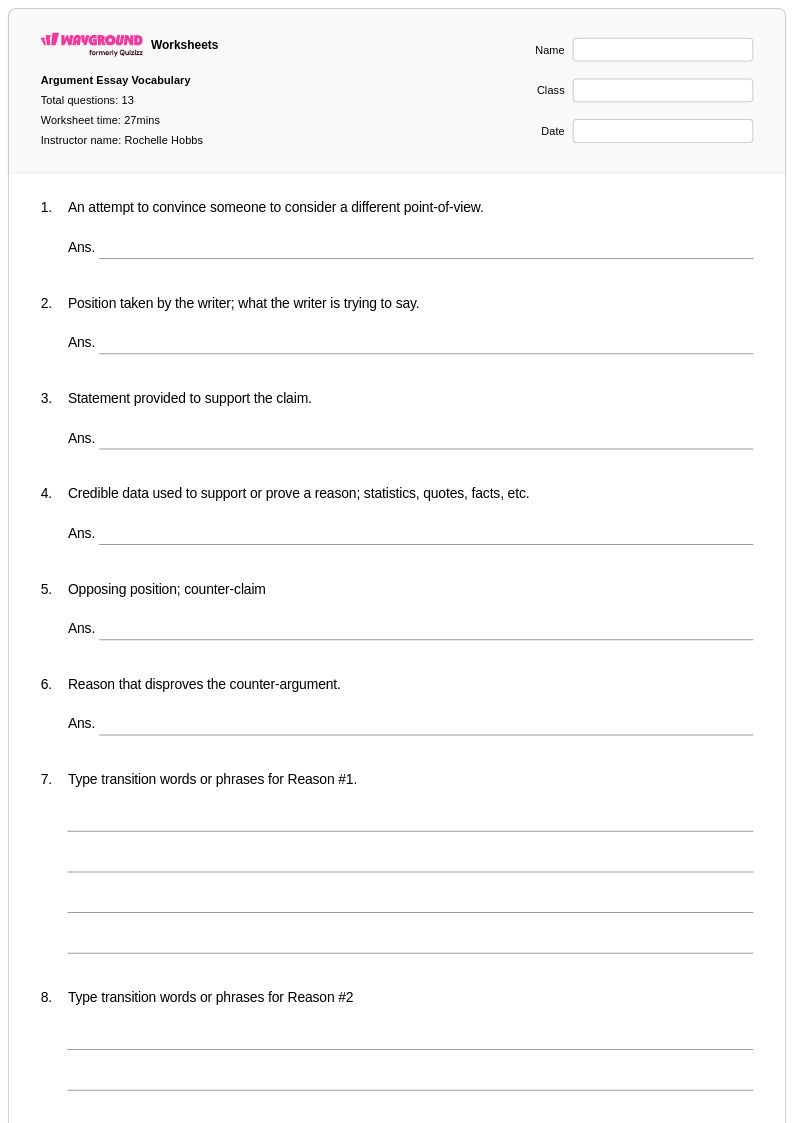
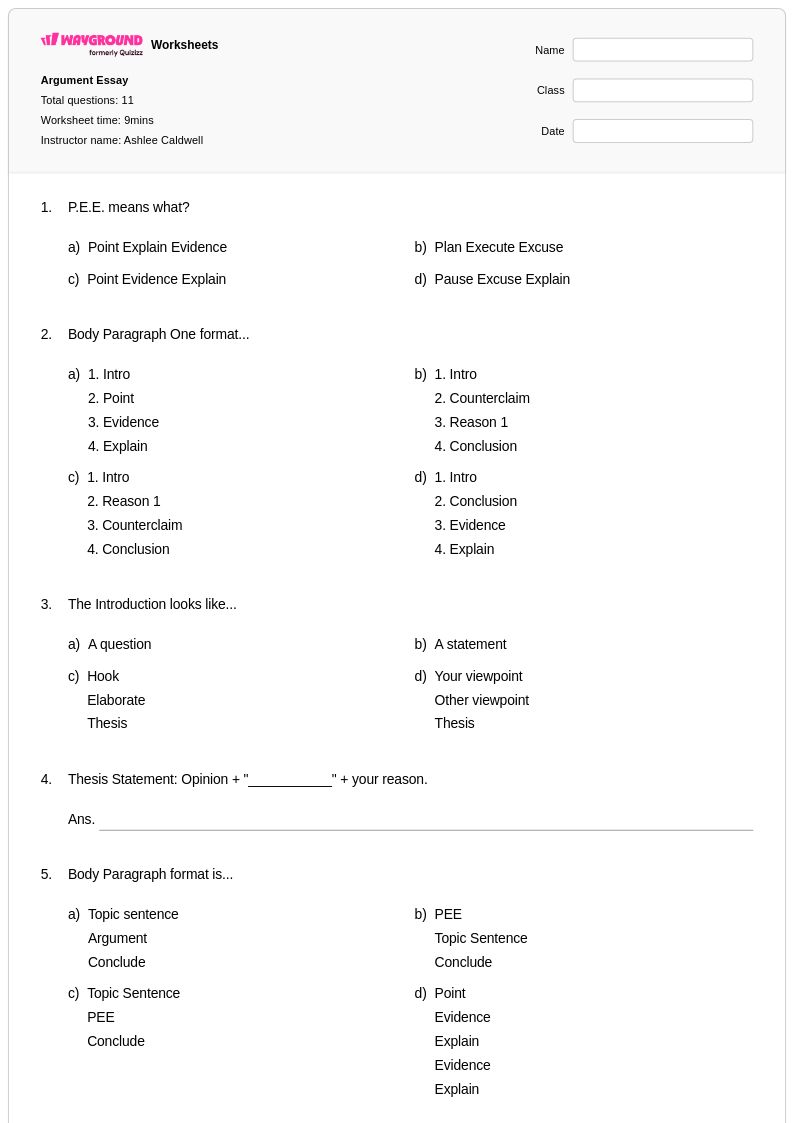
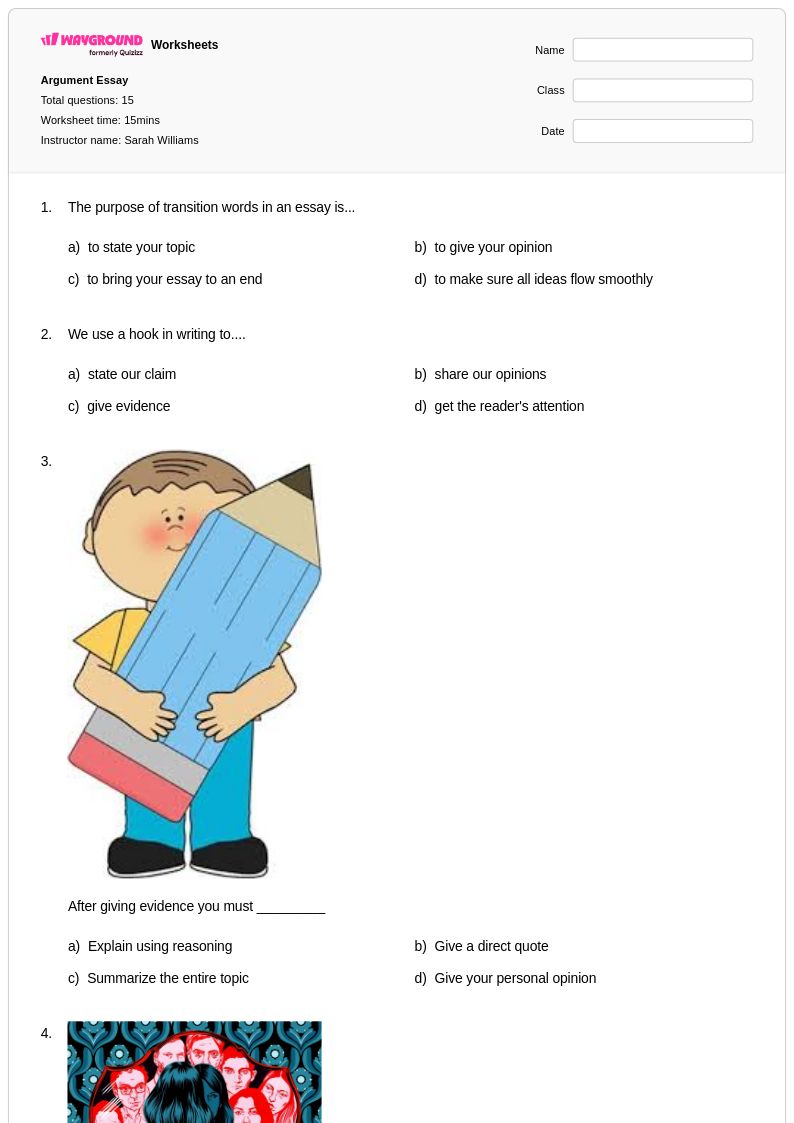
Enhance Year 11 students' argument essay writing skills with Wayground's comprehensive collection of free worksheets, printables, and practice problems featuring detailed answer keys to master persuasive writing techniques and structured argumentation.
Explore printable Argument Essay worksheets for Year 11
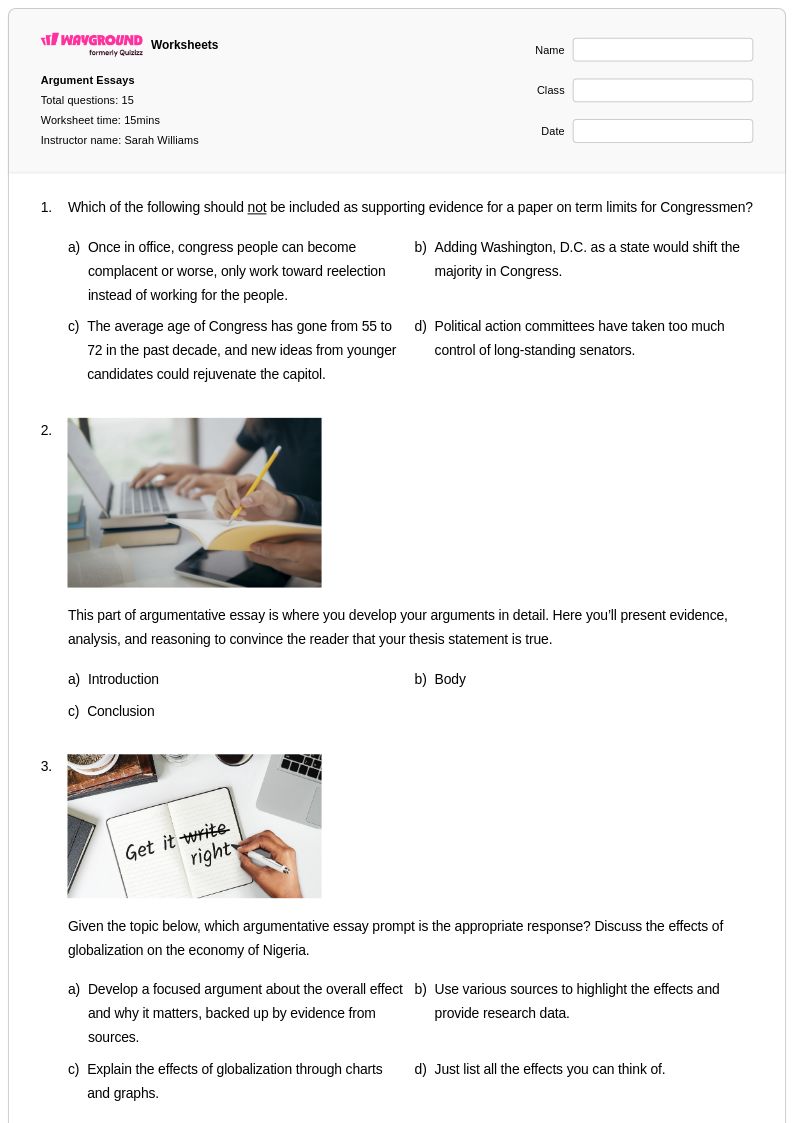
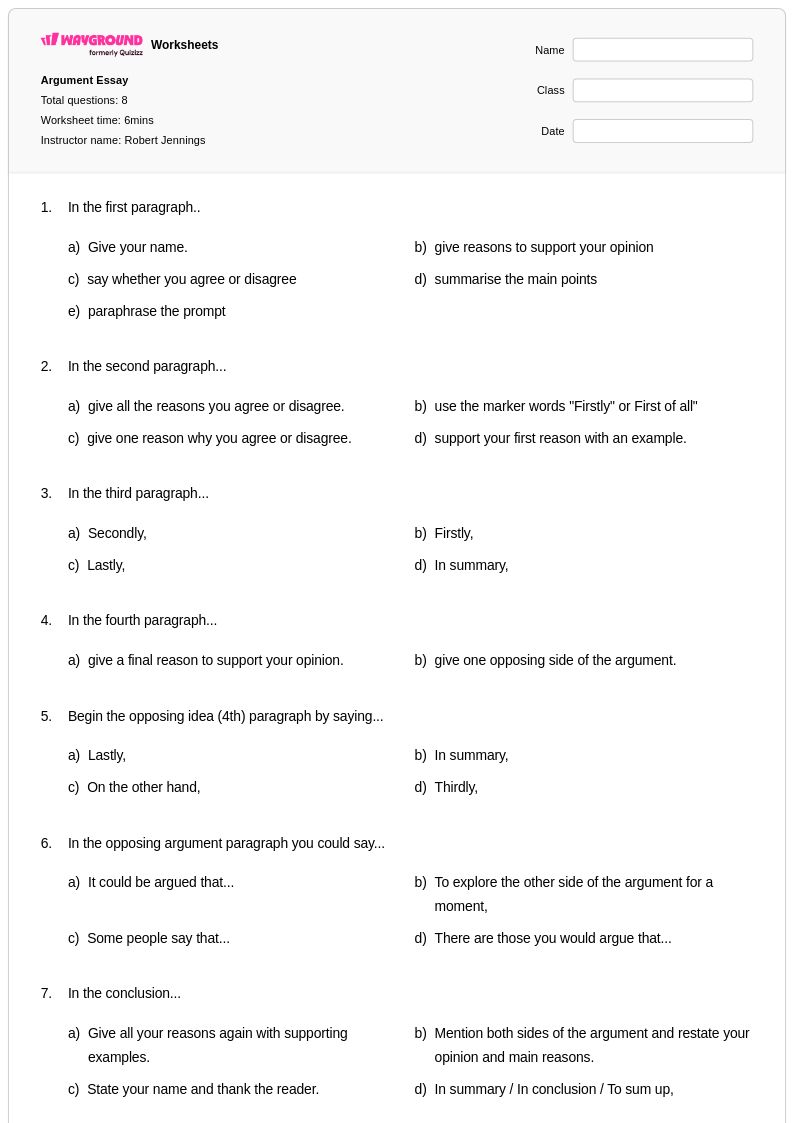
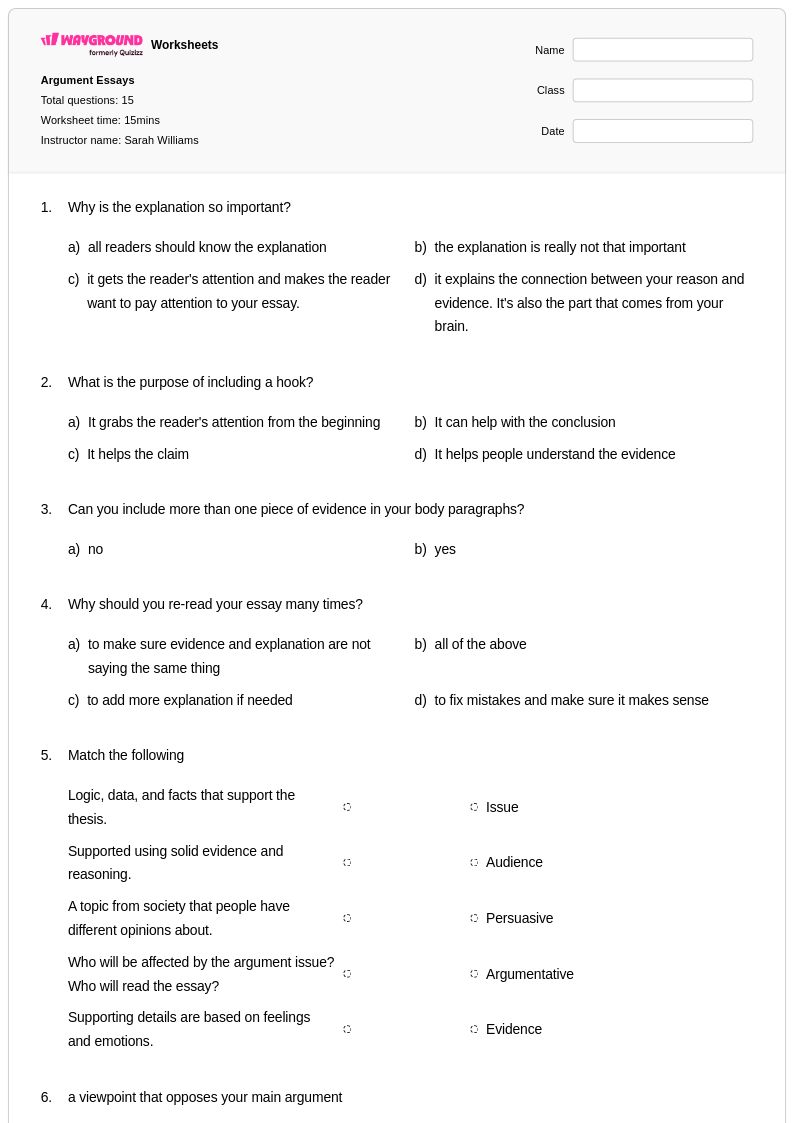
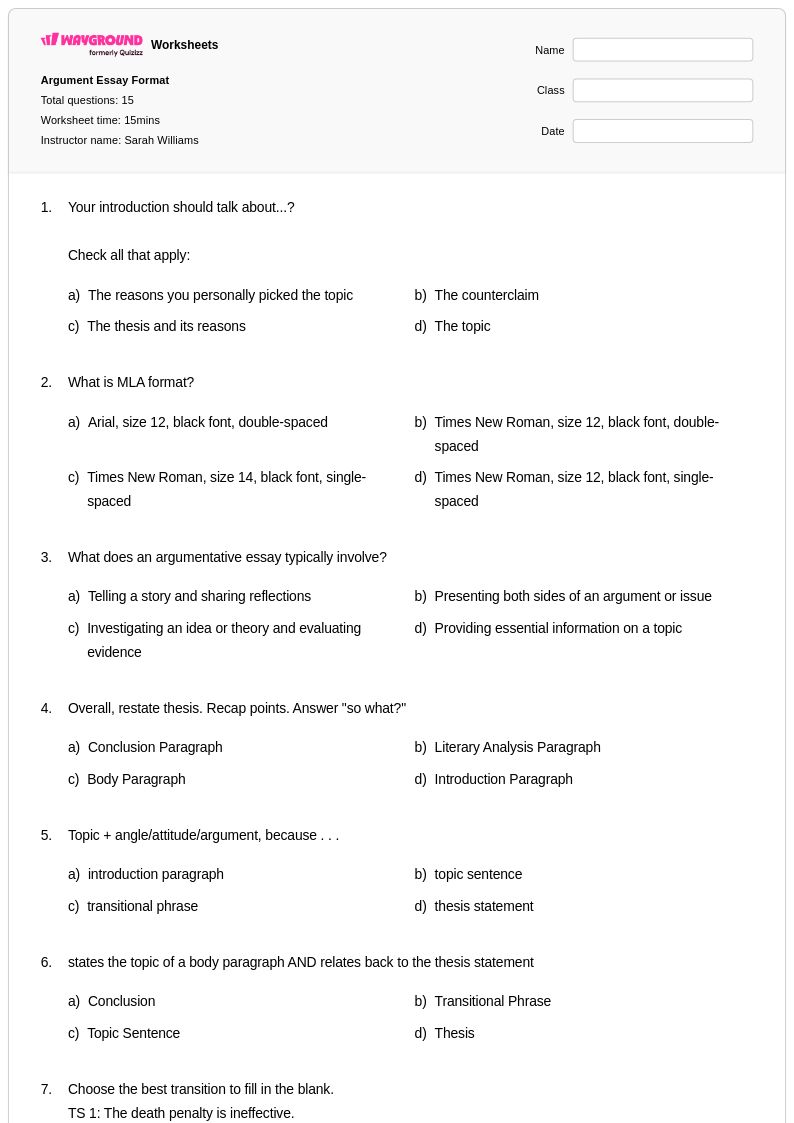
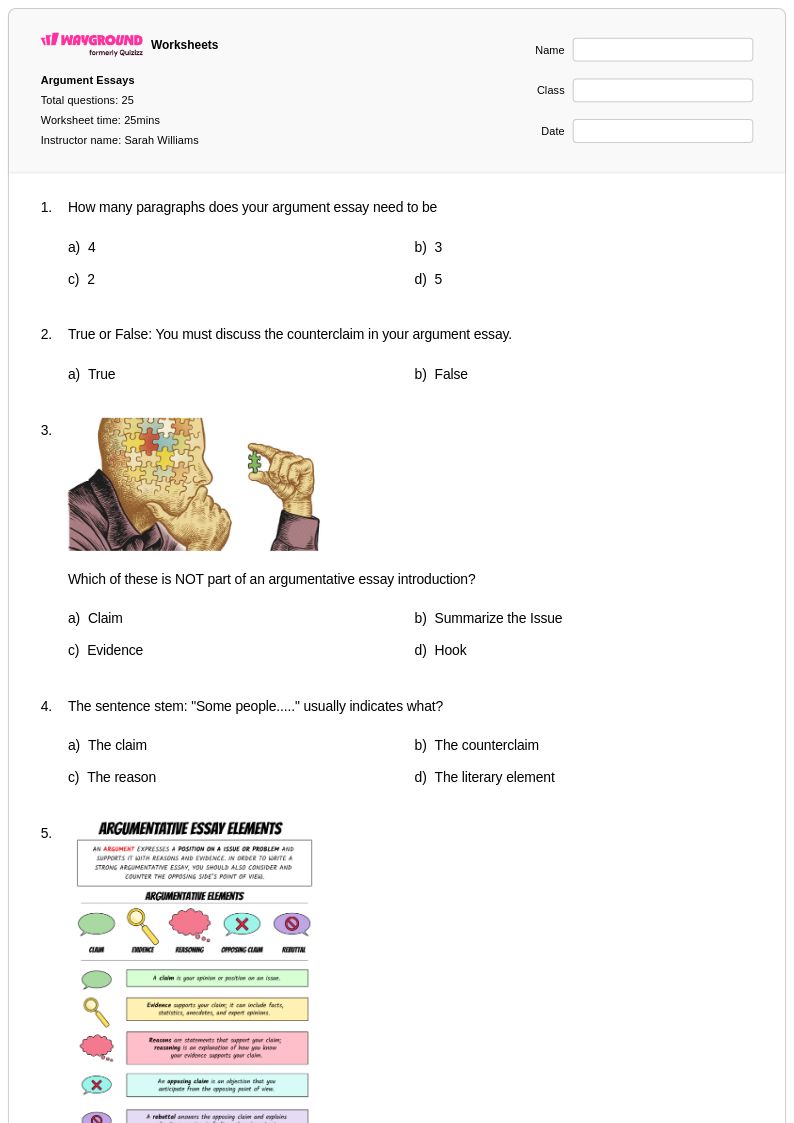
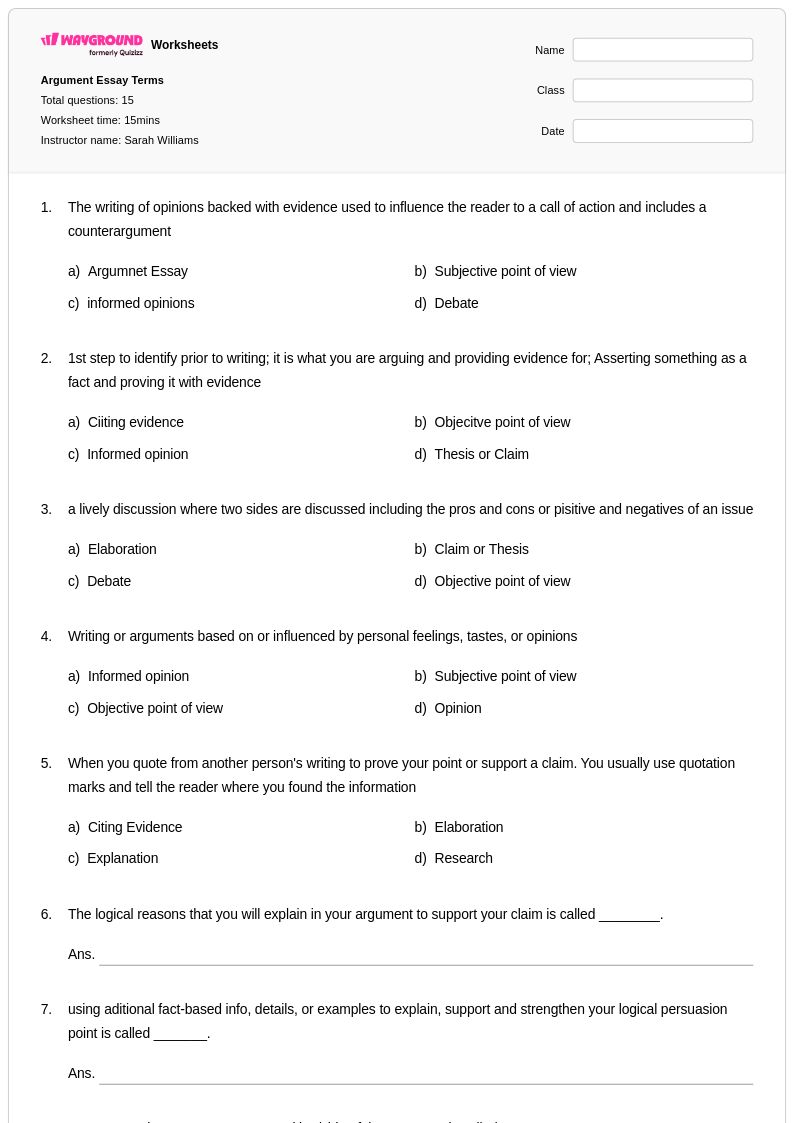
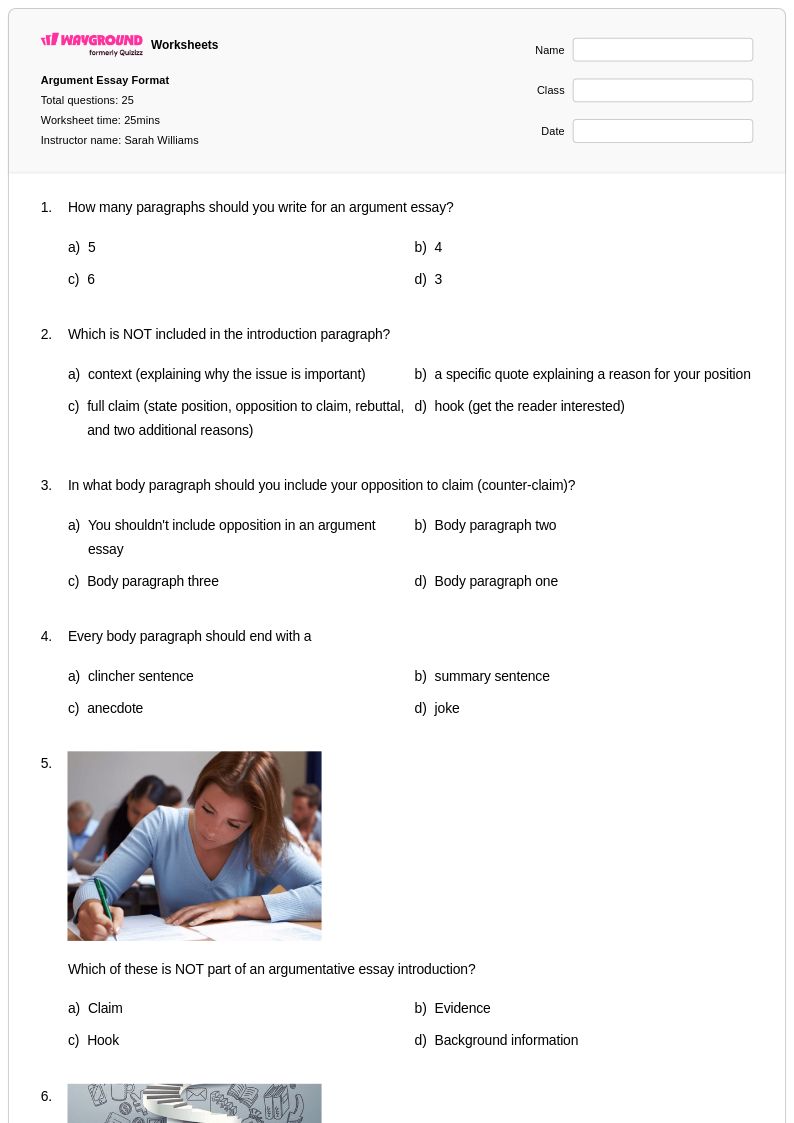
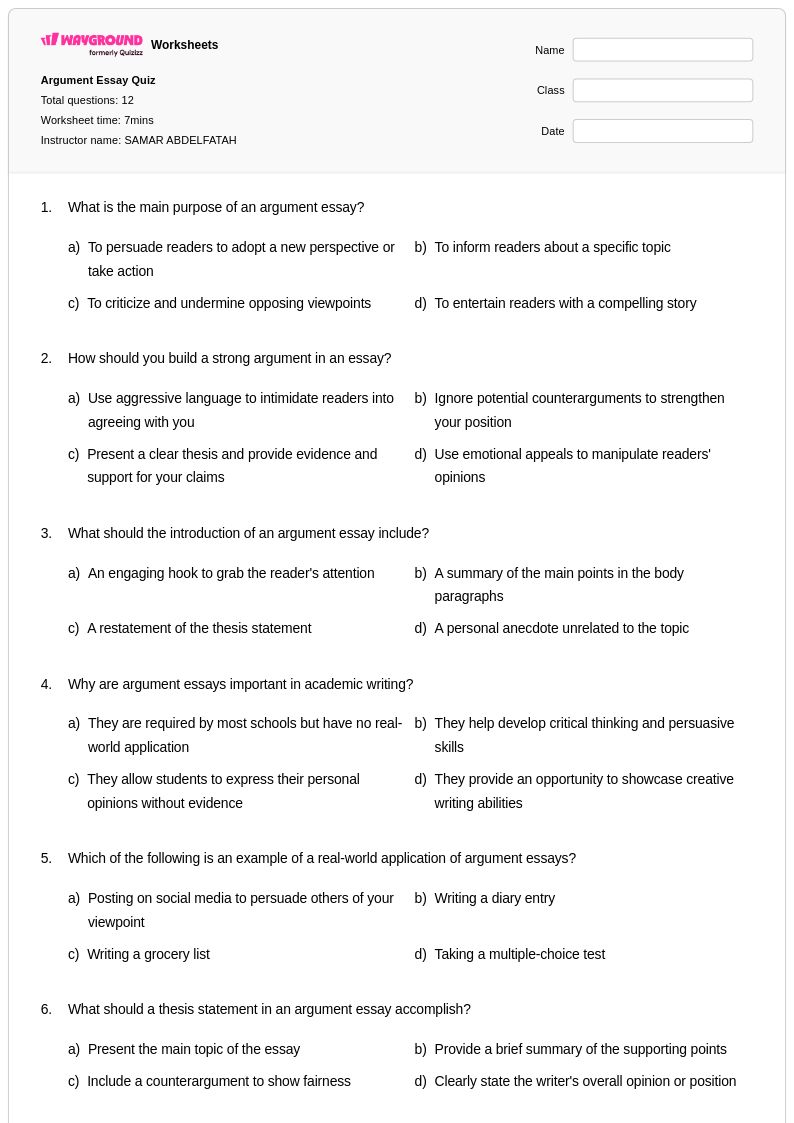
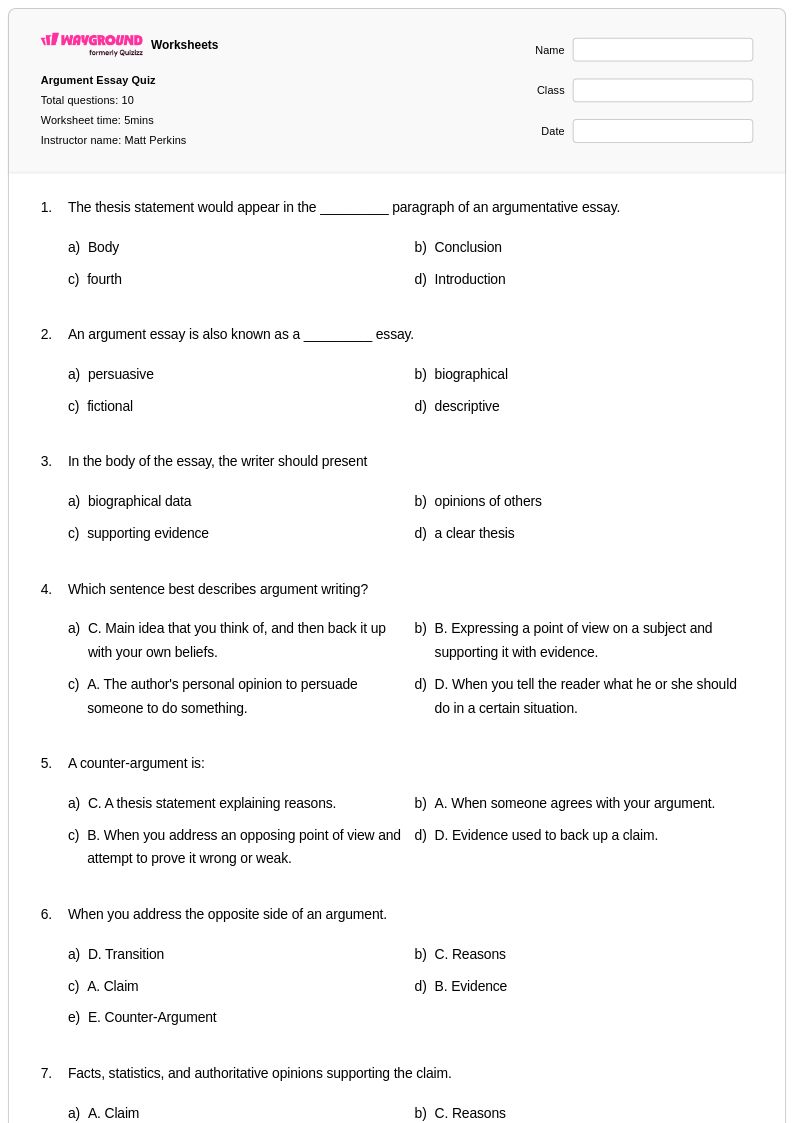
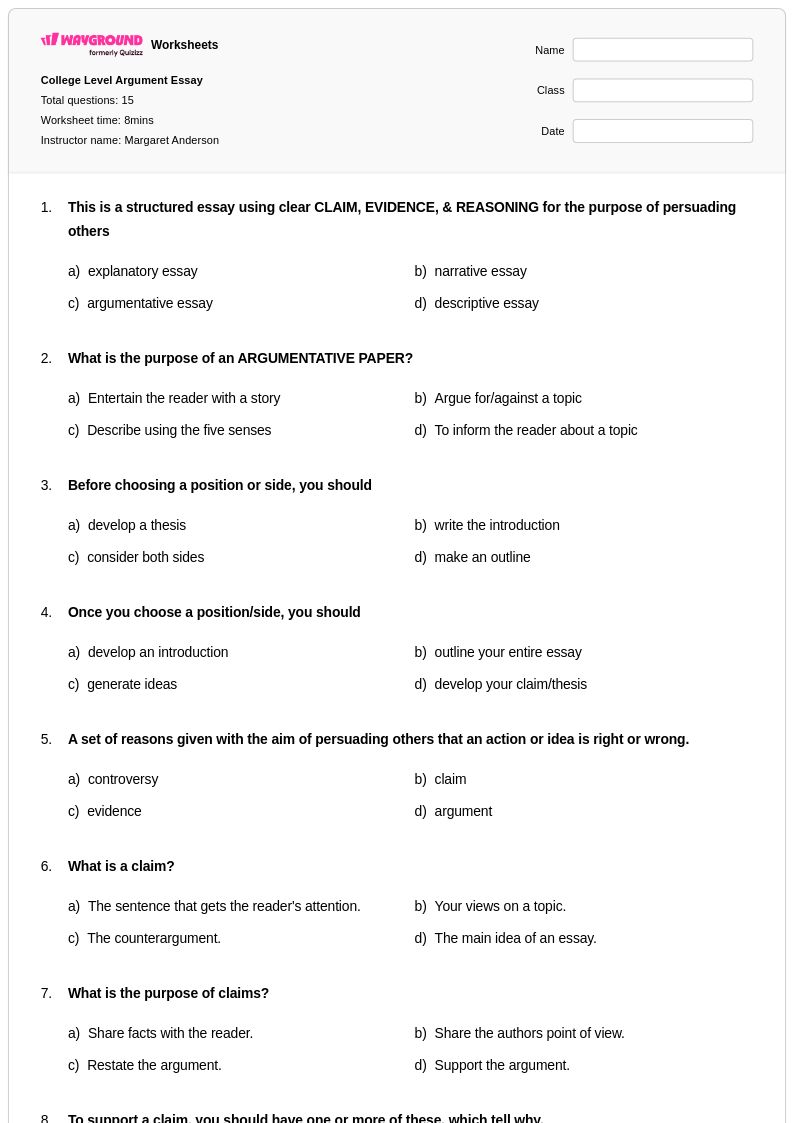
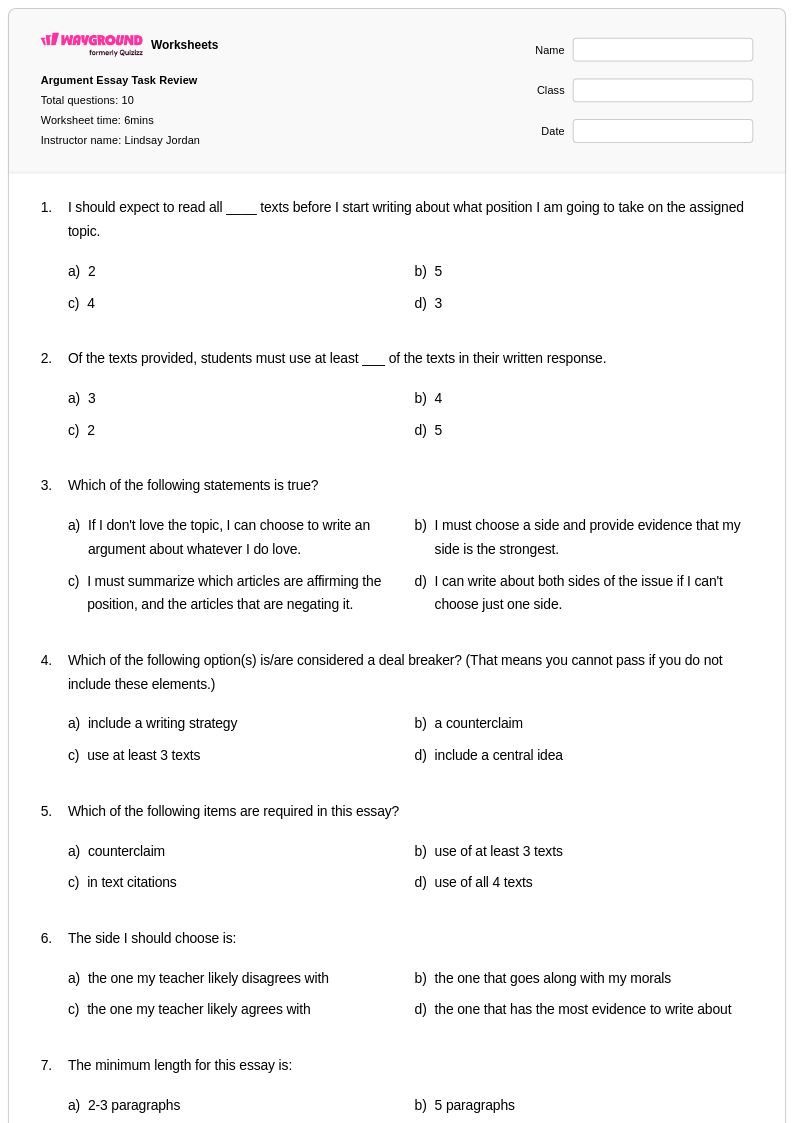
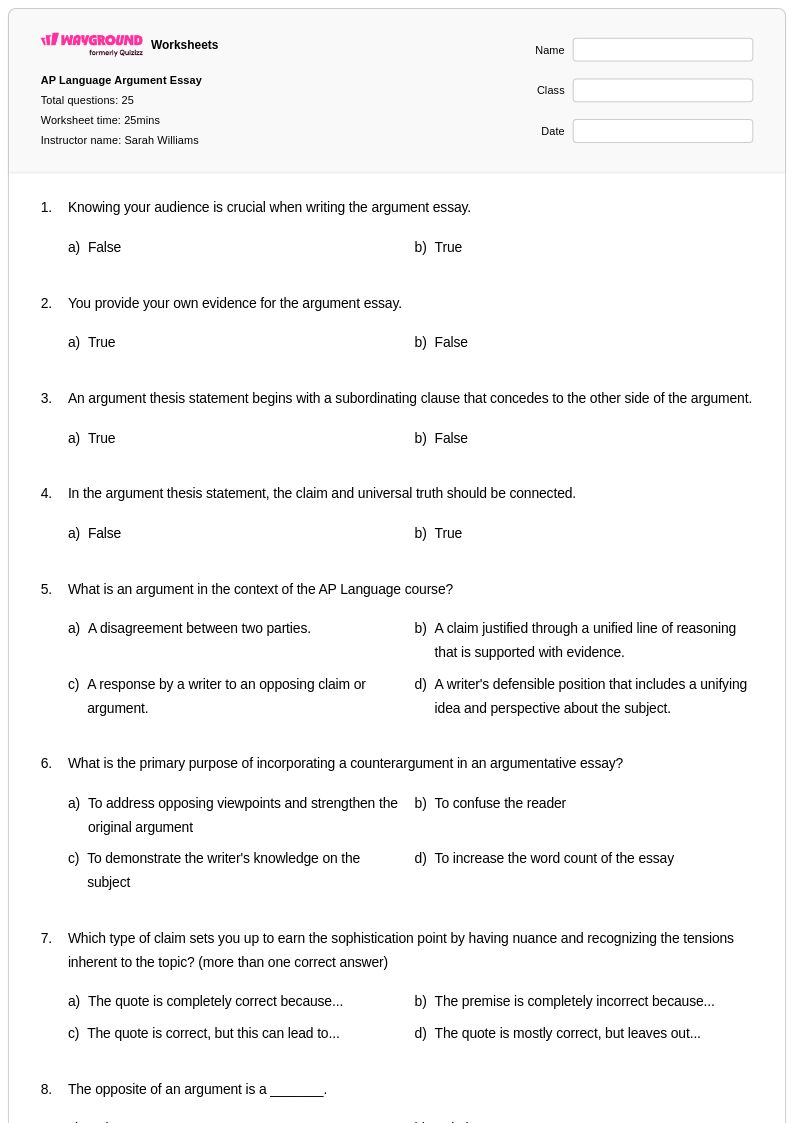
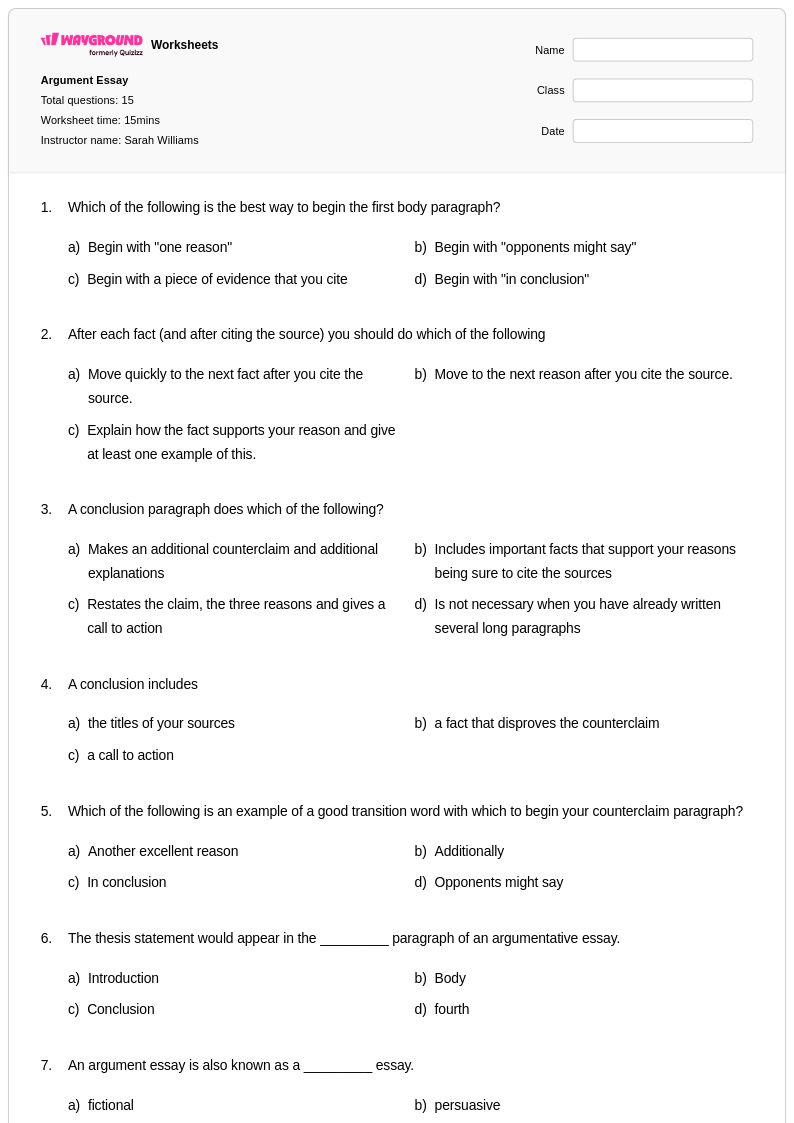
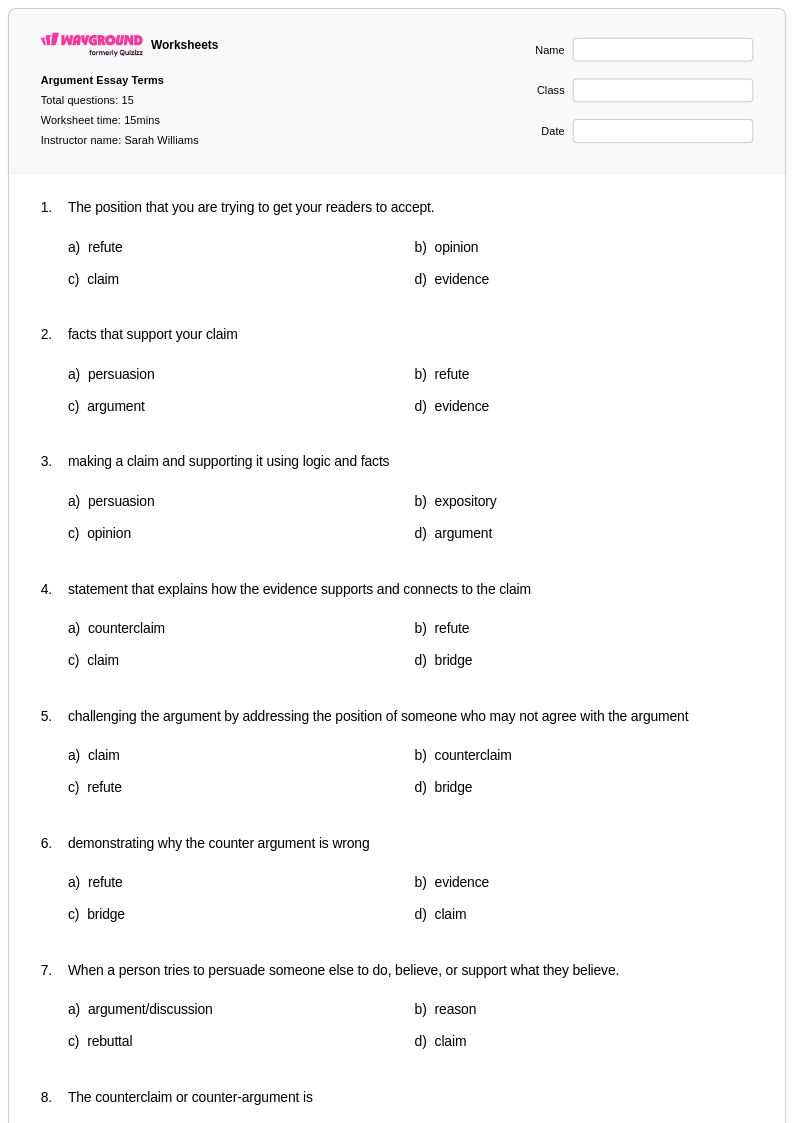
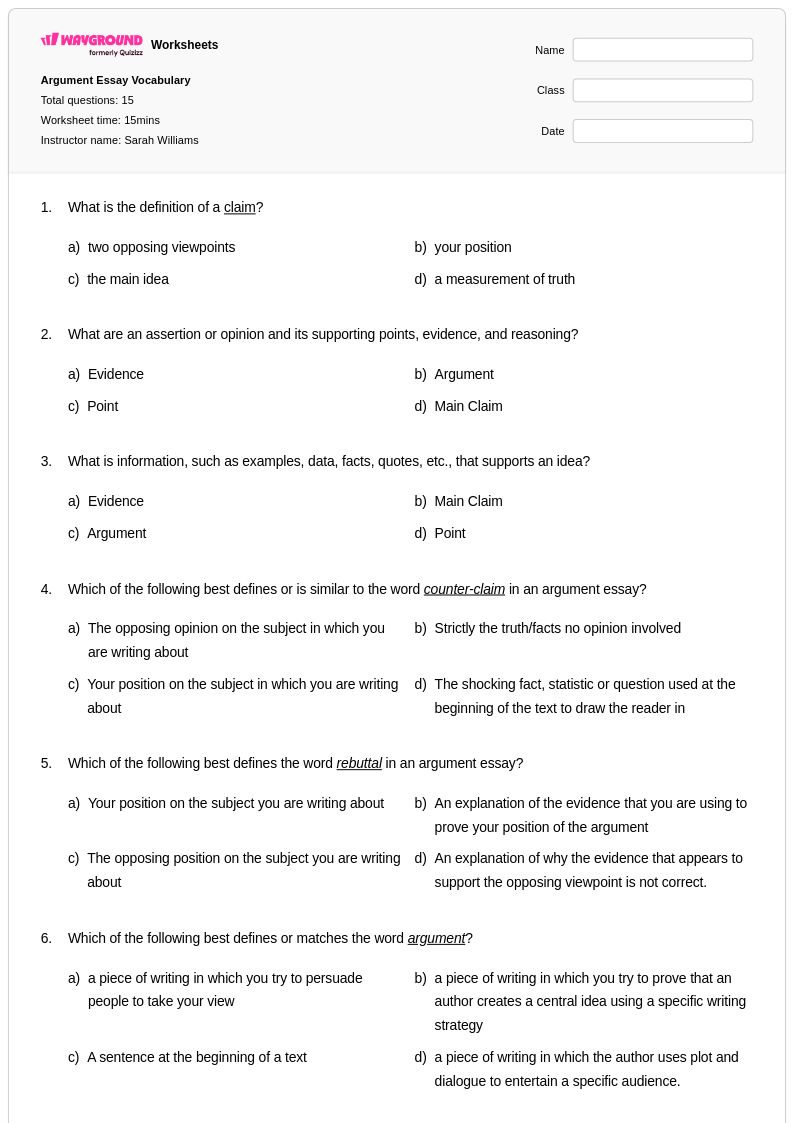
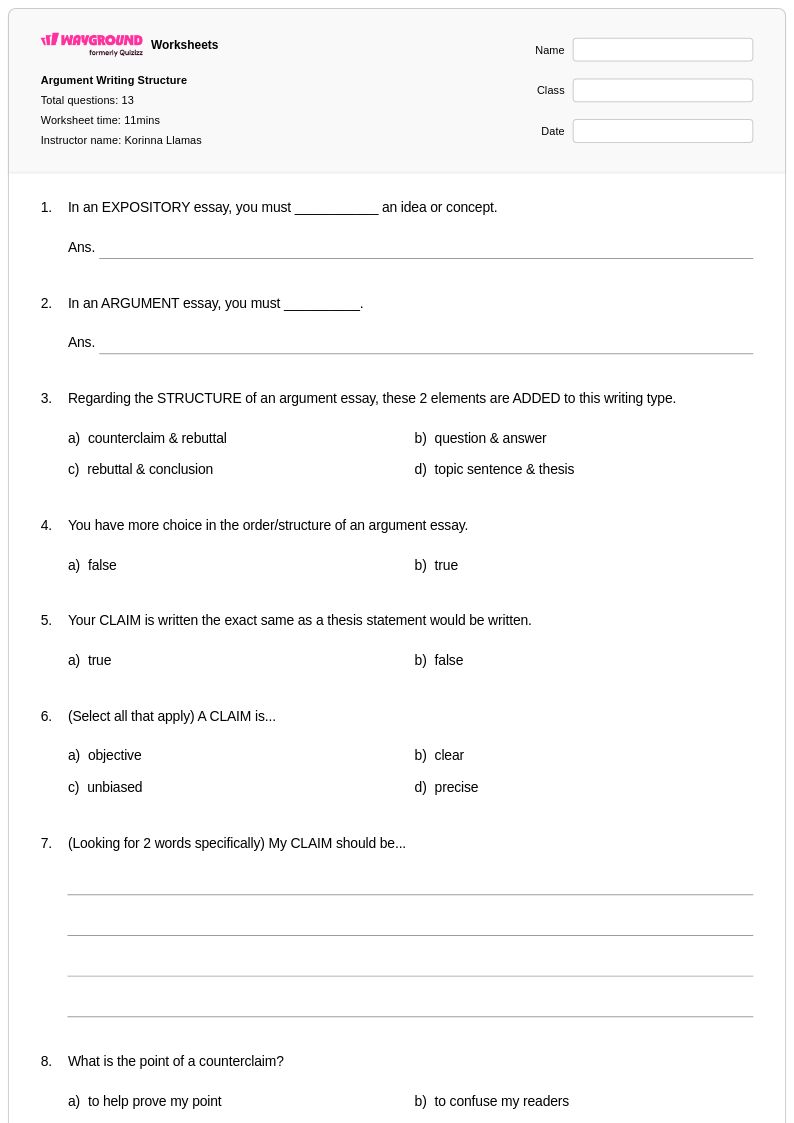
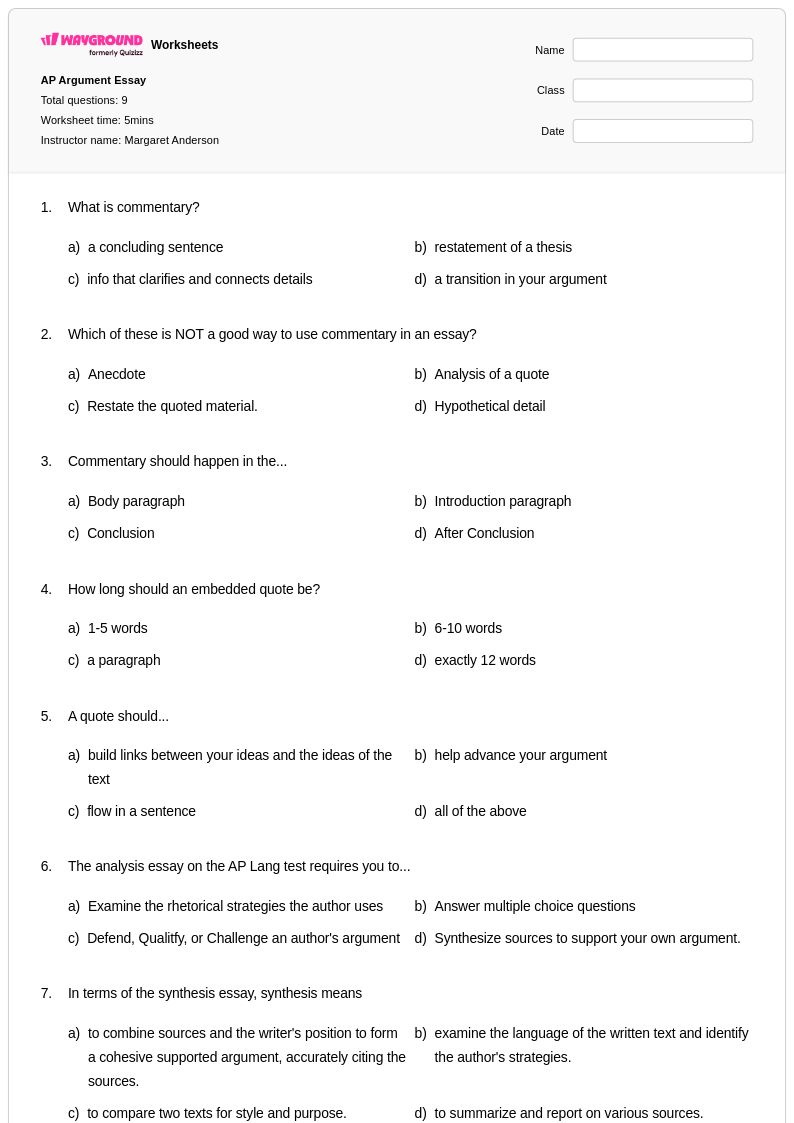
Argument essay writing represents a cornerstone skill for Year 11 students as they prepare for college-level academic discourse and critical thinking challenges. Wayground's comprehensive collection of argument essay worksheets provides structured practice opportunities that guide students through every stage of persuasive writing, from developing compelling thesis statements and gathering credible evidence to addressing counterarguments and crafting powerful conclusions. These carefully designed resources strengthen essential skills including logical reasoning, source evaluation, rhetorical analysis, and academic voice development through engaging practice problems that mirror real-world argumentative scenarios. Students benefit from immediate feedback through detailed answer keys, while teachers appreciate the convenience of ready-to-use printables available in pdf format that seamlessly integrate into existing curriculum plans without additional preparation time.
Wayground's extensive library draws from millions of teacher-created resources specifically designed to support argument essay instruction at the Year 11 level, offering educators powerful search and filtering capabilities to locate materials that align with state standards and individual classroom needs. The platform's differentiation tools enable teachers to customize worksheets for varying skill levels, ensuring that advanced students receive appropriately challenging content while struggling writers access scaffolded support materials. These versatile resources are available in both printable and digital formats, including downloadable pdf files, making them ideal for diverse learning environments whether used for initial skill introduction, targeted remediation, or enrichment activities. Teachers can efficiently plan comprehensive argument writing units by selecting from pre-made assessments, graphic organizers, and practice exercises that systematically build student competency in persuasive writing techniques.
FAQs
How do I teach students to write an argument essay?
Start by breaking the argument essay into its core components: a clear thesis, supporting evidence, counterargument acknowledgment, and a rebuttal. Teach each component in isolation before asking students to produce a full essay, using mentor texts and structured graphic organizers to scaffold the process. Explicit instruction in logical reasoning and the difference between opinion and evidence-backed claims is essential before students attempt independent writing.
What exercises help students practice argument essay writing?
Effective practice exercises include thesis statement construction drills, evidence ranking activities where students evaluate the strength of sources, and counterargument-response scaffolds that require students to steelman an opposing position before refuting it. Identifying logical fallacies in sample arguments is also a high-value exercise, as it sharpens critical thinking and helps students avoid the same errors in their own writing.
What mistakes do students commonly make when writing argument essays?
The most common errors include writing thesis statements that state a fact rather than a defensible claim, using evidence without explanation or analysis, and ignoring counterarguments entirely. Students also frequently confuse emotional appeals with logical reasoning, which weakens the overall persuasiveness of their writing. Targeted feedback on these specific patterns, supported by structured revision activities, is the most effective way to address them.
How can I help struggling writers build argument essay skills?
Struggling writers benefit most from sentence-level scaffolding, such as claim-evidence-reasoning frames, before being asked to write full paragraphs or essays. Reducing the scope of the task, such as focusing only on constructing a single body paragraph with one piece of evidence, builds confidence while reinforcing the structural logic of argument writing. On Wayground, teachers can apply accommodations like Read Aloud and reduced answer choices to support students with additional learning needs during digital practice.
How do I use Wayground's argument essay worksheets in my classroom?
Wayground's argument essay worksheets are available as printable PDFs for traditional classroom use and in digital formats for technology-integrated environments, making them flexible for in-person, hybrid, and remote instruction. Teachers can also host worksheets as a quiz directly on Wayground, allowing for real-time student responses and built-in assessment. Each worksheet includes a detailed answer key, so teachers can quickly evaluate student work and deliver targeted feedback on specific argument components.
How do I assess whether students understand argument essay structure?
Effective assessment goes beyond grading a final essay. Look for whether students can identify the thesis, evidence, and rebuttal in a sample argument before assessing their ability to produce these elements independently. Common indicators of misunderstanding include vague thesis statements, unsupported claims, and absent or undeveloped counterarguments. Using structured rubrics that isolate each component allows teachers to pinpoint exactly where a student's argument construction breaks down.