
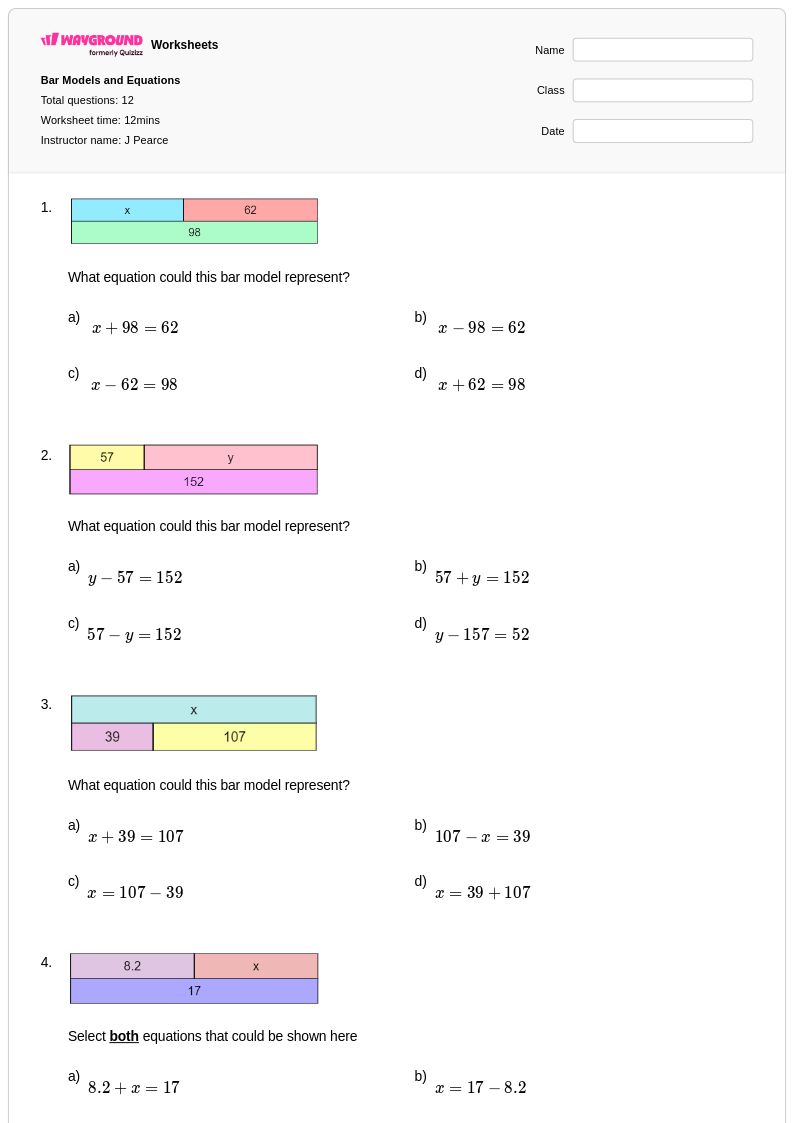
12 Q
5th - 9th
12 Q
1st - 5th
20 Q
4th - Uni
15 Q
4th - Uni
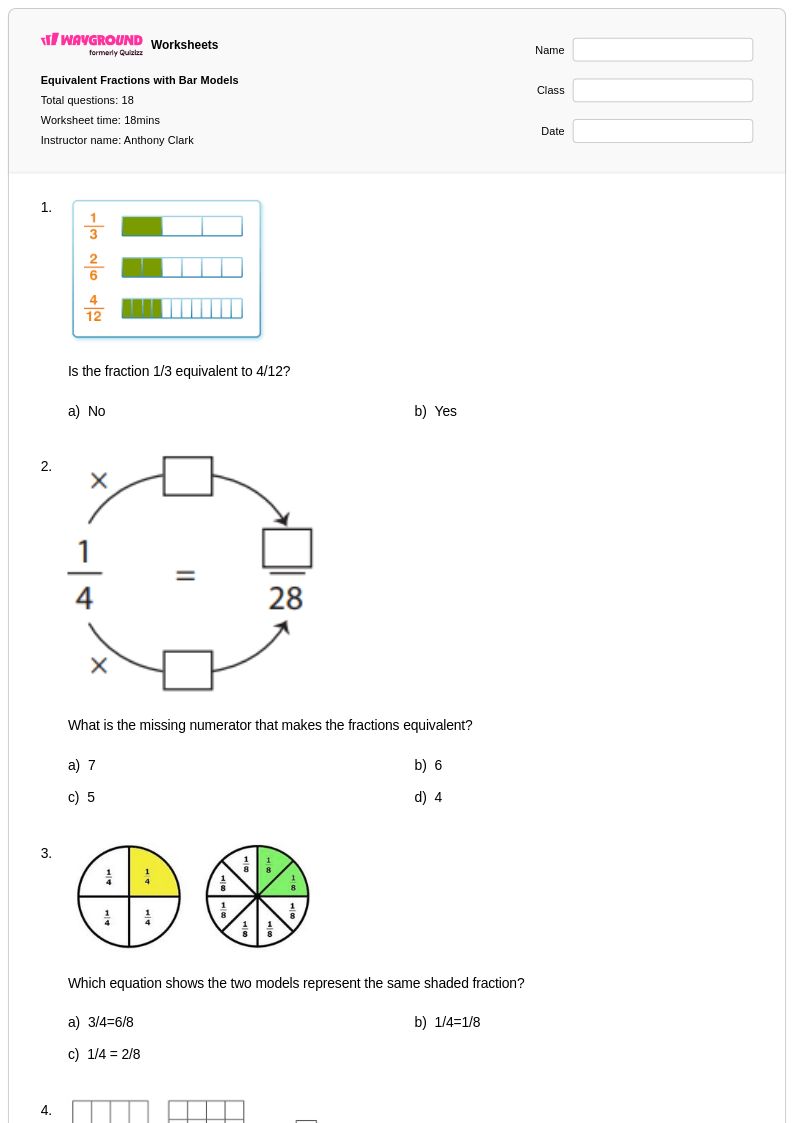
18 Q
4th - Uni
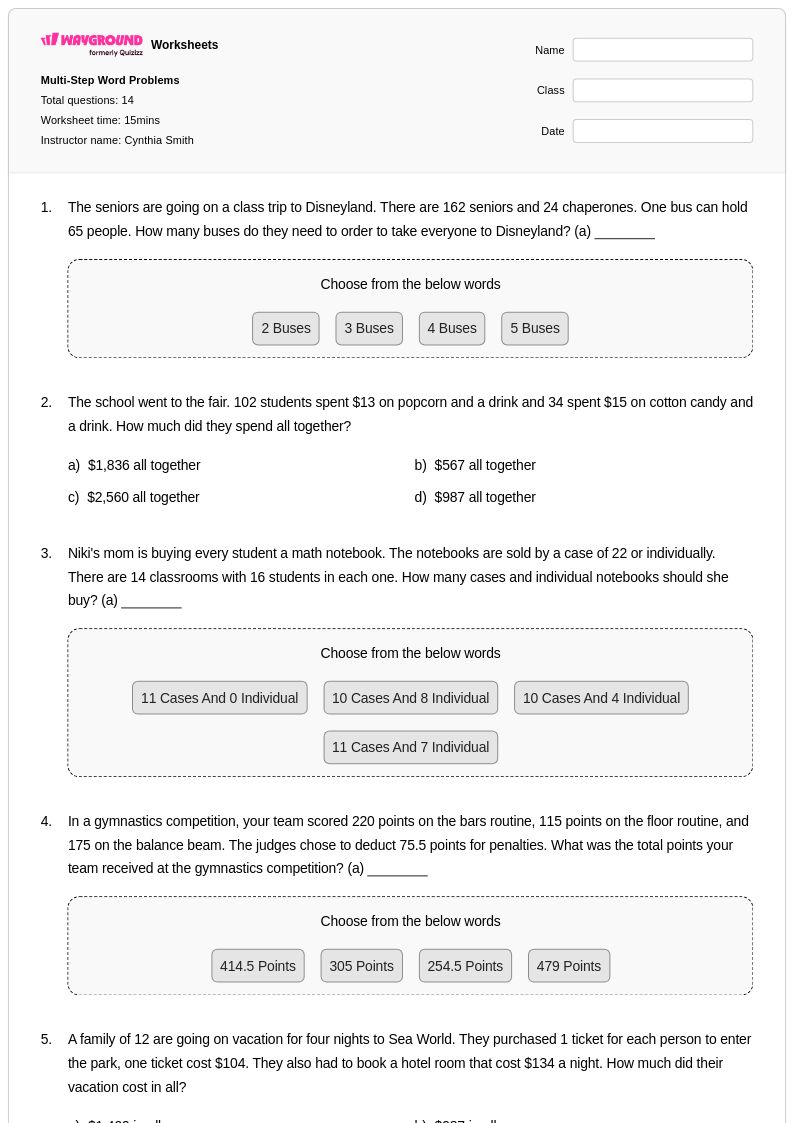
14 Q
5th
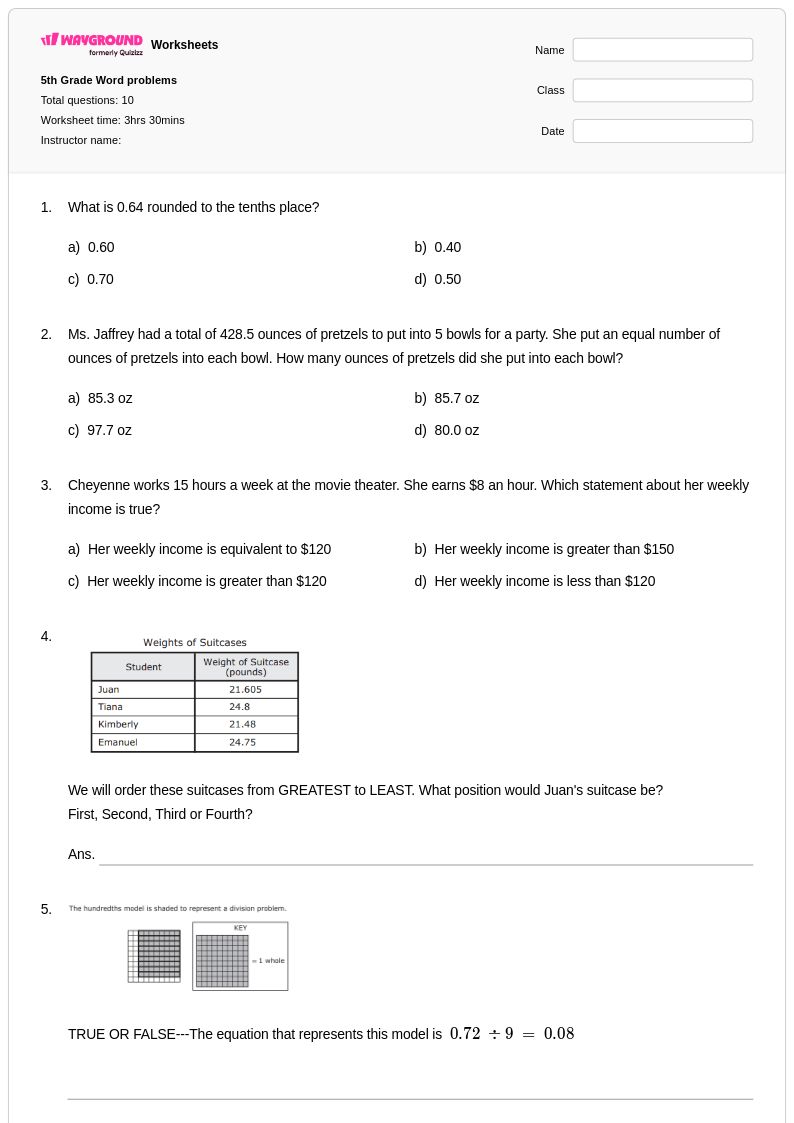
10 Q
5th
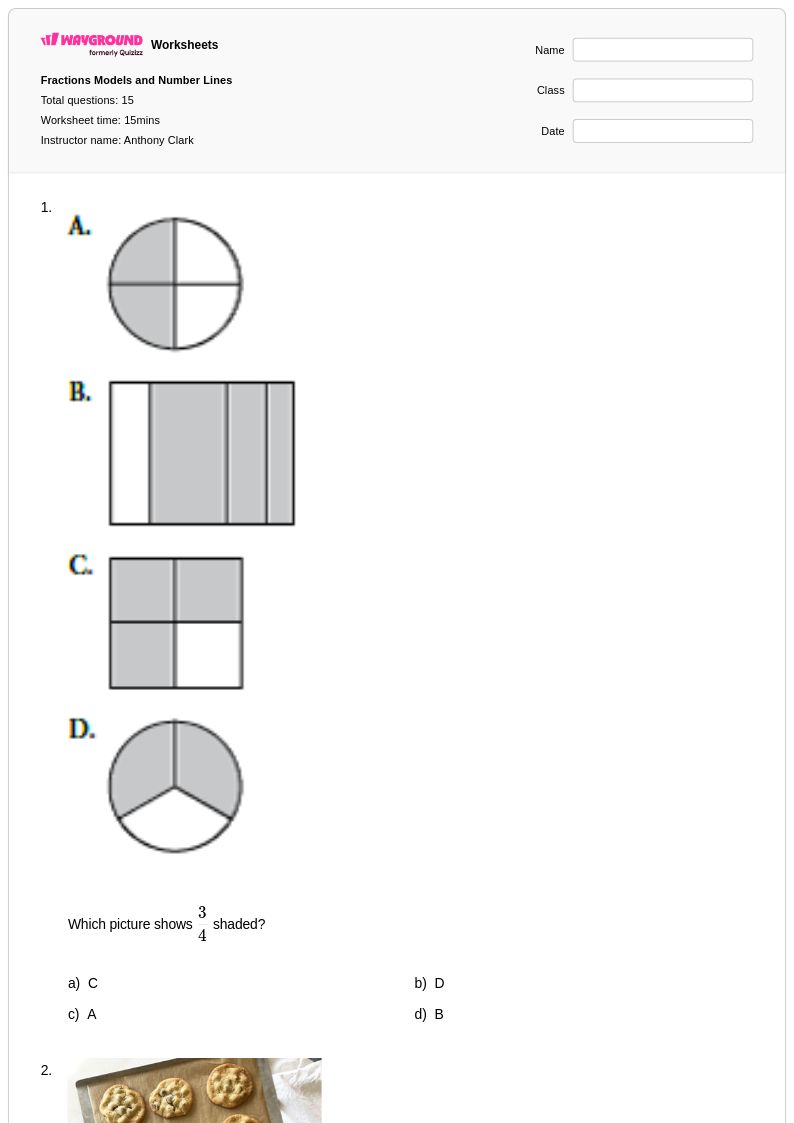
15 Q
3rd - Uni
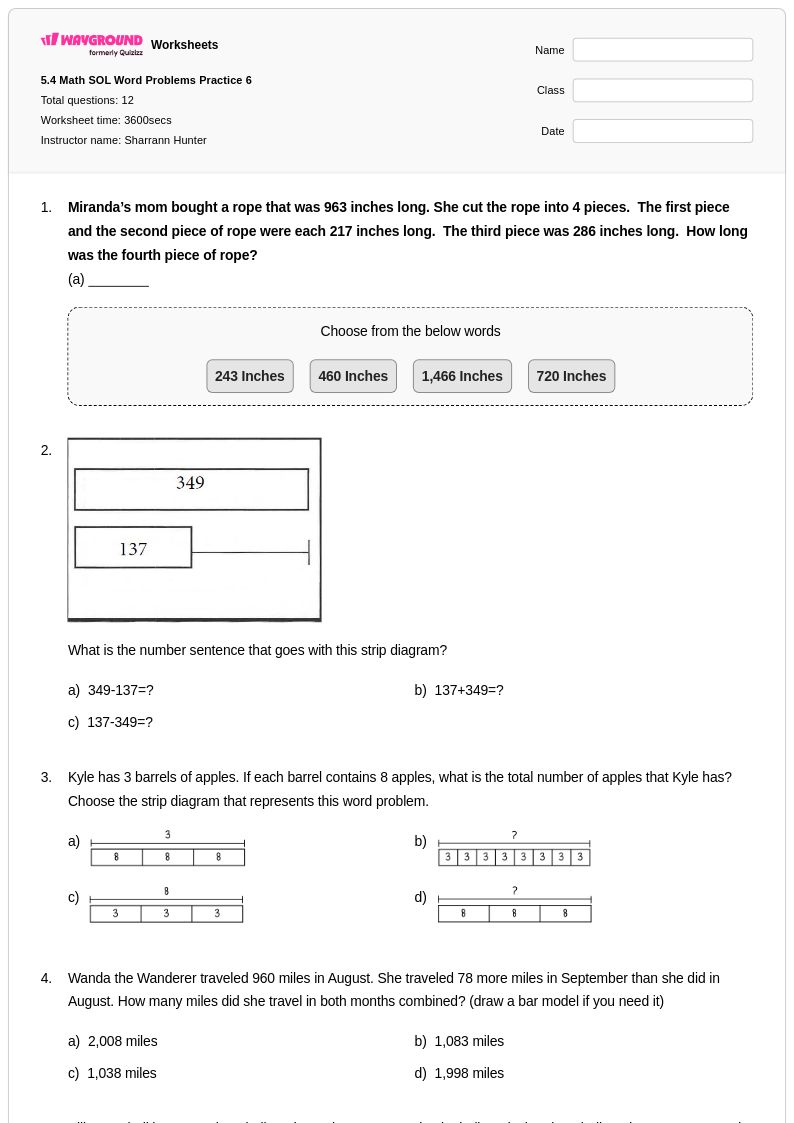
12 Q
5th
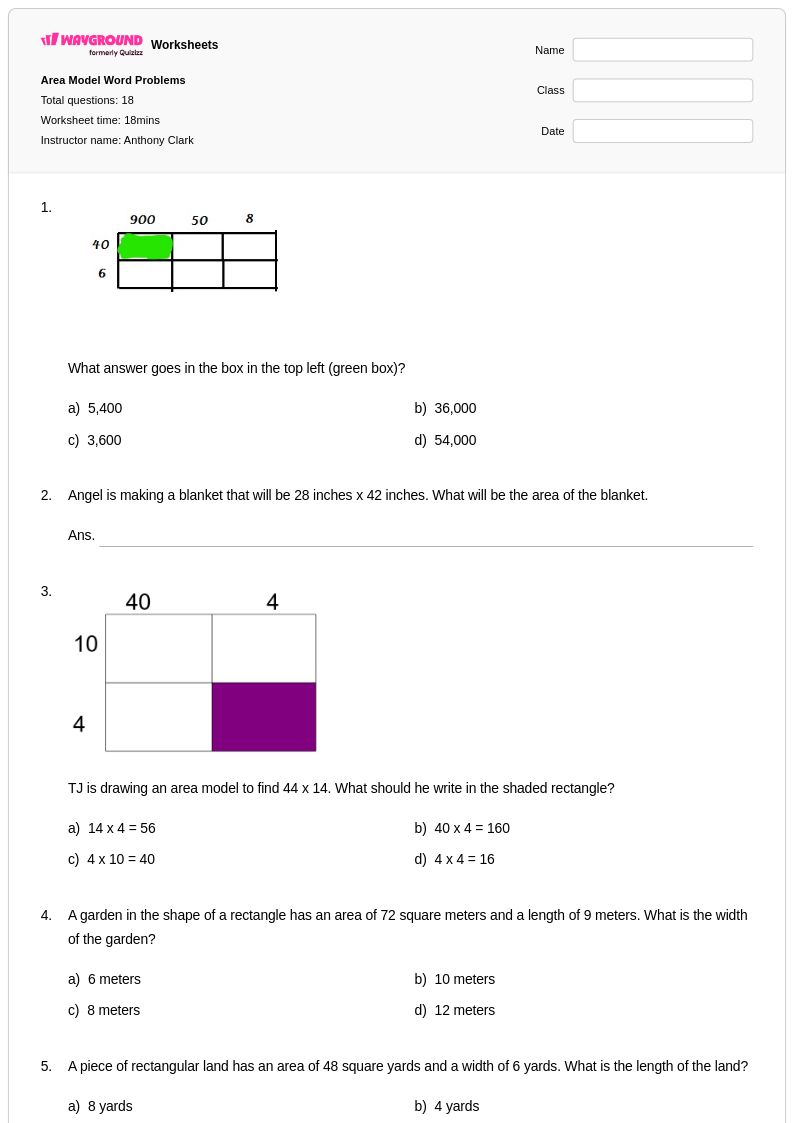
18 Q
4th - Uni
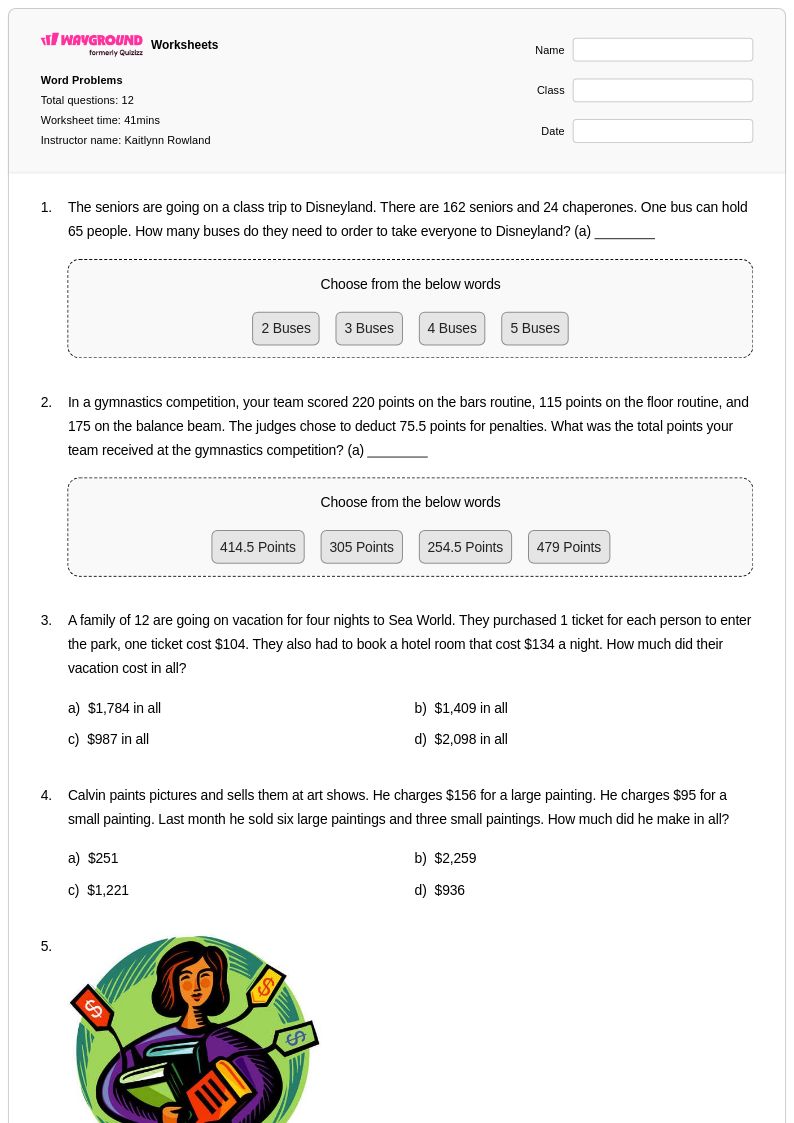
12 Q
5th
17 Q
1st - PD
10 Q
3rd - 5th
10 Q
5th - 7th
13 Q
5th
13 Q
5th - 6th
45 Q
5th
20 Q
2nd - Uni
12 Q
4th - Uni
8 Q
4th - 6th
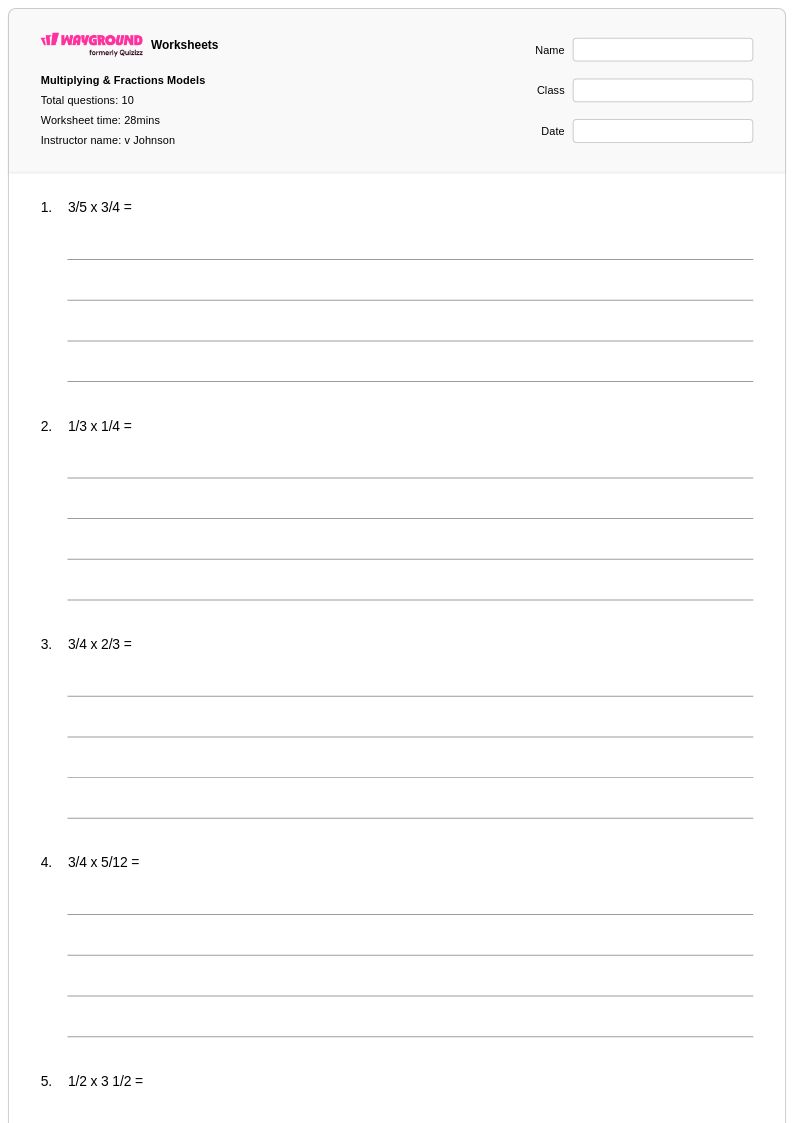
10 Q
5th
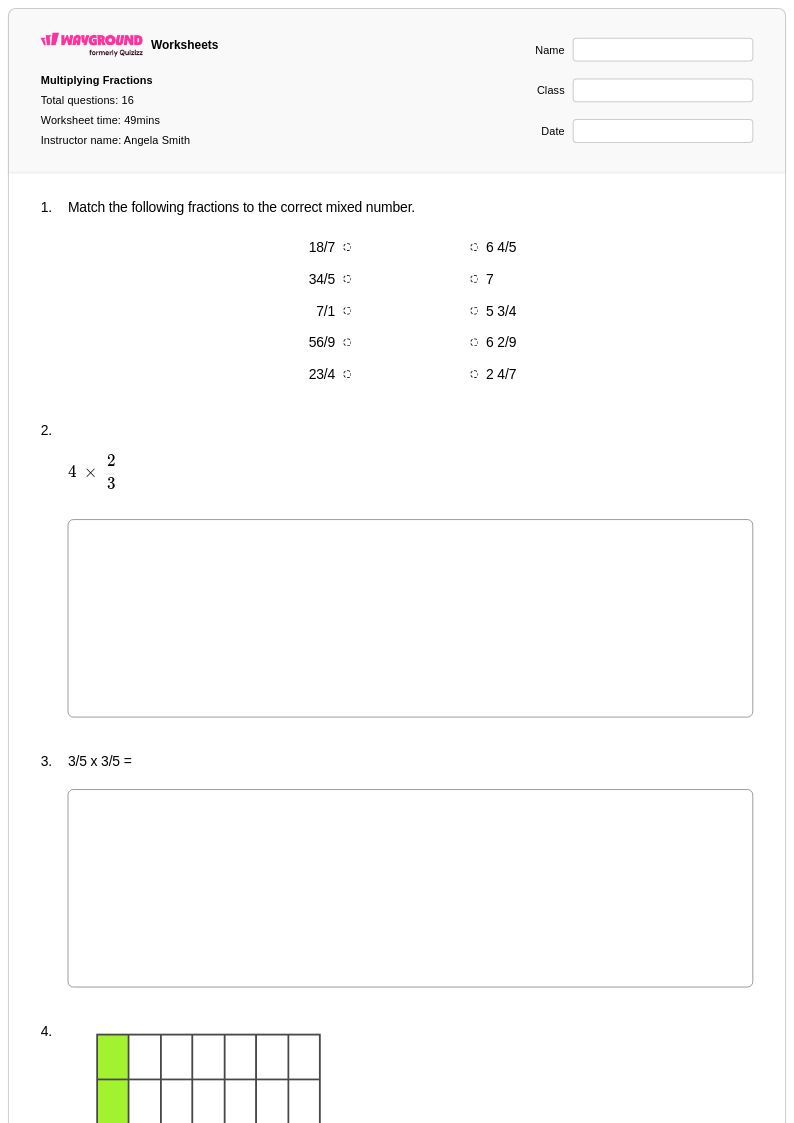
16 Q
5th
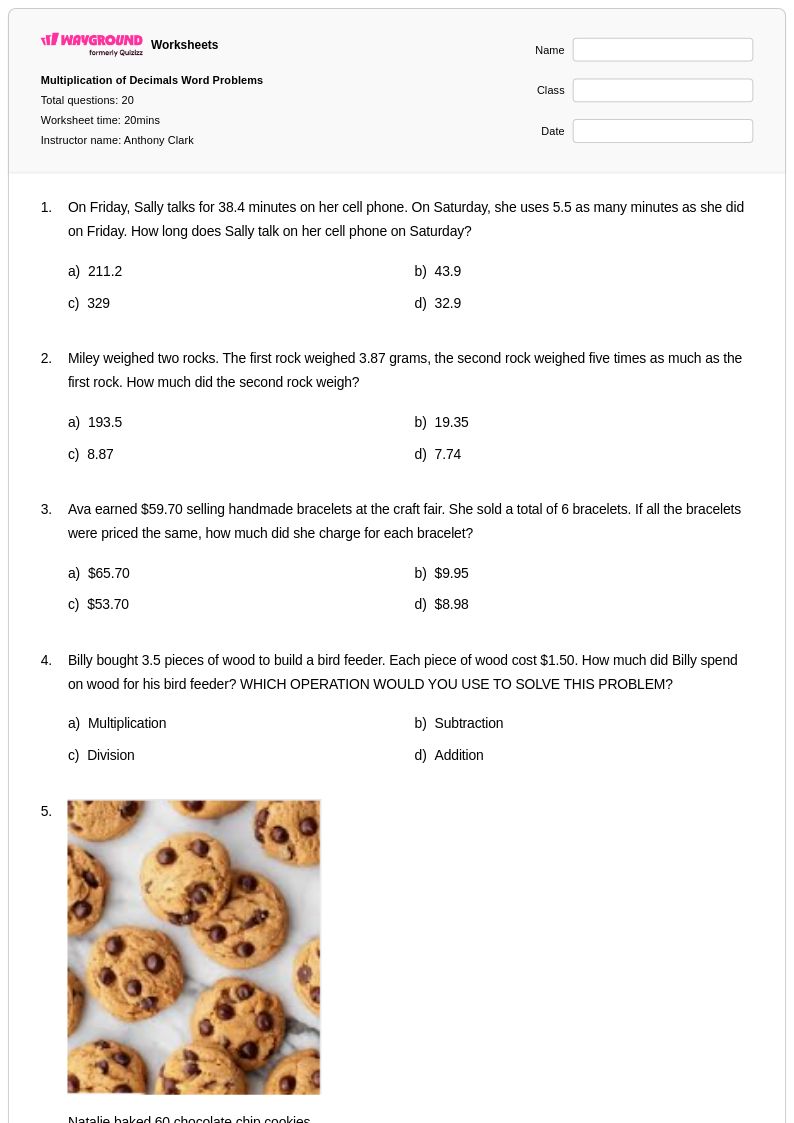
20 Q
5th - Uni
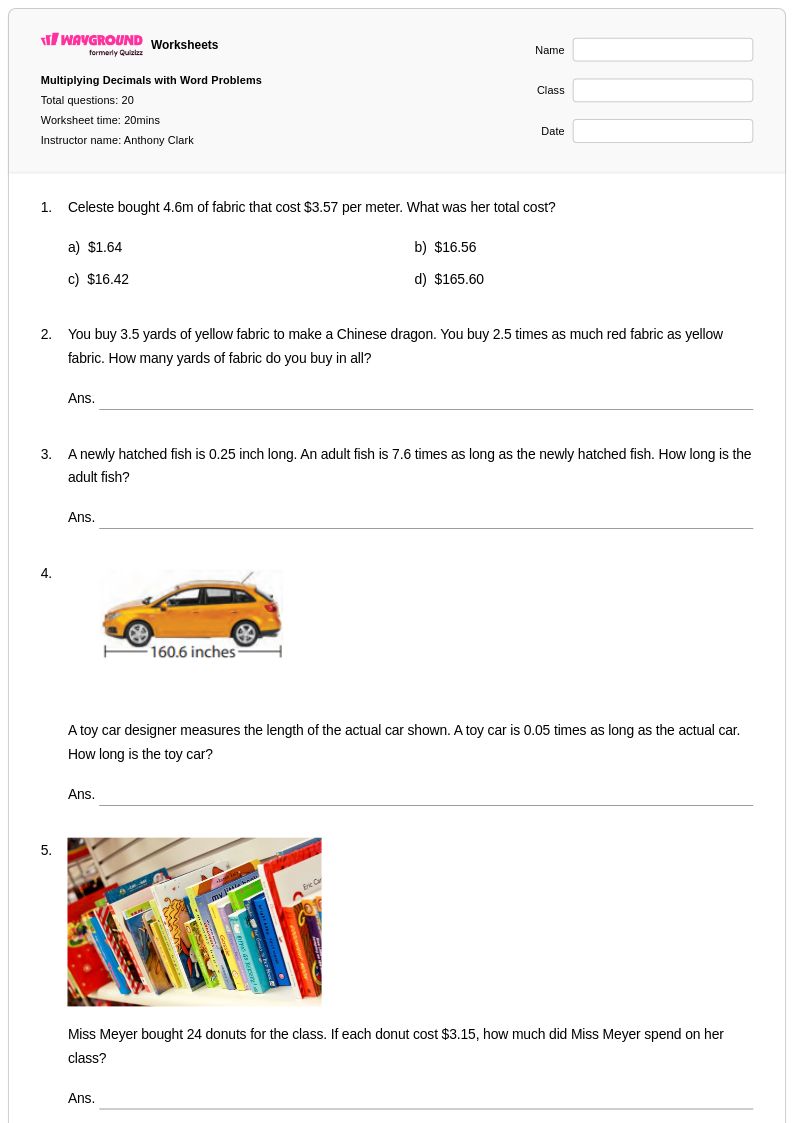
20 Q
5th - Uni
Explore Other Subject Worksheets for year 5
Explore printable Bar Model Word Problems worksheets for Year 5
Bar model word problems for Year 5 represent a powerful visual problem-solving strategy that helps students tackle complex multi-step mathematical scenarios with greater confidence and accuracy. These worksheets from Wayground (formerly Quizizz) focus on teaching students to represent mathematical relationships through rectangular bar diagrams, enabling them to solve addition, subtraction, multiplication, and division word problems involving whole numbers, fractions, and decimals. The practice problems systematically build students' abilities to identify key information, determine unknown quantities, and visualize mathematical relationships before performing calculations. Each worksheet includes comprehensive answer keys and is available as free printable PDFs, allowing students to work through challenging scenarios such as comparison problems, part-whole relationships, and multi-step word problems that frequently appear in Year 5 mathematics curricula.
Wayground (formerly Quizizz) empowers teachers with an extensive collection of millions of teacher-created bar model word problem worksheets specifically designed to support Year 5 mathematics instruction. The platform's robust search and filtering capabilities allow educators to quickly locate resources aligned with specific mathematical standards and learning objectives, while differentiation tools enable teachers to customize worksheets for various skill levels within their classrooms. These bar model resources are available in both printable PDF formats and interactive digital versions, providing flexibility for in-class instruction, homework assignments, and independent practice sessions. Teachers can effectively use these materials for lesson planning, targeted remediation for students struggling with word problem concepts, enrichment activities for advanced learners, and systematic skill practice that reinforces the visual problem-solving strategies essential for mathematical success at the elementary level.
FAQs
How do I teach Grade 5 students to solve word problems with bar models?
What should fifth graders practice with bar model worksheets?
What mistakes do Grade 5 students make when using bar models?
How can I use these Grade 5 worksheets for practice or assessment?
How do Grade 5 bar models connect to Common Core math?
How can I differentiate Grade 5 bar model word problems?
What grade level are fraction and decimal bar model problems for?