Explore Wayground's comprehensive collection of free Beowulf worksheets and printables that help students analyze this epic poem through engaging practice problems, reading comprehension exercises, and detailed answer keys.
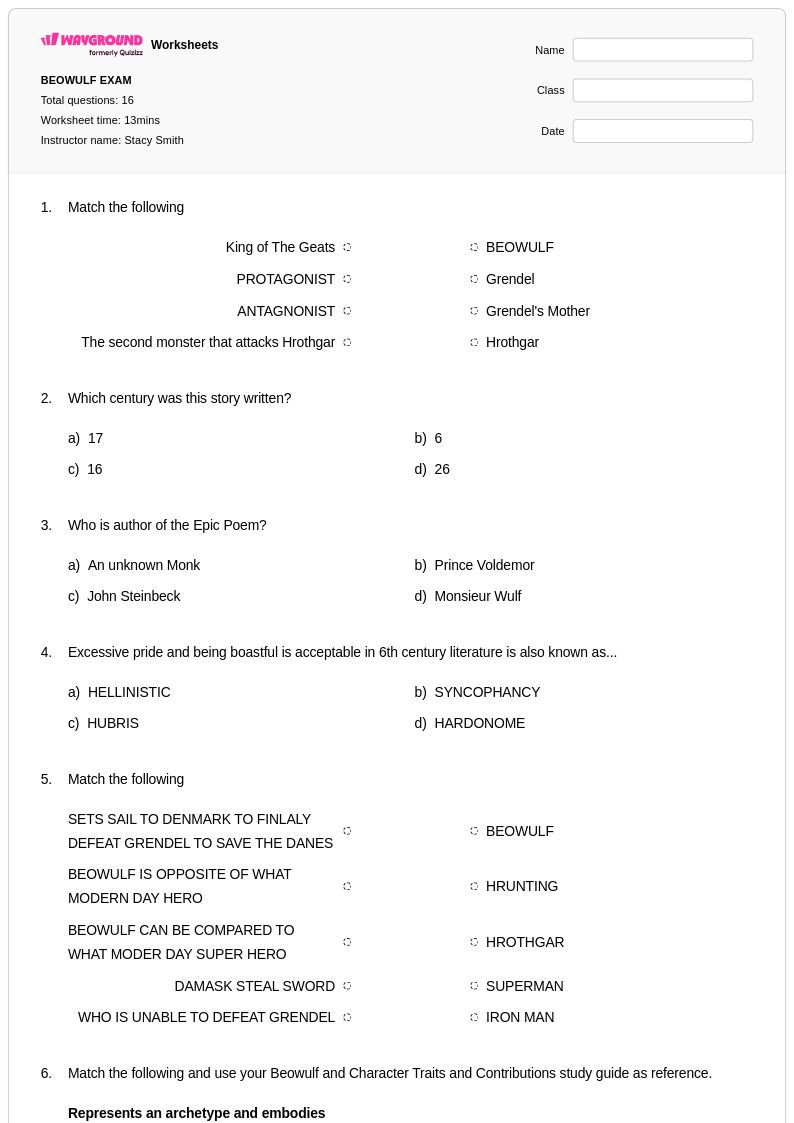
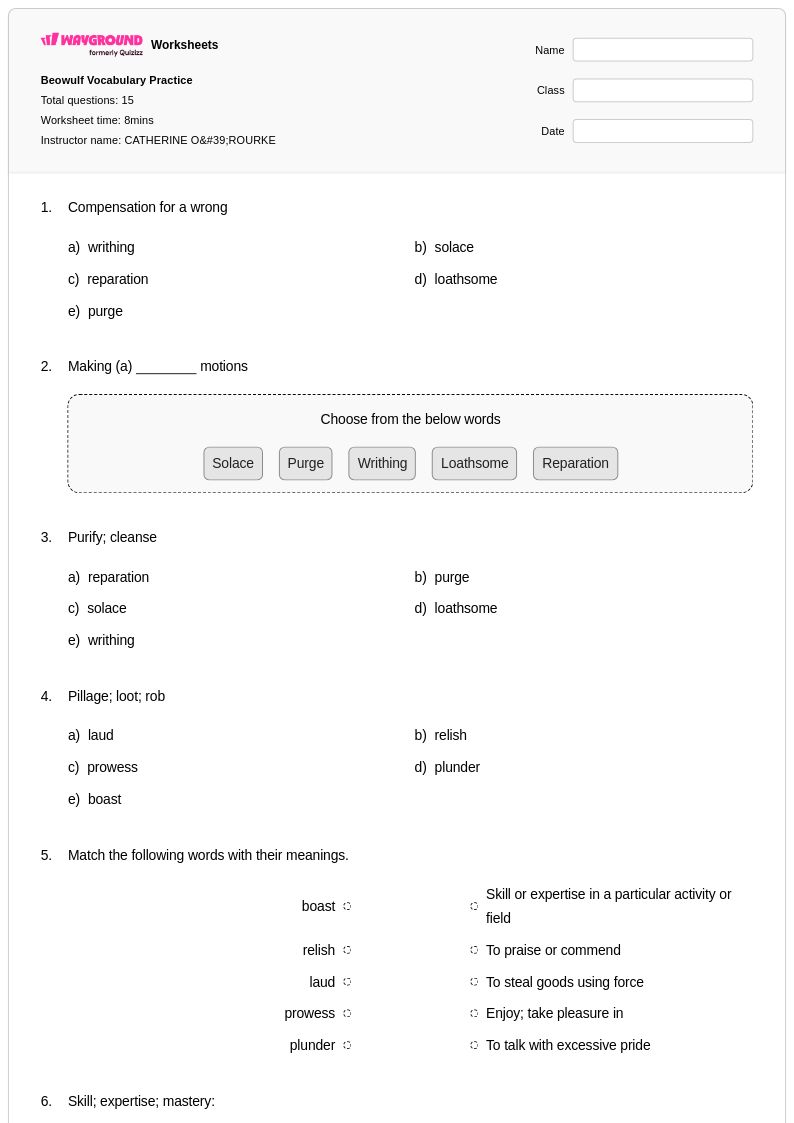
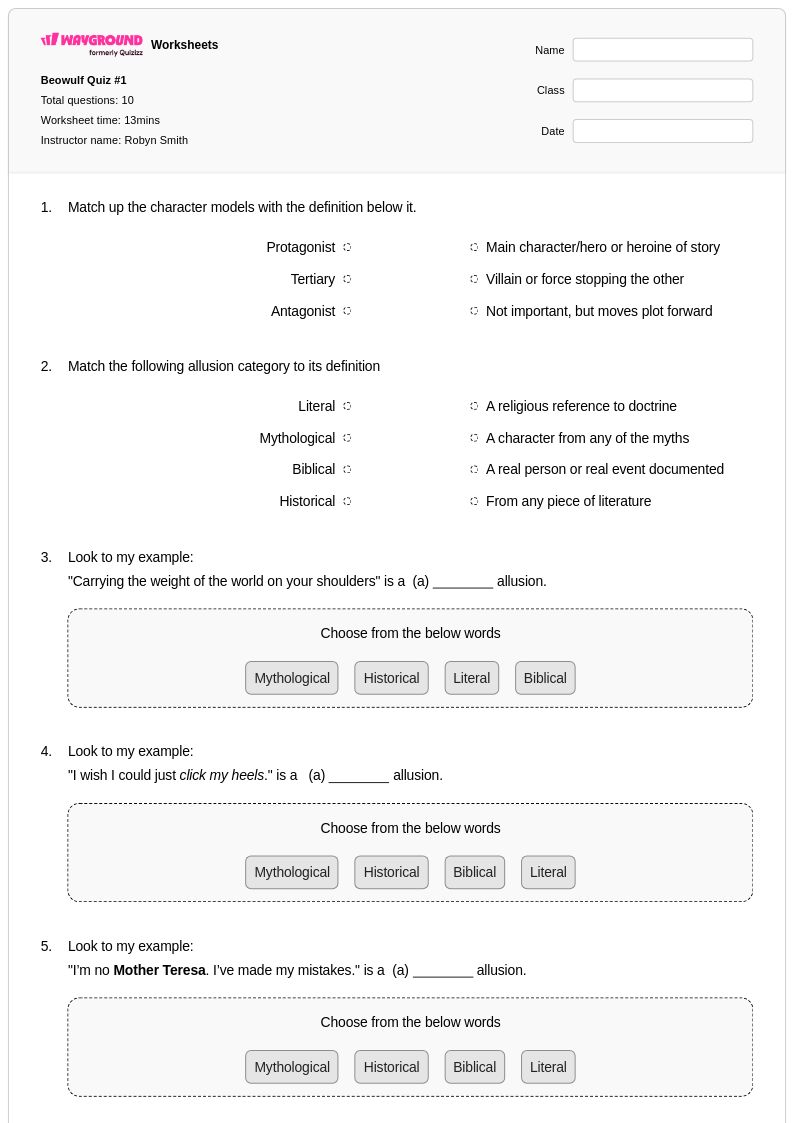
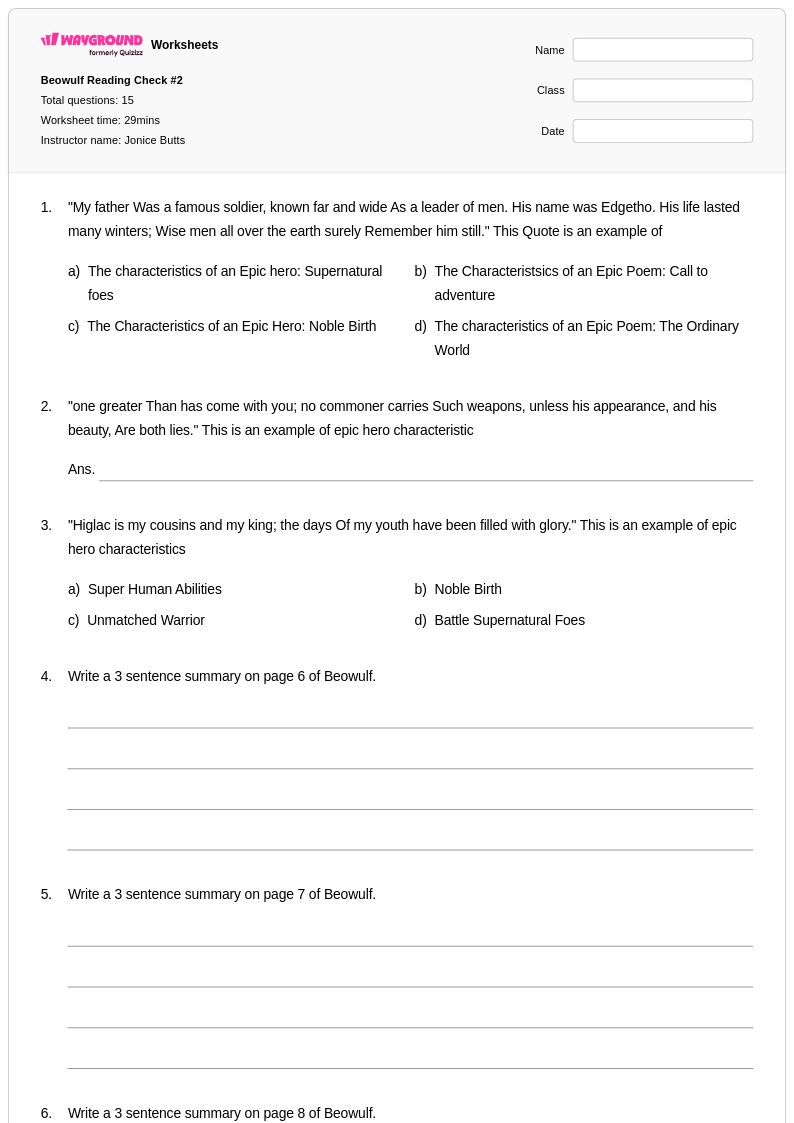
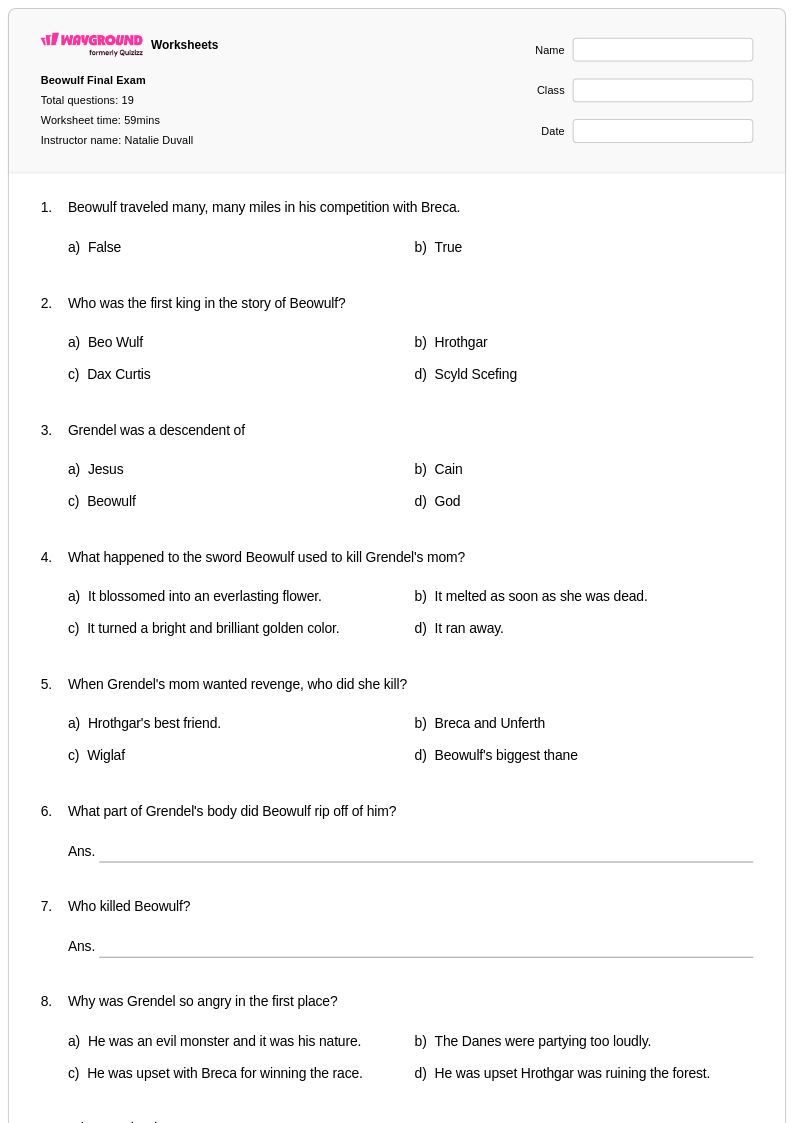
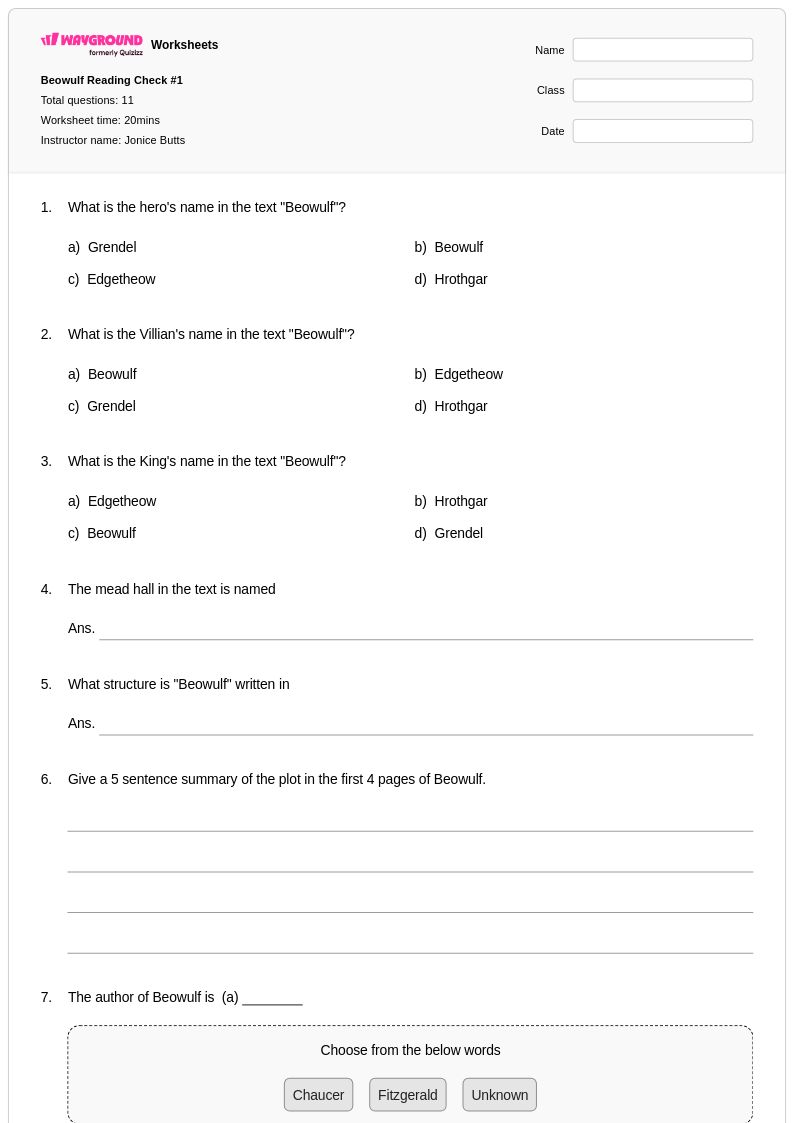
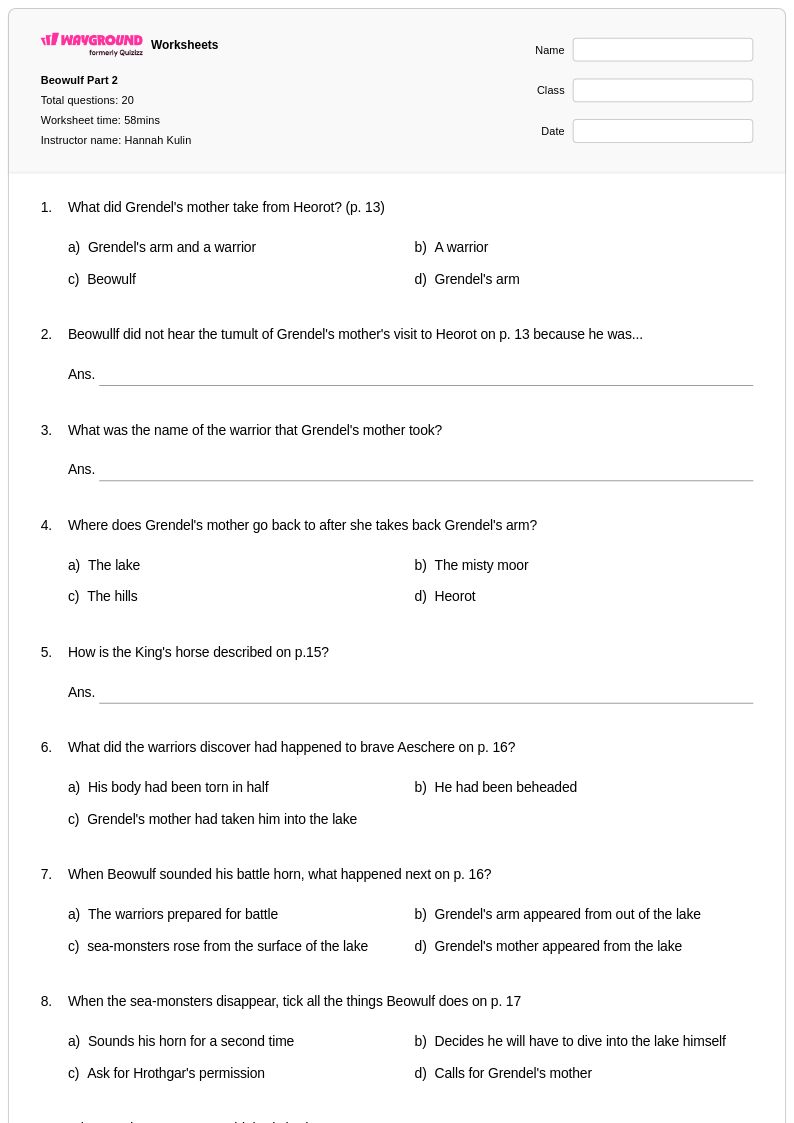
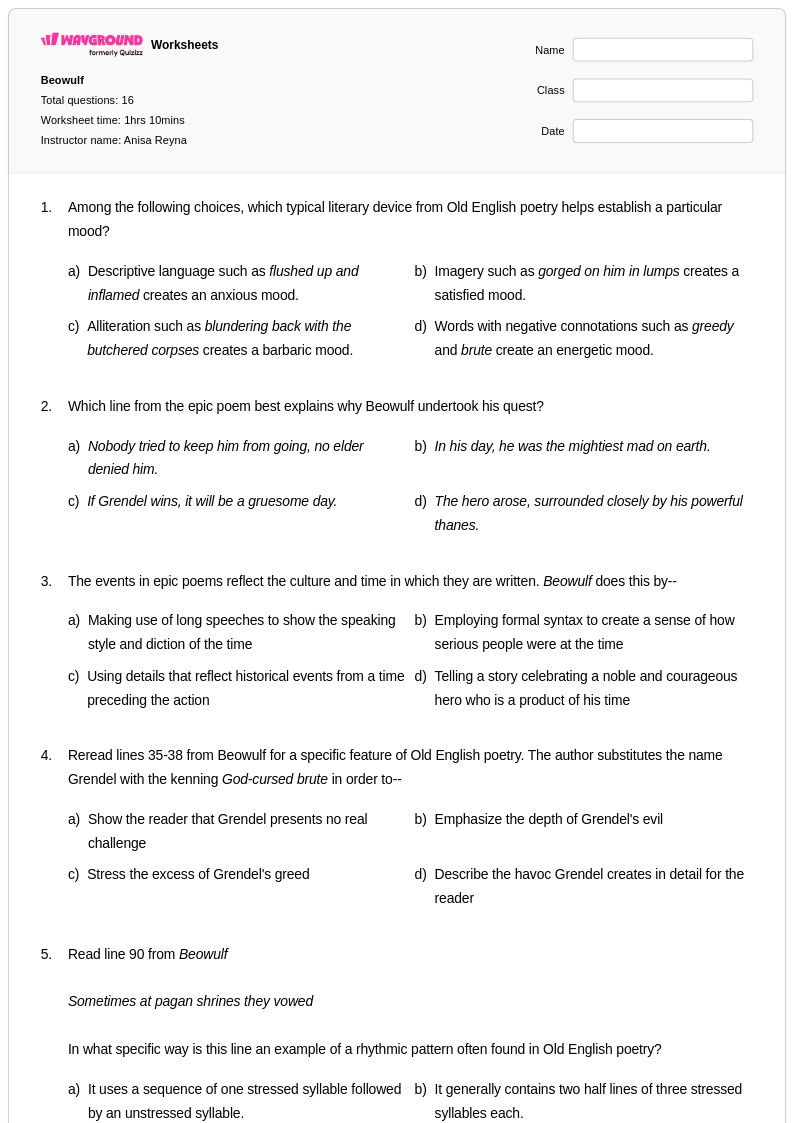
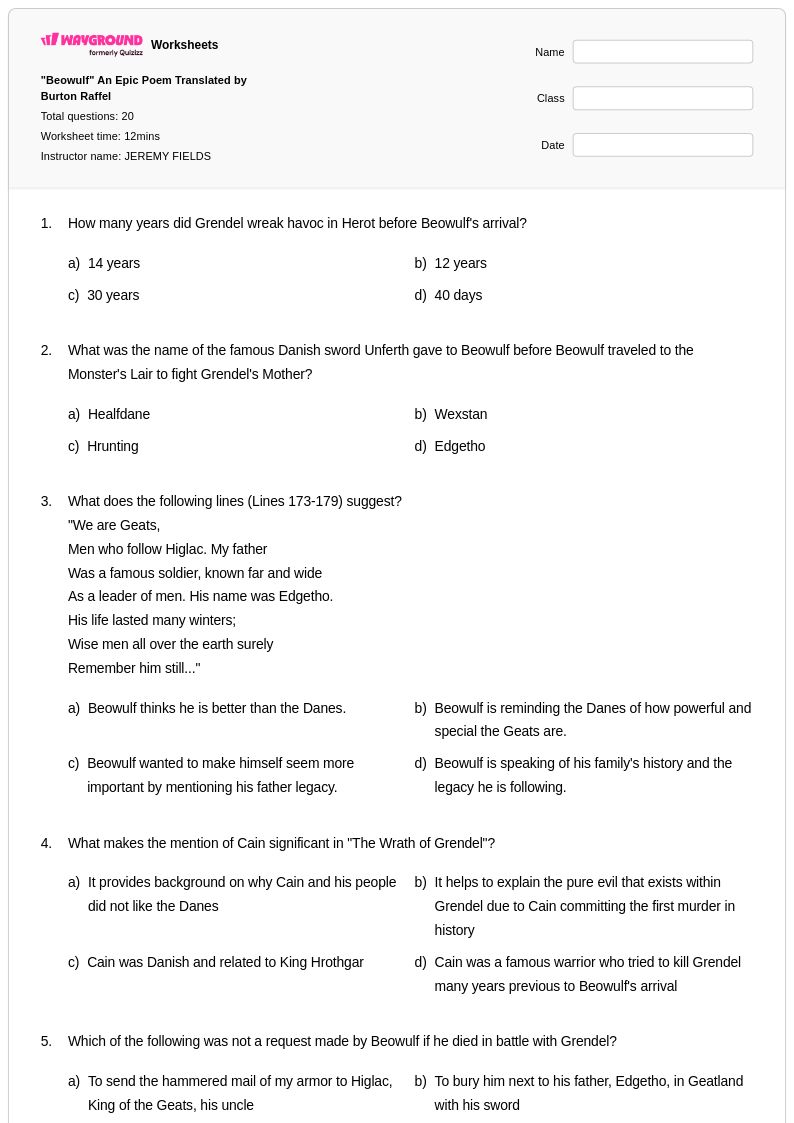
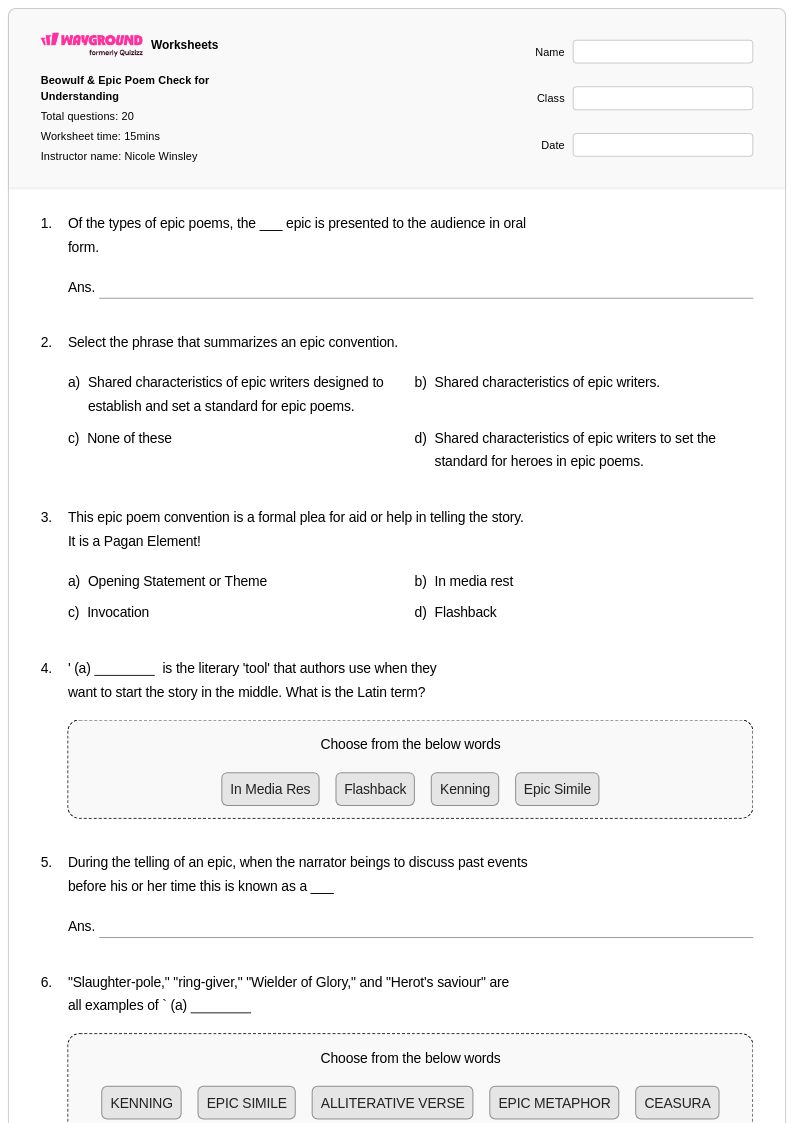
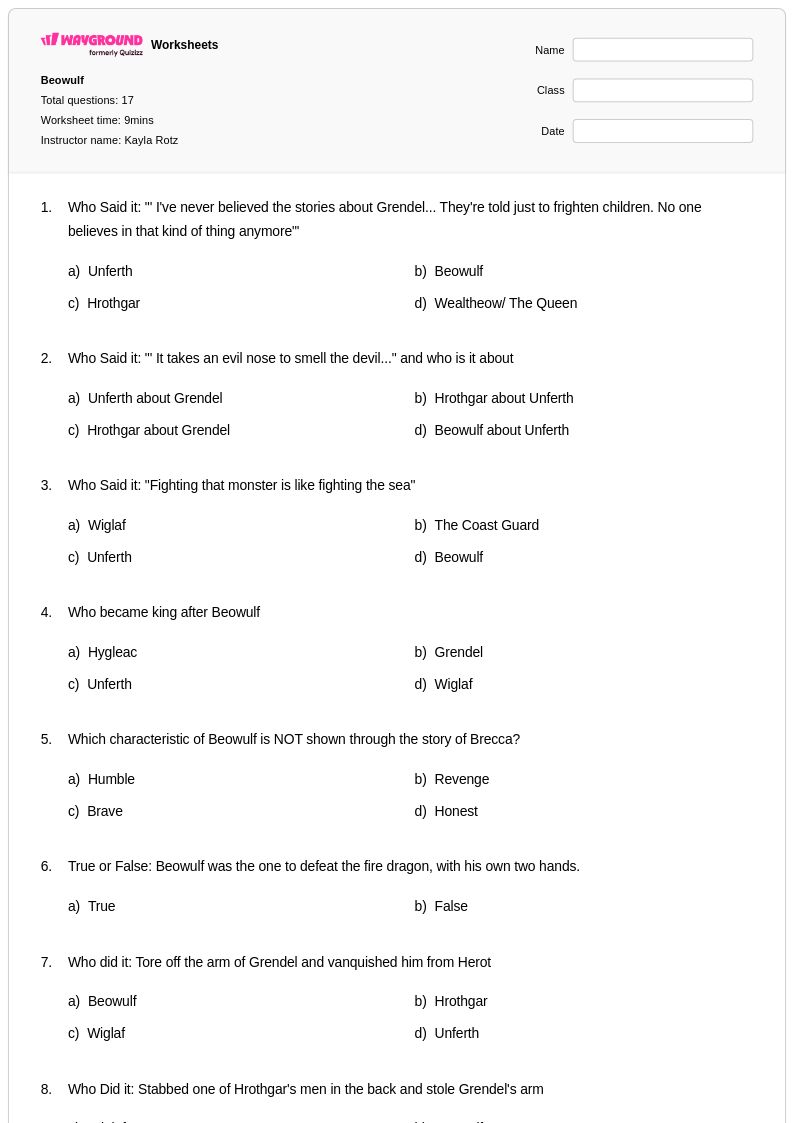
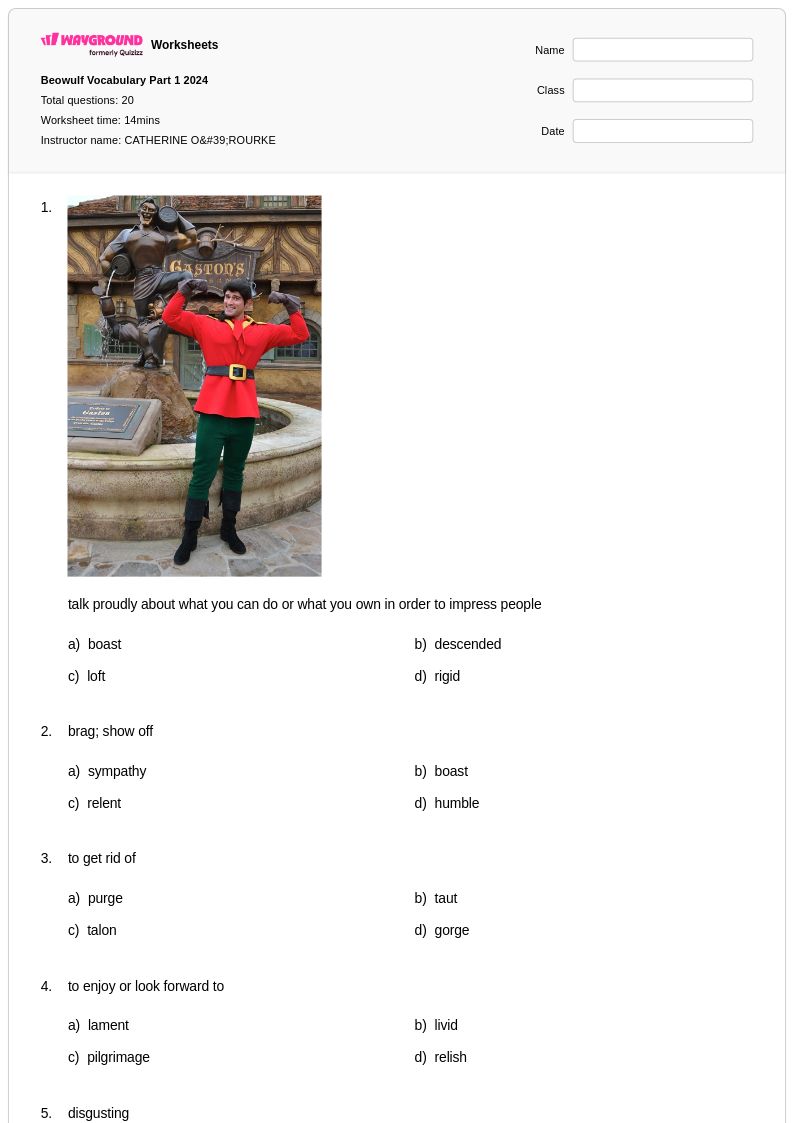
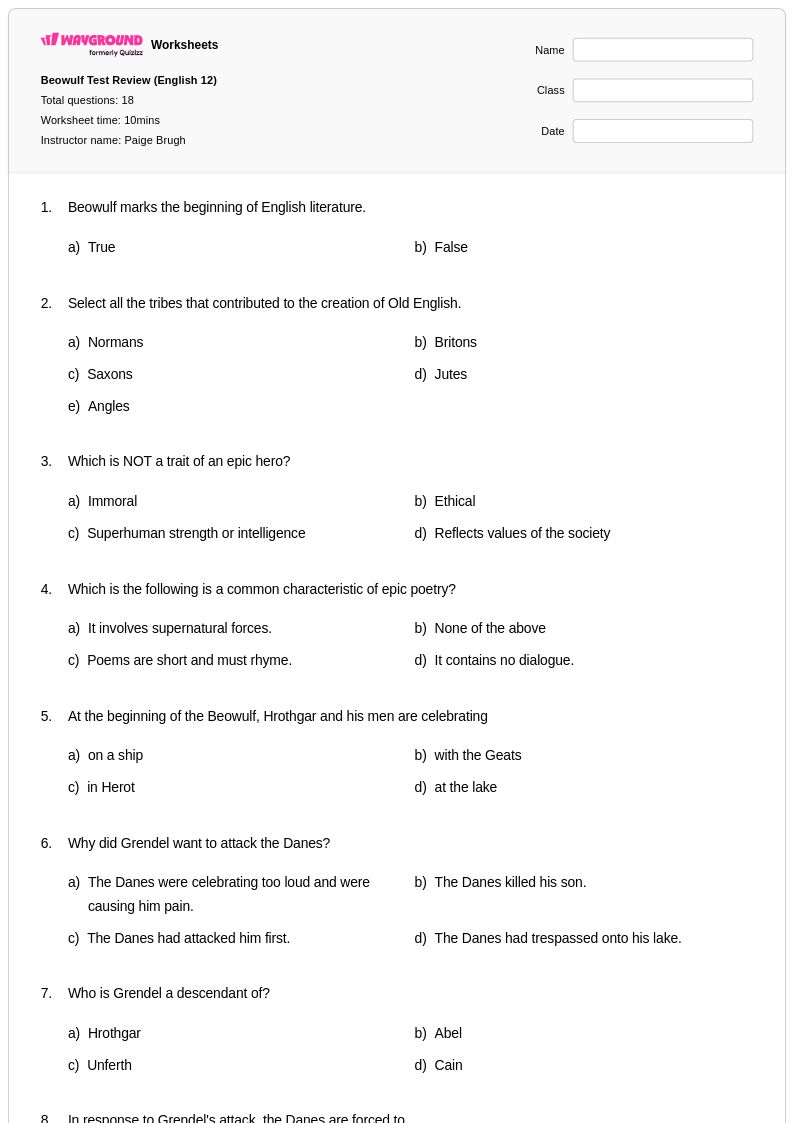
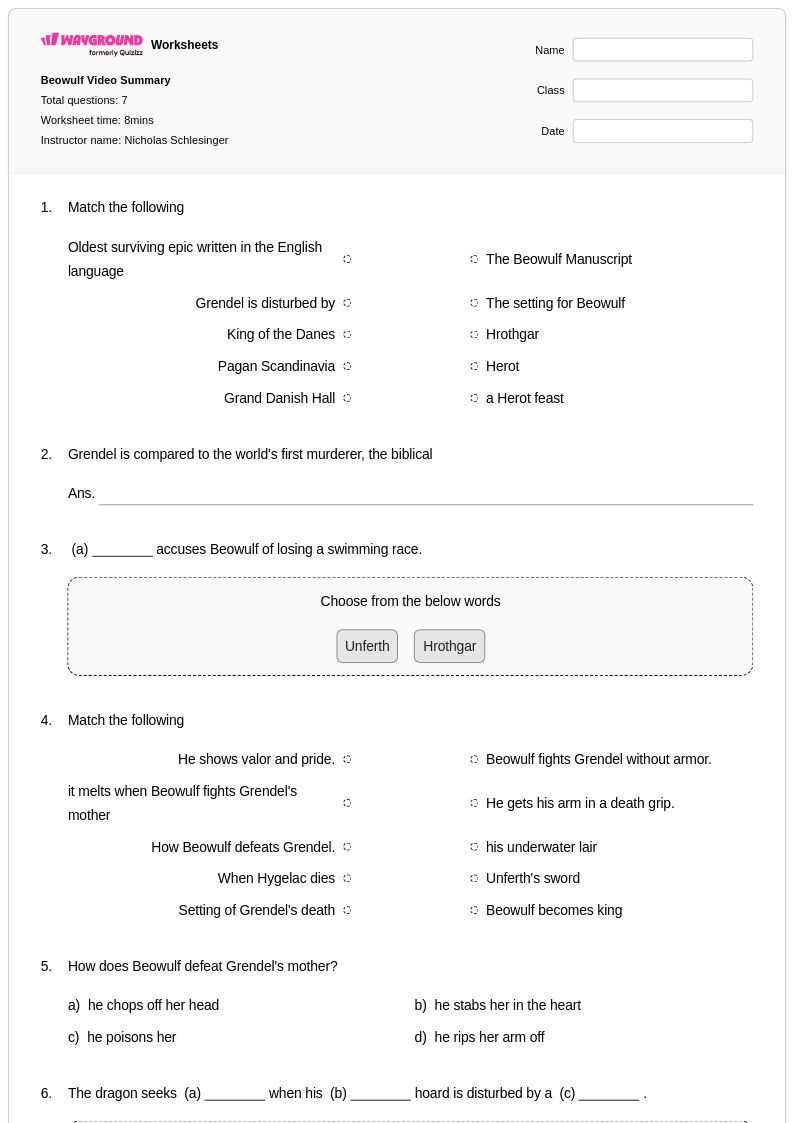
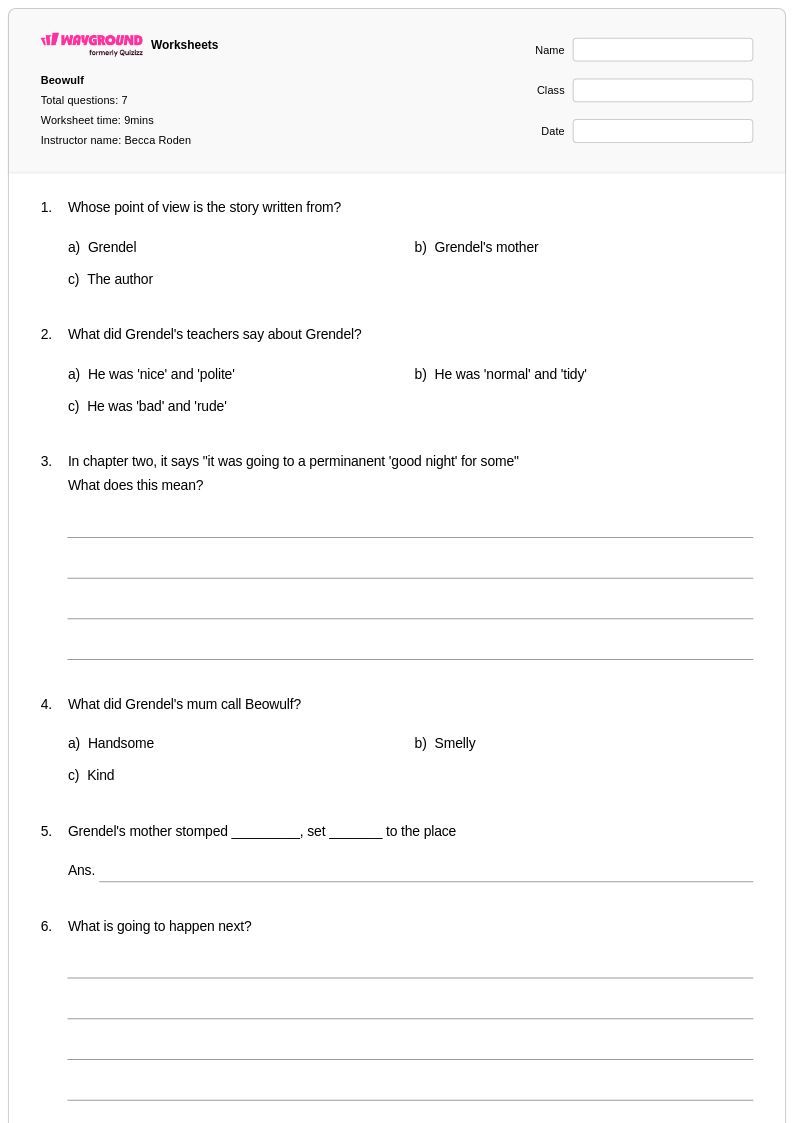
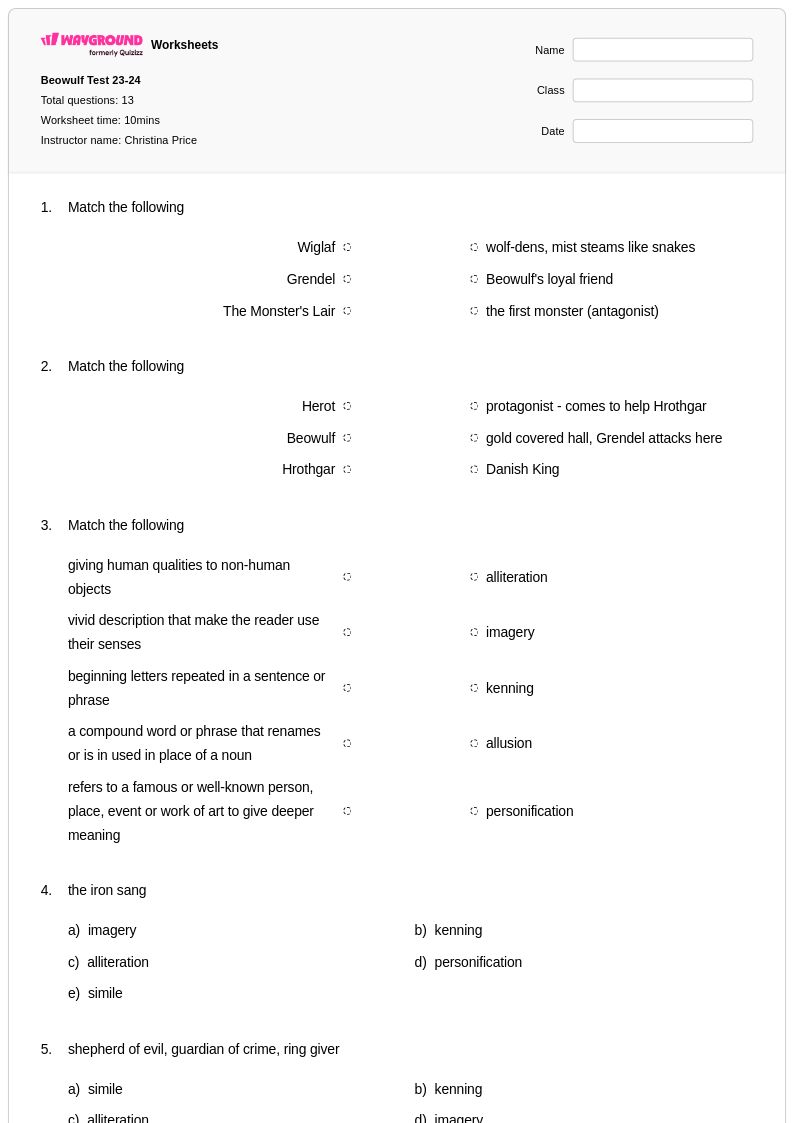
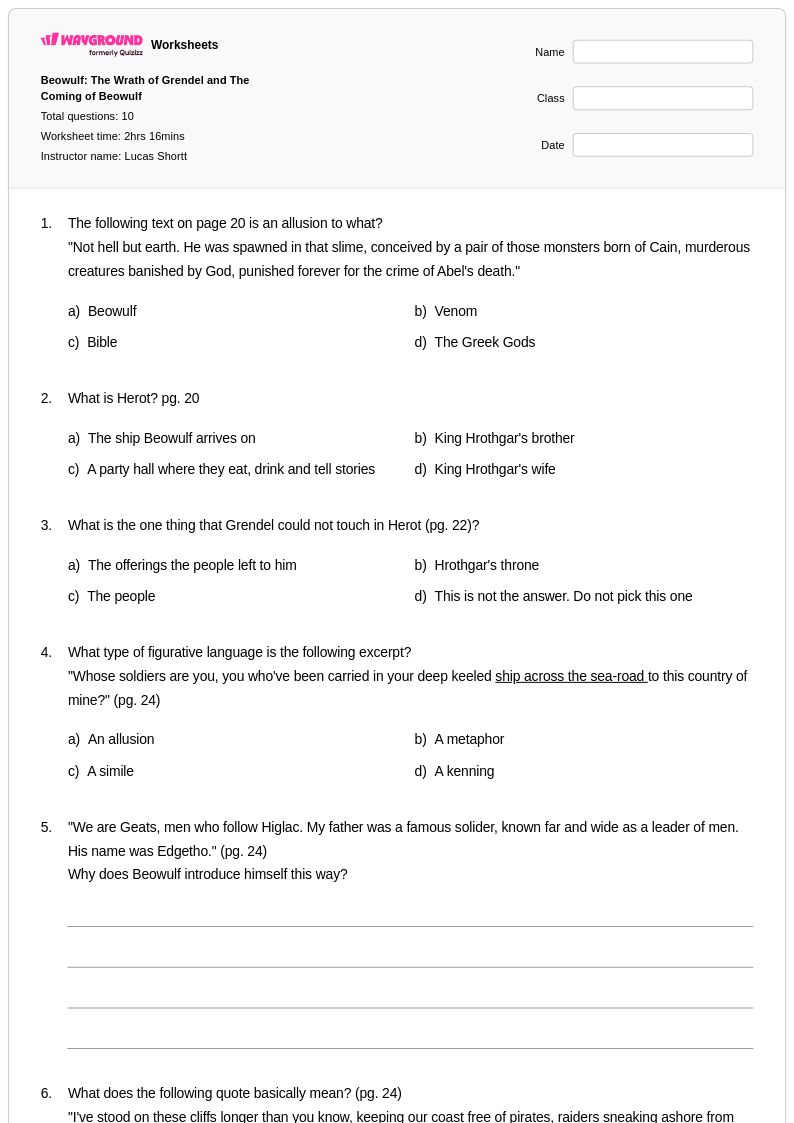
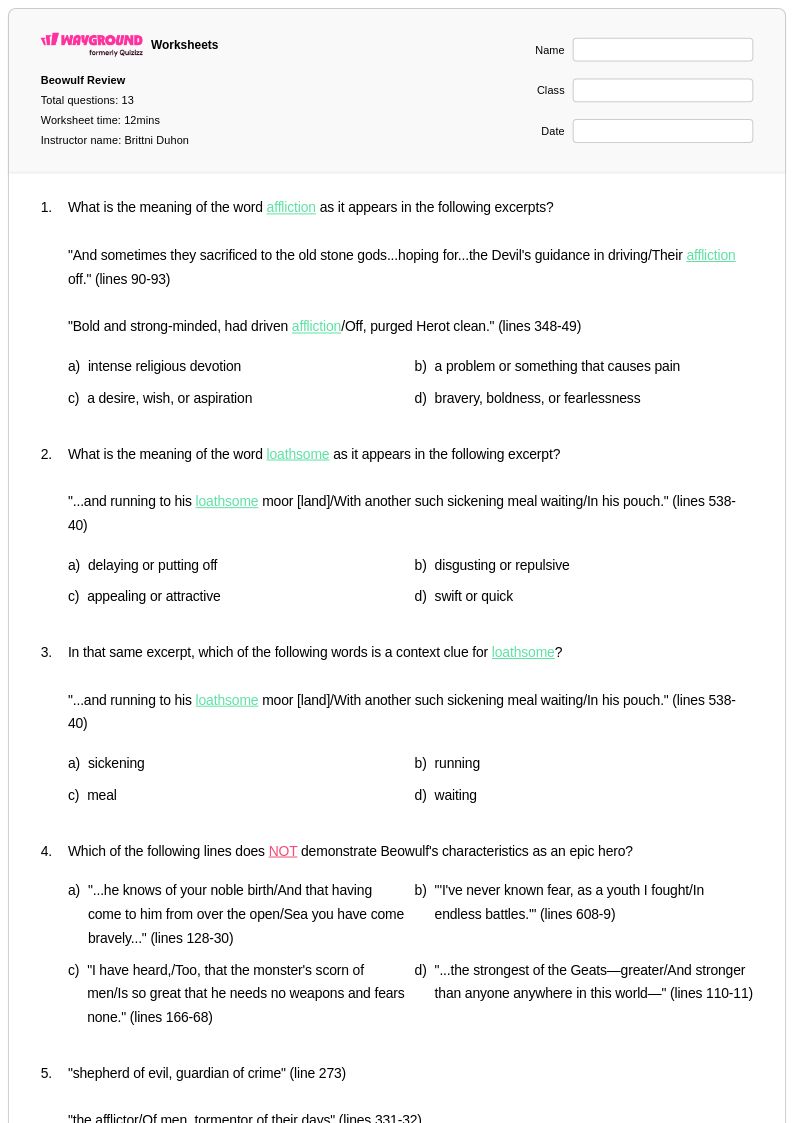
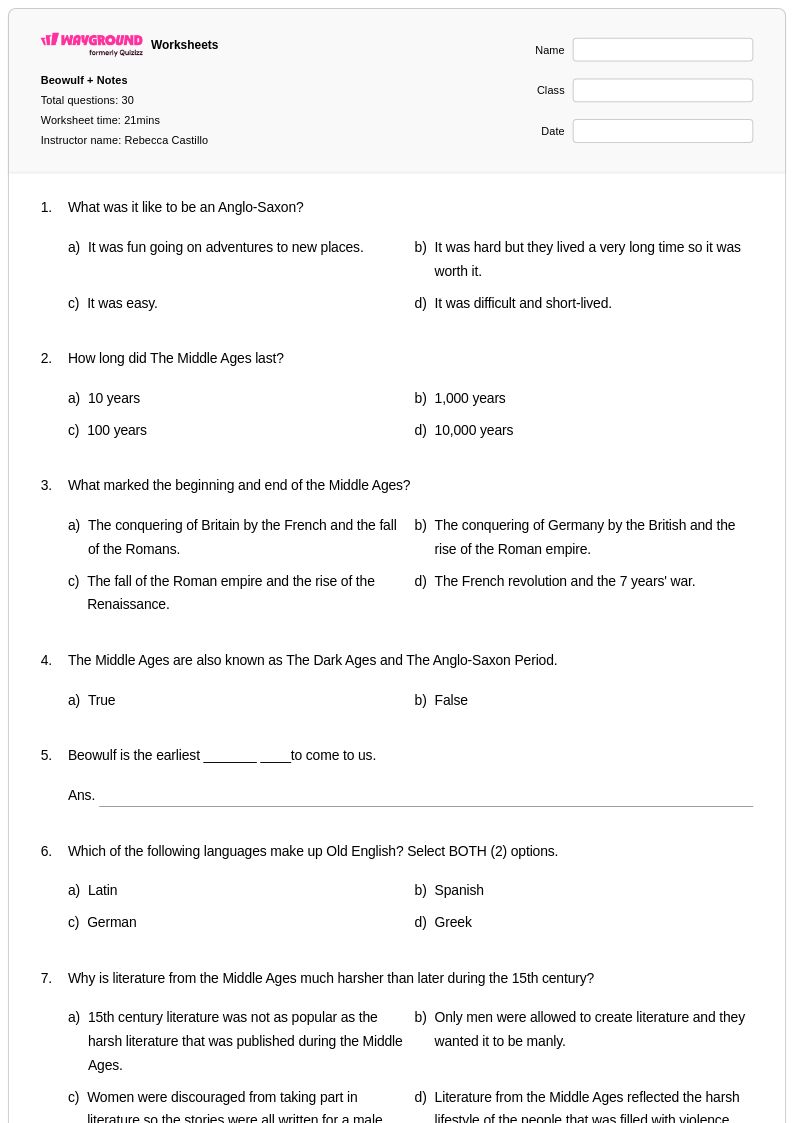
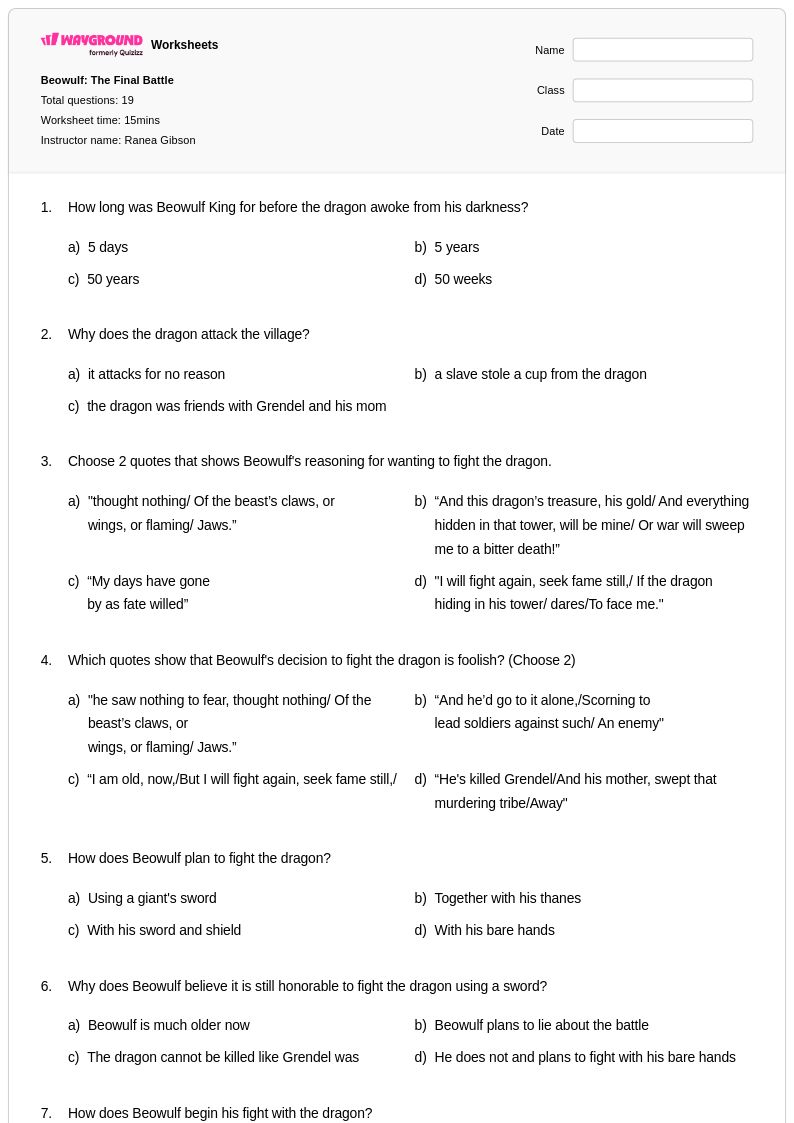
Beowulf worksheets available through Wayground (formerly Quizizz) provide comprehensive support for students analyzing this foundational work of Anglo-Saxon literature and understanding its significance within the epic poetry genre. These carefully crafted educational resources strengthen critical reading skills by guiding students through the complex narrative structure, heroic themes, and cultural context of this ancient text. Students engage with practice problems that examine character development, analyze poetic devices like kennings and alliteration, and explore the historical and mythological elements that define the epic tradition. The worksheets include detailed answer keys to support independent learning and are available as free printables in convenient PDF format, making them accessible for both classroom instruction and homework assignments that deepen comprehension of this challenging literary work.
Wayground (formerly Quizizz) empowers educators with millions of teacher-created resources specifically designed to make complex literary works like Beowulf more approachable and engaging for students across different learning levels. The platform's robust search and filtering capabilities allow teachers to quickly locate worksheets that align with specific curriculum standards and learning objectives, while built-in differentiation tools enable customization based on individual student needs and reading abilities. These flexible resources are available in both printable and digital formats, including downloadable PDFs, giving educators the freedom to seamlessly integrate Beowulf study materials into their lesson planning whether for in-person or remote learning environments. Teachers can effectively use these comprehensive worksheet collections for targeted skill practice, remediation for struggling readers, and enrichment activities that challenge advanced students to explore deeper literary analysis and historical connections within the epic genre.
FAQs
How do I teach Beowulf to high school students who struggle with the language?
Start by grounding students in the historical and cultural context of Anglo-Saxon England before they encounter the text, since understanding the warrior culture and mead-hall society makes the poem's values and conflicts more legible. Break the narrative into manageable sections and use guided reading questions that focus on character motivation, heroic code, and conflict structure. Introducing key poetic devices like kennings and alliteration early helps students engage with the language as a craft choice rather than an obstacle.
What exercises help students practice analyzing Beowulf?
Effective practice exercises for Beowulf include character analysis tasks that trace Beowulf's transformation from warrior to king, close reading activities focused on identifying and interpreting kennings and alliteration, and comprehension checks that test understanding of the three major battles. Students also benefit from exercises that ask them to compare the heroic code depicted in the poem to modern concepts of heroism, which reinforces thematic analysis skills alongside close reading.
What common mistakes do students make when reading Beowulf?
One of the most frequent errors is treating Beowulf as a straightforward action story rather than engaging with its elegiac tone and thematic complexity around mortality, legacy, and loyalty. Students often misread kennings as decorative rather than recognizing them as meaningful compound metaphors that carry interpretive weight. Another common misconception is conflating the narrator's perspective with a neutral one, when in fact the poem's Christian overlay on older pagan material creates deliberate tension that rewards closer analysis.
How can I use Beowulf worksheets to support different reading levels in the same class?
Beowulf worksheets can be differentiated by scaffolding the complexity of analytical tasks, assigning literal comprehension questions to developing readers while directing advanced students toward evaluative prompts about theme, structure, and historical context. On Wayground, teachers can apply individual accommodations such as Read Aloud, reduced answer choices, and extended time to specific students, ensuring struggling readers receive targeted support while advanced students work with the full version. These settings are saved per student and can be reapplied across multiple sessions without disrupting the rest of the class.
How do I use Beowulf worksheets from Wayground in my classroom?
Beowulf worksheets on Wayground are available as printable PDFs for traditional classroom use and in digital formats for technology-integrated environments, giving teachers flexibility for both in-person and remote instruction. Teachers can also host worksheets as a quiz directly on Wayground, enabling real-time student responses and streamlined grading. Each worksheet includes a complete answer key, making them practical for independent work, homework assignments, or guided review sessions.
How do I help students understand the historical context of Beowulf?
Situating Beowulf within early medieval Germanic culture is essential for comprehension, particularly the concepts of comitatus (the bond between lord and thane), the role of the scop as oral storyteller, and the significance of gift-giving in establishing social hierarchy. Brief primary source comparisons, maps of Scandinavia, and timelines connecting the poem's historical references to actual events can make this context concrete. Comprehension exercises that ask students to explain character decisions in light of Anglo-Saxon values rather than modern ones reinforce this contextual thinking across the whole unit.