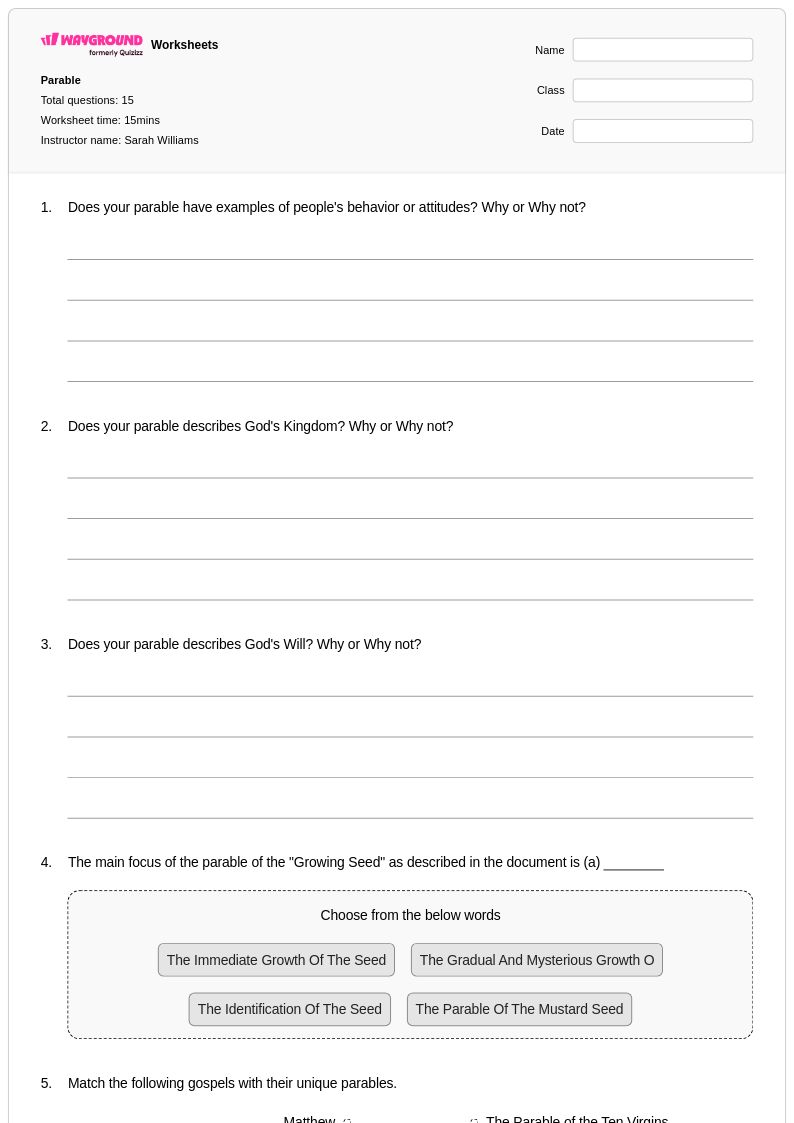
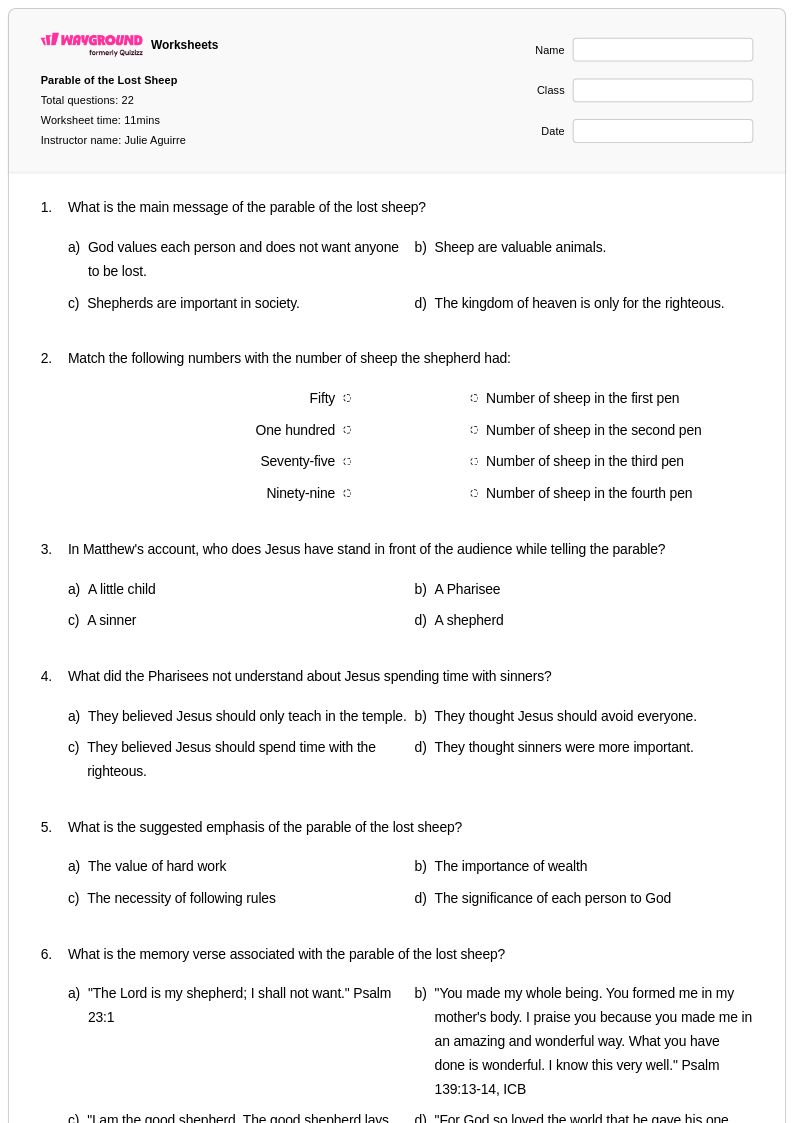
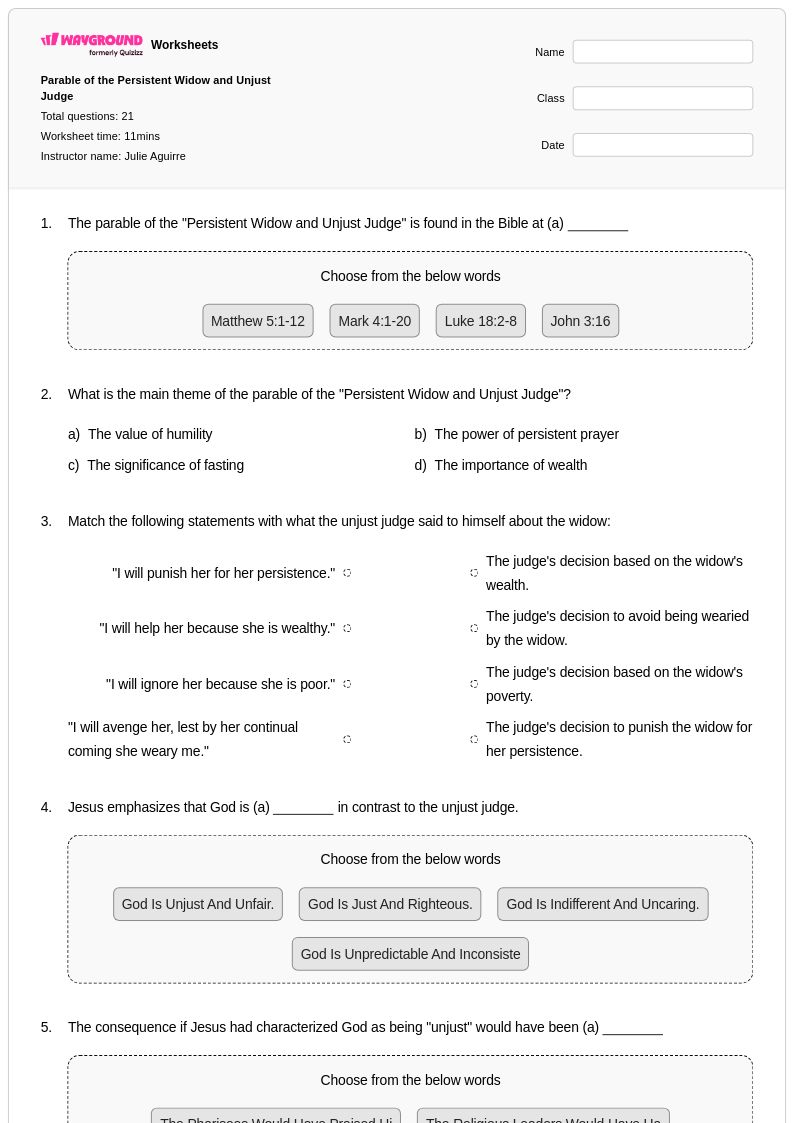
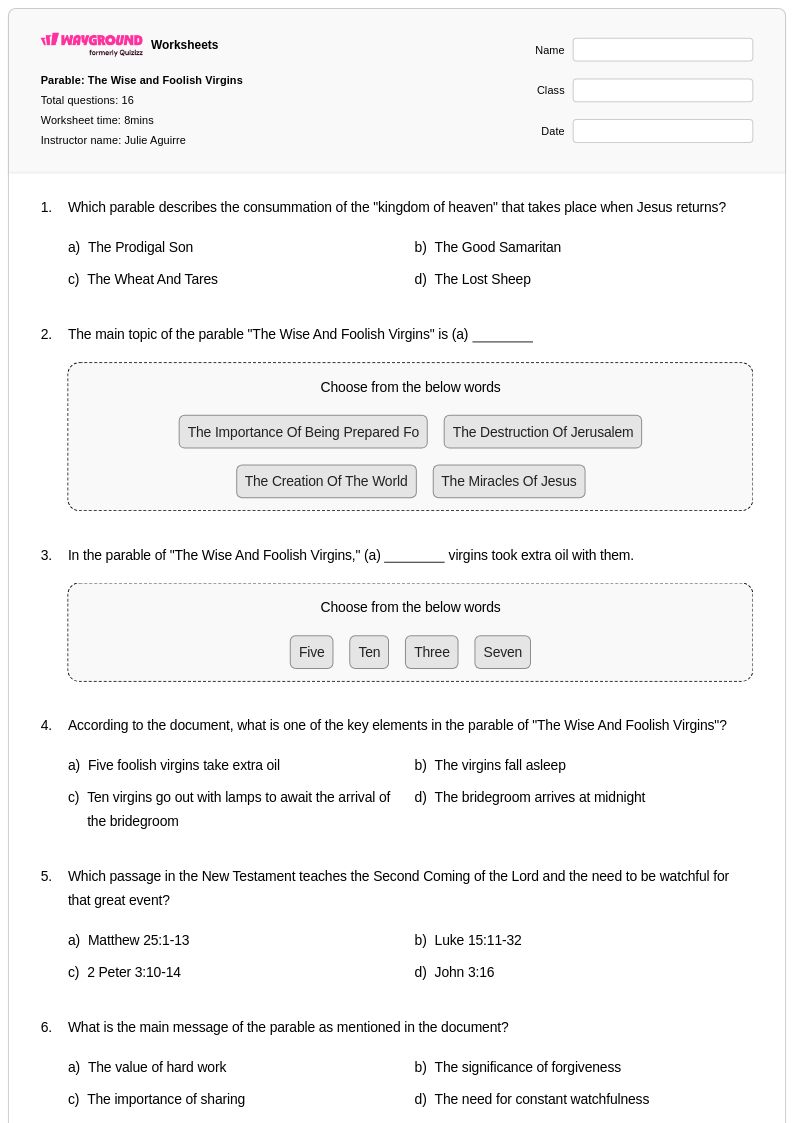
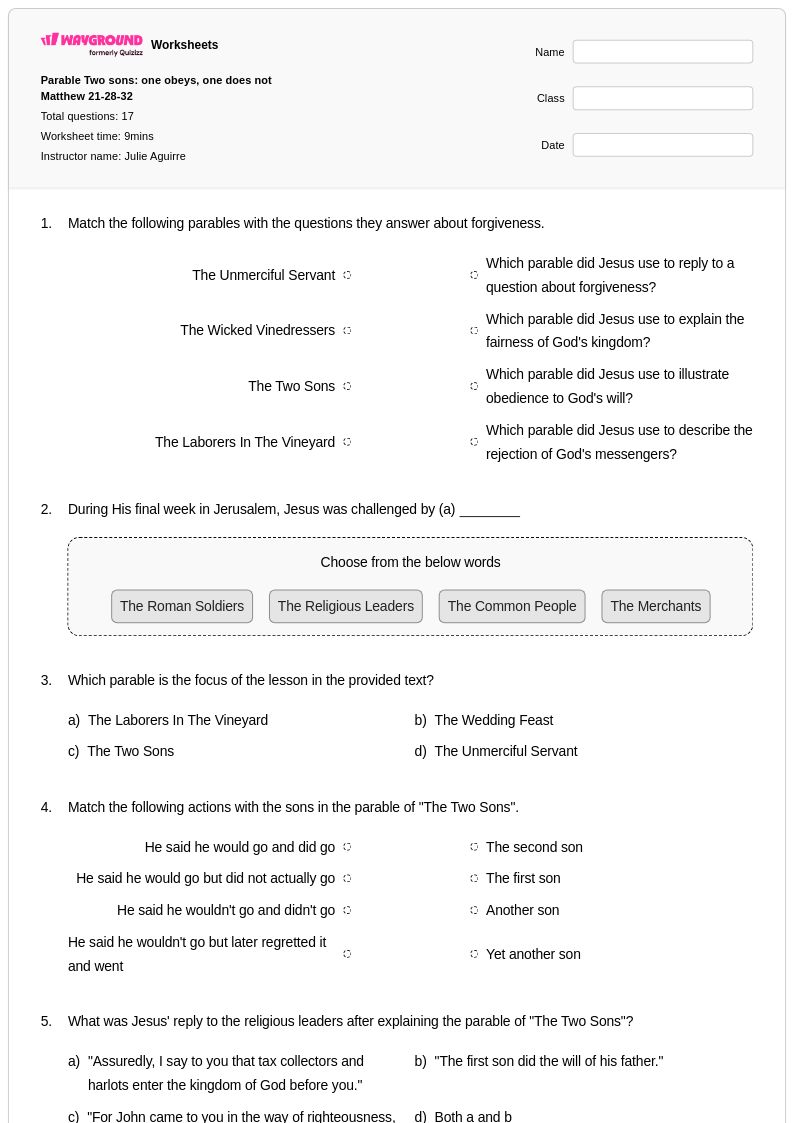
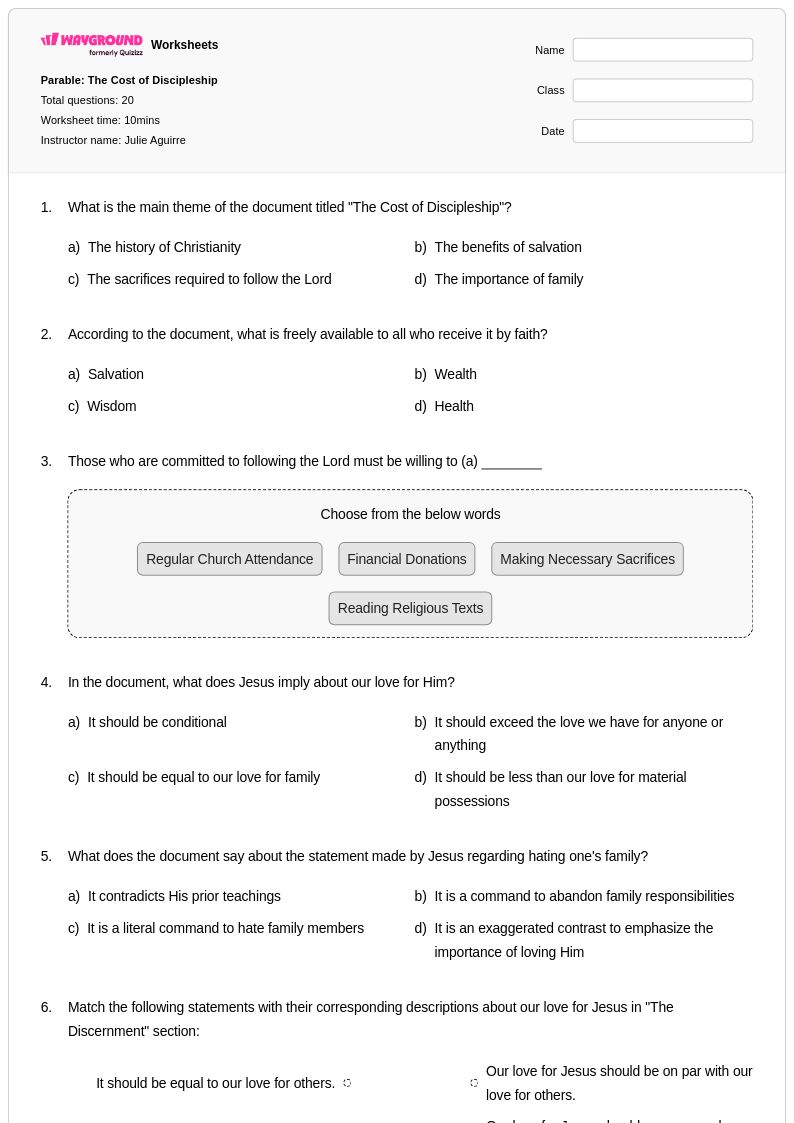
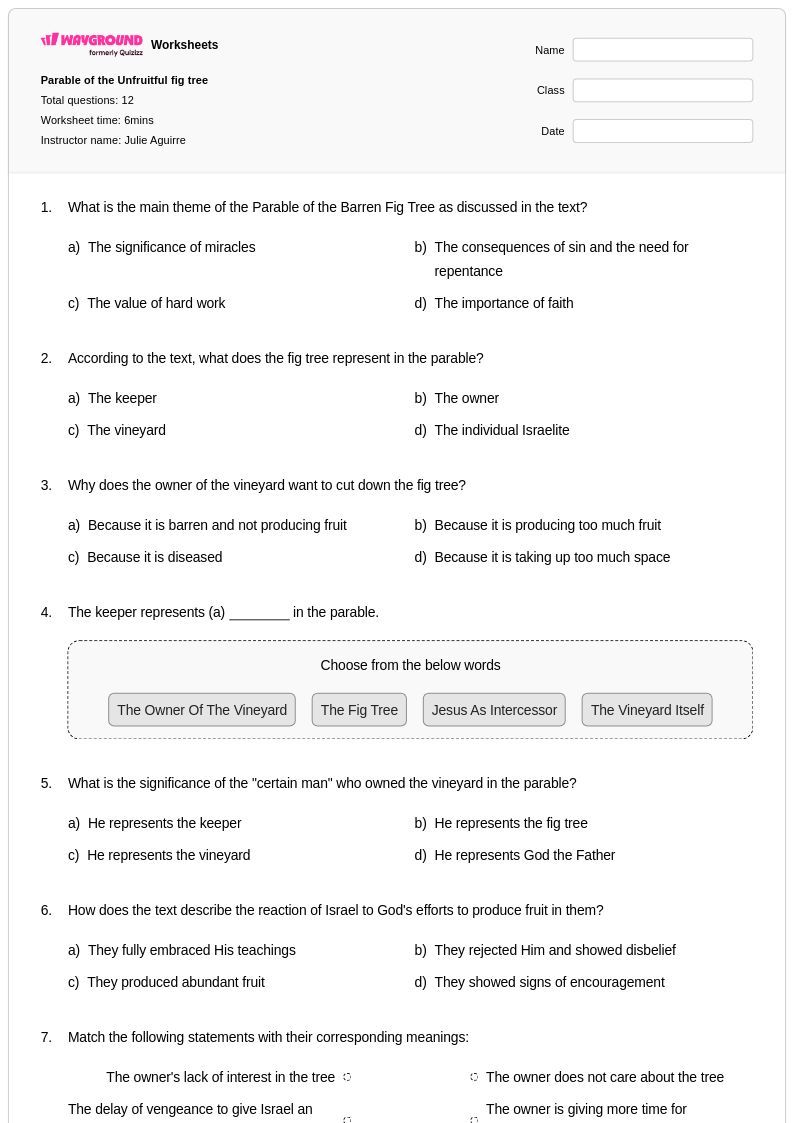
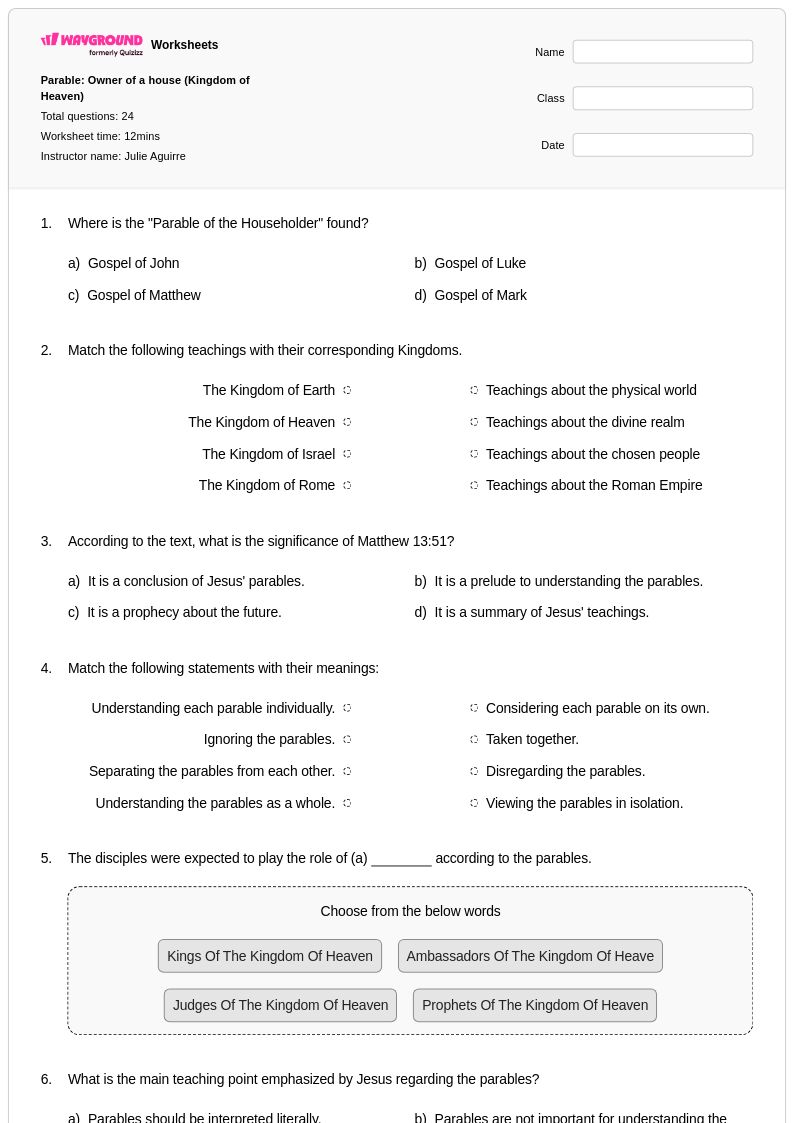
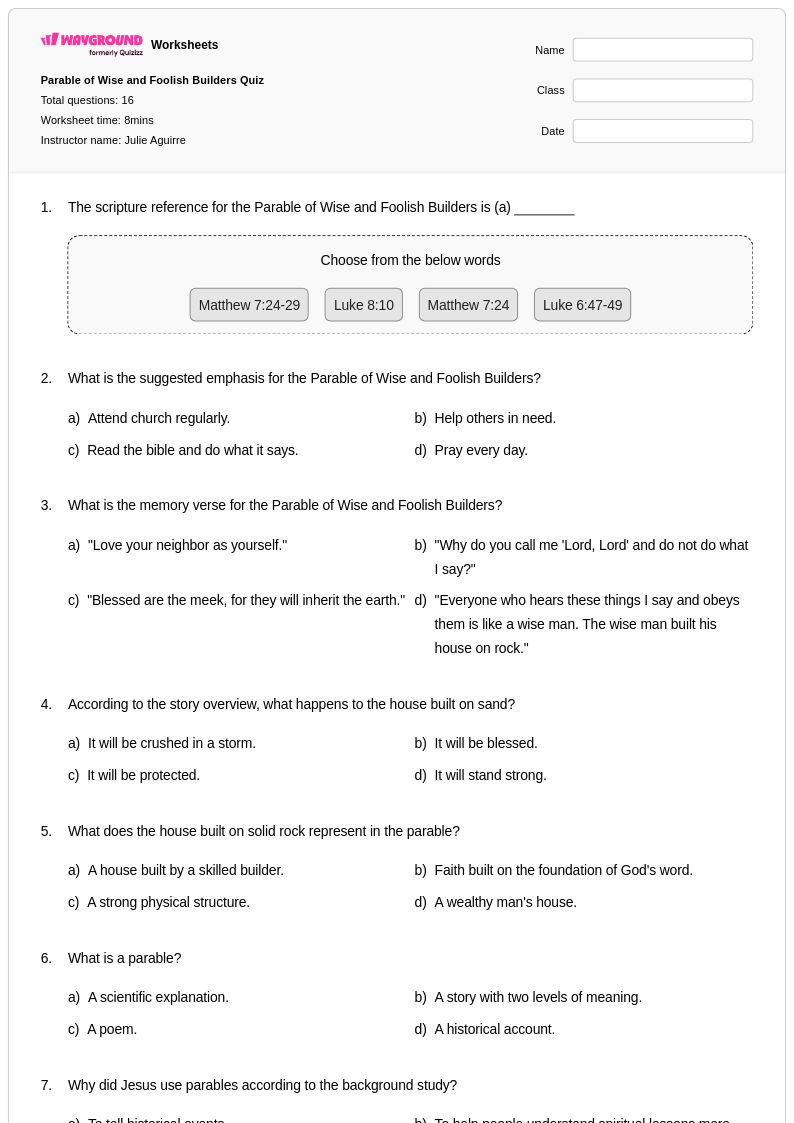
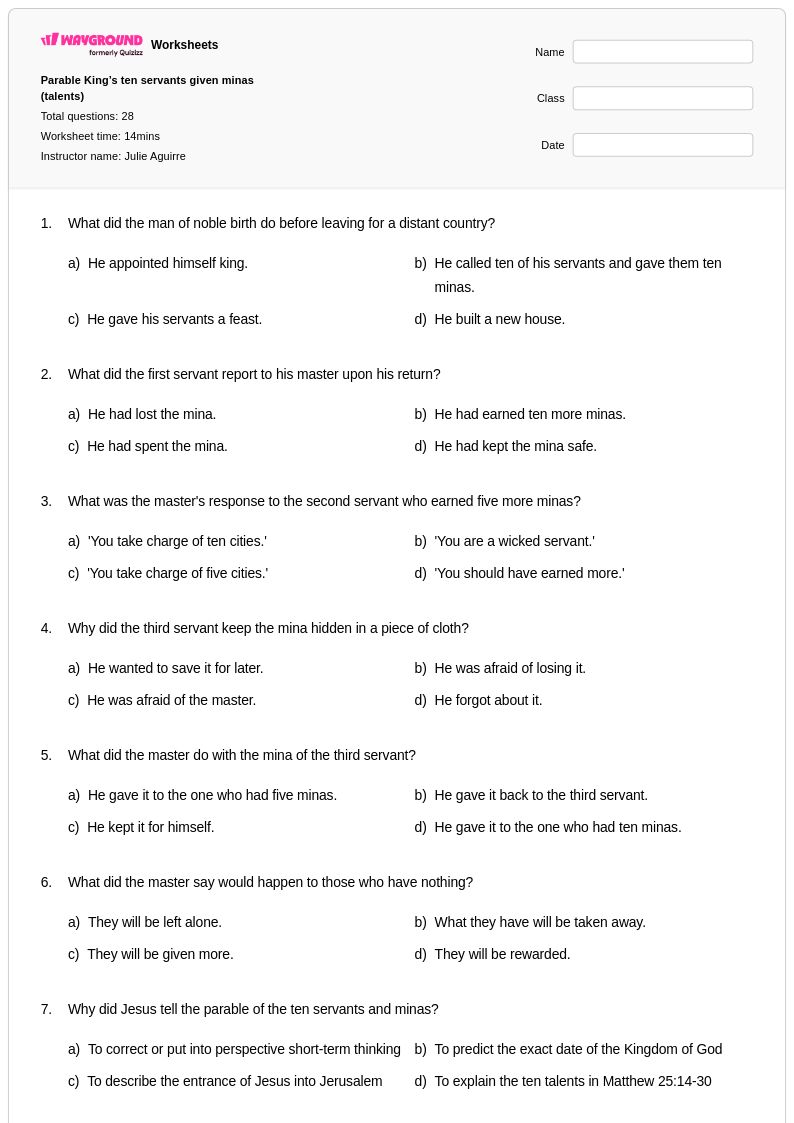
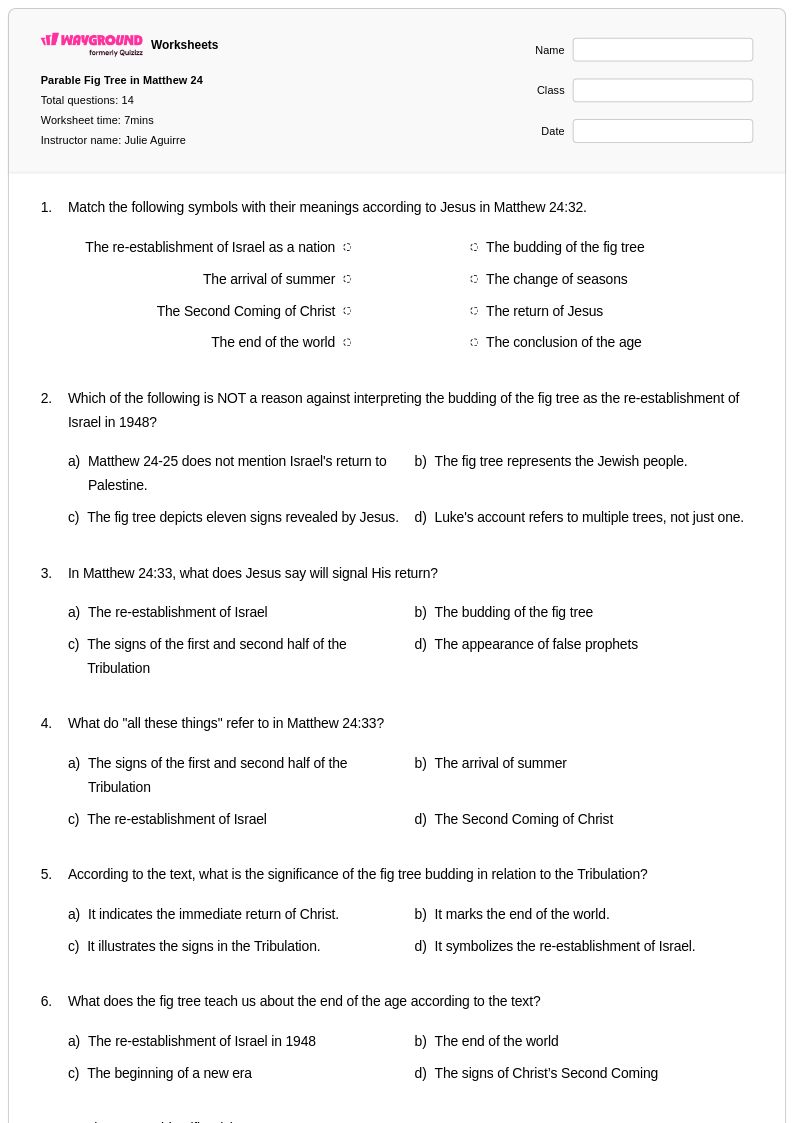
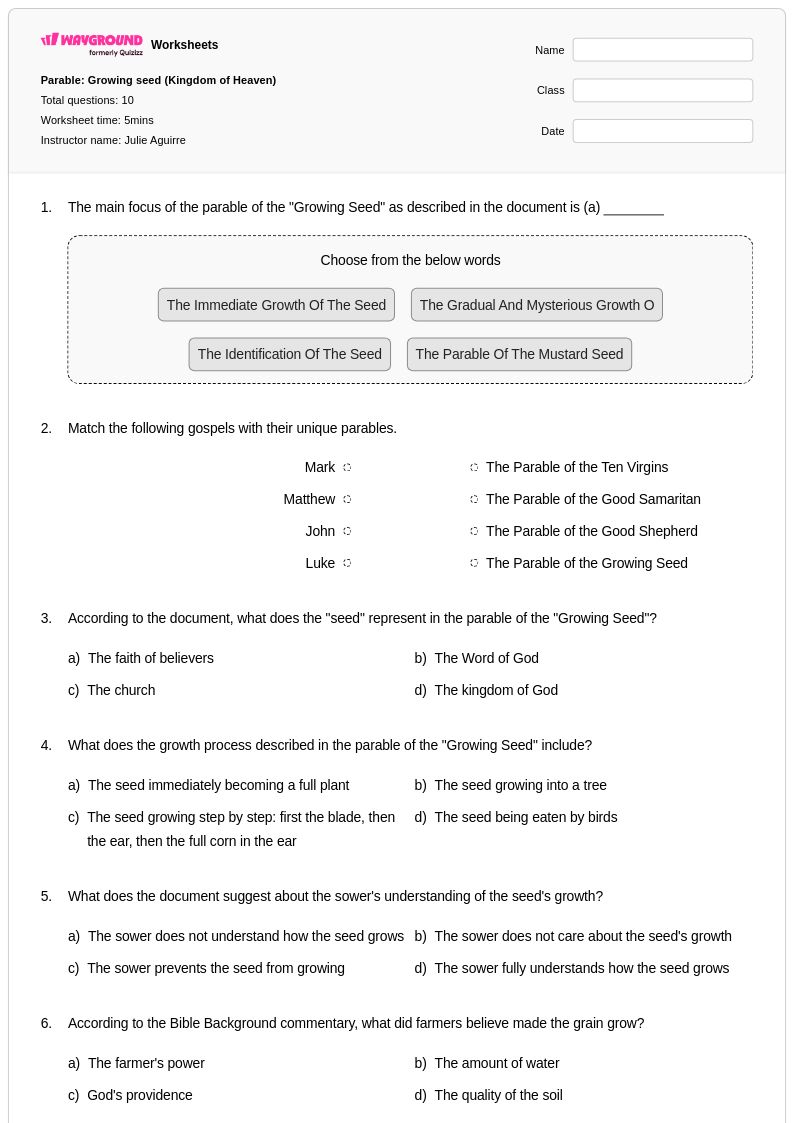
Explore free parable worksheets and printables that help students analyze moral lessons, identify key themes, and practice comprehension skills through engaging PDF activities with complete answer keys.
Parable worksheets available through Wayground (formerly Quizizz) provide comprehensive practice materials designed to develop students' understanding of this distinctive narrative form and its underlying moral teachings. These educational resources focus on strengthening critical reading comprehension skills by guiding learners to identify the allegorical elements, symbolic characters, and ethical lessons embedded within parables from various cultural and religious traditions. Students engage with carefully selected texts that demonstrate how parables use simple, relatable scenarios to convey profound truths about human behavior, moral choices, and universal principles. The collection includes structured practice problems that challenge learners to analyze narrative techniques, interpret figurative language, and connect parable themes to contemporary situations, with comprehensive answer keys supporting both independent study and classroom instruction. These free printable resources serve as valuable tools for developing analytical thinking skills while fostering deeper appreciation for this timeless literary form.
Wayground (formerly Quizizz) empowers educators with an extensive collection of teacher-created parable worksheets, drawing from millions of high-quality resources that support diverse instructional needs and learning objectives. The platform's robust search and filtering capabilities enable teachers to quickly locate materials aligned with specific curriculum standards, reading levels, and thematic focuses, whether targeting foundational parable recognition or advanced literary analysis skills. Teachers benefit from built-in differentiation tools that allow customization of worksheet complexity, ensuring appropriate challenge levels for varied student abilities while maintaining engagement with this sophisticated genre. The flexible format options, including downloadable PDF versions and interactive digital activities, facilitate seamless integration into both traditional classroom settings and remote learning environments. These comprehensive resources streamline lesson planning while providing targeted support for remediation, skill reinforcement, and enrichment activities that deepen students' capacity to interpret symbolic narratives and extract meaningful life lessons from parable literature.
FAQs
How do I teach parables in an ELA classroom?
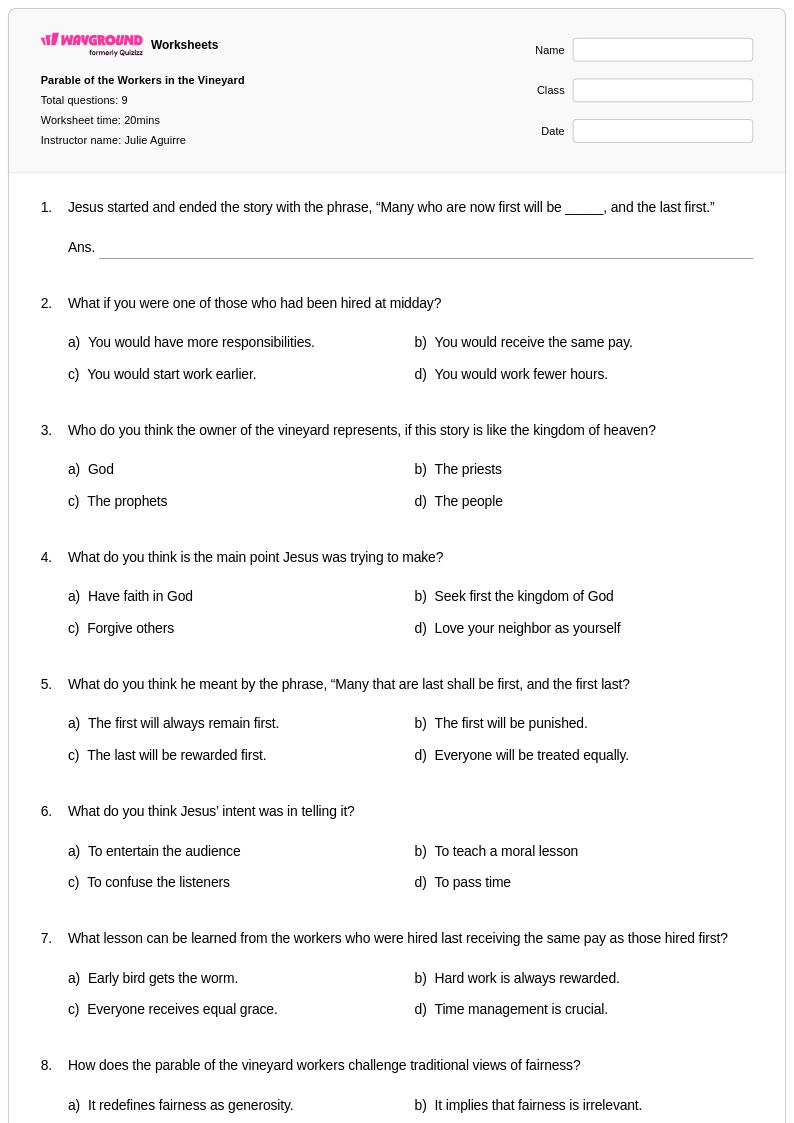
Start by establishing what makes a parable distinct from other narrative forms: a short, fictional story with human or human-like characters that illustrates a single moral lesson. Introduce a well-known example, such as the Parable of the Prodigal Son or Aesop's fables, and model how to identify the allegorical elements before asking students to extract the moral independently. Scaffolded close reading activities work well here, guiding students through symbolic characters, relatable scenarios, and the explicit or implied lesson.
What reading comprehension skills do parable worksheets help students practice?
Parable worksheets build several interconnected skills: identifying central themes, interpreting figurative and symbolic language, analyzing character roles, and connecting narrative events to moral conclusions. Because parables are concise and structurally consistent, they are effective vehicles for teaching inference and textual evidence skills. Students also practice summarizing a text and articulating its lesson in their own words, which strengthens both comprehension and written response ability.
What mistakes do students commonly make when analyzing parables?
The most frequent error is reading a parable too literally, treating it as a factual account rather than recognizing its allegorical purpose. Students also confuse the surface story with the moral lesson, struggling to distinguish what happens from what it means. A related misconception is assuming every character detail carries symbolic weight, when parables often use deliberate simplicity. Practicing with multiple examples helps students recognize the consistent pattern of setup, conflict, and embedded lesson.
How can I use parable worksheets to connect literature to real-world ethical reasoning?
After students identify the moral of a parable, prompt them to find a contemporary parallel, a news story, a personal experience, or a scenario from another text that reflects the same principle. This transfer task deepens comprehension because it requires students to abstract the lesson beyond its original context. Parable worksheets that include open-ended response prompts or theme-connection questions are especially useful for facilitating this kind of critical thinking.
How do I differentiate parable instruction for students reading below grade level?
Select shorter, culturally familiar parables with straightforward vocabulary to reduce decoding barriers while still engaging students with the analytical task. On Wayground, teachers can enable the Read Aloud accommodation so students hear the text read to them, and Reduced Answer Choices can be applied for struggling readers working through comprehension questions. These accommodations can be assigned individually so that advanced students receive the standard version while others receive targeted support, all within the same assignment.
How do I use Wayground's parable worksheets in my classroom?
Wayground's parable worksheets are available as printable PDFs for traditional classroom use and in digital formats for technology-integrated or remote learning environments. Teachers can also host them as an interactive quiz directly on Wayground, making them suitable for whole-class instruction, independent practice stations, or asynchronous assignments. All worksheets include complete answer keys, so they support both teacher-led instruction and independent student study.