Explore Wayground's comprehensive collection of free body composition worksheets and printables that help students understand muscle mass, body fat percentage, and healthy weight concepts through engaging practice problems and detailed answer keys.
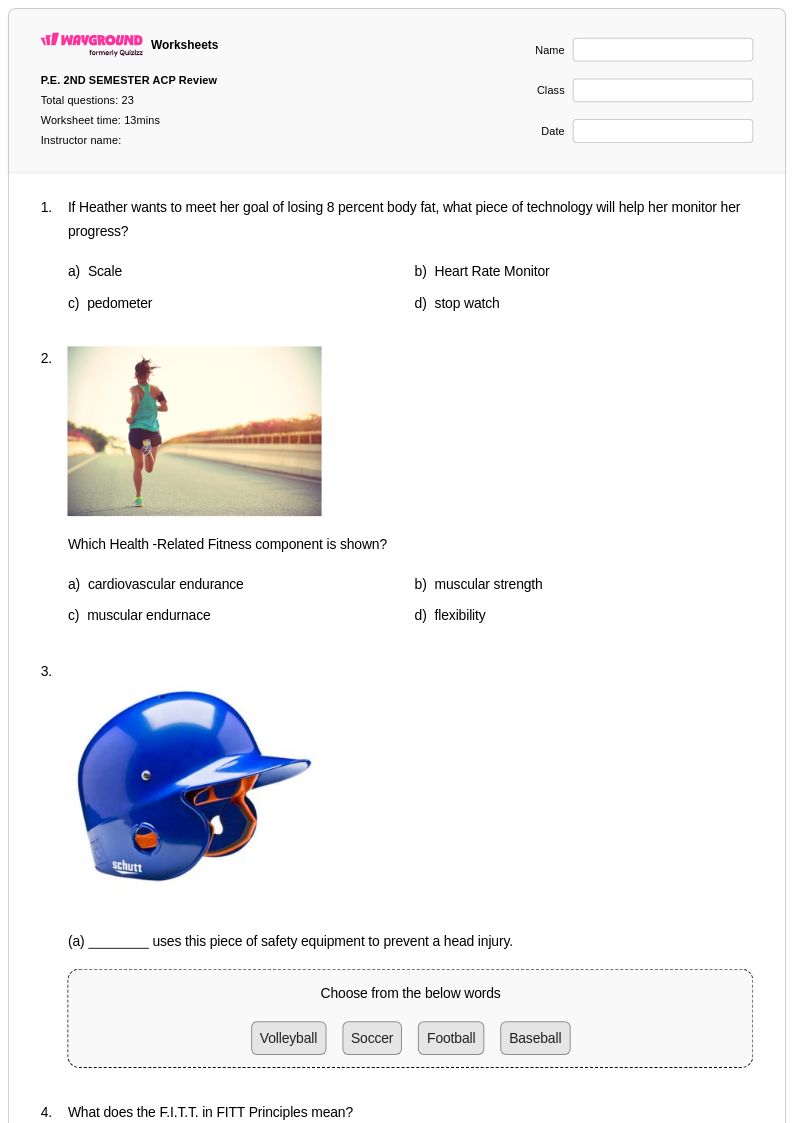
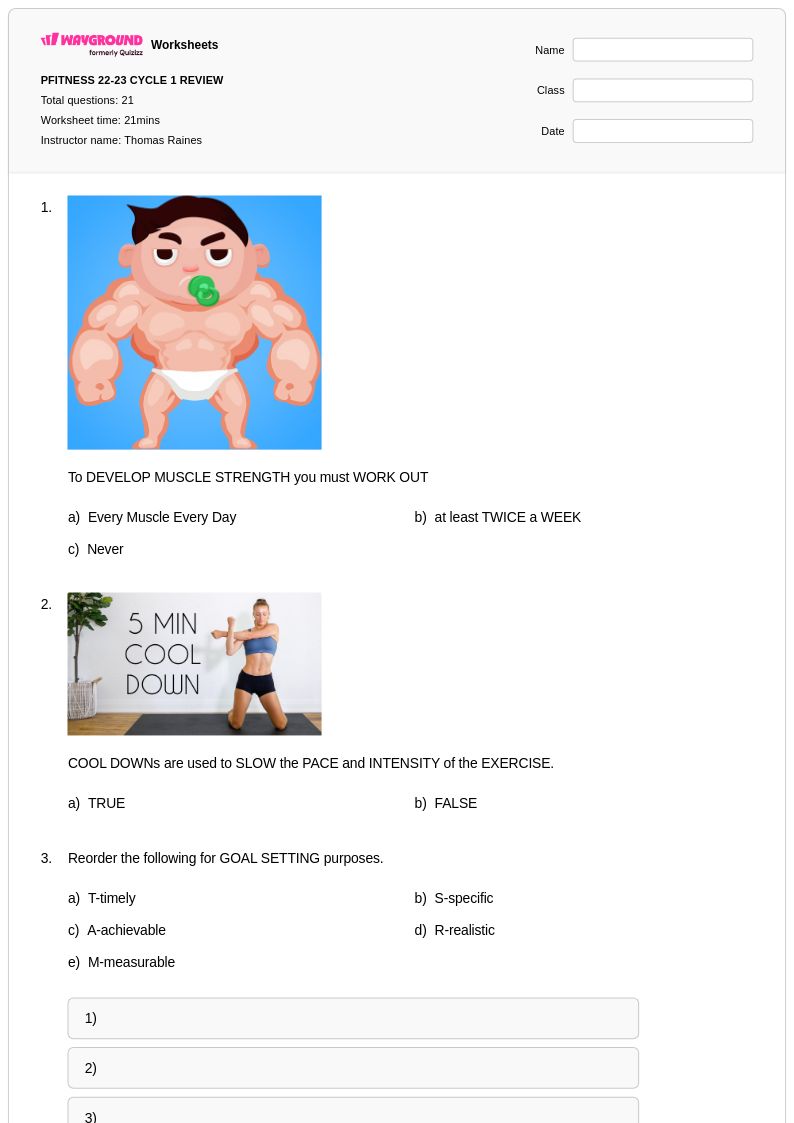
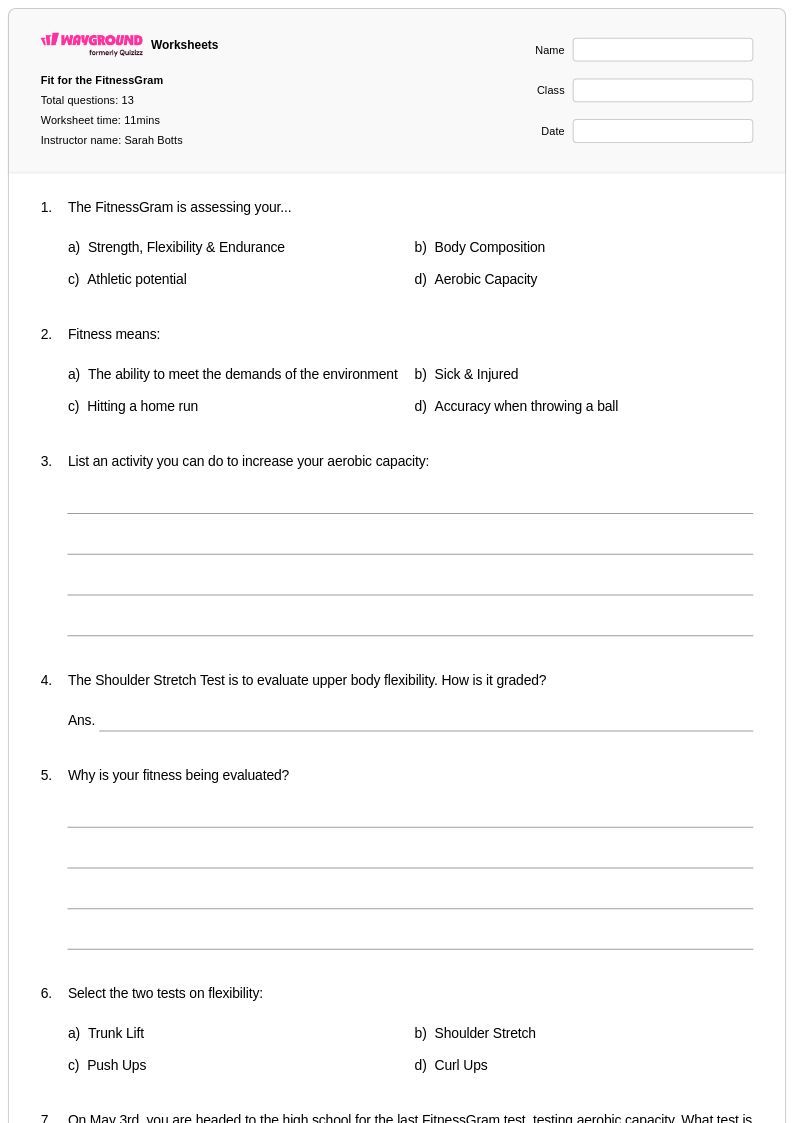
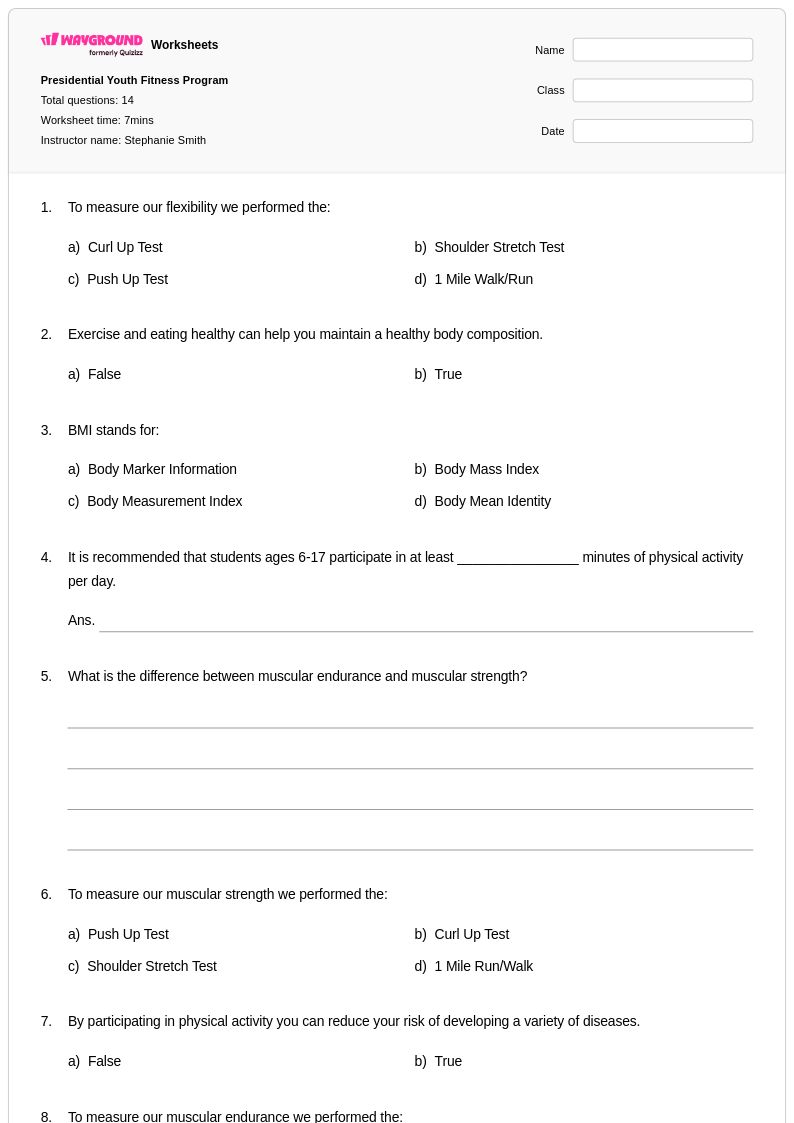
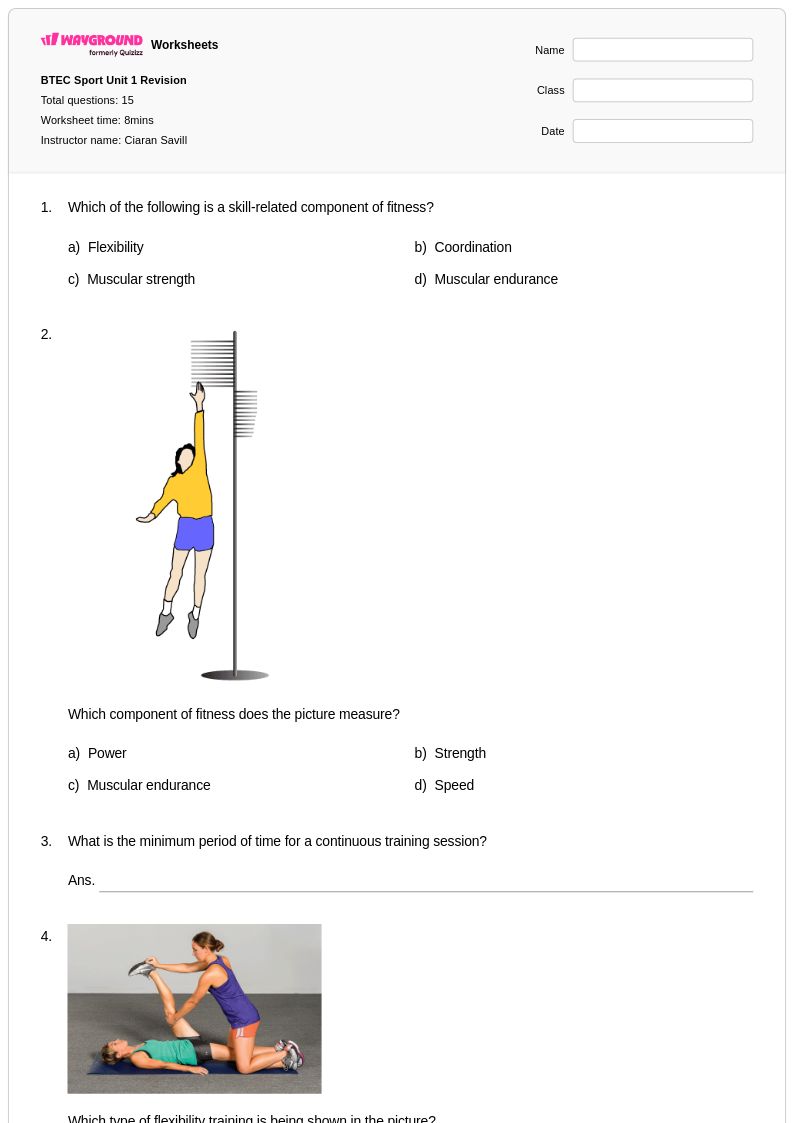
Body composition worksheets available through Wayground (formerly Quizizz) provide comprehensive resources for understanding the fundamental components that make up the human body, including muscle mass, bone density, body fat percentage, and water content. These educational materials strengthen students' ability to analyze and interpret body composition data, understand the relationship between different body tissues and overall health, and develop critical thinking skills about fitness assessment methods. The collection includes practice problems that guide learners through calculating body mass index, interpreting body fat measurements, and evaluating the significance of various body composition metrics. Each worksheet comes with a detailed answer key to support independent learning and self-assessment, while the free printable format ensures accessibility for all educational settings and study environments.
Wayground (formerly Quizizz) supports physical education teachers with millions of teacher-created body composition resources that feature robust search and filtering capabilities, enabling educators to quickly locate materials that match their specific instructional needs and curriculum standards. The platform's differentiation tools allow teachers to customize worksheets for diverse learning levels, while flexible formatting options provide both printable pdf versions and interactive digital activities that can be seamlessly integrated into various teaching environments. These comprehensive features facilitate effective lesson planning by offering ready-to-use materials for skill practice, targeted remediation for students who need additional support with body composition concepts, and enrichment opportunities for advanced learners seeking deeper exploration of fitness assessment principles and their applications in real-world health and wellness contexts.
FAQs
How do I teach body composition to students in physical education?
Teaching body composition effectively starts with grounding students in the four primary components: muscle mass, bone density, body fat percentage, and water content. From there, teachers typically introduce fitness assessment methods like BMI calculation and body fat measurement interpretation, connecting these metrics to real-world health outcomes. Anchoring instruction in data analysis — having students read, calculate, and evaluate actual body composition figures — builds both conceptual understanding and critical thinking skills.
What exercises or worksheets help students practice body composition concepts?
Practice worksheets that walk students through calculating body mass index, interpreting body fat percentage ranges, and comparing different body composition metrics are among the most effective tools for reinforcing this topic. Problems that require students to analyze data sets and draw conclusions about health and fitness help move learning beyond memorization into applied reasoning. Structured practice with detailed answer keys also supports self-assessment and independent review.
What are common mistakes students make when learning about body composition?
One of the most frequent misconceptions is conflating body weight with body composition — students often assume a higher weight automatically means a higher body fat percentage, overlooking the role of muscle mass and bone density. Another common error is misinterpreting BMI as a direct measure of body fat rather than a screening proxy. Students also tend to struggle with understanding why two individuals with identical weights can have very different health profiles based on their tissue distribution.
How can I differentiate body composition worksheets for students at different skill levels?
For students who need additional support, simplifying the number of variables in a body composition calculation problem or reducing answer choices can lower cognitive load while keeping the core concept intact. Advanced learners benefit from problems that ask them to evaluate the limitations of fitness assessment methods or compare multiple metrics across a case study. On Wayground, teachers can apply accommodations such as reduced answer choices or read-aloud support to individual students without affecting the rest of the class, making differentiation manageable within a single assignment.
How do I use body composition worksheets from Wayground in my classroom?
Wayground's body composition worksheets are available as printable PDFs for traditional classroom use and in digital formats for technology-integrated environments, giving teachers flexibility based on their setup. Teachers can also host these materials as a quiz directly on Wayground, enabling real-time student responses and instant feedback. The included answer keys make these worksheets suitable for guided practice, independent work, or remediation sessions without requiring additional teacher preparation.
How do I help students understand the difference between BMI and body fat percentage?
BMI is a ratio calculated from height and weight that serves as a population-level screening tool, while body fat percentage is a direct measure of how much of a person's total mass is composed of fat tissue. Students benefit from worked examples that show how two individuals with the same BMI can have significantly different body fat percentages based on muscle mass. Worksheet problems that ask students to calculate both metrics for the same subject and then compare interpretations are particularly effective at clarifying this distinction.