
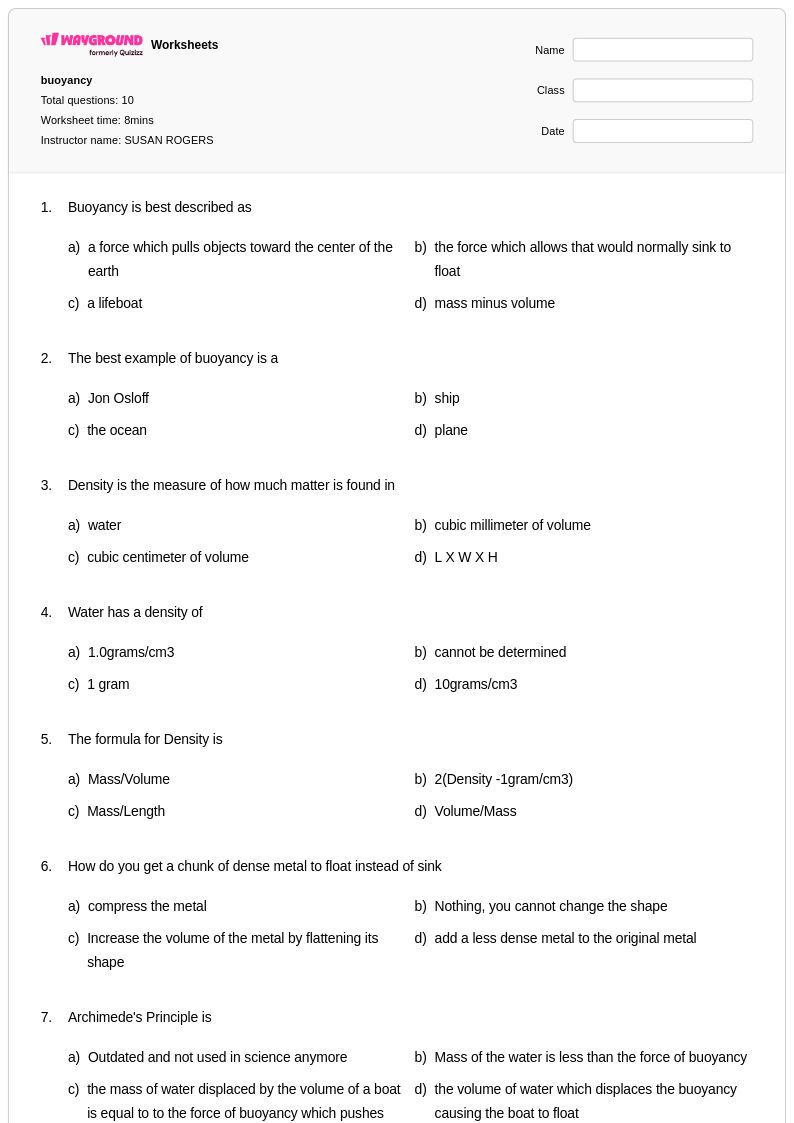
10 Q
7th - 9th
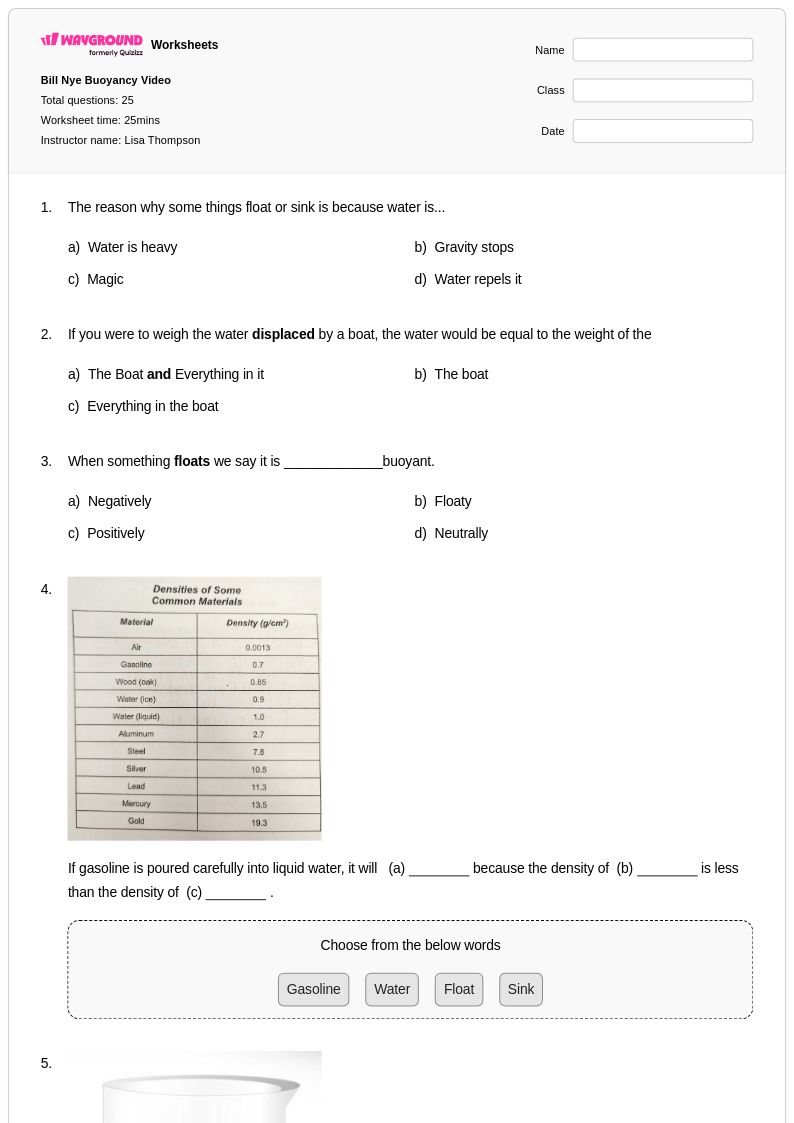
25 Q
8th - Uni
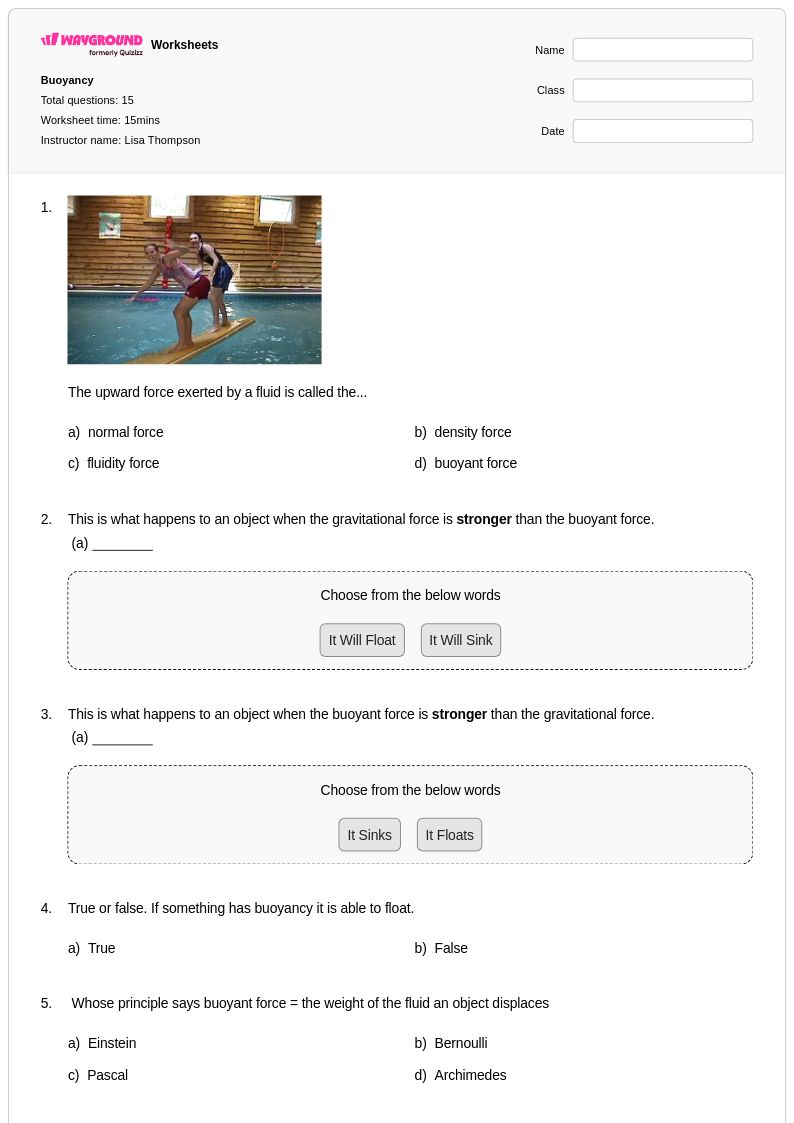
15 Q
9th - Uni
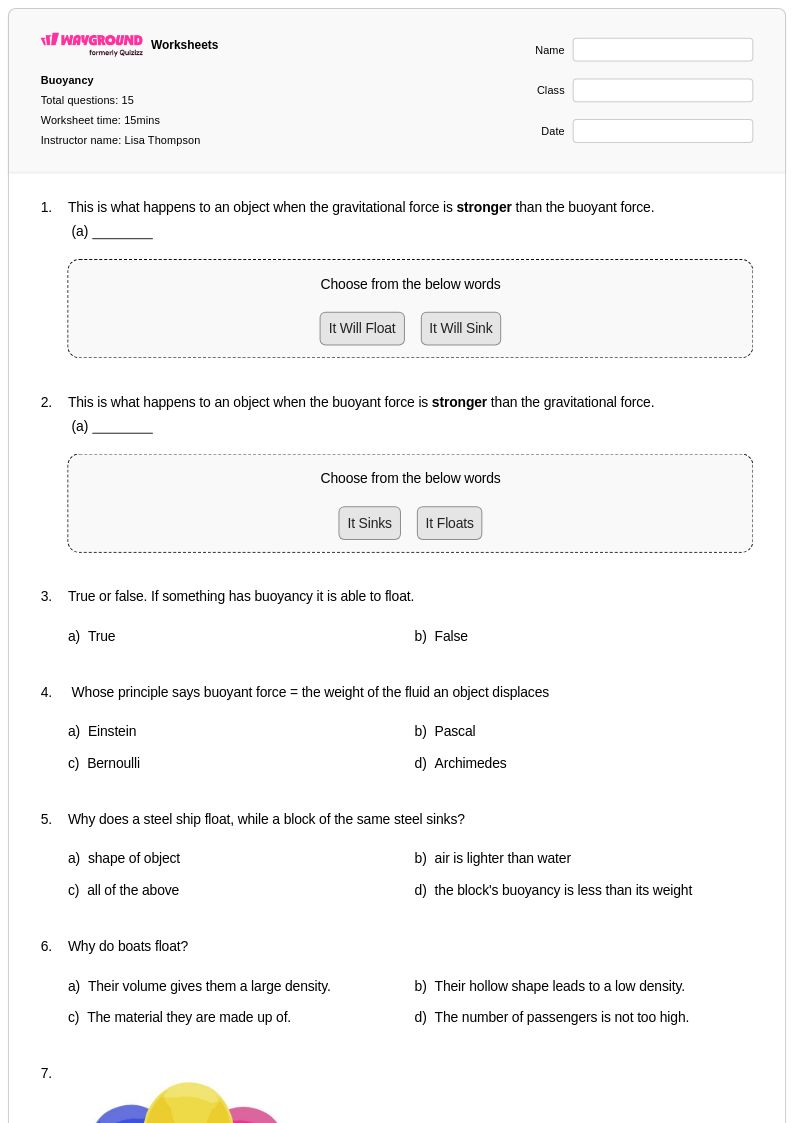
15 Q
9th - Uni
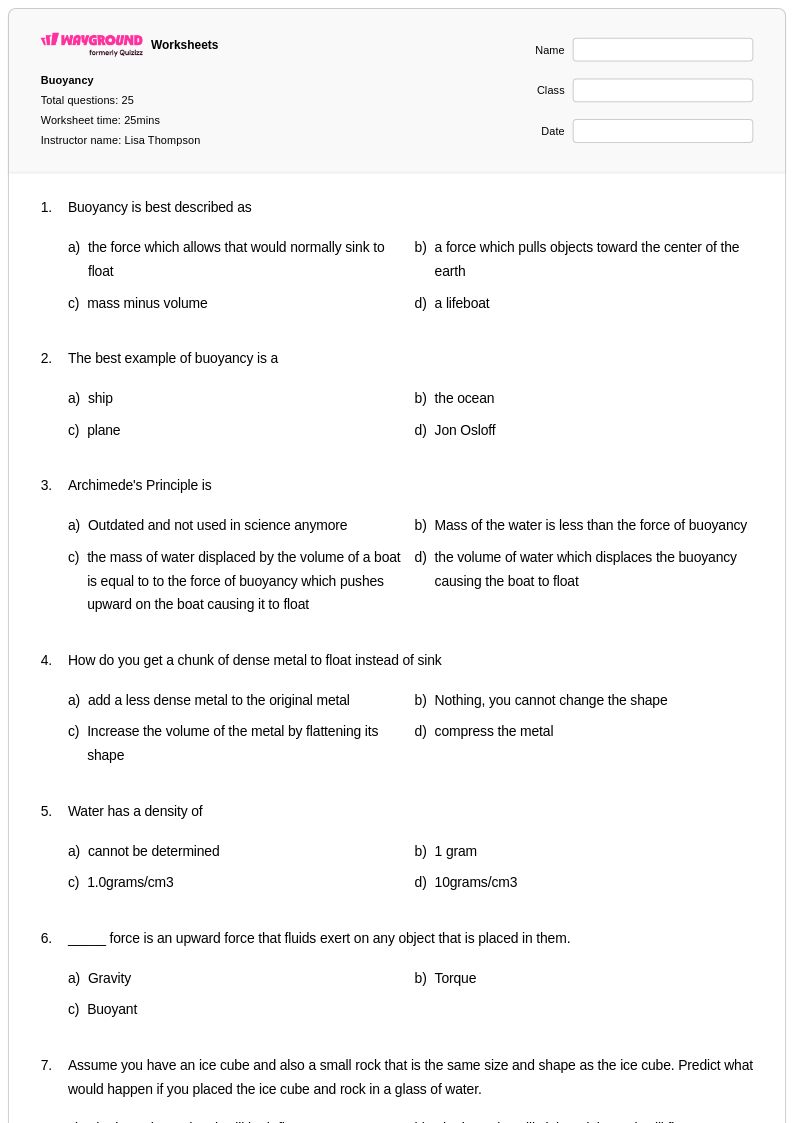
25 Q
9th - Uni
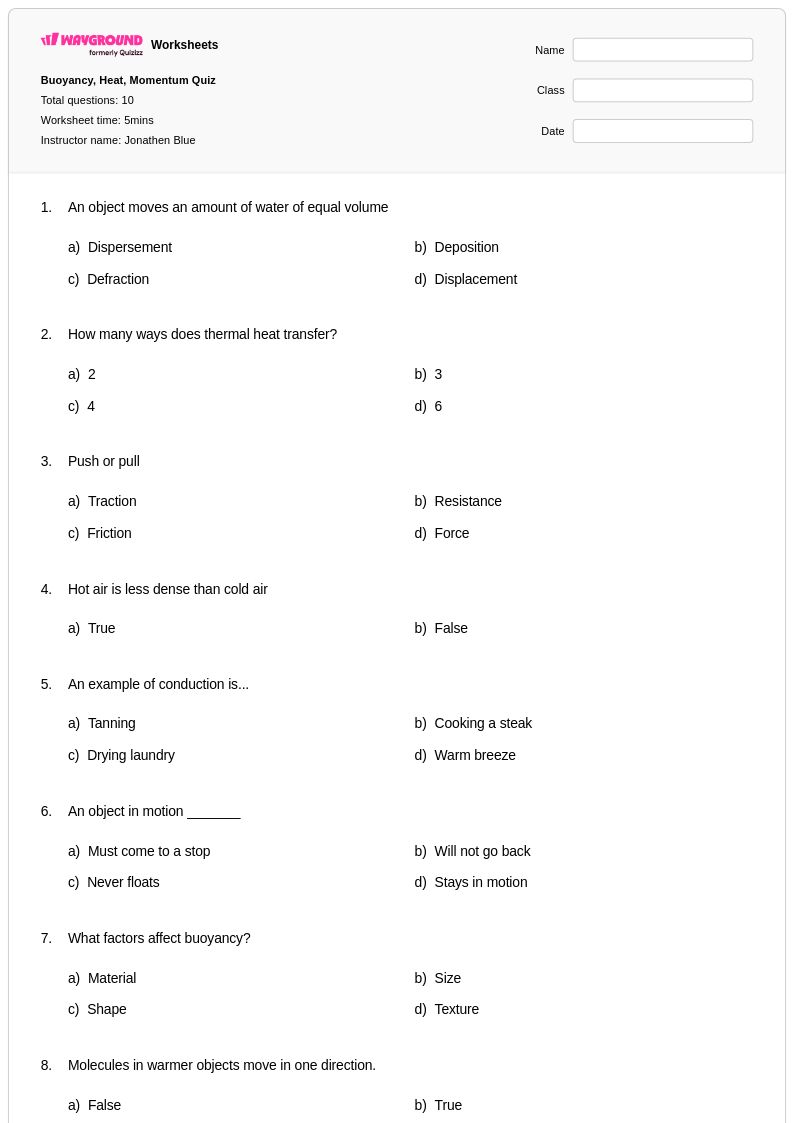
10 Q
5th - 9th
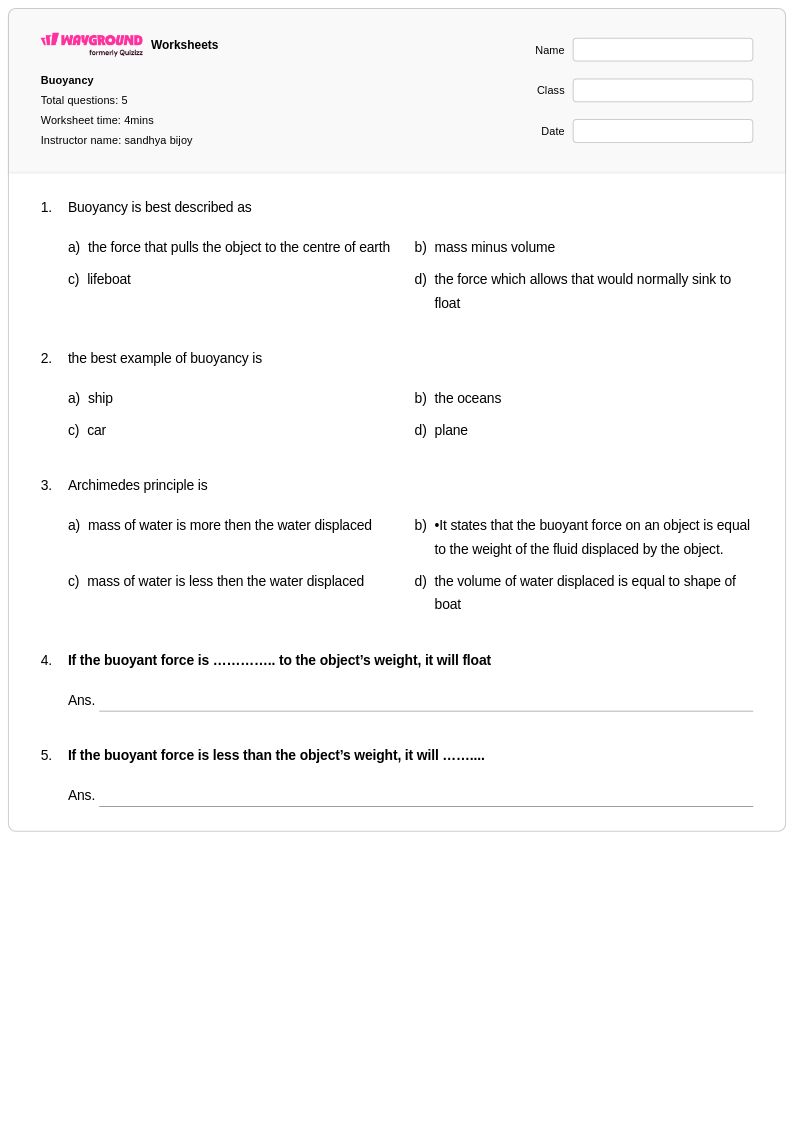
5 Q
8th - 9th
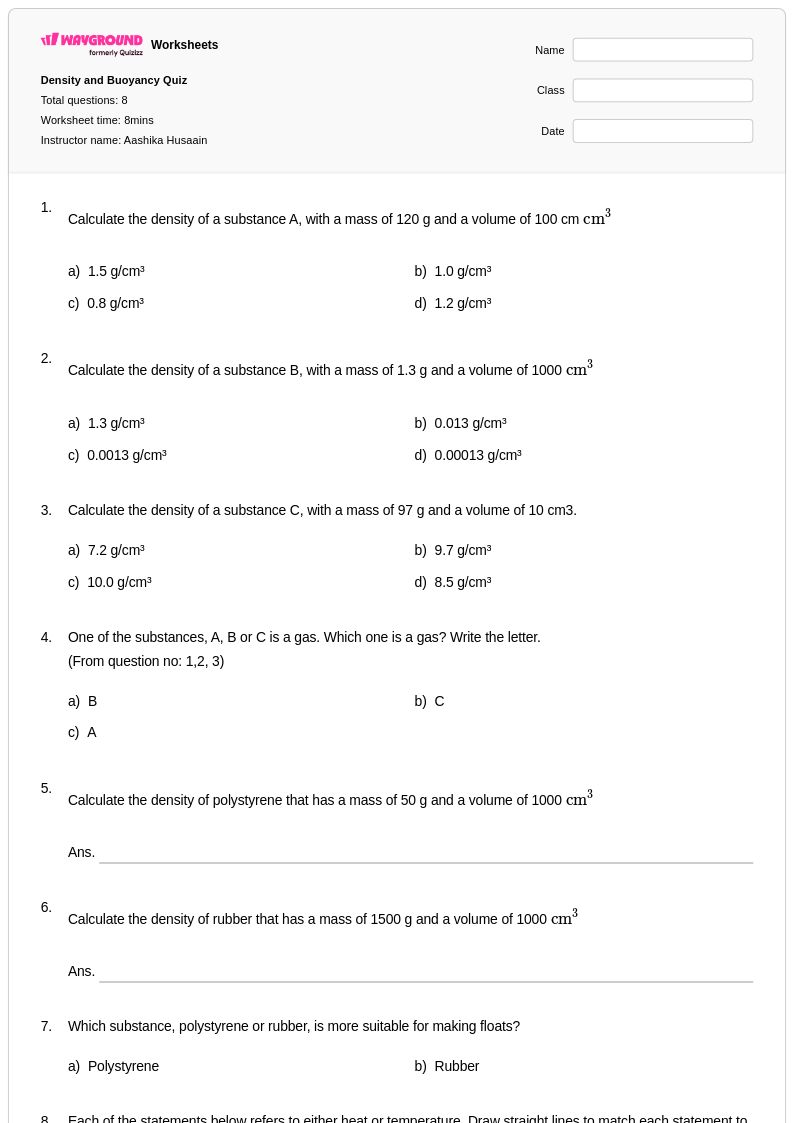
8 Q
9th
13 Q
9th - 10th
12 Q
6th - 9th
15 Q
7th - 9th
15 Q
9th - Uni
15 Q
9th - Uni
35 Q
7th - 9th
44 Q
9th
6 Q
9th
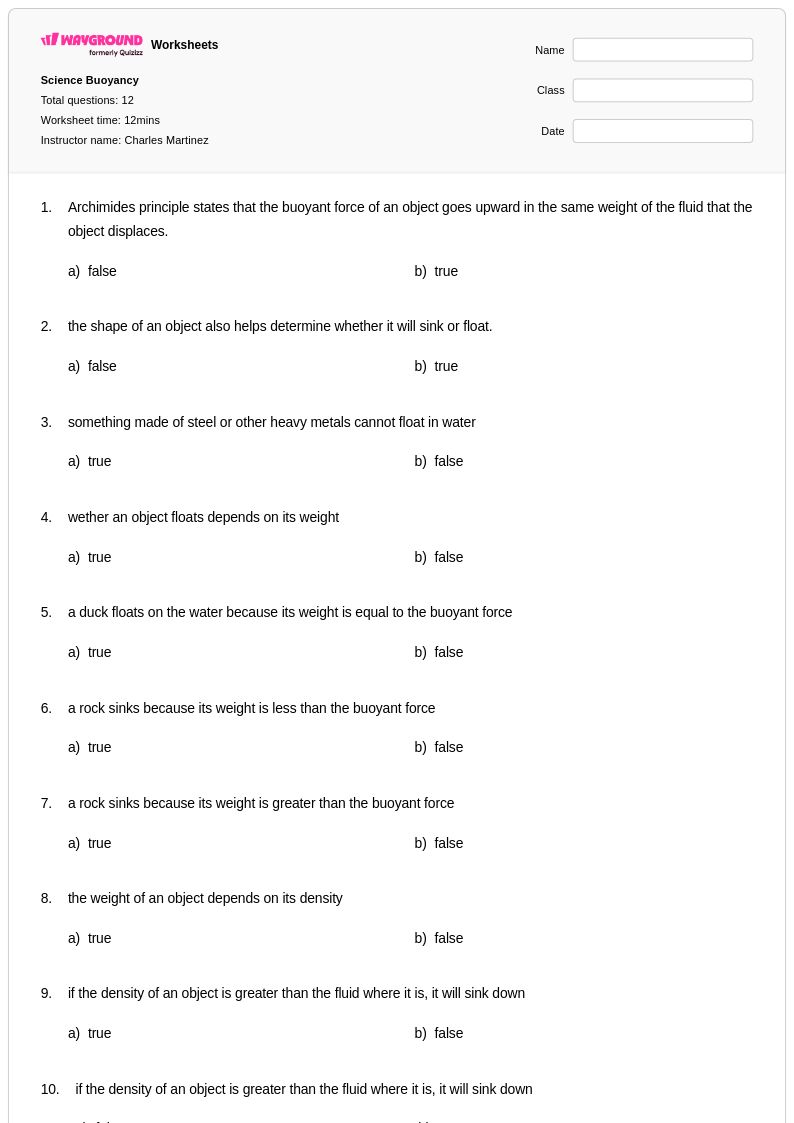
12 Q
6th - 9th
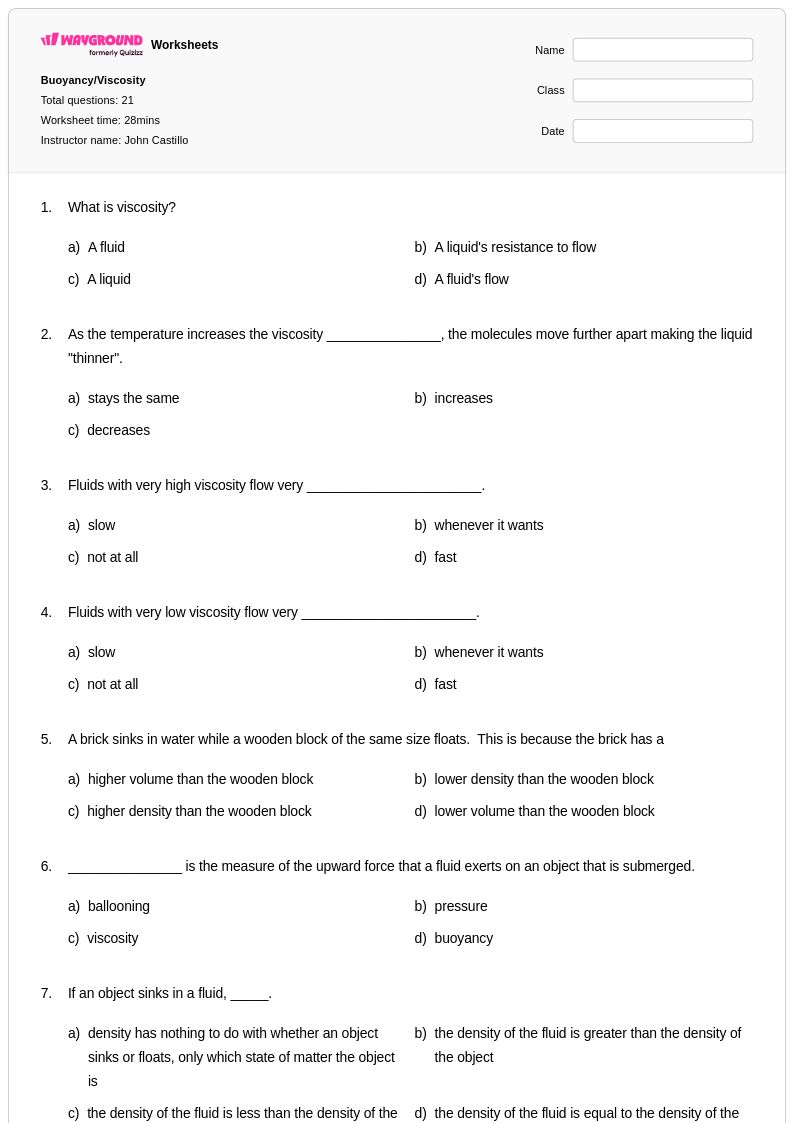
21 Q
8th - 9th
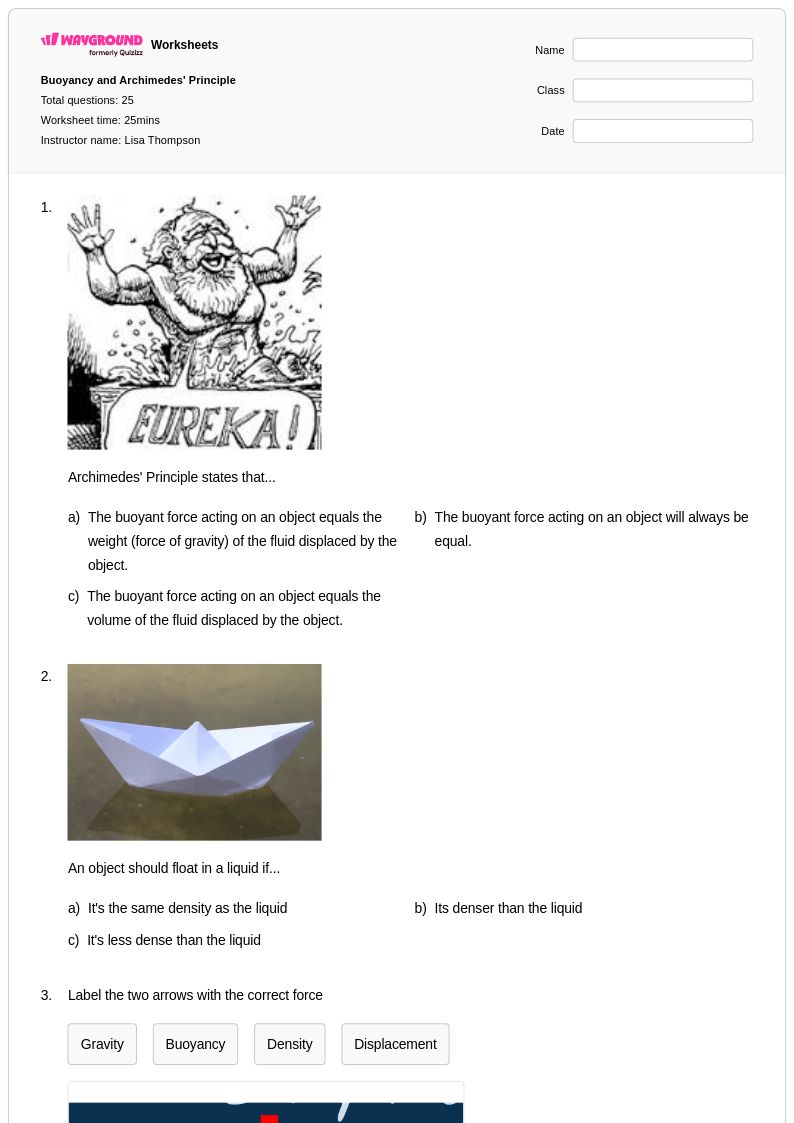
25 Q
9th - Uni
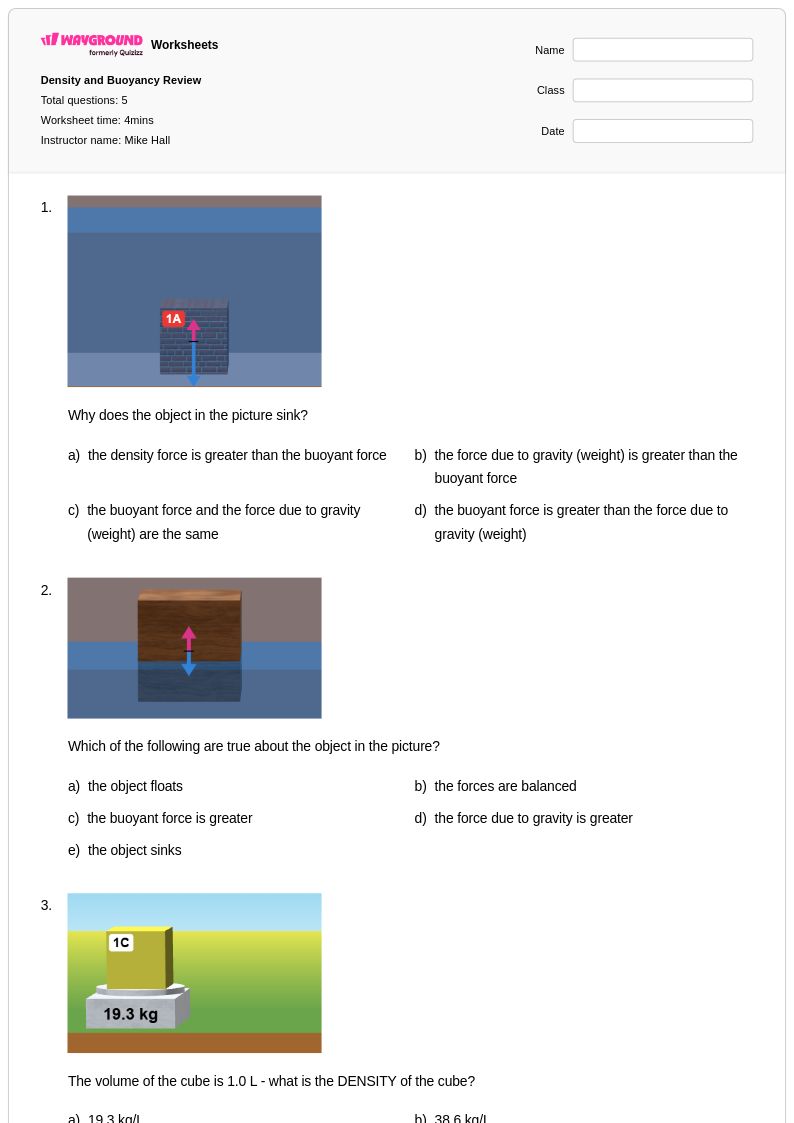
5 Q
9th - Uni
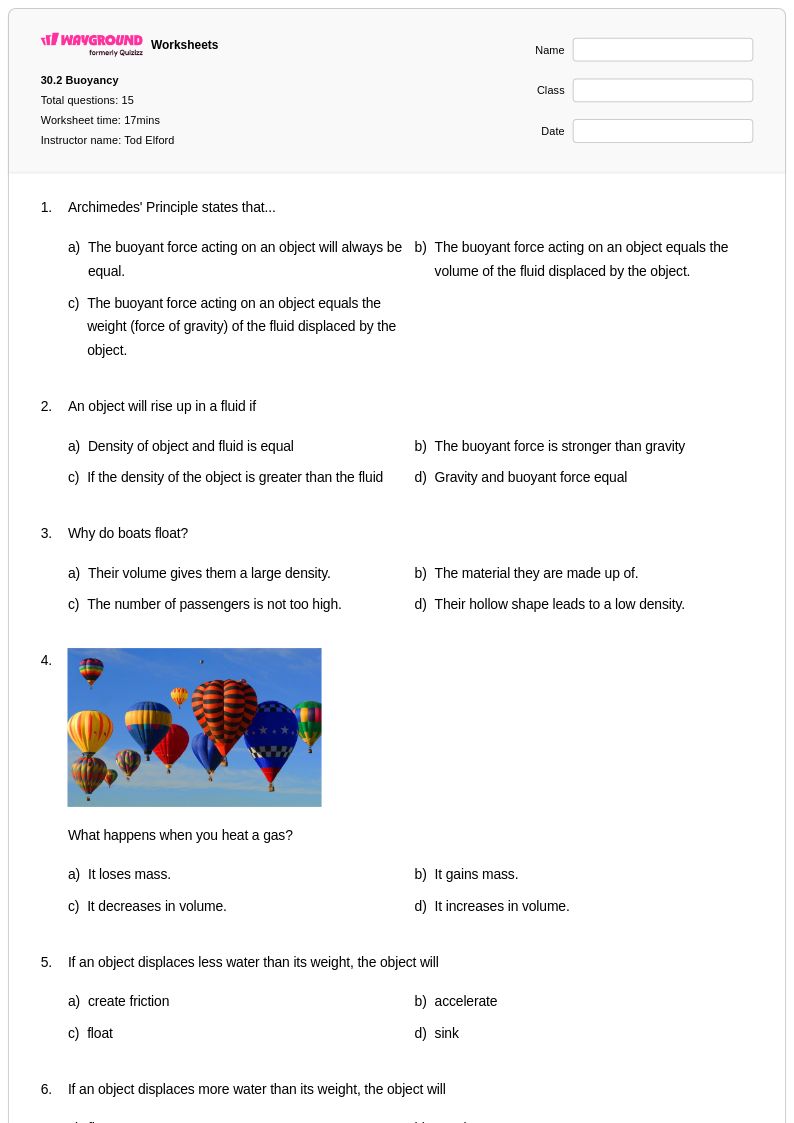
15 Q
9th - 12th
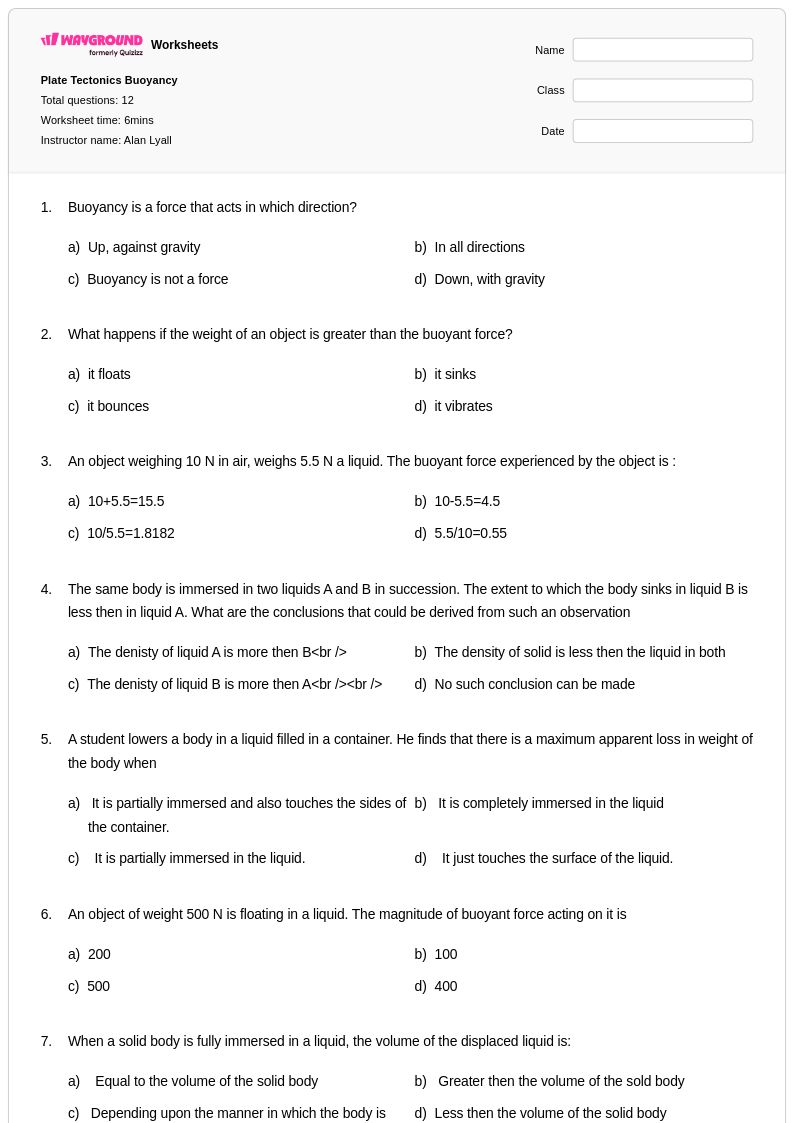
12 Q
9th - 12th
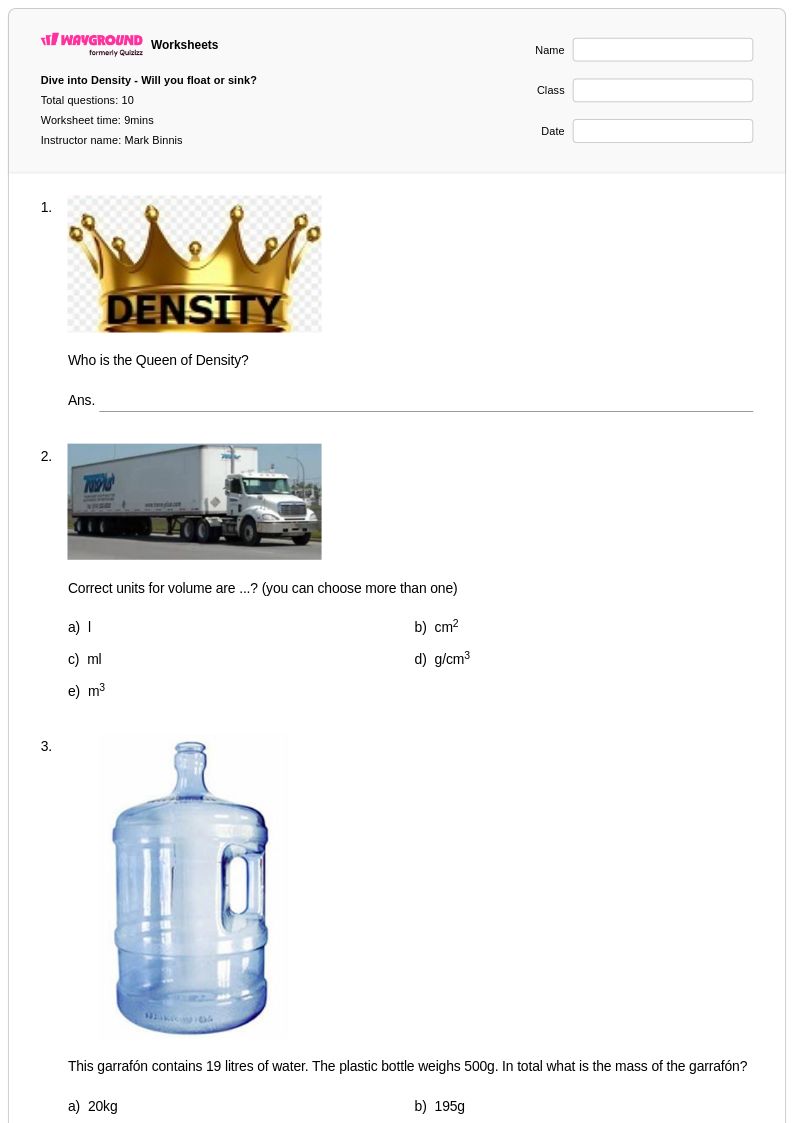
10 Q
7th - 10th
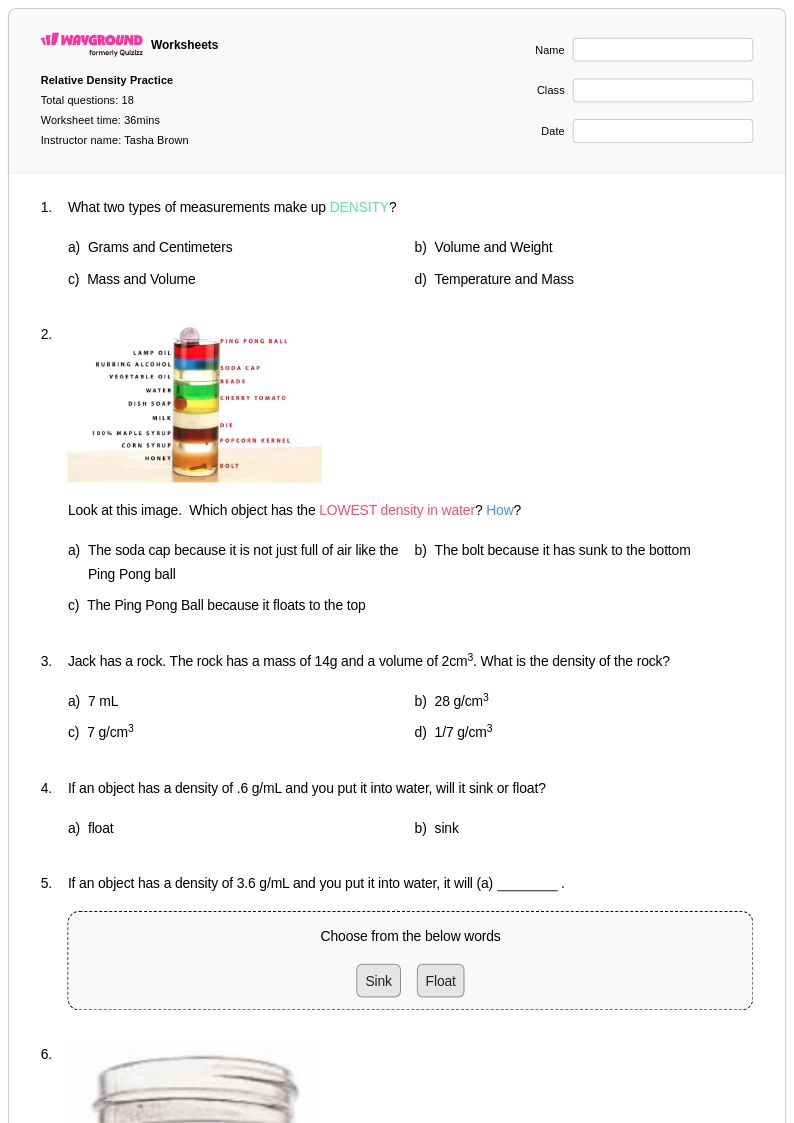
18 Q
6th - Uni
Explore Buoyancy Worksheets by Grades
Explore Other Subject Worksheets for year 9
Explore printable Buoyancy worksheets for Year 9
Buoyancy worksheets for Year 9 students available through Wayground (formerly Quizizz) provide comprehensive coverage of this fundamental physical science concept that explains why objects float or sink in fluids. These expertly crafted educational resources help students master the principles of Archimedes' principle, fluid displacement, and density relationships through structured practice problems that progress from basic concept identification to complex calculation scenarios. Students develop critical thinking skills as they analyze real-world applications of buoyancy, from ship design to hot air balloons, while working through printable exercises that include detailed answer keys for immediate feedback. The free worksheets incorporate mathematical problem-solving with conceptual understanding, ensuring Year 9 learners can confidently calculate buoyant forces, determine object density, and predict flotation behavior across various fluid environments.
Wayground (formerly Quizizz) empowers educators with access to millions of teacher-created buoyancy resources that can be seamlessly integrated into Year 9 physical science curricula. The platform's robust search and filtering capabilities allow teachers to quickly locate worksheets aligned with specific learning standards, while differentiation tools enable customization for diverse student needs and learning levels. These buoyancy worksheet collections are available in both printable pdf formats for traditional classroom use and digital formats for interactive learning experiences, providing flexibility for various teaching environments. Teachers can efficiently plan lesson sequences, create targeted remediation materials for struggling students, and develop enrichment activities for advanced learners, all while having confidence that the resources support systematic skill development in understanding fluid mechanics and density principles essential for Year 9 physical science mastery.
FAQs
How do I teach buoyancy to students?
What exercises help students practice buoyancy concepts?
What mistakes do students commonly make when learning about buoyancy?
How do I differentiate buoyancy instruction for students at different skill levels?
How can I use Wayground buoyancy worksheets in my classroom?