Free Printable Cardinal and Intermediate Directions Worksheets for Year 3
Year 3 cardinal and intermediate directions worksheets help students master compass navigation and spatial awareness through engaging printables, practice problems, and free PDF activities with complete answer keys.
Explore printable Cardinal and Intermediate Directions worksheets for Year 3
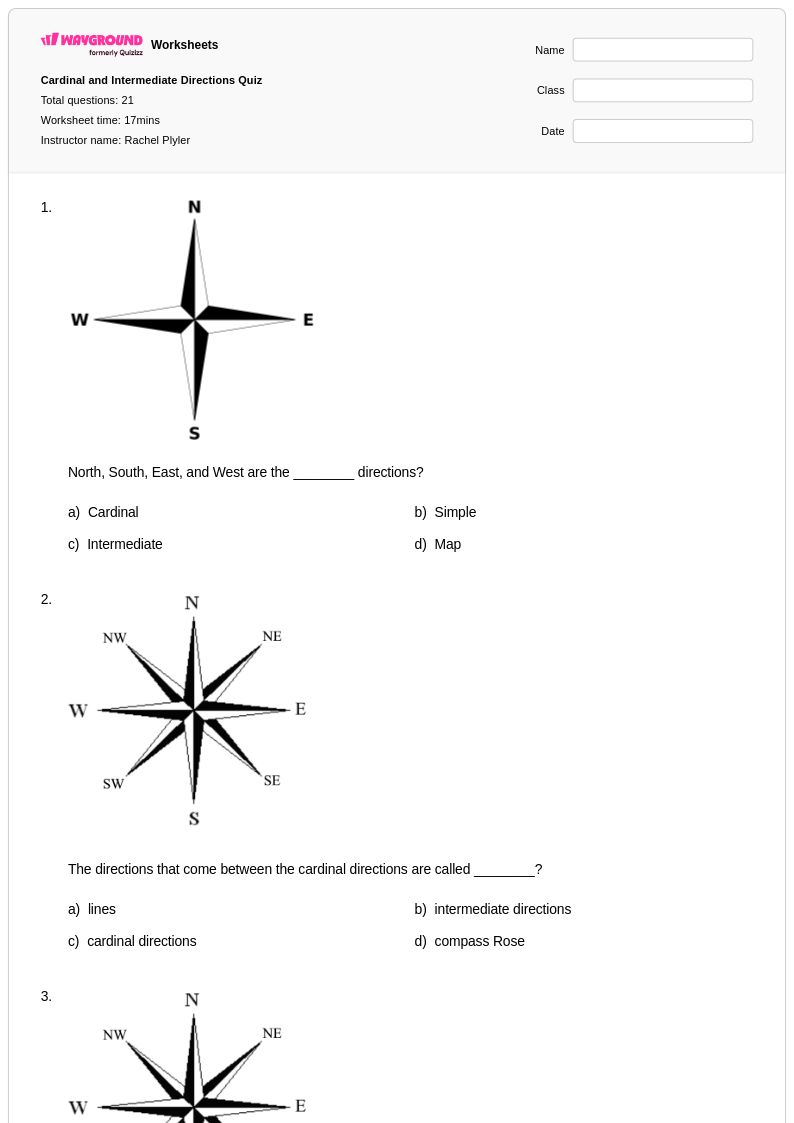
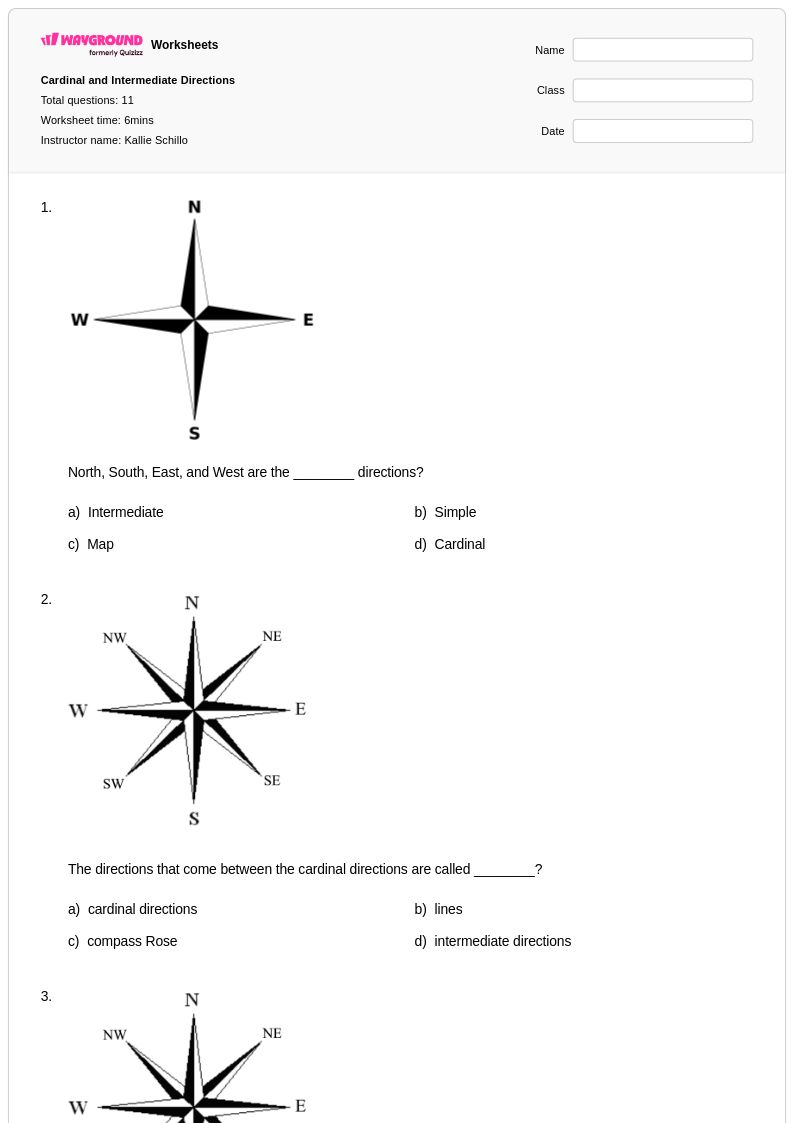
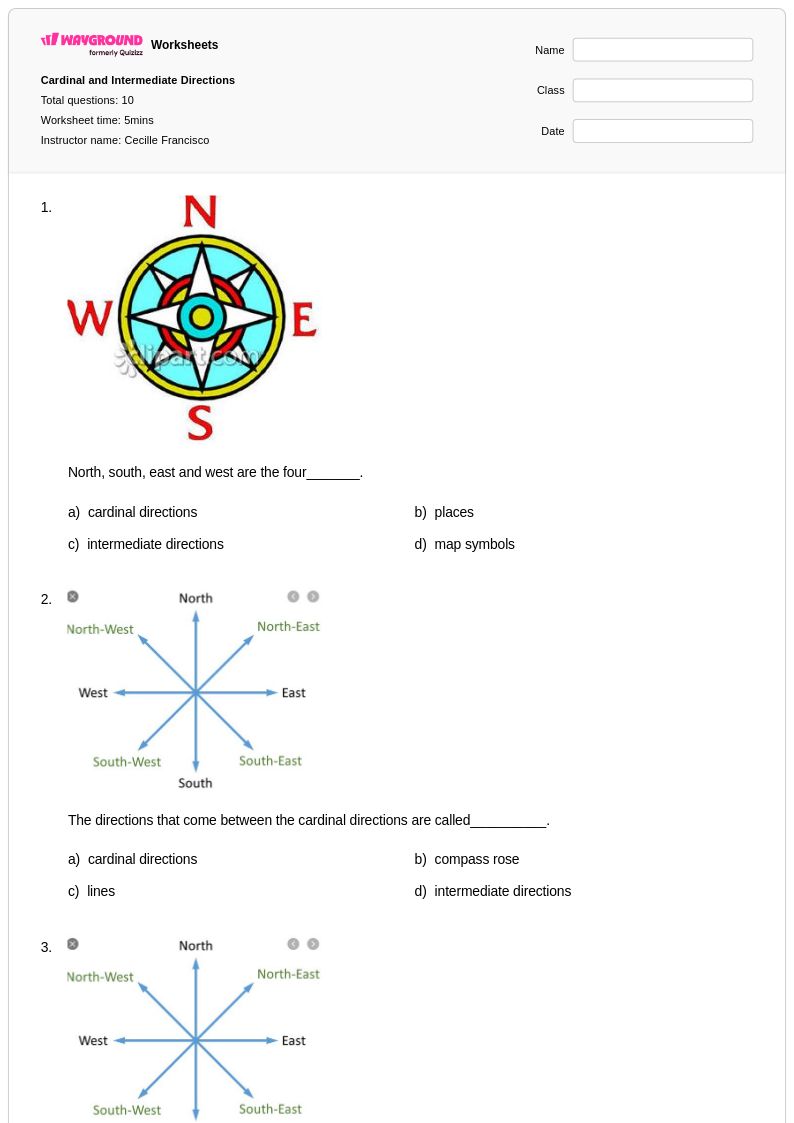
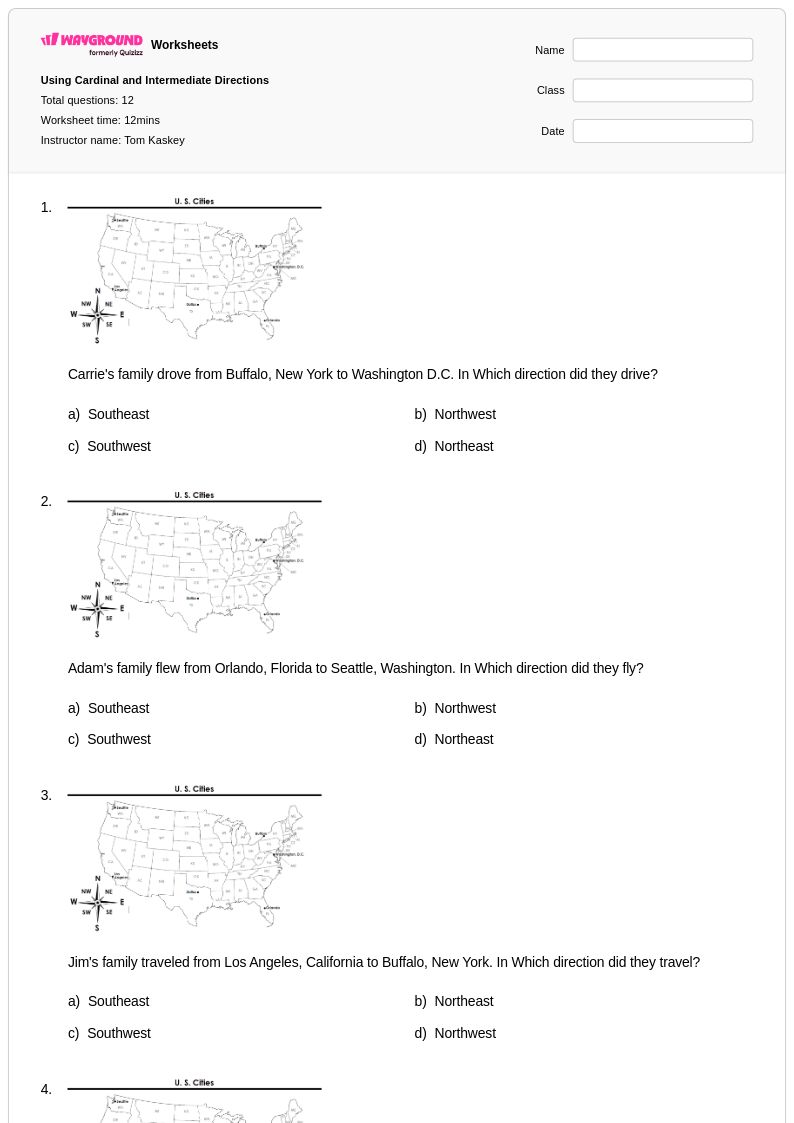
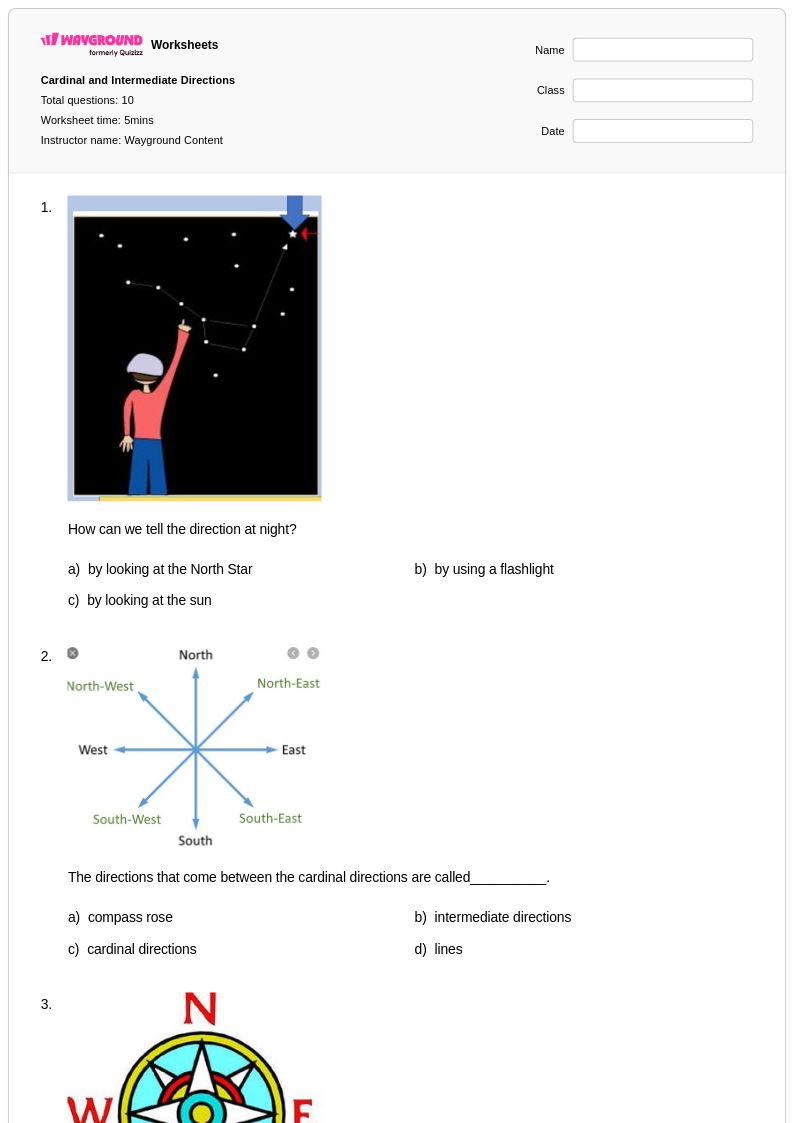
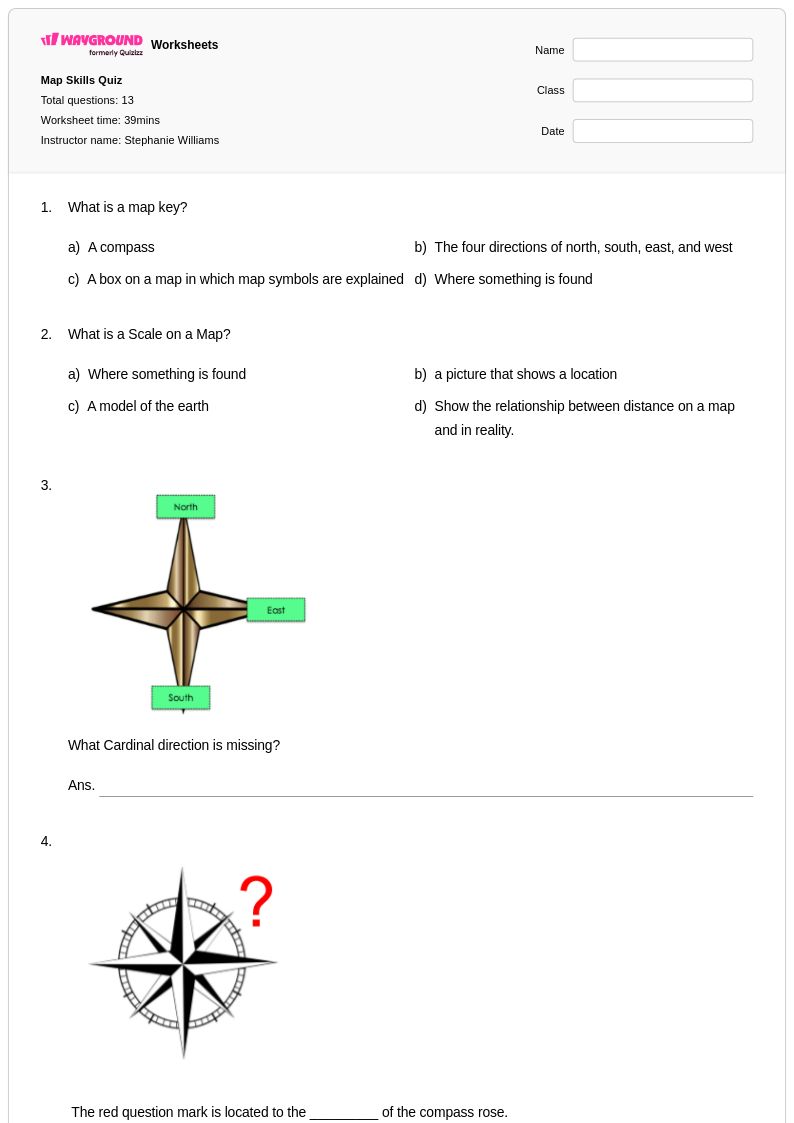
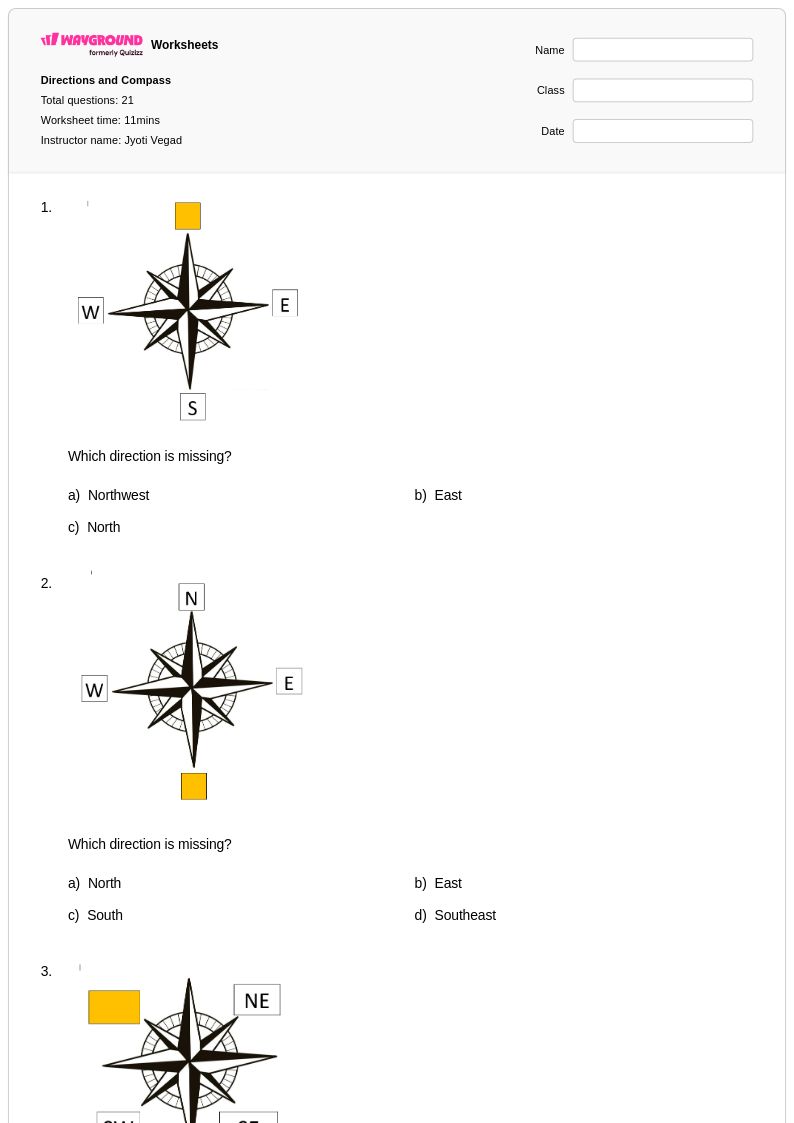
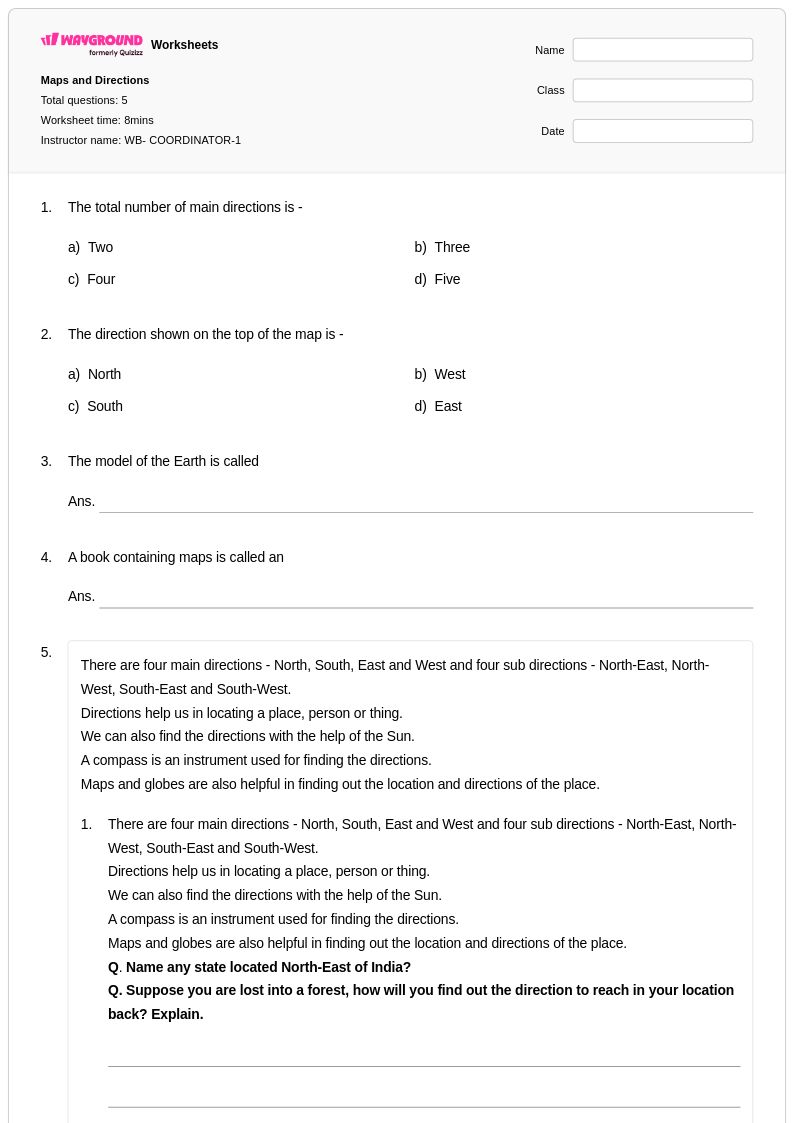
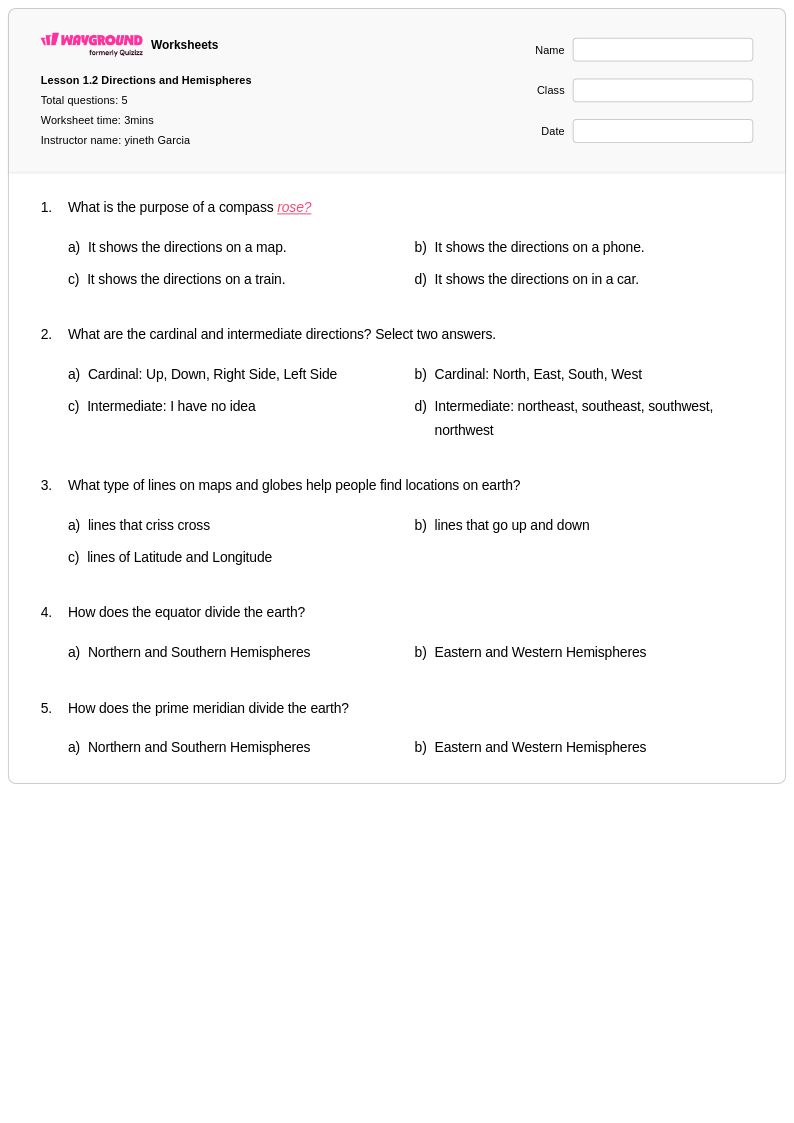
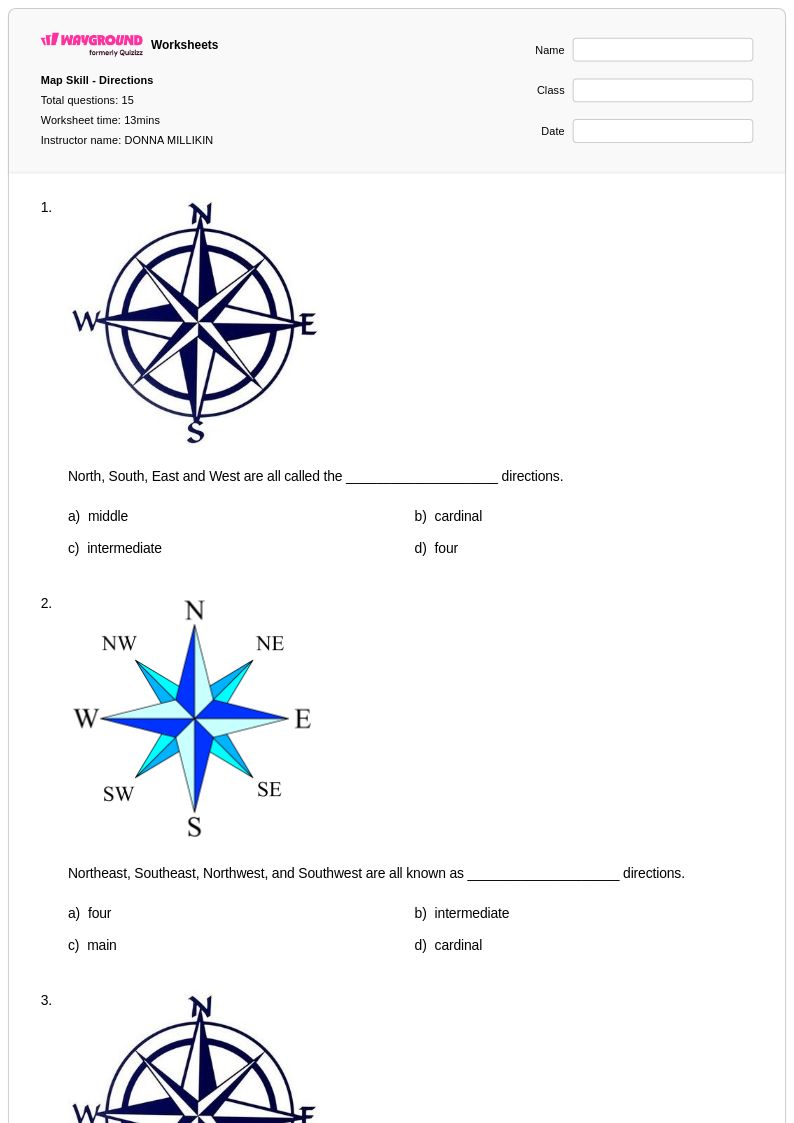
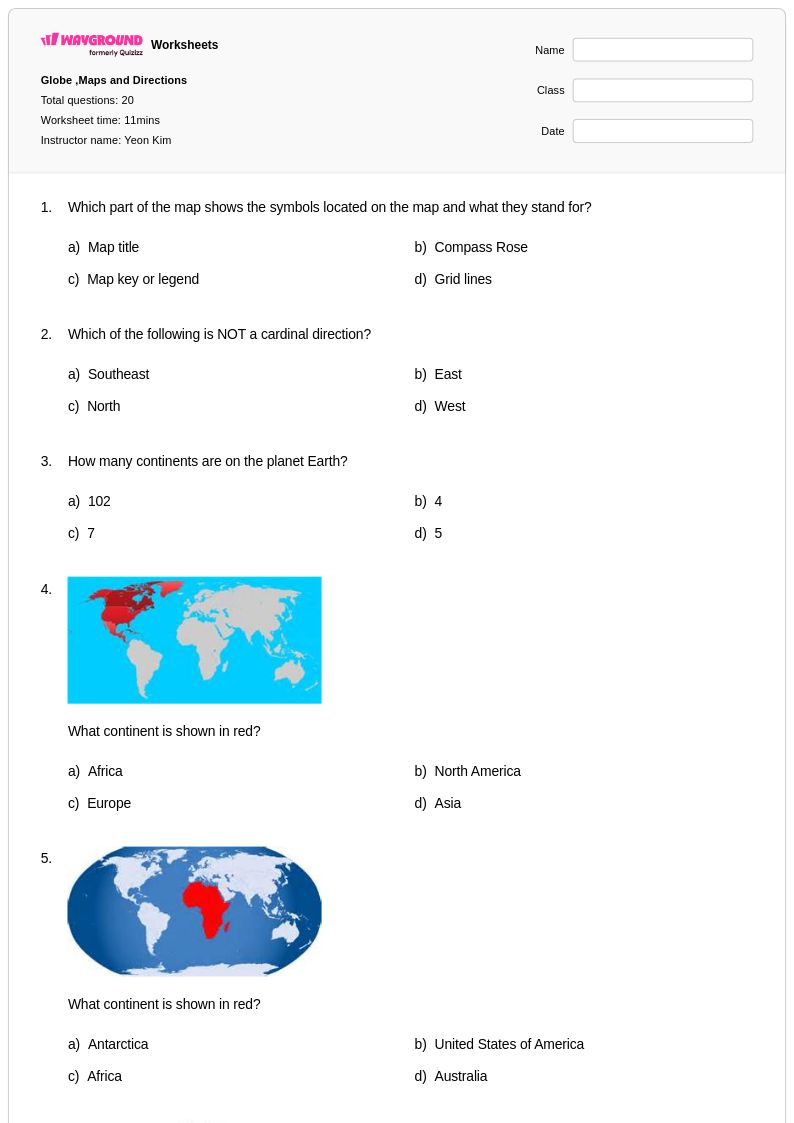
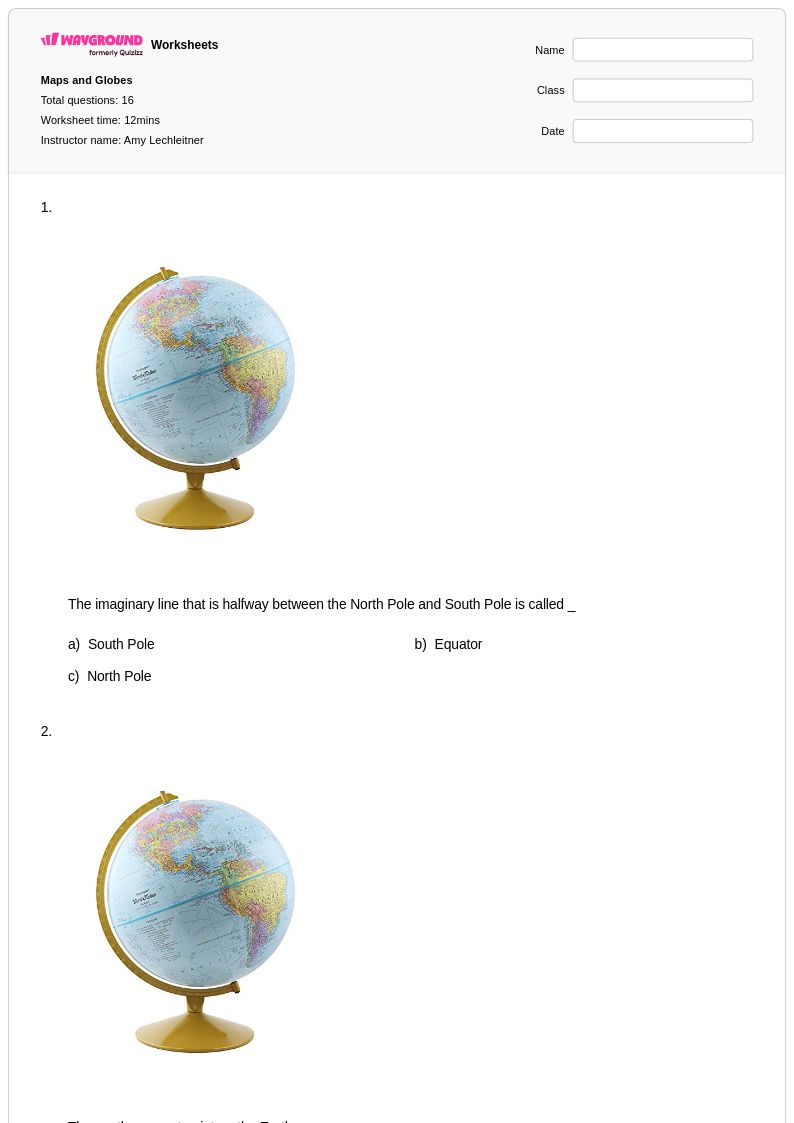
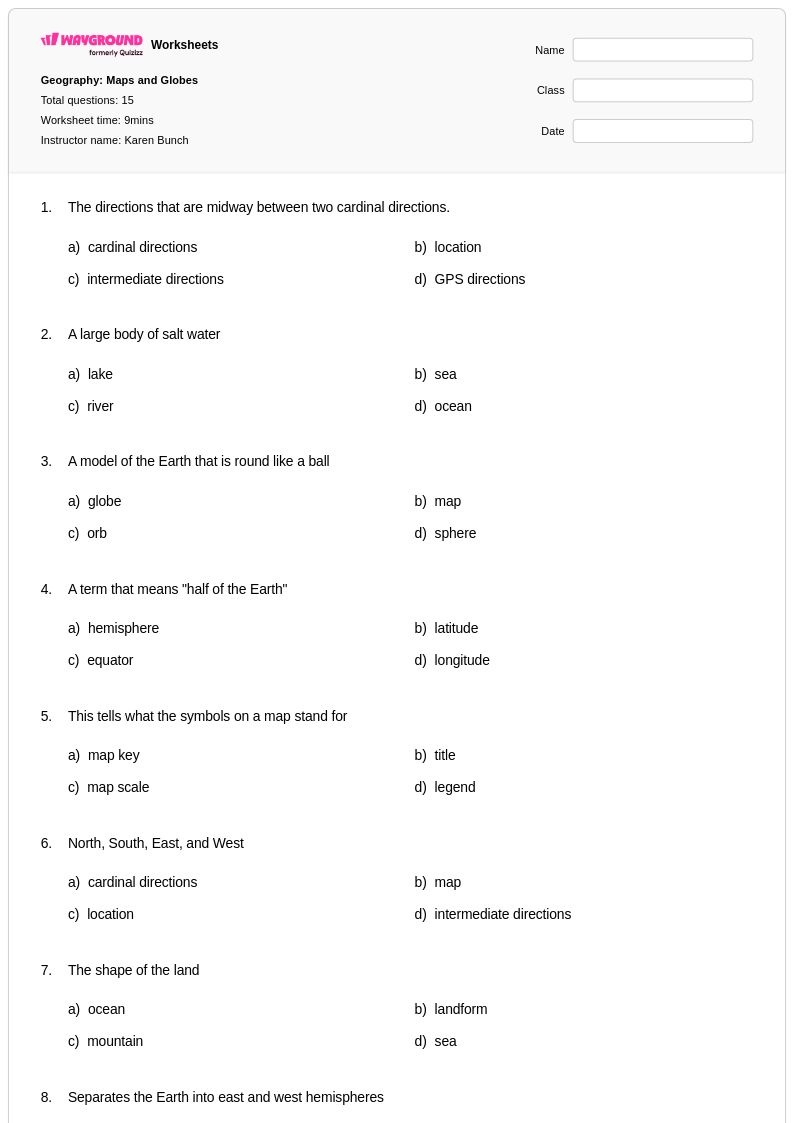
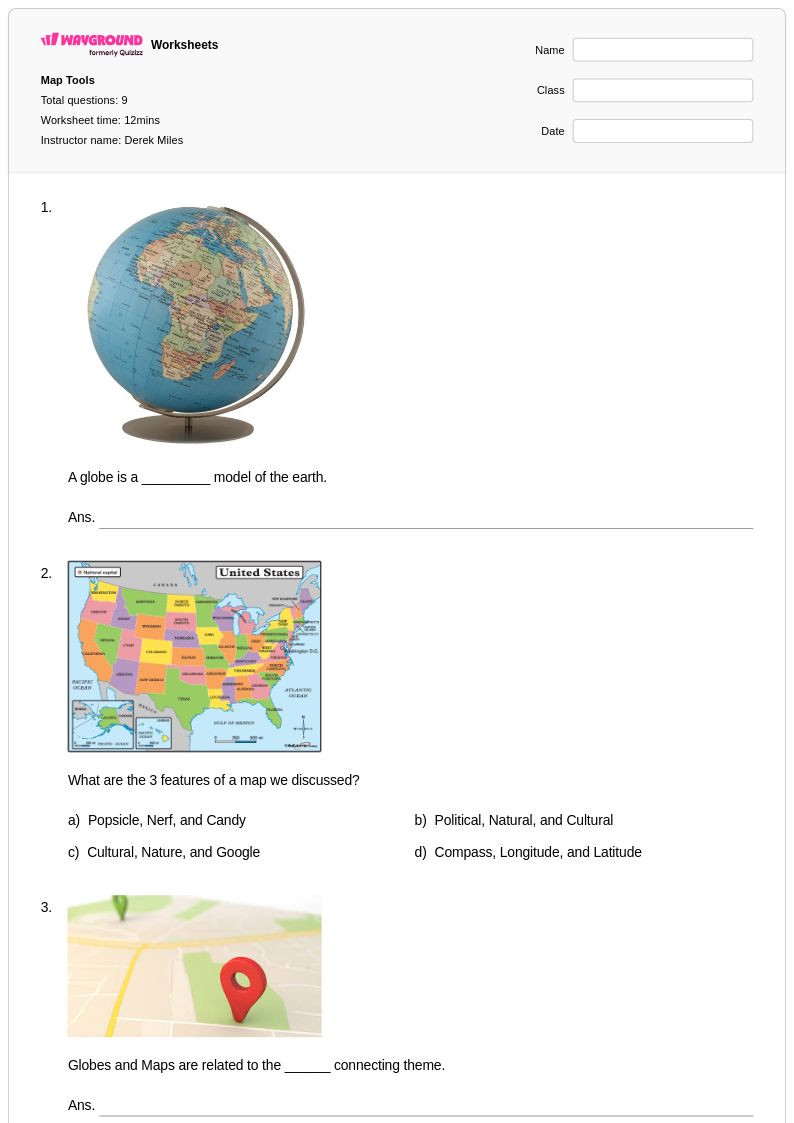
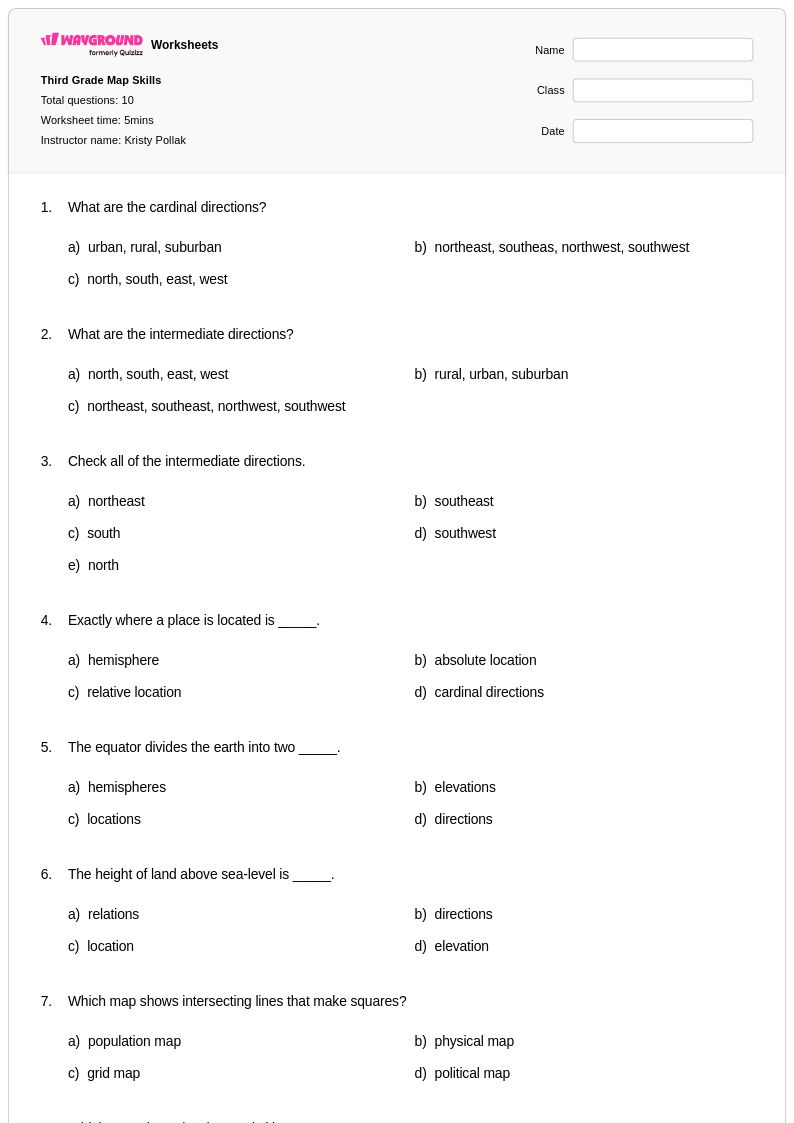
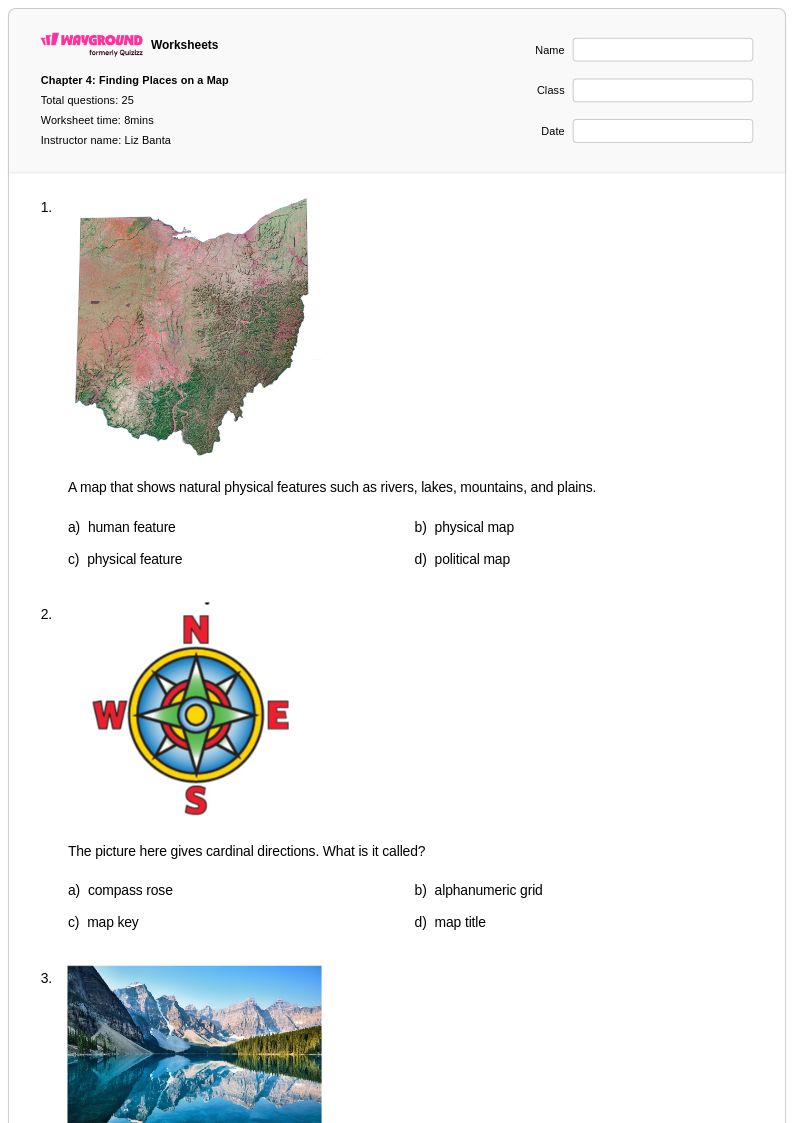
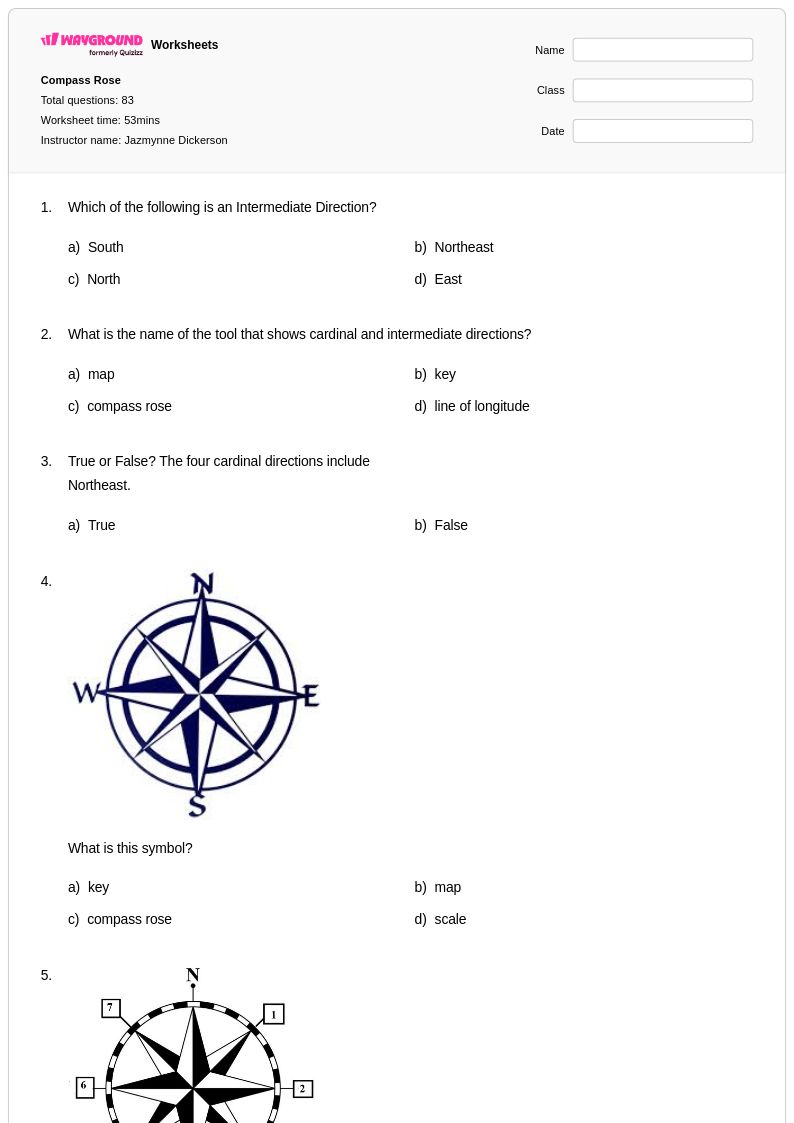
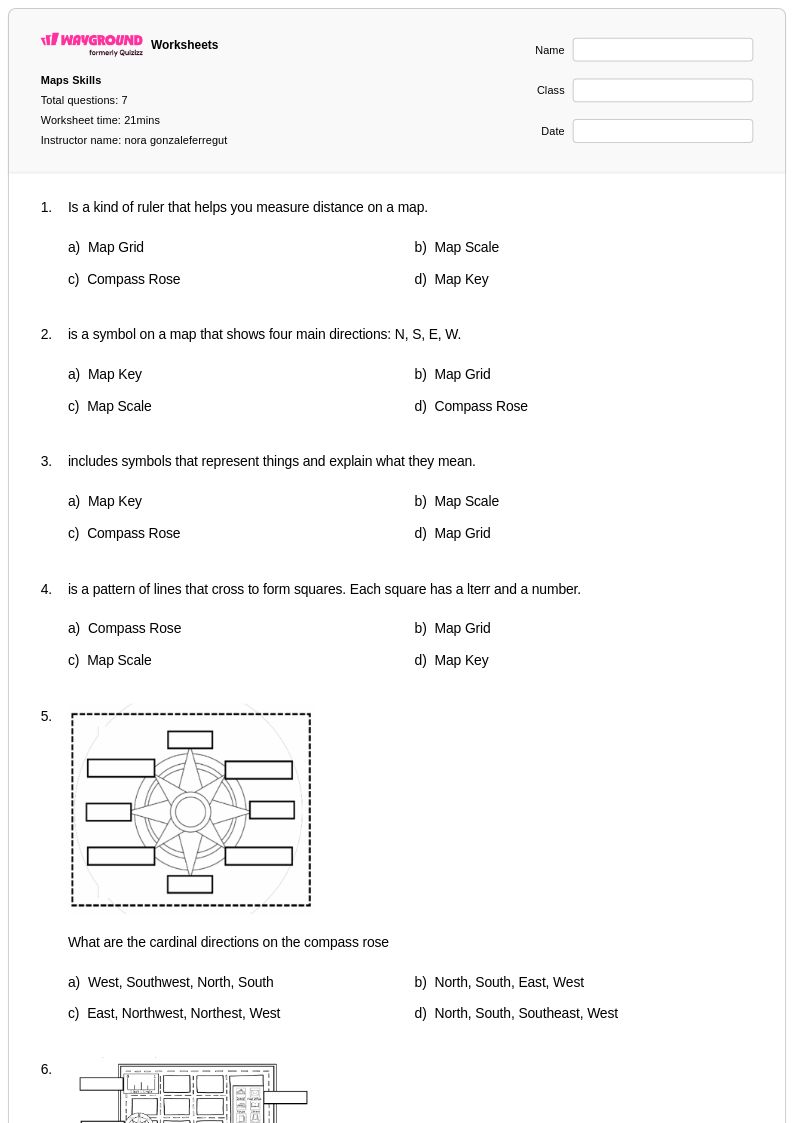
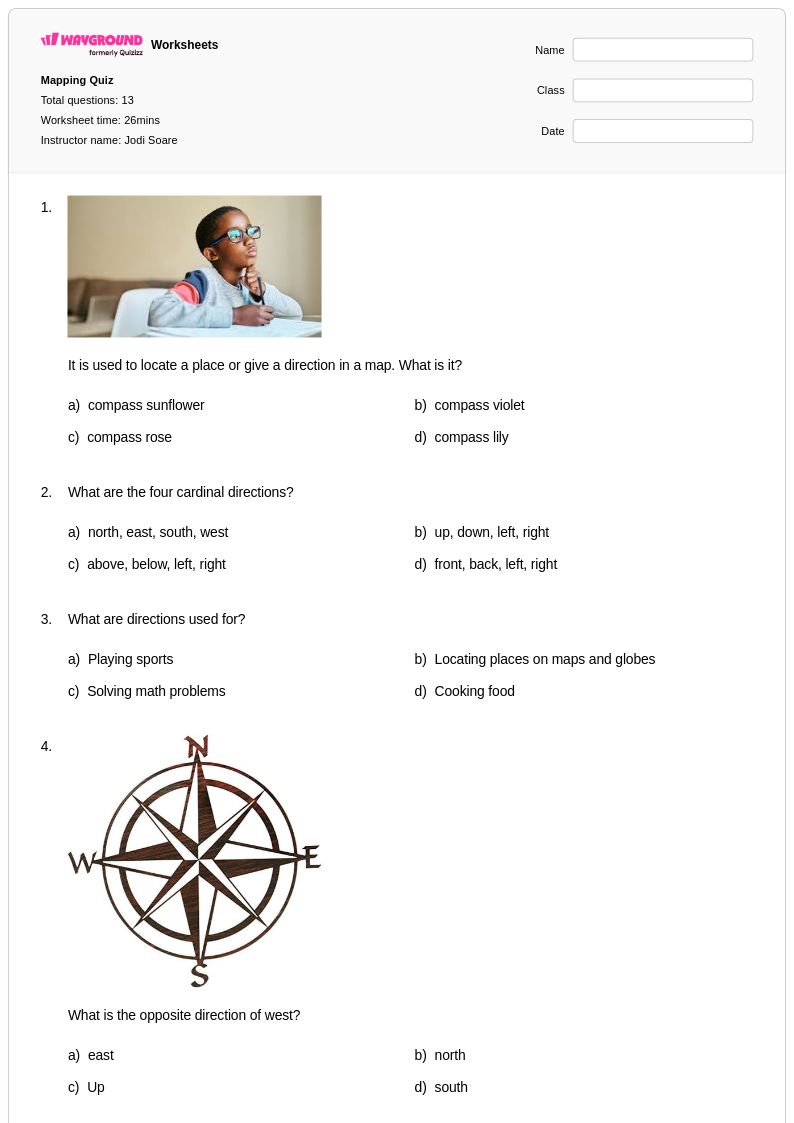
Cardinal and intermediate directions worksheets for Year 3 students available through Wayground (formerly Quizizz) provide essential foundational practice for developing spatial awareness and navigation skills. These comprehensive worksheets focus on helping young learners master the eight primary directional concepts: the four cardinal directions (north, south, east, west) and the four intermediate directions (northeast, northwest, southeast, southwest). Students engage with varied practice problems that strengthen their ability to identify directions on maps, use compass roses effectively, and apply directional vocabulary in real-world contexts. The collection includes both free printables and interactive activities, complete with detailed answer keys that support independent learning and enable teachers to provide immediate feedback on student progress.
Wayground (formerly Quizizz) empowers educators with millions of teacher-created resources specifically designed for Year 3 geography instruction, featuring robust search and filtering capabilities that make finding relevant cardinal and intermediate directions materials effortless. The platform's standards-aligned content ensures that worksheets meet curriculum requirements while offering differentiation tools that allow teachers to customize difficulty levels for diverse learning needs. Teachers benefit from flexible formats including printable pdf versions for traditional classroom use and digital interactive options for technology-integrated lessons. These comprehensive features streamline lesson planning while providing targeted resources for remediation, enrichment activities, and ongoing skill practice, enabling educators to address individual student needs and reinforce directional concepts through varied instructional approaches.
FAQs
How do I teach cardinal and intermediate directions to elementary students?
Start by anchoring cardinal directions (north, south, east, west) to physical reference points in the classroom or school building before introducing the four intermediate directions (northeast, northwest, southeast, southwest). A compass rose is an essential visual tool — have students label and draw one repeatedly so the eight directions become automatic. Once students are confident with naming directions, move to applied tasks like following directional paths on a grid map or identifying the direction between two labeled locations.
What exercises help students practice cardinal and intermediate directions?
Effective practice exercises include compass rose labeling, directional movement problems on grid maps, and location identification tasks where students must determine which direction one place is from another. Combining written exercises with physical movement activities — such as turning to face a named direction — reinforces spatial vocabulary kinesthetically. Worksheets that layer cardinal directions first and then introduce intermediate directions in a second phase help students build confidence incrementally rather than overwhelming them with all eight at once.
What mistakes do students commonly make when learning intermediate directions?
The most common error is reversing the order of words in intermediate directions — writing 'westnorth' instead of 'northwest', for example. Students also frequently confuse northeast and northwest, or southeast and southwest, because they haven't yet internalized the cardinal anchors well enough to derive the intermediates from them. A second common mistake is treating intermediate directions as their own separate concept rather than understanding that they describe the midpoint between two cardinal directions, which is why reinforcing compass rose structure before introducing intermediate terms is critical.
How do I use Wayground's cardinal and intermediate directions worksheets in my classroom?
Wayground's cardinal and intermediate directions worksheets are available as printable PDFs for traditional classroom use and in digital formats for technology-integrated learning environments, giving teachers flexibility depending on their setup. Teachers can also host the worksheets as a quiz directly on Wayground, which allows for immediate feedback and easy progress monitoring. For students who need additional support, Wayground's accommodation settings — including read aloud and reduced answer choices — can be applied to individual students without disrupting the rest of the class.
How do cardinal and intermediate directions fit into a geography curriculum?
Cardinal and intermediate directions are a foundational map-reading skill that underpins nearly every subsequent geography lesson involving maps, atlases, or spatial reasoning. Students who cannot reliably identify and apply the eight compass directions will struggle with tasks like reading political maps, interpreting weather maps, or following route directions. Introducing this skill early and revisiting it in the context of real maps — not just compass rose diagrams — ensures that directional literacy transfers to authentic geographic tasks.
How can I differentiate cardinal and intermediate directions instruction for students at different skill levels?
For students still mastering cardinal directions, limit initial practice to north, south, east, and west before introducing the four intermediate points. Advanced students can be challenged with multi-step directional movement problems or map tasks that require them to apply directions in unfamiliar contexts. On Wayground, teachers can apply accommodations such as reduced answer choices or extended time to individual students, ensuring that struggling learners receive targeted support while the rest of the class works through standard exercises.