
Recommended Topics for you
- American Revolution
- Ancient China
- Ancient Civilizations
- Ancient Egypt
- Ancient World History
- Aztec Civilization
- Biography of Helen Keller
- Early Mesopotamia
- Historical Eras
- Historical Thinking
- Historical Timelines
- Inca Civilization
- Independence Day
- Maya Civilization
- Medieval Japan
- Millennium
- Notable Historical Figures
- Origins of Buddhism
- Origins of Hinduism
- Origins of Islam
- Origins of Judaism
- Primary and Secondary Sources
- Primary Sources
- Reading a Timeline
- Rosa Parks and Civil Rights
- Silk Road
- Teachings Confucius
- The Ghana Empire
- The Han Dynasty
- The Indus Civilization
- The Mali Empire
- The Mauryan Empire
- The Mongol Empire
- The Roman Republic
- The Songhai Empire
- Titanic
- U.S. History
12 Q
3rd
16 Q
3rd
17 Q
3rd
10 Q
3rd
12 Q
3rd
14 Q
3rd
10 Q
3rd - 5th
21 Q
3rd
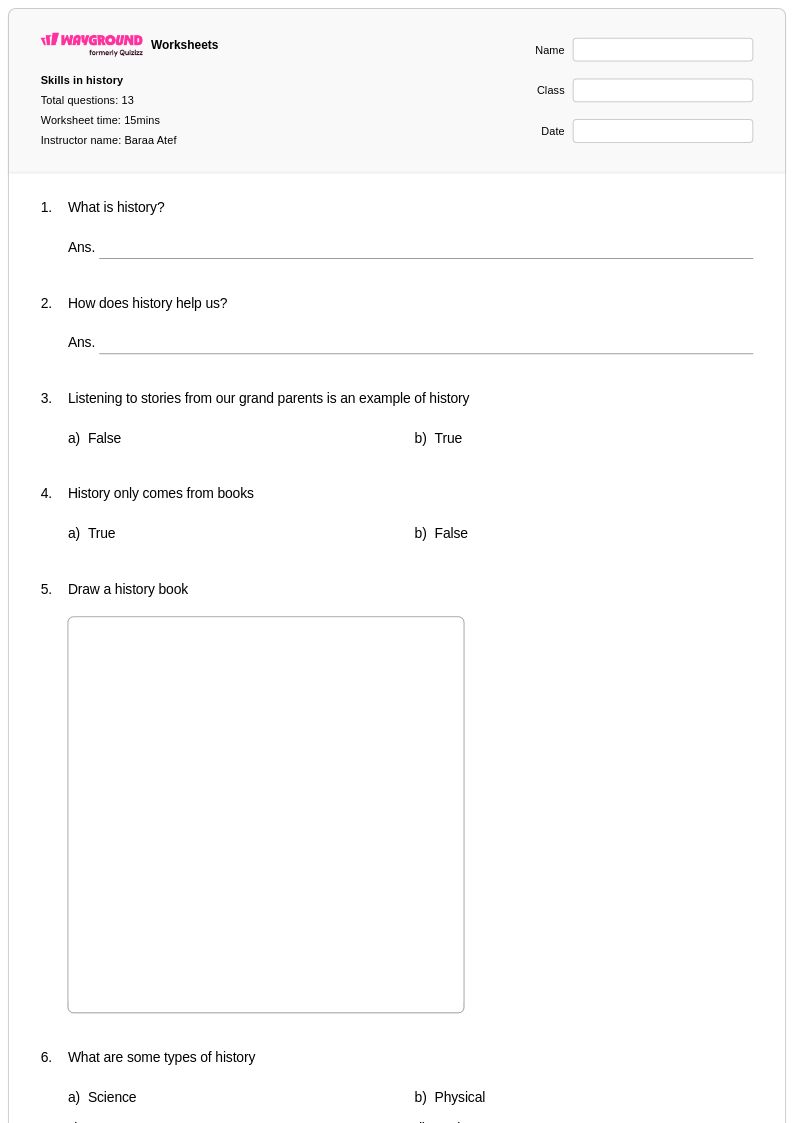
13 Q
3rd - 4th
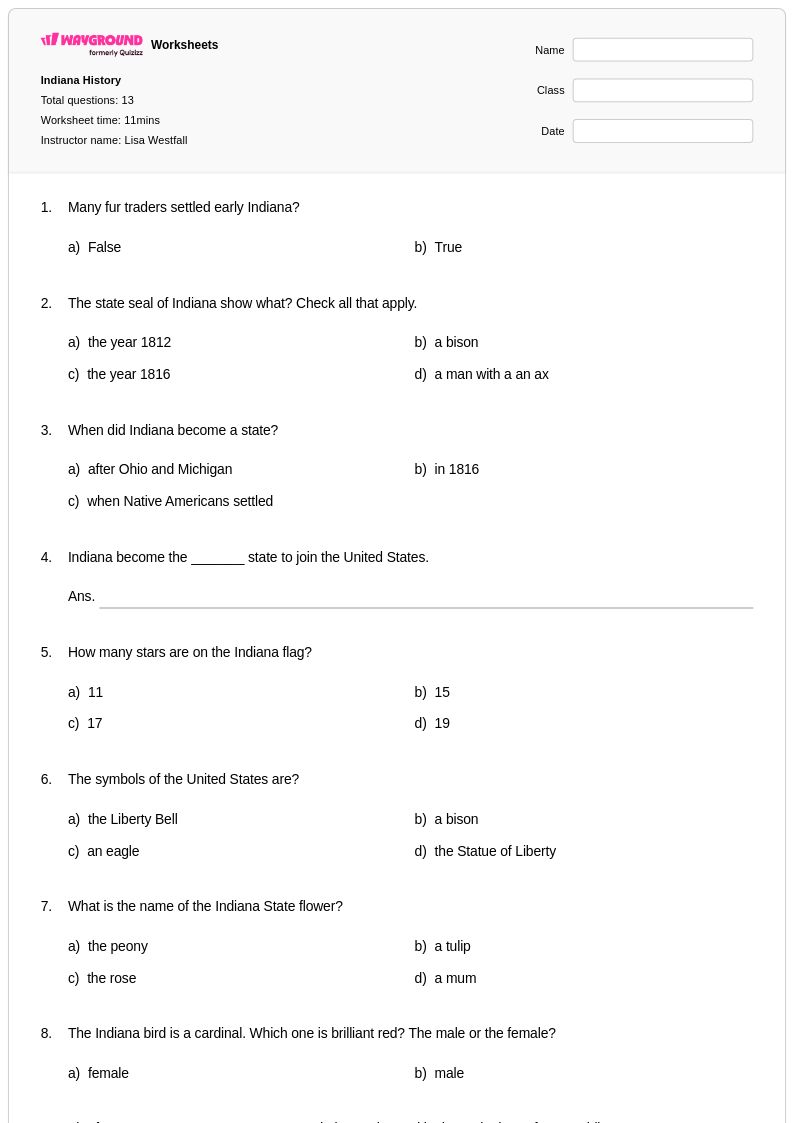
13 Q
3rd - 4th
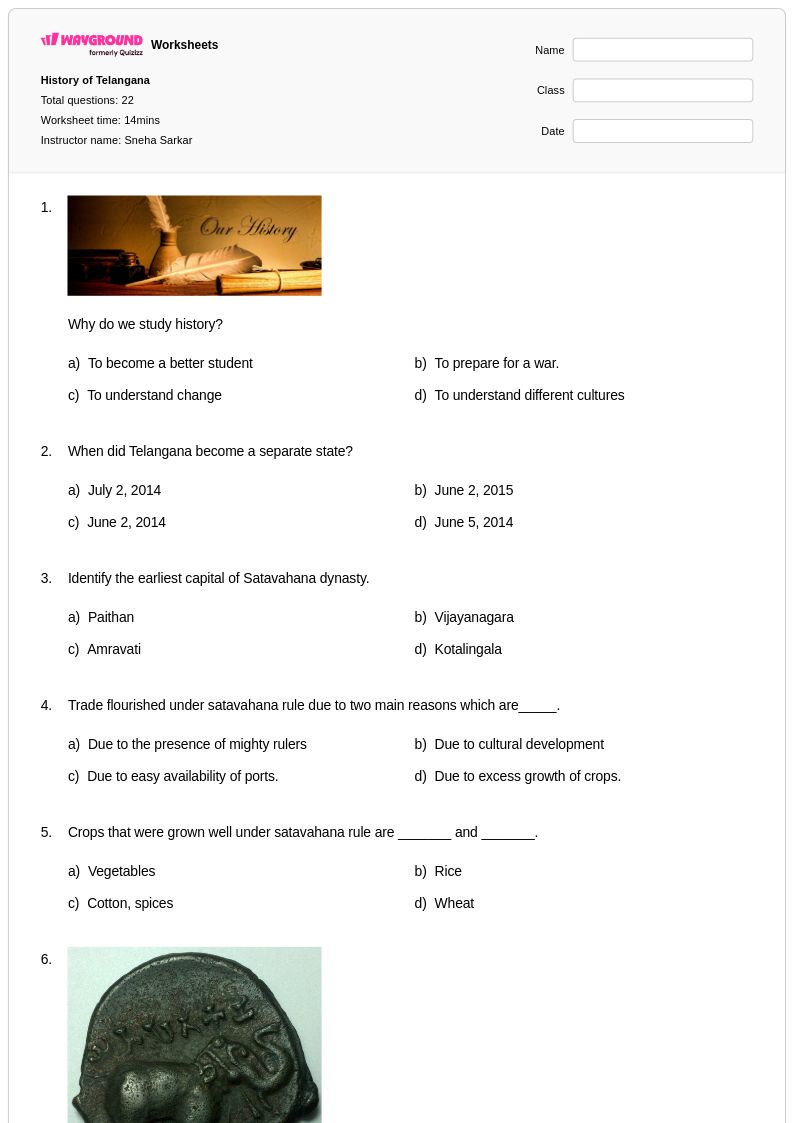
22 Q
3rd
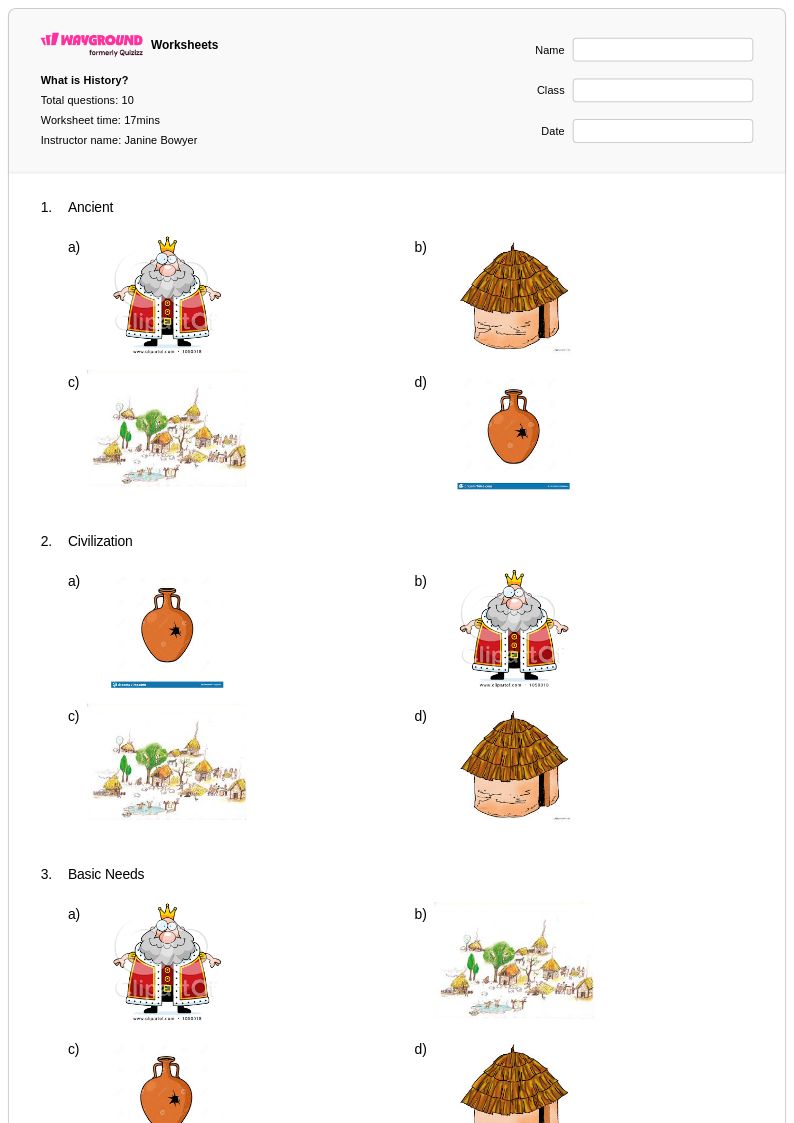
10 Q
3rd
20 Q
3rd
10 Q
3rd - 5th
10 Q
3rd - 5th
14 Q
3rd
20 Q
3rd
6 Q
3rd
17 Q
3rd
10 Q
3rd - 5th
17 Q
3rd
17 Q
3rd - 5th
18 Q
3rd
Explore History Worksheets by Grades
Explore History Worksheets for year 3 by Topic
- American Revolution
- Ancient China
- Ancient Civilizations
- Ancient Egypt
- Ancient World History
- Aztec Civilization
- Biography of Helen Keller
- Early Mesopotamia
- Historical Eras
- Historical Thinking
- Historical Timelines
- Inca Civilization
- Independence Day
- Maya Civilization
- Medieval Japan
- Millennium
- Notable Historical Figures
- Origins of Buddhism
- Origins of Hinduism
- Origins of Islam
Explore Other Subject Worksheets for year 3
Explore printable History worksheets for Year 3
Year 3 history worksheets available through Wayground (formerly Quizizz) provide young learners with engaging opportunities to explore foundational historical concepts and develop critical thinking skills about the past. These comprehensive worksheets cover essential topics such as community helpers throughout history, significant historical figures, basic timelines, and the evolution of daily life from past to present. Each worksheet is designed to strengthen students' ability to sequence events, compare and contrast different time periods, and understand cause-and-effect relationships in historical contexts. Teachers can access complete resources including detailed answer keys, ready-to-print pdf formats, and free printables that feature age-appropriate practice problems encouraging students to analyze primary sources, interpret historical images, and make connections between past and present experiences.
Wayground (formerly Quizizz) empowers educators with an extensive collection of teacher-created history resources, drawing from millions of high-quality materials specifically designed for elementary social studies instruction. The platform's robust search and filtering capabilities enable teachers to quickly locate worksheets aligned with state and national social studies standards, while built-in differentiation tools allow for seamless customization based on individual student needs and learning objectives. These flexible resources are available in both printable and digital formats, including downloadable pdf versions, making them ideal for classroom instruction, homework assignments, remediation sessions, and enrichment activities. Teachers can efficiently plan comprehensive history lessons that accommodate diverse learning styles, provide targeted skill practice for struggling students, and offer advanced challenges for students ready to explore historical concepts in greater depth.
FAQs
How do I teach historical thinking skills to middle and high school students?
What exercises help students practice reading and interpreting historical timelines?
What are the most common mistakes students make when analyzing primary sources?
How can I help students understand the difference between primary and secondary sources?
How do I differentiate history instruction for students with varying reading levels?
How do I use Wayground's history worksheets in my classroom?
What history topics are covered in Wayground's worksheet collection?