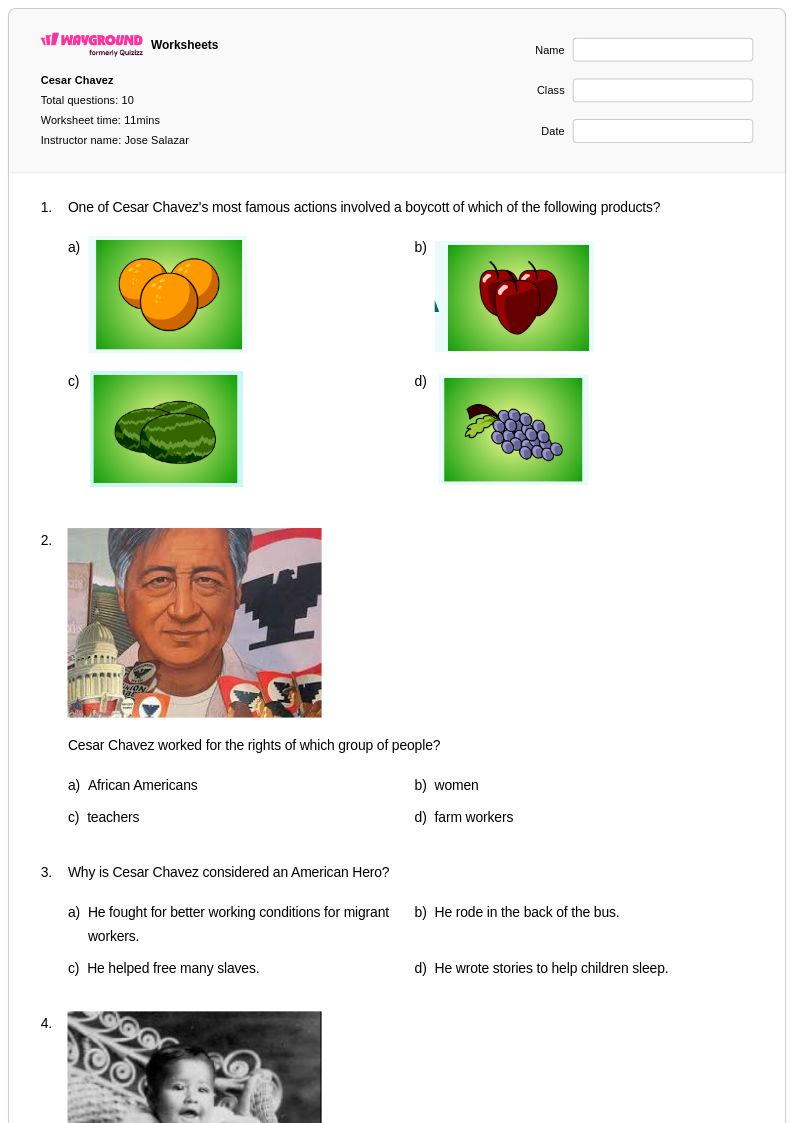
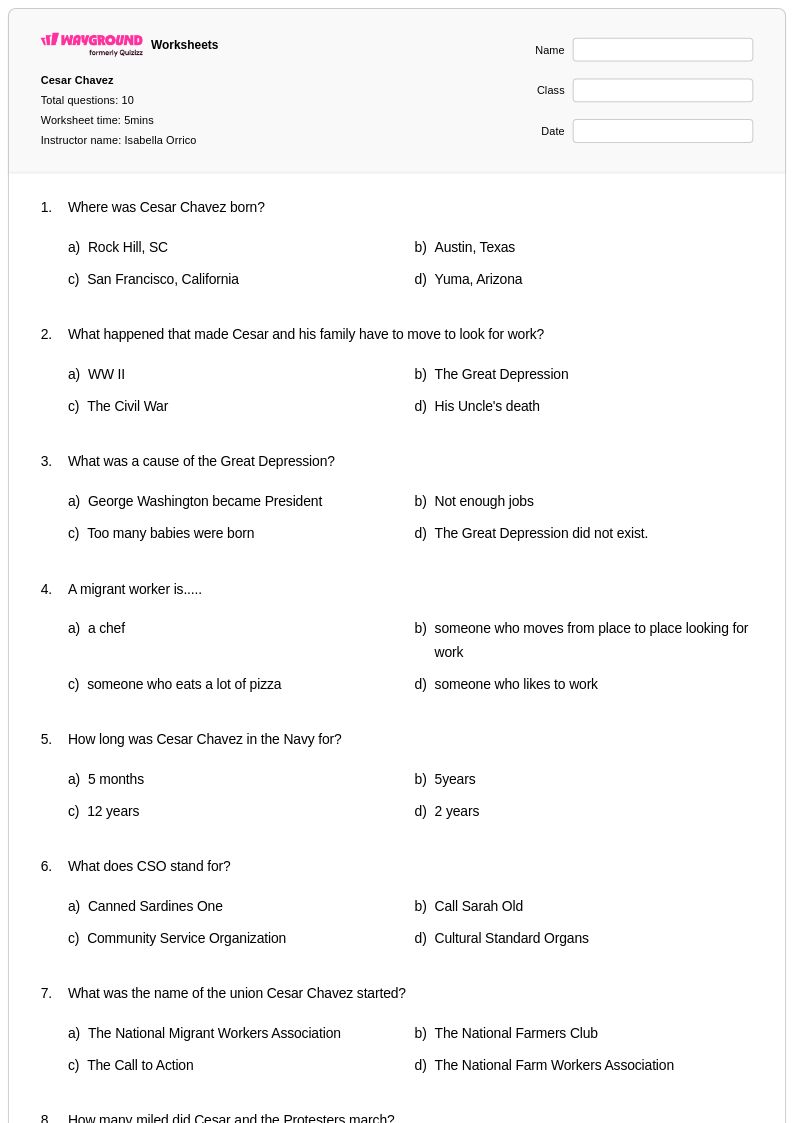
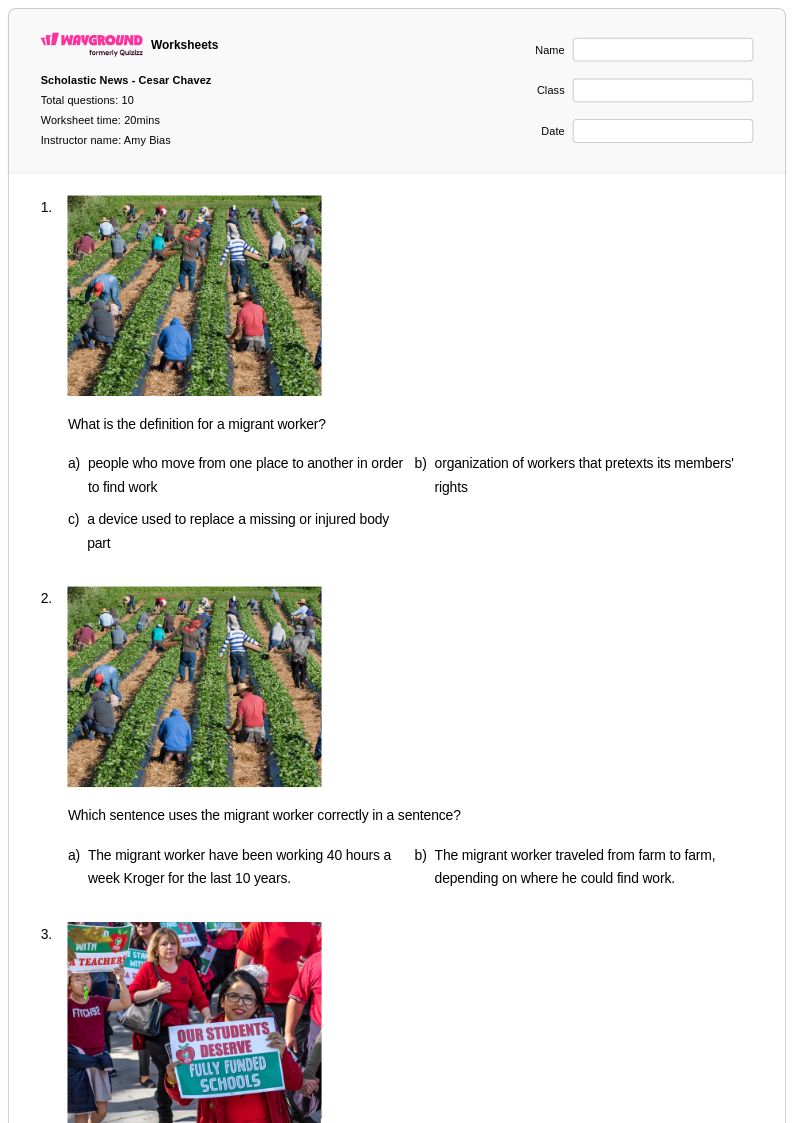
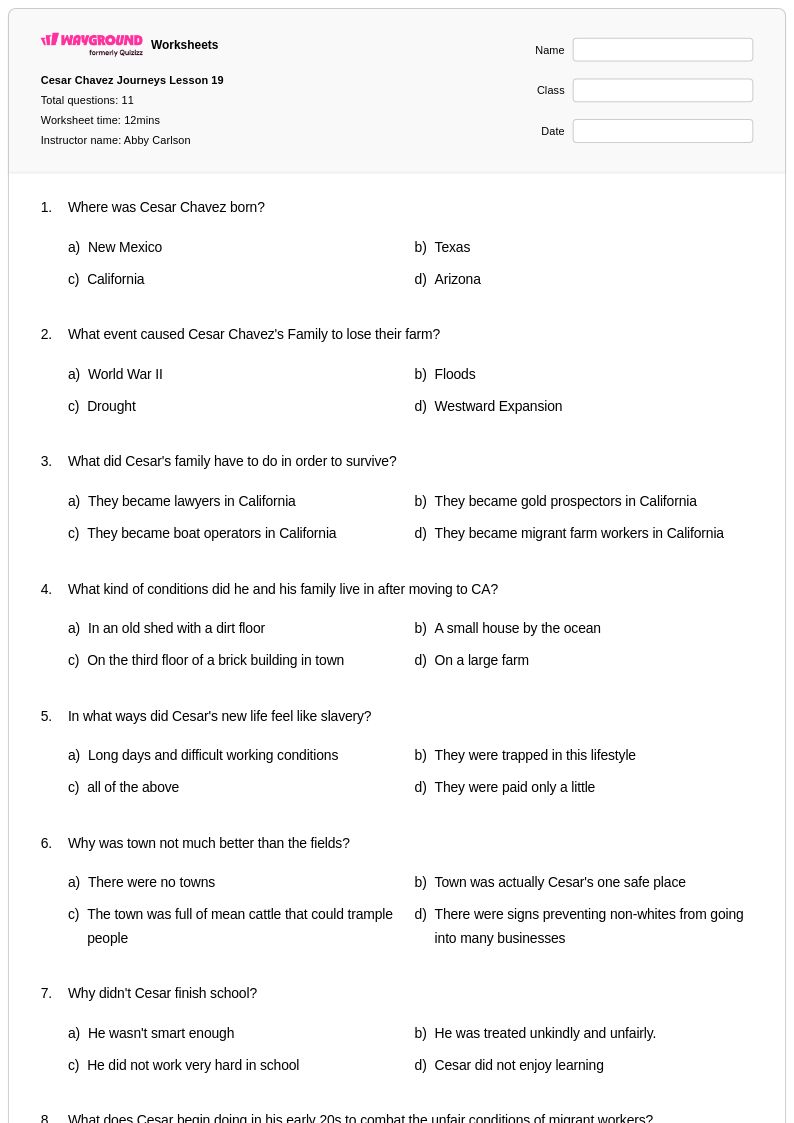
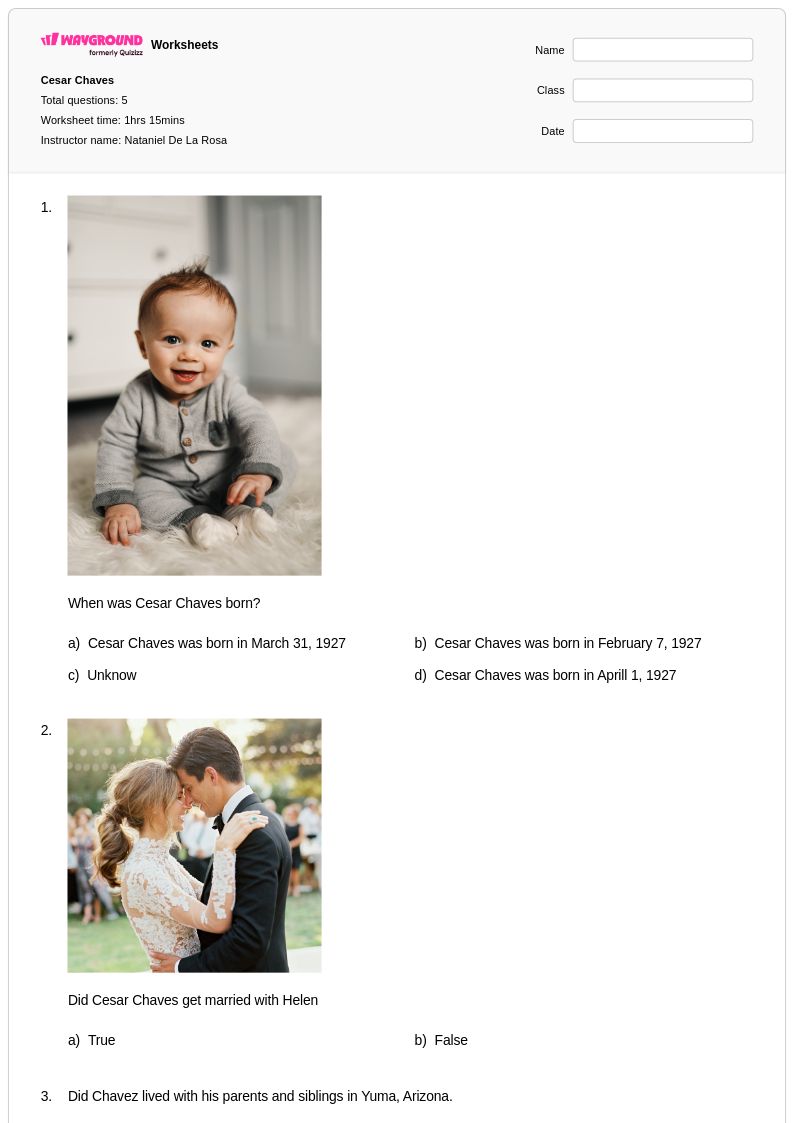
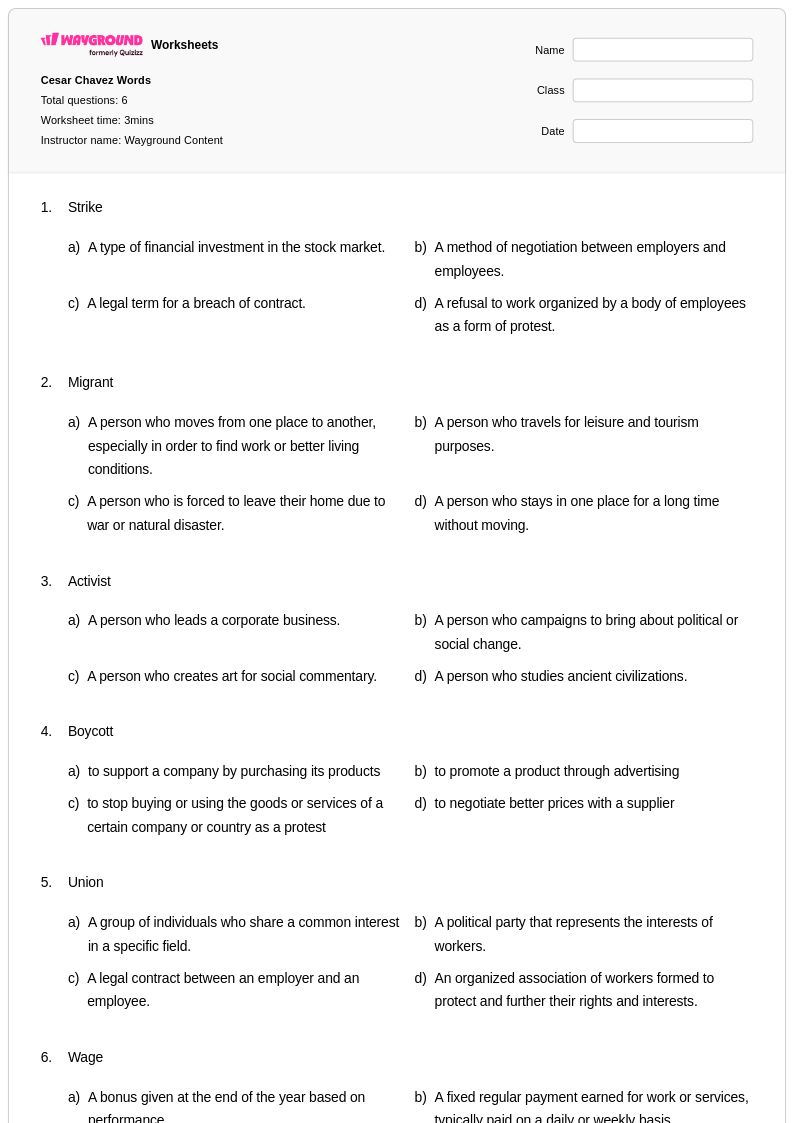
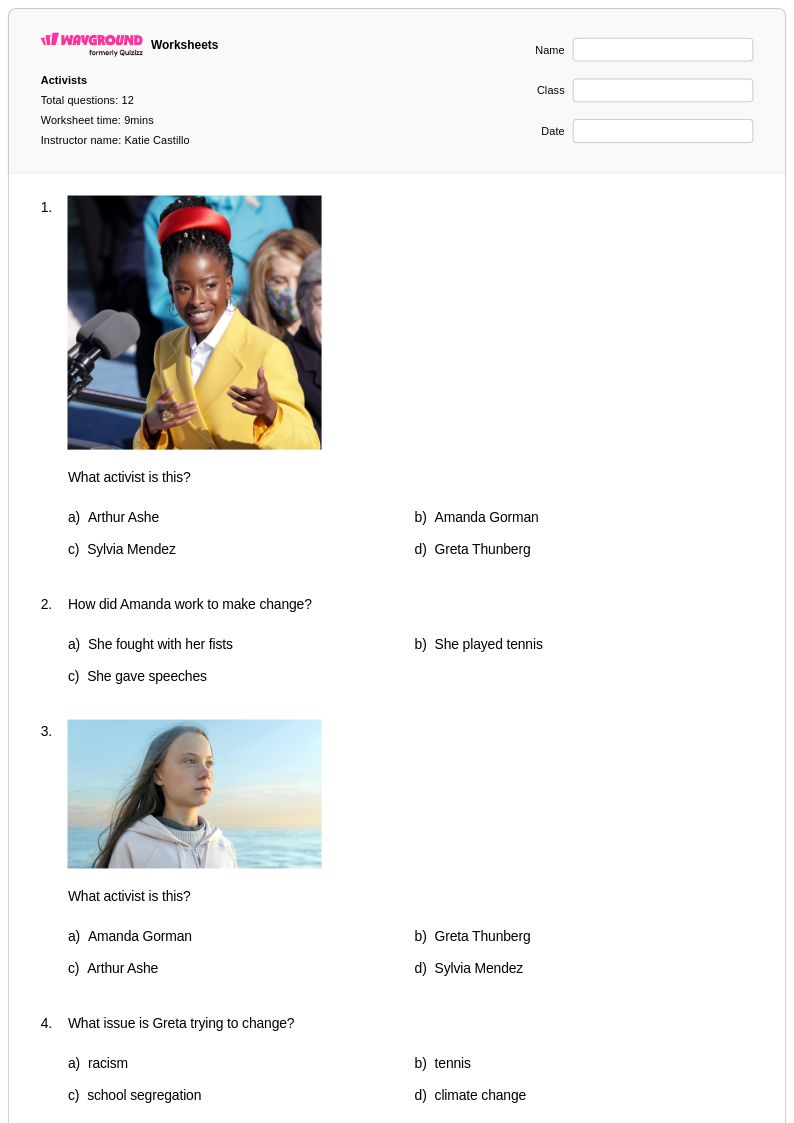
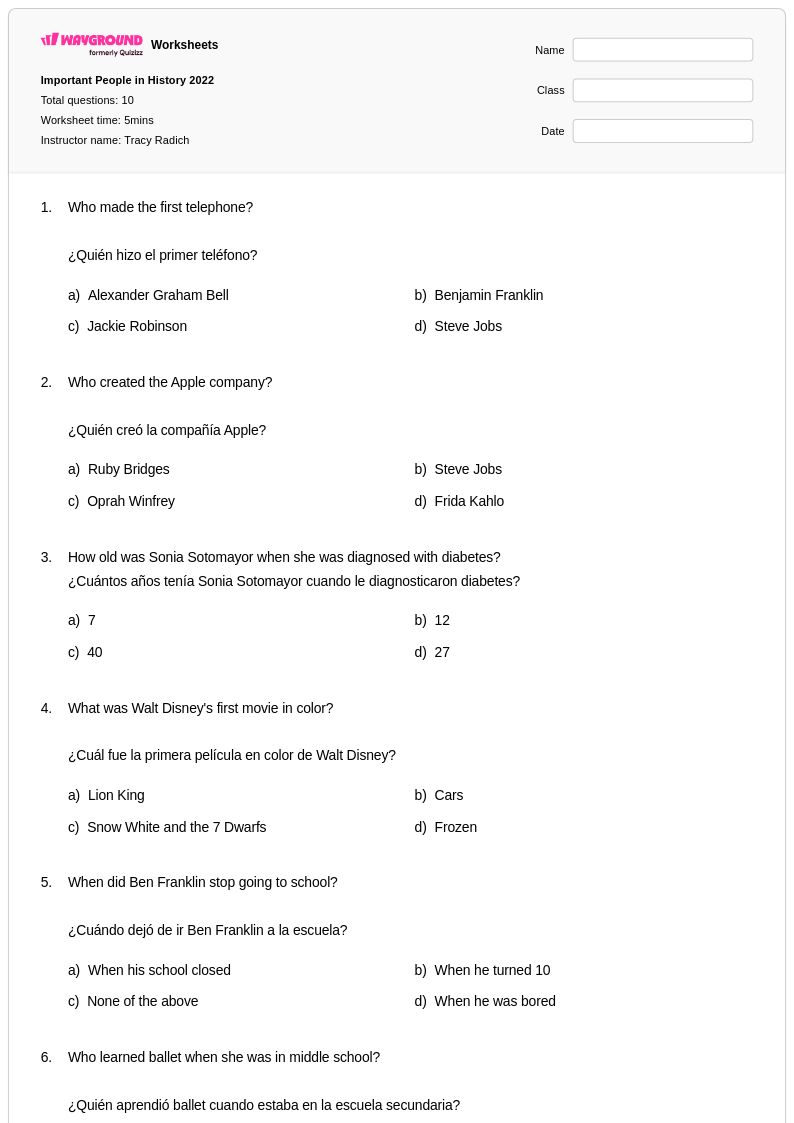
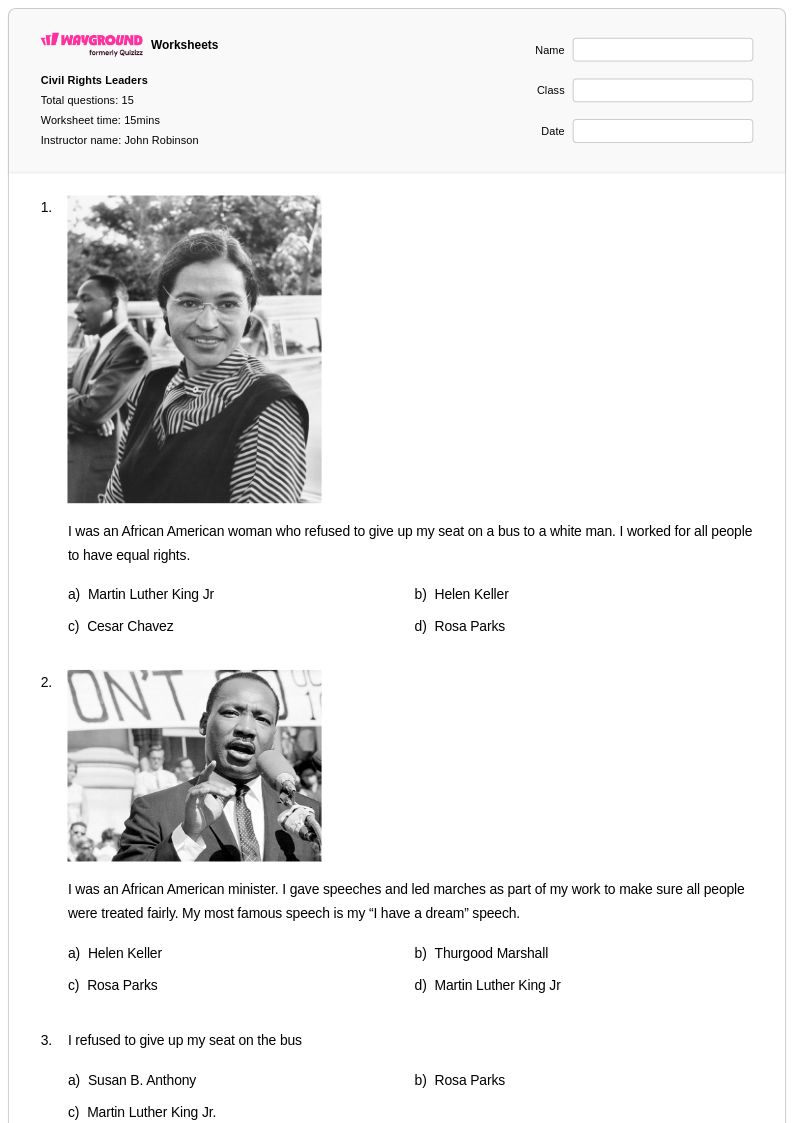
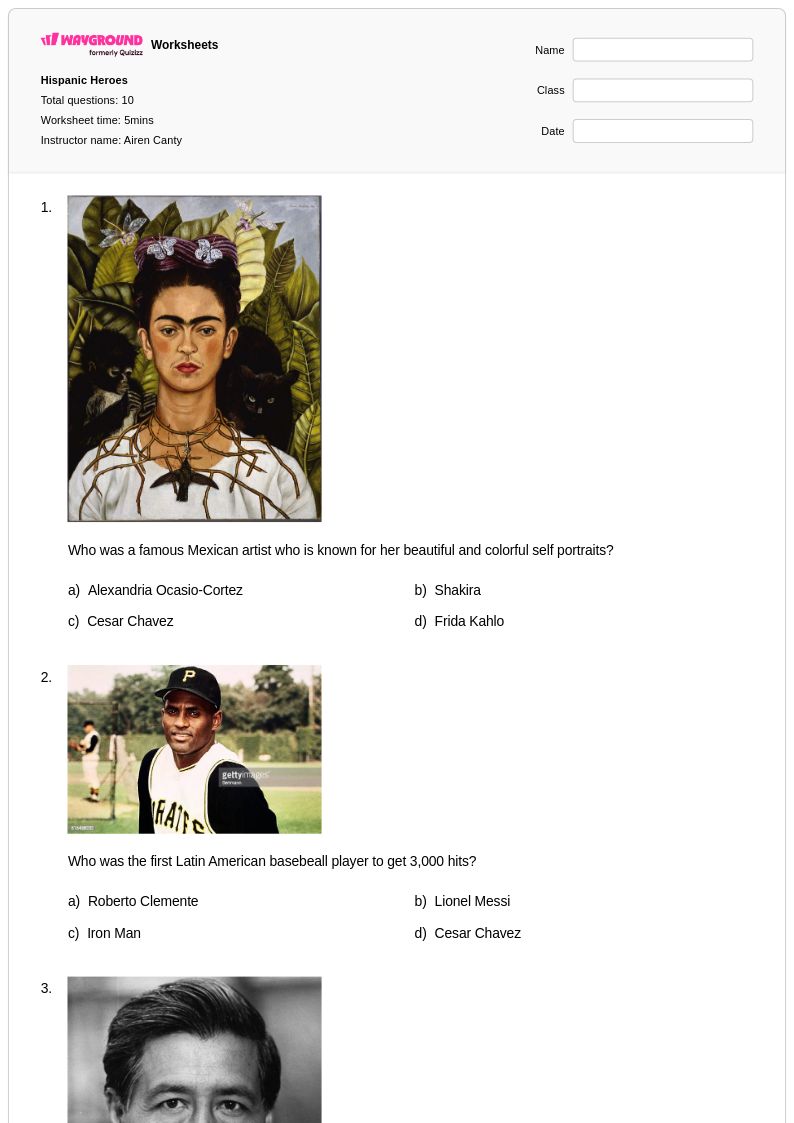
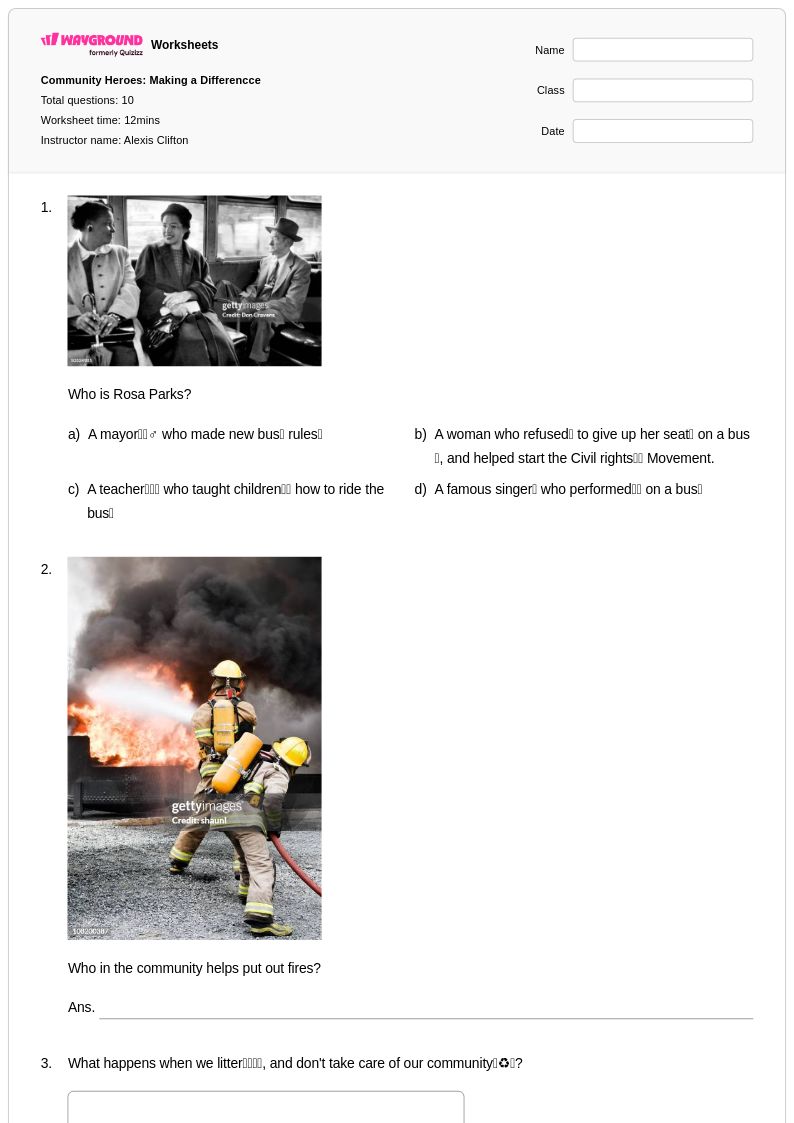
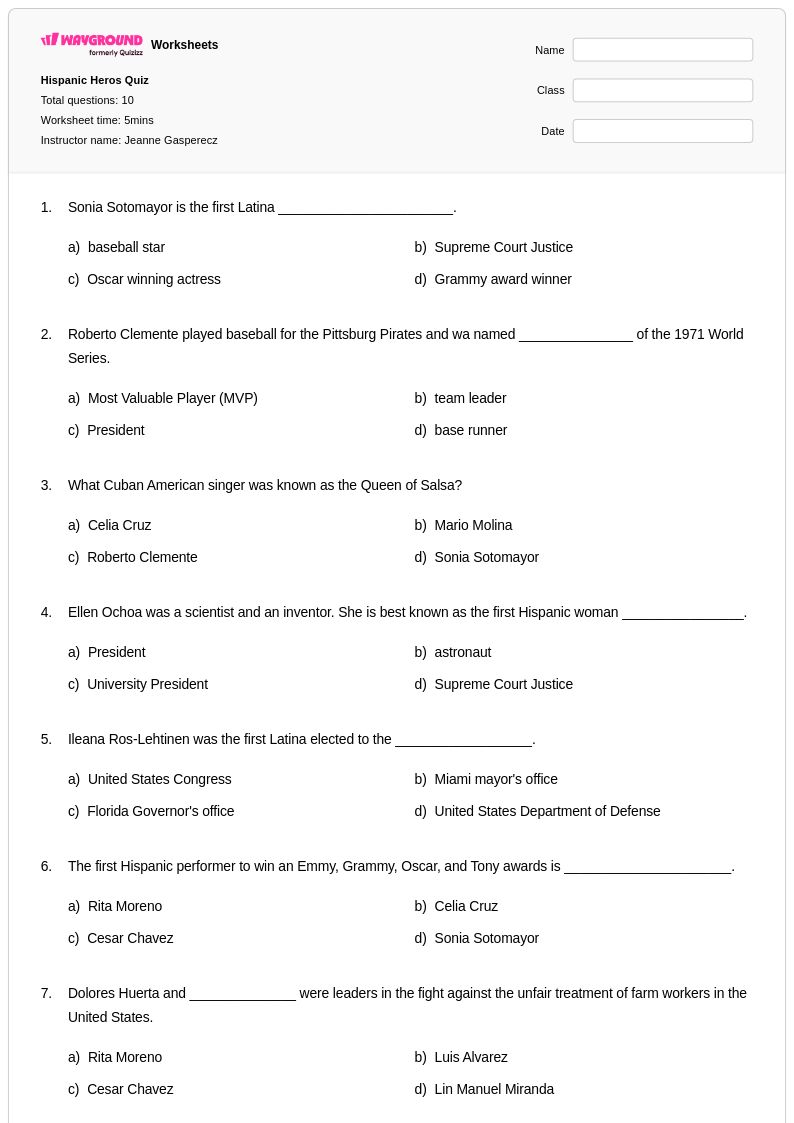
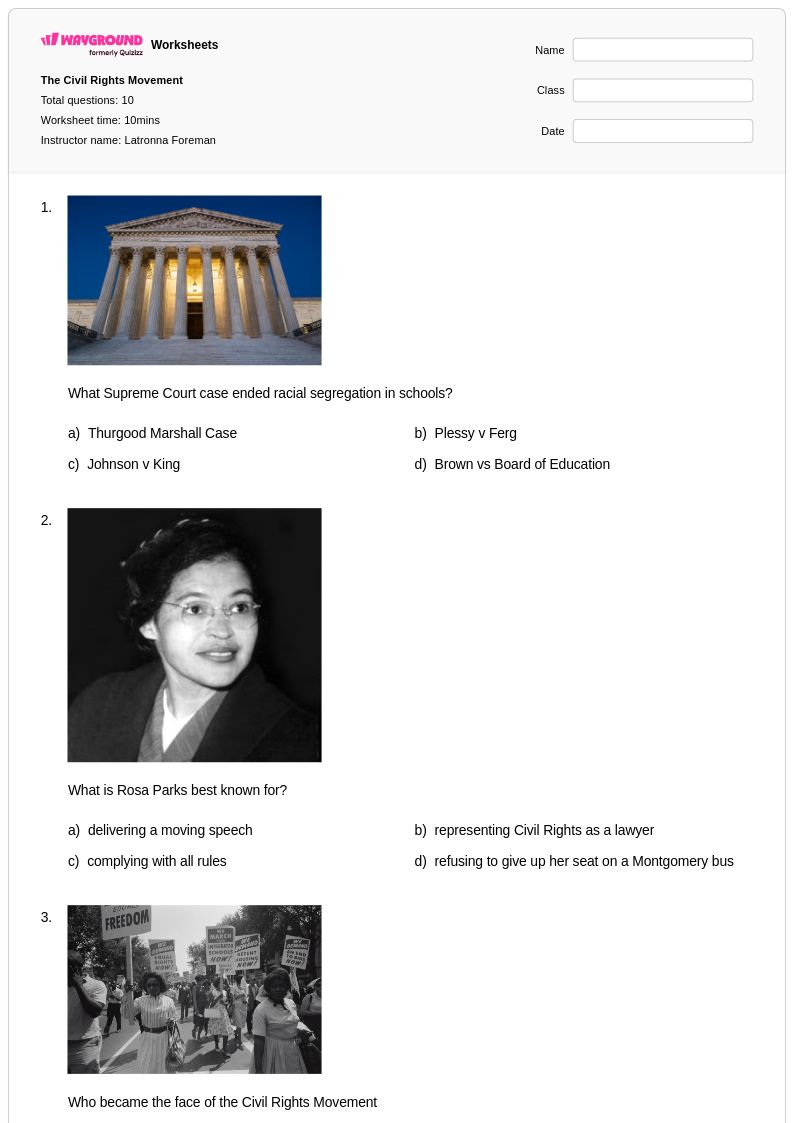
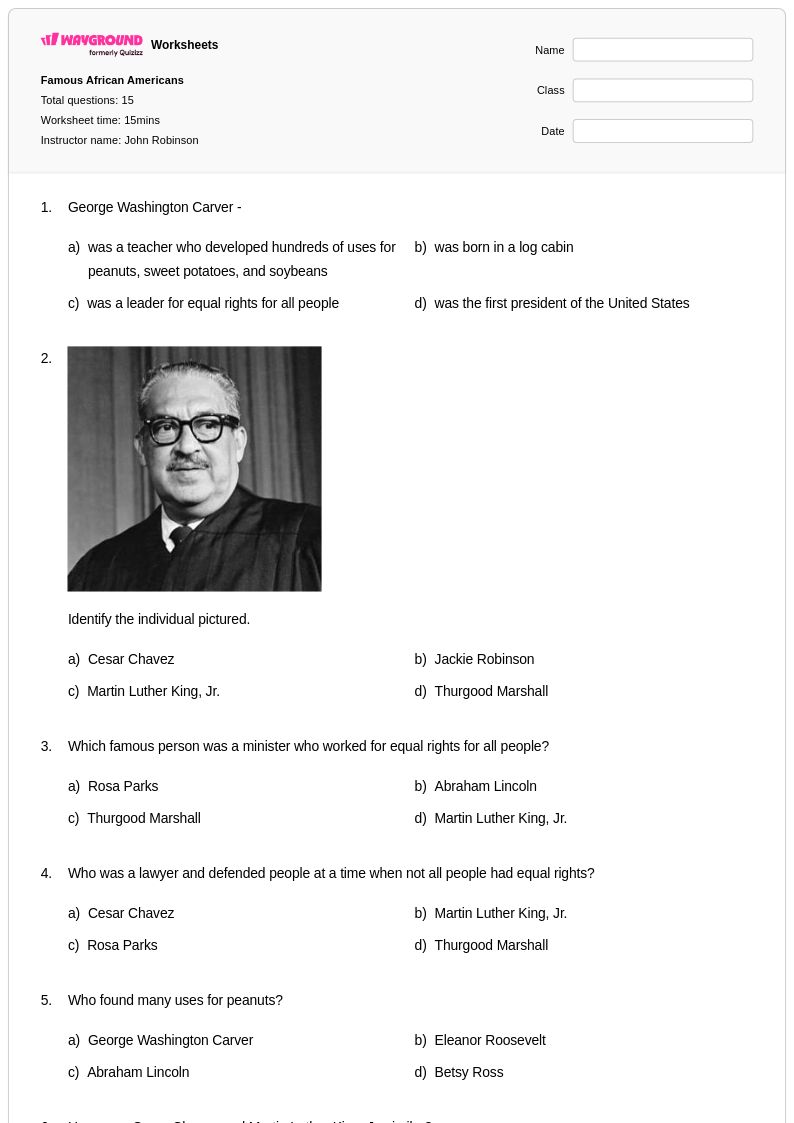
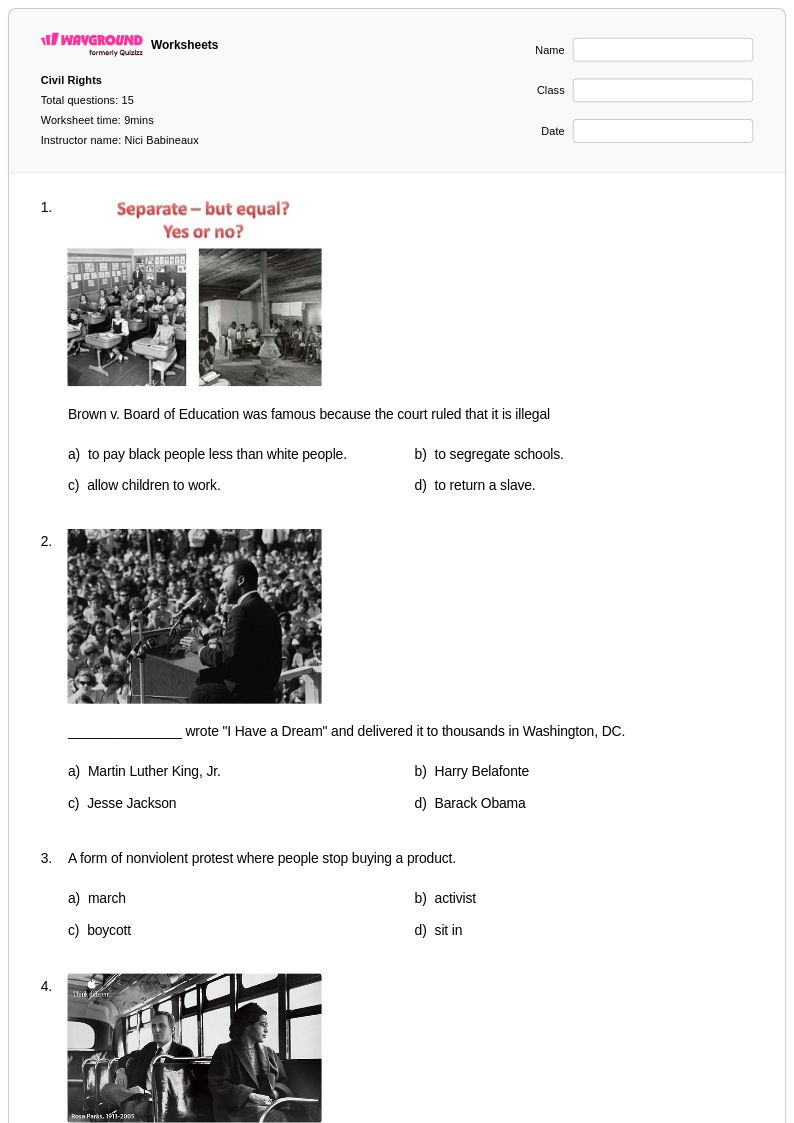
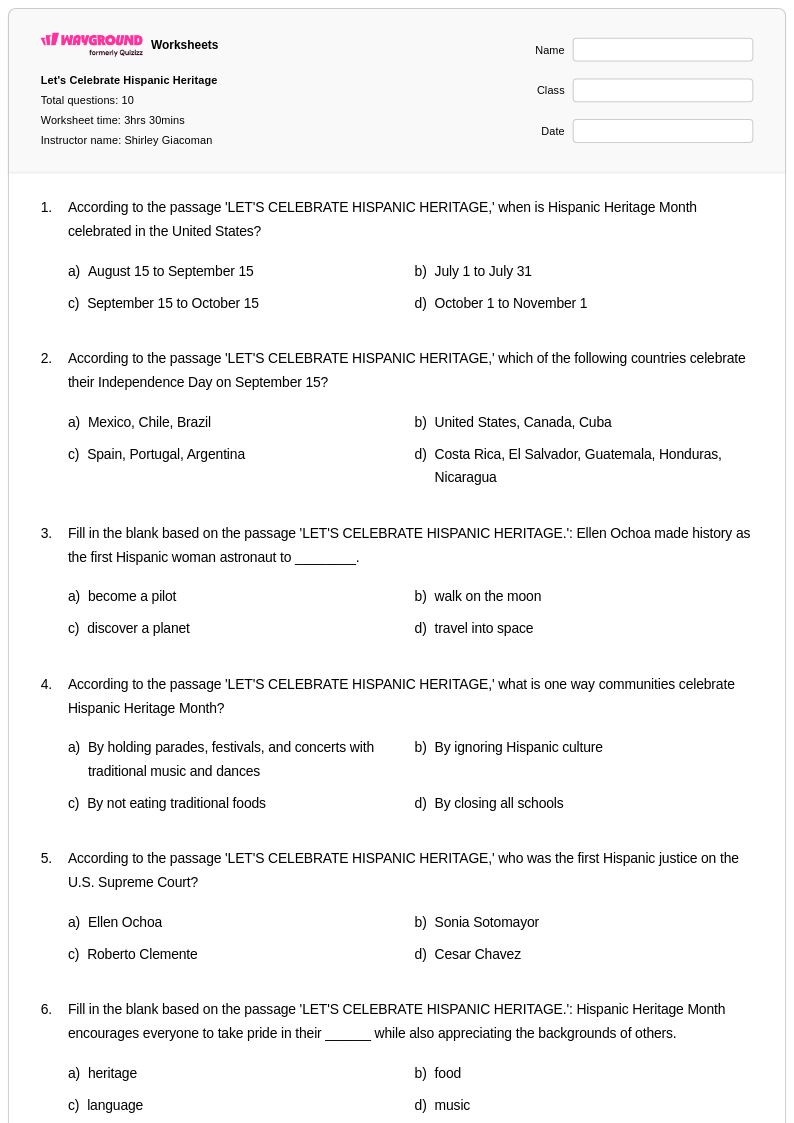
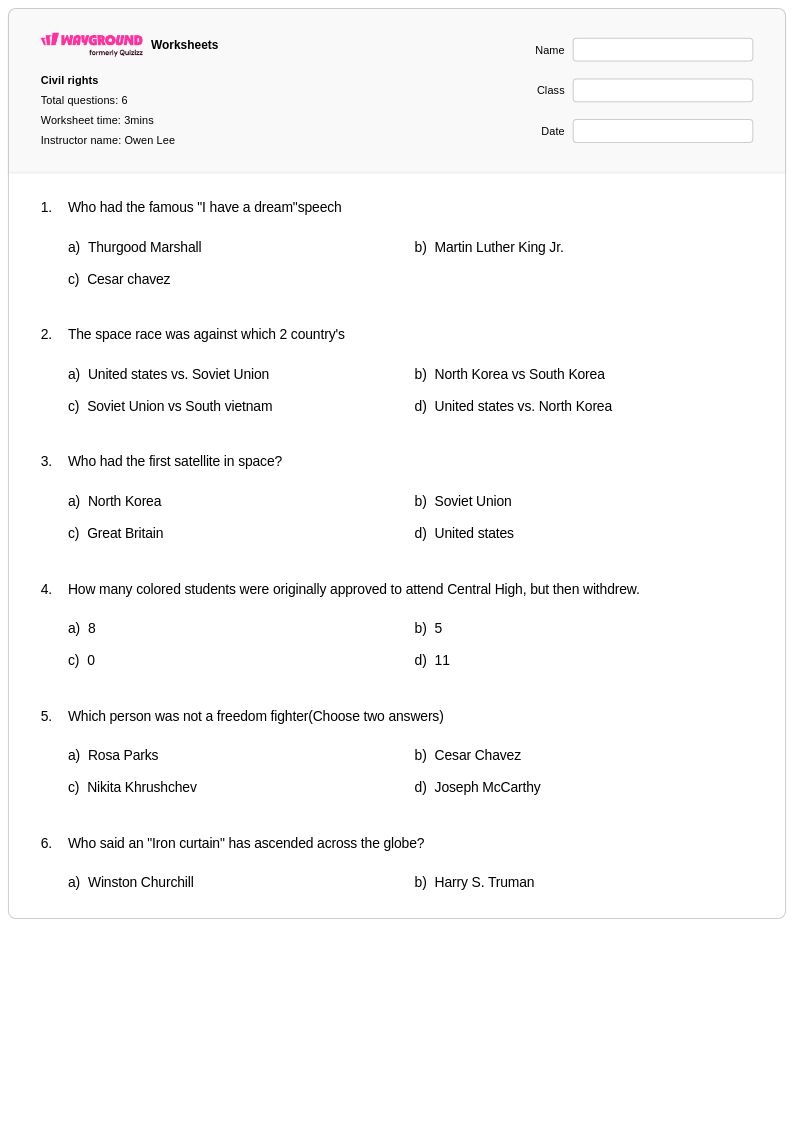
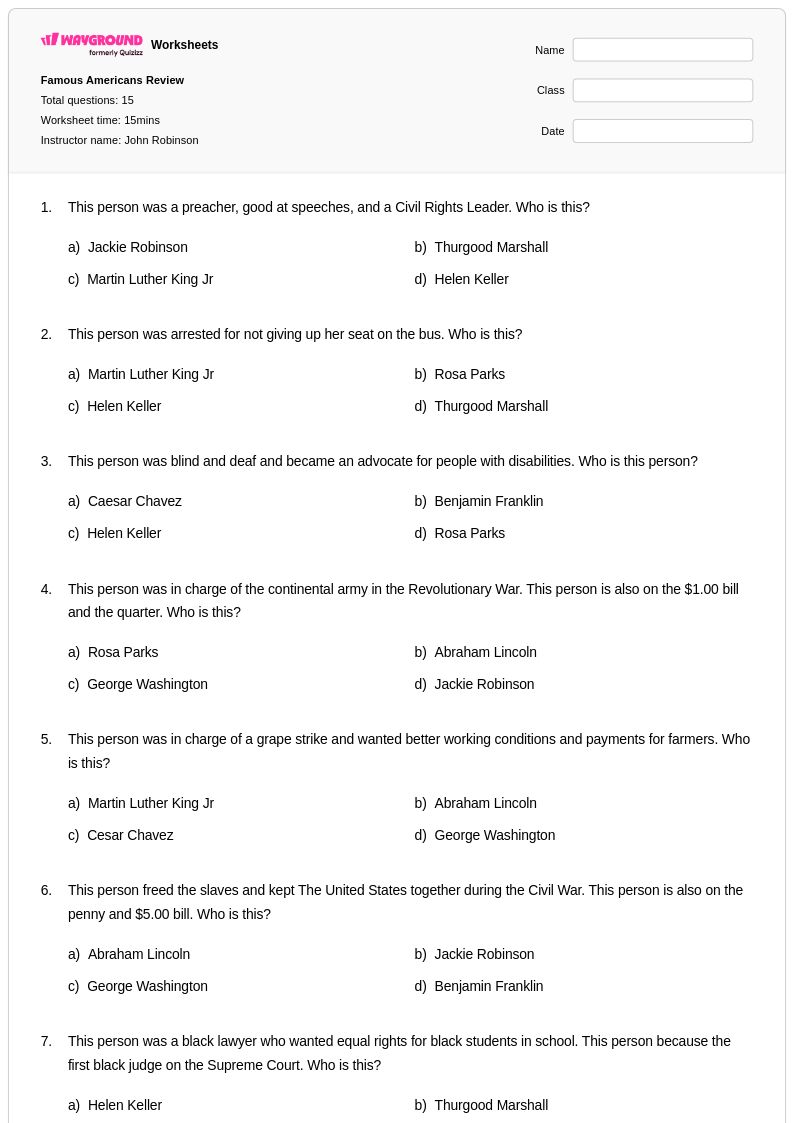
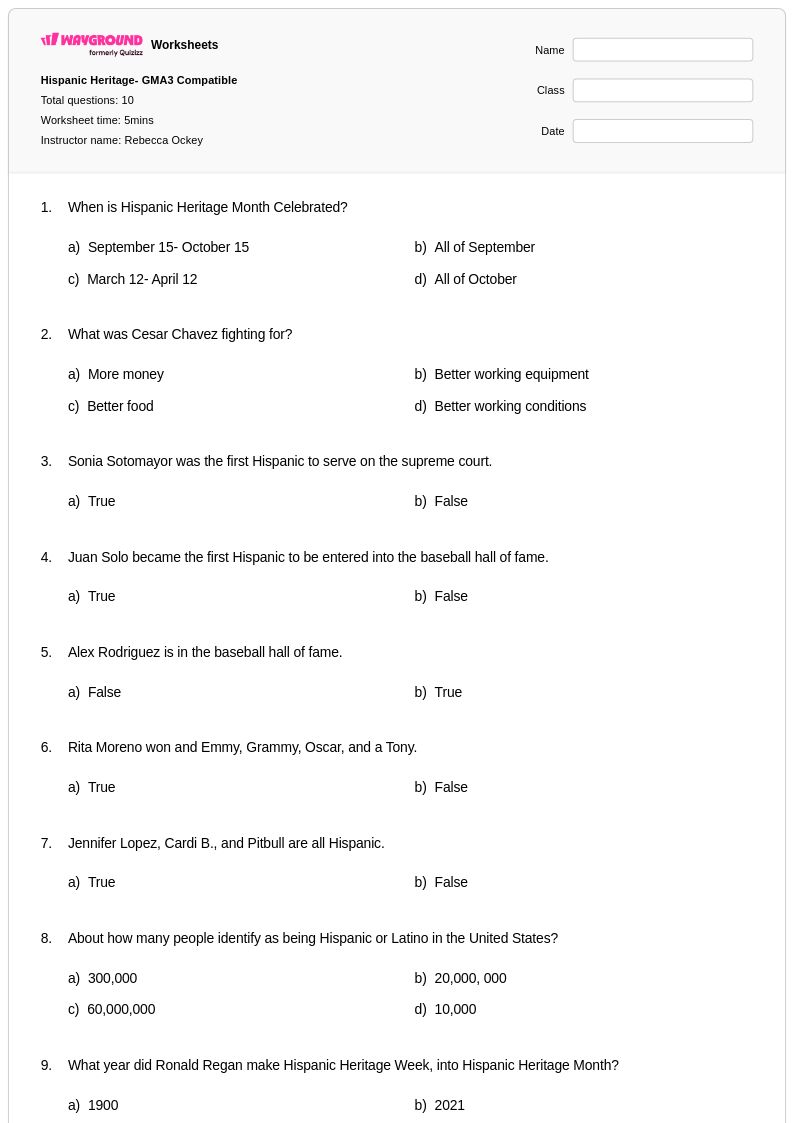
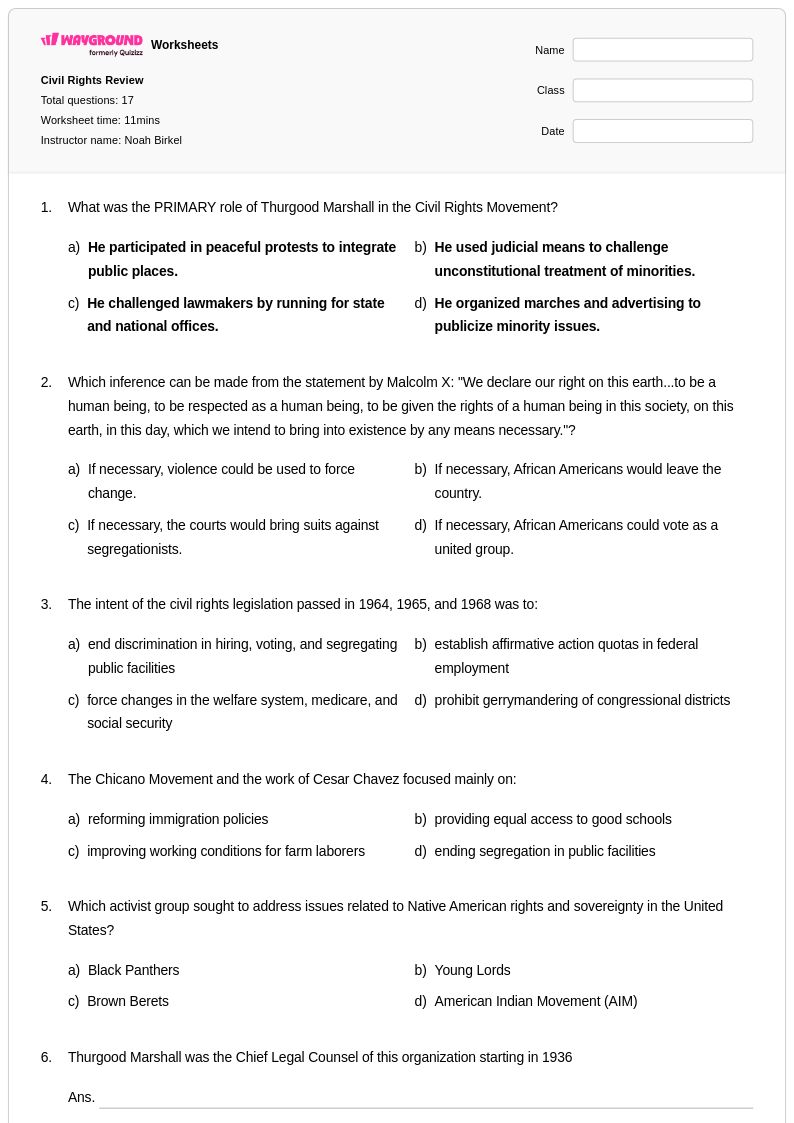
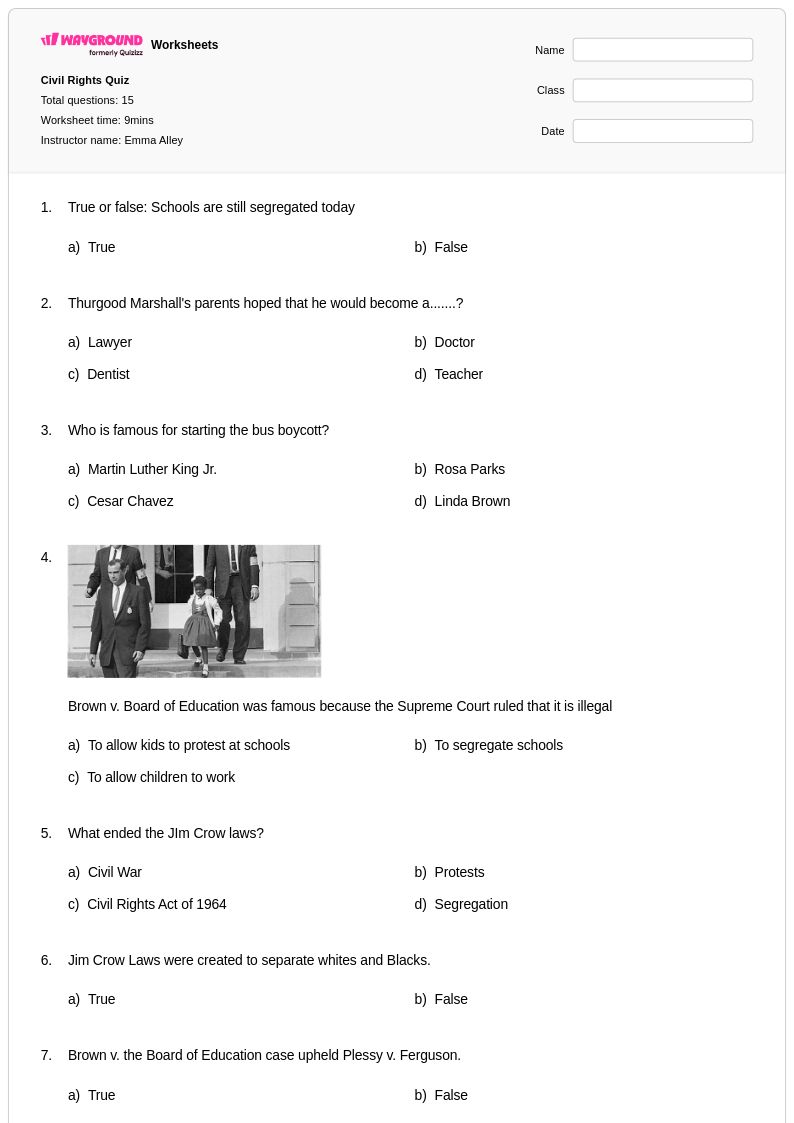
Discover free Year 4 Cesar Chavez worksheets and printables from Wayground that help students learn about this influential civil rights leader through engaging practice problems and activities with answer keys included.
Explore printable Cesar Chavez worksheets for Year 4
Cesar Chavez worksheets for Year 4 students provide essential learning opportunities to explore the life and legacy of this influential civil rights leader within the broader context of community and cultures studies. These comprehensive educational materials help fourth-grade students develop critical thinking skills while learning about Chavez's role in advocating for farmworkers' rights, organizing peaceful protests, and creating lasting social change. The worksheets strengthen reading comprehension, historical analysis, and cultural awareness through engaging practice problems that examine primary sources, timelines, and cause-and-effect relationships. Teachers can access complete answer keys and free printable pdf resources that support both independent study and guided instruction, ensuring students grasp the connections between individual actions and community transformation.
Wayground, formerly Quizizz, empowers educators with millions of teacher-created resources specifically designed for Year 4 social studies instruction on Cesar Chavez and related topics in community and cultures education. The platform's robust search and filtering capabilities allow teachers to quickly locate standards-aligned materials that match their specific curriculum requirements and student needs. Advanced differentiation tools enable educators to customize worksheets for various learning levels, while flexible formatting options provide both printable and digital pdf versions to accommodate diverse classroom environments. These comprehensive features streamline lesson planning and support targeted remediation, enrichment activities, and skill practice sessions that help students develop a deeper understanding of how individuals like Cesar Chavez shape communities and influence cultural change through dedicated activism and leadership.
FAQs
How do I teach Cesar Chavez to elementary and middle school students?
Start by grounding students in Chavez's personal story before introducing broader themes of labor rights and civil rights. Use timeline activities to trace key events in his activism, from co-founding the United Farm Workers union to organizing nonviolent boycotts and strikes. Connecting his work to students' own sense of fairness and community helps make the history feel relevant rather than abstract.
What kinds of activities help students understand Cesar Chavez's impact?
Primary source analysis, timeline sequencing, and cause-and-effect exercises are especially effective for exploring Chavez's legacy. Having students examine his use of nonviolent protest methods and compare them to other civil rights leaders builds critical thinking alongside content knowledge. Analytical prompts that ask students to connect his work to contemporary social justice issues deepen engagement and retention.
What misconceptions do students commonly have about Cesar Chavez?
A common misconception is that Chavez's work was purely about Mexican American identity rather than labor rights for all agricultural workers, regardless of background. Students also sometimes conflate his movement with protest in general, without understanding his specific commitment to nonviolent tactics as a strategic and principled choice. Clarifying that his advocacy was rooted in economic justice as much as civil rights helps students develop a more accurate picture.
How can I connect Cesar Chavez's story to broader civil rights history in my curriculum?
Chavez's movement is a strong entry point for teaching students how civil rights activism extended beyond racial segregation to include labor conditions, fair wages, and economic dignity. Comparing his organizing strategies to those of figures like Martin Luther King Jr. or Dolores Huerta helps students see the shared principles of nonviolent resistance across different movements. This cross-movement analysis supports standards in both social studies and civic engagement.
How do I use Cesar Chavez worksheets from Wayground in my classroom?
Wayground's Cesar Chavez worksheets are available as printable PDFs for traditional classroom use and in digital formats for technology-integrated environments, including the option to host them as a quiz directly on Wayground. Teachers can use them to introduce new content, support comprehension after reading, or assess understanding of key events and themes. All worksheets include answer keys, making them straightforward to implement without additional prep.
How do I support different reading levels when teaching about Cesar Chavez?
Wayground offers built-in accommodation tools that let teachers adjust the experience for individual students, including a Read Aloud feature for students who benefit from audio support and reduced answer choices to lower cognitive load for struggling readers. Font size and display themes can also be adjusted through Reading Mode. These settings are saved per student and carry over to future sessions, so differentiation doesn't require resetting each time.