
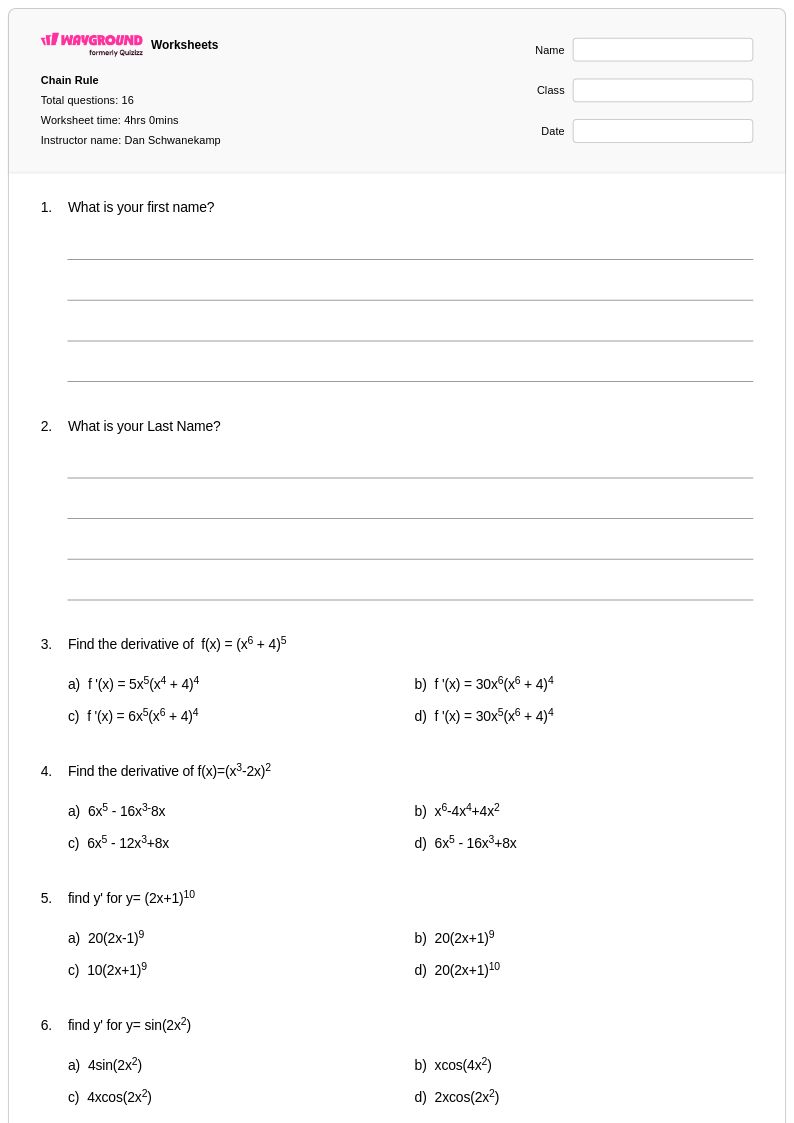
16 Q
10th - 12th
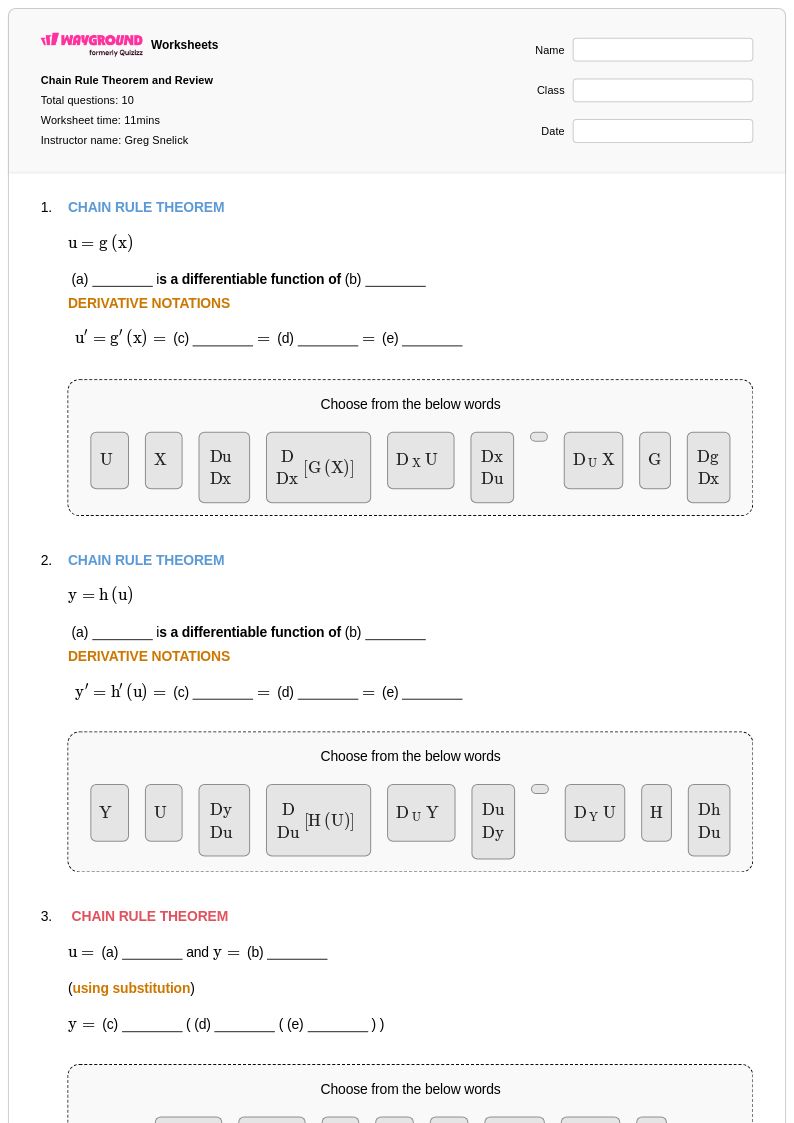
10 Q
9th - Uni
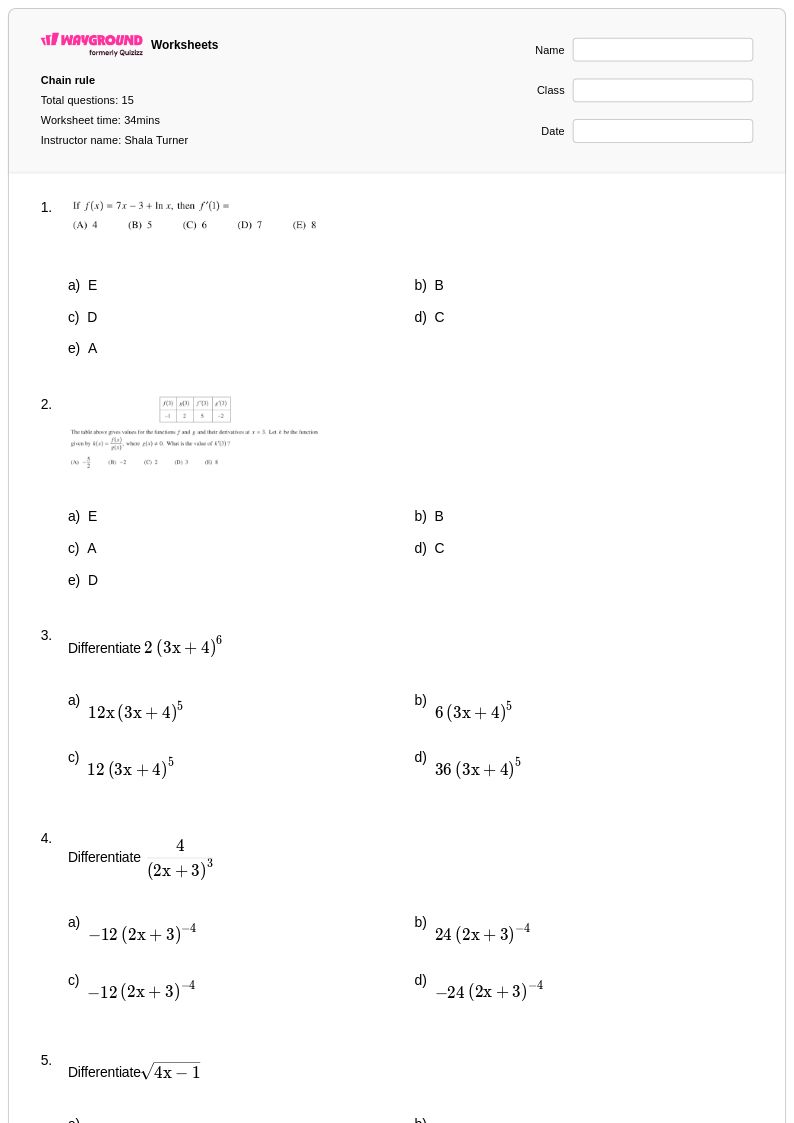
15 Q
11th - 12th
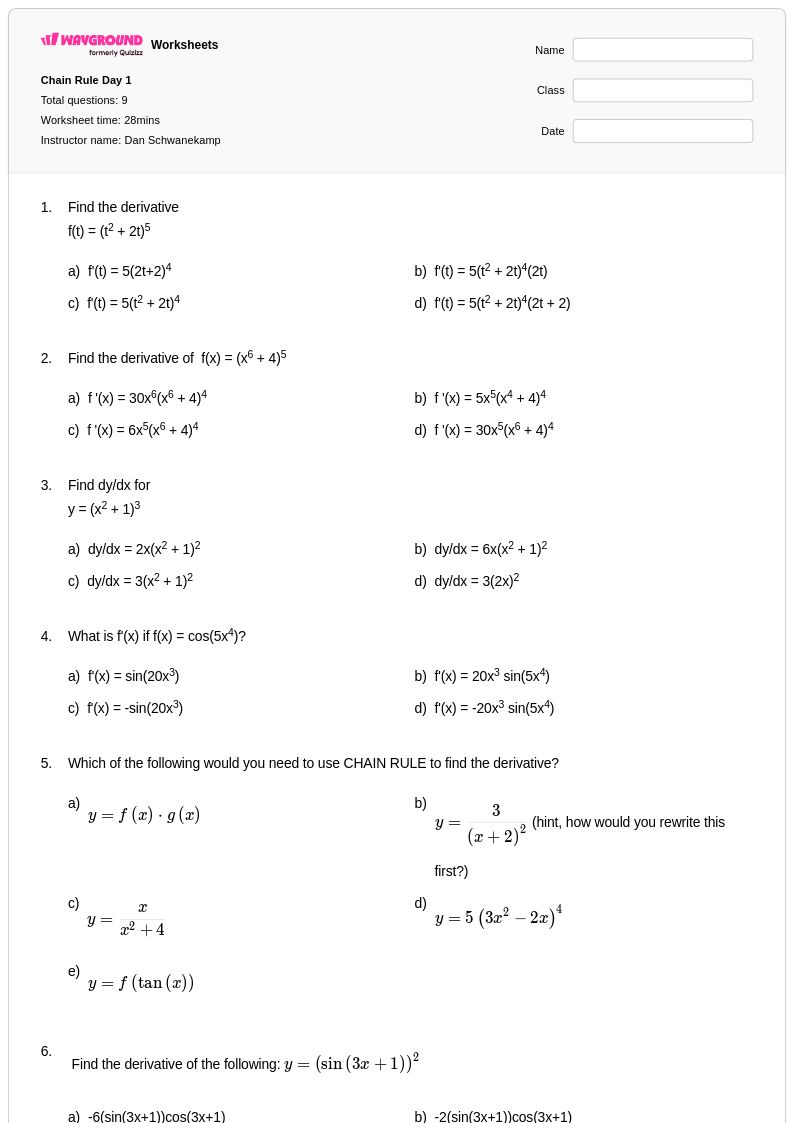
9 Q
11th - 12th
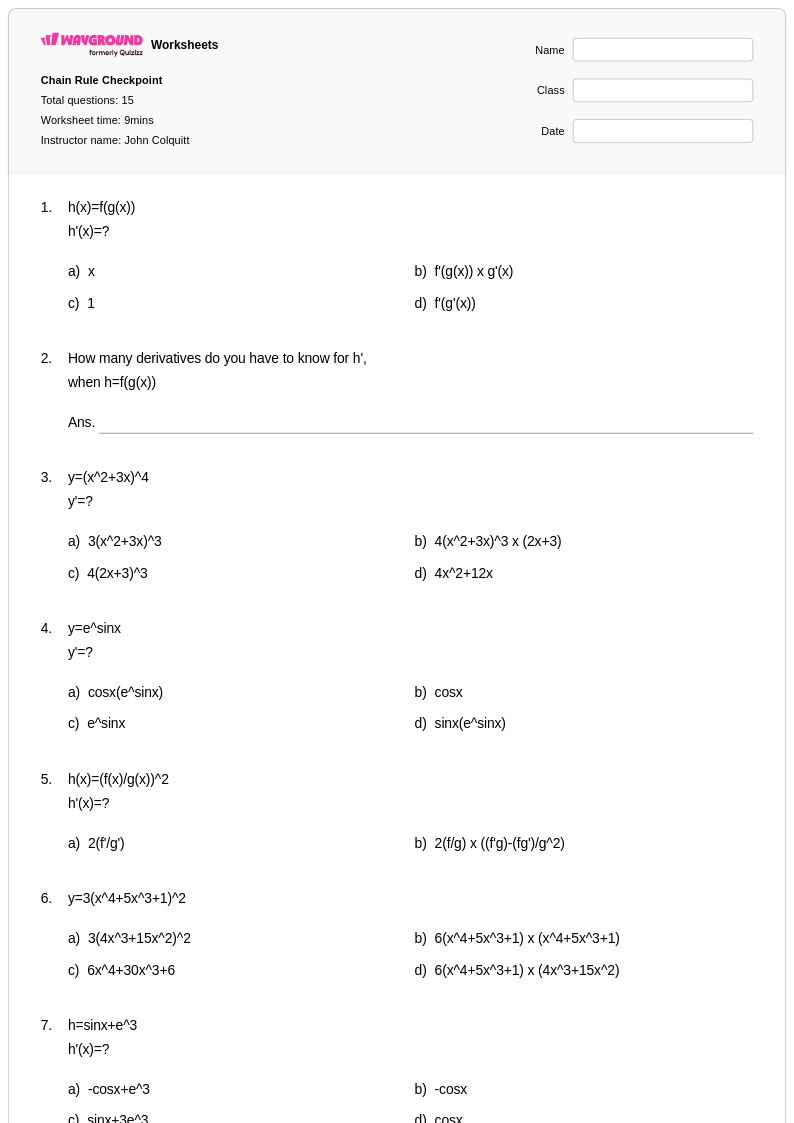
15 Q
11th - 12th
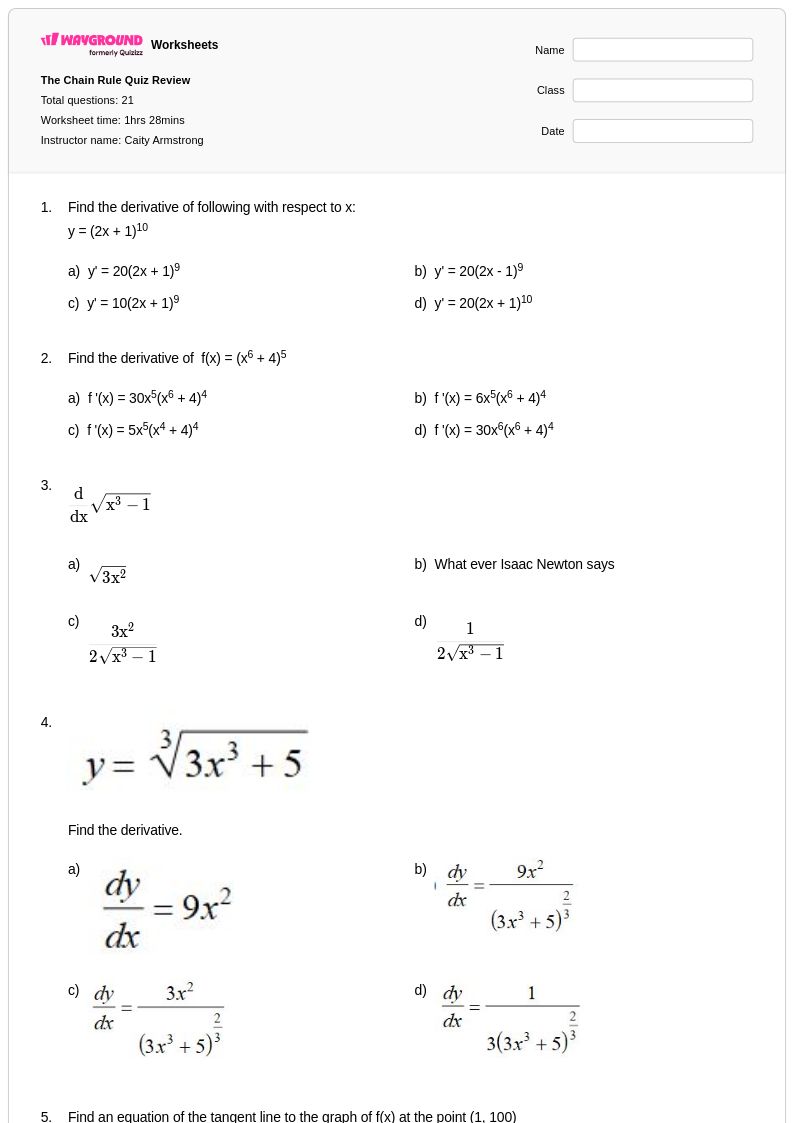
21 Q
9th - 12th
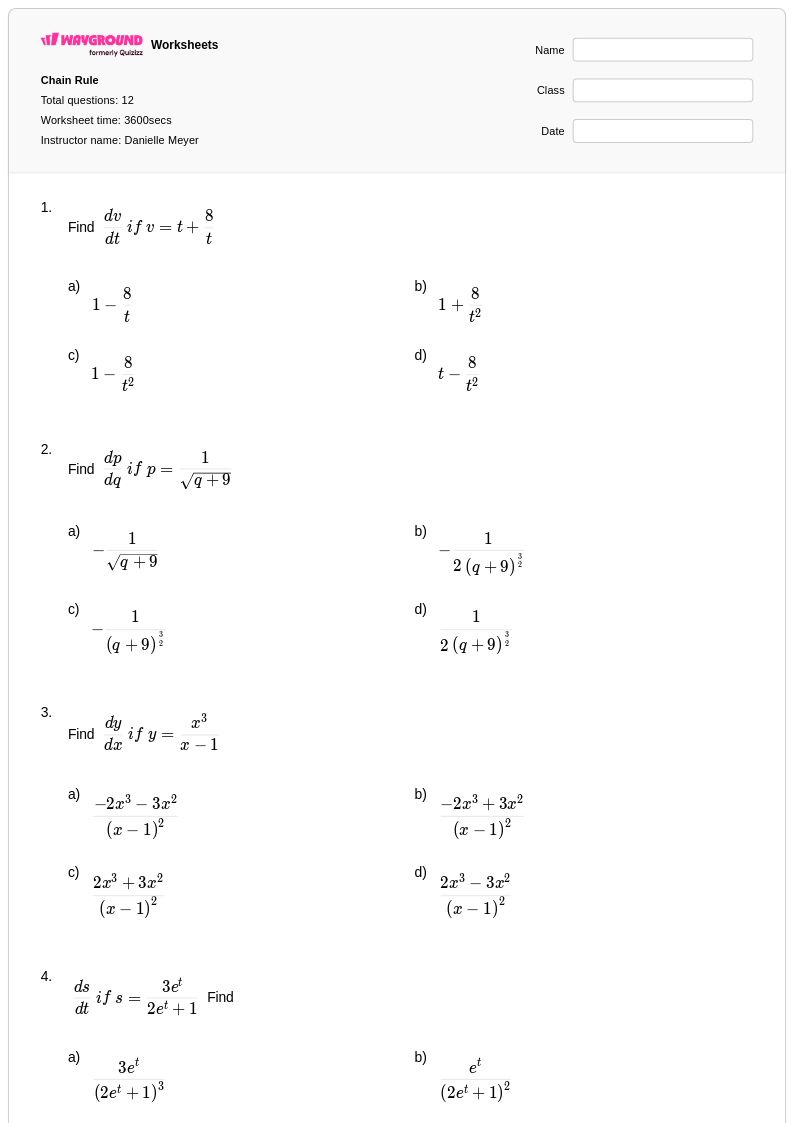
12 Q
11th - 12th
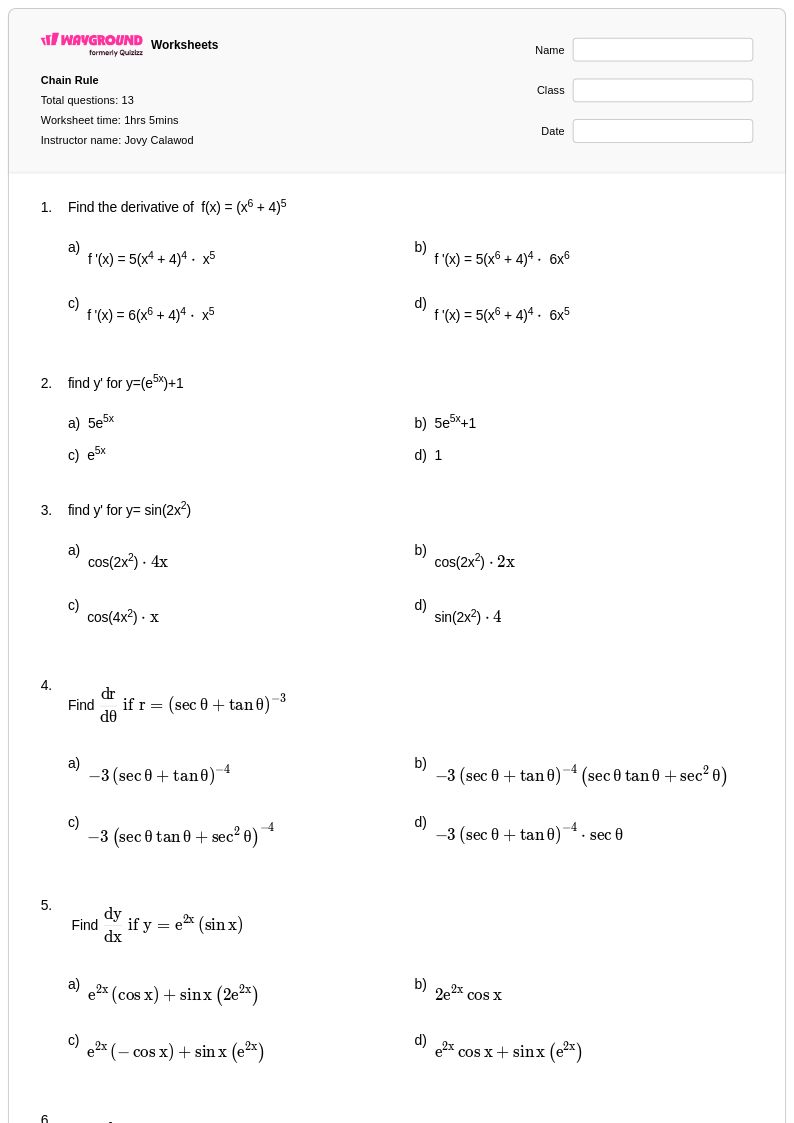
13 Q
11th
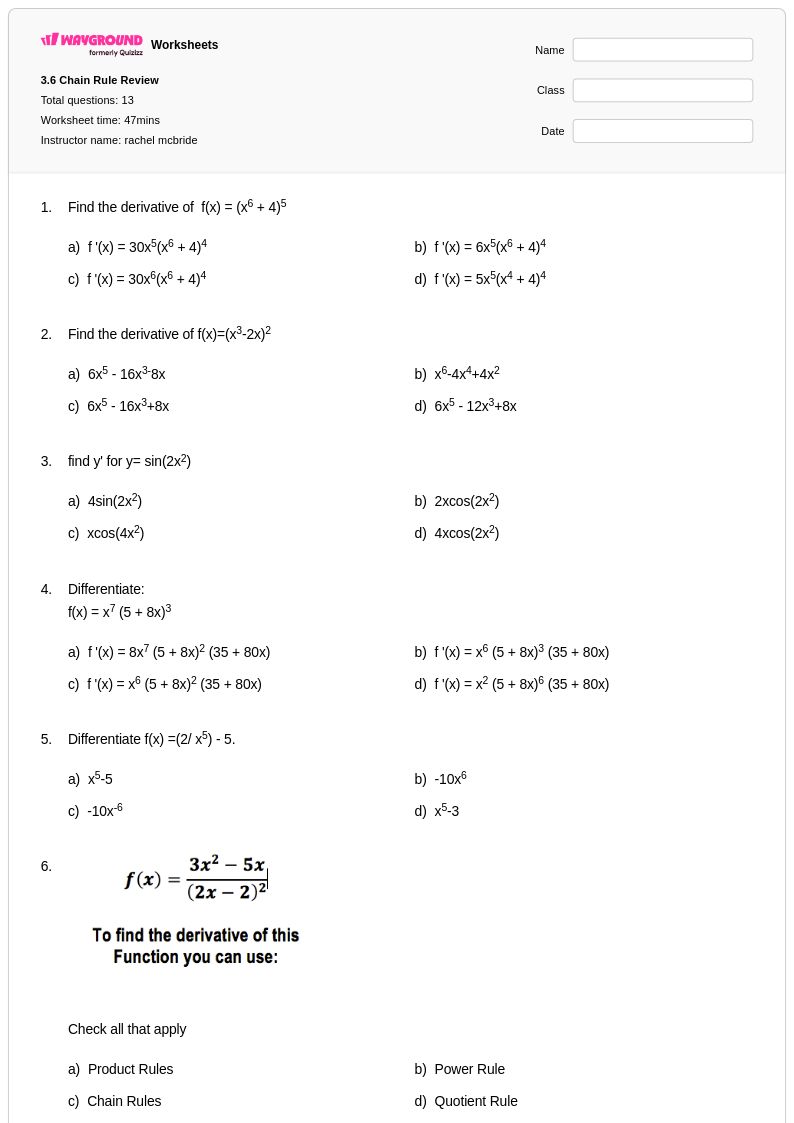
13 Q
10th - Uni
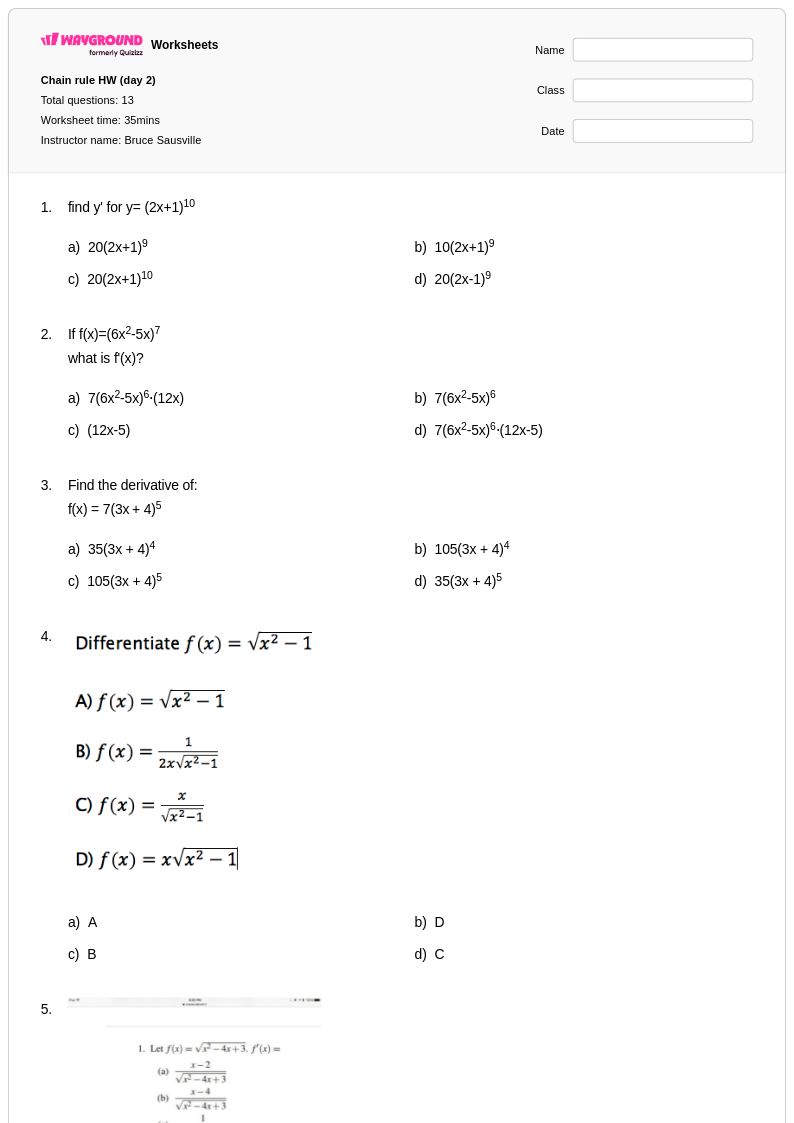
13 Q
11th - 12th
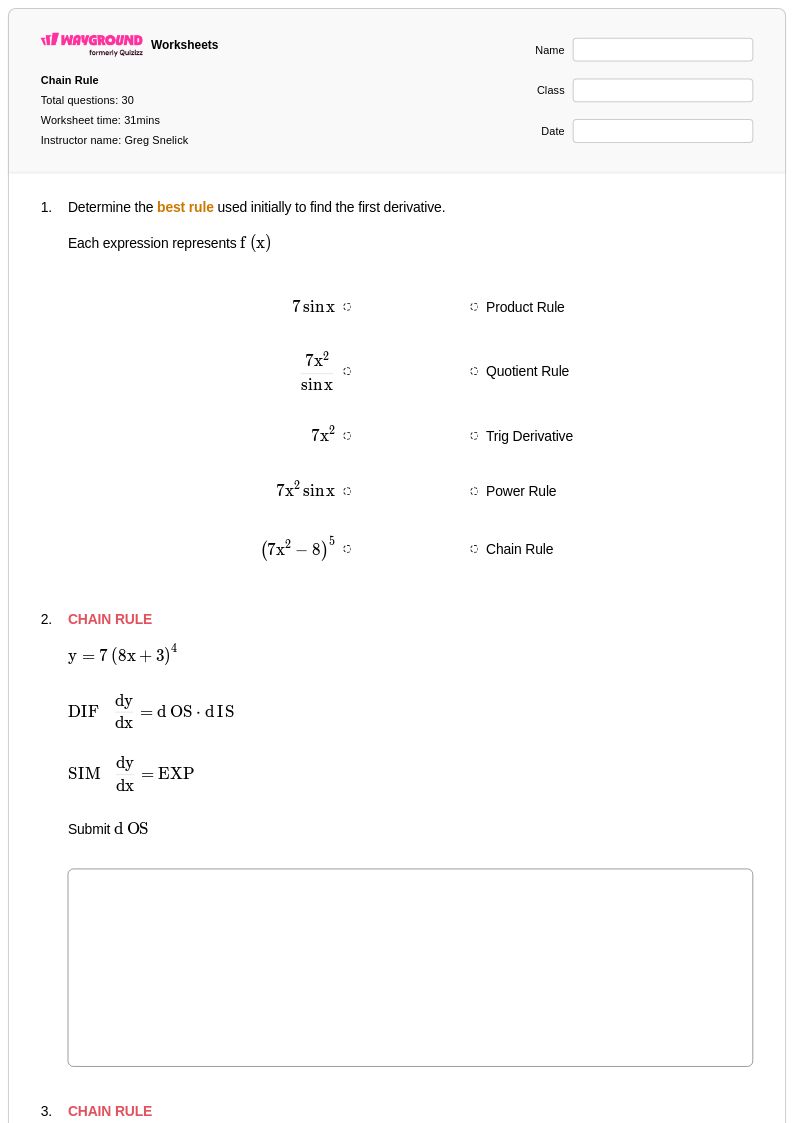
30 Q
9th - Uni
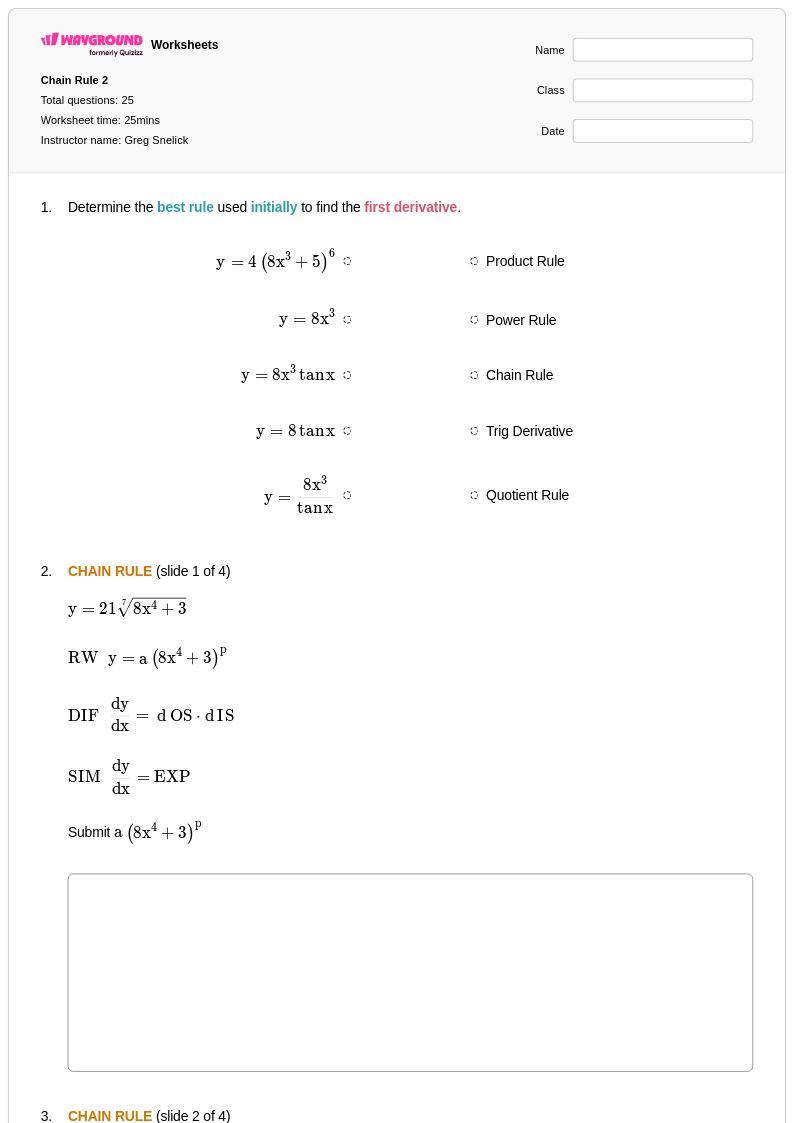
25 Q
9th - Uni
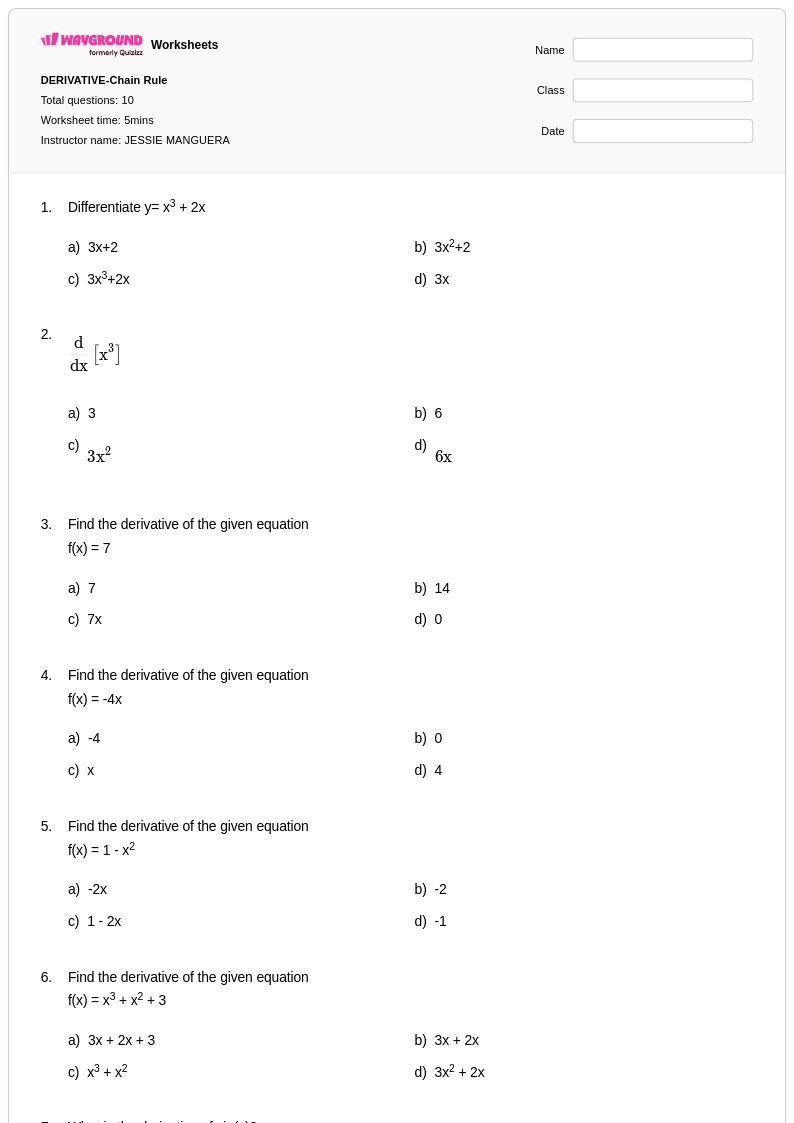
10 Q
11th
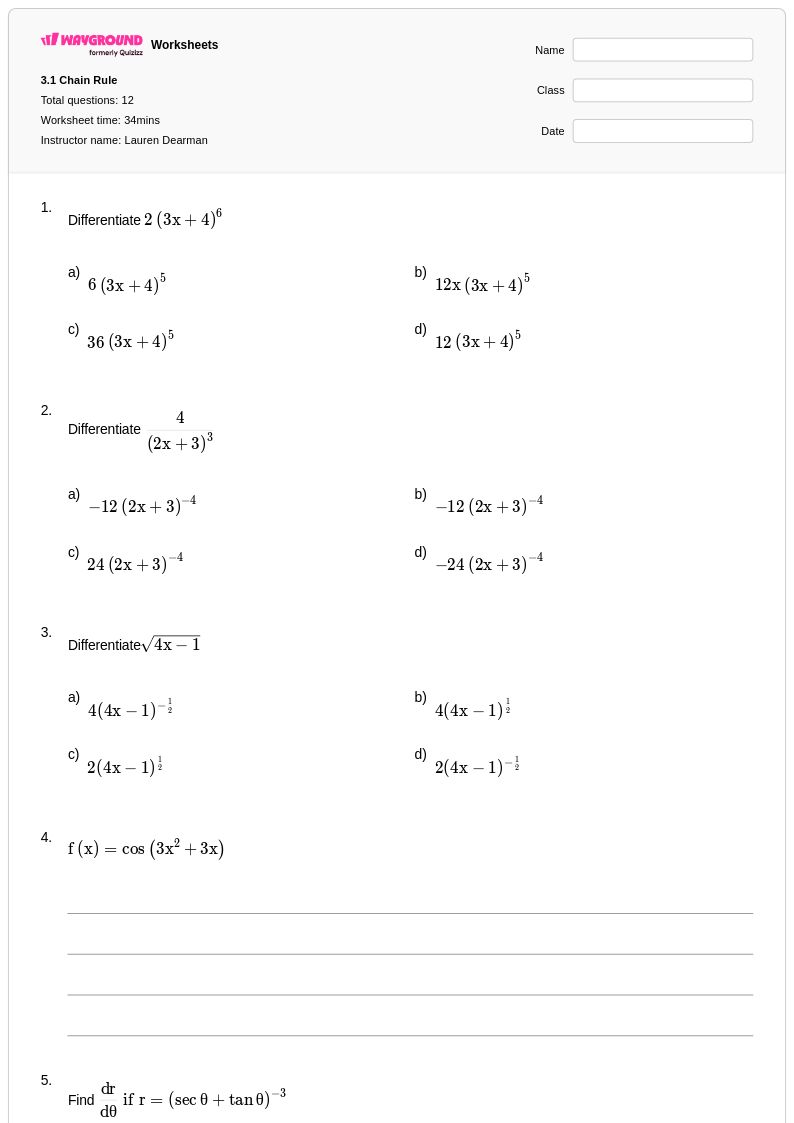
12 Q
11th - 12th
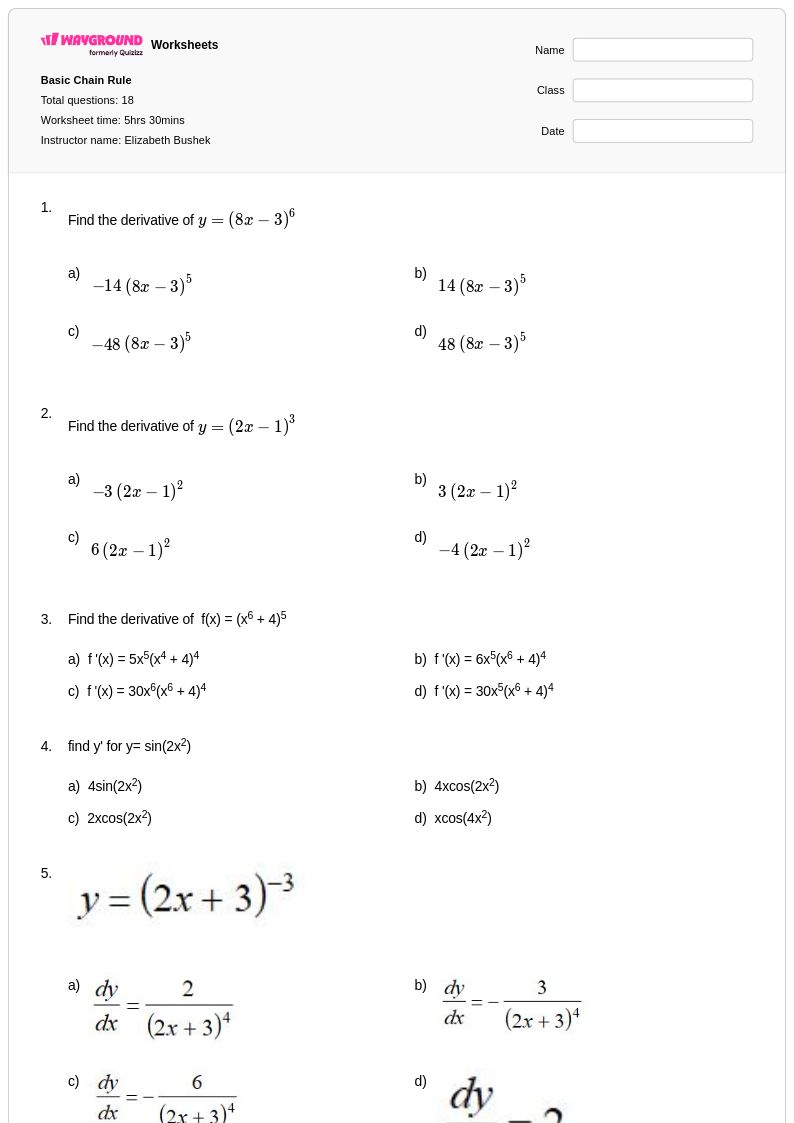
18 Q
11th - Uni
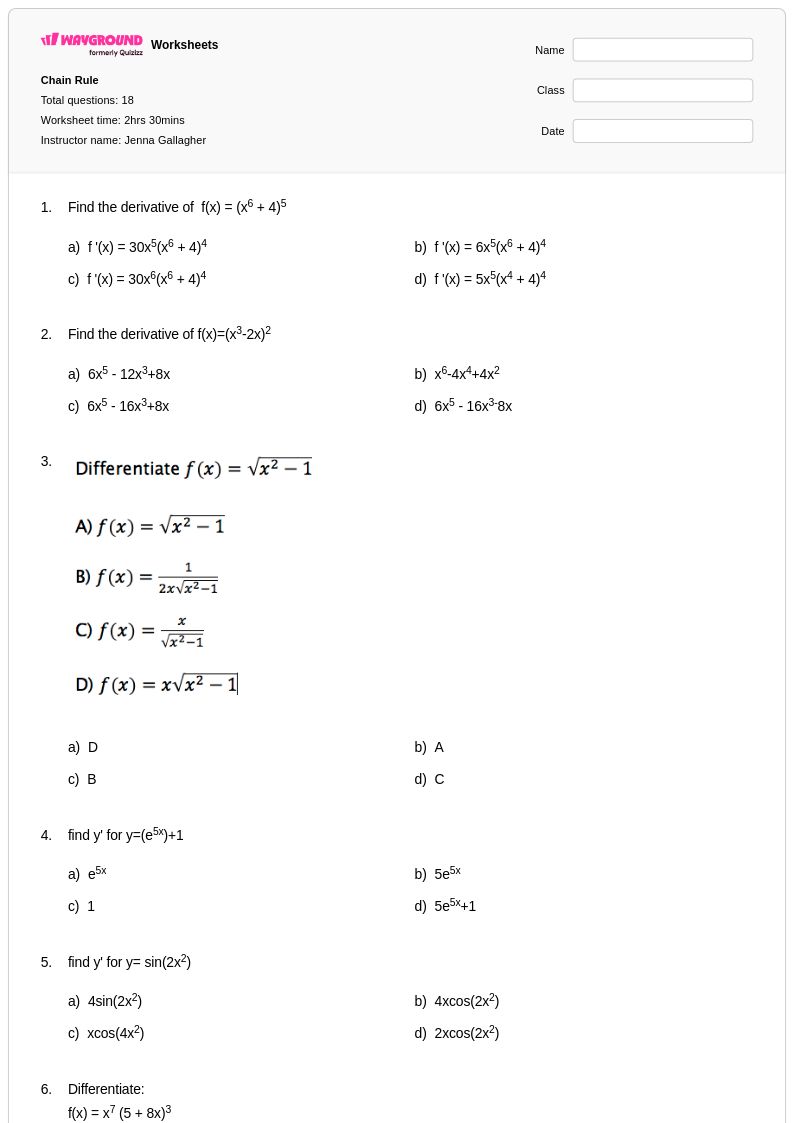
18 Q
10th - 12th
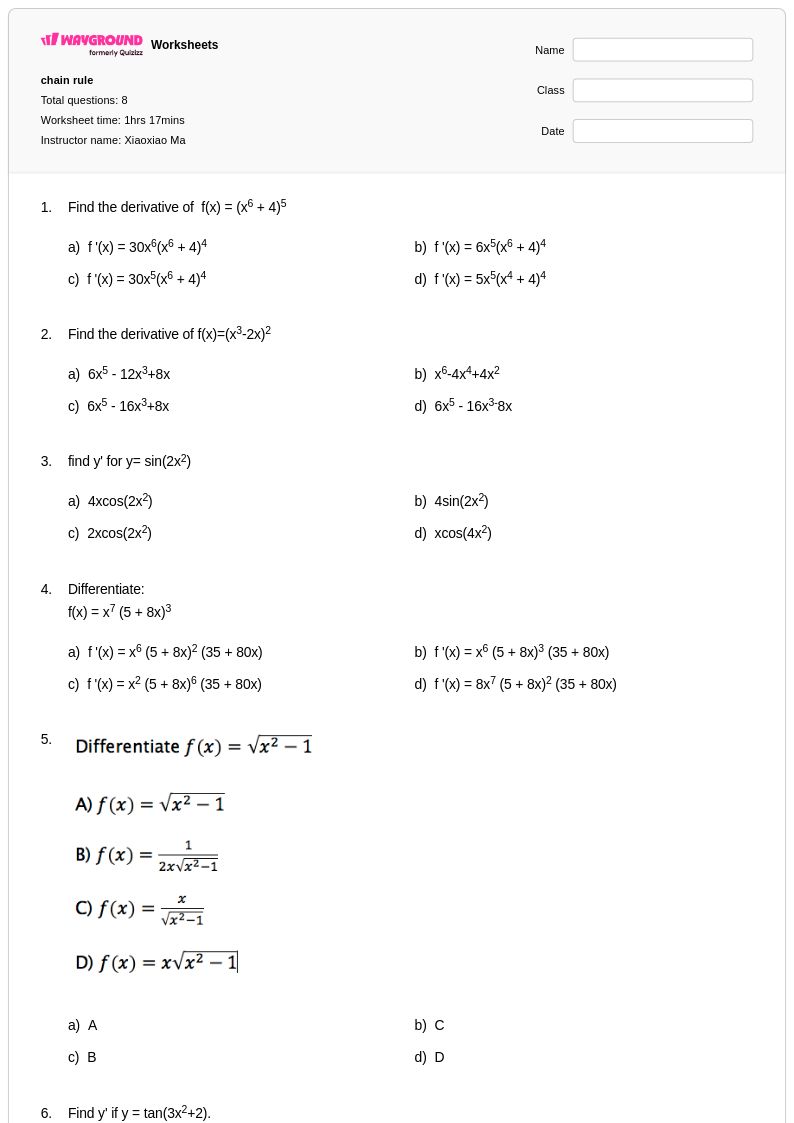
8 Q
9th - 12th
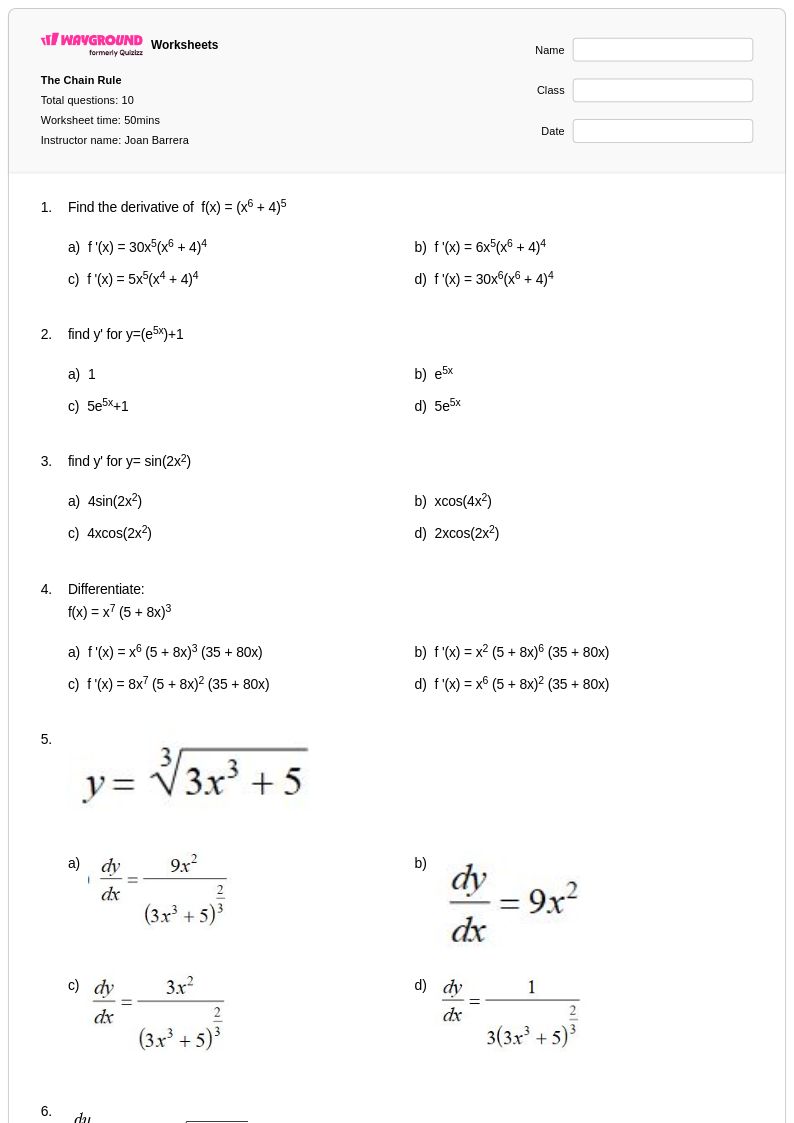
10 Q
11th - 12th
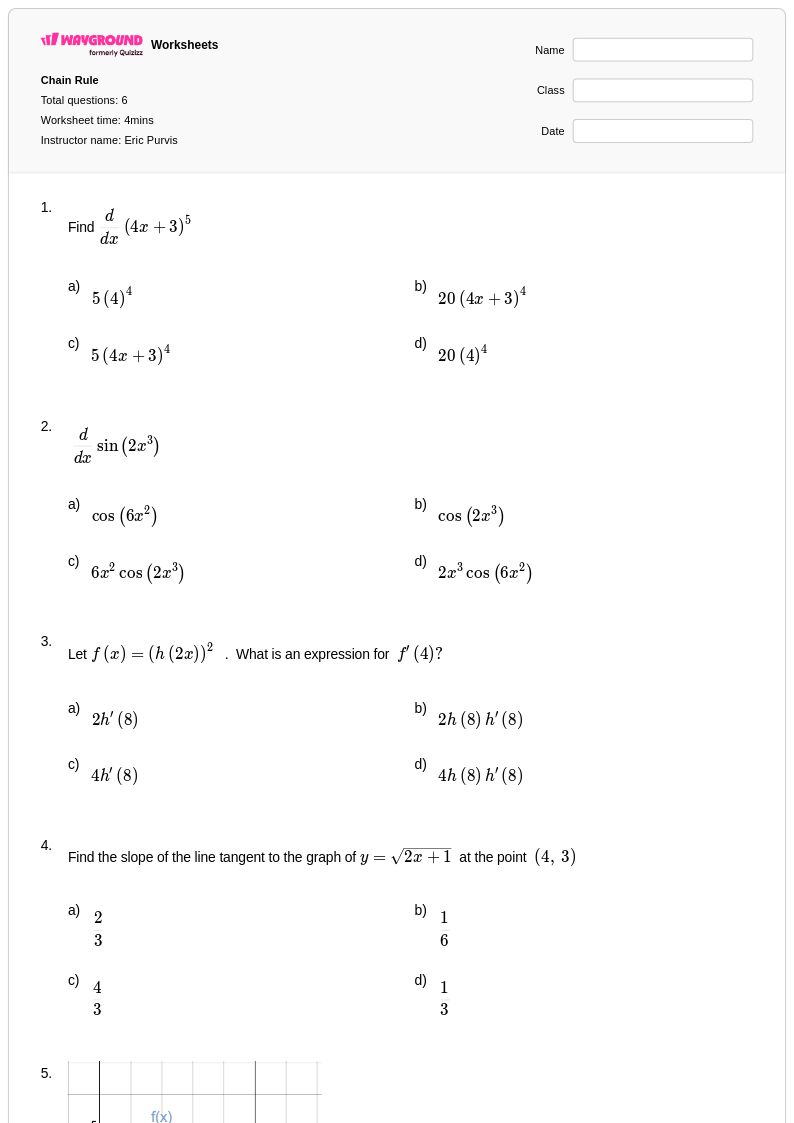
6 Q
11th - 12th
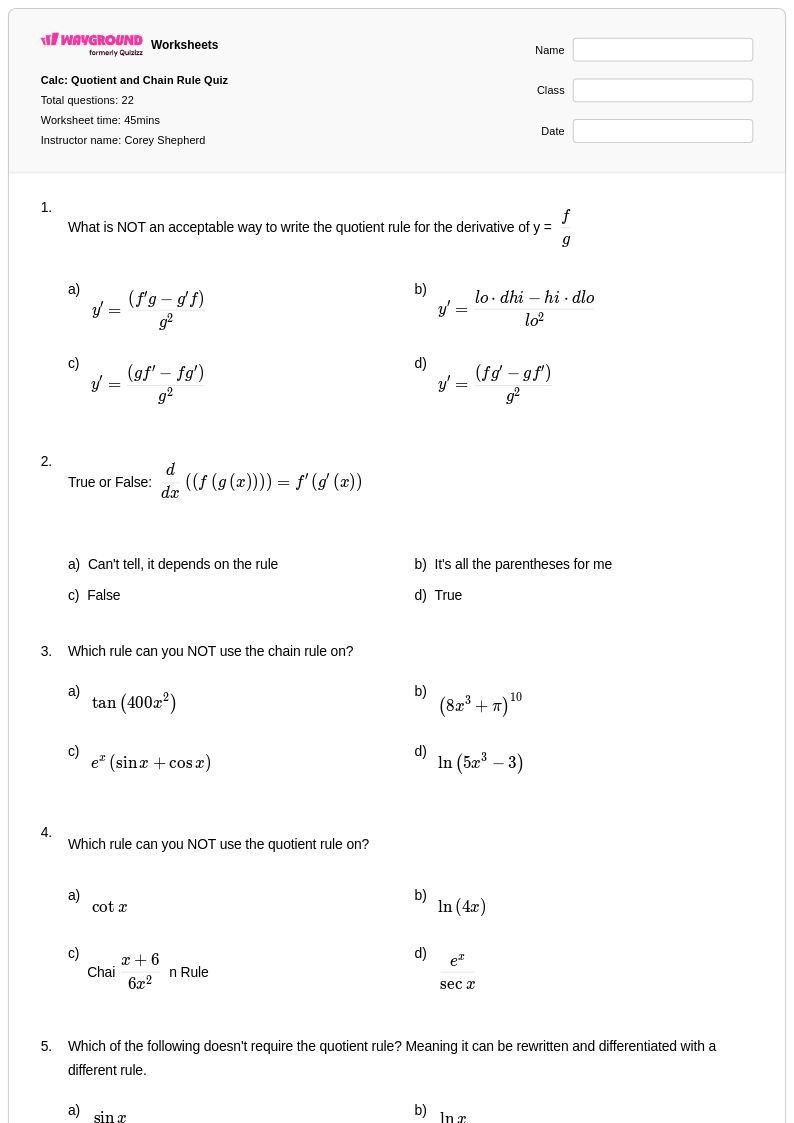
22 Q
11th - 12th
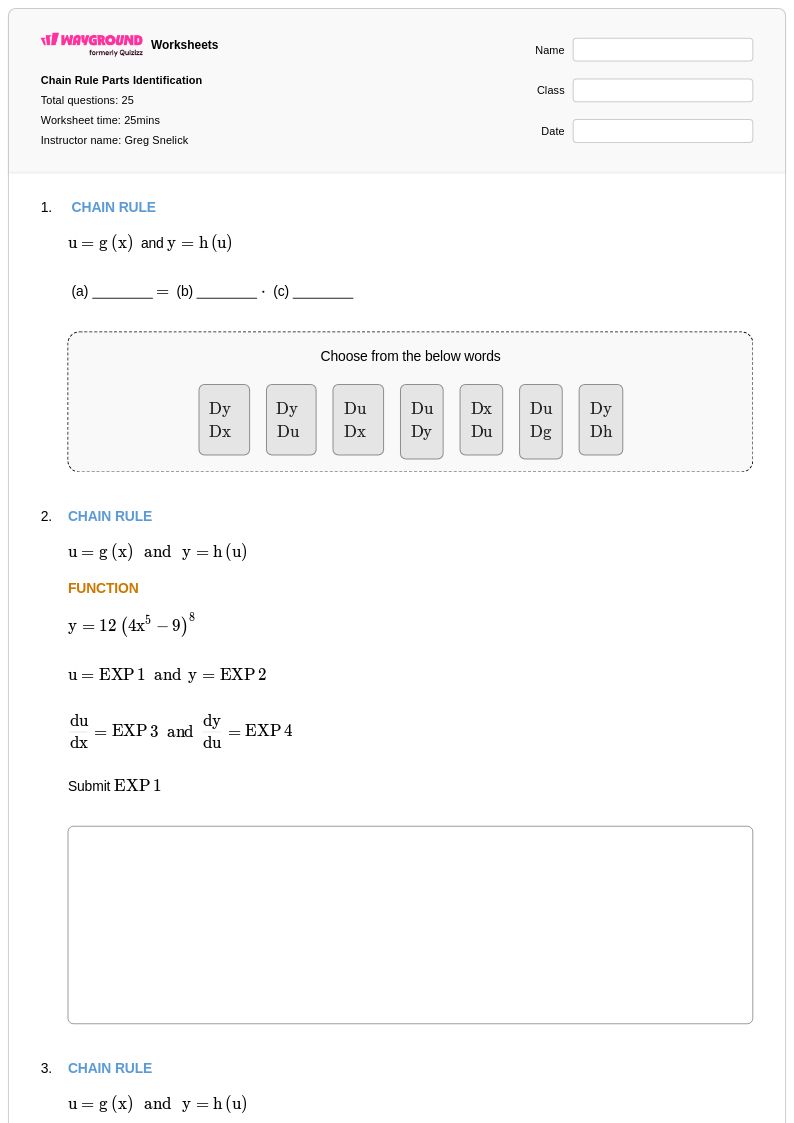
25 Q
9th - Uni
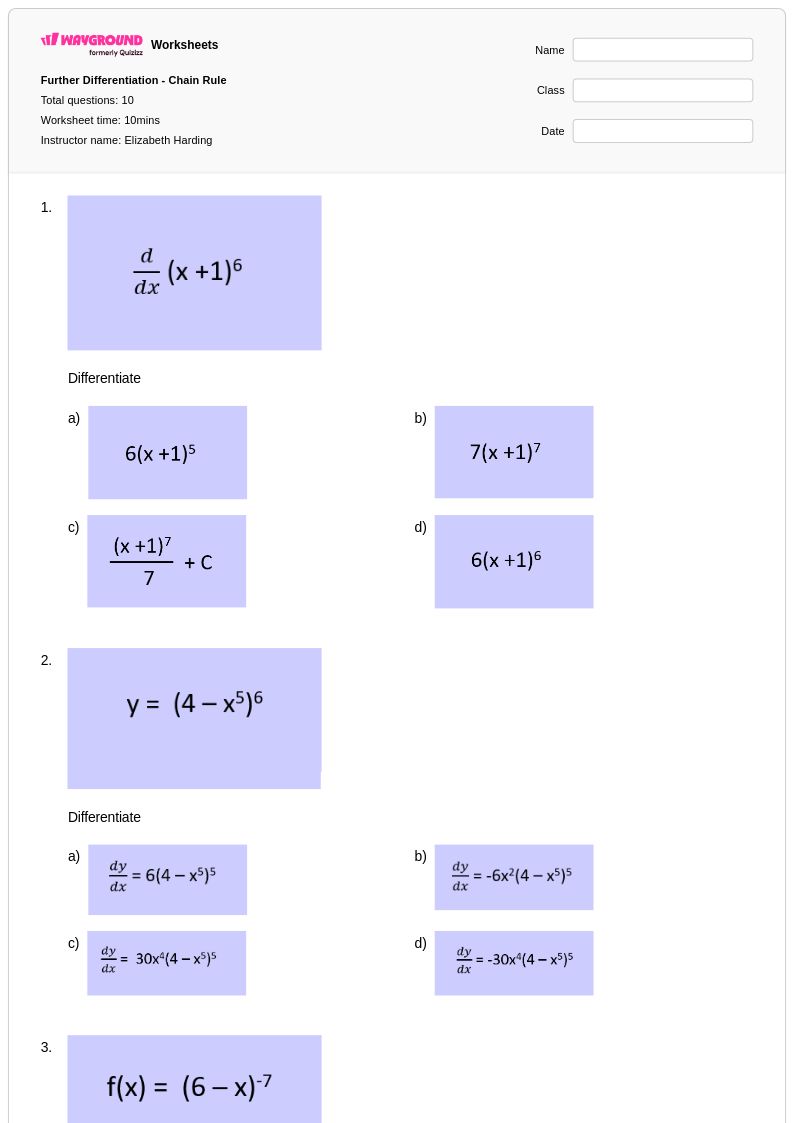
10 Q
8th - 11th
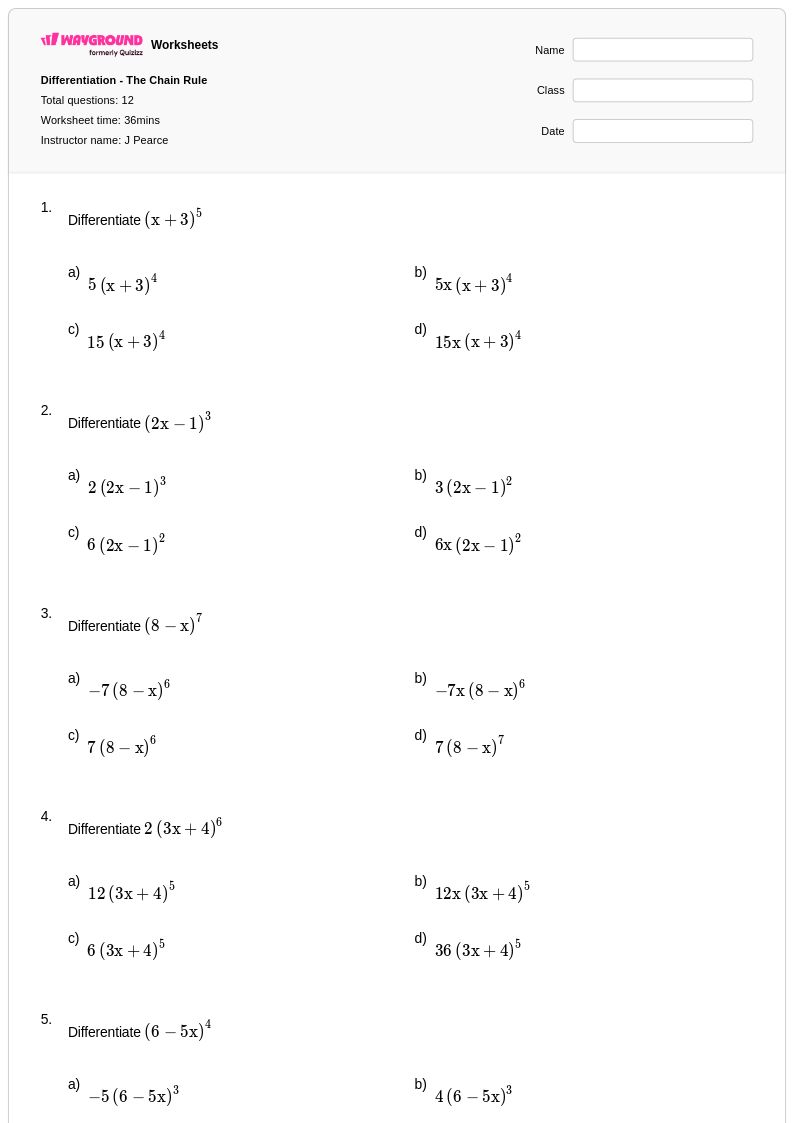
12 Q
11th - Uni
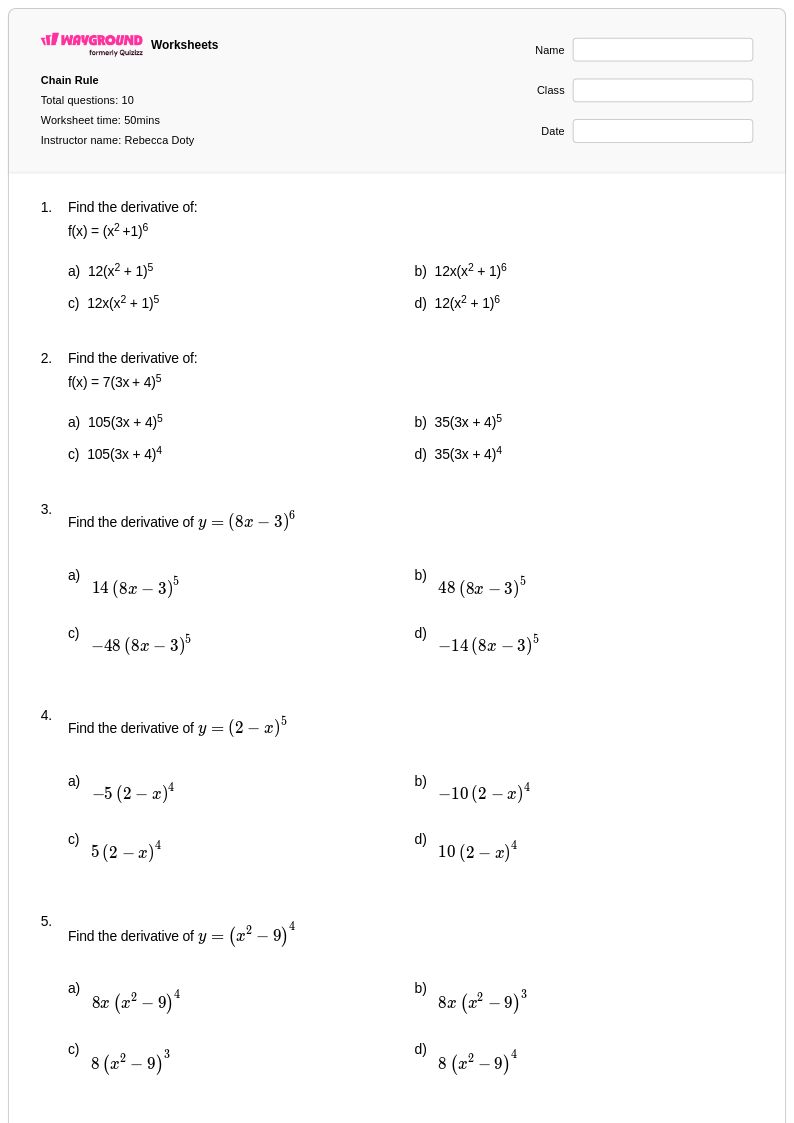
10 Q
11th - 12th
Explore Other Subject Worksheets for year 11
Explore printable Chain Rule worksheets for Year 11
Chain rule worksheets for Year 11 students through Wayground (formerly Quizizz) provide comprehensive practice with one of calculus's most fundamental differentiation techniques. These expertly crafted worksheets strengthen students' ability to differentiate composite functions by systematically applying the chain rule formula, helping them master the critical skill of identifying inner and outer functions within complex expressions. Students work through carefully sequenced practice problems that progress from basic polynomial compositions to more advanced trigonometric, exponential, and logarithmic functions, with each worksheet including a complete answer key to support independent learning. The free printable resources are designed to reinforce the mechanical aspects of chain rule application while building conceptual understanding of how rates of change propagate through function compositions, ensuring students develop both computational fluency and deeper mathematical insight.
Wayground's extensive collection of chain rule worksheets draws from millions of teacher-created resources, offering educators powerful search and filtering capabilities to locate materials perfectly aligned with their Year 11 calculus curriculum standards and specific instructional needs. The platform's differentiation tools enable teachers to customize worksheet difficulty levels, problem types, and mathematical complexity to support diverse learners, from those requiring additional practice with basic chain rule applications to advanced students ready for multi-step composite function challenges. Available in both printable pdf format and interactive digital versions, these resources seamlessly integrate into lesson planning workflows while providing flexible options for in-class instruction, homework assignments, remediation sessions, and enrichment activities. Teachers can efficiently identify gaps in student understanding and target specific aspects of chain rule mastery, from recognizing composite function structures to executing the differentiation process with precision and confidence.
FAQs
How do I teach the chain rule to Grade 11 students?
What exercises help students practice the chain rule?
What chain rule mistakes do Grade 11 students commonly make?
How can I use these Grade 11 chain rule worksheets in class?
How can I differentiate chain rule practice for a mixed-ability class?
Is the chain rule appropriate for Grade 11?