Free Printable Differential Equations Worksheets for Year 11
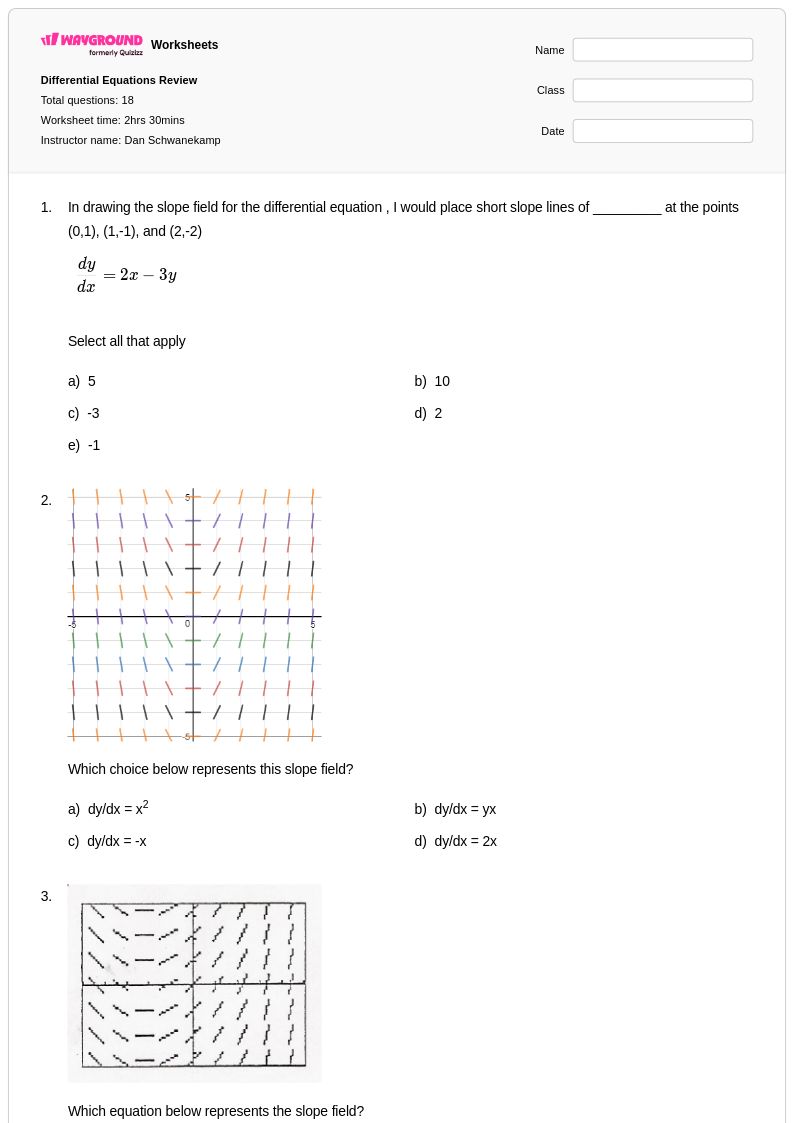
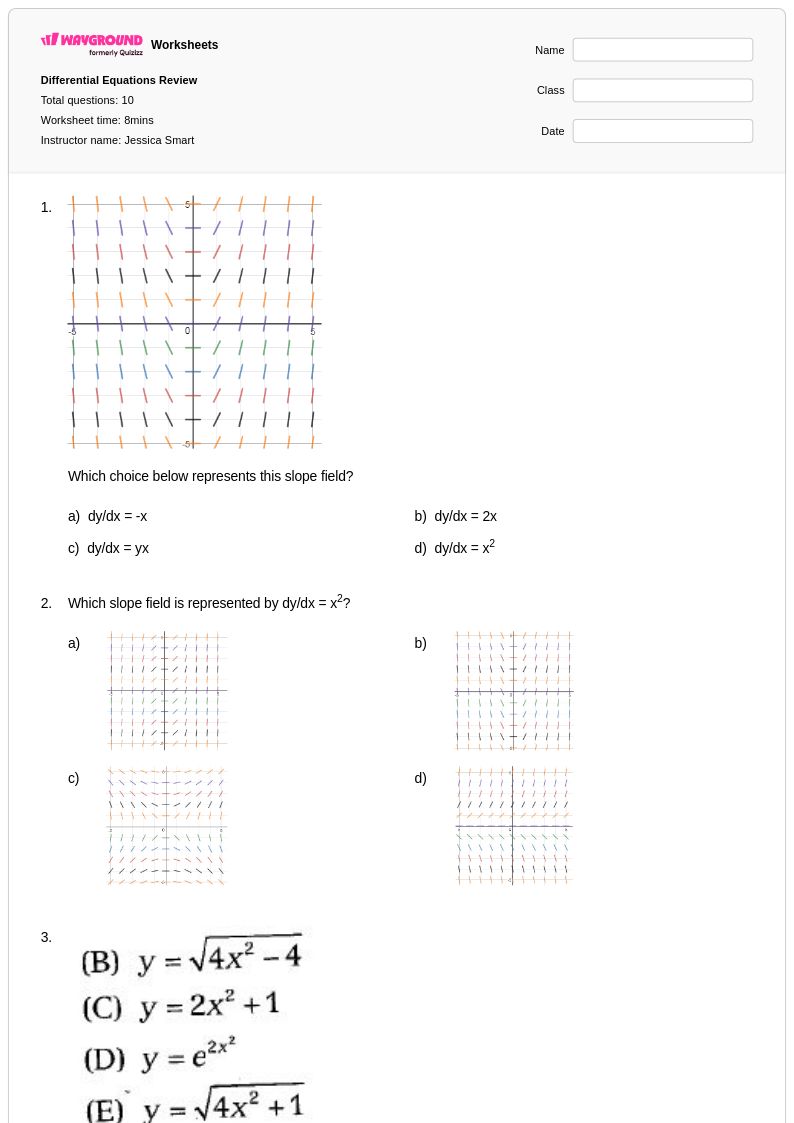
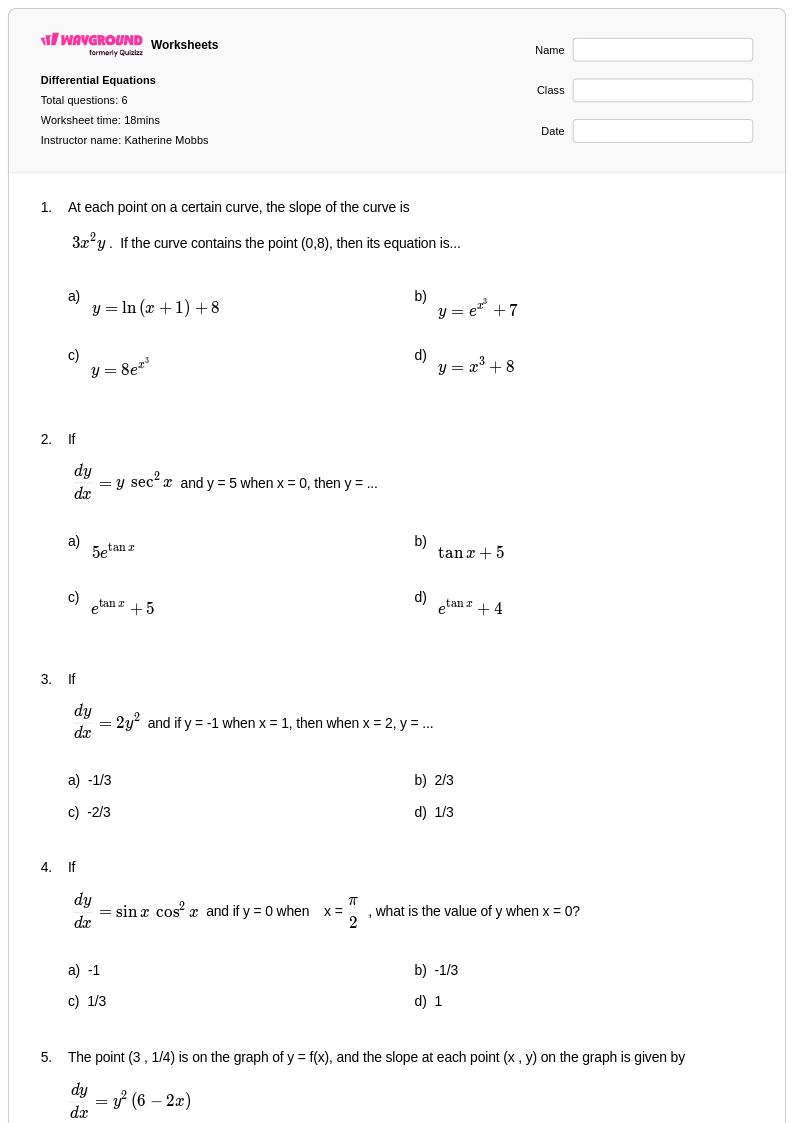
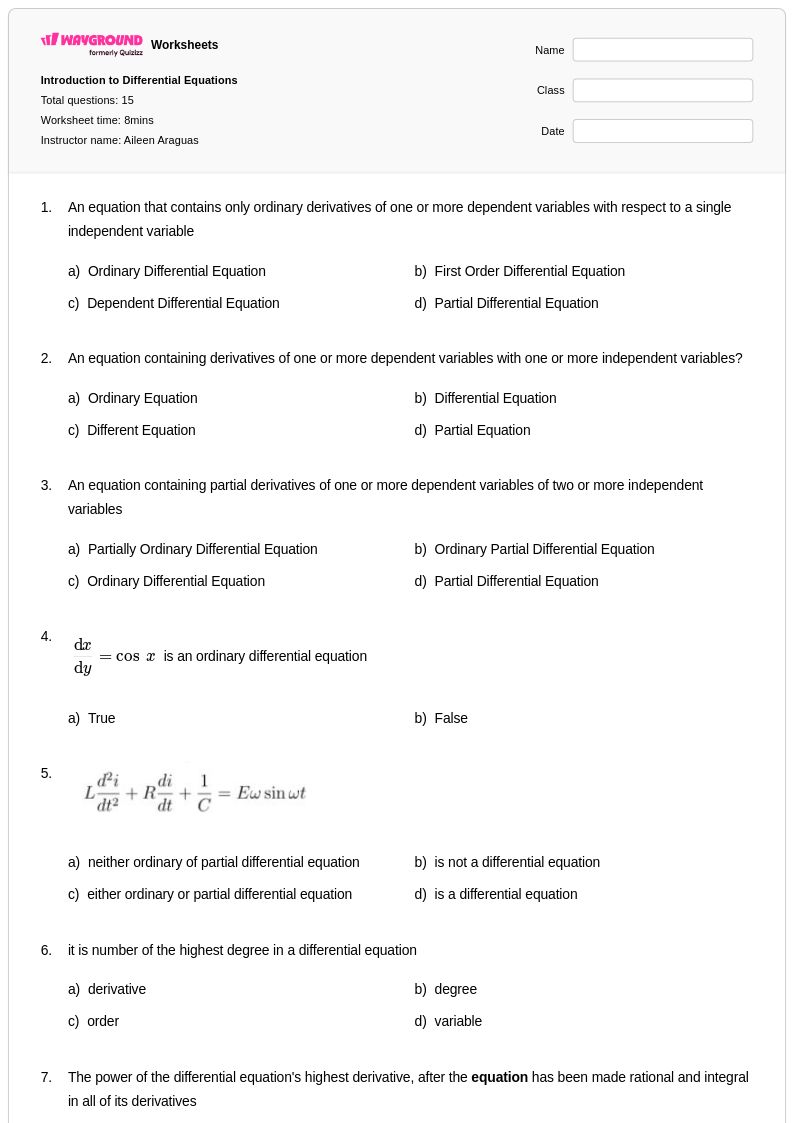
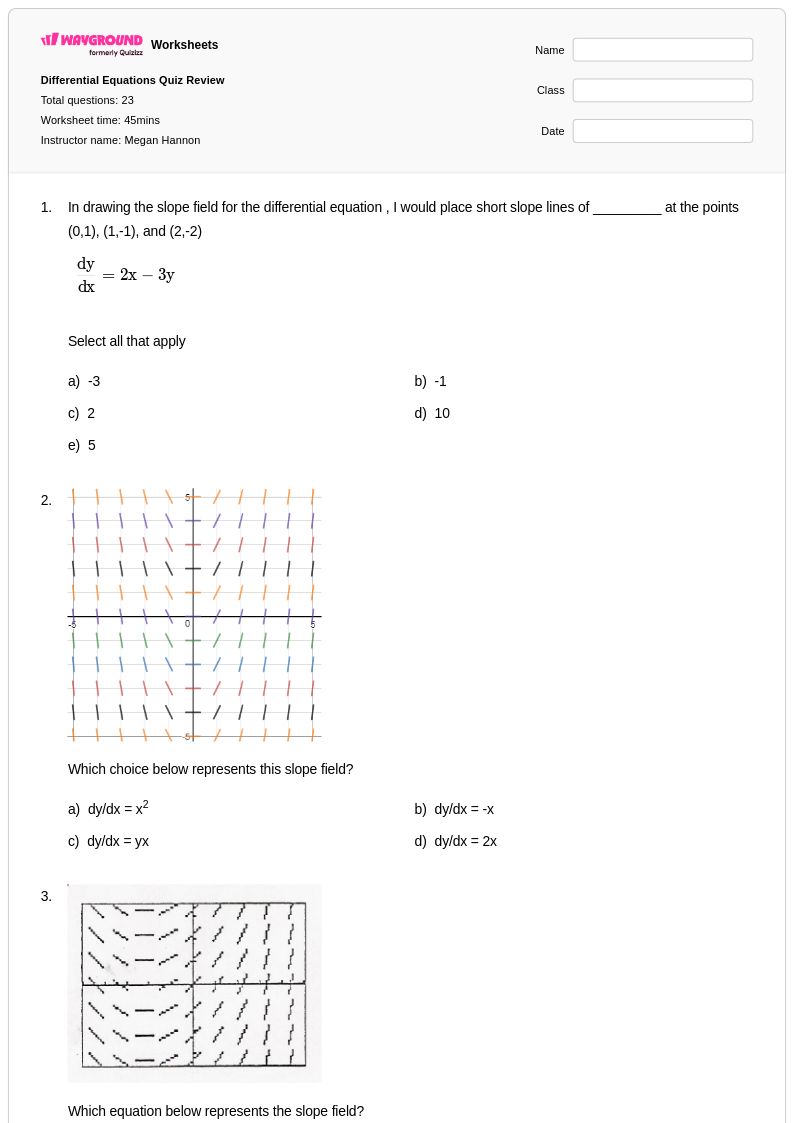
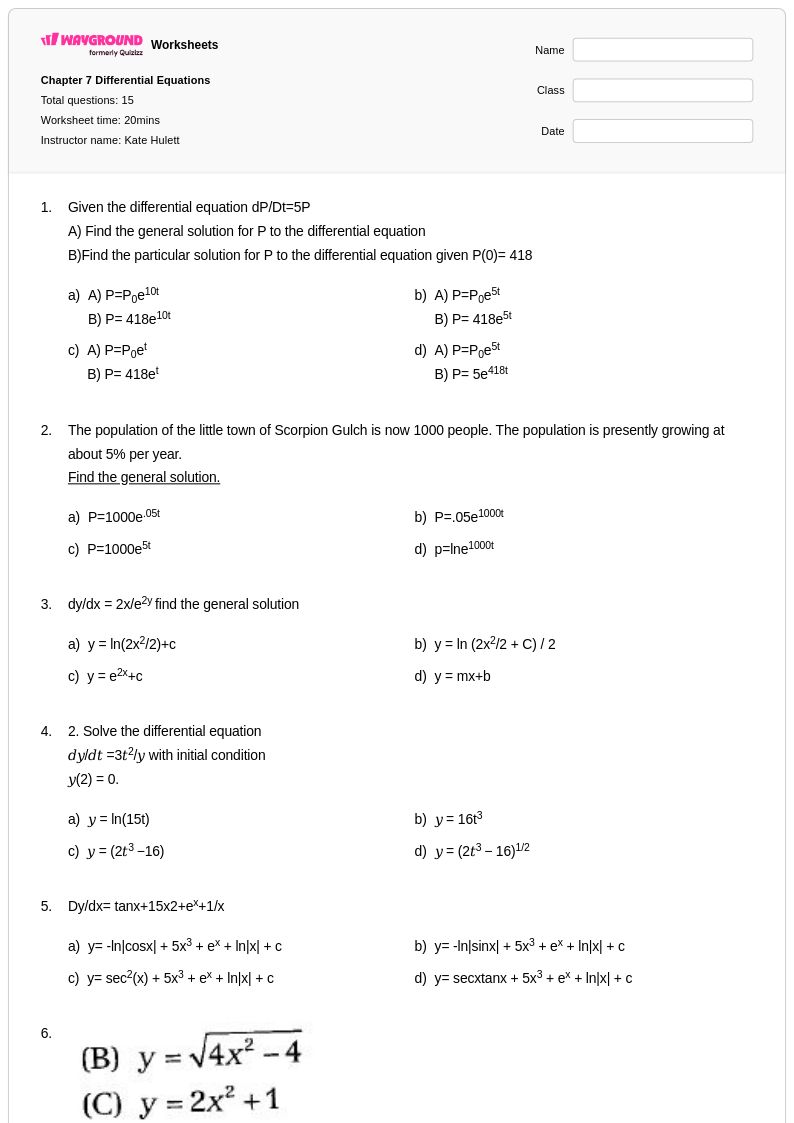
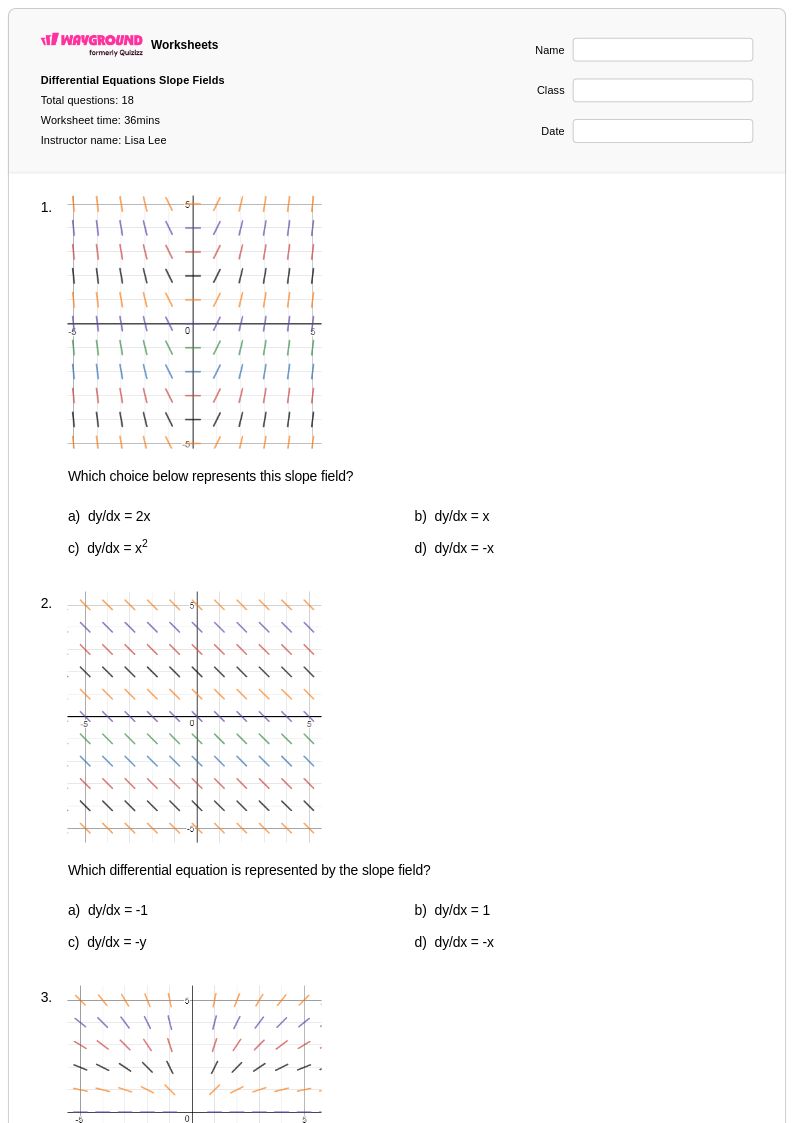
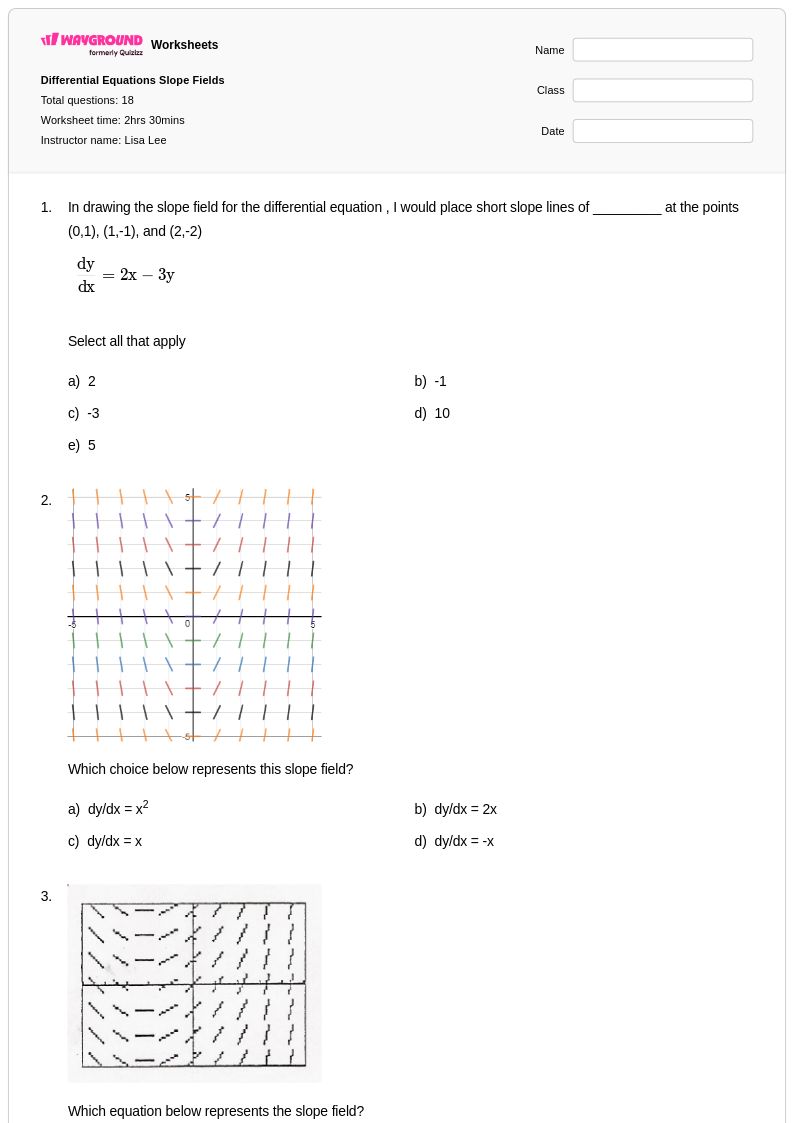
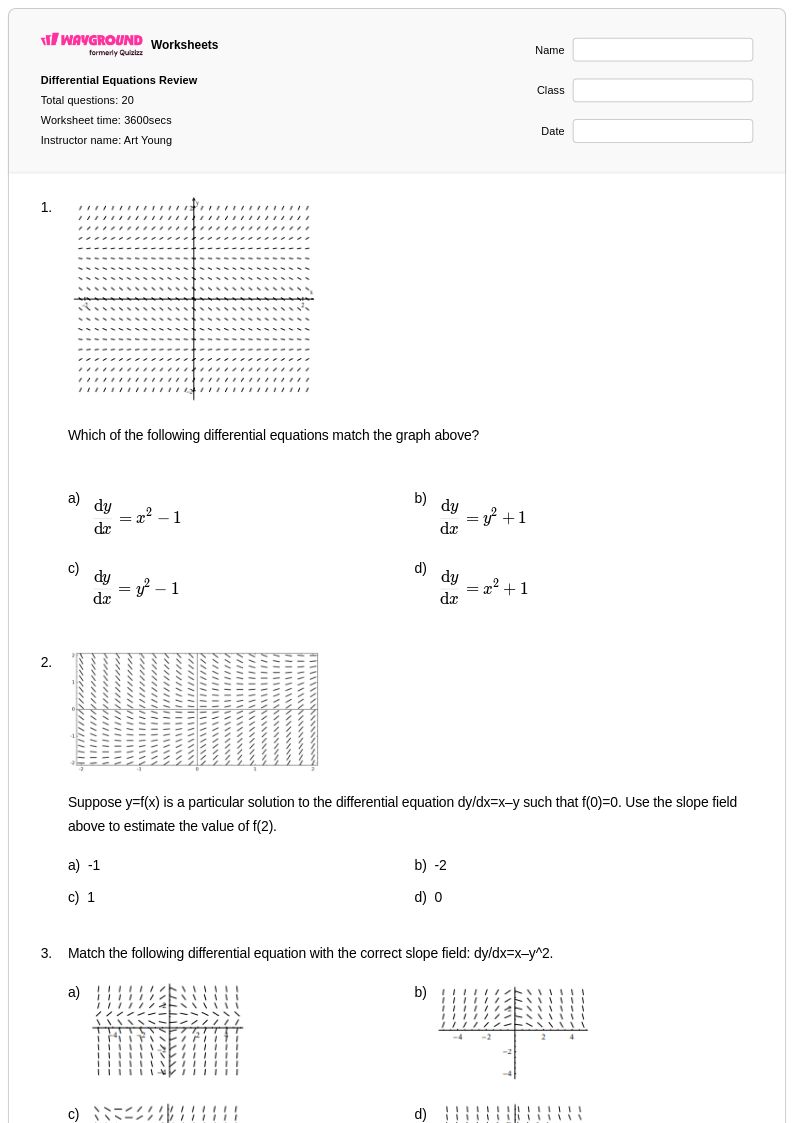
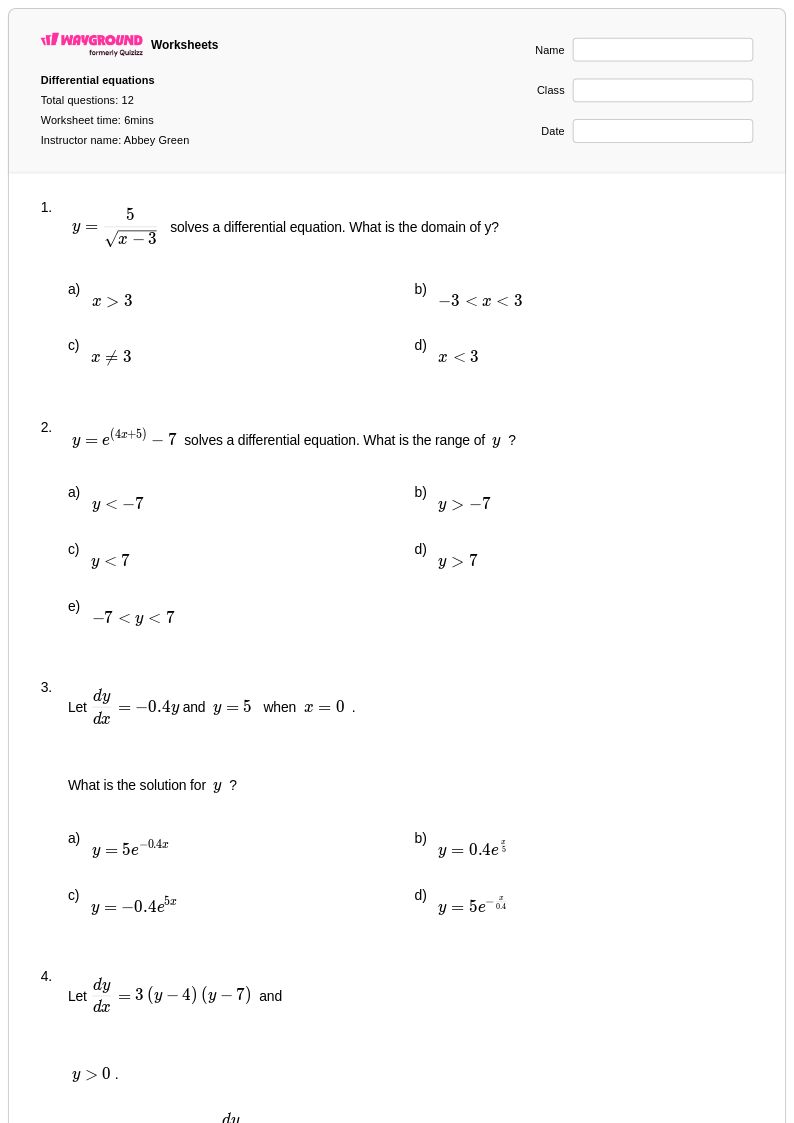
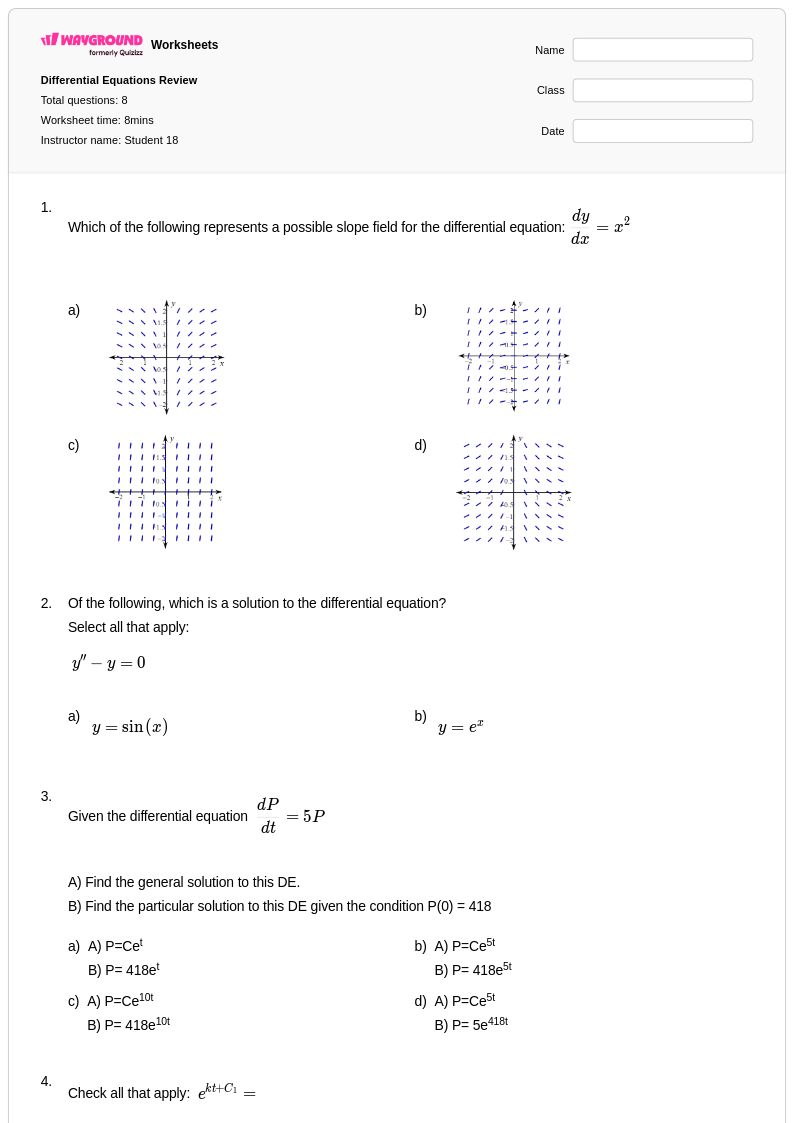
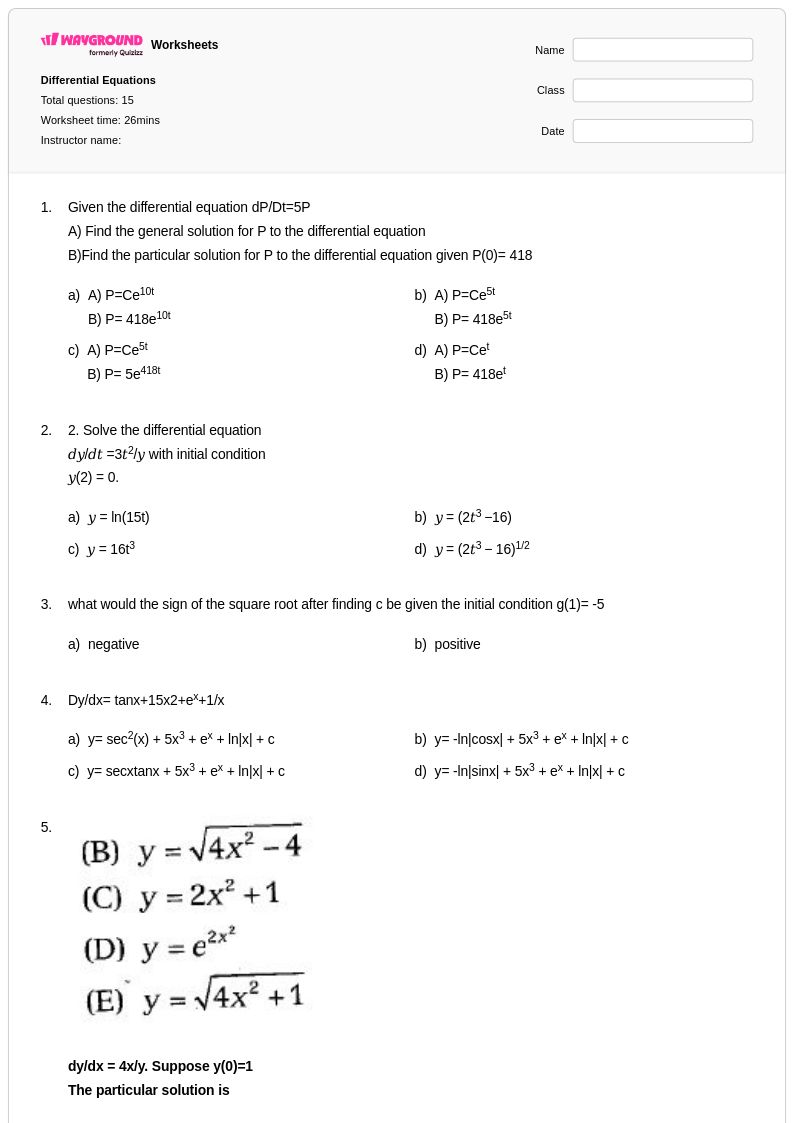
Free Year 11 differential equations worksheets and printables help students master solving first-order equations, separation of variables, and initial value problems through comprehensive practice problems with detailed answer keys.
Explore printable Differential Equations worksheets for Year 11
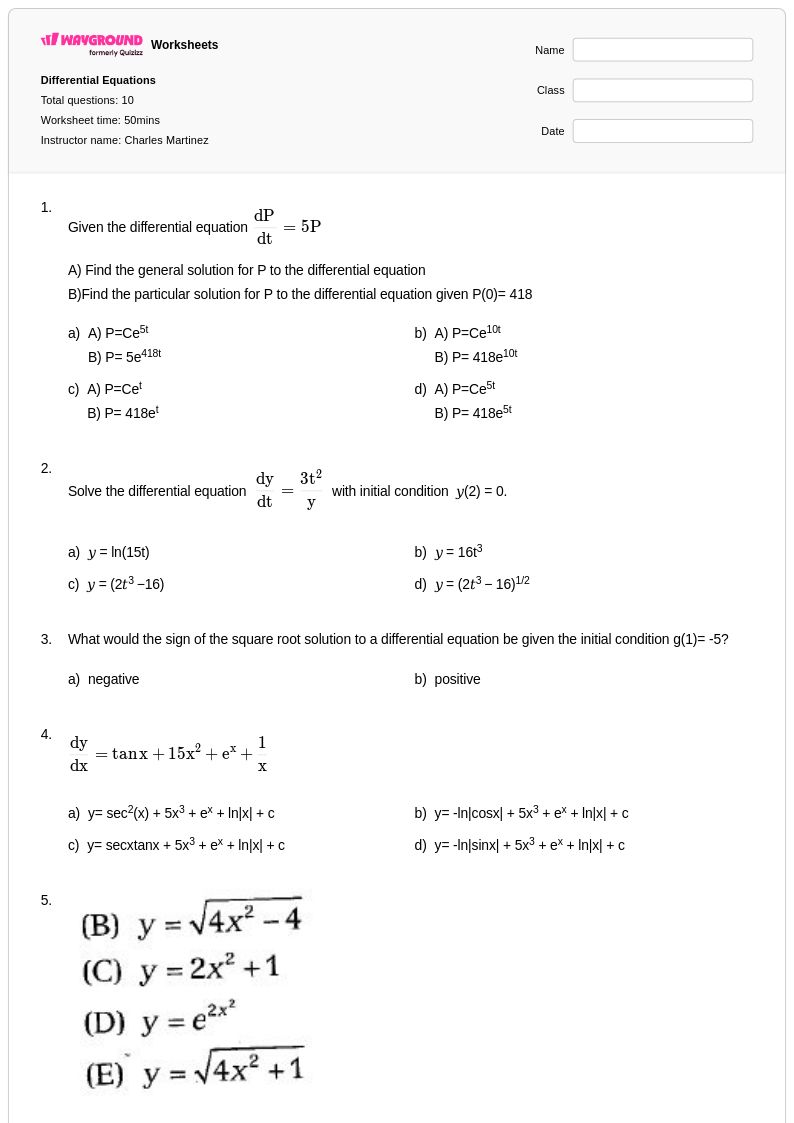
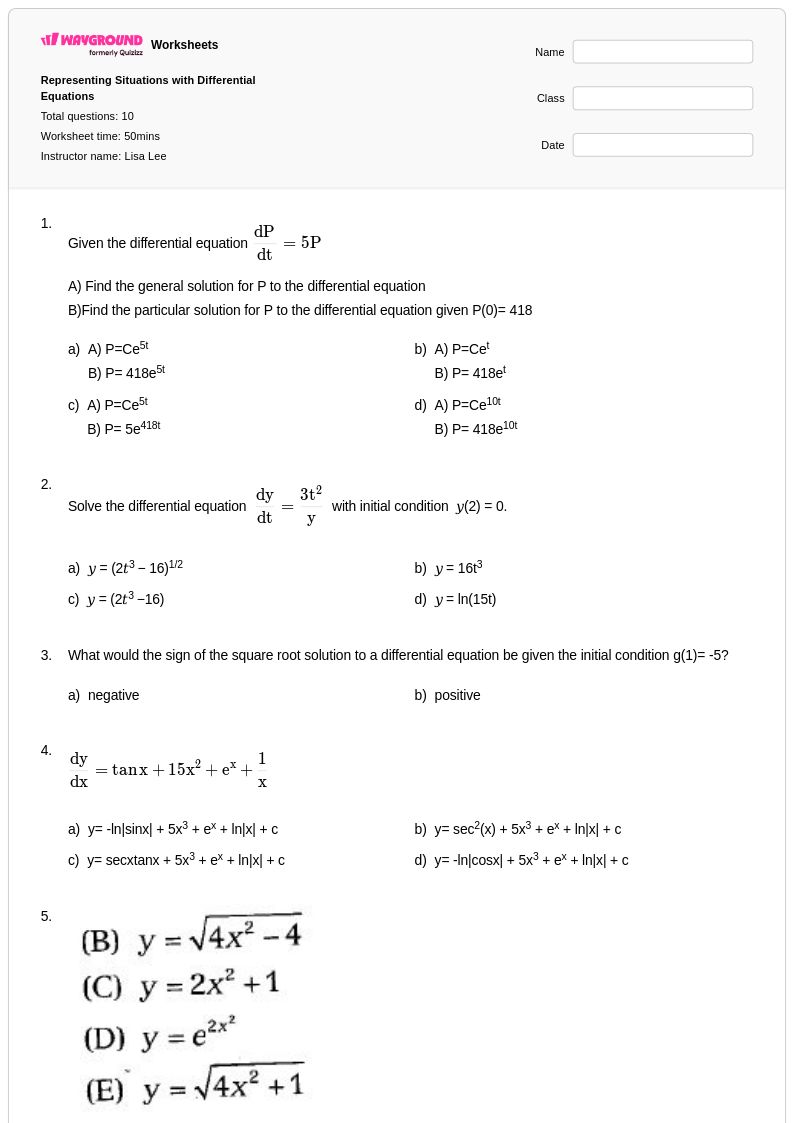
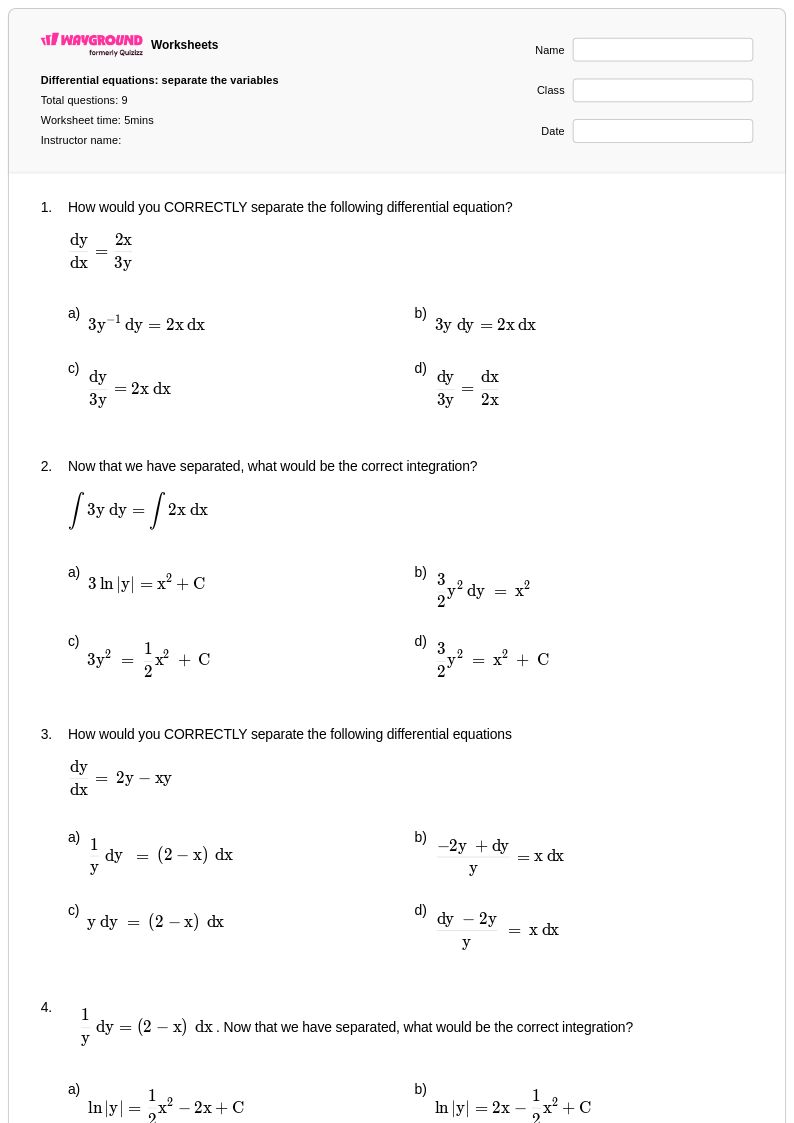
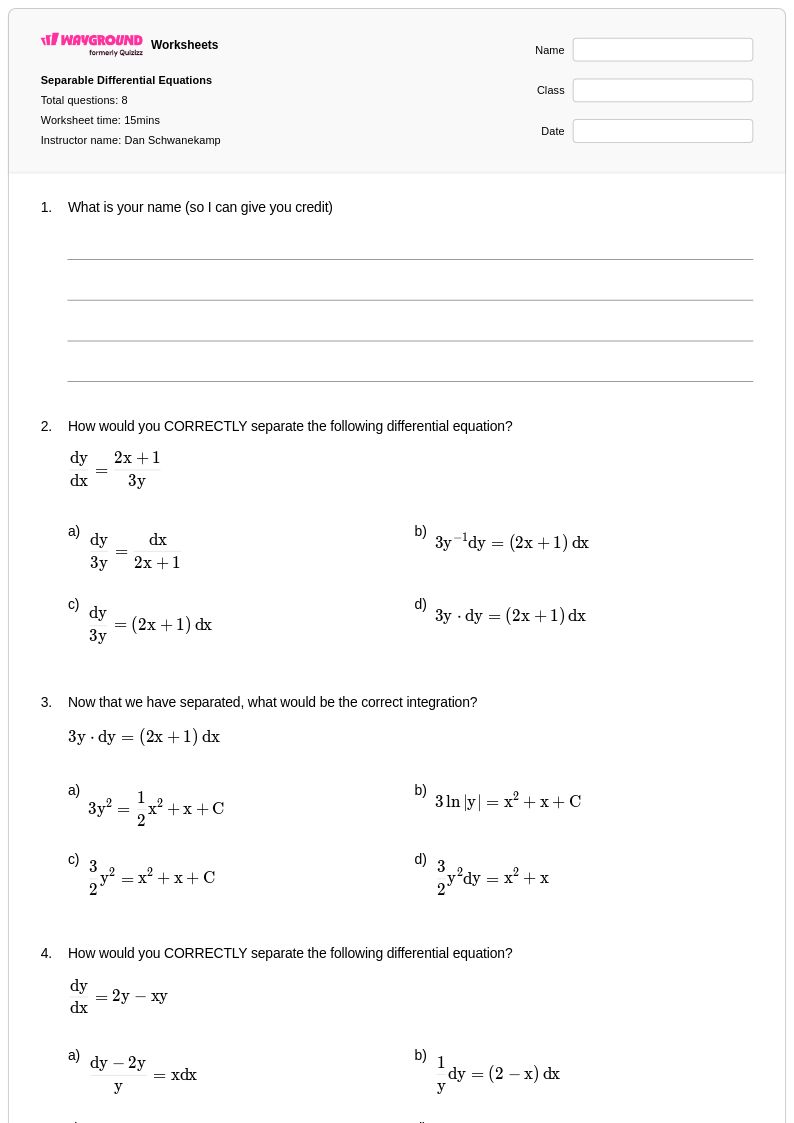
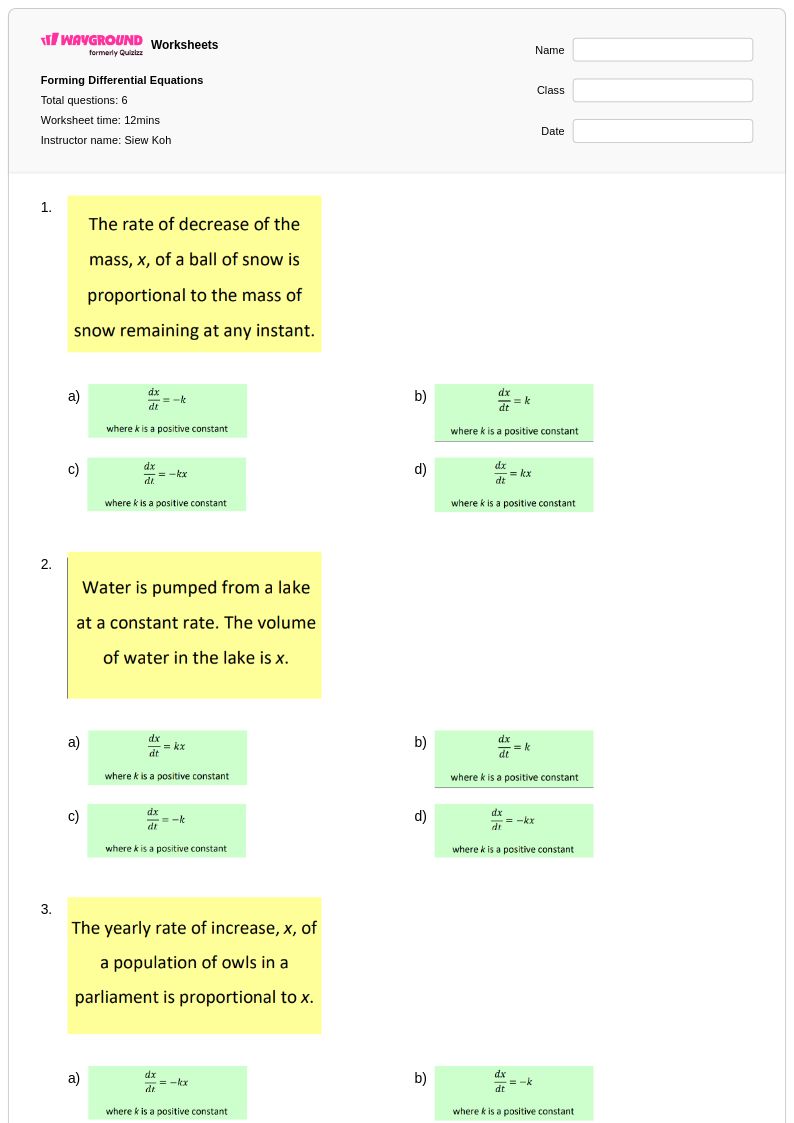
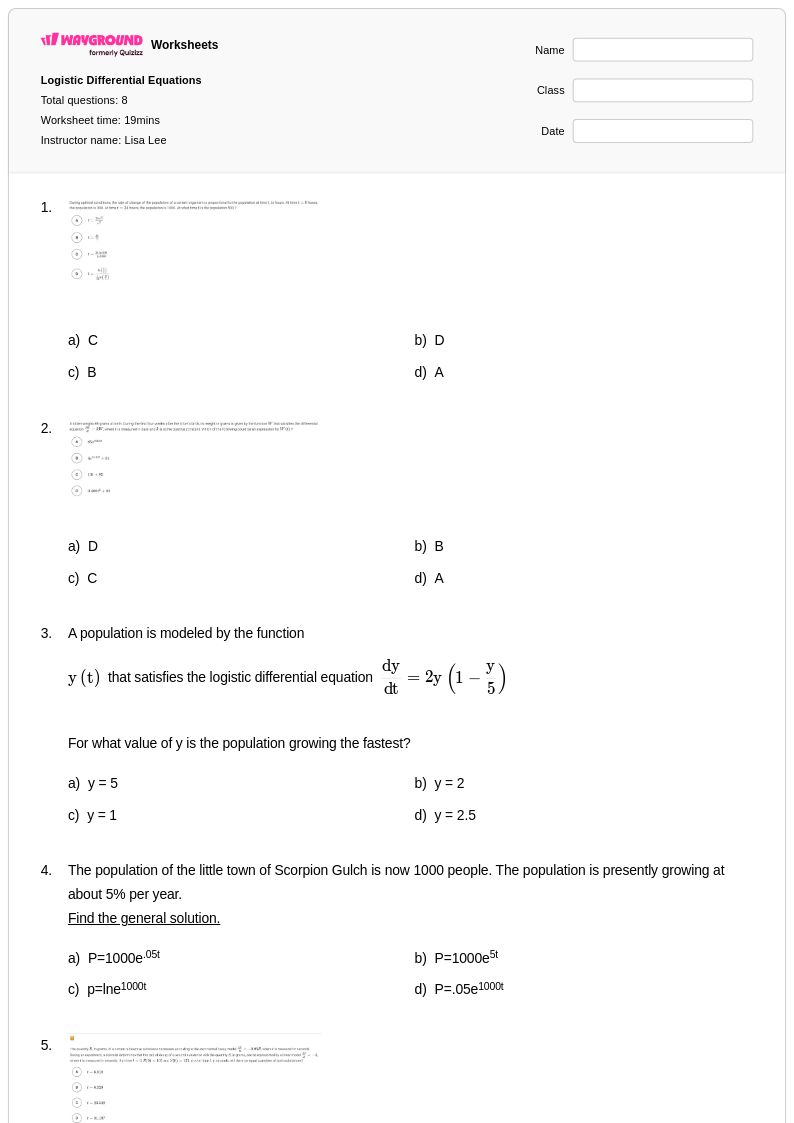
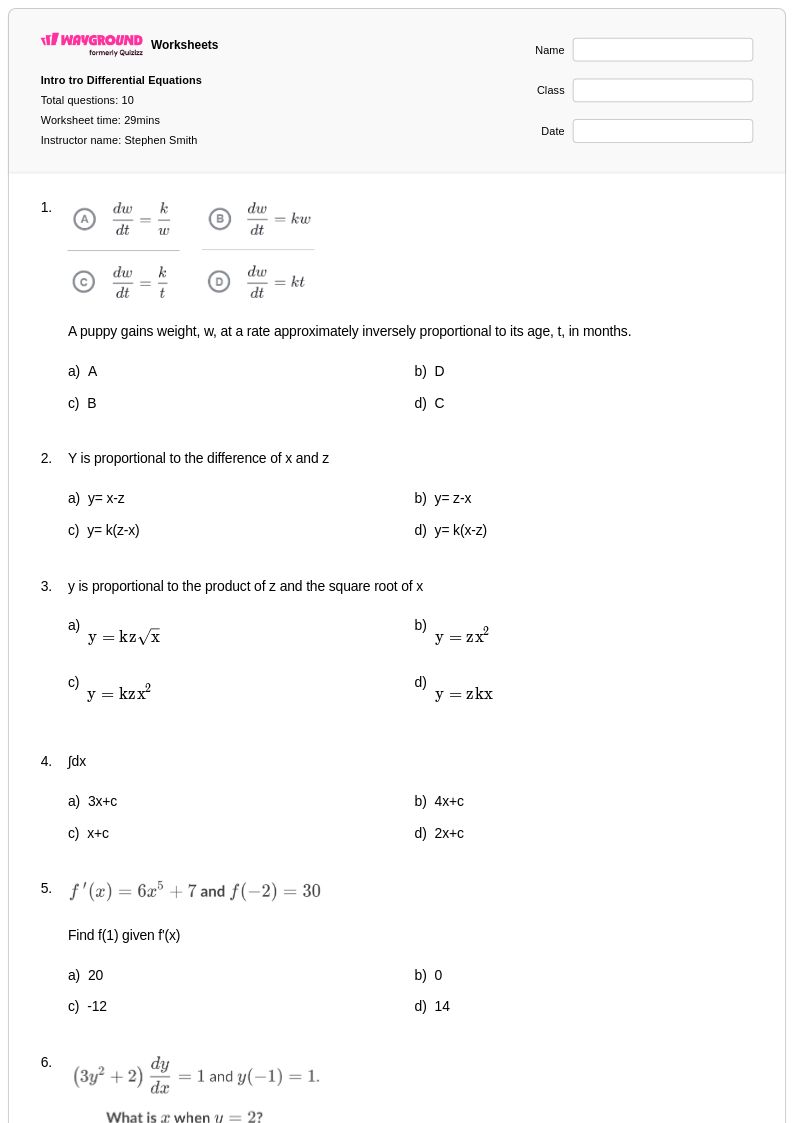
Differential equations worksheets for Year 11 students available through Wayground (formerly Quizizz) provide comprehensive practice with this foundational calculus concept that bridges algebraic thinking with advanced mathematical modeling. These expertly designed resources help students develop critical skills in identifying, classifying, and solving various types of differential equations, including separable equations, first-order linear equations, and basic applications to real-world scenarios. Each worksheet collection includes detailed practice problems that progressively build student understanding from basic concept recognition to complex problem-solving applications, with complete answer keys provided to support independent learning and self-assessment. The free printables cover essential techniques such as separation of variables, integration methods, and verification of solutions, ensuring students master both computational skills and conceptual understanding required for advanced calculus success.
Wayground (formerly Quizizz) empowers mathematics teachers with an extensive library of millions of teacher-created differential equations resources specifically curated for Year 11 calculus instruction. The platform's robust search and filtering capabilities allow educators to quickly locate worksheets aligned with specific curriculum standards and learning objectives, while built-in differentiation tools enable seamless customization for diverse student needs and ability levels. Teachers can access these materials in both printable pdf format for traditional classroom use and digital formats for interactive learning experiences, making lesson planning more efficient and effective. These versatile worksheet collections support targeted skill practice, remediation for struggling learners, and enrichment opportunities for advanced students, providing mathematics educators with the flexibility to address individual learning gaps while maintaining rigorous academic standards in differential equations instruction.
FAQs
How do I teach differential equations to Grade 11 students?
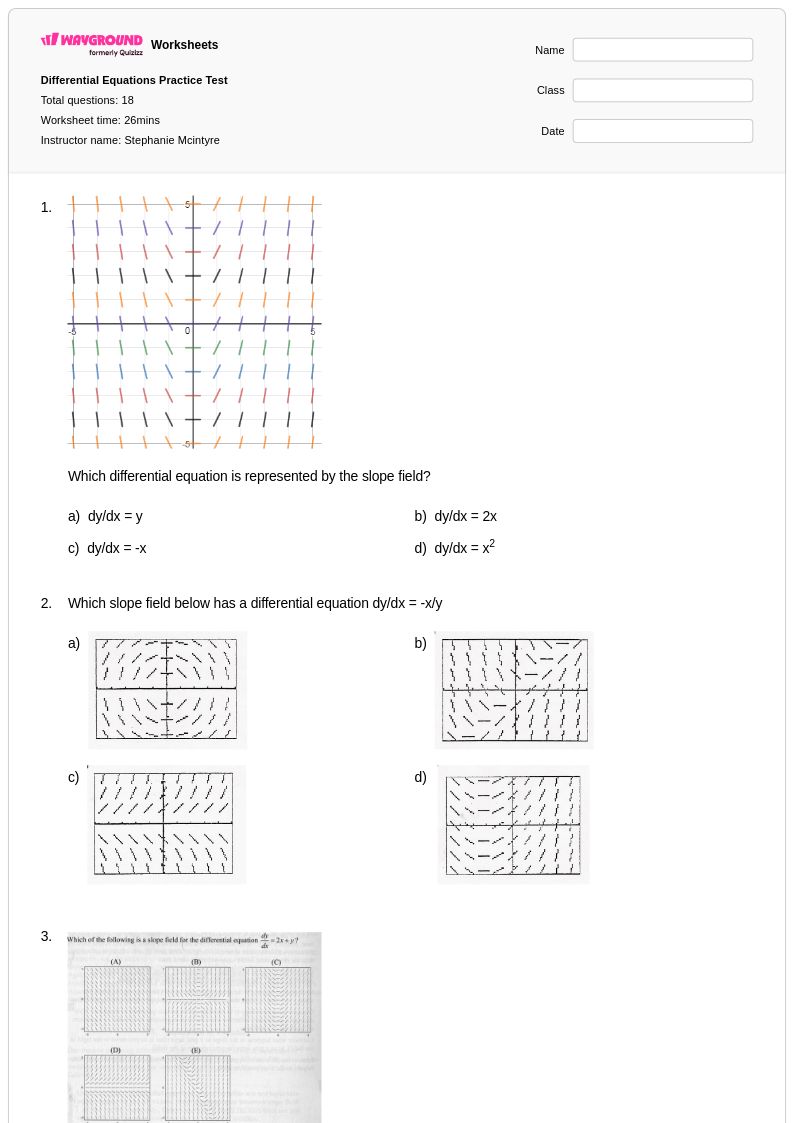
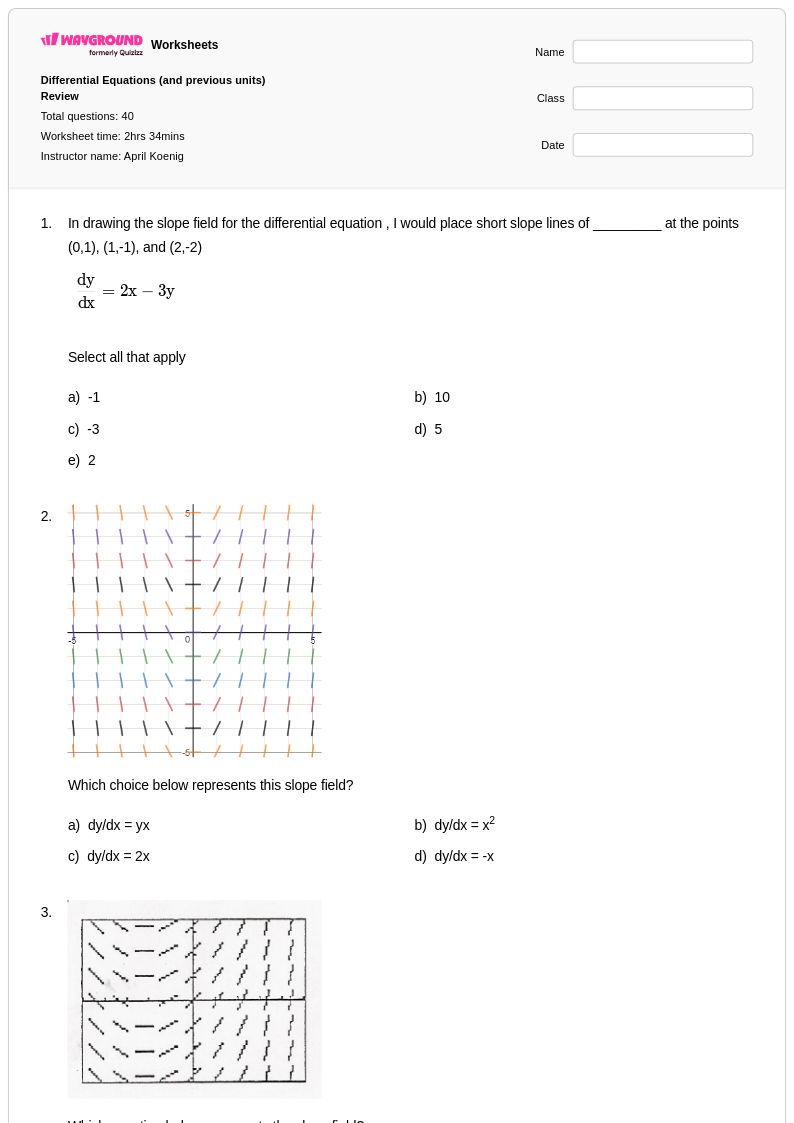
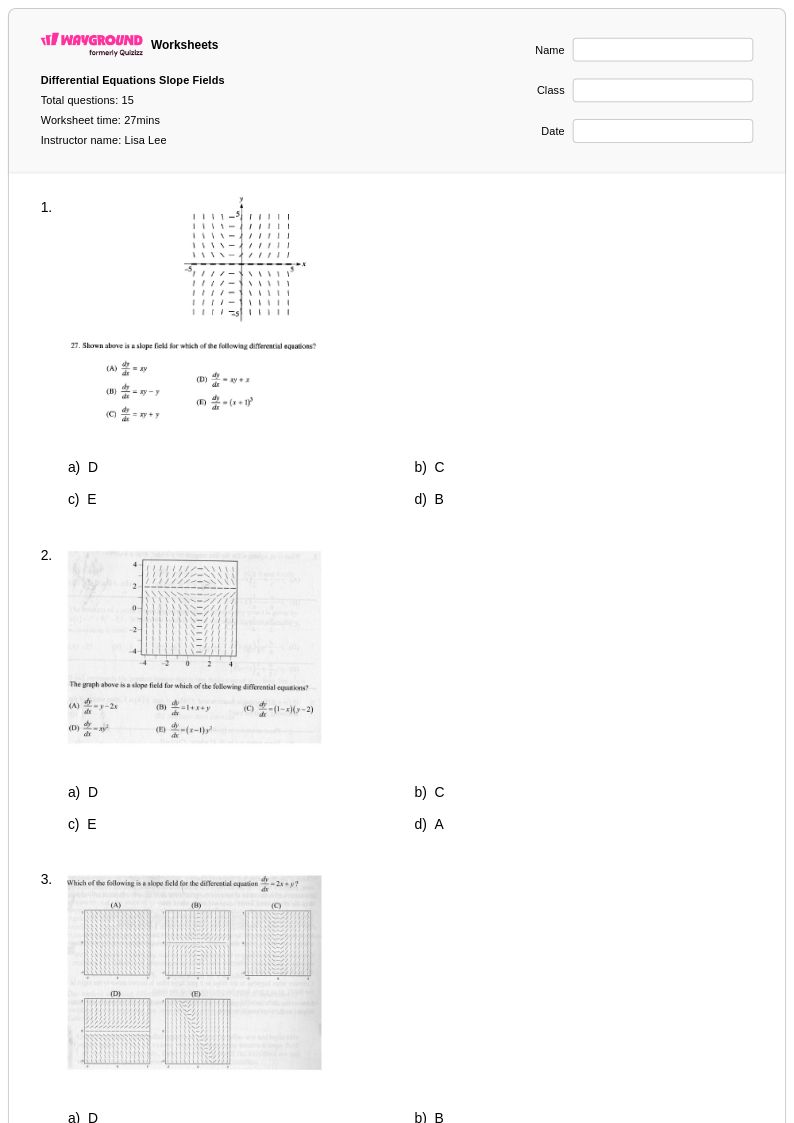
Grade 11 is typically where students encounter differential equations analytically for the first time, usually in a pre-calculus or early calculus course. Start with slope fields — they build geometric intuition about what a differential equation is saying before any algebra is involved. Then move to separable equations, which require only integration skills students already have. First-order linear equations and integrating factors can follow once separation of variables is solid. Throughout, tie each technique to a real scenario: population growth for separable equations, mixing problems for linear equations. Students who understand what they're modeling make far fewer procedural errors.
What practice problems are most effective for Grade 11 differential equations?
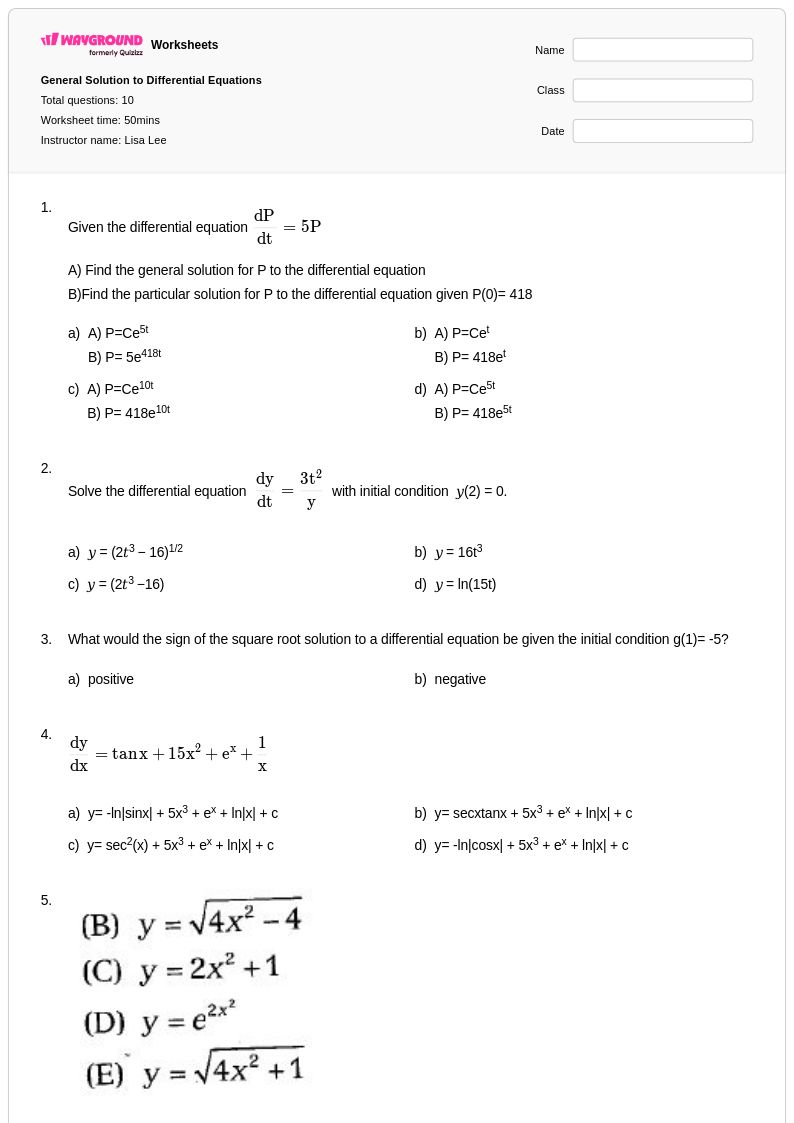
Problems that require students to both solve and interpret are more valuable than pure computation drills. A good practice set at this level includes: identifying the equation type before choosing a method, solving with an initial condition to find a particular solution, and sketching or describing the behavior of the solution. Mixing equation types on the same worksheet, rather than blocking all separable equations together, builds the classification skill that's tested on AP Calculus exams and is often underdeveloped when students only practice one method at a time.
What mistakes do Grade 11 students most commonly make with differential equations?
The constant of integration causes the most persistent problems: students either drop it entirely or forget to apply an initial condition to solve for it, leaving a general solution when a particular one was asked for. A second common error is misapplying the integrating factor — multiplying it through correctly on the left side but forgetting to multiply the right side as well. Both errors are hard to catch without checking the solution by substitution, so building that verification habit early is worth the class time.
How do I use Wayground's Grade 11 differential equations worksheets in my class?
Each worksheet comes with a complete answer key, so it works well for independent practice or flipped-classroom review where students self-check before class discussion. Hosting the worksheet as a digital quiz on Wayground gives you live visibility into where students are getting stuck — useful for a topic where errors tend to cluster at specific steps. For classes where paper practice is preferred, the printable PDF is available, and the Wayground for Teachers app lets you scan and grade student submissions without manual re-entry.
Are these worksheets aligned to AP Calculus BC standards for differential equations?
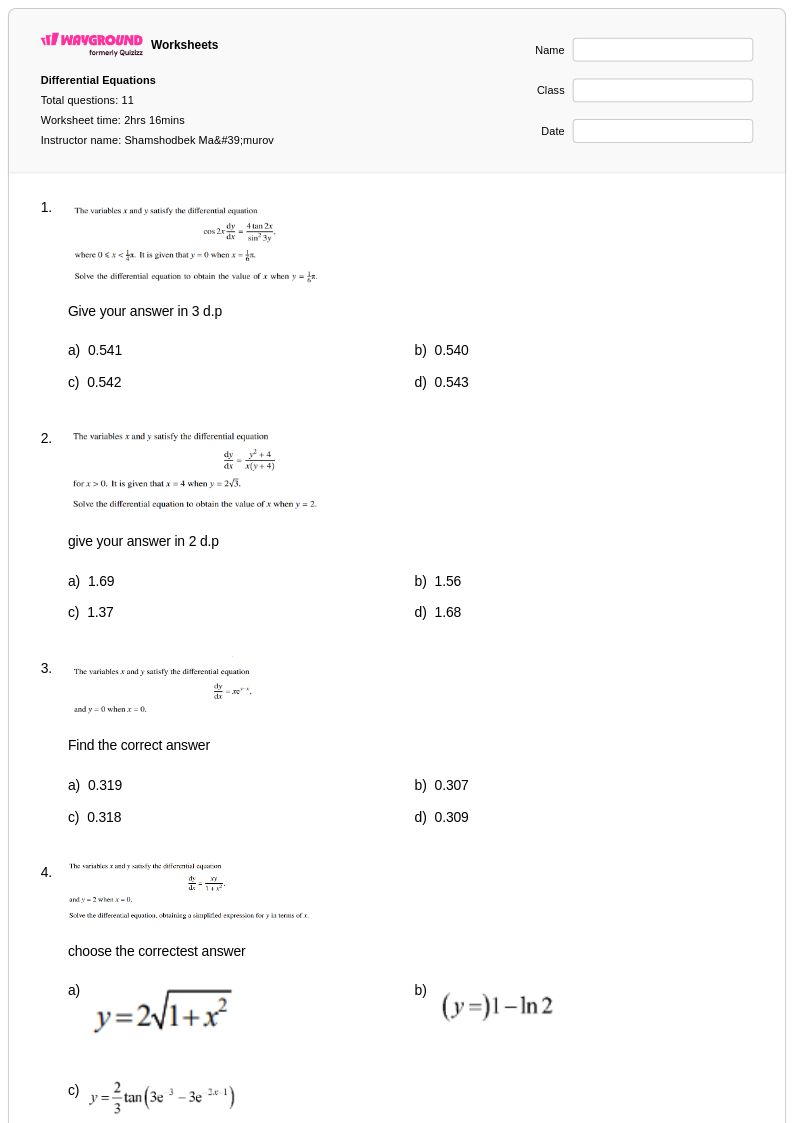
AP Calculus BC is the most relevant framework for Grade 11 differential equations in the US. The College Board expects students to move from solving separable equations analytically to reasoning about solutions graphically using slope fields, and then to applying Euler's method for numerical approximation. These worksheets align with that progression — covering separation of variables and initial value problems as the analytic core, with applied modeling problems (growth, decay, cooling) that reflect the contextual reasoning AP Calculus BC exams require alongside procedural skill.
How can I accommodate diverse learners in a Grade 11 differential equations unit?
For students who process text slowly or have reading barriers, Wayground's Read Aloud feature is particularly useful here — applied differential equations problems carry a lot of setup language, and struggling to parse the scenario before the math even starts is a real obstacle. For students who need more time on multi-step problems, extended time can be configured per student without affecting the rest of the class. If you have English language learners, you can generate a translated version of the worksheet directly in Wayground, keeping the same problems and structure.