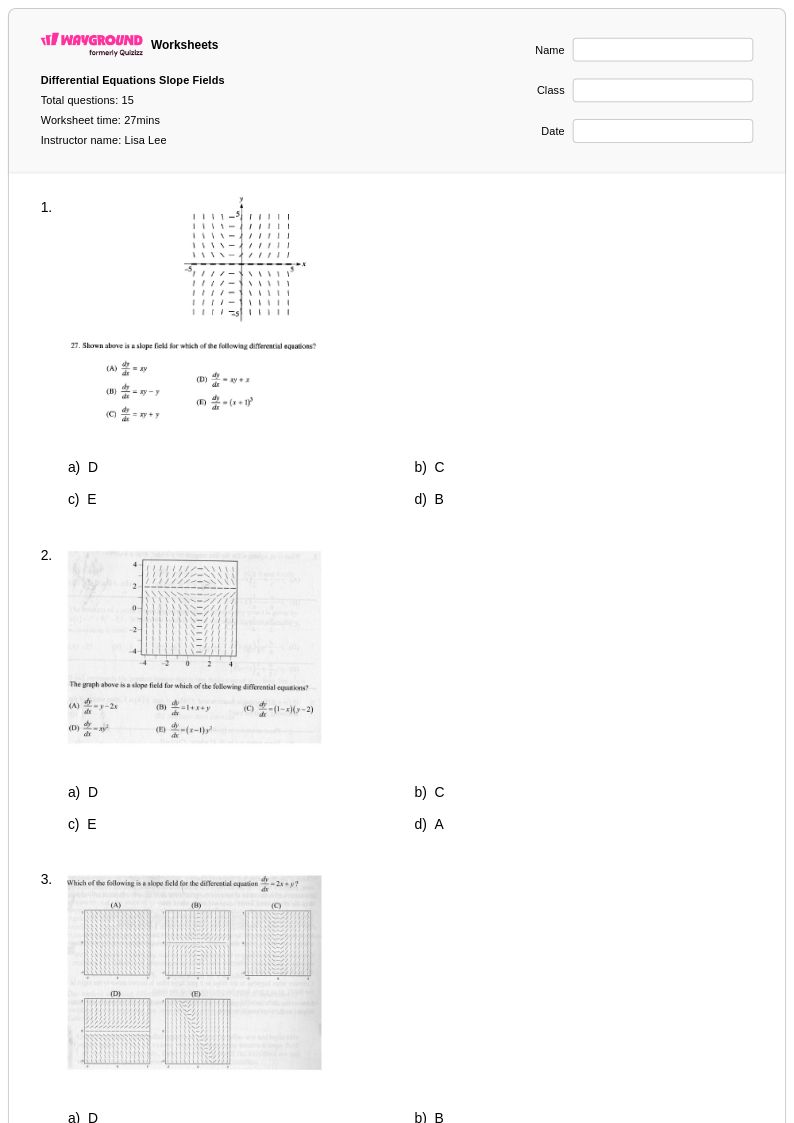
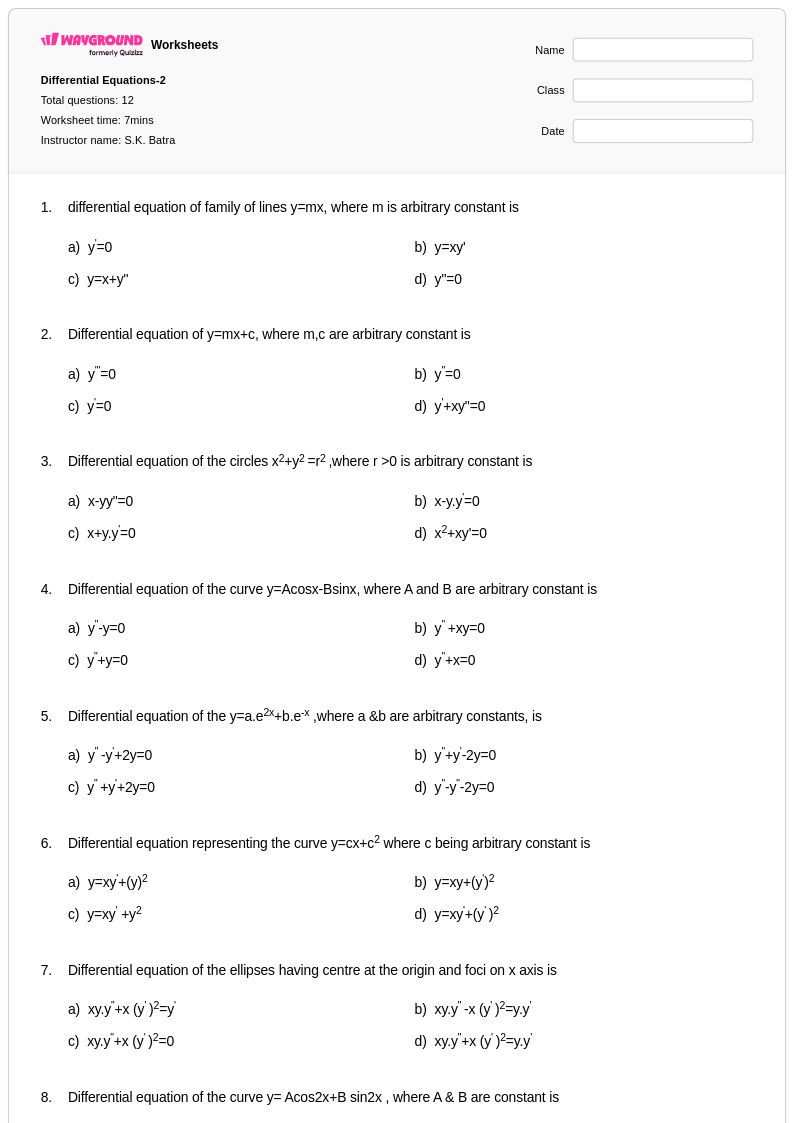
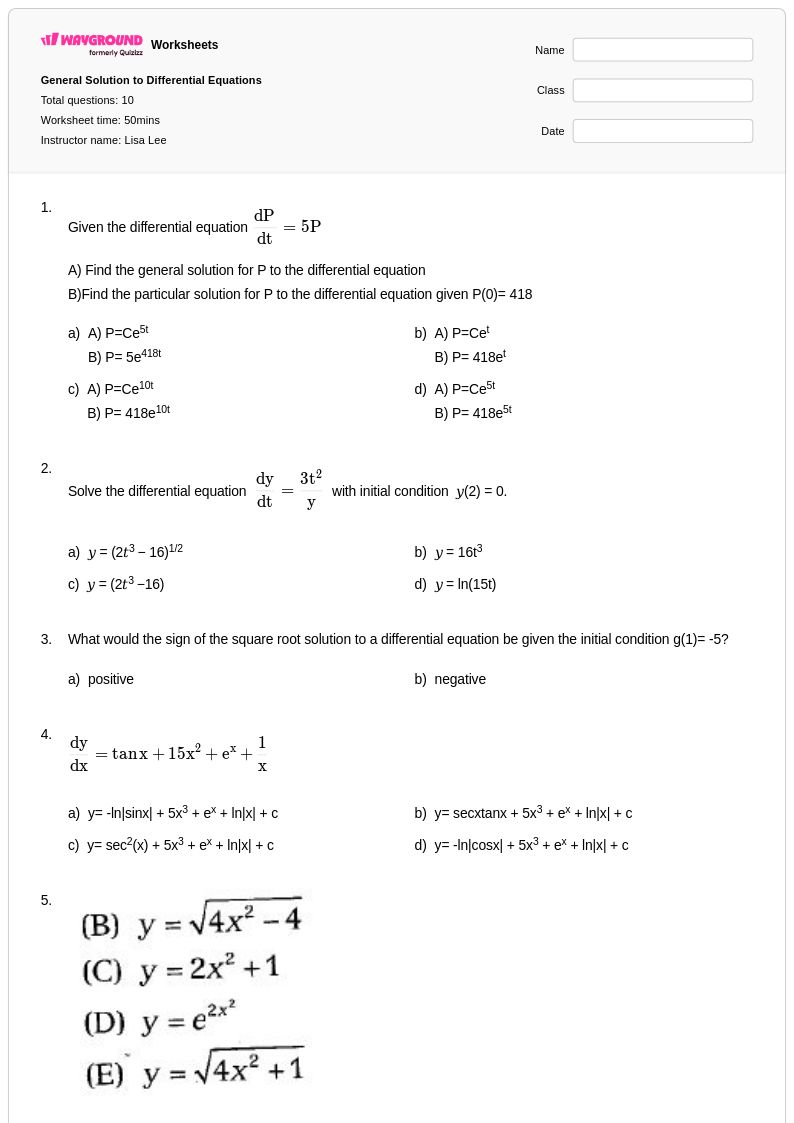
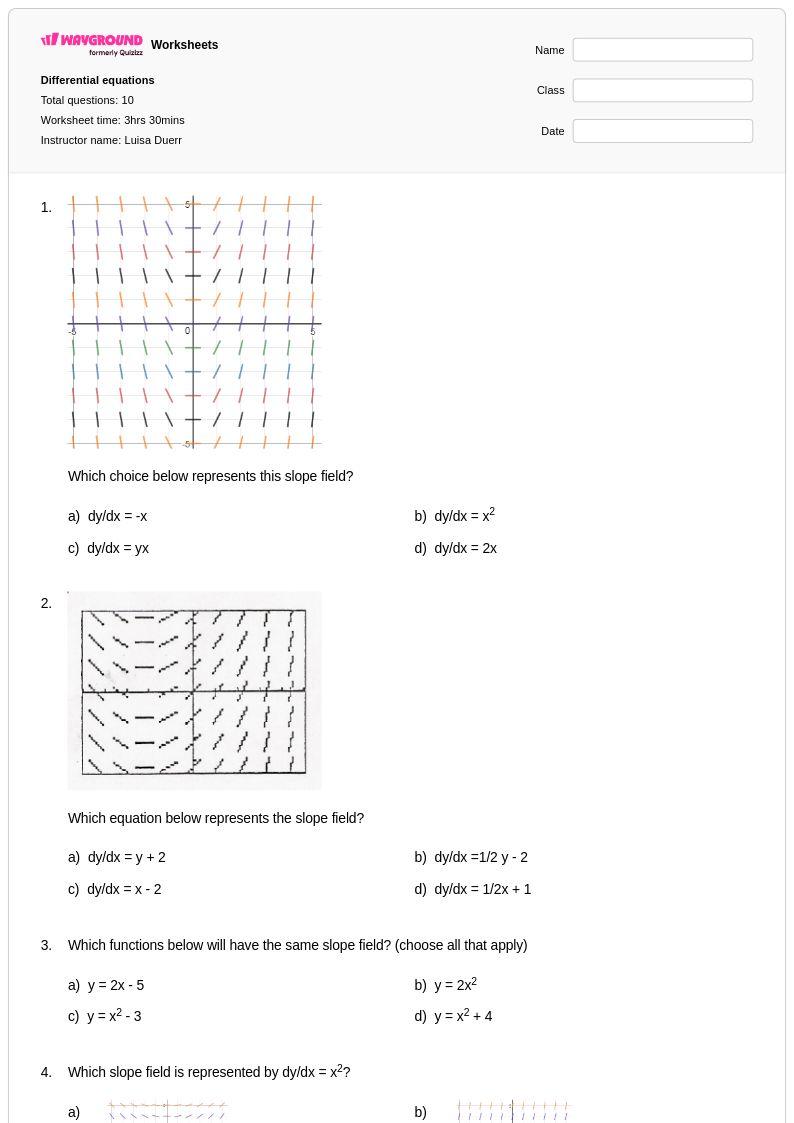
Free Printable Differential Equations Worksheets for Year 12
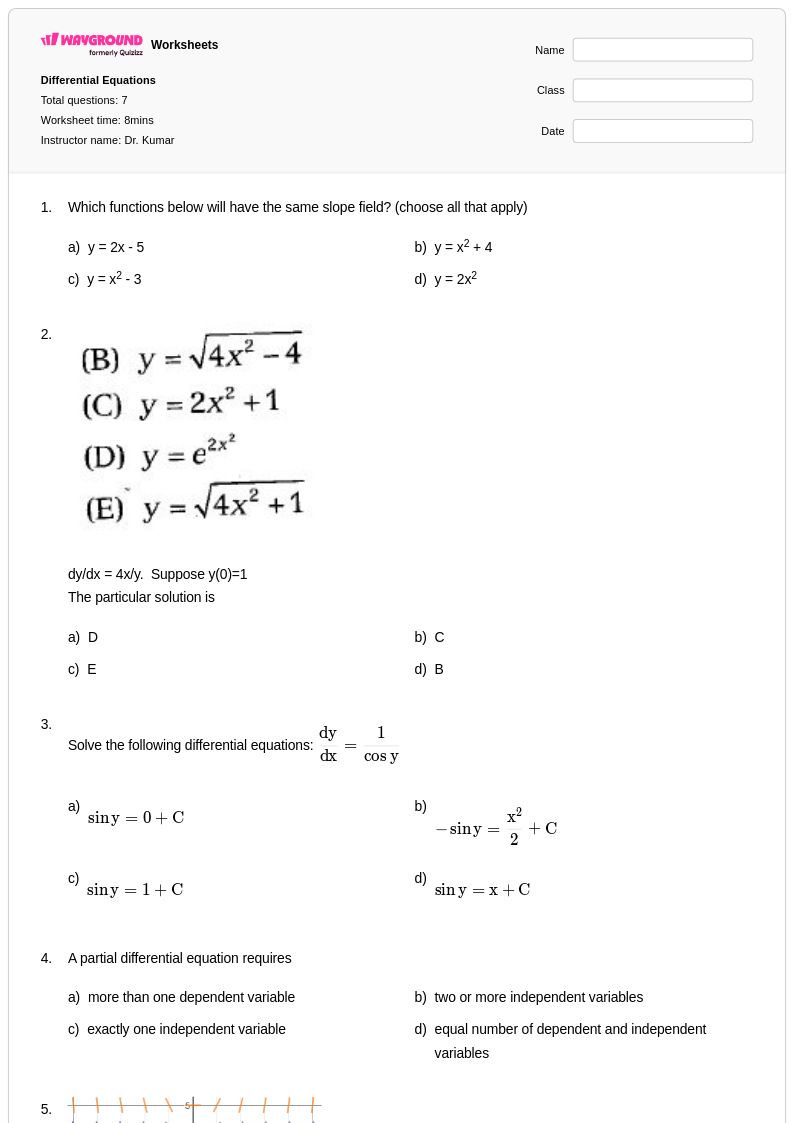
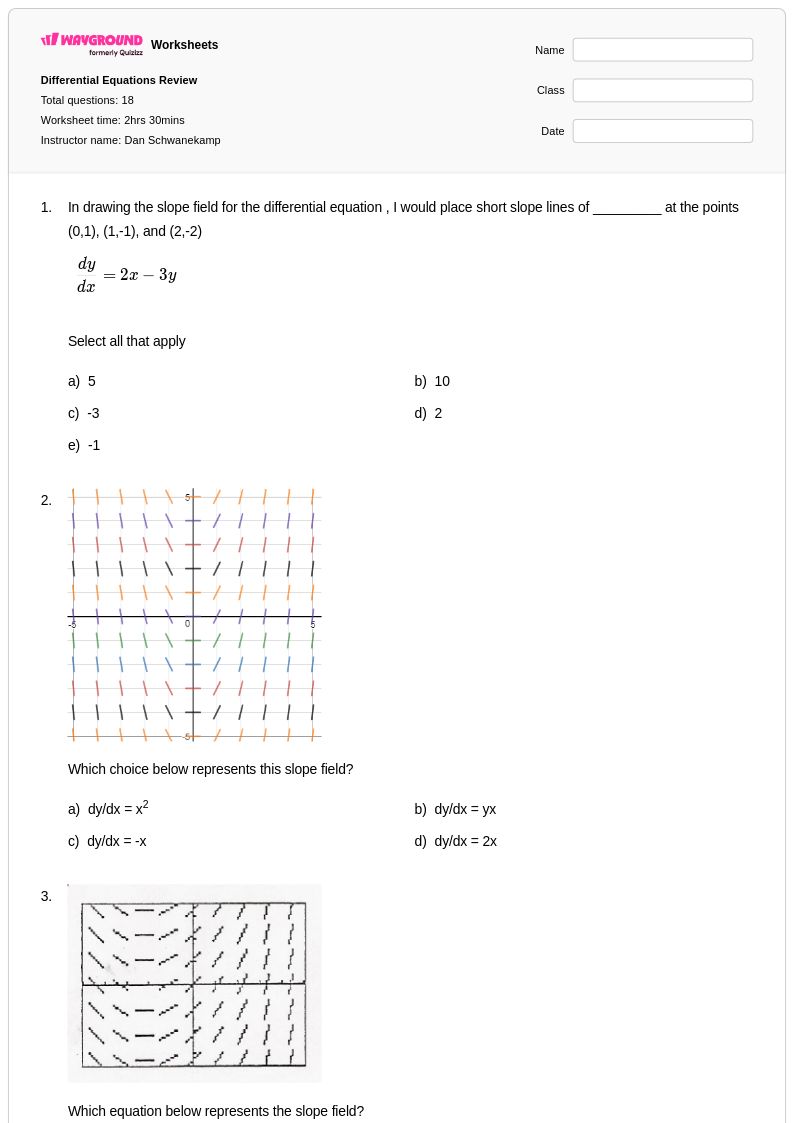
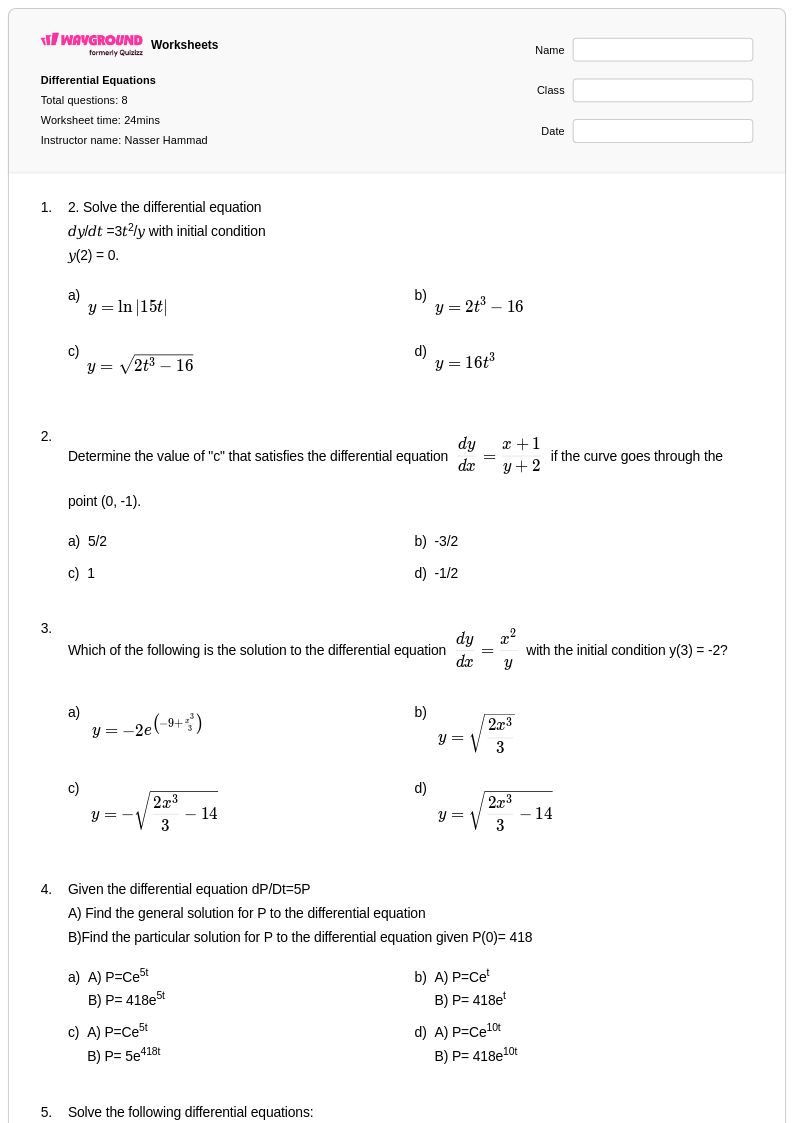
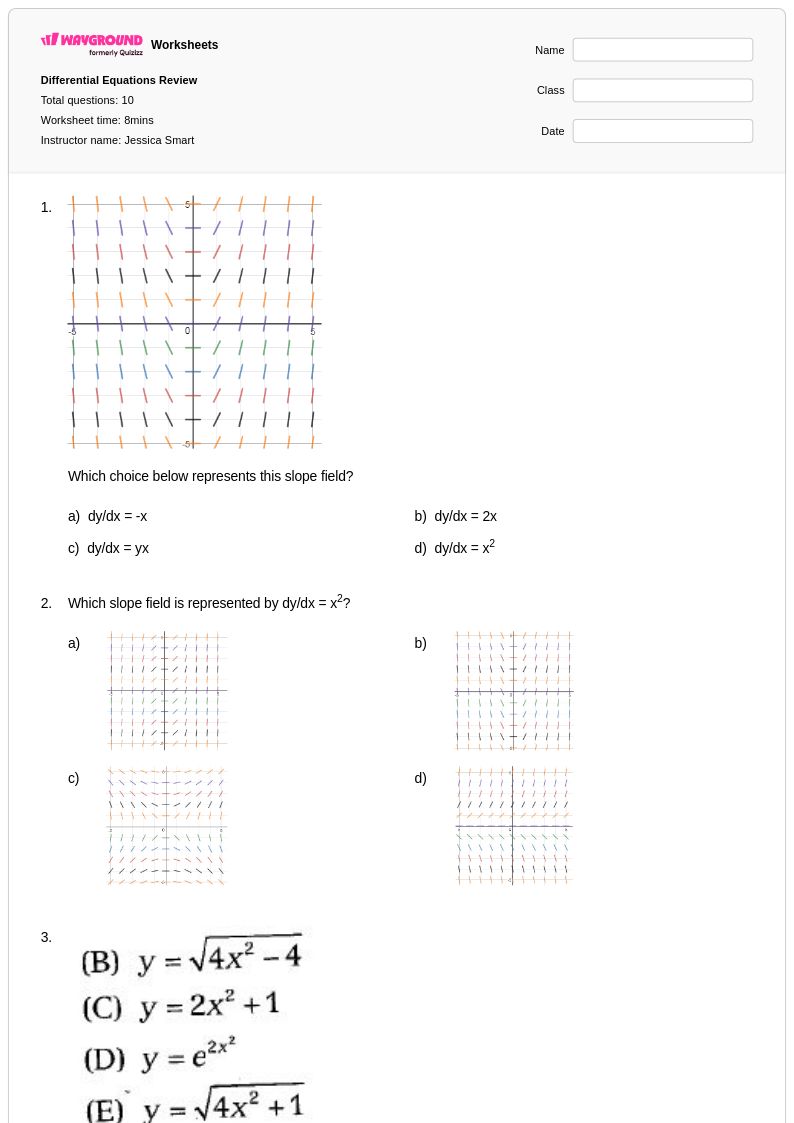
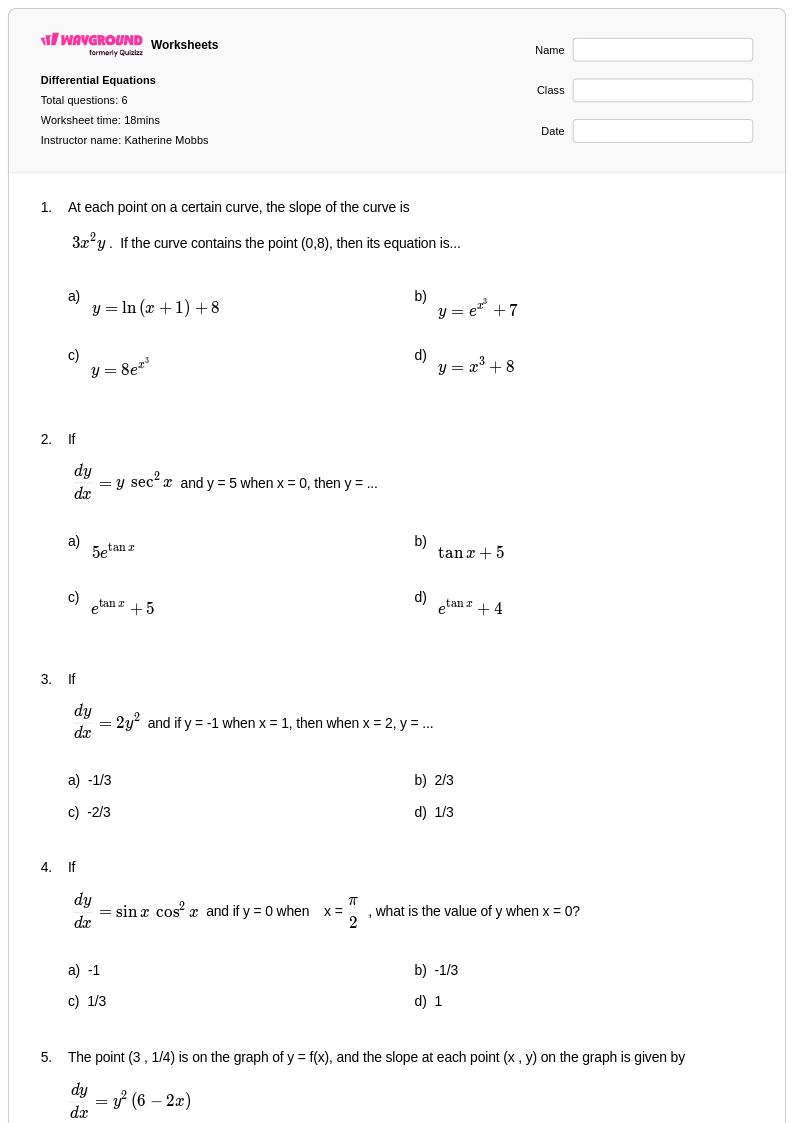
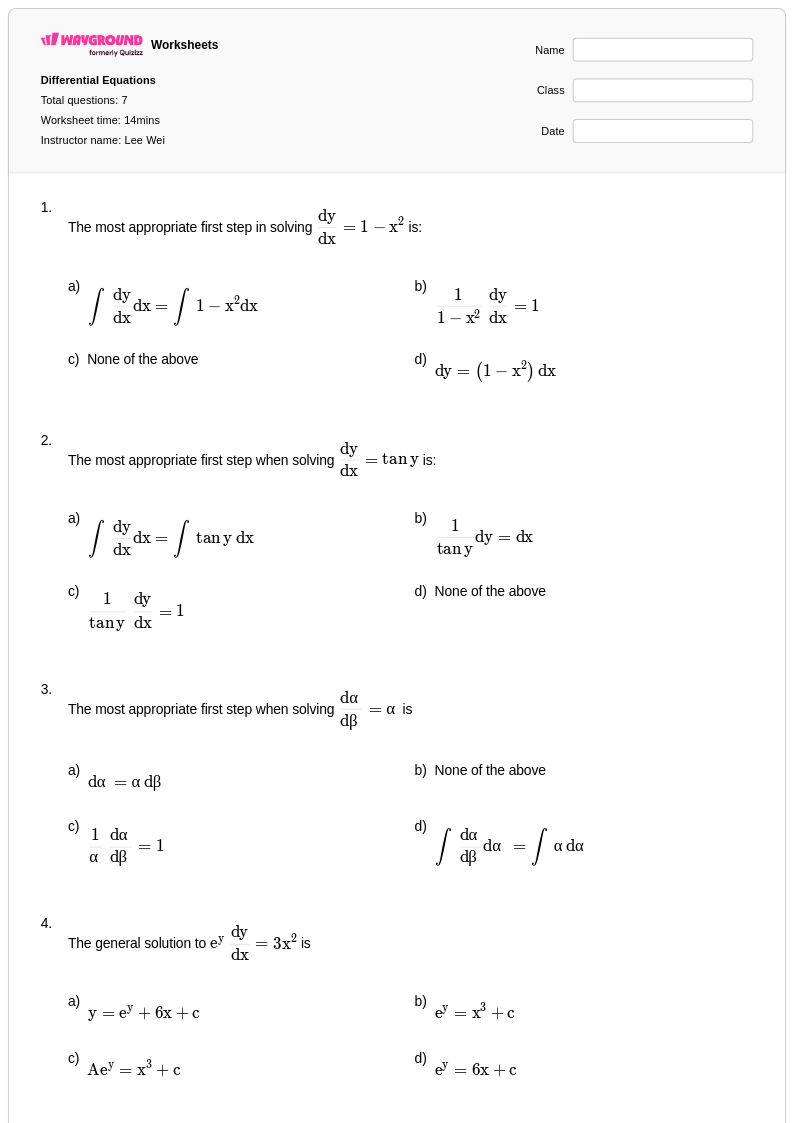
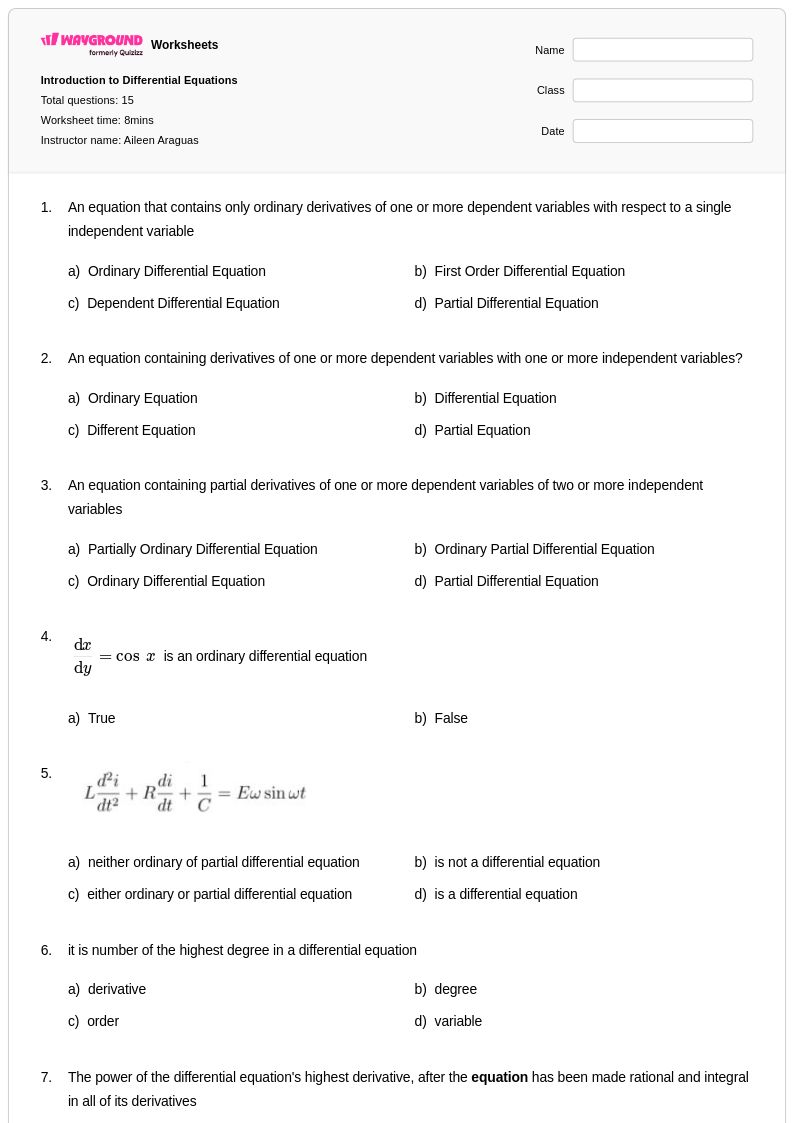
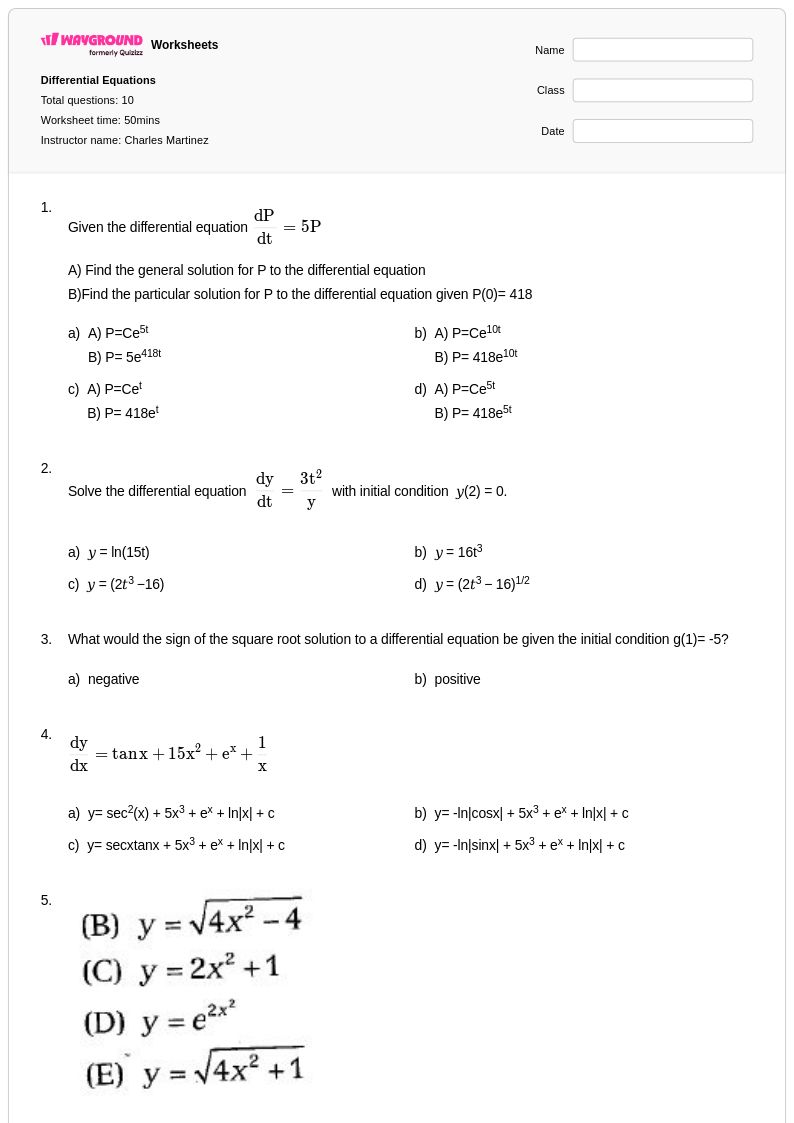
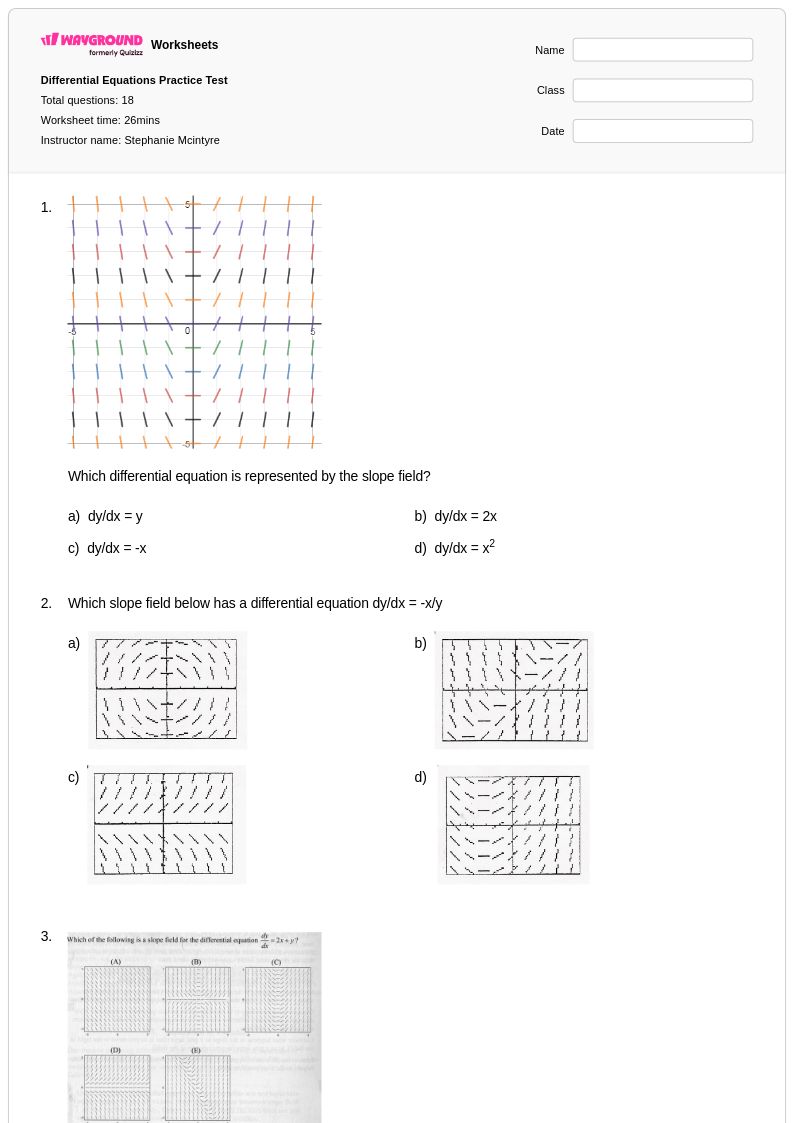
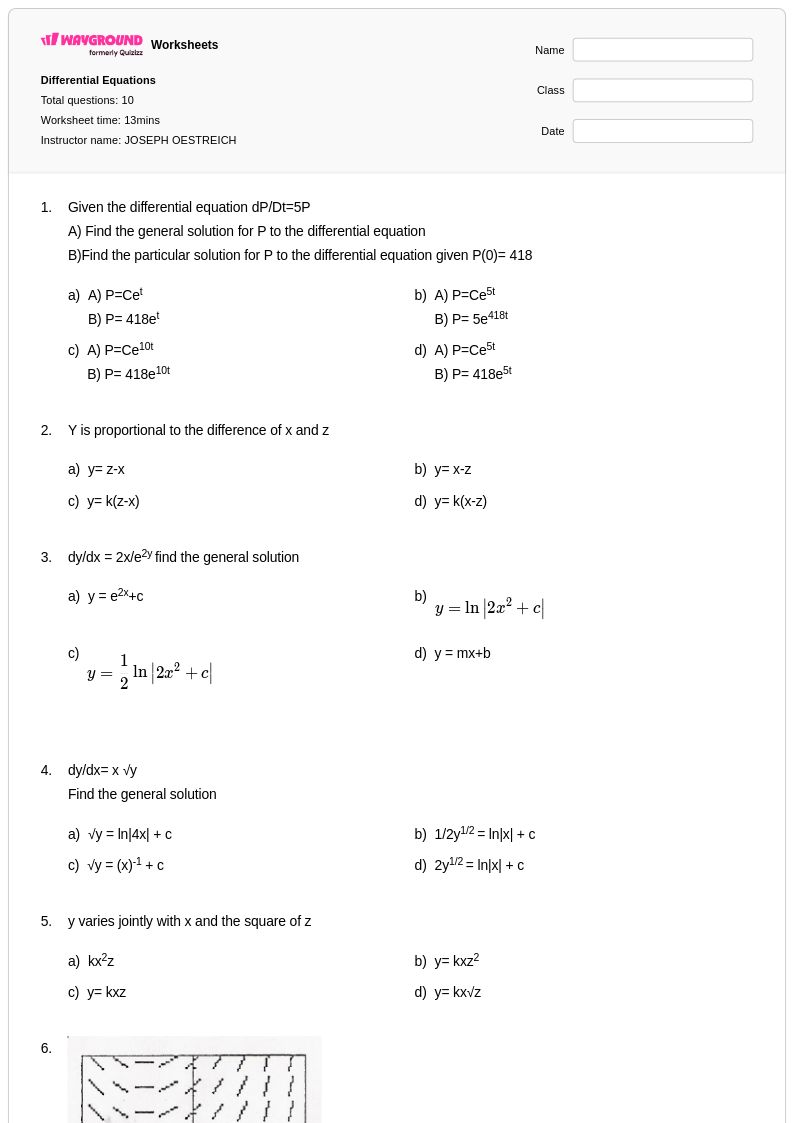
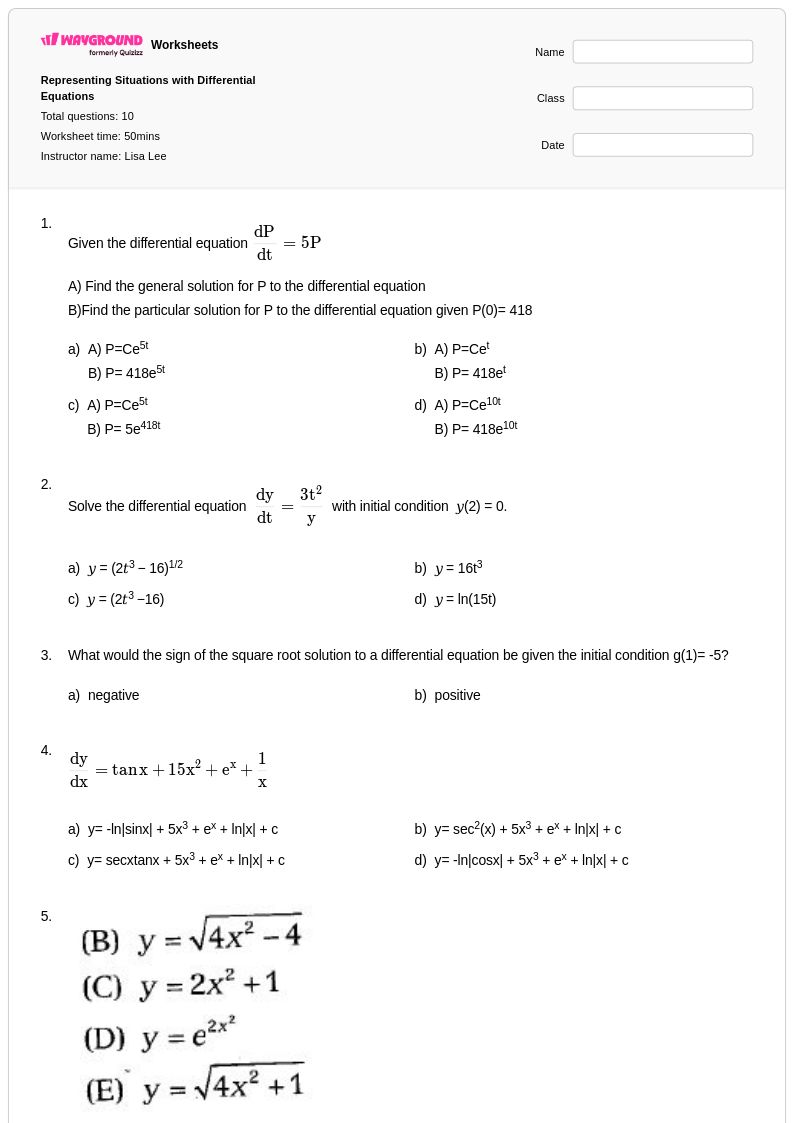
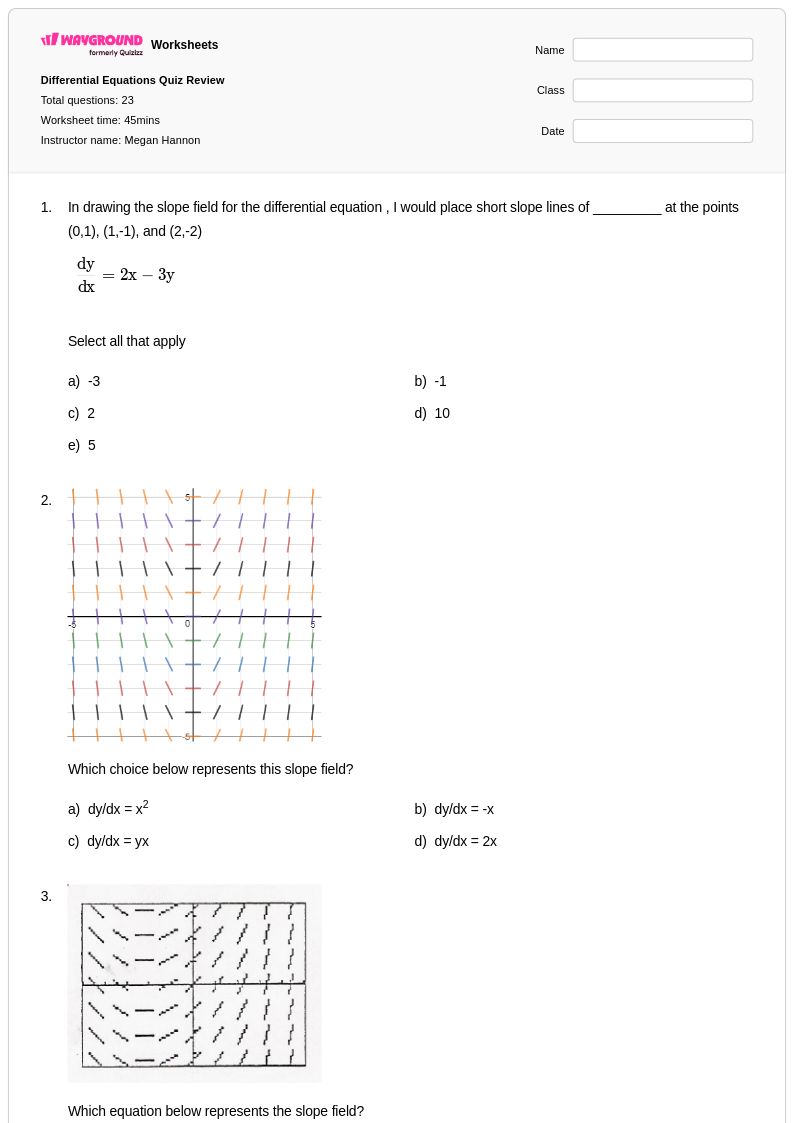
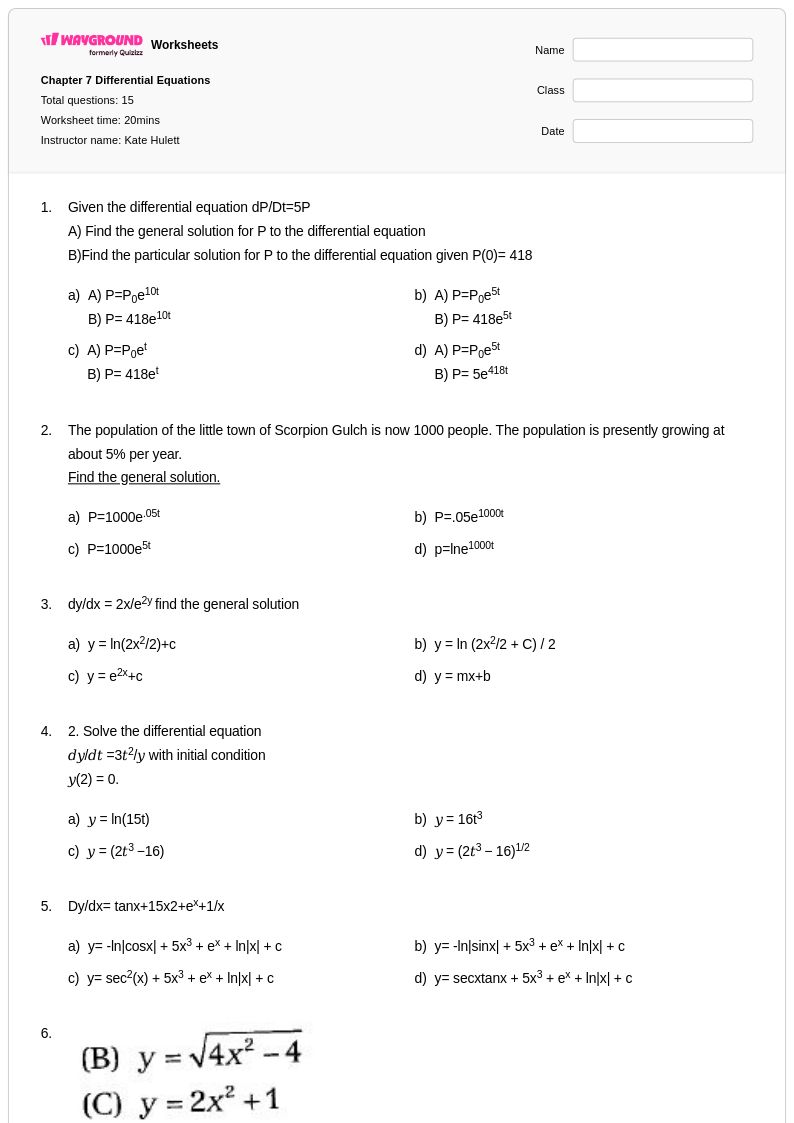
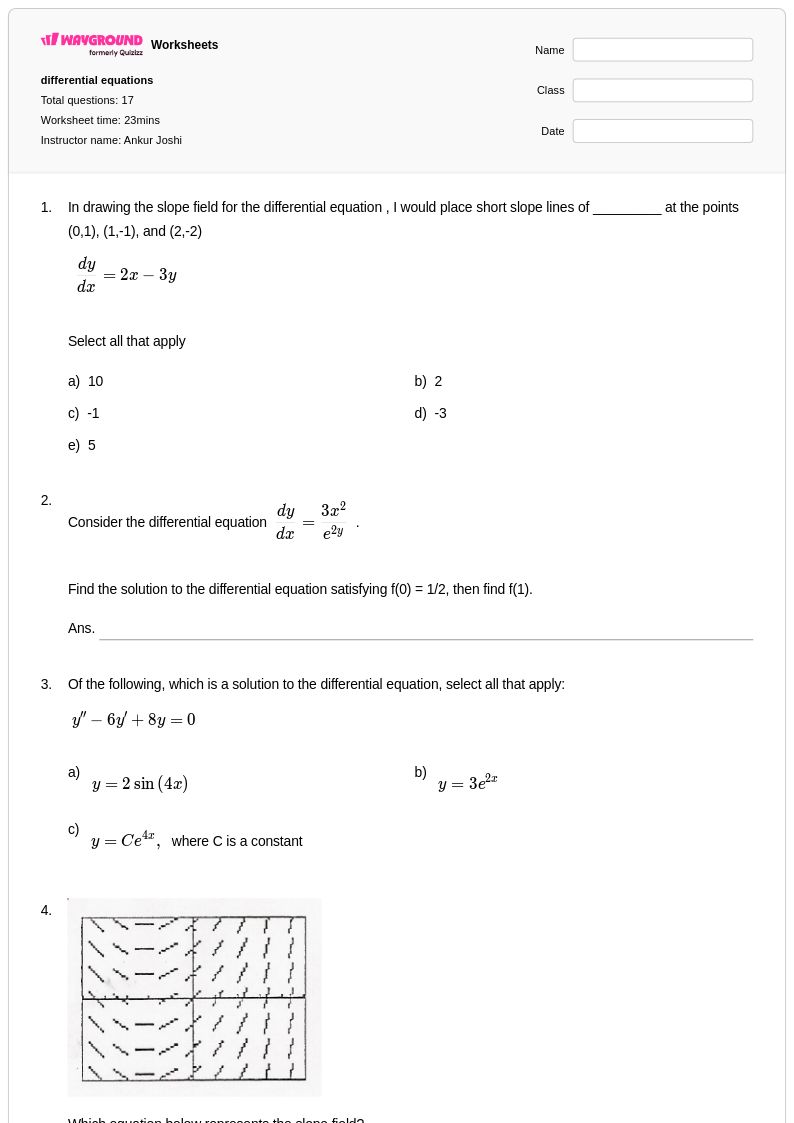
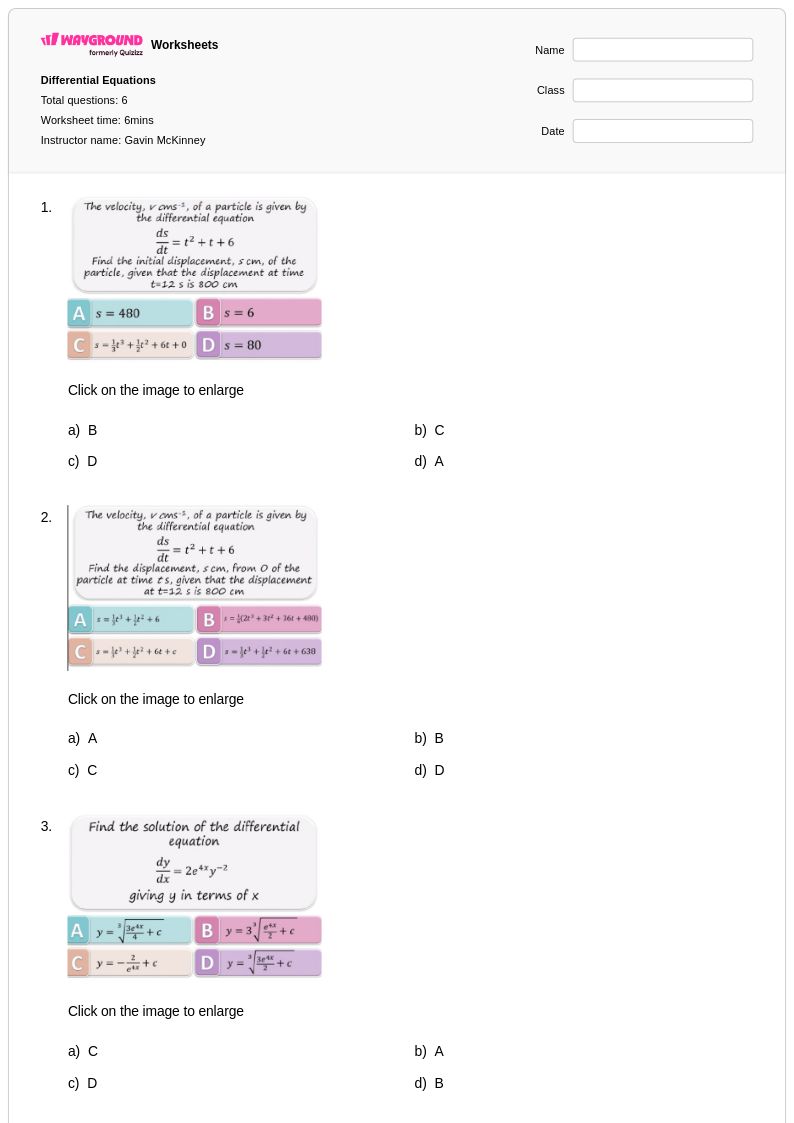
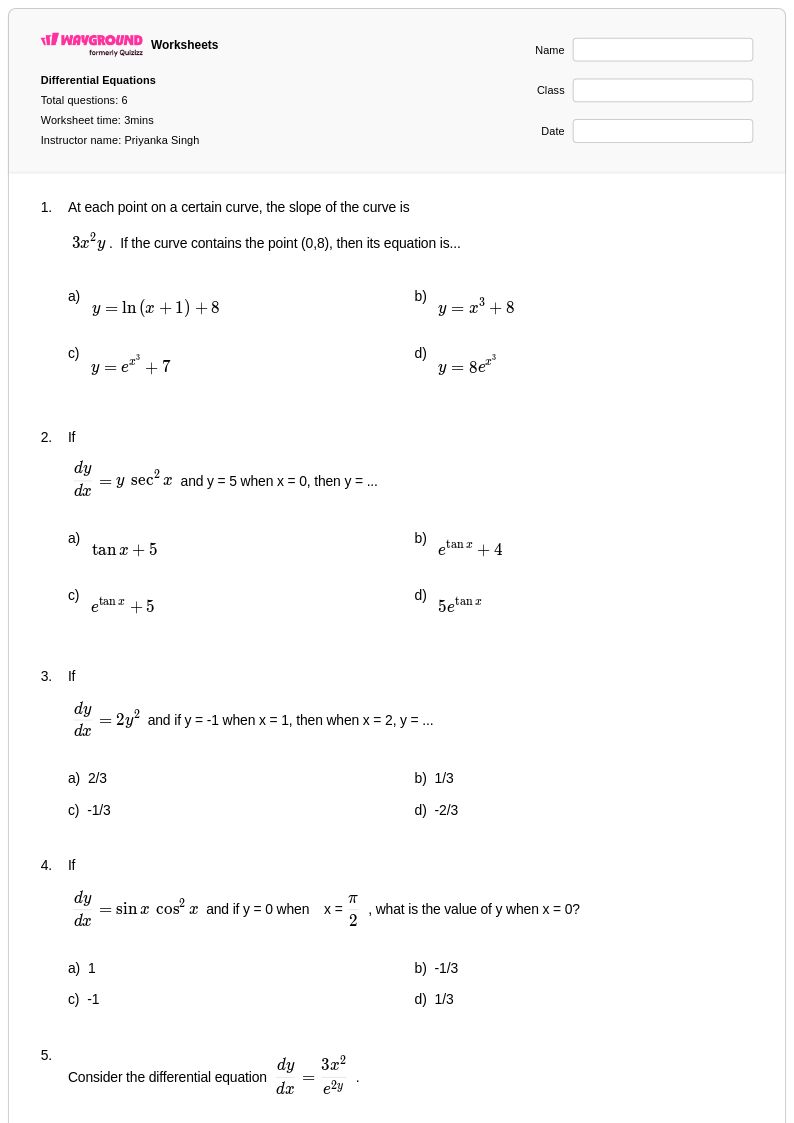
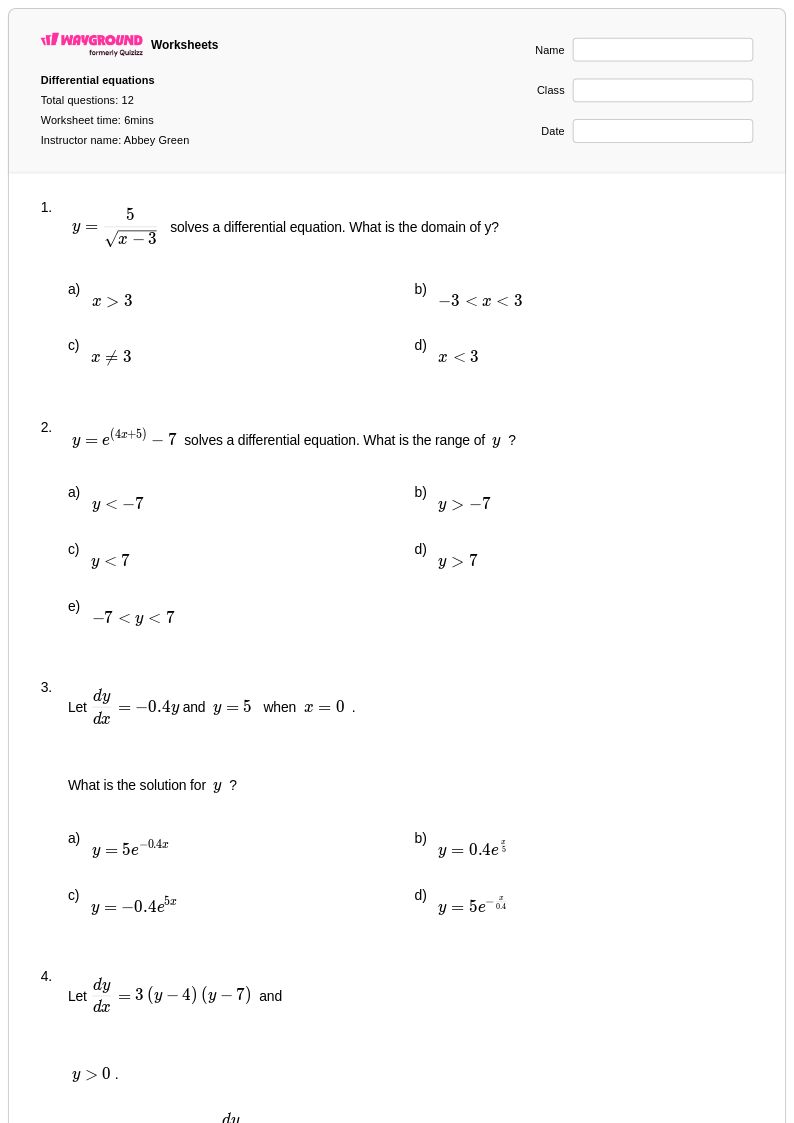
Free Year 12 differential equations worksheets and printables help students master solving separable equations, linear equations, and initial value problems through comprehensive practice problems with detailed answer keys.
Explore printable Differential Equations worksheets for Year 12
Year 12 differential equations worksheets available through Wayground (formerly Quizizz) provide comprehensive practice with this advanced calculus topic that bridges pure mathematics with real-world applications. These carefully designed resources help students master essential skills including separating variables, solving first-order linear equations, working with homogeneous and non-homogeneous equations, and applying initial value problems to model dynamic systems. Each worksheet collection includes detailed answer keys that guide students through step-by-step solution processes, while the free printables offer flexible practice problems ranging from basic separation techniques to complex applications in physics, engineering, and biology. Students develop proficiency in recognizing equation types, selecting appropriate solution methods, and interpreting results within contextual frameworks that demonstrate the practical relevance of differential equations in advanced mathematical modeling.
Wayground (formerly Quizizz) supports mathematics educators with millions of teacher-created differential equations resources that streamline lesson planning and enhance student learning outcomes. The platform's robust search and filtering capabilities allow teachers to quickly locate worksheets aligned with specific curriculum standards, whether focusing on particular solution techniques or targeting different levels of mathematical rigor within Year 12 calculus instruction. Teachers can customize existing materials or create differentiated assignments that address varying student needs, from remediation of fundamental calculus concepts to enrichment activities exploring advanced applications like population dynamics or electrical circuits. These versatile resources are available in both printable pdf format for traditional classroom use and digital formats that integrate seamlessly with modern educational technology, enabling educators to provide targeted skill practice, assess student understanding, and support mastery of this challenging yet fundamental area of advanced mathematics.
FAQs
How do I teach differential equations to Grade 12 students?
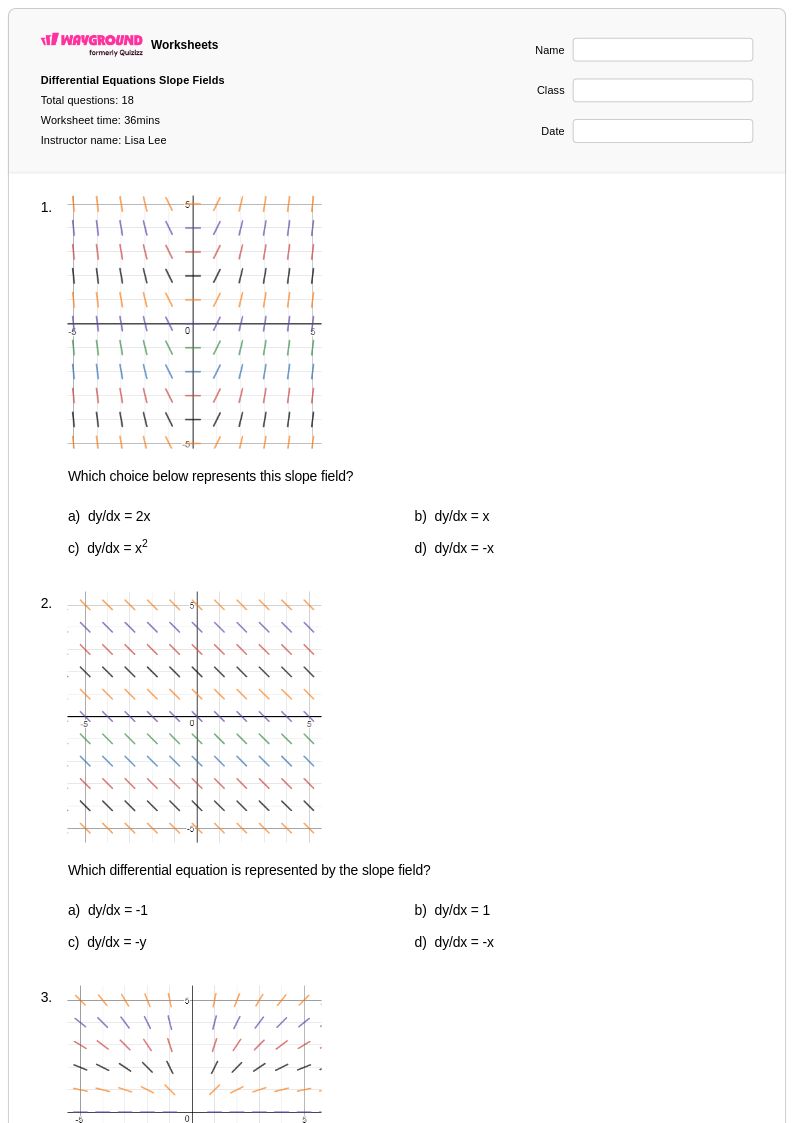
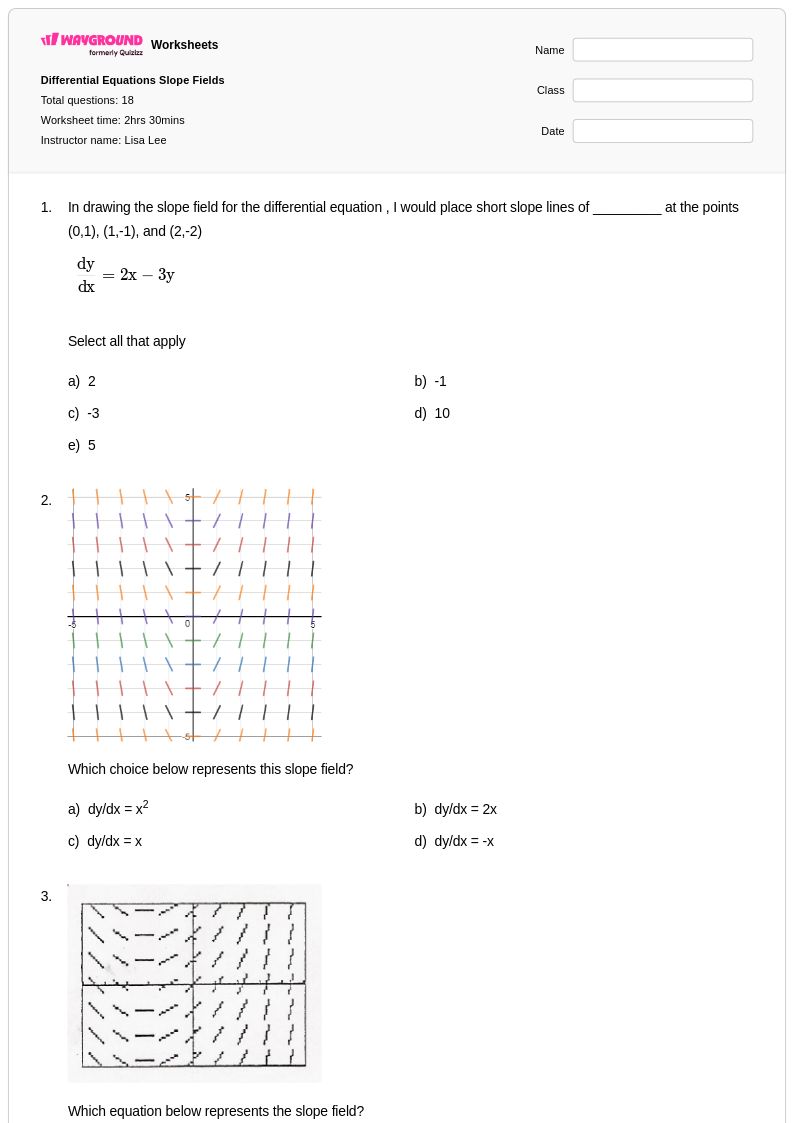
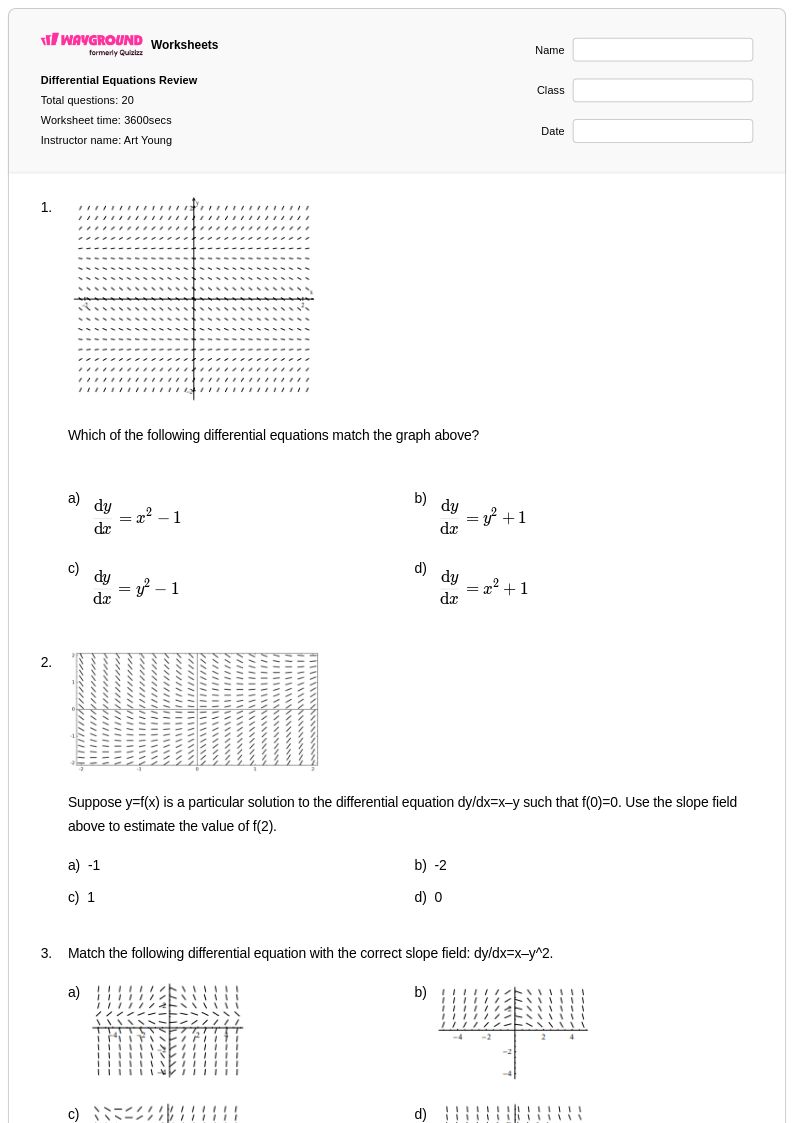
By Grade 12, students typically have the calculus foundation to handle differential equations analytically. The most effective sequence moves from separable equations (which consolidate integration skills) to first-order linear equations with integrating factors, then to initial value problems and basic modeling applications. At this level, it's worth spending real time on homogeneous and non-homogeneous equations and on interpreting solutions in context — a Grade 12 student heading into engineering or physics needs to understand what the solution is telling them, not just how to produce it. Slope fields and Euler's method are worth revisiting as conceptual anchors even if students first saw them in Grade 11.
What practice exercises best prepare Grade 12 students for college-level differential equations?
College courses will expect students to classify an equation, select a method, execute the solution, and apply an initial or boundary condition — all without prompting. Practice sets that present mixed equation types and require students to identify the approach before solving are more useful than method-blocked drills. Applied problems in physics (Newton's law of cooling, circuit equations) and biology (logistic growth) are worth including because they require students to set up the differential equation from a description, which is exactly what college courses test.
What are the most common errors Grade 12 students make with differential equations?
At this level, the errors tend to be more subtle than basic algebra mistakes. Students frequently mishandle the constant of integration in initial value problems — solving correctly but then applying the initial condition before integrating rather than after, or forgetting to solve for C entirely. With non-homogeneous equations, students often find the complementary solution correctly but make errors in the particular solution, especially when the forcing function resembles a term in the homogeneous solution. A useful diagnostic: ask students to verify their solution by substituting back into the original equation. Many Grade 12 students skip this step and would catch their own errors if they didn't.
How do I use Wayground's Grade 12 differential equations worksheets?
The worksheets include complete answer keys with step-by-step solutions — valuable for a topic where a correct final answer can mask an incorrect method. For exam prep, hosting the worksheet as a timed digital quiz on Wayground replicates test conditions and gives you data on which problem types are causing the most difficulty. The printable PDF works well for in-class practice or take-home assignments, and you can grade paper submissions using the Wayground for Teachers app by scanning student work directly.
Are Grade 12 differential equations worksheets aligned to AP Calculus BC?
AP Calculus BC is the primary US framework for differential equations at Grade 12. The College Board's expectations at this level include solving separable equations analytically, applying Euler's method, reasoning about solution behavior from slope fields, and modeling with differential equations in applied contexts like population dynamics and cooling. These worksheets cover that full range, from separation of variables and integrating factors through initial value problems and real-world applications, matching the depth AP Calculus BC requires before students encounter a full differential equations course in college.
How can I differentiate differential equations practice for Grade 12 students at different readiness levels?
For students who are still consolidating earlier calculus skills, Wayground's extended time accommodation gives them space to work through multi-step problems without the pressure of a hard cutoff — differential equations problems are long, and time pressure disproportionately affects students who are procedurally solid but slow. For students who are ready for more challenge, the same worksheet can be extended with initial value or boundary condition variants. If you have students who need accessible formatting, Wayground lets you adjust font size and spacing or apply a dyslexia-friendly font to generate an alternate version of the worksheet without rebuilding the content.