
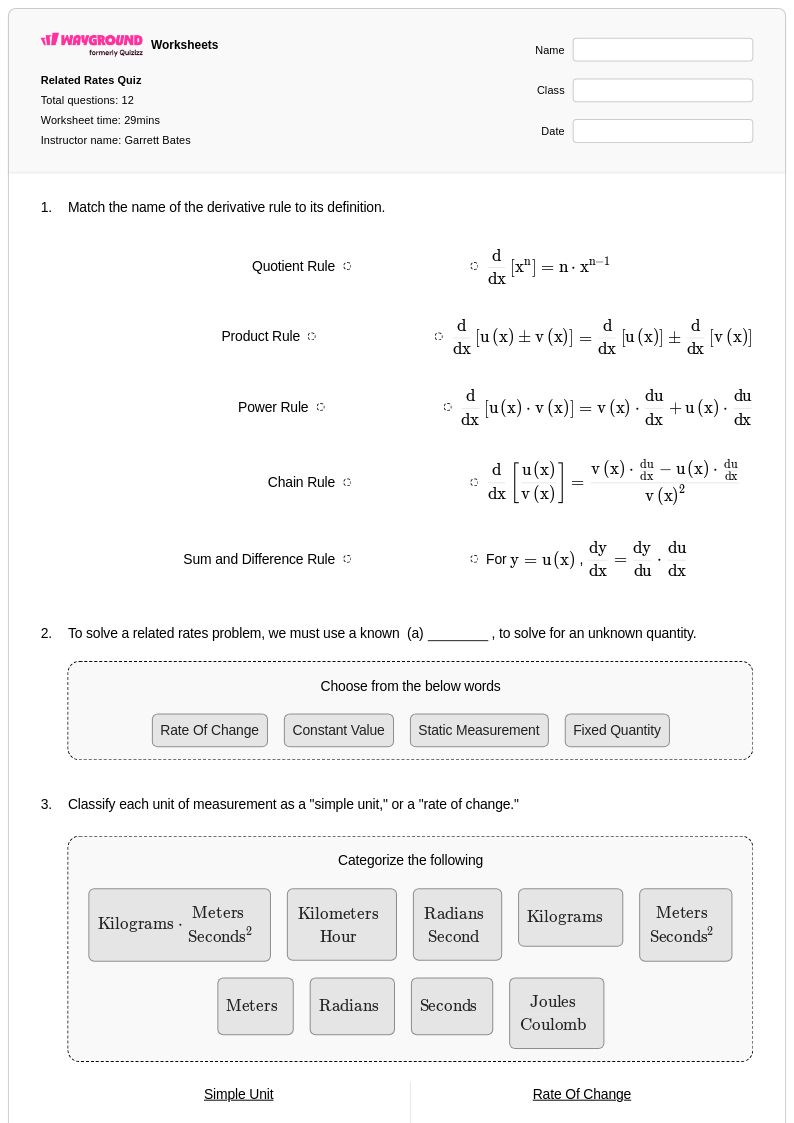
12 Q
12th
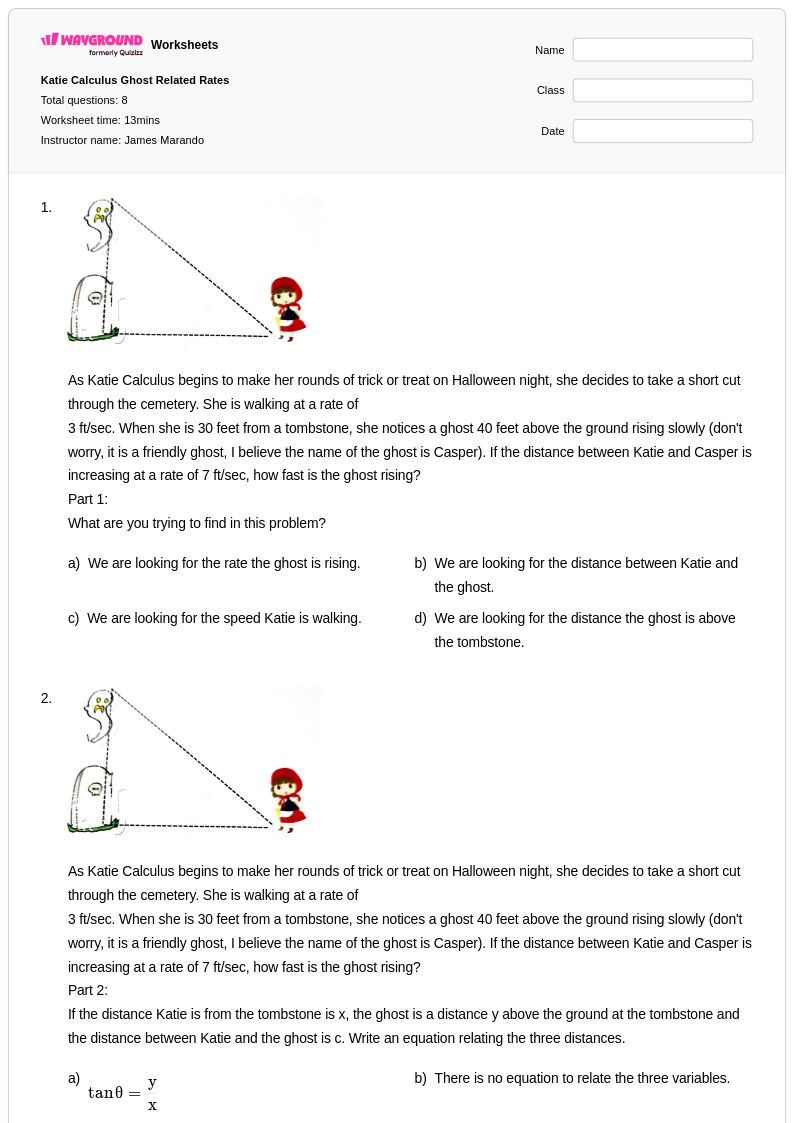
8 Q
11th - Uni
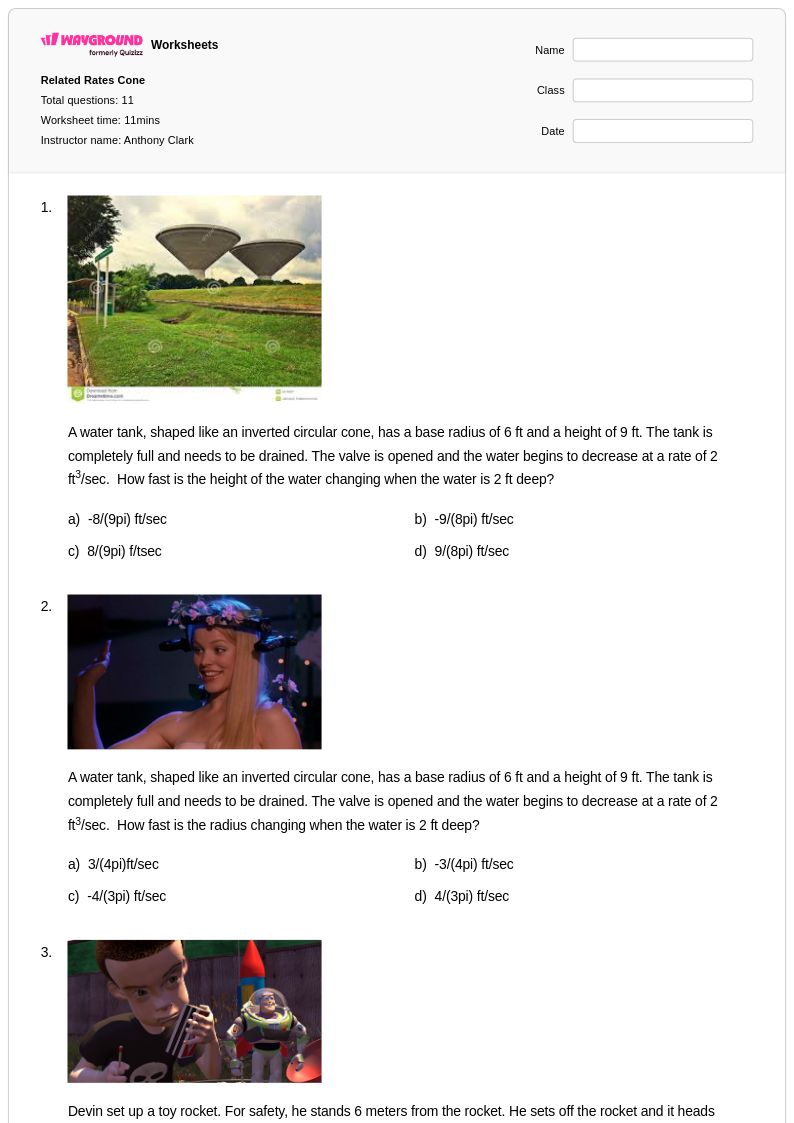
11 Q
12th - Uni
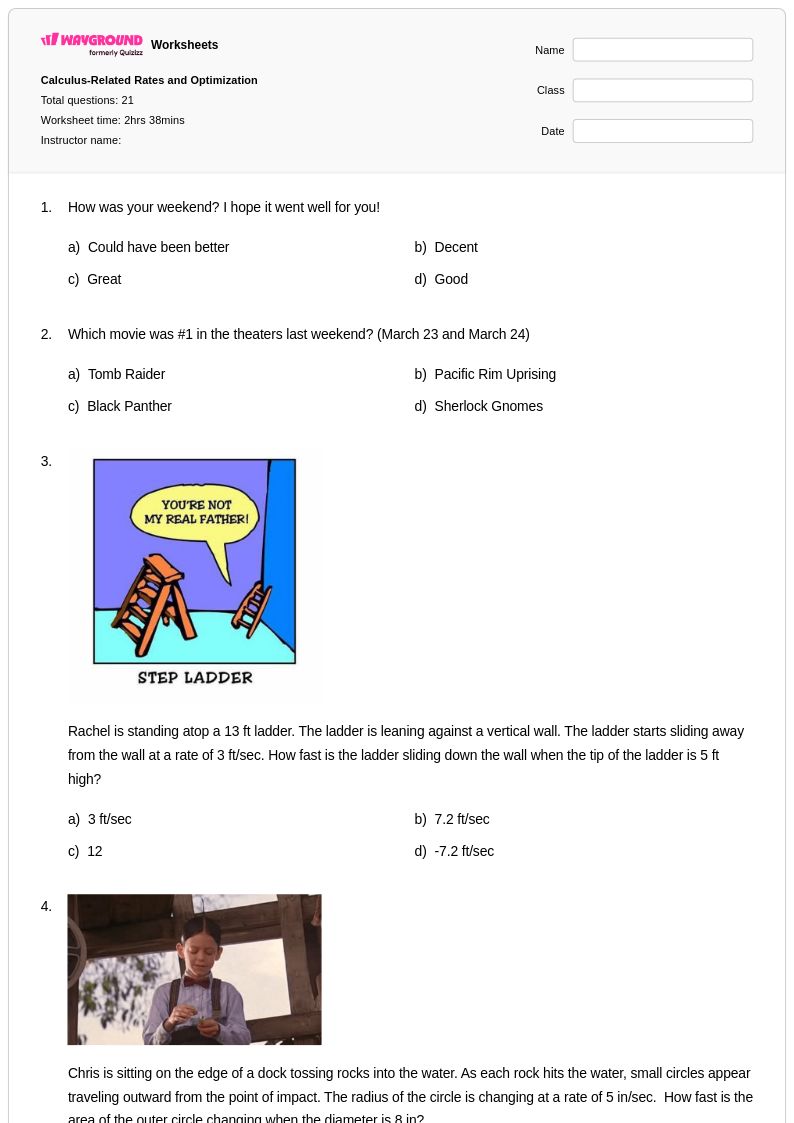
21 Q
9th - 12th
21 Q
9th - 12th
14 Q
10th - 12th
14 Q
9th - 12th
10 Q
11th - Uni
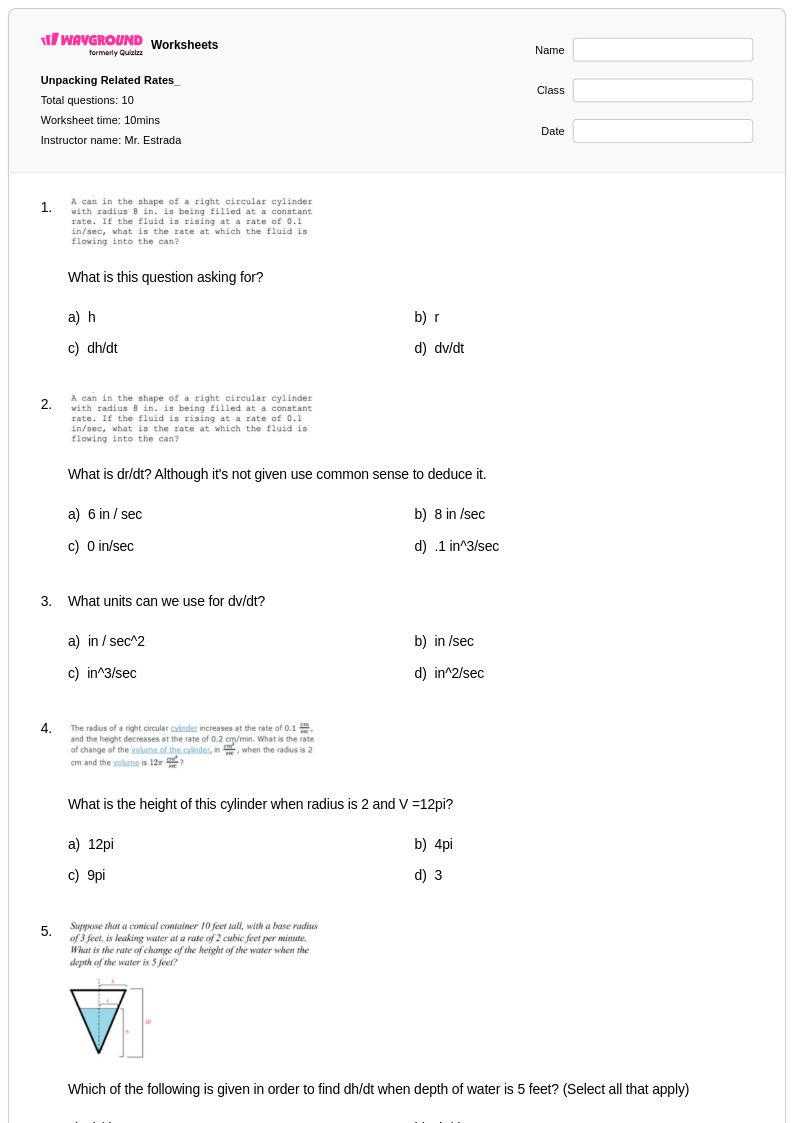
10 Q
11th - 12th
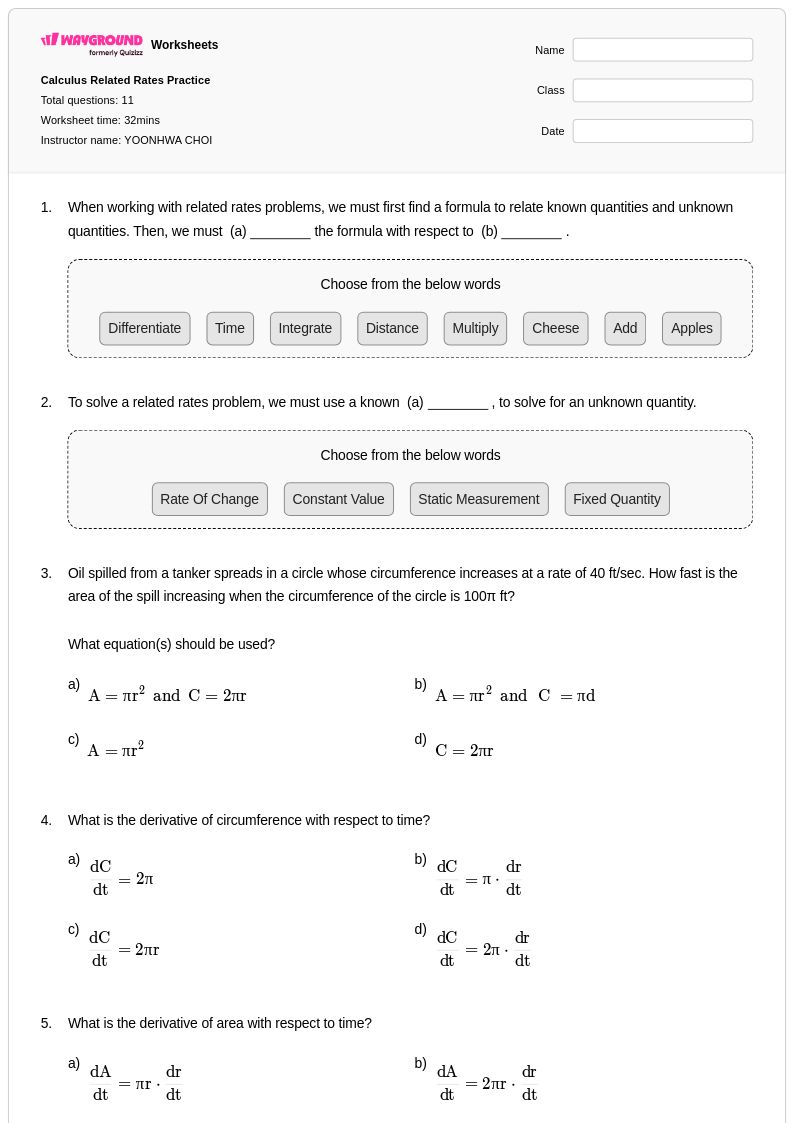
11 Q
9th - 12th
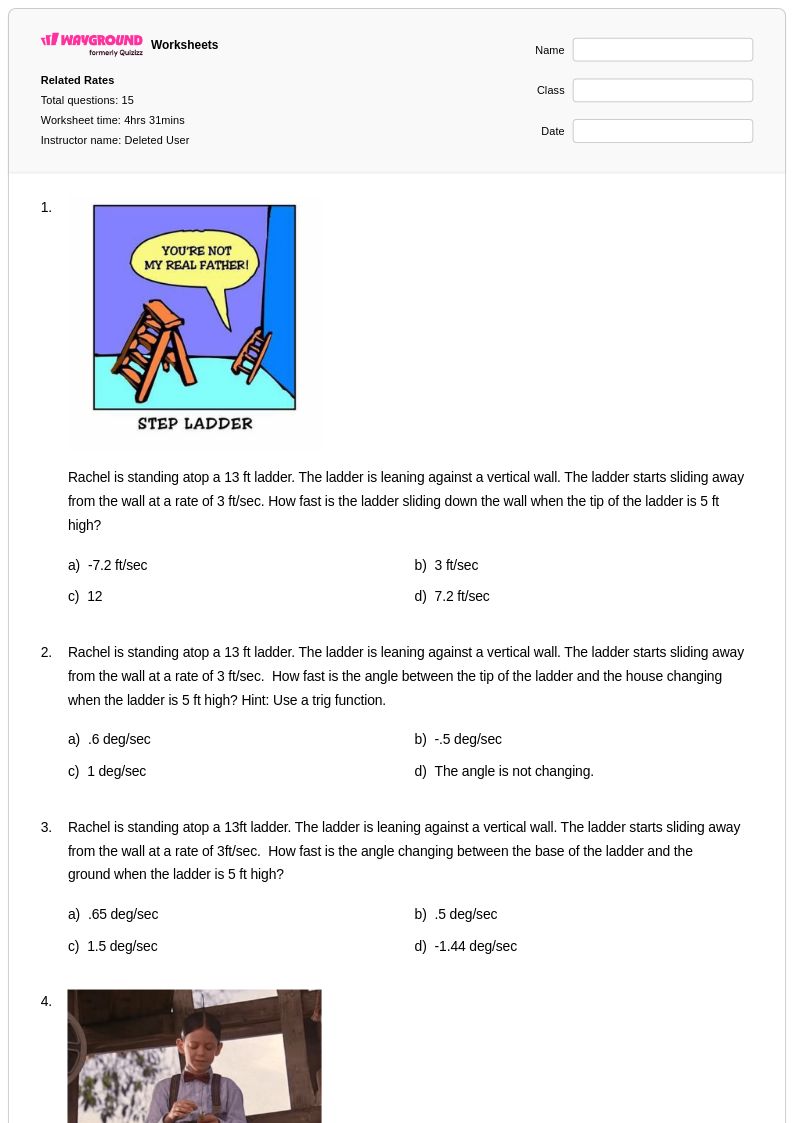
15 Q
11th - Uni
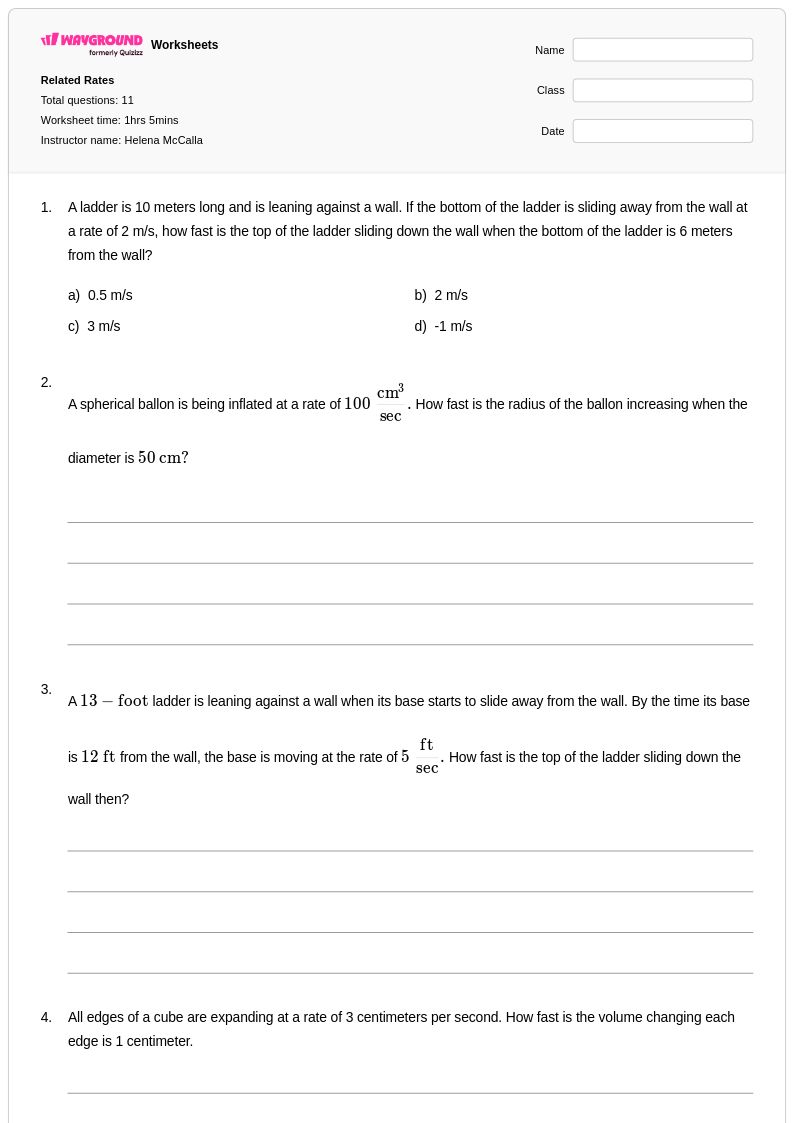
11 Q
12th
6 Q
11th - 12th
14 Q
11th - Uni
8 Q
11th - 12th
10 Q
12th - Uni
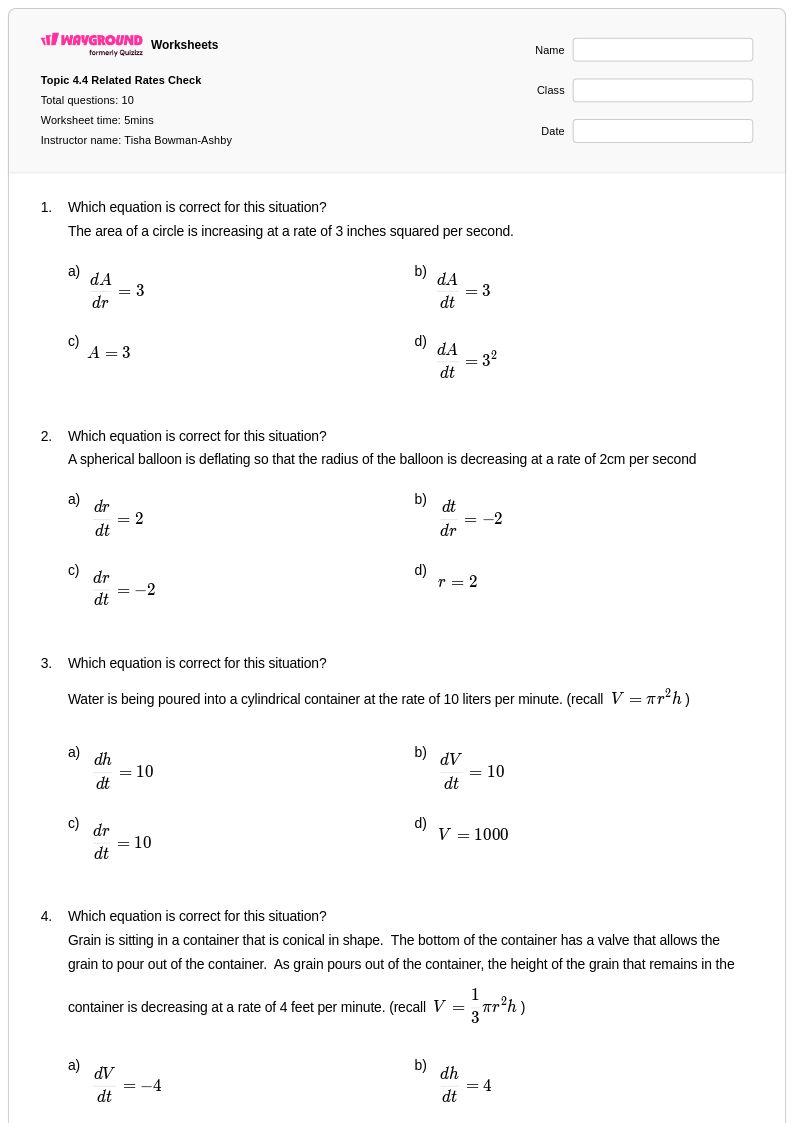
10 Q
10th - 12th
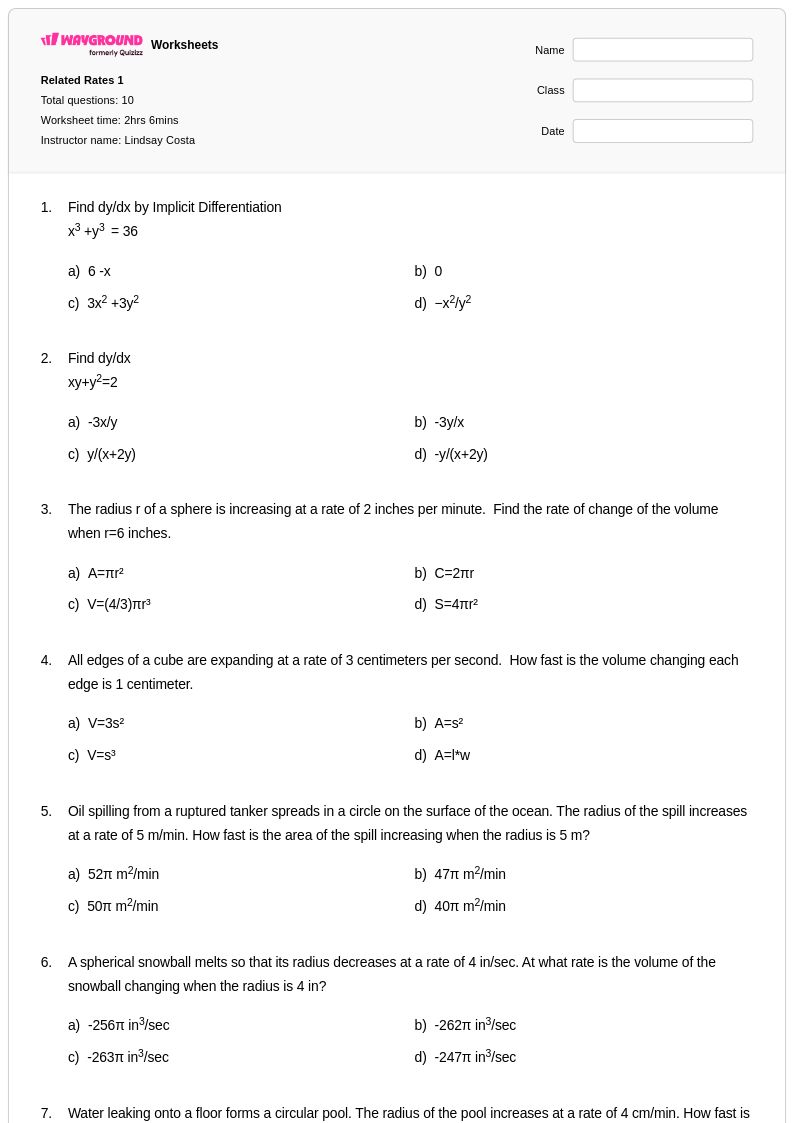
10 Q
12th
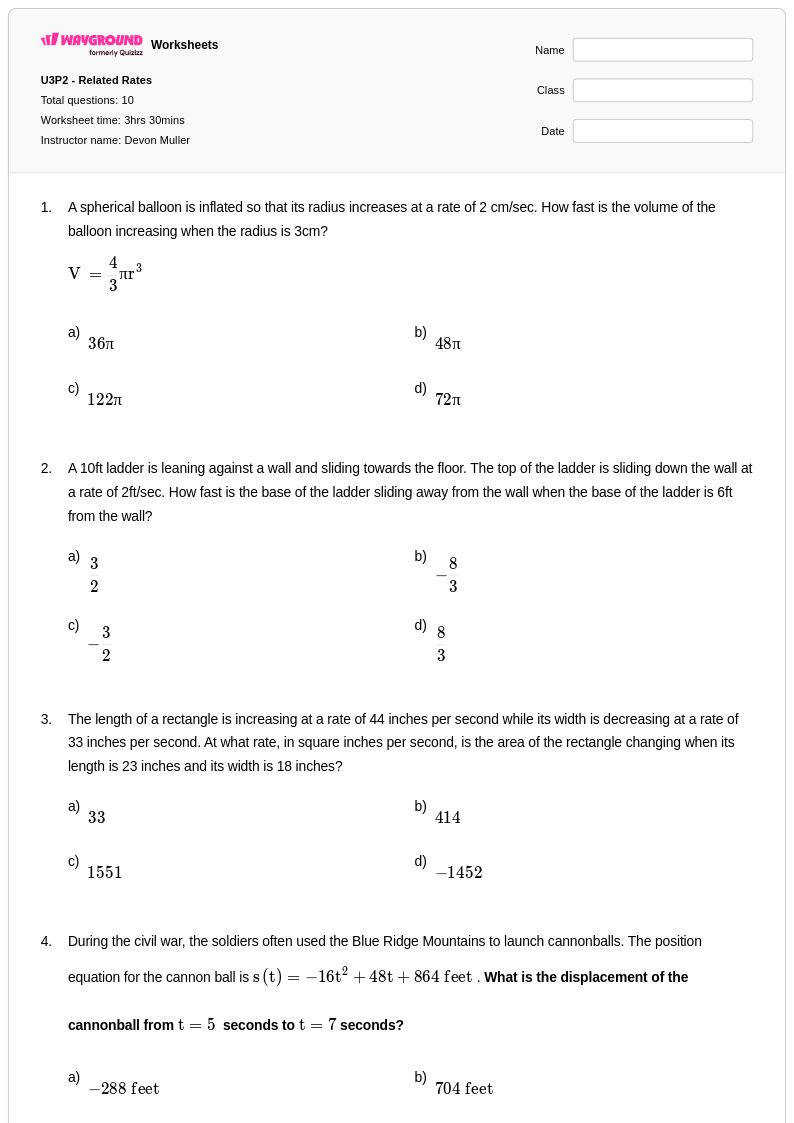
10 Q
12th
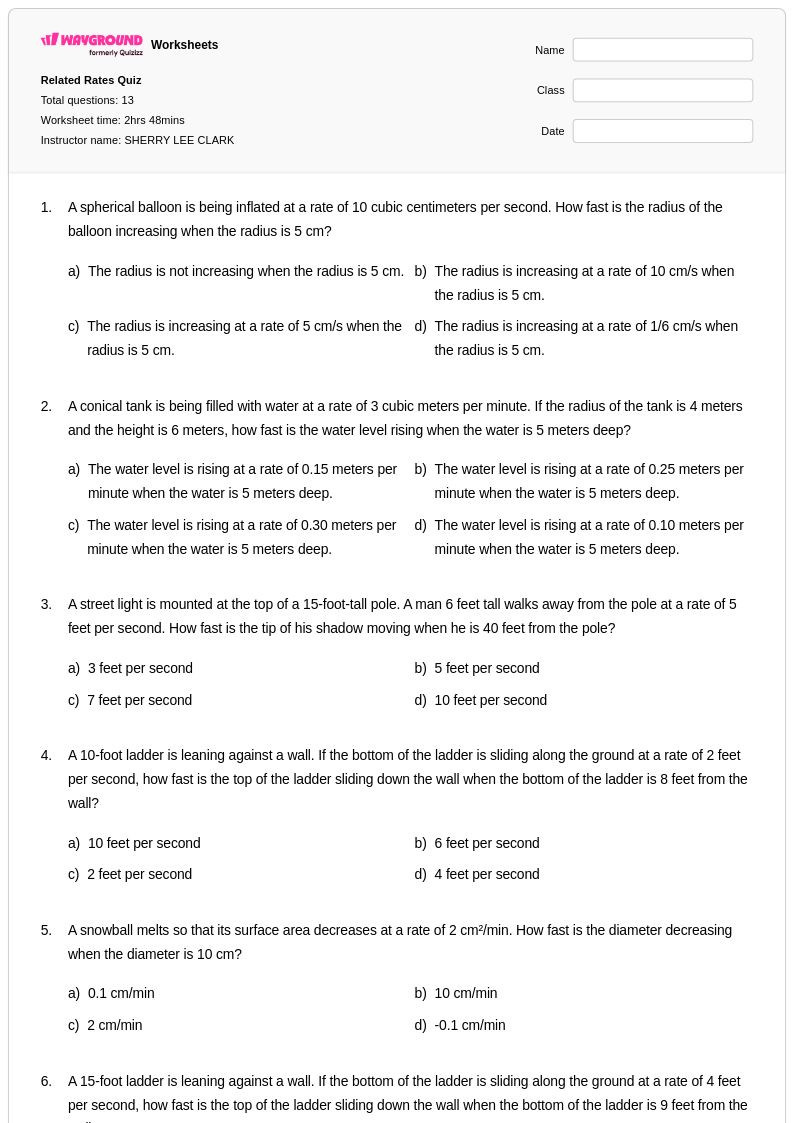
13 Q
12th

12 Q
12th
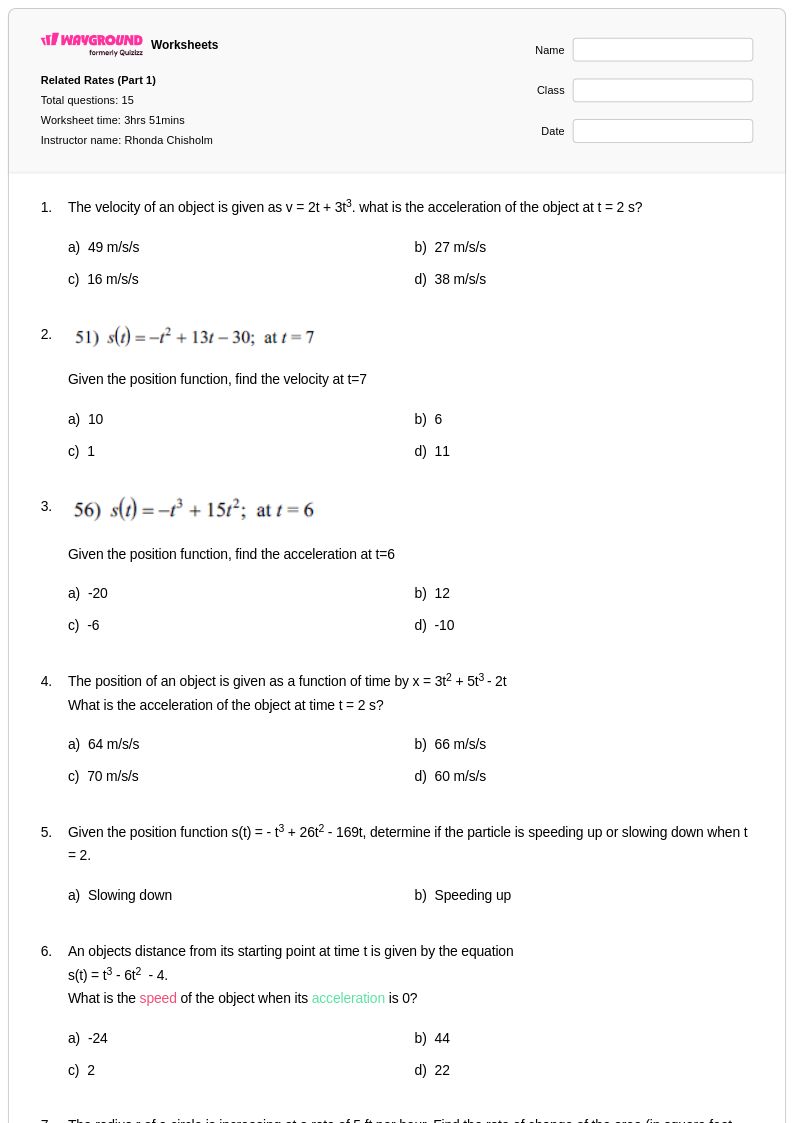
15 Q
12th
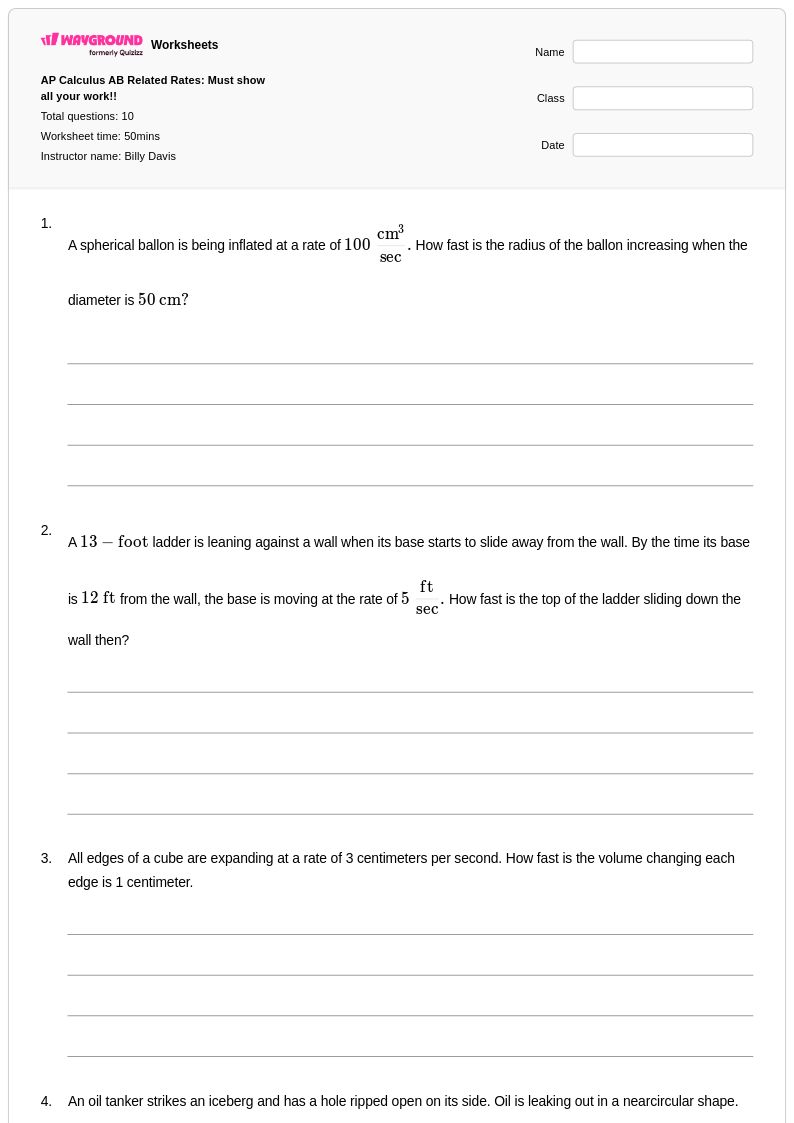
10 Q
12th
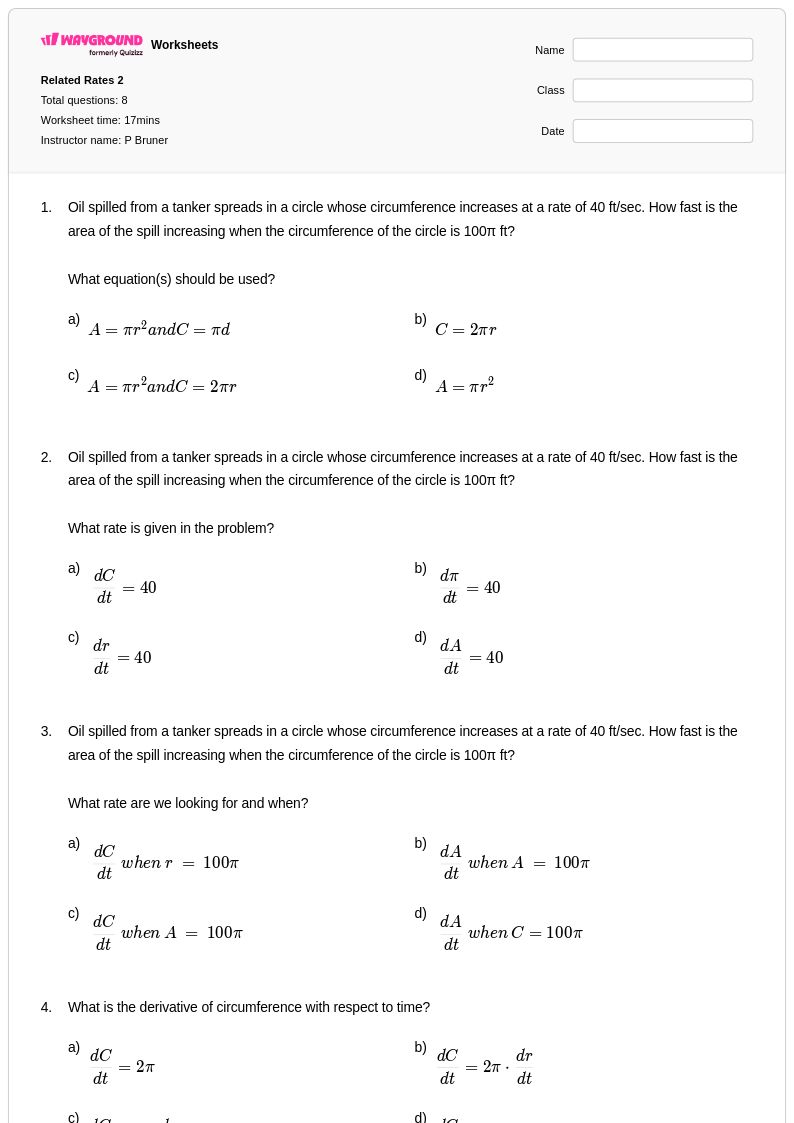
8 Q
11th - Uni
Explore Other Subject Worksheets for year 12
Explore printable Related Rates worksheets for Year 12
Related rates problems represent one of the most challenging and practically applicable concepts in Year 12 calculus, requiring students to analyze how multiple variables change simultaneously over time. Wayground's comprehensive collection of related rates worksheets provides educators with expertly crafted practice problems that guide students through the systematic approach needed to solve these complex scenarios, from ladder problems and balloon expansions to more advanced applications involving geometric relationships and optimization. These free printable resources include detailed answer keys that break down the step-by-step process of identifying given rates, establishing relationships between variables, and applying implicit differentiation techniques. Each pdf worksheet strengthens critical mathematical reasoning skills while helping students master the art of translating real-world situations into mathematical models that reveal the interconnected nature of changing quantities.
Wayground's robust platform, formerly known as Quizizz, empowers teachers with millions of educator-created resources specifically designed to support related rates instruction at the Year 12 level. The advanced search and filtering capabilities allow instructors to quickly locate worksheets aligned with specific curriculum standards, while differentiation tools enable seamless customization to meet diverse learning needs within the classroom. Teachers can access these materials in both printable and digital formats, including downloadable pdf versions, making them ideal for traditional homework assignments, in-class practice sessions, or remote learning environments. This flexibility proves invaluable for lesson planning, targeted remediation for struggling students, enrichment opportunities for advanced learners, and ongoing skill practice that builds confidence in tackling the sophisticated problem-solving techniques essential for calculus mastery.
FAQs
What level of understanding is expected for Grade 12 calculus students?
How can I challenge my Grade 12 students with related rates?
What types of practice problems are best for AP Calculus prep?
What are some subtle errors that advanced students make?
How can I use this worksheet for exam review?
How does this topic appear in the AP Calculus curriculum?