Free Printable Changes in Matter Worksheets for Kindergarten
Explore Wayground's free kindergarten changes in matter worksheets and printables that help young students discover how materials transform through engaging practice problems with answer keys included.
Explore printable Changes in Matter worksheets for Kindergarten
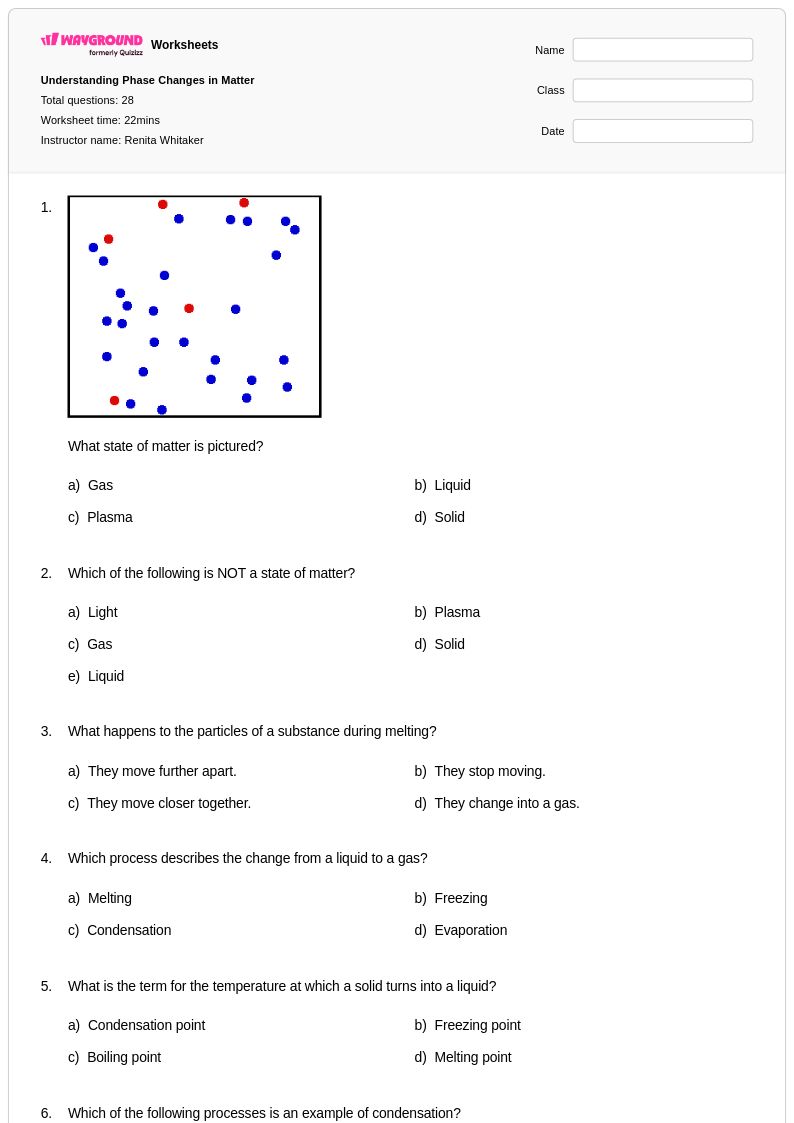
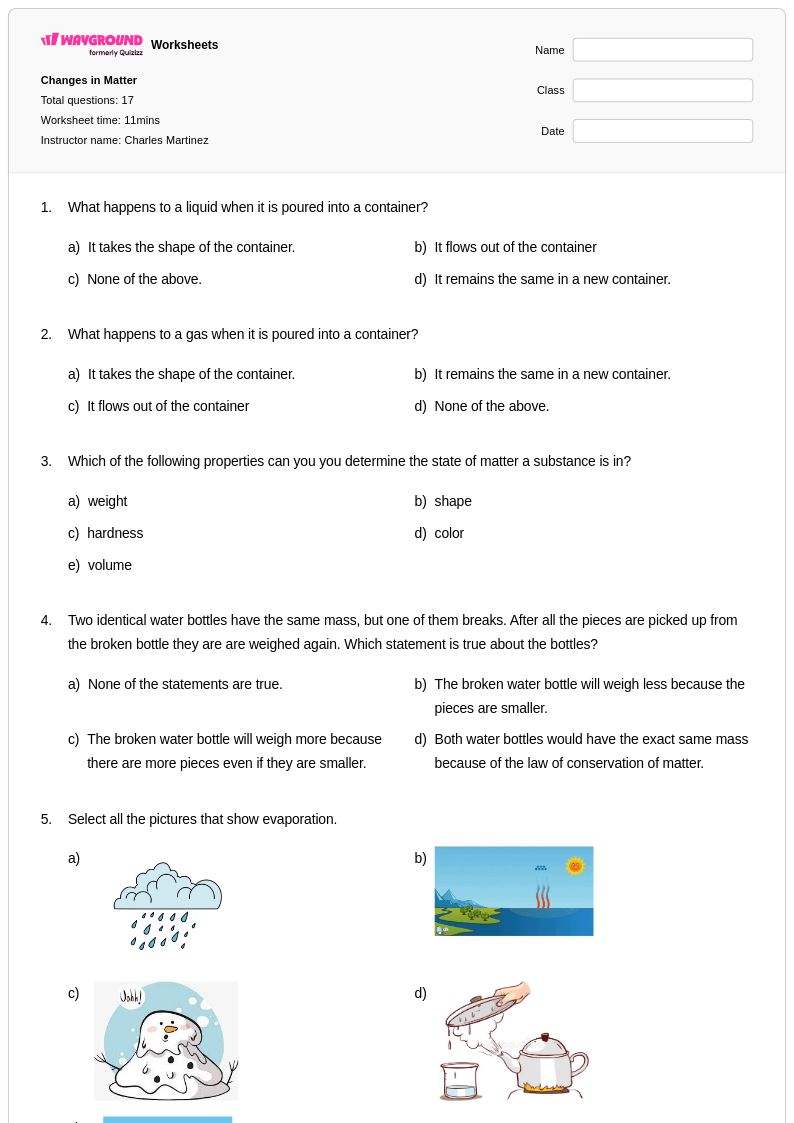
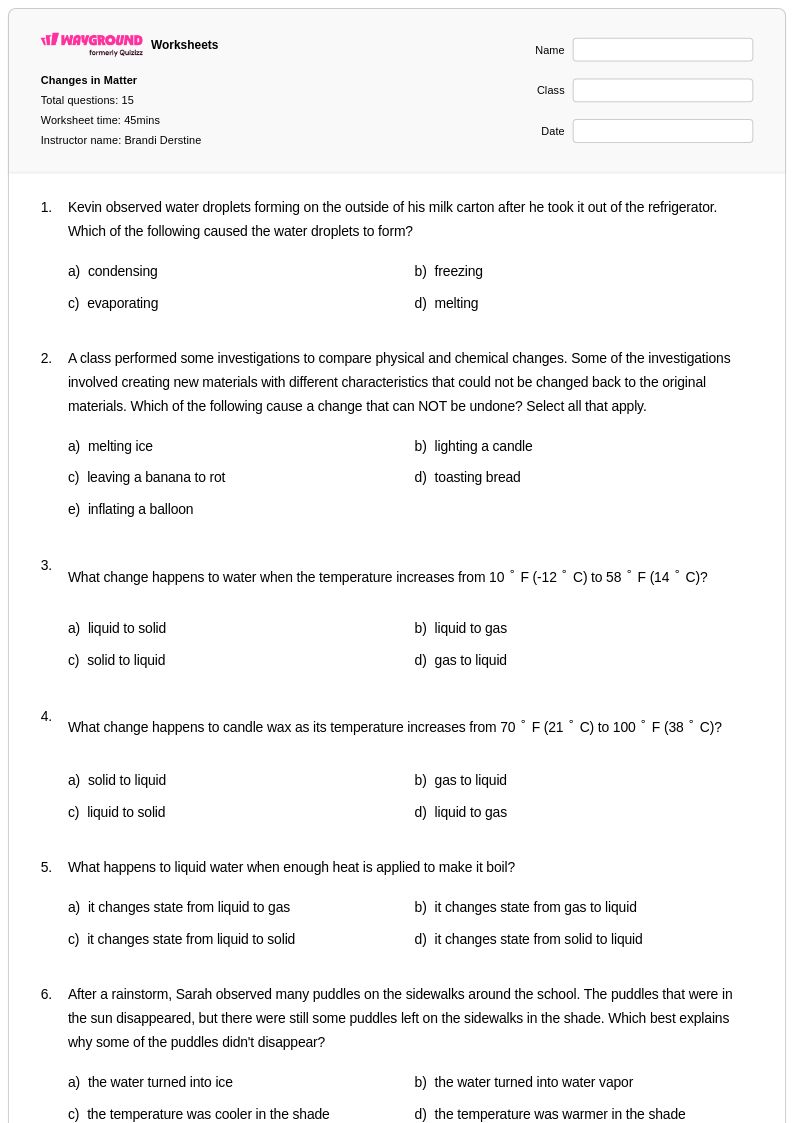
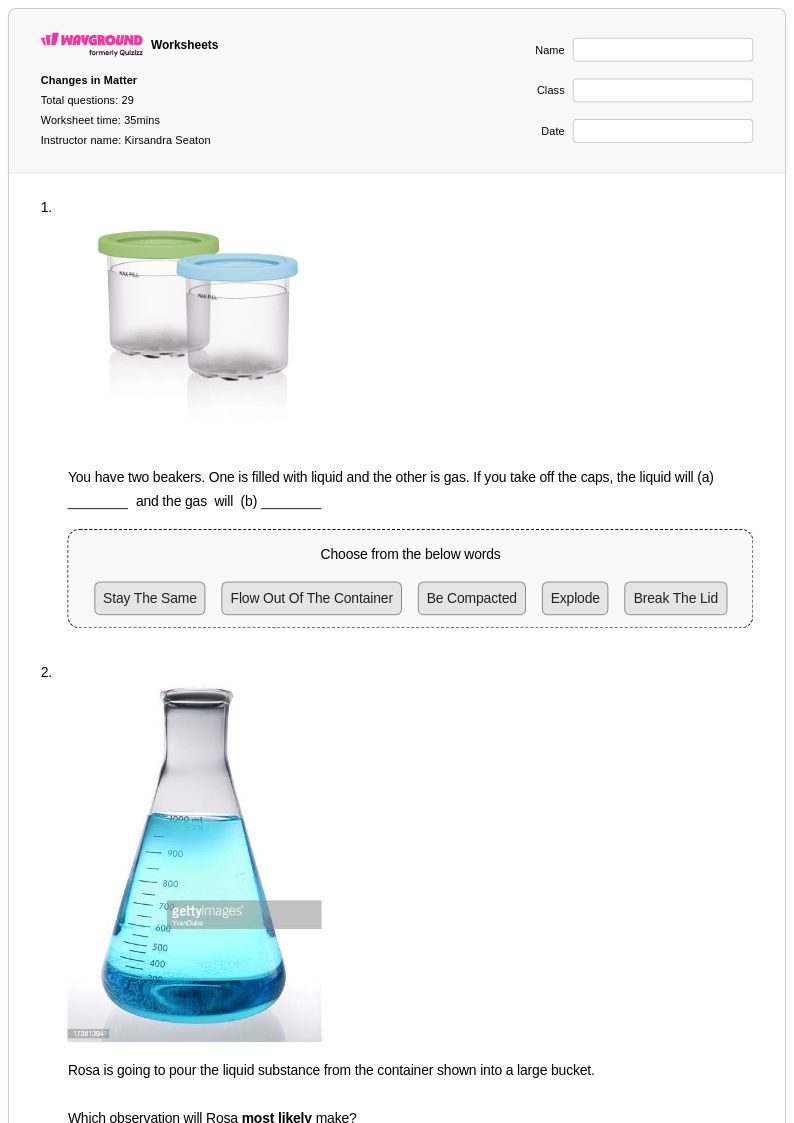
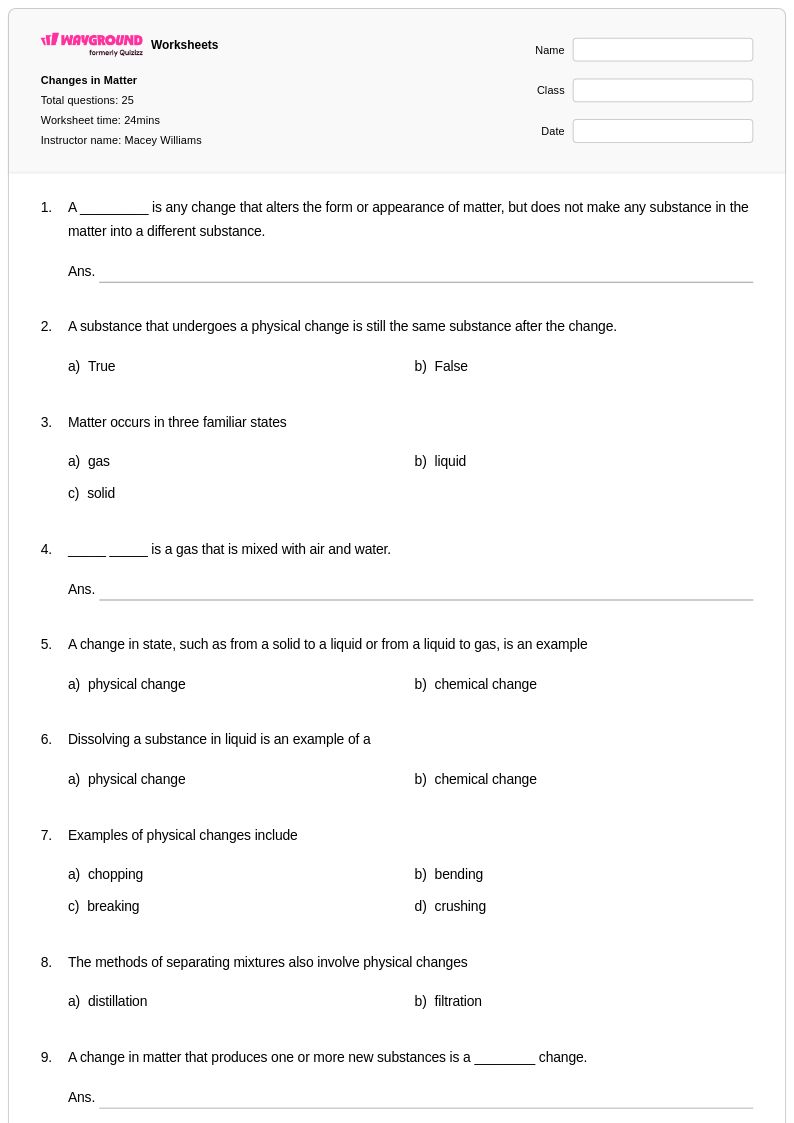
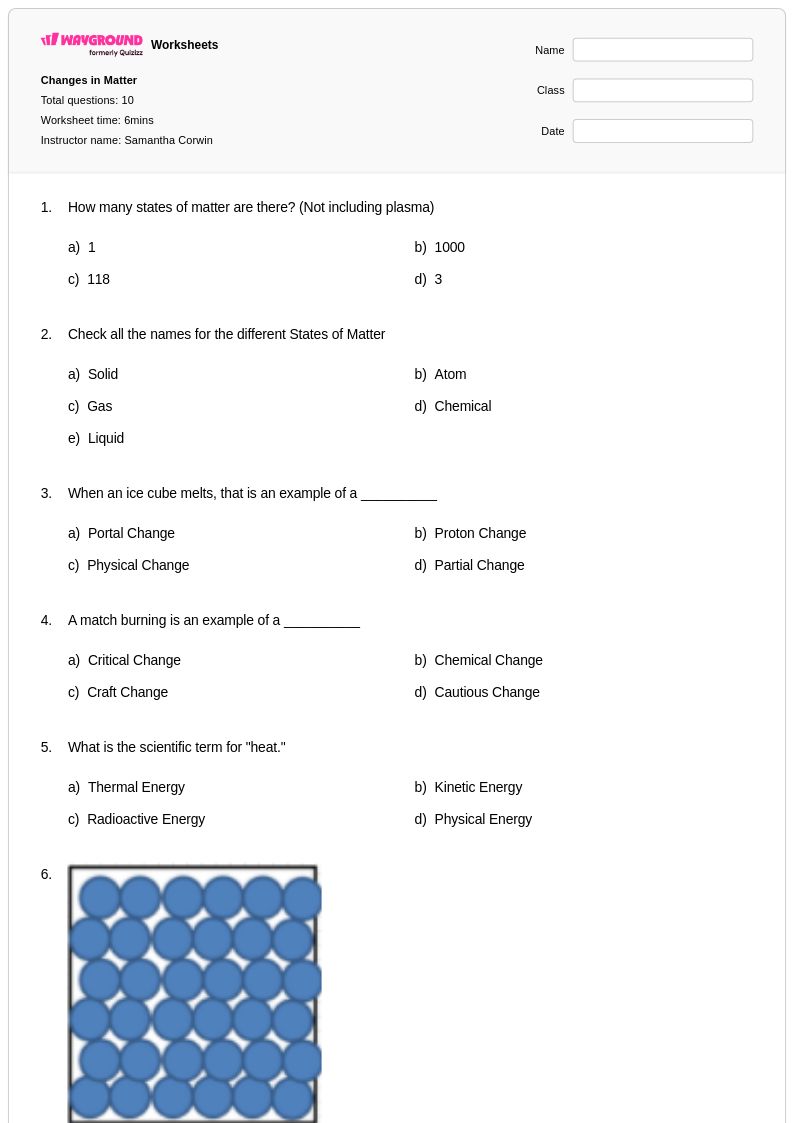
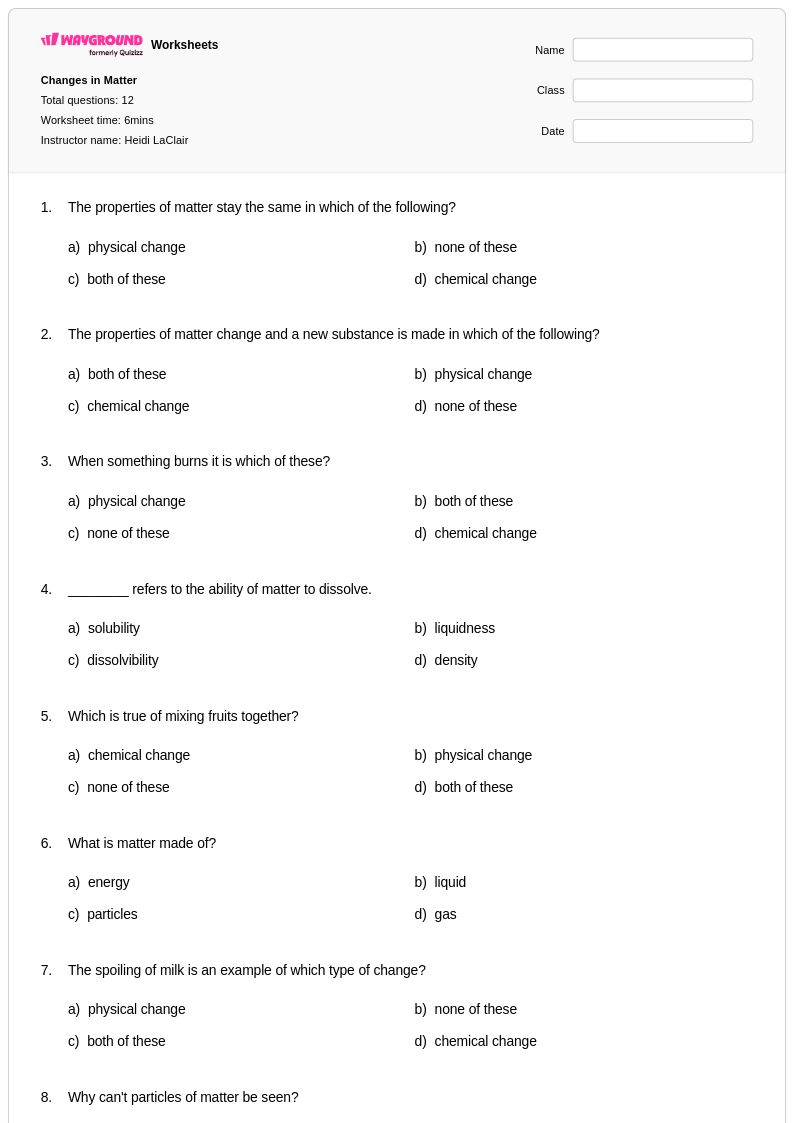
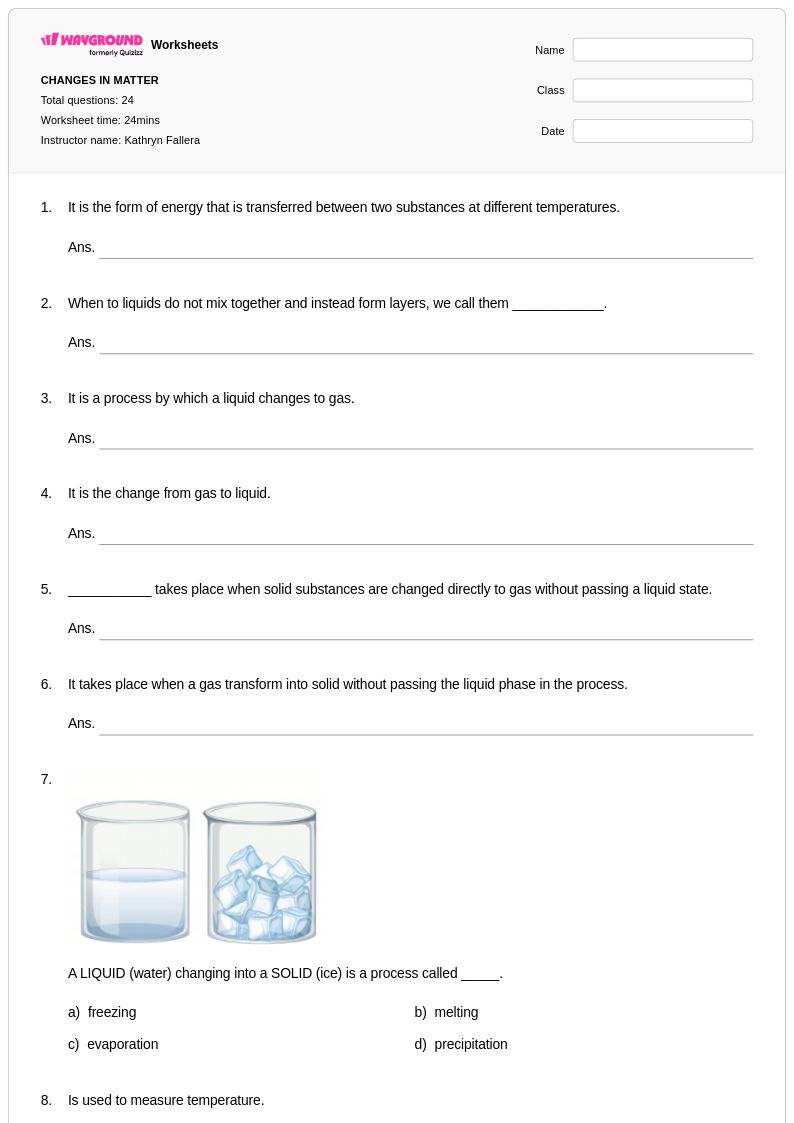
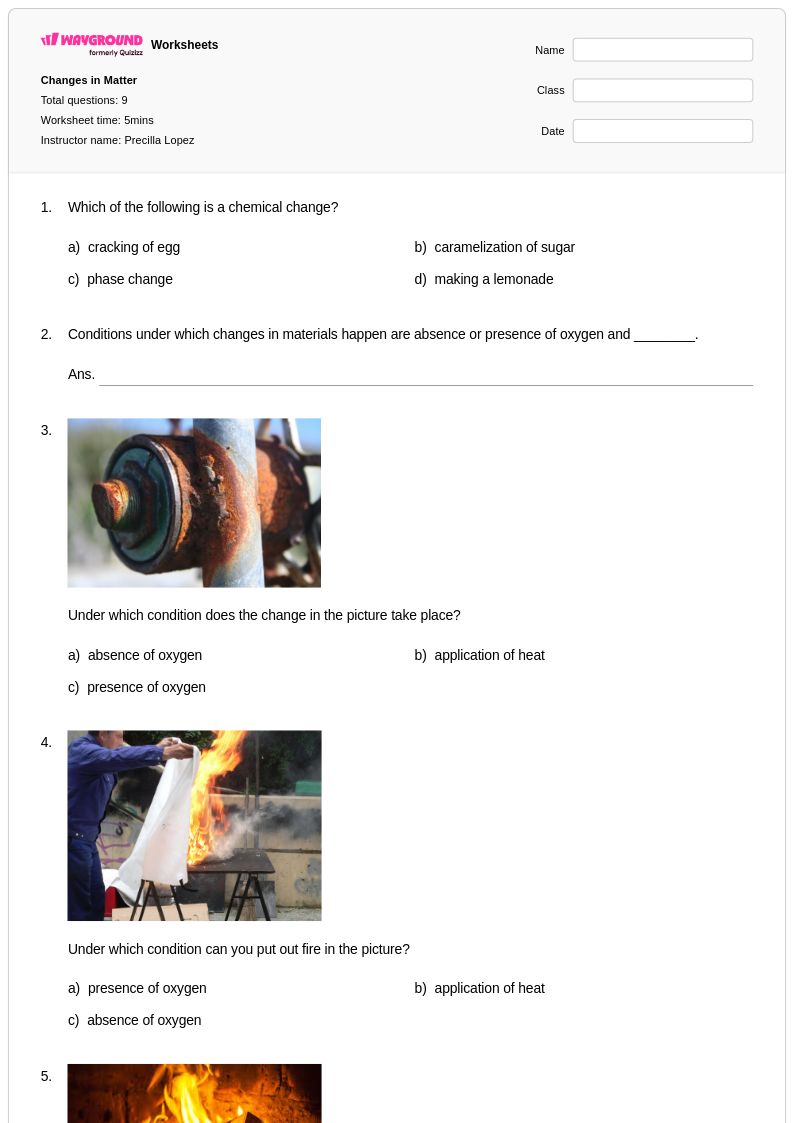
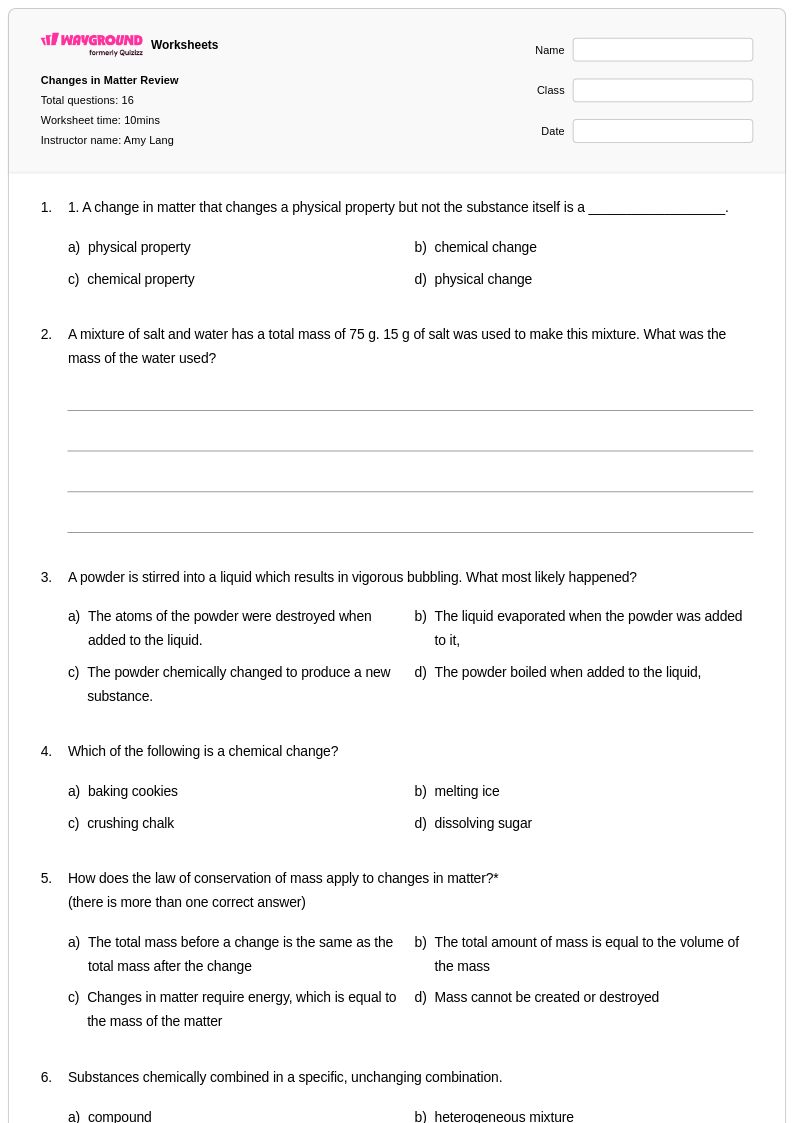
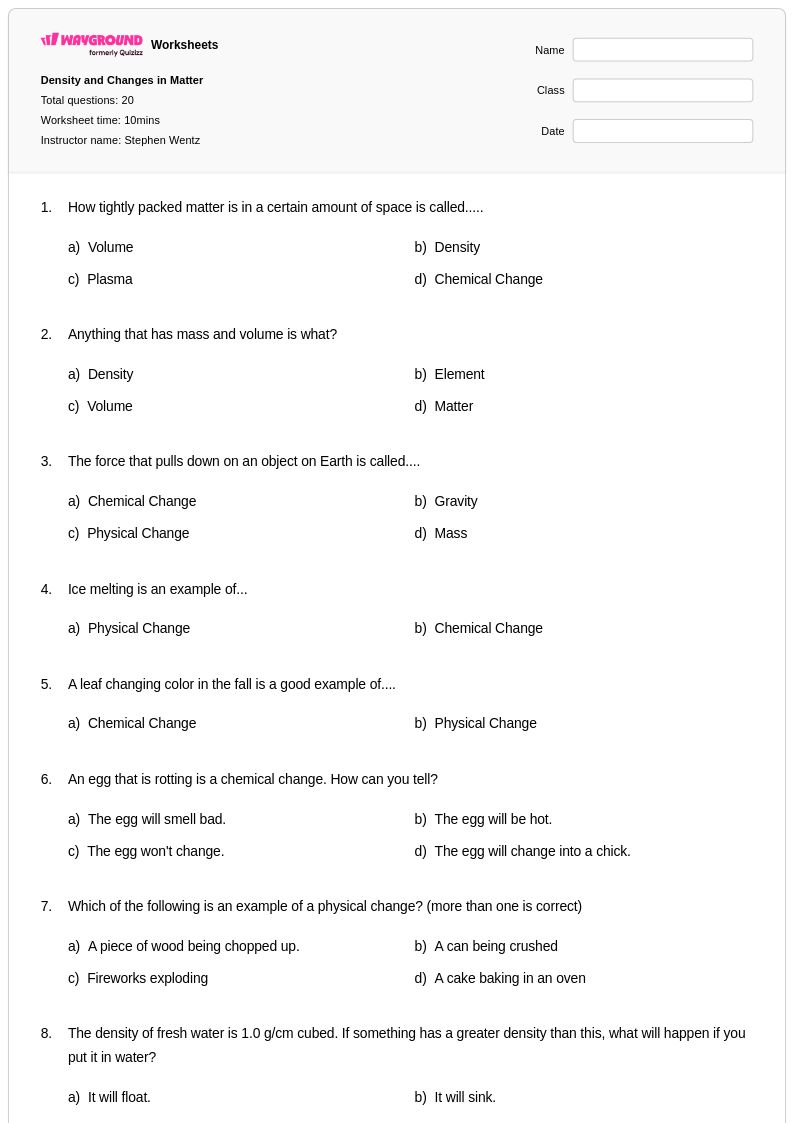
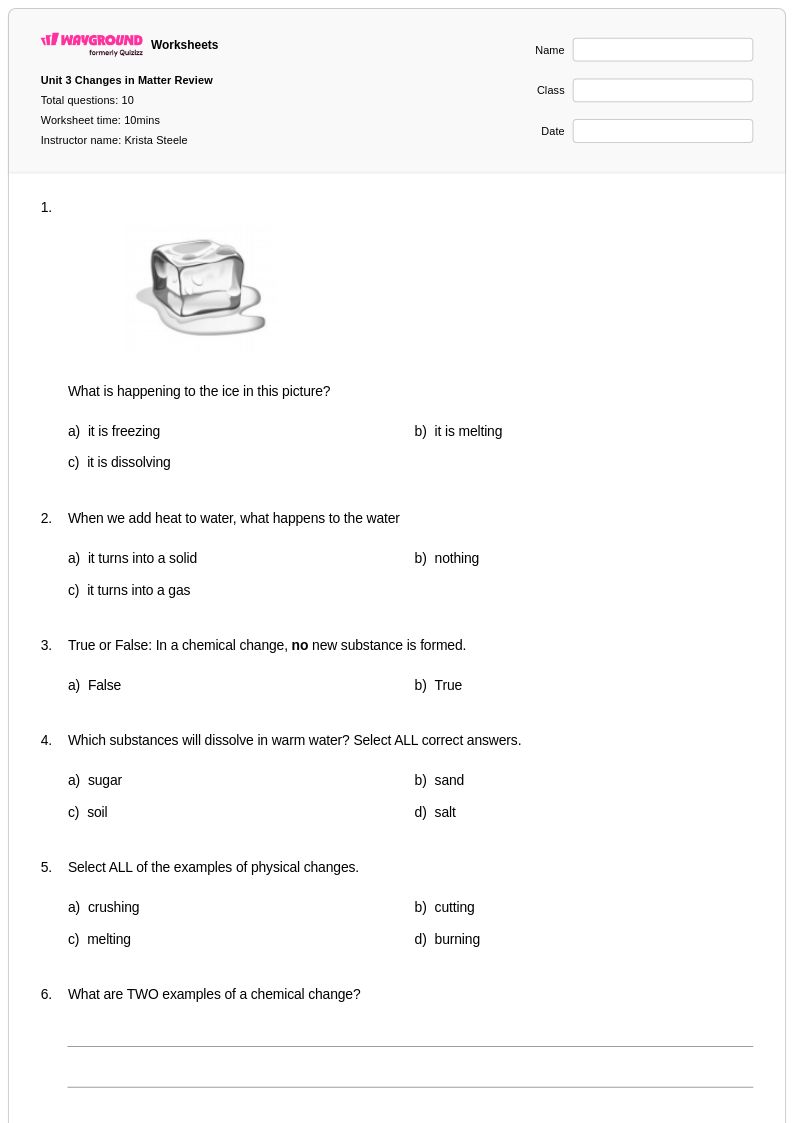
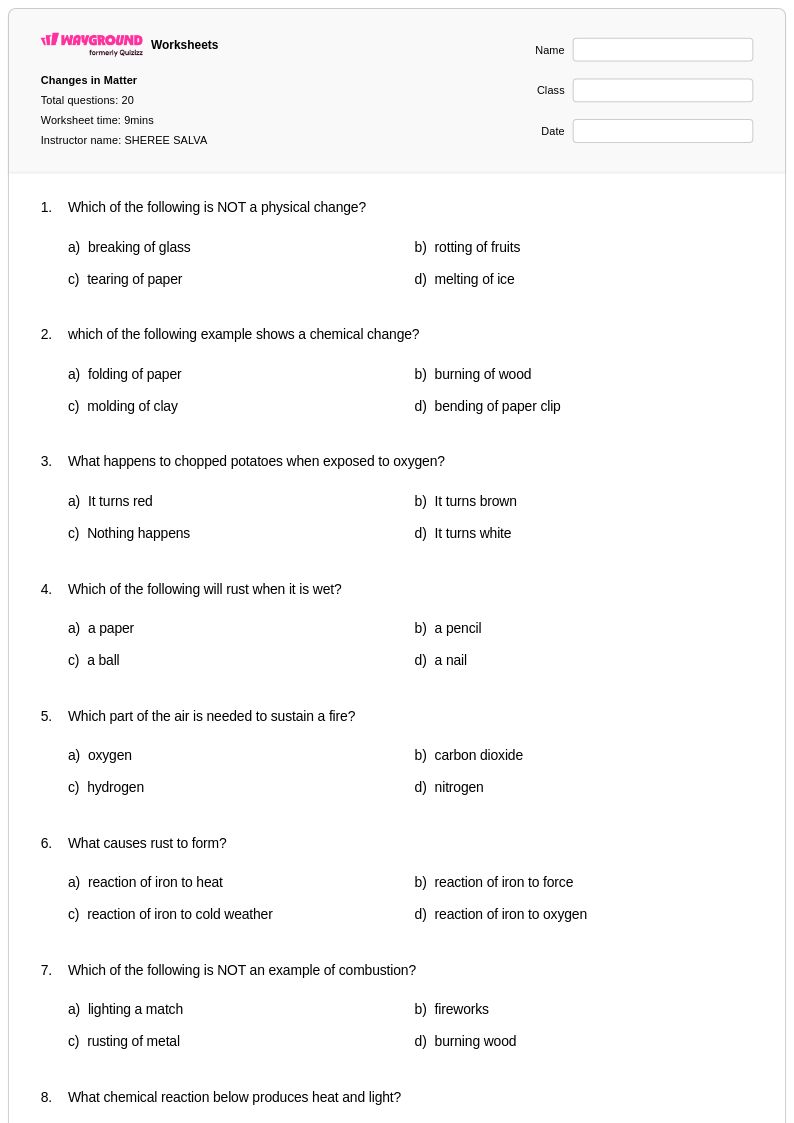
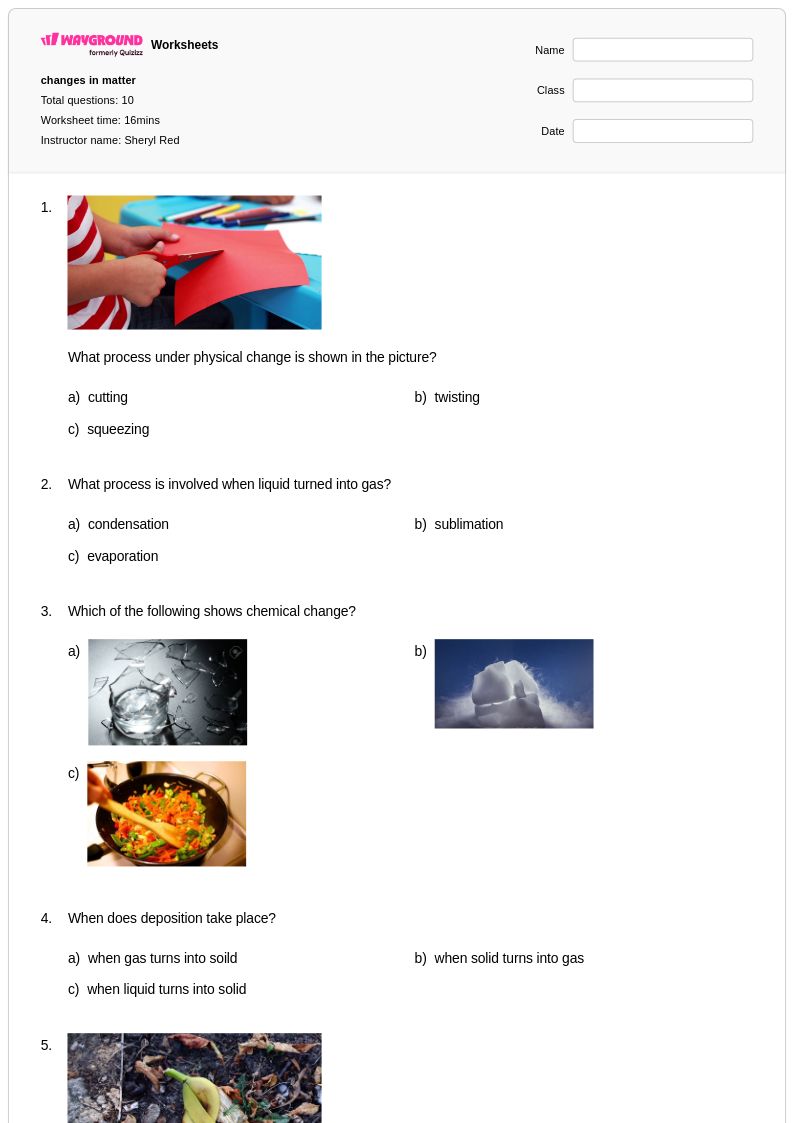
Changes in Matter worksheets for kindergarten students available through Wayground (formerly Quizizz) provide young learners with engaging, hands-on activities that introduce fundamental concepts about how materials can transform from one state to another. These carefully designed printables help kindergarteners explore basic physical science principles through age-appropriate observations of melting ice, steam from hot water, and freezing liquids into solids. The worksheets strengthen essential scientific thinking skills including observation, prediction, and simple data recording while building vocabulary related to solid, liquid, and gas states. Each practice problem set comes with a comprehensive answer key, making it easy for educators to assess student understanding, and the free pdf format ensures accessibility for classroom use, homework assignments, or homeschool instruction.
Wayground (formerly Quizizz) empowers teachers with an extensive collection of millions of teacher-created resources specifically focused on kindergarten physical science concepts like changes in matter. The platform's robust search and filtering capabilities allow educators to quickly locate worksheets that align with specific learning standards and match their students' developmental needs. Teachers can customize these materials to support differentiation strategies, creating modified versions for remediation or enrichment activities that challenge advanced learners. The flexible format options include both printable pdf versions for traditional paper-based learning and digital formats for interactive classroom experiences, giving educators the versatility they need for effective lesson planning and skill practice across diverse learning environments.
FAQs
How do I teach the difference between physical and chemical changes in matter?
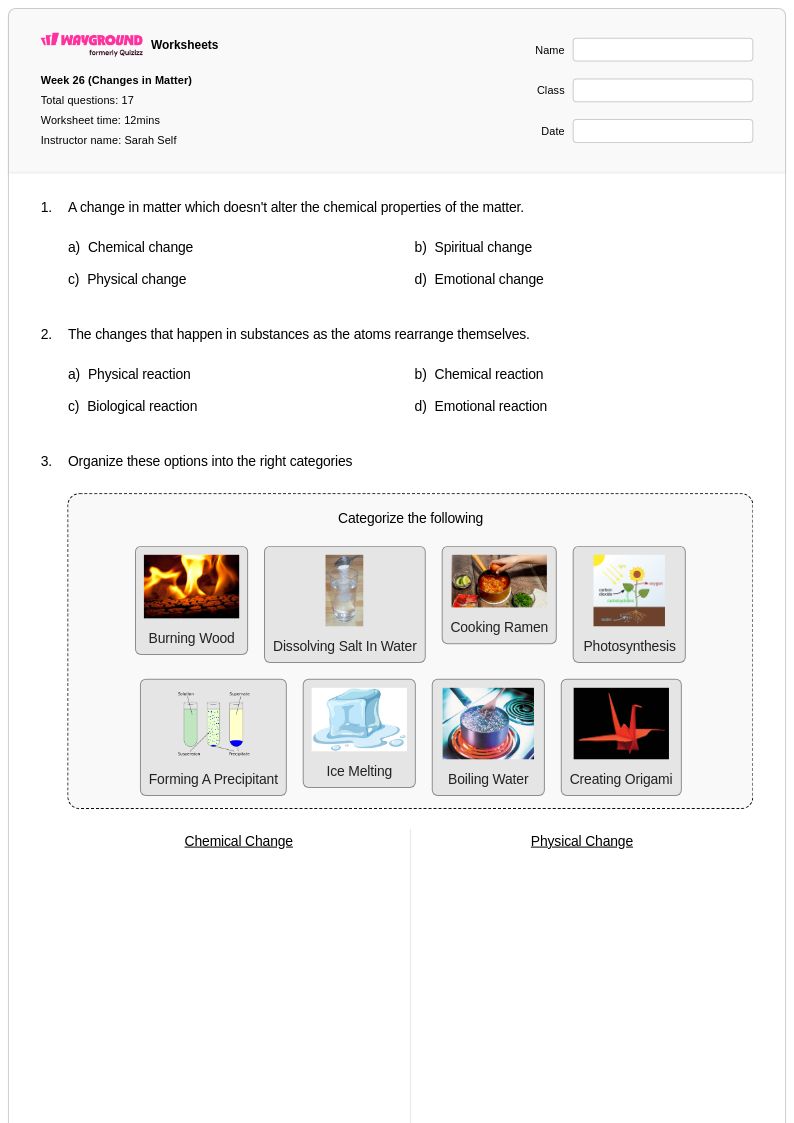
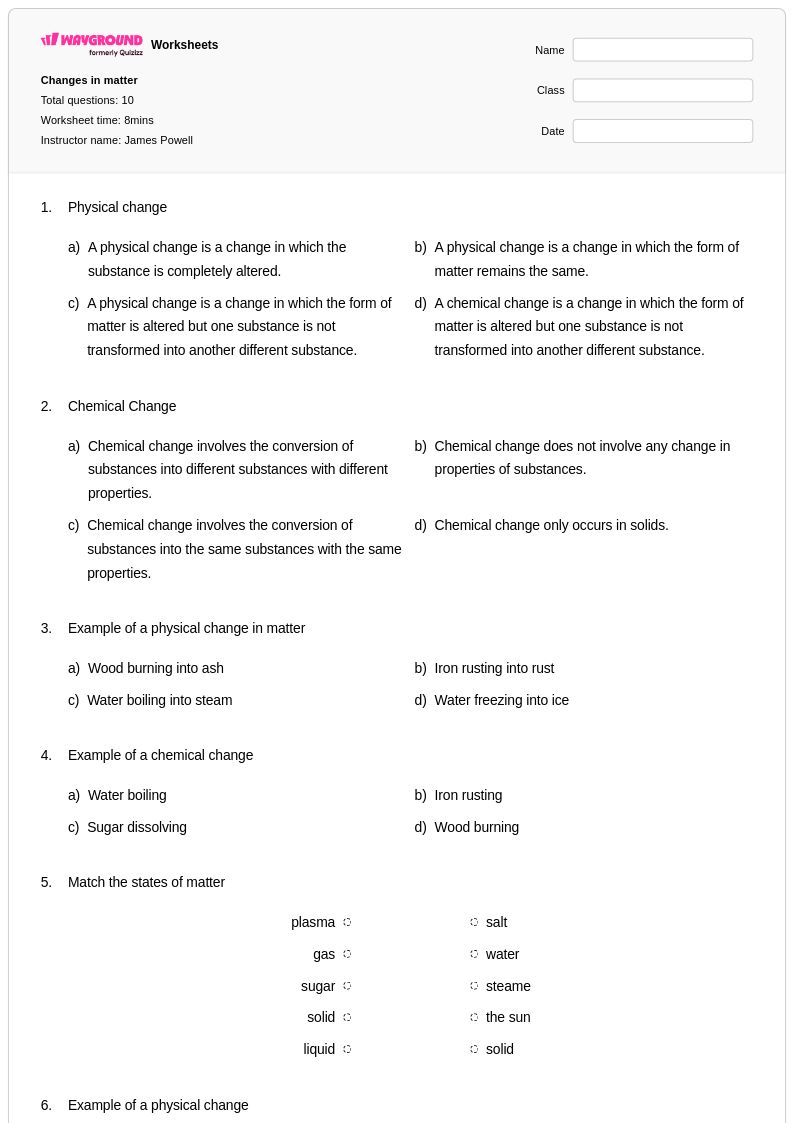
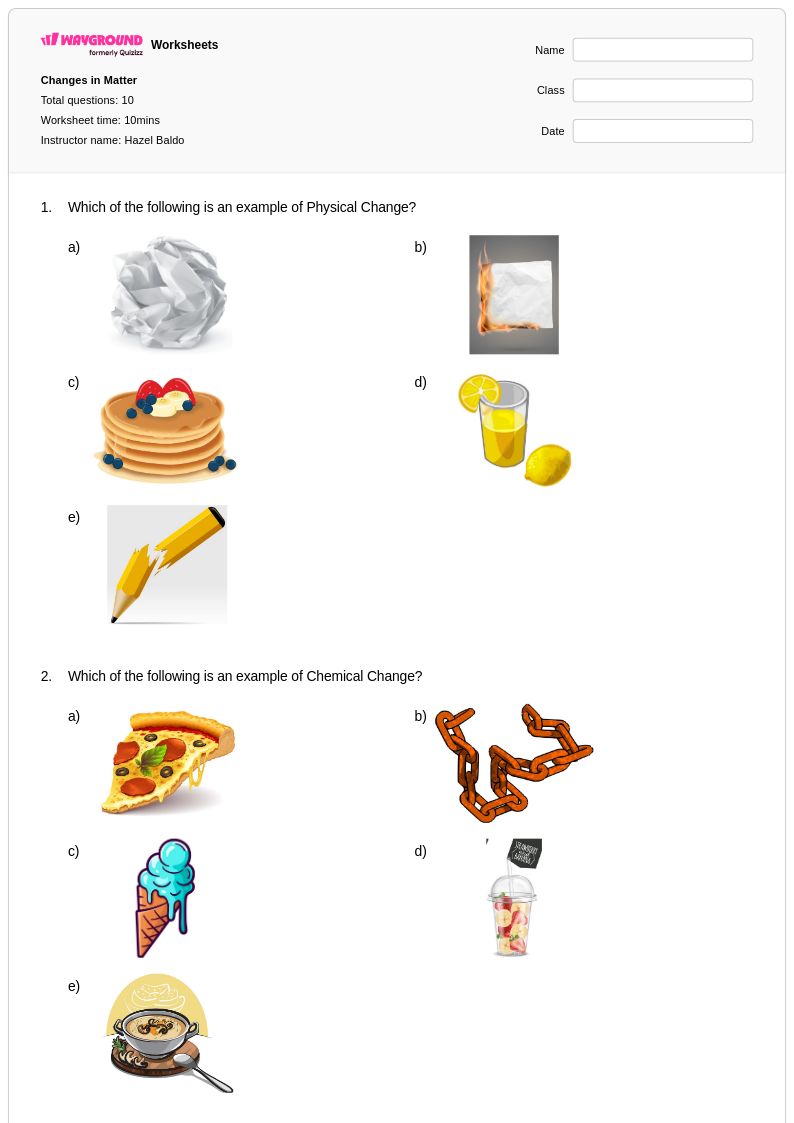
Start by anchoring students to observable evidence: physical changes alter the form or appearance of a substance without changing its chemical identity, while chemical changes produce new substances with different properties. Use concrete examples like cutting paper (physical) versus burning it (chemical) to make the distinction tangible. From there, introduce indicators of chemical change such as color change, gas production, temperature shift, or precipitate formation, and have students classify real-world examples using these criteria. Building a class anchor chart of 'physical vs. chemical change clues' helps students internalize the concept before moving to more complex scenarios.
What are good exercises for practicing phase transitions and changes in matter?
Effective practice tasks include labeling phase transition diagrams (solid, liquid, gas) and naming the processes connecting them, such as melting, freezing, evaporation, condensation, and sublimation. Students also benefit from analyzing heating and cooling curves, where they identify phase change plateaus and explain what is happening at the molecular level. Classification exercises that ask students to sort changes as physical or chemical, combined with short explanation prompts, reinforce both vocabulary and conceptual understanding. These types of structured practice problems are especially useful for building fluency before lab activities or assessments.
What mistakes do students commonly make when identifying chemical vs. physical changes?
The most persistent misconception is that any visible or dramatic change must be chemical. Students often misclassify dissolving (physical) as chemical because the solid seems to disappear, or they label ice melting as chemical because it looks different. Another common error is assuming that if heat is involved, a chemical change has occurred, which leads to confusion about phase transitions. Teachers should explicitly address these edge cases and give students practice sorting borderline examples with justification prompts, which forces them to apply criteria rather than rely on appearance alone.
How does conservation of mass apply to changes in matter, and how do I teach it?
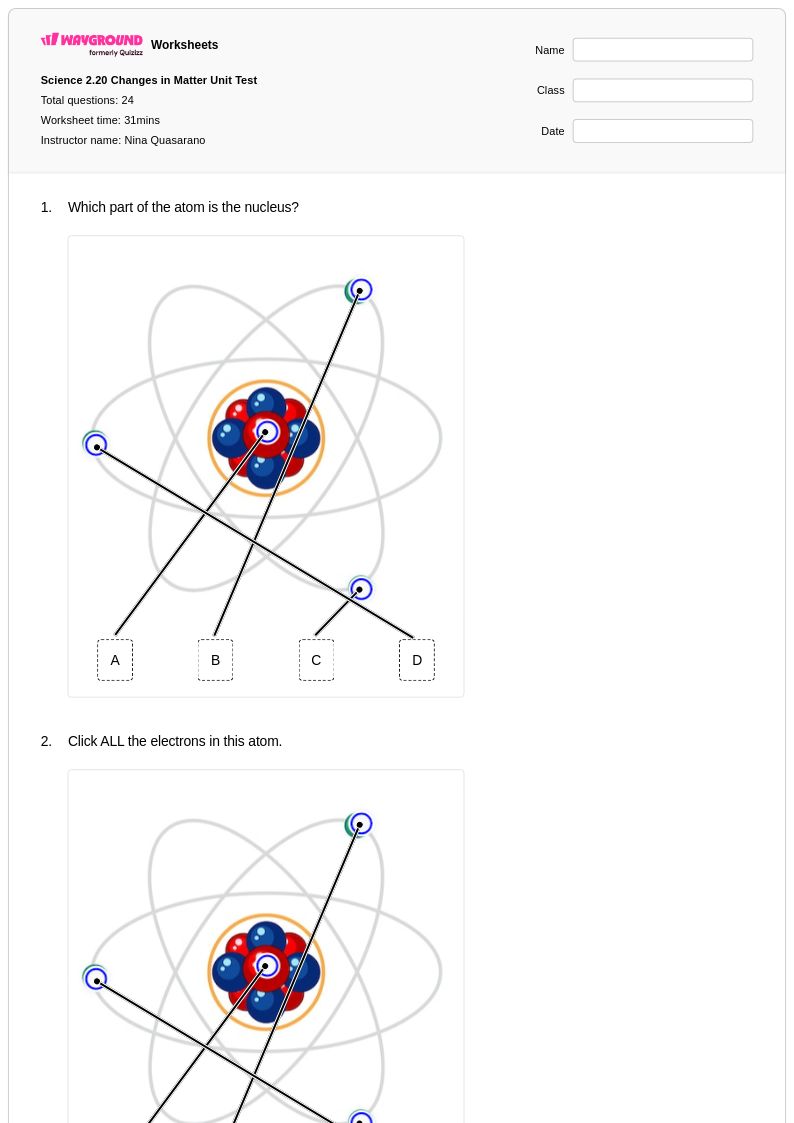
Conservation of mass states that the total mass of a system remains constant regardless of physical or chemical changes, because atoms are neither created nor destroyed. A common teaching approach is to have students 'mass' materials before and after a change, such as dissolving salt in water or burning a candle in a sealed container, and compare results. Students often struggle with open-system examples where gas escapes, so it is important to discuss closed versus open systems explicitly. Connecting this principle to the atomic model helps students understand why mass is conserved even when substances appear to vanish.
How can I use changes in matter worksheets in my classroom?
Changes in matter worksheets on Wayground are available as printable PDFs, making them straightforward to distribute for in-class practice, lab prep, or homework, and they also come in digital formats suited for device-based learning or remote assignments. You can host the worksheet directly as a quiz on Wayground, which allows for real-time progress tracking. Each worksheet includes a complete answer key, so self-checking and peer review are easy to incorporate. For students who need additional support, Wayground's accommodation tools allow you to enable read aloud, extended time, or reduced answer choices on an individual basis without disrupting the rest of the class.
How do I differentiate changes in matter instruction for students at different skill levels?
For students who are still building foundational vocabulary, focus practice on matching and labeling tasks before introducing classification and explanation prompts. More advanced students can be challenged with open-ended scenarios, such as explaining why a rusting nail loses mass in an open system but follows conservation of mass in a closed one. On Wayground, teachers can assign individual accommodations such as read aloud, reduced answer choices, or extended time to specific students, while the rest of the class works through standard settings, making differentiation manageable without creating separate assignments from scratch.