Free Printable Character, Setting, and Plot Worksheets for Year 1
Explore Wayground's free Year 1 character, setting, and plot worksheets and printables that help young readers identify story elements through engaging practice problems with comprehensive answer keys included.
Explore printable Character, Setting, and Plot worksheets for Year 1
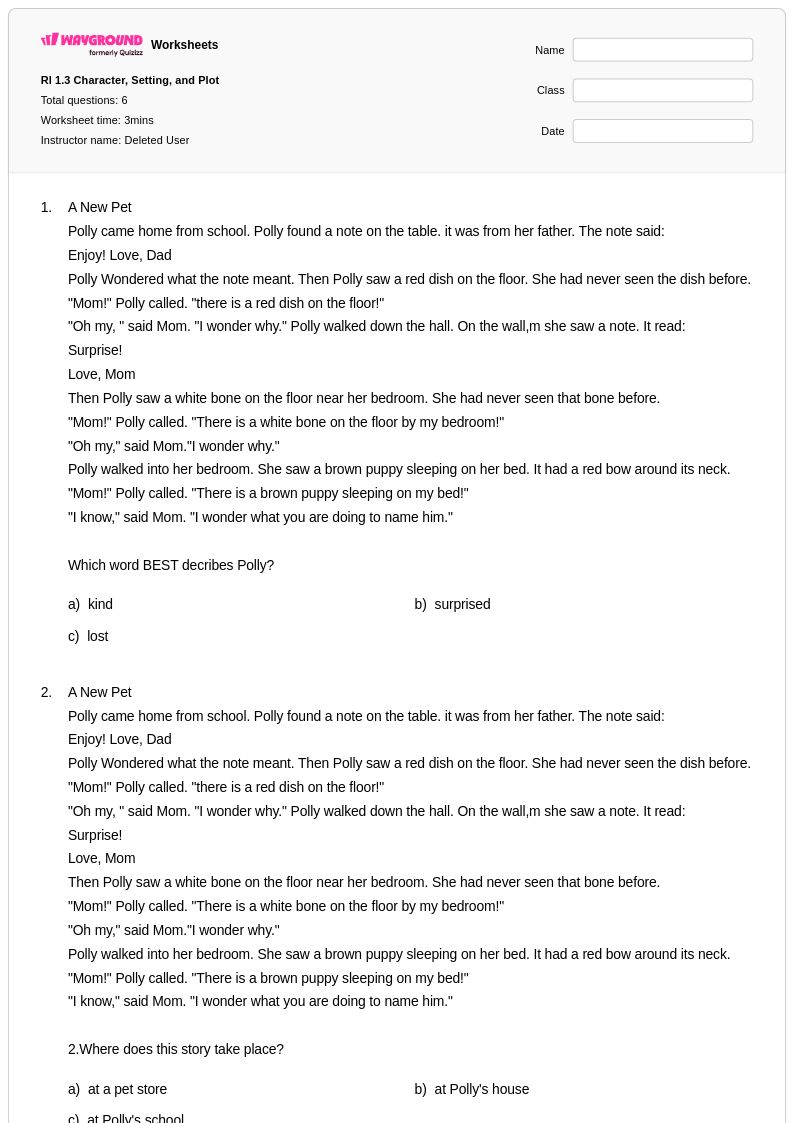
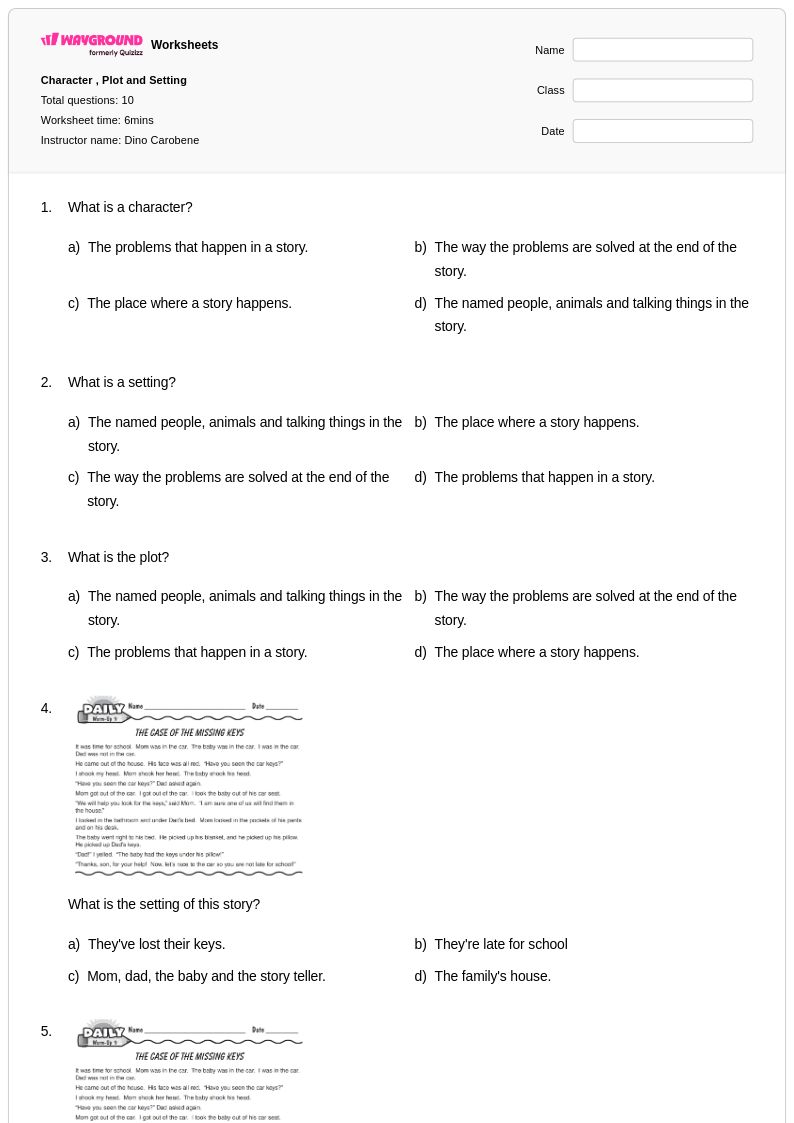
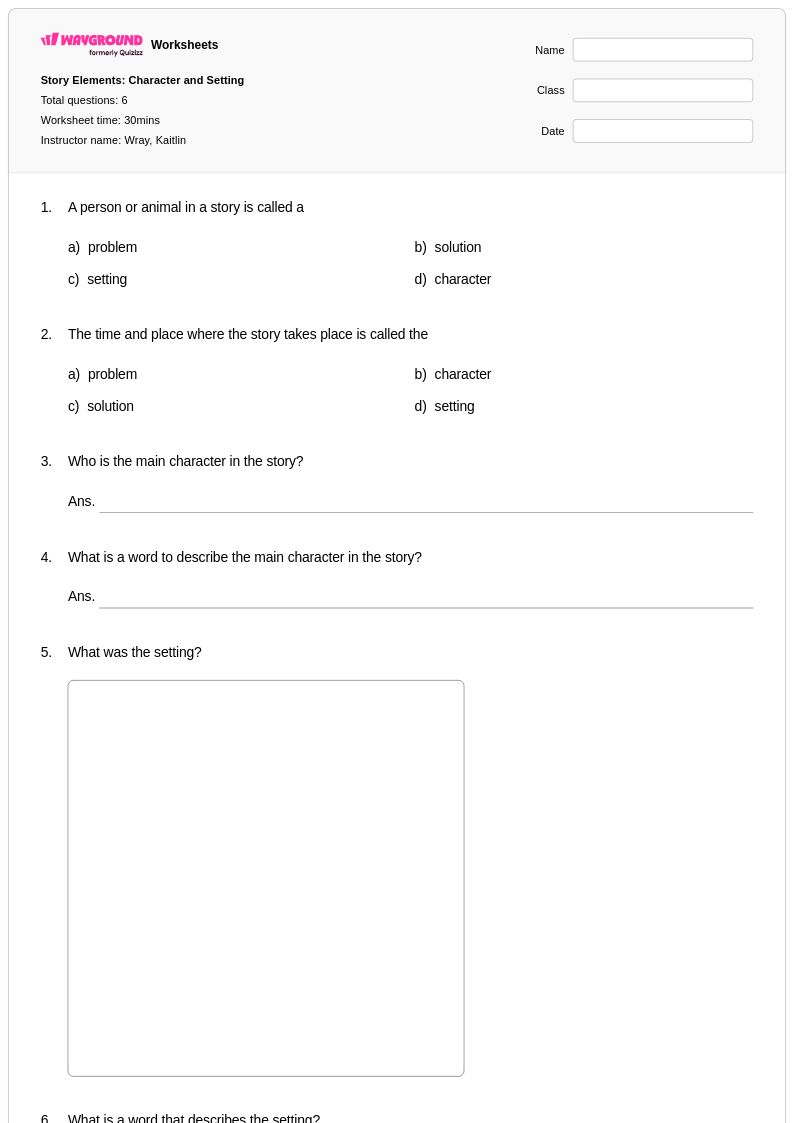
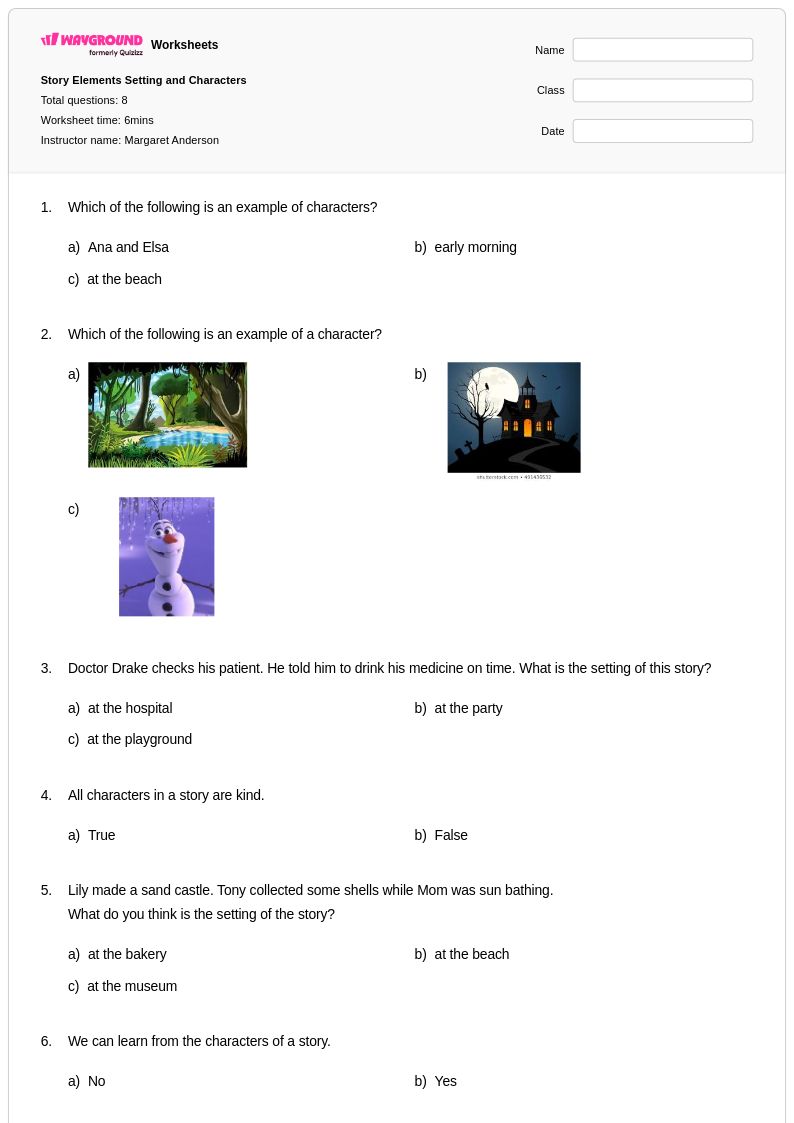
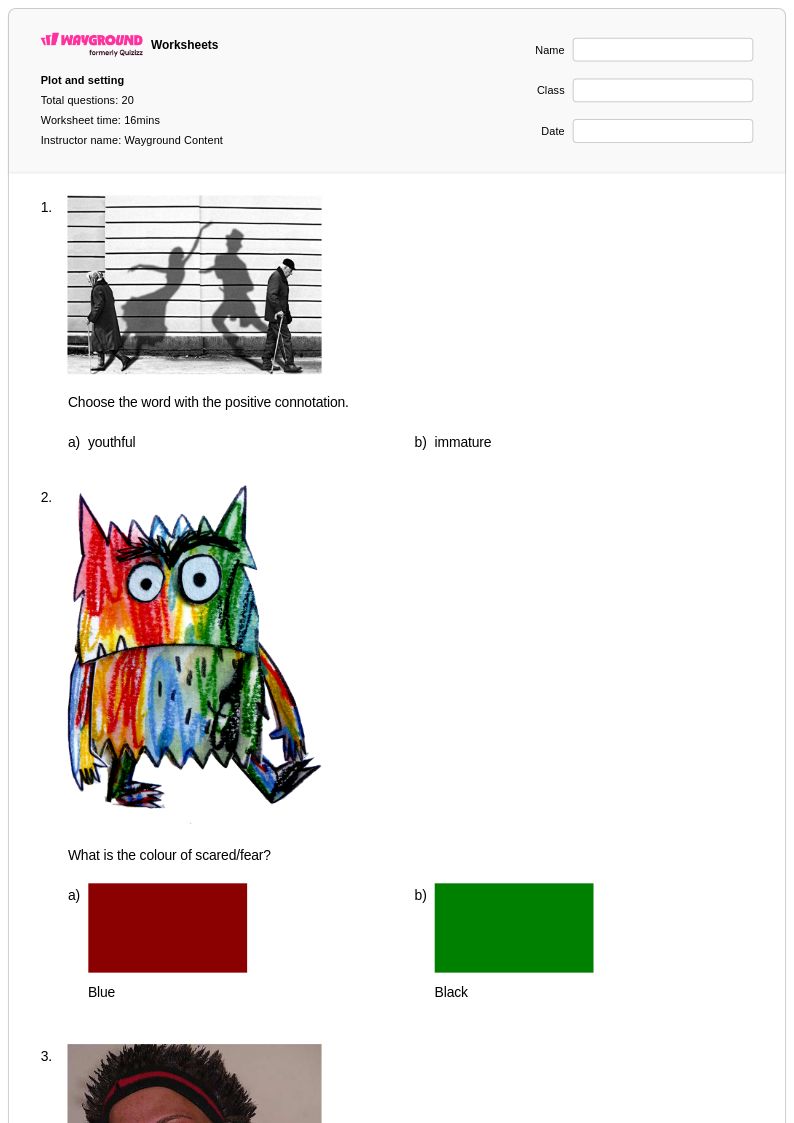
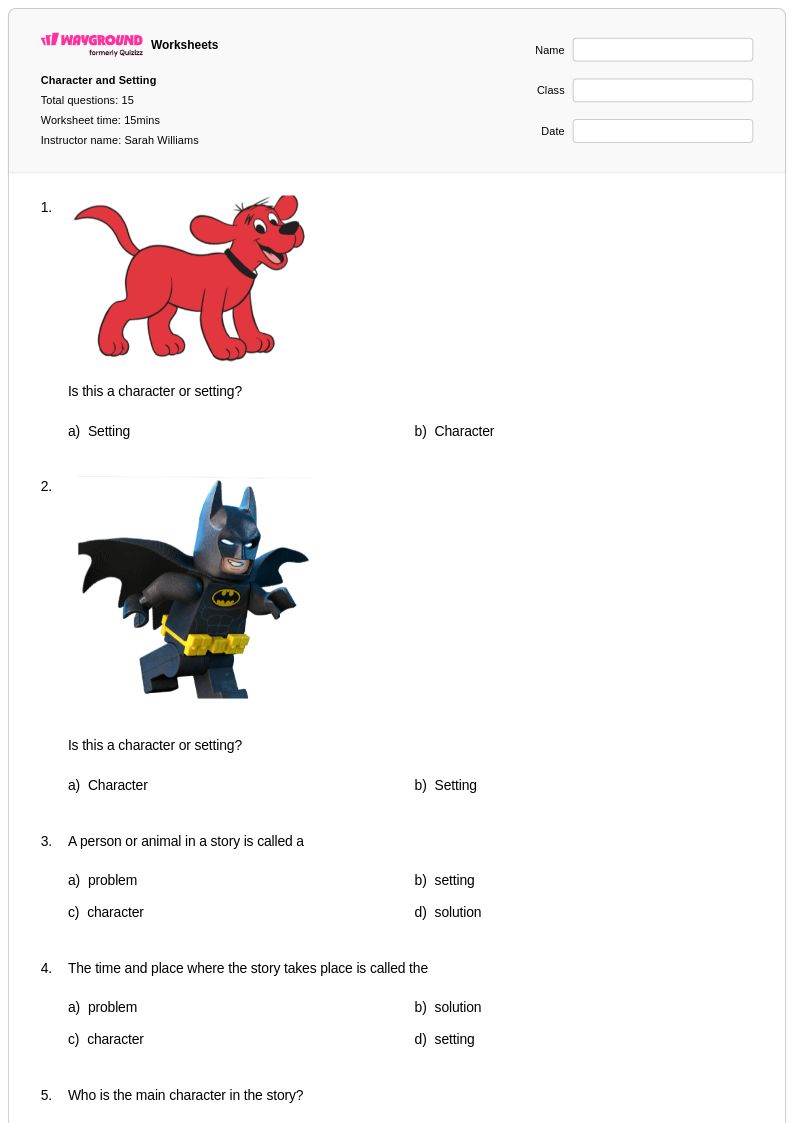
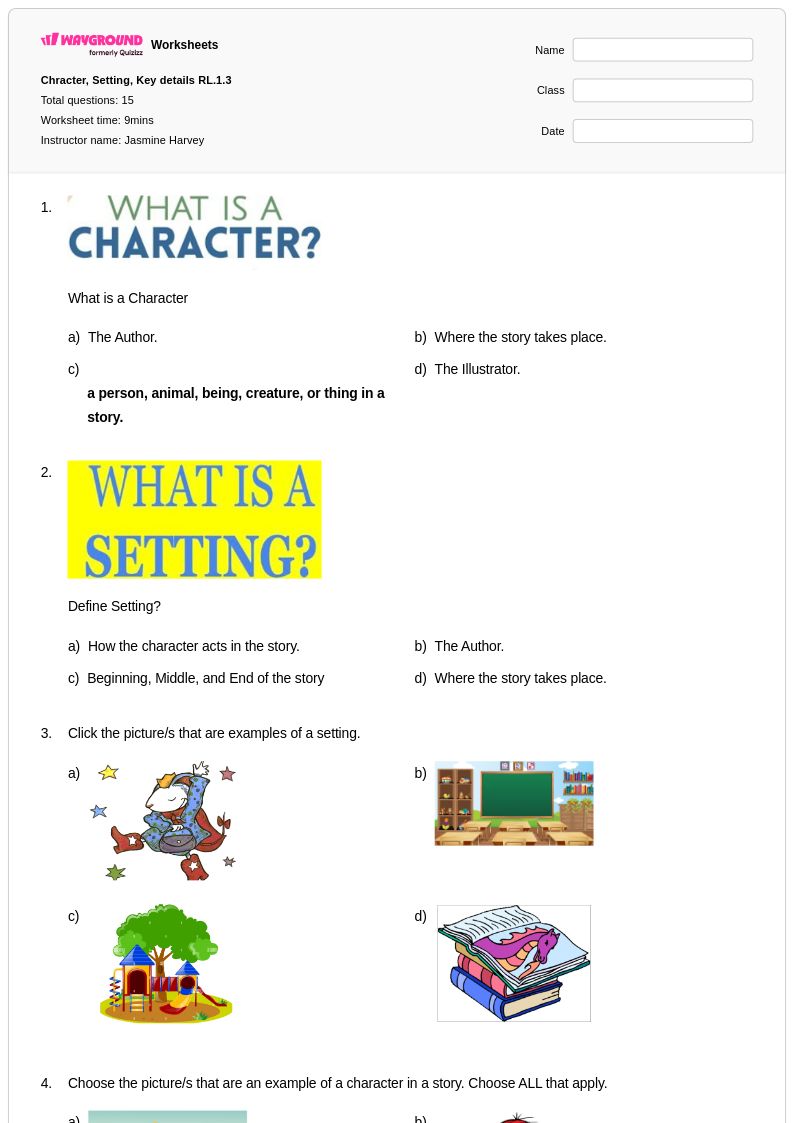
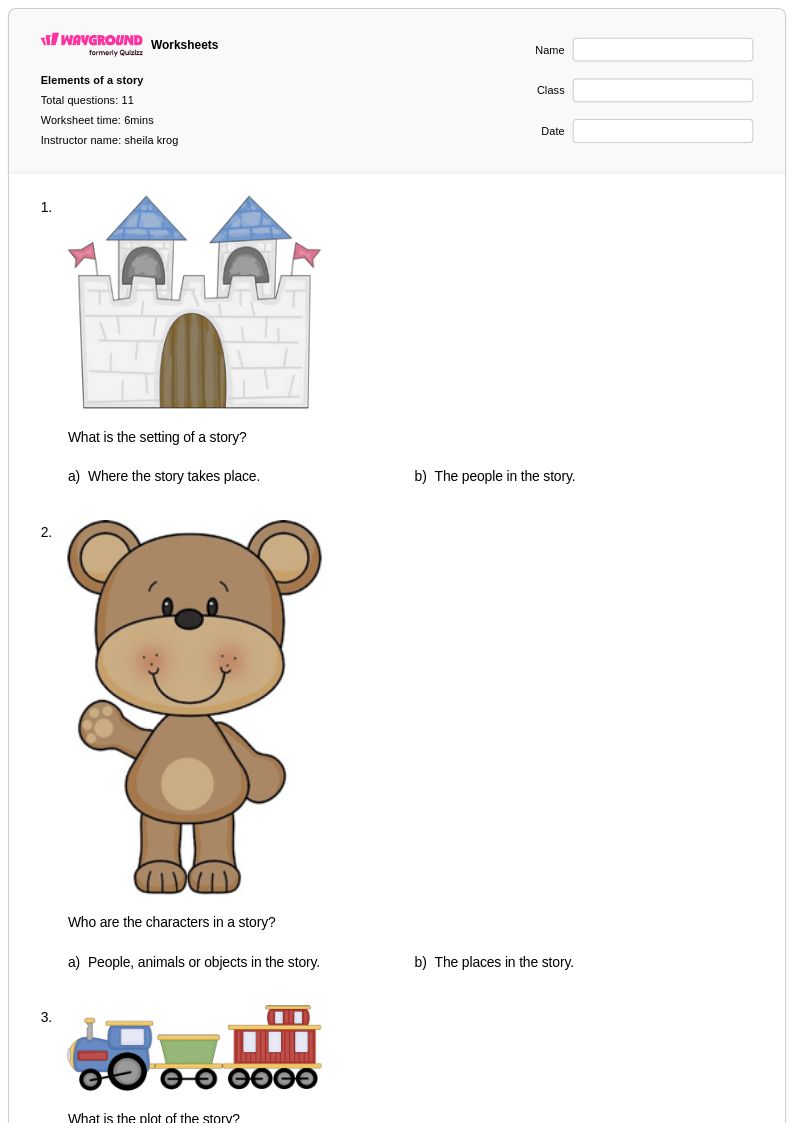
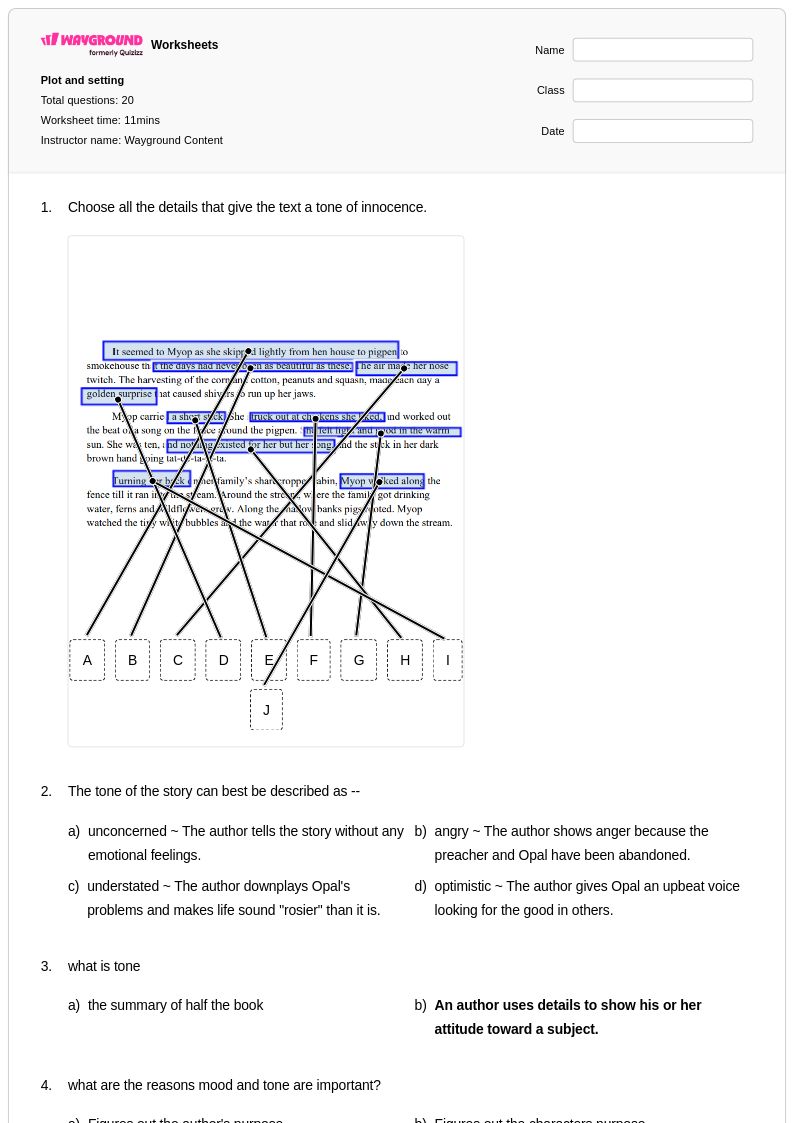
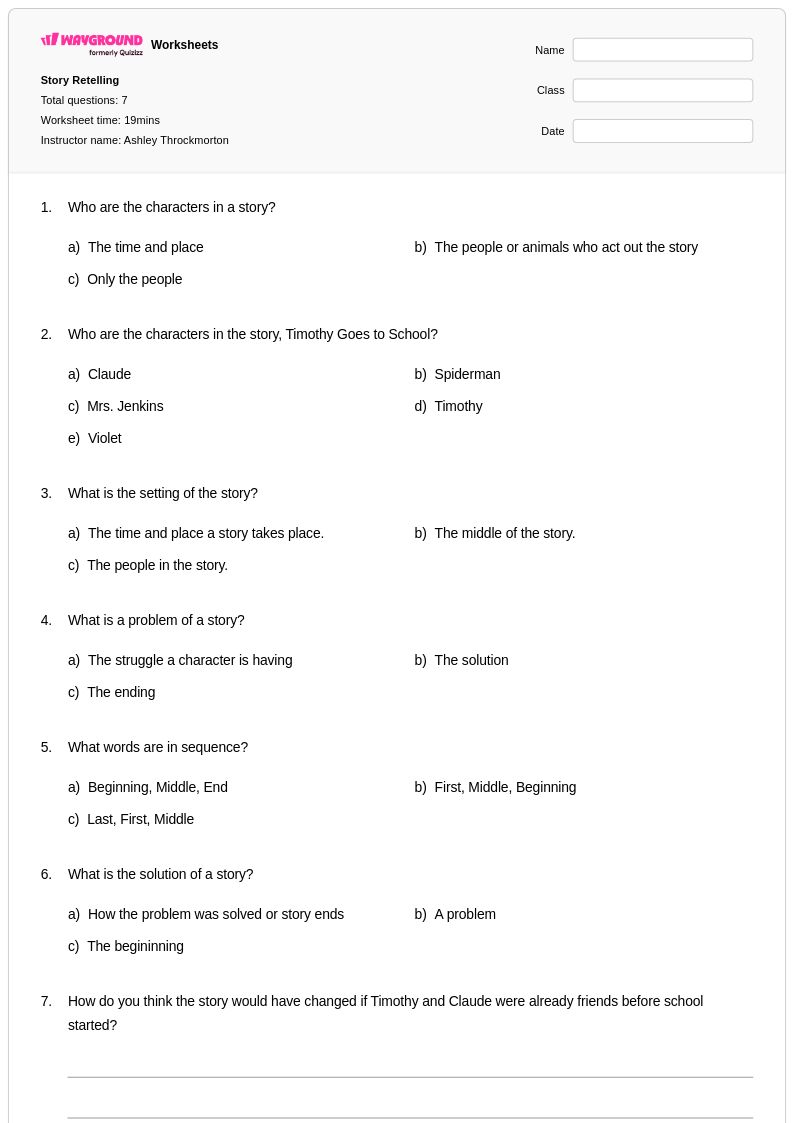
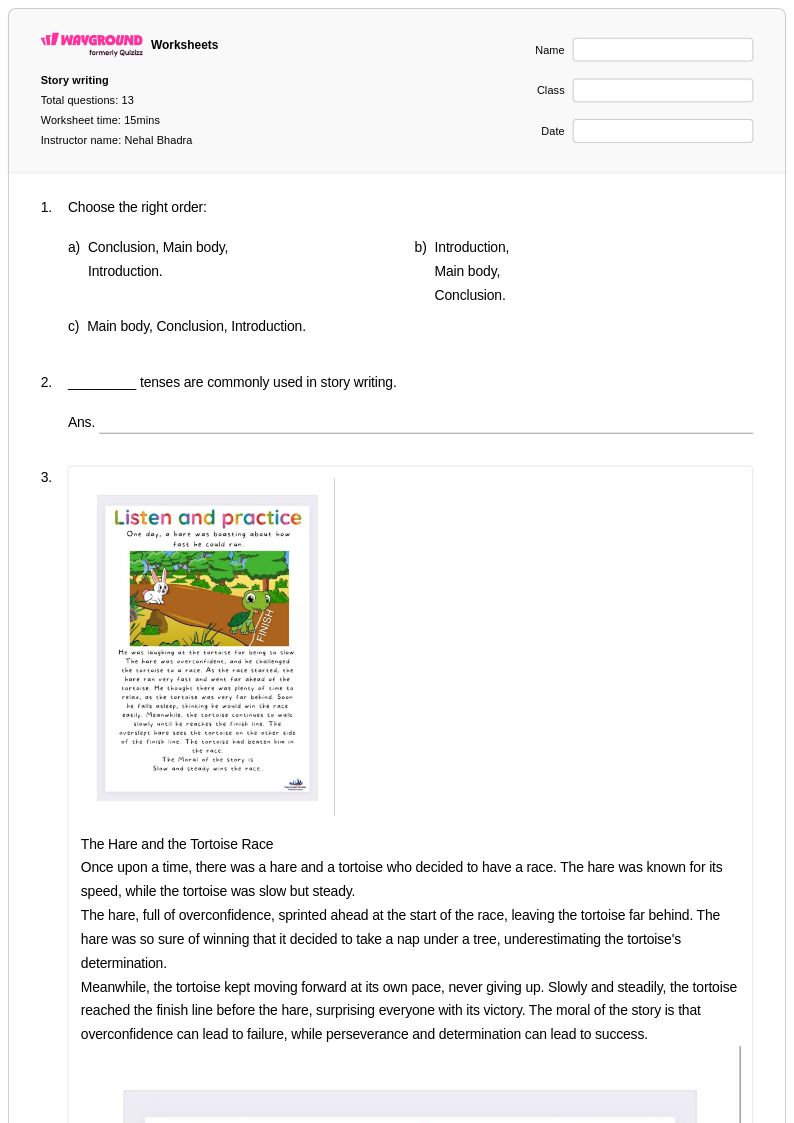
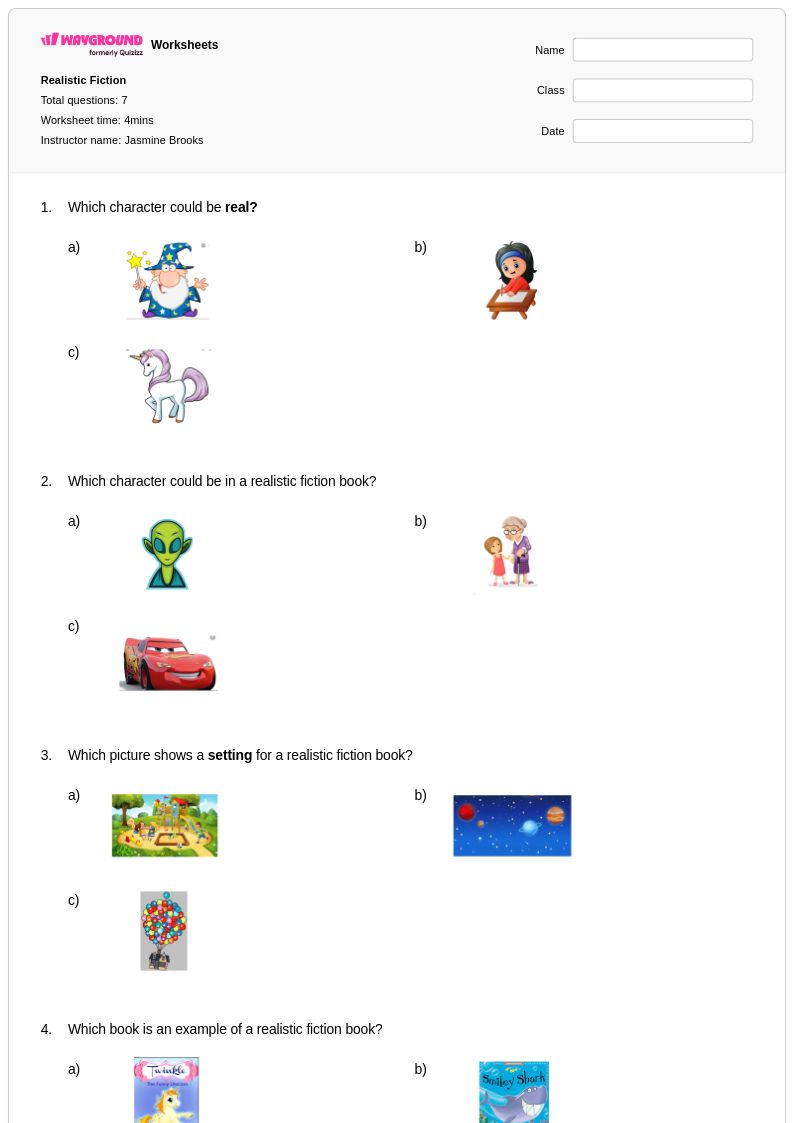
Character, setting, and plot worksheets for Year 1 students available through Wayground help young learners develop essential reading comprehension skills by focusing on the fundamental story elements that form the foundation of literary understanding. These carefully designed printable resources guide first-grade students through identifying who appears in a story, where events take place, and what happens from beginning to end. Each worksheet includes engaging activities that encourage students to practice recognizing main characters, describing story settings using picture clues and simple text, and sequencing basic plot events in the correct order. The free pdf materials feature age-appropriate texts with accompanying practice problems that strengthen students' ability to extract meaning from stories, while comprehensive answer keys support teachers in providing immediate feedback and assessment.
Wayground's extensive collection of character, setting, and plot worksheets draws from millions of teacher-created resources specifically aligned with Year 1 reading standards and developmental expectations. The platform's robust search and filtering capabilities allow educators to quickly locate materials that match their students' reading levels and curriculum requirements, while built-in differentiation tools enable teachers to modify worksheets for diverse learning needs within the classroom. These versatile resources are available in both printable and digital formats, including downloadable pdf versions, making them ideal for lesson planning, targeted remediation, and enrichment activities. Teachers can easily customize content to focus on specific story elements, create scaffolded practice sequences, and provide repeated exposure to key concepts that help first-grade students build confidence in analyzing the basic components that make stories meaningful and memorable.
FAQs
How do I teach character, setting, and plot together in one lesson?
Teach character, setting, and plot as interconnected elements rather than isolated concepts. Start by showing students how the setting influences character behavior and how character decisions drive the plot forward. Using a short story or picture book, guide students to trace how all three elements interact, then have them complete a graphic organizer that maps those relationships explicitly.
What exercises help students practice identifying character, setting, and plot?
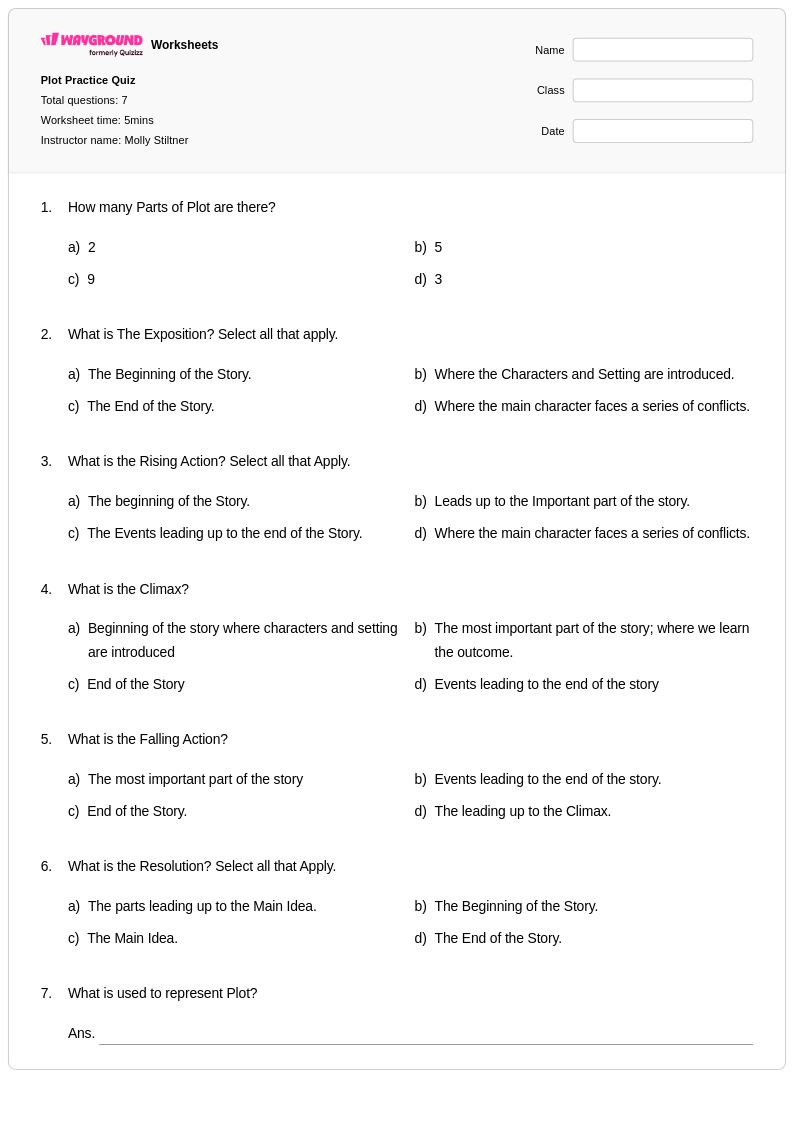
Effective practice exercises include story maps, plot diagram fill-ins, and character motivation charts applied to both familiar and unfamiliar texts. Students benefit from repeated exposure to short passages where they must identify the protagonist, describe the setting's role, and label plot stages from exposition to resolution. These structured activities build automaticity so students can apply the same analytical lens independently during reading.
What mistakes do students commonly make when analyzing character, setting, and plot?
A common error is treating the setting as mere background rather than recognizing its influence on character behavior and plot events. Students also frequently confuse the climax with the most exciting moment rather than the turning point of the central conflict. Another frequent misconception is describing characters by physical traits alone instead of analyzing their motivations, decisions, and development across the story.
How can I differentiate character, setting, and plot instruction for students at different reading levels?
For struggling readers, simplify the task by using shorter texts and providing sentence starters or partially completed graphic organizers that reduce cognitive load. Advanced learners can be challenged with complex narratives requiring them to analyze how an author deliberately manipulates setting or withholds character motivation to create suspense. On Wayground, teachers can also enable accommodations such as read aloud support, reduced answer choices, and extended time for individual students without alerting the rest of the class.
How do I use Wayground's character, setting, and plot worksheets in my classroom?
Wayground's character, setting, and plot worksheets are available as printable PDFs for traditional classroom use and in digital formats for technology-integrated or hybrid learning environments. Teachers can also host the content as a quiz directly on Wayground, enabling real-time student responses and instant feedback. Every worksheet includes a complete answer key, so no additional prep is needed before distributing to students.
How do I help students understand how setting affects plot and character?
Use mentor texts where the setting is unusually prominent, such as survival stories or historical fiction, to make the connection visible. Ask students to consider how the events would change if the setting were different, which pushes them to see setting as a causal force rather than a backdrop. Pairing this discussion with a structured worksheet that requires students to cite specific setting details and explain their impact reinforces the analytical habit.