Free Printable Charitable Organizations Worksheets for Year 3
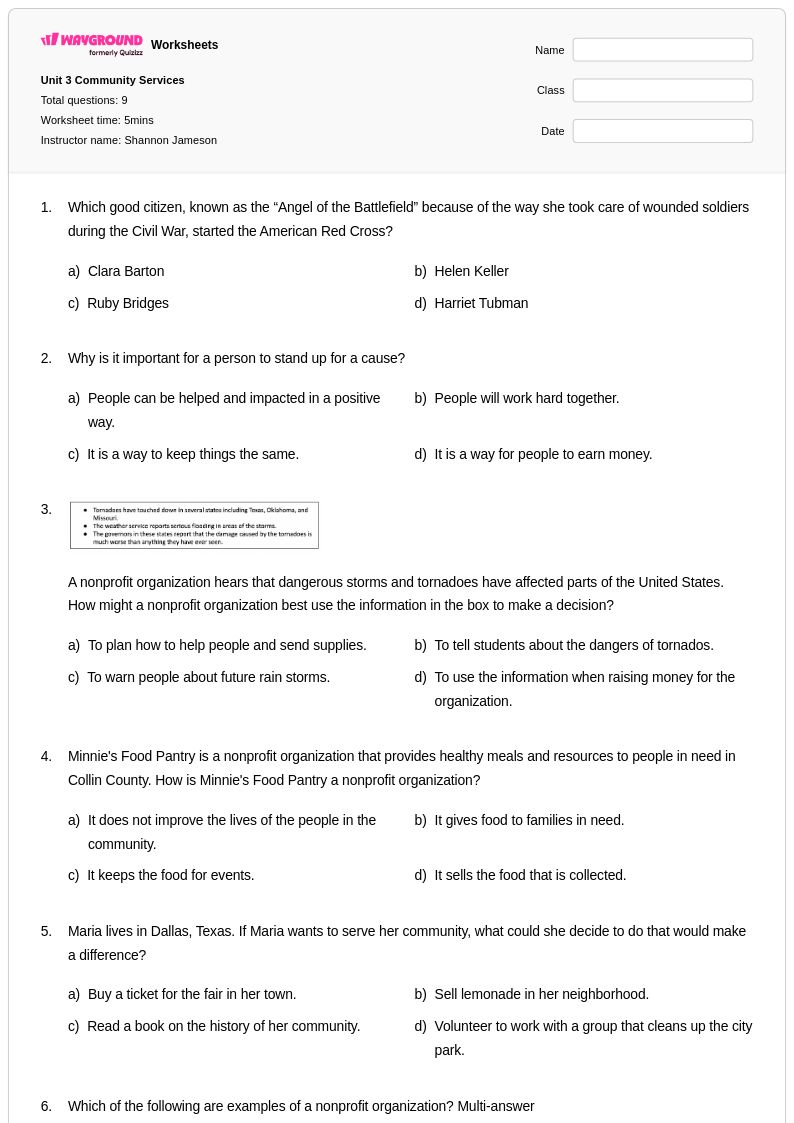
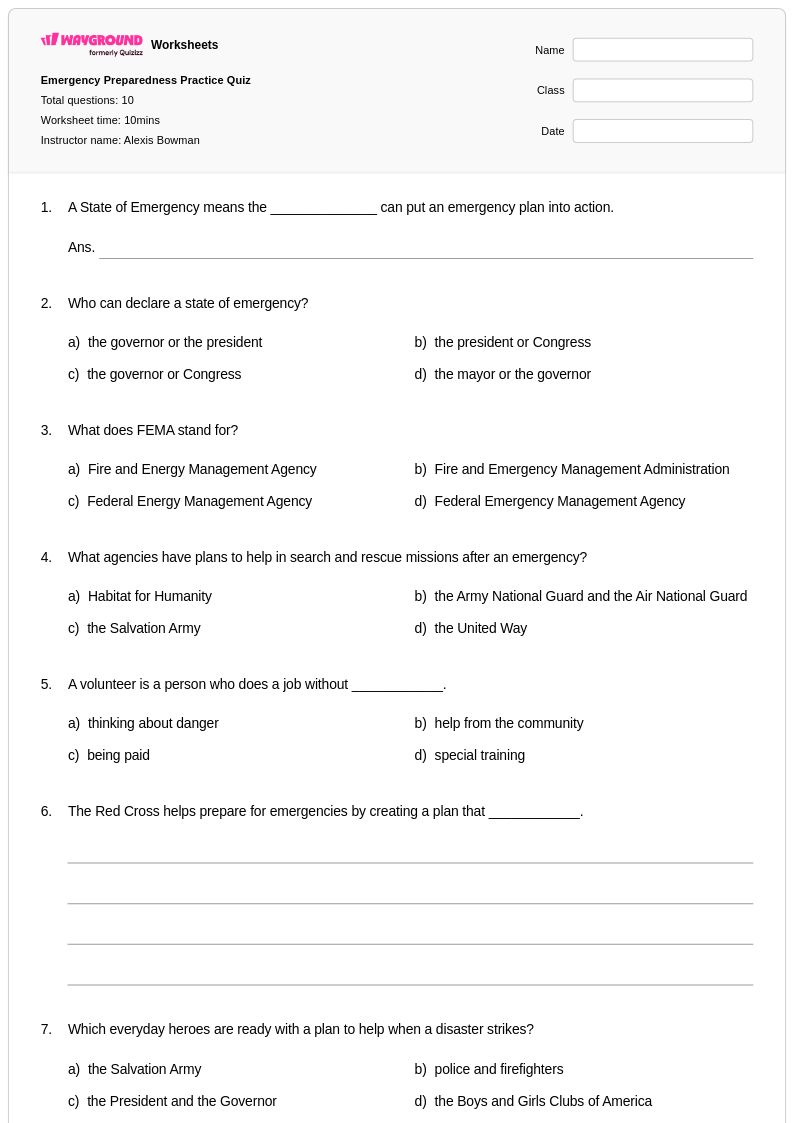
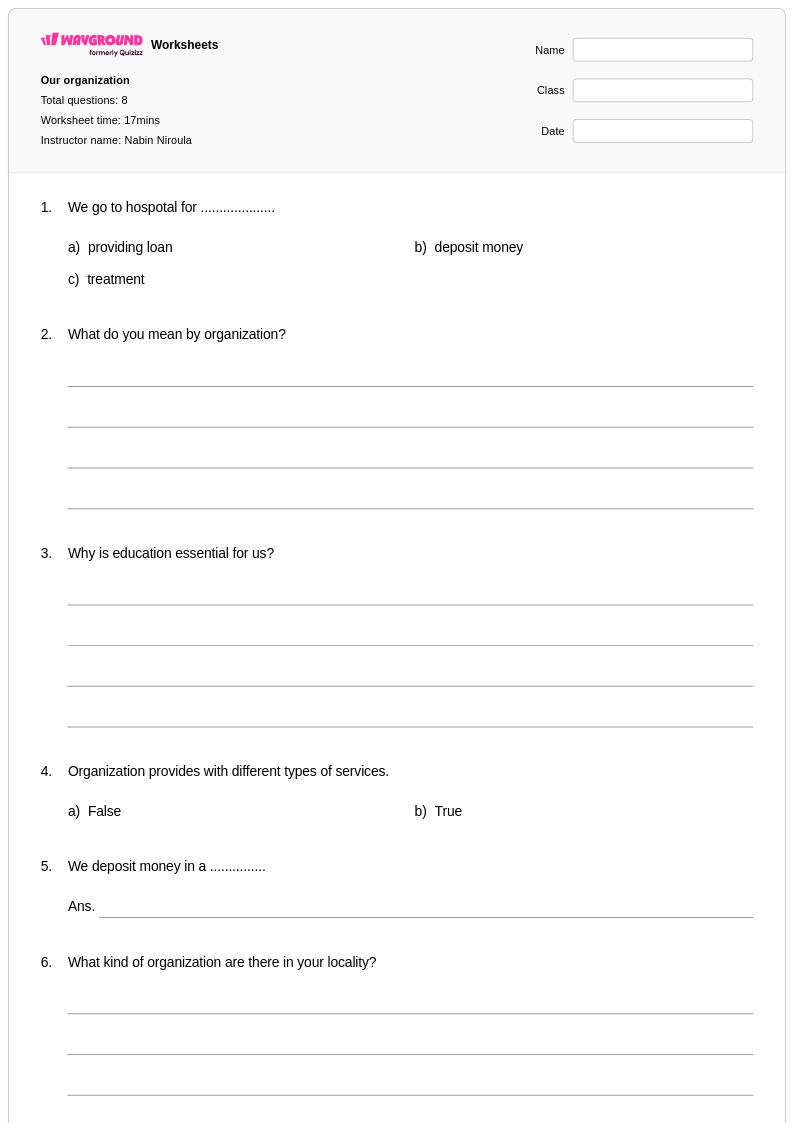
Free Year 3 charitable organizations worksheets and printables help students explore how community helpers make a difference through engaging social studies practice problems with answer keys.
Explore printable Charitable Organizations worksheets for Year 3
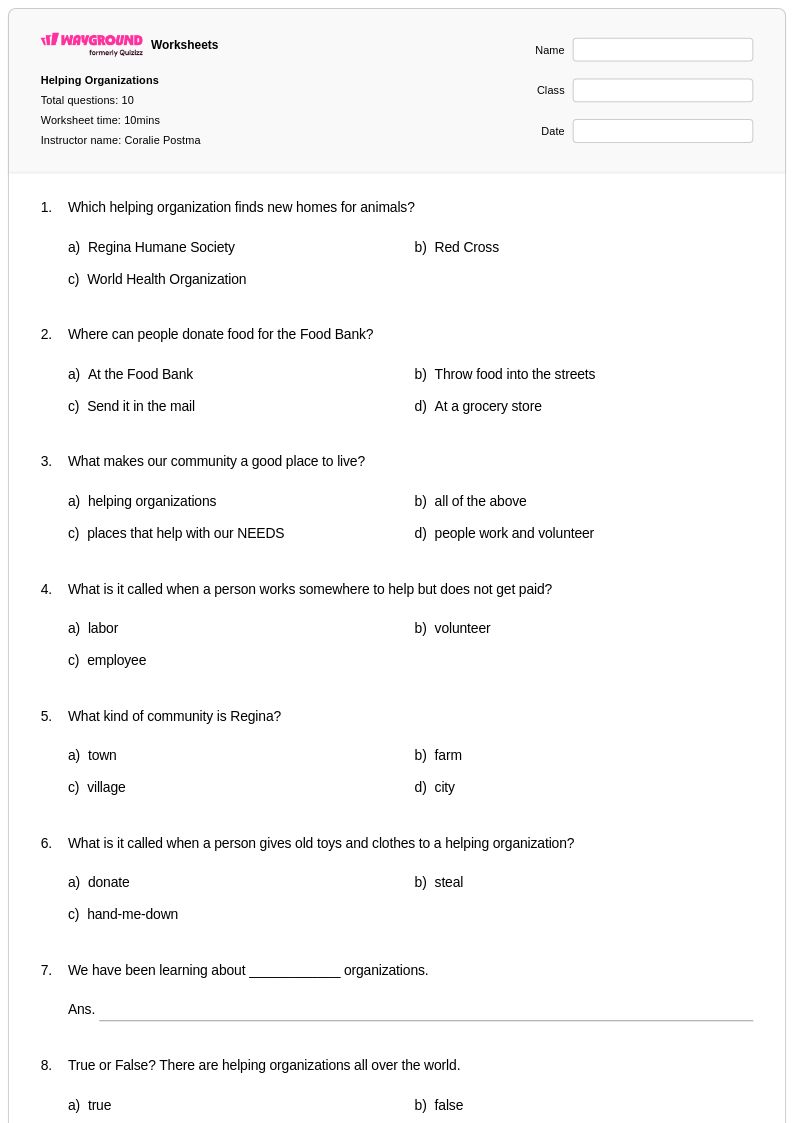
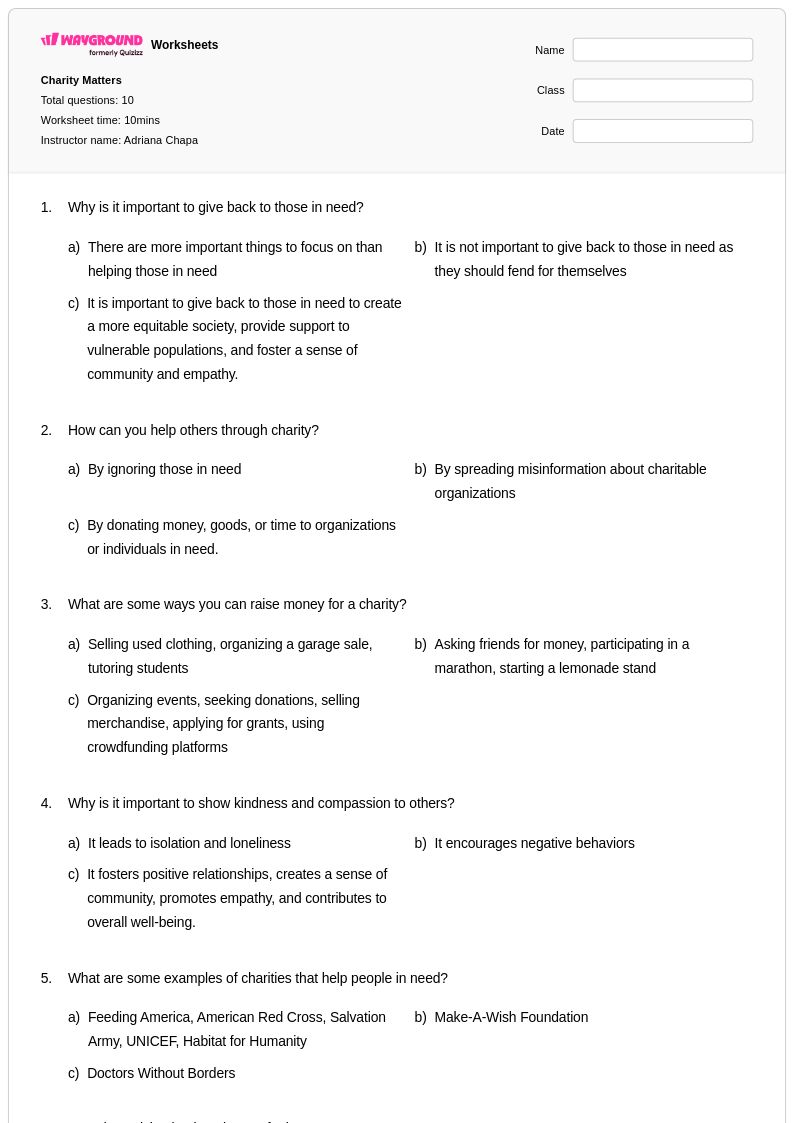
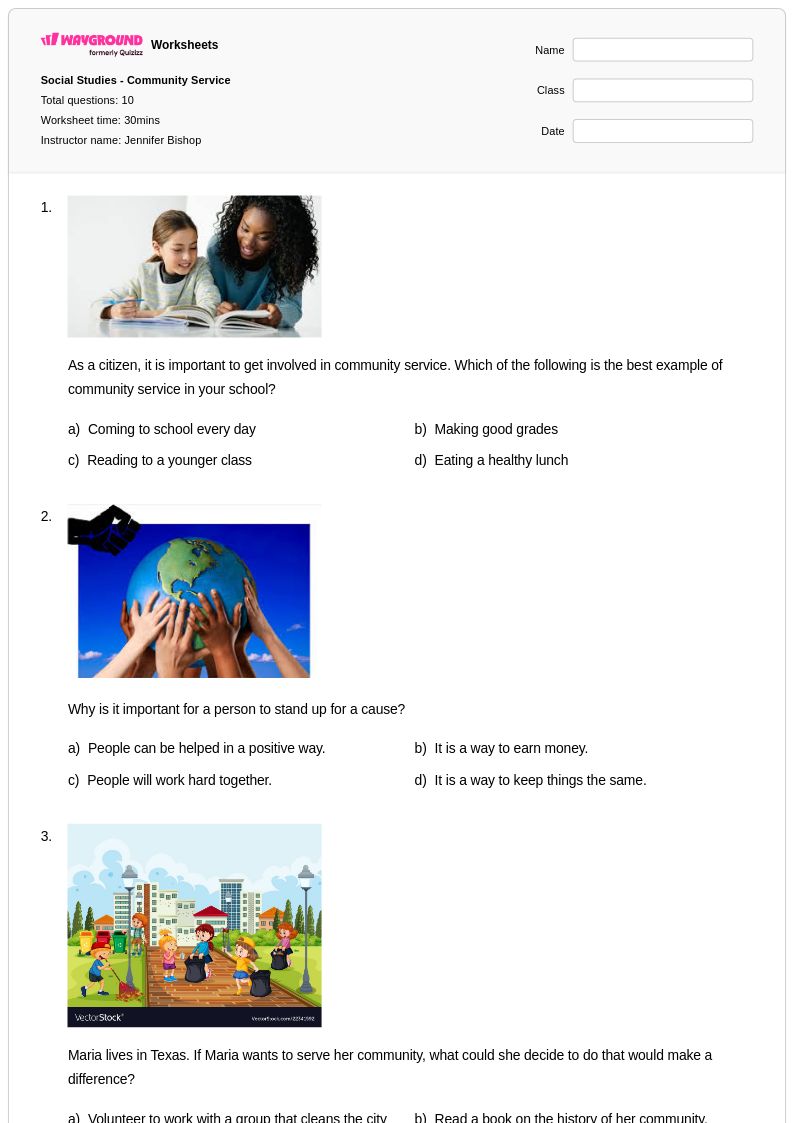
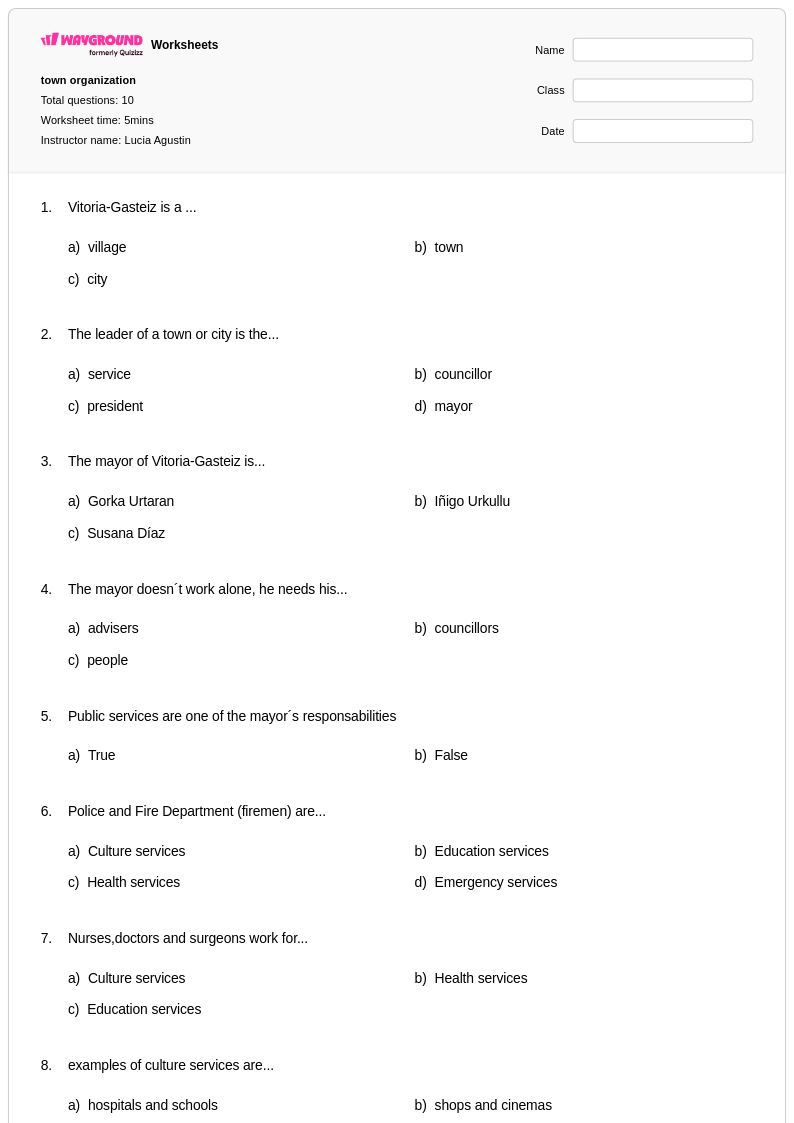
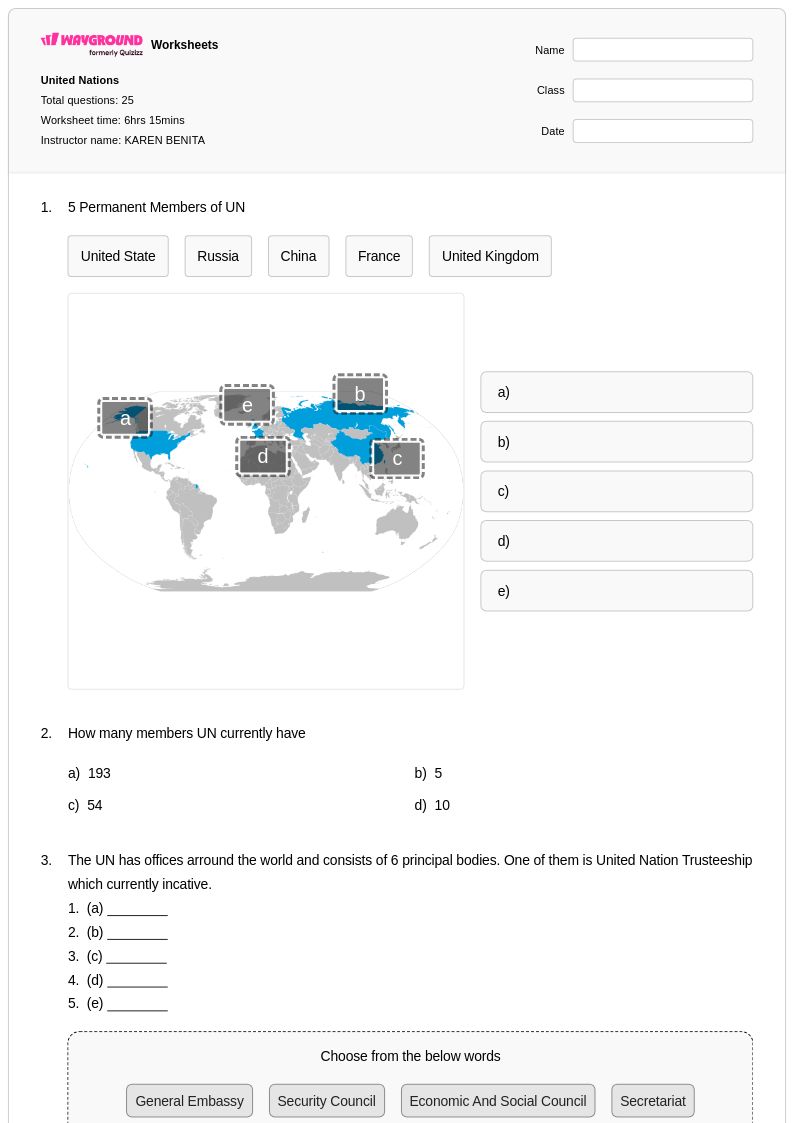
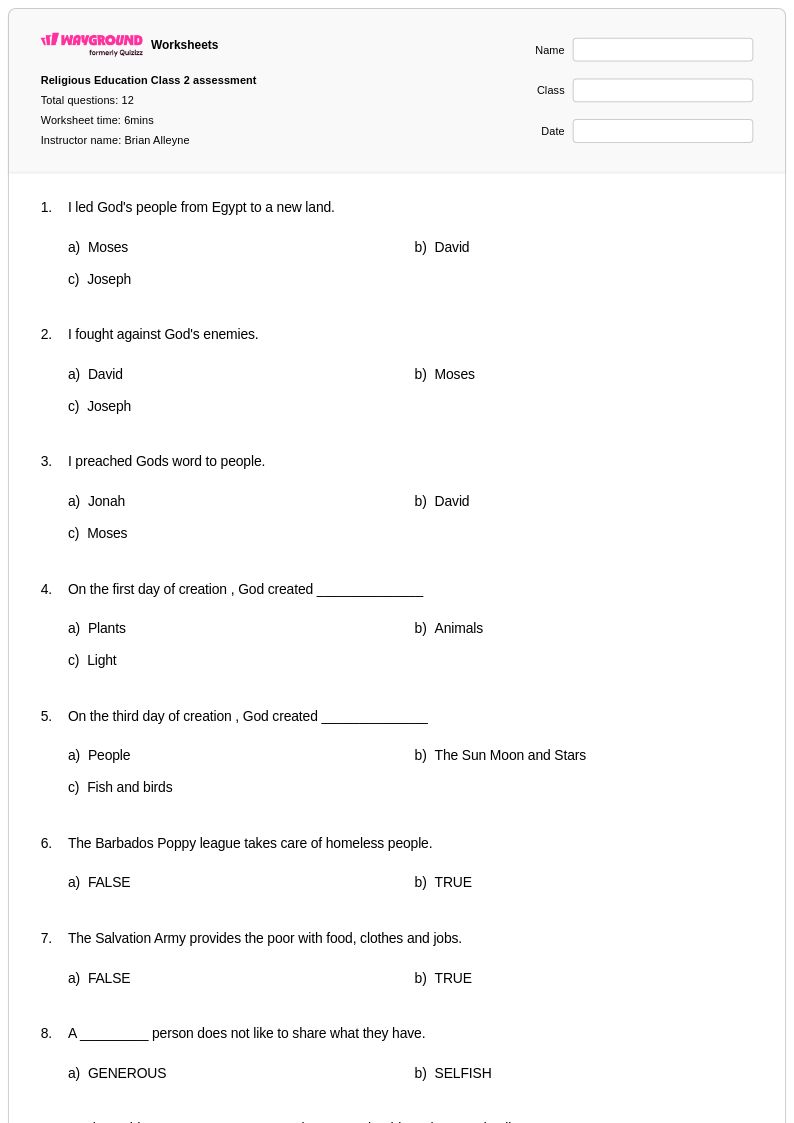
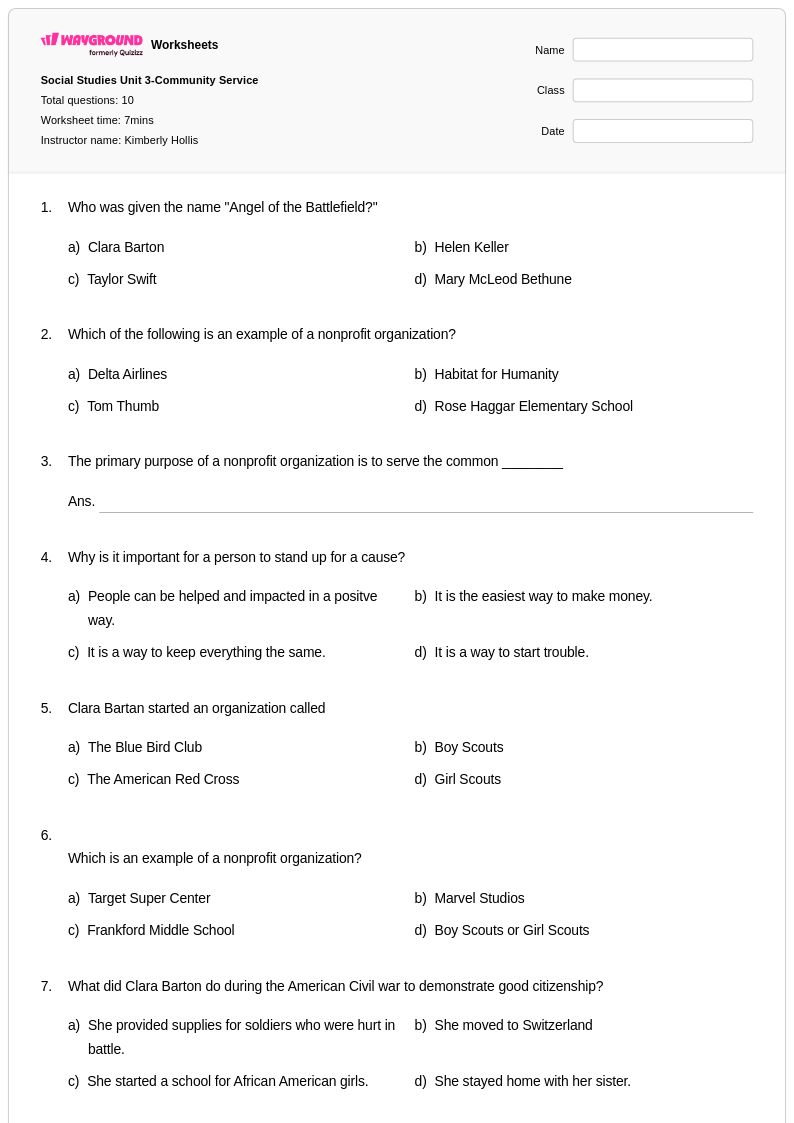
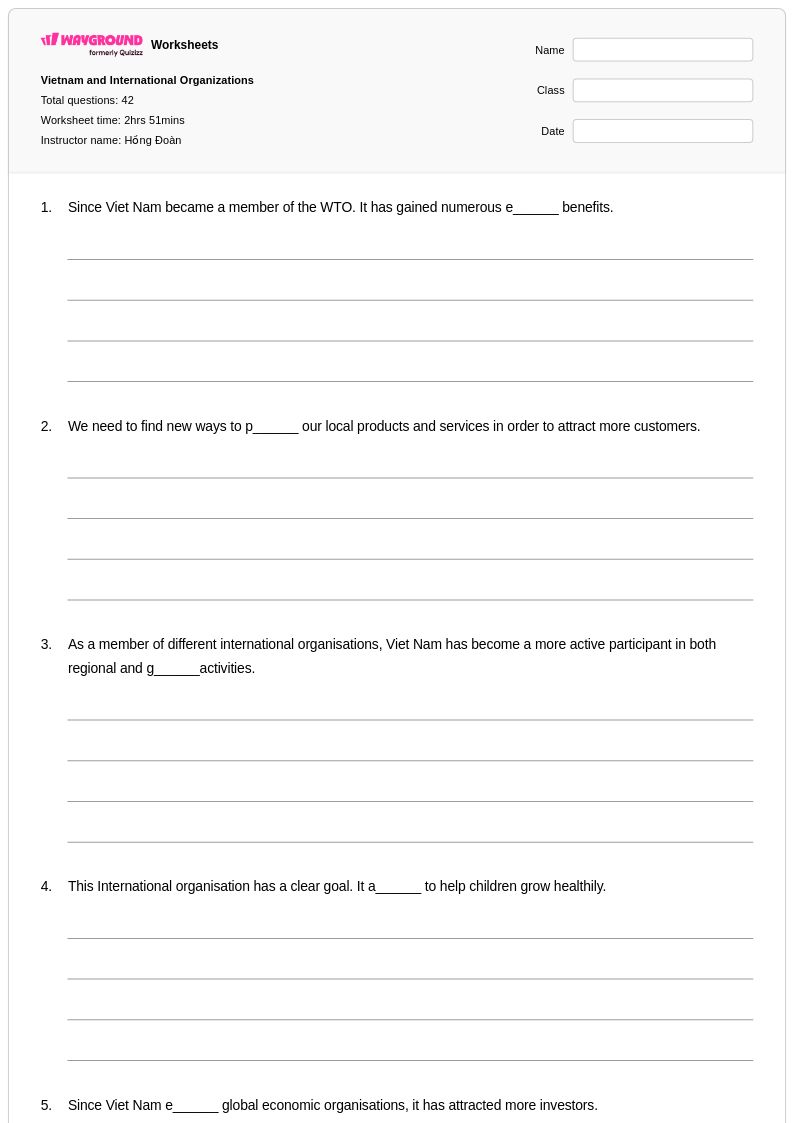
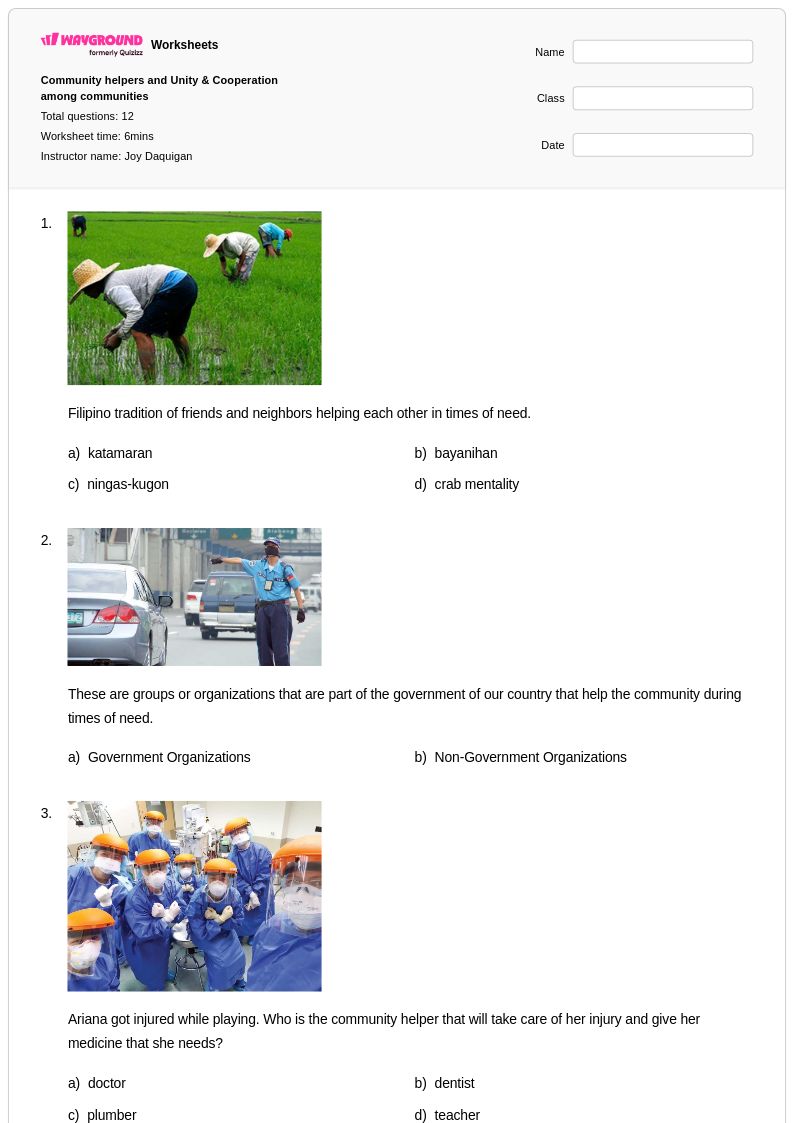
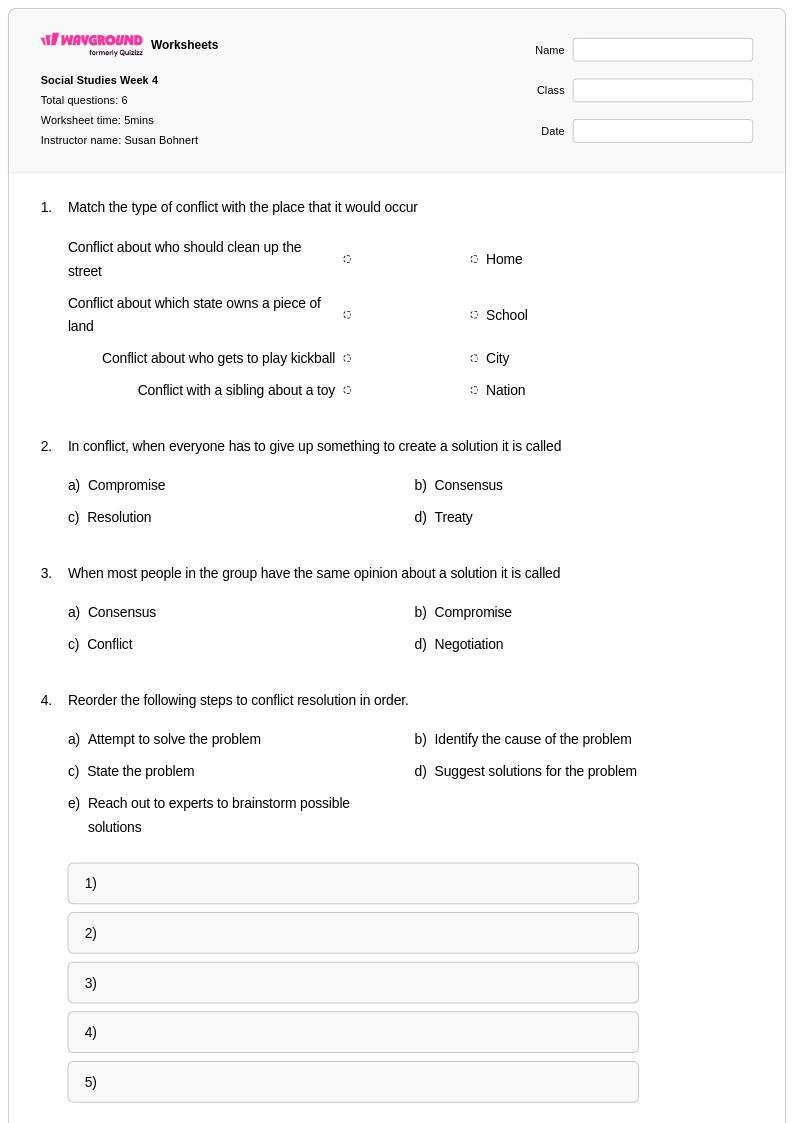
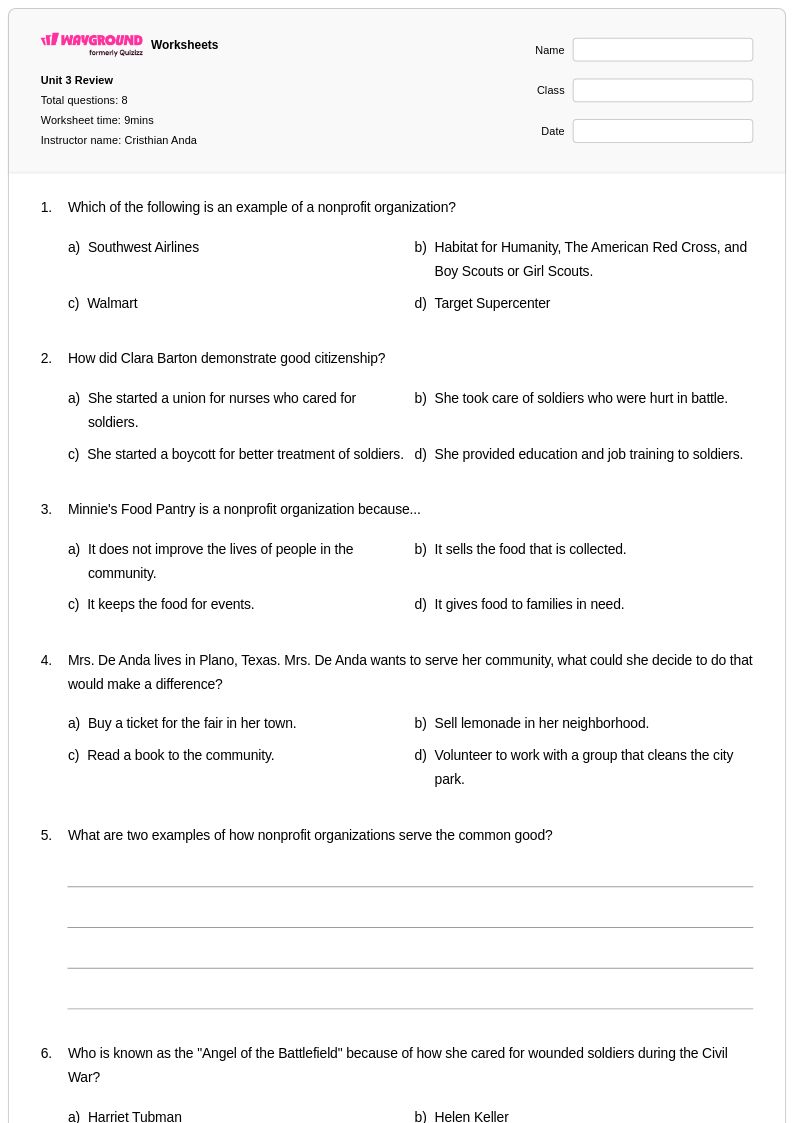
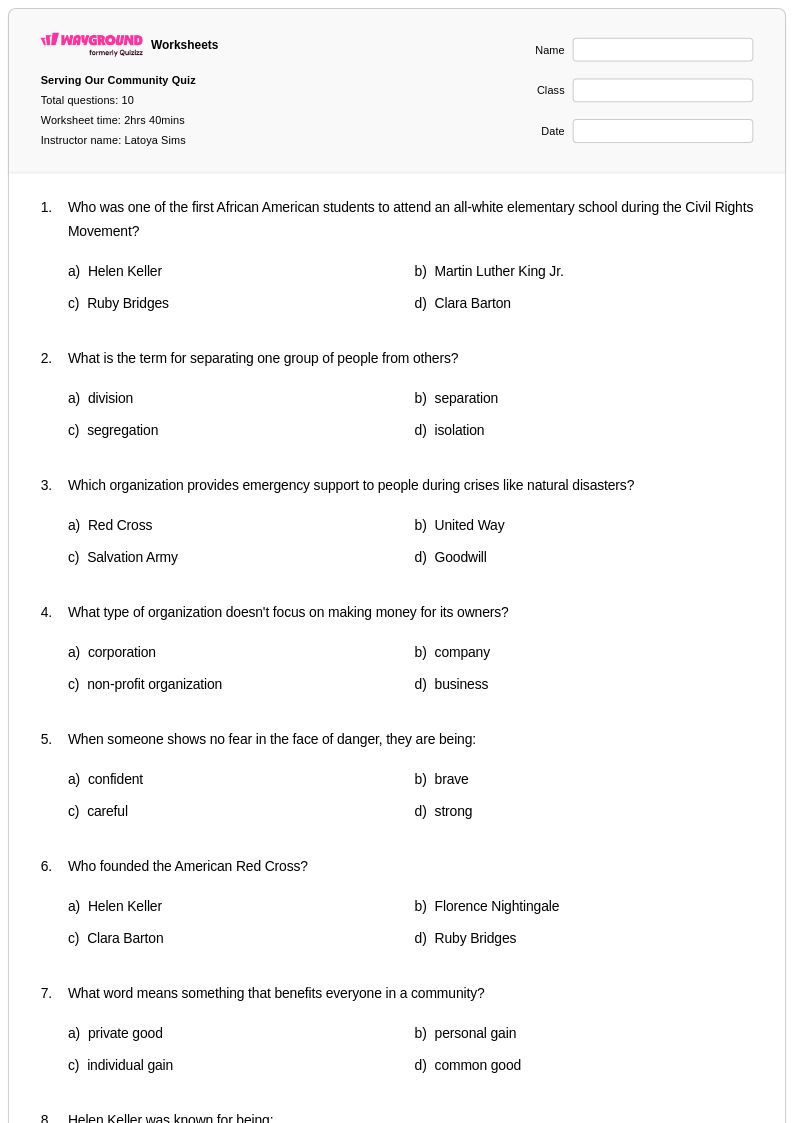
Charitable organizations worksheets for Year 3 students through Wayground (formerly Quizizz) provide comprehensive resources that help young learners understand the vital role of community service organizations in society. These educational materials strengthen critical social studies skills by introducing students to different types of charitable groups, their missions, and how they support community members in need. The worksheets include engaging practice problems that encourage students to identify local charitable organizations, analyze their purposes, and explore ways children can contribute to community service efforts. Teachers can access these materials as free printables in convenient pdf format, complete with detailed answer keys that streamline grading and provide clear explanations for student understanding.
Wayground (formerly Quizizz) supports educators with an extensive collection of teacher-created charitable organizations worksheets, drawing from millions of high-quality resources developed by experienced classroom professionals. The platform's robust search and filtering capabilities allow teachers to quickly locate materials that align with curriculum standards and match specific learning objectives for Year 3 social studies instruction. Advanced differentiation tools enable educators to customize worksheet difficulty levels and content focus, ensuring appropriate challenges for diverse learners while maintaining engagement across varying ability levels. Available in both printable and digital formats including downloadable pdf versions, these resources facilitate seamless lesson planning and provide flexible options for skill practice, targeted remediation, and enrichment activities that deepen students' understanding of community service and civic responsibility.
FAQs
How do I teach students about charitable organizations in the classroom?
Start by grounding students in concrete examples of local and national nonprofits before introducing broader concepts like mission statements, funding models, and community impact. Have students compare two or three organizations that address the same social issue, such as hunger or healthcare, to build analytical thinking alongside content knowledge. Connecting charitable work to civic responsibility helps students see the real-world relevance of what they are studying.
What worksheets or activities help students practice identifying and evaluating charitable organizations?
Worksheets that ask students to research a specific nonprofit, identify its mission, describe its services, and assess its effectiveness are especially useful for building both content knowledge and critical thinking. Activities that require students to compare two organizations addressing the same issue, such as poverty or education, push them beyond surface-level identification toward genuine evaluation. Practice problems that connect charitable work to broader social issues help students understand how nonprofits fit within the larger civic landscape.
What misconceptions do students commonly have about charitable organizations?
A frequent misconception is that all charities are small, volunteer-run groups with no professional staff, when in reality many nonprofits operate with significant budgets and paid employees. Students also often conflate charitable organizations with government agencies, blurring the distinction between public services and privately funded community work. Addressing these misunderstandings early helps students accurately analyze how nonprofits function and why they exist alongside government programs.
How can I differentiate charitable organizations worksheets for students at different ability levels?
For students who need additional support, simplify the task by providing a pre-selected list of organizations and asking them to identify key features rather than conduct independent research. More advanced students can be challenged to evaluate an organization's effectiveness using criteria they develop themselves, such as reach, funding transparency, or measurable outcomes. On Wayground, teachers can apply accommodations such as read aloud, reduced answer choices, and extended time to individual students, ensuring every learner can access the same core content without disrupting the rest of the class.
How do I use Wayground's charitable organizations worksheets in my classroom?
Wayground's charitable organizations worksheets are available as printable PDFs for traditional classroom use and in digital formats for technology-integrated environments, giving teachers flexibility regardless of their setup. Teachers can also host worksheets directly as a quiz on Wayground, making it easy to assign, collect, and review student responses in one place. Each worksheet includes a complete answer key, which supports efficient grading and accurate formative assessment.
How do charitable organizations worksheets support civic education goals?
Worksheets focused on charitable organizations directly reinforce civic literacy by helping students understand how communities organize to address shared challenges outside of government structures. When students examine the missions and impact of nonprofits, they build a more complete picture of how civil society functions alongside public institutions. This makes charitable organizations content a natural fit for social studies units on community, government, and active citizenship.