Free Printable Chronological Order Worksheets for Year 3
Master chronological order reading skills with Wayground's Year 3 printable worksheets and practice problems, featuring free PDF resources and answer keys to help students sequence events and improve comprehension.
Explore printable Chronological Order worksheets for Year 3
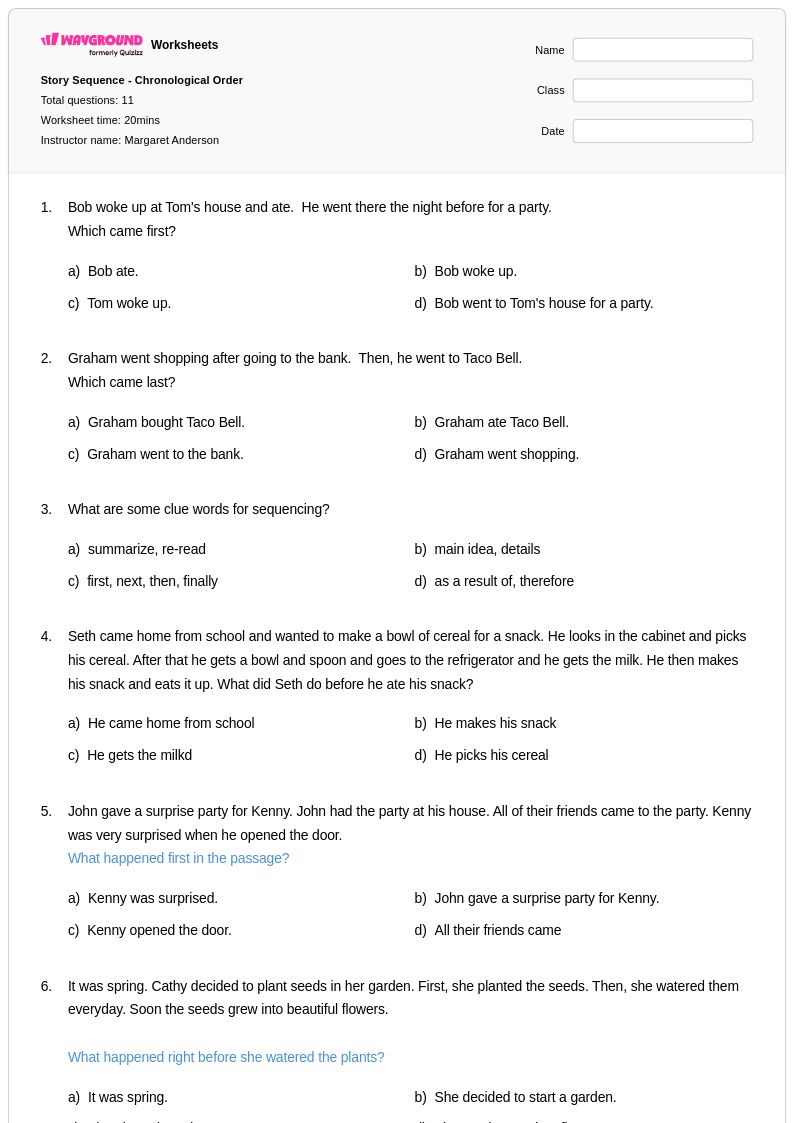
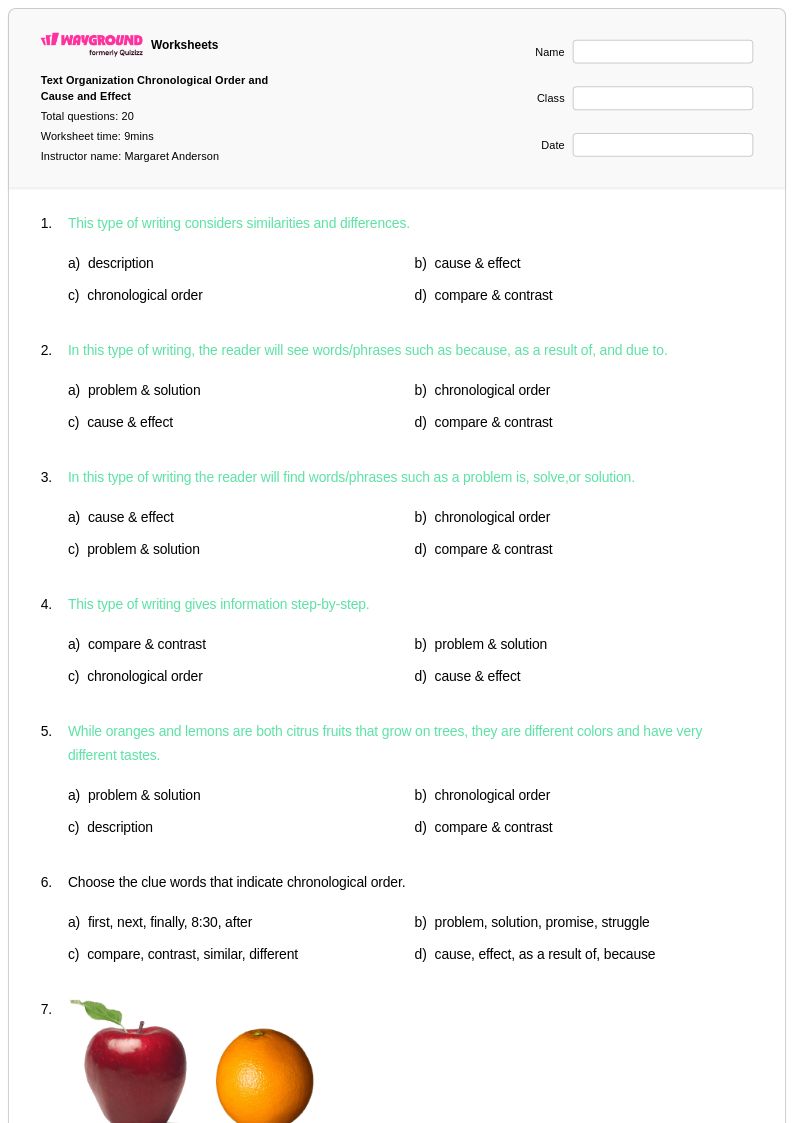
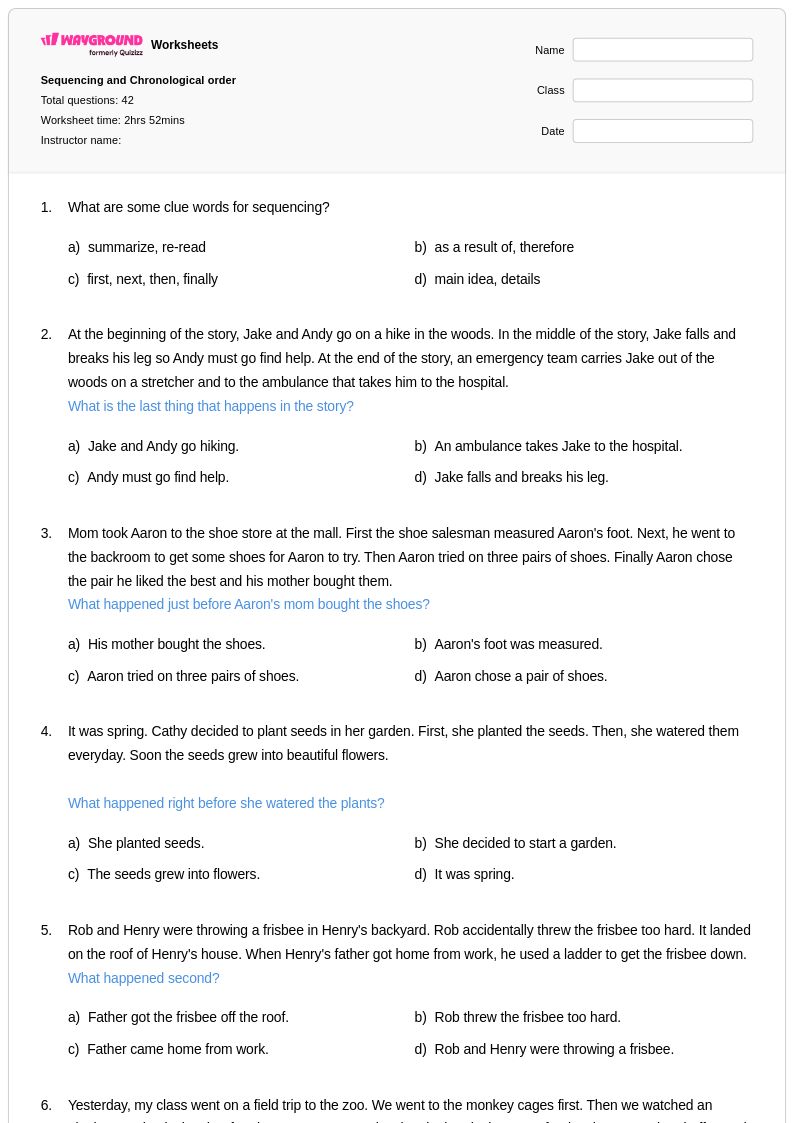
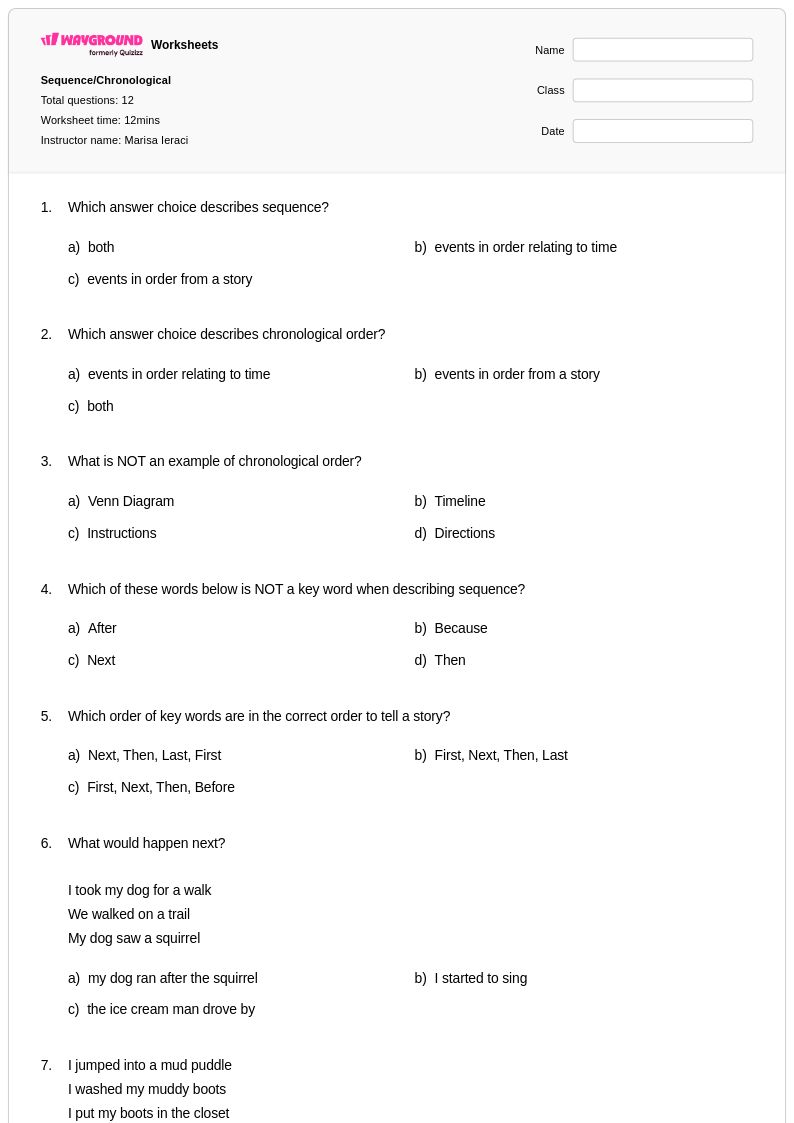
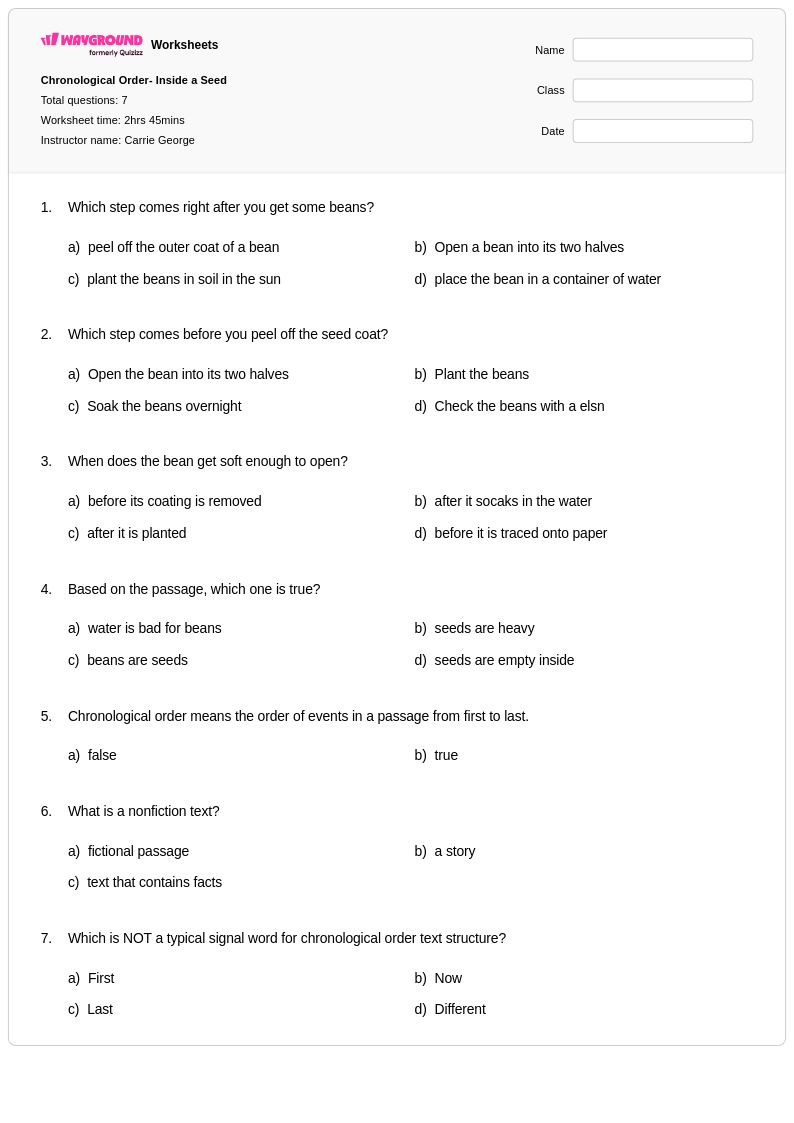
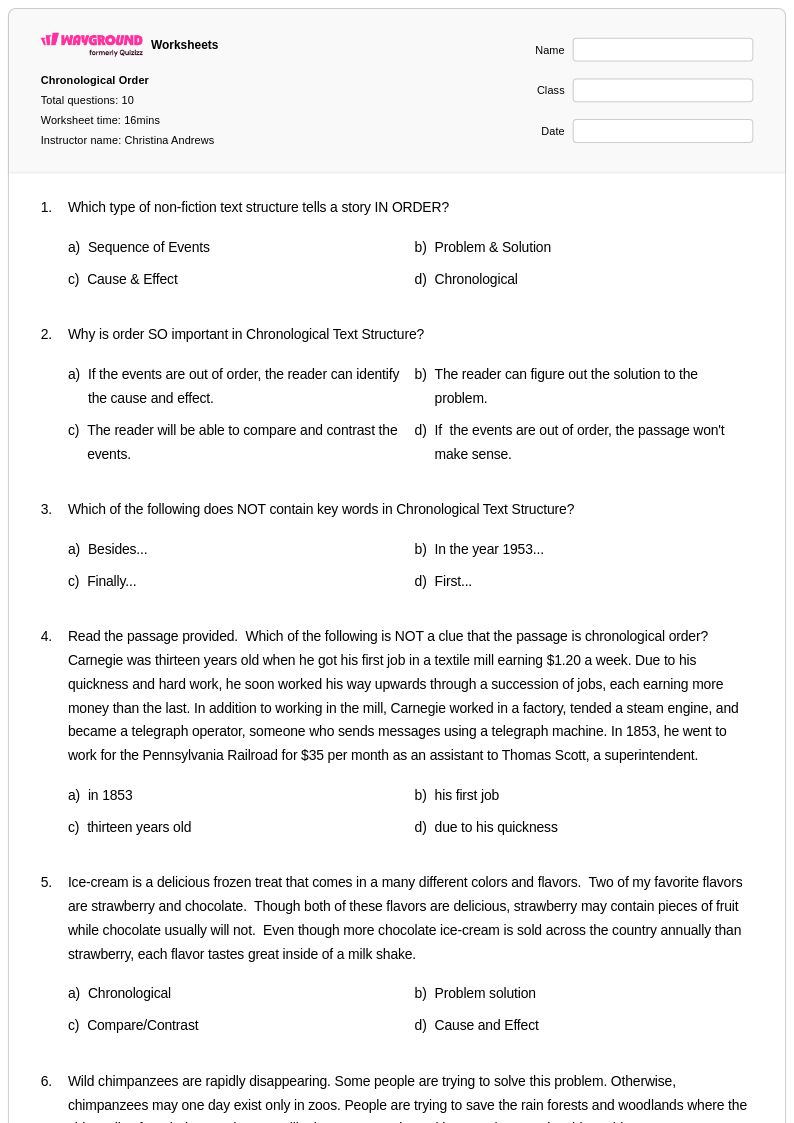
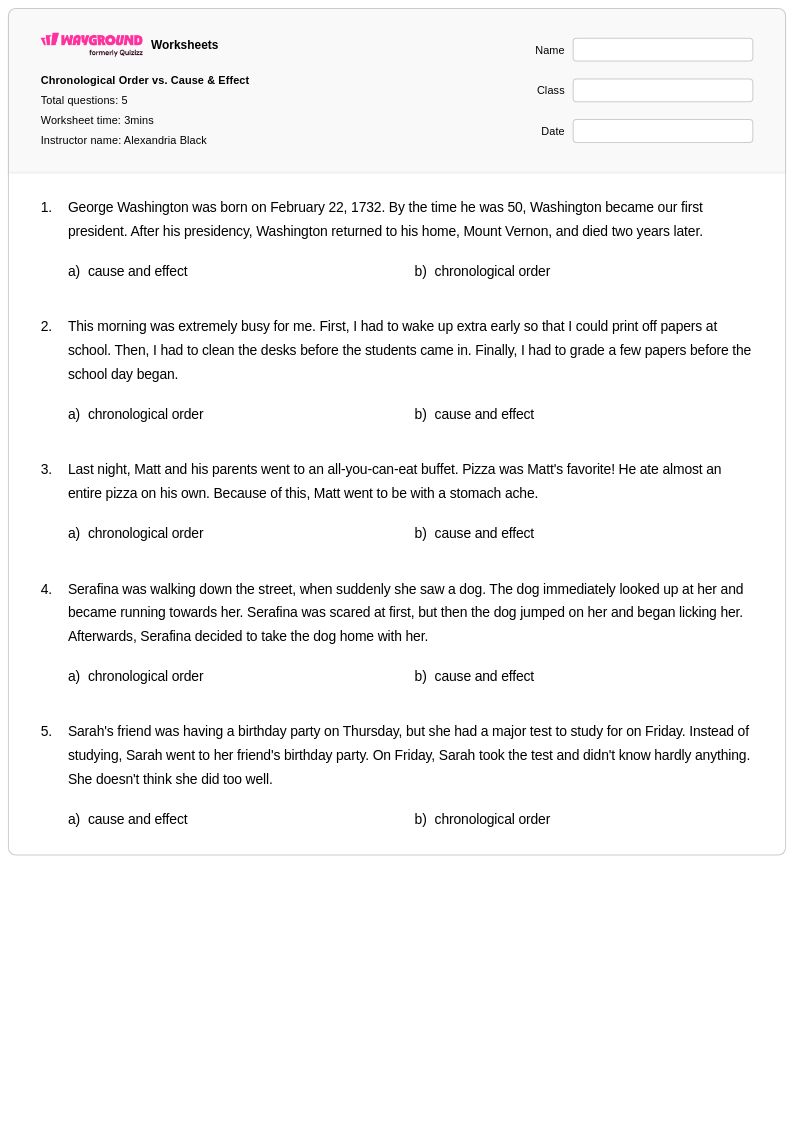
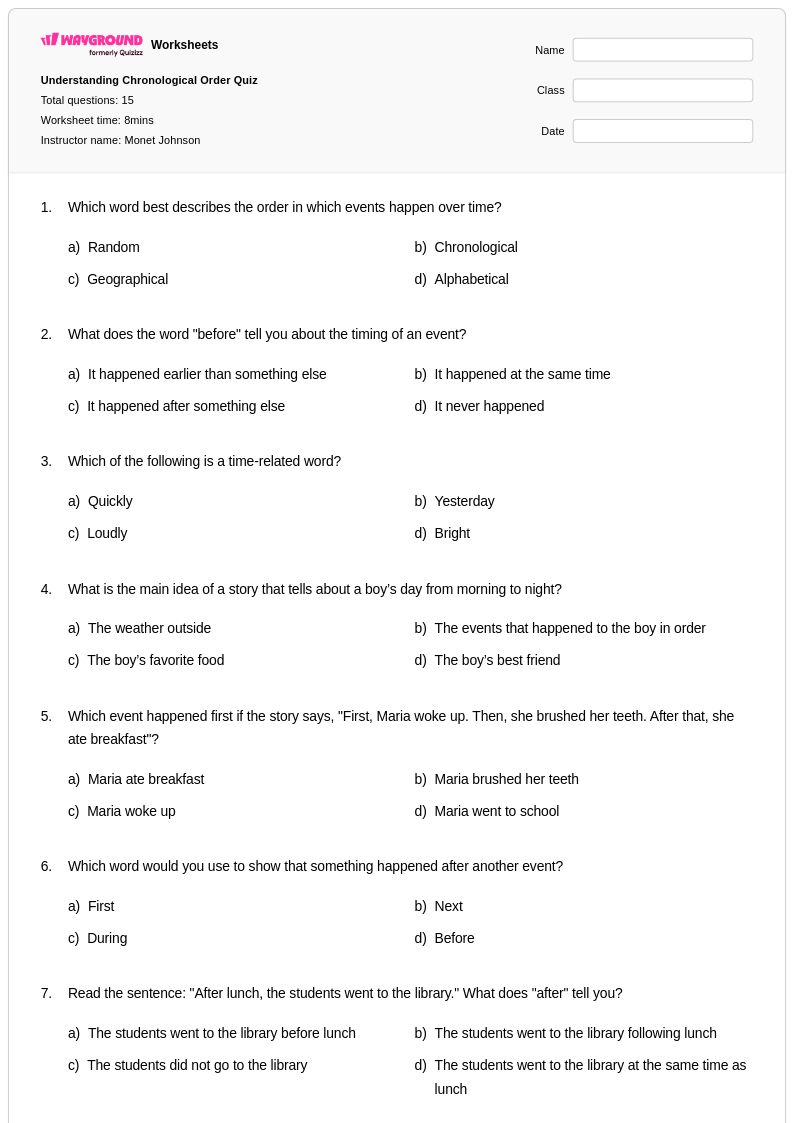
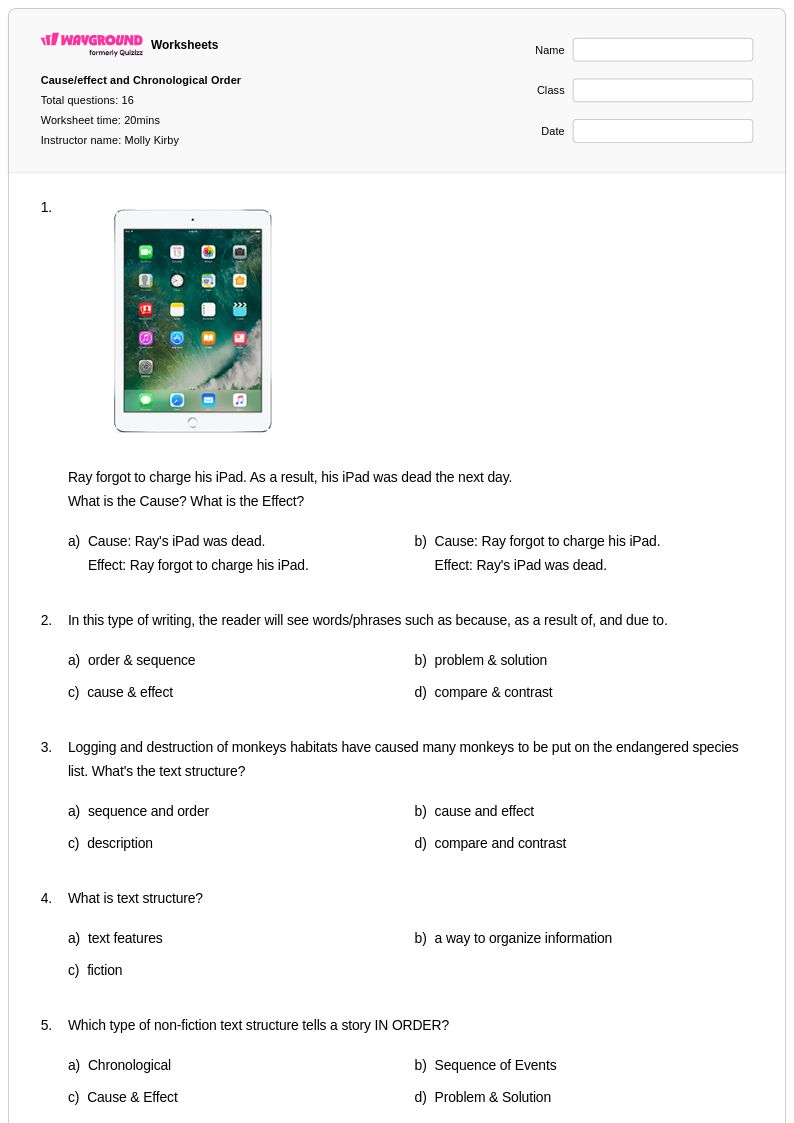
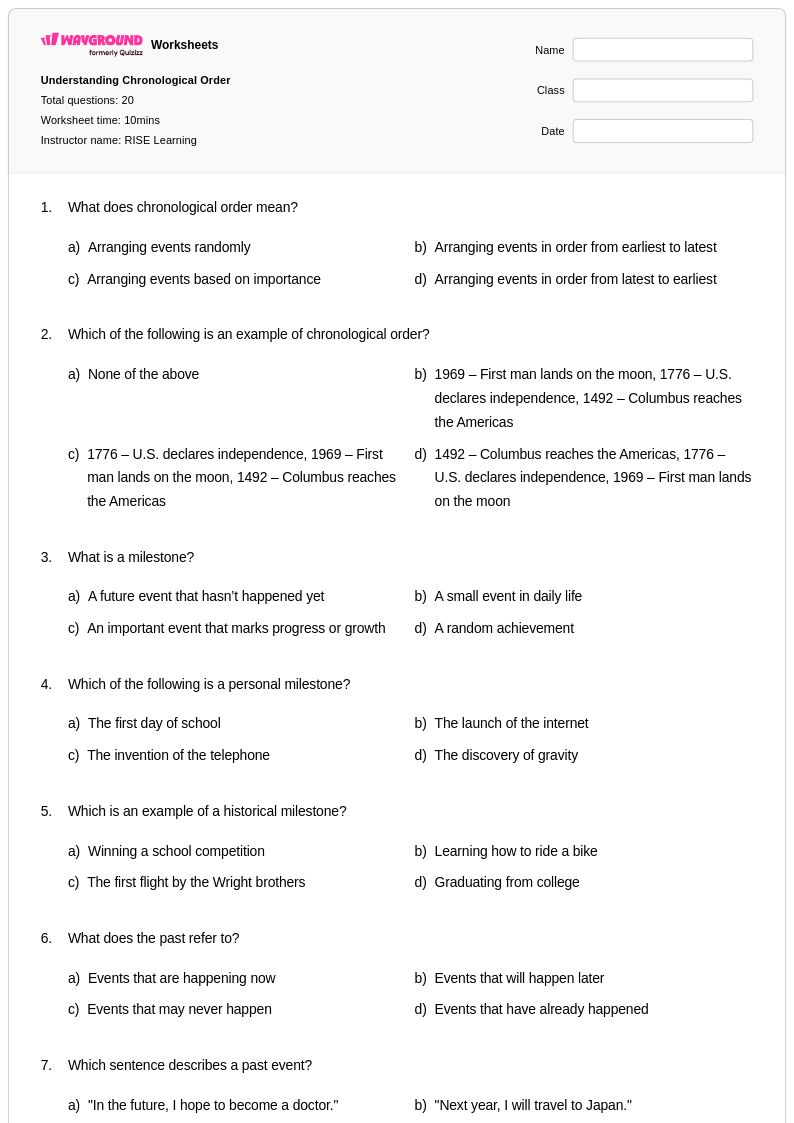
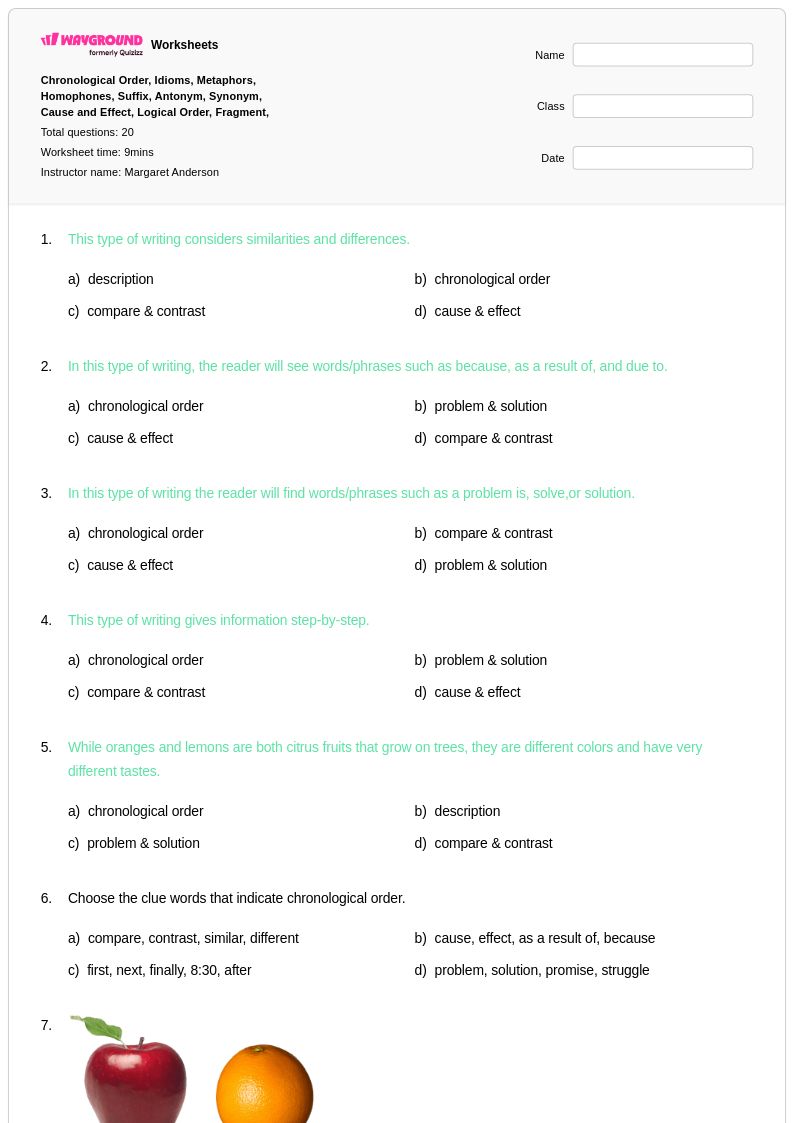
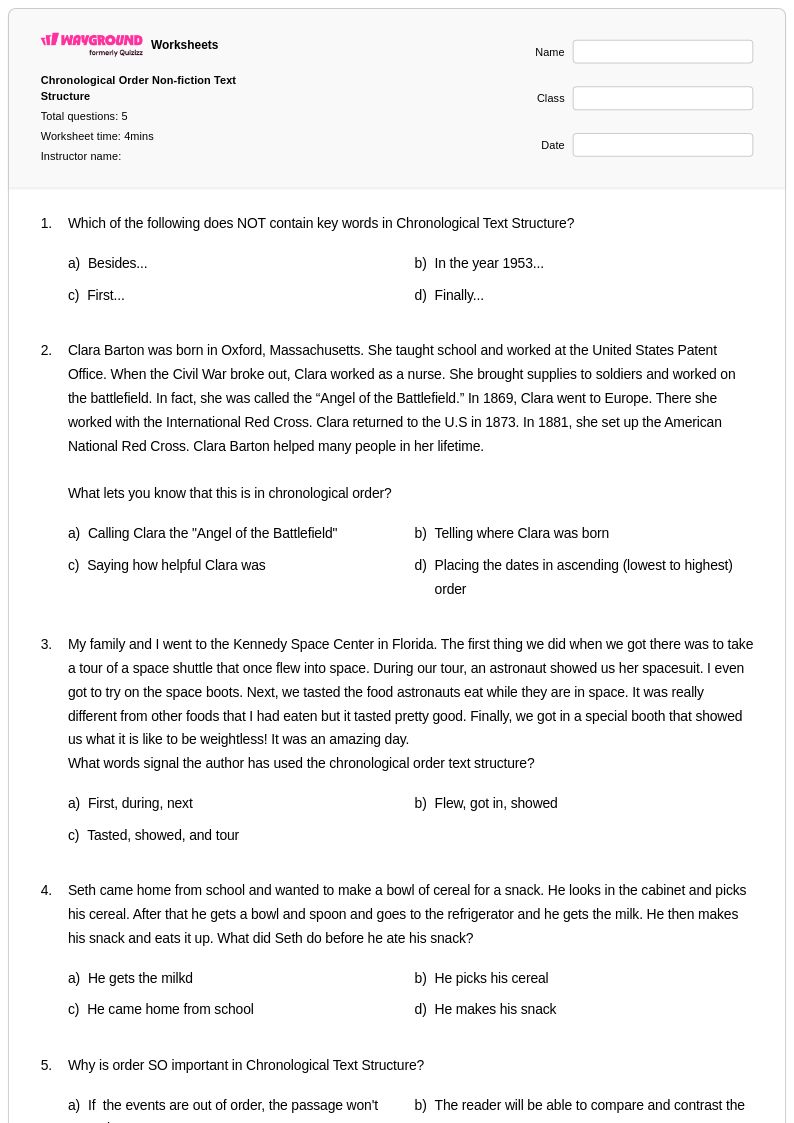
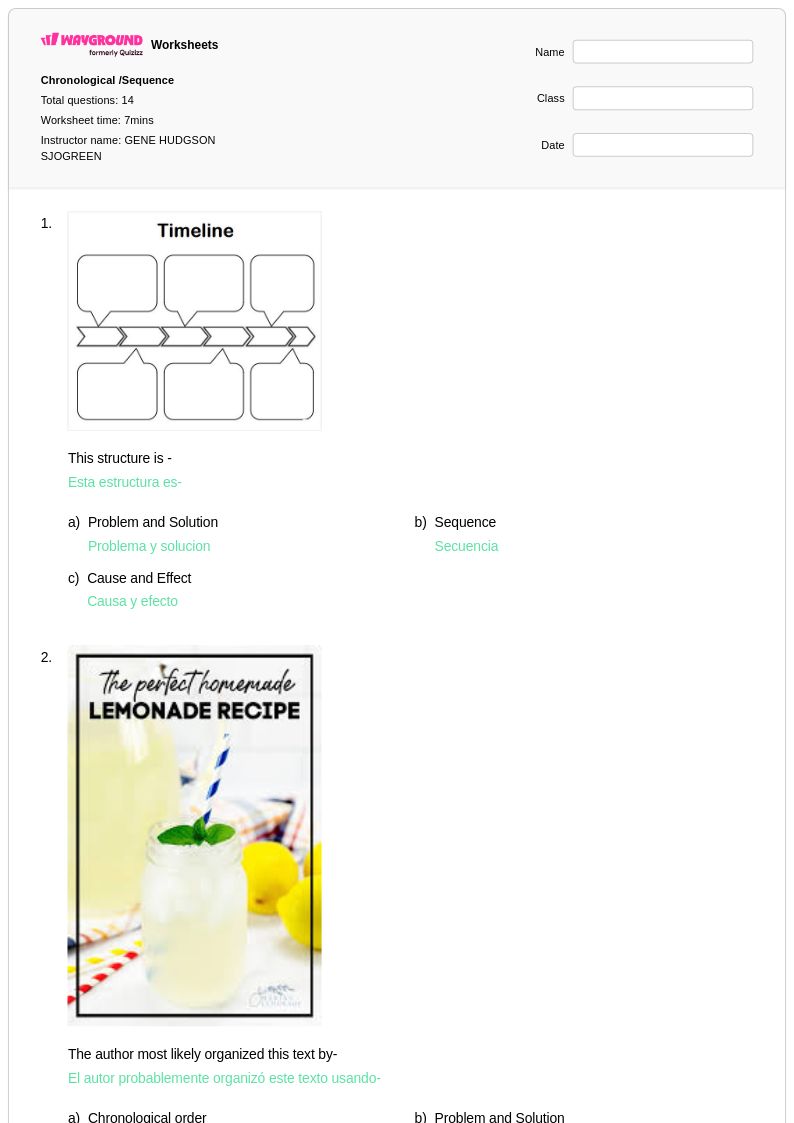
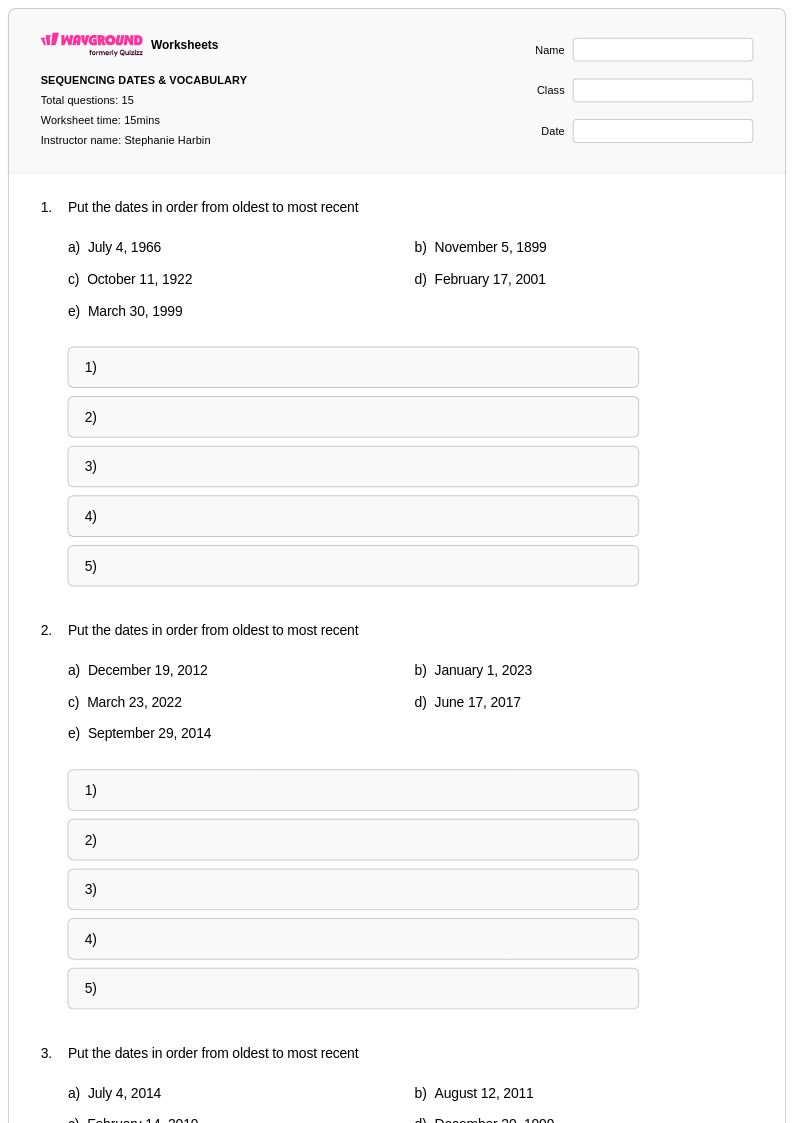
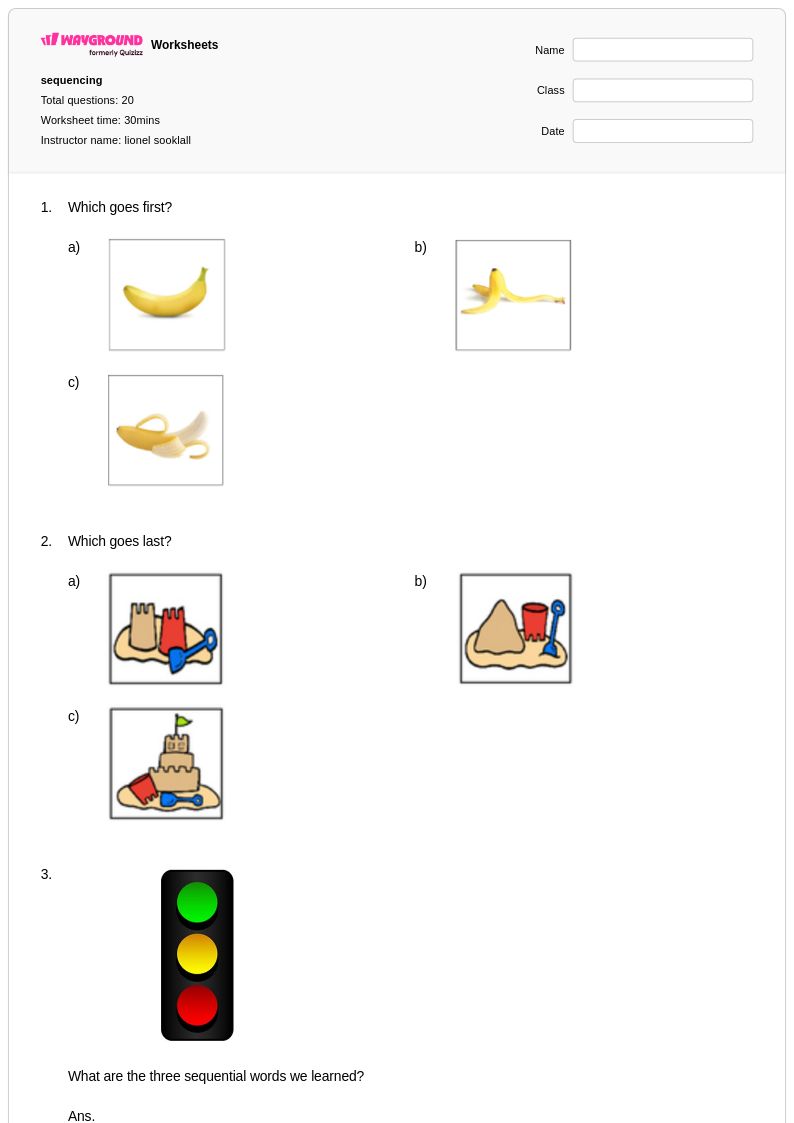
Chronological order worksheets for Year 3 students available through Wayground (formerly Quizizz) provide essential practice in understanding sequence and time-based organization in reading materials. These comprehensive worksheets strengthen students' ability to identify temporal relationships, recognize sequence words and phrases, and arrange events in proper time order—fundamental skills that support overall reading comprehension development. Each worksheet includes carefully crafted practice problems that guide third-grade learners through identifying first, next, then, and finally transitions, while answer keys enable teachers to provide immediate feedback and track student progress. The free printable resources offer varied text types including stories, procedures, and informational passages that require students to demonstrate their understanding of chronological sequence through multiple question formats and engaging activities delivered in convenient pdf format.
Wayground (formerly Quizizz) empowers educators with millions of teacher-created chronological order resources specifically designed to meet Year 3 reading comprehension standards and learning objectives. The platform's robust search and filtering capabilities allow teachers to quickly locate worksheets that align with their specific curriculum requirements and differentiate instruction based on individual student needs. These versatile materials are available in both printable and digital formats, enabling seamless integration into classroom instruction, homework assignments, and independent practice sessions. Teachers can customize existing worksheets or combine multiple resources to create targeted skill practice for remediation, enrichment, or assessment purposes, while the extensive collection ensures access to fresh content that maintains student engagement throughout the school year and supports systematic development of sequential thinking skills.
FAQs
How do I teach chronological order to students?
Start by introducing signal words that indicate time sequence, such as 'first,' 'next,' 'then,' 'after,' 'finally,' and specific dates or time markers. Use familiar narratives — like a student's daily routine or a well-known story — before moving to historical accounts or scientific processes. Gradually increase complexity by presenting texts where events are not listed in order, requiring students to actively reconstruct the timeline rather than simply follow it.
What exercises help students practice chronological order?
Effective practice includes cut-and-sequence activities where students physically reorder scrambled sentences or events, timeline-completion tasks tied to biographical or historical passages, and written retelling exercises that require students to reproduce events in correct temporal order. Working across diverse text types — narratives, science process descriptions, and historical accounts — helps students recognize that chronological thinking applies beyond just storytelling.
What mistakes do students commonly make when identifying chronological order?
The most common error is confusing the order events appear in a text with the actual chronological order in which they occurred, especially in texts that use flashbacks or begin in medias res. Students also frequently overlook temporal signal words or misread them — for example, treating 'before' and 'after' interchangeably. A related misconception is conflating cause-and-effect relationships with sequence, assuming that because one event caused another, it must have immediately preceded it.
How do I use chronological order worksheets from Wayground in my classroom?
Wayground's chronological order worksheets are available as printable PDFs for traditional classroom use and in digital formats for technology-integrated or blended learning environments. Teachers can also host them as a quiz directly on Wayground, enabling interactive practice with instant feedback. The included answer keys support both teacher-led instruction and independent student review, making them suitable for whole-class lessons, small group work, or homework assignments.
How can I differentiate chronological order instruction for students at different reading levels?
For struggling readers, reduce cognitive load by starting with short, simple narratives and explicit signal words before introducing complex multi-step sequences or texts where chronology is non-linear. On Wayground, teachers can apply accommodations such as read-aloud support, reduced answer choices, and extended time for individual students, while the rest of the class receives standard settings without disruption. Advanced learners benefit from texts that embed timelines within larger cause-and-effect structures, such as historical accounts or multi-step scientific processes.
How does understanding chronological order support broader reading comprehension skills?
Chronological order is a foundational text structure skill that underpins a student's ability to summarize, infer, and analyze across genres. When students can accurately sequence events, they are better equipped to identify cause-and-effect relationships, understand character development over time, and track changes in scientific or historical processes. Explicitly teaching this skill improves comprehension of both literary and informational texts, which is why it appears in reading standards across grade levels.