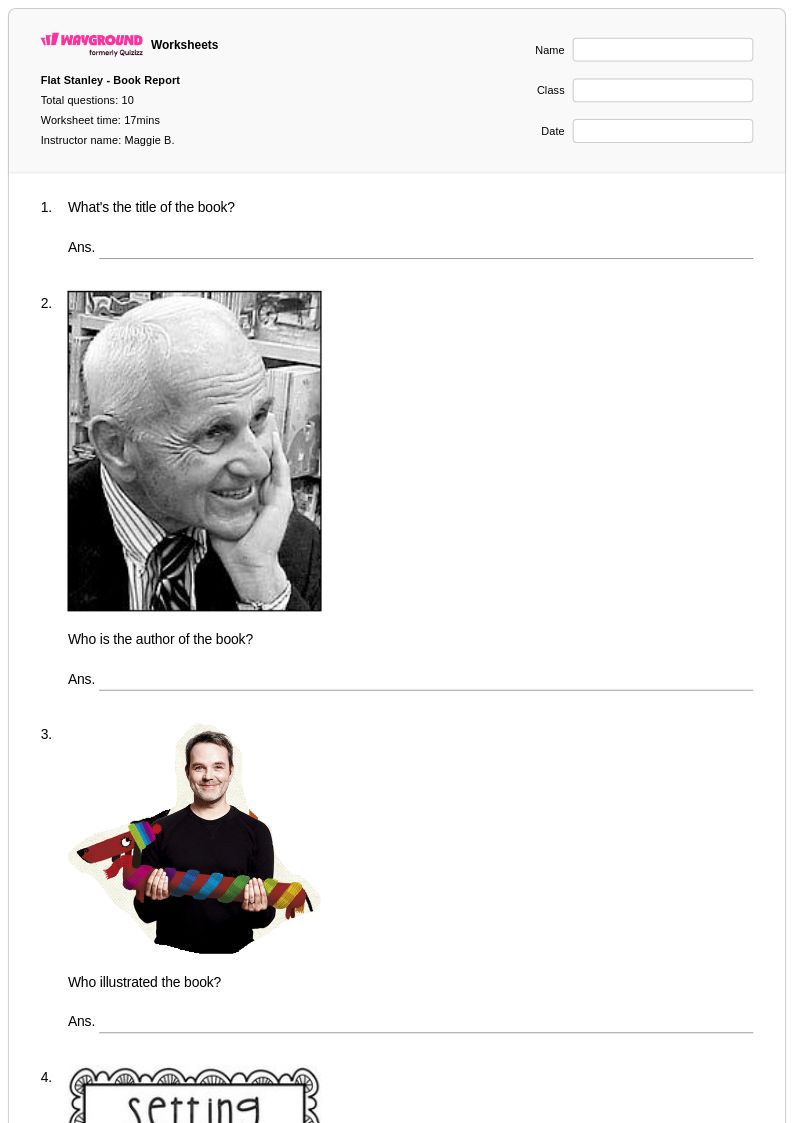
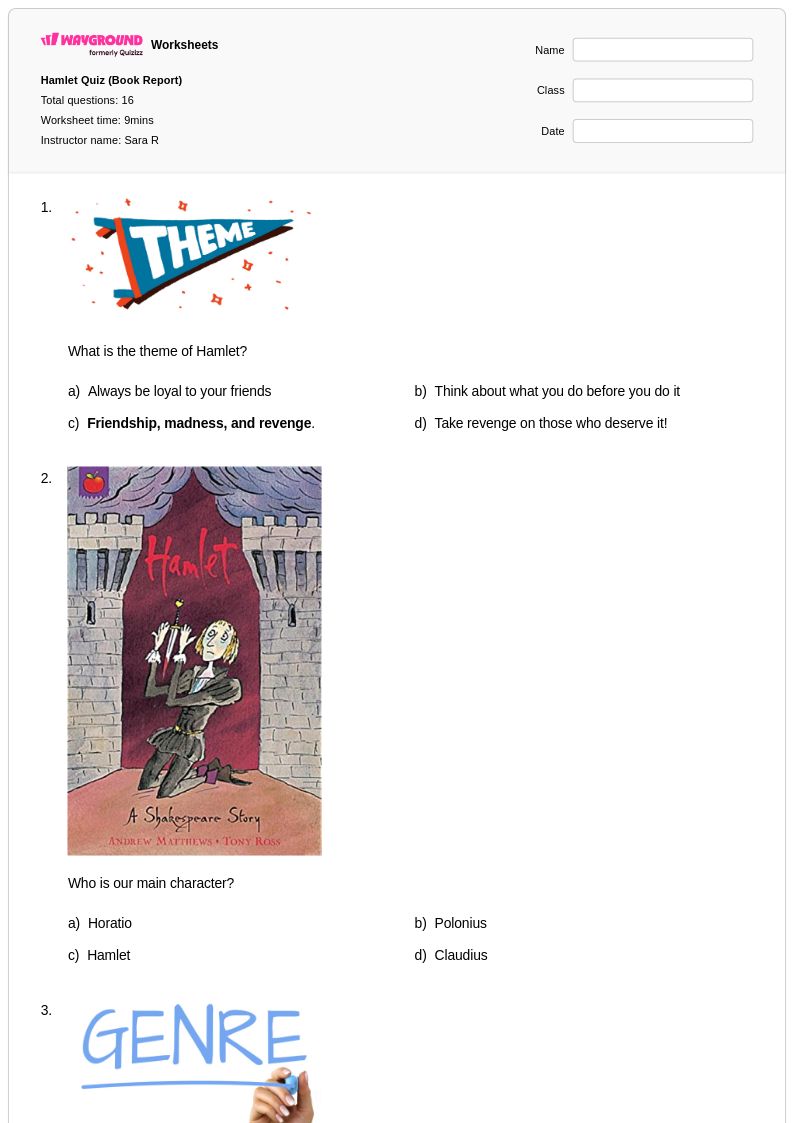
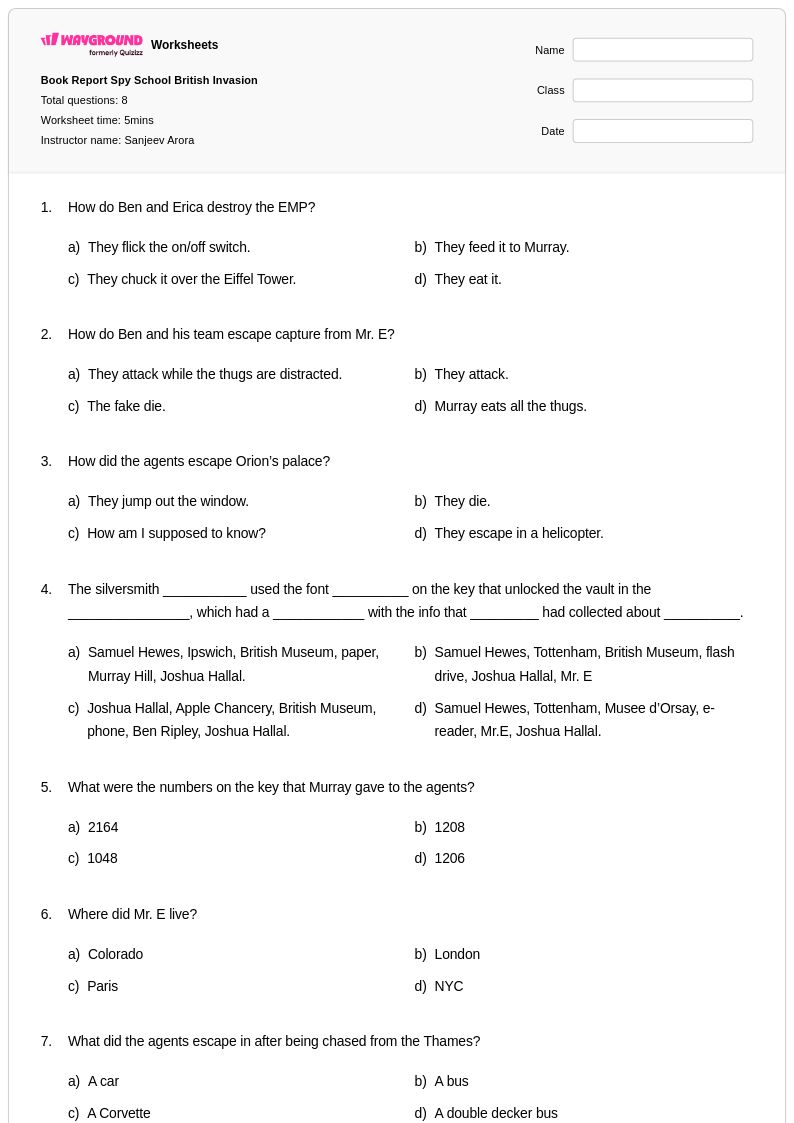
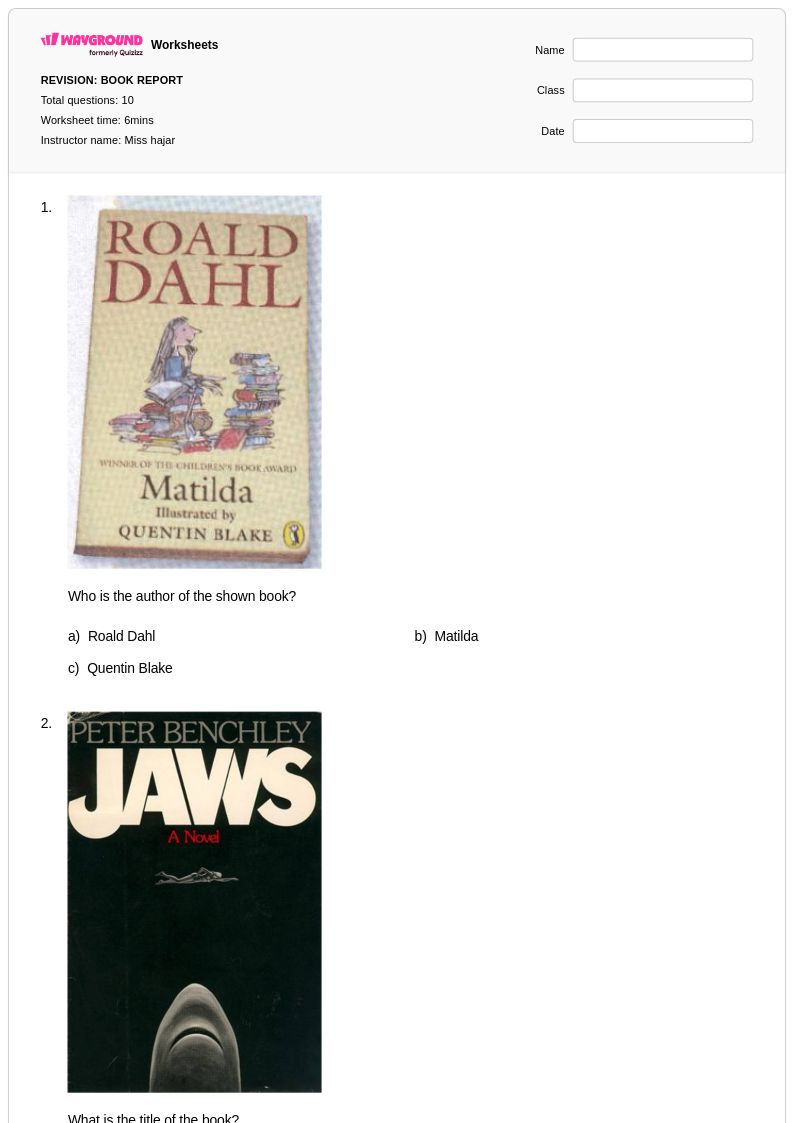
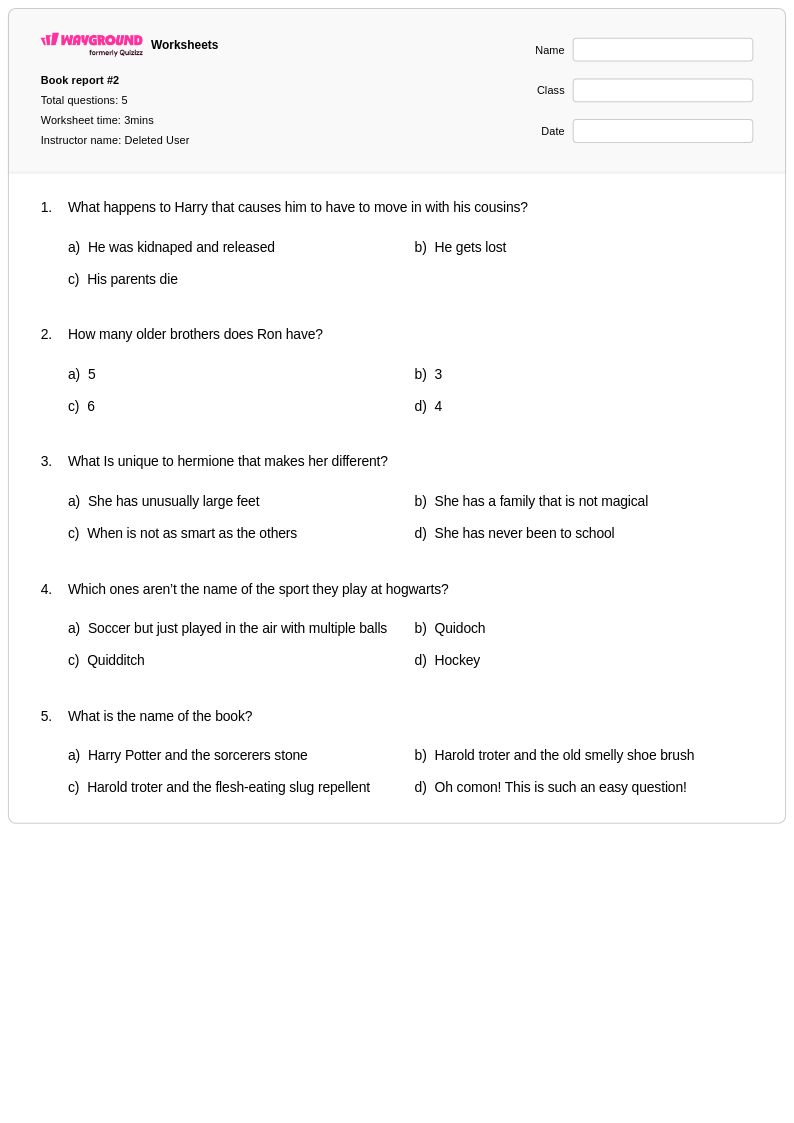
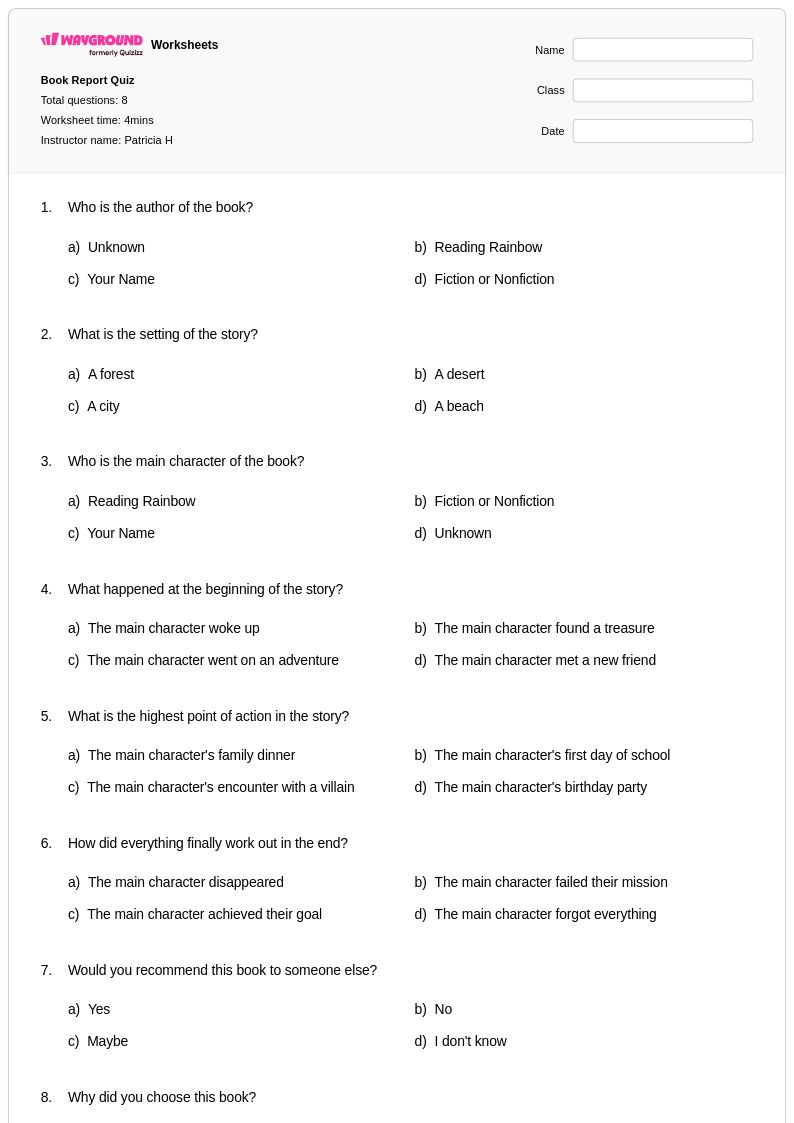
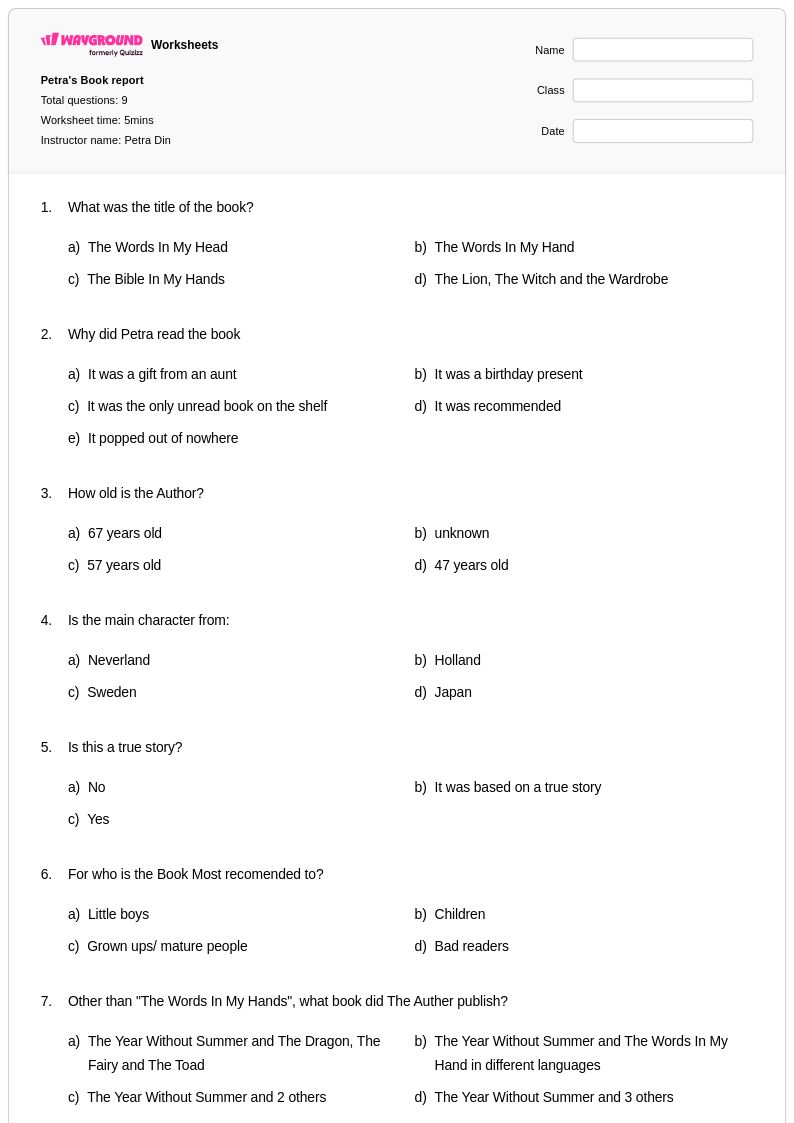
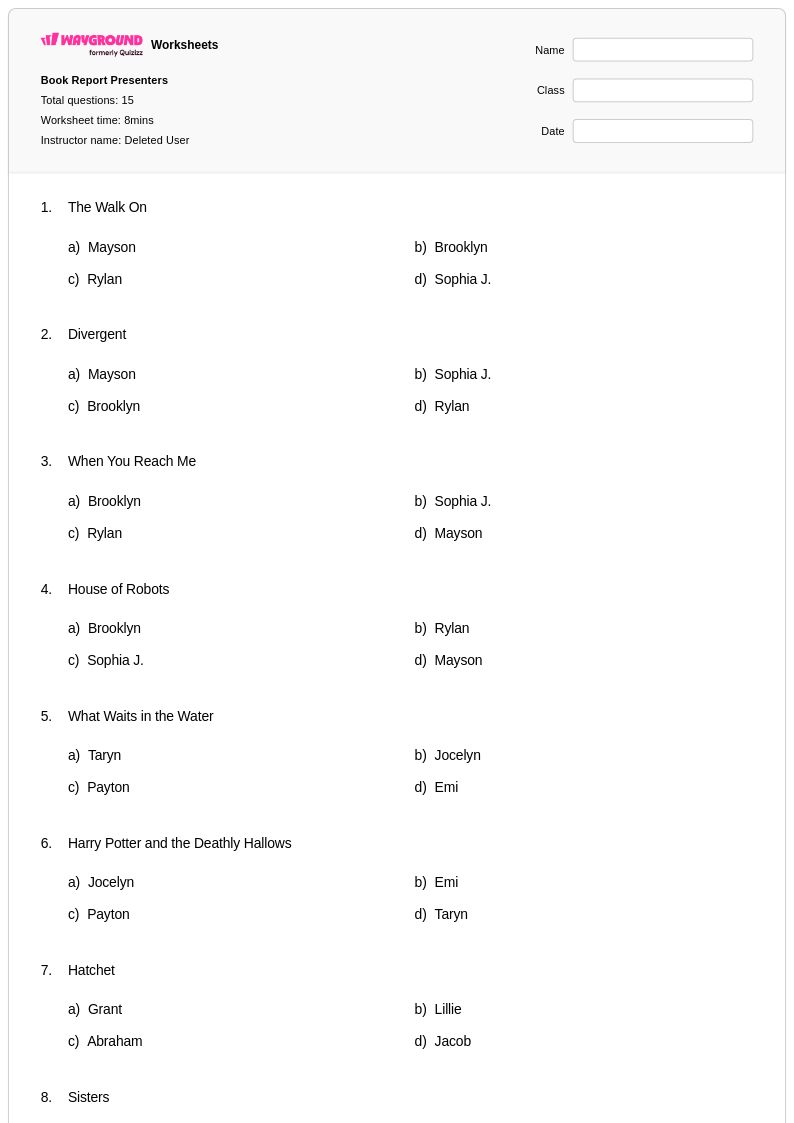
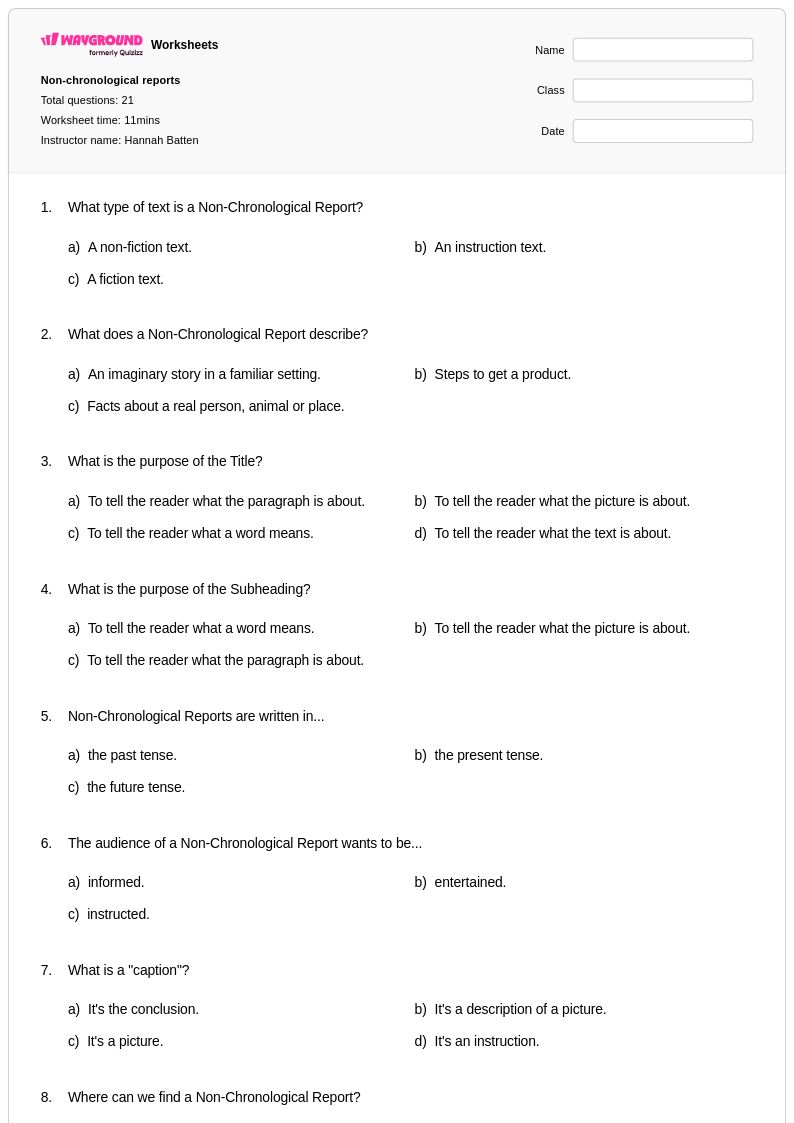
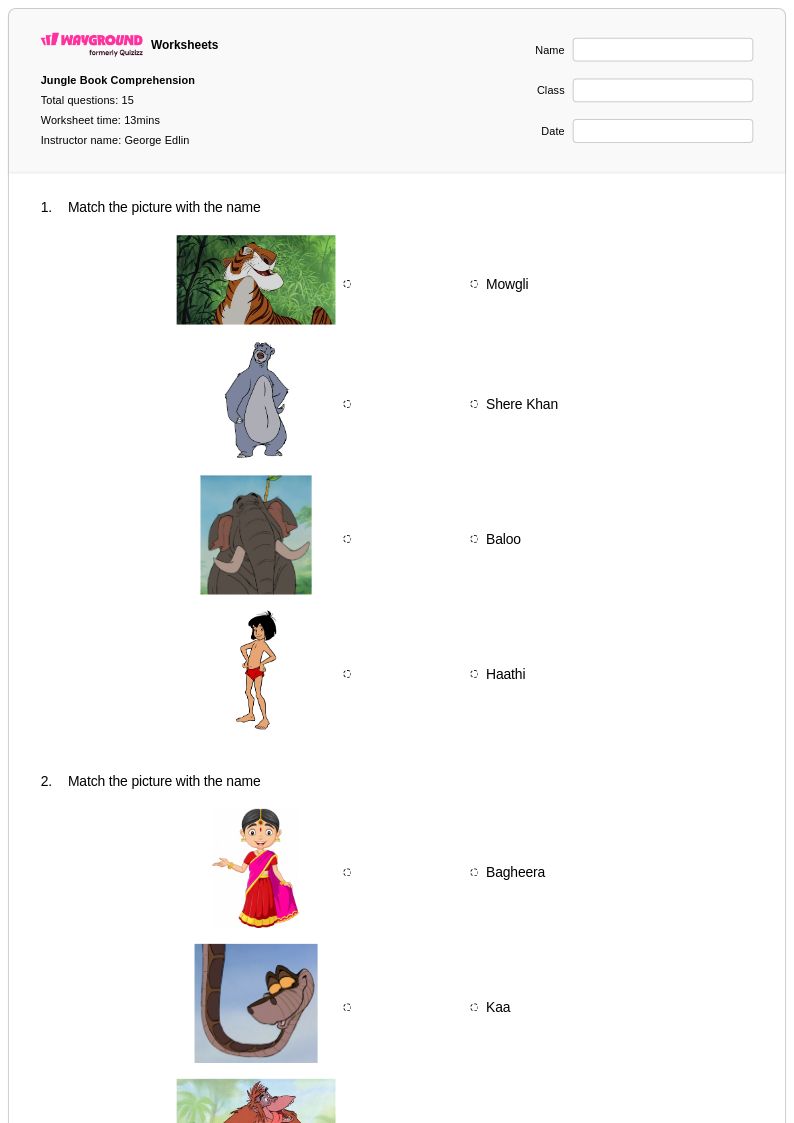
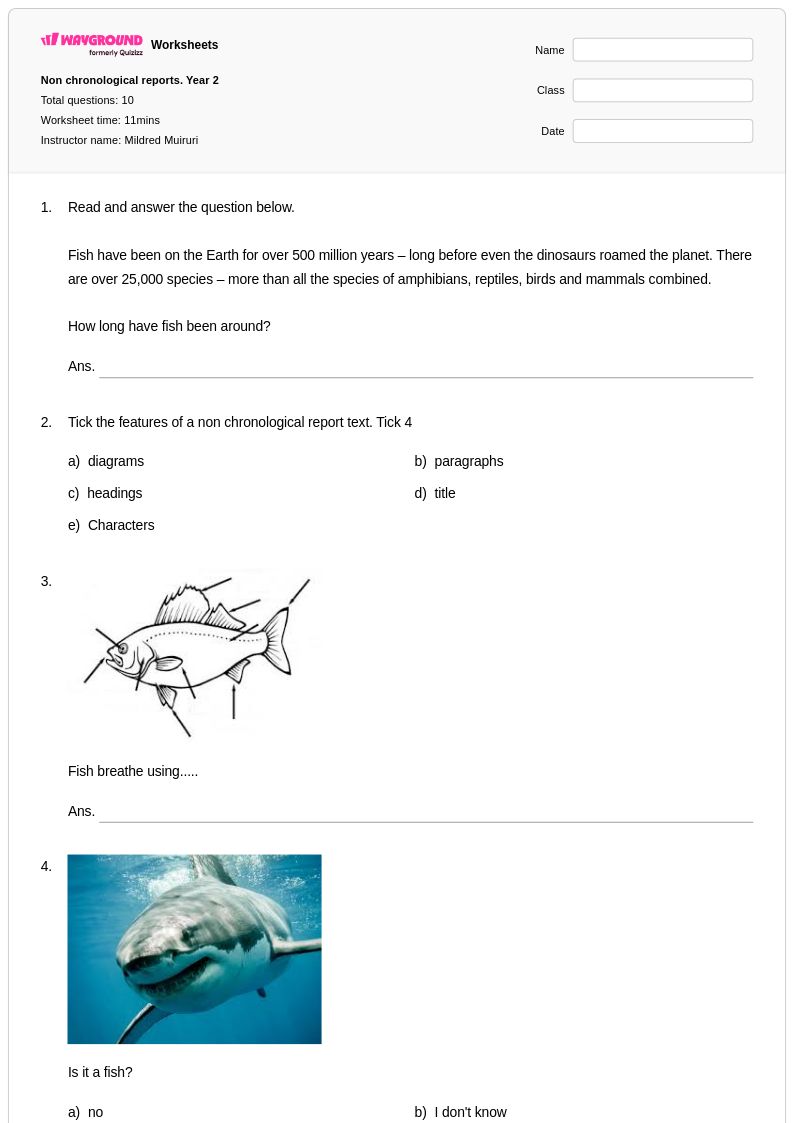
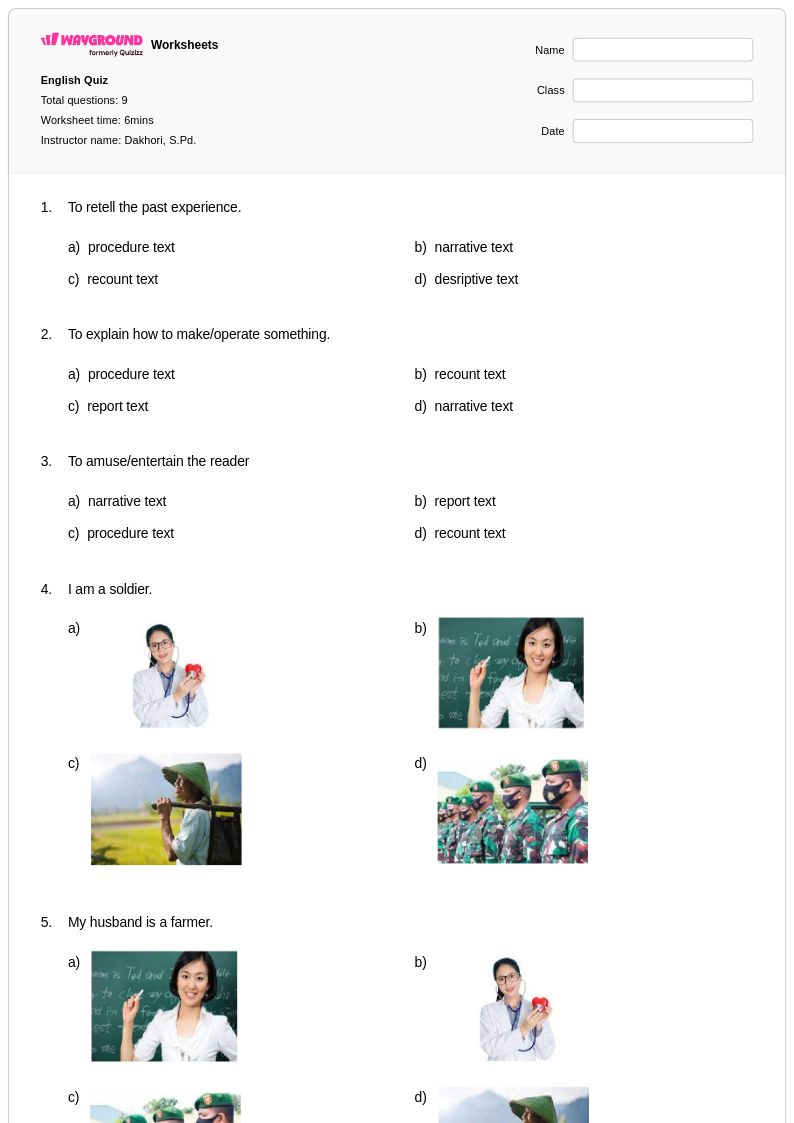
Enhance Year 3 students' book report skills with Wayground's free printable worksheets and practice problems, complete with answer keys to develop critical reading comprehension strategies through structured PDF activities.
Explore printable Book Report worksheets for Year 3
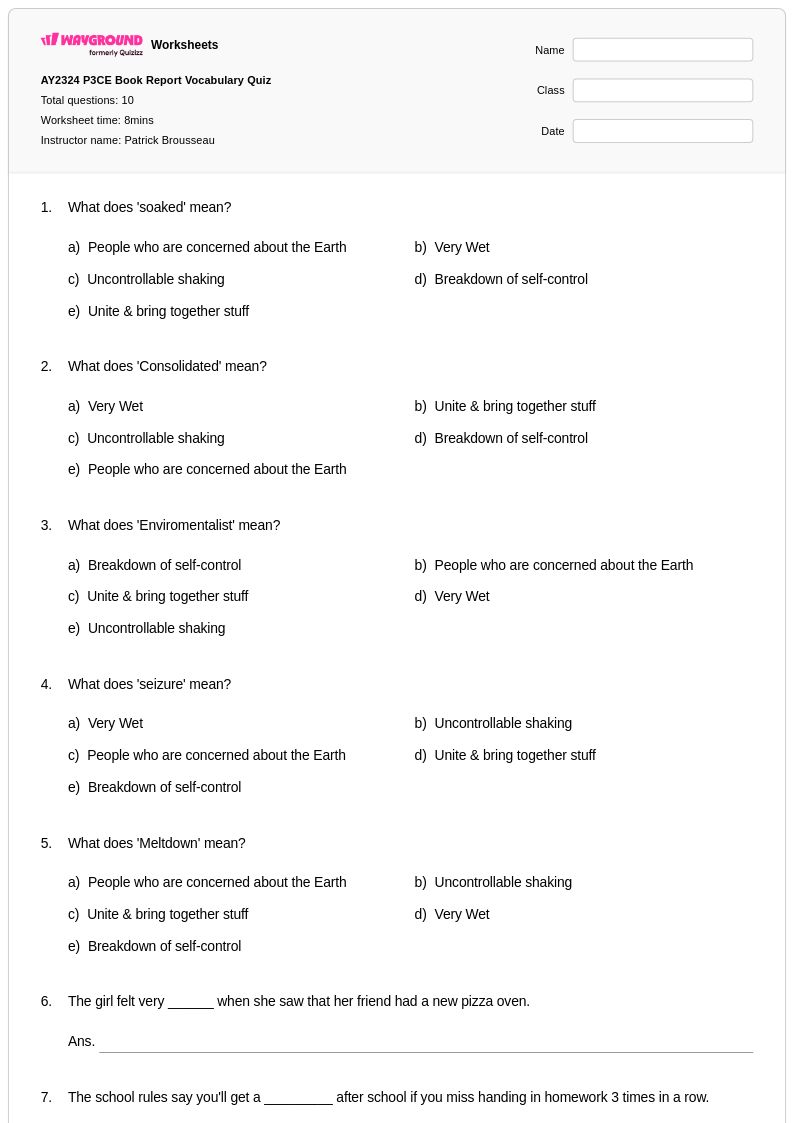
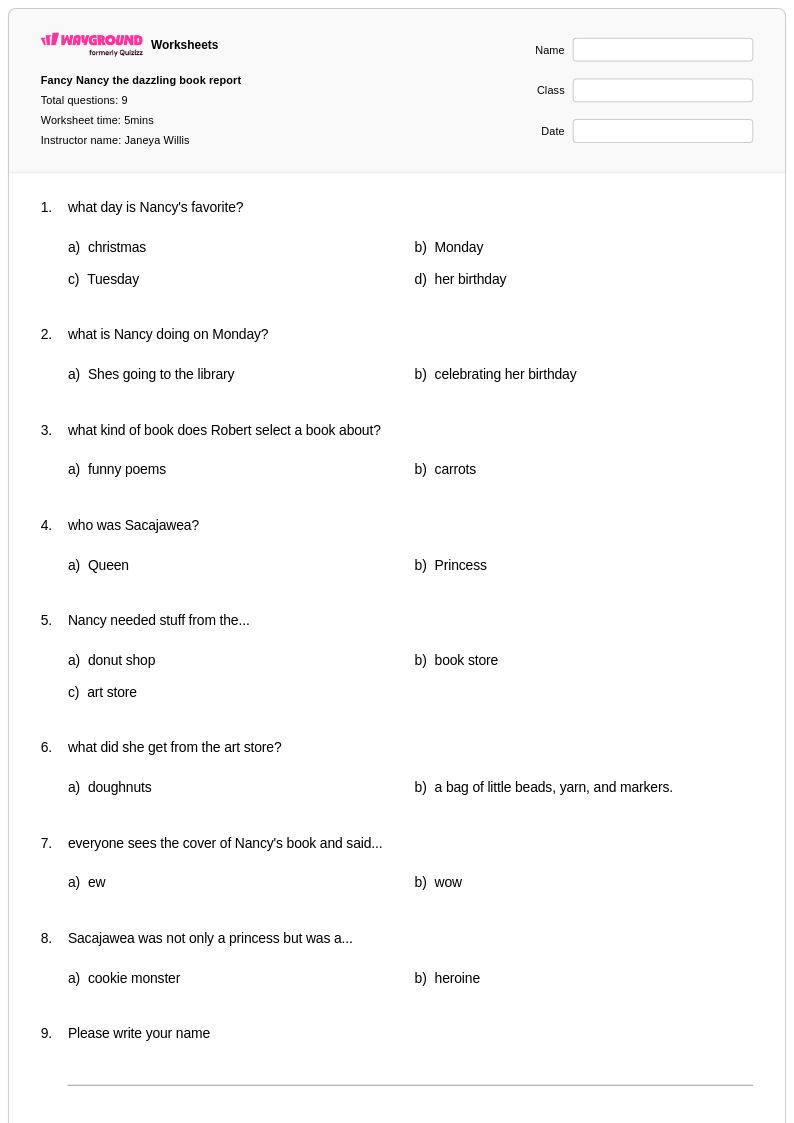
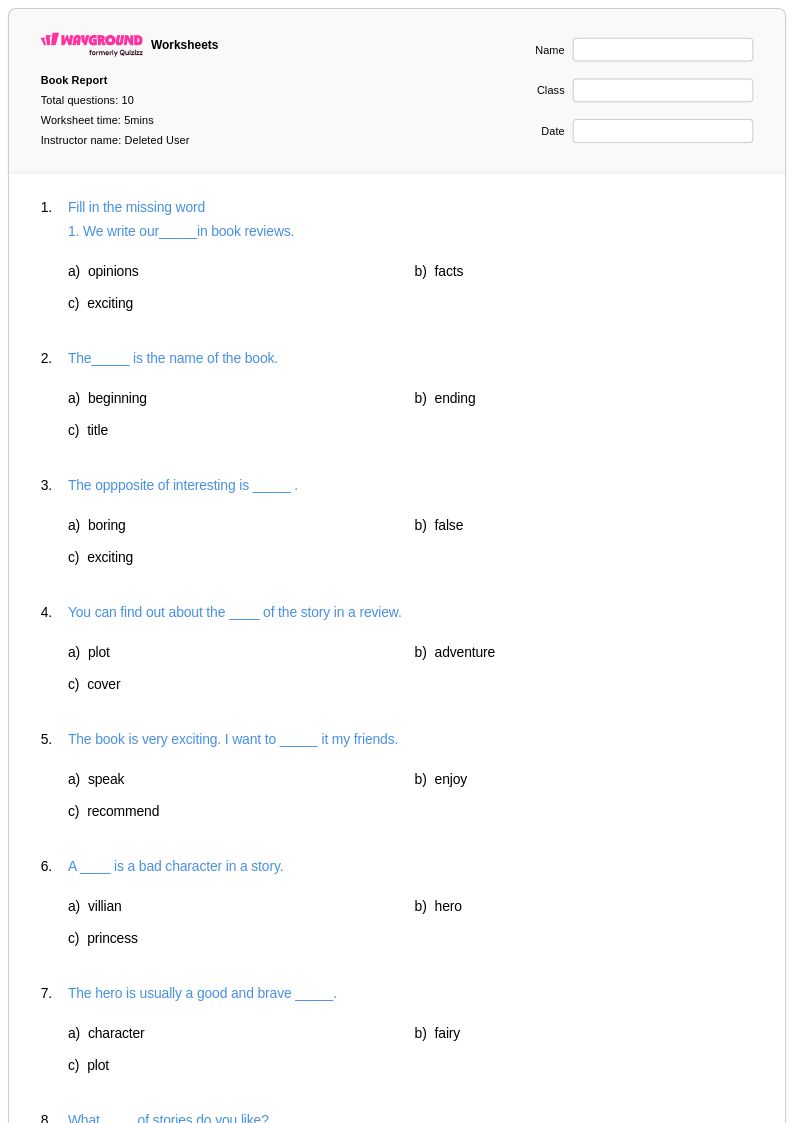
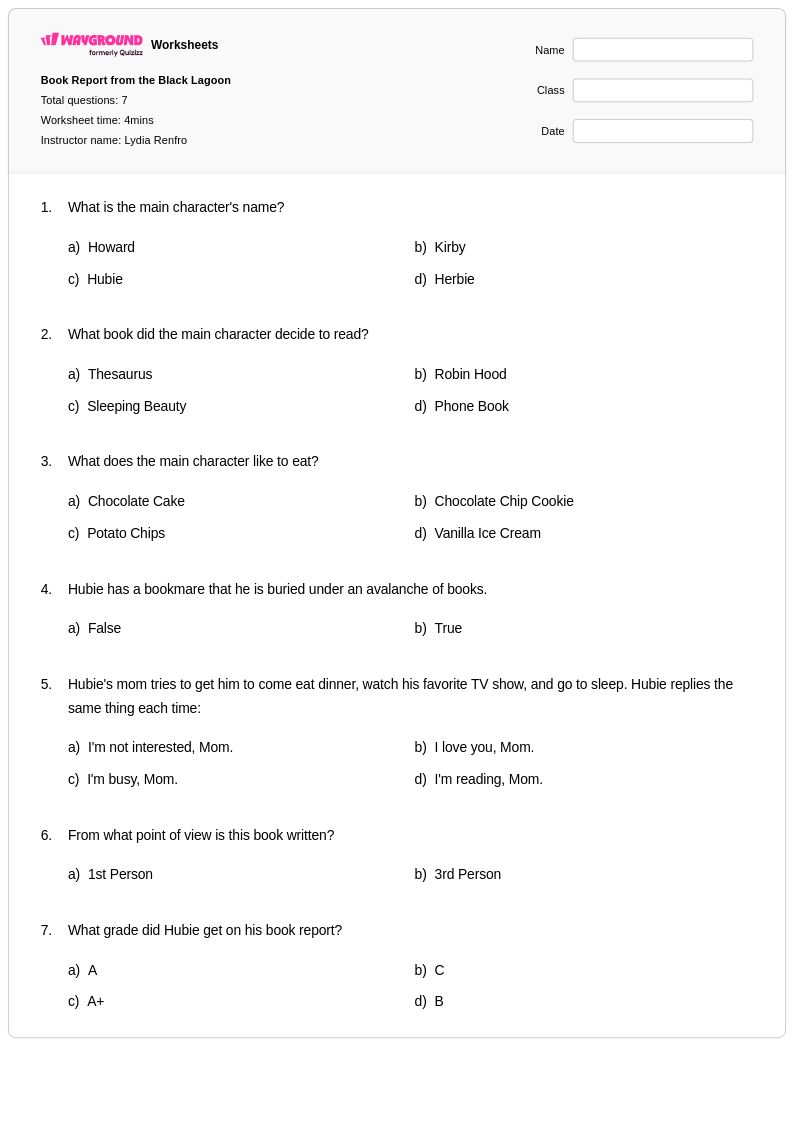
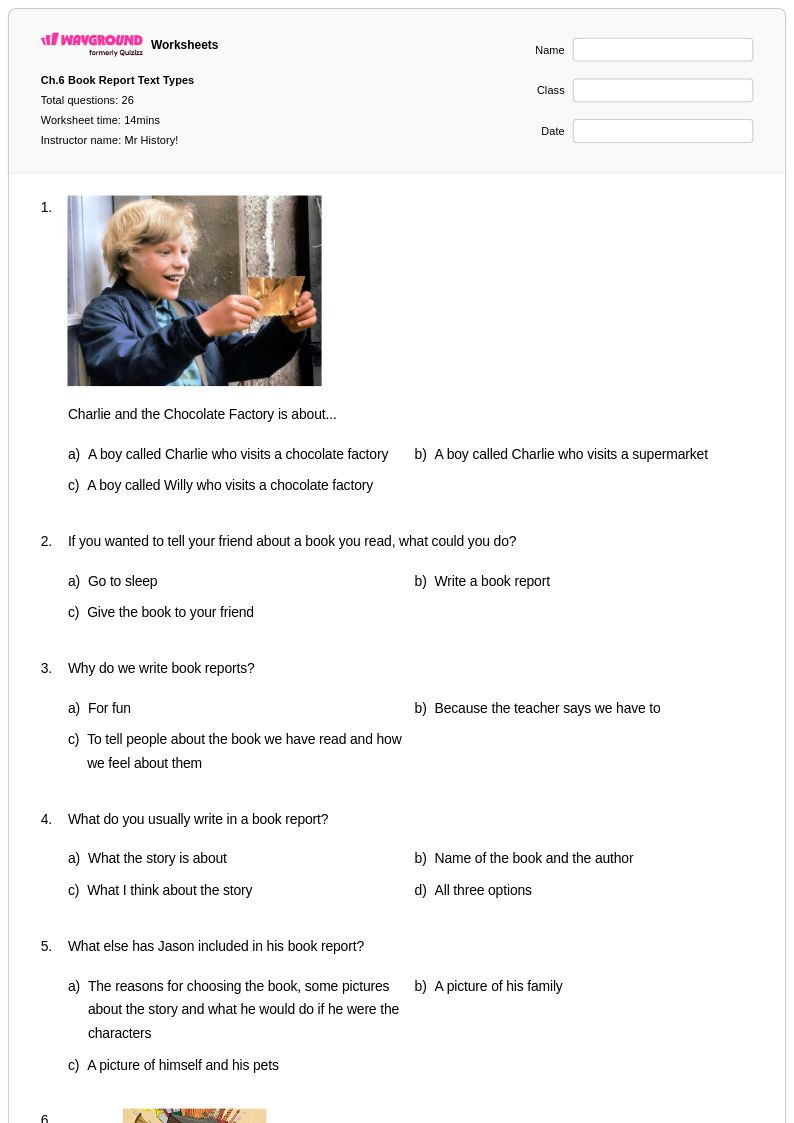
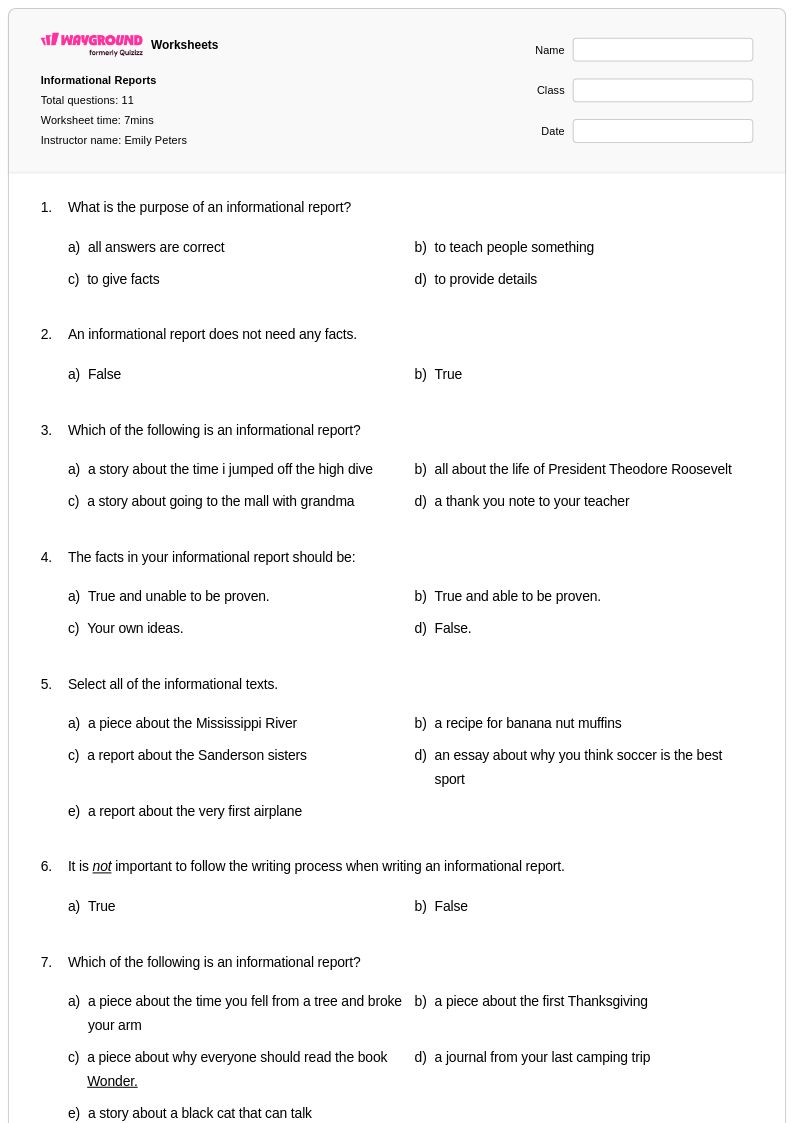
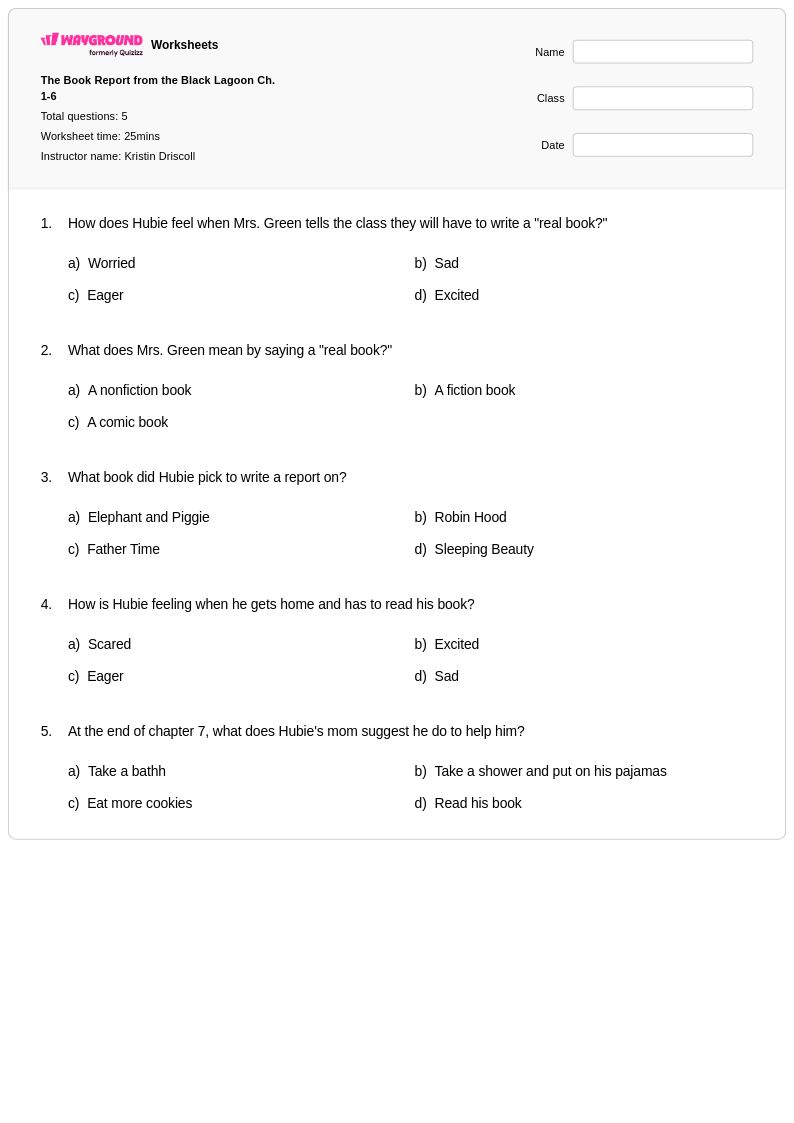
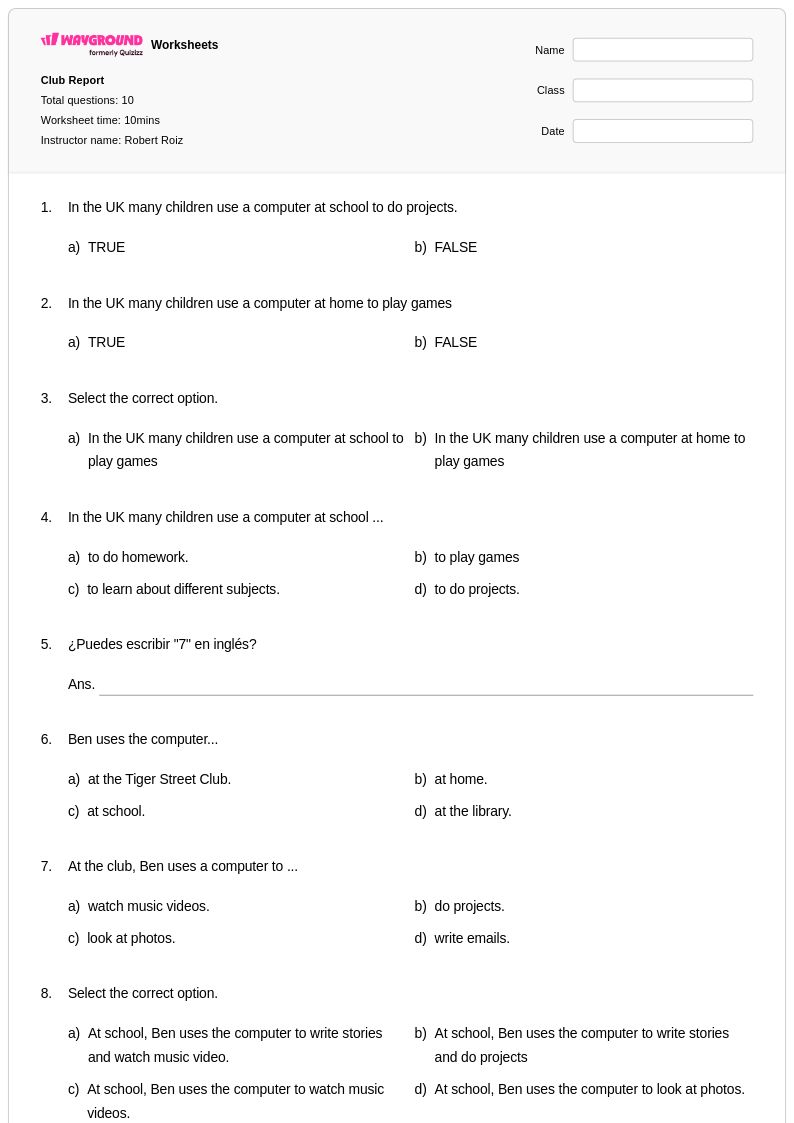
Year 3 book report worksheets available through Wayground (formerly Quizizz) provide essential scaffolding for young learners developing their reading comprehension and analytical writing skills. These comprehensive printables guide third-grade students through the systematic process of organizing their thoughts about books they have read, helping them identify key story elements such as characters, setting, plot, and theme. The worksheets strengthen critical thinking abilities by prompting students to make connections between texts and their own experiences while building foundational skills in summary writing and textual evidence support. Each resource includes structured templates with age-appropriate prompts, complete answer keys for teacher reference, and free downloadable pdf formats that make implementation seamless. Practice problems within these materials progressively develop students' ability to articulate their understanding of literature while fostering a deeper appreciation for reading.
Wayground (formerly Quizizz) supports educators with an extensive collection of teacher-created book report resources specifically designed for Year 3 reading comprehension development. The platform's millions of worksheets offer robust search and filtering capabilities that allow teachers to quickly locate materials aligned with specific reading standards and learning objectives. Differentiation tools enable instructors to customize worksheets based on individual student reading levels and interests, while the availability of both printable and digital pdf formats provides flexibility for various classroom environments and remote learning situations. These comprehensive resources facilitate effective lesson planning by offering structured approaches to reading assessment, targeted remediation for struggling readers, and enrichment opportunities for advanced students, ultimately supporting systematic skill practice that builds confident, analytical readers who can effectively communicate their understanding of literature.
FAQs
How do I teach students to write a book report?
Start by breaking the book report into distinct components: a brief summary, character analysis, plot structure, theme identification, and a personal response or critical evaluation. Teach each component explicitly before asking students to integrate them into a full report. Structured templates and graphic organizers help students organize their thinking before drafting, especially for readers who struggle with open-ended writing tasks.
What should a book report worksheet include for elementary vs. middle school students?
For elementary students, a book report worksheet should focus on basic story elements: characters, setting, problem, and solution, with sentence starters to scaffold responses. Middle school worksheets should push further into theme analysis, author's craft, and evidence-based reasoning, requiring students to support their claims with specific textual examples. Adjusting the depth of prompts rather than the format allows teachers to maintain consistency while meeting different developmental levels.
What exercises help students practice literary analysis for a book report?
Targeted practice exercises such as character development charts, plot structure diagrams, and theme identification prompts help students build analytical habits before writing full reports. Asking students to identify evidence from the text that supports a theme or character trait trains the close-reading skills that strong book reports require. Repeated low-stakes practice with individual elements builds the competency students need to synthesize analysis into coherent written form.
What mistakes do students commonly make when writing book reports?
The most common error is retelling the plot in full rather than analyzing it, resulting in a summary instead of a report. Students also frequently make unsupported claims about characters or themes without citing evidence from the text. A third recurring issue is failing to distinguish between a character's actions and the author's intent, which limits the depth of critical evaluation. Explicit instruction on the difference between summarizing and analyzing, paired with modeled examples, directly addresses these patterns.
How can I differentiate book report worksheets for struggling readers or advanced students?
For struggling readers, use scaffolded worksheets with sentence frames, vocabulary support, and simplified prompts that focus on one literary element at a time. Advanced students benefit from open-ended prompts that require them to compare themes across texts, evaluate the author's craft, or connect the book to broader social or historical contexts. On Wayground, teachers can apply accommodations such as read-aloud support and reduced answer choices for individual students, allowing the same core worksheet to serve multiple ability levels without singling anyone out.
How do I use Wayground's book report worksheets in my classroom?
Wayground's book report worksheets are available as printable PDFs for traditional classroom use and in digital formats for technology-integrated or remote learning environments, including the option to host them as a quiz directly on Wayground. Teachers can use search and filtering tools to find worksheets matched to specific reading levels or literary elements, then assign them as structured practice, pre-writing scaffolds, or summative tasks. Complete answer keys are included with each worksheet, reducing prep time and making it easier to provide consistent feedback.