Enhance Year 6 students' citation skills with Wayground's comprehensive collection of free worksheets and printables that teach proper source documentation, reference formatting, and academic integrity through engaging practice problems and detailed answer keys.
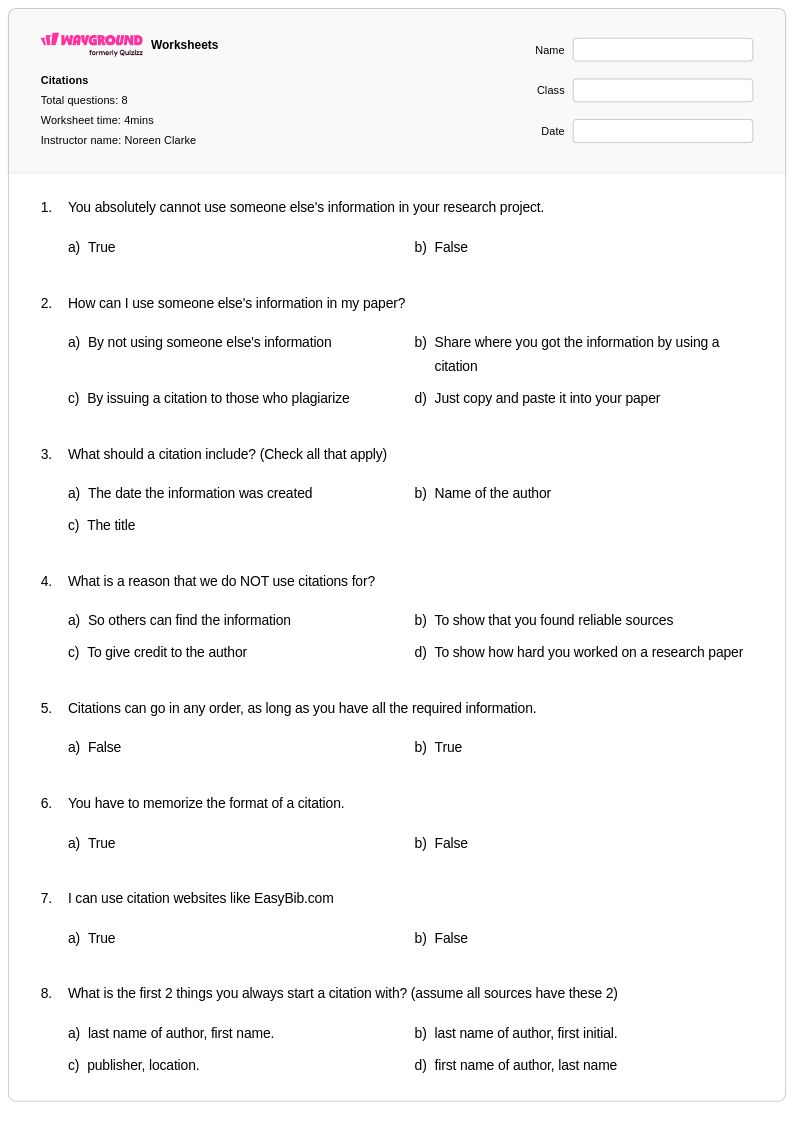
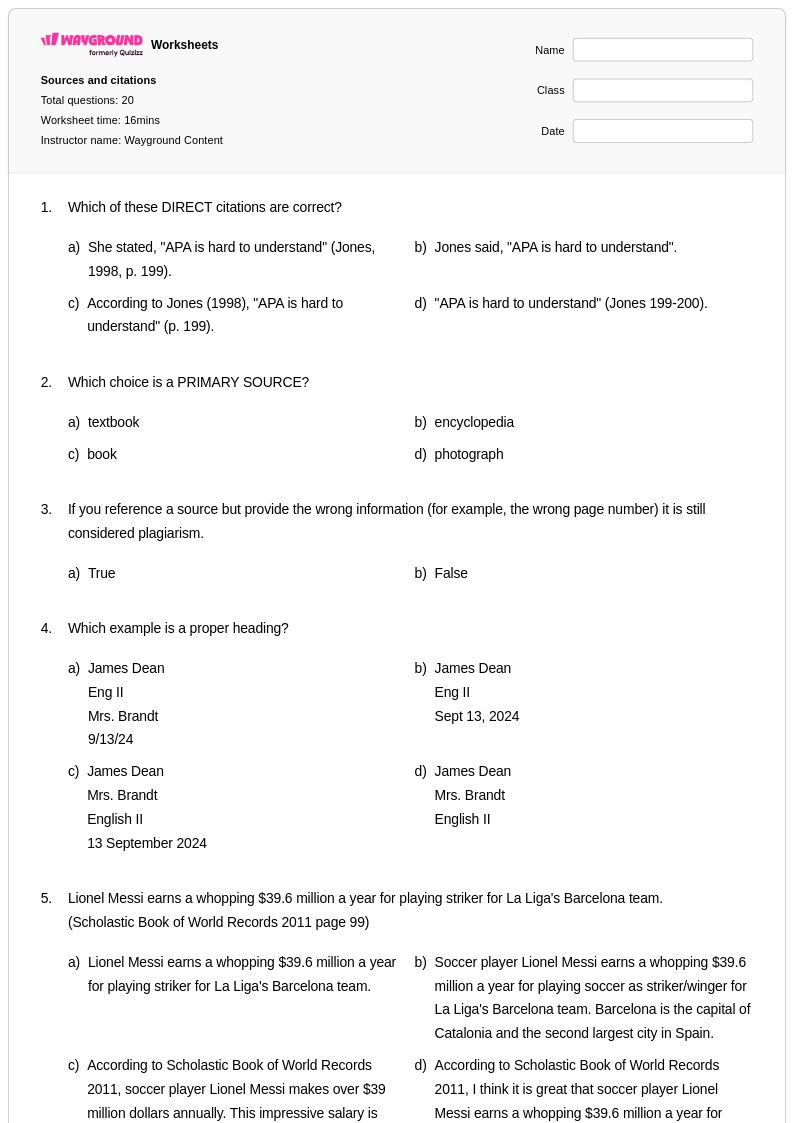
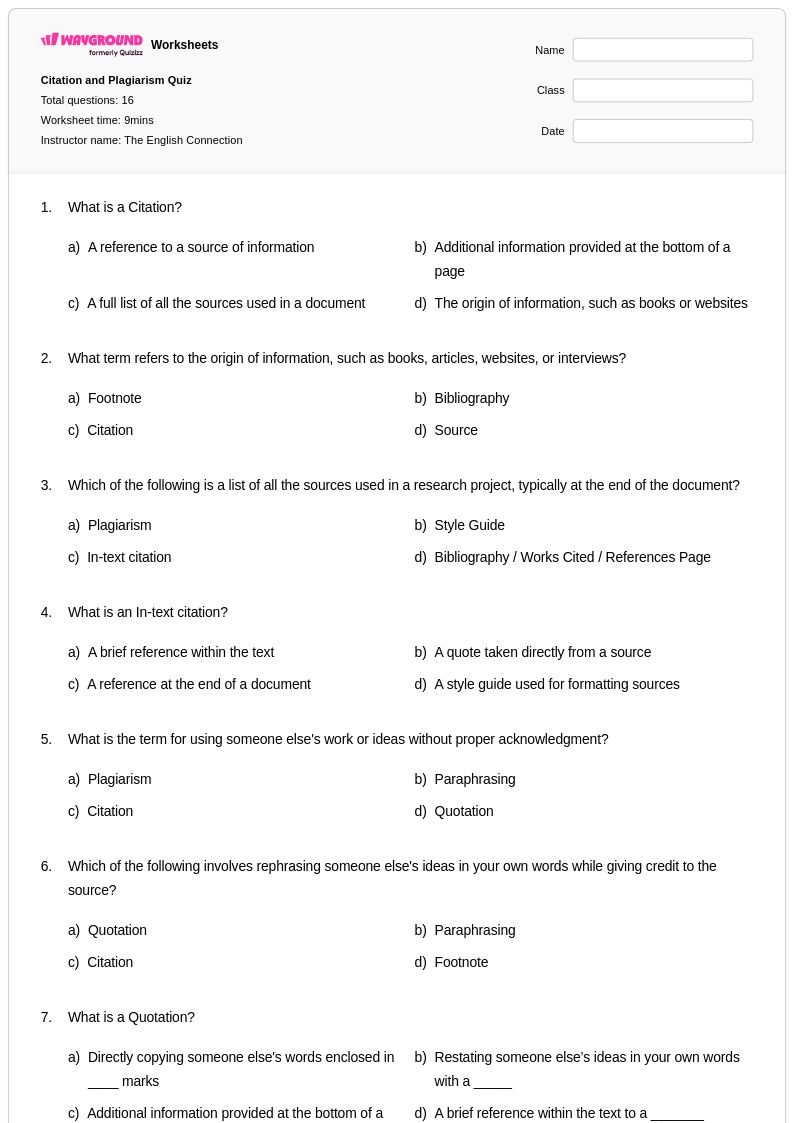
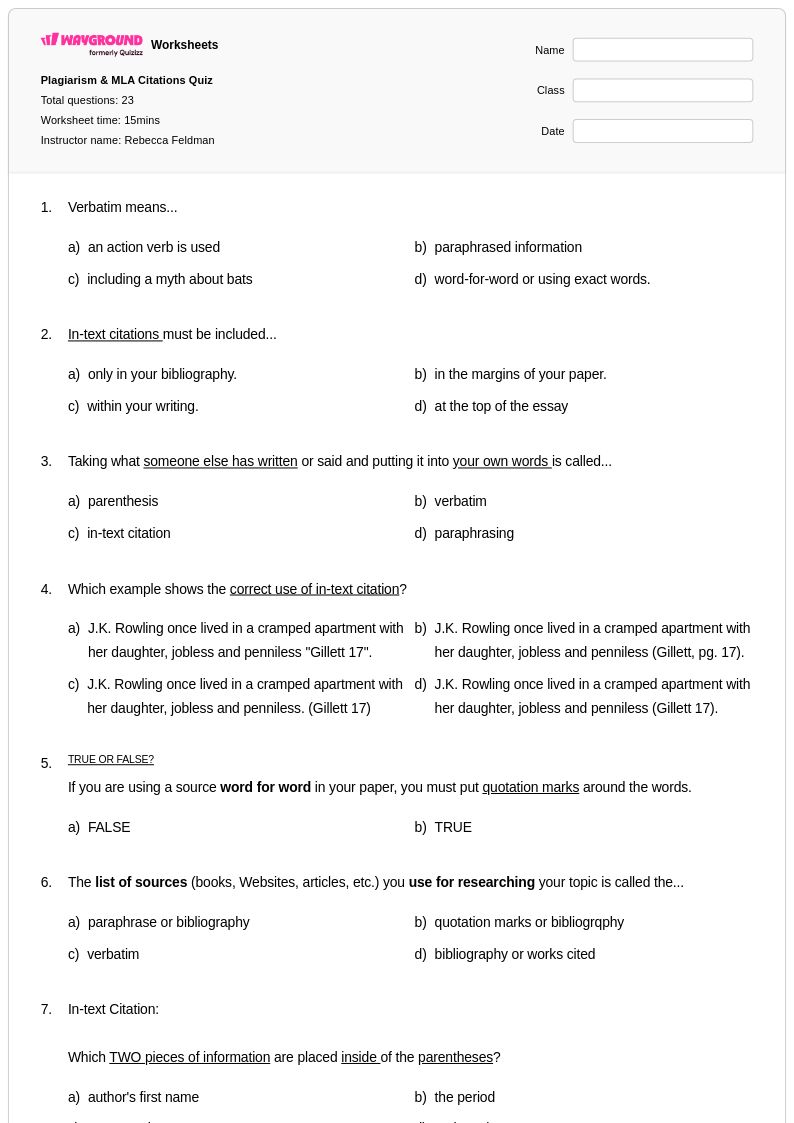
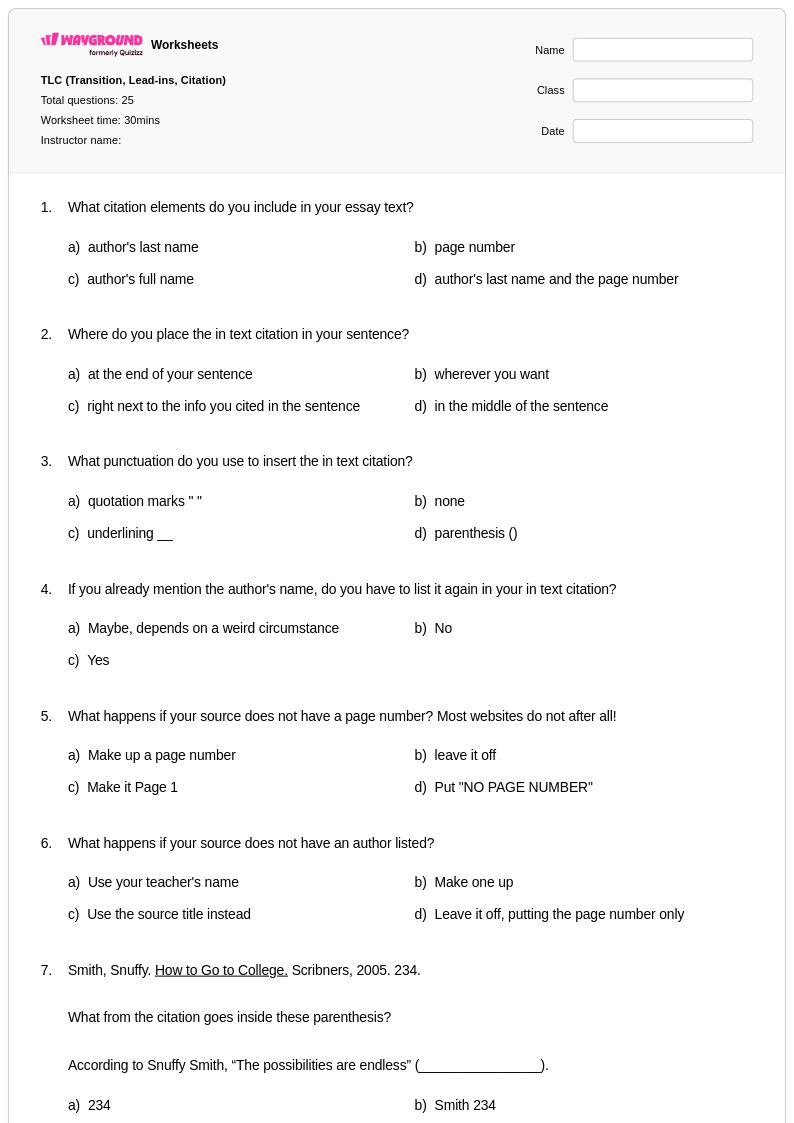
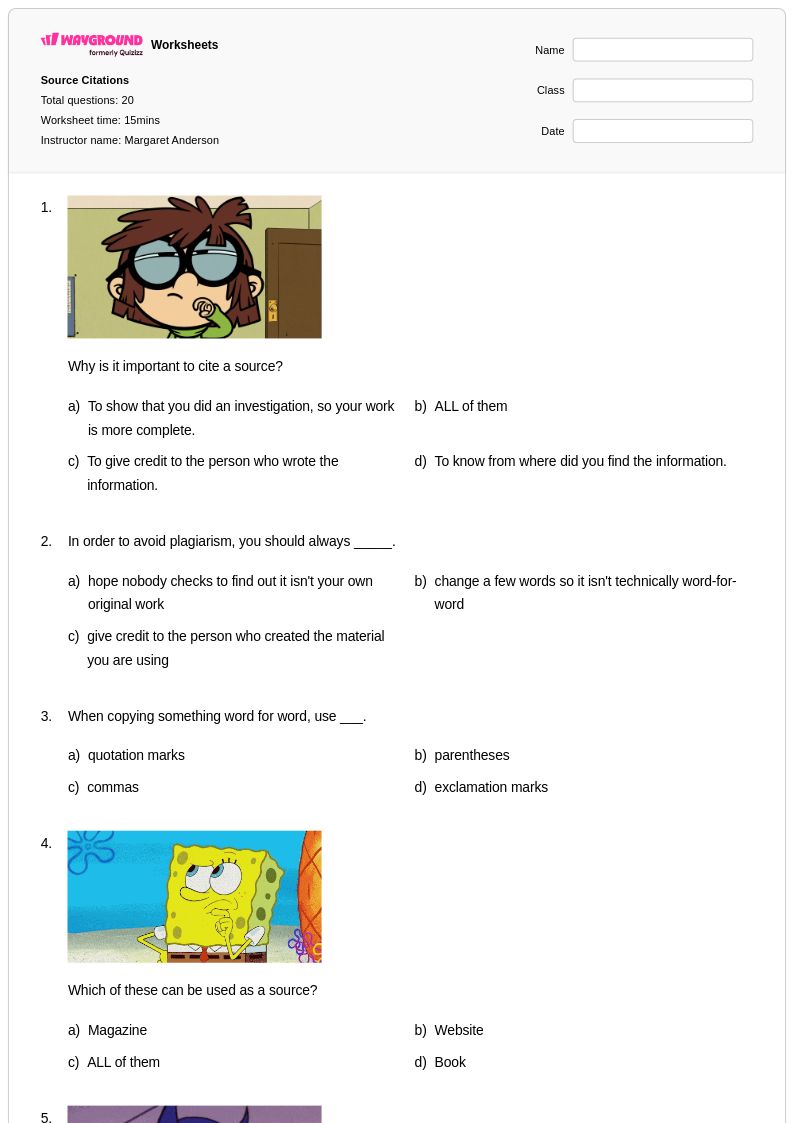
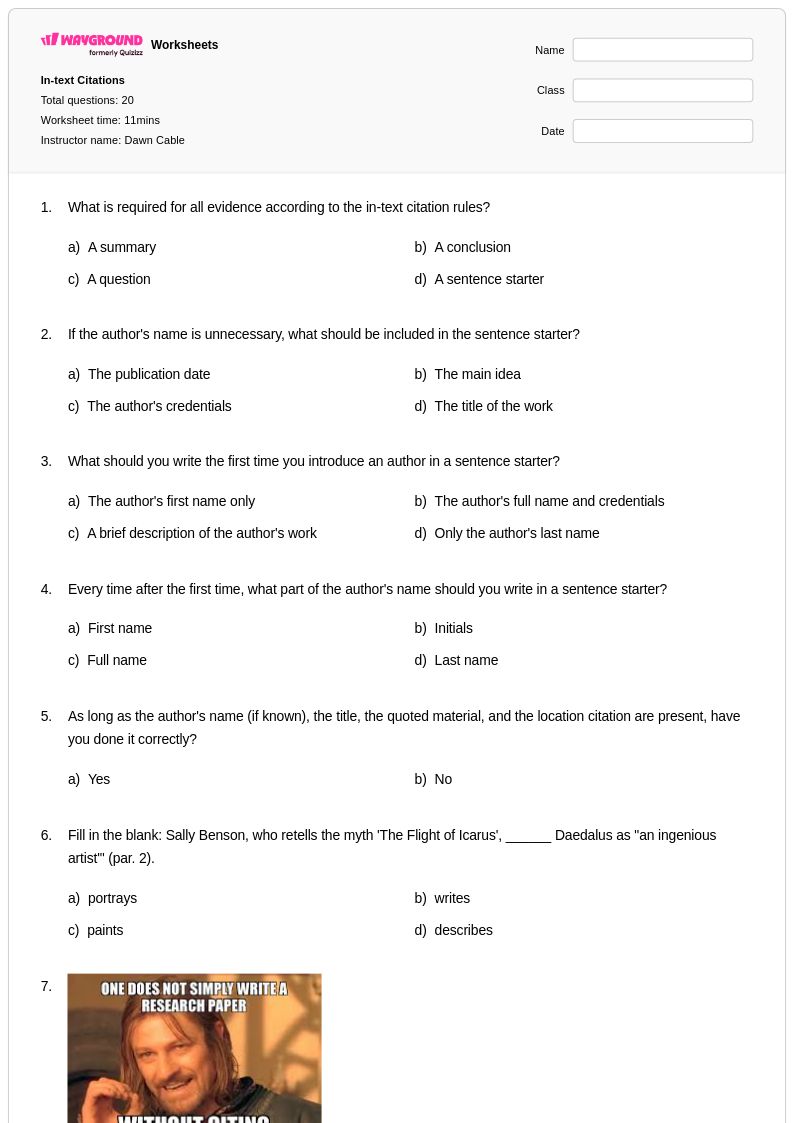
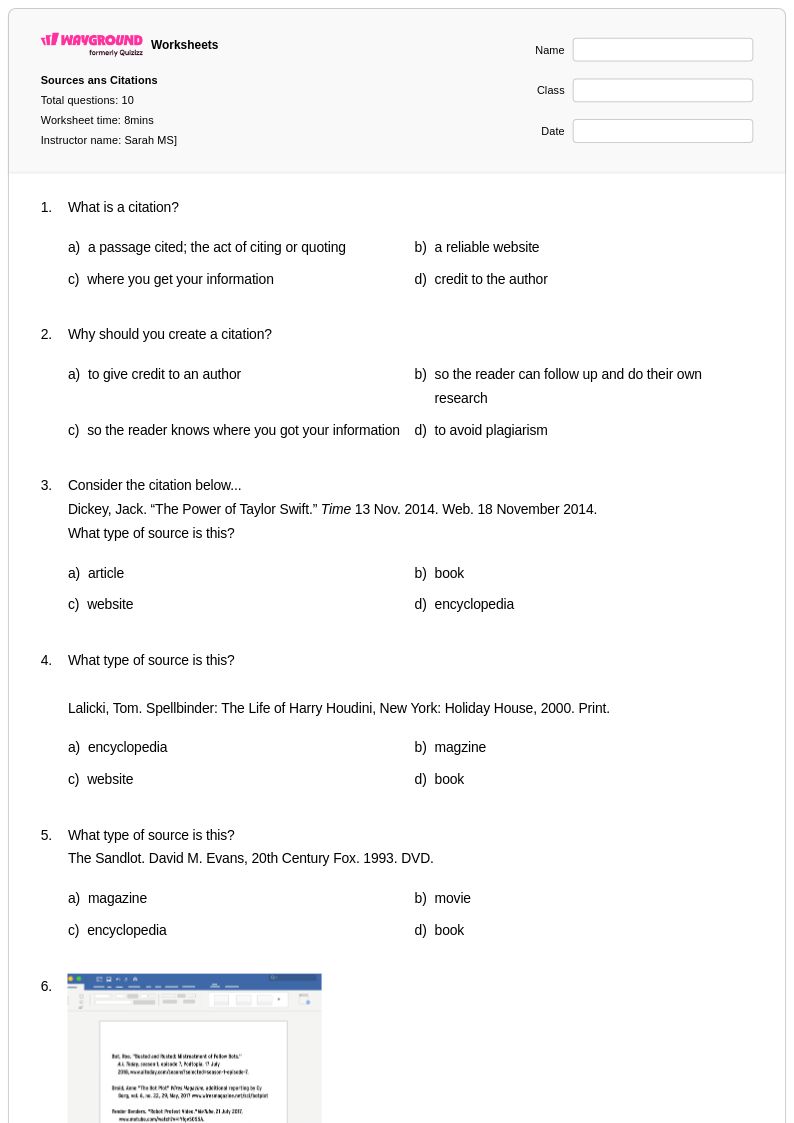
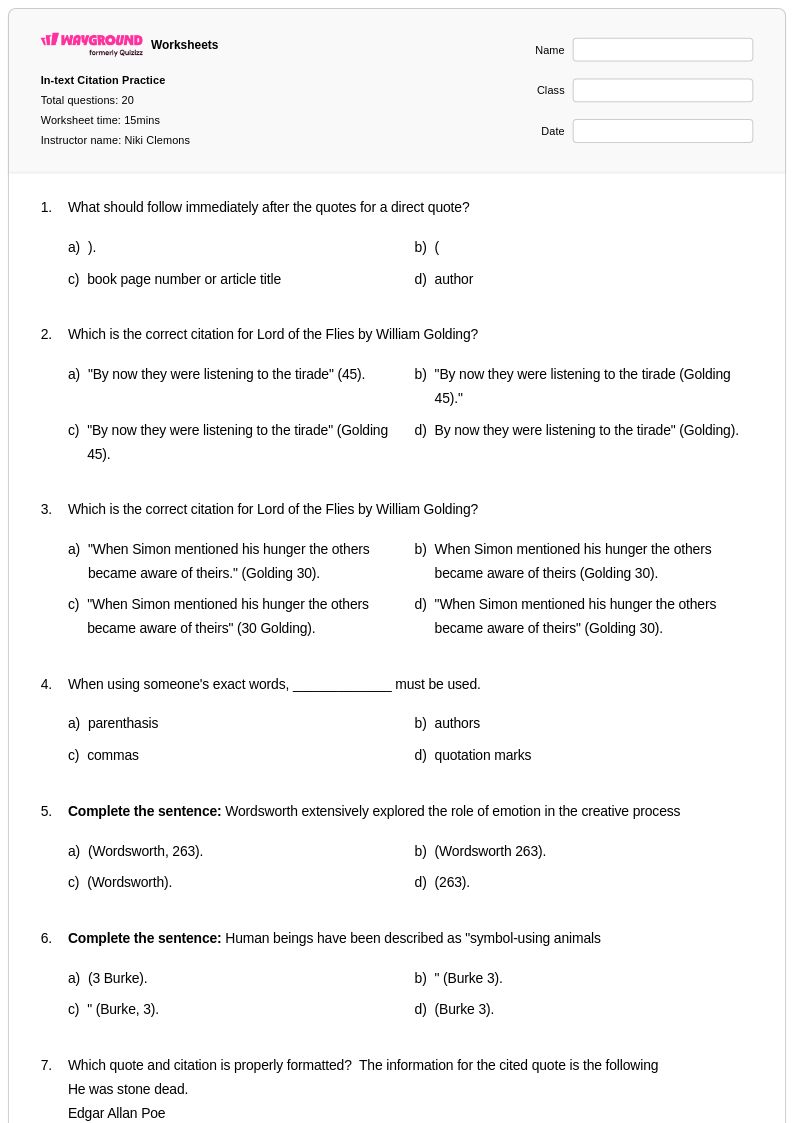
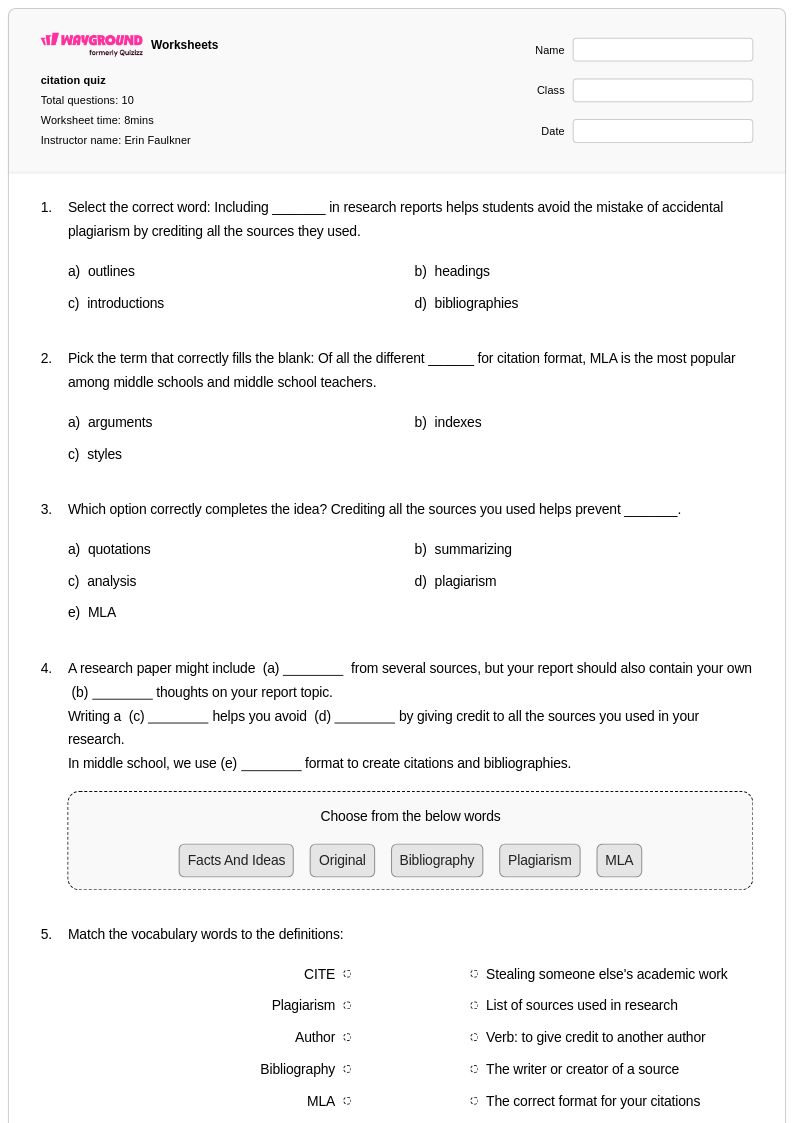
Citation worksheets for Year 6 students available through Wayground (formerly Quizizz) provide comprehensive practice in the fundamental research skill of properly crediting sources. These educational resources help sixth-grade students master the essential components of citation formatting, including identifying author names, publication dates, titles, and source types across various media formats such as books, websites, and articles. The worksheets strengthen critical thinking skills by teaching students to distinguish between reliable and unreliable sources while developing their ability to locate bibliographic information systematically. Students engage with practice problems that range from basic citation element identification to constructing complete bibliographic entries, with accompanying answer keys enabling immediate feedback and self-assessment. These free printables serve as valuable tools for building the academic integrity foundation that students will rely on throughout their educational journey.
Wayground (formerly Quizizz) supports educators with an extensive collection of teacher-created citation worksheets designed specifically for Year 6 research strategies instruction. The platform's millions of educational resources include standards-aligned materials that can be easily located through robust search and filtering capabilities, allowing teachers to find worksheets that match their specific curriculum requirements and student proficiency levels. The differentiation tools enable instructors to customize citation practice materials for diverse learning needs, from remediation support for struggling students to enrichment activities for advanced learners. These versatile resources are available in both printable PDF formats for traditional classroom use and digital formats for technology-integrated learning environments, facilitating seamless lesson planning whether teachers need quick skill practice exercises, comprehensive assessment preparation, or targeted intervention materials for students who need additional citation instruction support.
FAQs
How do I teach citation styles to students who have never used them before?
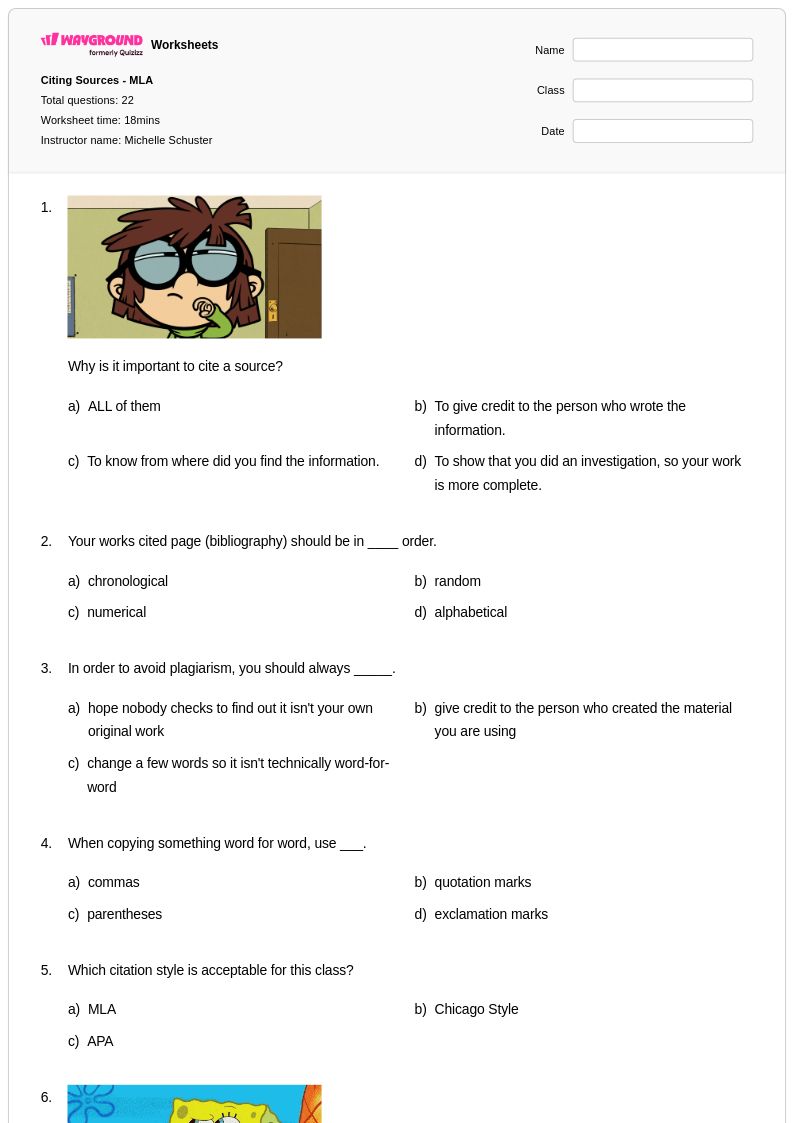
Start by introducing one citation style at a time, typically MLA for younger students or those in English classes, before expanding to APA or Chicago. Anchor instruction in familiar source types like books and websites before progressing to journal articles and multimedia. Modeling the process step-by-step, then having students practice with structured worksheets that include realistic examples, helps build confidence before they attempt citations independently in research assignments.
What exercises help students practice MLA, APA, and Chicago citation formats?
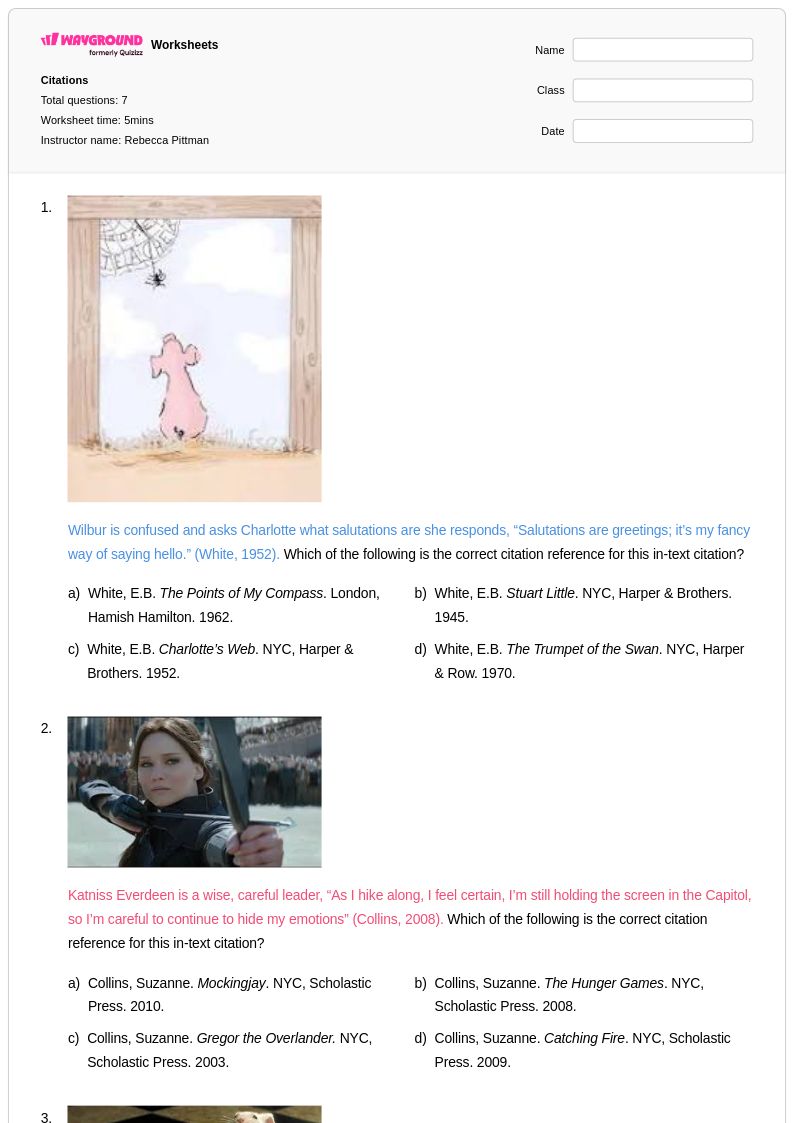
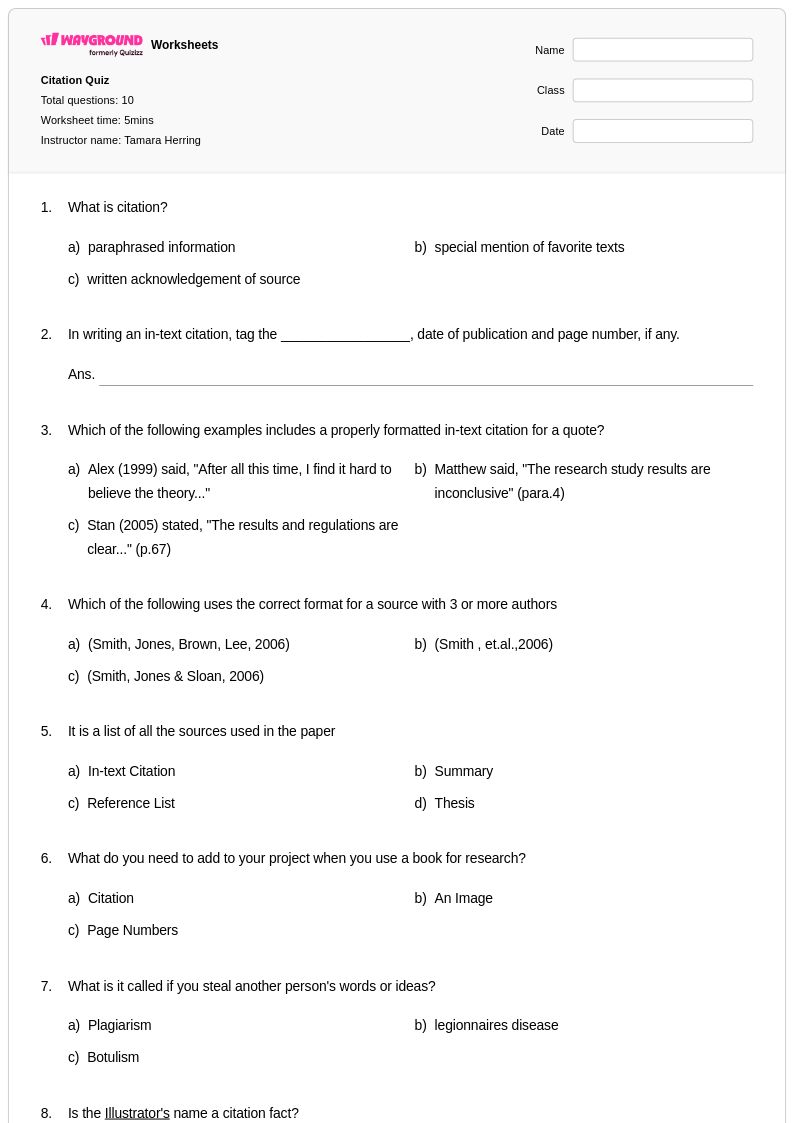
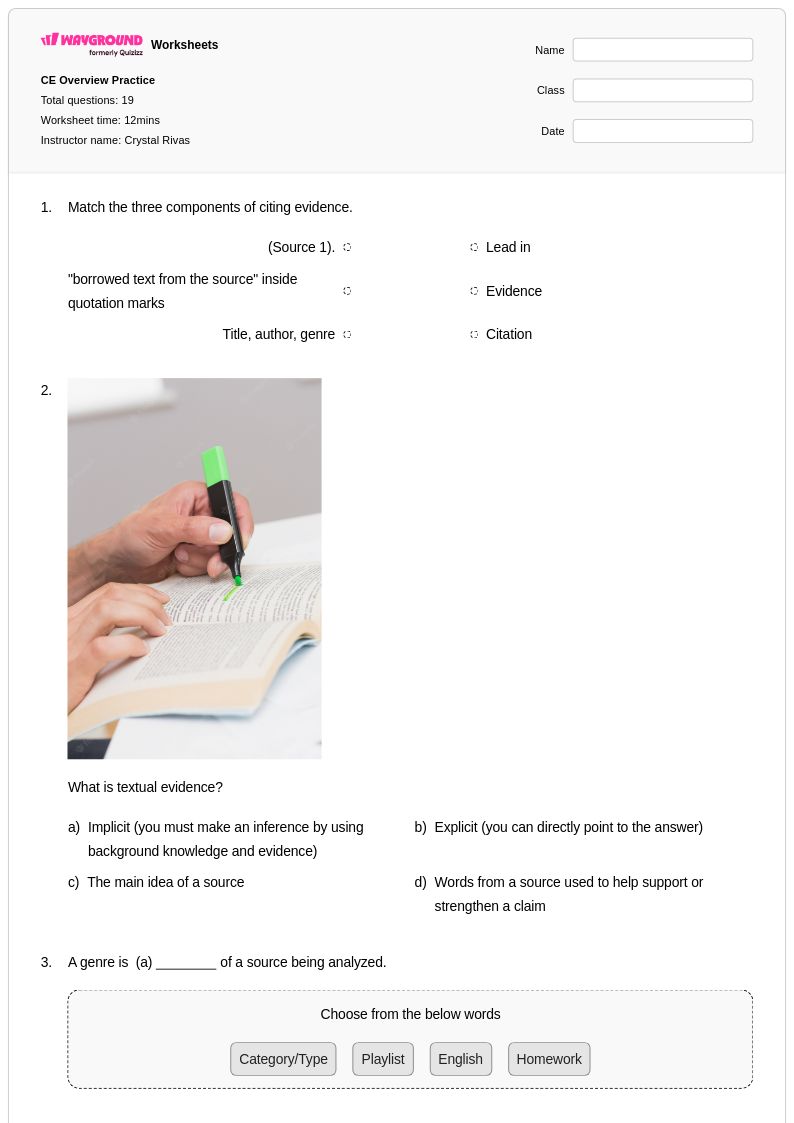
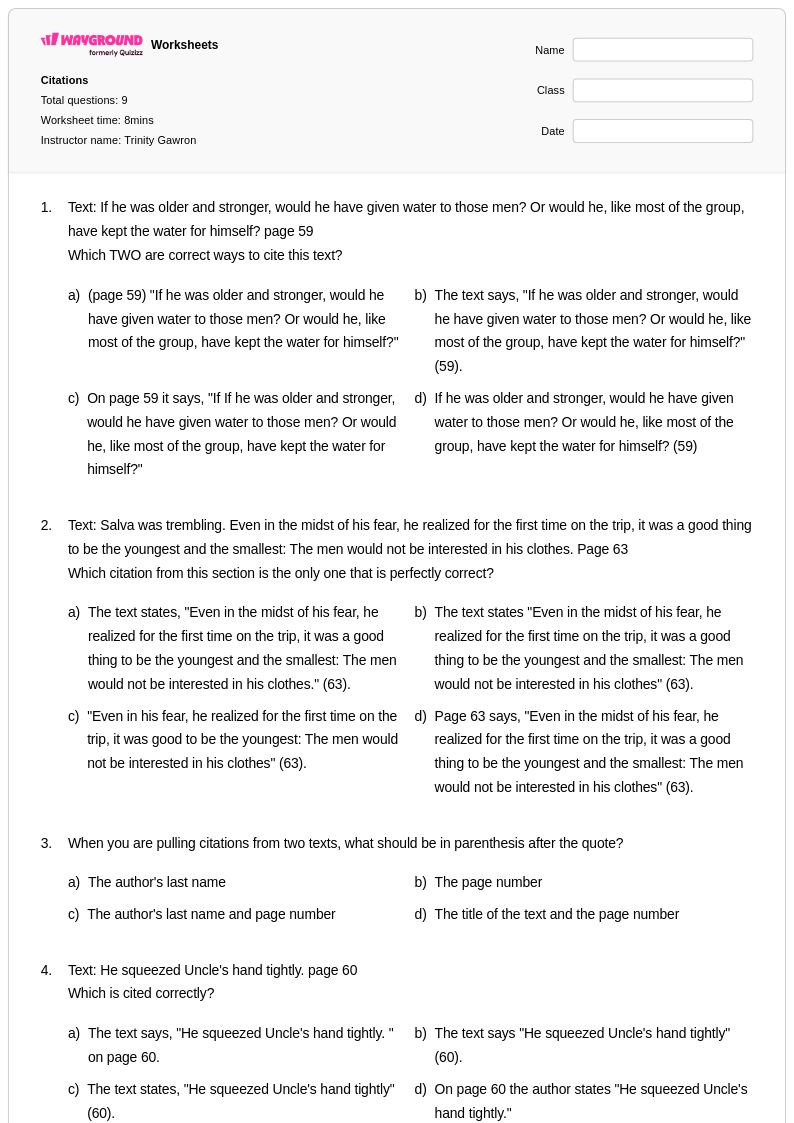
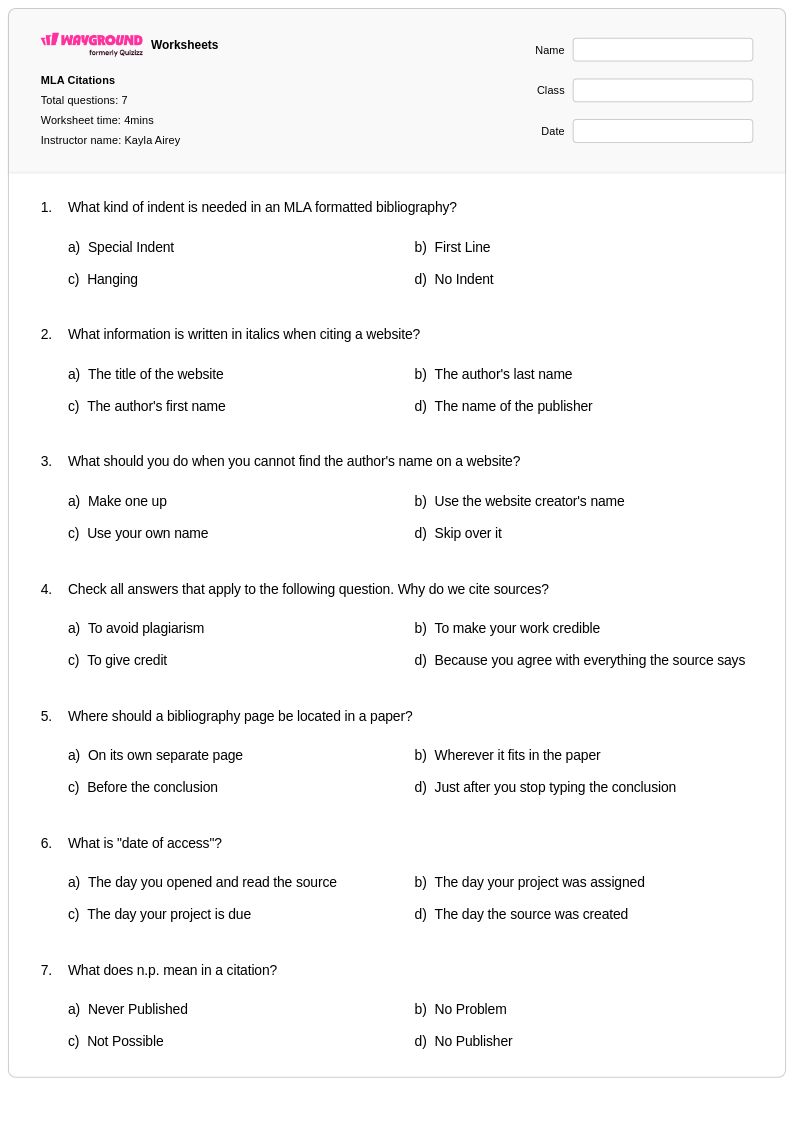
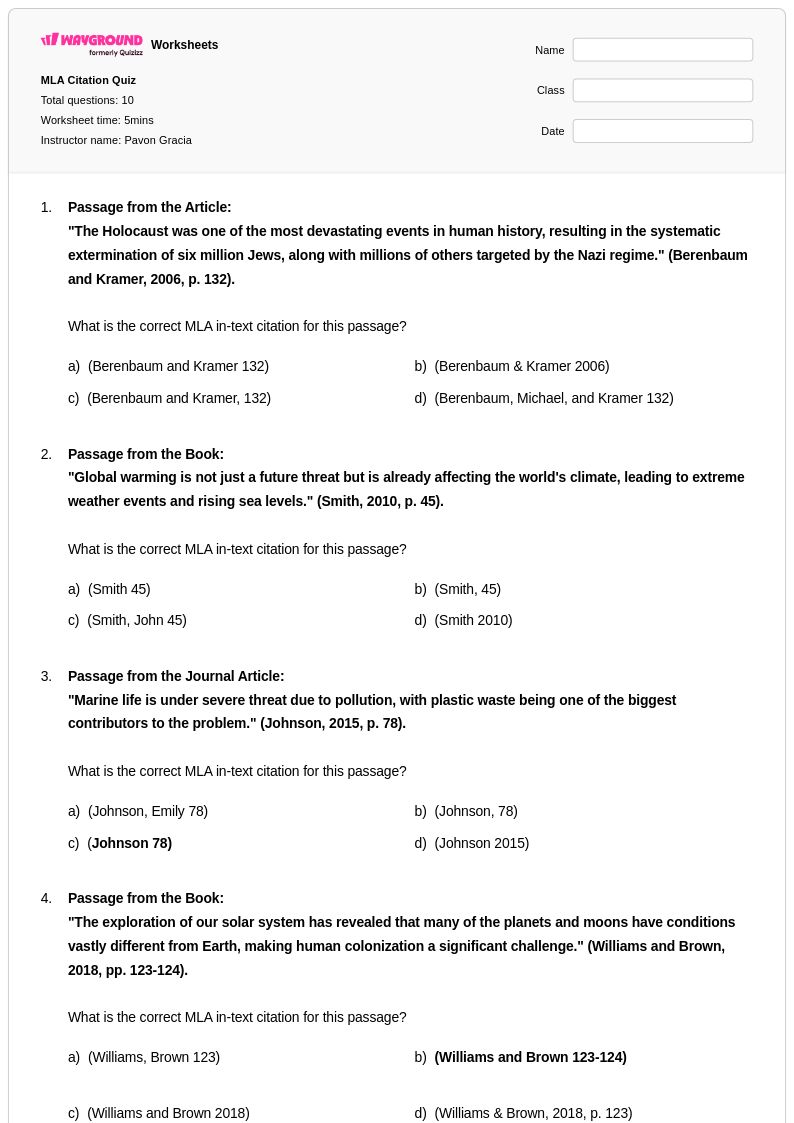
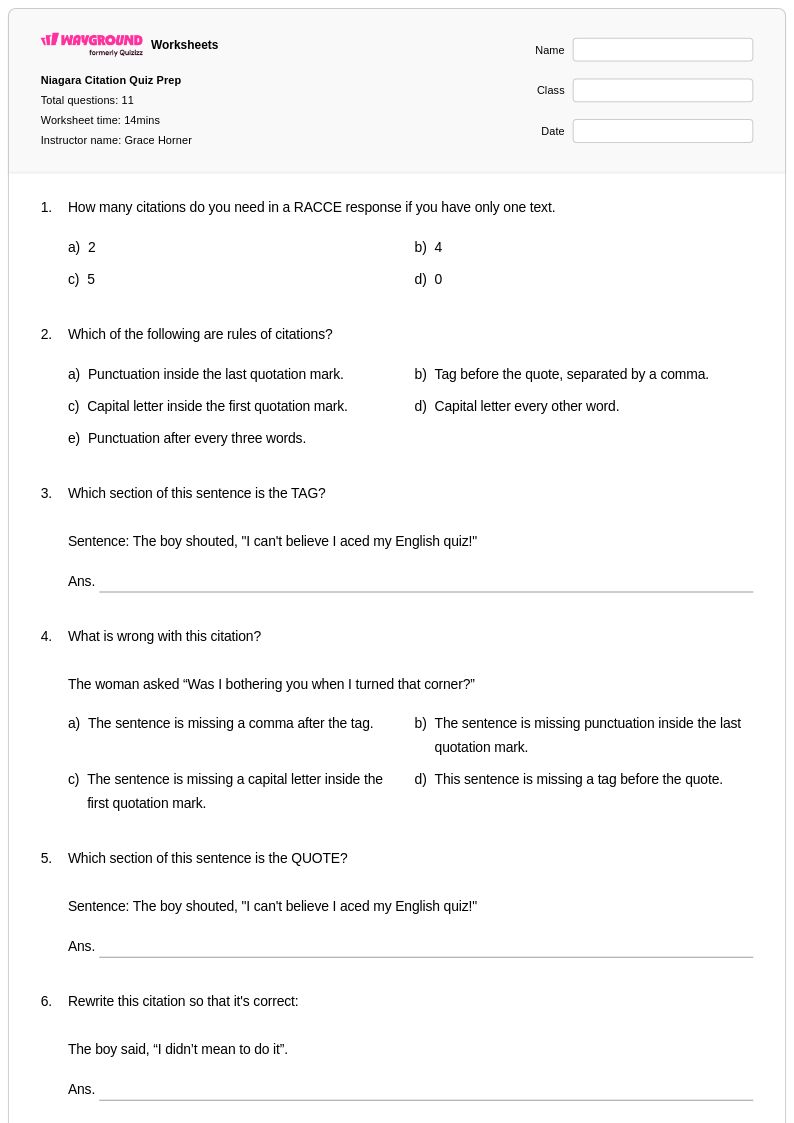
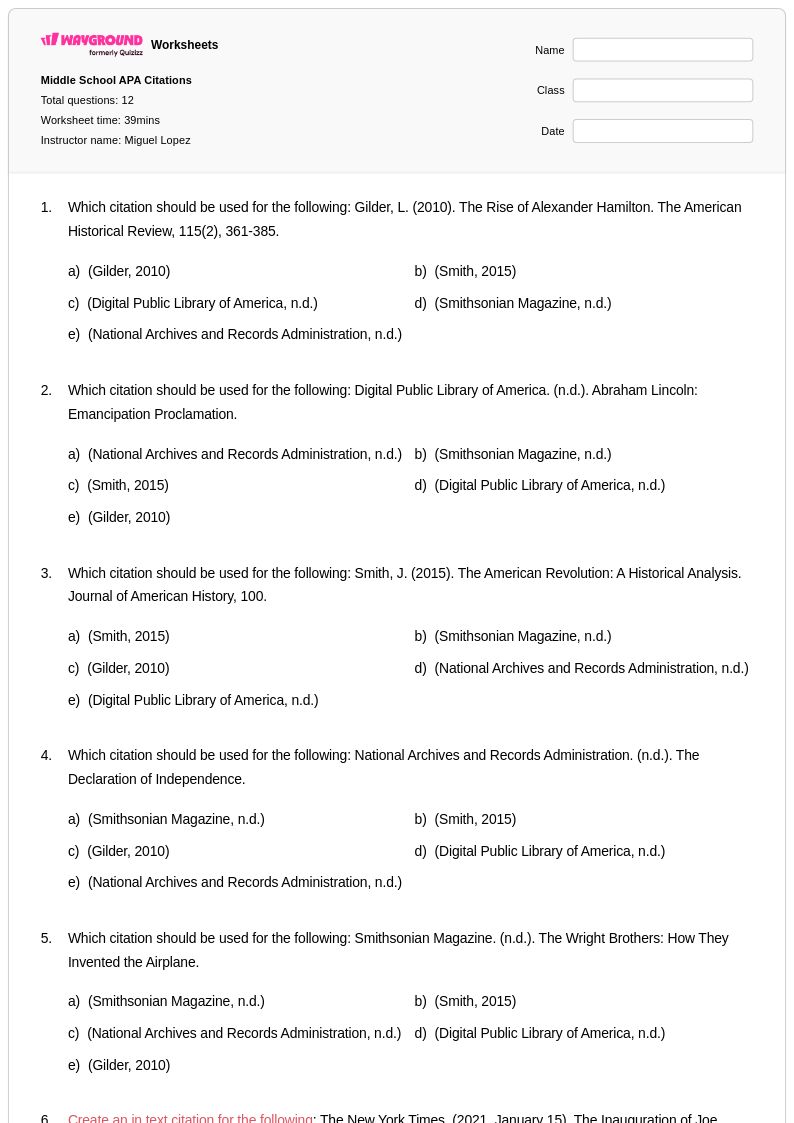
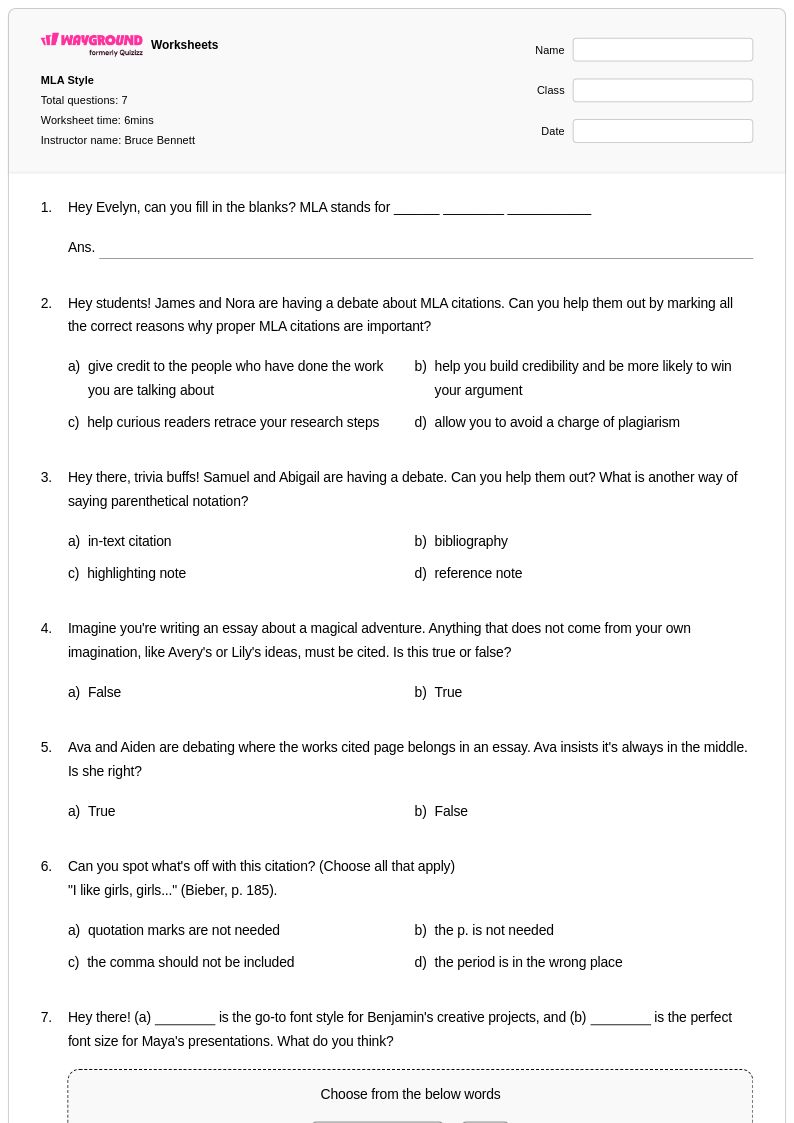
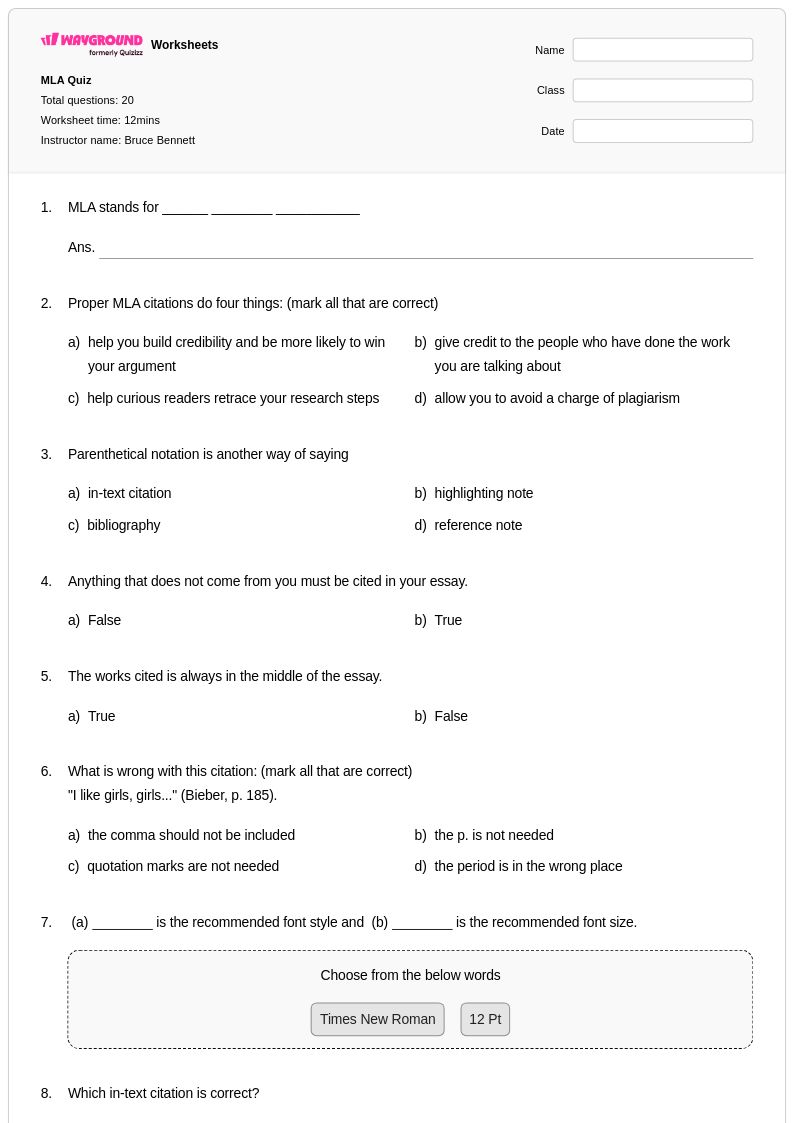
Effective citation practice includes formatting exercises where students construct citations from provided source information, error-correction tasks where they identify and fix mistakes in sample citations, and matching activities that connect source types to their correct format rules. Worksheets that present realistic scenarios involving books, websites, journal articles, and multimedia sources give students the varied repetition needed to internalize format differences across MLA, APA, and Chicago styles.
What mistakes do students commonly make when formatting citations?
The most frequent errors include confusing in-text citation format with works cited or reference list format, misplacing or omitting punctuation such as periods and commas, and incorrectly ordering author names. Students also commonly mix up italics and quotation marks for titles, apply one citation style's rules to another, and forget to include all required elements such as volume numbers, page ranges, or access dates for online sources. Targeted practice with answer keys helps students catch and self-correct these patterns before they become ingrained habits.
How do I explain academic integrity and plagiarism alongside citation skills?
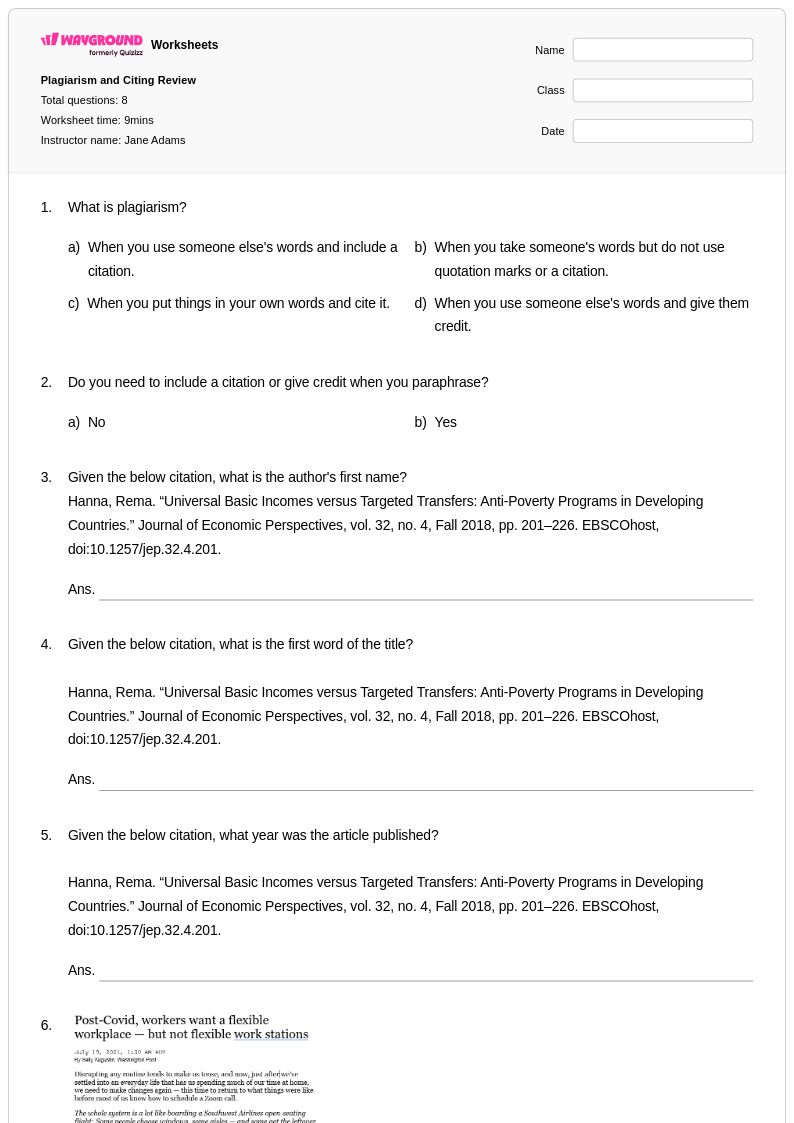
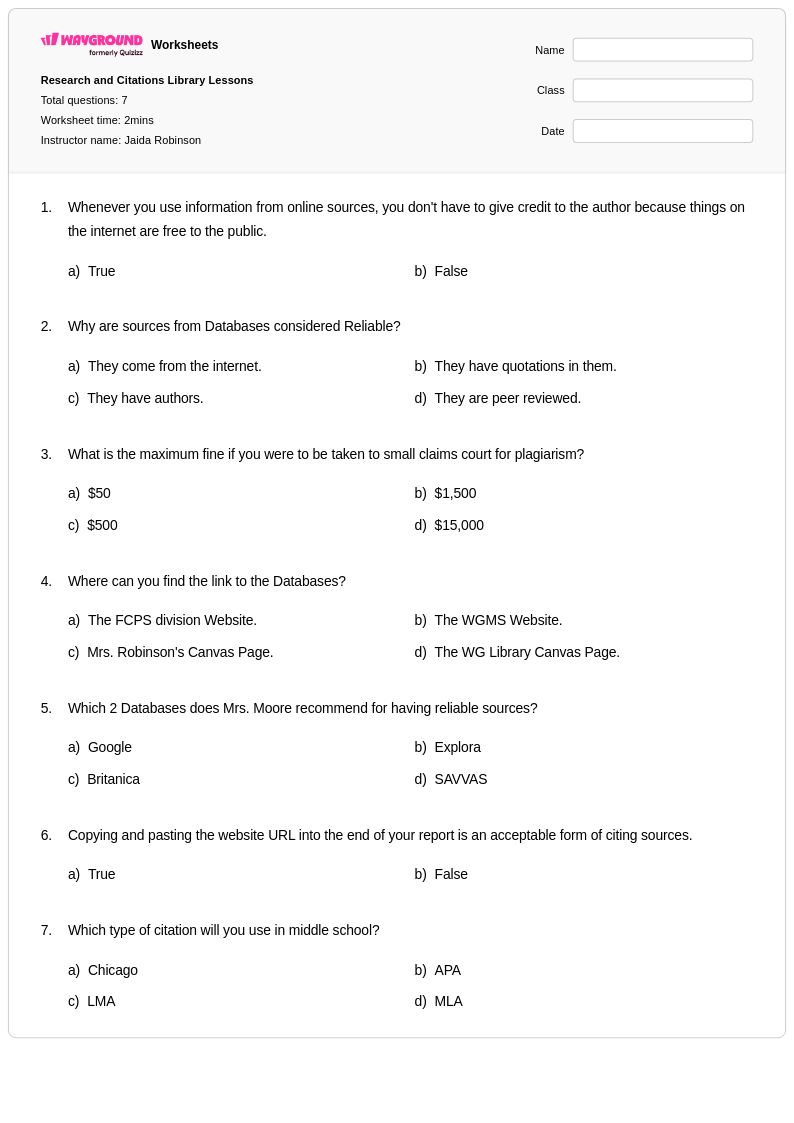
Frame citation as an act of intellectual honesty rather than a mechanical formatting task, so students understand the ethical stakes behind proper attribution. Connect plagiarism directly to real consequences in academic settings, and use examples that show how improper paraphrasing or missing citations constitute plagiarism even without intent. Worksheets that pair citation practice with source credibility evaluation reinforce the idea that citing and evaluating sources are two sides of the same research skill.
How do I use Wayground's citation worksheets in my classroom?
Wayground's citation worksheets are available as printable PDFs for traditional classroom use and in digital formats for technology-integrated environments, giving teachers flexibility for in-class practice, homework, or independent skill work. Teachers can also host citation worksheets as a quiz directly on Wayground, enabling real-time student responses and immediate feedback. Each worksheet includes a complete answer key, supporting both teacher-led review and student self-assessment.
How can I differentiate citation instruction for students at different skill levels?
For students who are still developing foundational skills, reduce complexity by focusing on a single citation style and a limited set of source types before introducing variation. For more advanced students, introduce citation style comparison tasks or have them evaluate and correct intentionally flawed citations. On Wayground, teachers can apply accommodations such as read-aloud support or reduced answer choices for individual students, ensuring that learners with different needs can access citation practice without requiring separate lesson plans.