Free Printable Claim Evidence Reasoning Worksheets for Year 2
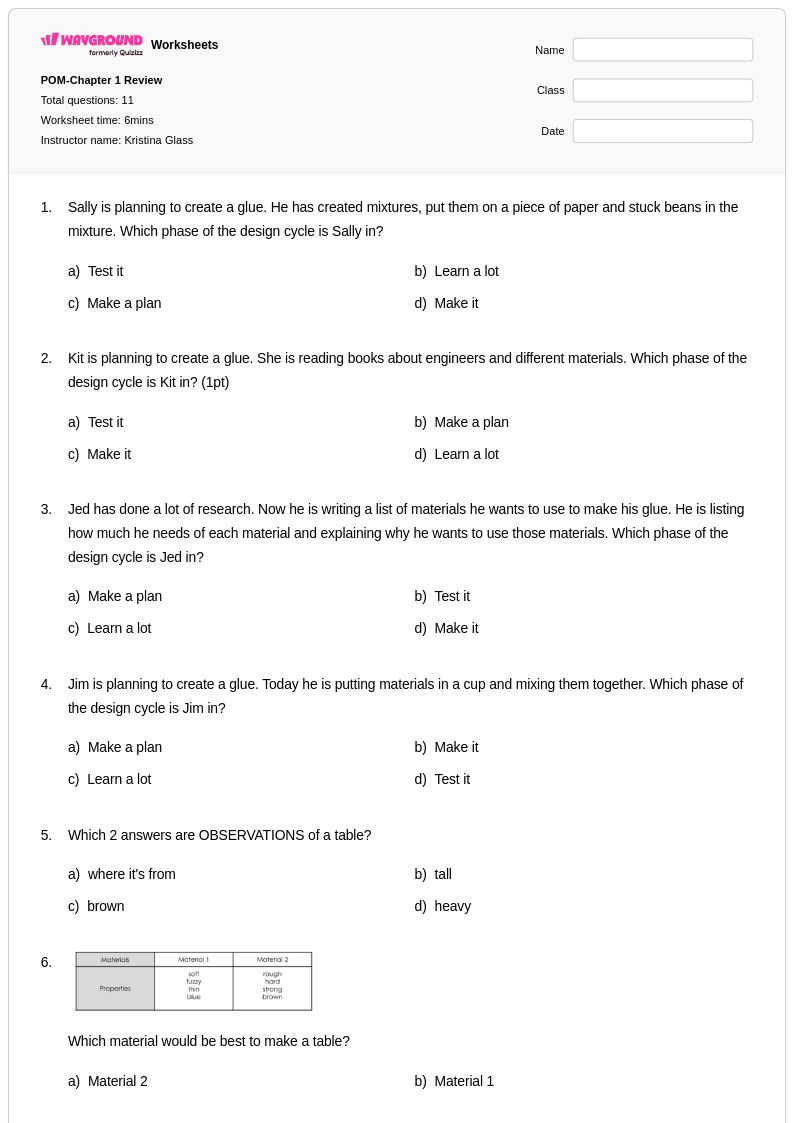
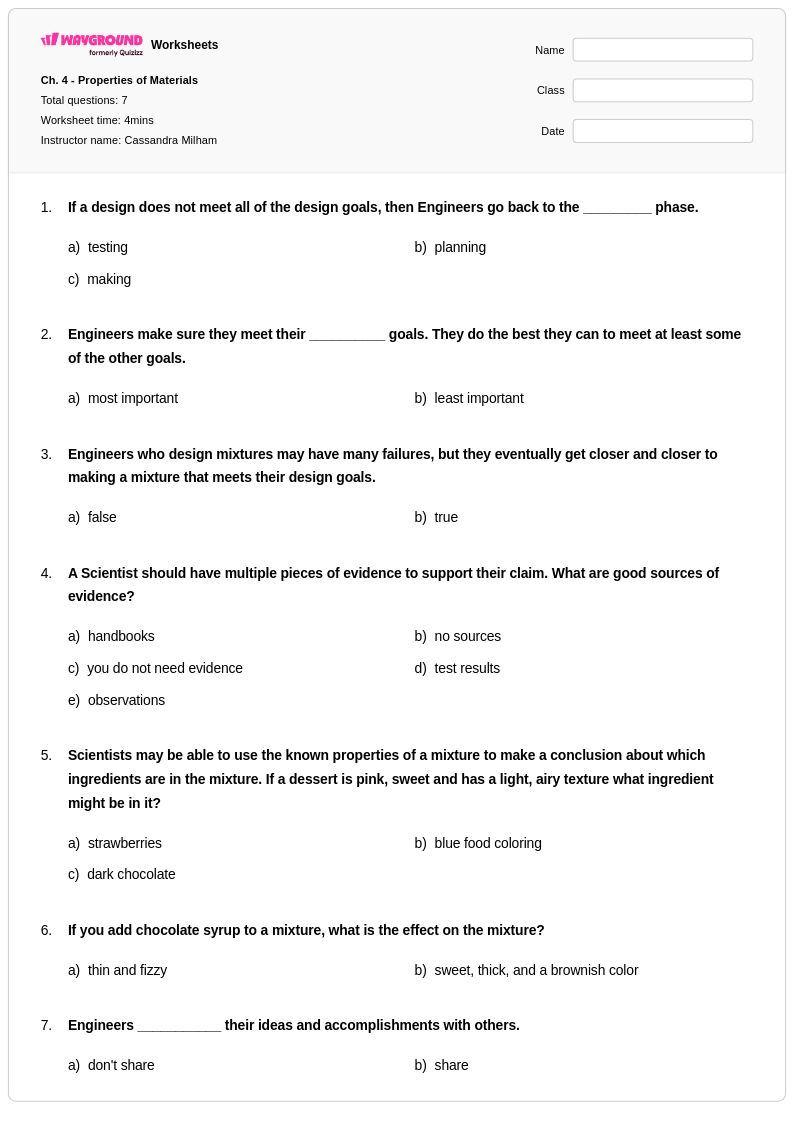
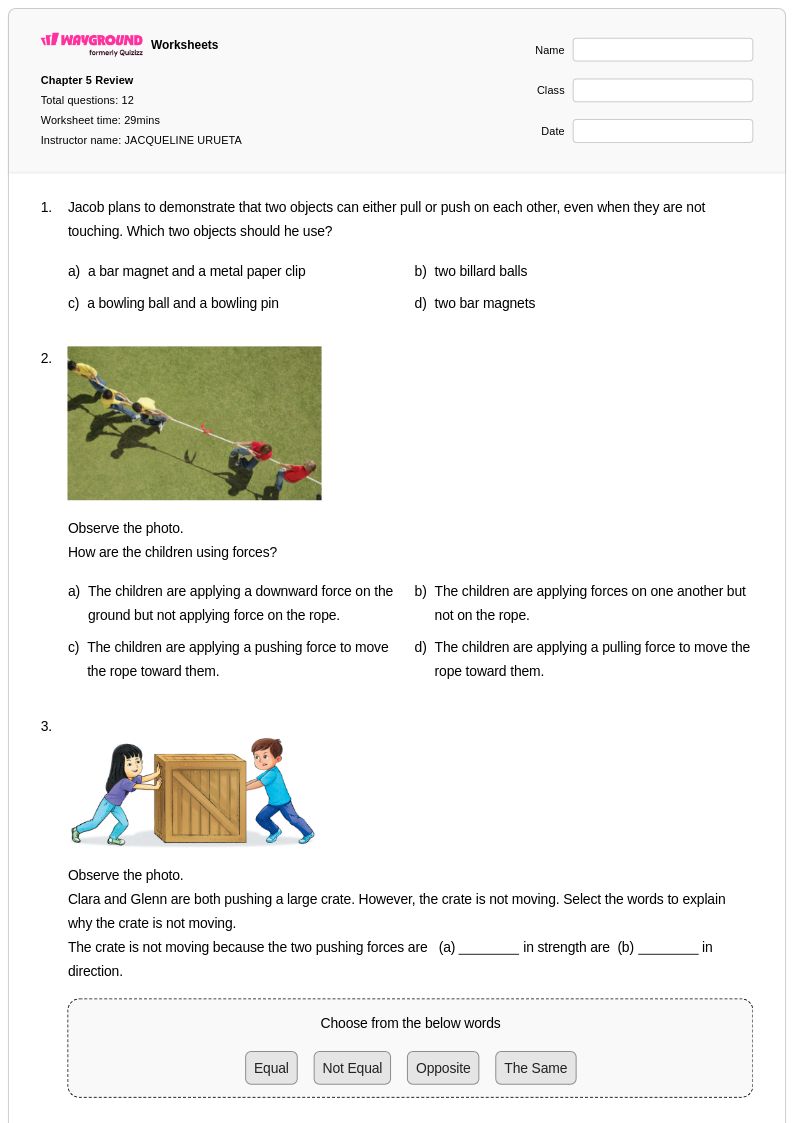
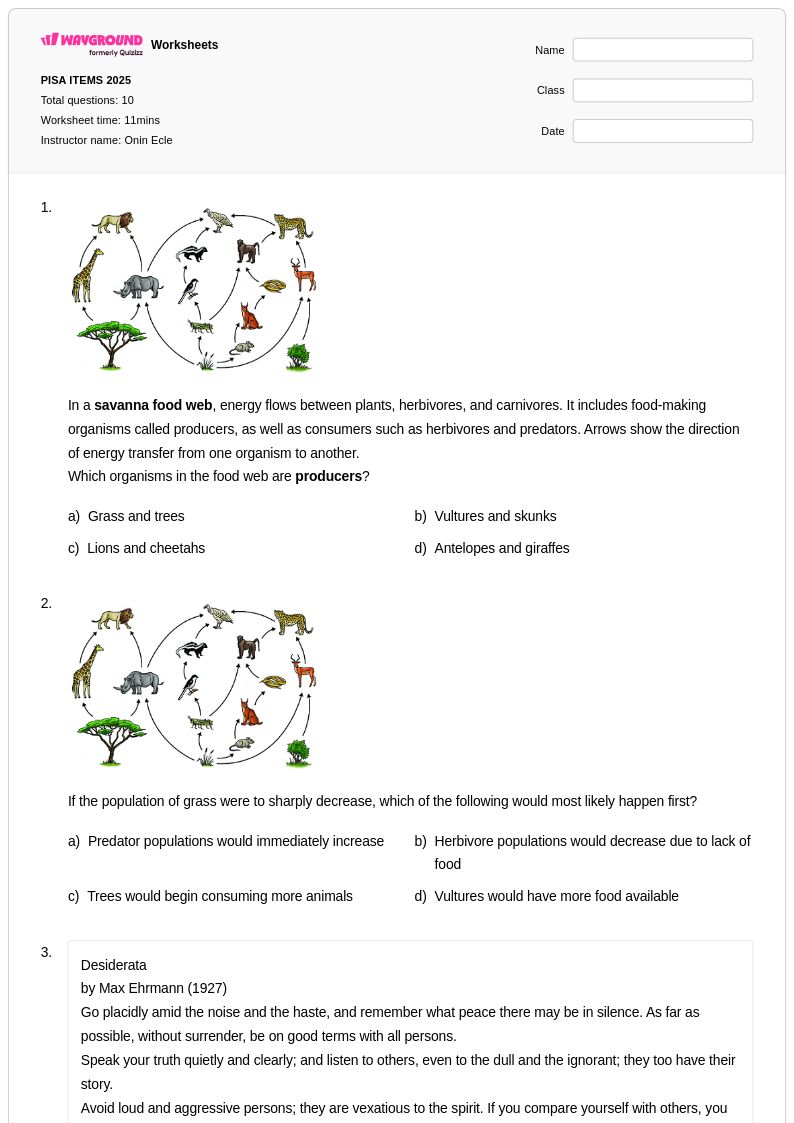
Year 2 claim evidence reasoning worksheets from Wayground help young scientists practice supporting their observations with proof through engaging printables, free practice problems, and comprehensive answer keys in convenient PDF format.
Explore printable Claim Evidence Reasoning worksheets for Year 2
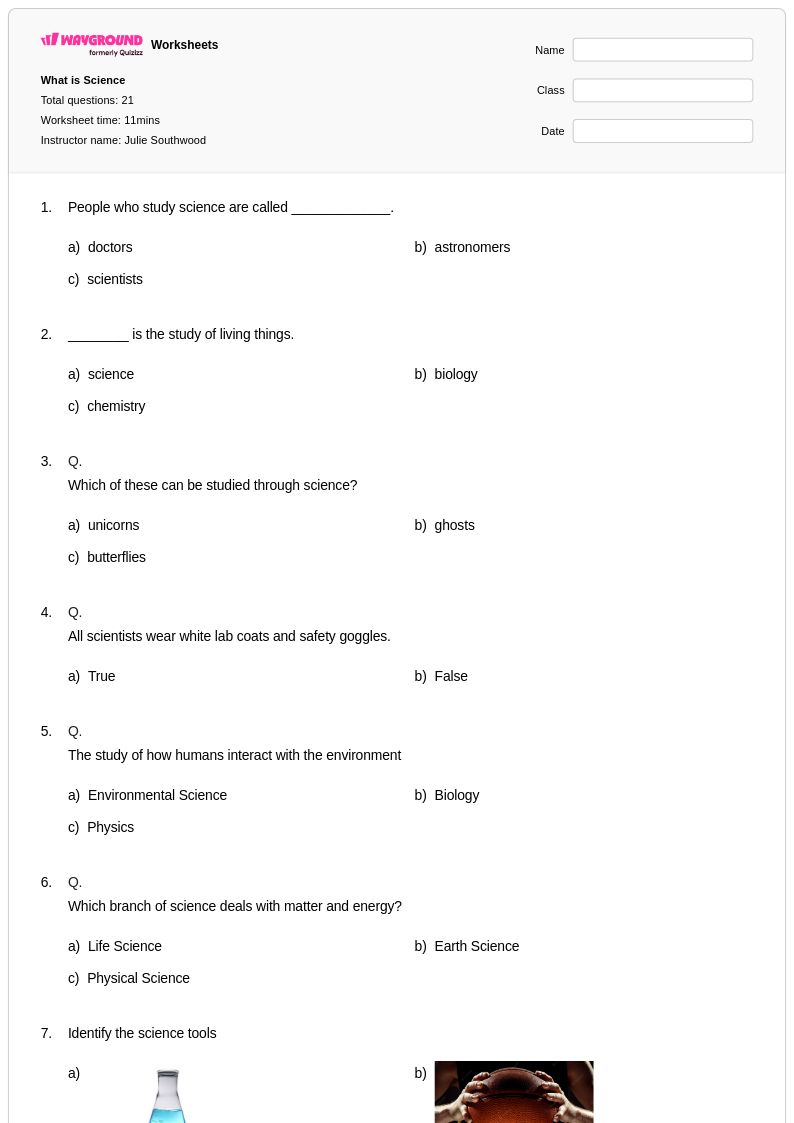
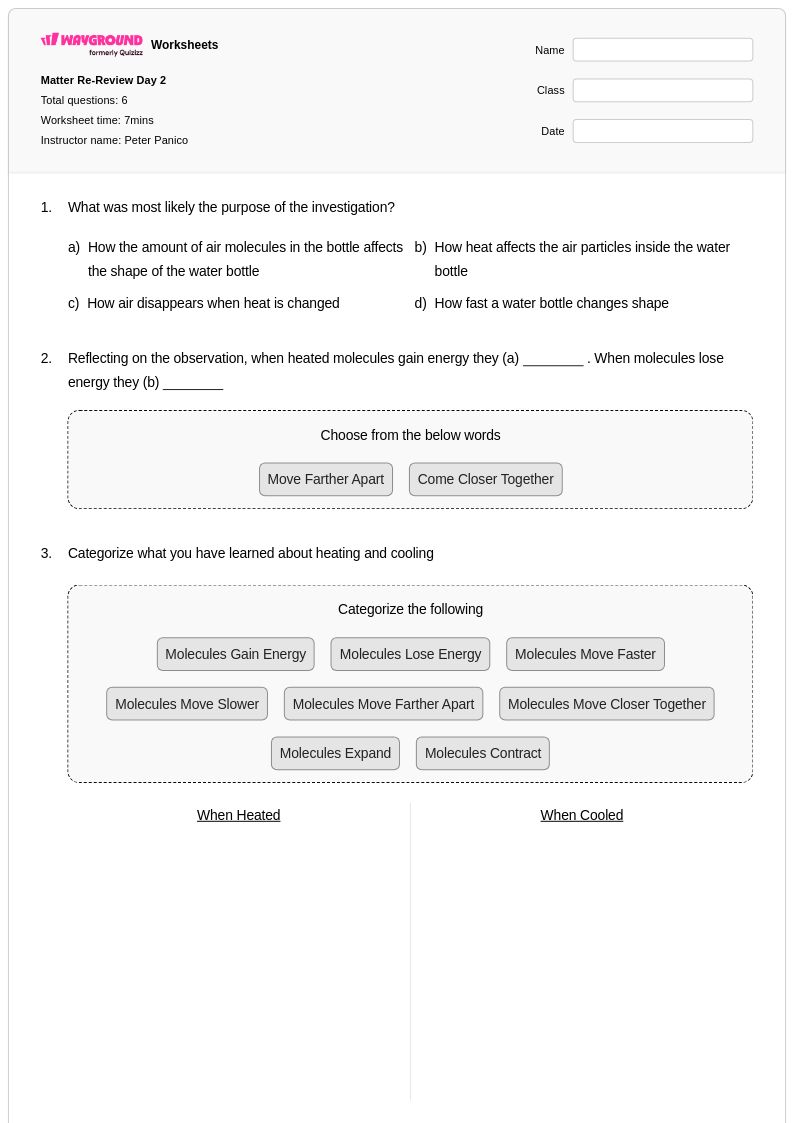
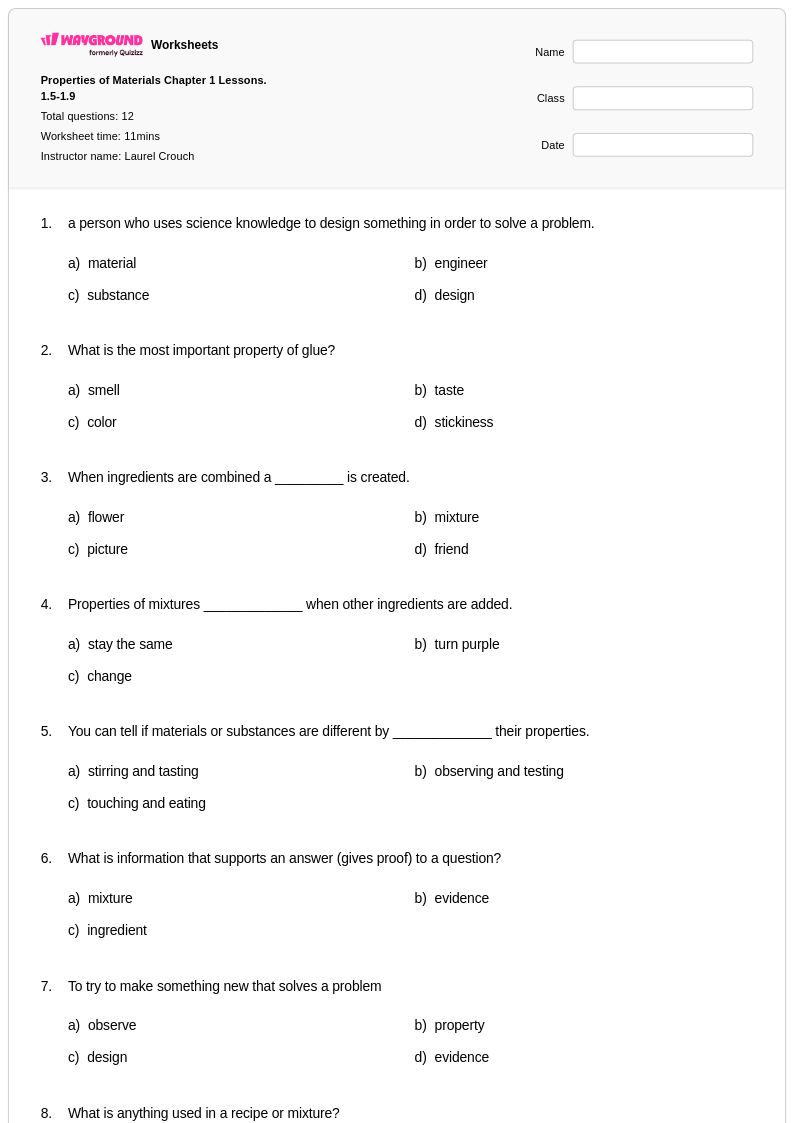
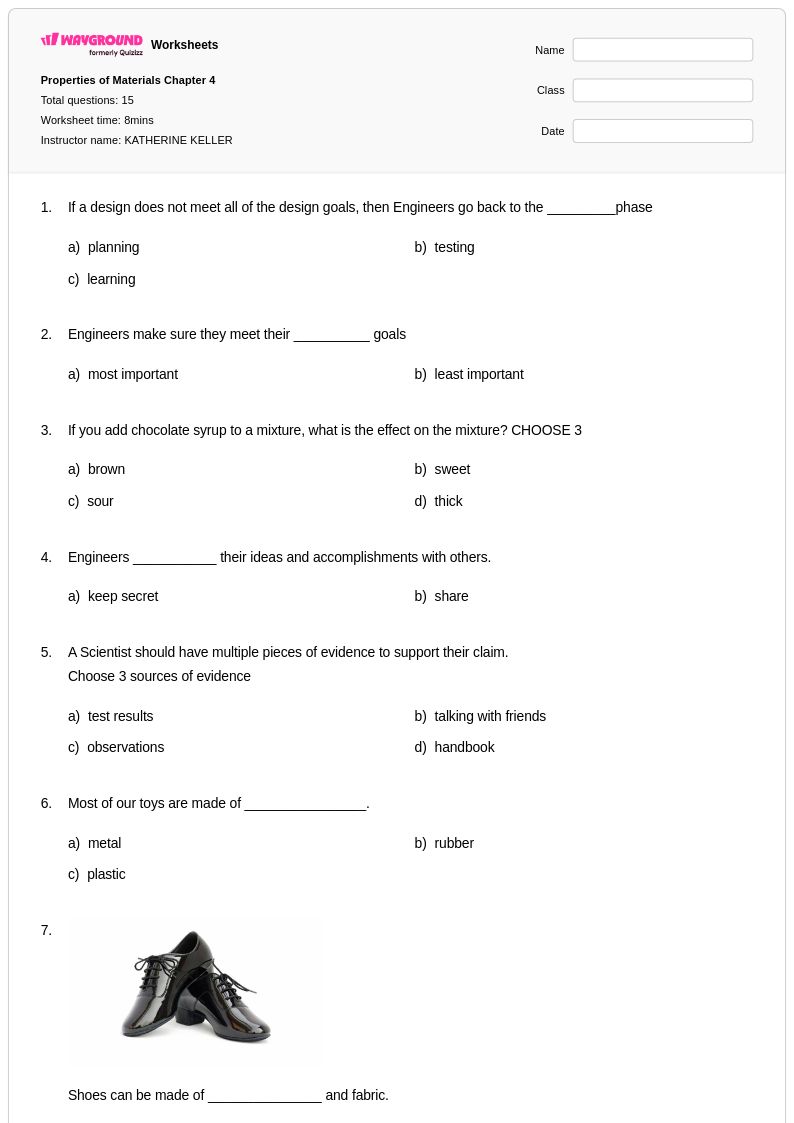
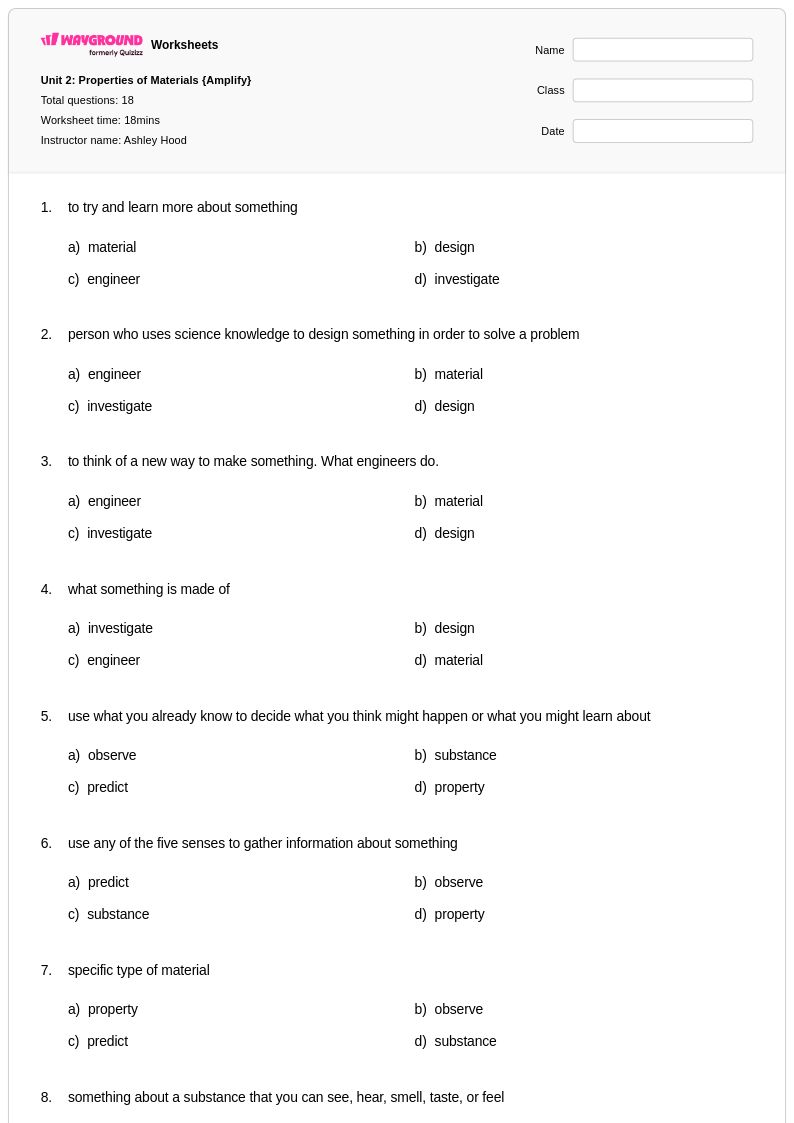
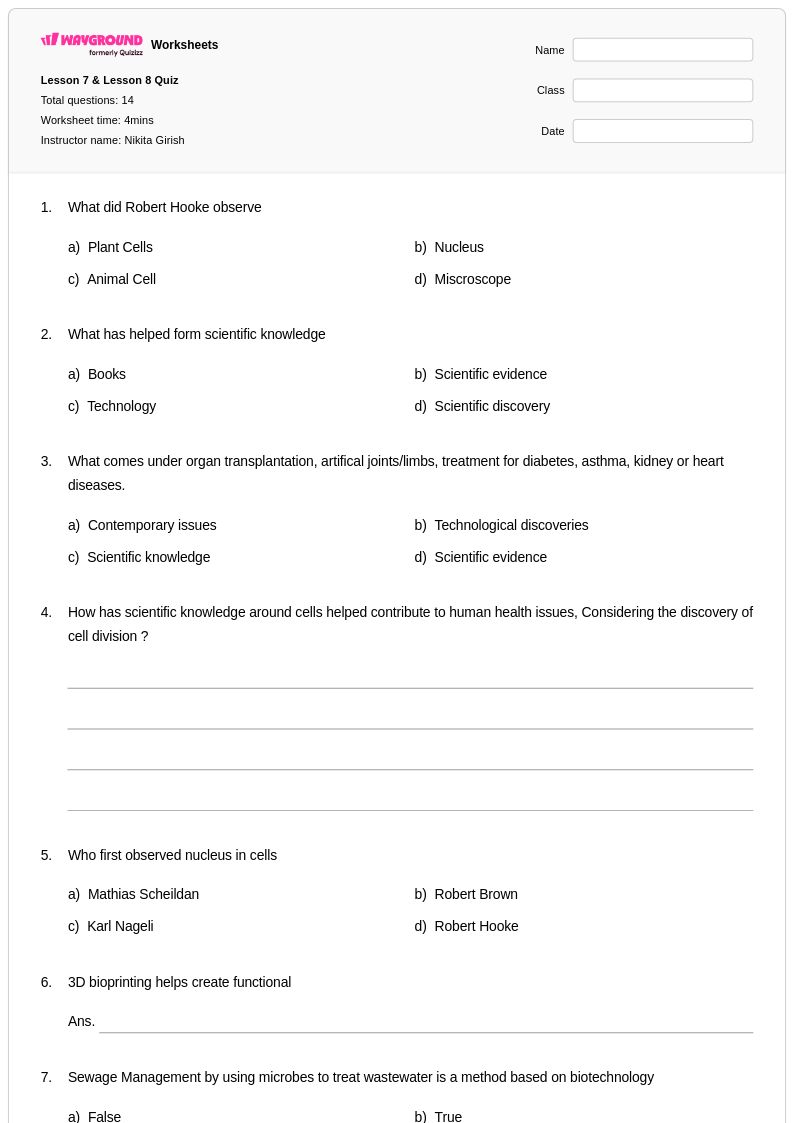
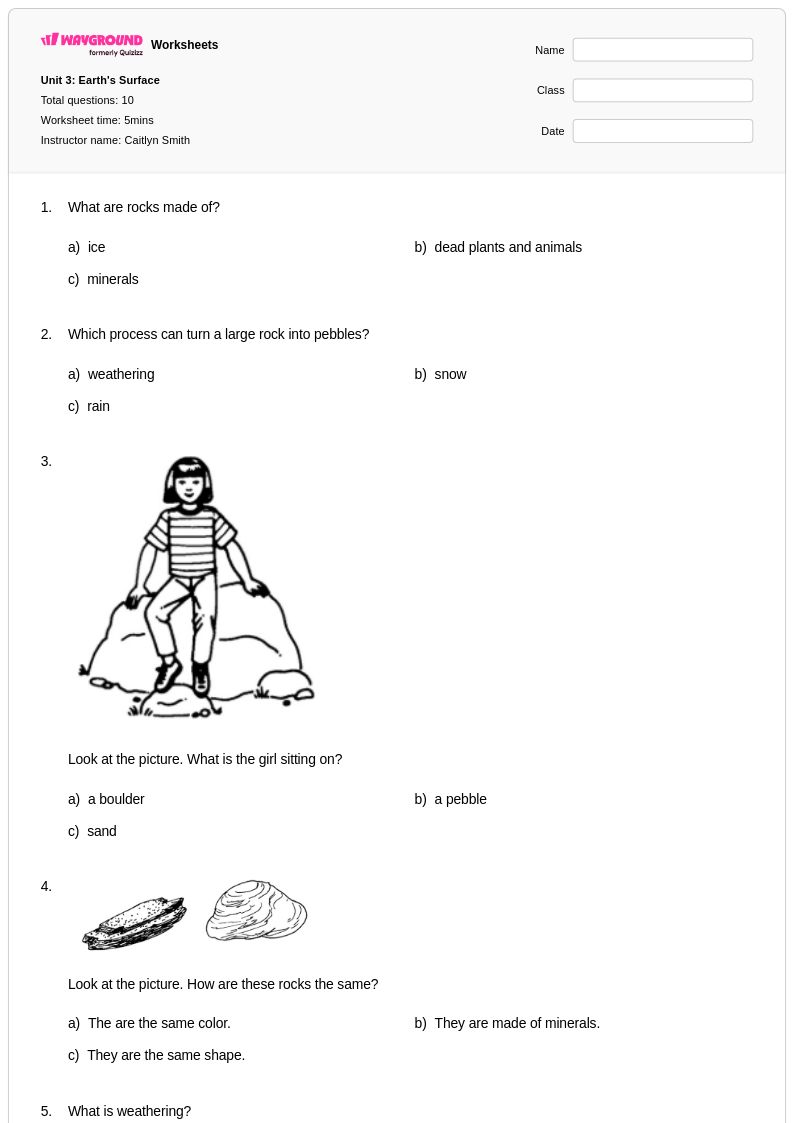
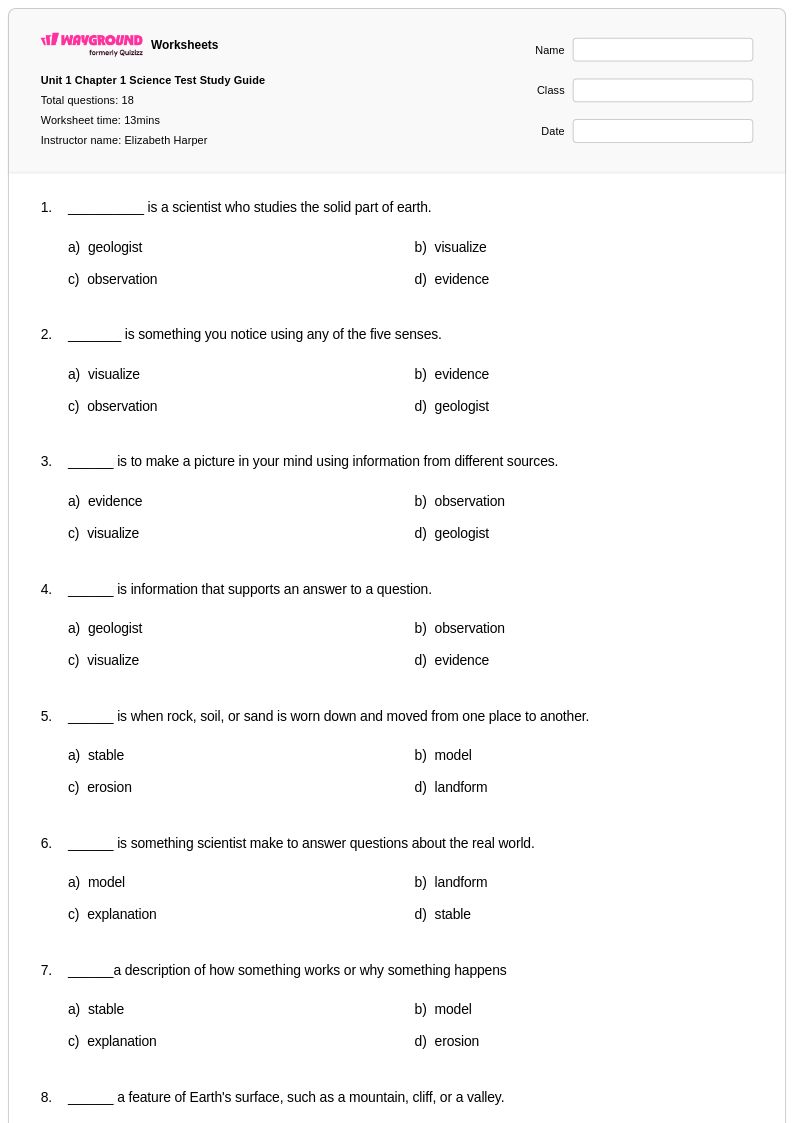
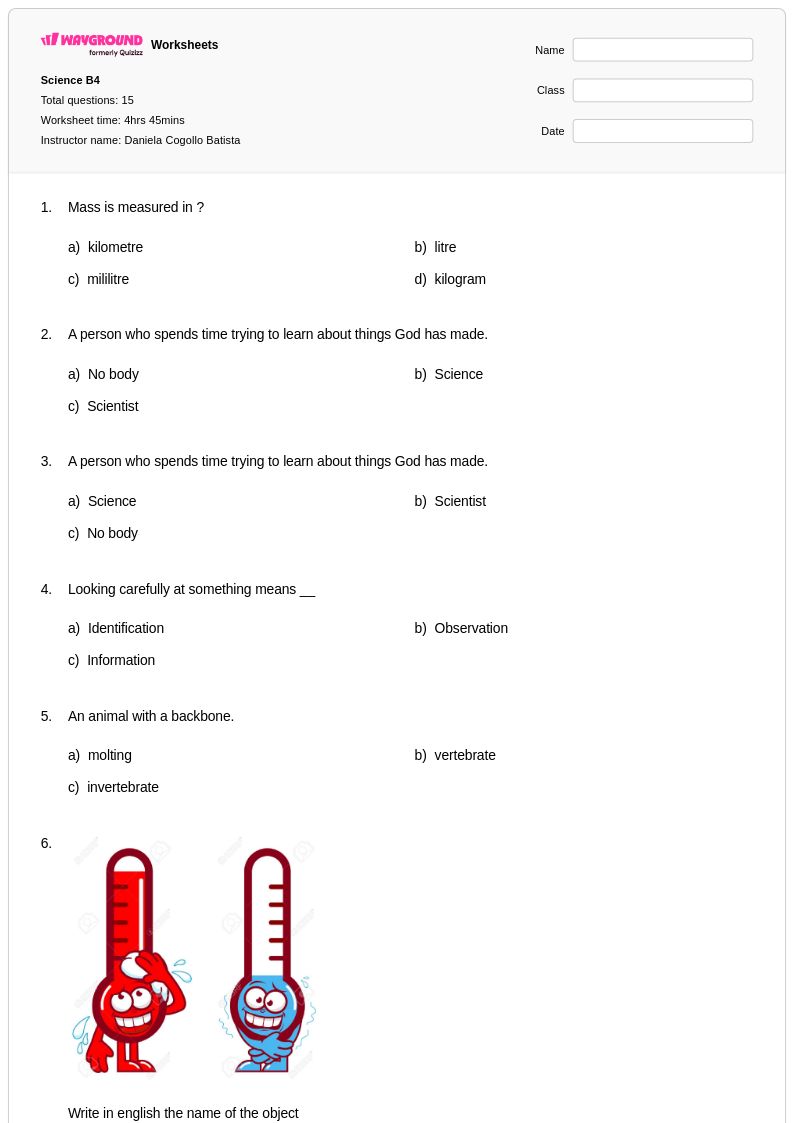
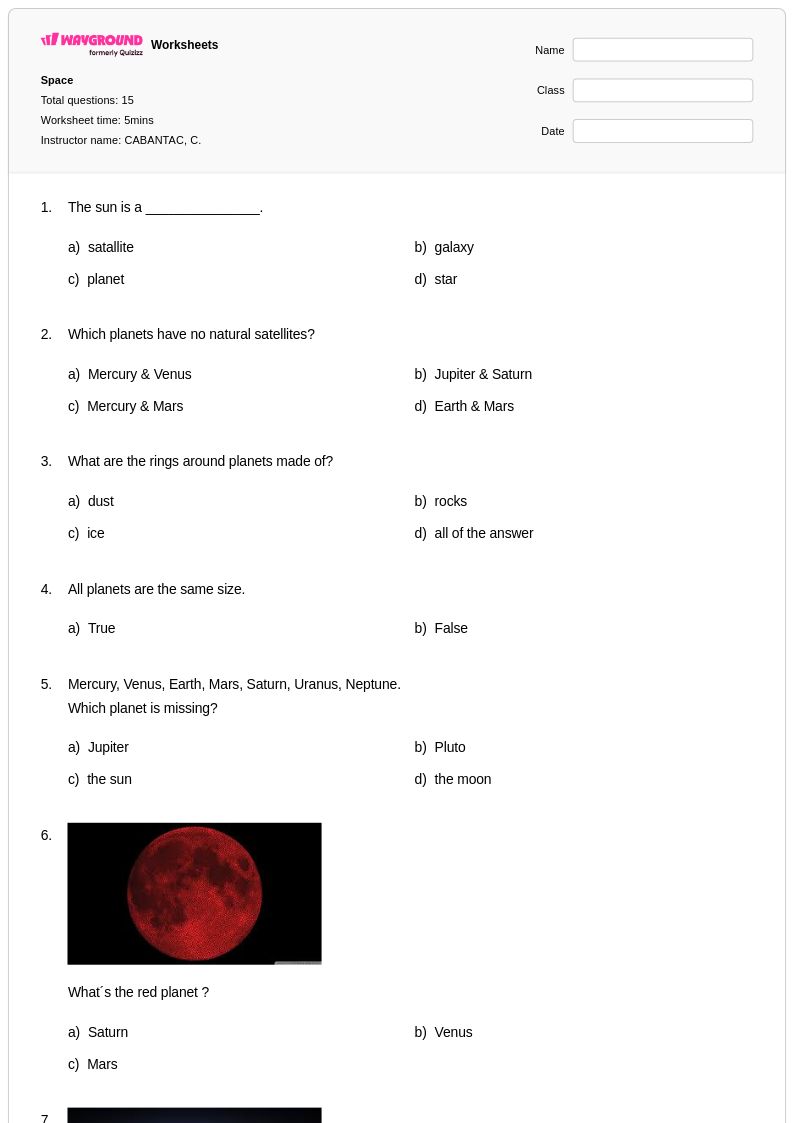
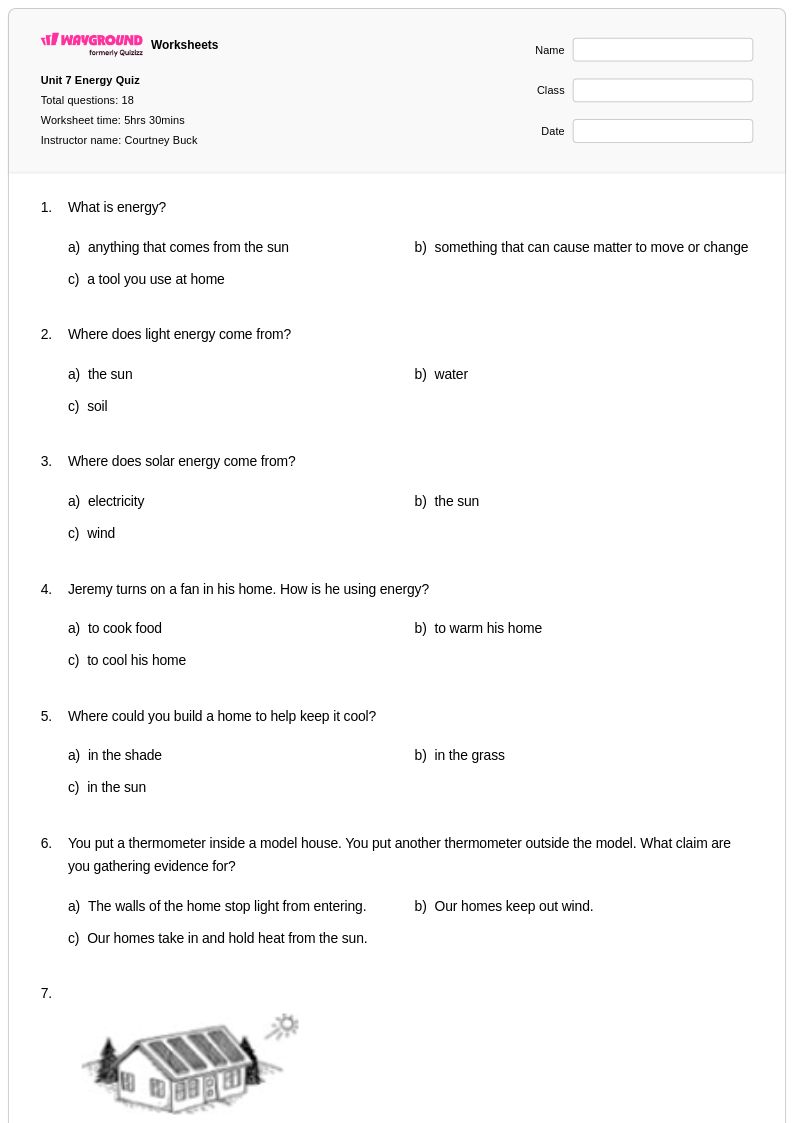
Claim Evidence Reasoning worksheets for Year 2 through Wayground (formerly Quizizz) introduce young scientists to the fundamental practice of making scientific arguments supported by observable data. These carefully designed printables help second-grade students develop critical thinking skills by learning to state clear claims about scientific phenomena, identify relevant evidence from their observations and investigations, and connect that evidence to their claims through simple reasoning. The worksheet collection includes practice problems that guide students through structured activities where they examine pictures, data tables, and experimental results to support their scientific statements. Each resource comes with a comprehensive answer key and is available as a free pdf download, making it easy for educators to implement this essential scientific practice in their classrooms.
Wayground (formerly Quizizz) empowers teachers with millions of educator-created resources specifically focused on Claim Evidence Reasoning skills for elementary science instruction. The platform's robust search and filtering capabilities allow teachers to quickly locate worksheets that align with specific science standards and match their students' developmental needs in Year 2. These differentiation tools enable educators to customize content for varying ability levels, while the flexible format options support both digital classroom integration and traditional printable worksheets. Teachers can seamlessly incorporate these resources into lesson planning for introducing new concepts, providing targeted remediation for struggling learners, offering enrichment opportunities for advanced students, and delivering consistent skill practice that builds students' confidence in scientific argumentation and evidence-based reasoning.
FAQs
How do I teach claim evidence reasoning in science class?
Teach CER by breaking the framework into three explicit stages: first, help students identify a testable claim based on a question or prompt; second, guide them to select specific data or observations as evidence; and third, model how to write a reasoning statement that explains why the evidence supports the claim using scientific principles. Anchor each stage in a real example before asking students to attempt it independently. Students benefit from seeing annotated models of strong and weak CER responses side by side before writing their own.
What exercises help students practice claim evidence reasoning?
Effective CER practice exercises include analyzing pre-provided data sets and writing full CER responses, evaluating sample arguments and identifying which component is missing or weak, and matching evidence statements to appropriate claims. Structured practice problems that walk students through each component separately before combining them help build procedural fluency. Worksheets that present experimental results or observational data and ask students to construct a complete argument are especially useful for reinforcing the framework.
What mistakes do students commonly make with claim evidence reasoning?
The most common error is confusing evidence with reasoning — students often restate the data instead of explaining the scientific principle that connects the evidence to the claim. Another frequent mistake is writing claims that are too vague or opinion-based rather than specific and testable. Students also tend to skip the reasoning component entirely, treating CER as a two-part rather than three-part structure, which weakens the scientific validity of their argument.
How can I differentiate claim evidence reasoning instruction for diverse learners?
Differentiation for CER can include providing sentence starters or frames for each component, reducing the complexity of the data set for struggling learners, or requiring advanced students to evaluate and critique peer arguments. On Wayground, teachers can apply individual accommodations such as read aloud support for students who need questions read to them, reduced answer choices to lower cognitive load, and extended time settings — all configurable per student without alerting the rest of the class.
How do I use Wayground's claim evidence reasoning worksheets in my classroom?
Wayground's CER worksheets are available as printable PDFs for traditional classroom use and in digital formats for technology-integrated environments, including the option to host them as a quiz directly on Wayground. Each worksheet includes a complete answer key, making them practical for independent practice, formative assessment, or small-group instruction. Teachers can use the platform's search and filtering tools to locate worksheets aligned to specific standards or grade-level expectations for scientific argumentation.
How does claim evidence reasoning connect to scientific practices standards?
CER directly aligns to the Next Generation Science Standards practice of 'Engaging in Argument from Evidence,' which requires students to construct, evaluate, and communicate scientific arguments supported by data. It also reinforces practices related to analyzing and interpreting data and obtaining and communicating information. Using CER consistently across units helps students internalize the expectation that scientific claims must always be justified with empirical evidence and logical reasoning.