Free Printable Claims, Evidence, and Reasoning Worksheets for Year 7
Strengthen Year 7 students' nonfiction writing skills with Wayground's free claims, evidence, and reasoning worksheets featuring printables, practice problems, and answer keys to master argumentative writing techniques.
Explore printable Claims, Evidence, and Reasoning worksheets for Year 7
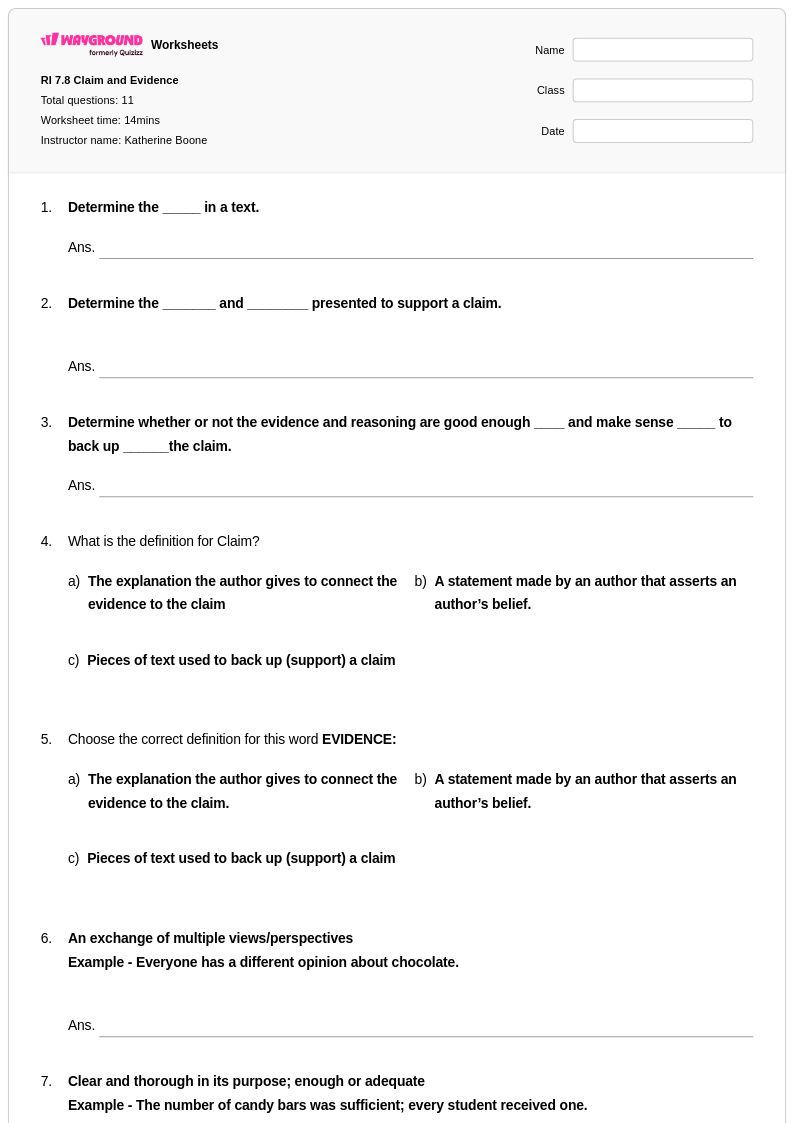
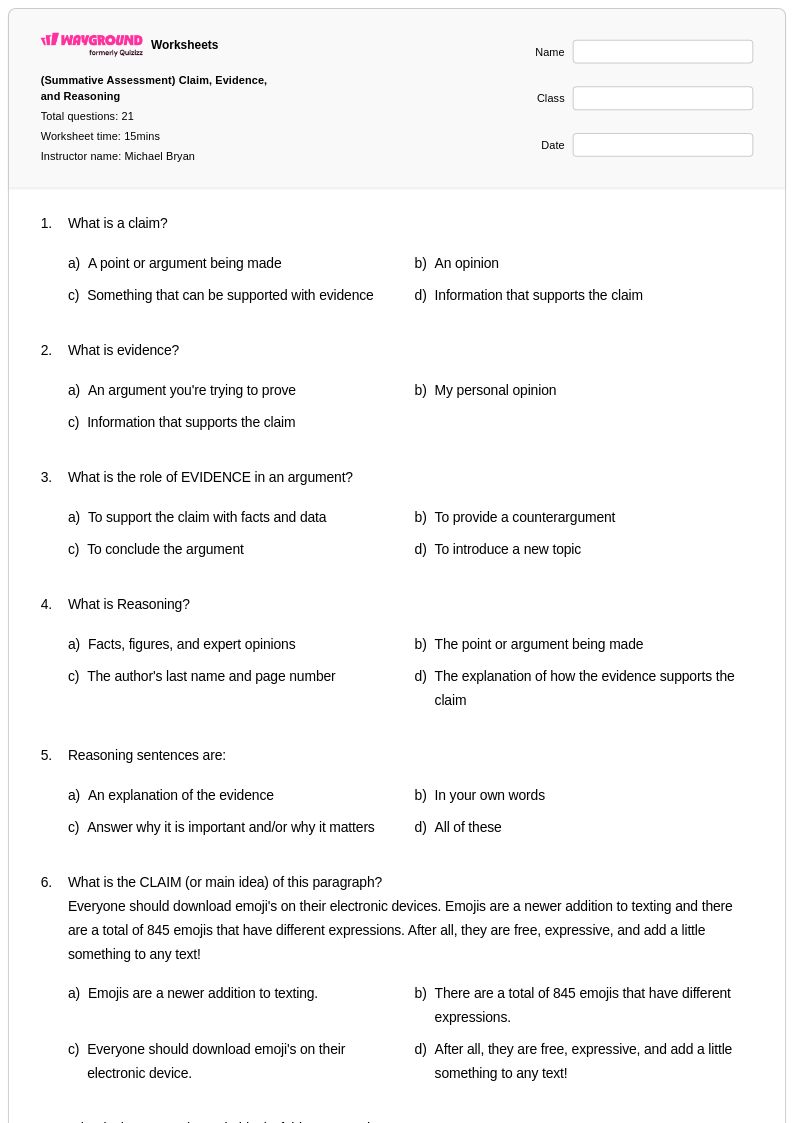
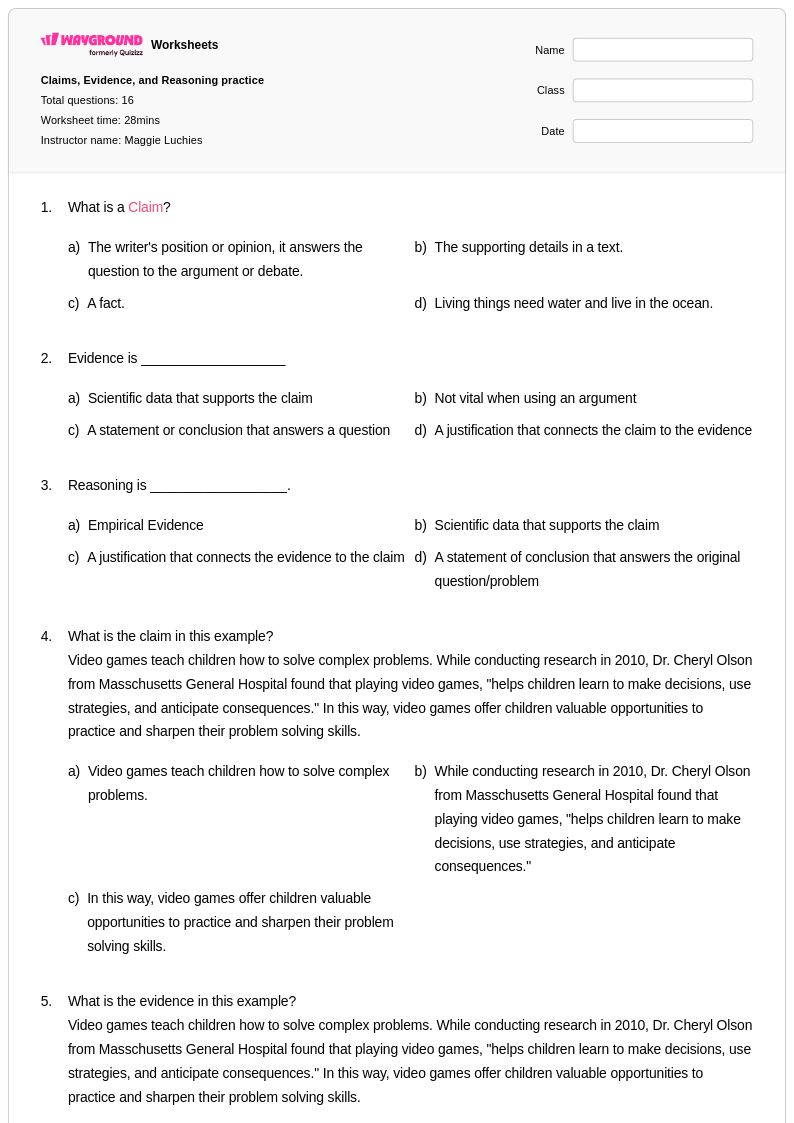
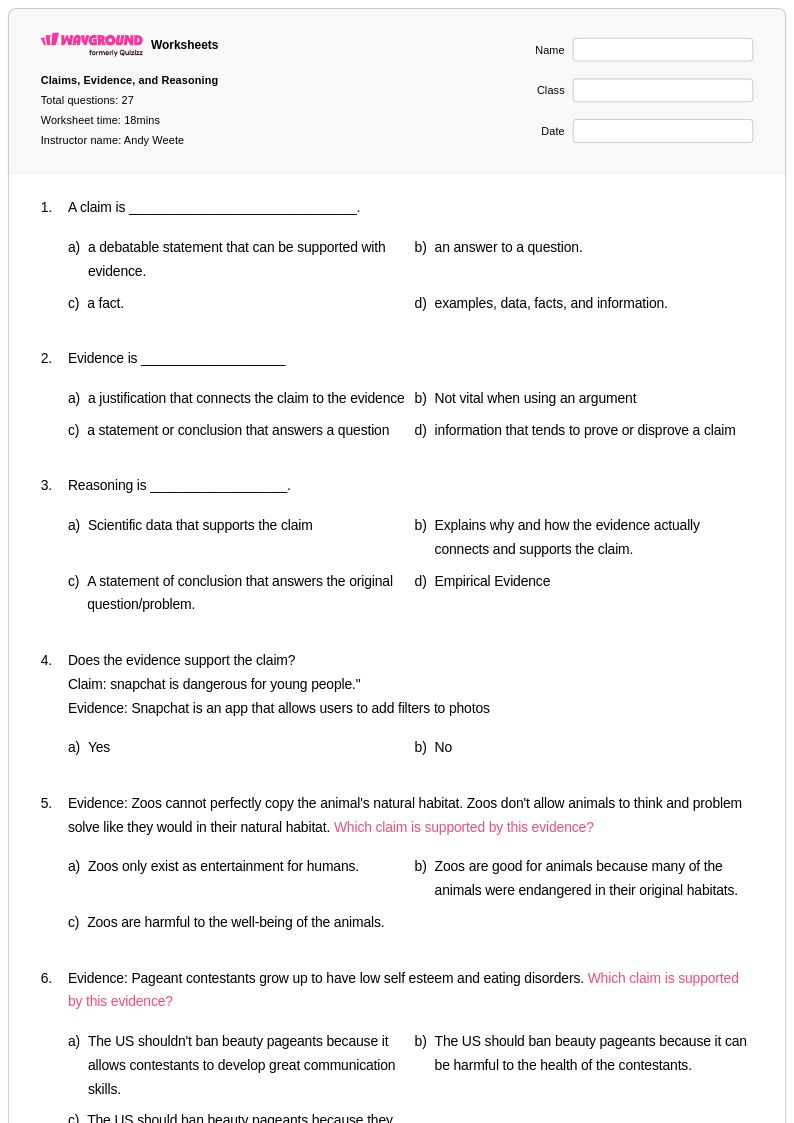
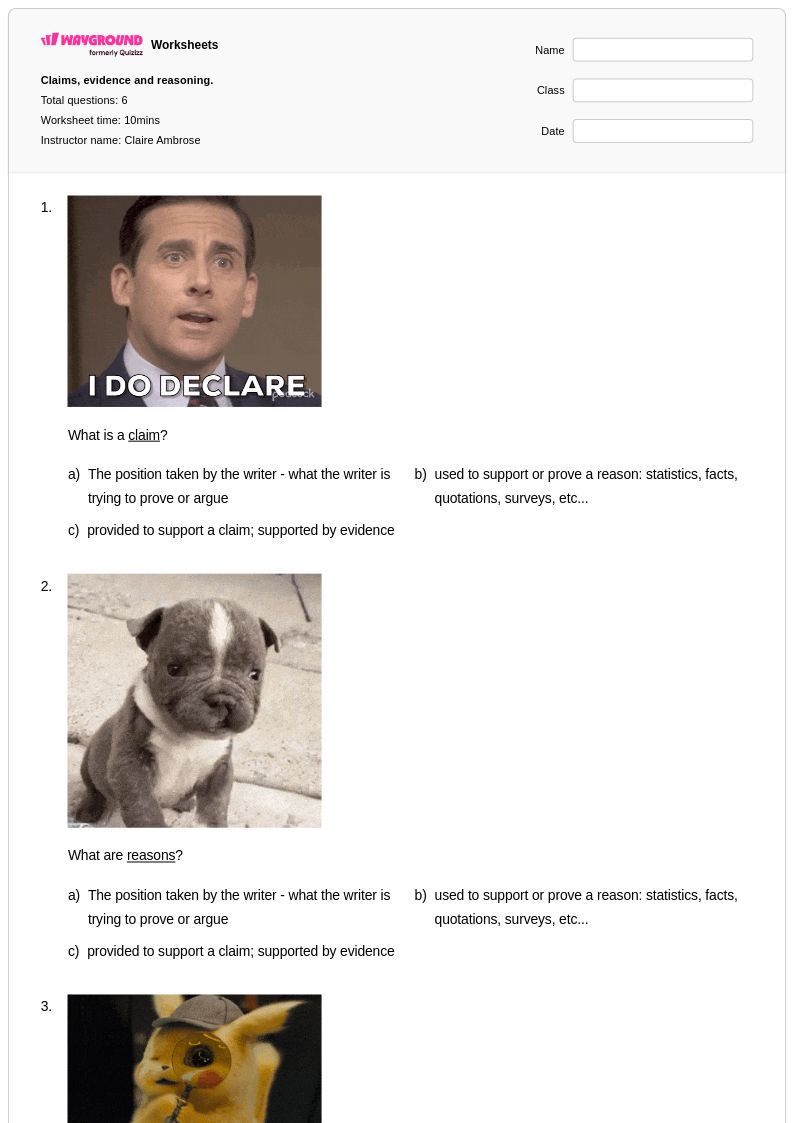
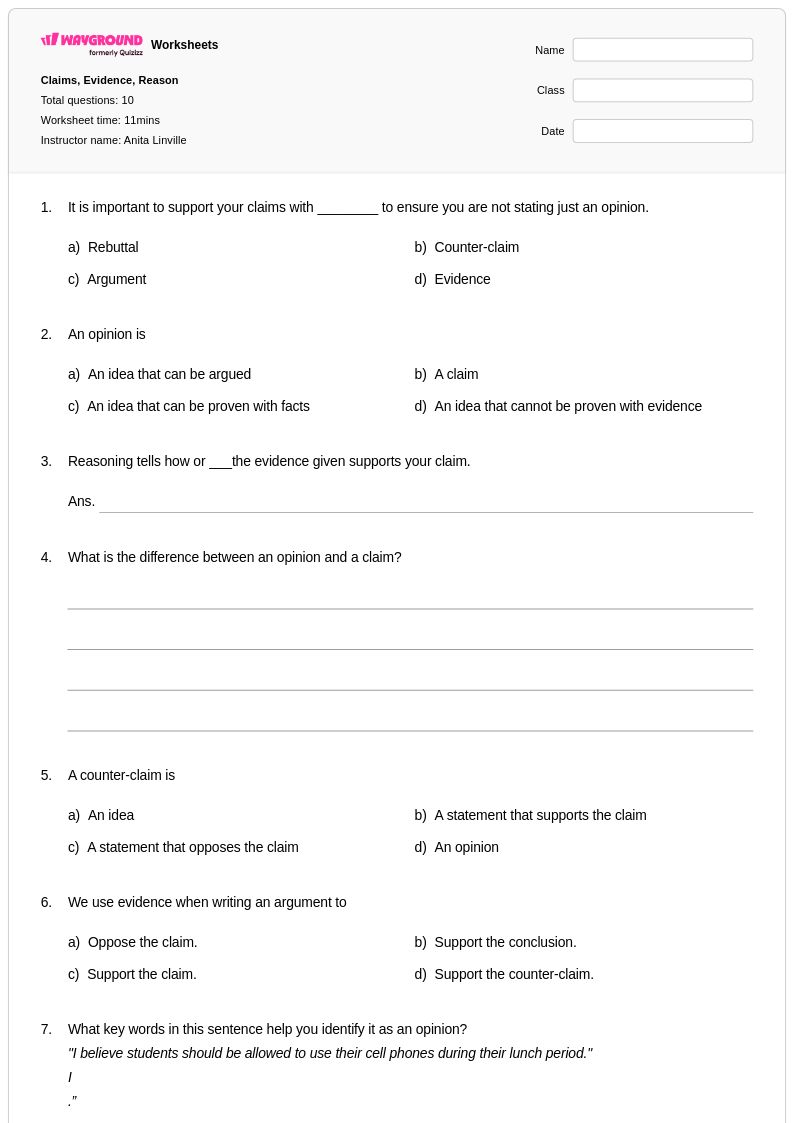
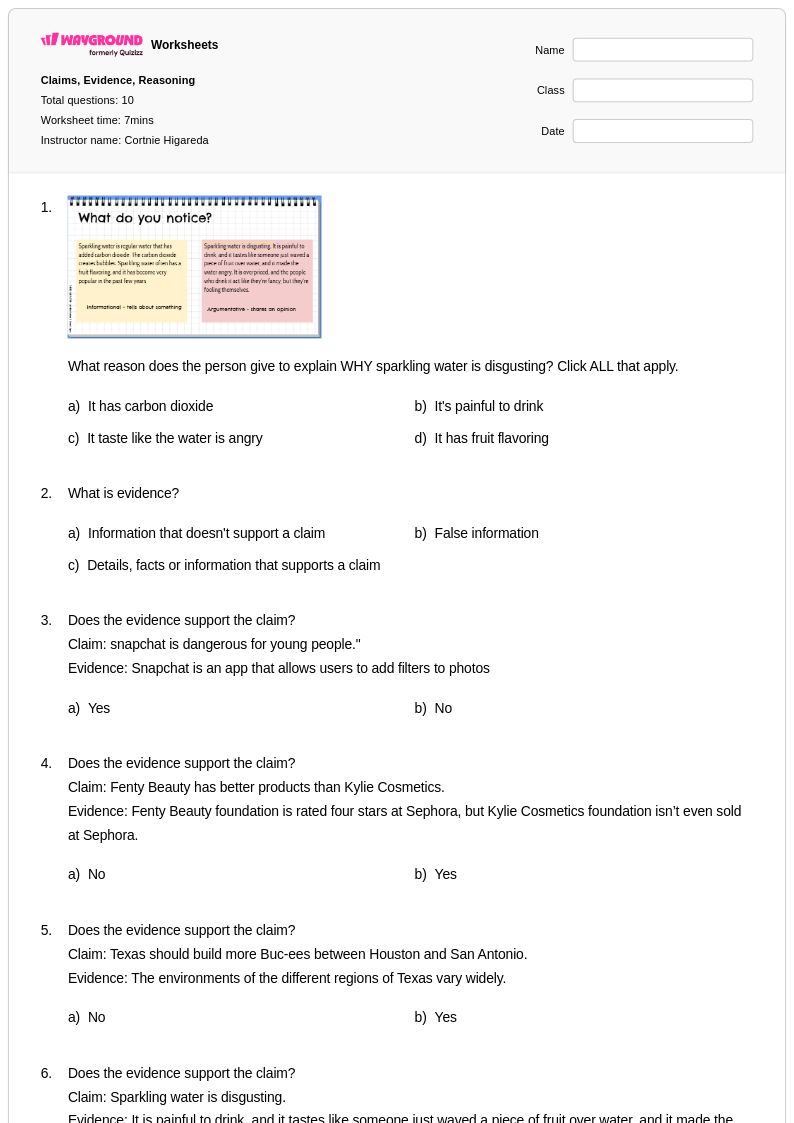
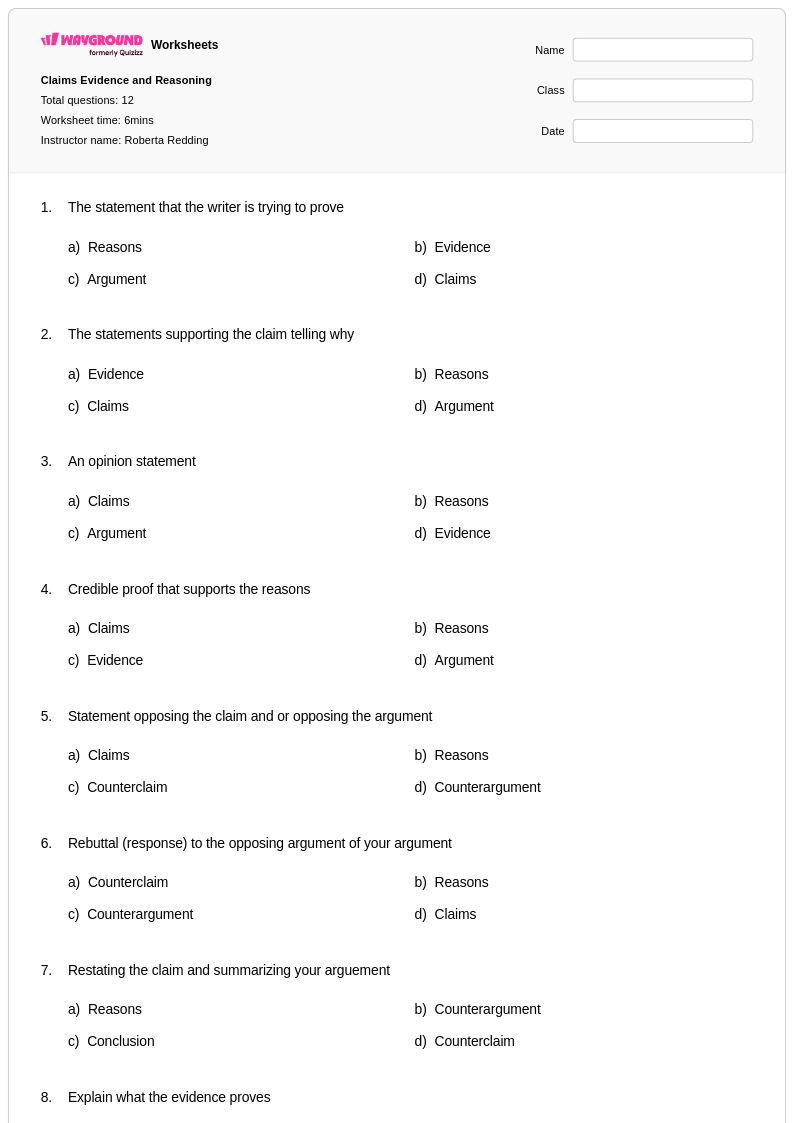
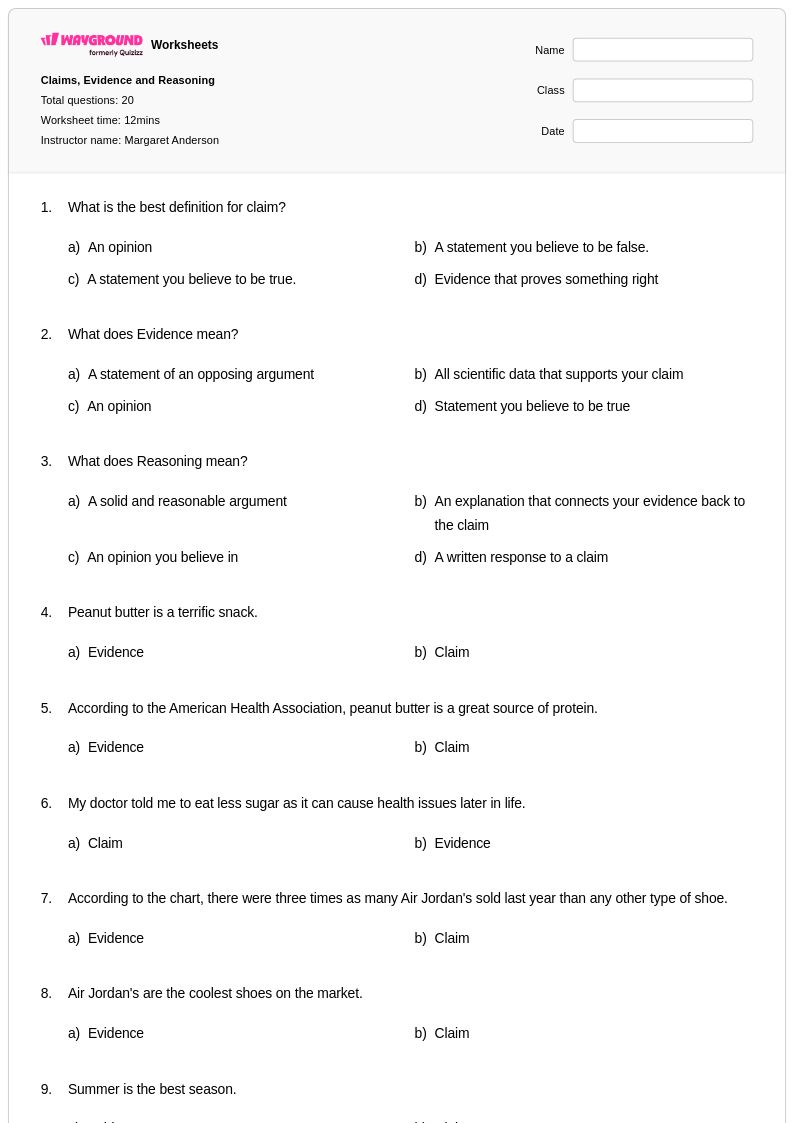
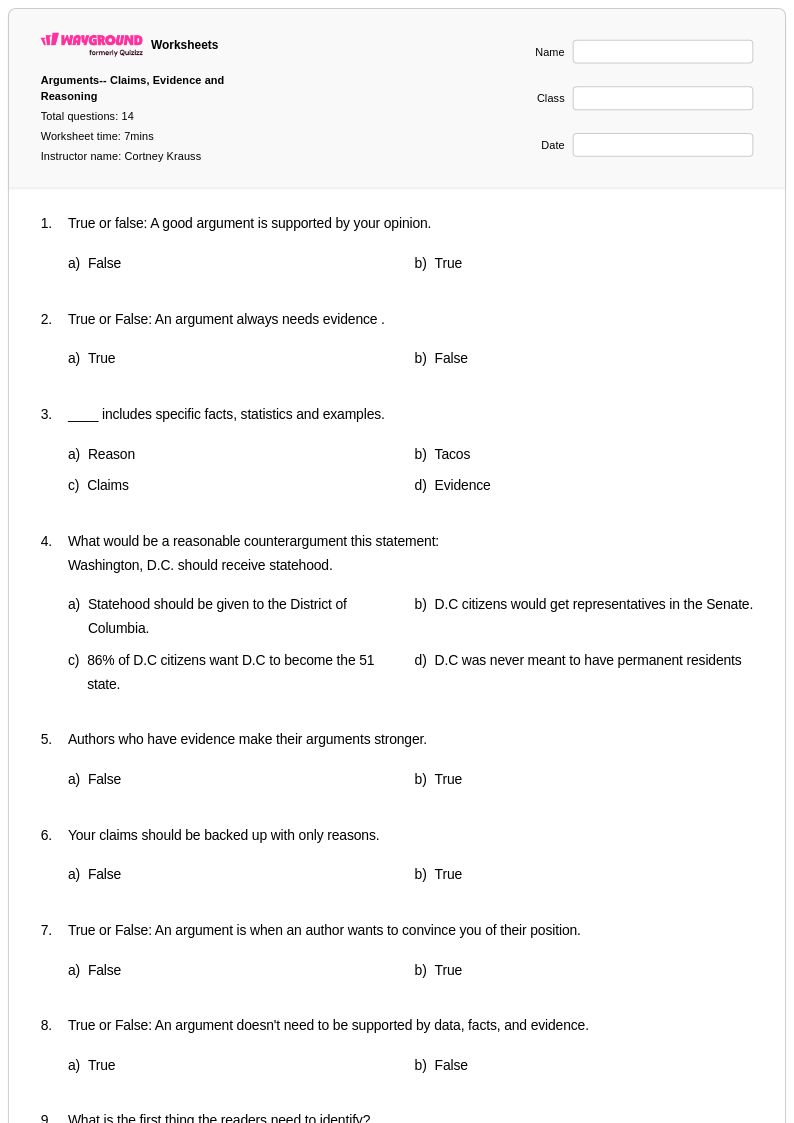
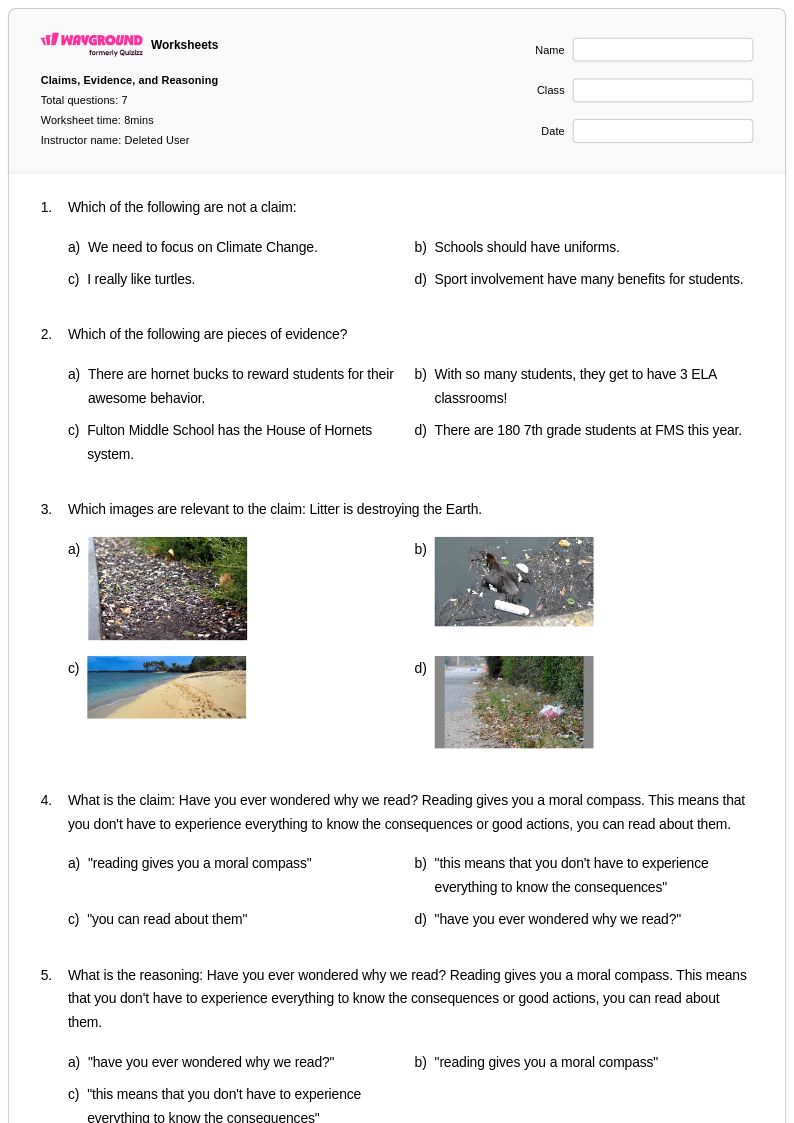
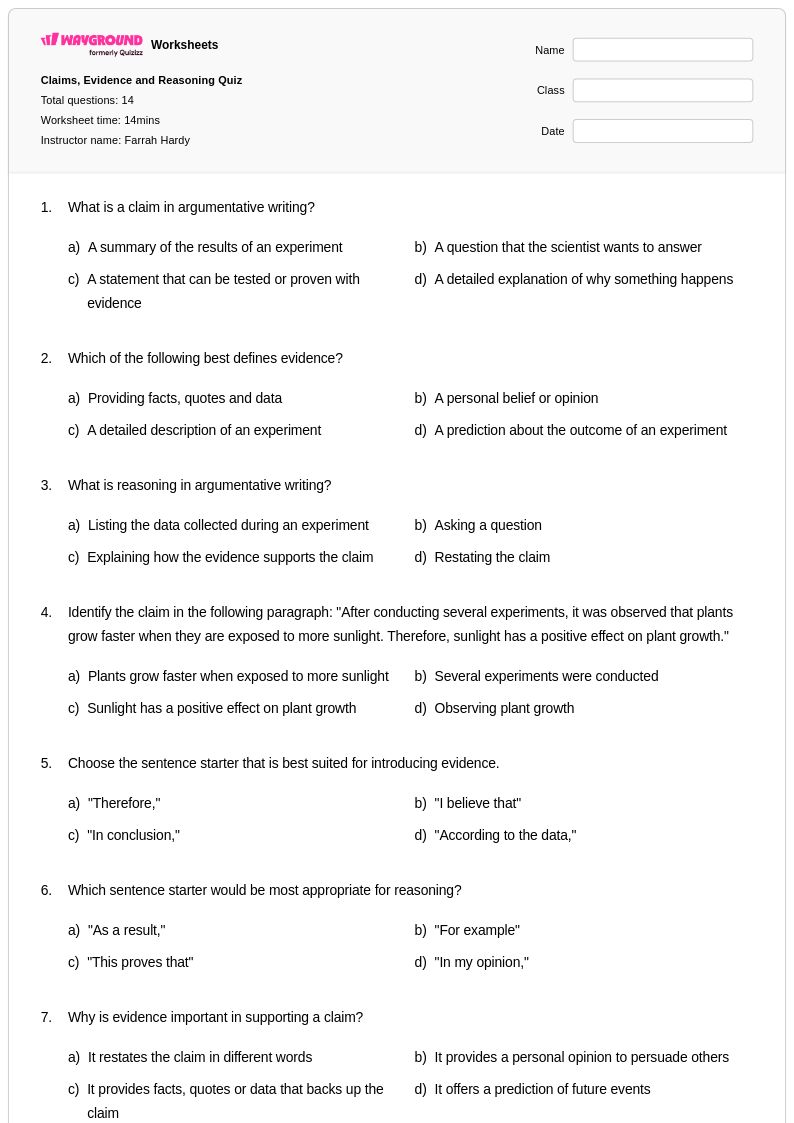
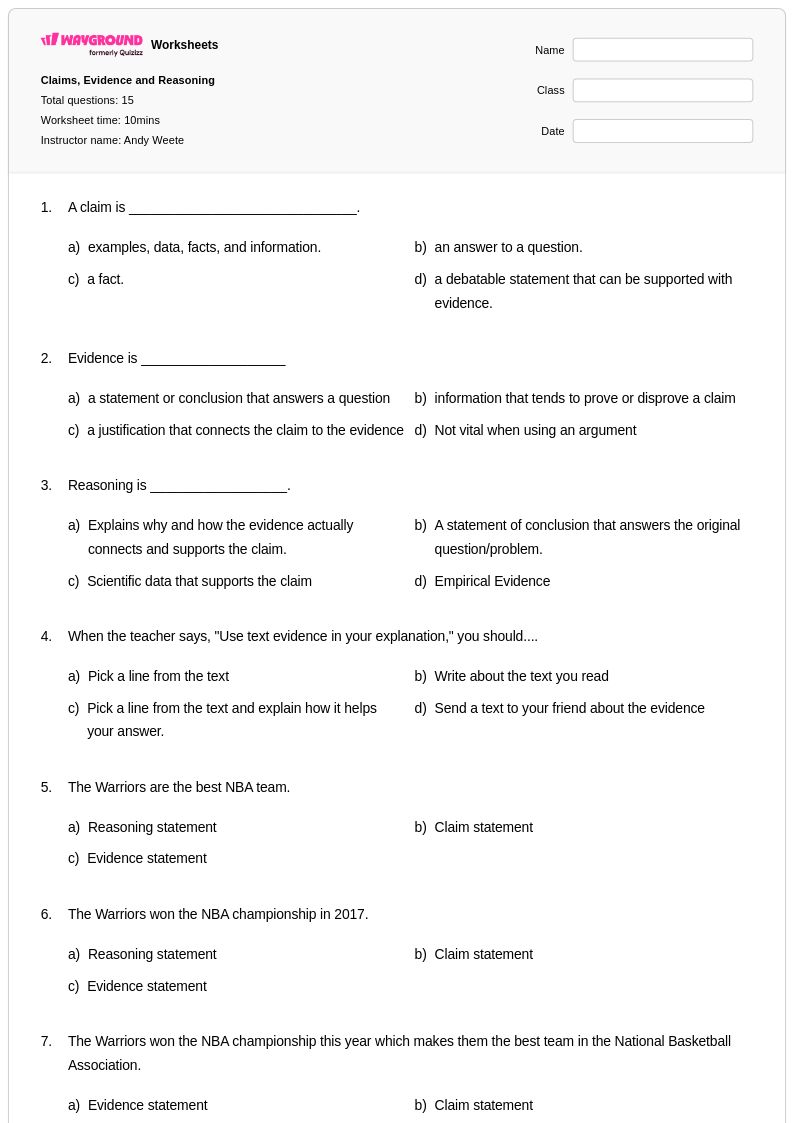
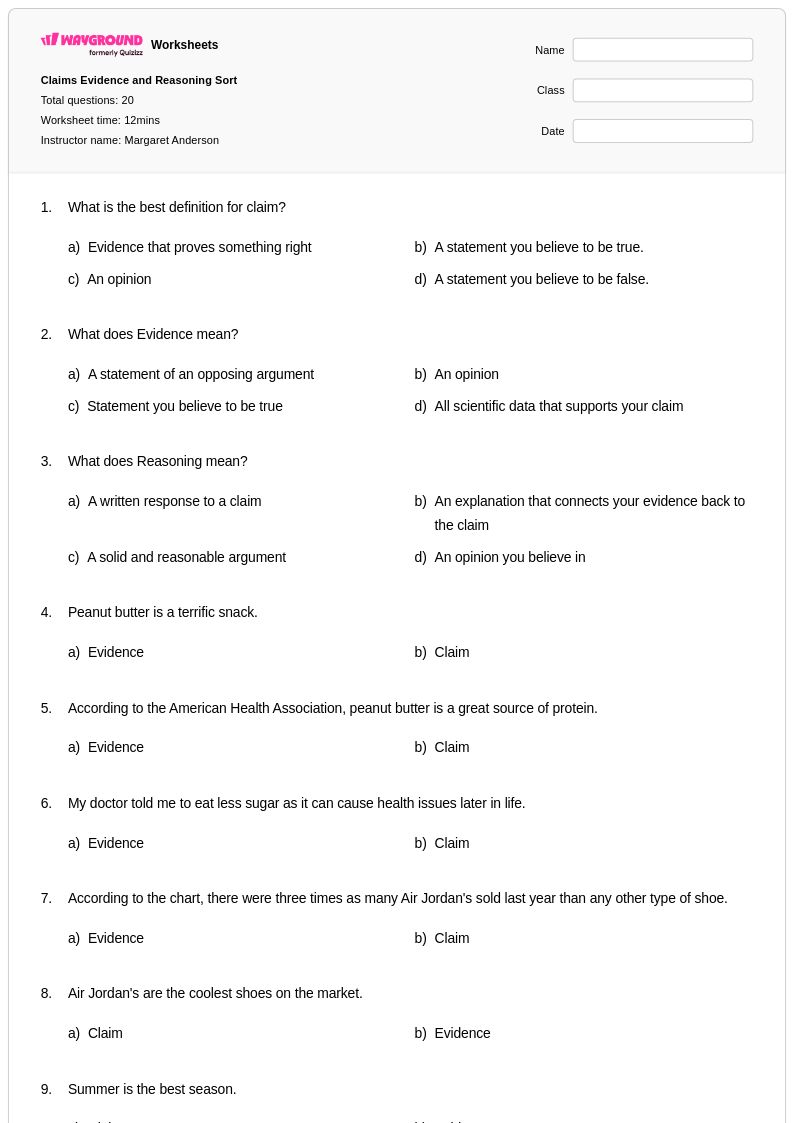
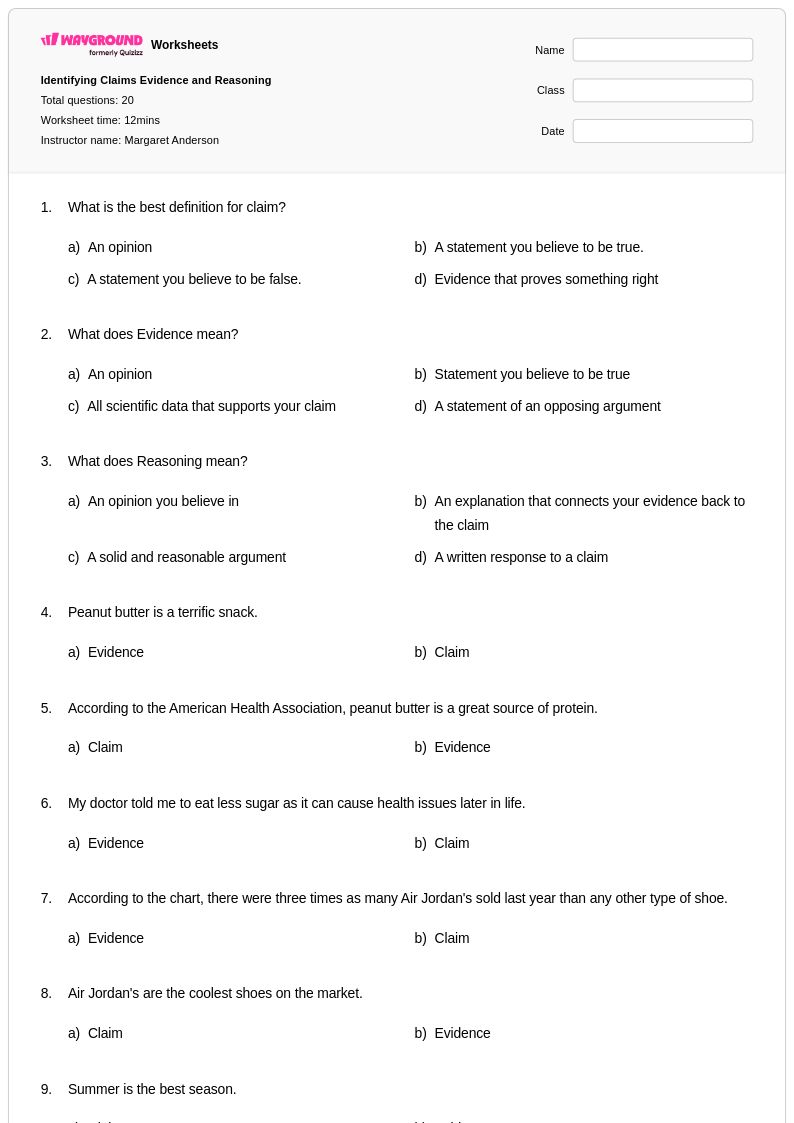
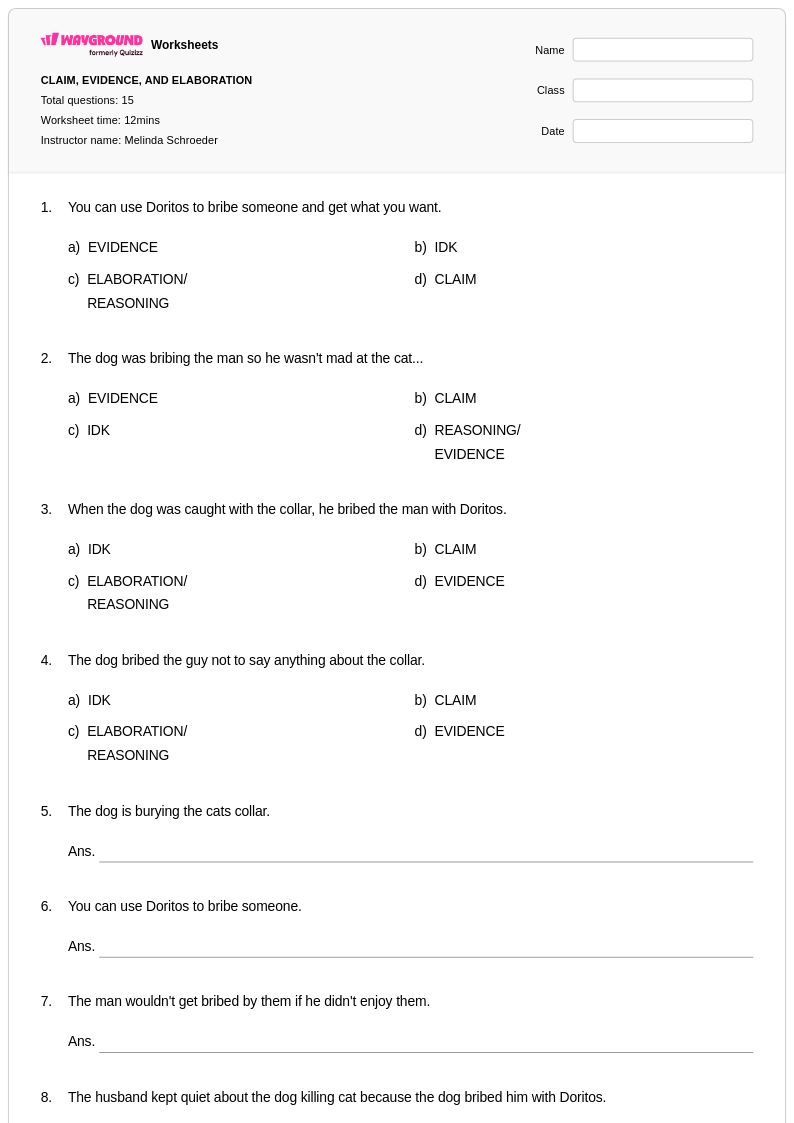
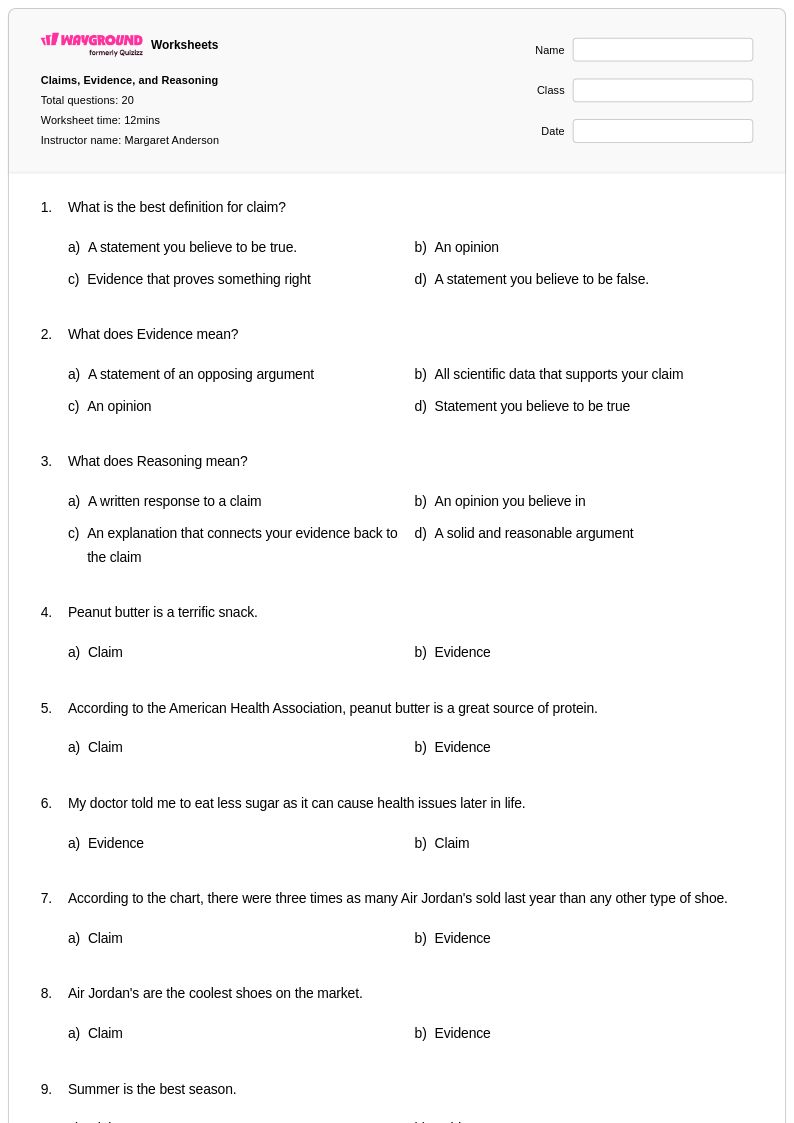
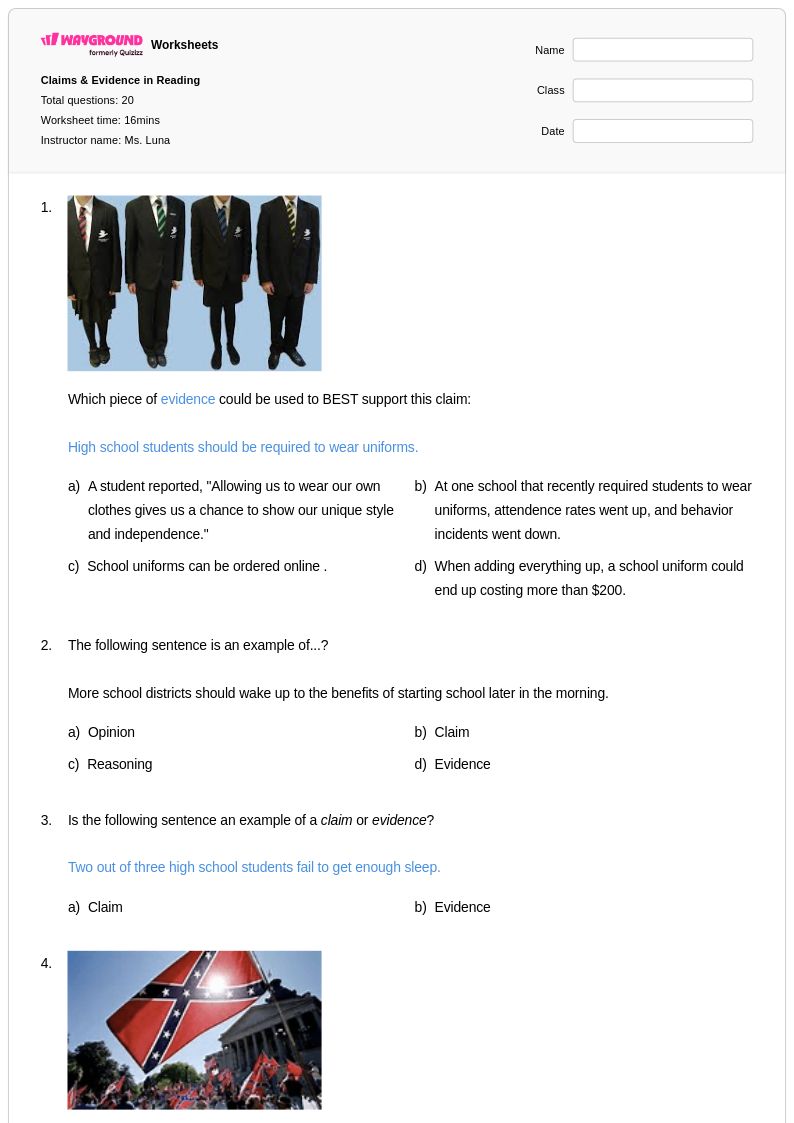
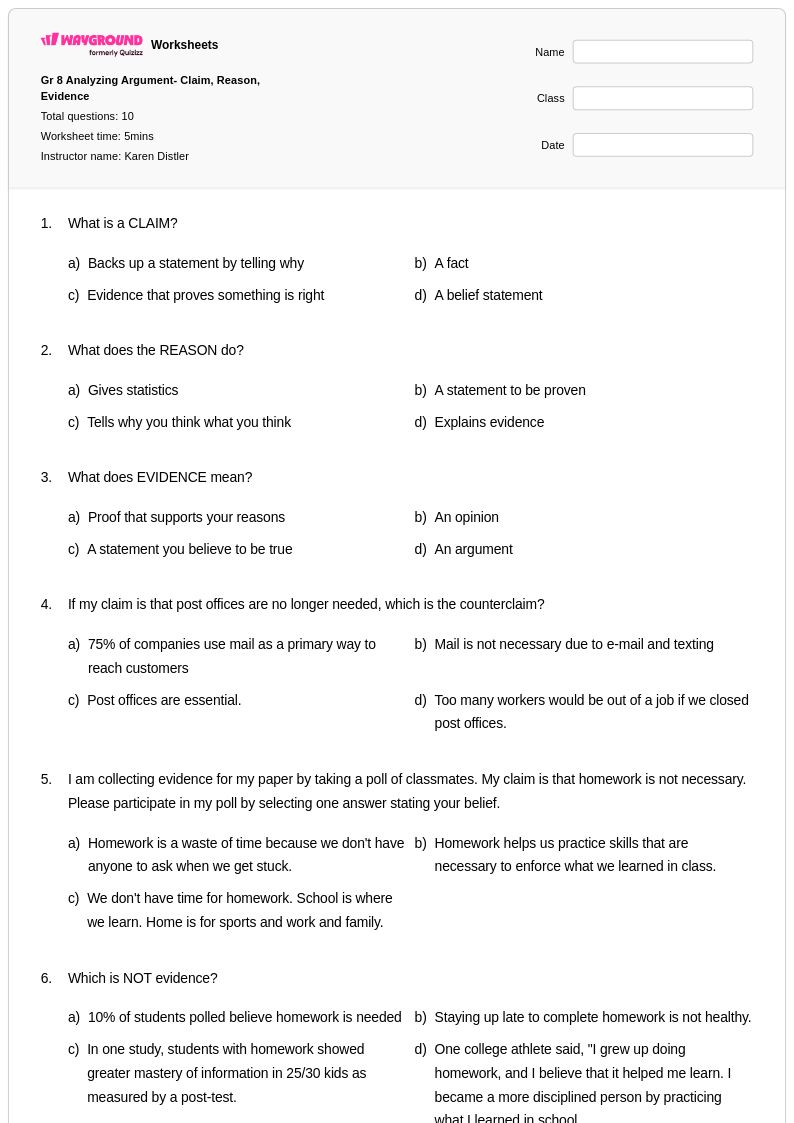
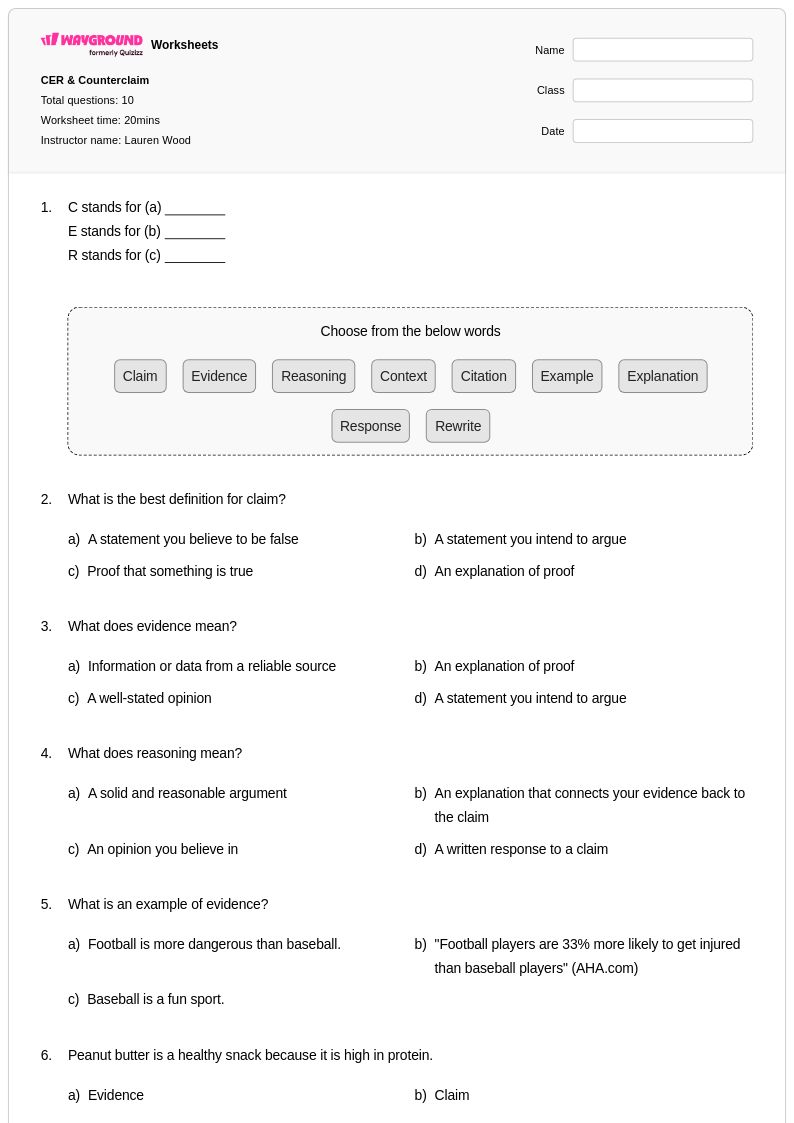
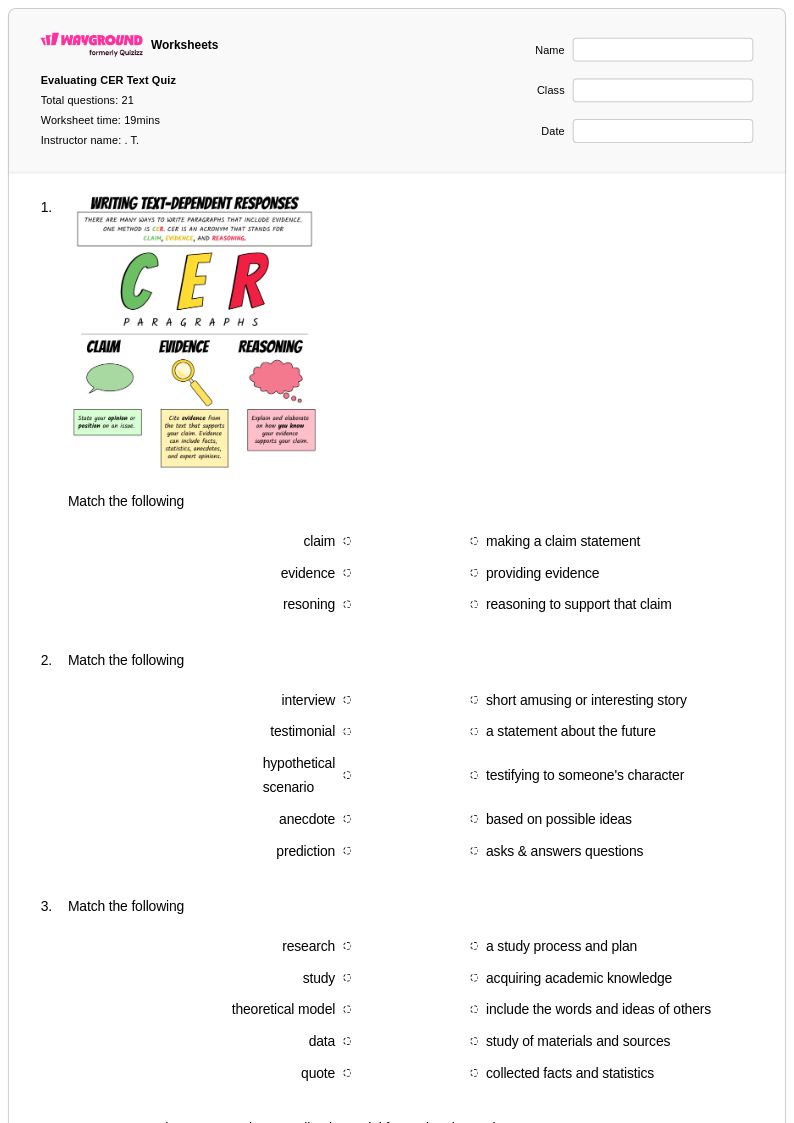
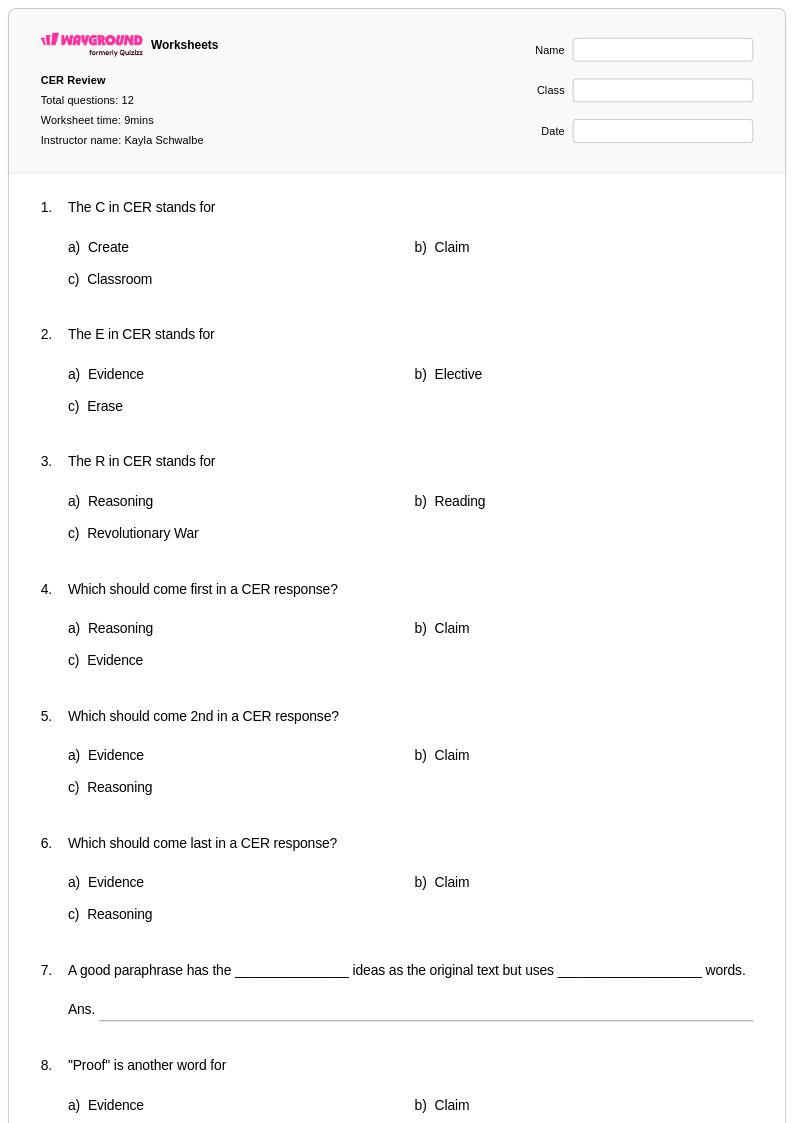
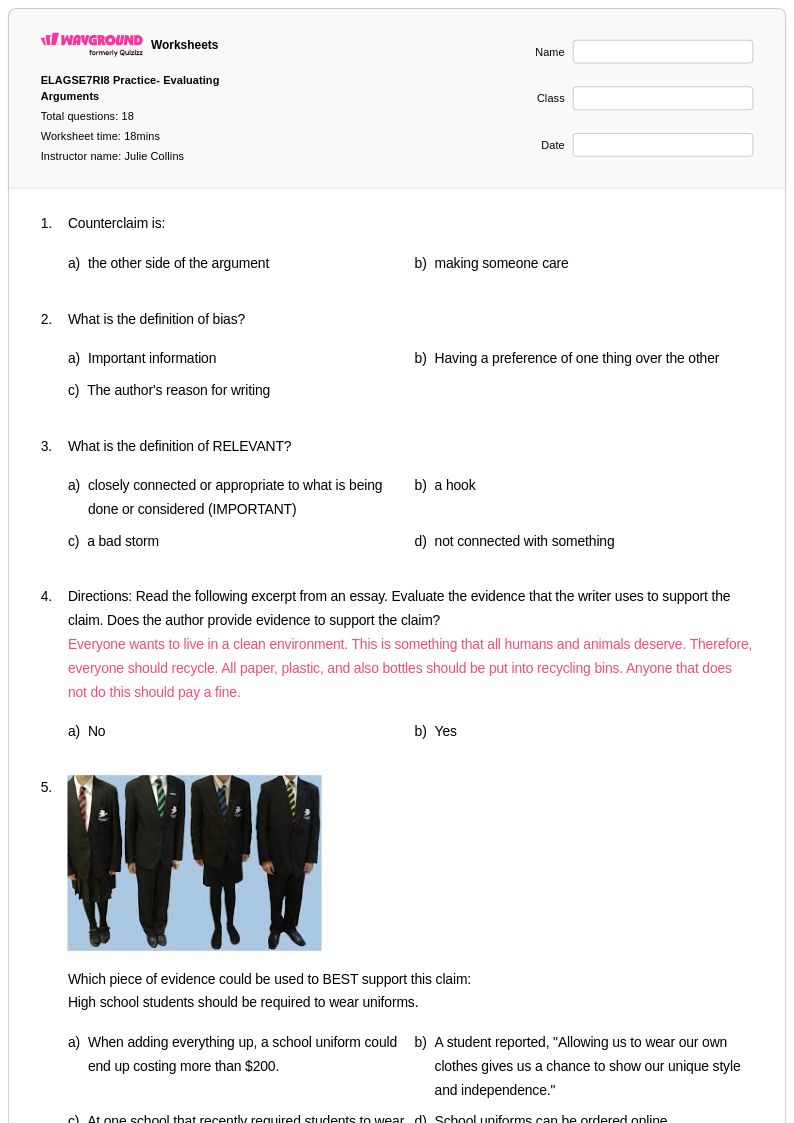
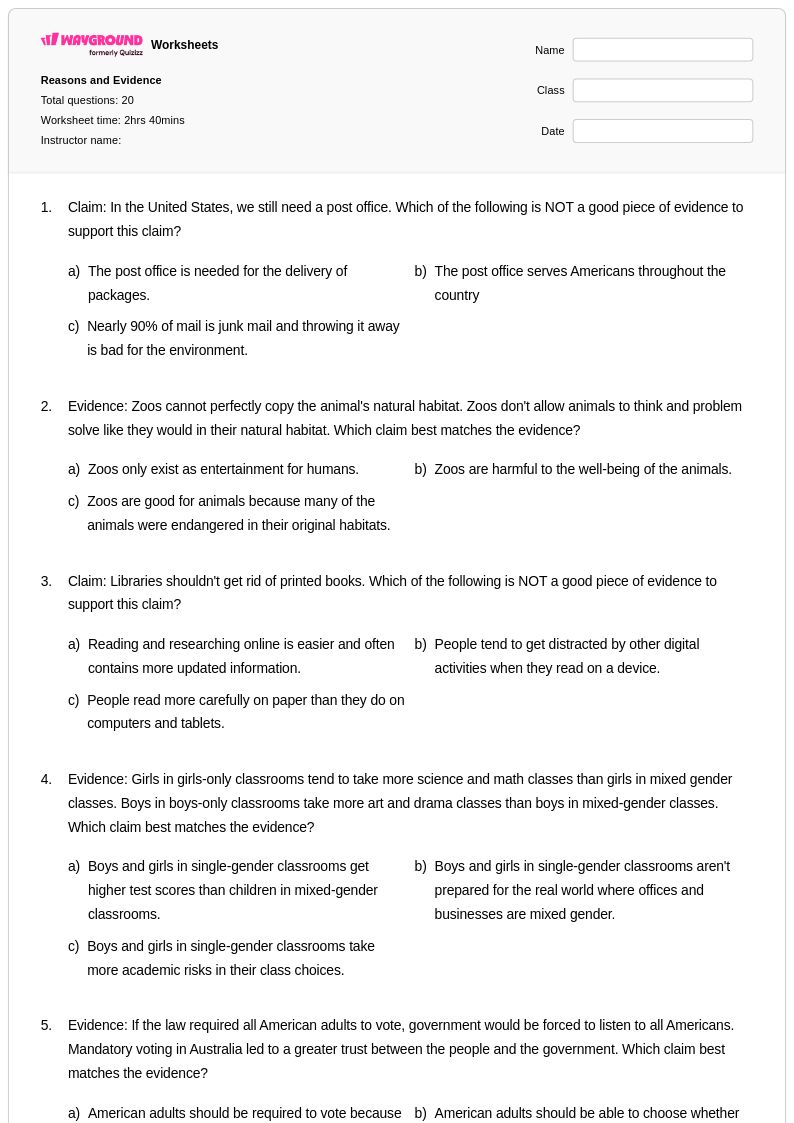
Claims, Evidence, and Reasoning worksheets for Year 7 available through Wayground (formerly Quizizz) provide comprehensive practice in the fundamental components of argumentative nonfiction writing. These carefully designed resources help seventh-grade students master the essential skill of constructing well-supported arguments by identifying strong claims, gathering relevant evidence from credible sources, and developing logical reasoning that connects their evidence to their central argument. The worksheets feature a variety of practice problems that guide students through analyzing sample arguments, evaluating the strength of different types of evidence, and crafting their own reasoning statements. Each worksheet includes a complete answer key and is available as a free printable pdf, making it easy for teachers to implement immediate feedback and assessment in their nonfiction writing instruction.
Wayground (formerly Quizizz) supports educators with an extensive collection of teacher-created Claims, Evidence, and Reasoning worksheets, drawing from millions of high-quality resources that can be easily searched and filtered by specific learning objectives and standards alignment. Teachers can access differentiation tools that allow them to customize worksheets for varying skill levels within their Year 7 classrooms, ensuring that both struggling writers and advanced students receive appropriate challenge and support. The platform offers flexible formatting options, including printable pdf versions and digital formats, enabling seamless integration into lesson planning whether for in-class instruction, homework assignments, or targeted remediation. These comprehensive worksheet collections streamline the process of providing consistent skill practice in argumentative writing, allowing teachers to focus on enrichment activities and individualized feedback while students build confidence in structuring compelling, evidence-based arguments.
FAQs
How do I teach claims, evidence, and reasoning to students?
Start by teaching each component in isolation before combining them. Introduce claims as arguable statements (not facts), then show students how to locate and evaluate credible evidence from texts. Finally, teach reasoning as the explicit link that explains why the evidence supports the claim. Modeling this process with mentor texts and gradually releasing responsibility to students is the most effective instructional sequence.
What exercises help students practice constructing claims, evidence, and reasoning?
Structured practice problems that ask students to analyze sample arguments, evaluate the quality of different types of evidence, and write their own CER responses are among the most effective exercises. Worksheets that present a prompt alongside a short nonfiction text give students the raw material to practice all three components in context, which reinforces the skill more deeply than isolated drills.
What mistakes do students commonly make with claims, evidence, and reasoning?
The most common error is writing a fact as a claim rather than a debatable assertion — for example, stating 'climate change exists' instead of arguing a specific position about it. Students also frequently quote evidence without providing any reasoning, leaving the logical connection unstated. A third common mistake is selecting weak or irrelevant evidence that does not directly support the claim, which undermines the entire argument.
How can I use CER worksheets to support students who struggle with argumentative writing?
Scaffolded worksheets that provide sentence starters or frames for each component help struggling writers engage with the structure before internalizing it. Breaking the task into three separate steps — claim first, then evidence, then reasoning — reduces cognitive load and allows students to focus on one skill at a time. On Wayground, teachers can also apply accommodations such as read aloud and reduced answer choices for individual students who need additional support.
How do I use claims, evidence, and reasoning worksheets from Wayground in my classroom?
Wayground's CER worksheets are available as printable PDFs for traditional classroom use and in digital formats for technology-integrated environments, giving teachers flexibility depending on their setup. Teachers can also host worksheets as a quiz directly on Wayground, which allows for real-time student responses and automated scoring. The included answer keys support both independent student practice and teacher-led review sessions.
How is reasoning different from evidence in a CER argument?
Evidence is the specific fact, data point, quote, or example drawn from a source that supports a claim. Reasoning is the explanation a writer provides to connect that evidence back to the claim, making the logical relationship explicit. Without reasoning, an argument assumes the reader will draw the same conclusion from the evidence — which is one of the most common gaps in student writing.