Free Printable Classification of Matter Worksheets for Year 3
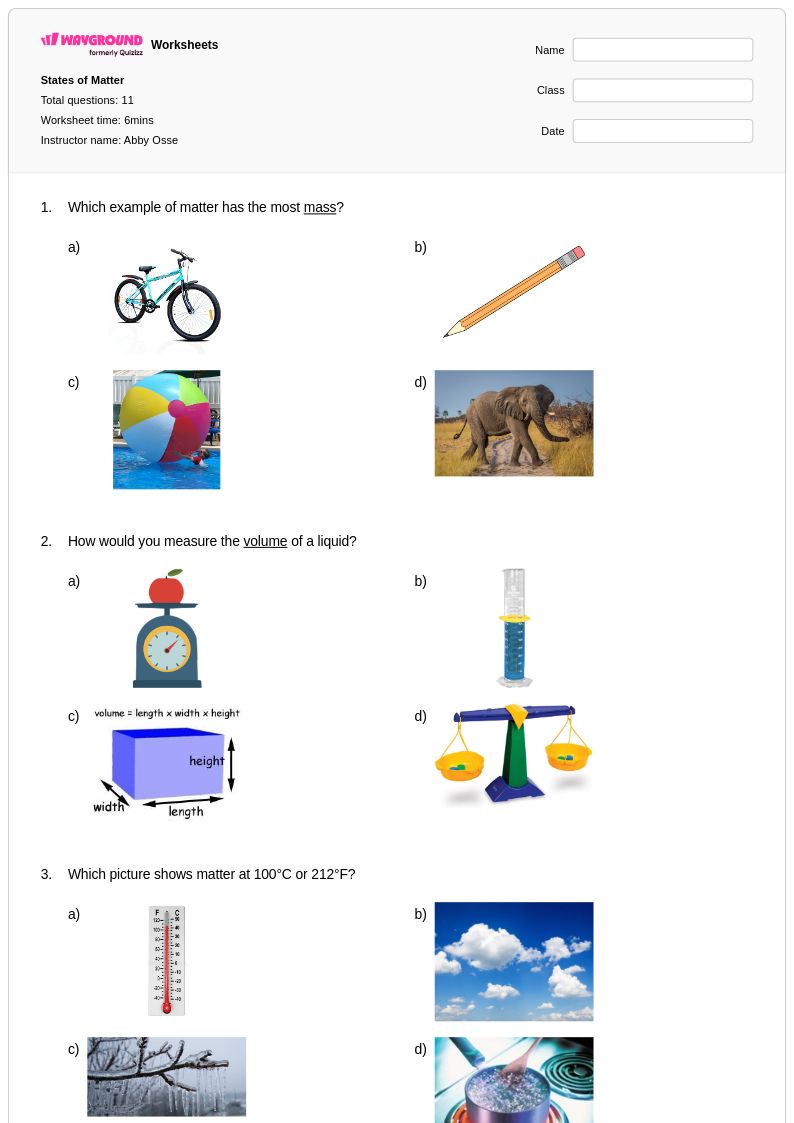
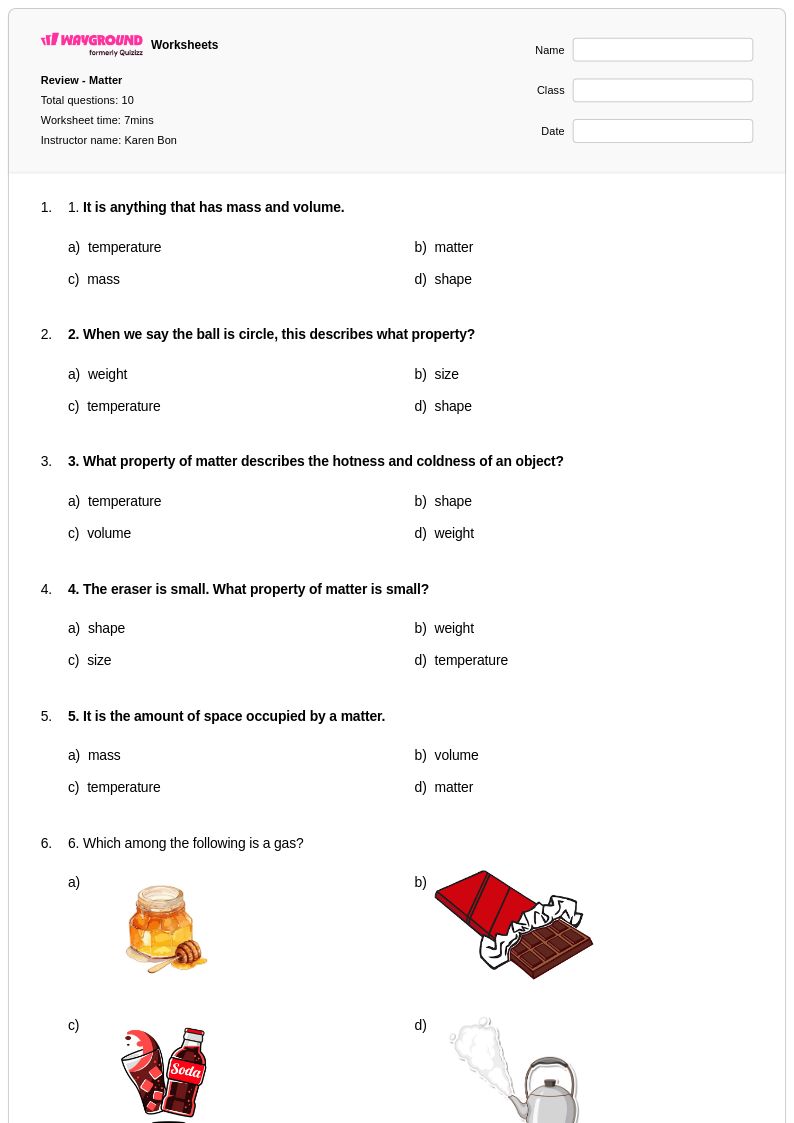
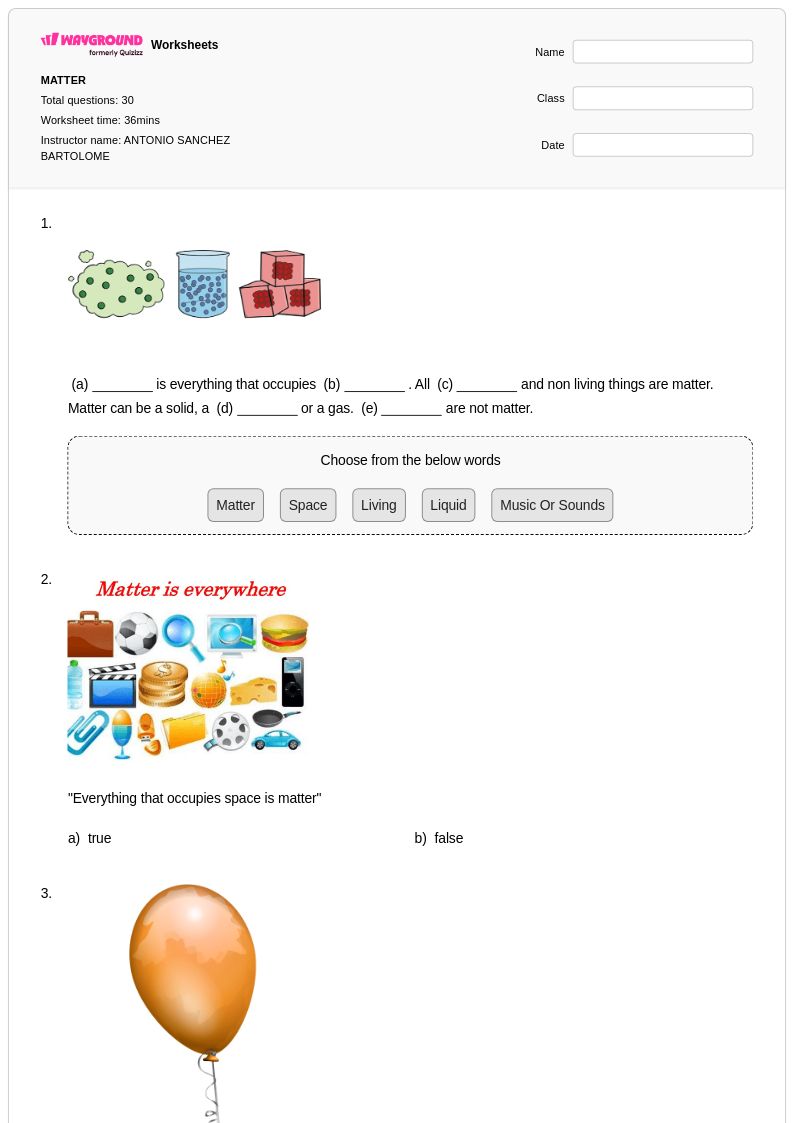
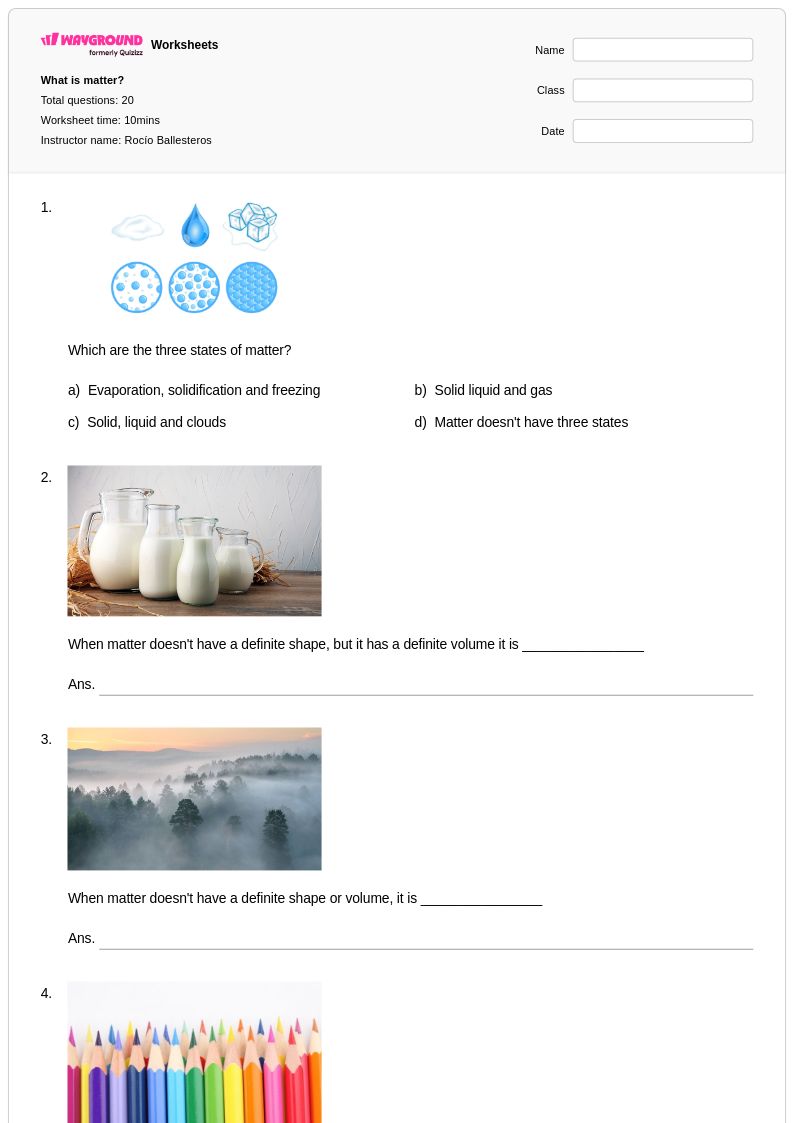
Explore our comprehensive collection of Year 3 Classification of Matter worksheets and printables that help students learn to identify and categorize solids, liquids, and gases through engaging practice problems with answer keys.
Explore printable Classification of Matter worksheets for Year 3
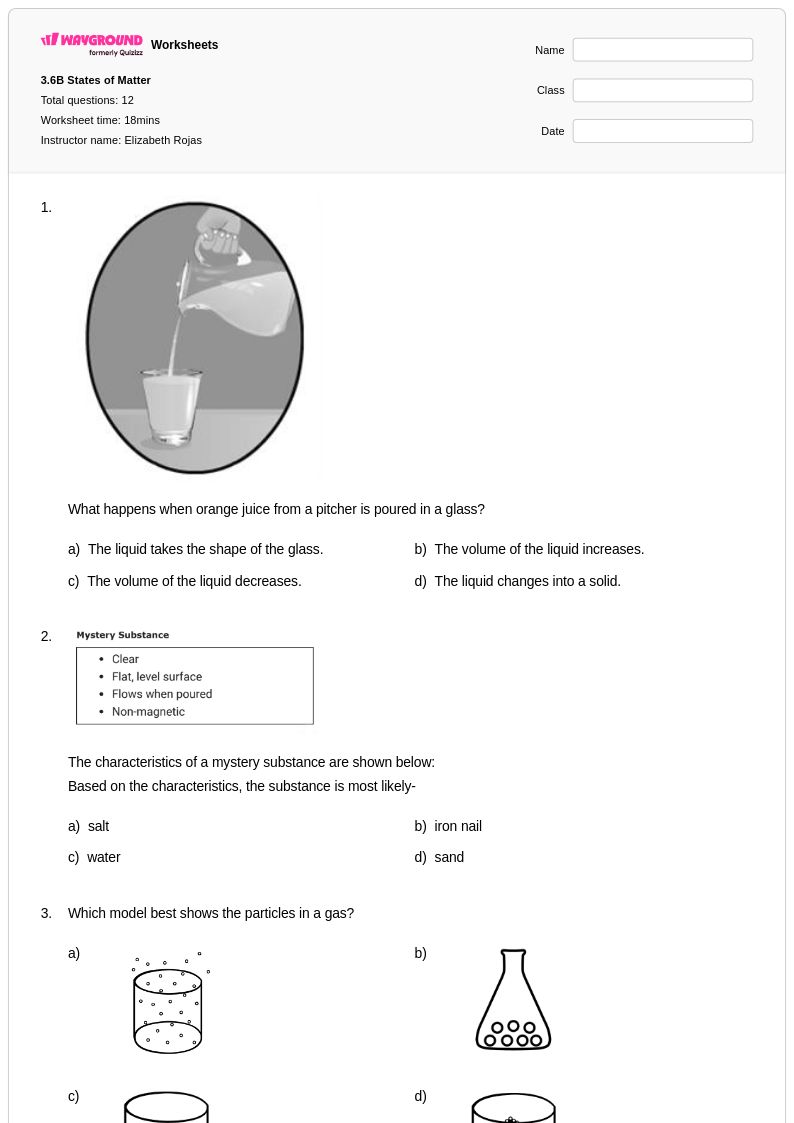
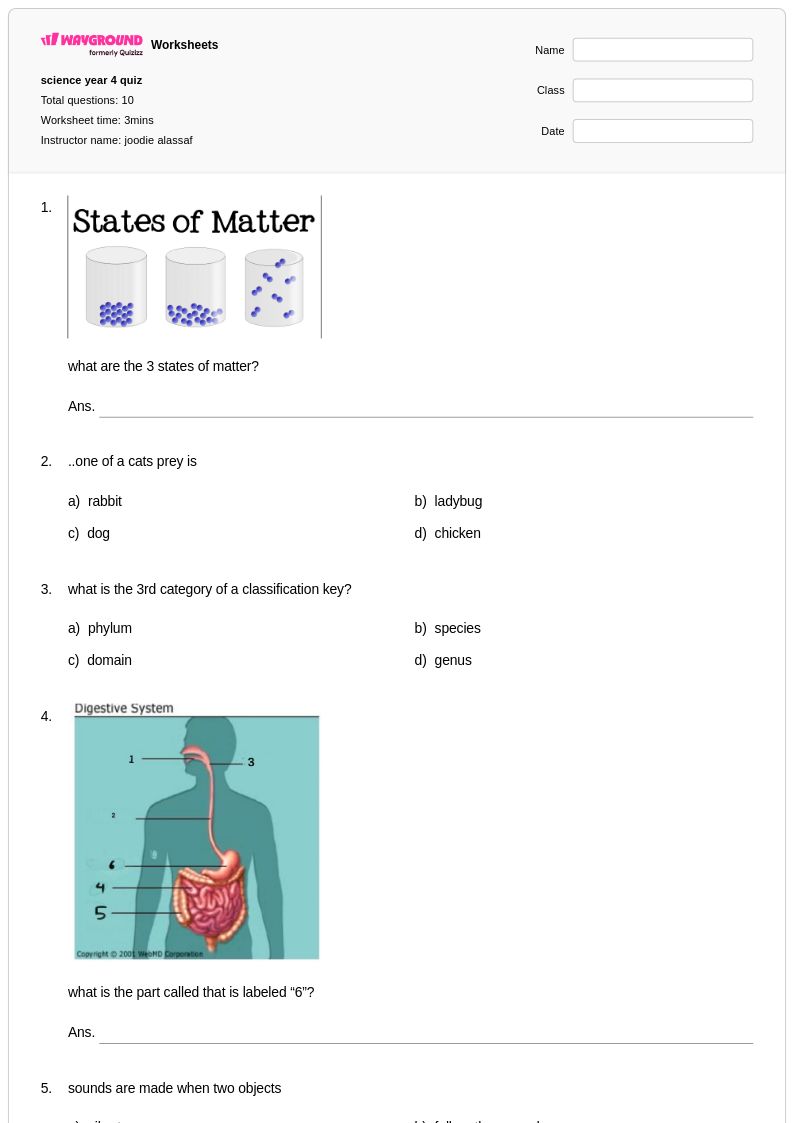
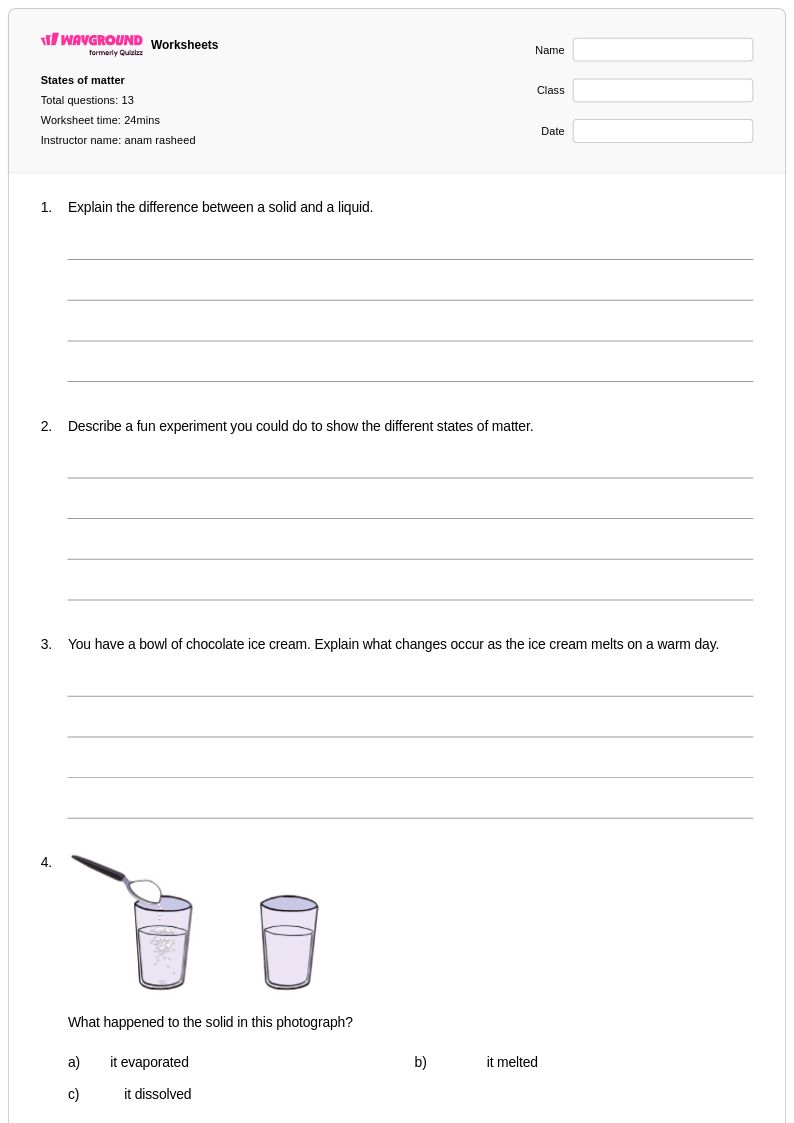
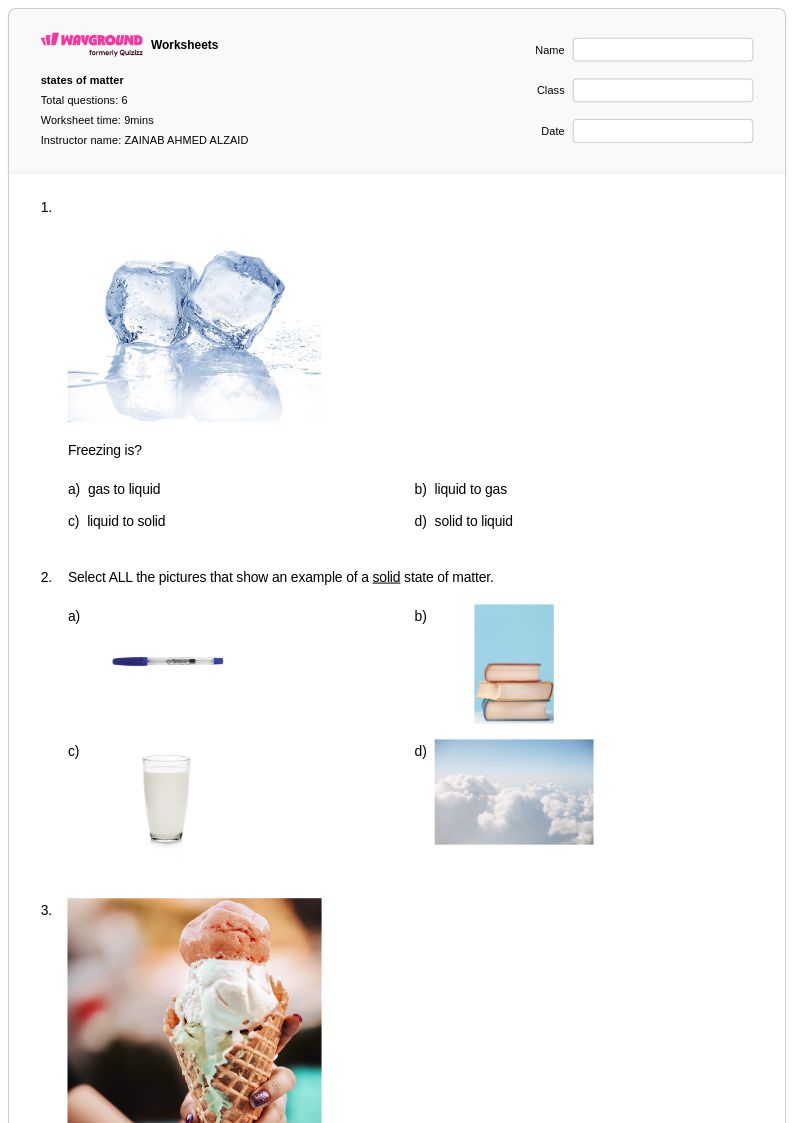
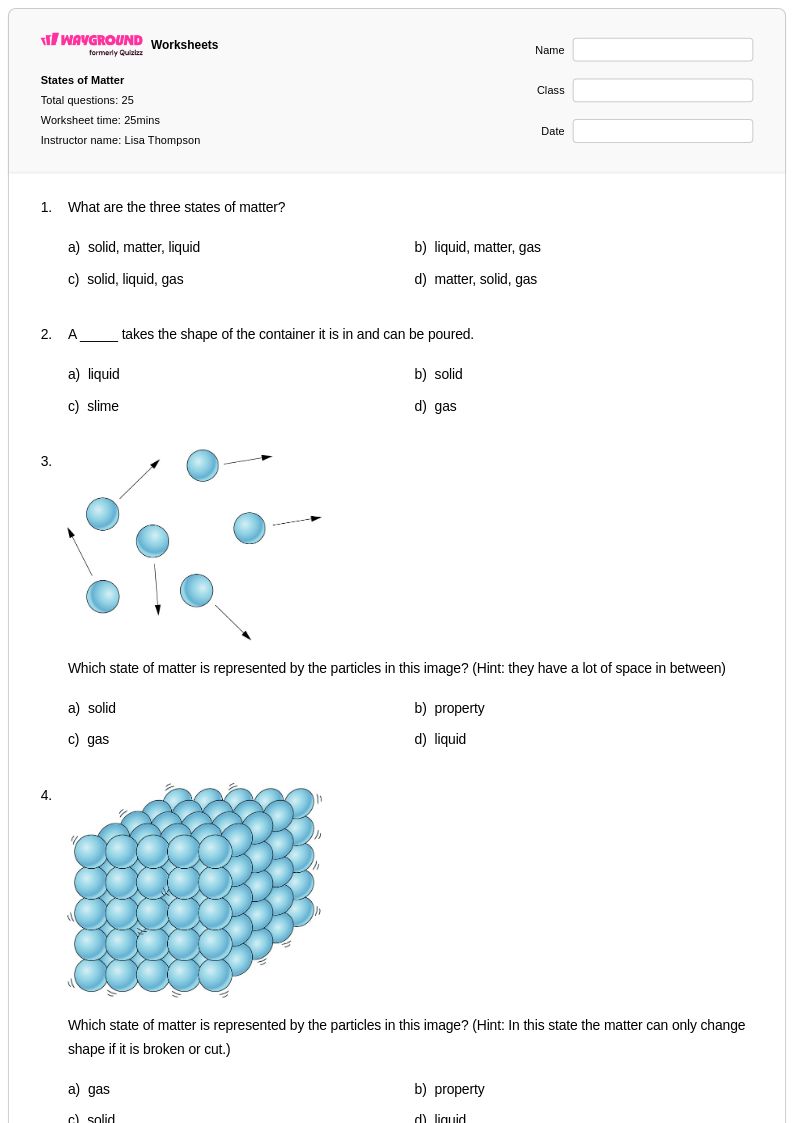
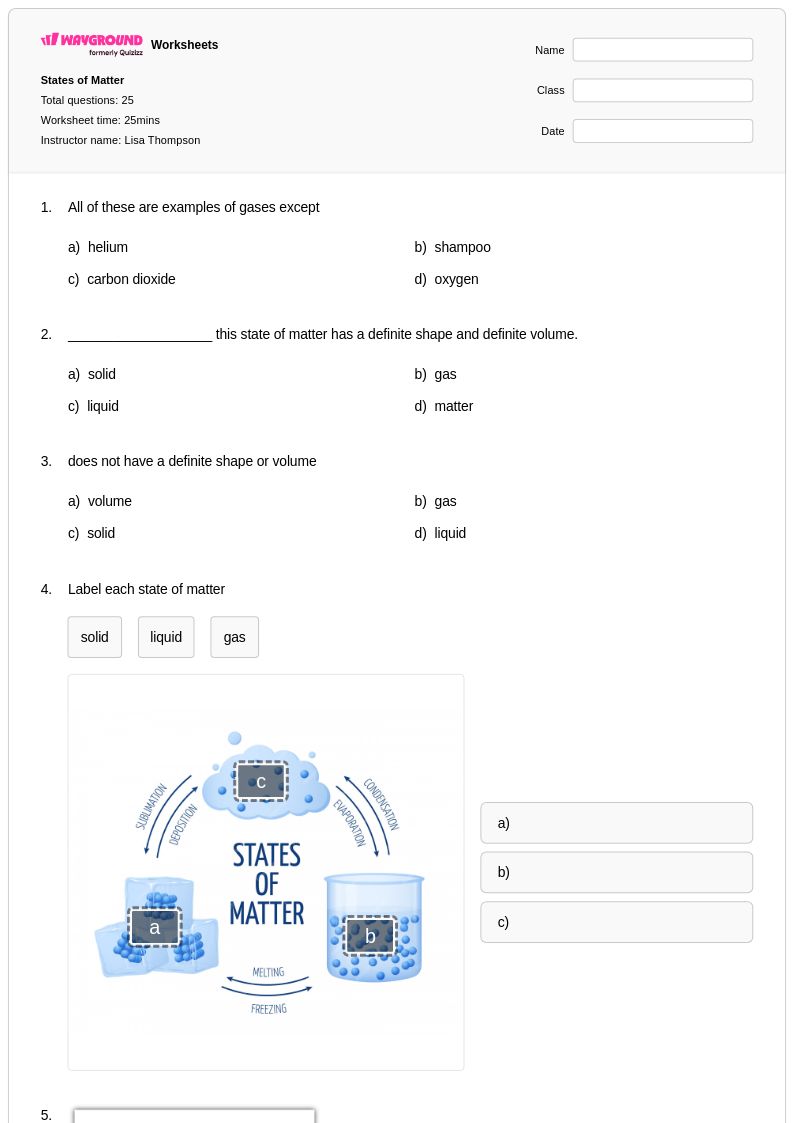
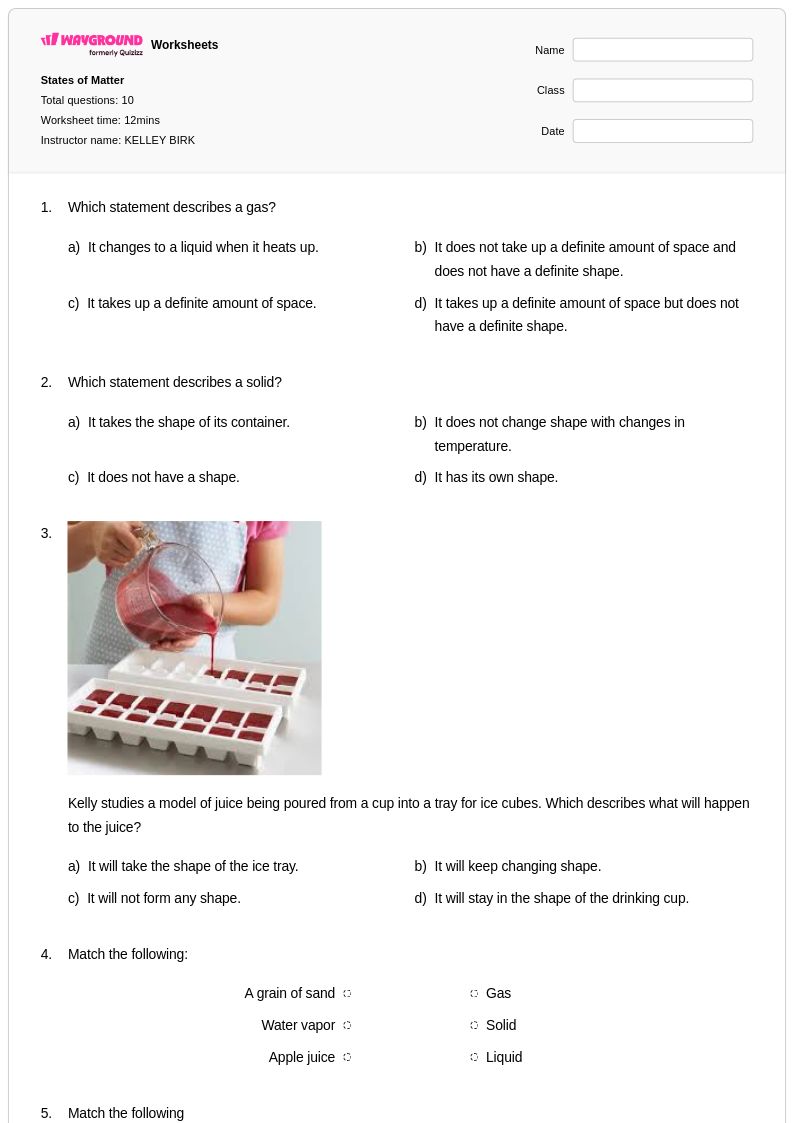
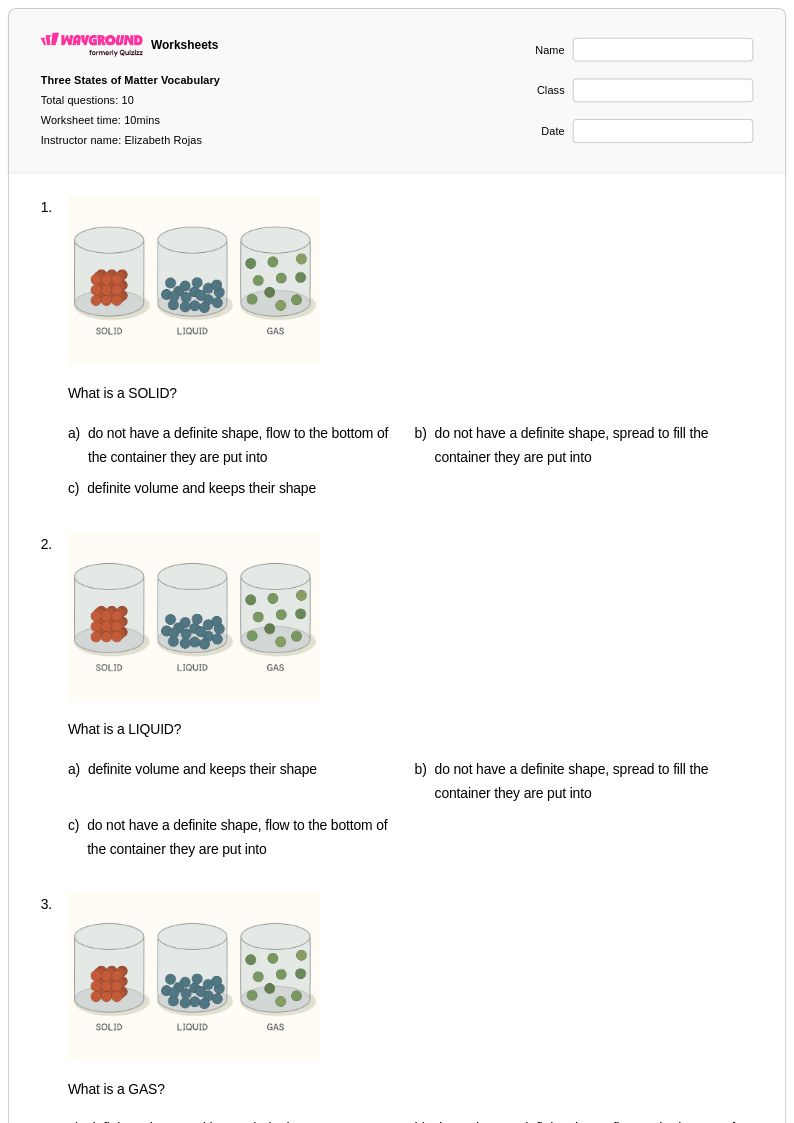
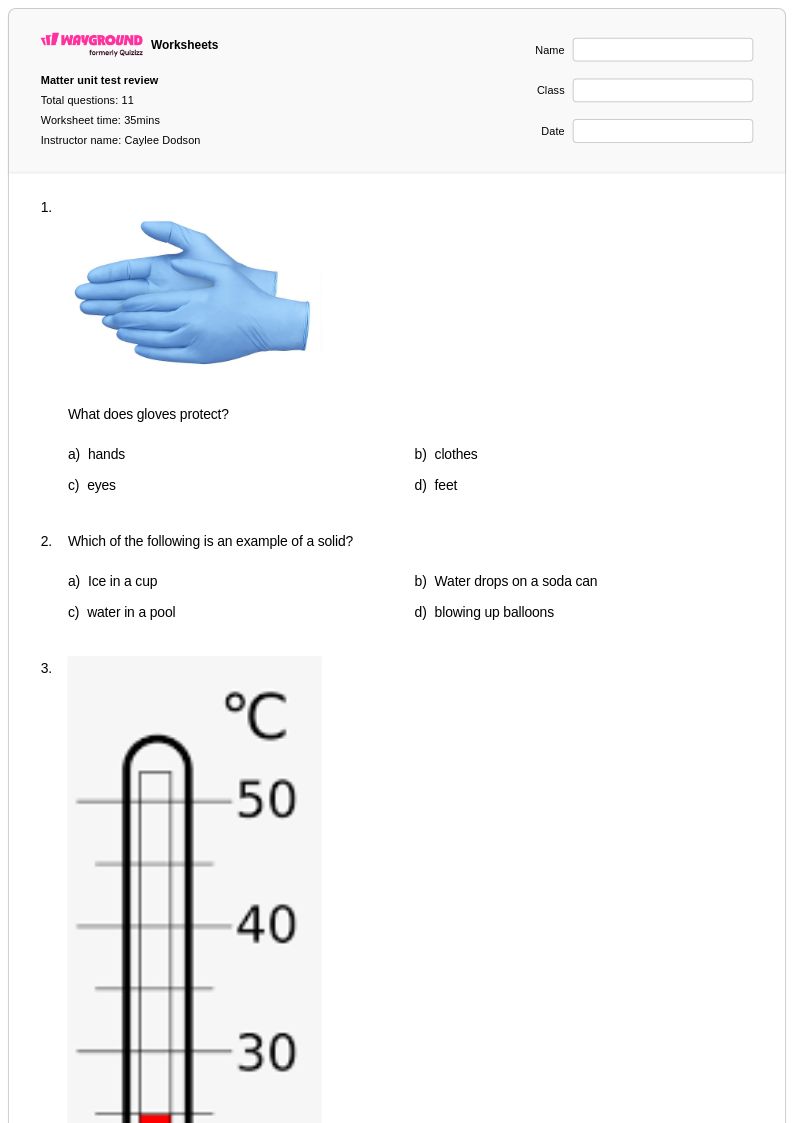
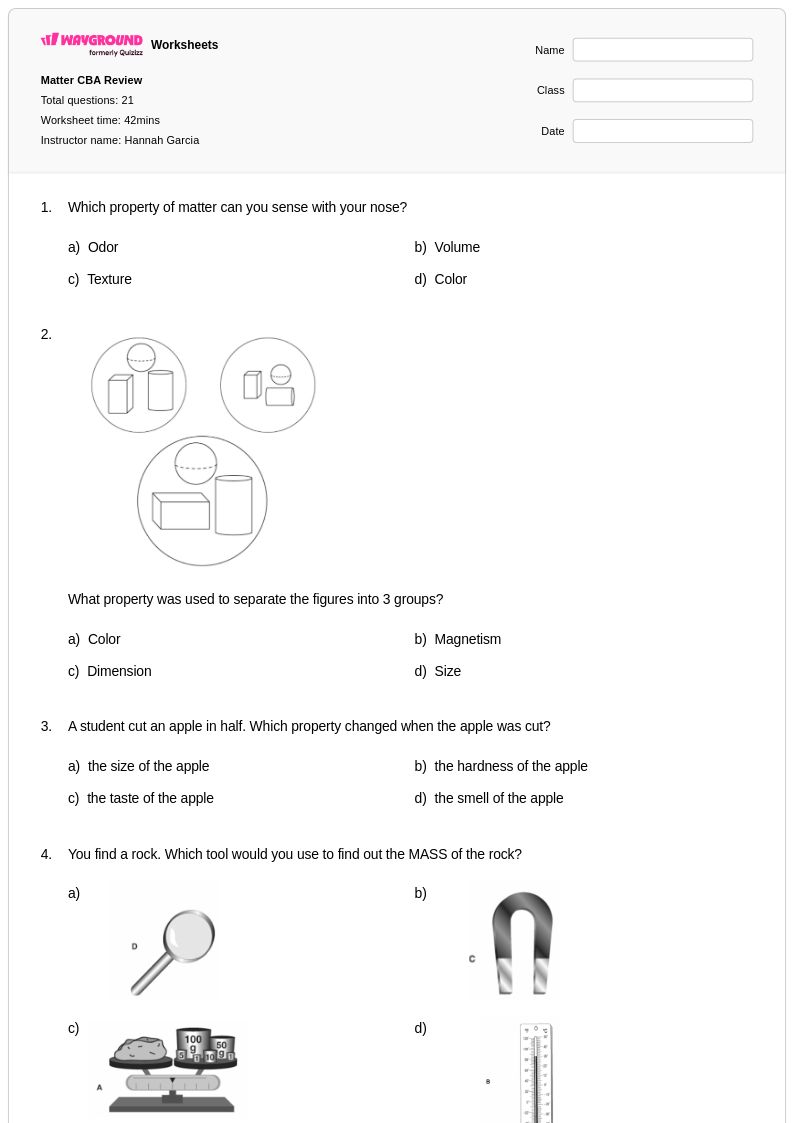
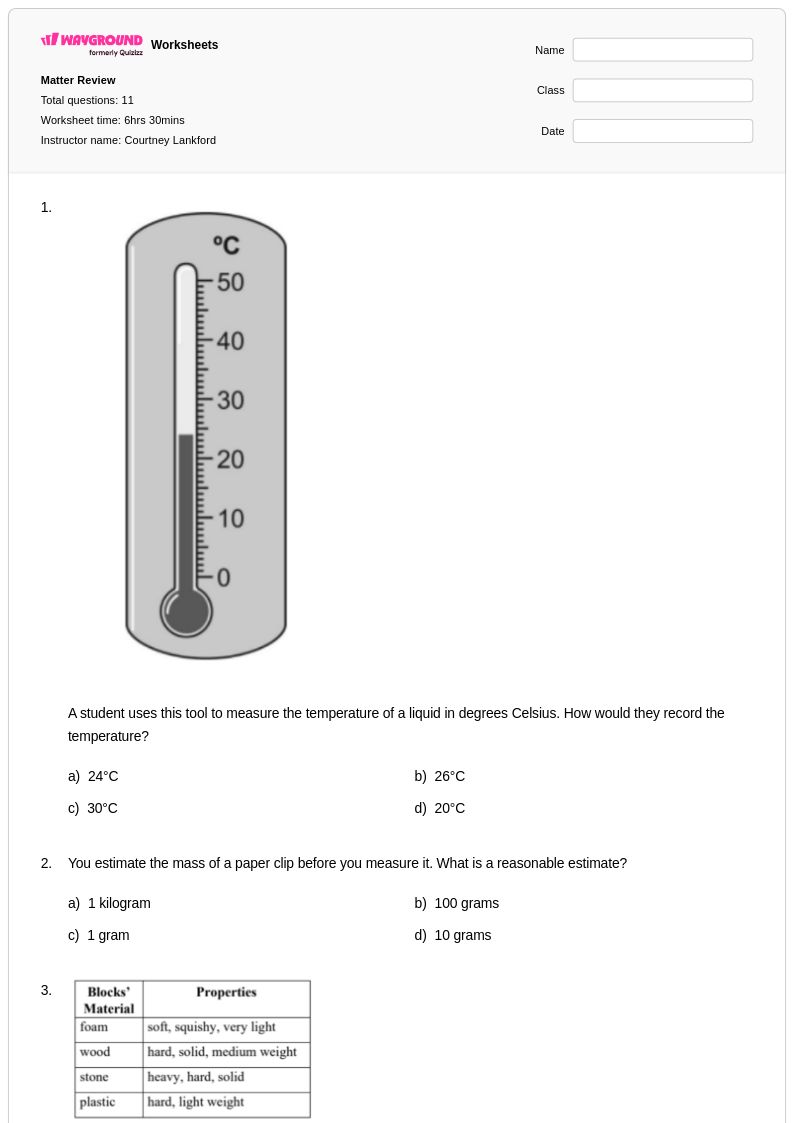
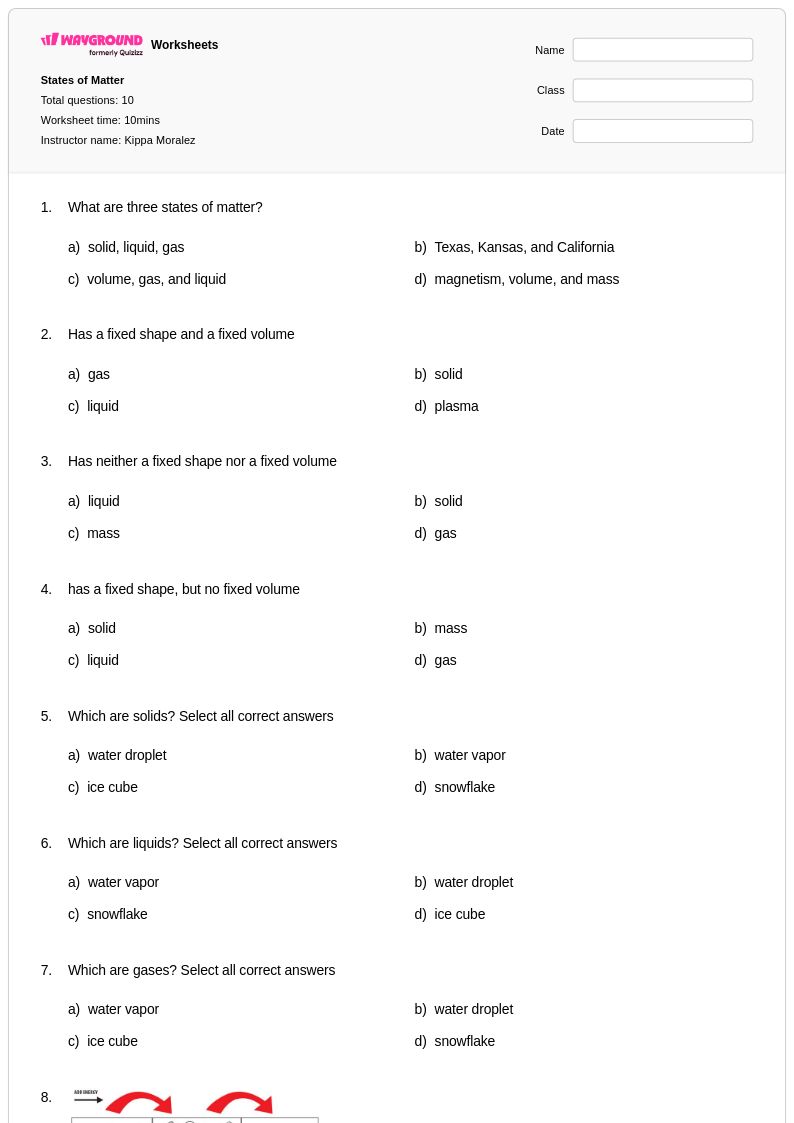
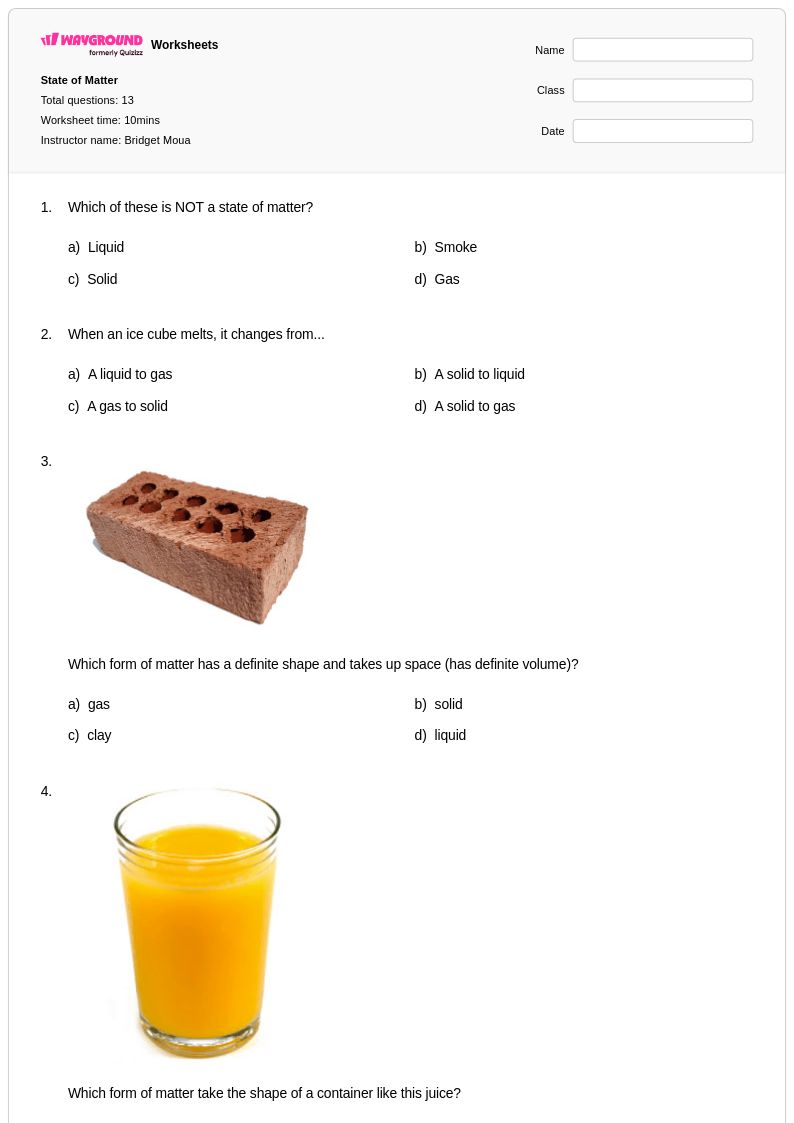
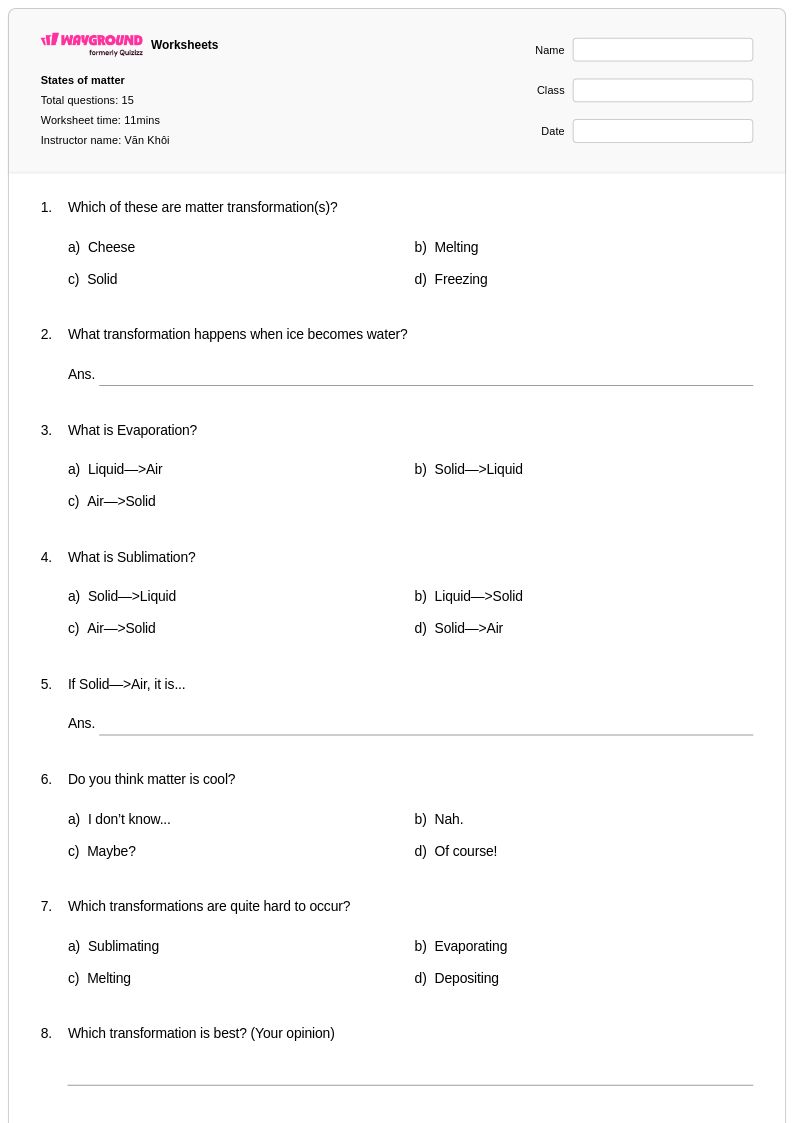
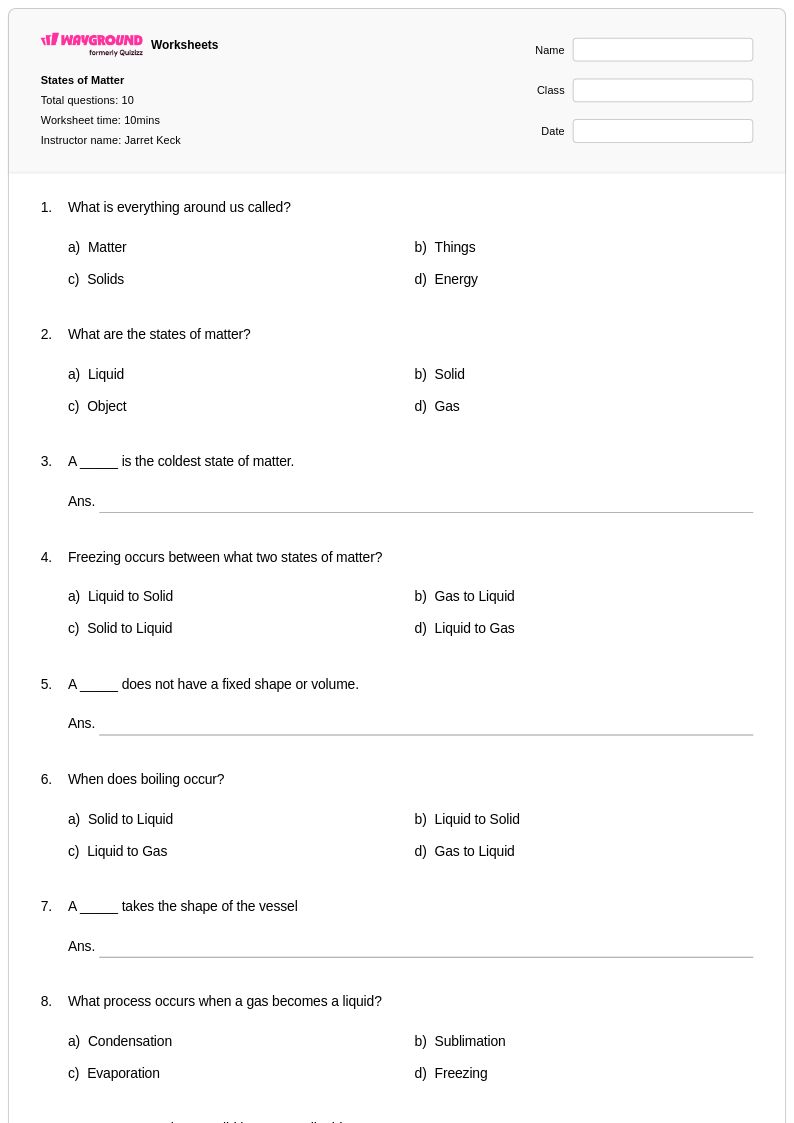
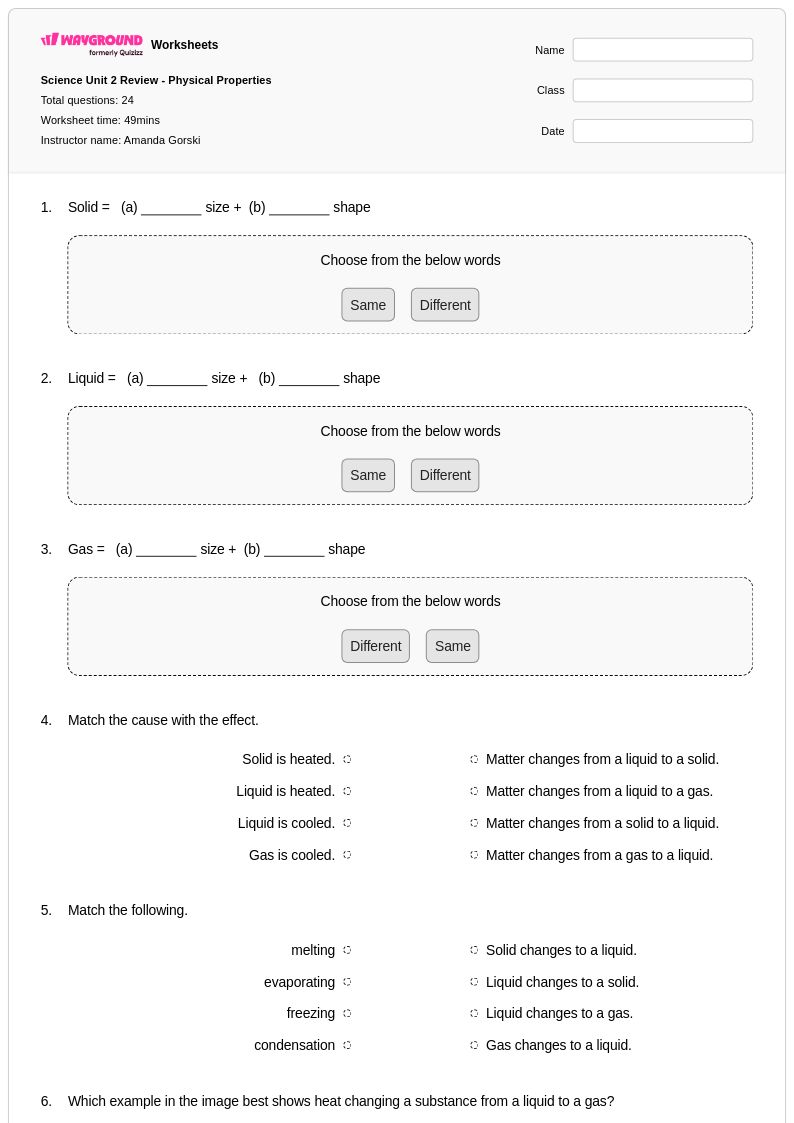
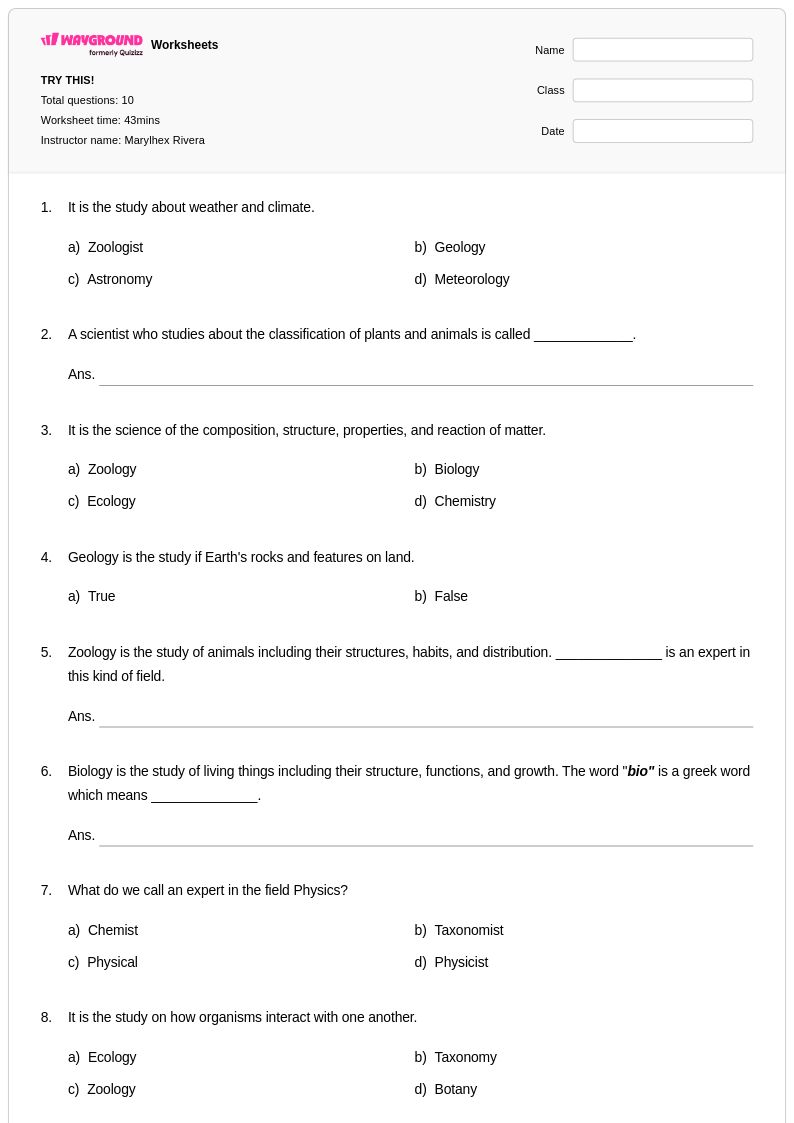
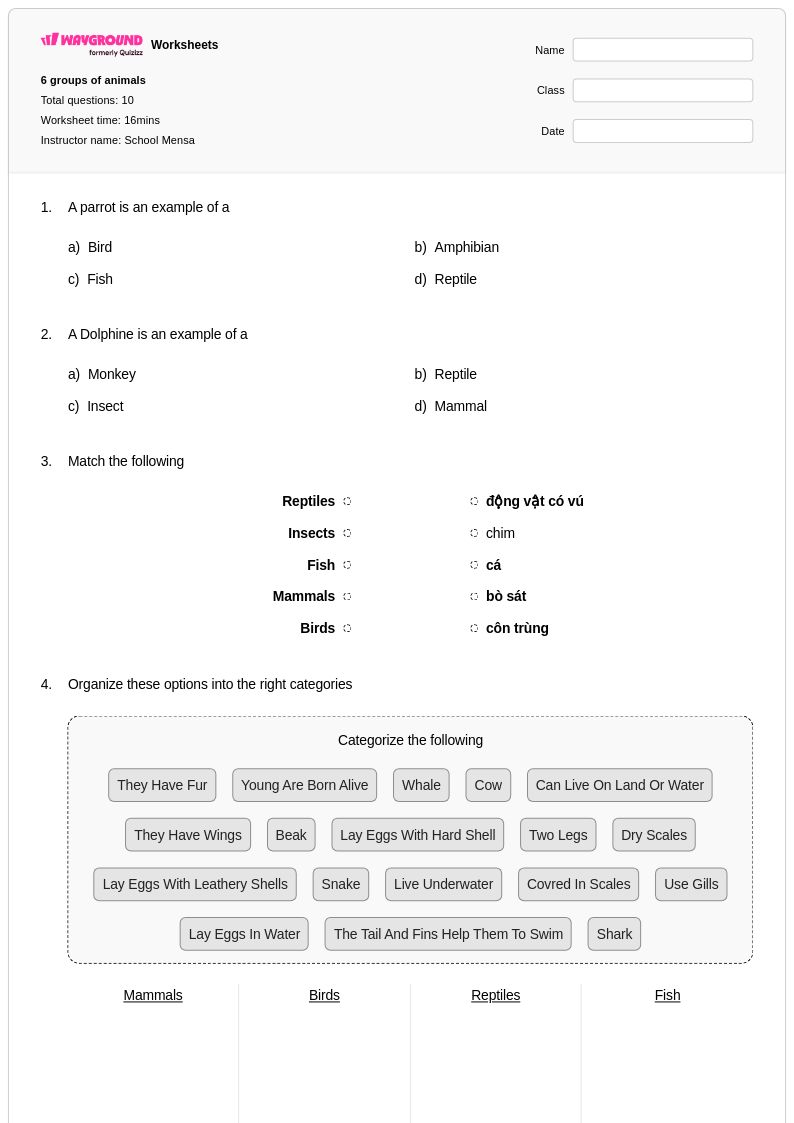
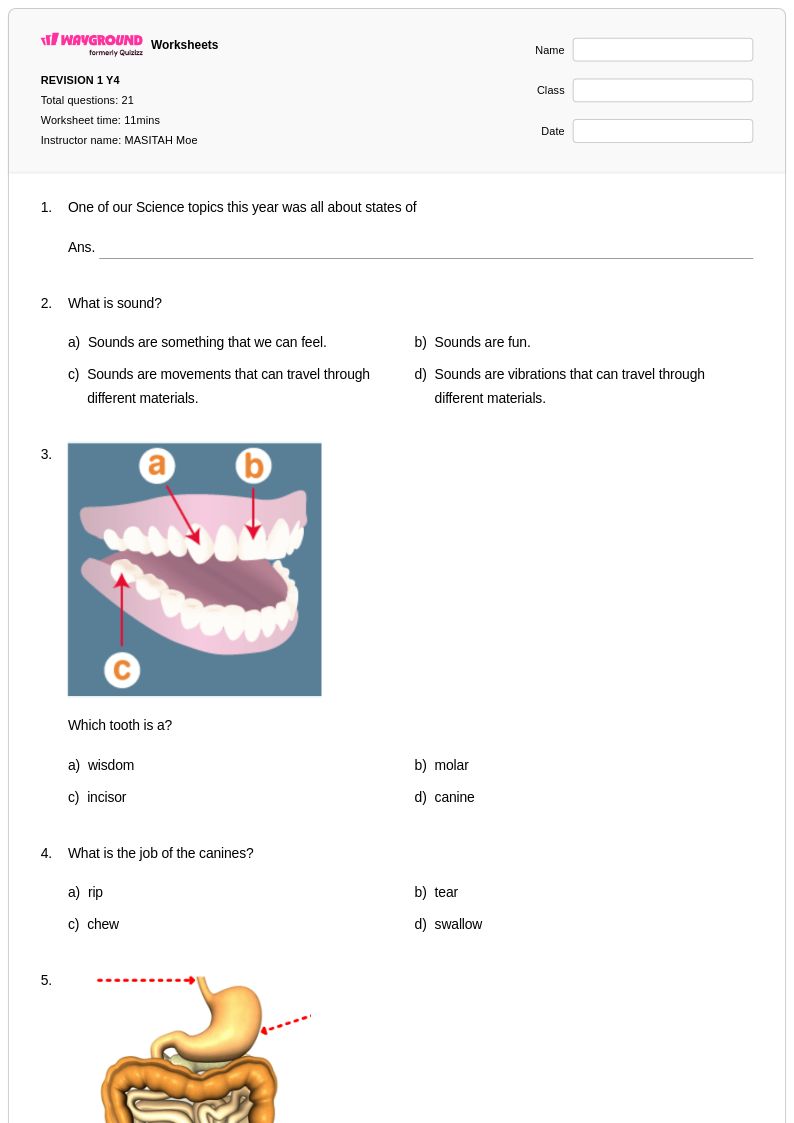
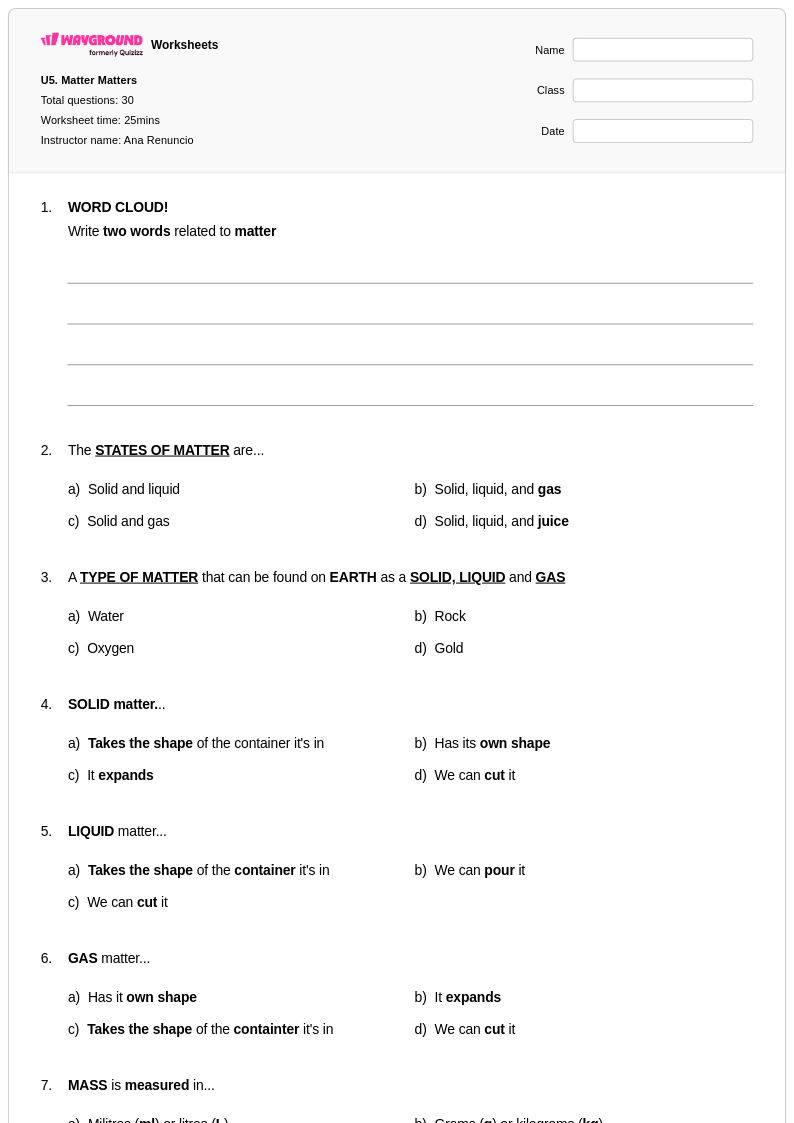
Classification of matter worksheets for Year 3 students available through Wayground (formerly Quizizz) provide young learners with essential foundational knowledge about how scientists organize and categorize different materials in our world. These comprehensive worksheets introduce elementary students to the fundamental concepts of distinguishing between solids, liquids, and gases while developing critical observation and analytical skills. Each worksheet collection includes carefully designed practice problems that guide students through identifying matter states in everyday objects, comparing properties of different materials, and understanding how matter can change from one state to another. The free printable resources come complete with detailed answer keys, allowing teachers to efficiently assess student understanding and provide targeted feedback on this crucial scientific concept.
Wayground (formerly Quizizz) empowers educators with access to millions of teacher-created classification of matter resources specifically designed to meet Year 3 science curriculum standards and learning objectives. The platform's robust search and filtering capabilities enable teachers to quickly locate worksheets that align with their specific instructional needs, whether for initial concept introduction, skill reinforcement, or assessment preparation. These versatile materials are available in both printable pdf formats and interactive digital versions, supporting diverse classroom environments and learning preferences. Teachers can easily customize worksheet difficulty levels and content focus to accommodate differentiated instruction, making these resources invaluable for lesson planning, targeted remediation for struggling learners, and enrichment activities for advanced students ready to explore more complex matter classification concepts.
FAQs
How do I teach classification of matter to my students?
Start by building a clear conceptual hierarchy: matter is first divided into pure substances and mixtures, then pure substances are broken into elements and compounds, and mixtures are separated into homogeneous and heterogeneous types. Using visual diagrams and flowcharts helps students internalize the decision-making process for categorizing matter. Anchor instruction in real-world examples, such as salt water as a homogeneous mixture or trail mix as a heterogeneous one, so students can connect abstract categories to observable materials.
What exercises help students practice classifying matter?
Effective practice includes classification flowchart exercises where students apply a series of yes/no questions to identify an unknown substance, data table activities that compare properties of elements, compounds, and mixtures, and visual diagram tasks where students label particle arrangements. Practice problems that move from simple identification to justification, requiring students to explain why a substance belongs in a given category, build the deeper reasoning skills chemistry demands.
What mistakes do students commonly make when classifying matter?
The most frequent error is confusing homogeneous mixtures with pure substances, since both appear uniform to the naked eye. Students also frequently conflate compounds with mixtures, not recognizing that compounds have fixed ratios and chemically bonded components while mixtures do not. Another common misconception is assuming that all solids are pure substances and all liquids are mixtures, which overlooks the diversity of matter across all three states.
How can I differentiate classification of matter instruction for students with different learning needs?
For students who need additional support, reduce the number of classification categories introduced at once and use color-coded diagrams to reinforce visual distinctions. On Wayground, teachers can enable Read Aloud so question text is read to students who benefit from audio support, and Reduced Answer Choices to lower cognitive load for students working through multiple-choice identification problems. Extended time settings can also be applied individually so that students who need more processing time are not disadvantaged without disrupting the rest of the class.
How do I use Wayground's classification of matter worksheets in my classroom?
Wayground's classification of matter worksheets are available as printable PDFs for traditional classroom use and in digital formats for technology-integrated environments, making them adaptable to in-person, hybrid, and remote settings. Teachers can also host the material as a quiz directly on Wayground, enabling real-time student responses and immediate feedback. Each worksheet includes a detailed answer key, so the resources work equally well for guided instruction, independent practice, or review.