
Tópicos recomendados para você
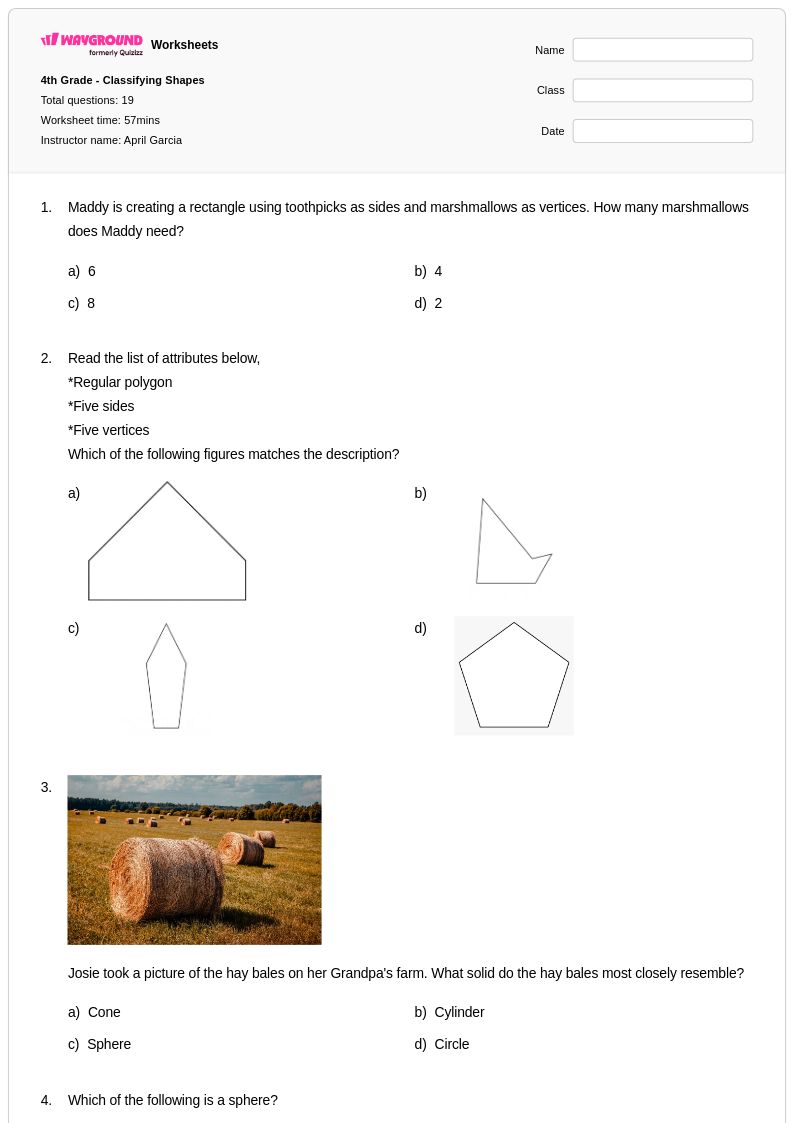
19Q
3rd - 5th
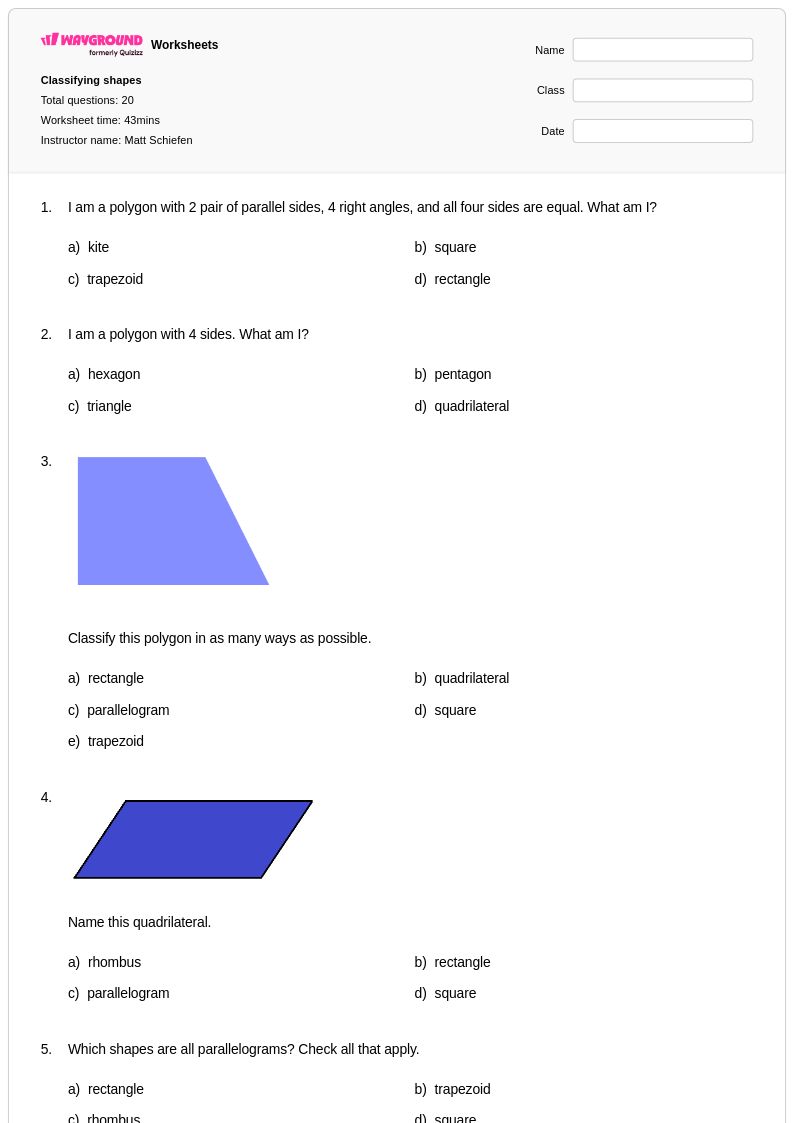
20Q
4th
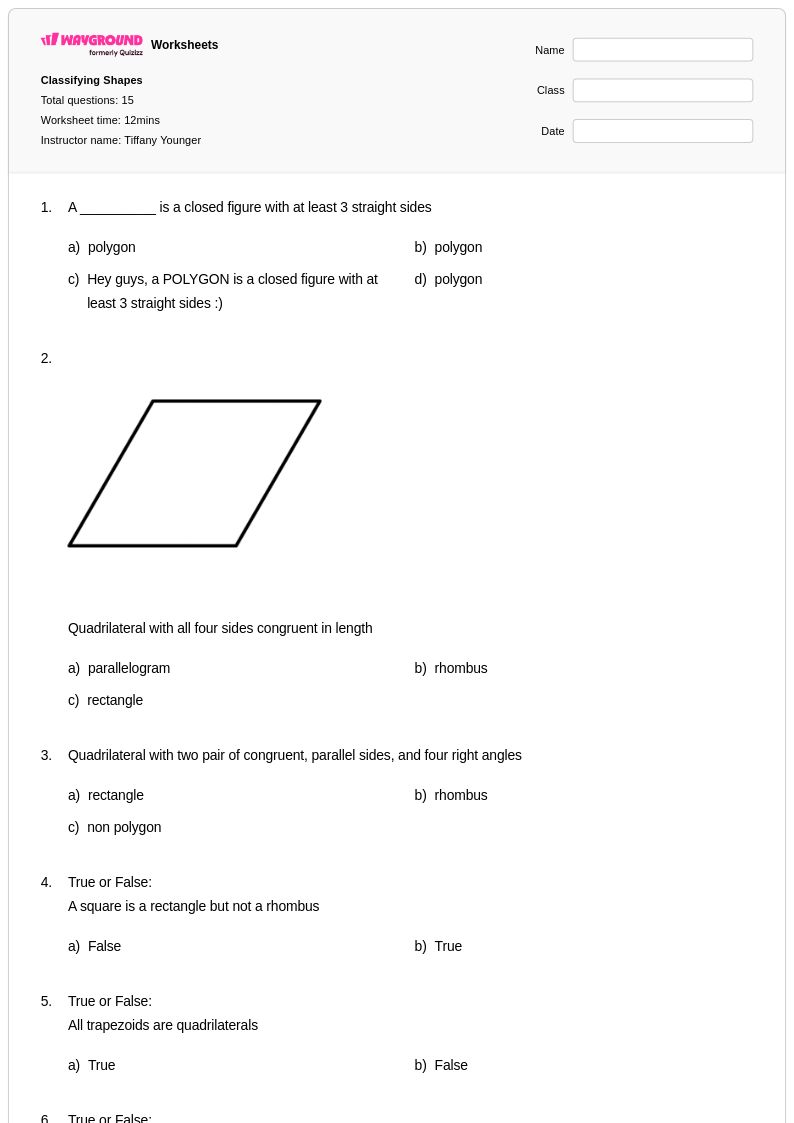
15Q
4th - 5th
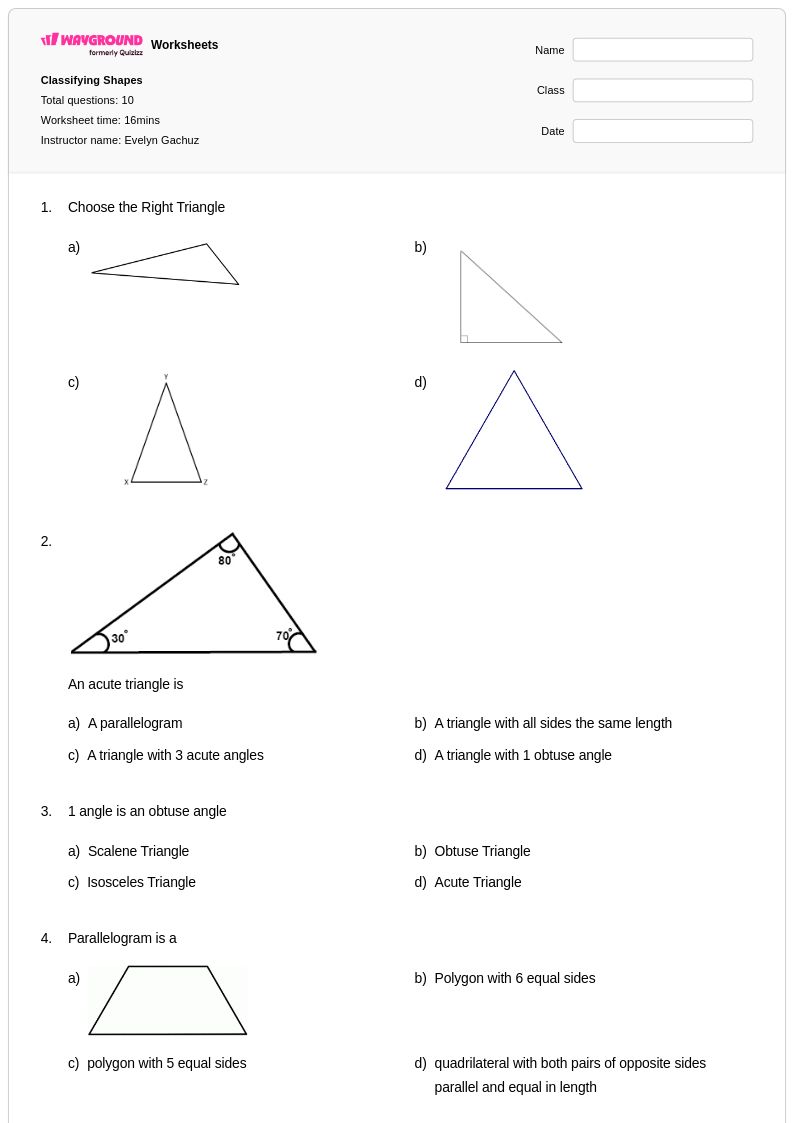
10Q
4th
12Q
3rd - 4th
20Q
2nd - Uni
12Q
3rd - 4th
12Q
4th - 7th
10Q
4th
18Q
3rd - 12th
32Q
4th
17Q
4th - 5th
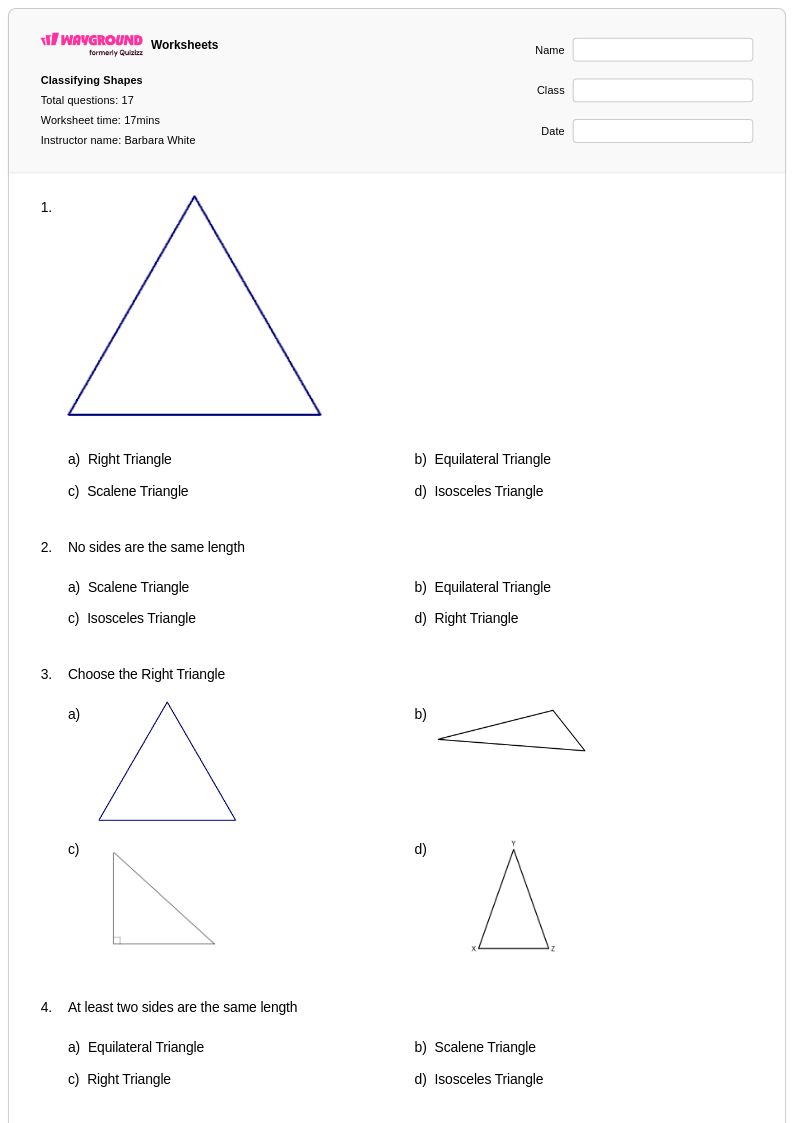
17Q
4th - 5th
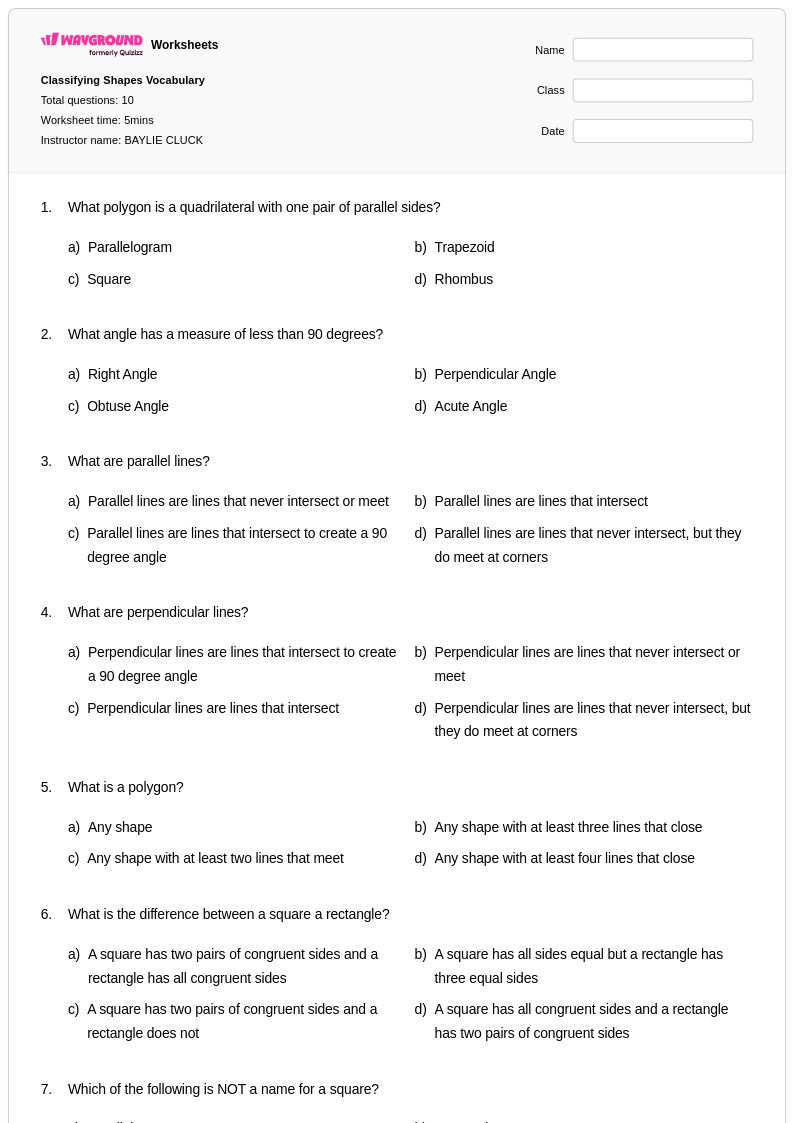
10Q
4th
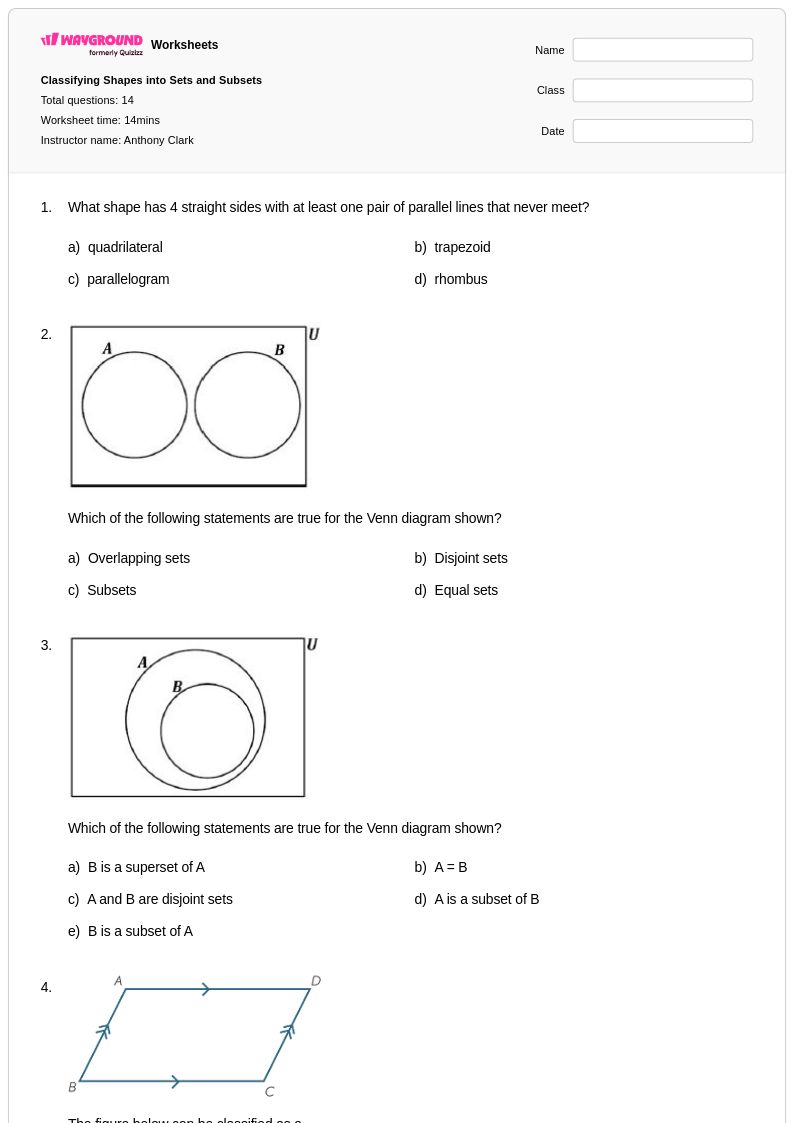
14Q
4th - Uni
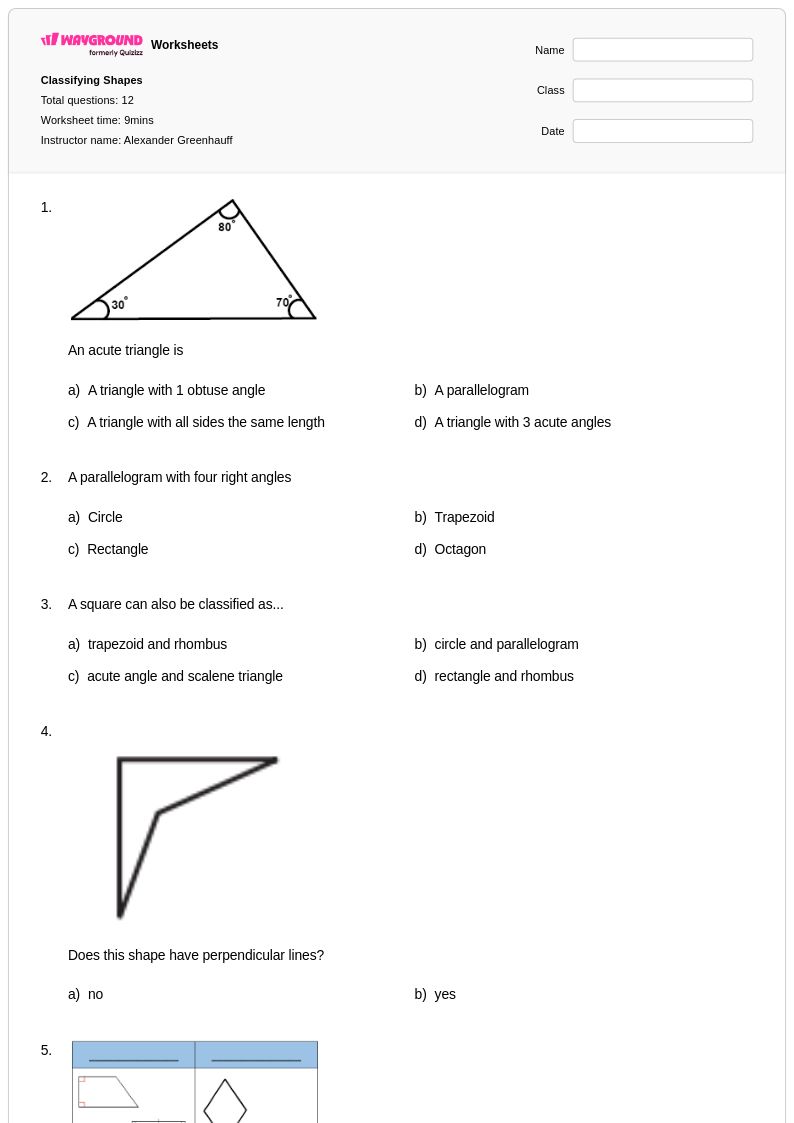
12Q
4th
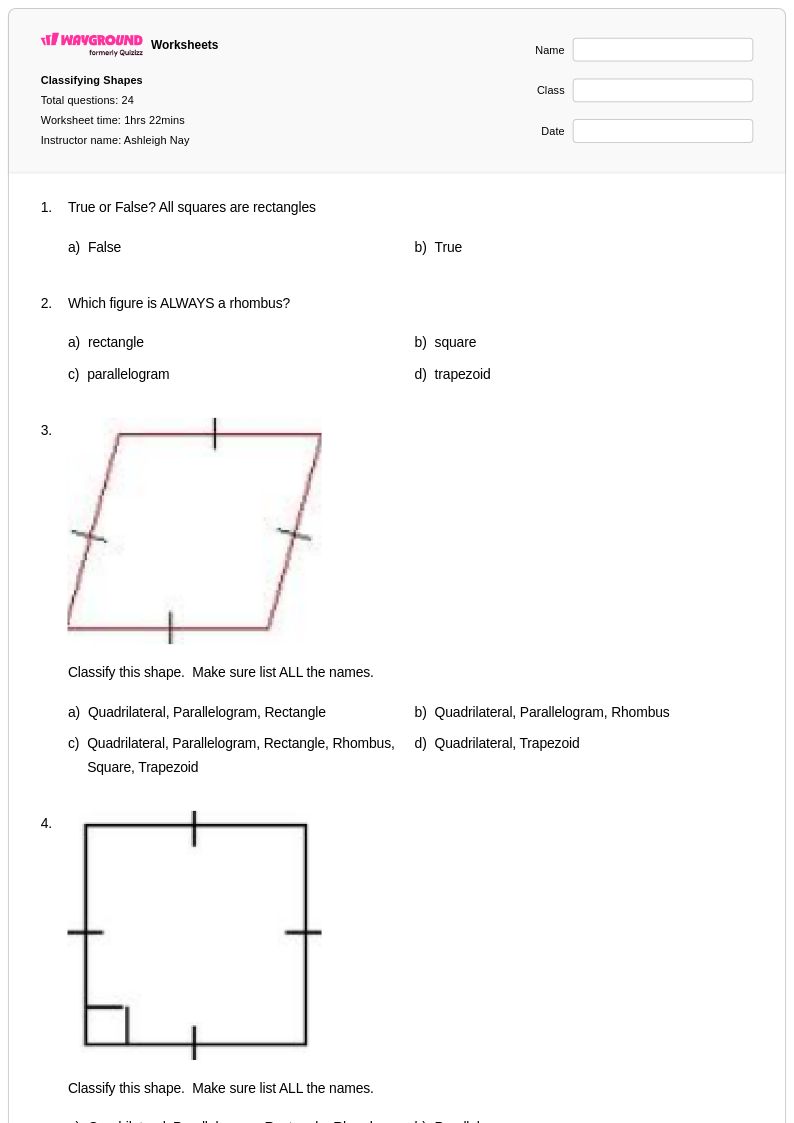
24Q
4th
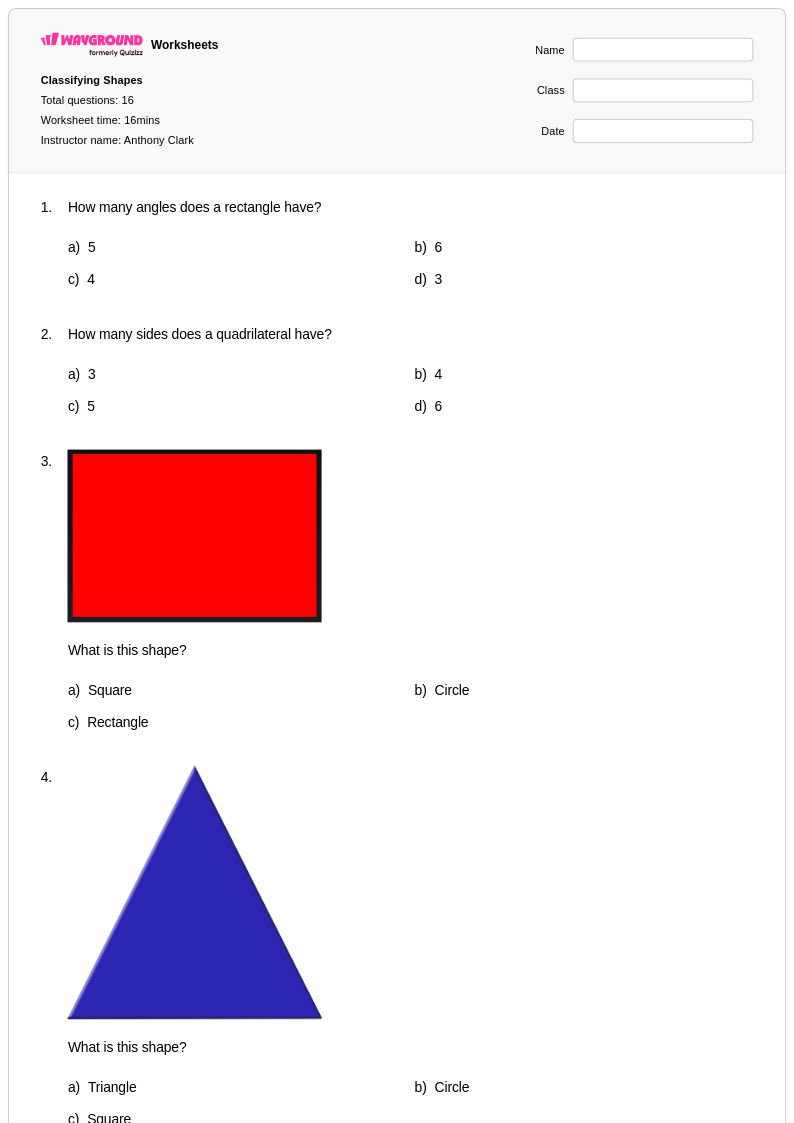
16Q
2nd - Uni
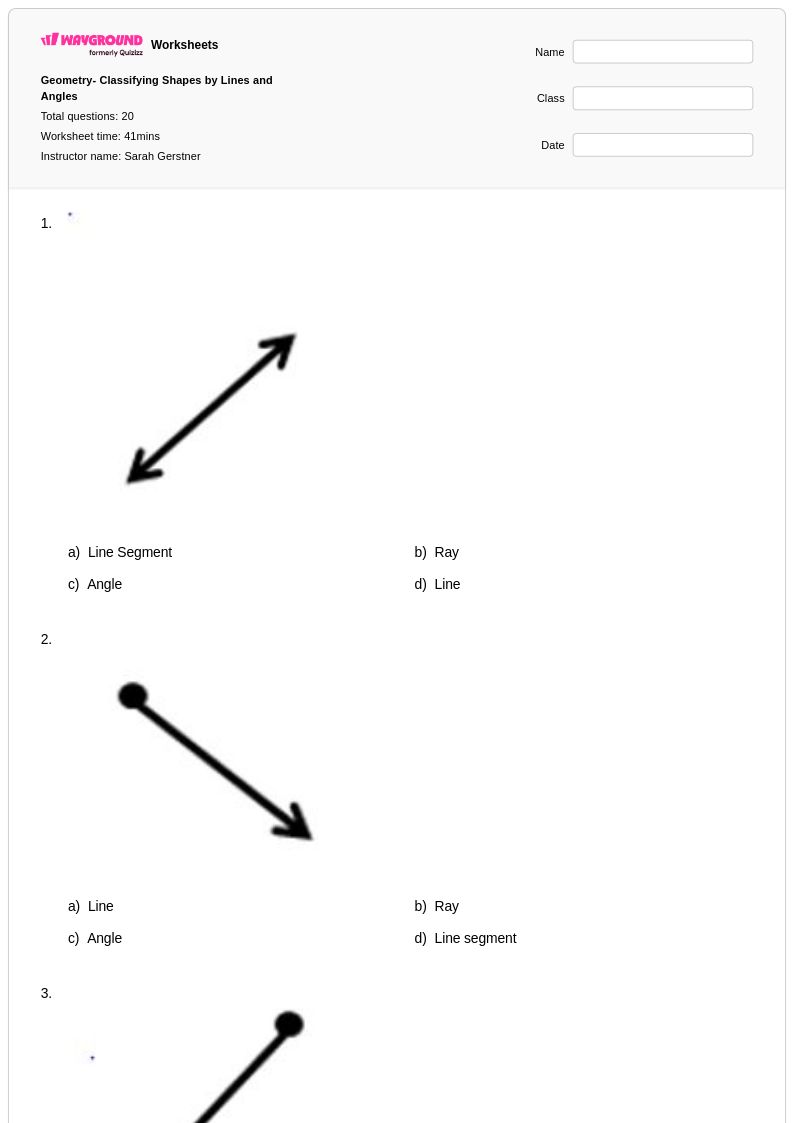
20Q
4th
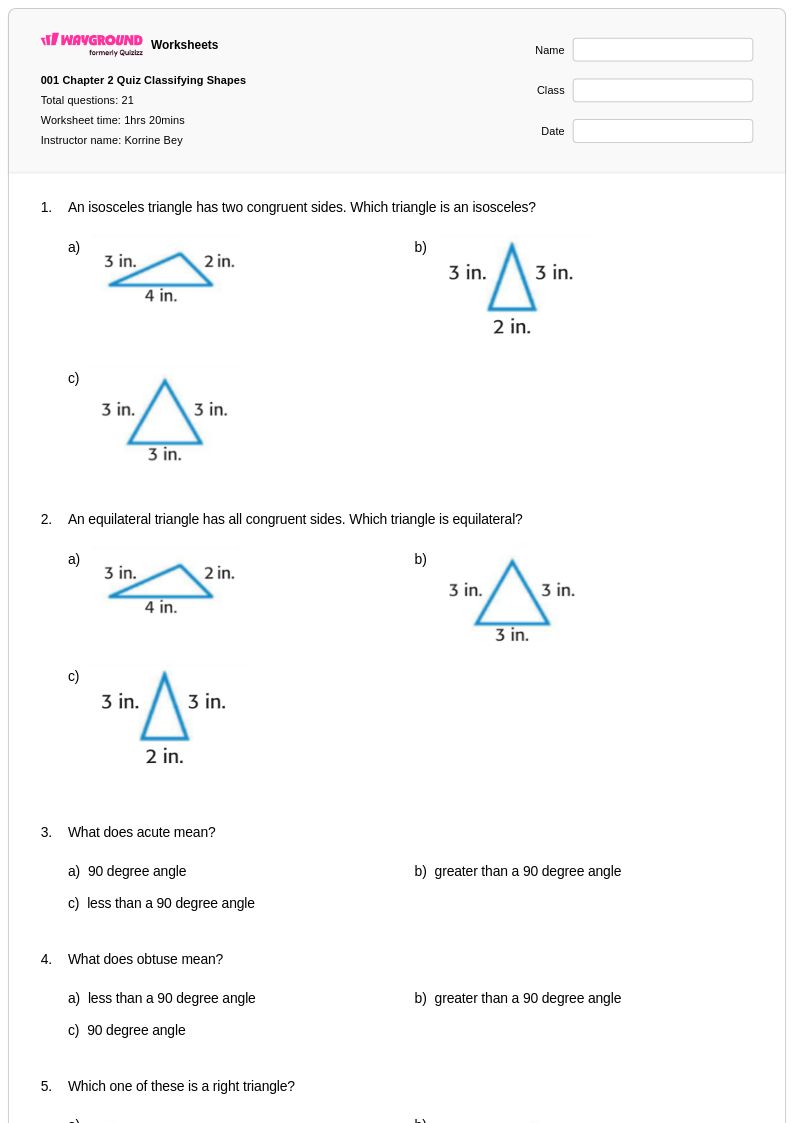
21Q
4th
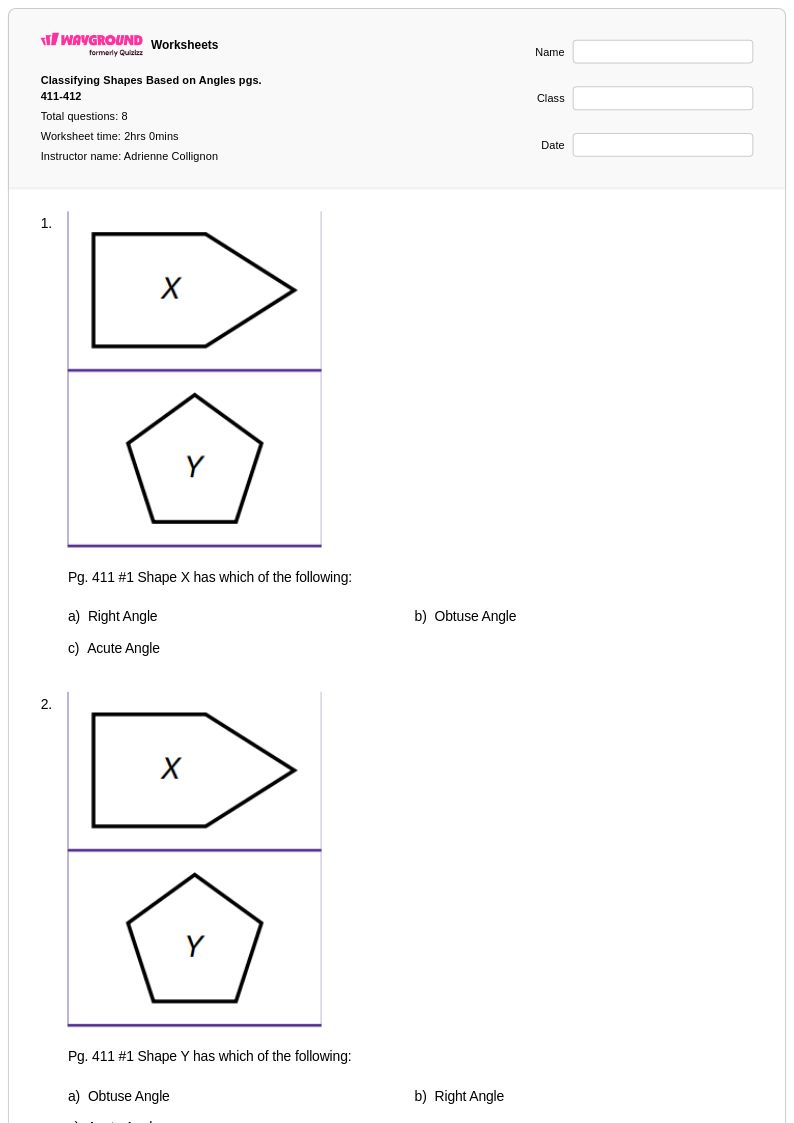
8Q
4th
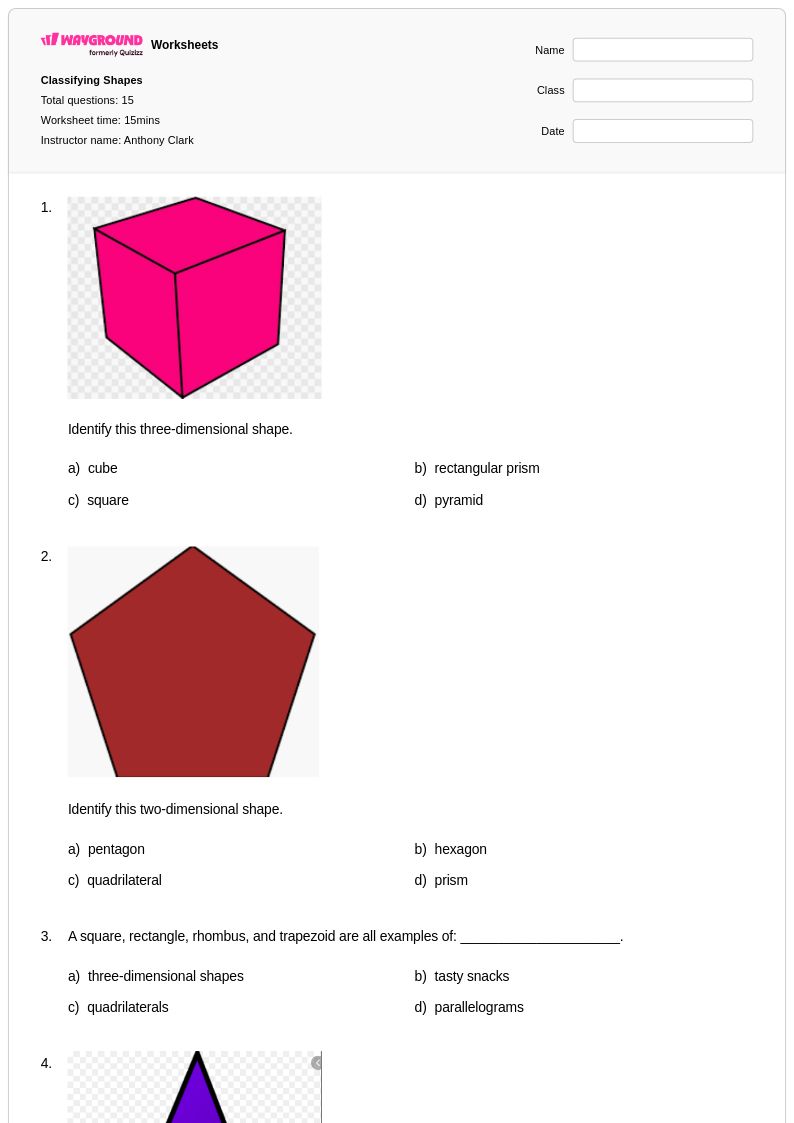
15Q
2nd - Uni
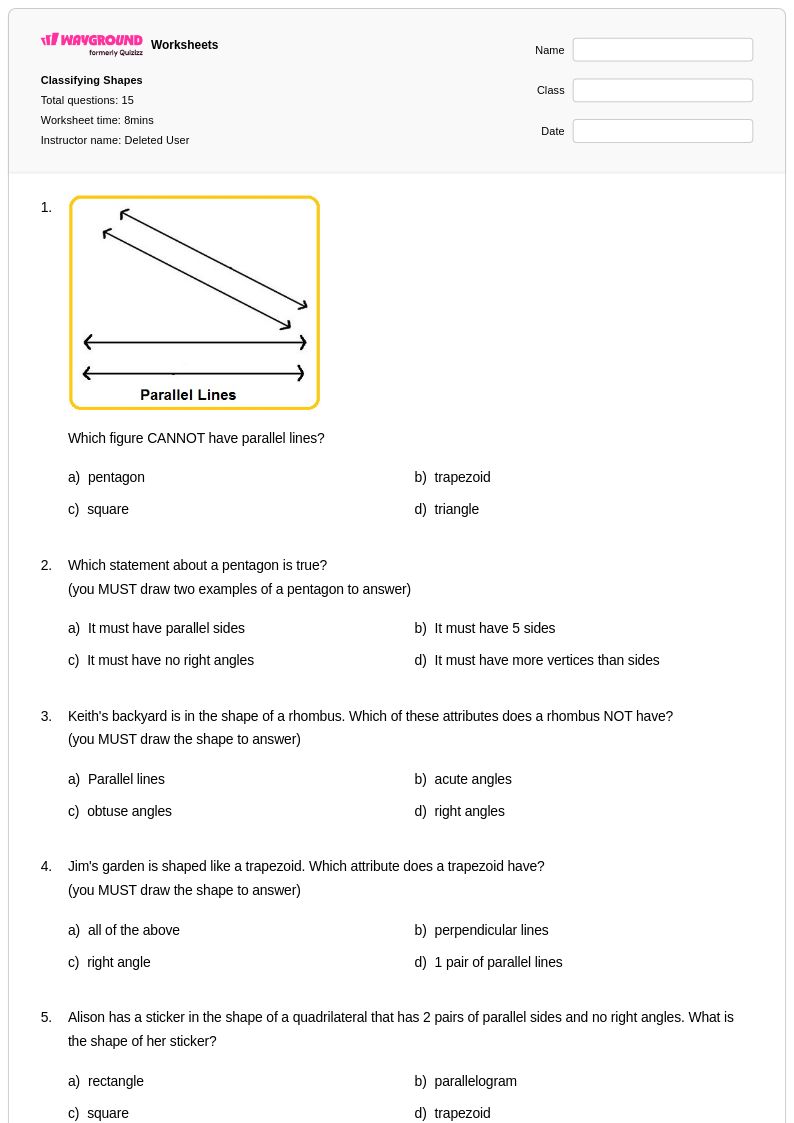
15Q
KG - Uni
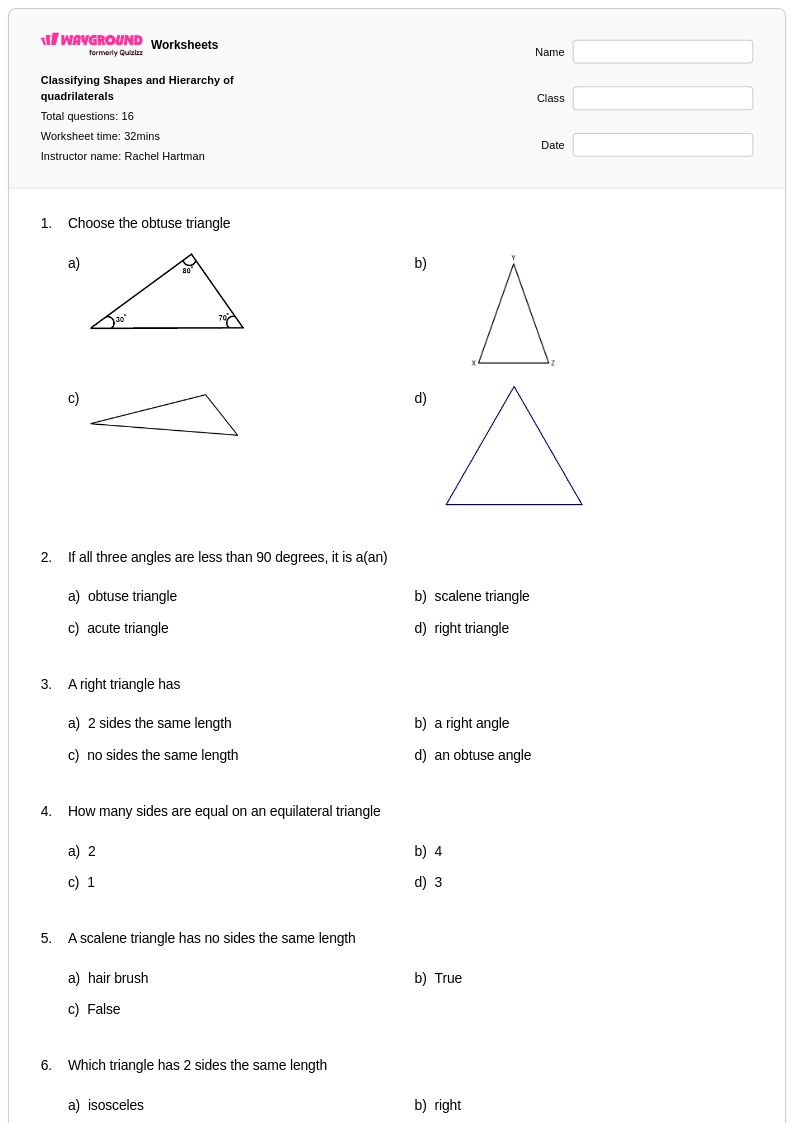
16Q
4th - 5th
Explore planilhas Classifying Shapes para year 4 por tópico
Explore outras planilhas de assuntos para year 4
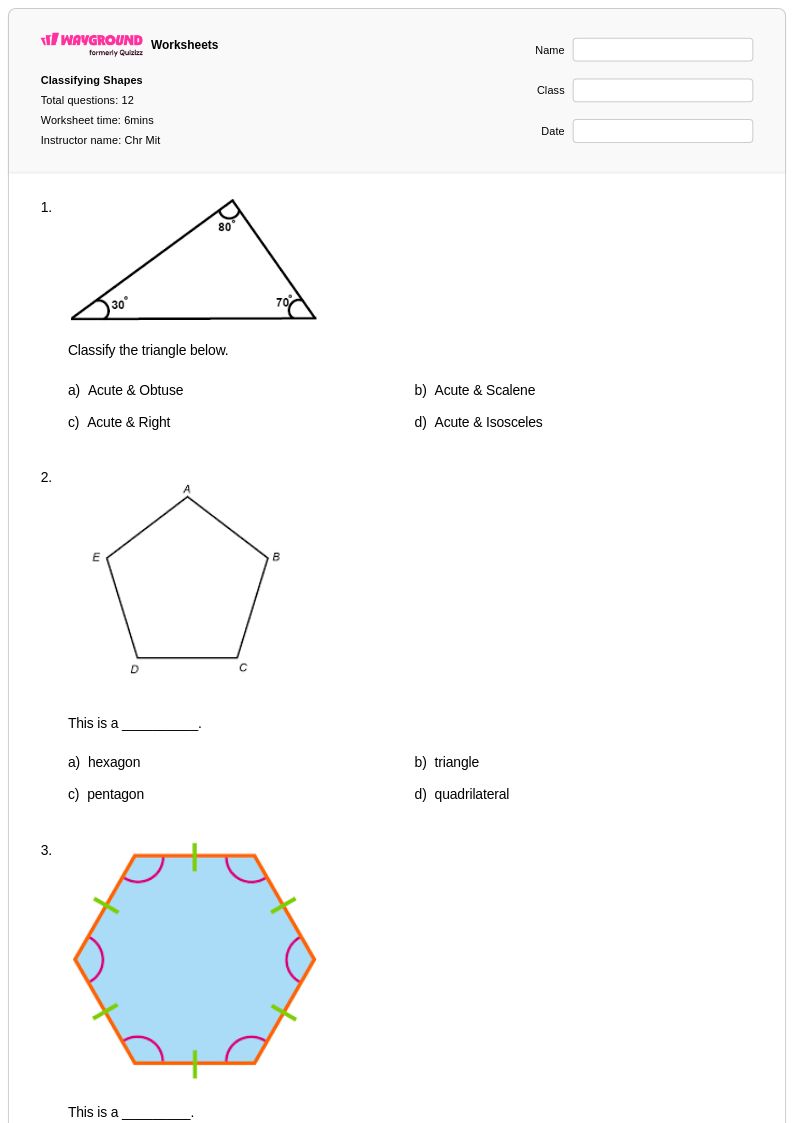
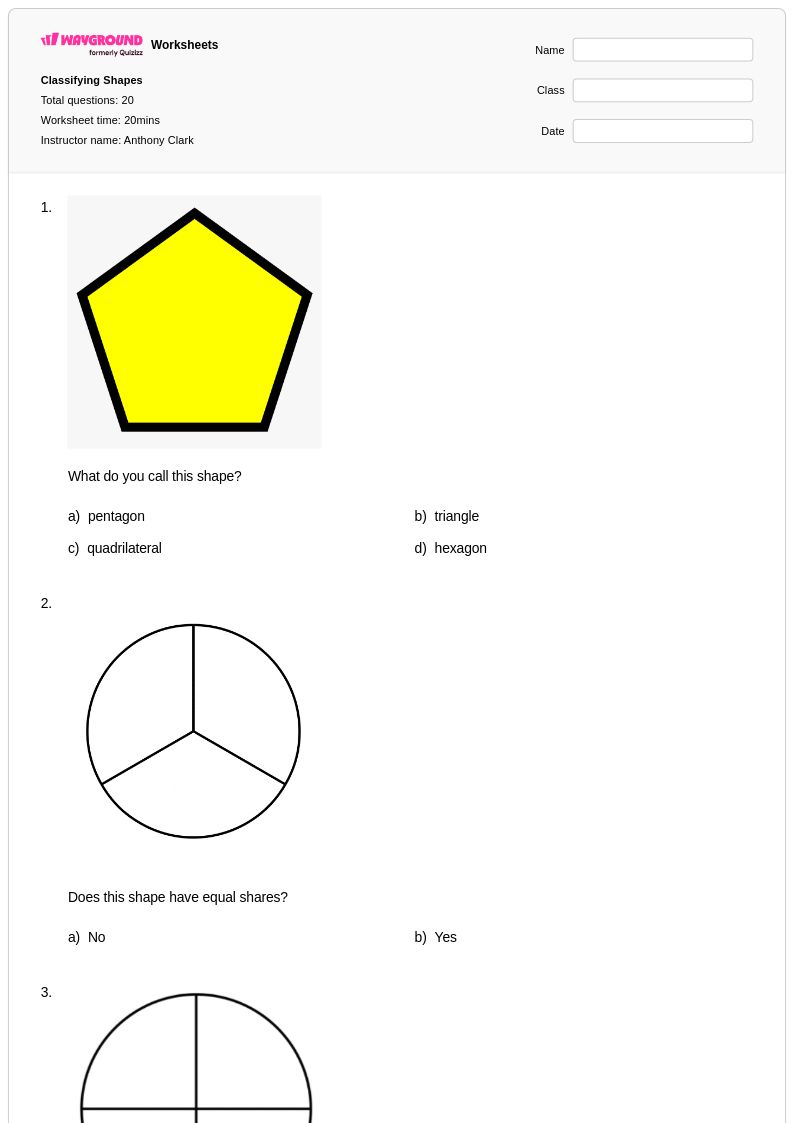
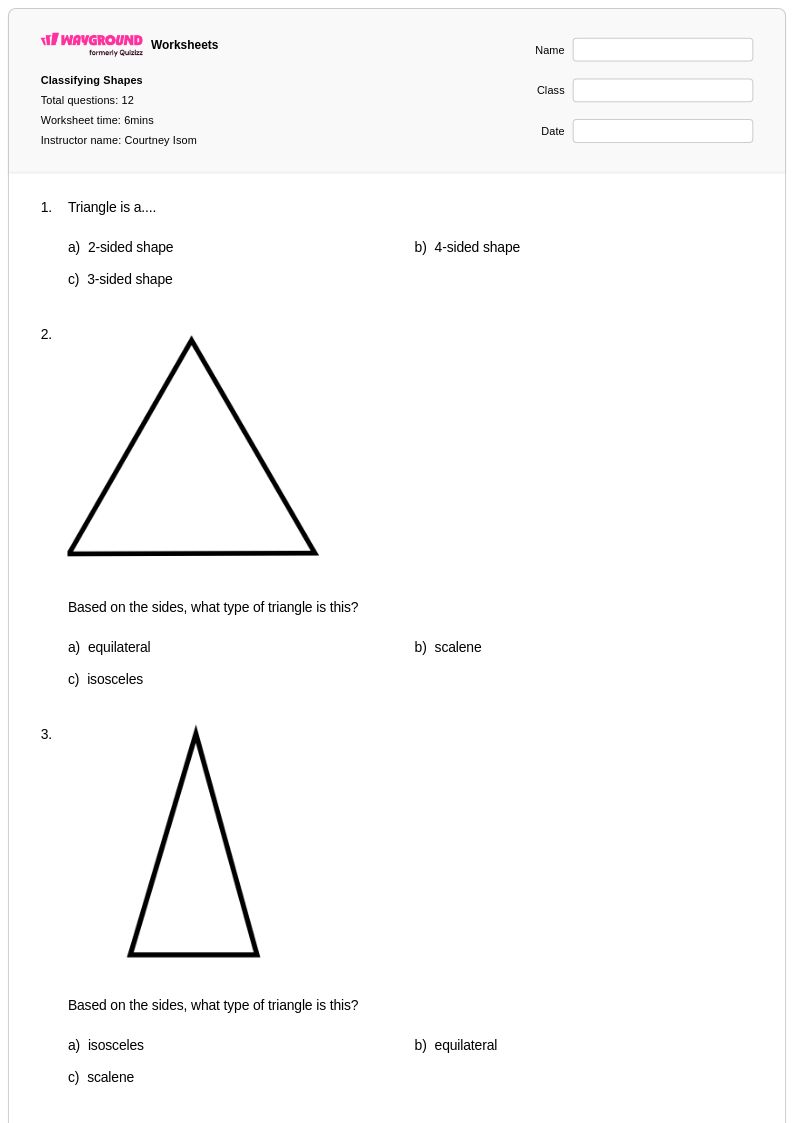
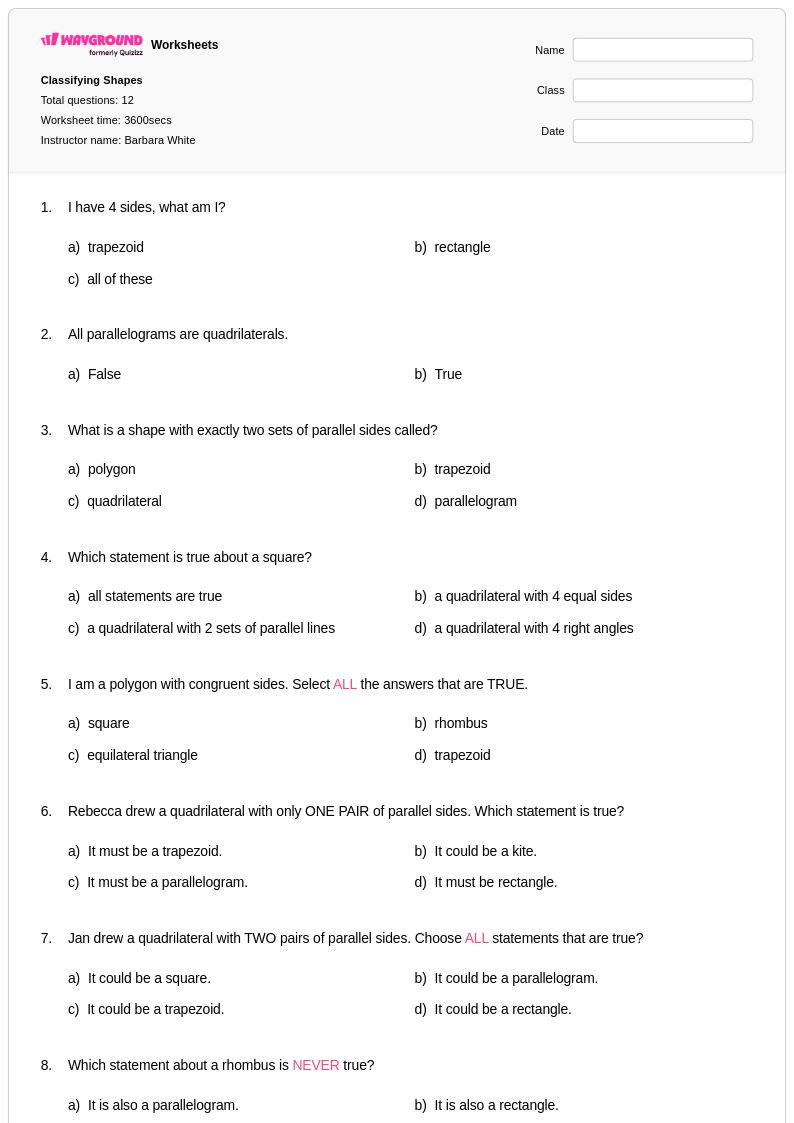
Explore printable Classifying Shapes worksheets for Year 4
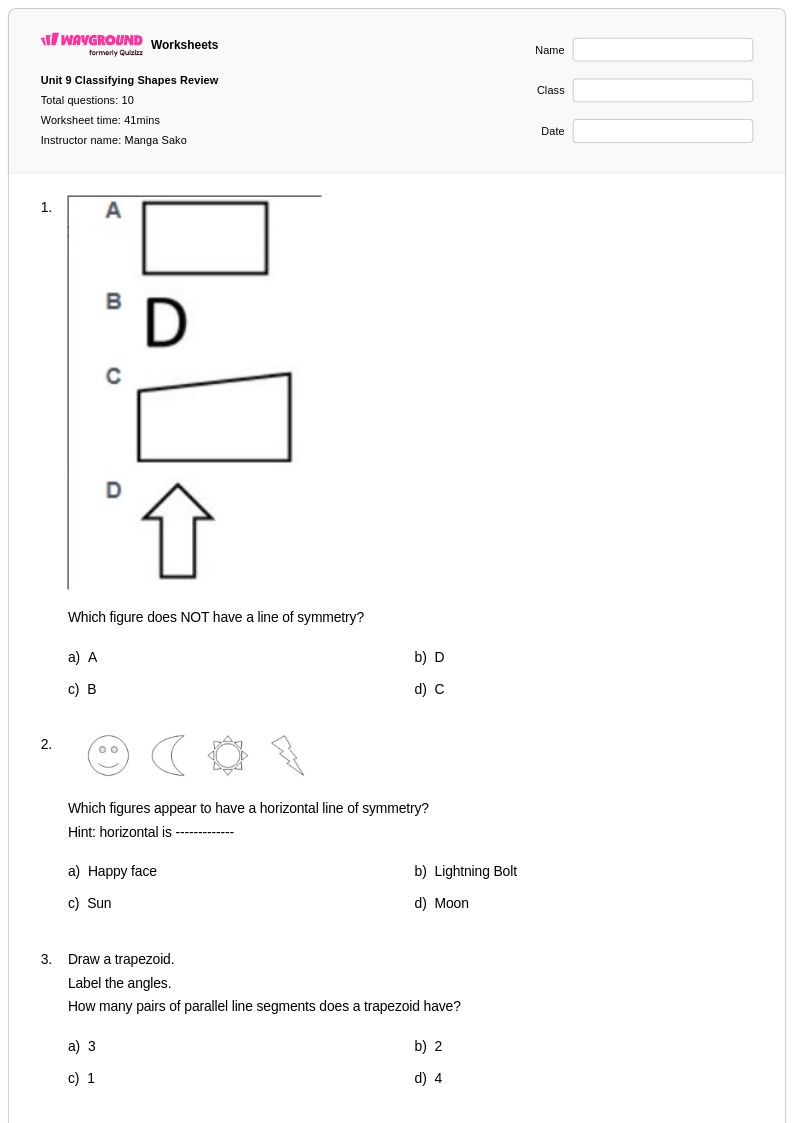
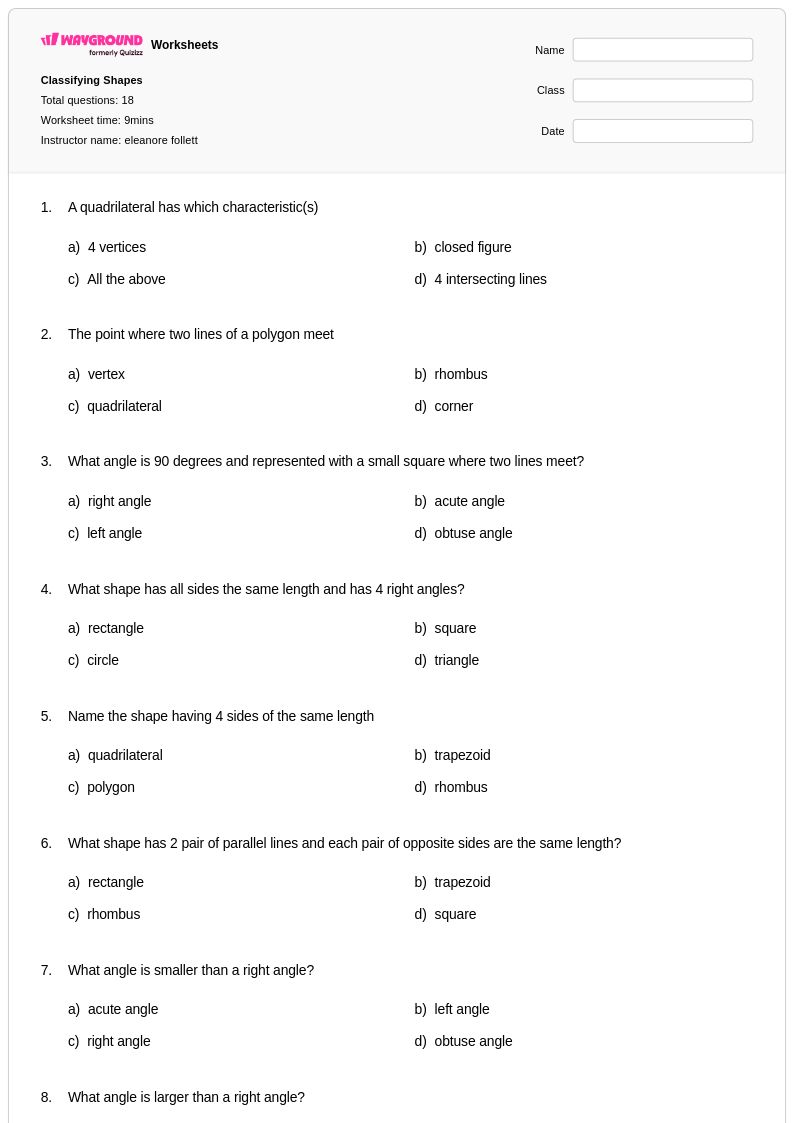
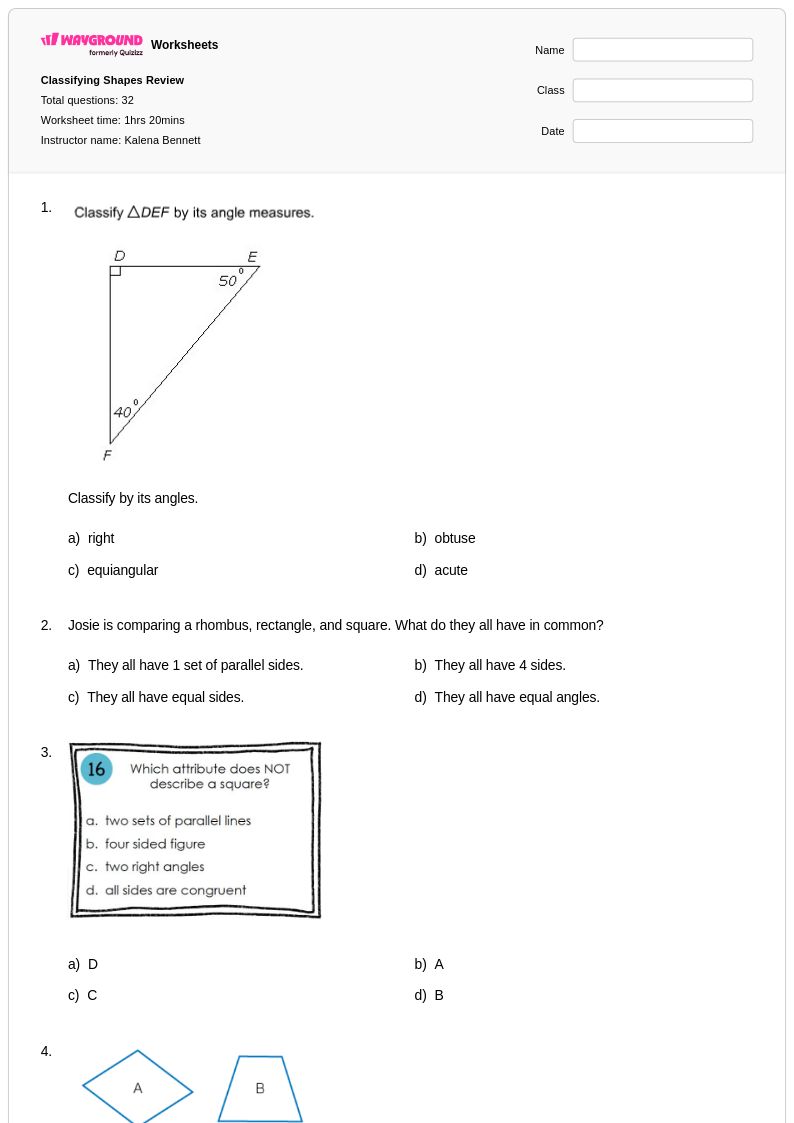
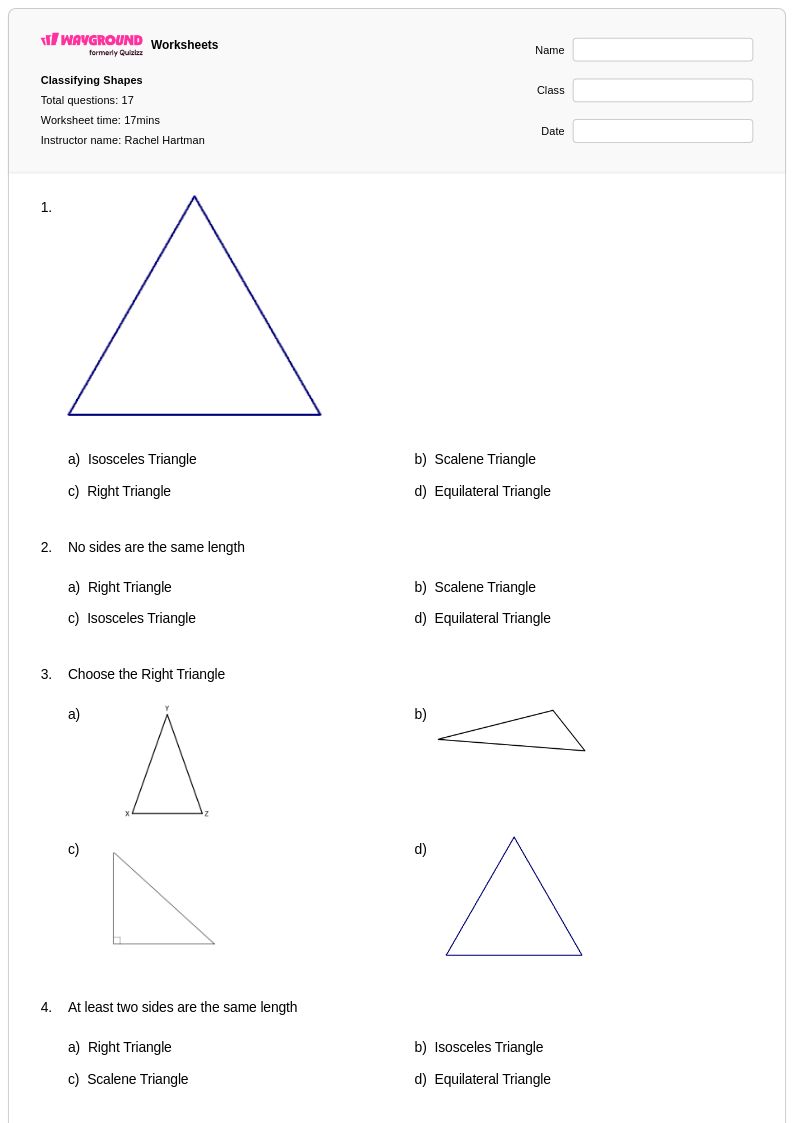
Classifying shapes worksheets for Year 4 students through Wayground (formerly Quizizz) provide comprehensive practice opportunities for developing geometric reasoning and shape recognition skills. These carefully designed resources help fourth-grade learners master the fundamental ability to categorize polygons, quadrilaterals, and three-dimensional figures based on their specific properties such as number of sides, angles, and parallel lines. Students work through engaging practice problems that strengthen their understanding of shape attributes, building confidence in distinguishing between rectangles, squares, rhombuses, trapezoids, triangles, and various other geometric forms. Each worksheet collection includes detailed answer keys and is available as free printable pdf resources, allowing educators to seamlessly integrate shape classification activities into their mathematics instruction while supporting diverse learning needs.
Wayground (formerly Quizizz) empowers teachers with millions of educator-created worksheet resources specifically designed for geometry instruction, featuring robust search and filtering capabilities that make finding grade-appropriate classifying shapes materials effortless. The platform's comprehensive collection aligns with educational standards and offers powerful differentiation tools that enable instructors to customize worksheets based on individual student abilities and learning objectives. Teachers can access these resources in both printable and digital formats, including downloadable pdf versions, making them ideal for classroom instruction, homework assignments, remediation sessions, and enrichment activities. The flexible customization options support effective lesson planning by allowing educators to modify difficulty levels, select specific shape categories, and create targeted practice sessions that address gaps in student understanding while advancing geometric reasoning skills.
FAQs
How do I teach fourth graders to classify shapes by their properties?
What exercises help Grade 4 students practice classifying shapes?
What mistakes do fourth graders make when classifying triangles and quadrilaterals?
How can I use a Grade 4 classifying shapes worksheet in my classroom?
How does classifying shapes fit into the Grade 4 Common Core math progression?
How can I differentiate classifying shapes practice for a mixed-ability class?
What grade do students learn to classify shapes?