
16 Q
4th
15 Q
3rd - Uni
19 Q
3rd - Uni
15 Q
3rd - Uni
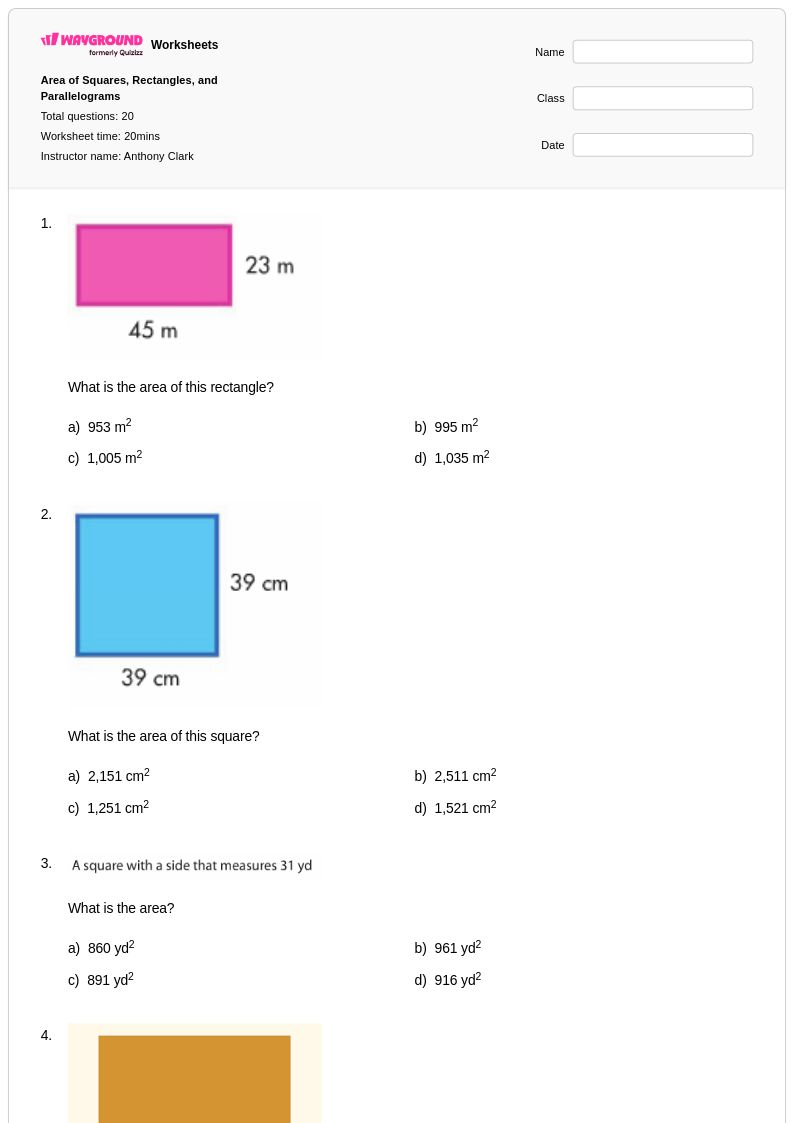
20 Q
3rd - Uni
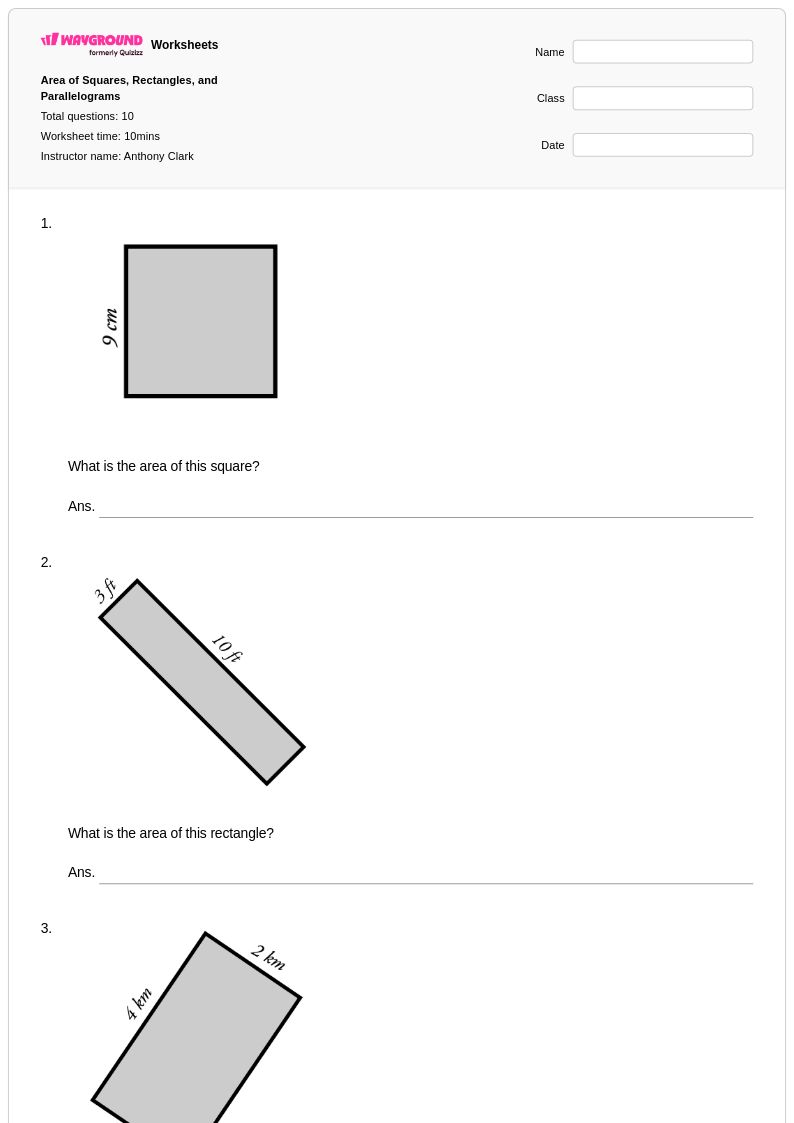
10 Q
3rd - Uni
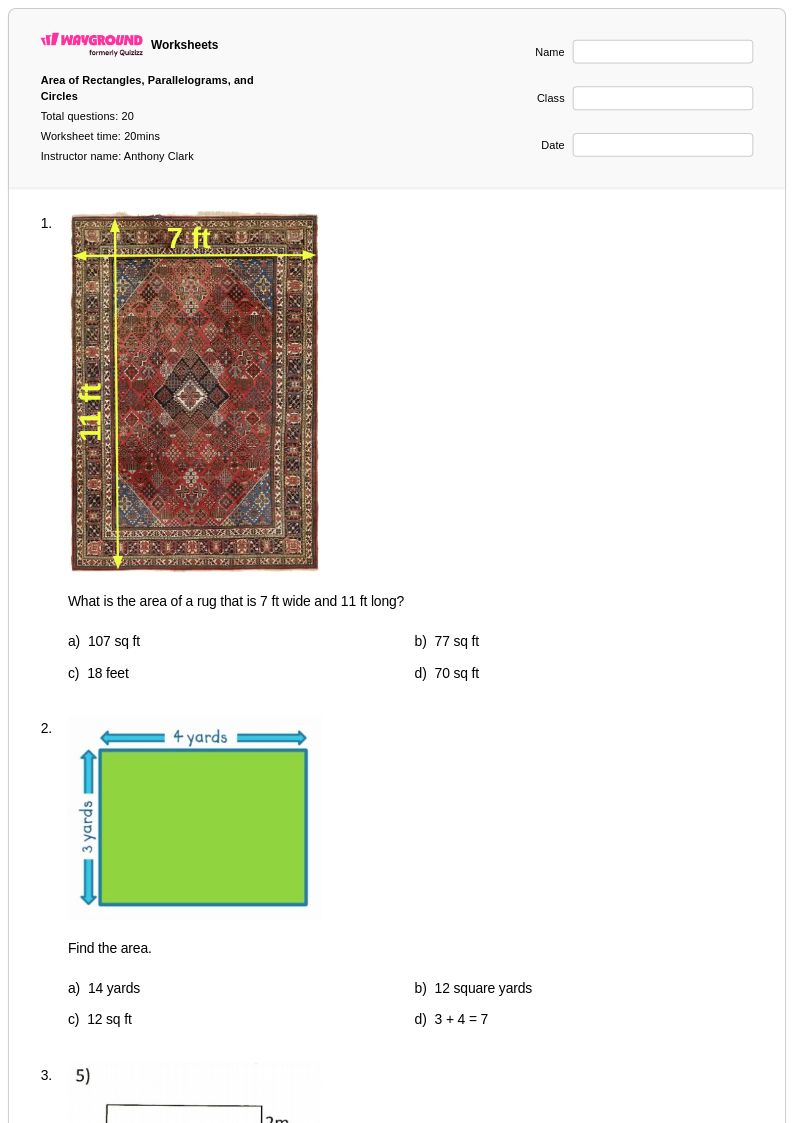
20 Q
3rd - Uni
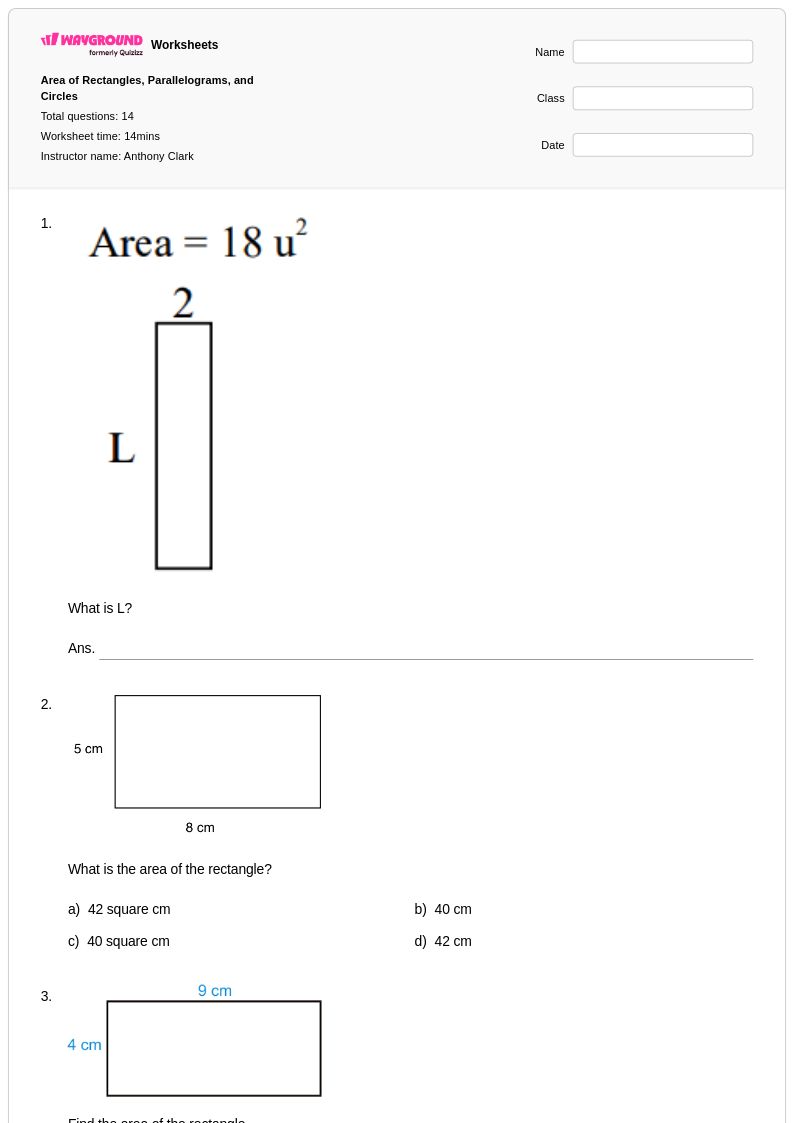
14 Q
3rd - Uni
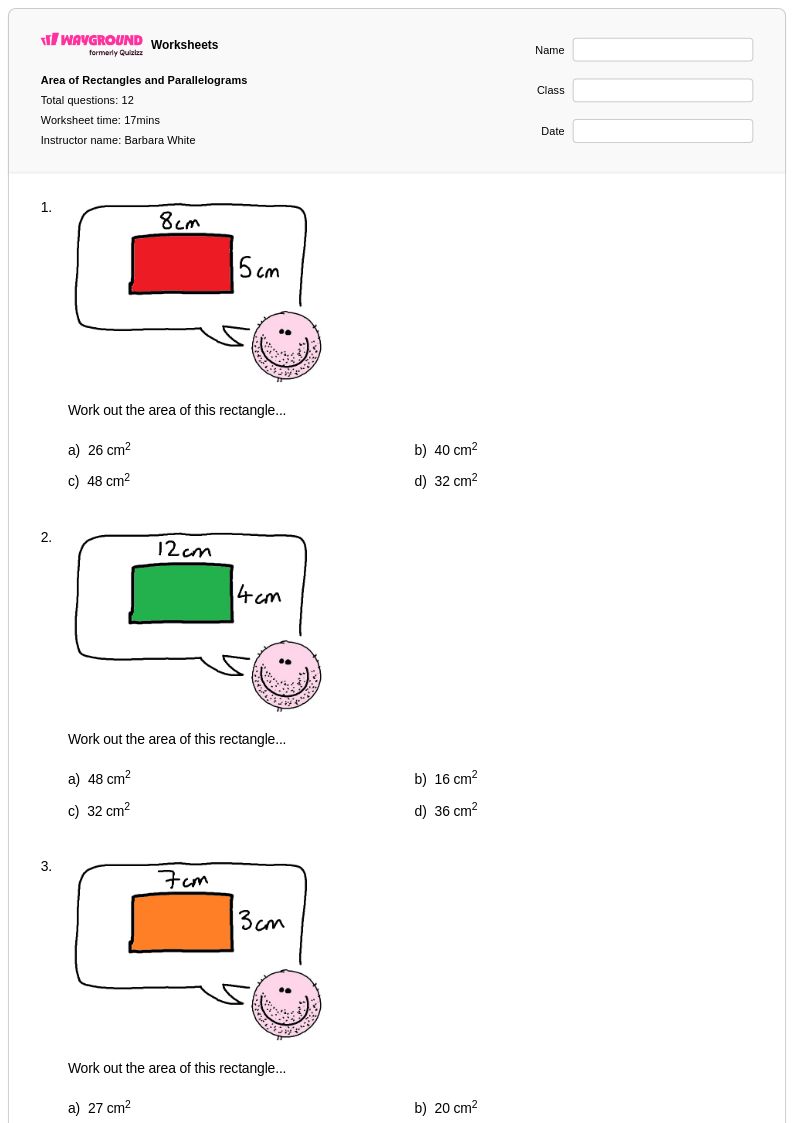
12 Q
4th
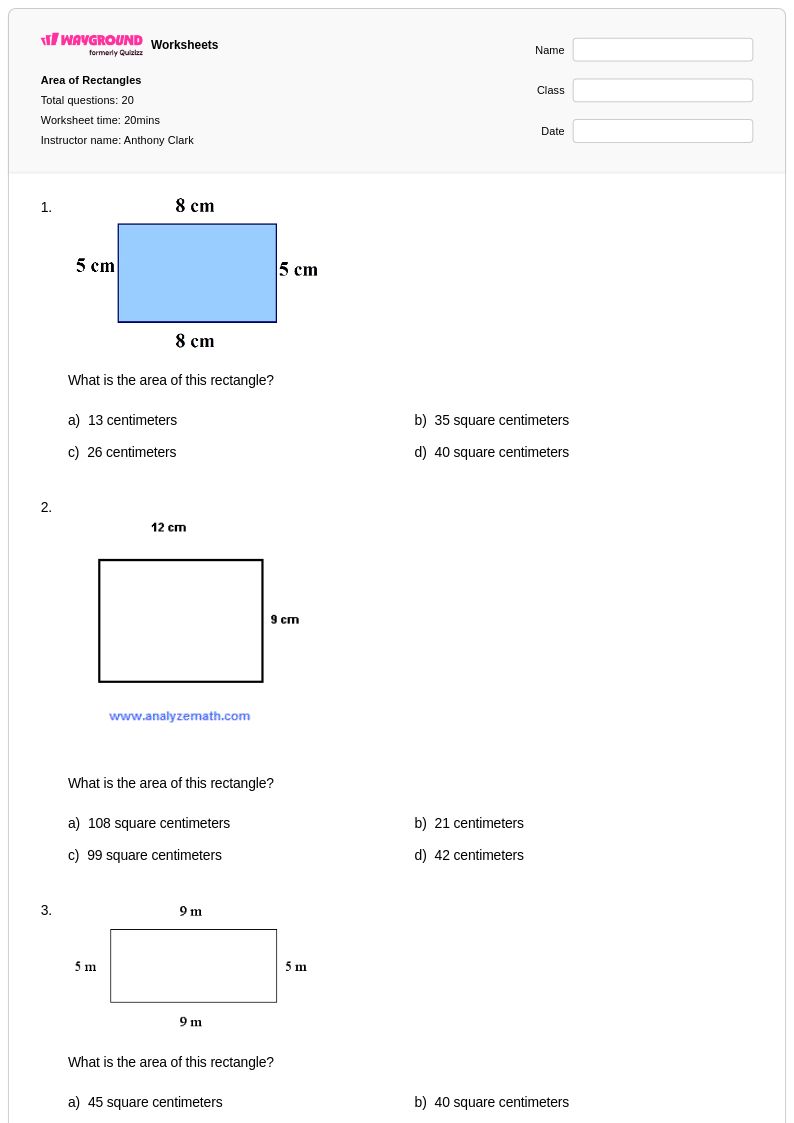
20 Q
3rd - Uni
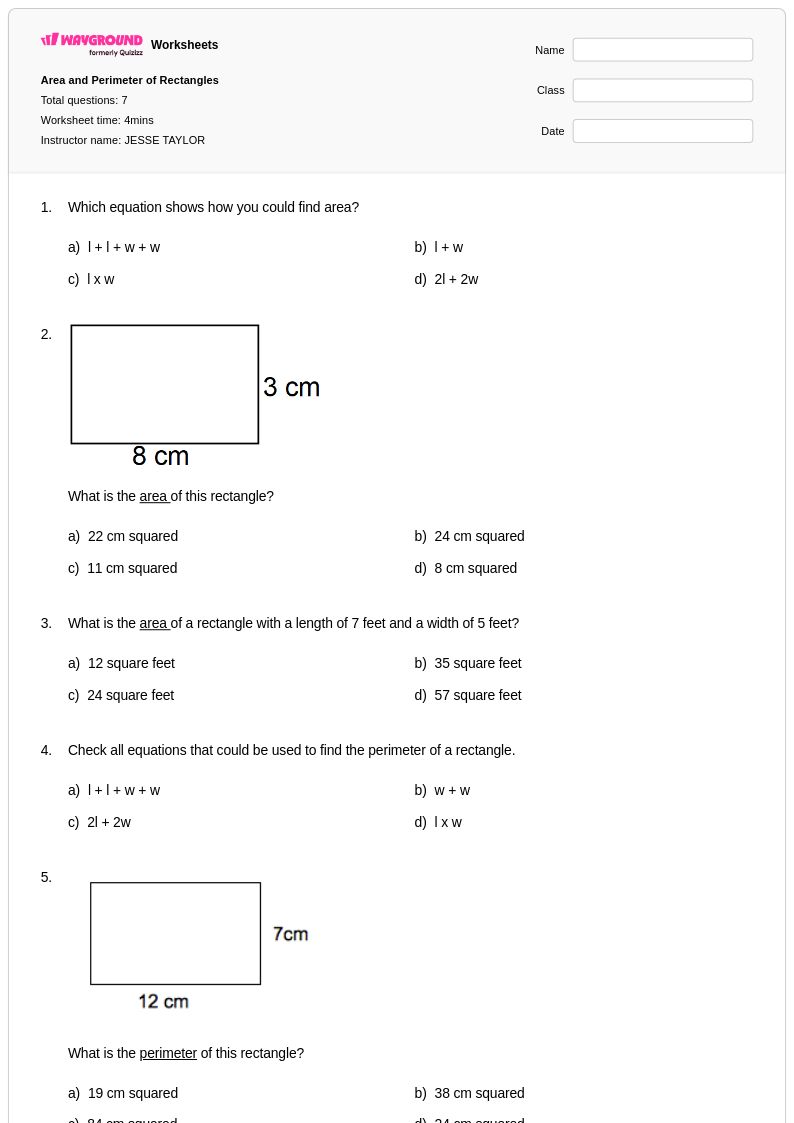
7 Q
4th - 5th
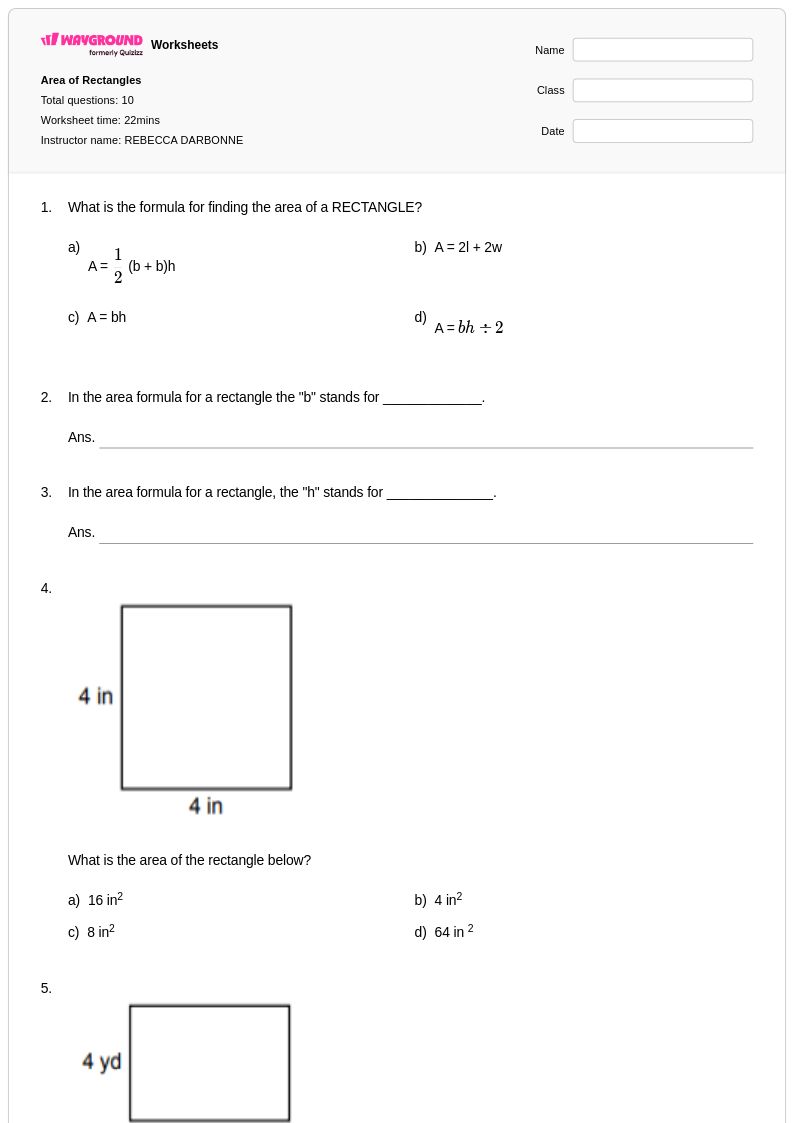
10 Q
3rd - 7th
15 Q
3rd - Uni
19 Q
3rd - Uni
15 Q
3rd - 5th
15 Q
3rd - Uni
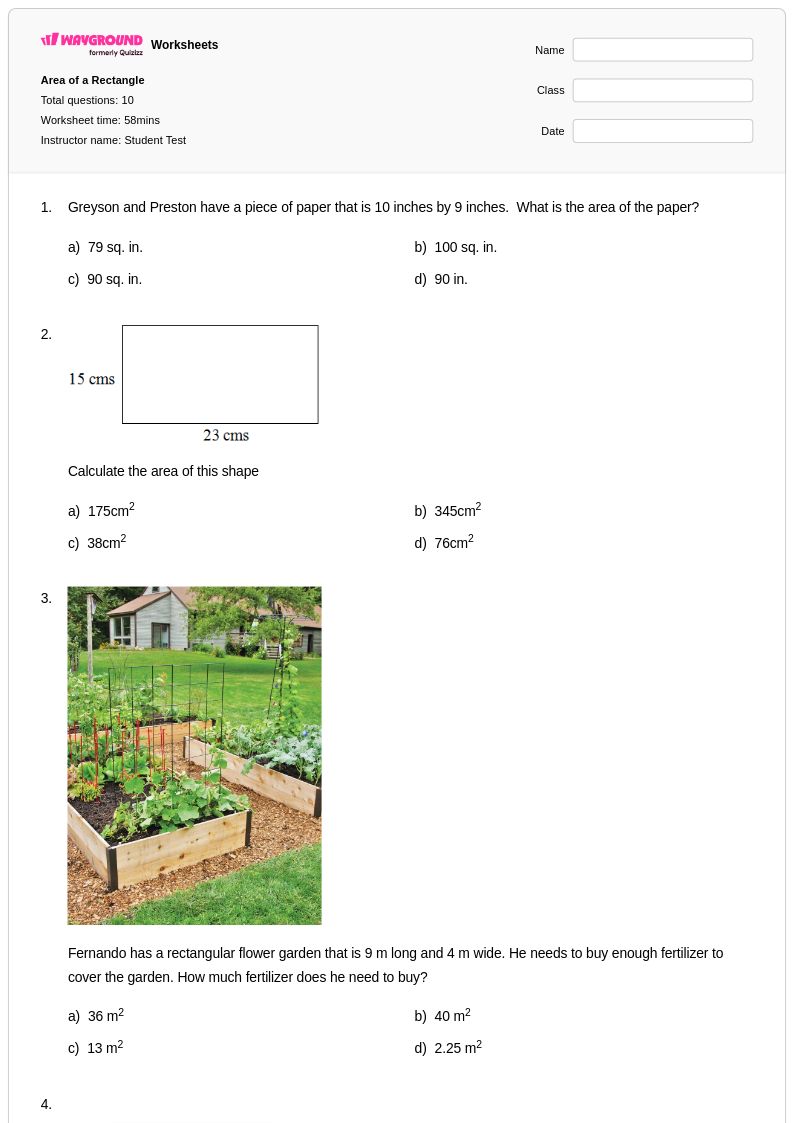
10 Q
4th
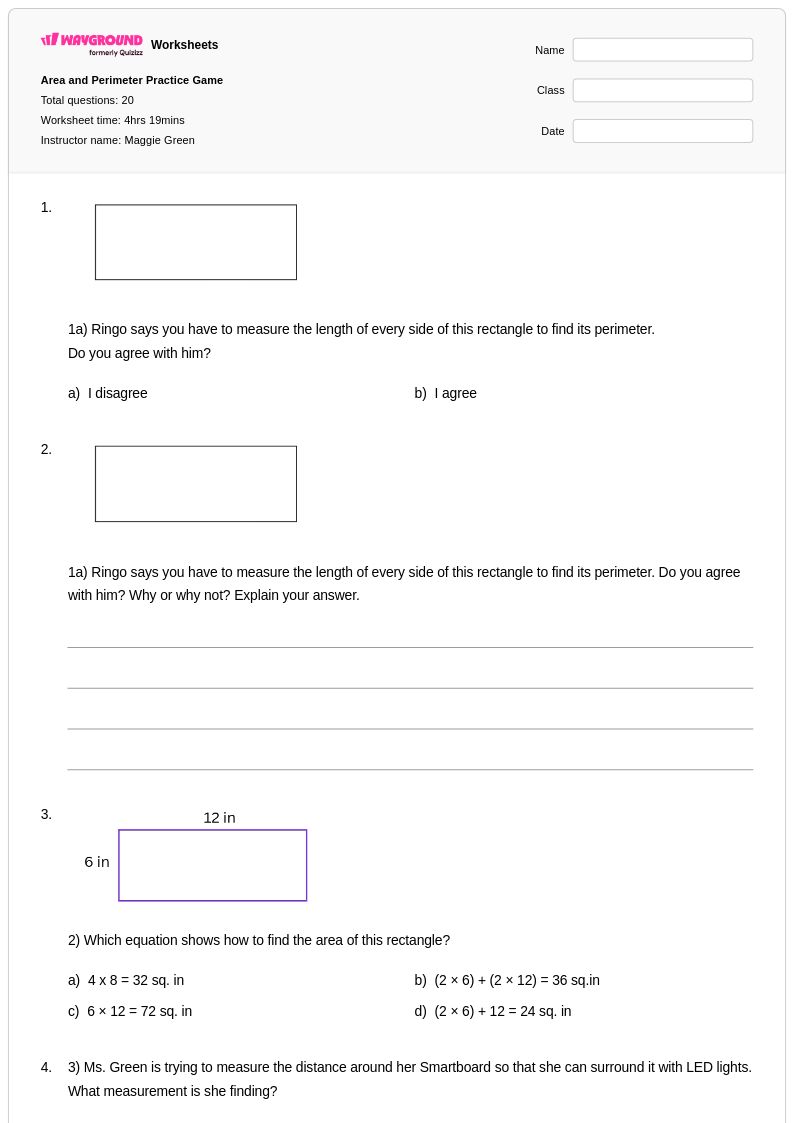
20 Q
4th
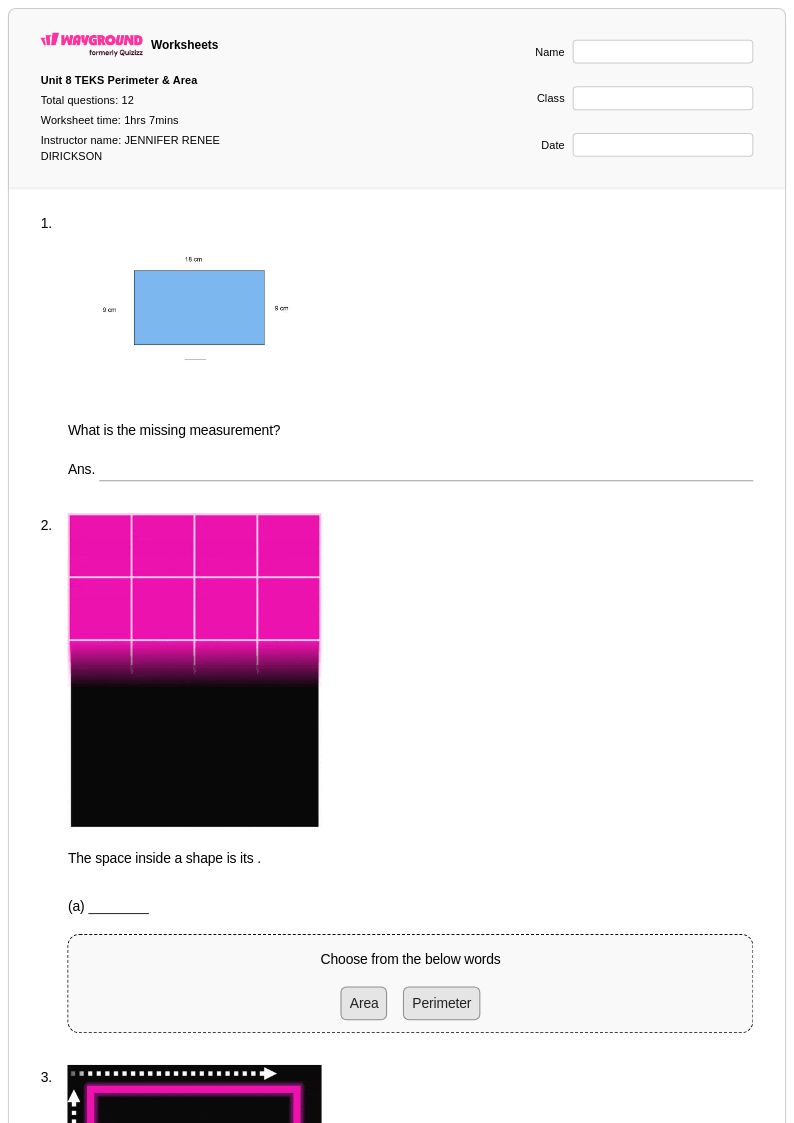
12 Q
4th
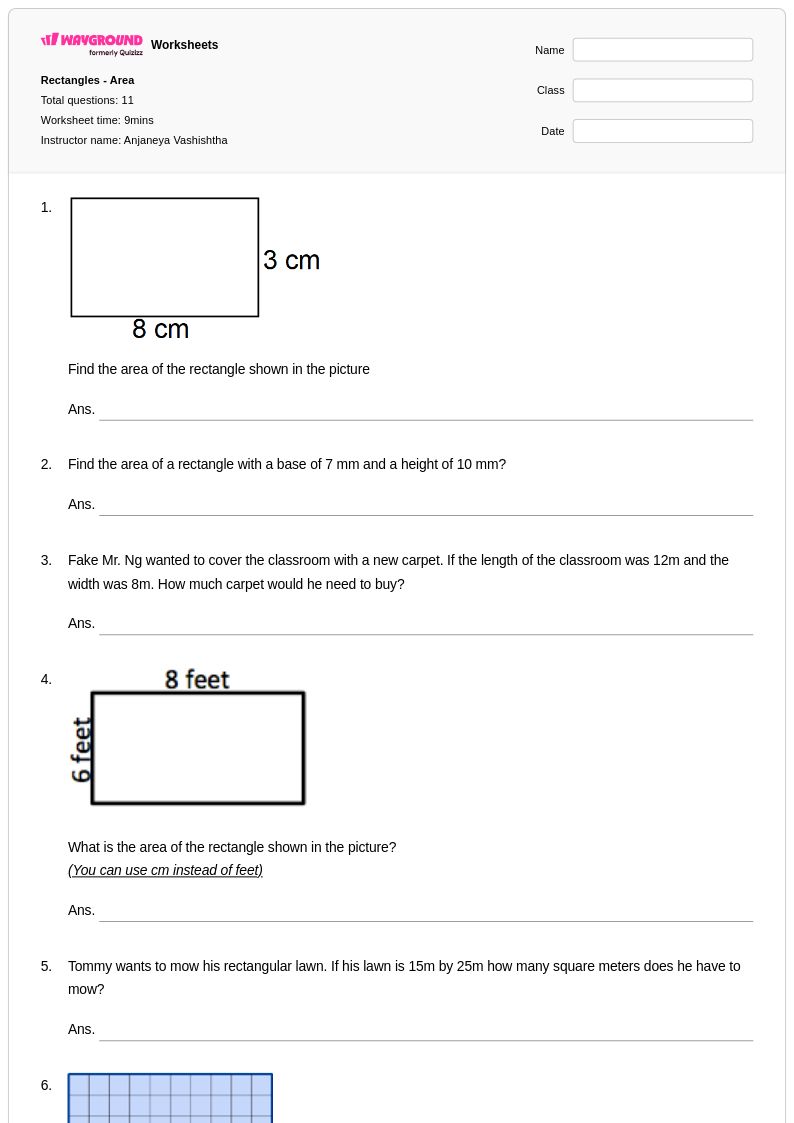
11 Q
4th
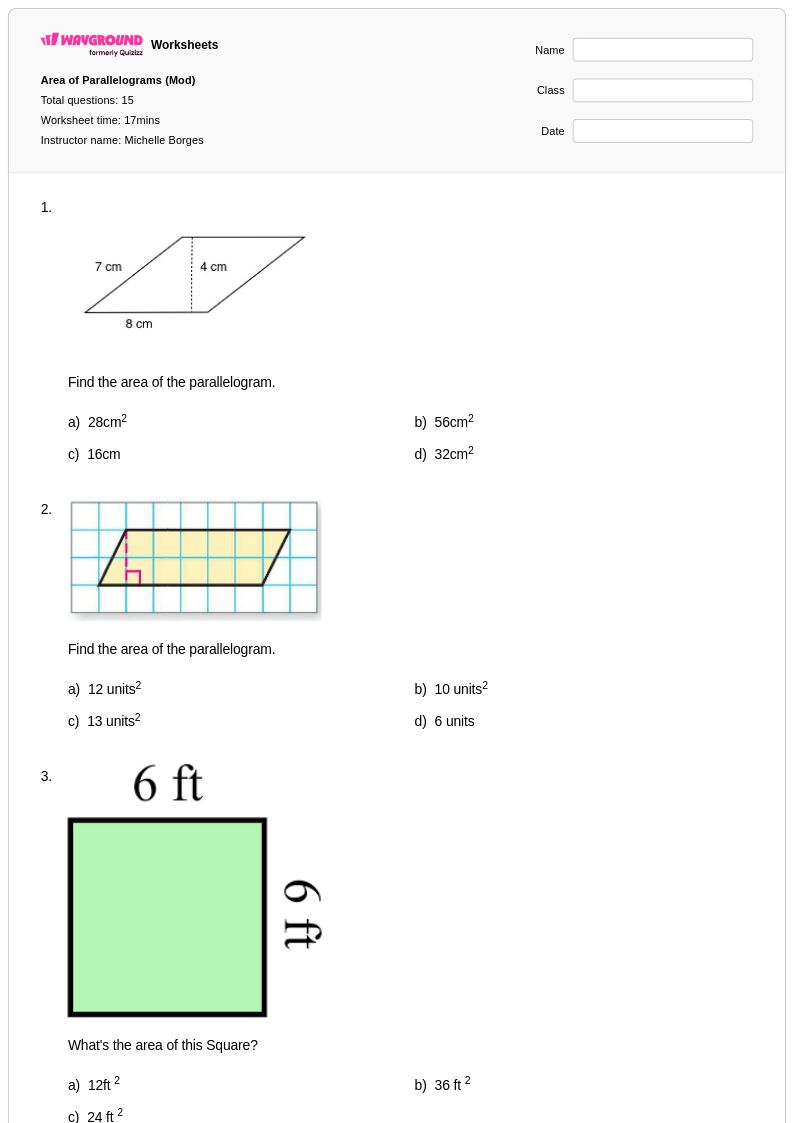
15 Q
4th - 6th
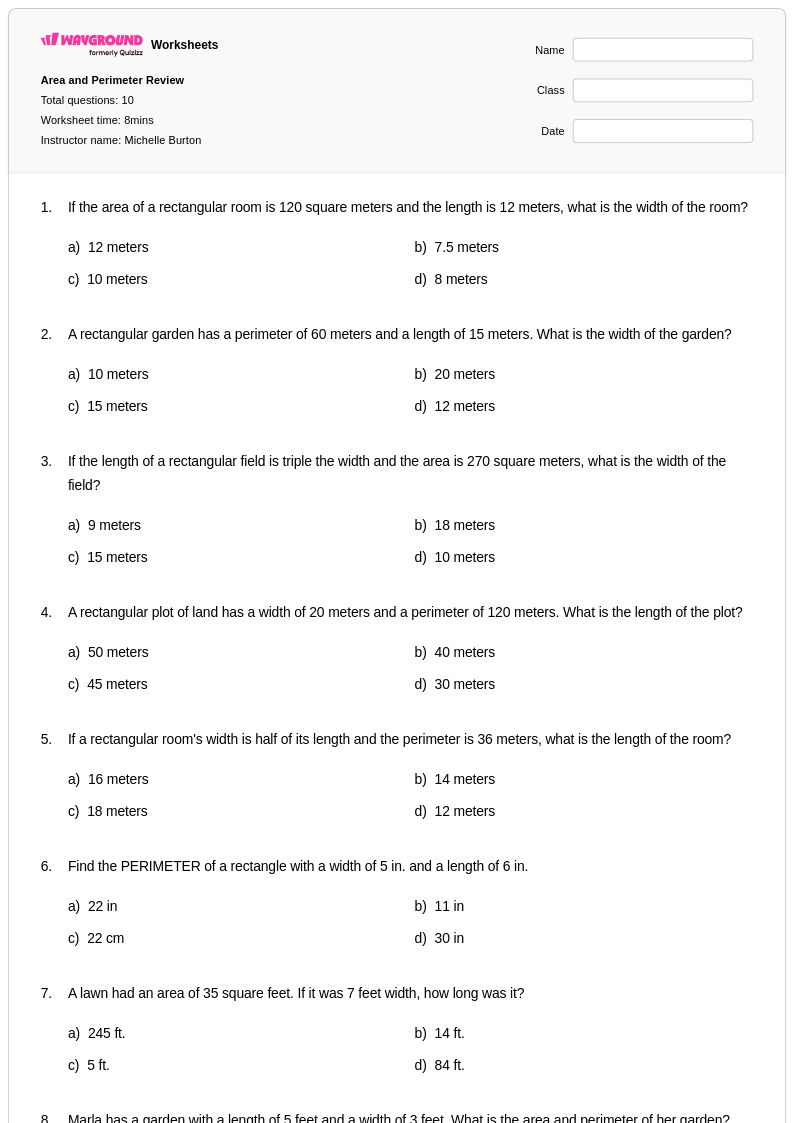
10 Q
4th
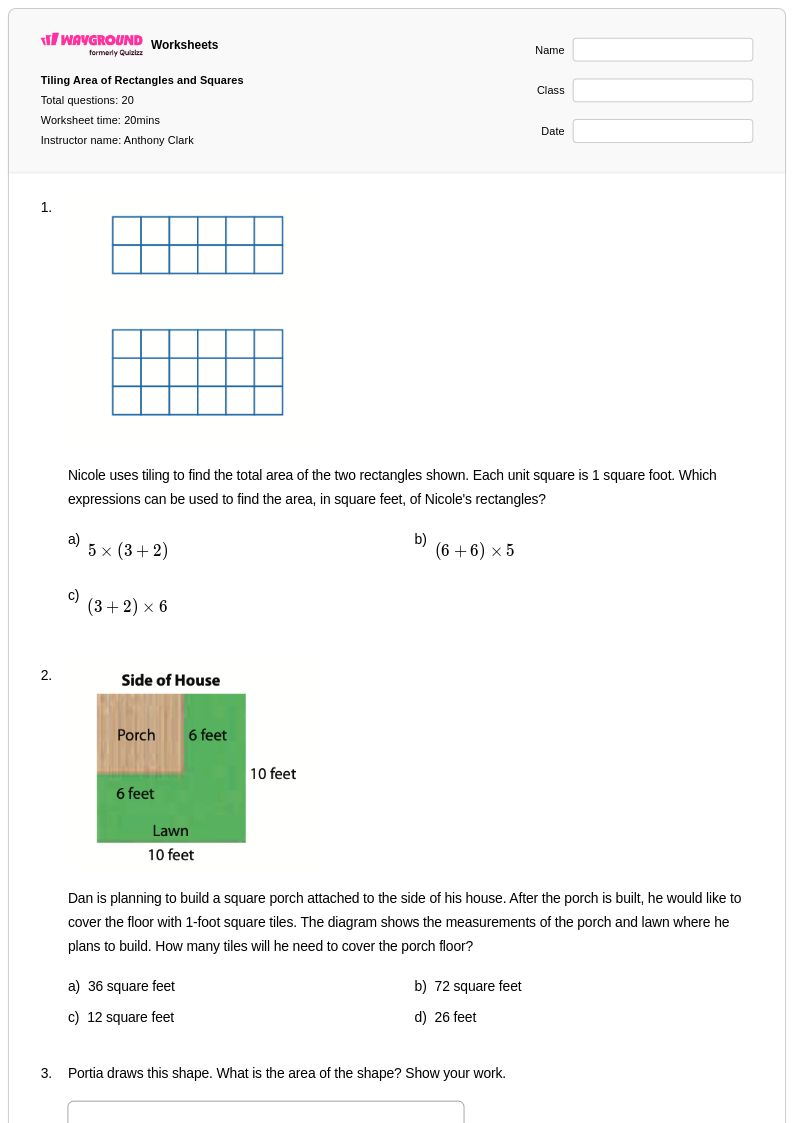
20 Q
3rd - Uni
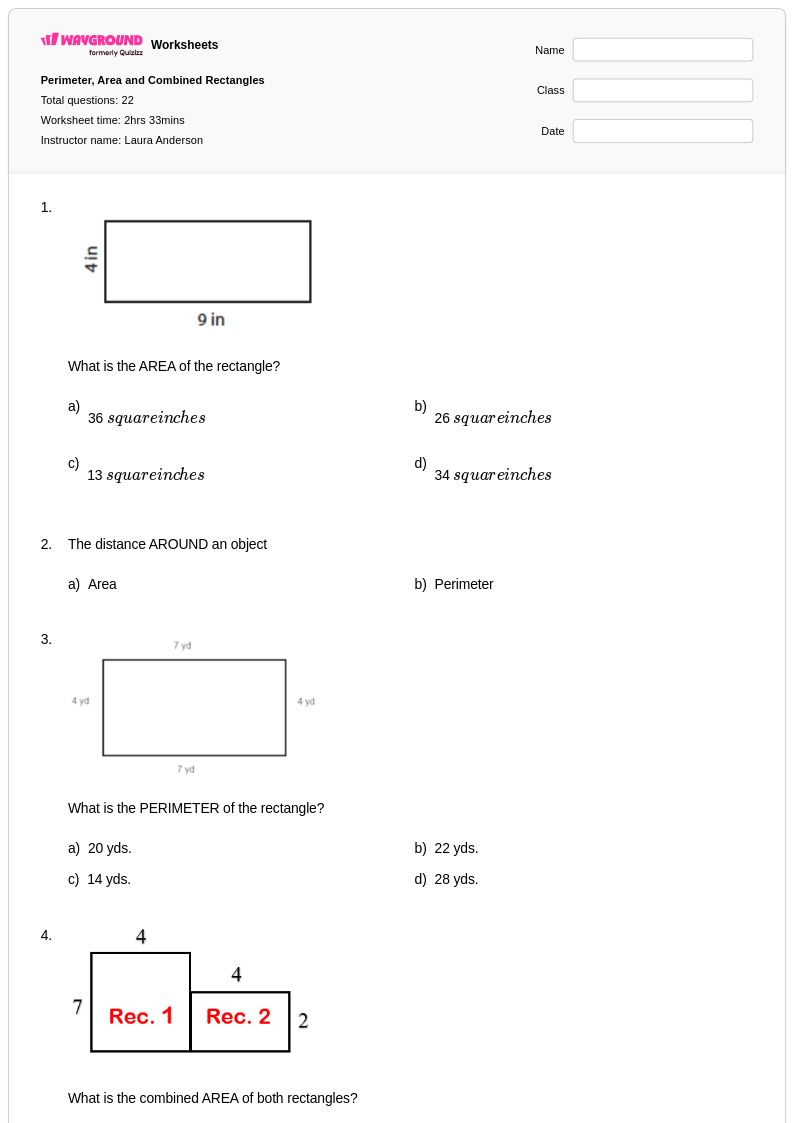
22 Q
4th
Explore Area of Rectangles and Parallelograms Worksheets by Grades
Explore Other Subject Worksheets for year 4
Explore printable Area of Rectangles and Parallelograms worksheets for Year 4
Area of rectangles and parallelograms worksheets for grade 4 students available through Wayground provide essential practice in calculating the area of quadrilateral shapes using fundamental geometric principles. These comprehensive worksheets strengthen students' understanding of area formulas, helping them master the concept that area equals length times width for rectangles and base times height for parallelograms. Students work through carefully structured practice problems that progress from simple whole-number calculations to more complex scenarios involving mixed numbers and real-world applications. Each worksheet collection includes detailed answer keys and is available as free printable pdf resources, allowing educators to seamlessly integrate area calculations into their mathematics curriculum while building students' spatial reasoning and multiplication skills.
Wayground's extensive collection of area worksheets draws from millions of teacher-created resources, offering educators powerful search and filtering capabilities to locate materials perfectly aligned with grade 4 mathematics standards and specific learning objectives. The platform's differentiation tools enable teachers to customize worksheet difficulty levels, ensuring appropriate challenges for students at various skill levels while maintaining focus on essential area calculation concepts. These resources are available in both printable and digital formats, including downloadable pdf versions, making them ideal for classroom instruction, homework assignments, remediation sessions, and enrichment activities. Teachers can efficiently plan lessons around area concepts, provide targeted skill practice, and assess student understanding using worksheets that align with curriculum standards and support diverse learning needs.
FAQs
How do I teach area of rectangles and parallelograms in Grade 4?
What area exercises work well for fourth graders?
What mistakes do Grade 4 students make with rectangle and parallelogram area?
How should I use these area worksheets for practice or assessment?
How does this topic fit the Grade 4 Common Core curriculum?
How can I differentiate these area worksheets in a mixed-ability class?
What area skills should a fourth grader know?