Free Printable Closed Syllable Worksheets for Year 1
Year 1 closed syllable worksheets from Wayground help students master reading patterns through engaging printables and practice problems that build foundational phonics skills with comprehensive answer keys.
Explore printable Closed Syllable worksheets for Year 1
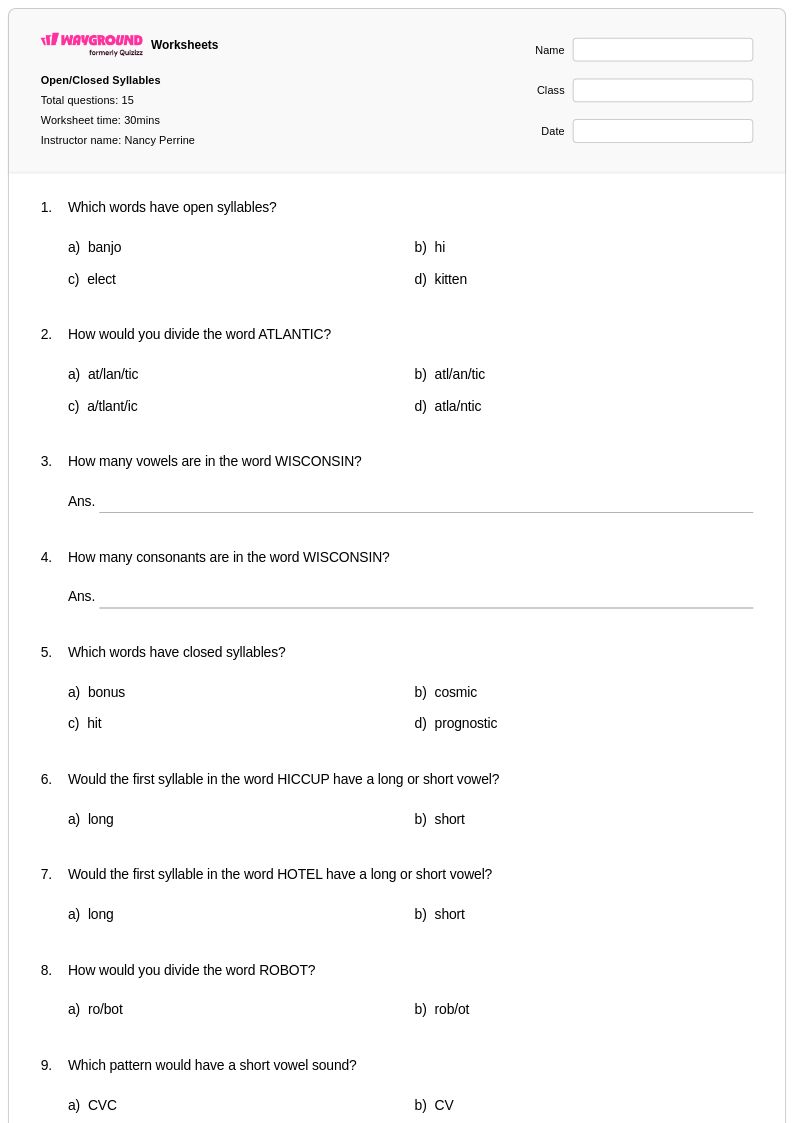
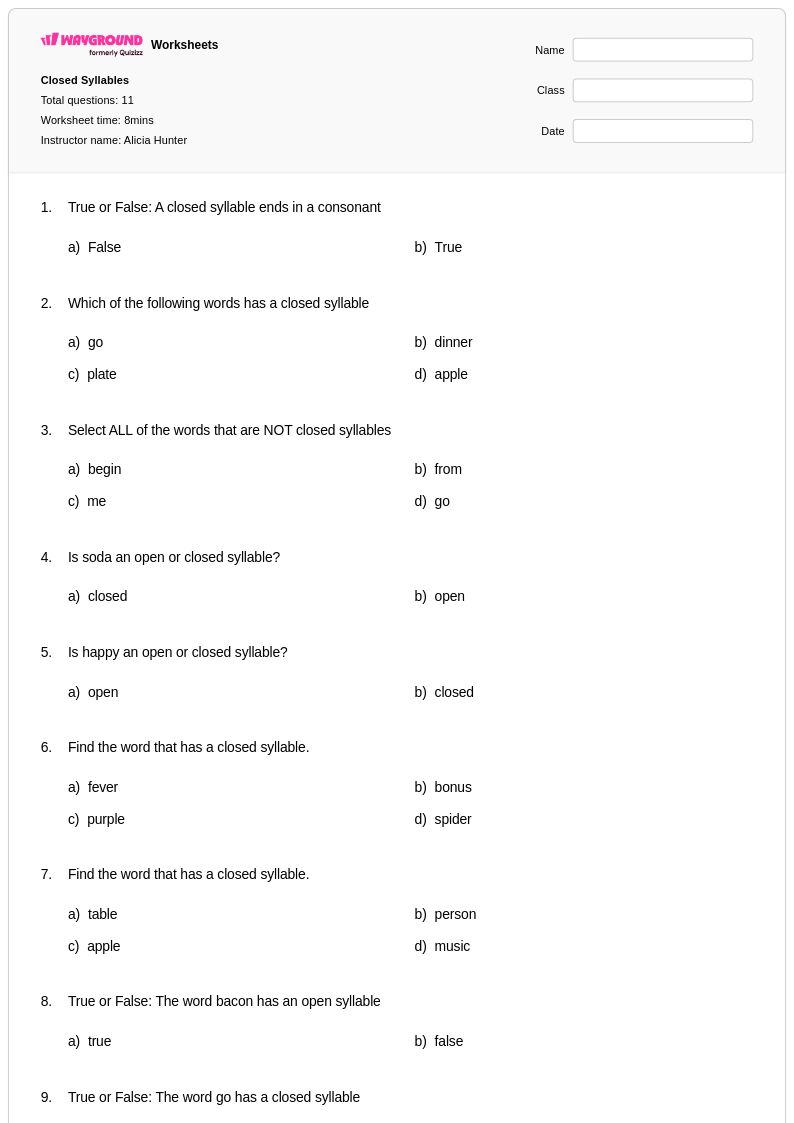
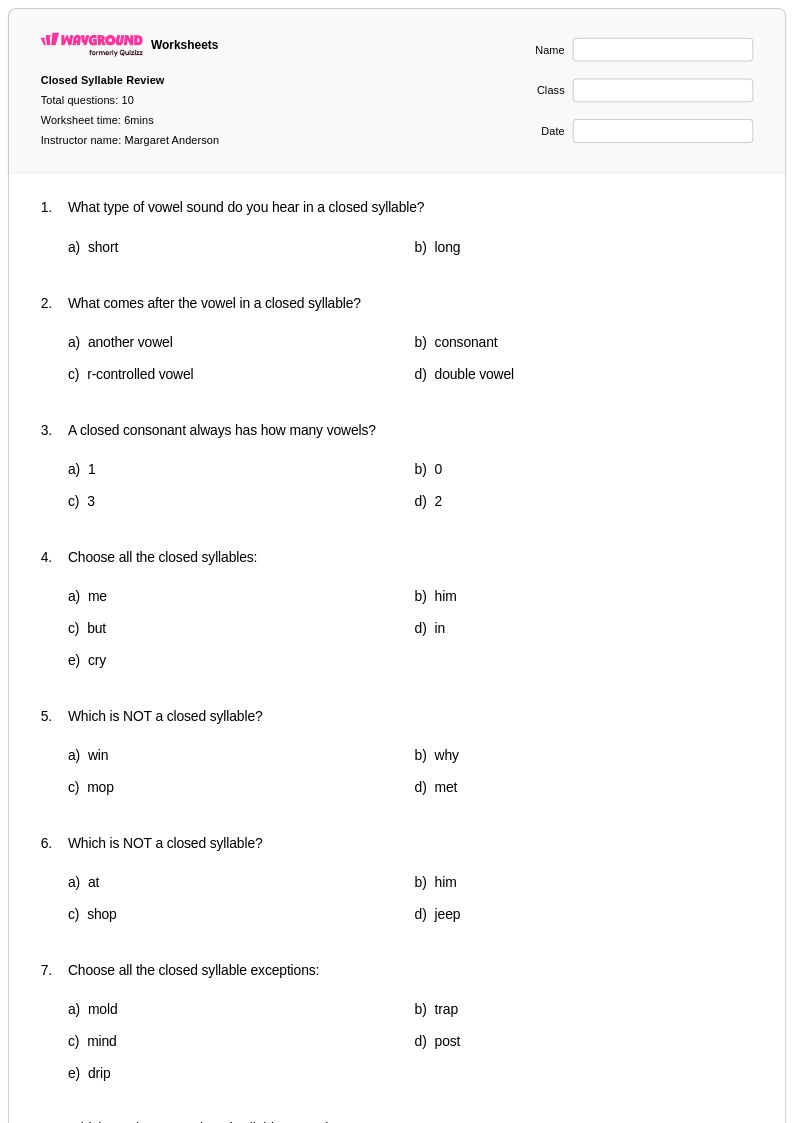
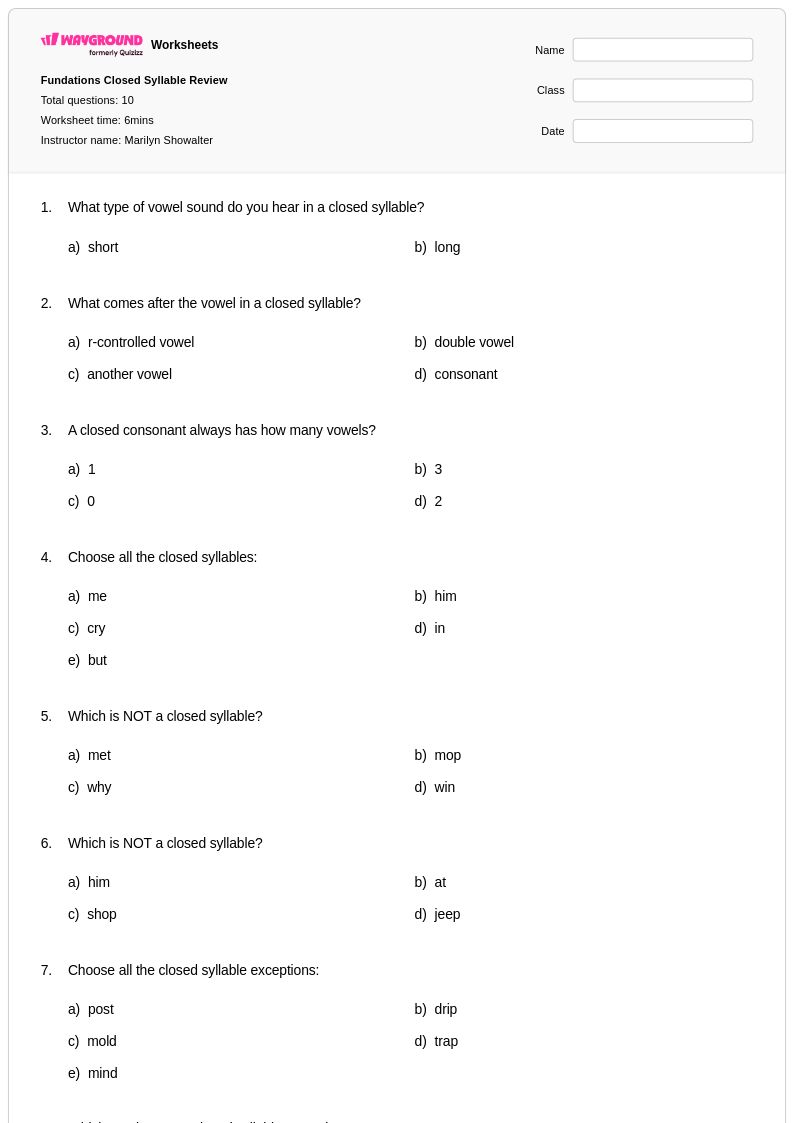
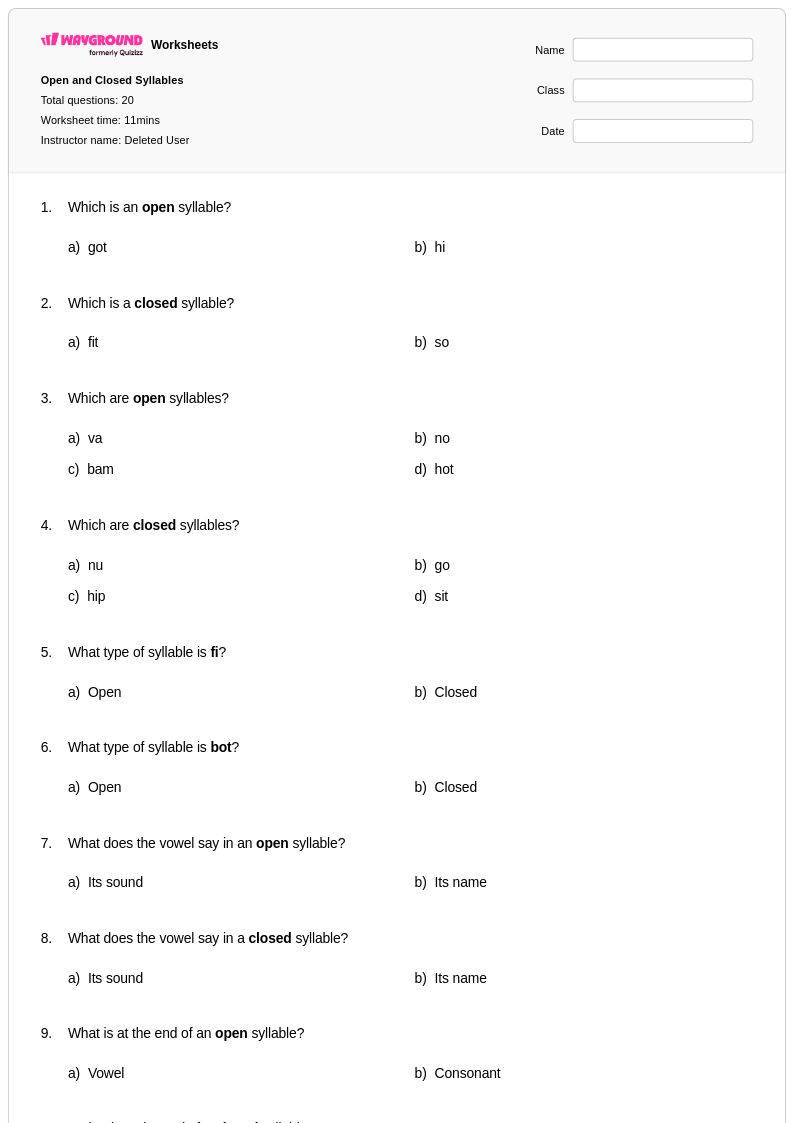
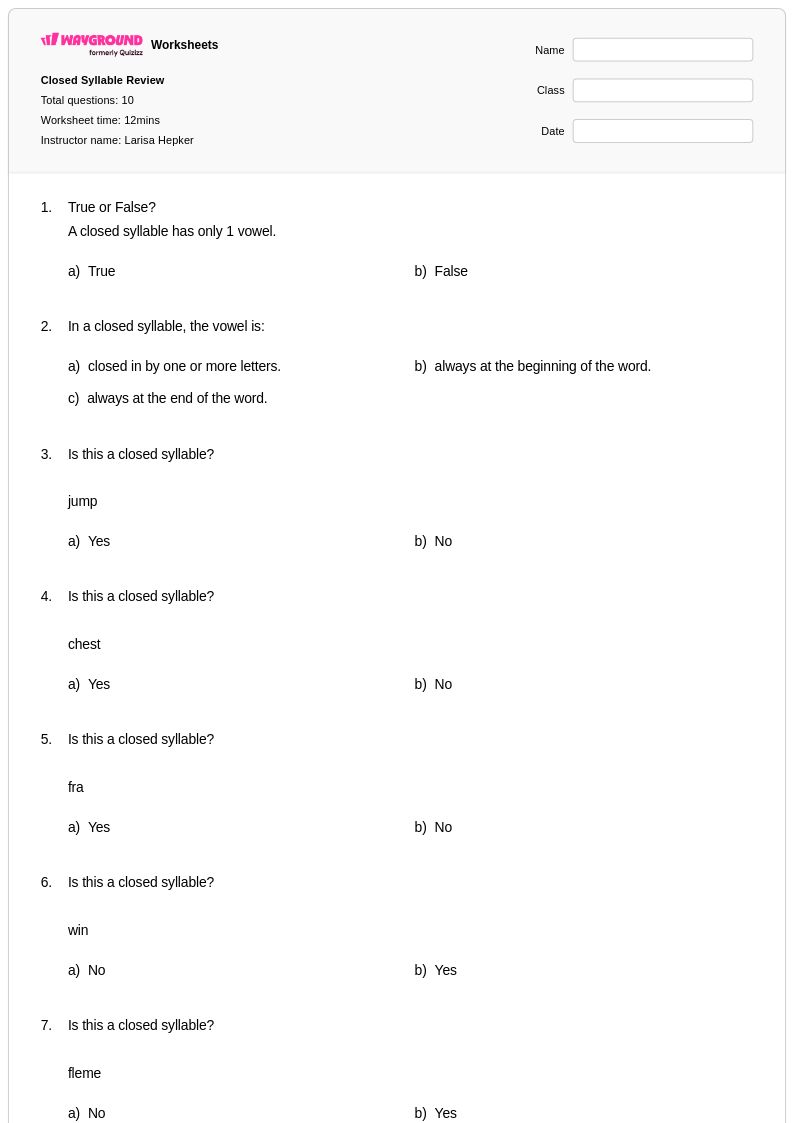
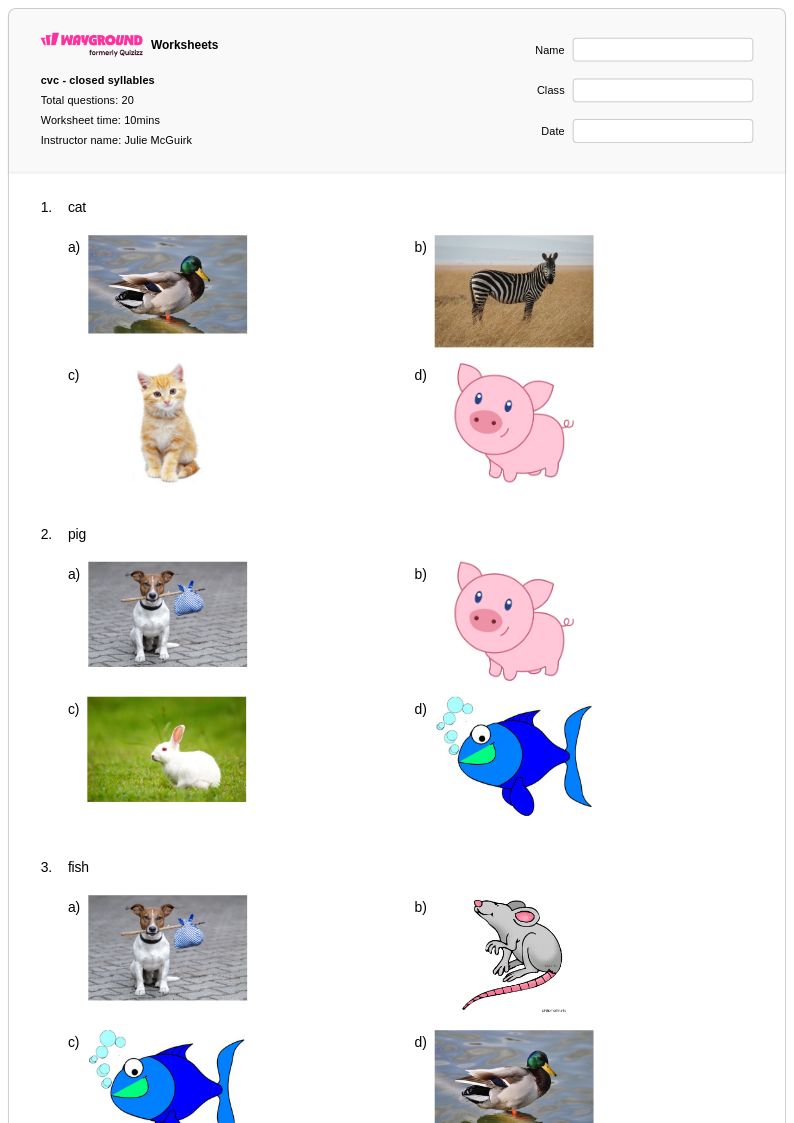
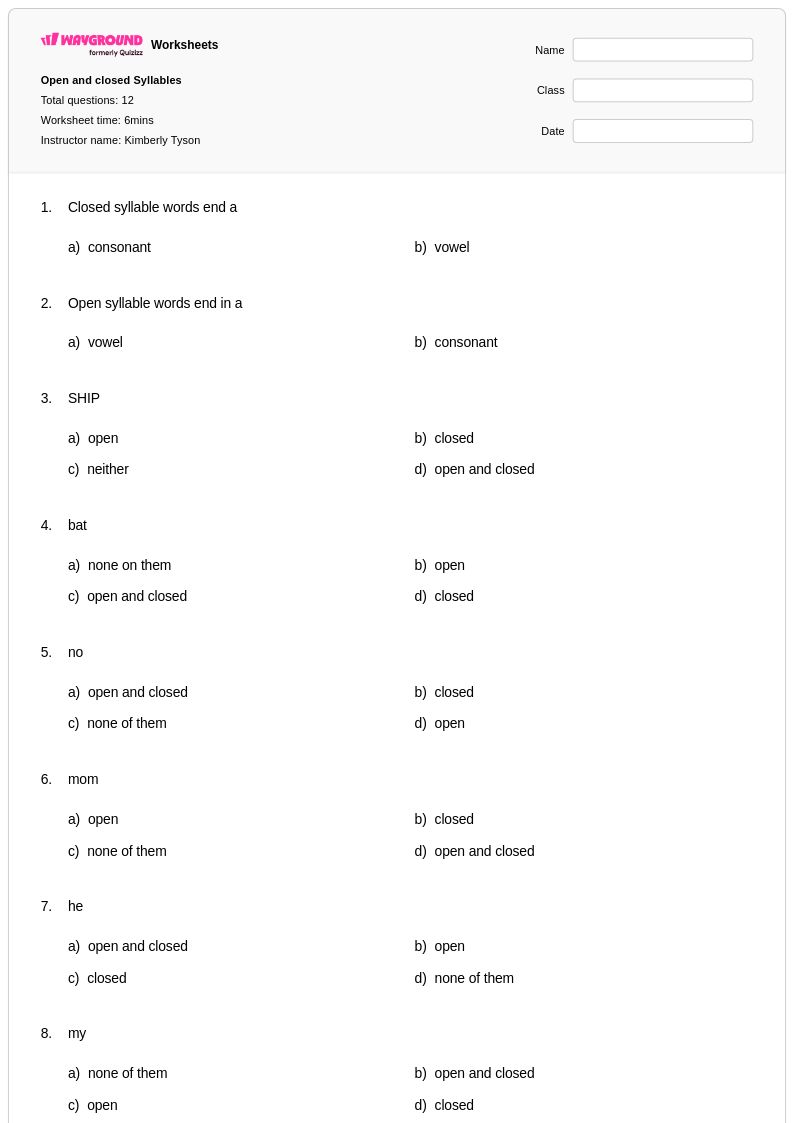
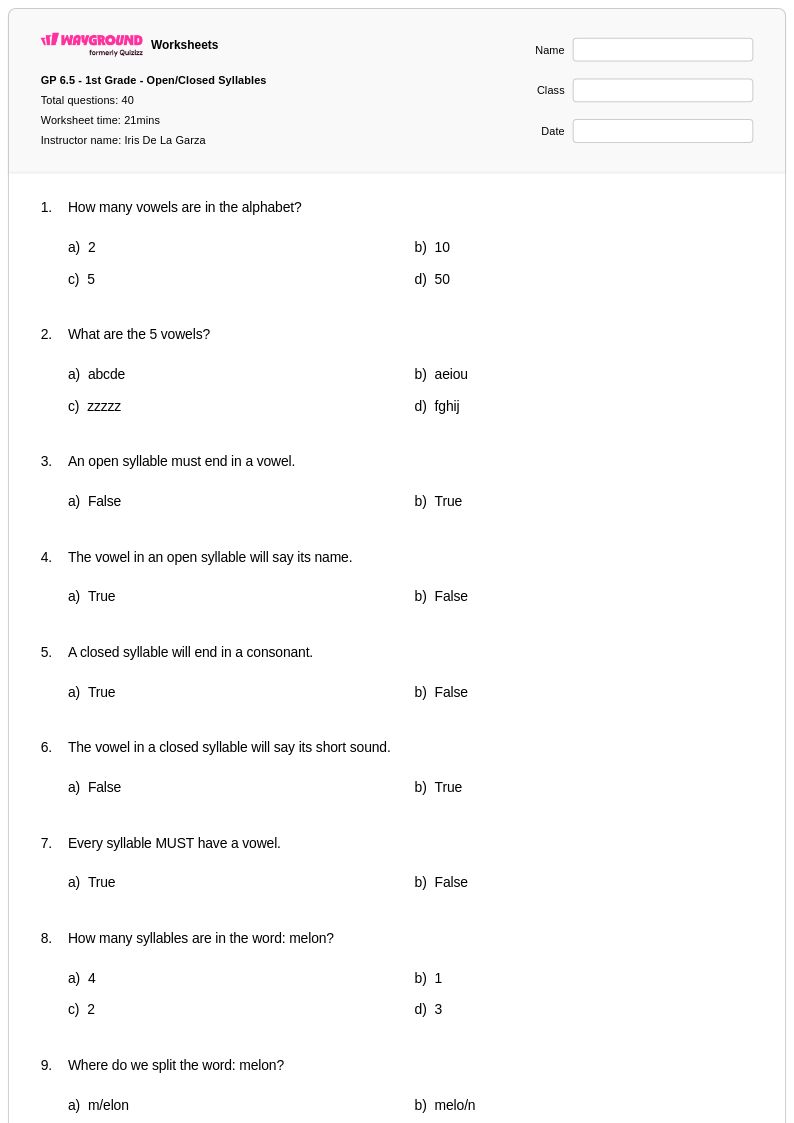
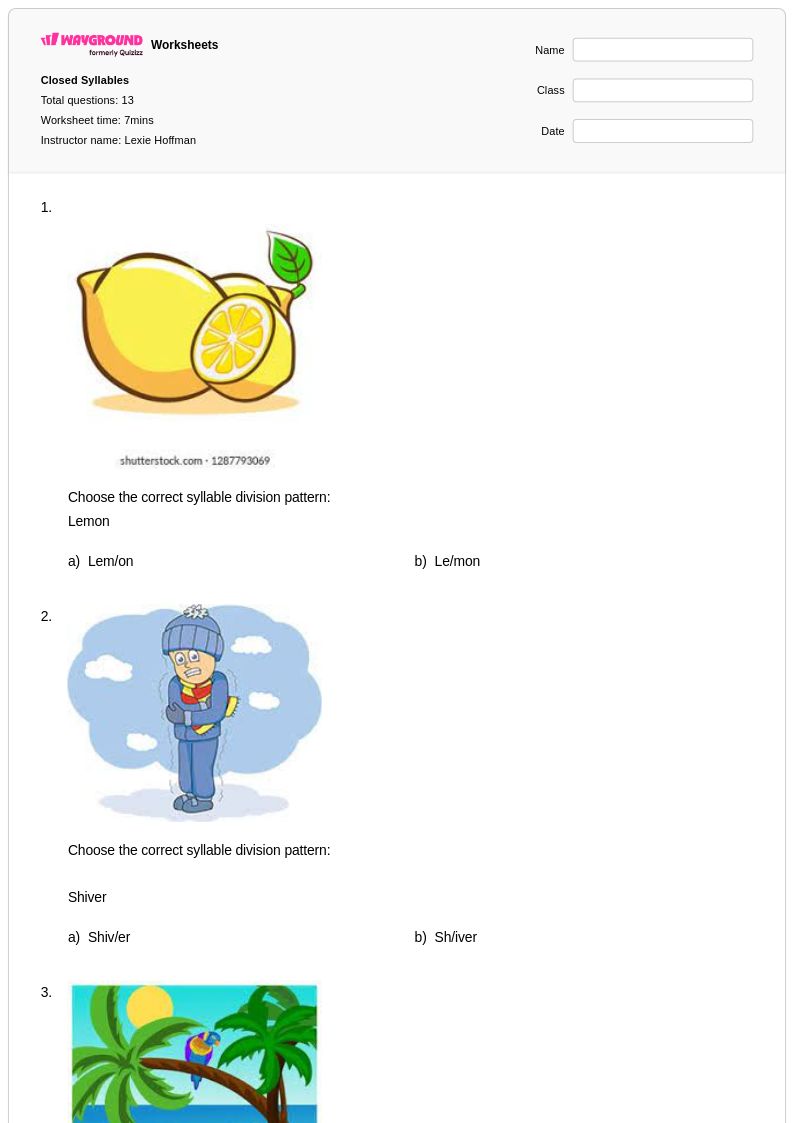
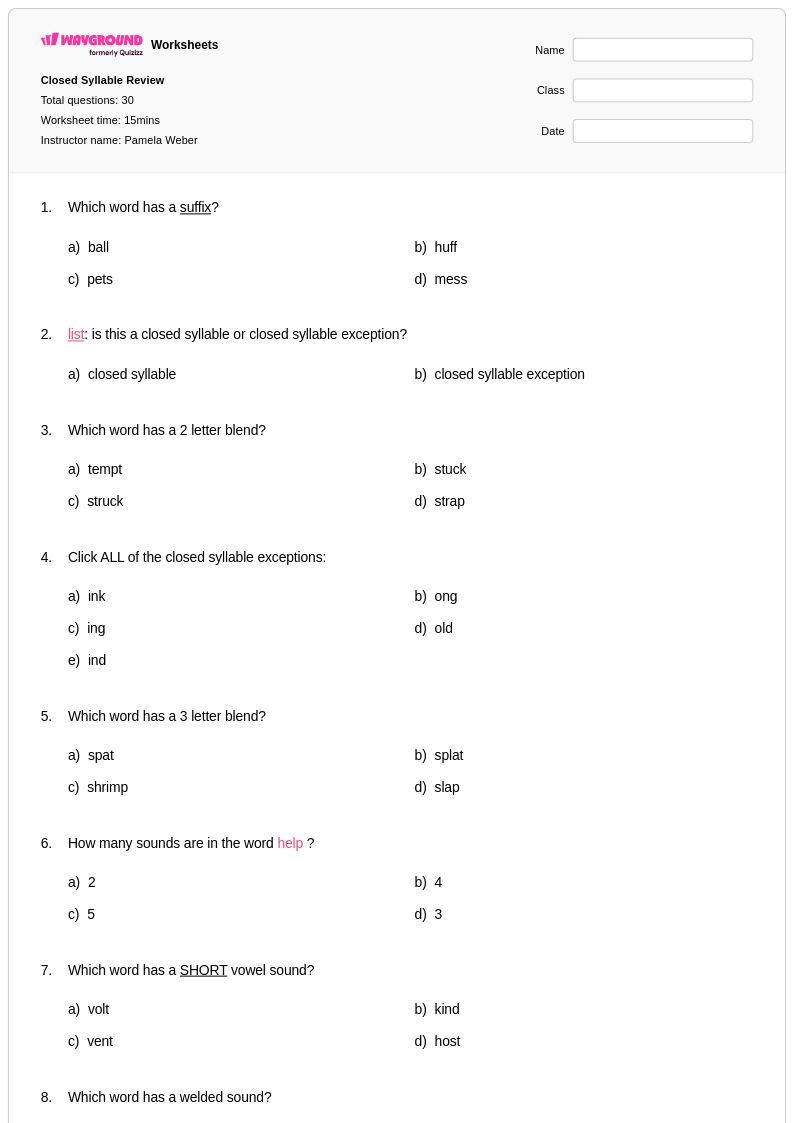
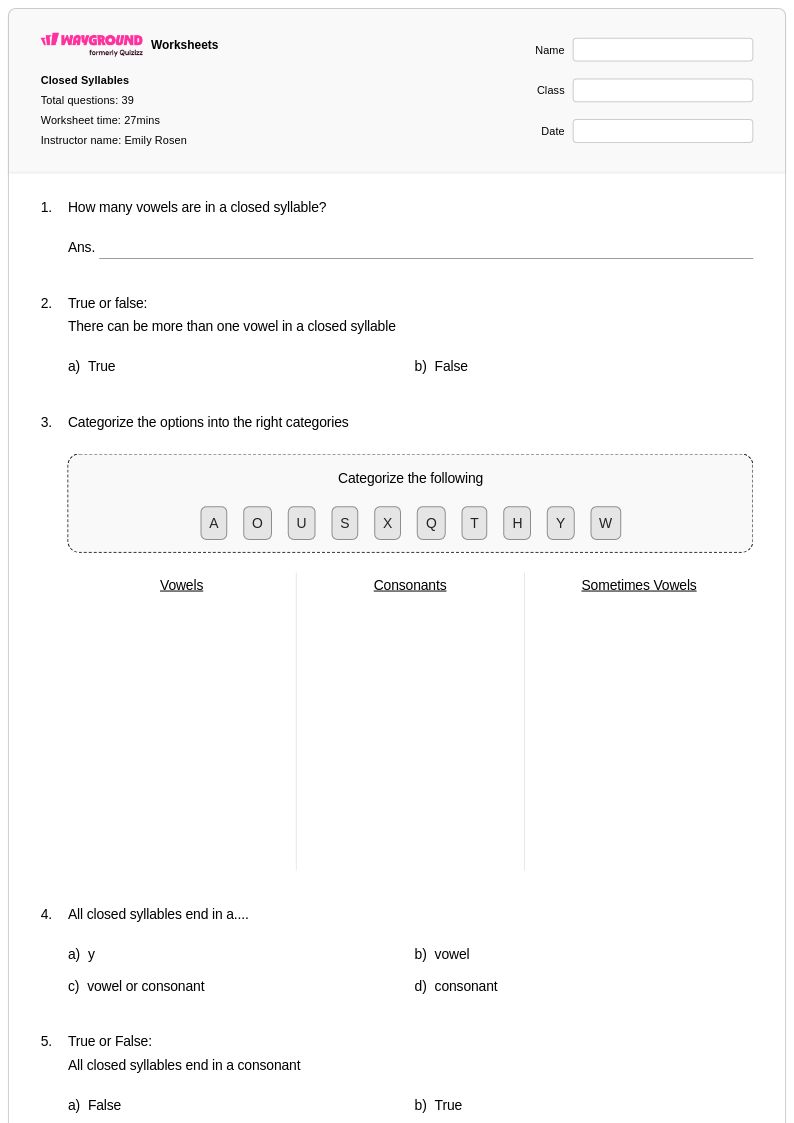
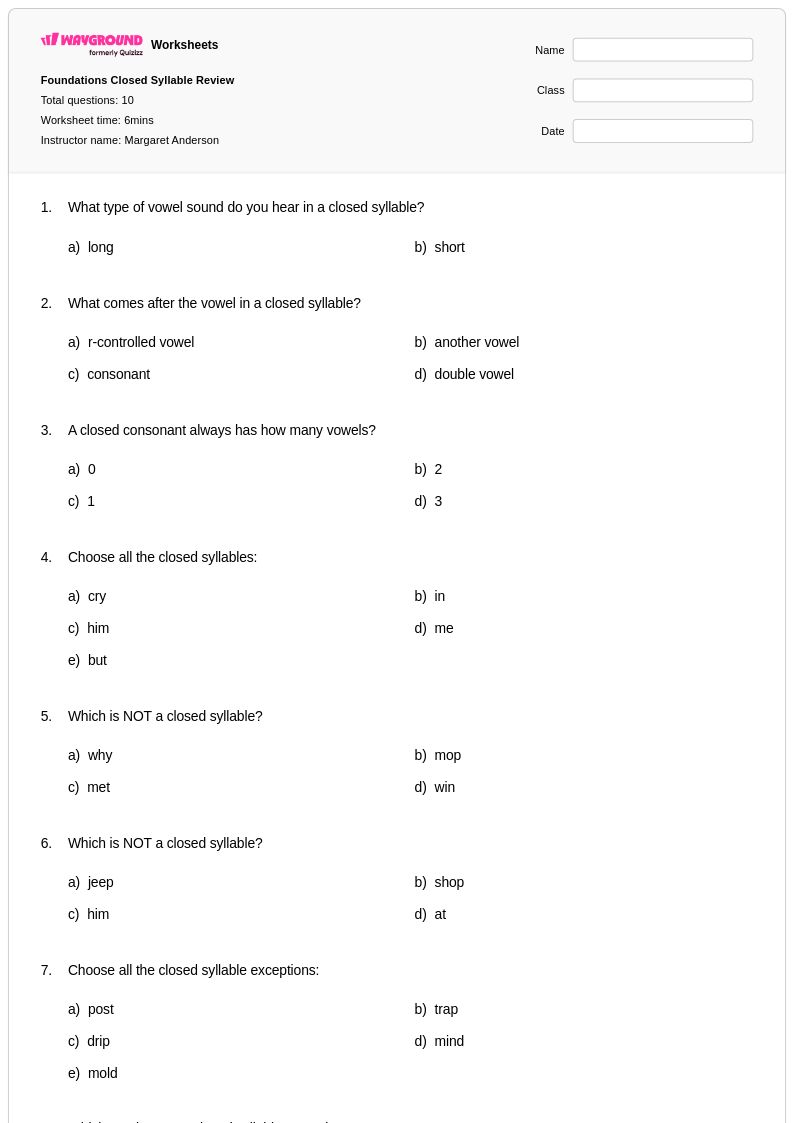
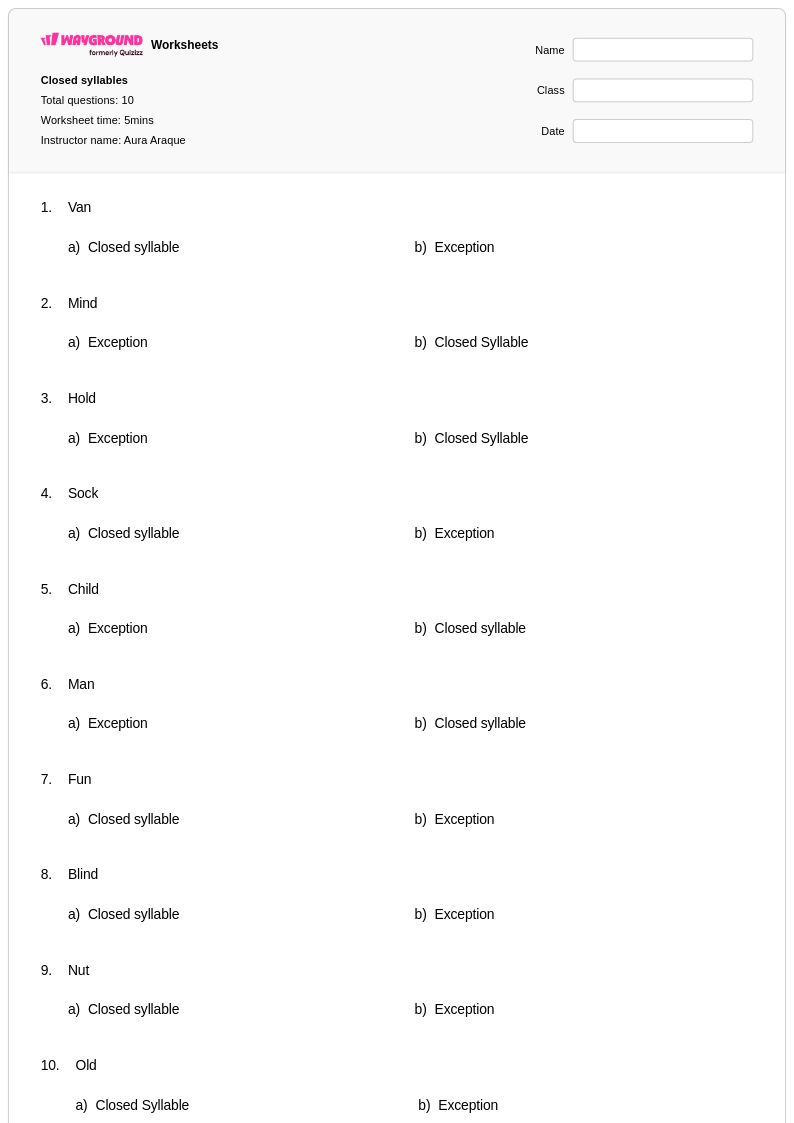
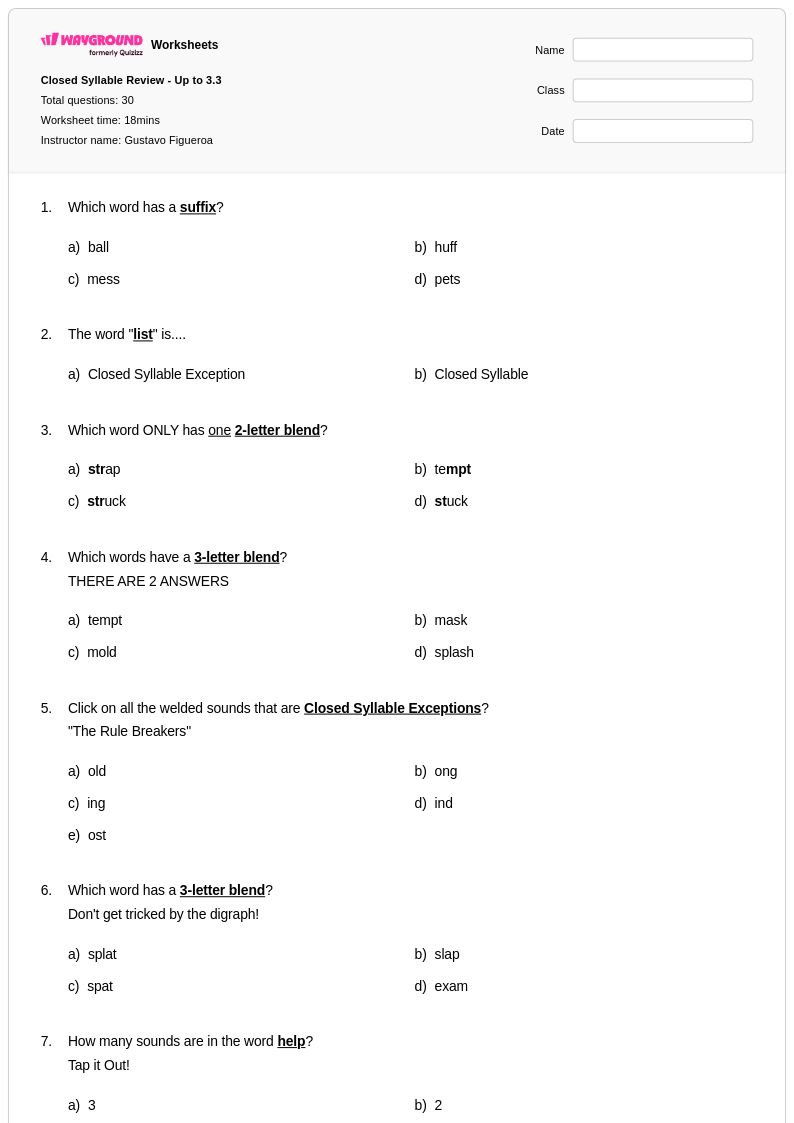
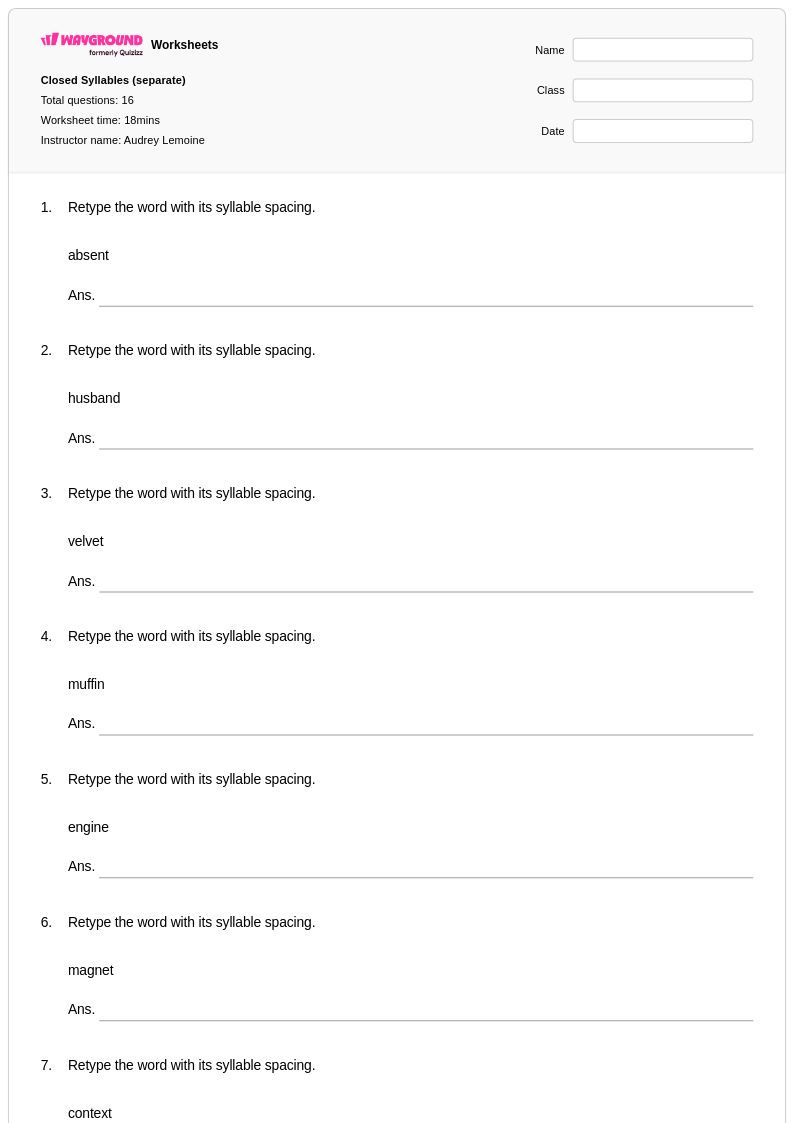
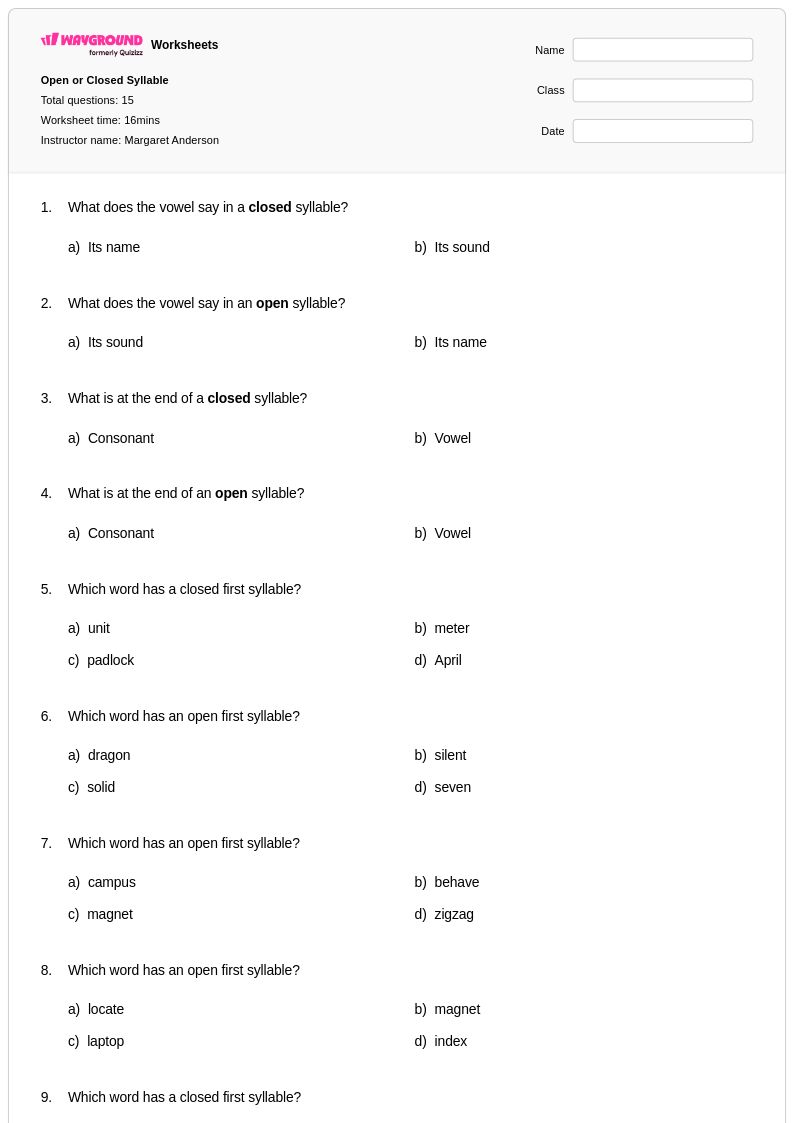
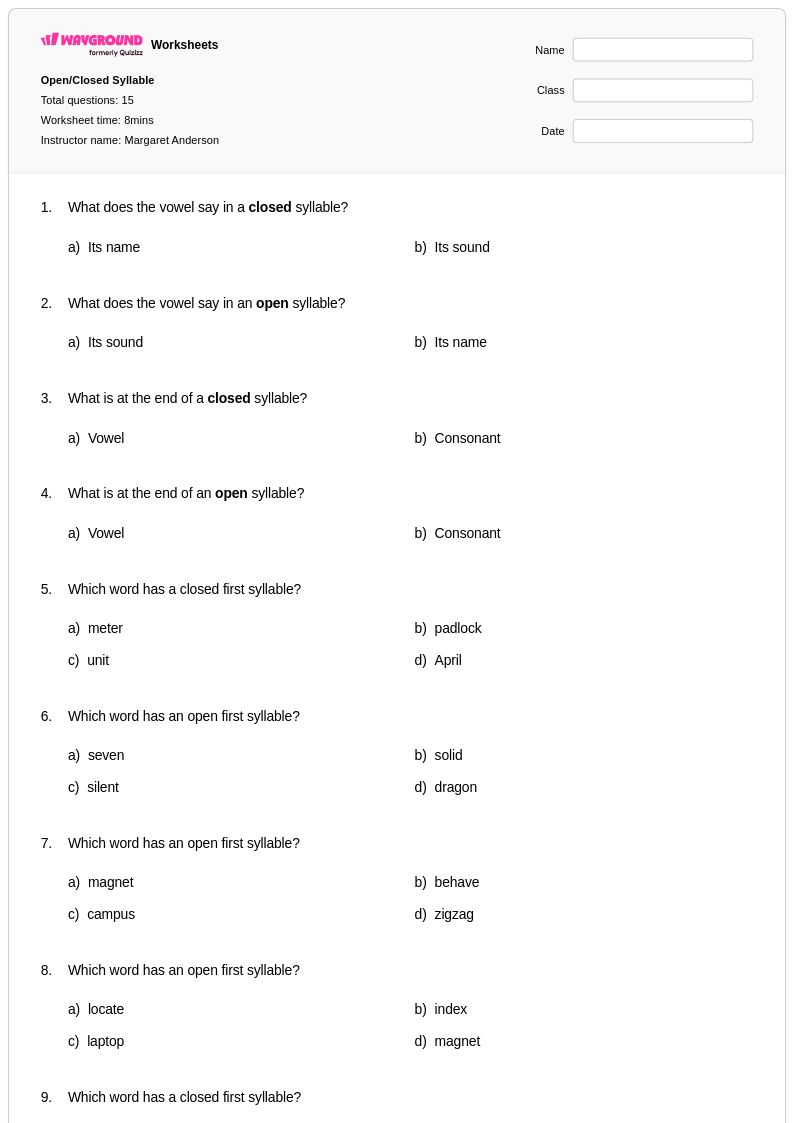
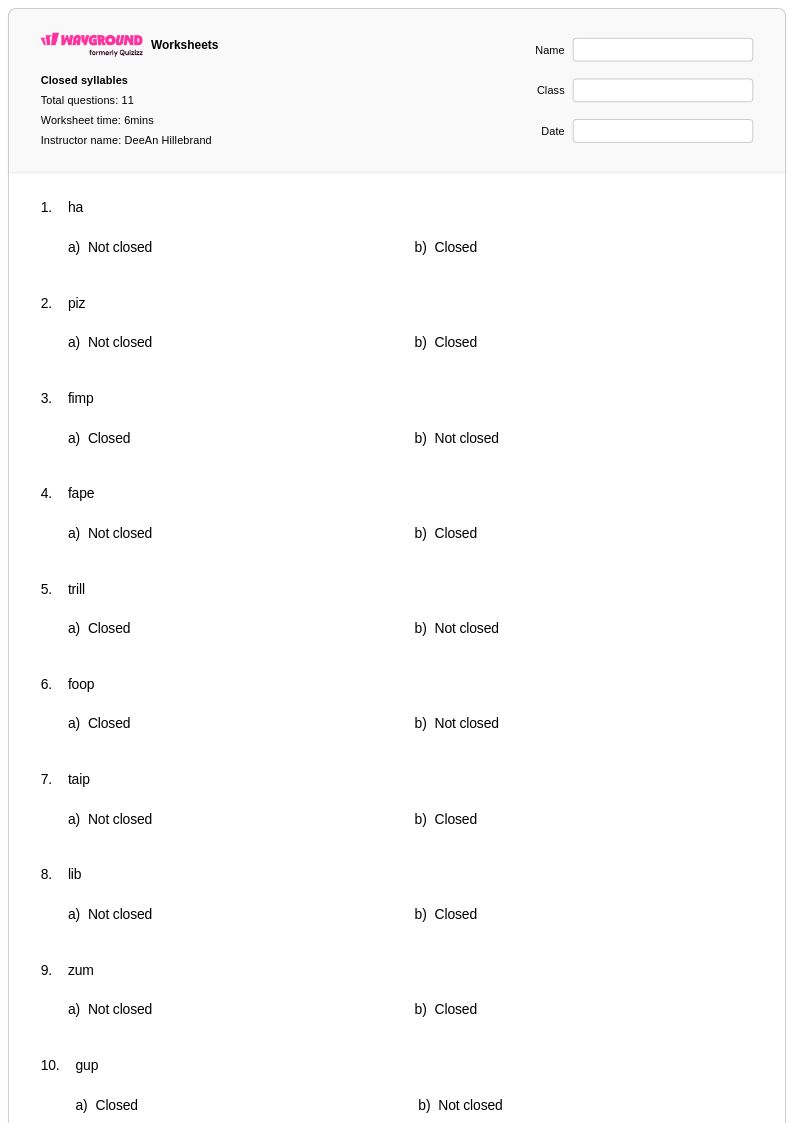
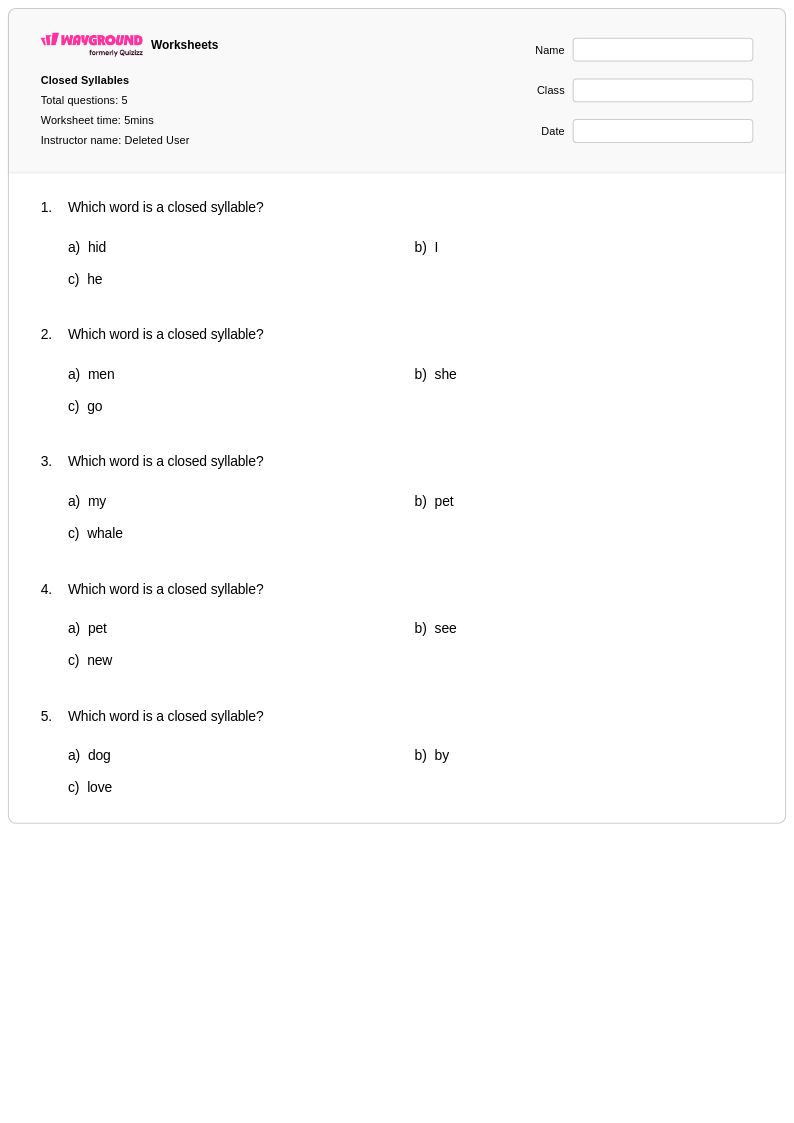
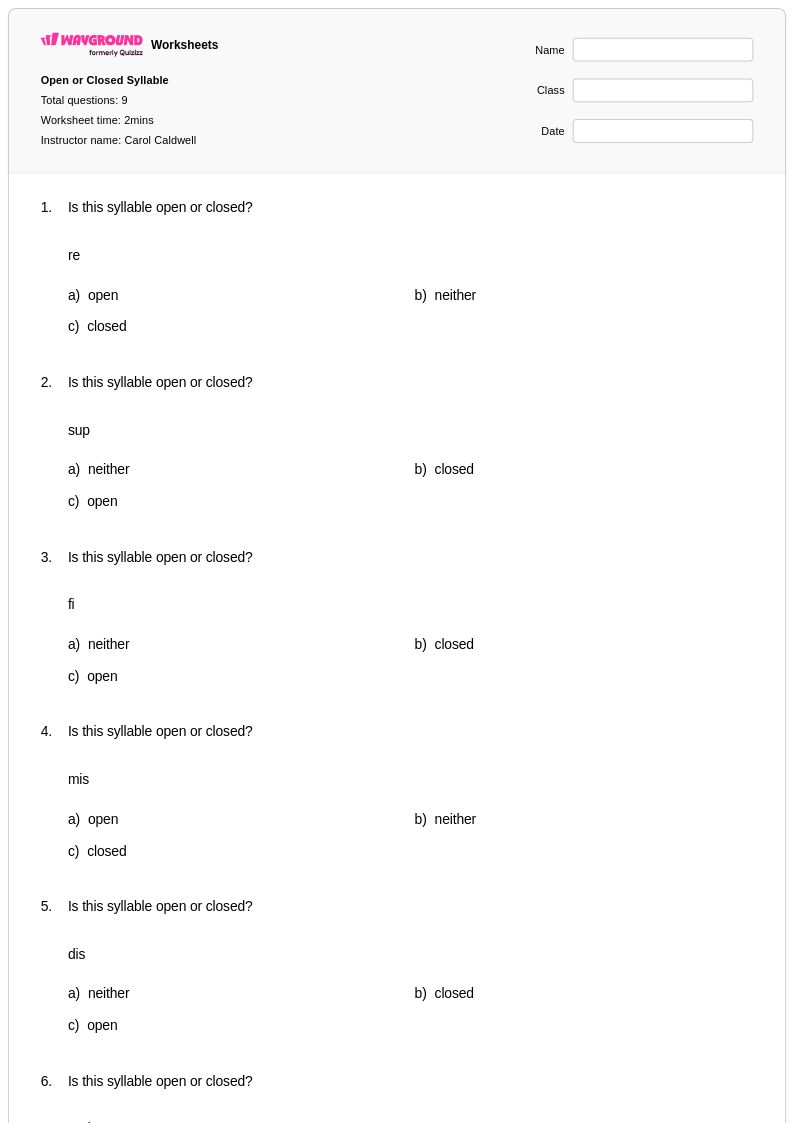
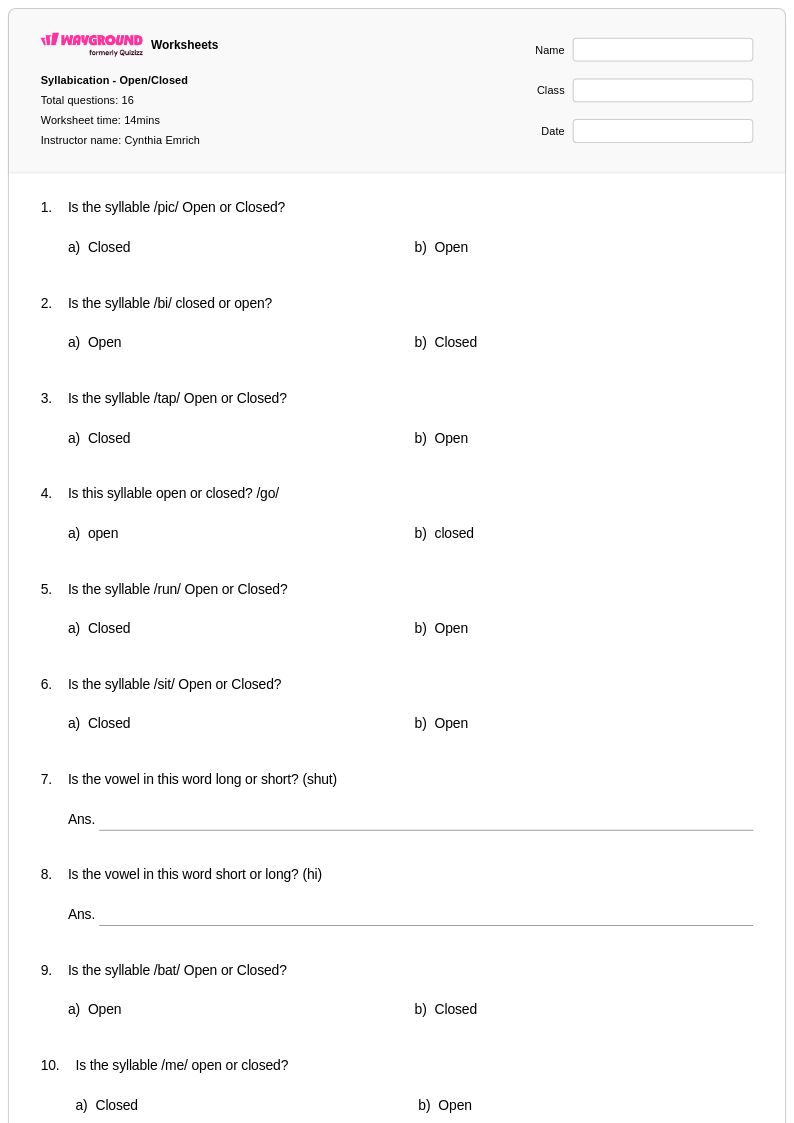
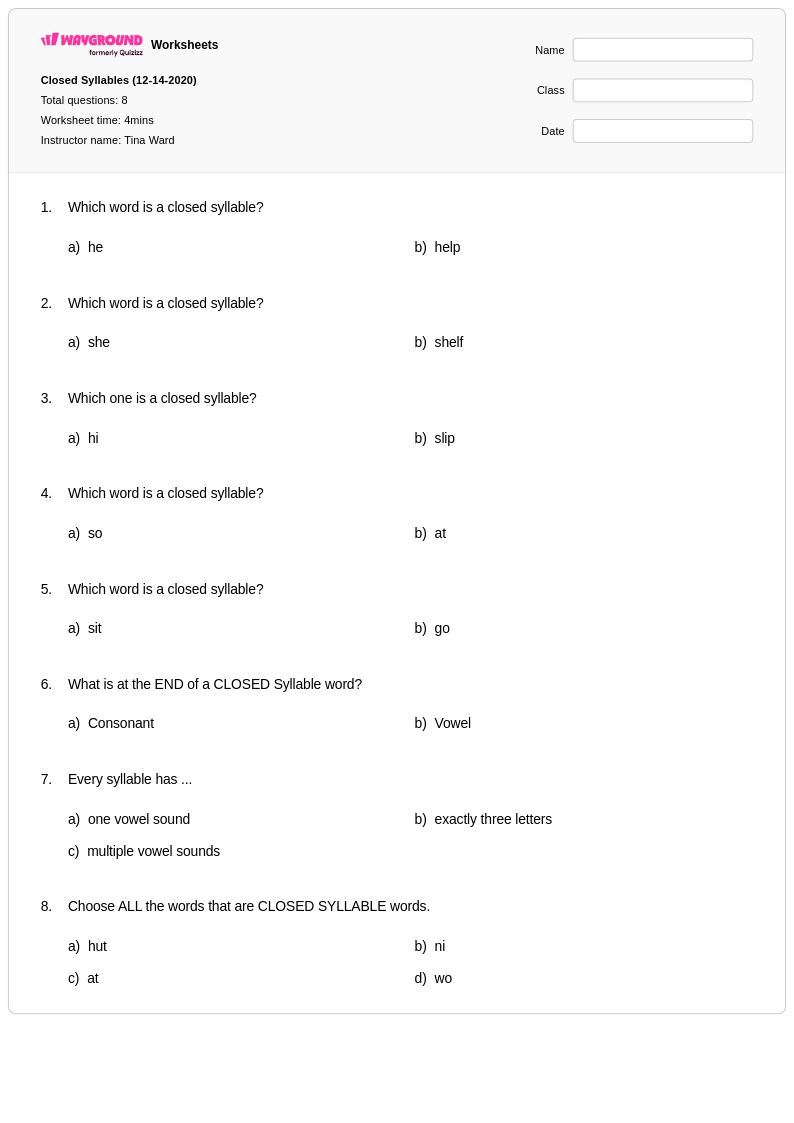
Closed syllable worksheets for Year 1 students available through Wayground (formerly Quizizz) provide essential foundational practice for early readers learning to decode single-syllable words with consonant endings. These comprehensive printables focus on helping young learners recognize and read words where vowels are "closed in" by consonants, such as cat, dog, and sun, which consistently produce short vowel sounds. The worksheets strengthen critical phonemic awareness and decoding skills through systematic practice problems that build confidence in reading patterns. Each worksheet collection includes detailed answer keys and free pdf downloads, making it simple for educators to implement structured phonics instruction that supports students in mastering this fundamental reading concept.
Wayground's extensive library contains millions of teacher-created closed syllable resources specifically designed for Year 1 learners, offering robust search and filtering capabilities that help educators quickly locate materials aligned with phonics standards and curriculum requirements. The platform's differentiation tools allow teachers to customize worksheets for varying ability levels, ensuring that struggling readers receive appropriate scaffolding while advanced students encounter enriching challenges. These flexible resources are available in both printable and digital formats, including convenient pdf options that streamline lesson planning and support targeted remediation or skill reinforcement. Teachers can seamlessly integrate these materials into daily phonics instruction, guided reading sessions, or independent practice time to strengthen students' foundational reading abilities.
FAQs
How do I teach closed syllables to early readers?
Start by helping students understand the rule: a closed syllable ends in a consonant, which 'closes' the vowel and forces it to make a short sound. Use concrete examples like 'cat,' 'bed,' and 'hot' to anchor the concept before moving to decoding unfamiliar words. Explicit, systematic instruction that pairs the rule with repeated practice on single-syllable words builds the automaticity students need before tackling multi-syllable words.
What exercises help students practice closed syllables?
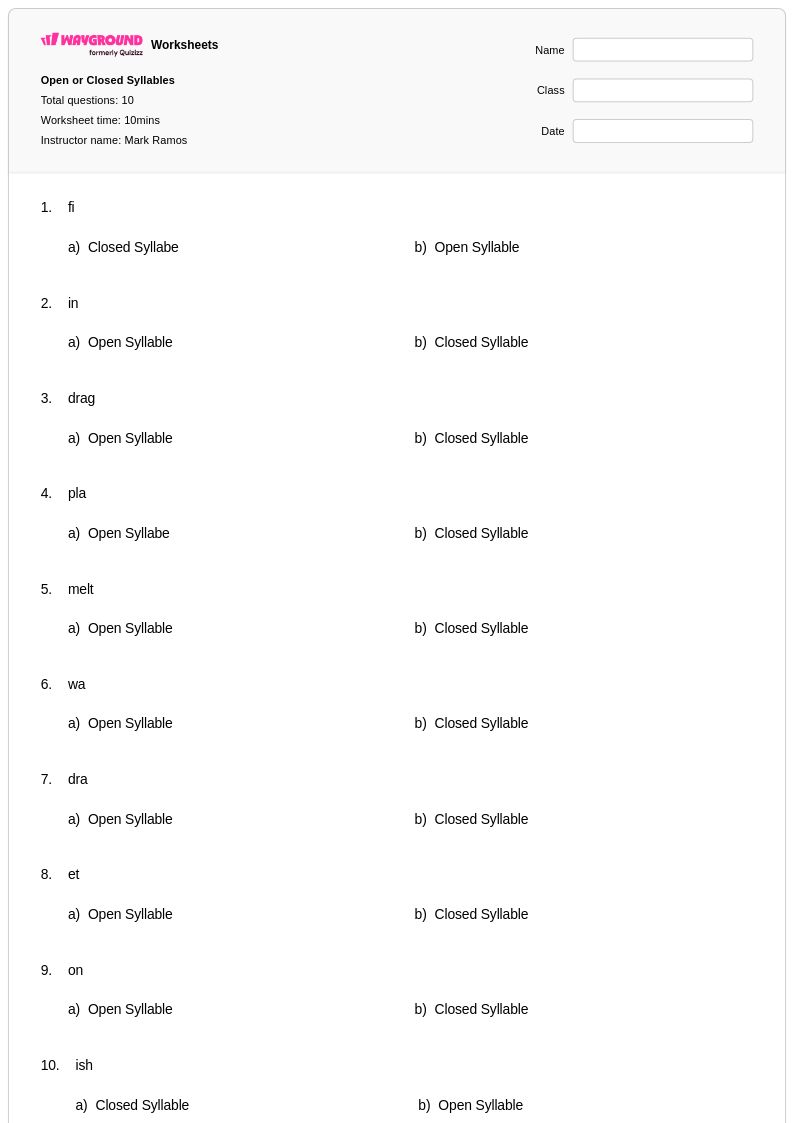
Effective practice exercises include identifying whether a given syllable is closed or open, sorting words by syllable type, and decoding nonsense words that follow the closed syllable pattern to isolate the skill from memorization. Spelling tasks that require students to apply the short vowel rule when writing closed syllable words also reinforce the pattern from both directions. Progressing from single-syllable to multi-syllable word analysis ensures students can apply the concept in increasingly complex reading contexts.
What mistakes do students commonly make when working with closed syllables?
The most common error is misidentifying the vowel sound, particularly confusing short vowels with each other, such as reading the short 'e' in 'bed' as a short 'i.' Students also frequently struggle to recognize that a syllable is closed when it appears as part of a longer word, losing the pattern in the context of unfamiliar multi-syllable words. Targeted practice on vowel discrimination and syllable segmentation in longer words directly addresses both of these error patterns.
How do I use closed syllable worksheets in my classroom?
Closed syllable worksheets on Wayground are available as printable PDFs for traditional classroom use and in digital formats for technology-integrated learning environments, giving teachers flexibility to use them for whole-class instruction, small group phonics rotations, or independent practice. You can also host them as a quiz on Wayground to collect real-time student responses and review results. Each worksheet includes a complete answer key, making them practical for both teacher-led lessons and self-paced student work.
How do closed syllables fit into a broader phonics scope and sequence?
Closed syllables are typically the first syllable type introduced in a systematic phonics program because they are the most common pattern in English and underpin short vowel decoding. Mastery of closed syllables provides the foundation for understanding other syllable types, such as open, vowel-team, and silent-e syllables, which are meaningfully defined by how they differ from the closed pattern. Teaching closed syllables early and explicitly gives students a reliable decoding strategy they will apply throughout their reading development.
How can I differentiate closed syllable practice for students at different skill levels?
For students who are still developing phonemic awareness, begin with oral segmenting and blending activities before introducing print. On-level students benefit from identification and decoding tasks with real words, while advanced students can work on applying the closed syllable pattern within two- and three-syllable words. On Wayground, teachers can apply individual accommodations such as read aloud support or reduced answer choices for students who need additional scaffolding, without disrupting the experience for the rest of the class.