Free Printable Cognitive Biases Worksheets for Year 8
Year 8 cognitive biases worksheets from Wayground help students explore how mental shortcuts affect decision-making through engaging printables, practice problems, and comprehensive answer keys for effective social studies learning.
Explore printable Cognitive Biases worksheets for Year 8
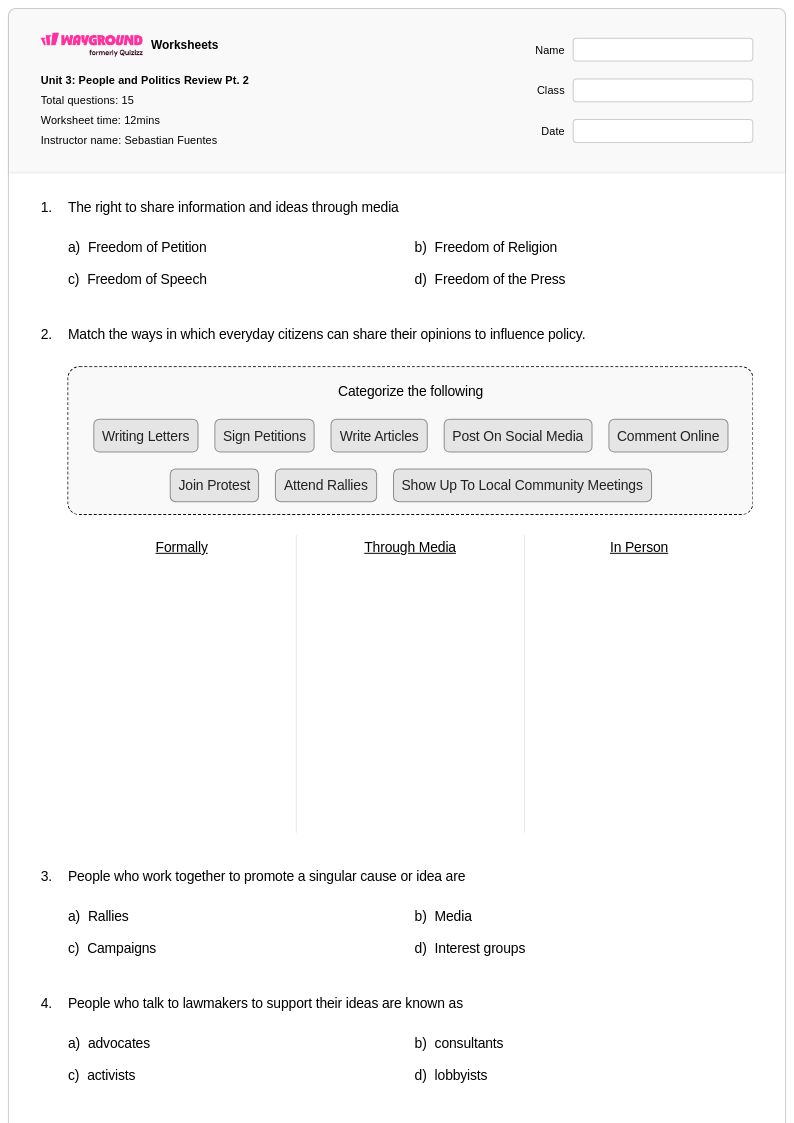
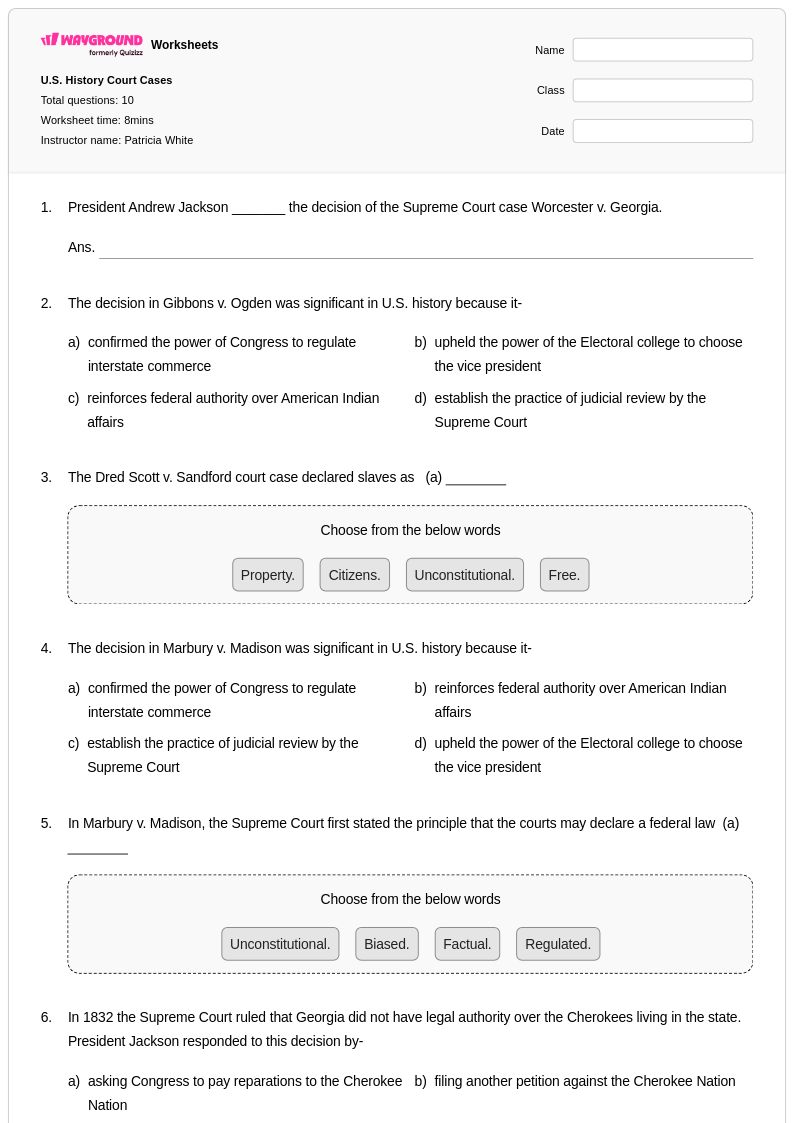
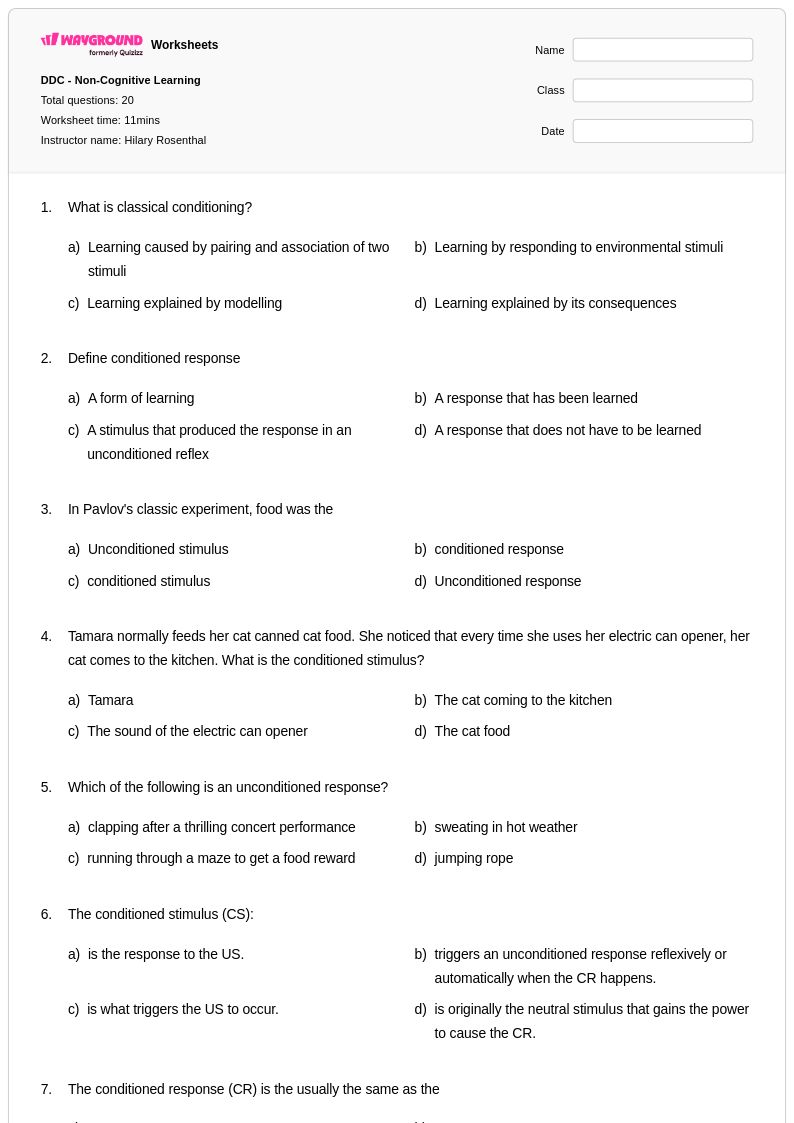
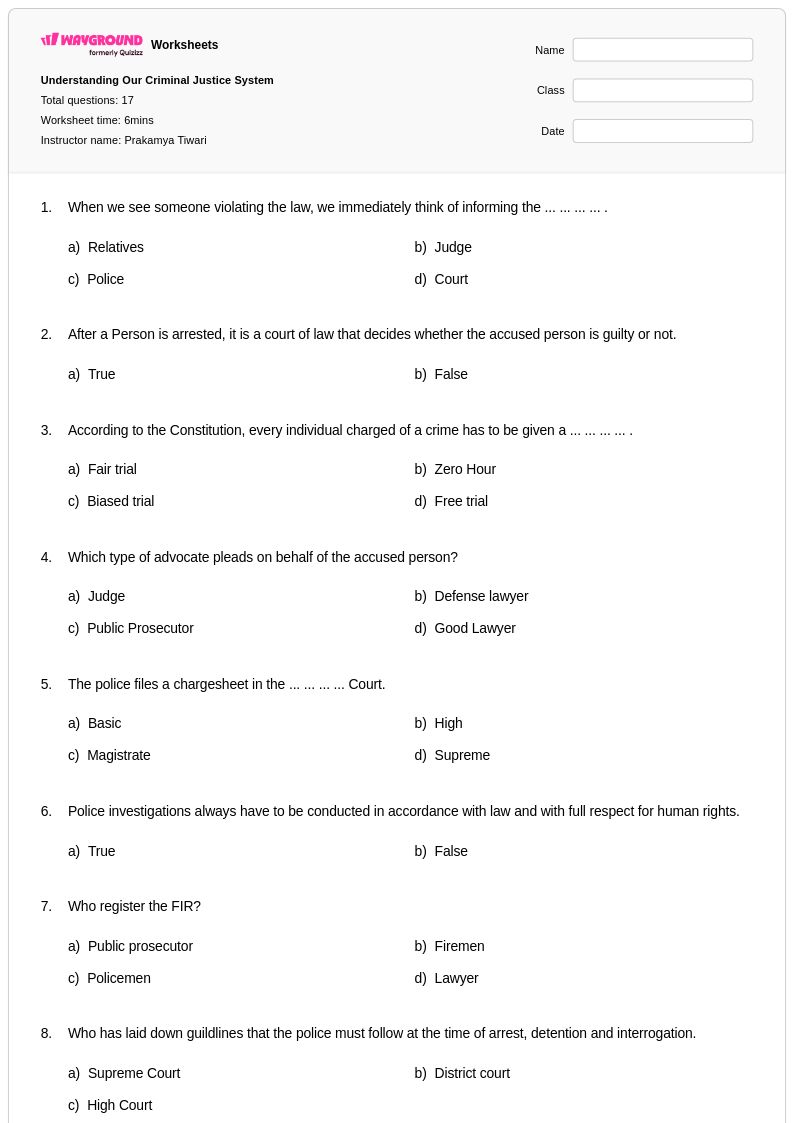
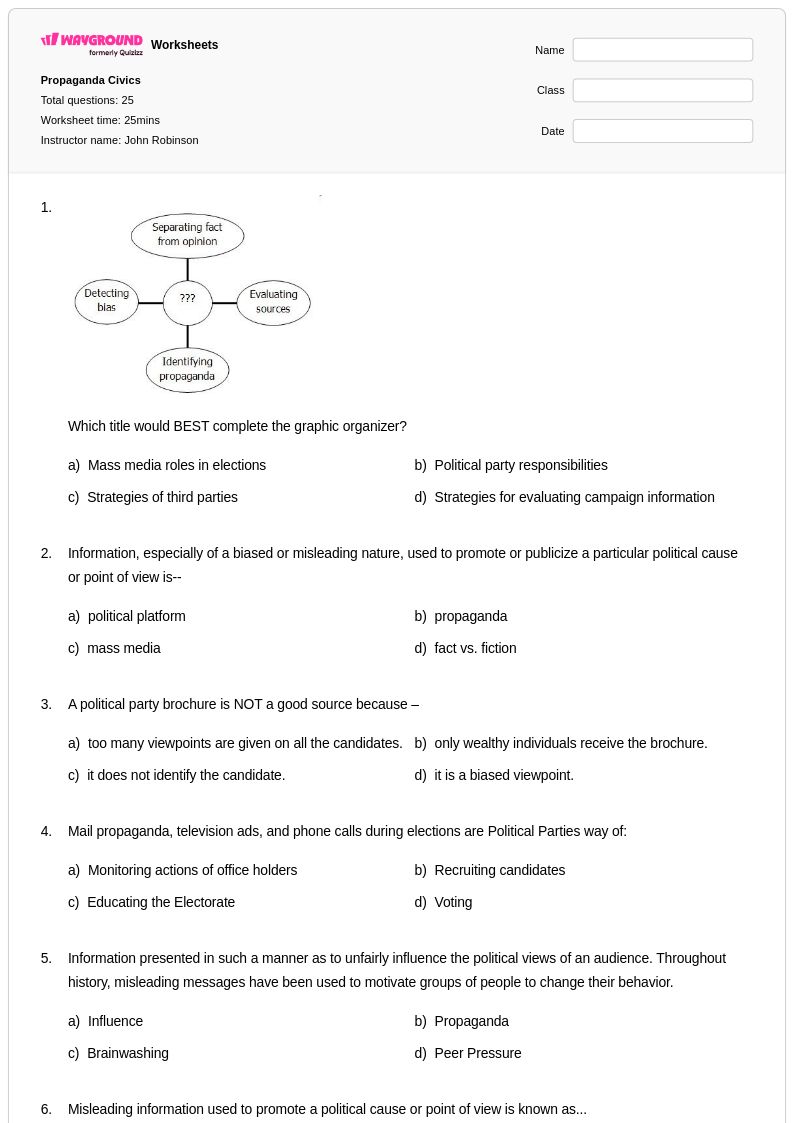
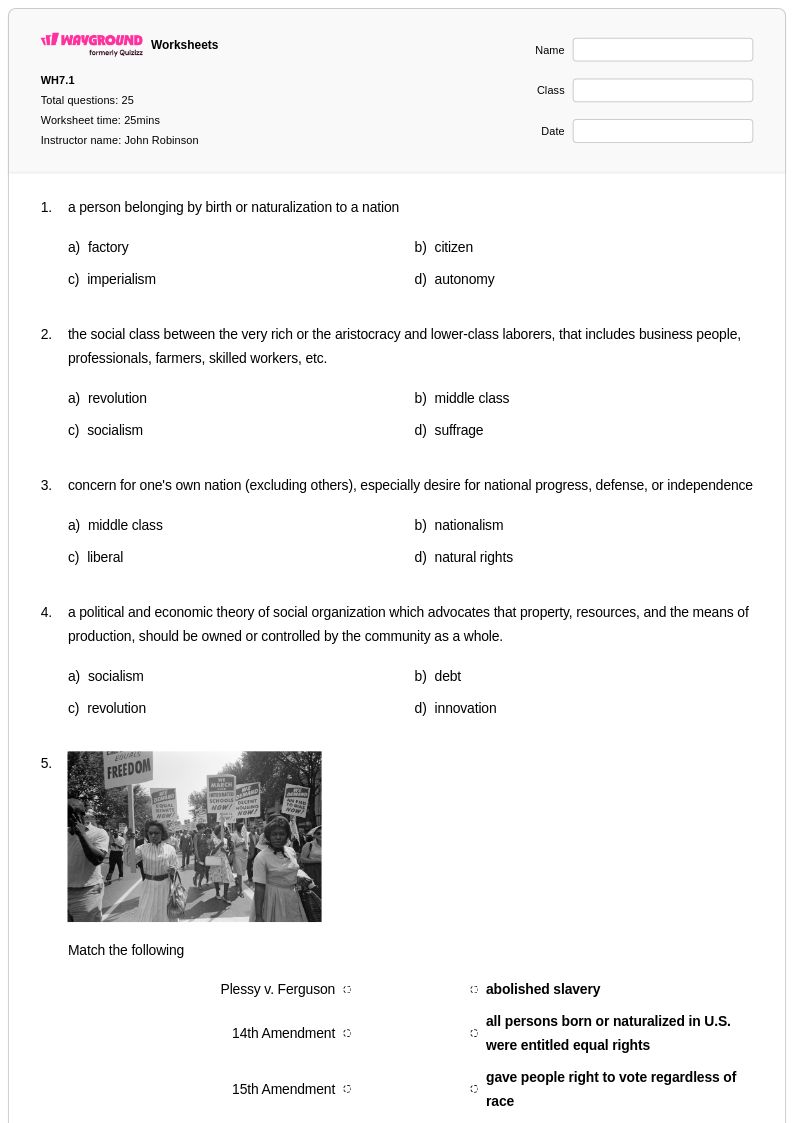
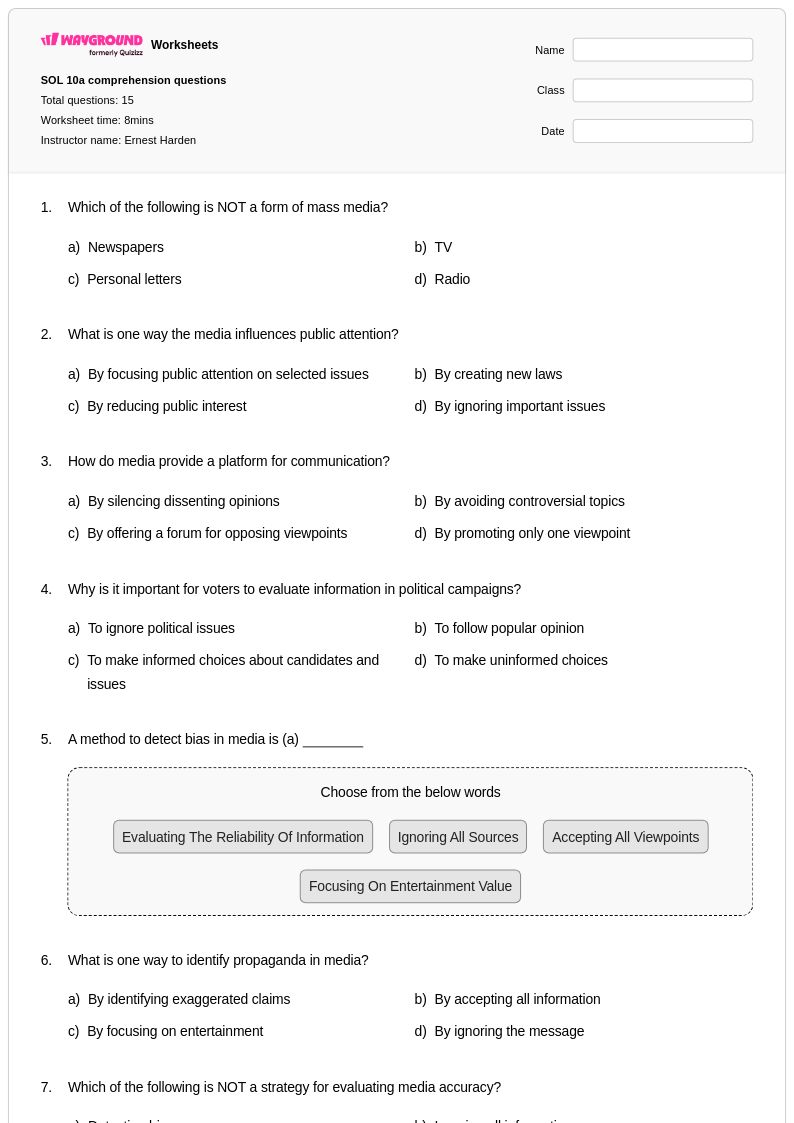
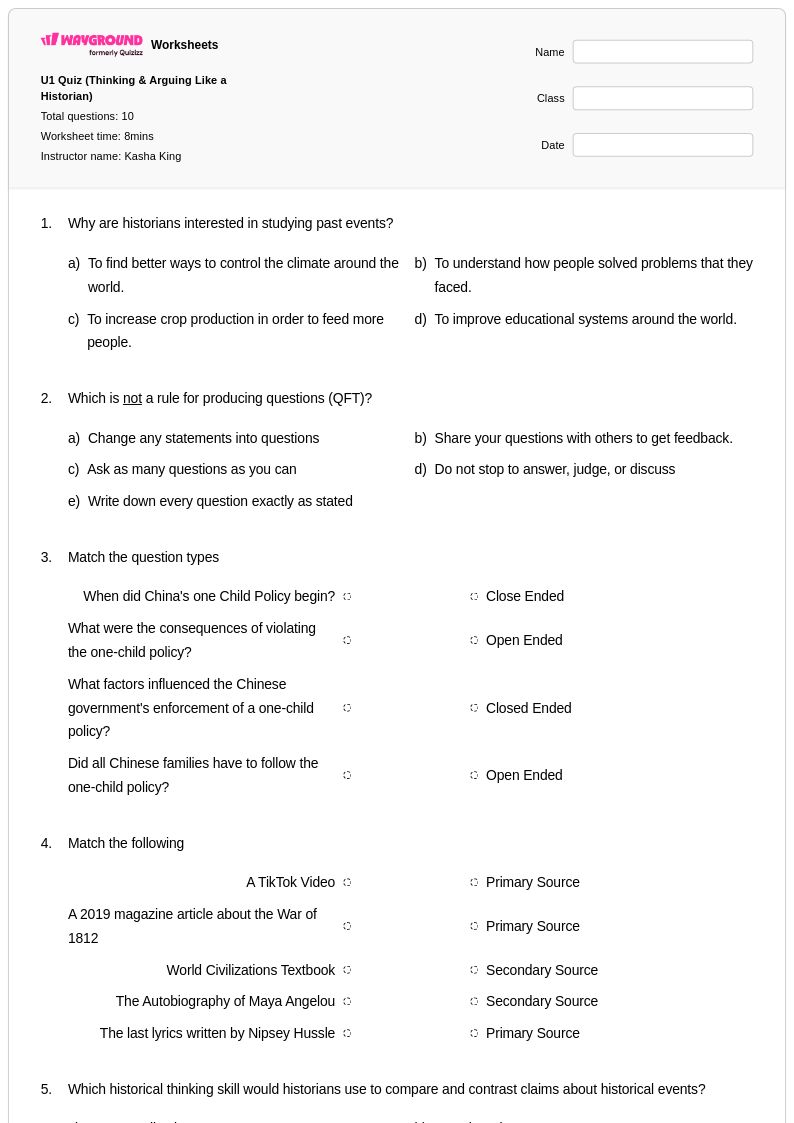
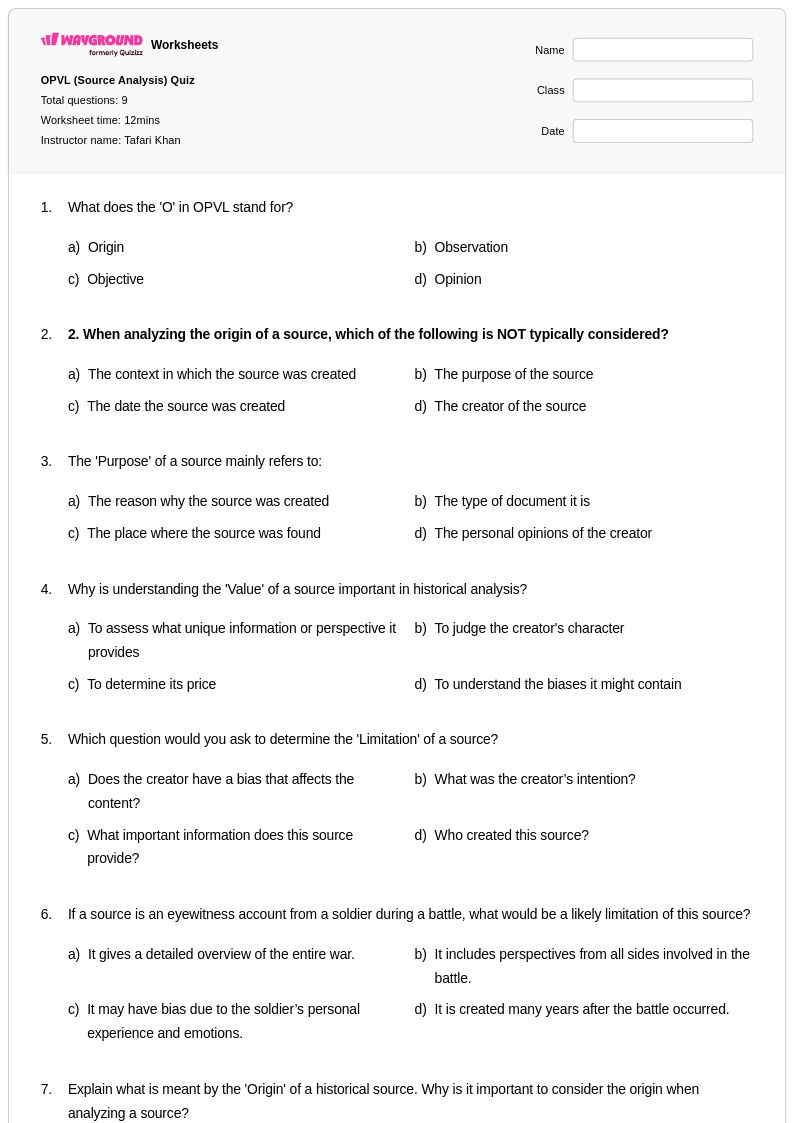
Cognitive biases worksheets for Year 8 students available through Wayground (formerly Quizizz) provide essential practice in recognizing and understanding the systematic errors in thinking that affect human judgment and decision-making. These comprehensive printables help eighth-grade students develop critical thinking skills by exploring common cognitive biases such as confirmation bias, availability heuristic, and anchoring bias through engaging scenarios and real-world examples. Each worksheet includes carefully crafted practice problems that challenge students to identify bias patterns in historical events, media representations, and everyday situations, while corresponding answer keys enable teachers to facilitate meaningful discussions about how these mental shortcuts influence perception and behavior. The free pdf resources strengthen analytical reasoning abilities and promote metacognitive awareness, empowering students to become more discerning consumers of information and more thoughtful decision-makers.
Wayground (formerly Quizizz) supports educators with an extensive collection of millions of teacher-created cognitive bias worksheets specifically designed for middle school social studies instruction. The platform's robust search and filtering capabilities allow teachers to quickly locate materials aligned with state standards and differentiate instruction based on individual student needs and reading levels. These flexible resources are available in both printable and digital pdf formats, making them ideal for classroom instruction, homework assignments, remediation sessions, and enrichment activities. Teachers can customize existing worksheets or combine multiple resources to create comprehensive lesson plans that address varying skill levels, while the extensive variety of practice scenarios ensures students encounter diverse examples of cognitive biases across historical, contemporary, and personal contexts to deepen their understanding of human psychology and decision-making processes.
FAQs
How do I teach cognitive biases to students?
Start by grounding the concept in familiar experiences — ask students to recall a time they formed a quick judgment that turned out to be wrong. From there, introduce specific biases like confirmation bias, anchoring bias, and the availability heuristic using real-world examples from media, advertising, and social interactions. Structured activities that ask students to identify bias patterns in case studies or news articles are especially effective because they bridge abstract psychological concepts to decisions students actually encounter.
What exercises help students practice identifying cognitive biases?
Scenario-based practice is the most effective format for cognitive biases because it requires students to apply conceptual knowledge rather than just recall definitions. Exercises that present media excerpts, social situations, or decision-making vignettes and ask students to name the bias at work — and explain their reasoning — build genuine analytical skill. Connecting each bias to a real-world context, such as group dynamics or personal relationships, deepens retention and helps students transfer the skill beyond the classroom.
What mistakes do students commonly make when learning about cognitive biases?
The most common error is treating cognitive biases as rare or intentional flaws rather than universal, automatic mental shortcuts. Students often struggle to distinguish between biases that are conceptually similar, such as confusing the availability heuristic with recency bias. Another frequent misconception is assuming that being aware of a bias is sufficient to eliminate it — a critical teaching moment that reinforces why ongoing self-reflection and structured analysis matter.
How can I use cognitive biases worksheets to support students with different learning needs?
Cognitive biases worksheets on Wayground are available in both printable PDF and digital formats, which gives teachers flexibility to assign them in traditional, hybrid, or fully remote settings. In digital mode, teachers can apply individual accommodations such as Read Aloud for students who need audio support, reduced answer choices to lower cognitive load, or extended time for students who require it. These settings can be configured per student and are saved for future sessions, so differentiation does not require additional setup each time.
How do cognitive biases connect to social studies and critical thinking standards?
Cognitive biases are directly relevant to social studies because they explain how individuals and groups form beliefs, interpret information, and make decisions in political, historical, and social contexts. Teaching students to recognize biases like confirmation bias or anchoring bias builds the evaluative reading and source analysis skills that appear across most state critical thinking and civic literacy standards. These concepts also support cross-disciplinary learning in psychology, media literacy, and ethics.
At what grade level should I introduce cognitive biases?
Cognitive biases are most effectively introduced in middle school or high school, where students have developed enough metacognitive awareness to reflect on their own thinking processes. High school social psychology, AP Psychology, and advanced social studies courses are the most natural curricular homes, though simplified versions of biases like confirmation bias can be introduced as early as upper elementary when framed around everyday decision-making scenarios.