Free Printable Cognitive Dissonance Worksheets for Year 10
Year 10 cognitive dissonance worksheets and printables from Wayground help students explore how conflicting beliefs create psychological tension through engaging practice problems, free PDF resources, and comprehensive answer keys.
Explore printable Cognitive Dissonance worksheets for Year 10
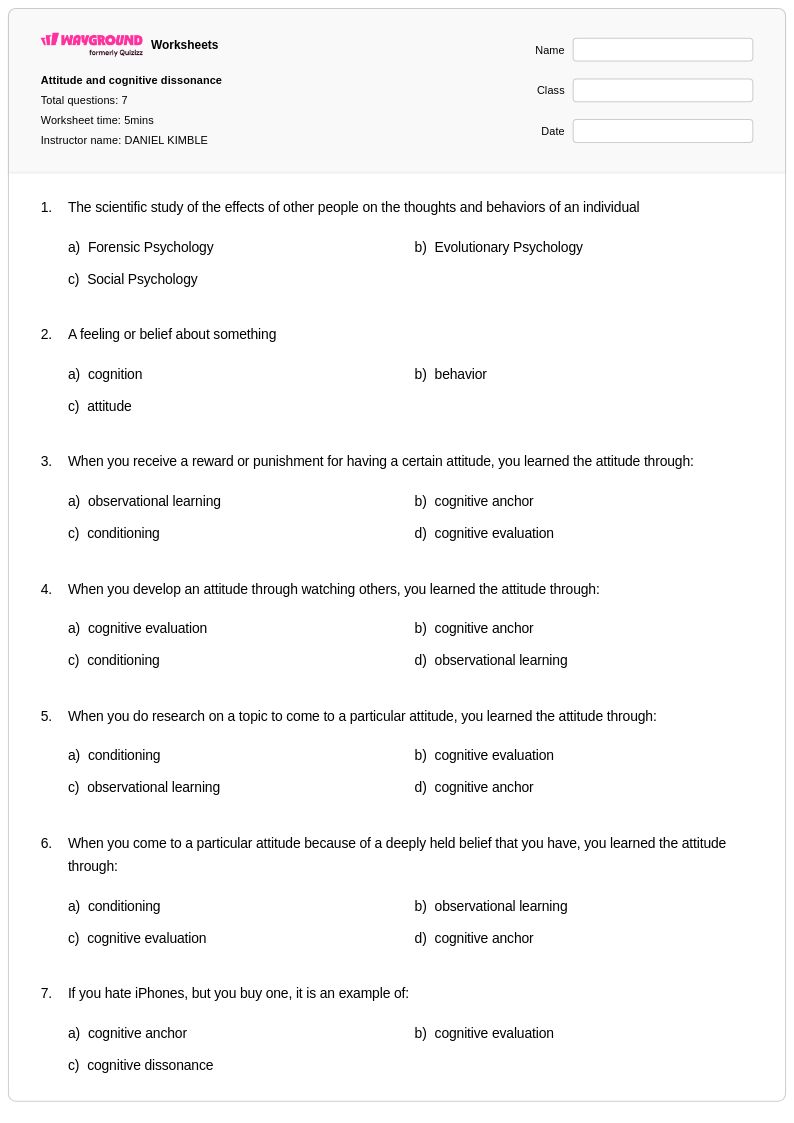
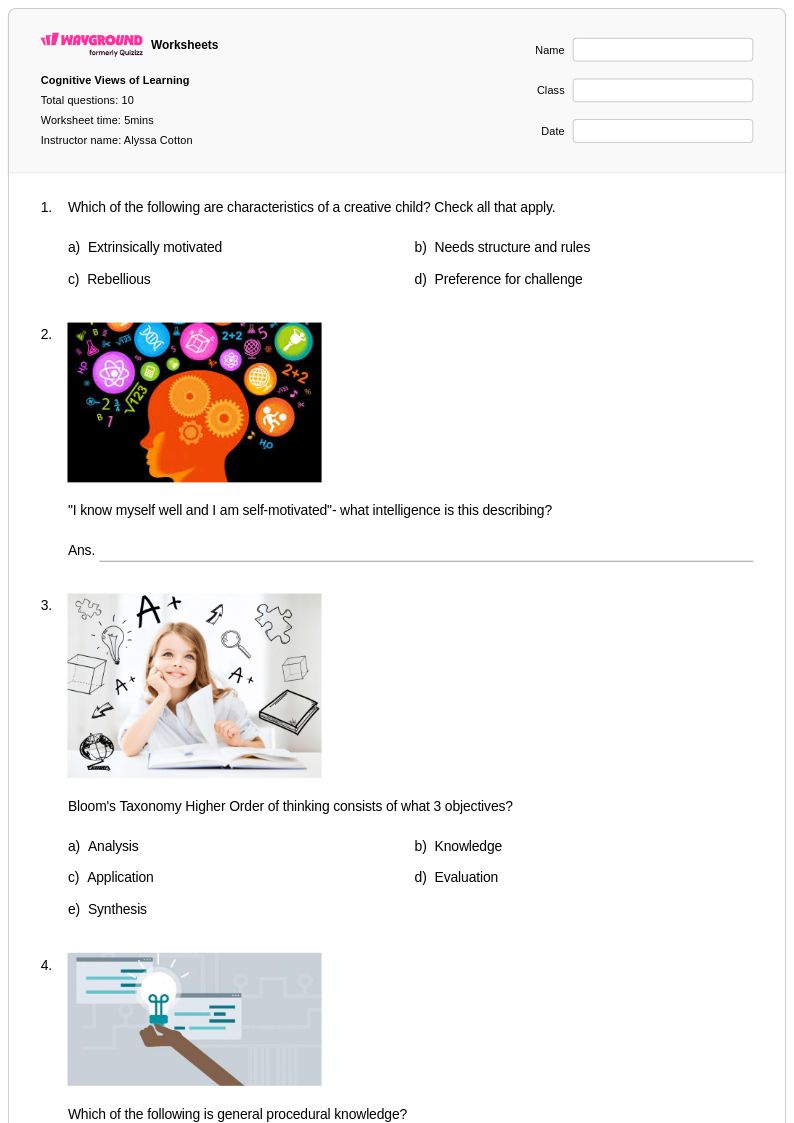
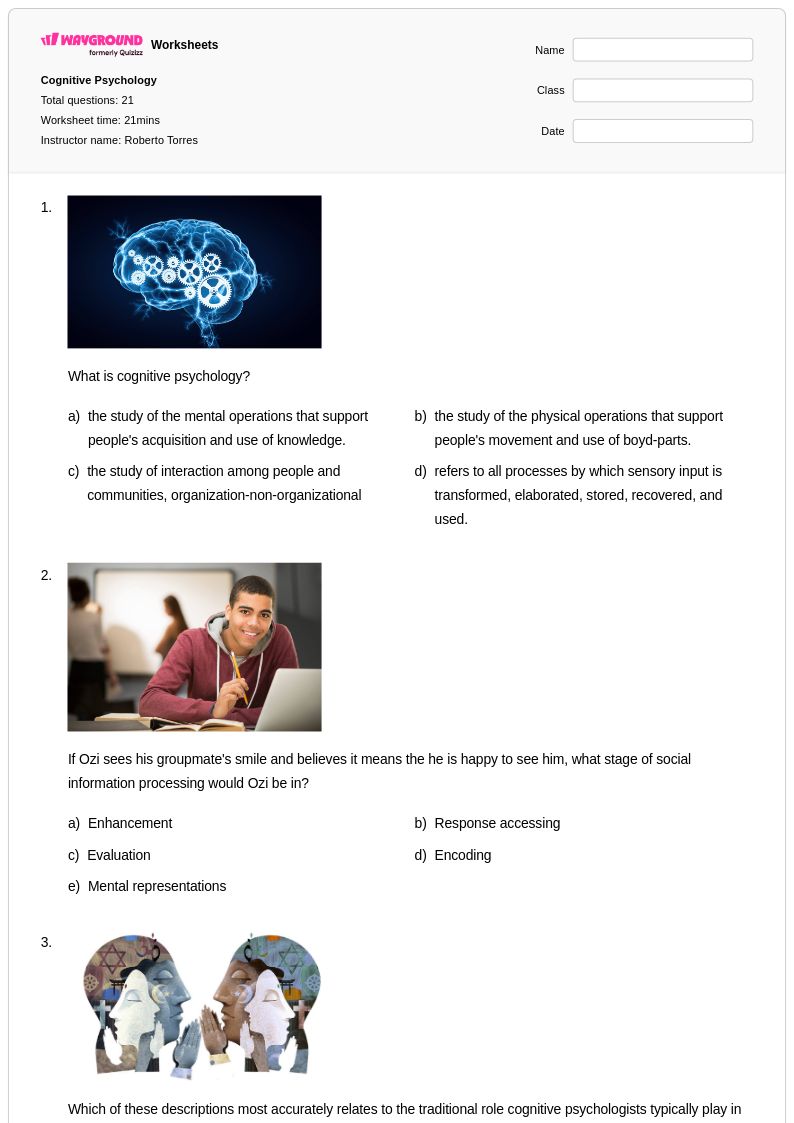
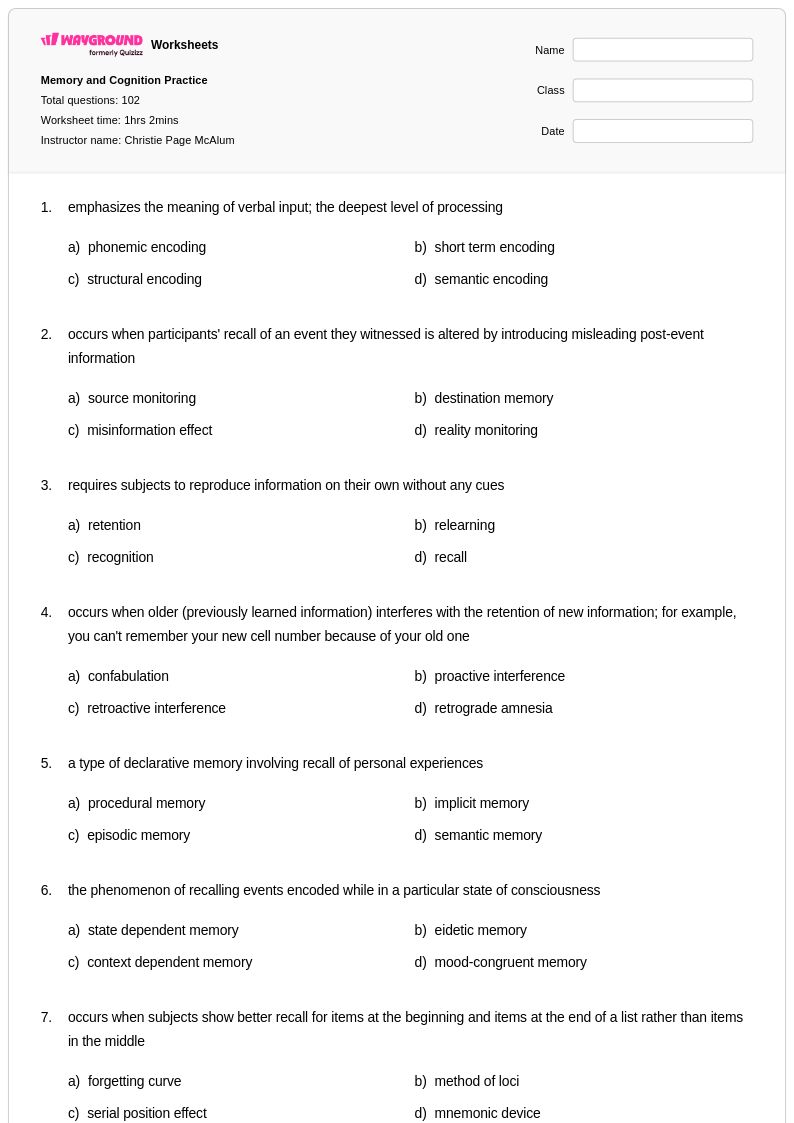
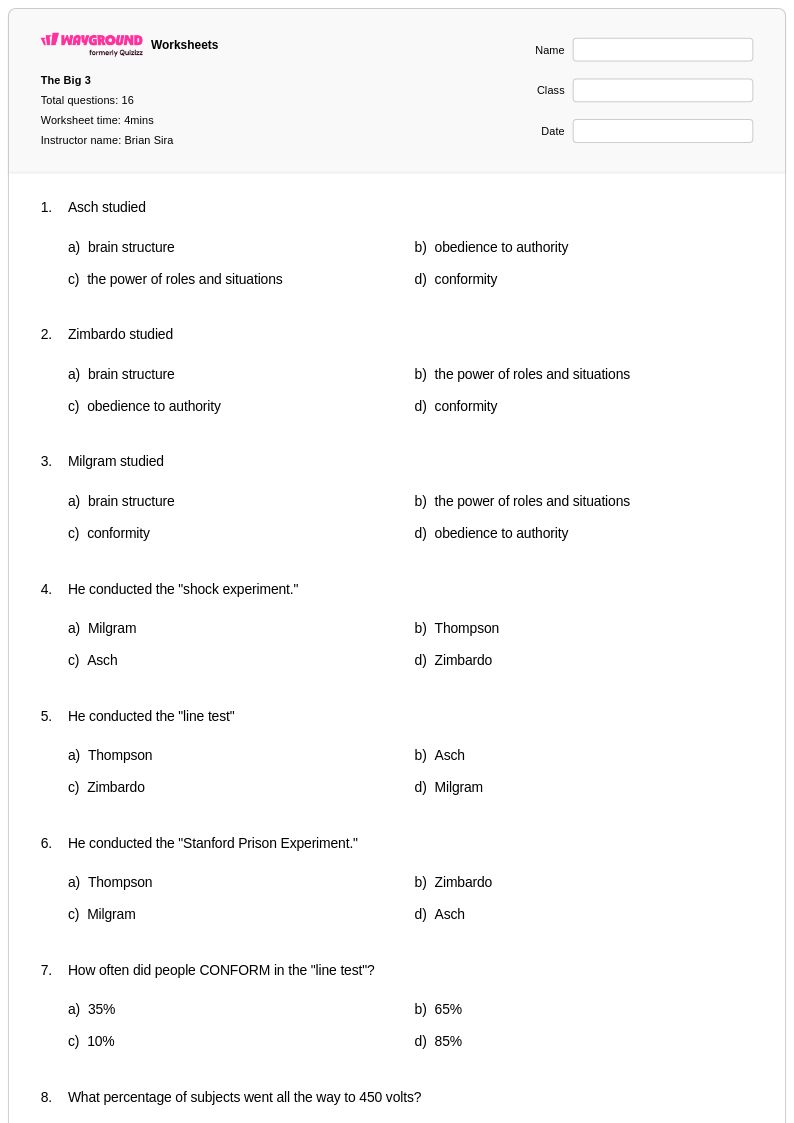
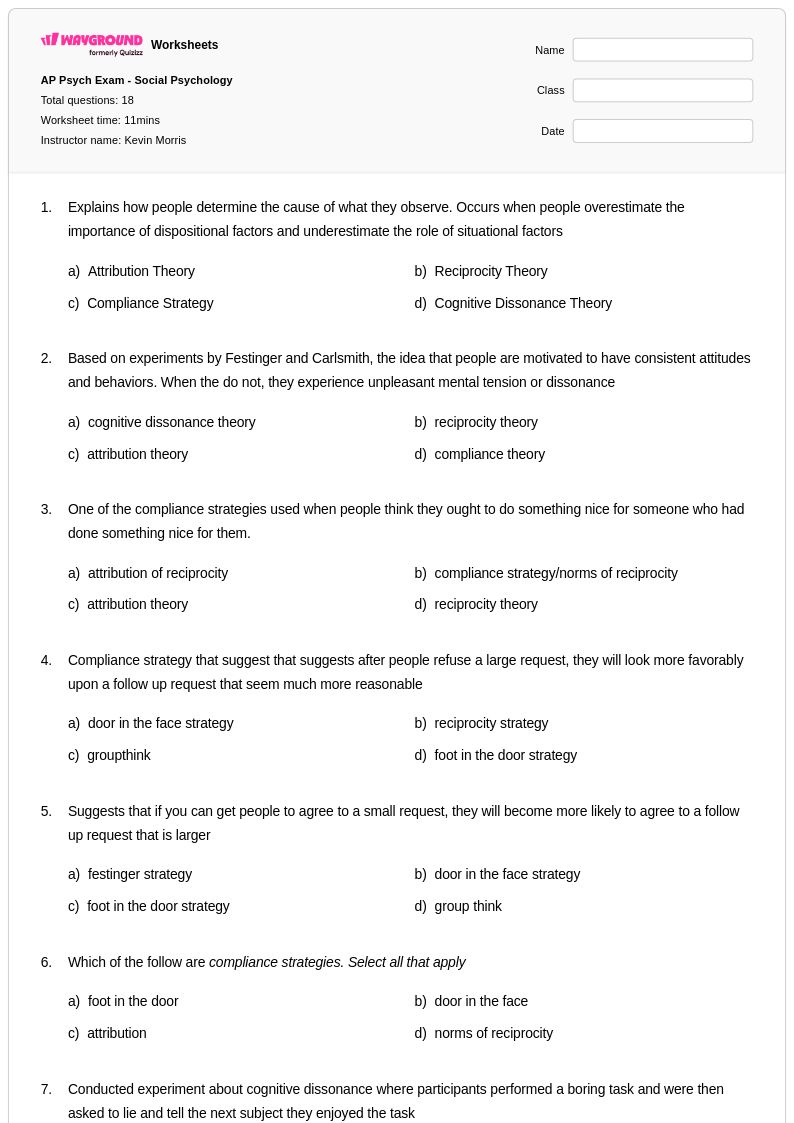
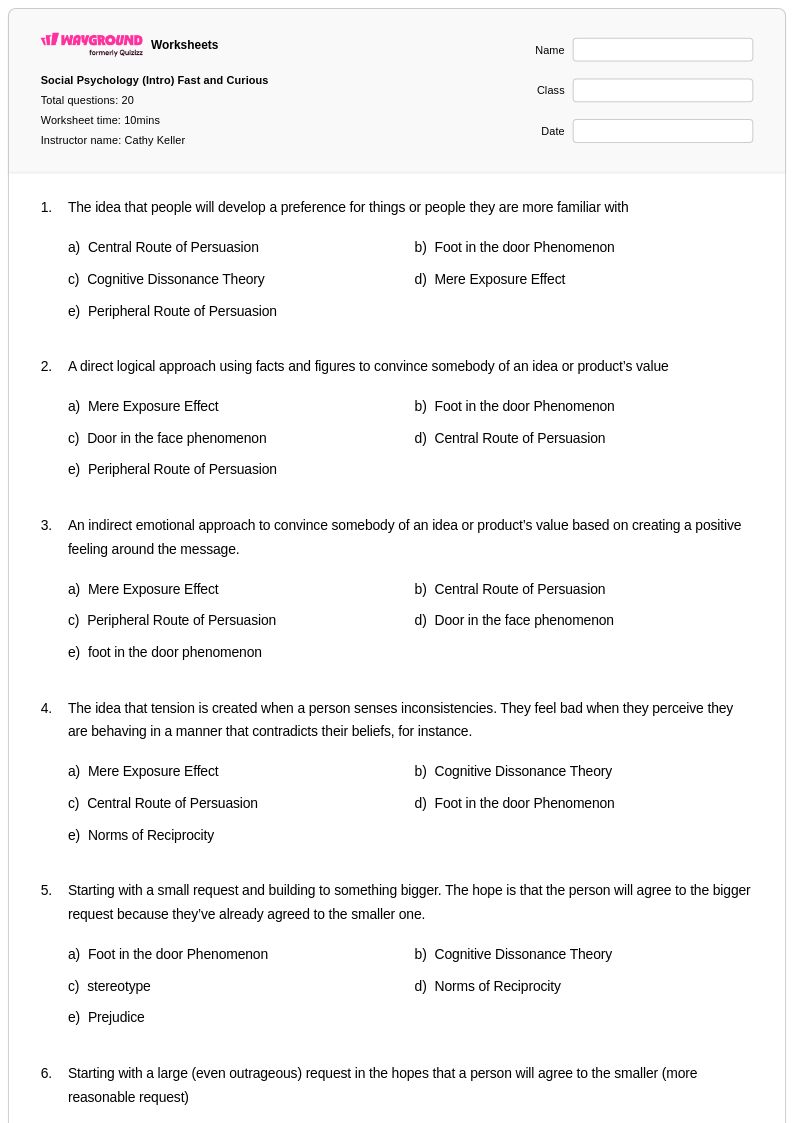
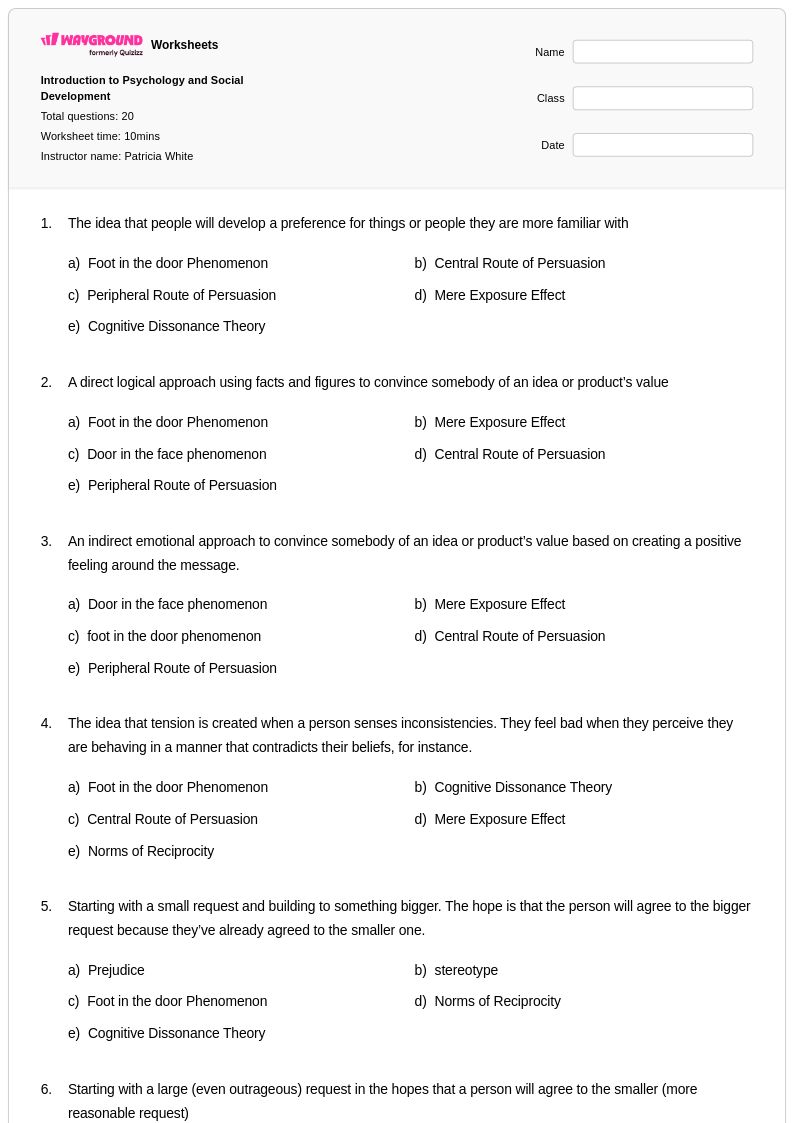
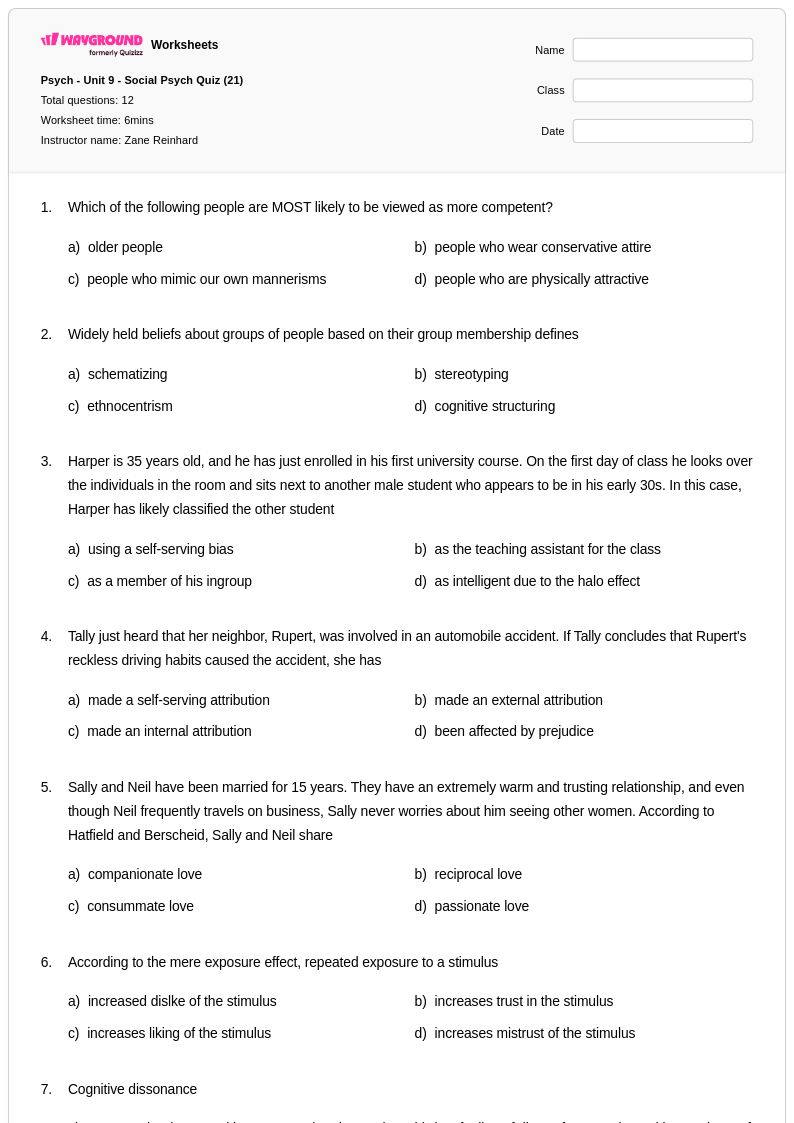
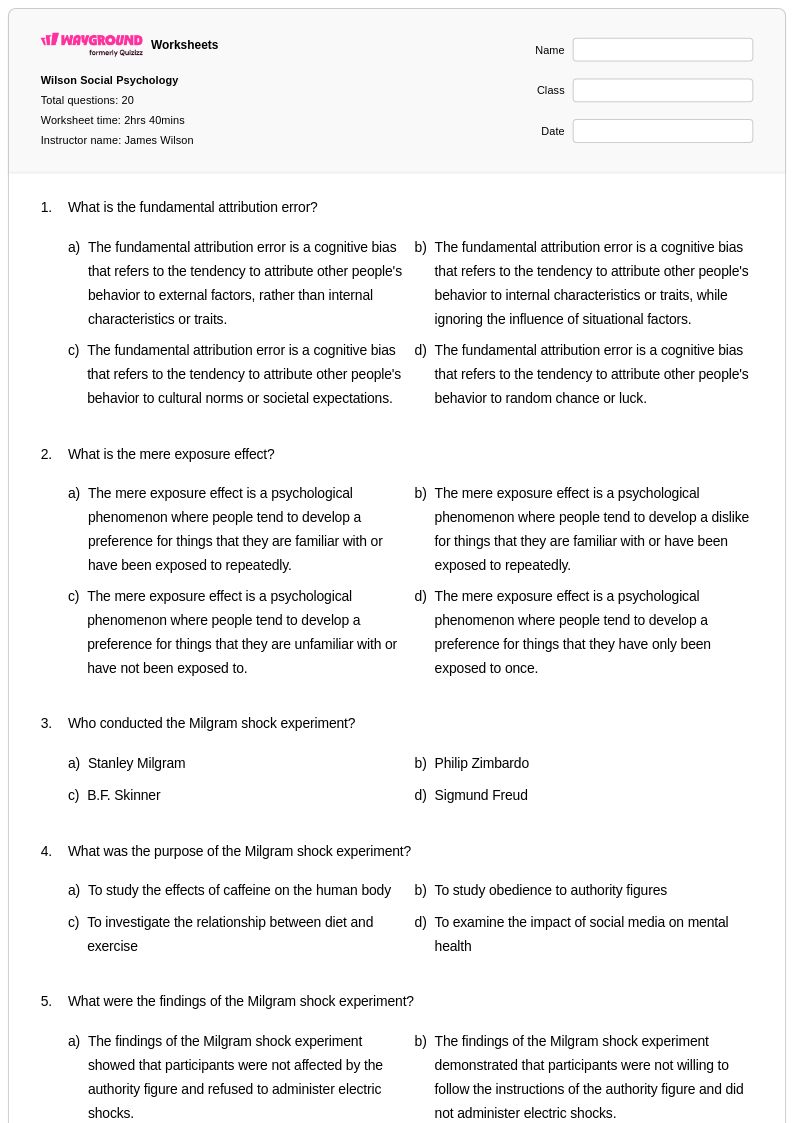
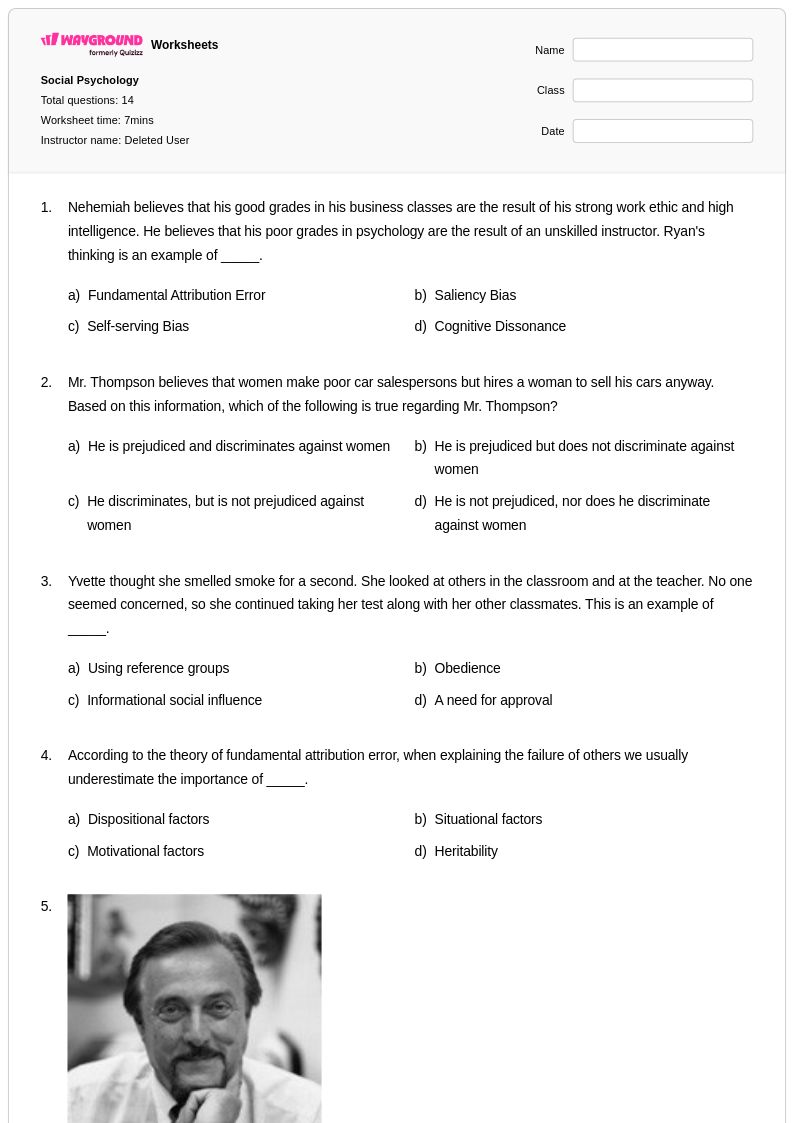
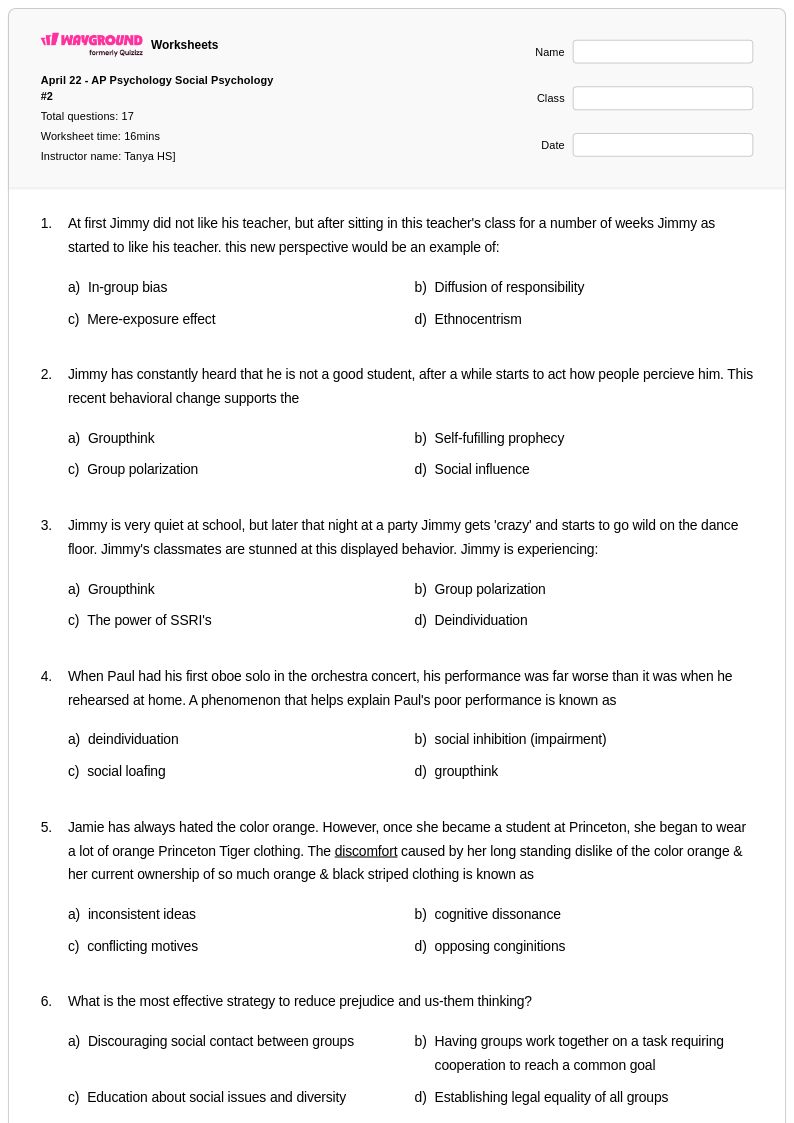
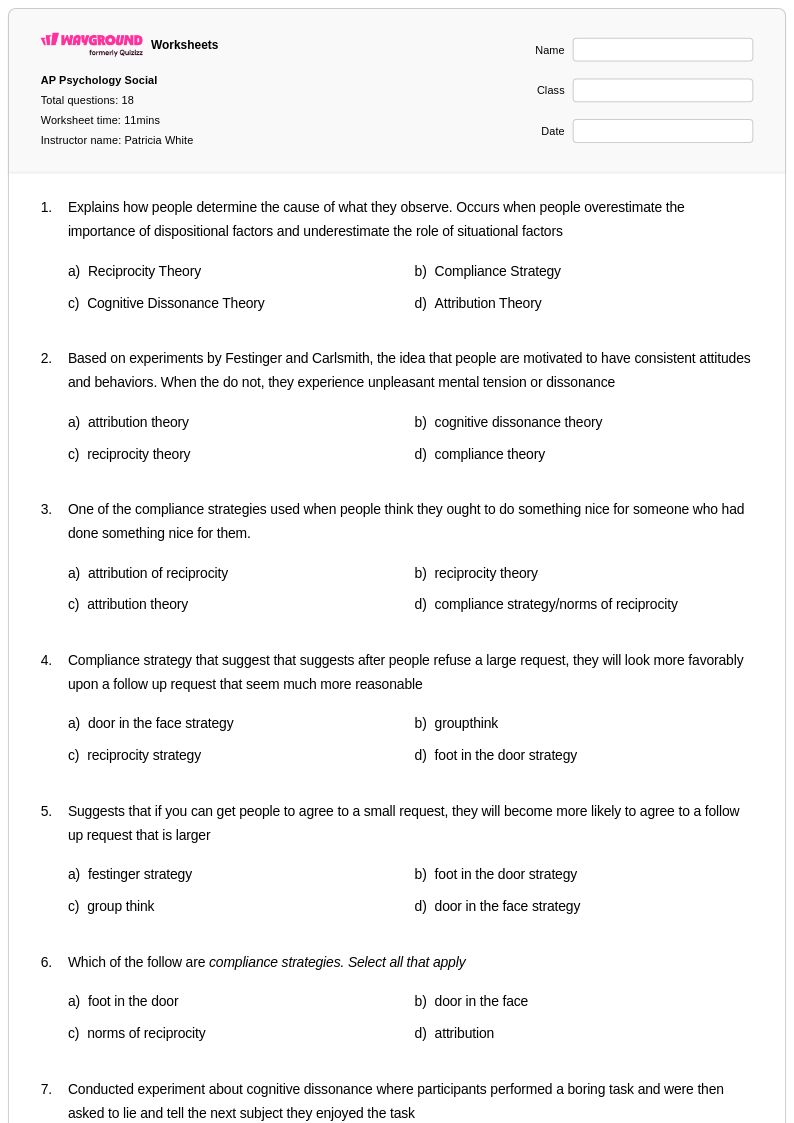
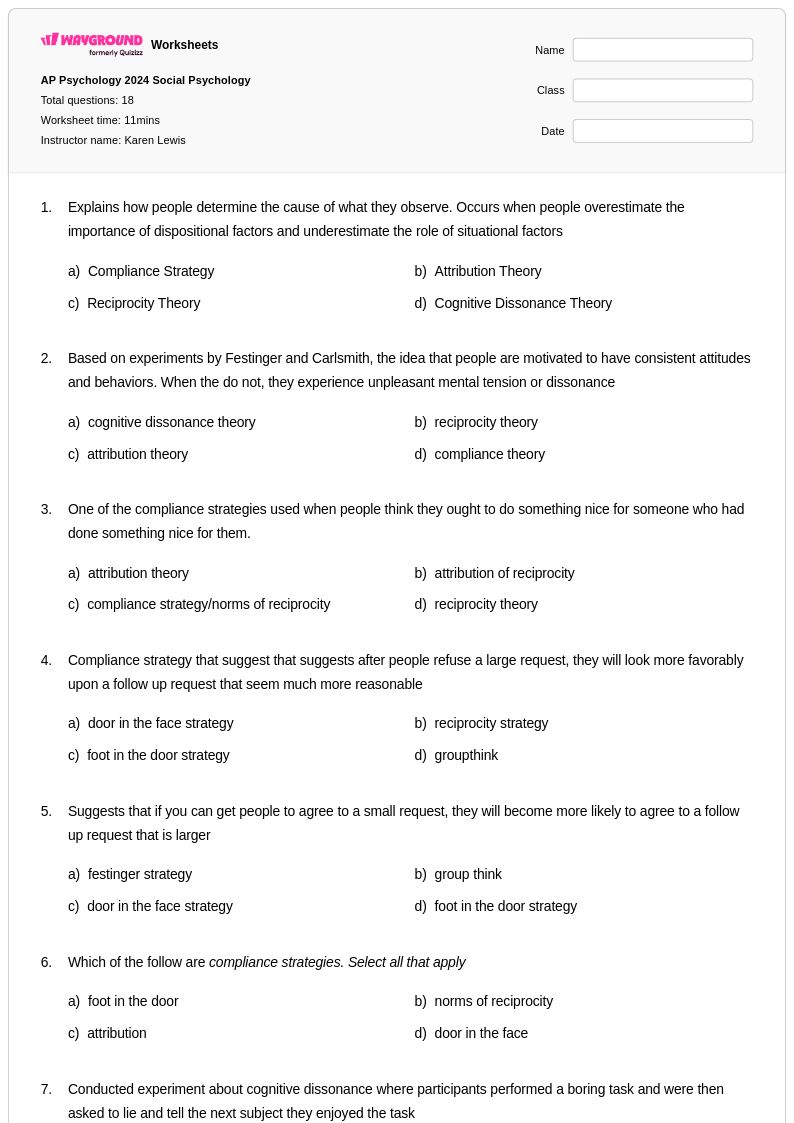
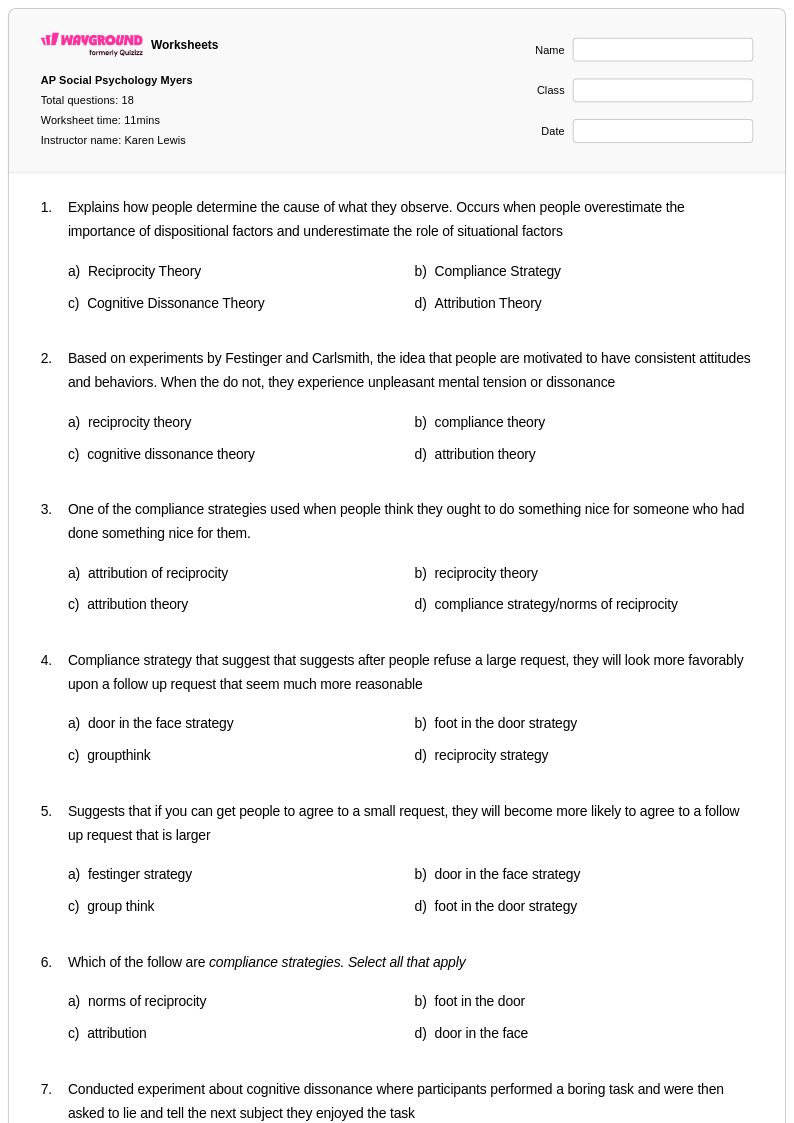
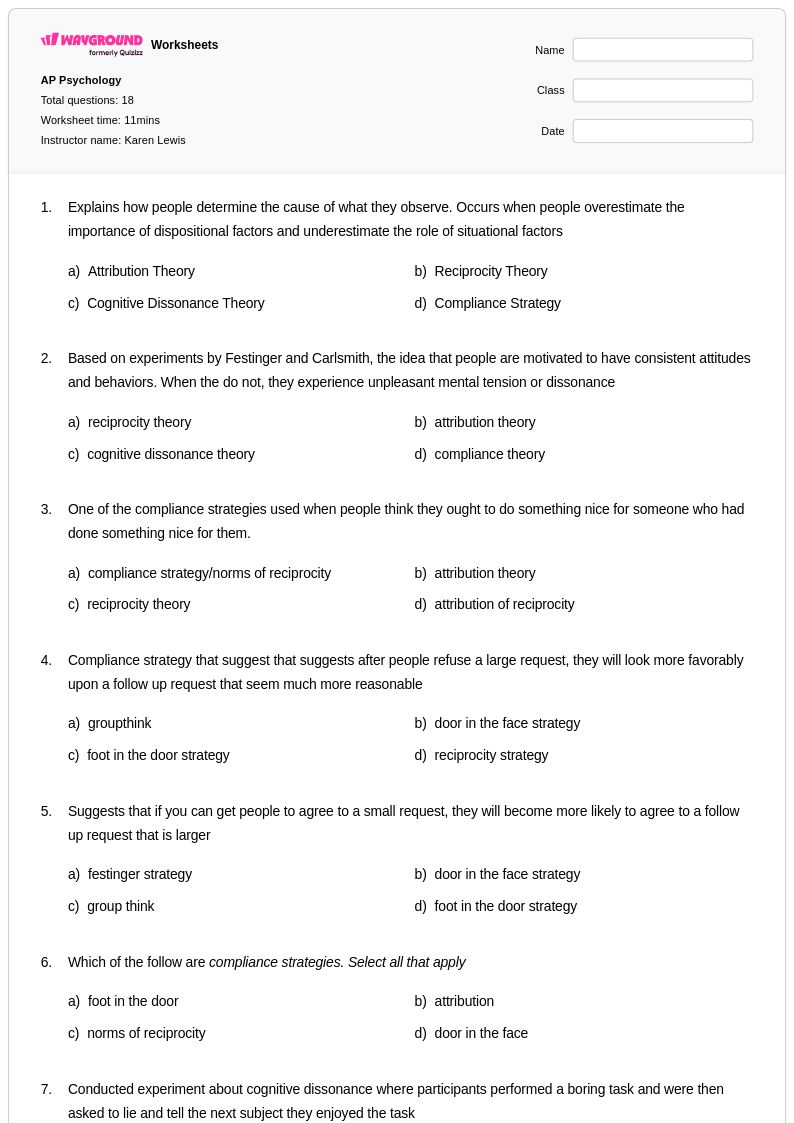
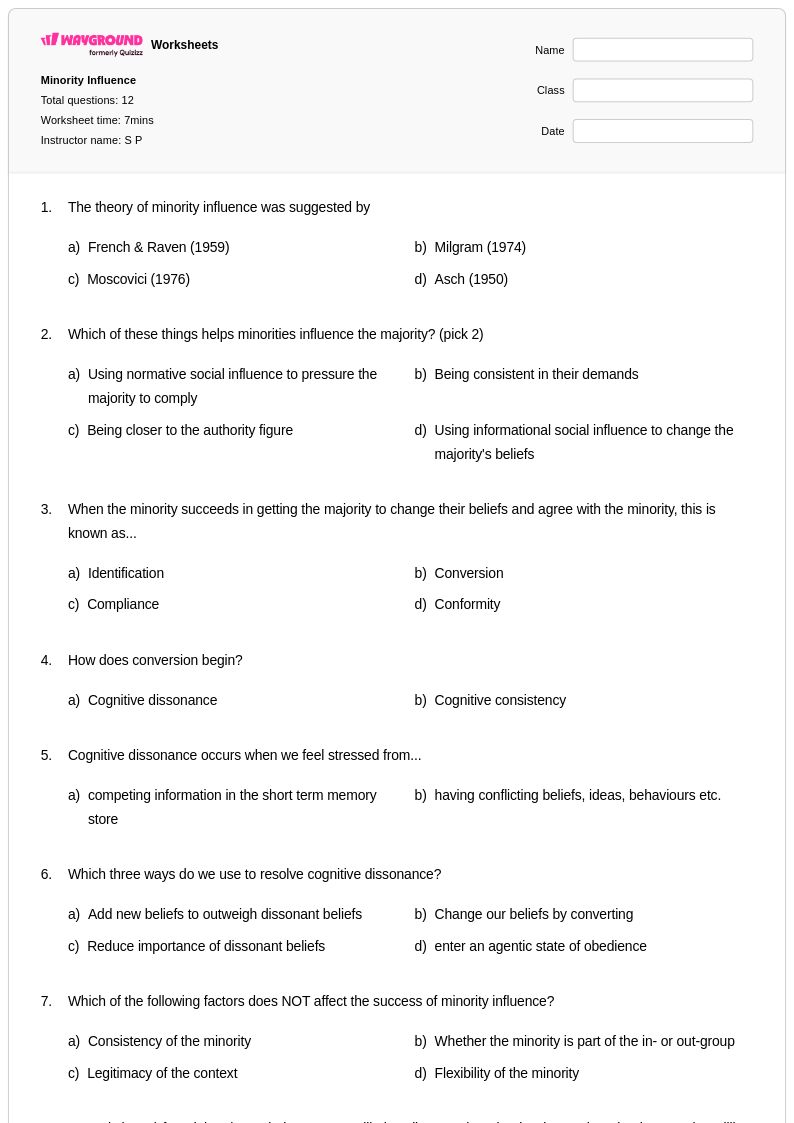
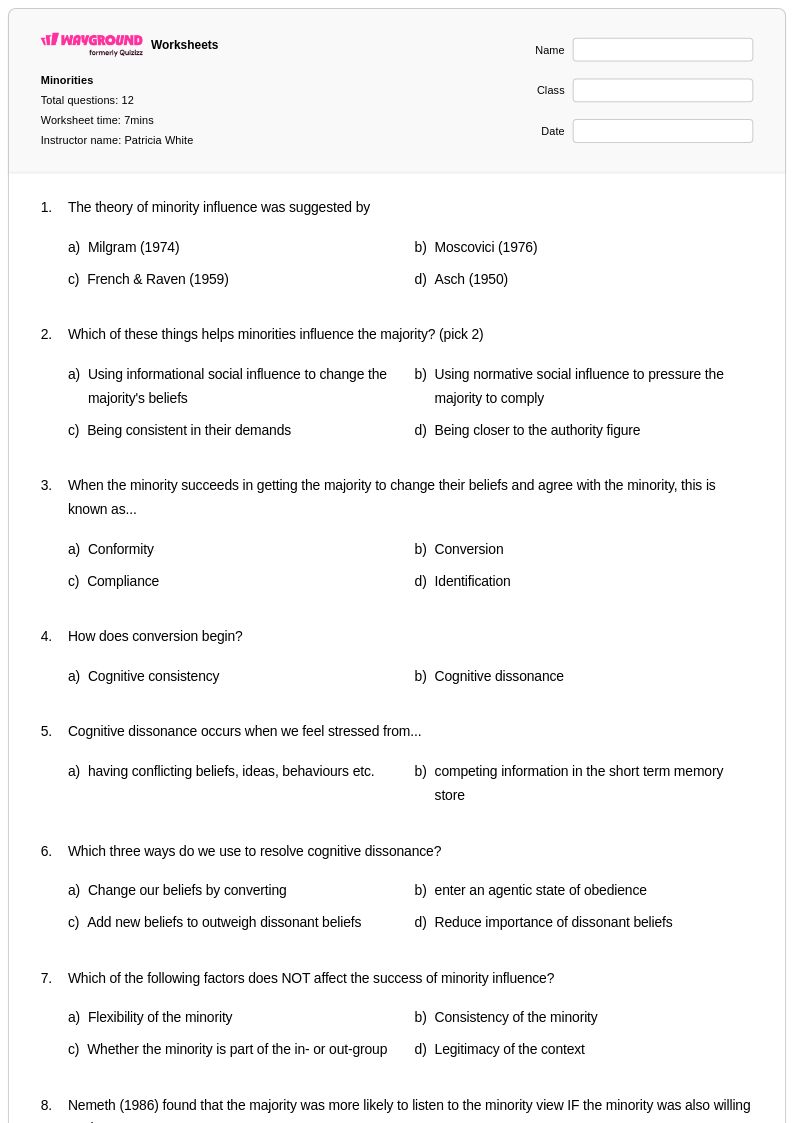
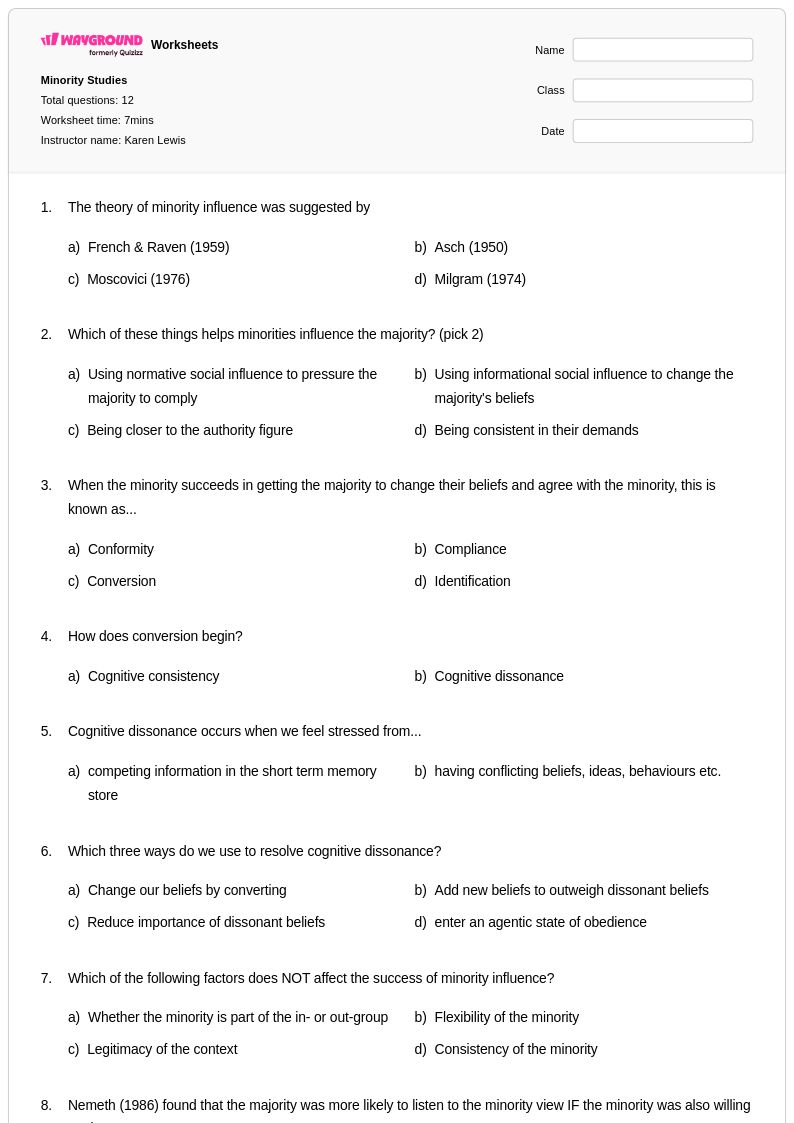
Cognitive dissonance worksheets for Year 10 students available through Wayground (formerly Quizizz) provide comprehensive exploration of this fundamental psychological concept within social studies education. These expertly designed resources help students understand the mental discomfort that arises when individuals hold contradictory beliefs, values, or attitudes simultaneously, and examine how people resolve these internal conflicts through various psychological mechanisms. The worksheets strengthen critical thinking skills by guiding students through real-world scenarios where cognitive dissonance occurs, from political decision-making to consumer behavior and social relationships. Each worksheet includes structured practice problems that challenge students to identify examples of cognitive dissonance, analyze the strategies people use to reduce psychological tension, and evaluate the social implications of these mental processes. Teachers can access comprehensive answer keys and free printable pdf versions that support both independent study and collaborative classroom discussions.
Wayground's extensive collection of teacher-created cognitive dissonance worksheets draws from millions of educational resources specifically developed for Year 10 social studies instruction. The platform's sophisticated search and filtering capabilities enable educators to locate materials that align with curriculum standards while meeting diverse classroom needs through built-in differentiation tools. Teachers can customize worksheets to match their students' learning levels, modify content for remediation or enrichment purposes, and seamlessly transition between printable pdf formats for traditional instruction and digital versions for technology-integrated lessons. This flexibility supports comprehensive lesson planning by providing educators with ready-to-use materials for introducing cognitive dissonance theory, reinforcing key concepts through targeted skill practice, and assessing student understanding of how psychological conflicts influence individual and collective social behavior.
FAQs
How do I teach cognitive dissonance to high school students?
Teaching cognitive dissonance effectively starts with concrete, relatable examples before moving to abstract theory. Present students with real-world scenarios where a person's actions contradict their stated values, such as an environmentalist who frequently flies for leisure, and ask them to identify the tension and how the person might rationalize it. From there, introduce Leon Festinger's original framework and have students apply it to historical events or current social issues. Grounding the concept in observable behavior makes the psychological mechanism far more accessible.
What are good practice exercises for cognitive dissonance in a psychology class?
Effective practice exercises ask students to do three things: identify the conflicting beliefs or behaviors, explain why discomfort arises, and predict which resolution strategy the person is likely to use. Scenario-based worksheets work particularly well because they force students to analyze real-world decision-making rather than recall definitions. Including examples from historical events, advertising psychology, and personal ethics gives students varied contexts for applying the concept with consistency.
What mistakes do students commonly make when learning about cognitive dissonance?
The most common error is confusing cognitive dissonance with simple hypocrisy or logical contradiction. Students often miss the psychological dimension, specifically that dissonance refers to the mental discomfort a person actually experiences, not just an outside observer's judgment of inconsistency. Another frequent mistake is assuming all dissonance leads to attitude change; students need to understand that rationalization, denial, and trivialization are equally common resolution strategies. Targeted scenario analysis with answer key explanations helps correct both misconceptions.
How can I use cognitive dissonance worksheets to support students with different learning needs?
Cognitive dissonance worksheets on Wayground can be assigned digitally, which allows teachers to apply individual accommodations directly to student accounts. Features such as Read Aloud support students who struggle with dense psychological text, while reduced answer choices can lower cognitive load for learners who need scaffolding on multiple-choice scenario questions. Extended time settings can be applied per student without alerting the rest of the class, keeping the experience equitable and discreet. These settings carry over to future sessions, so teachers only need to configure them once.
How do cognitive dissonance worksheets connect to broader social psychology curriculum?
Cognitive dissonance is a foundational concept in social psychology that connects directly to attitude formation, persuasion, self-perception theory, and moral reasoning. Worksheets that embed dissonance scenarios within historical events or social issues help students see it not as an isolated phenomenon but as a lens for understanding why people resist changing their minds even when confronted with contradictory evidence. This cross-topic relevance makes cognitive dissonance a strong anchor concept for units on human behavior, decision-making, and social influence.
Are cognitive dissonance worksheets available as printable PDFs or in digital formats?
Yes, cognitive dissonance worksheets on Wayground are available in both printable PDF formats for traditional classroom use and digital formats for technology-integrated learning environments. Teachers can also host them as a quiz directly on Wayground, enabling real-time student responses and instant scoring. This flexibility makes the same worksheet usable for in-class instruction, independent practice, homework, or formative assessment without requiring separate materials.