Free Printable Combining Sentences Worksheets for Year 4
Wayground's free Year 4 combining sentences worksheets provide printable PDF practice problems and answer keys to help students master sentence structure and improve their writing organization skills.
Explore printable Combining Sentences worksheets for Year 4
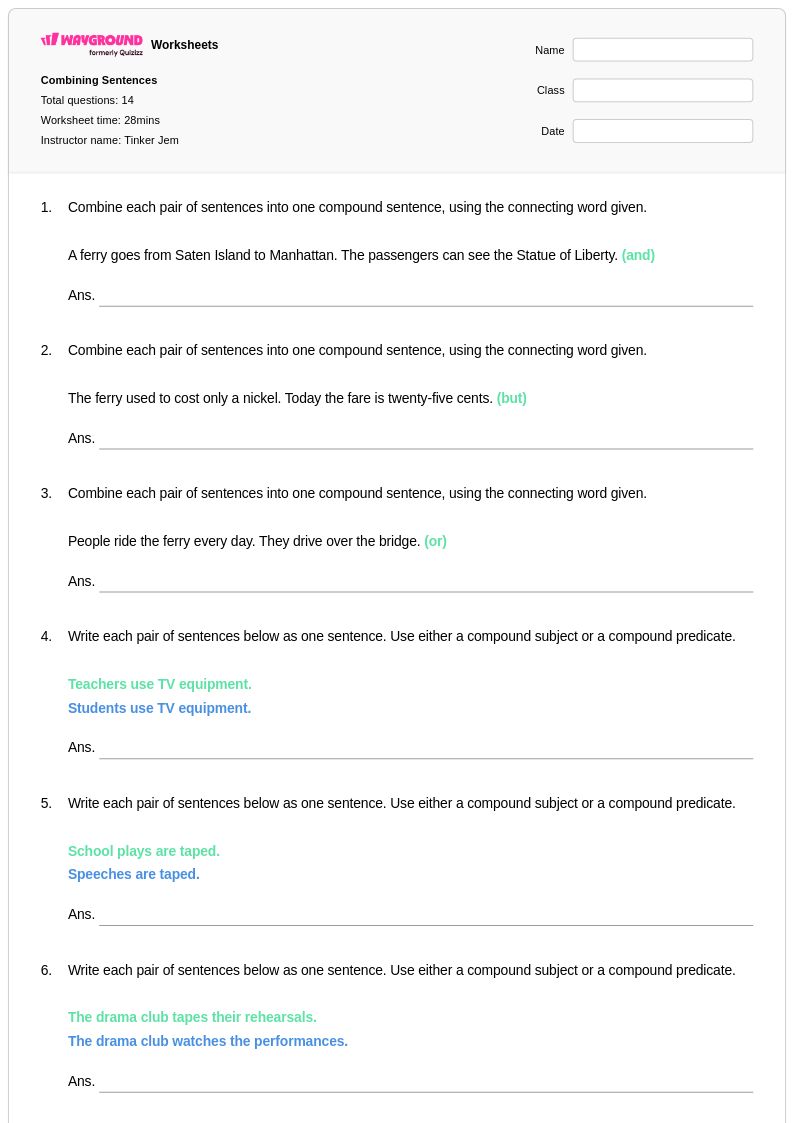
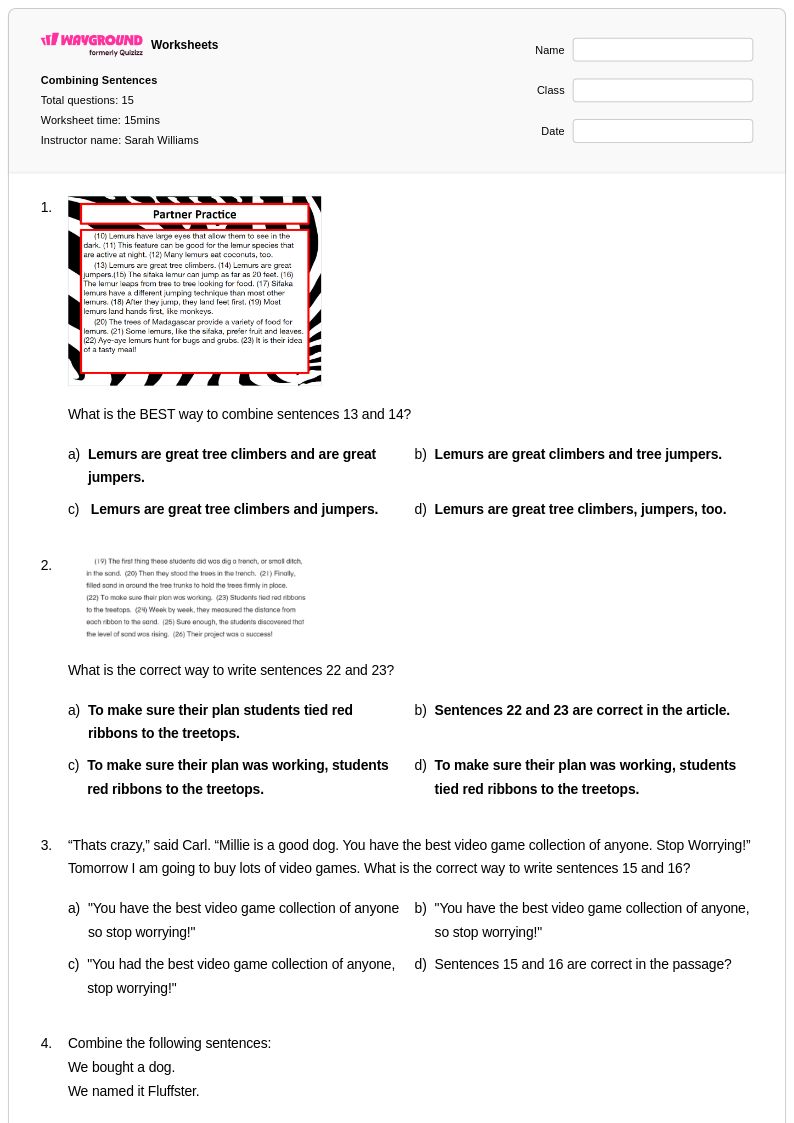
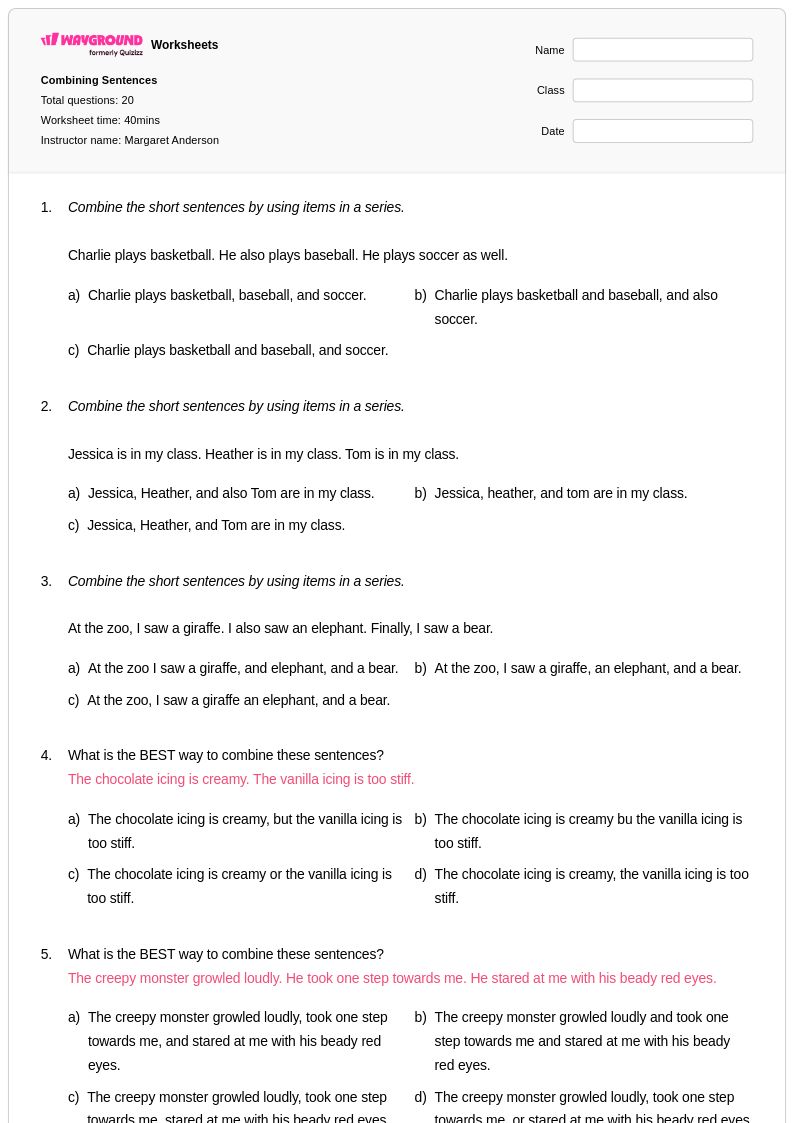
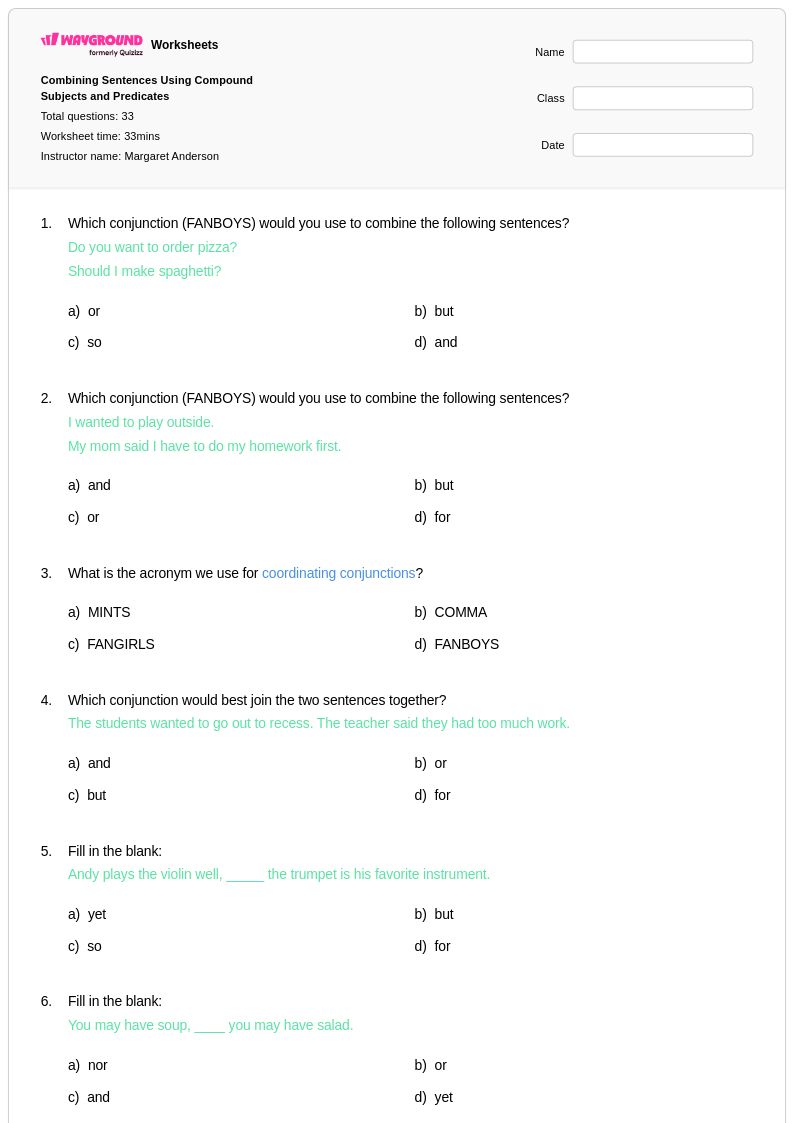
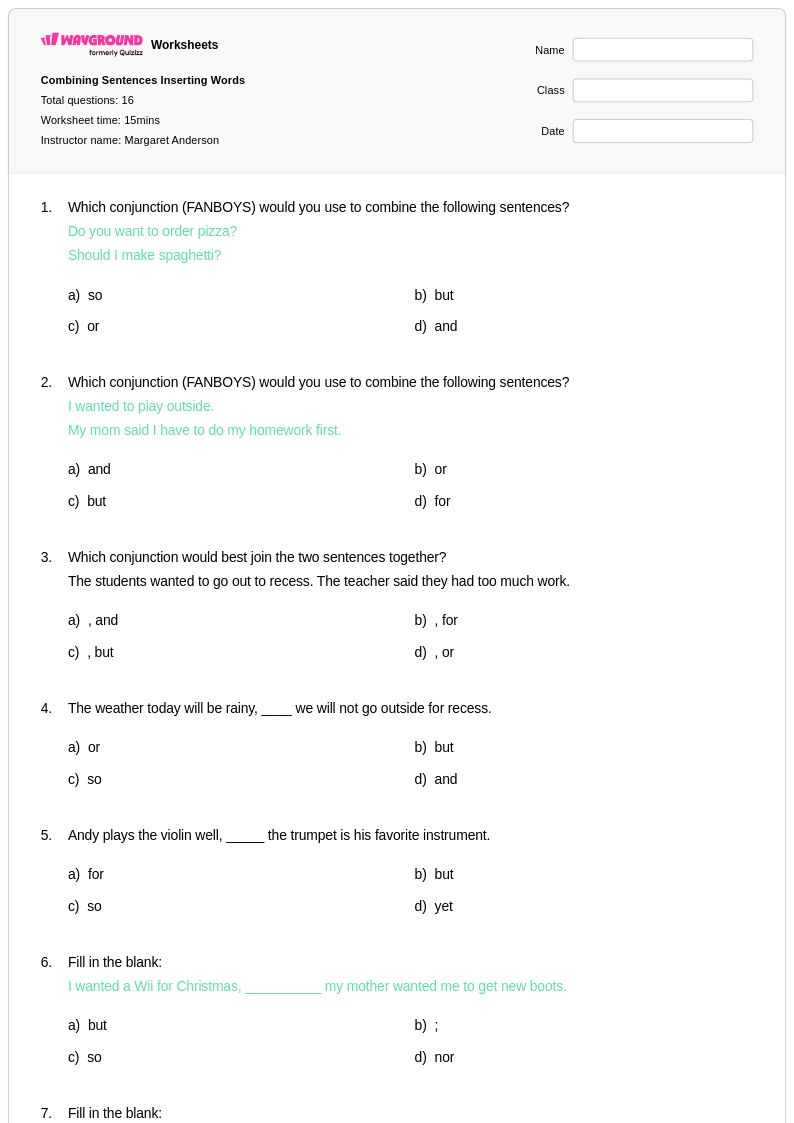
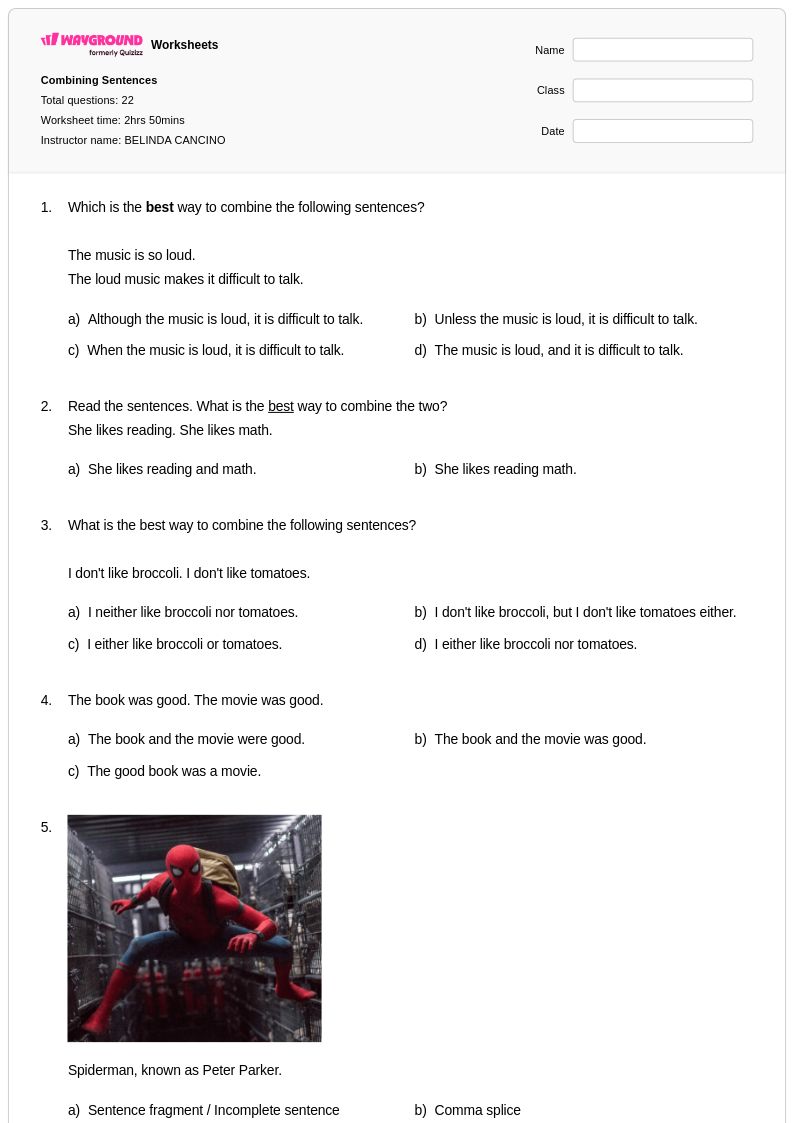
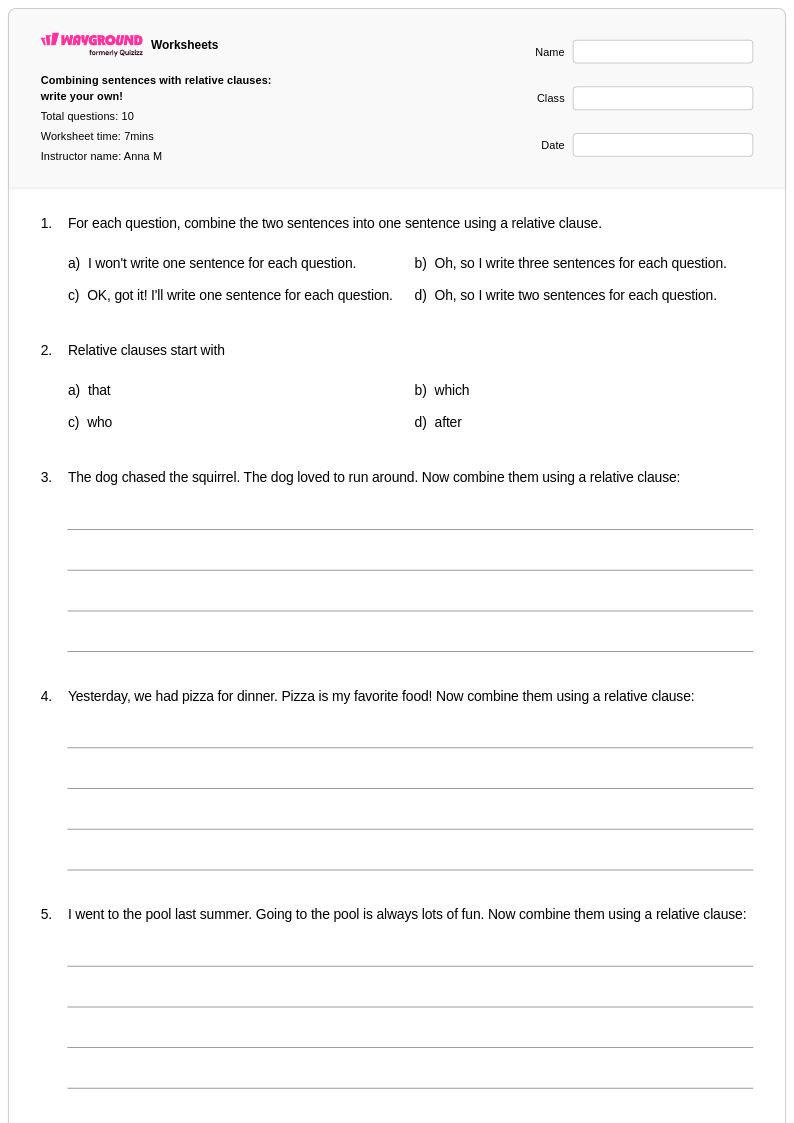
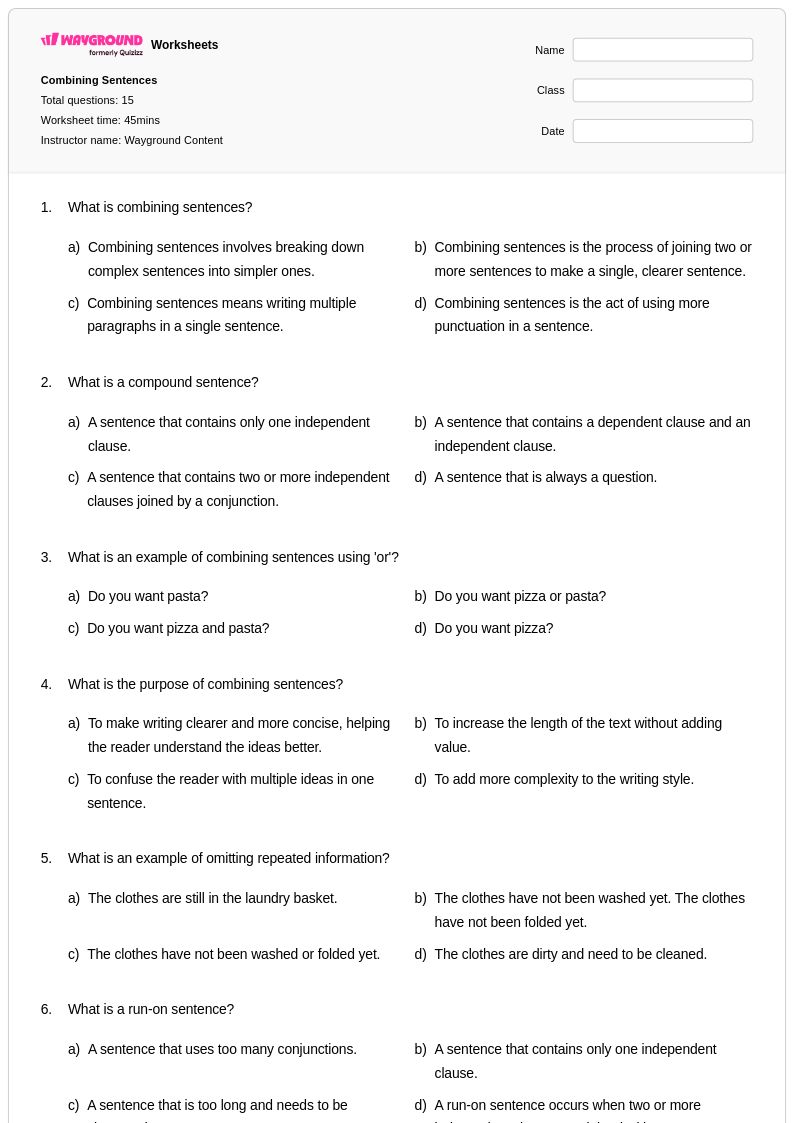
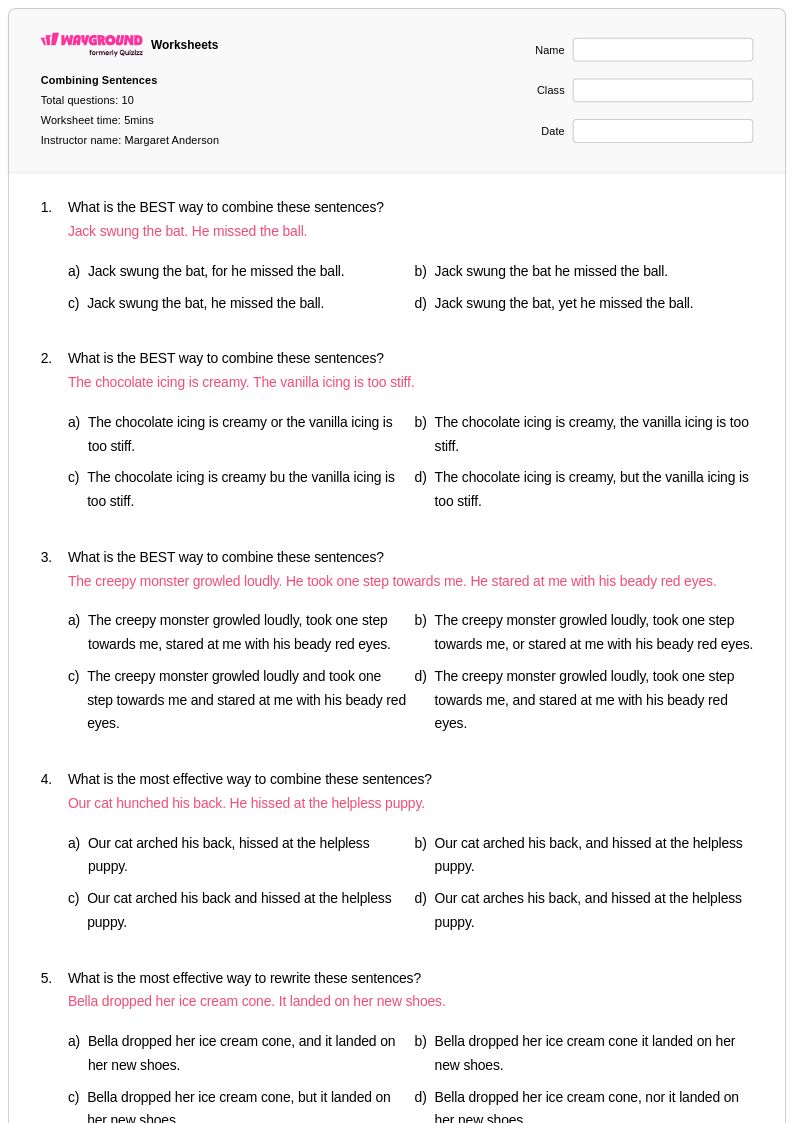
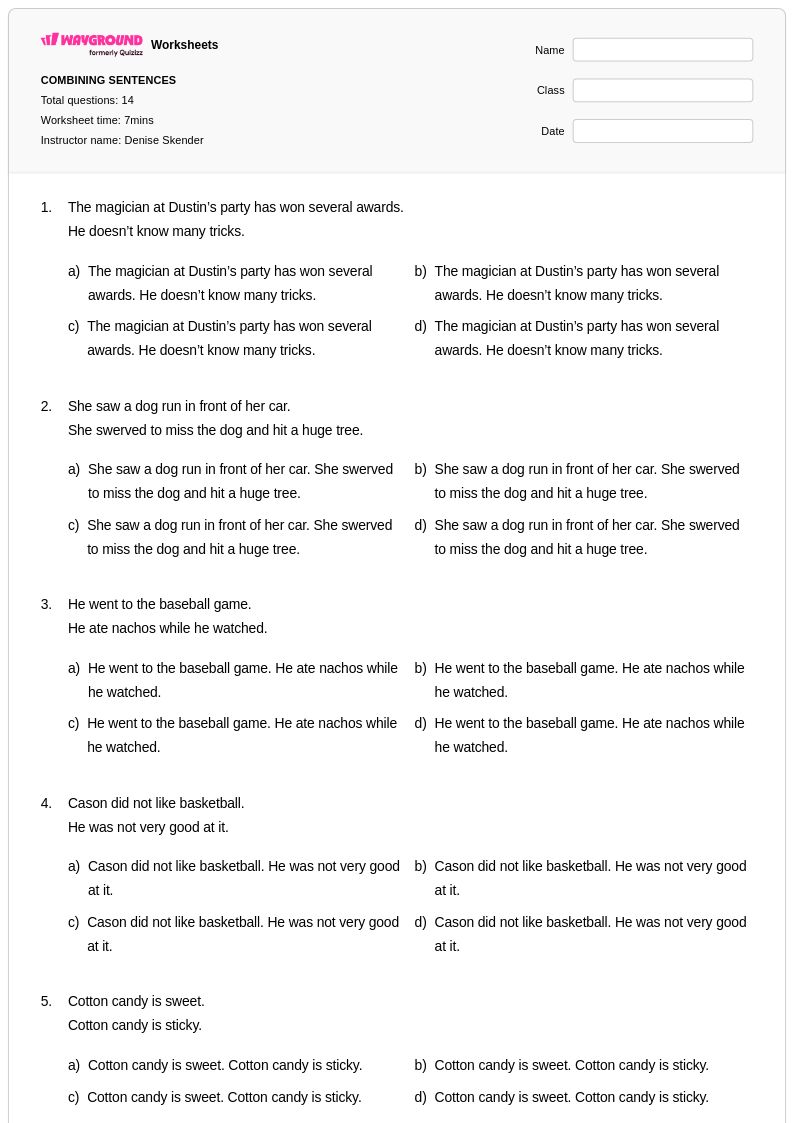
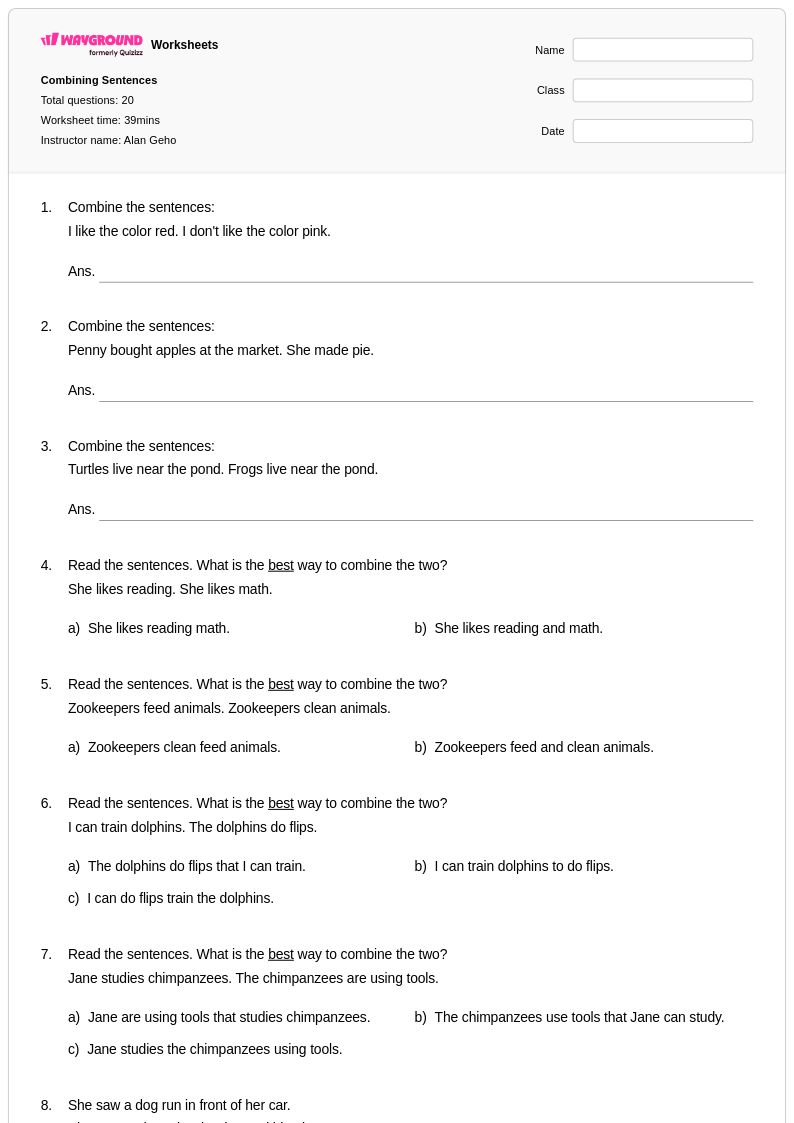
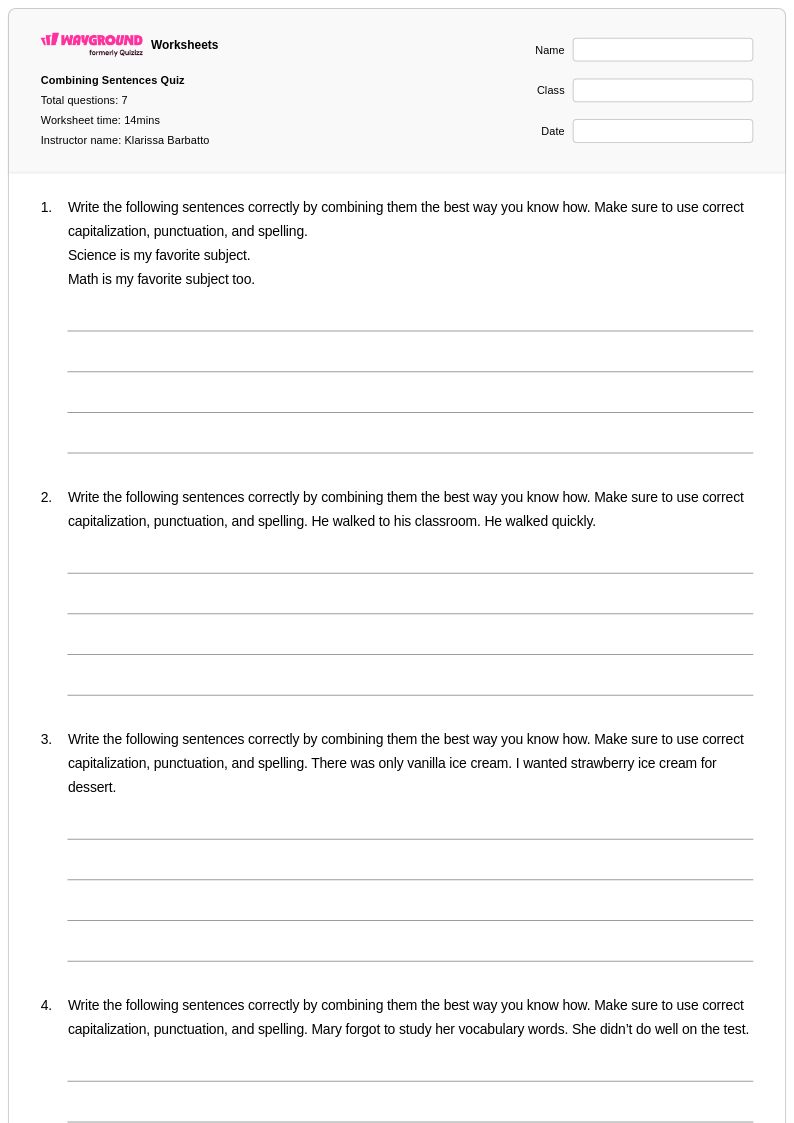
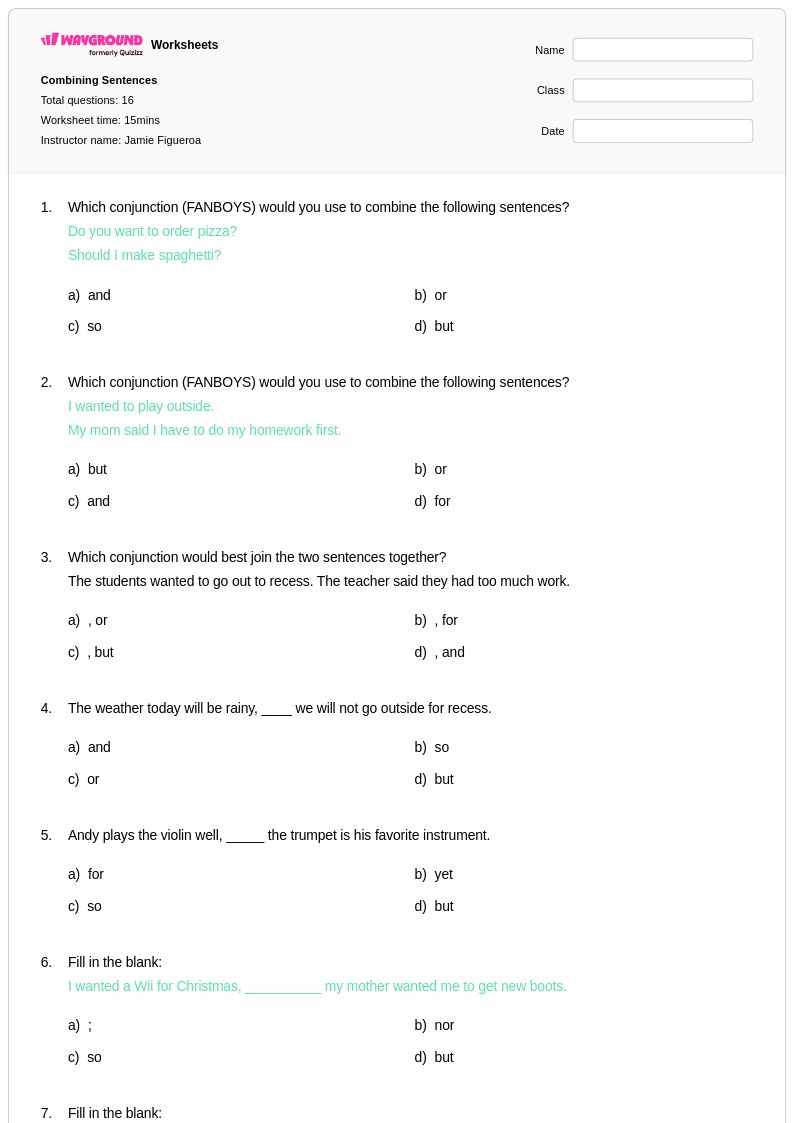
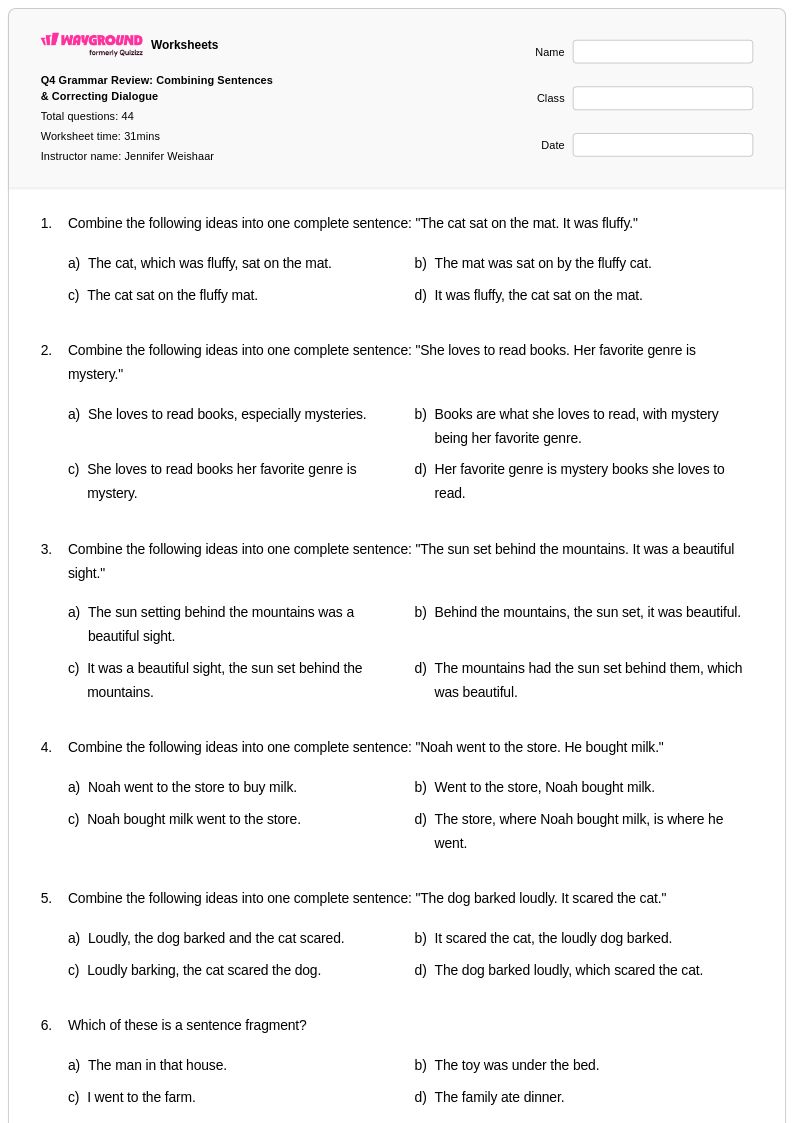
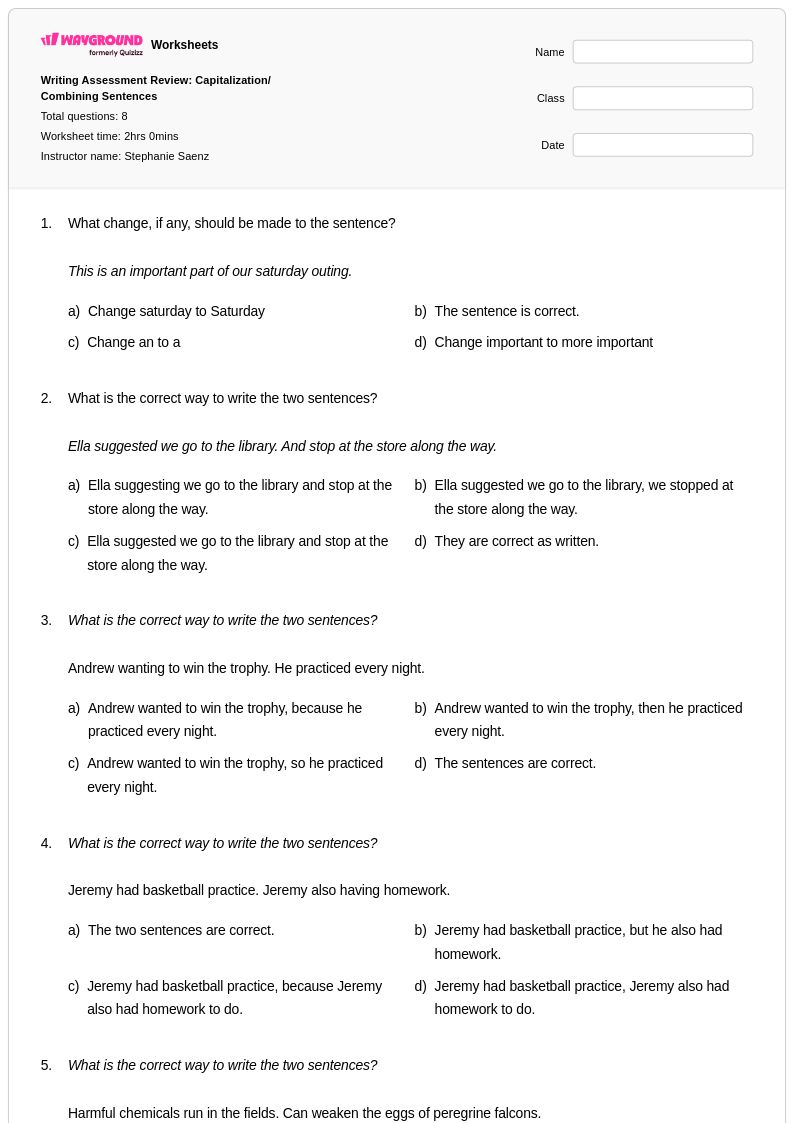
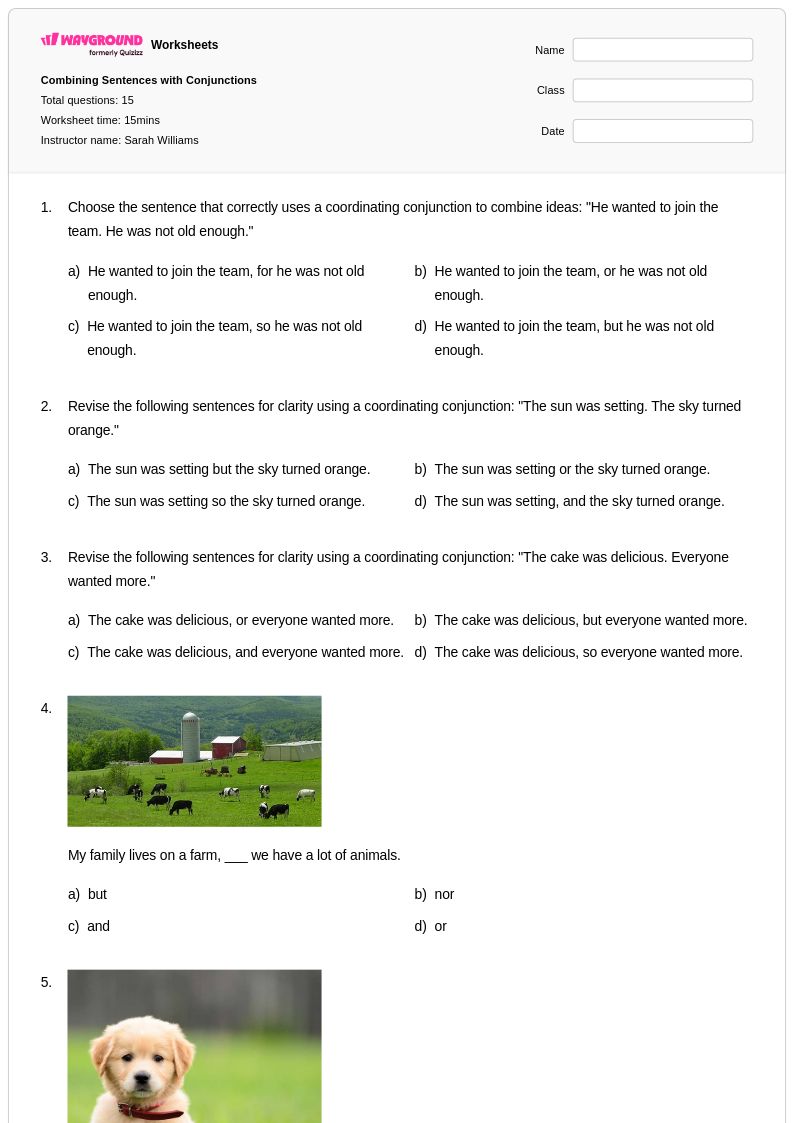
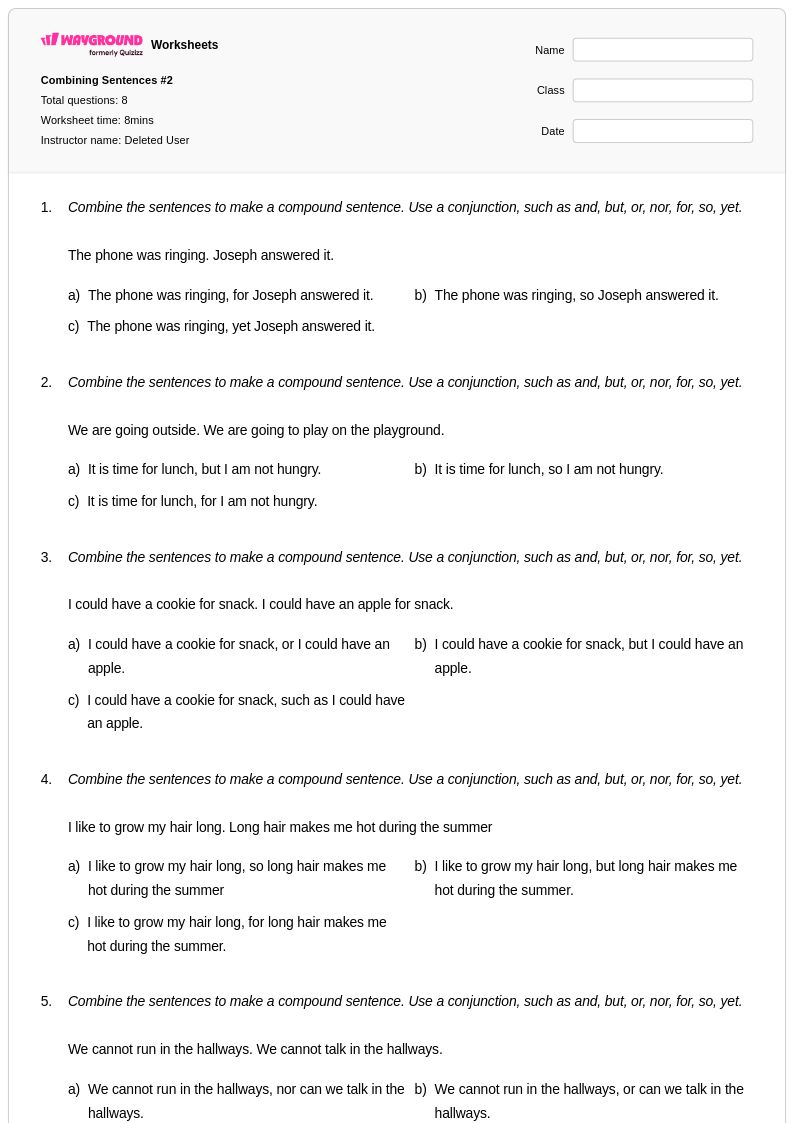
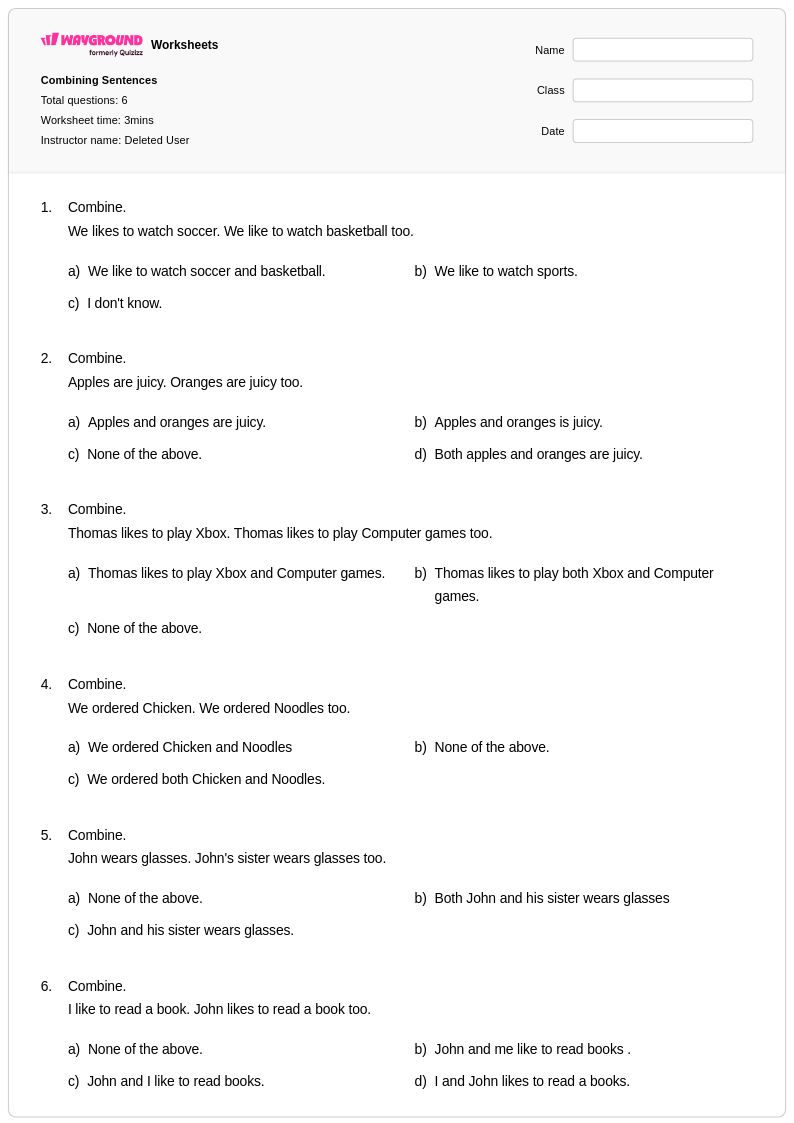
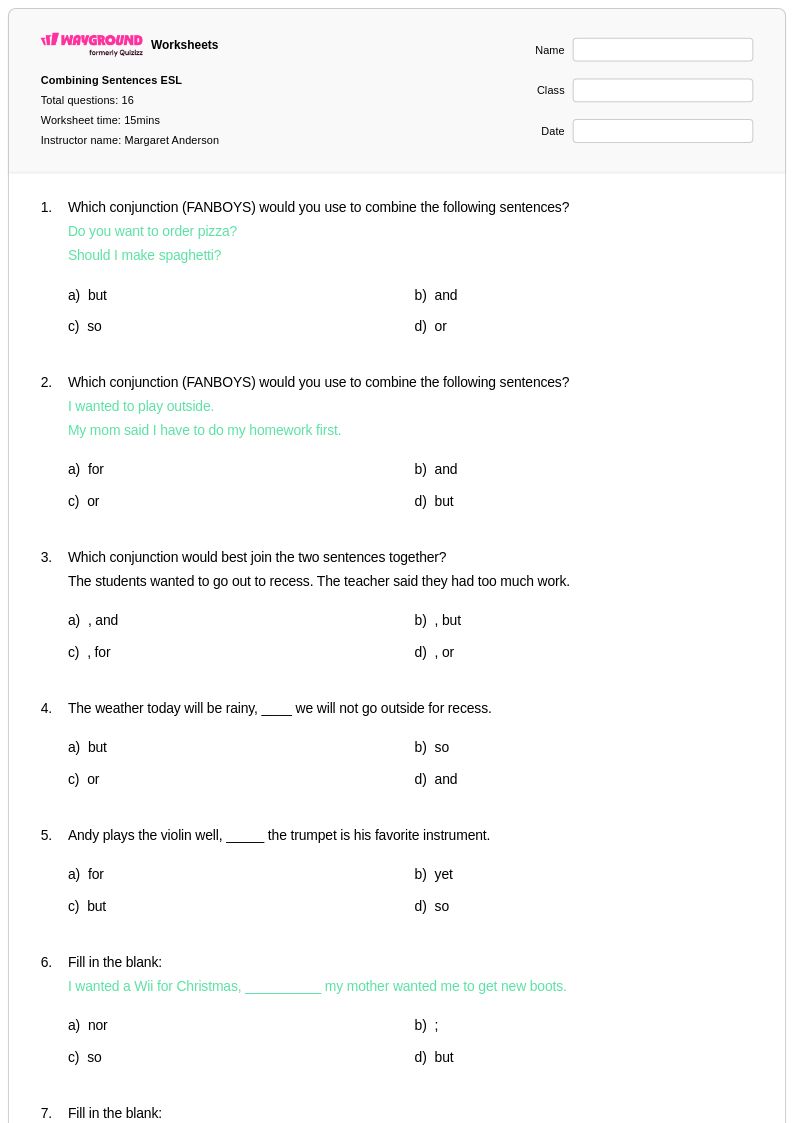
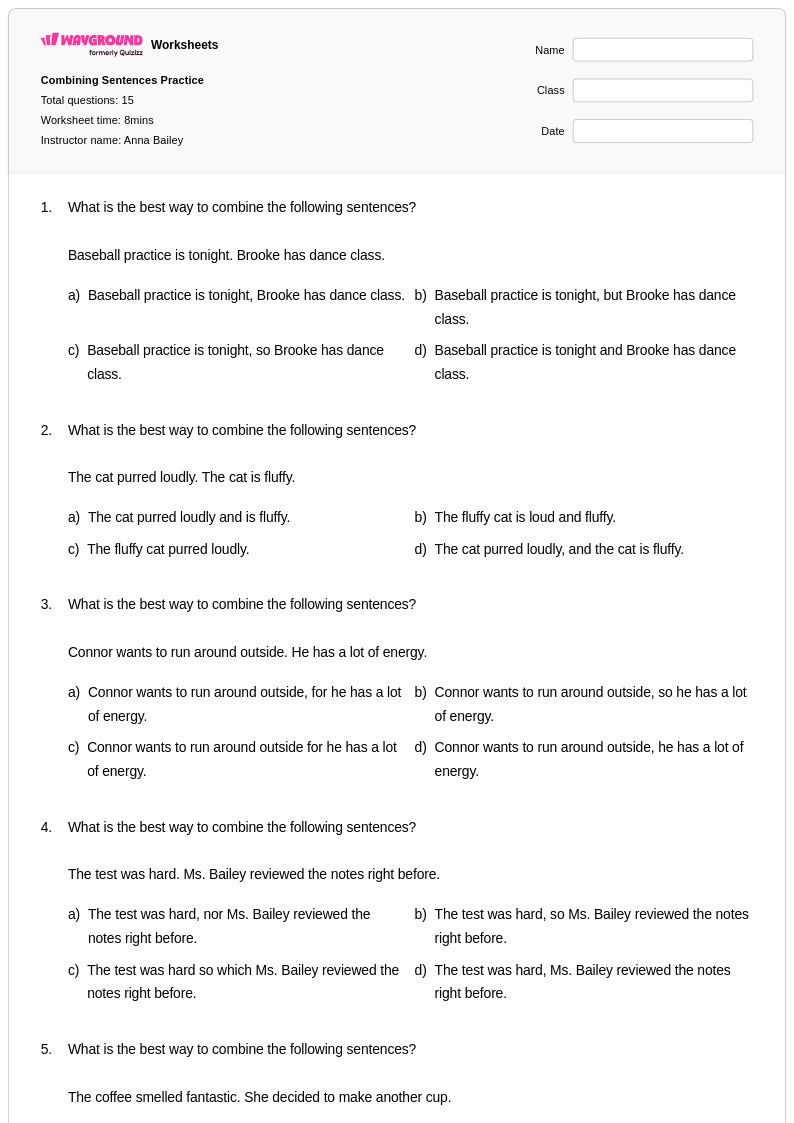
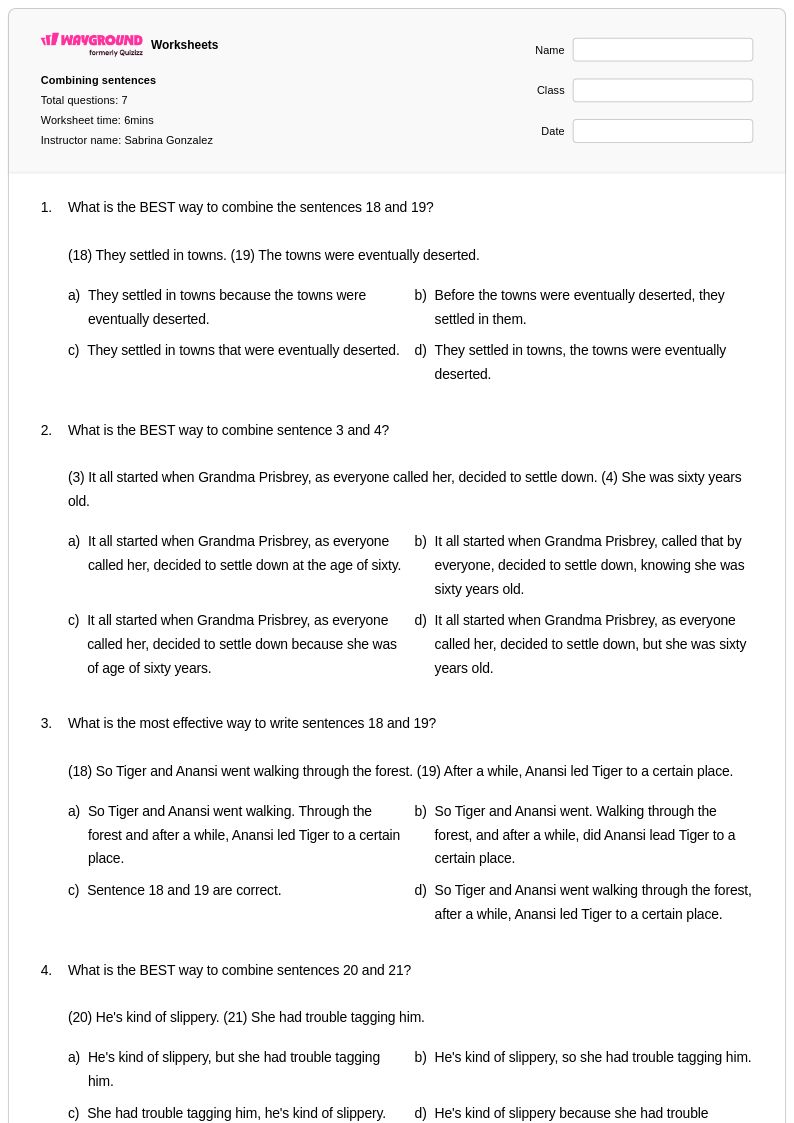
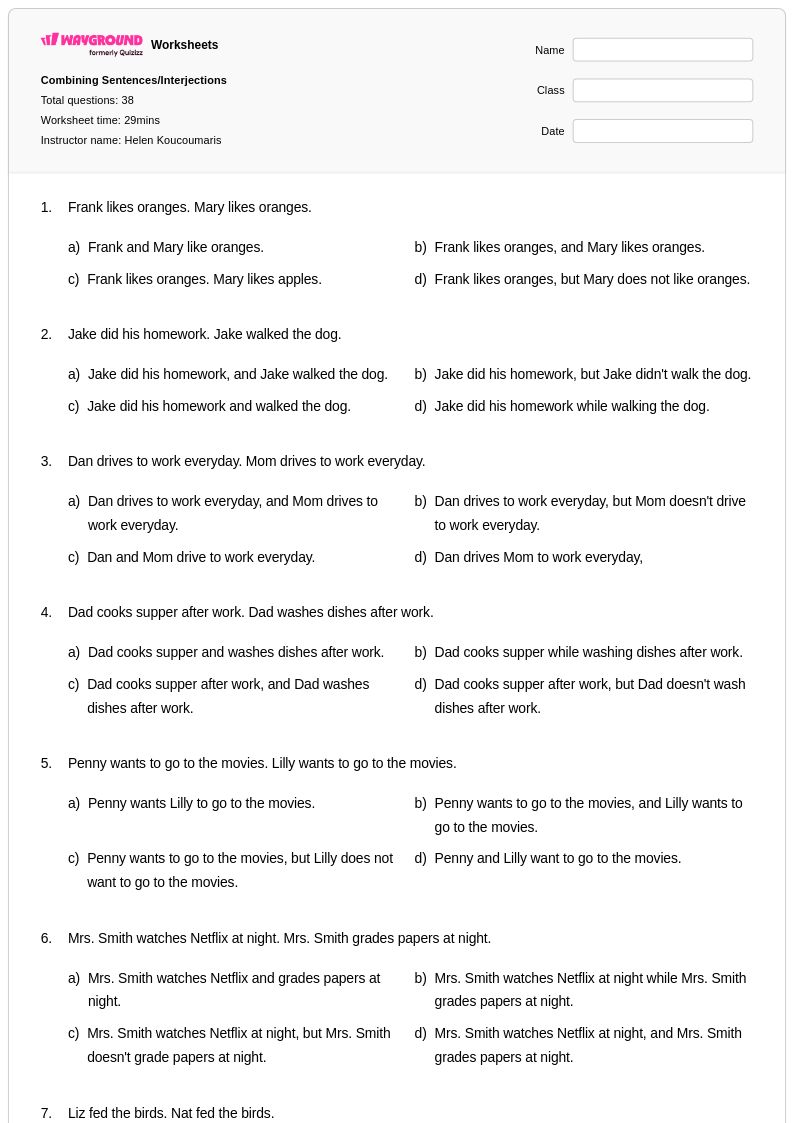
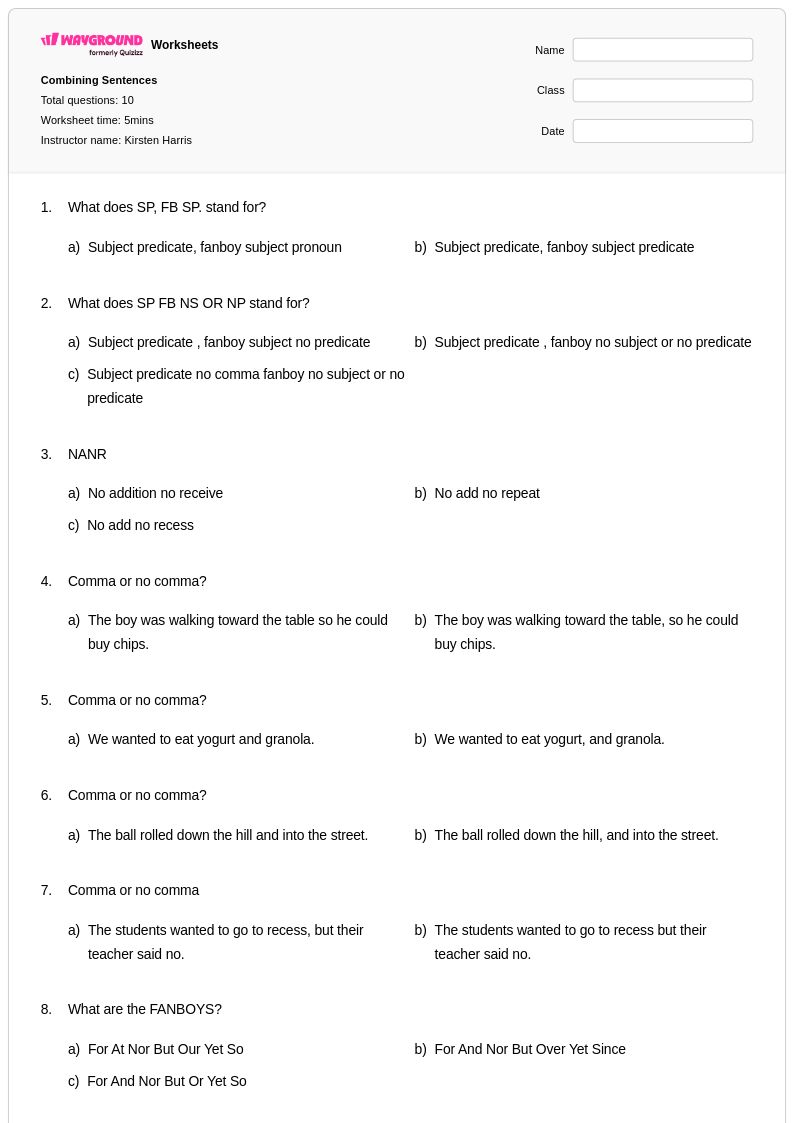
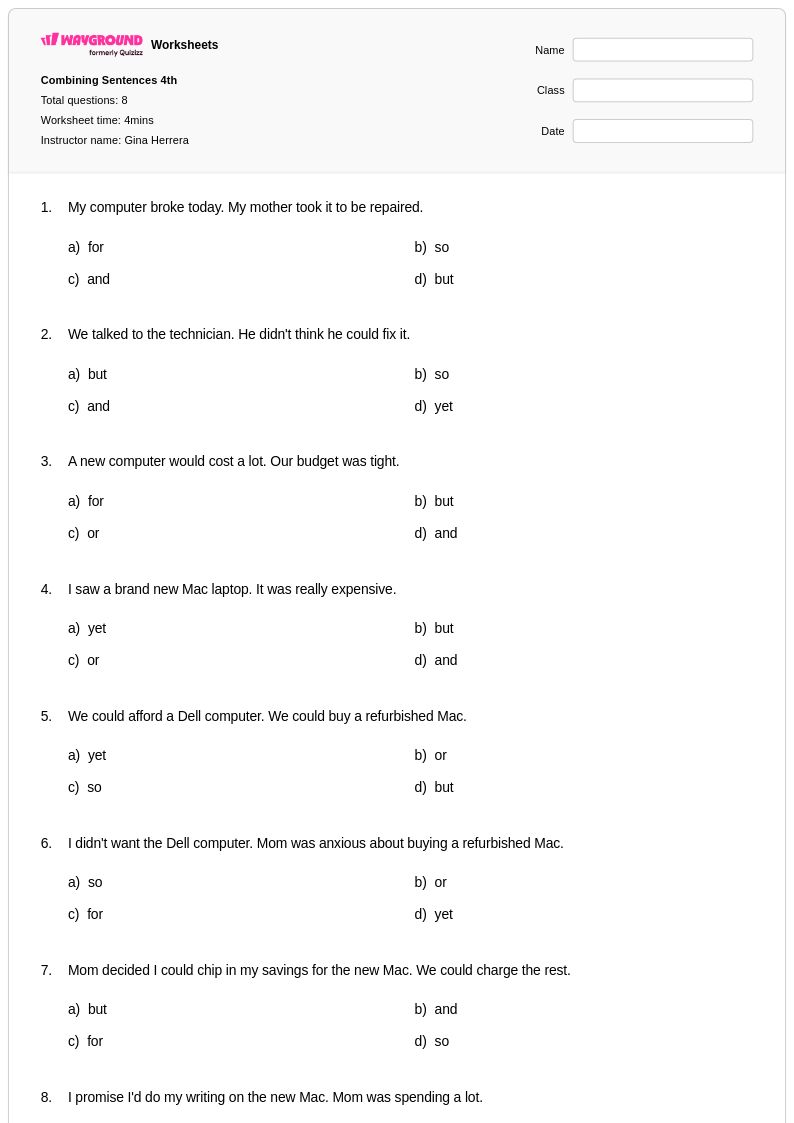
Combining sentences worksheets for Year 4 students available through Wayground (formerly Quizizz) provide essential practice in developing sophisticated writing skills by teaching young writers how to join simple sentences into more complex, flowing text. These carefully designed printables focus on key techniques such as using coordinating conjunctions like "and," "but," and "or," as well as introducing subordinating conjunctions and transitional phrases appropriate for fourth-grade learners. Students work through practice problems that challenge them to identify opportunities for sentence combination, eliminate choppy writing patterns, and create more mature prose that demonstrates improved writing organization and structure. Each worksheet includes comprehensive answer keys that allow for immediate feedback and self-assessment, while the free pdf format ensures easy classroom distribution and home practice opportunities.
Wayground (formerly Quizizz) empowers educators with an extensive collection of millions of teacher-created combining sentences resources specifically curated for Year 4 instruction, featuring robust search and filtering capabilities that help teachers quickly locate materials aligned with specific writing standards and learning objectives. The platform's differentiation tools enable instructors to customize worksheets based on individual student needs, whether providing additional scaffolding for struggling writers or offering enrichment activities for advanced learners ready to tackle more complex sentence structures. Teachers can seamlessly integrate these resources into their writing organization and structure curriculum through both printable and digital formats, supporting flexible lesson planning that accommodates various teaching styles and classroom configurations. This comprehensive approach facilitates targeted remediation for students who struggle with sentence fluency while simultaneously providing skill practice opportunities that reinforce proper grammar usage and writing mechanics across diverse learning environments.
FAQs
How do I teach students to combine sentences effectively?
Start by teaching the three core structures: compound sentences using coordinating conjunctions (FANBOYS), complex sentences using subordinating conjunctions (because, although, since), and compound-complex sentences that blend both. Model the transformation explicitly by showing a pair of choppy sentences and walking students through each combining option, discussing how meaning and emphasis shift with each choice. Practice should move from guided examples to independent application before students apply these skills in their own writing.
What exercises help students practice combining sentences?
Sentence-combining worksheets are among the most research-supported tools for developing writing fluency. Effective exercises present pairs or groups of short, repetitive sentences and ask students to merge them using coordinating conjunctions, subordinating conjunctions, or transitional phrases. Varying the prompt type — from open-ended combining to multiple-choice options — helps students develop both flexibility and accuracy in constructing compound, complex, and compound-complex structures.
What mistakes do students commonly make when combining sentences?
The most frequent errors include comma splices (joining two independent clauses with only a comma), run-on sentences (fusing clauses without any conjunction or punctuation), and incorrect subordinating conjunction choices that distort the logical relationship between ideas. Students also frequently over-rely on 'and' and 'but,' producing technically correct but stylistically flat writing. Targeted practice that requires students to select and justify their conjunction choices helps address these patterns directly.
How can I differentiate sentence combining practice for students at different skill levels?
For struggling writers, begin with compound sentences using familiar coordinating conjunctions before introducing subordination. For more advanced students, require them to combine three or more sentences into a single compound-complex structure and explain their punctuation decisions. On Wayground, teachers can apply accommodations such as reduced answer choices for students who need less cognitive load, or enable Read Aloud so students can hear sentence pairs read to them before responding.
How do I use Wayground's combining sentences worksheets in my classroom?
Wayground's combining sentences worksheets are available as printable PDFs for traditional classroom use and in digital formats for technology-integrated environments, including the ability to host them as a live quiz on Wayground. Each worksheet includes a complete answer key, making them practical for independent practice, homework, or in-class skill work. The digital format also allows teachers to apply student-level accommodations — such as extended time or read aloud — without disrupting the rest of the class.
At what grade level should students start learning to combine sentences?
Sentence combining is typically introduced in grades 2 and 3 with simple compound sentences using 'and,' 'but,' and 'so,' and progressively deepens through middle school as students learn subordination and more complex structures. By grades 6 through 8, students are expected to construct compound-complex sentences and use transitional phrases to show nuanced relationships between ideas. Worksheets that span these skill levels allow teachers to meet students where they are and build complexity incrementally.