
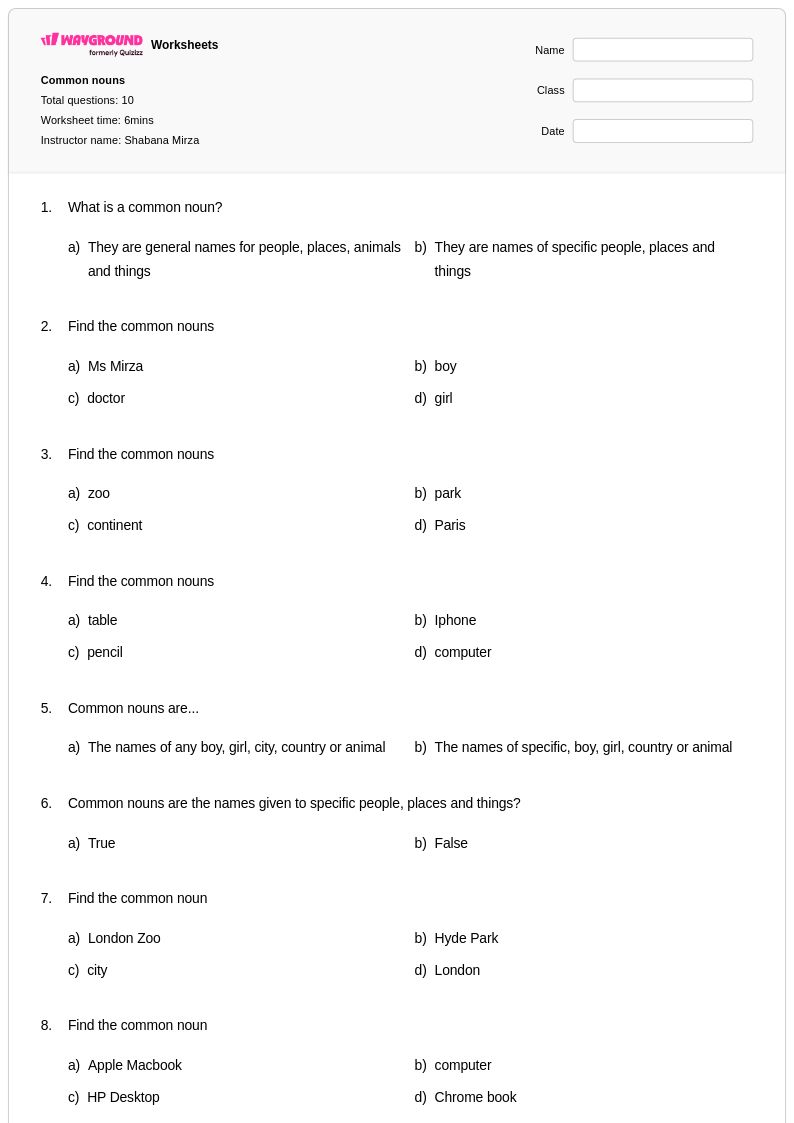
10 Q
5th - 12th
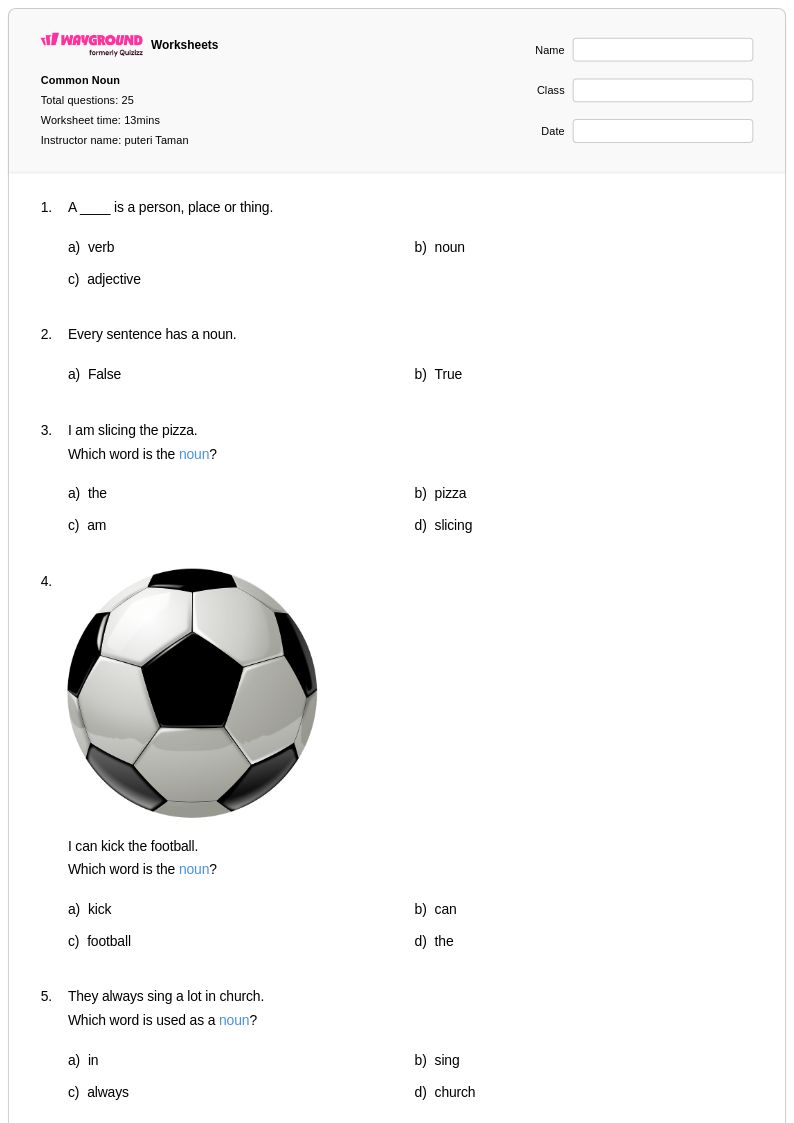
25 Q
5th
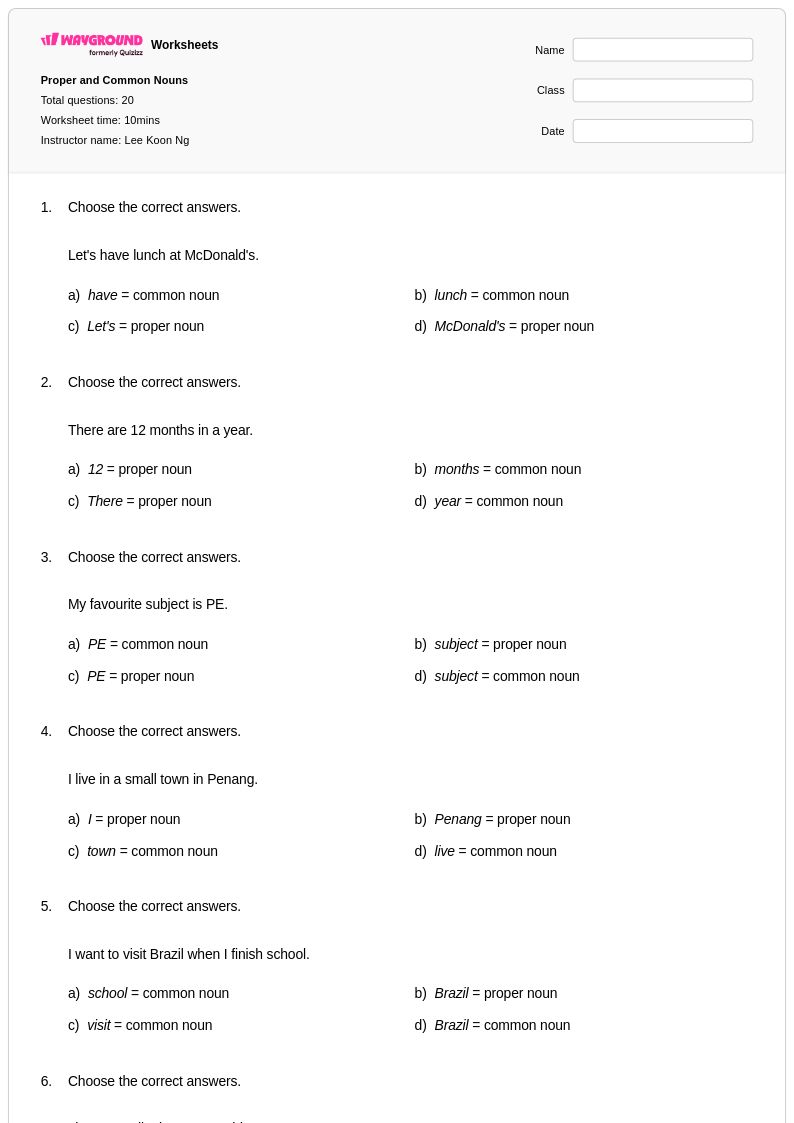
20 Q
4th - 5th
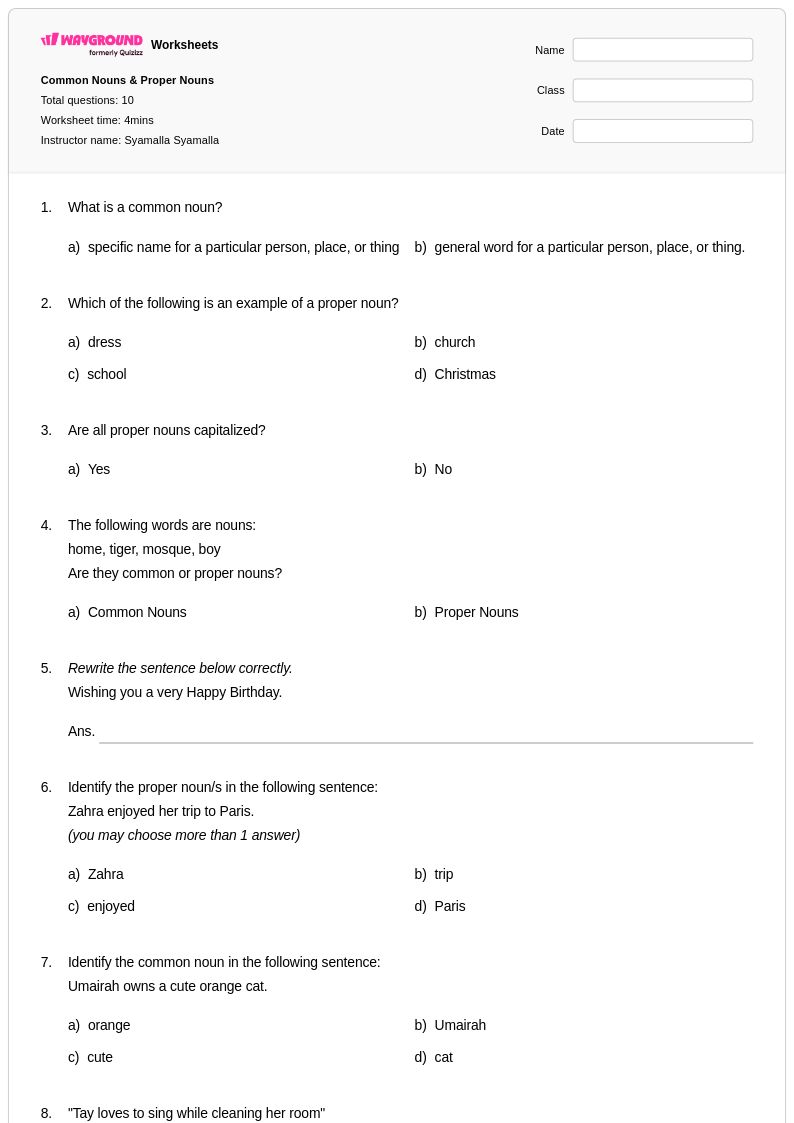
10 Q
3rd - 7th
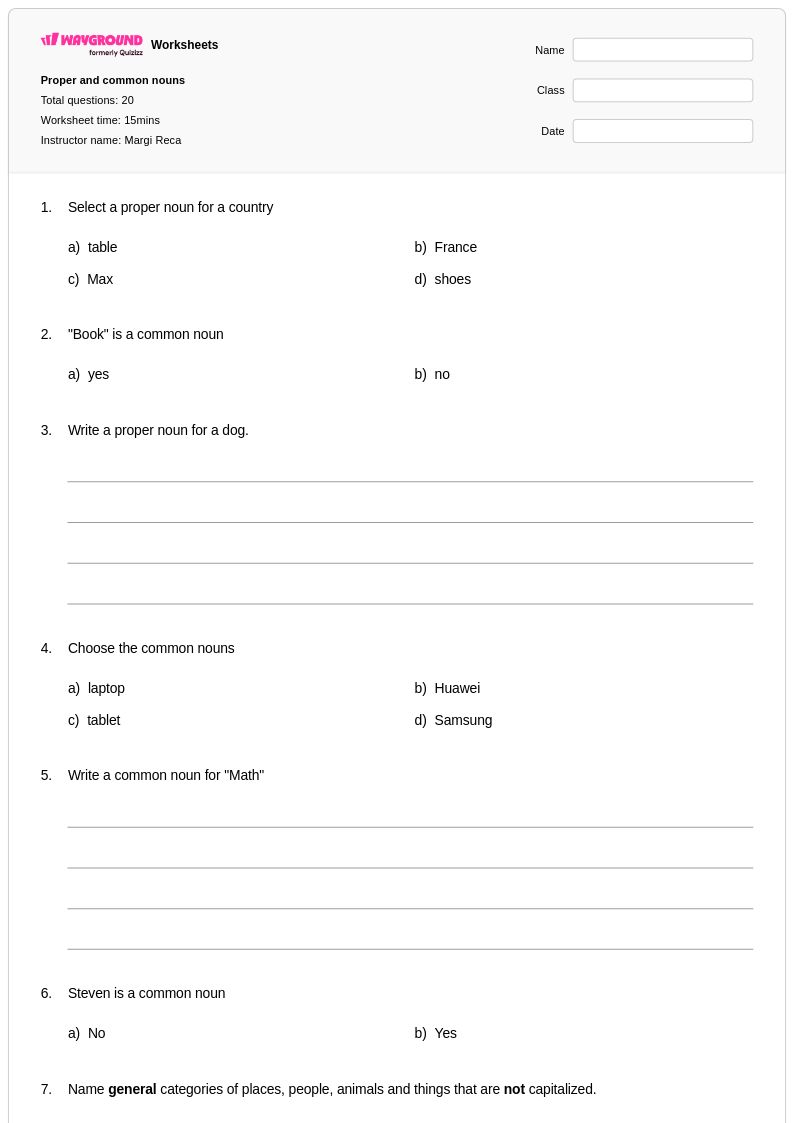
20 Q
5th
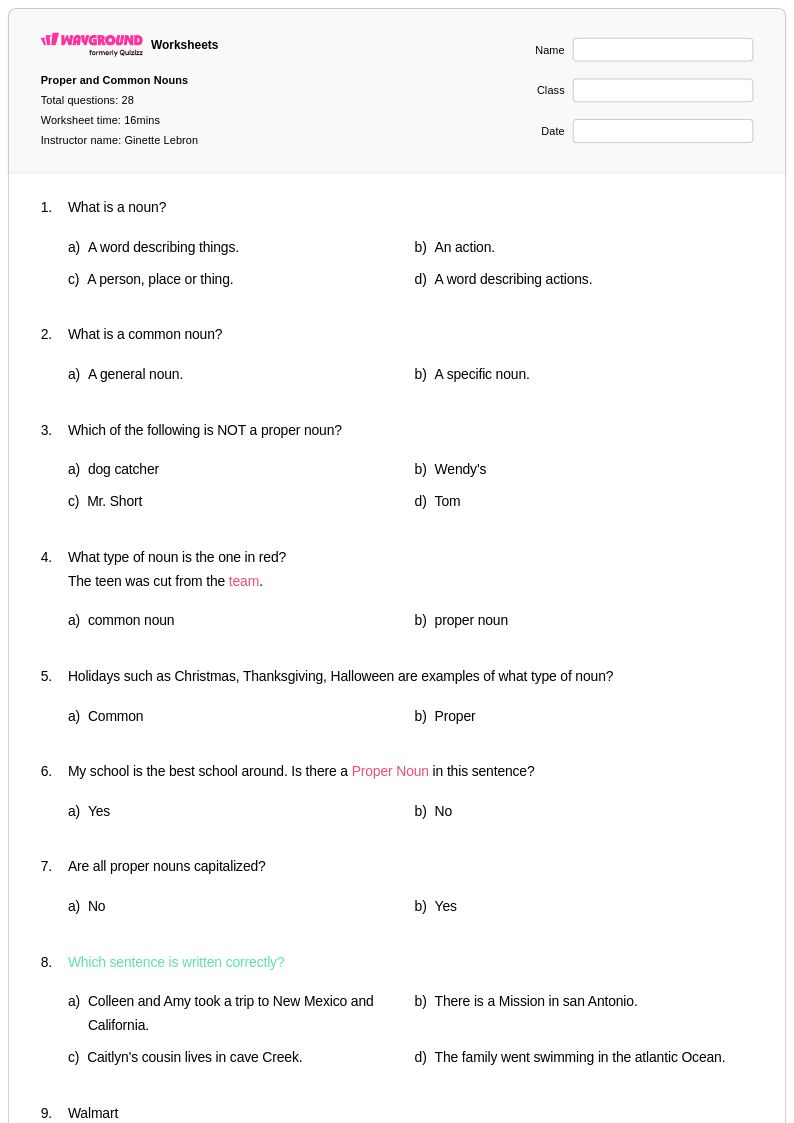
28 Q
2nd - 5th
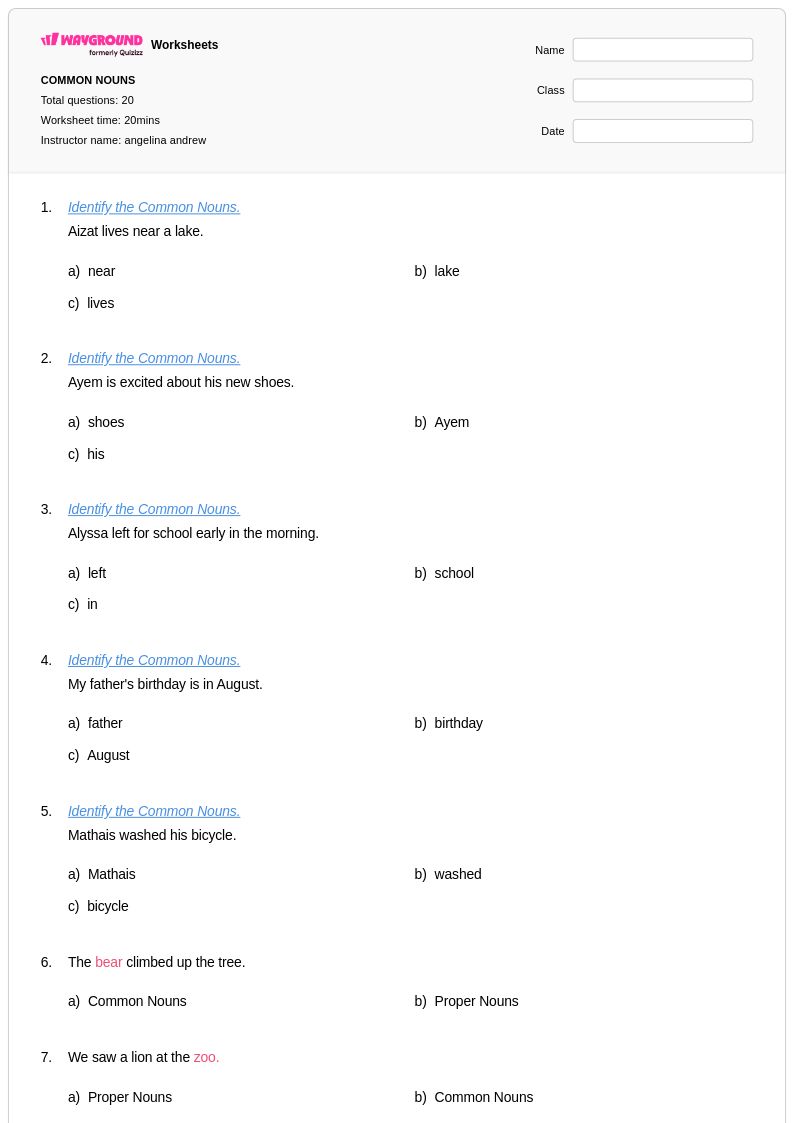
20 Q
3rd - 5th
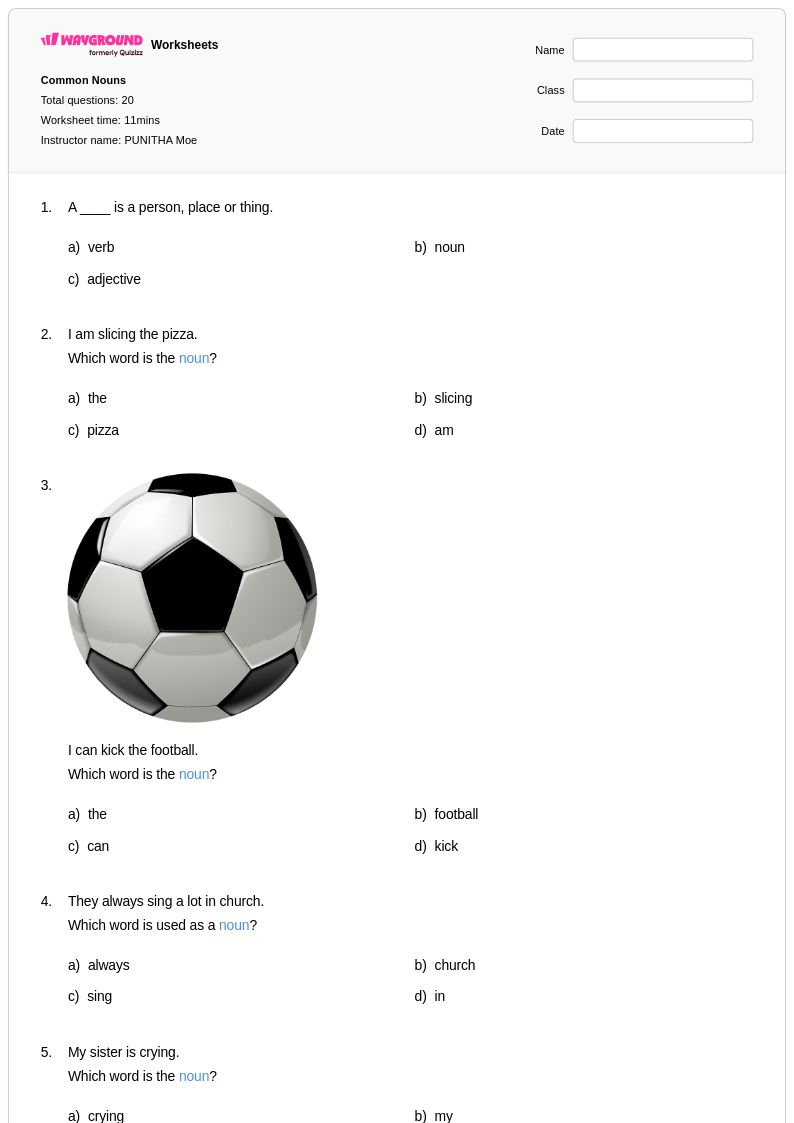
20 Q
4th - 6th
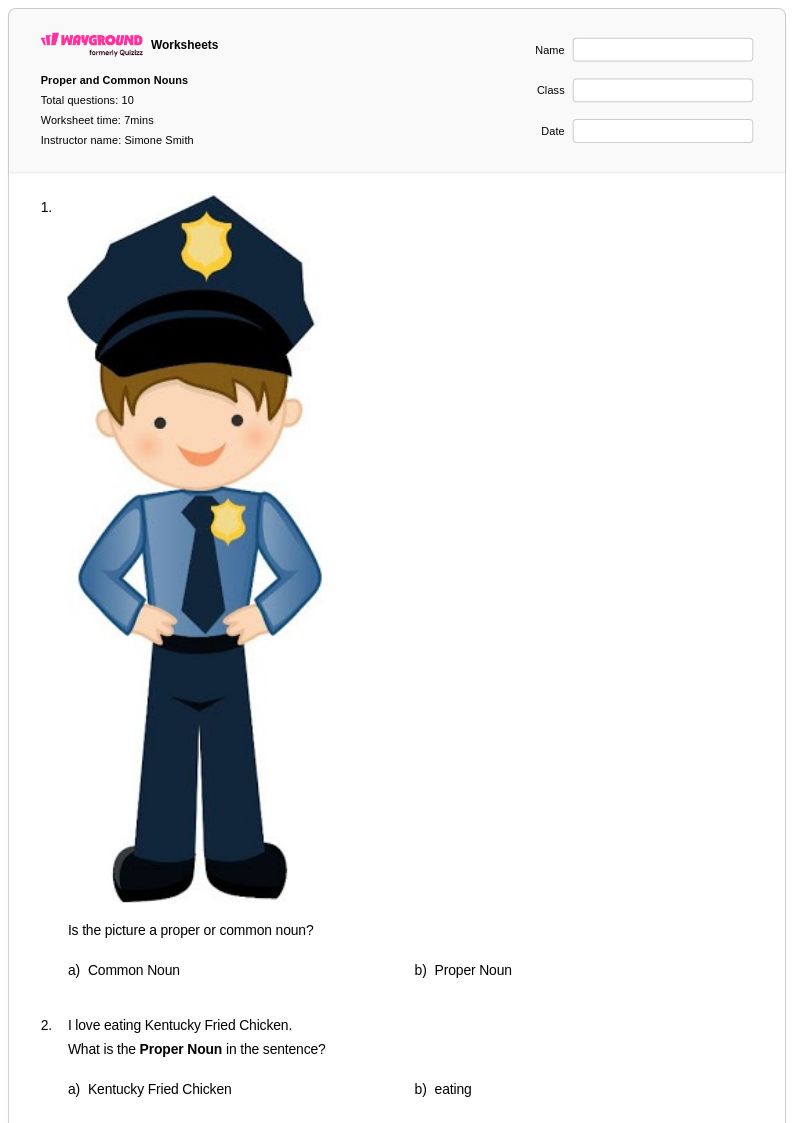
10 Q
3rd - 5th
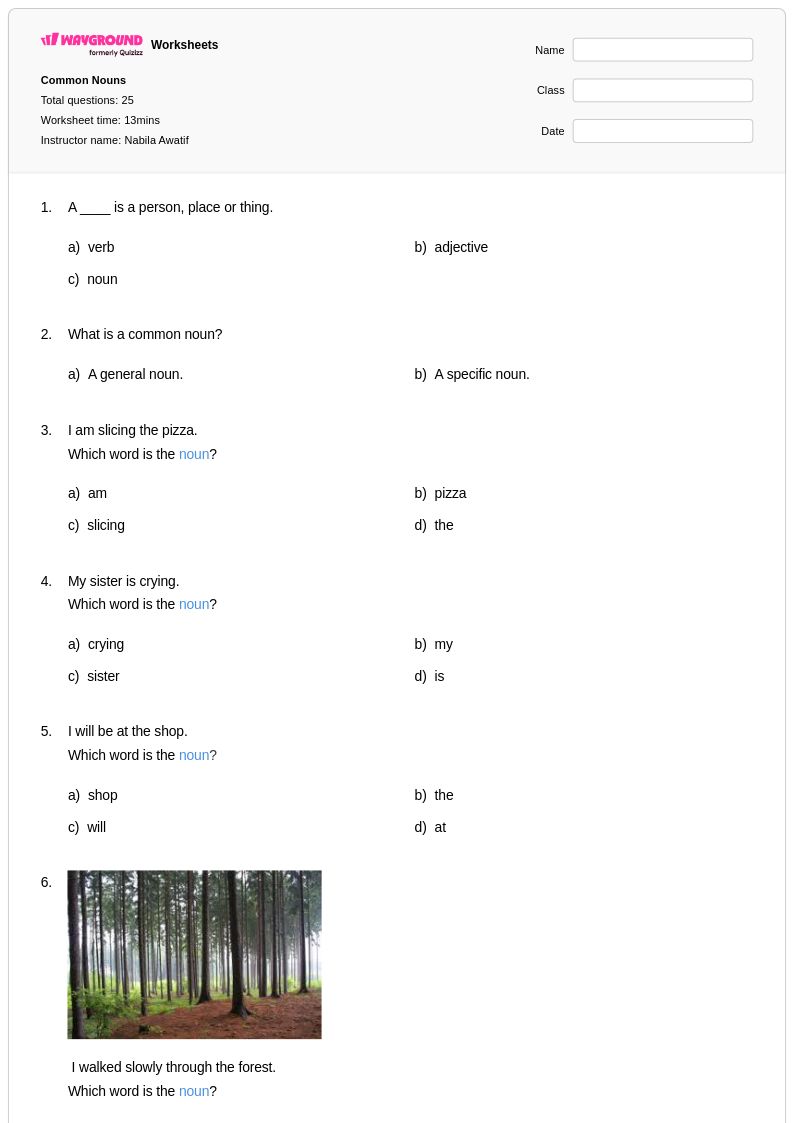
25 Q
4th - 5th
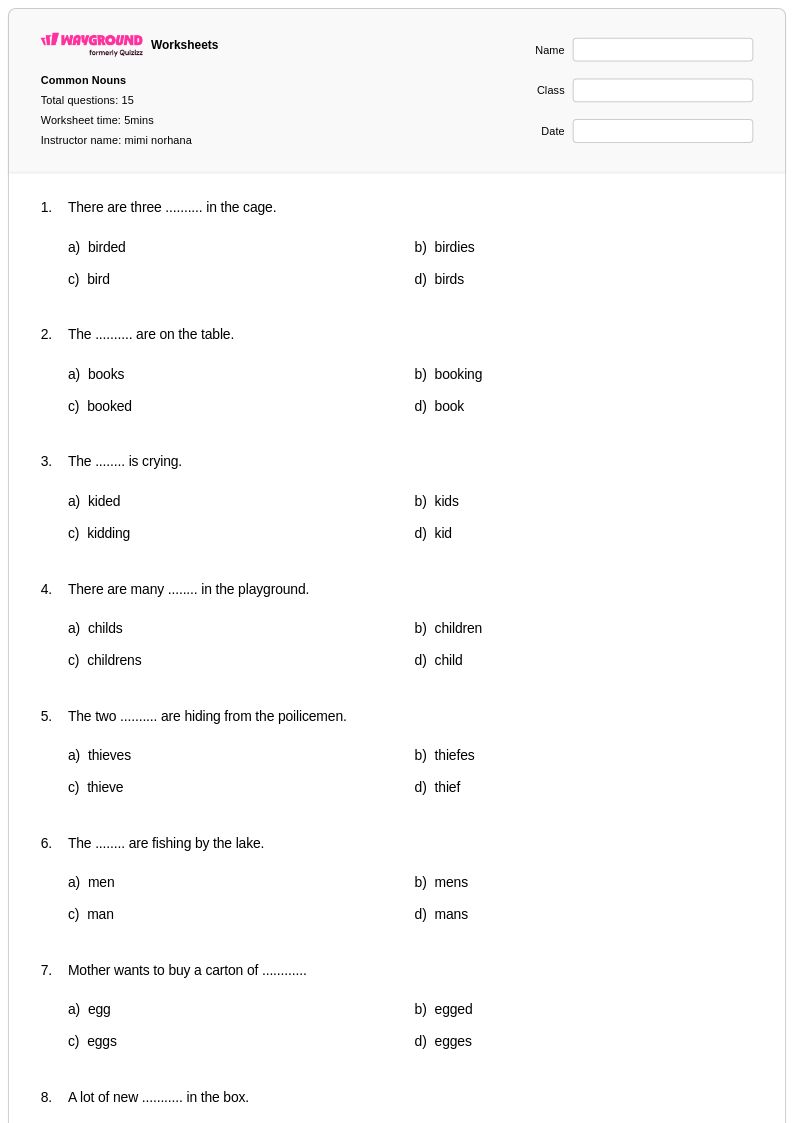
15 Q
5th
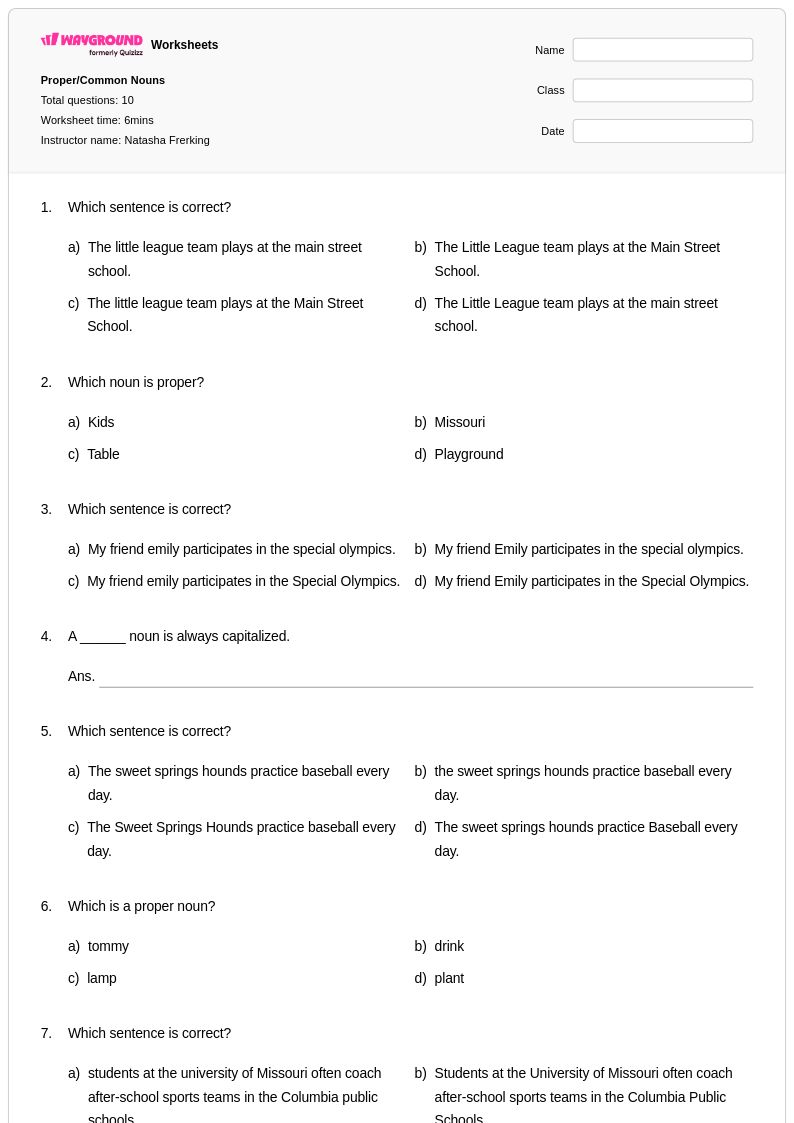
10 Q
5th
15 Q
4th - 6th
10 Q
2nd - 6th
20 Q
2nd - 5th
16 Q
1st - 5th
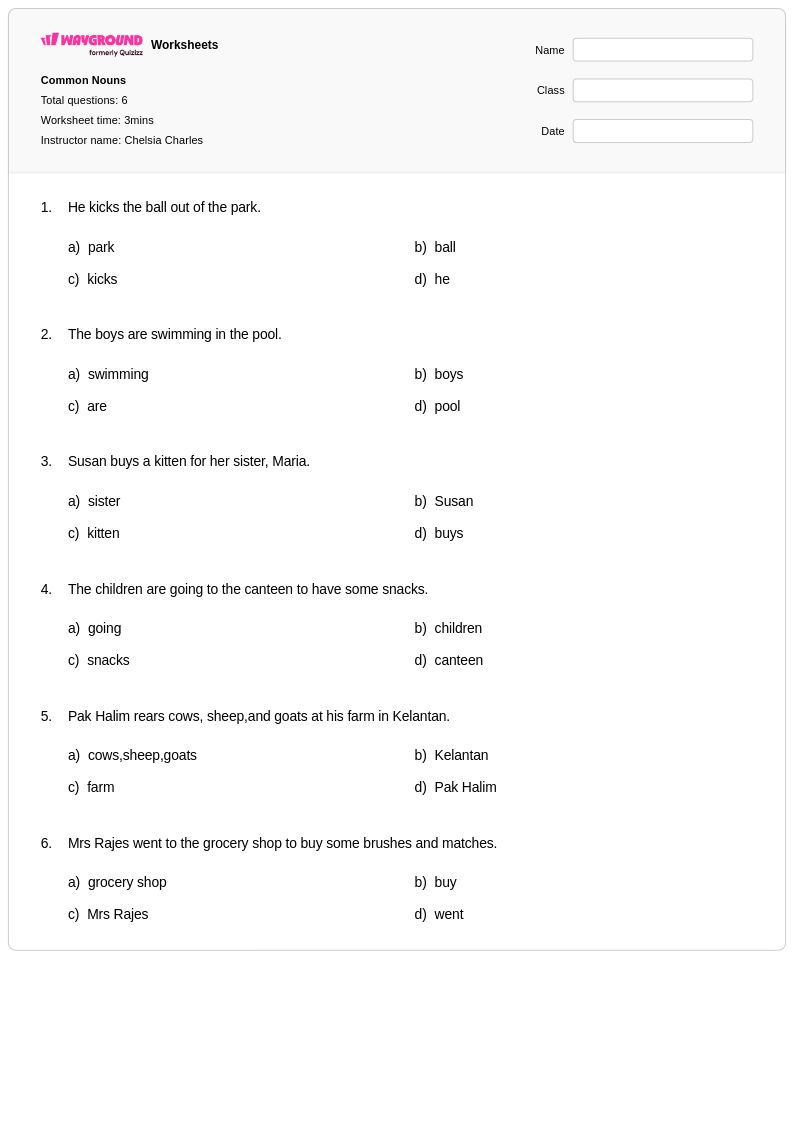
6 Q
5th
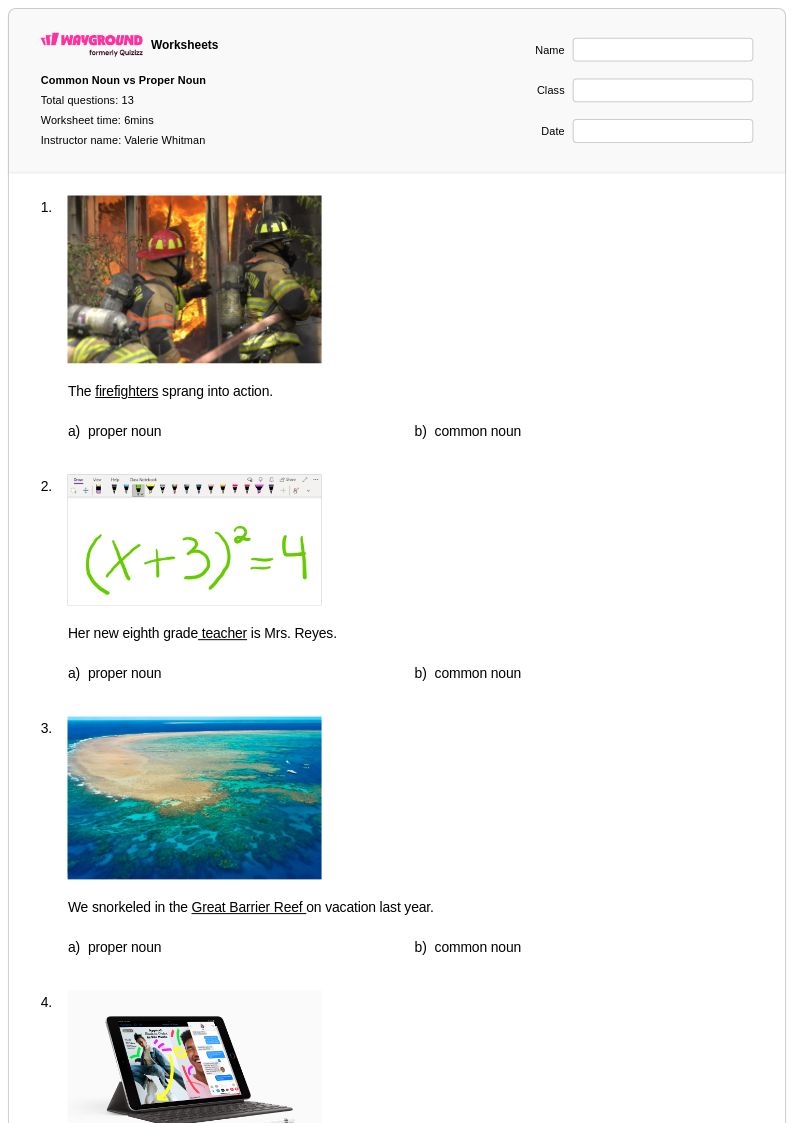
13 Q
4th - 7th
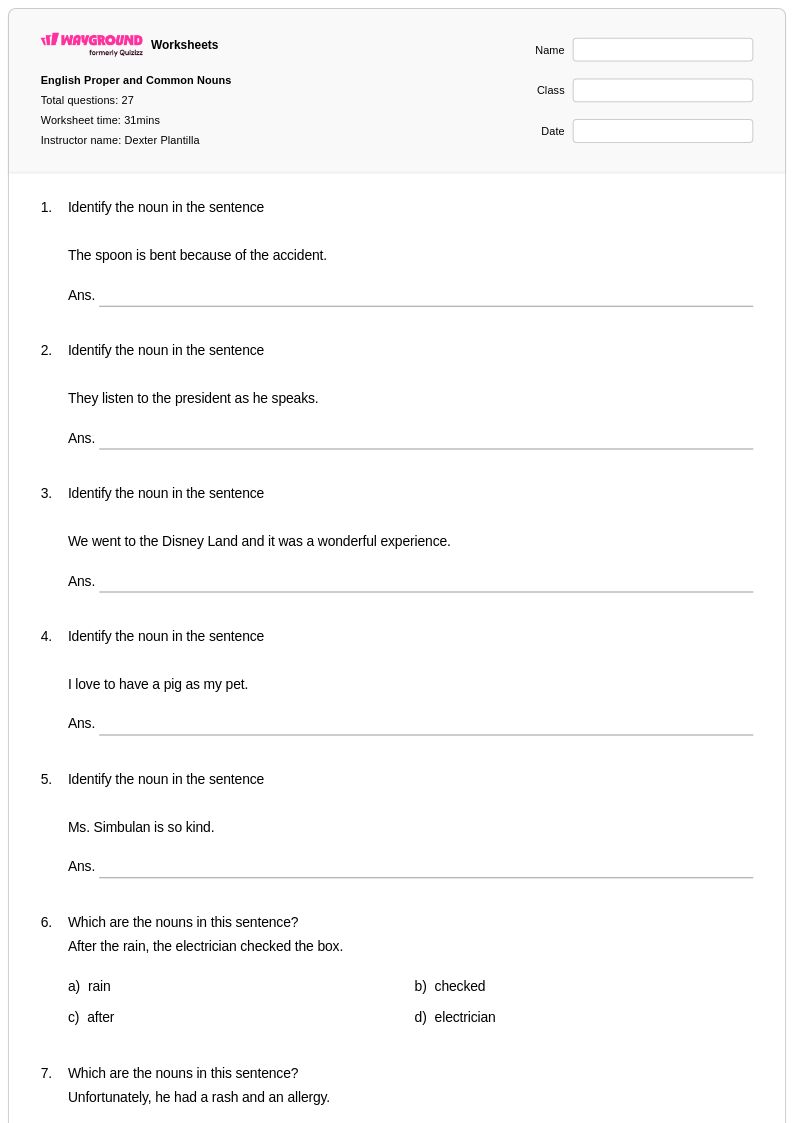
27 Q
5th
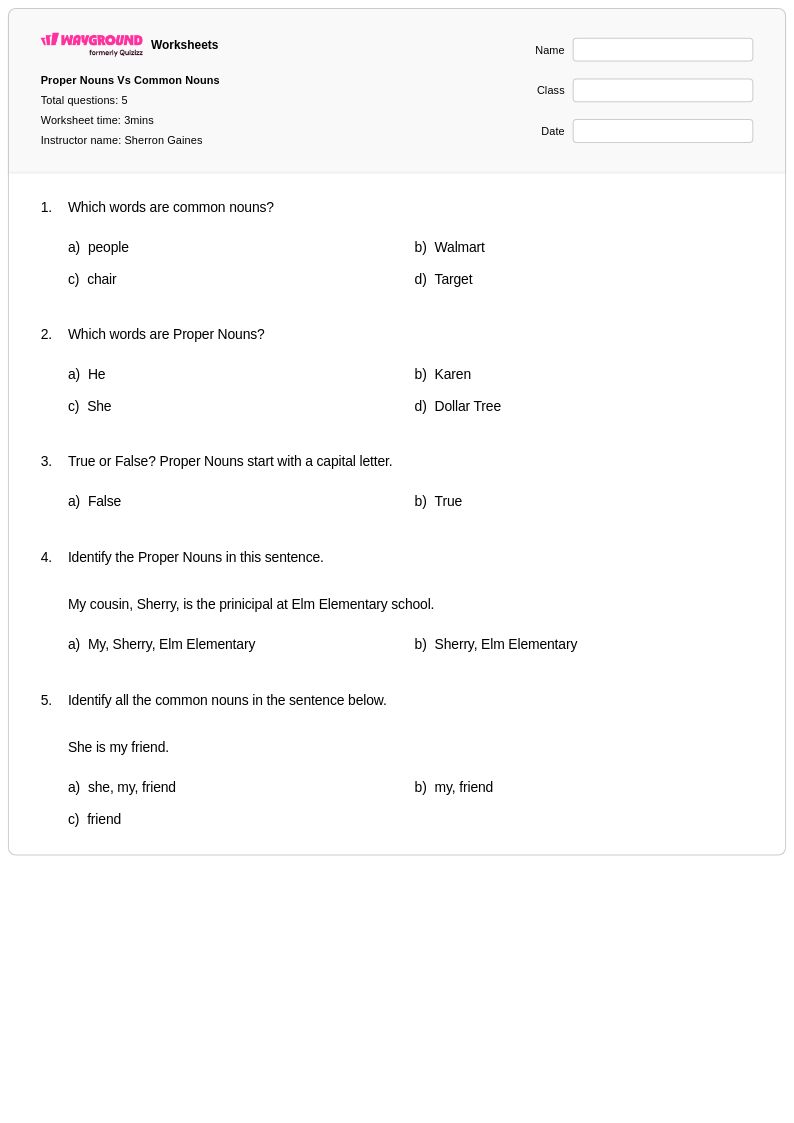
5 Q
4th - 5th
11 Q
5th - 6th
10 Q
4th - 6th
12 Q
3rd - 5th
25 Q
4th - 6th
Explore Other Subject Worksheets for year 5
Explore printable Common Noun worksheets for Year 5
Common noun worksheets for Year 5 students available through Wayground (formerly Quizizz) provide comprehensive practice in identifying and understanding everyday naming words that form the foundation of effective communication. These educational resources strengthen students' ability to recognize common nouns as general names for people, places, things, and ideas, distinguishing them from proper nouns through targeted exercises and engaging activities. The worksheet collection includes varied practice problems that challenge fifth-grade learners to categorize nouns correctly, use them appropriately in sentences, and develop stronger vocabulary skills essential for reading comprehension and written expression. Teachers can access these materials as free printables with accompanying answer keys, making assessment and feedback efficient while supporting independent learning through clear, structured pdf formats that students can complete at their own pace.
Wayground (formerly Quizizz) empowers educators with millions of teacher-created resources specifically designed to support Year 5 common noun instruction through advanced search and filtering capabilities that align with curriculum standards. The platform's differentiation tools allow teachers to customize worksheet difficulty levels, ensuring that both struggling learners and advanced students receive appropriate challenge levels for optimal skill development. These flexible resources are available in both printable and digital formats, including downloadable pdf versions that seamlessly integrate into lesson planning, homework assignments, and targeted remediation sessions. The extensive collection supports diverse teaching approaches, from whole-class instruction to small group practice and individual enrichment activities, enabling educators to address varying student needs while maintaining consistent focus on essential grammar concepts that build literacy foundations across all subject areas.
FAQs
How do I teach common nouns to elementary students?
What exercises help students practice identifying common nouns?
What is the difference between a common noun and a proper noun, and how do I explain it to students?
What mistakes do students commonly make when identifying common nouns?
How can I use common noun worksheets to support students who need differentiation or accommodations?
How do I use Wayground's common noun worksheets in my classroom?