Free Printable Compare and Contrast Essay Worksheets for Year 9
Enhance your Year 9 students' compare and contrast essay skills with Wayground's comprehensive collection of free worksheets, printables, and PDF resources featuring structured practice problems and complete answer keys.
Explore printable Compare and Contrast Essay worksheets for Year 9
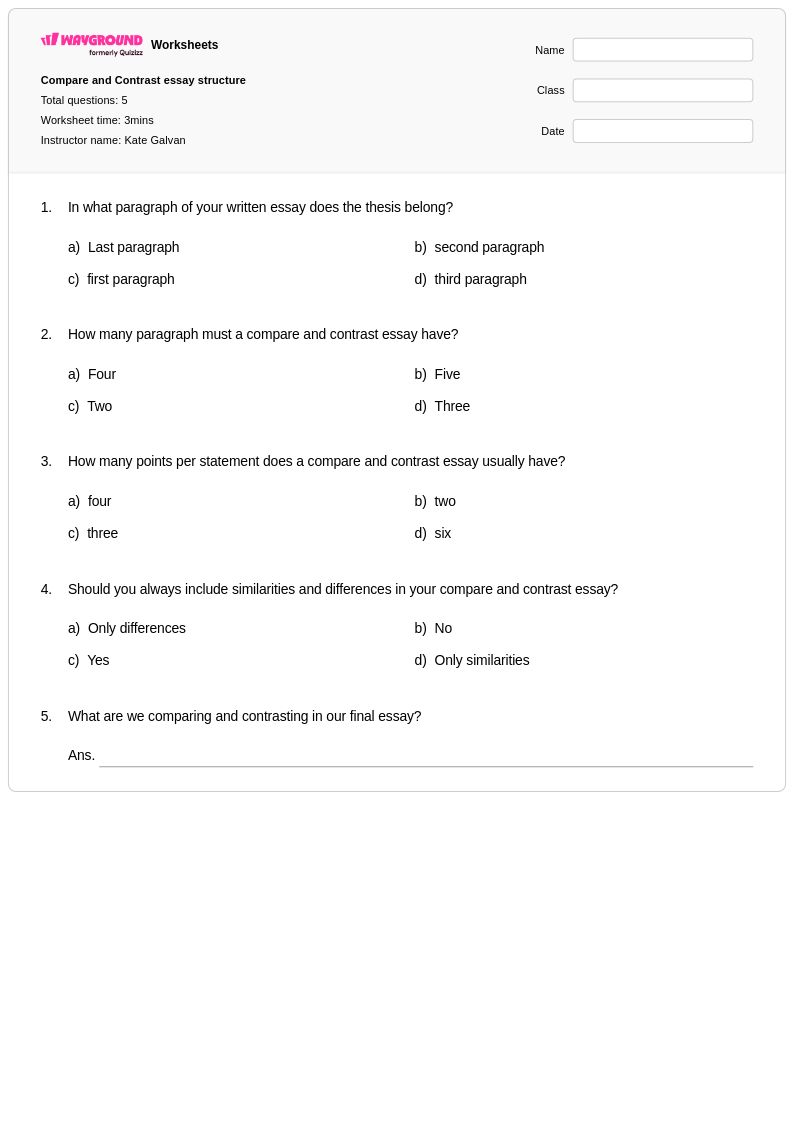
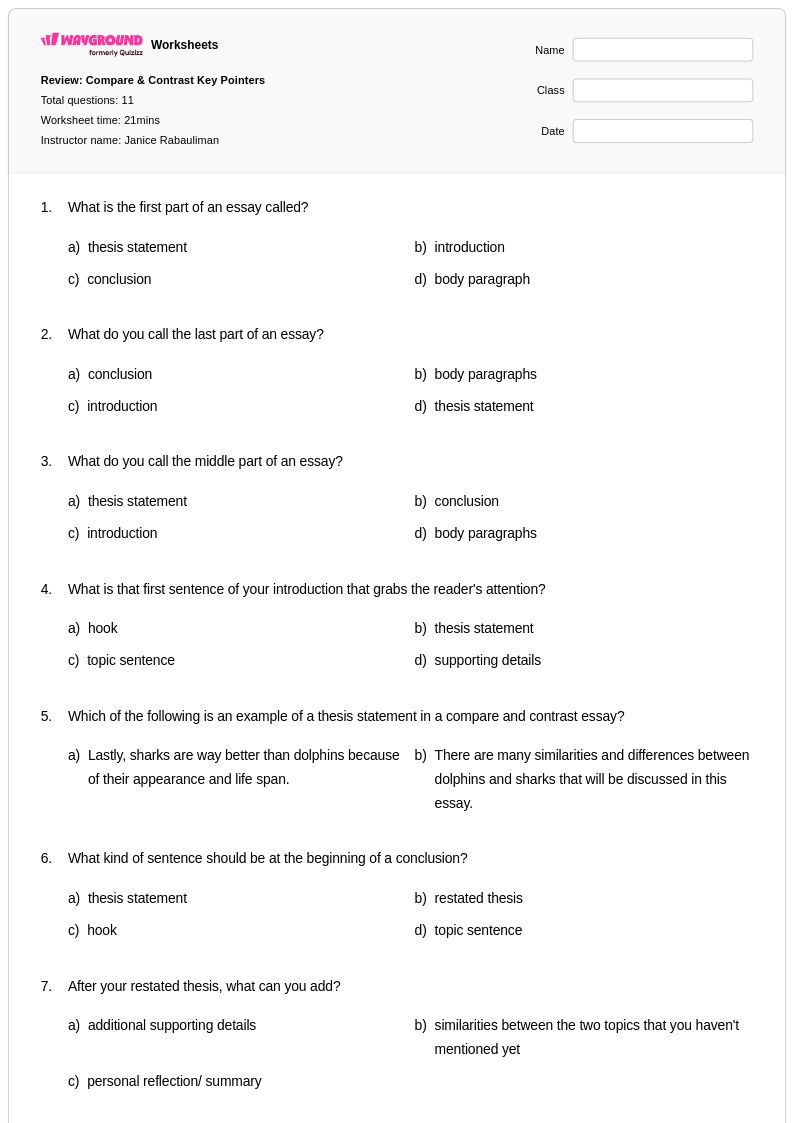
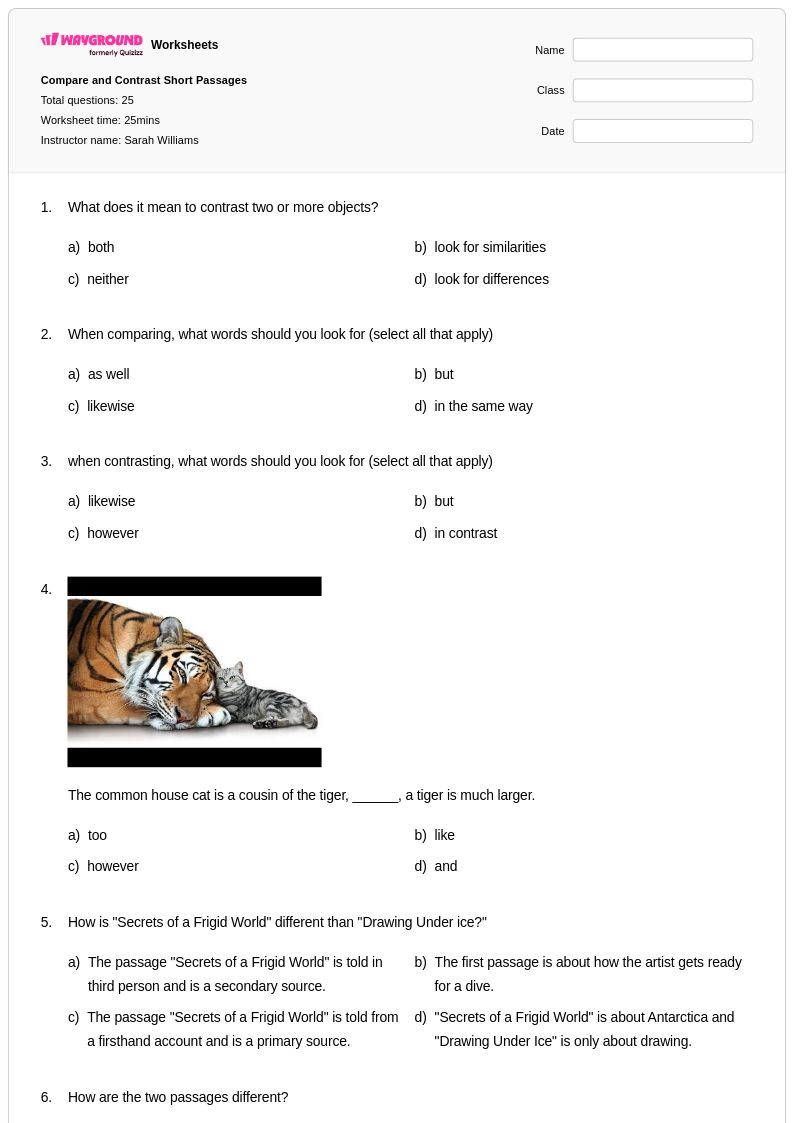
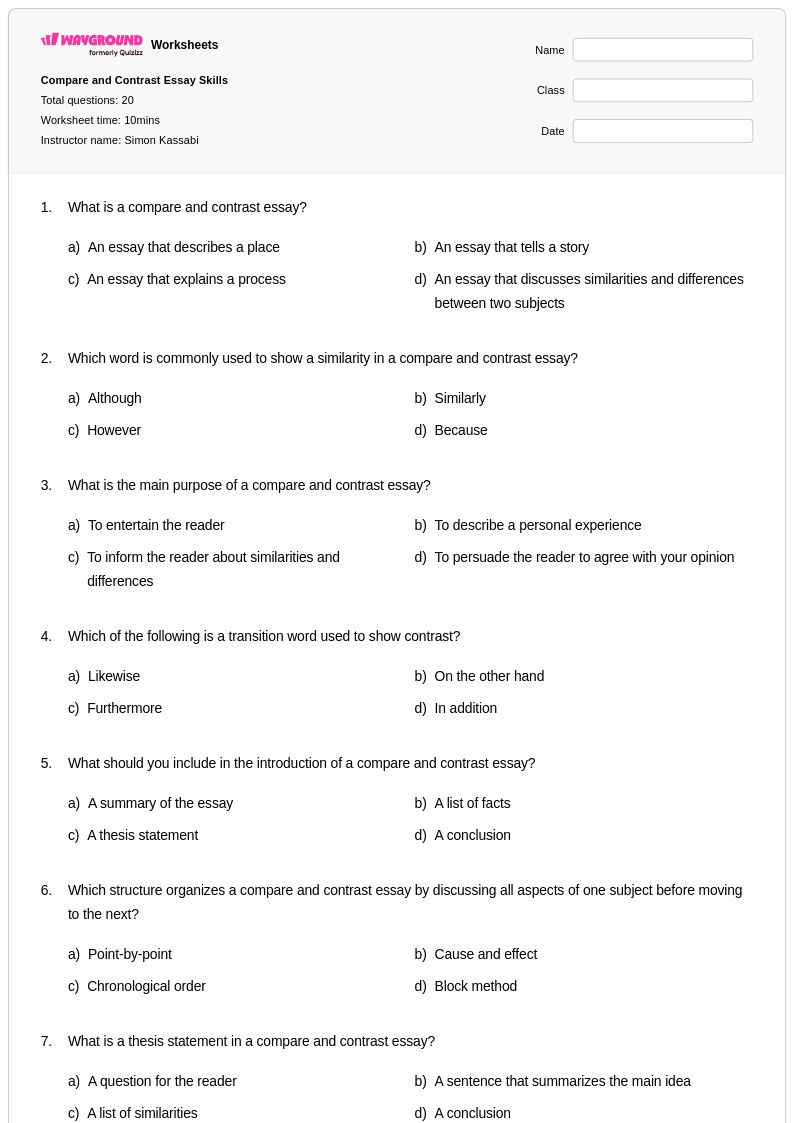
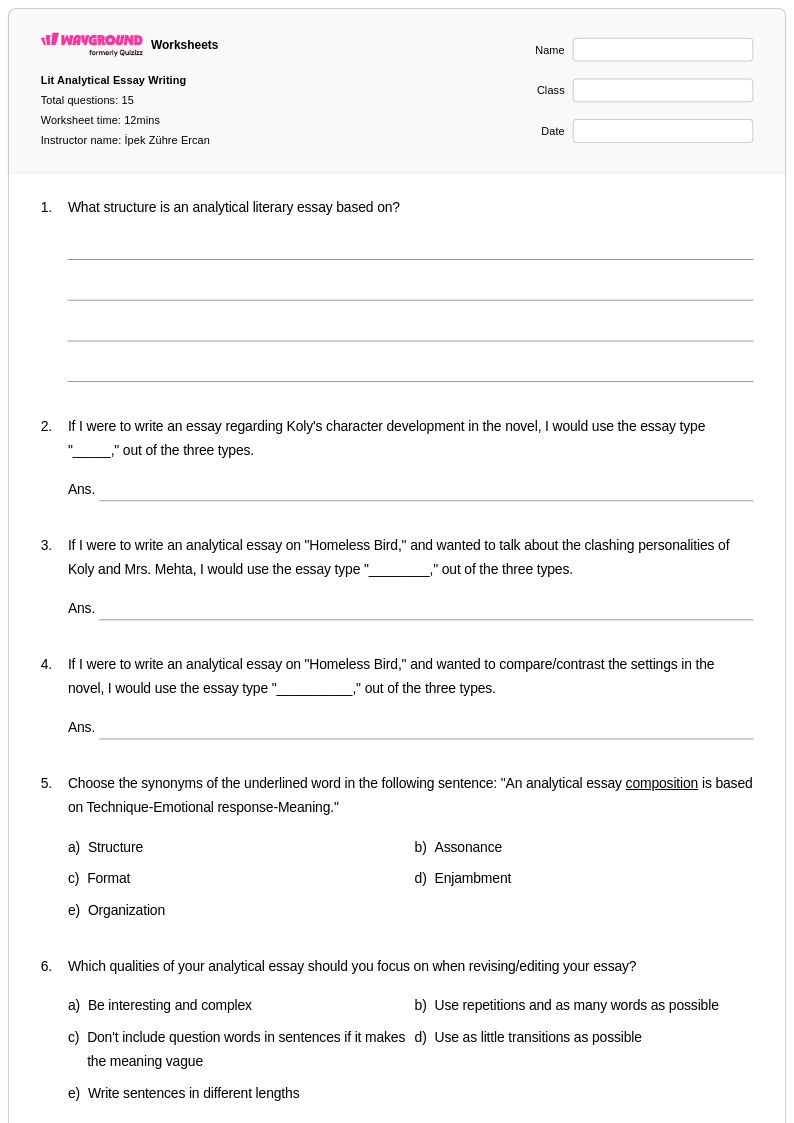
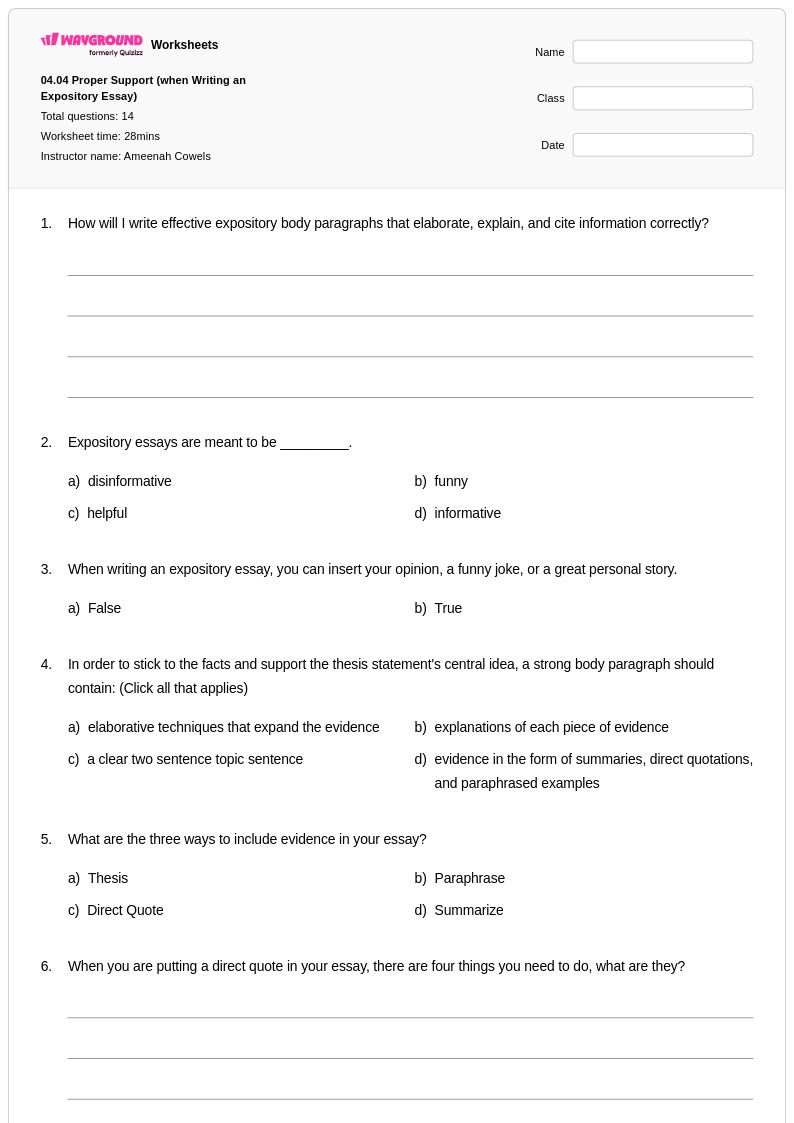
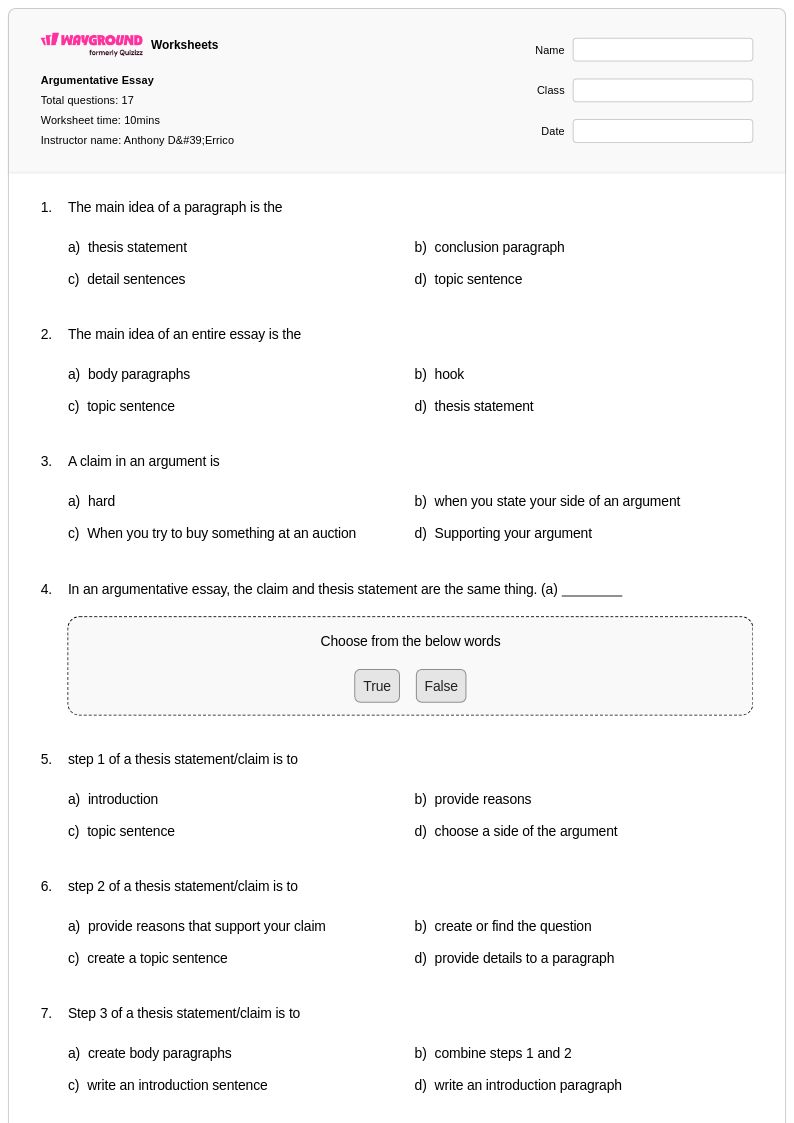
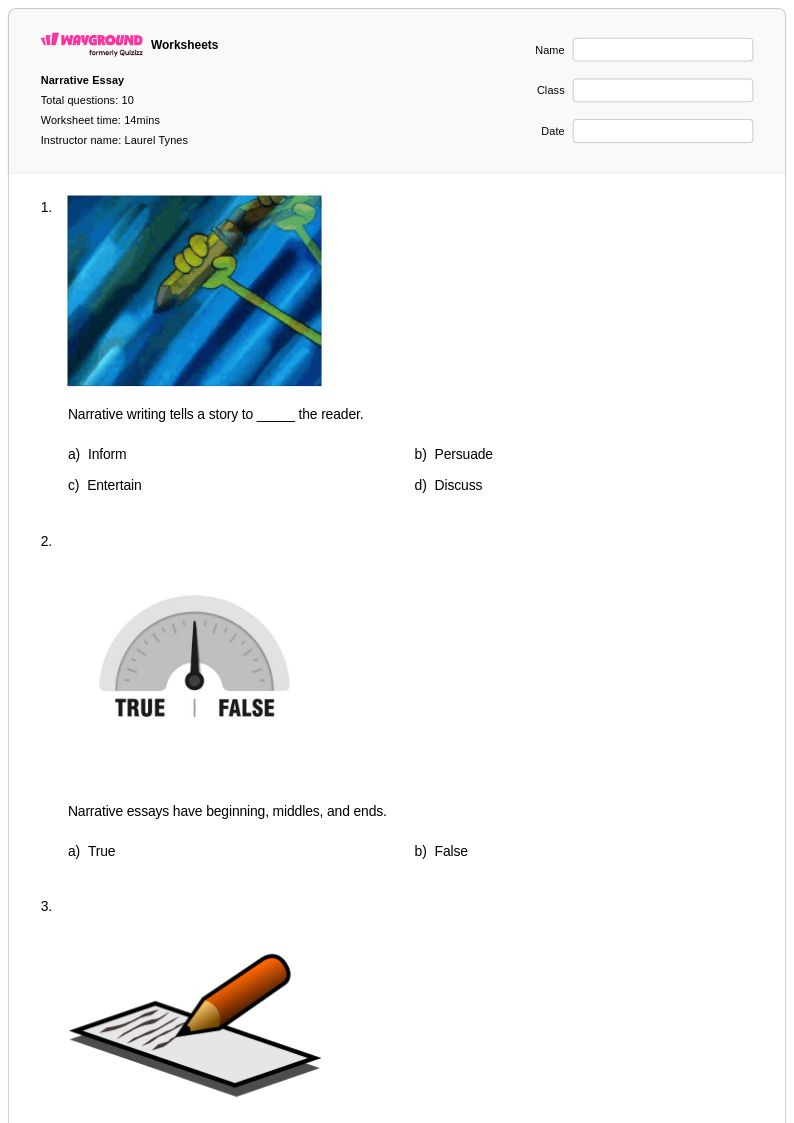
Compare and contrast essays represent a fundamental writing skill for Year 9 students, requiring them to analyze similarities and differences between subjects while developing critical thinking and organizational abilities. Wayground's comprehensive collection of compare and contrast essay worksheets provides structured practice opportunities that guide students through each stage of the writing process, from brainstorming and thesis development to crafting compelling introductions and conclusions. These printable resources include graphic organizers, essay templates, and practice problems that help students master essential techniques such as point-by-point and block organizational patterns. Each worksheet comes with detailed answer keys and instructional materials, making them valuable free resources for reinforcing proper essay structure, evidence selection, and transition usage while building confidence in analytical writing skills.
Wayground's extensive library, featuring millions of teacher-created resources, offers educators powerful tools to support compare and contrast essay instruction across diverse Year 9 classrooms. The platform's advanced search and filtering capabilities enable teachers to quickly locate worksheets that align with specific standards and learning objectives, while differentiation tools allow for seamless customization based on individual student needs and skill levels. These resources are available in both digital and printable PDF formats, providing flexibility for various classroom environments and learning preferences. Teachers can effectively utilize these materials for lesson planning, targeted remediation, enrichment activities, and ongoing skill practice, ensuring that students receive consistent support as they develop proficiency in analytical writing and critical comparison techniques essential for academic success.
FAQs
How do I teach compare and contrast essay writing to students?
Start by teaching students to identify a clear basis for comparison before selecting subjects, then introduce the two primary organizational patterns: block structure (covering all points about one subject before the other) and point-by-point structure (alternating between subjects for each criterion). Explicitly model how to write a thesis that names both subjects and signals the purpose of the comparison. From there, guide students through prewriting with graphic organizers such as Venn diagrams or T-charts before moving to outline templates and full drafts.
What exercises help students practice compare and contrast essay writing?
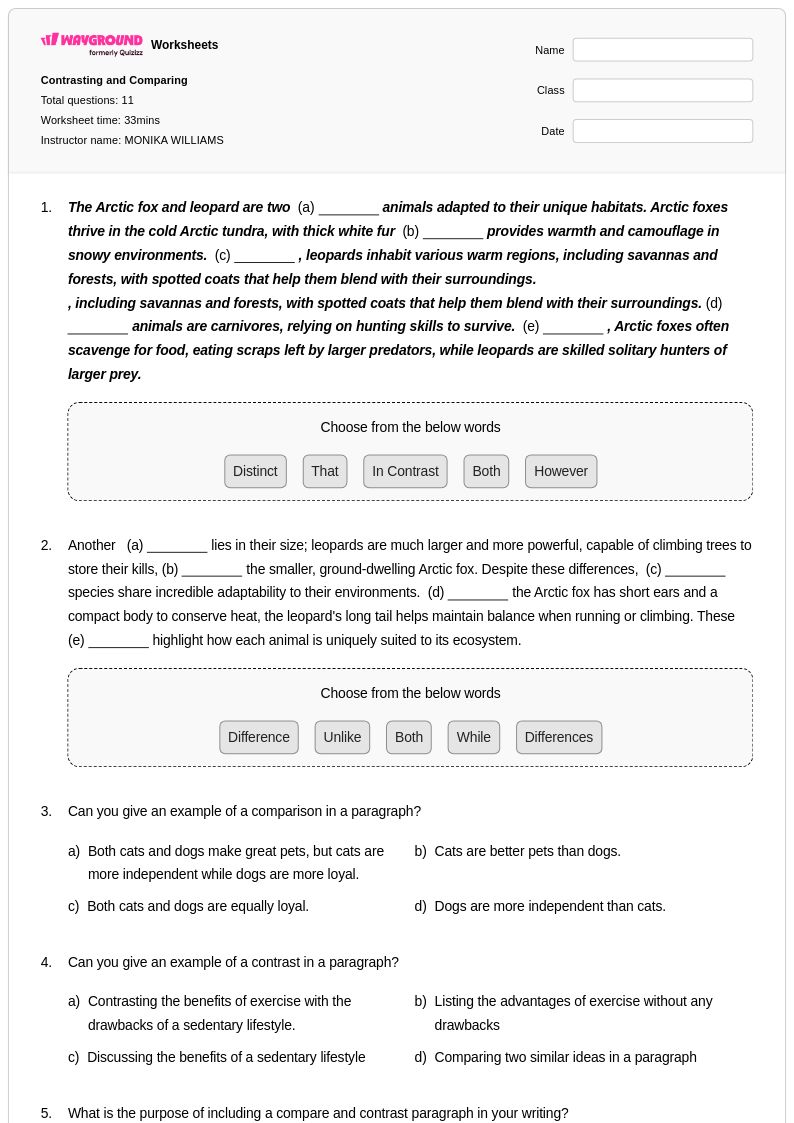
Effective practice exercises include completing sentence frames using transition phrases like 'similarly,' 'in contrast,' and 'on the other hand,' as well as sorting evidence into side-by-side outlines before drafting. Revision checklists that prompt students to evaluate whether each paragraph addresses the same criterion for both subjects help reinforce structural consistency. Prewriting activities like Venn diagrams and structured outline templates build the planning habits students need before writing full essays.
What are the most common mistakes students make when writing compare and contrast essays?
The most frequent error is writing two separate descriptions rather than a true comparison, meaning students describe Subject A fully and then describe Subject B without ever linking them analytically. Students also struggle to write a thesis that goes beyond simply stating 'these two things are similar and different' and fails to signal a meaningful claim. Weak or missing transitions are another persistent issue, leaving readers unable to follow the logical relationship between points.
How do I help struggling writers organize a compare and contrast essay?
Struggling writers benefit most from explicit scaffolding at the prewriting stage: a Venn diagram or two-column chart forces students to generate parallel points before they write a single sentence. Once they have their evidence sorted, a fill-in outline template with labeled slots for thesis, topic sentences, and transitions reduces the cognitive load of drafting. Teaching the point-by-point structure first is often more accessible for developing writers because it keeps both subjects active in each paragraph rather than requiring students to hold all information about one subject in working memory.
How do I use Wayground's compare and contrast essay worksheets in my classroom?
Wayground's compare and contrast essay worksheets are available as printable PDFs for traditional classroom use and in digital formats for technology-integrated instruction, so teachers can deploy them as in-class practice, homework, or independent study tasks. Each worksheet includes a complete answer key, supporting both teacher-led review and self-directed student work. Teachers can also host the worksheets as a quiz directly on Wayground, making it easy to track student progress and gather formative assessment data within a single platform.
How do I differentiate compare and contrast essay instruction for students with different skill levels?
For students who need additional support, reduce the complexity of the subjects being compared and provide partially completed graphic organizers or sentence starters to lower the entry point. On Wayground, teachers can apply individual accommodations such as read-aloud support for students who struggle with reading the source texts, or reduced answer choices for any multiple-choice comprehension checks embedded in the worksheet. More advanced students can be challenged to move beyond surface-level comparison toward evaluative theses that argue why the similarities or differences matter.