Free Printable Compound Subject Worksheets for Year 5
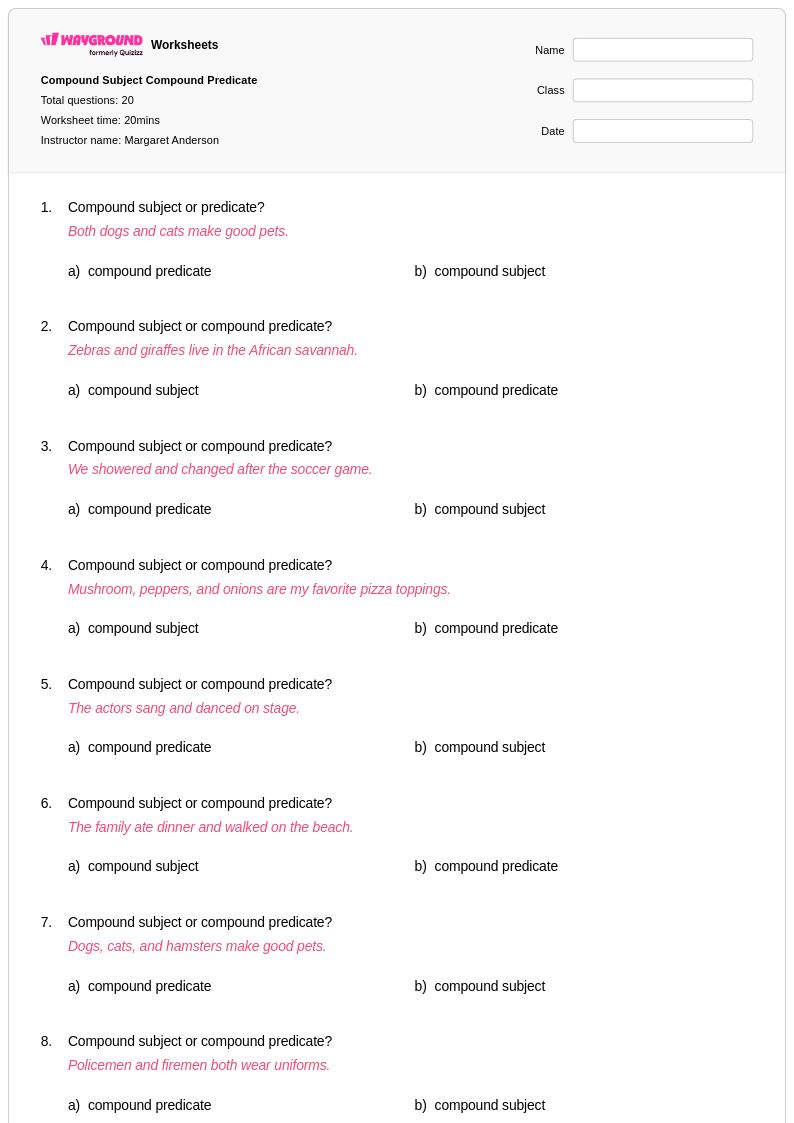
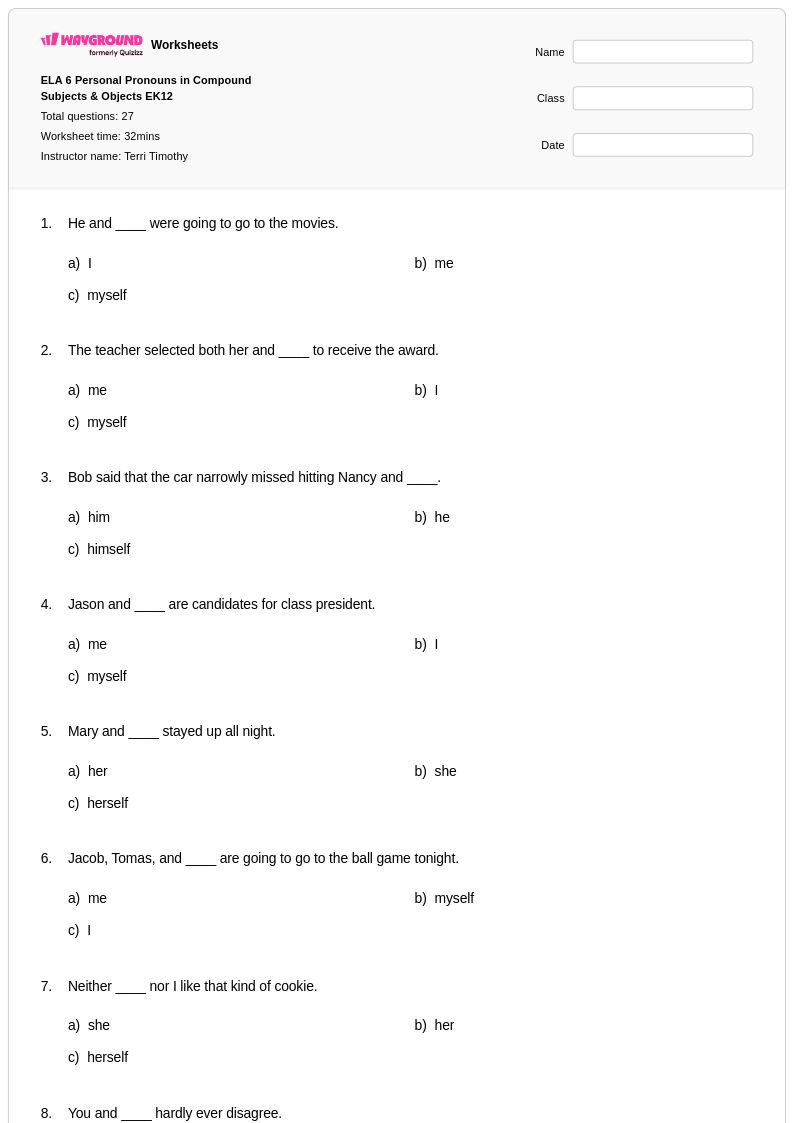
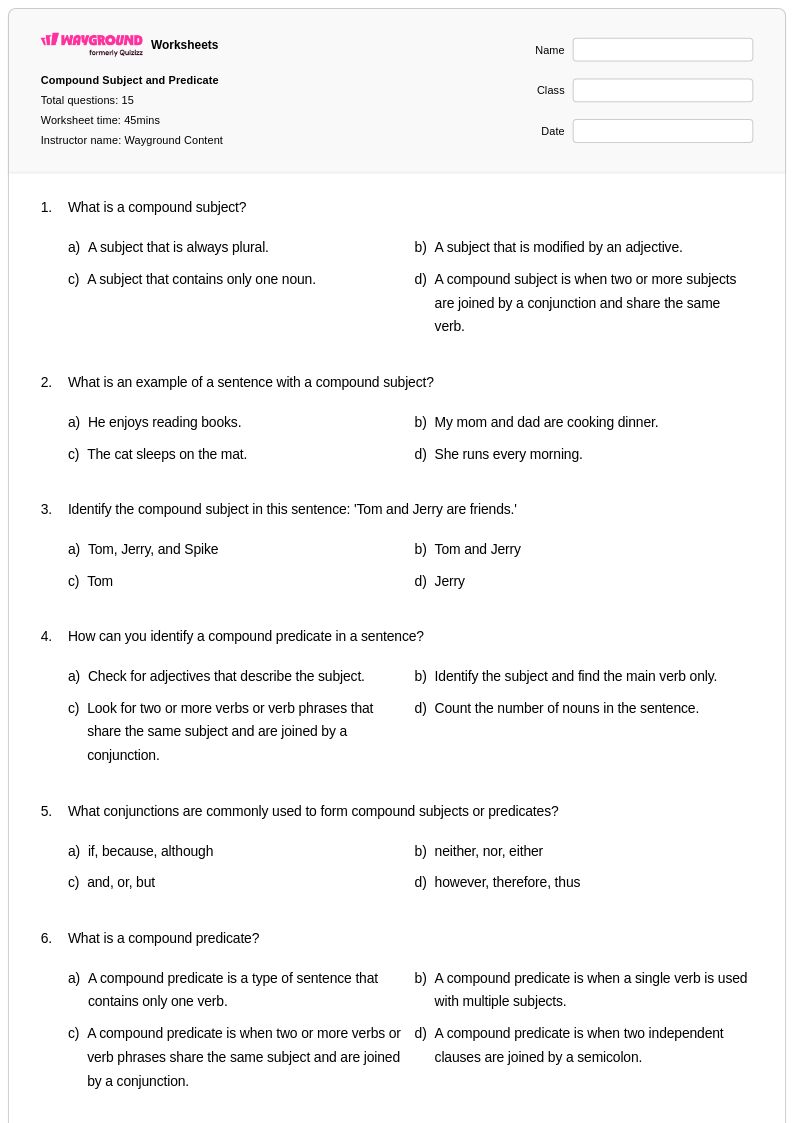
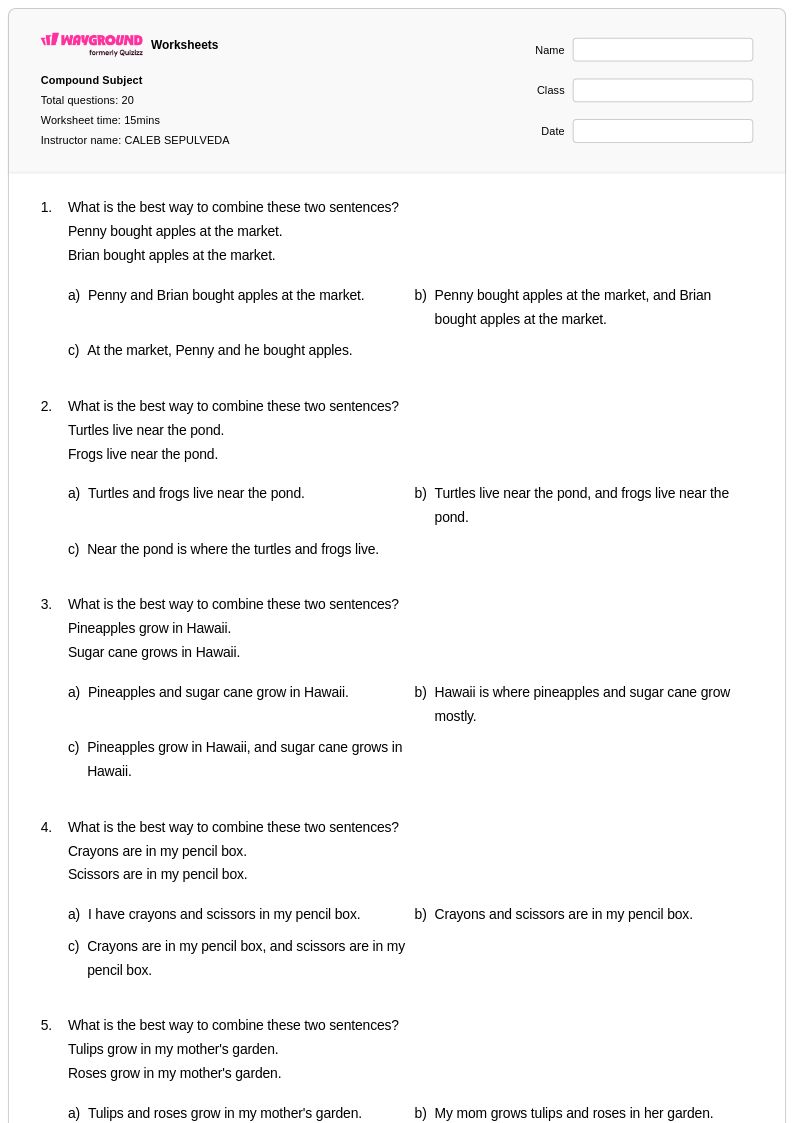
Year 5 compound subject worksheets from Wayground help students master identifying and using multiple subjects in sentences through engaging printables, practice problems, and comprehensive answer keys for effective grammar instruction.
Explore printable Compound Subject worksheets for Year 5
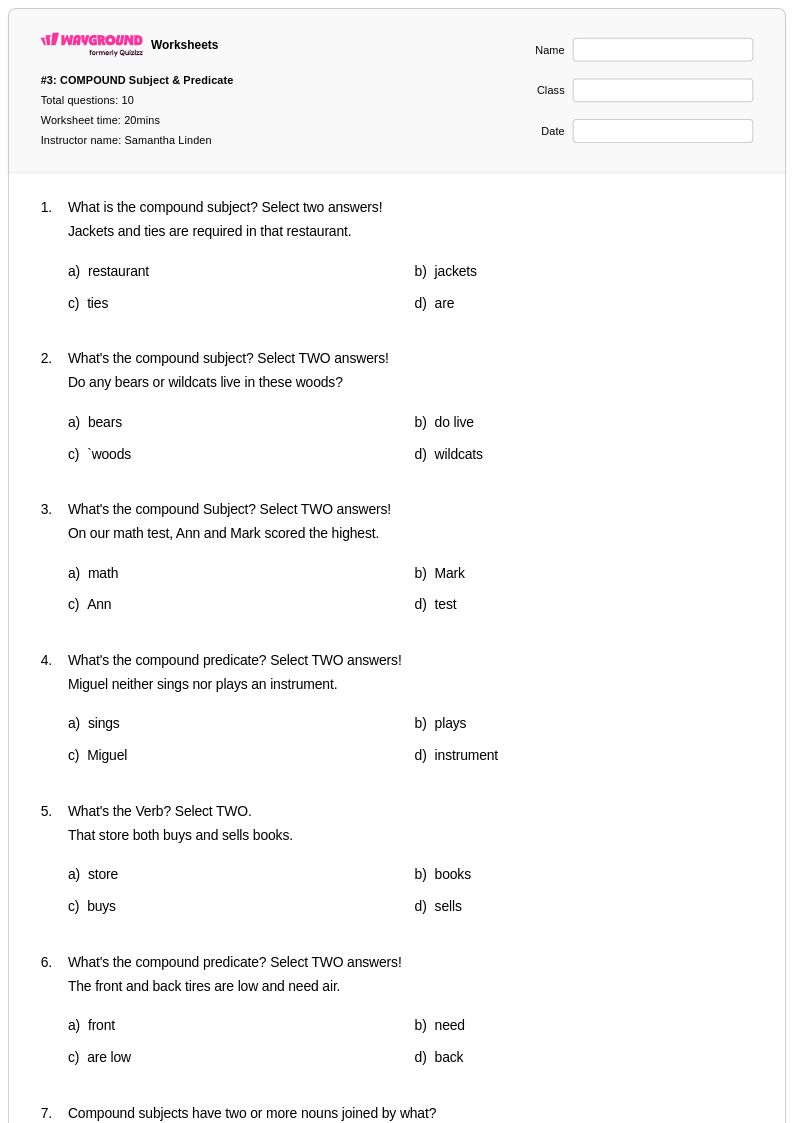
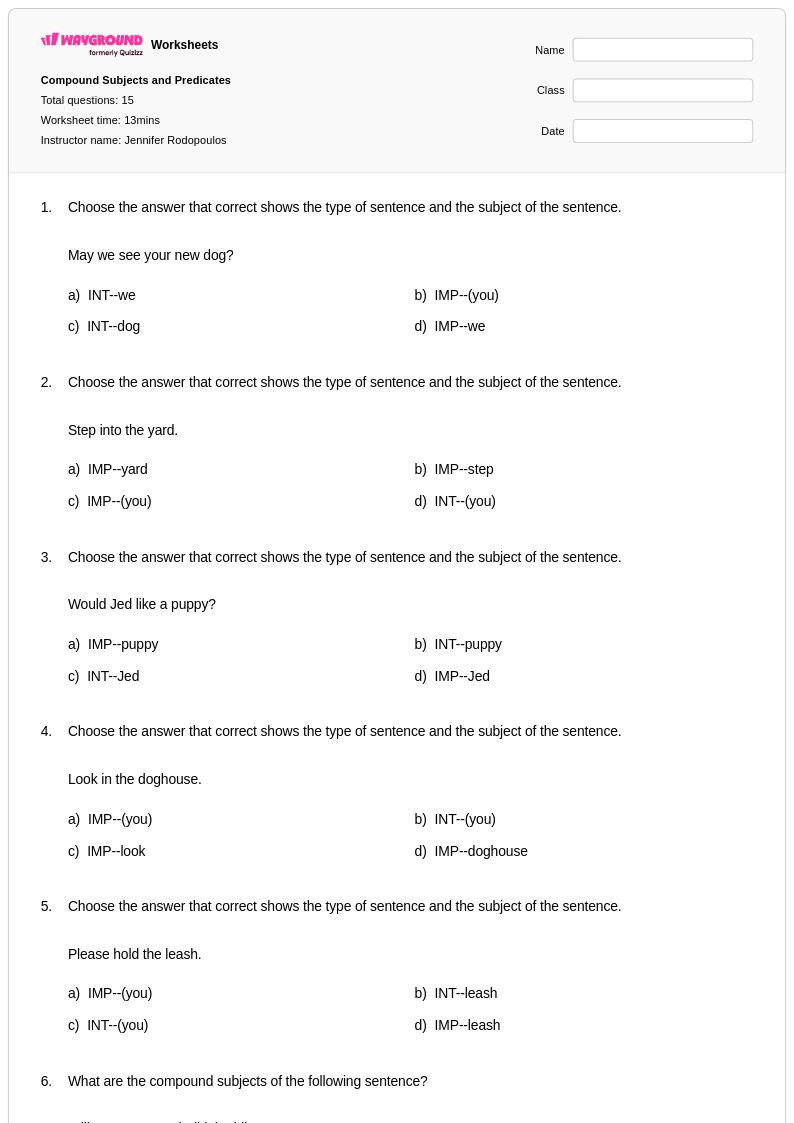
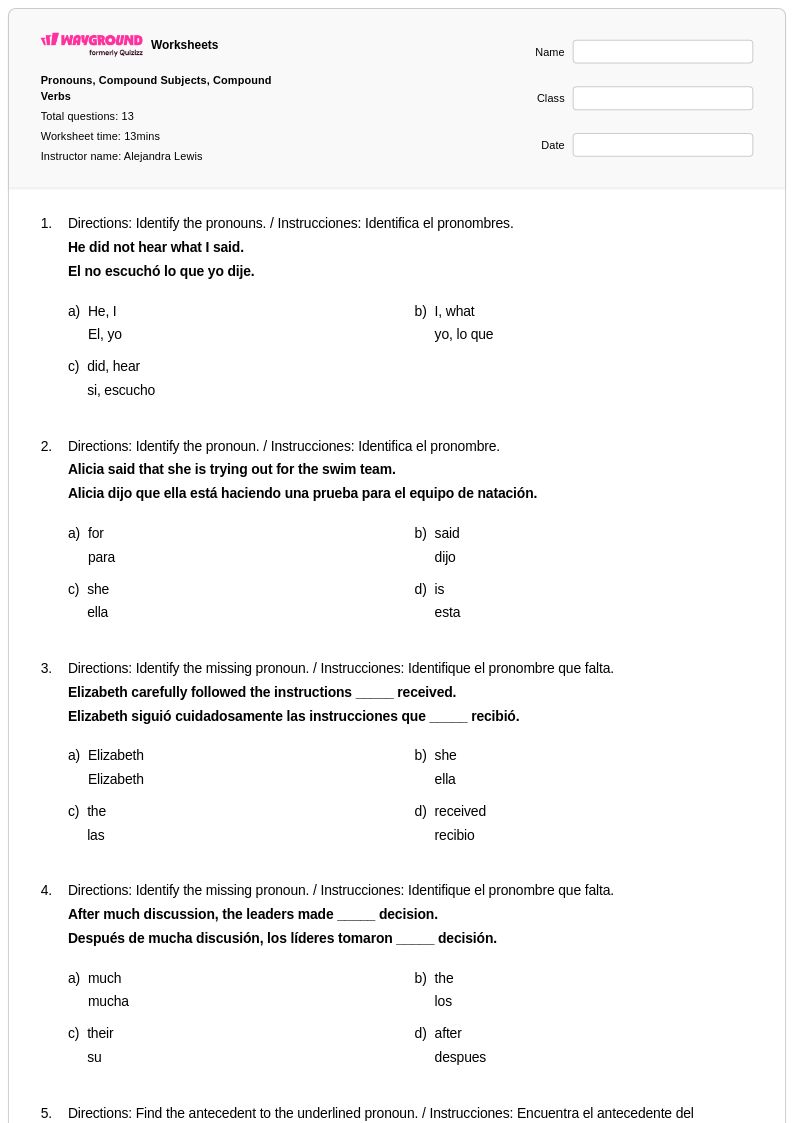
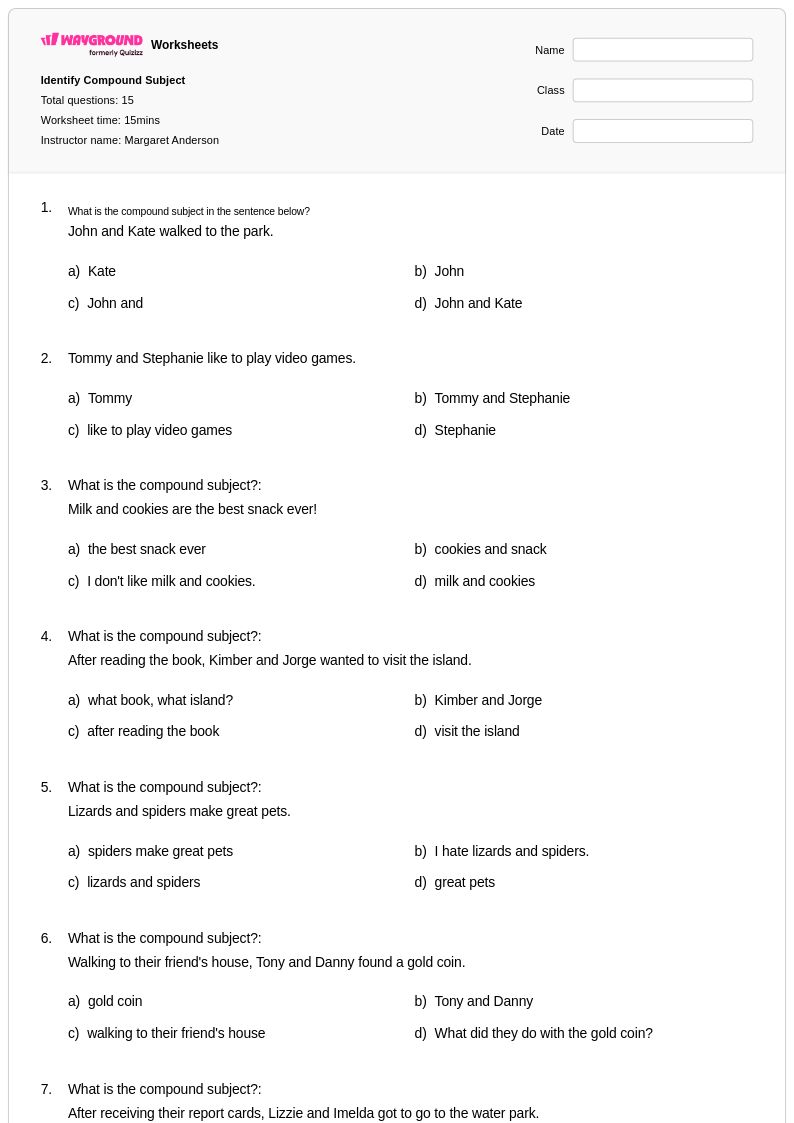
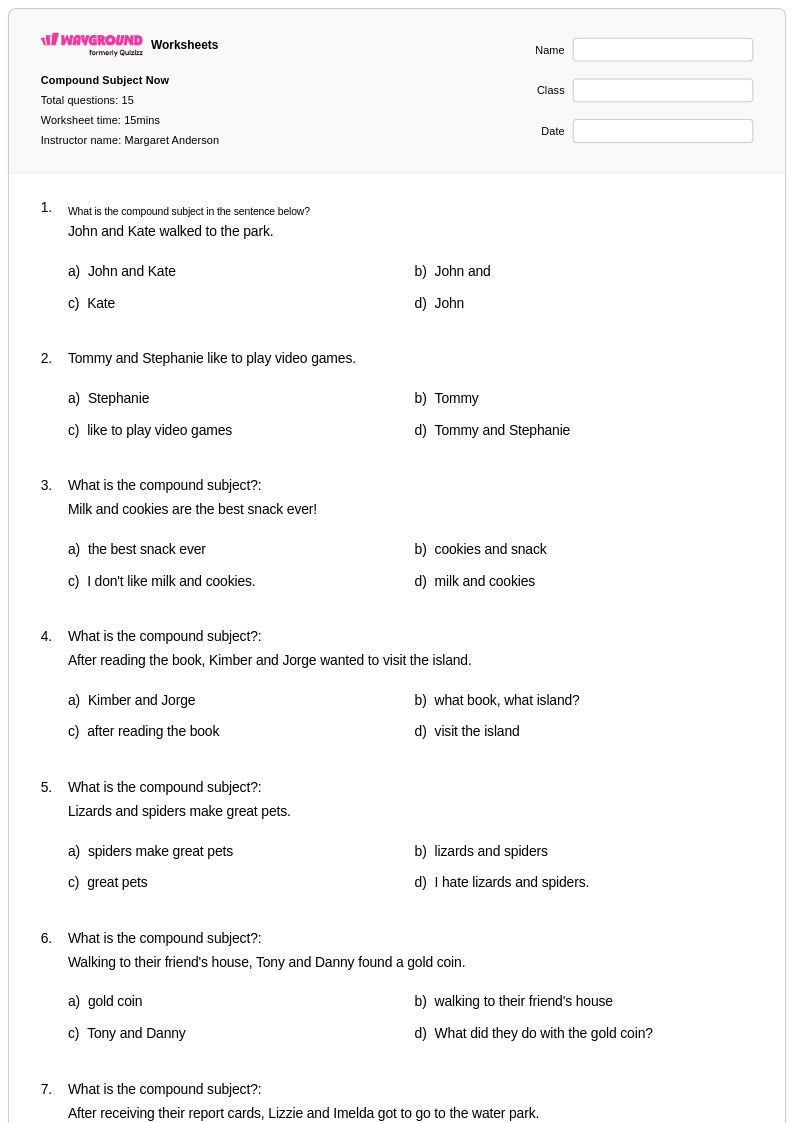
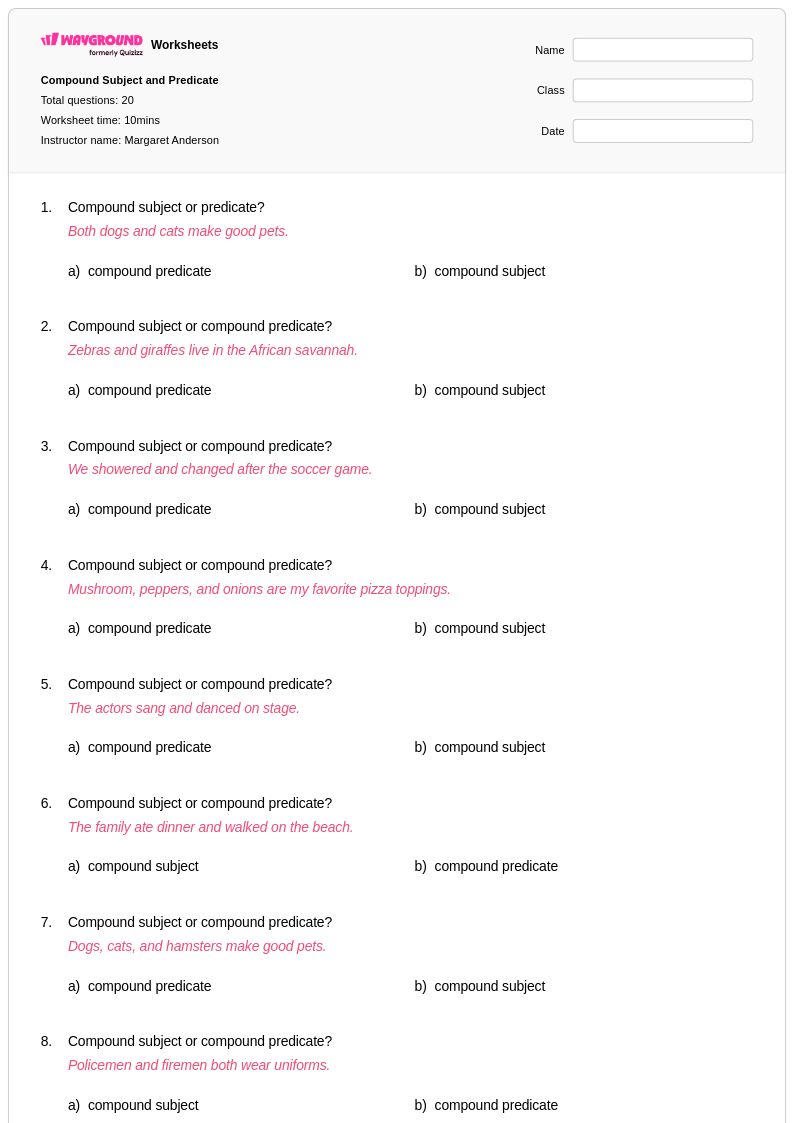
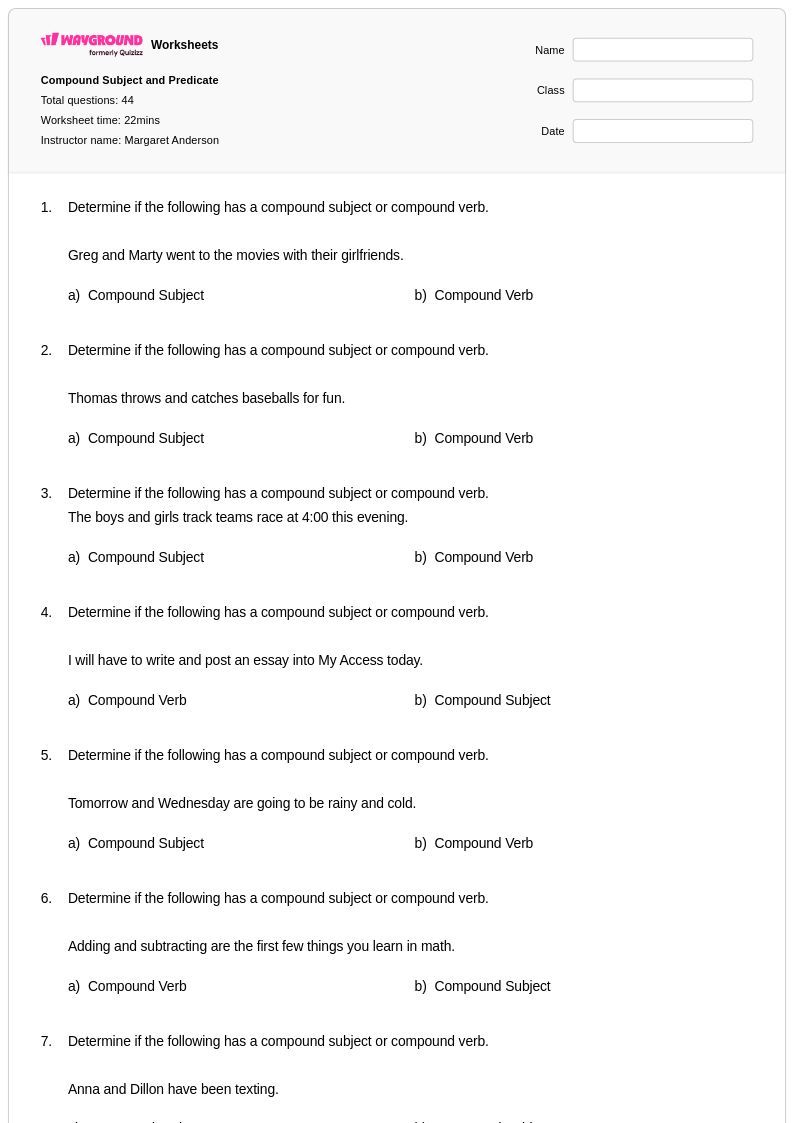
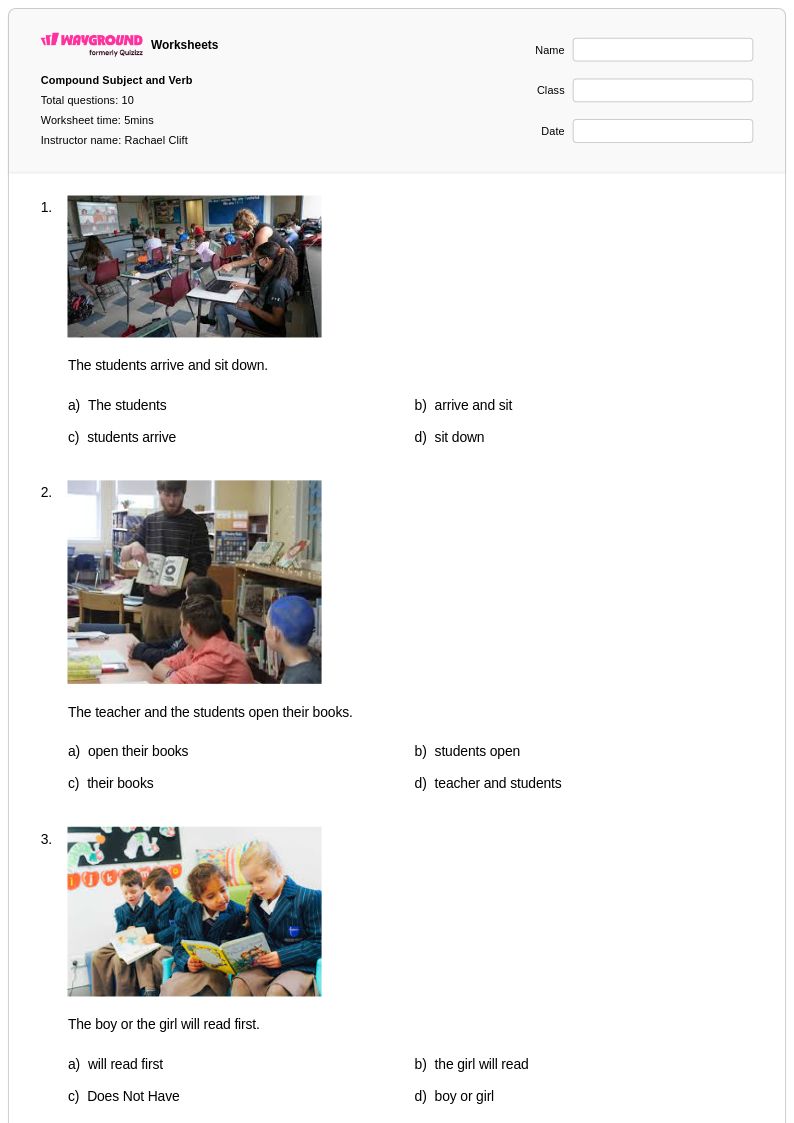
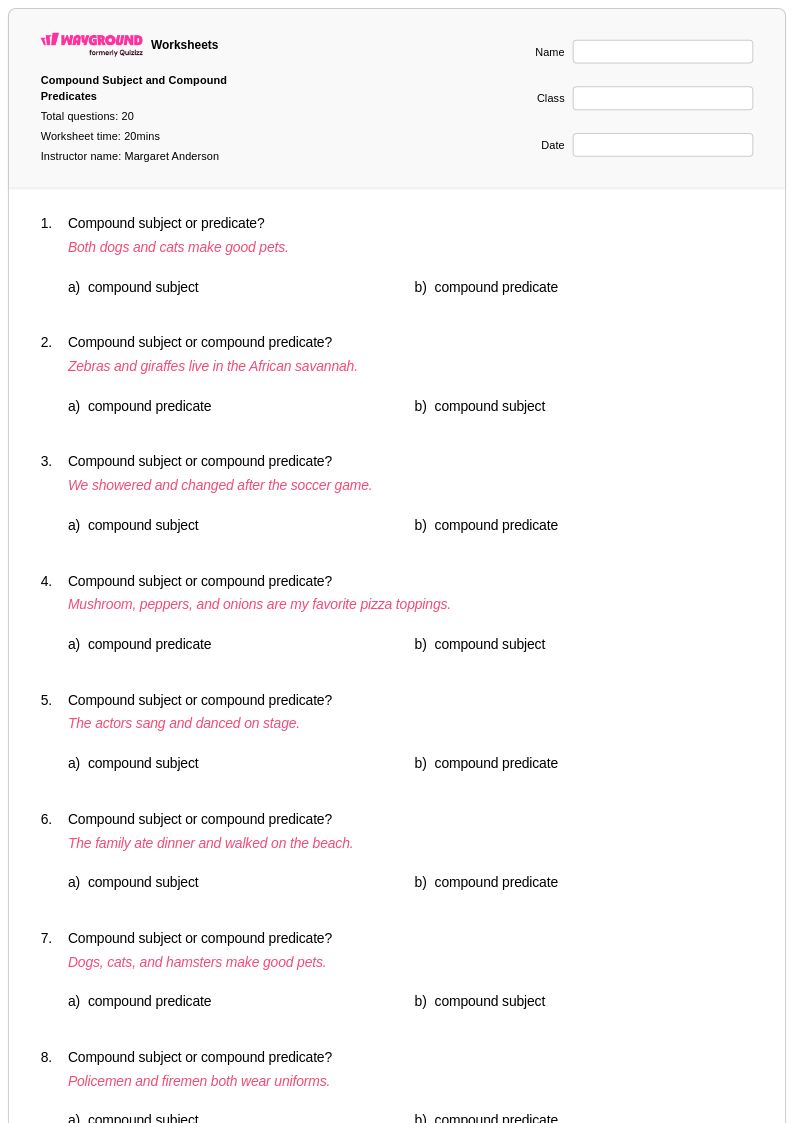
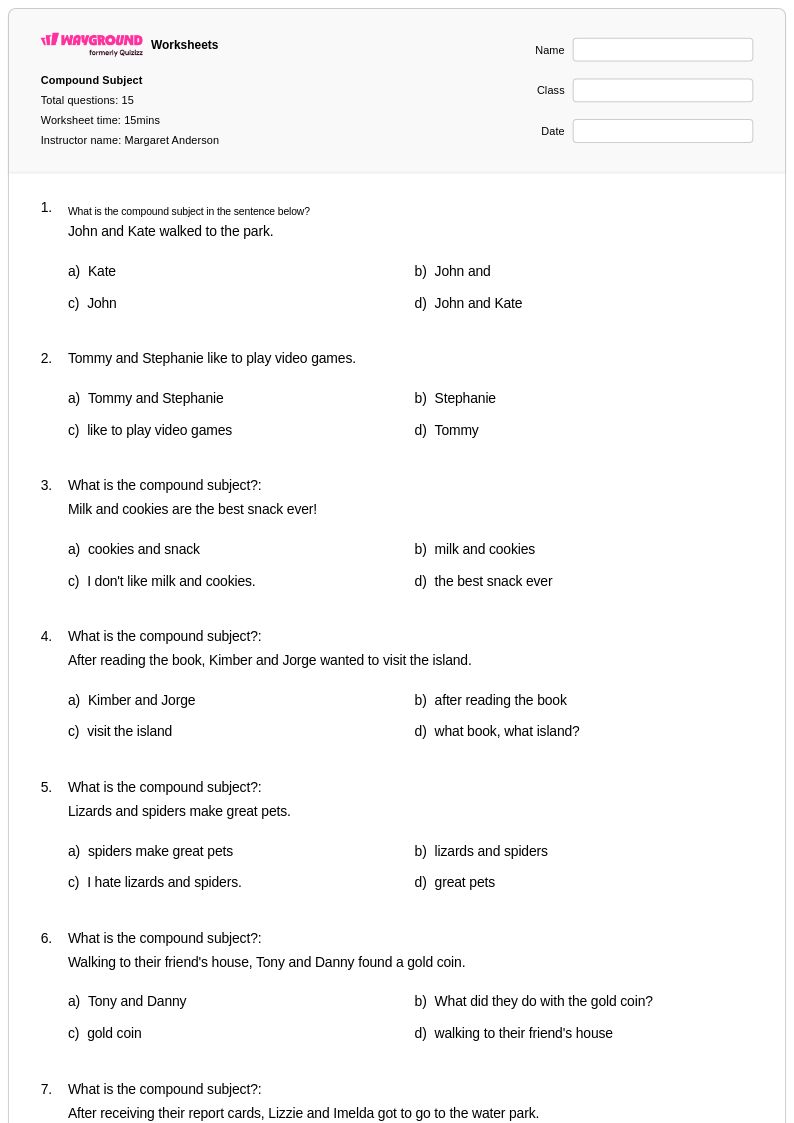
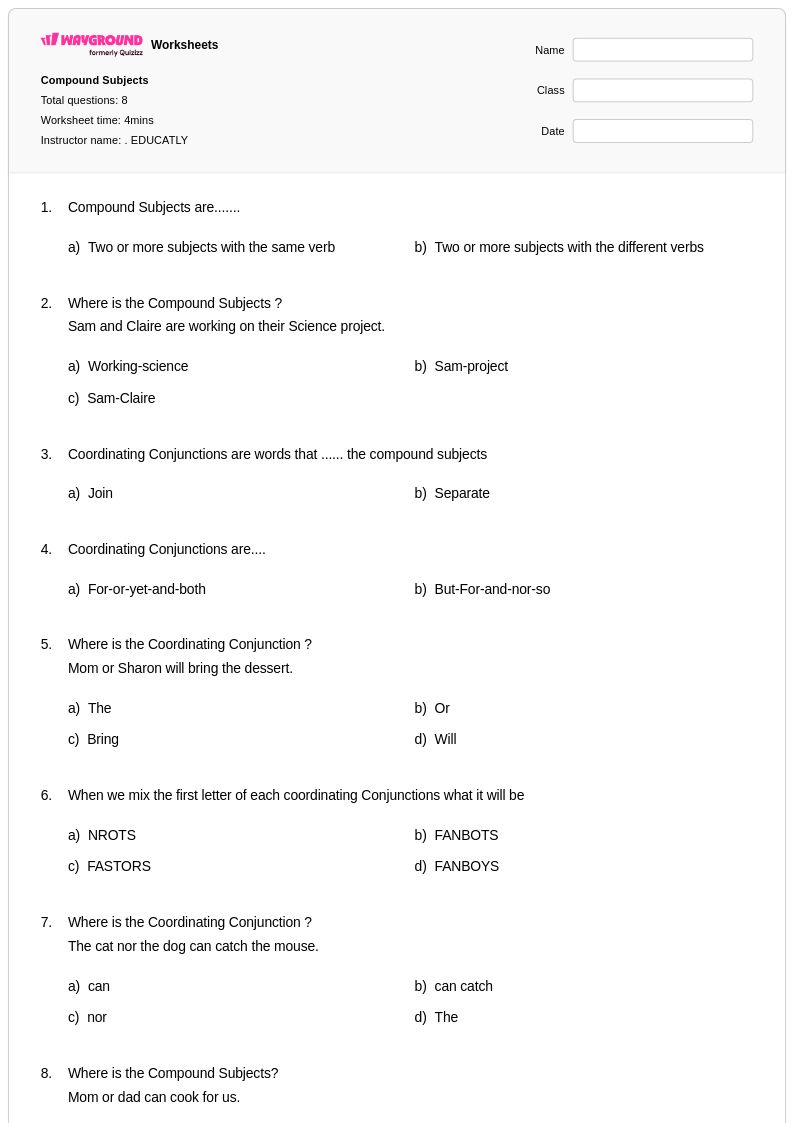
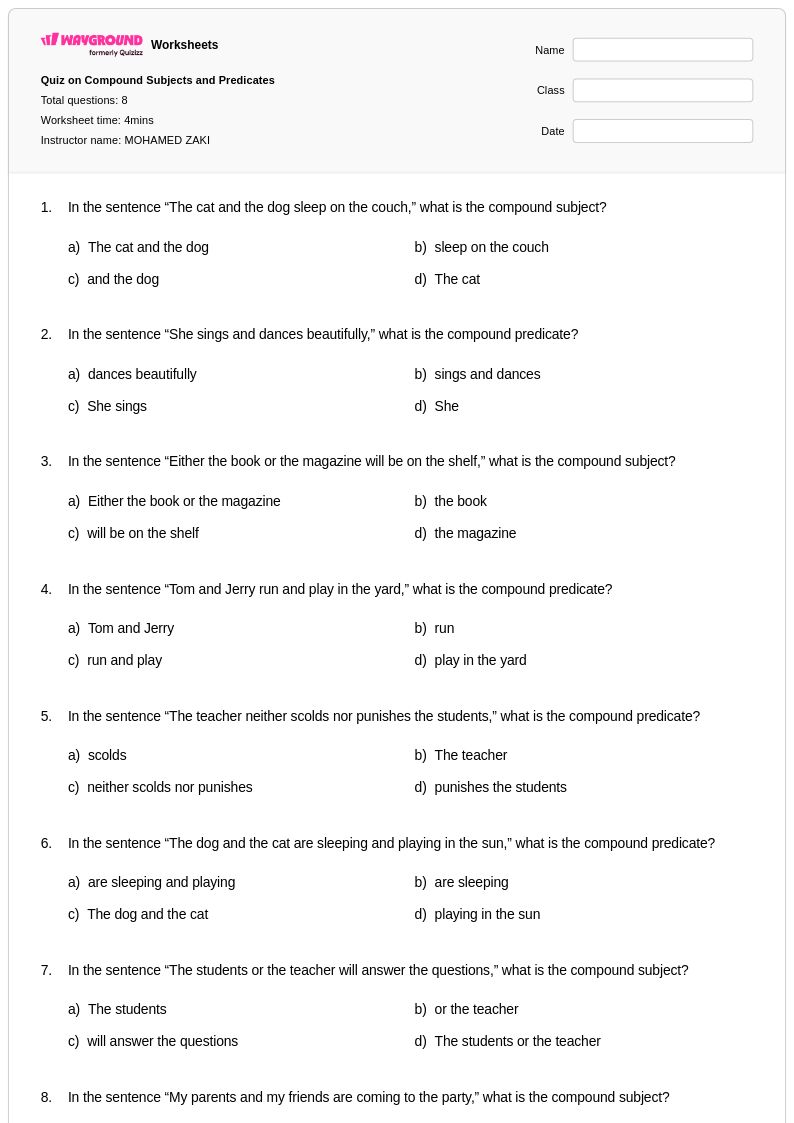
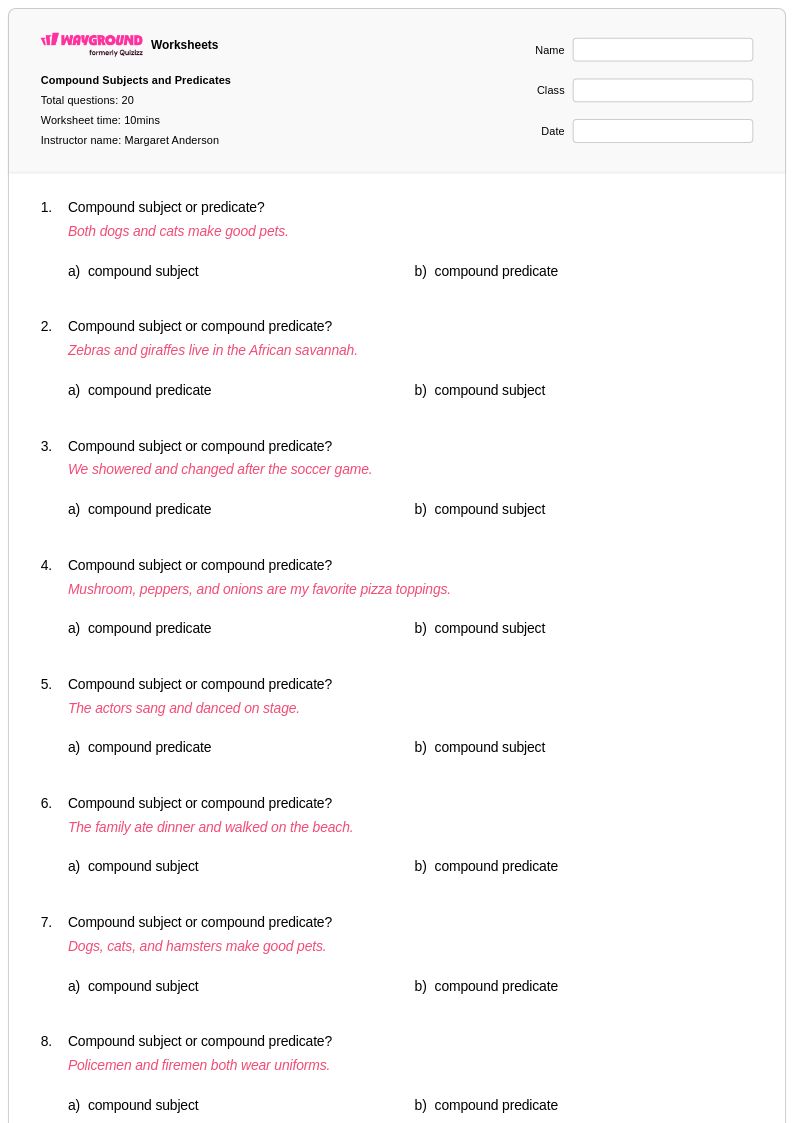
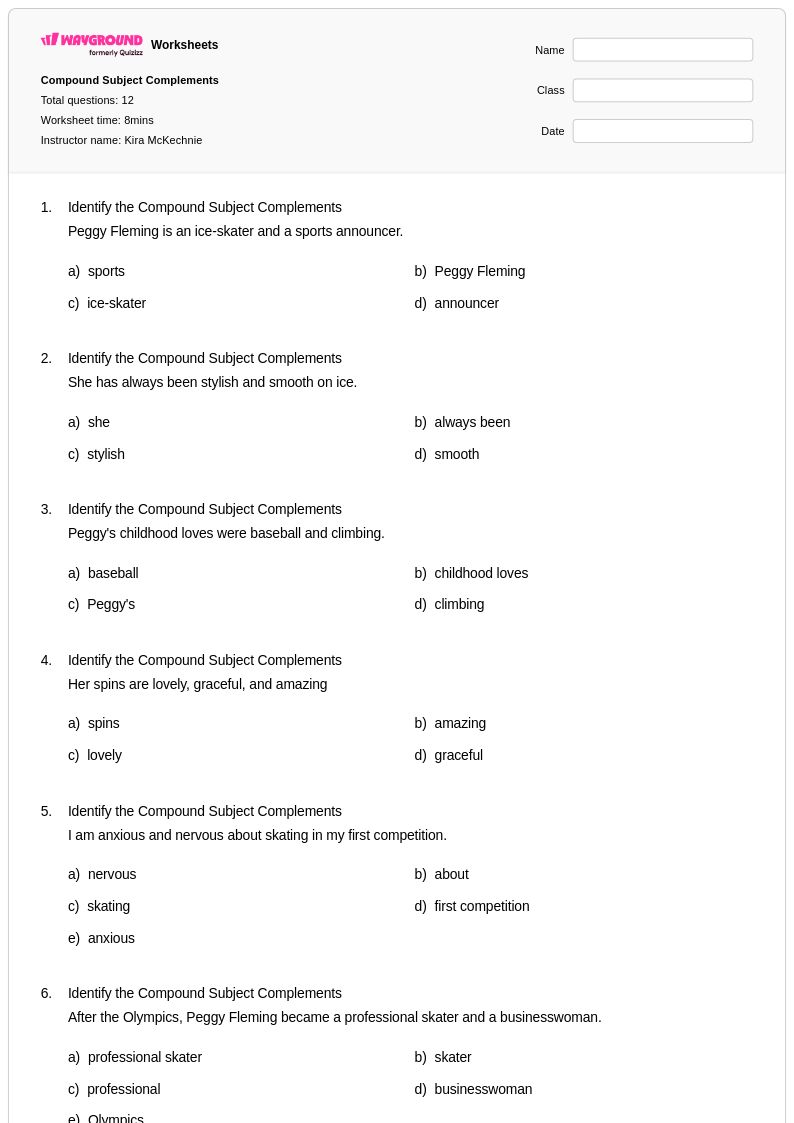
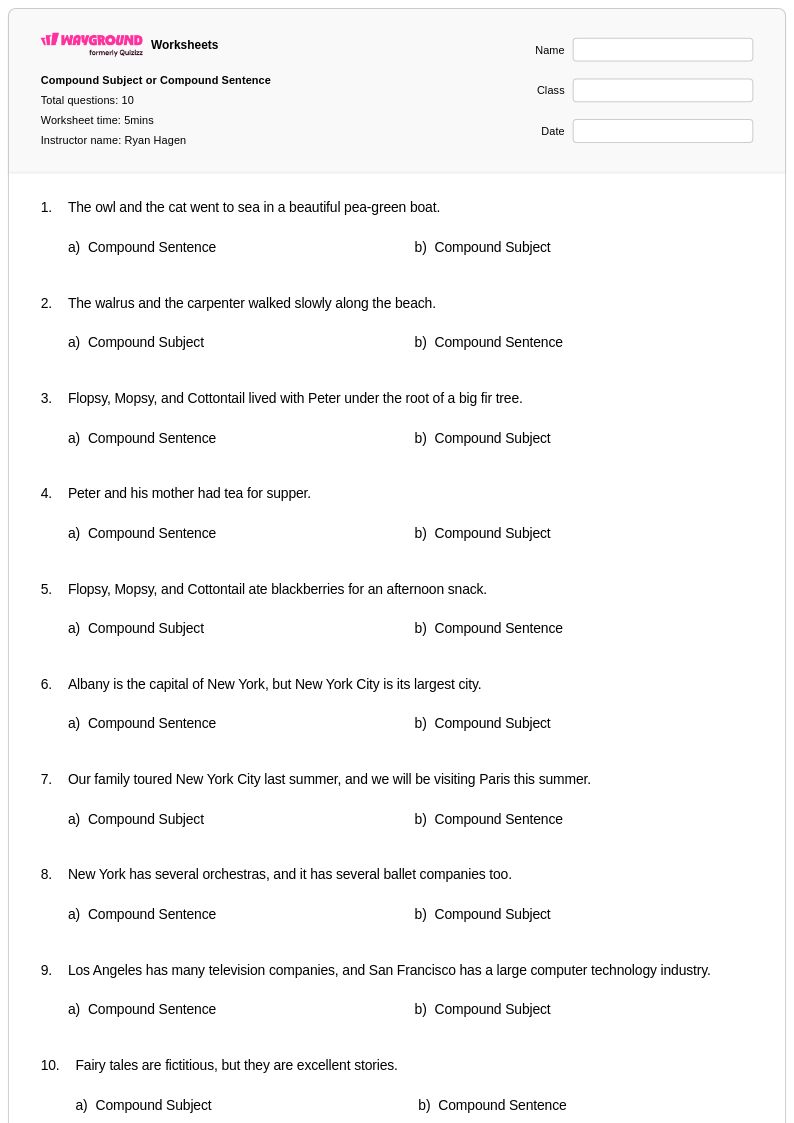
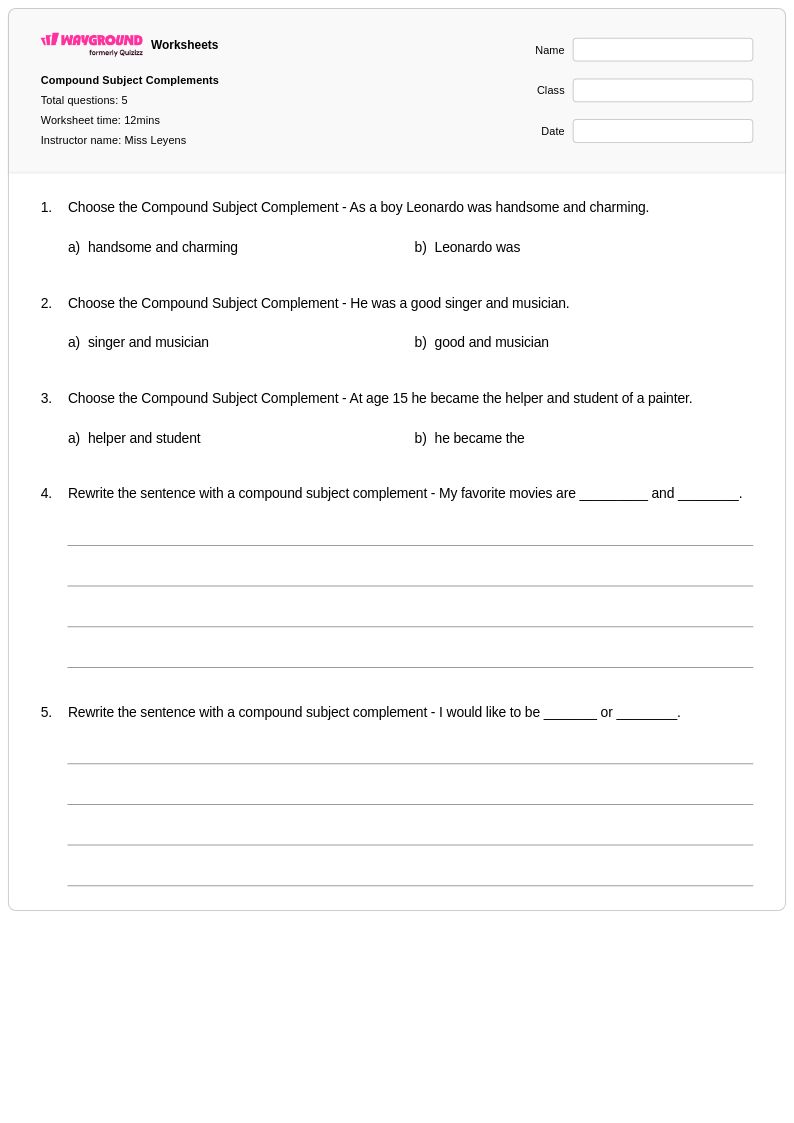
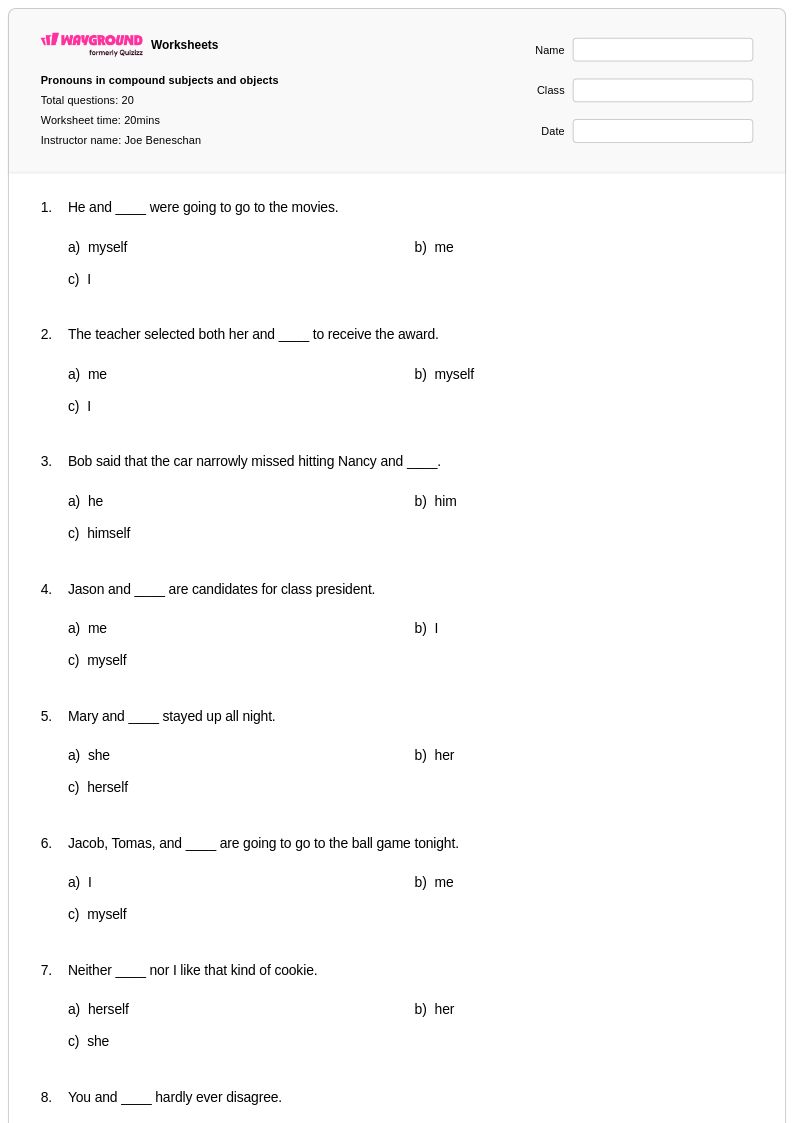
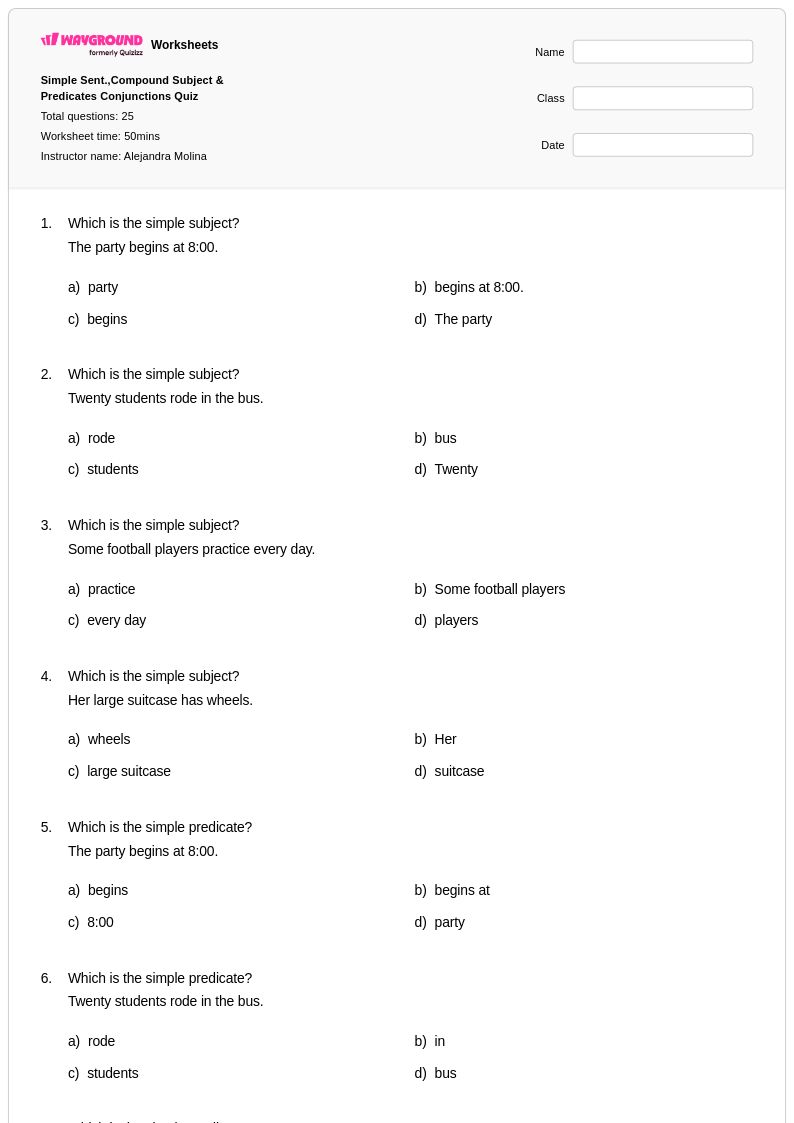
Compound subject worksheets for Year 5 students available through Wayground (formerly Quizizz) provide essential practice in identifying and using multiple subjects within a single sentence. These comprehensive resources help fifth-grade learners master the concept that compound subjects consist of two or more nouns or pronouns joined by coordinating conjunctions like "and" or "or," requiring careful attention to subject-verb agreement. The worksheets strengthen critical grammar skills through varied practice problems that challenge students to recognize compound subjects in complex sentences, distinguish them from simple subjects, and apply proper verb forms. Each printable resource includes detailed answer keys that support independent learning and self-assessment, while the free pdf format ensures easy classroom distribution and homework assignments.
Wayground's extensive collection of compound subject worksheets draws from millions of teacher-created resources, offering educators powerful search and filtering capabilities to locate materials perfectly suited to their Year 5 grammar instruction needs. The platform's standards-aligned content supports differentiated learning through customizable worksheets that can be modified to accommodate varying skill levels within the classroom. Teachers benefit from flexible formatting options that include both printable pdf versions for traditional paper-and-pencil practice and digital formats for interactive learning experiences. These versatile resources streamline lesson planning while providing targeted practice opportunities for remediation, enrichment, and ongoing skill development, ensuring that students develop confidence in identifying and correctly using compound subjects in their writing and communication.
FAQs
How do I teach compound subjects to my students?
Start by ensuring students can confidently identify a single subject and predicate before introducing the concept of two or more subjects sharing the same predicate. Use mentor sentences from familiar texts to show how compound subjects joined by 'and' or 'or' function, then gradually move to having students construct their own examples. Visual annotation, such as underlining or color-coding each subject, helps students see the structure clearly before they internalize the rule.
What exercises help students practice compound subjects?
Effective practice includes identification tasks where students underline all subjects in a sentence, sentence-combining exercises where students merge two simple sentences into one with a compound subject, and error-correction activities where they fix faulty subject-verb agreement. Progressing from recognition to construction tasks ensures students can both identify and produce compound subjects accurately.
What mistakes do students commonly make with compound subjects?
The most frequent error is subject-verb agreement: students often treat a compound subject joined by 'and' as singular and pair it with a singular verb (e.g., 'The cat and dog runs'). A related misconception involves 'or' and 'nor': students frequently default to a plural verb regardless of which subject is closer to the verb. Explicitly teaching the proximity rule for 'or'/'nor' constructions and providing targeted practice with both conjunctions helps correct these patterns.
How do I use Wayground's compound subject worksheets in my classroom?
Wayground's compound subject worksheets are available as free printable PDFs for traditional classroom use and in digital formats for technology-integrated environments, making them flexible for any instructional setting. Teachers can assign digital versions directly through Wayground and host them as a quiz for instant student feedback, or print them for independent practice, homework, or small-group instruction. Each worksheet includes a detailed answer key, so they work equally well for guided instruction and self-directed review.
How do compound subject worksheets support subject-verb agreement instruction?
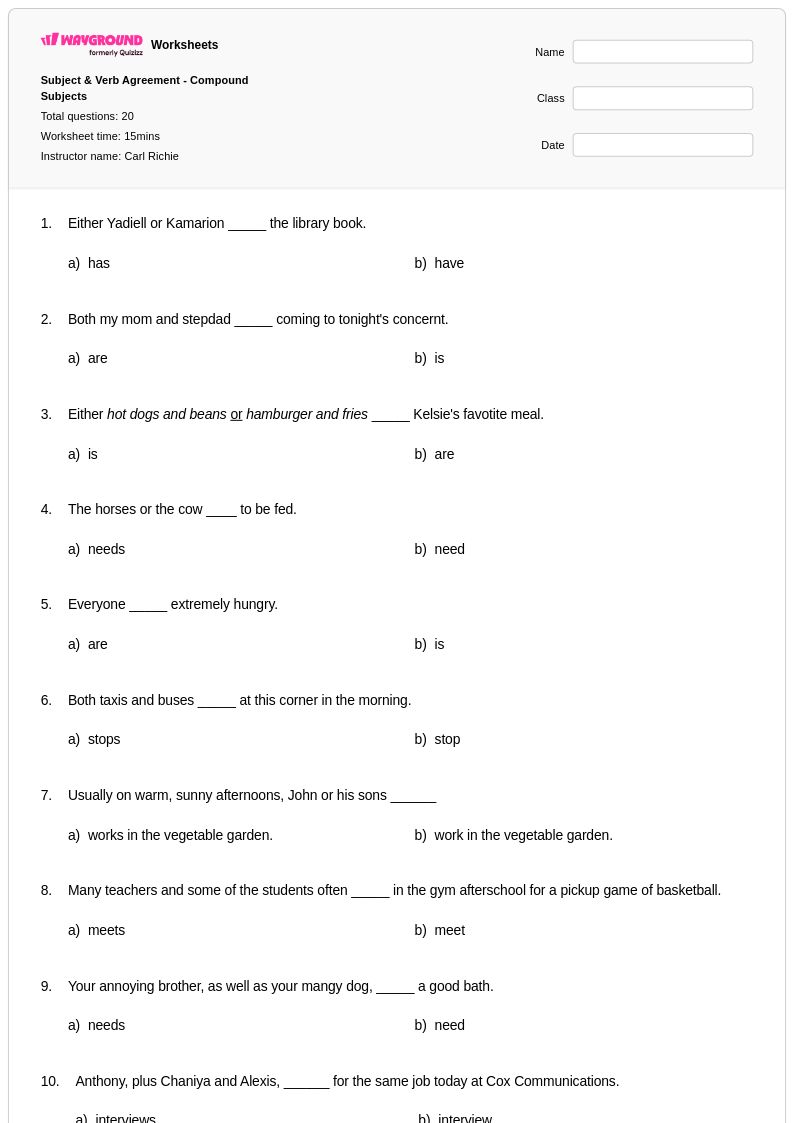
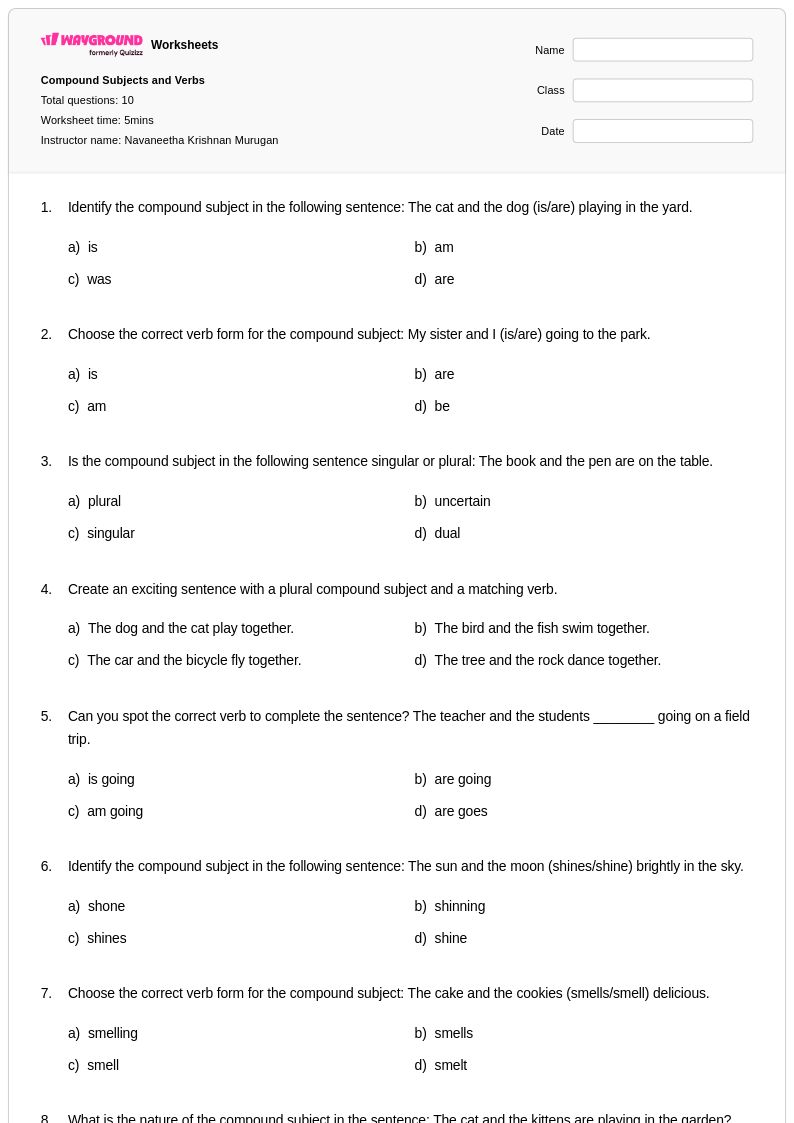
Compound subject worksheets directly reinforce subject-verb agreement by presenting sentences where students must determine whether the compound subject requires a singular or plural verb. Because this connection is a common sticking point, worksheets that explicitly link compound subject identification to agreement decisions give students the dual practice they need. Using these exercises alongside direct instruction on coordinating conjunctions creates a more complete grammatical understanding.
How can I differentiate compound subject practice for students at different skill levels?
For students who are still building confidence, start with sentences that have clearly distinct subjects joined by 'and' before introducing 'or'/'nor' constructions. More advanced students can work on sentence construction and editing tasks that require applying agreement rules in context. On Wayground, teachers can apply accommodations such as reduced answer choices or read-aloud support to individual students, ensuring that differentiation is built into the digital experience without disrupting the rest of the class.