Free Printable Constitutional Principles Worksheets for Year 11
Explore Year 11 Constitutional Principles worksheets and printables that help students master fundamental government concepts through engaging practice problems, free PDF resources, and comprehensive answer keys.
Explore printable Constitutional Principles worksheets for Year 11
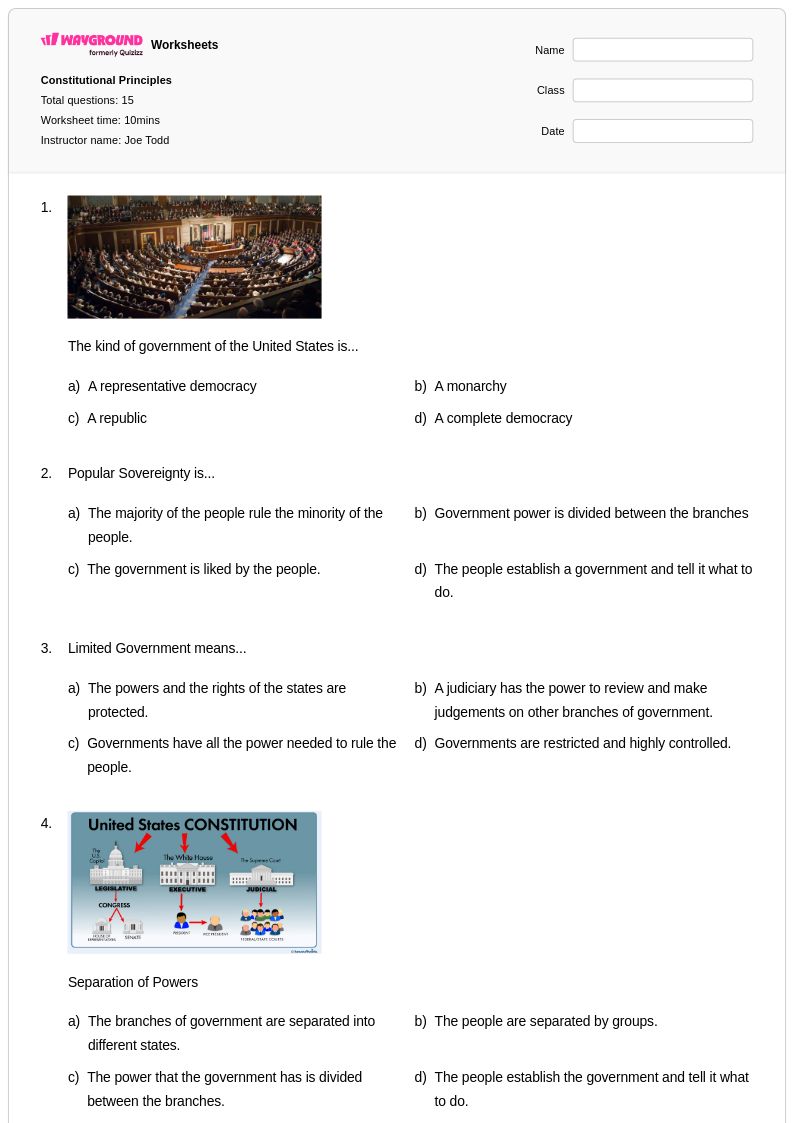
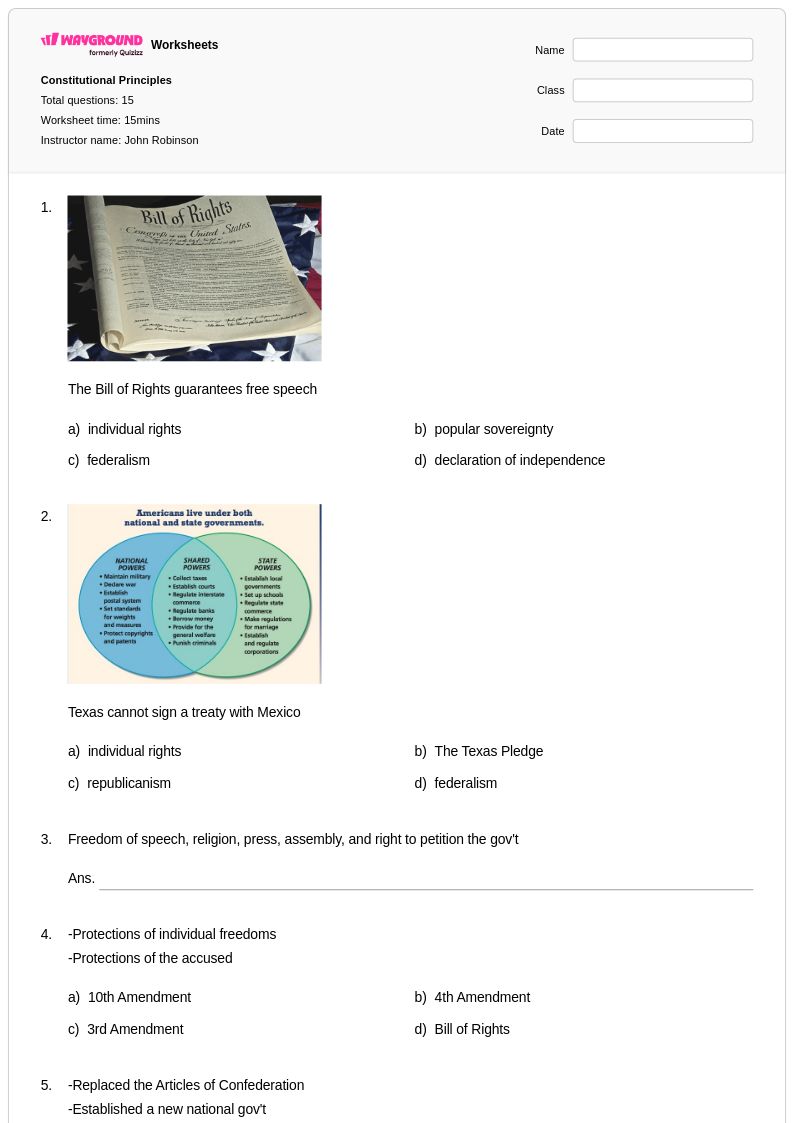
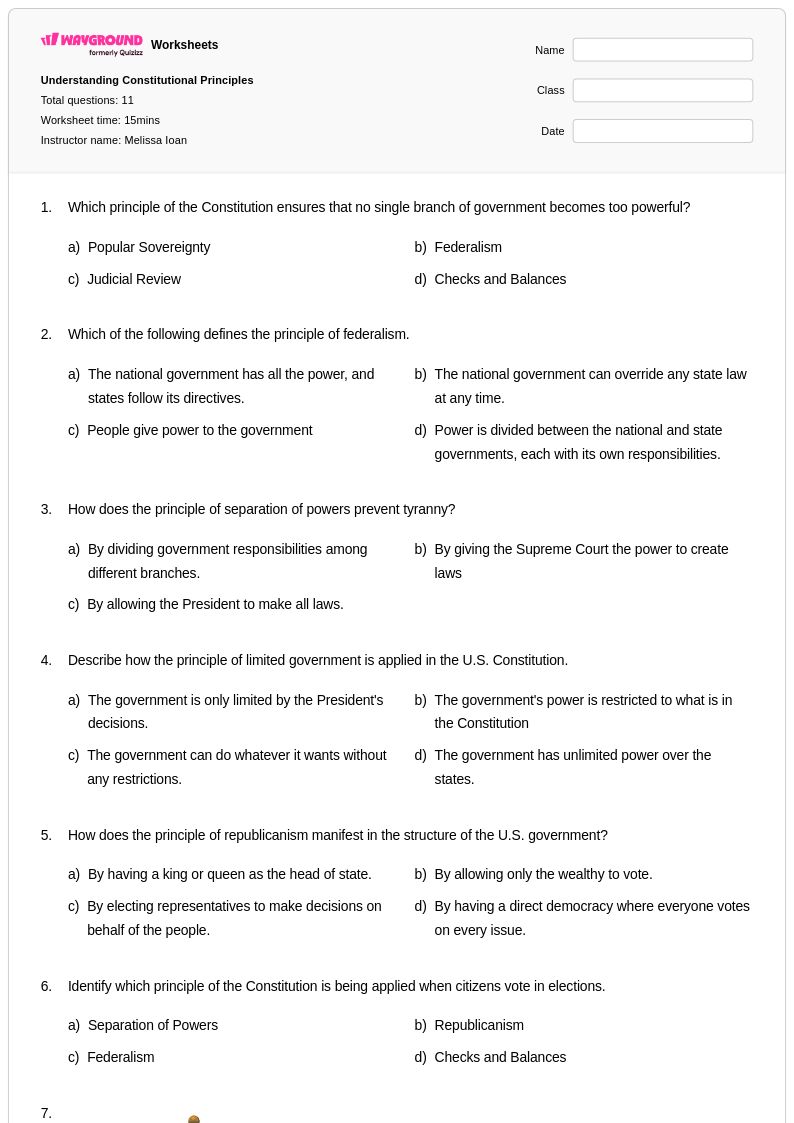
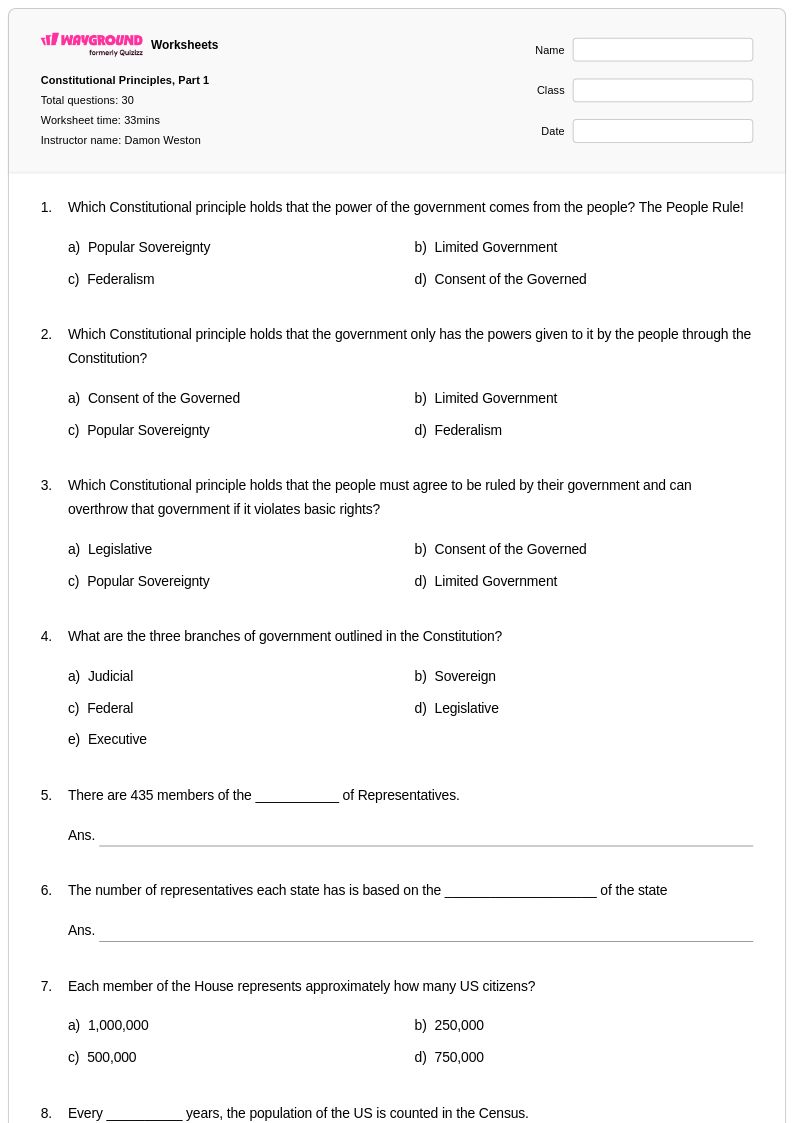
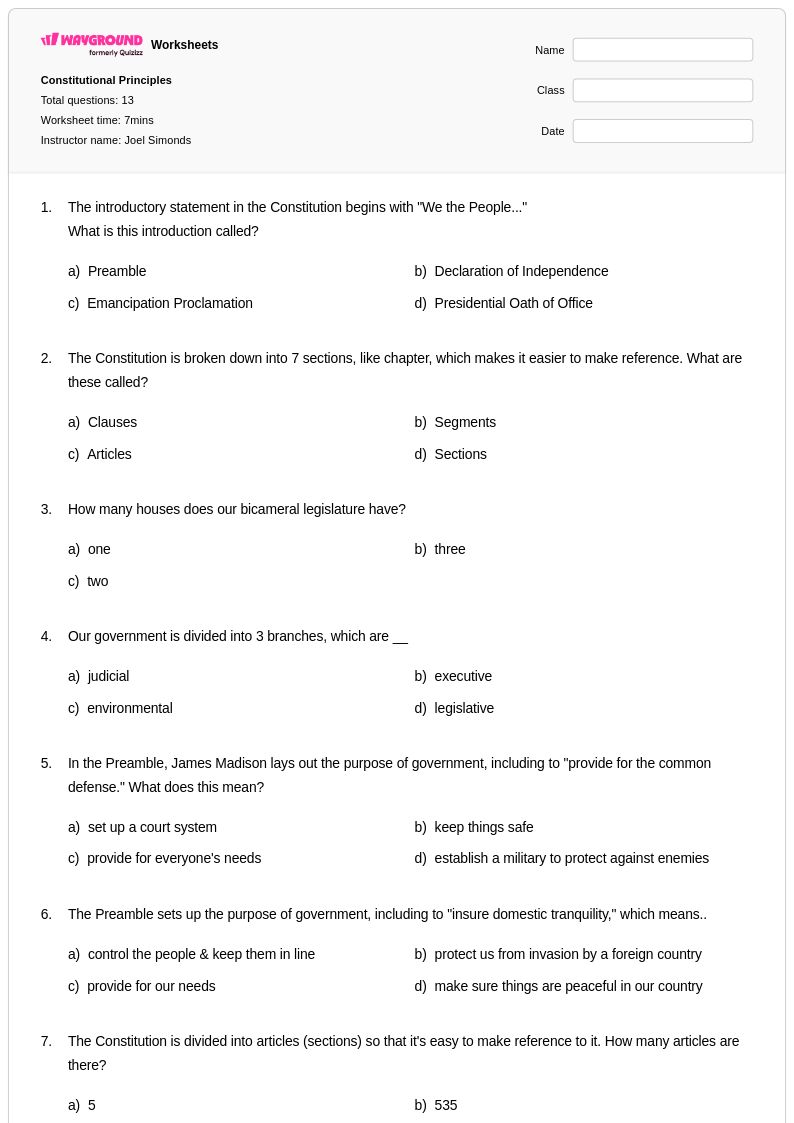
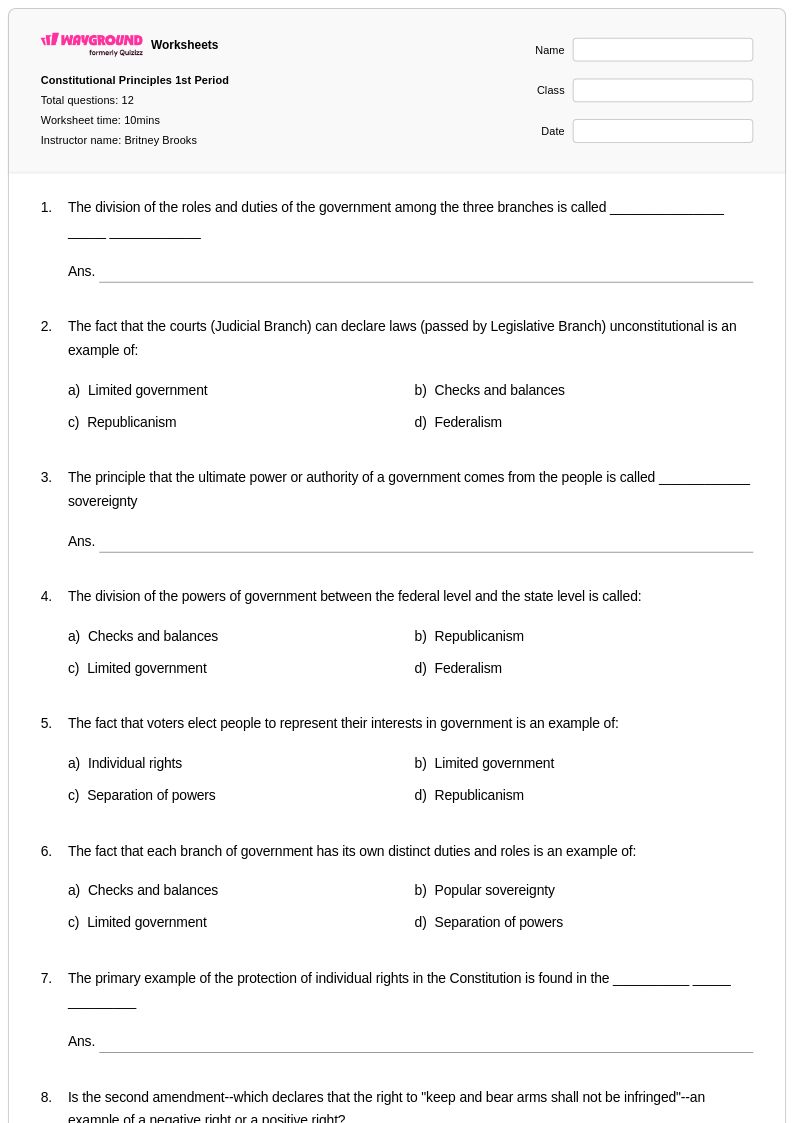
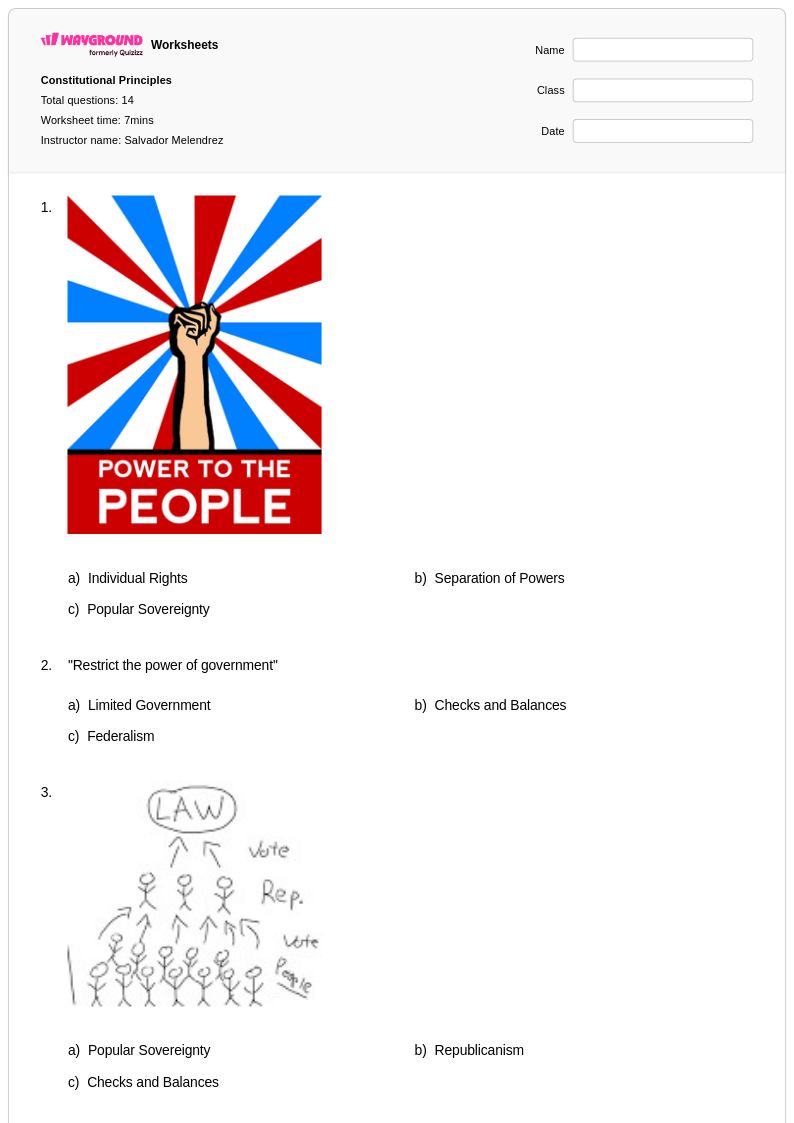
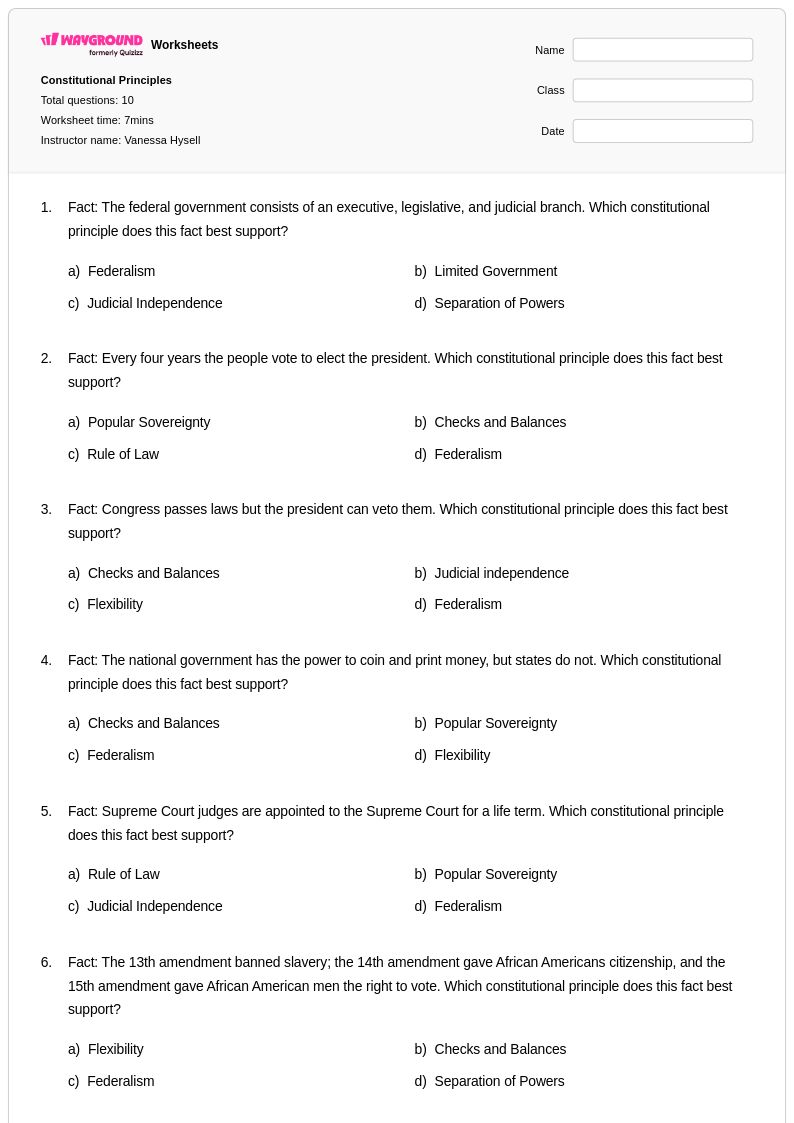
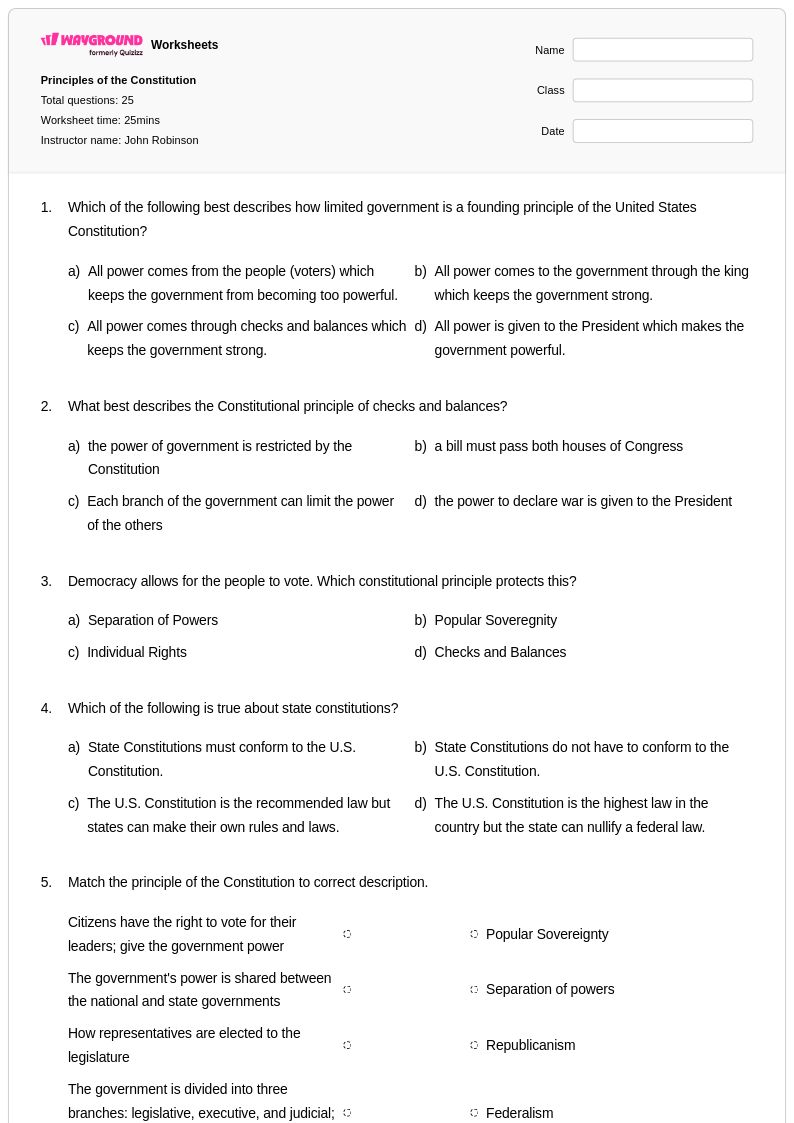
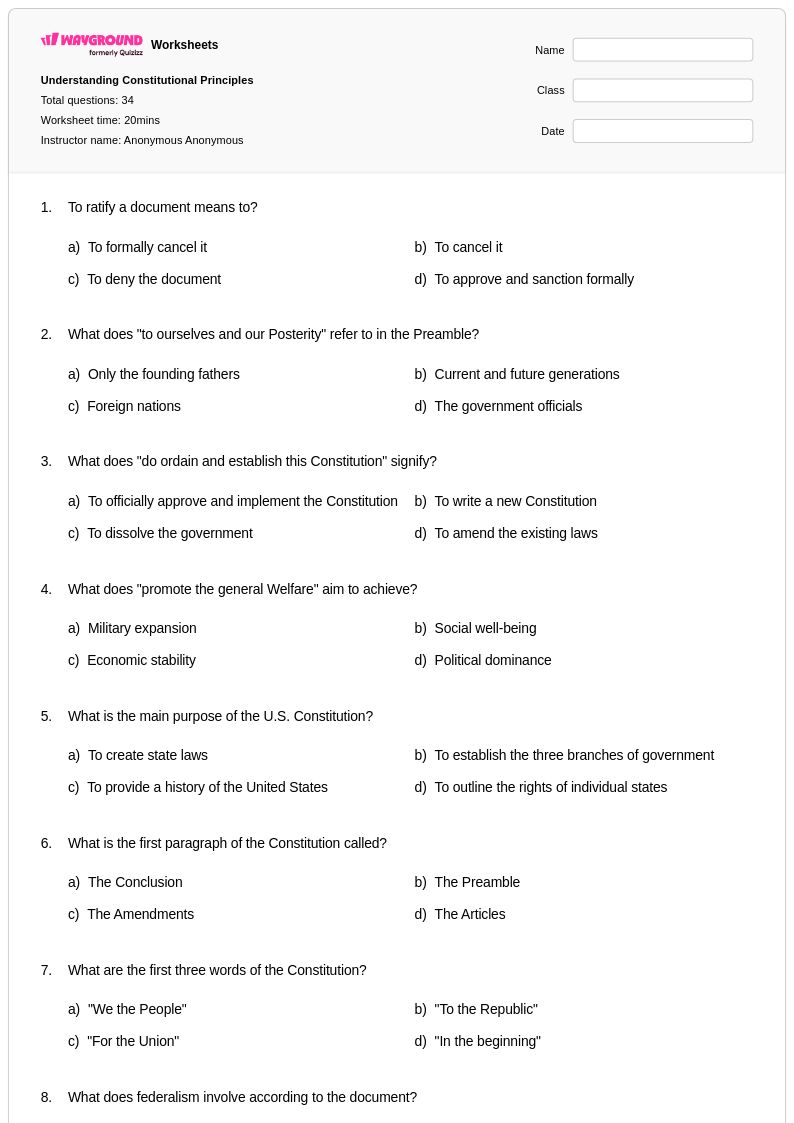
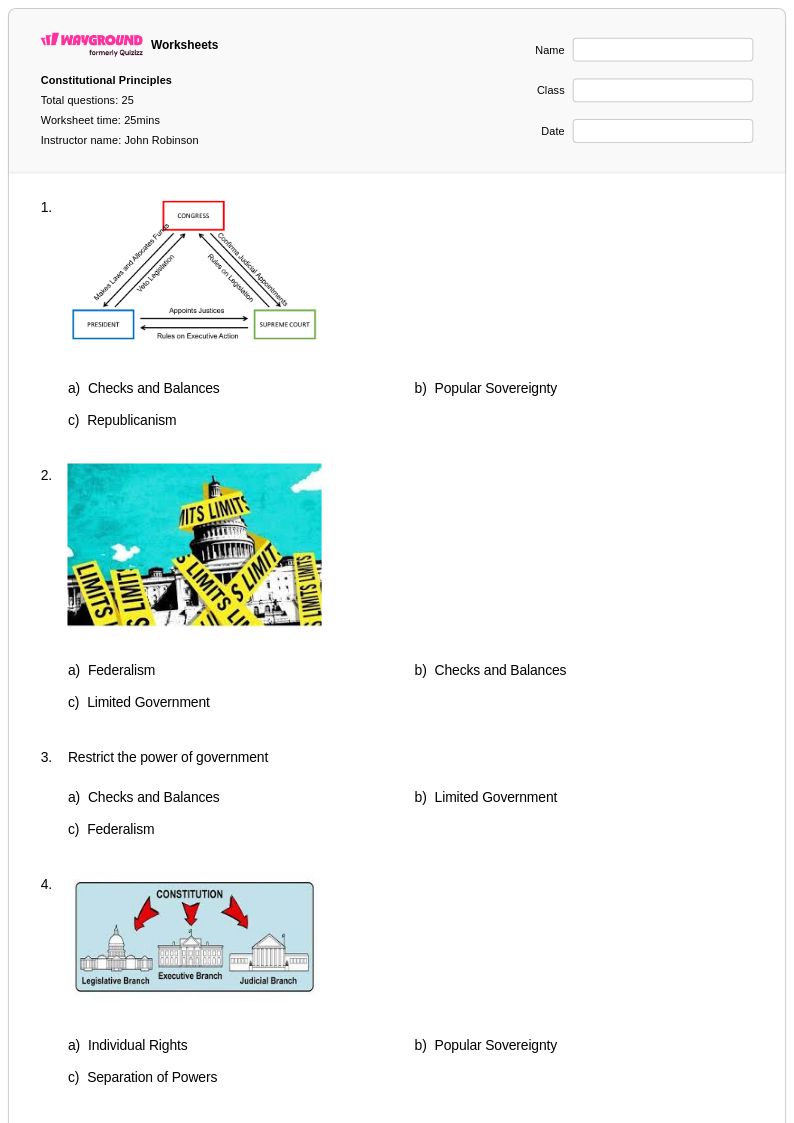
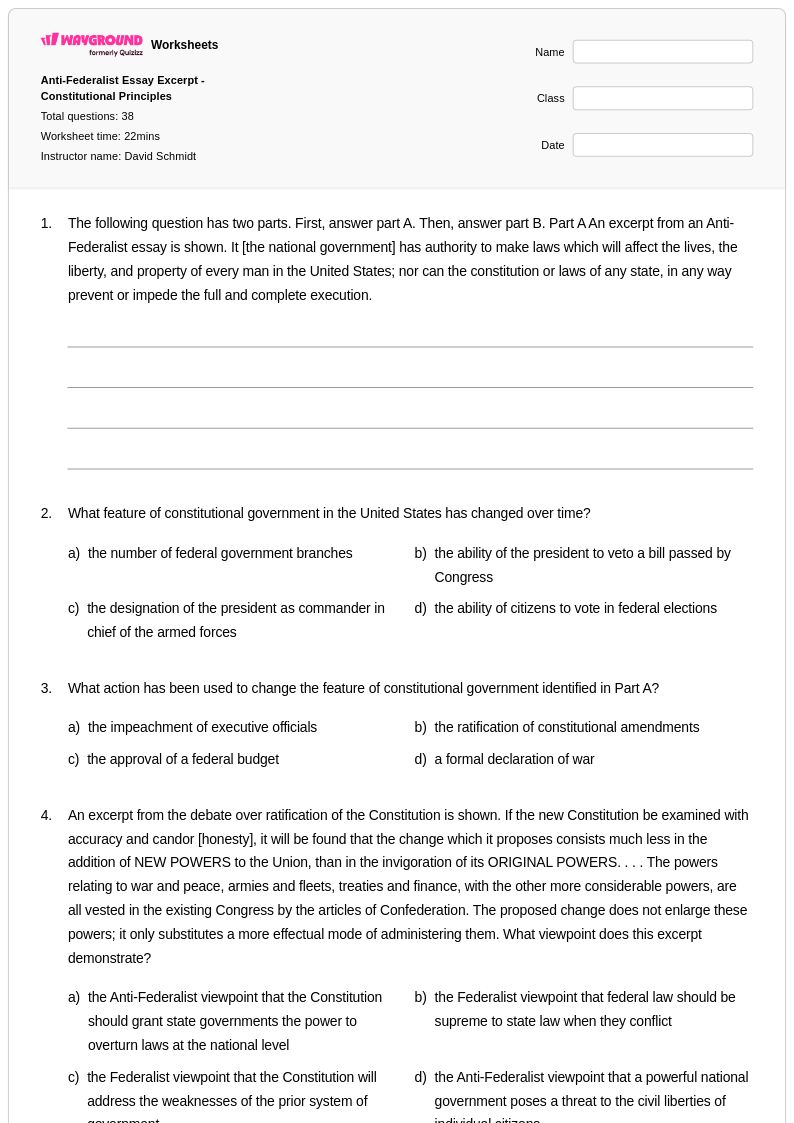
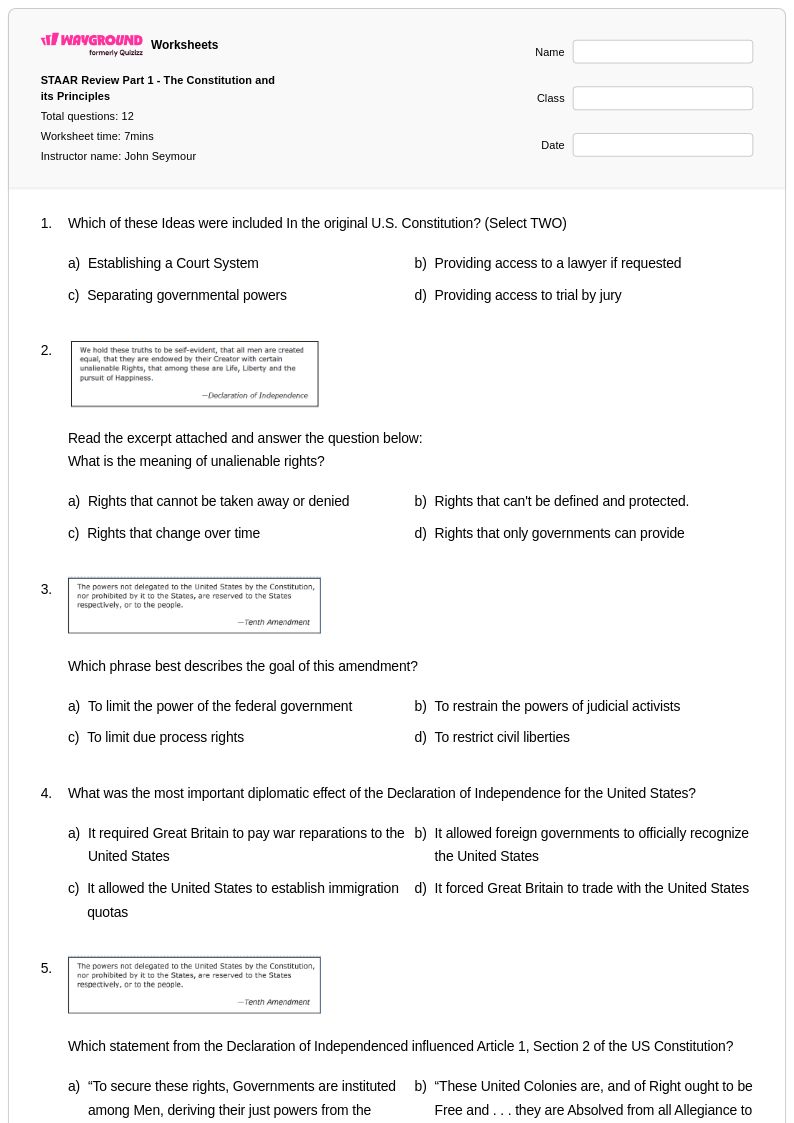
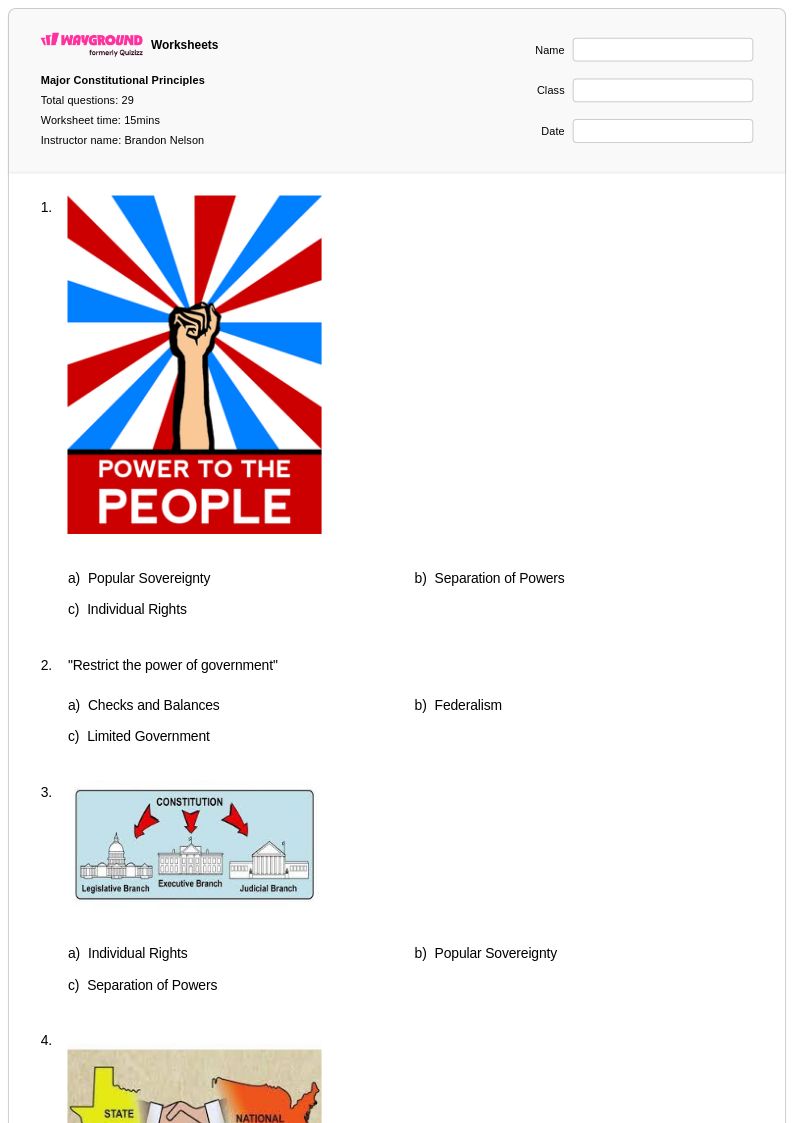
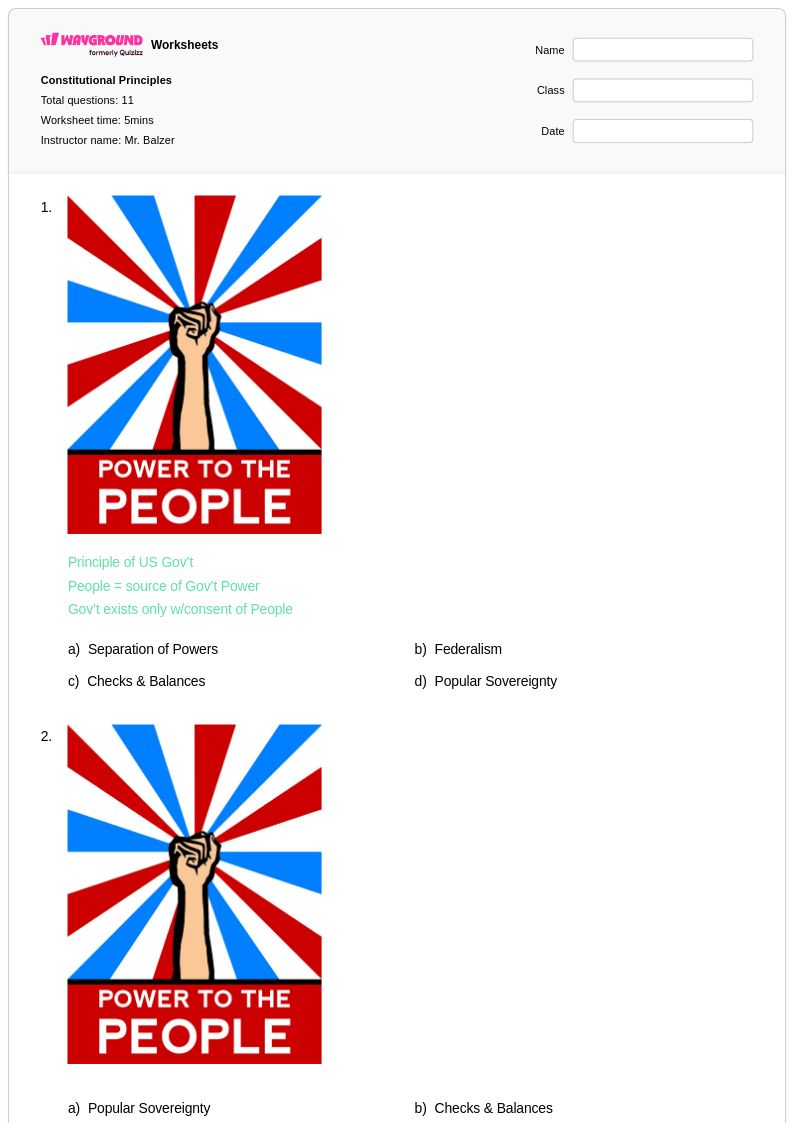
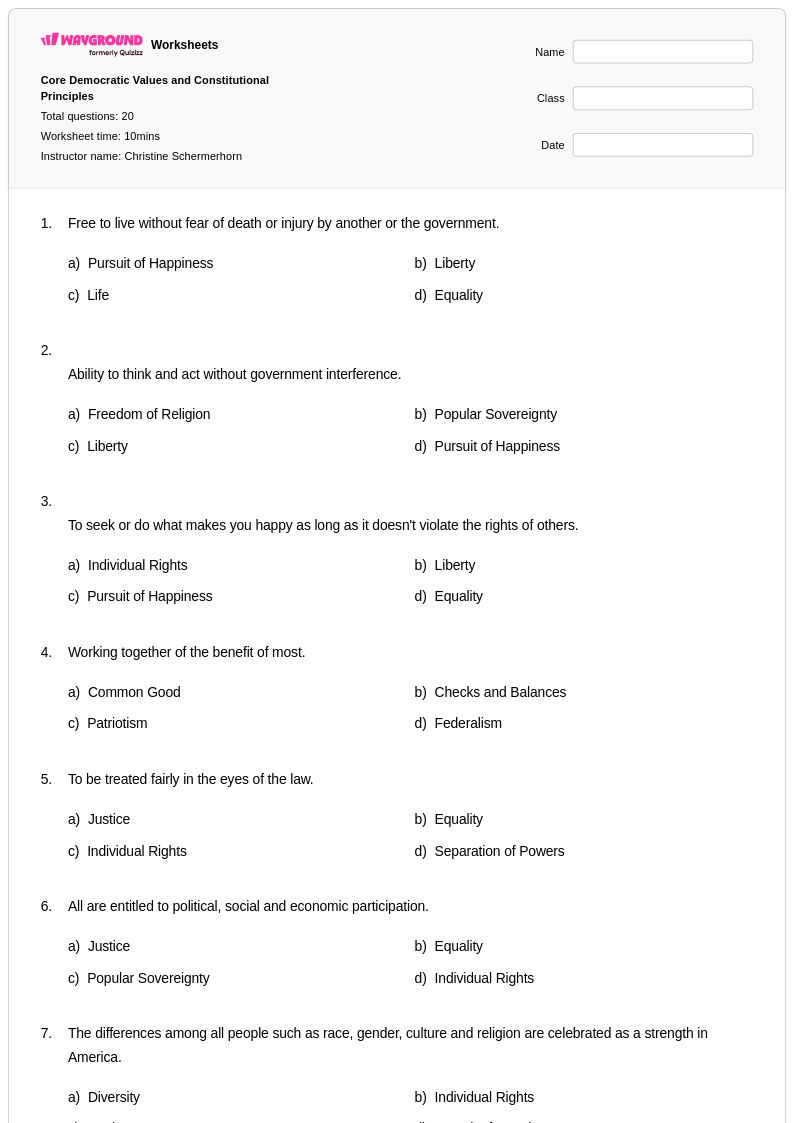
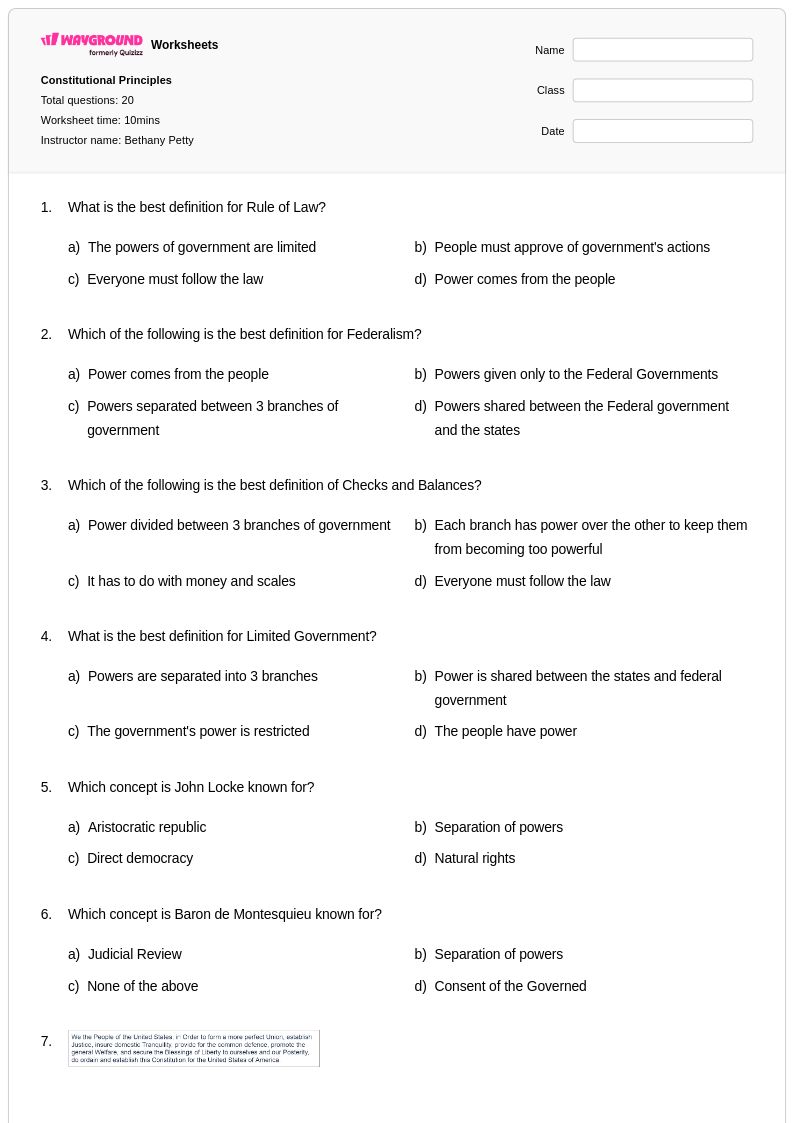
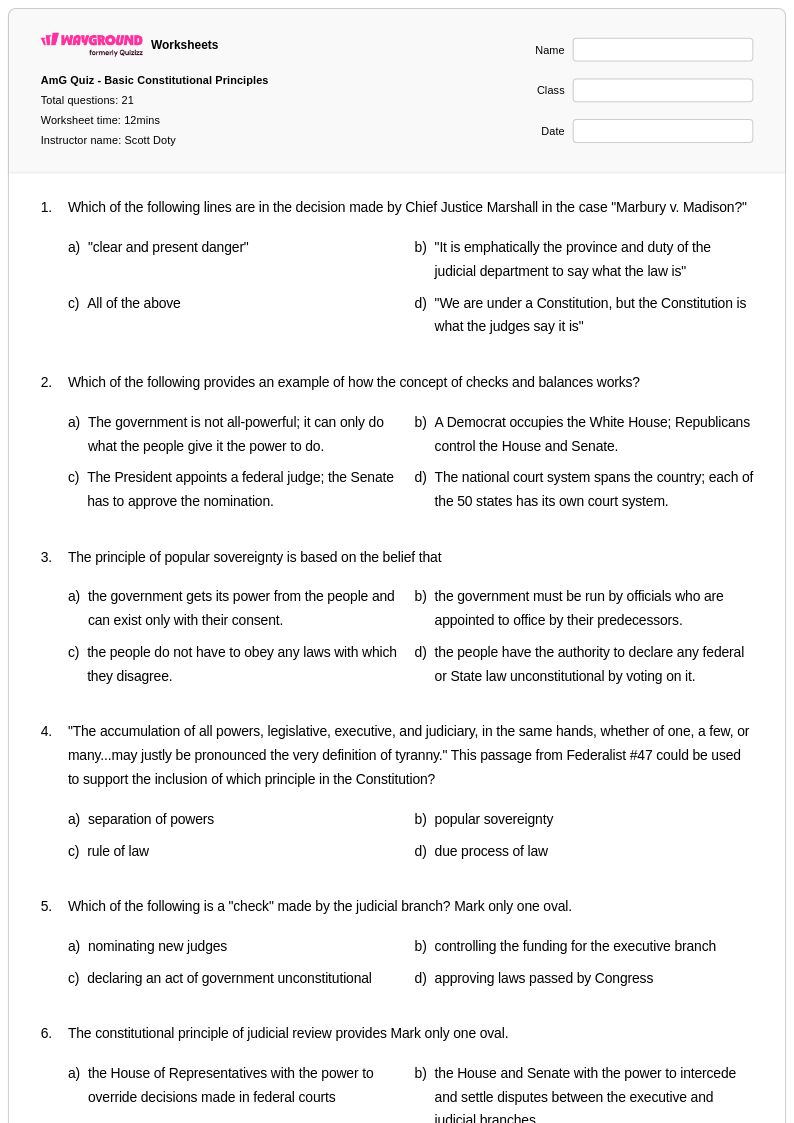
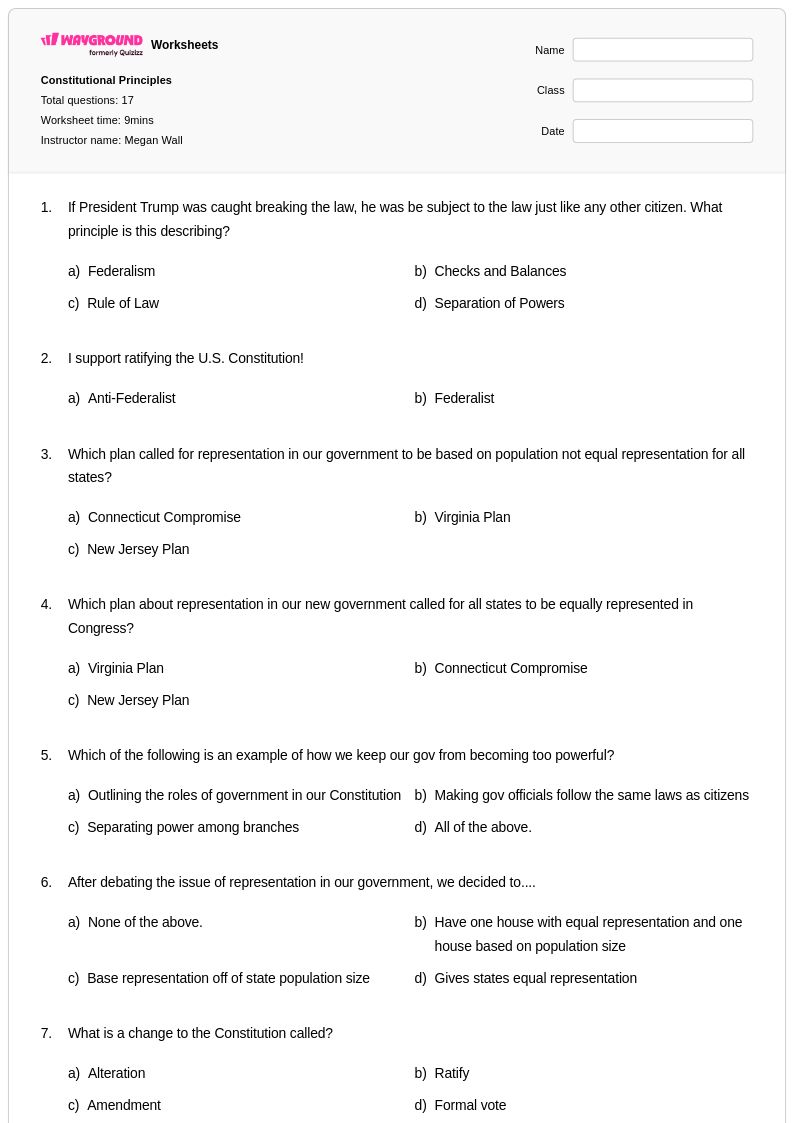
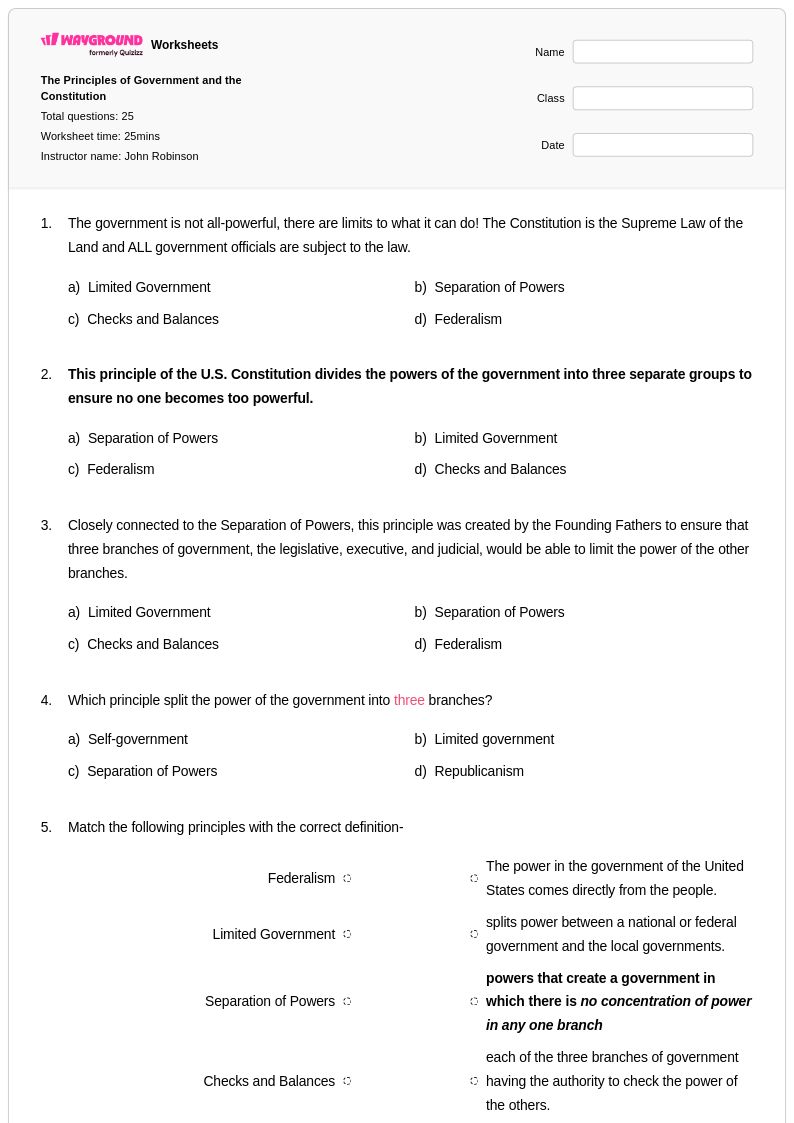
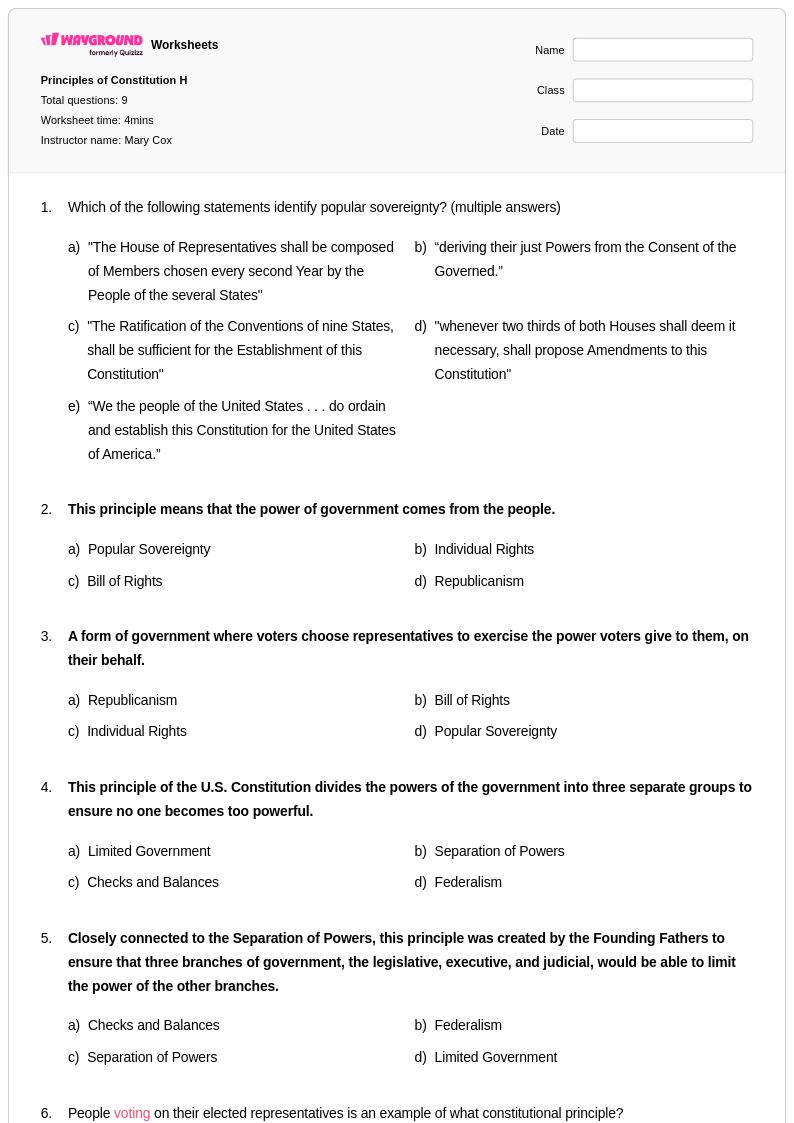
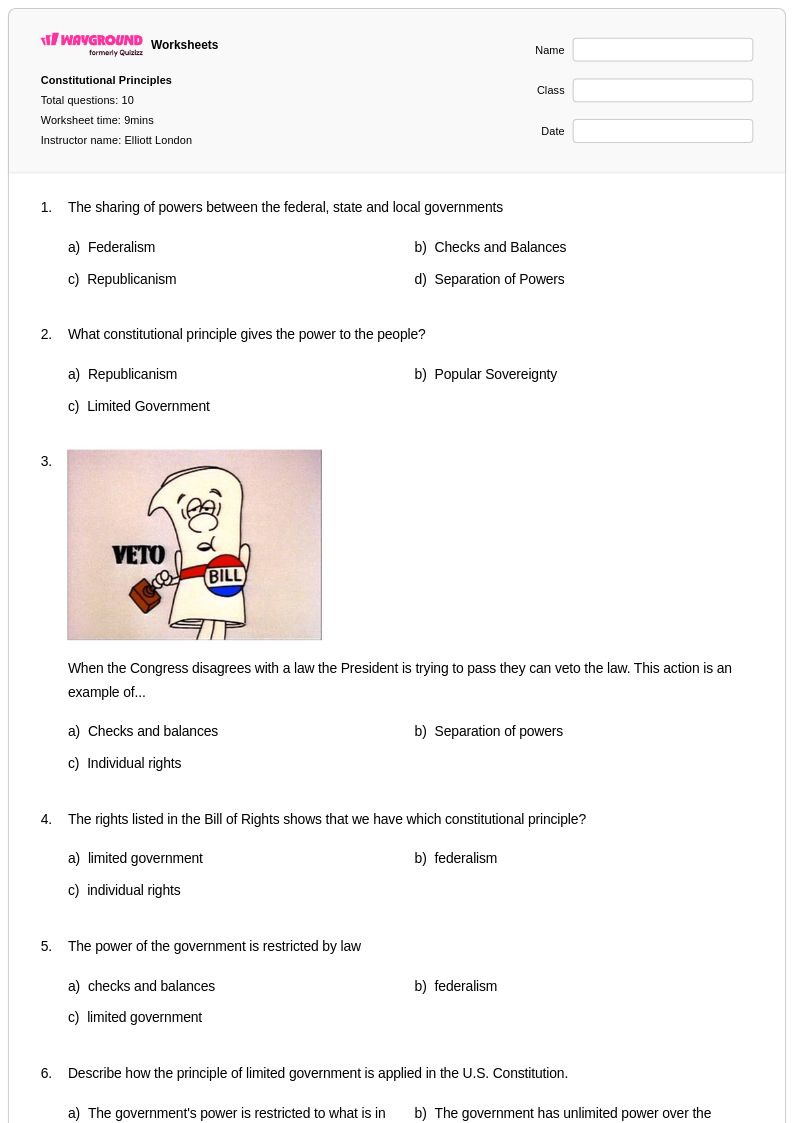
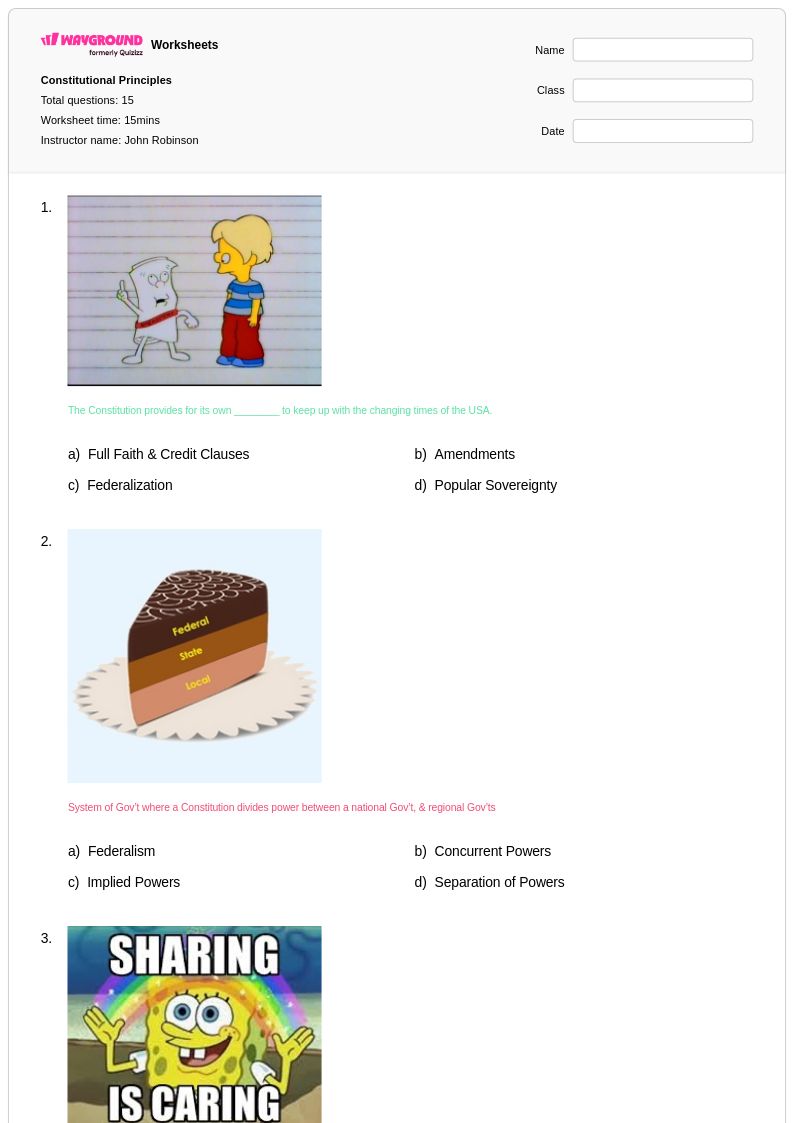
Constitutional Principles worksheets for Year 11 students available through Wayground (formerly Quizizz) provide comprehensive coverage of the foundational concepts that underpin American government and democracy. These expertly designed resources help students master critical constitutional concepts including separation of powers, checks and balances, federalism, individual rights, popular sovereignty, and judicial review. The worksheets strengthen analytical thinking skills as students examine how these principles operate in real-world scenarios, interpret constitutional text, and evaluate the ongoing tension between governmental authority and individual liberty. Each worksheet collection includes detailed answer keys and practice problems that guide students through complex constitutional analysis, while the free printable pdf format ensures accessibility for all learning environments.
Wayground (formerly Quizizz) empowers educators with millions of teacher-created Constitutional Principles resources specifically aligned with Year 11 social studies standards and curriculum requirements. The platform's robust search and filtering capabilities allow teachers to quickly locate worksheets targeting specific constitutional concepts, from foundational principles to contemporary constitutional debates. Advanced differentiation tools enable educators to customize content difficulty and modify practice problems to meet diverse student needs, supporting both remediation for struggling learners and enrichment for advanced students. Available in both digital and printable pdf formats, these comprehensive worksheet collections streamline lesson planning while providing flexible options for in-class activities, homework assignments, test preparation, and skill-building practice that deepens students' understanding of constitutional governance.
FAQs
How do I teach constitutional principles to my students?
Teaching constitutional principles effectively means grounding abstract concepts like federalism, separation of powers, and checks and balances in real-world examples students can recognize. Start with concrete scenarios — such as how a presidential veto illustrates checks and balances — before moving to textual analysis of constitutional language. Pairing direct instruction with structured practice that asks students to apply each principle to modern governmental situations helps build durable civic understanding.
What exercises help students practice constitutional principles?
Effective practice for constitutional principles includes analyzing real-world governmental scenarios and identifying which principle applies, interpreting excerpts from constitutional text, and evaluating how principles like popular sovereignty or limited government operate within current political structures. Worksheets that require students to explain their reasoning — rather than simply select an answer — build the analytical thinking skills central to civics education. Practice problems that span multiple principles in a single scenario are especially useful for reinforcing how these concepts interact.
What mistakes do students commonly make when learning about constitutional principles?
One of the most common misconceptions is conflating separation of powers with checks and balances — students often treat them as the same concept rather than understanding that separation of powers divides authority among branches while checks and balances governs how those branches limit one another. Students also frequently confuse federalism with limited government, or struggle to distinguish popular sovereignty as a philosophical foundation from its practical expression through elections and representative government. Targeted practice that asks students to differentiate these principles by definition and application helps address these gaps directly.
How can I use constitutional principles worksheets in my classroom?
Constitutional principles worksheets on Wayground are available as printable PDFs for traditional classroom use and in digital formats for technology-integrated environments, making them adaptable for in-class instruction, homework, remediation sessions, or enrichment activities. Teachers can also host worksheets as a quiz directly on Wayground, giving students an interactive experience while generating immediate performance data. Each worksheet includes a complete answer key, so teachers can use them for independent practice, guided review, or formative assessment without additional preparation.
How do I differentiate constitutional principles instruction for students with varying needs?
Differentiation for constitutional principles can involve scaffolding the complexity of scenarios students analyze — beginning with straightforward examples of a single principle before introducing cases where multiple principles interact. On Wayground, teachers can apply individual accommodations such as read aloud support, reduced answer choices, and extended time to specific students, allowing the same worksheet to serve the whole class while meeting diverse learning needs. These settings are saved per student and reusable across sessions, reducing setup time for recurring accommodations.
What constitutional principles are typically covered in civics worksheets?
Core constitutional principles covered in civics worksheets include federalism, separation of powers, checks and balances, limited government, popular sovereignty, and individual rights. These six principles form the conceptual framework of American constitutional government and are assessed across middle and high school civics and government courses. Strong worksheet coverage addresses both the definition of each principle and its application within real governmental structures, including how the principles constrain or distribute power in practice.