

11 Q
6th - Uni
20 Q
5th - Uni

20 Q
5th - Uni

15 Q
5th - Uni

20 Q
4th - Uni

20 Q
5th - Uni

8 Q
6th

22 Q
6th

11 Q
6th - Uni

10 Q
6th - Uni

10 Q
5th - Uni

20 Q
5th - Uni
15 Q
6th

15 Q
5th - 6th
12 Q
6th - 8th

15 Q
5th - Uni
16 Q
6th
20 Q
6th
20 Q
6th - Uni
20 Q
6th - Uni
20 Q
6th
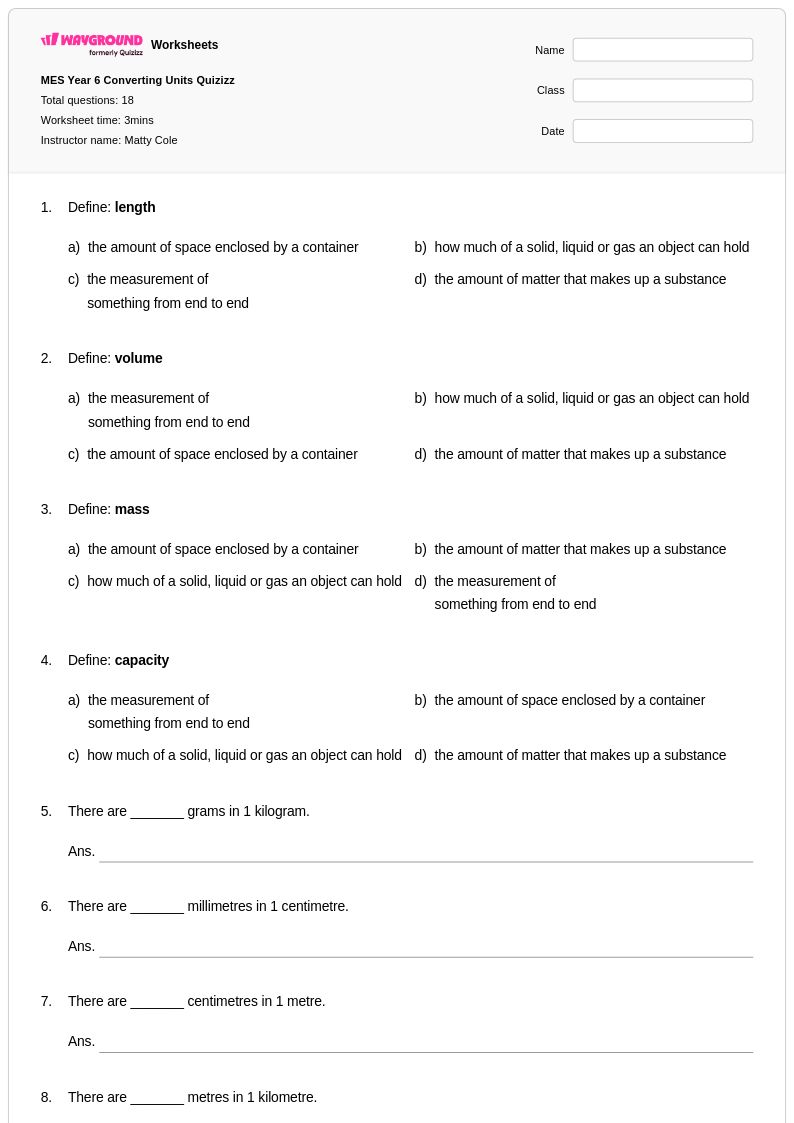
18 Q
6th

15 Q
5th - Uni
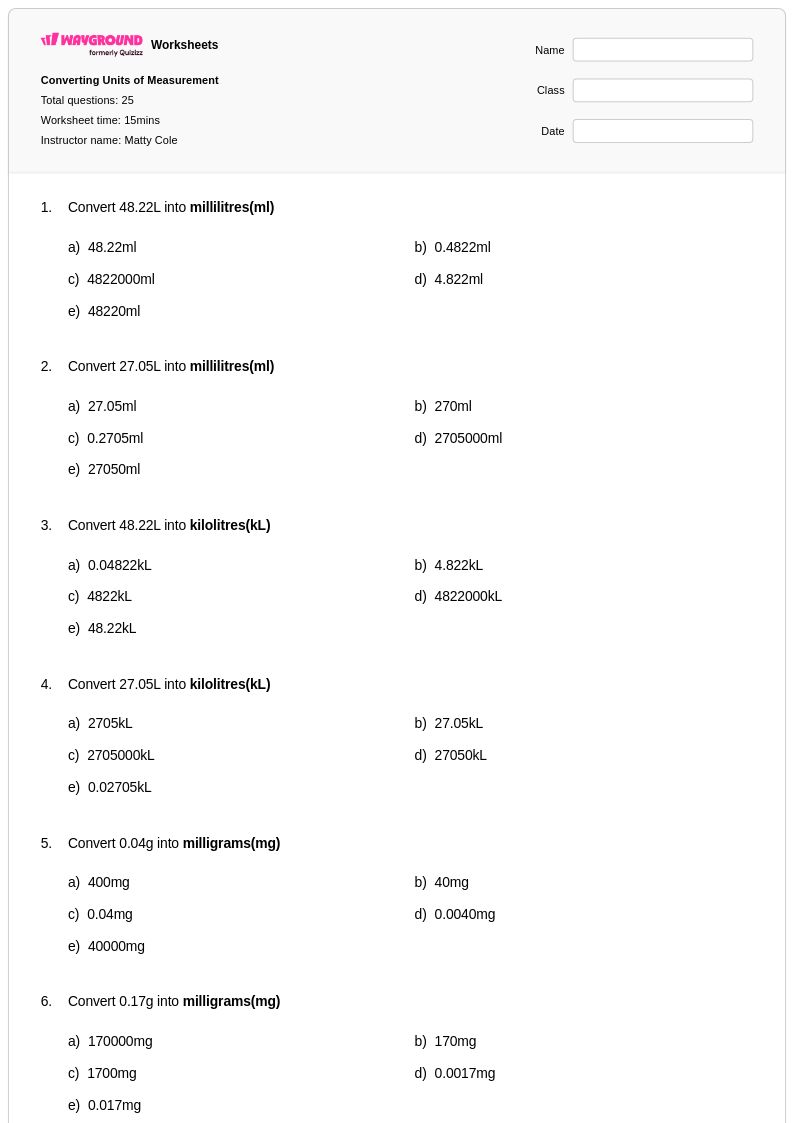
25 Q
4th - 9th
Explore Converting Units Worksheets by Grades
Explore Other Subject Worksheets for year 6
Explore printable Converting Units worksheets for Year 6
Converting units represents a fundamental mathematical skill that Year 6 students must master to succeed in advanced measurement concepts and real-world problem solving. Wayground's comprehensive collection of converting units worksheets provides students with systematic practice in transforming measurements between different scales within the metric and customary systems, including length, weight, volume, and time conversions. These carefully structured worksheets strengthen students' understanding of proportional relationships, decimal operations, and mathematical reasoning while building confidence with conversion factors and unit analysis methods. Each worksheet includes detailed answer keys and step-by-step solutions, making them valuable resources for independent practice, homework assignments, and assessment preparation, with free printable pdf formats ensuring easy access for classroom and home use.
Wayground's extensive library of teacher-created converting units resources supports educators with millions of high-quality practice problems and assessment materials specifically designed for Year 6 measurement instruction. The platform's advanced search and filtering capabilities allow teachers to quickly locate worksheets that align with specific curriculum standards and learning objectives, while differentiation tools enable customization based on individual student needs and skill levels. These versatile resources are available in both printable and digital formats, including downloadable pdf files that facilitate seamless integration into lesson plans, intervention programs, and enrichment activities. Teachers can efficiently address diverse learning styles and academic levels through targeted skill practice, systematic remediation of common conversion errors, and progressive enhancement of mathematical fluency in unit transformation concepts.
FAQs
How should I teach unit conversions in sixth-grade math?
What exercises build fluency with Grade 6 unit conversions?
What are common errors in sixth-grade unit conversion?
Can Grade 6 converting units worksheets be used online and on paper?
How does converting units connect to the Common Core Grade 6 curriculum?
How can I scaffold dimensional analysis for struggling sixth graders?
What level of unit conversion is expected in Grade 6?