Free Printable Costs and Benefits Worksheets for Year 7
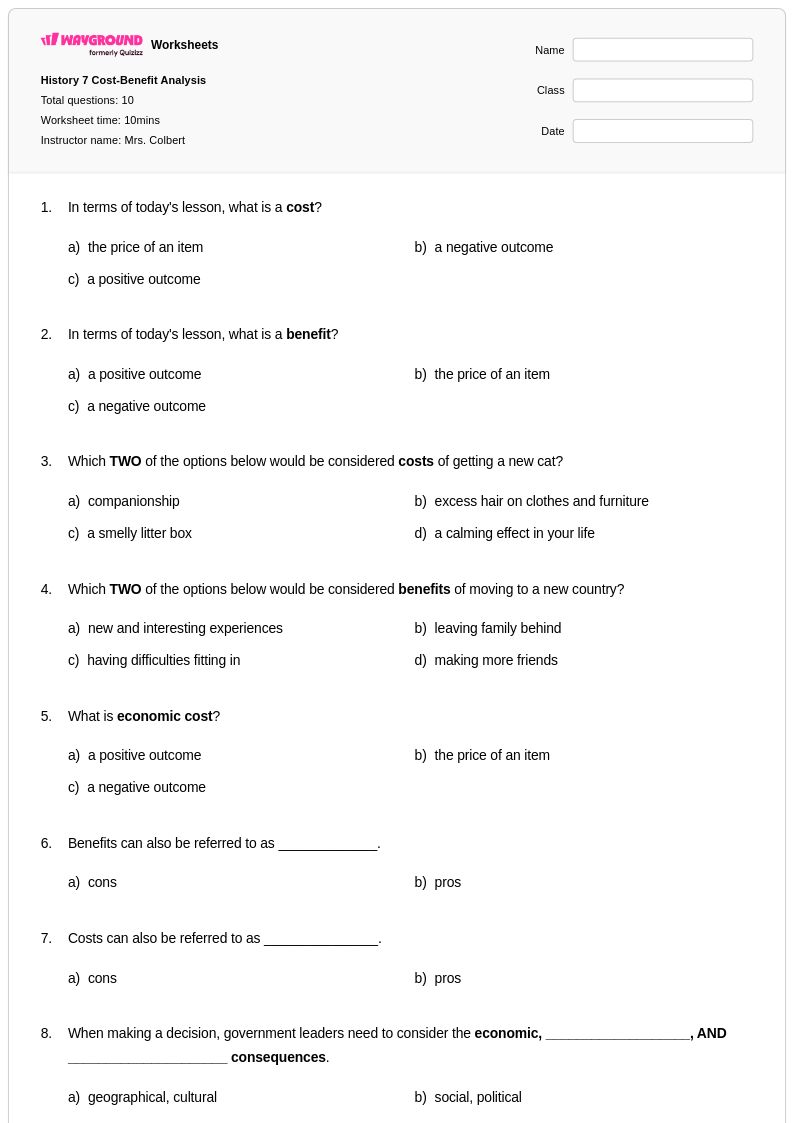
Year 7 students can explore costs and benefits through our free economics worksheets and printables, featuring comprehensive practice problems and answer keys to develop critical decision-making skills.
Explore printable Costs and Benefits worksheets for Year 7
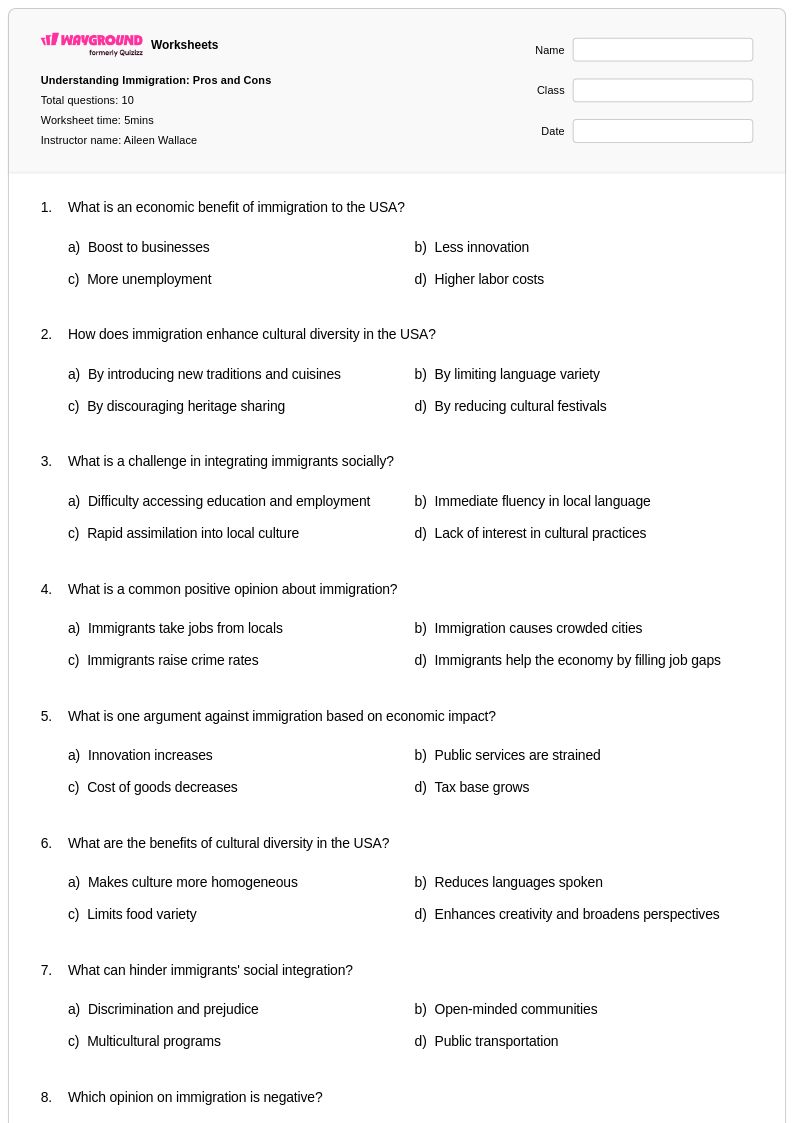
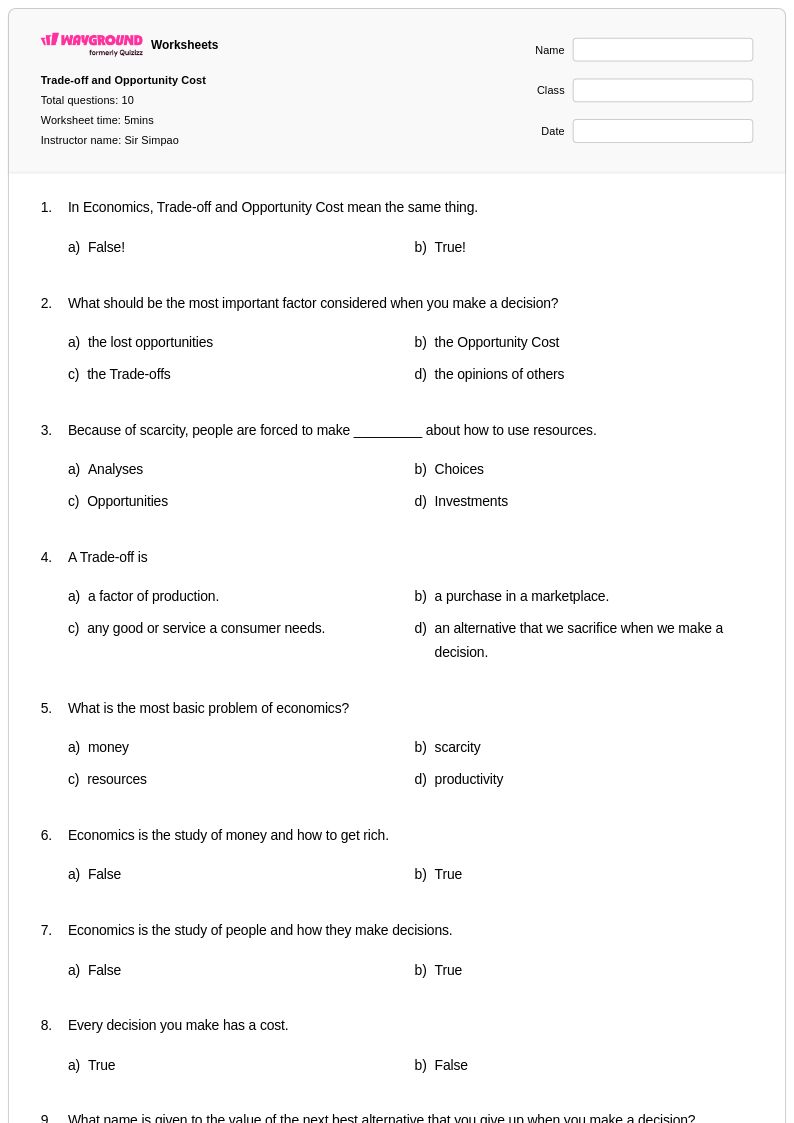
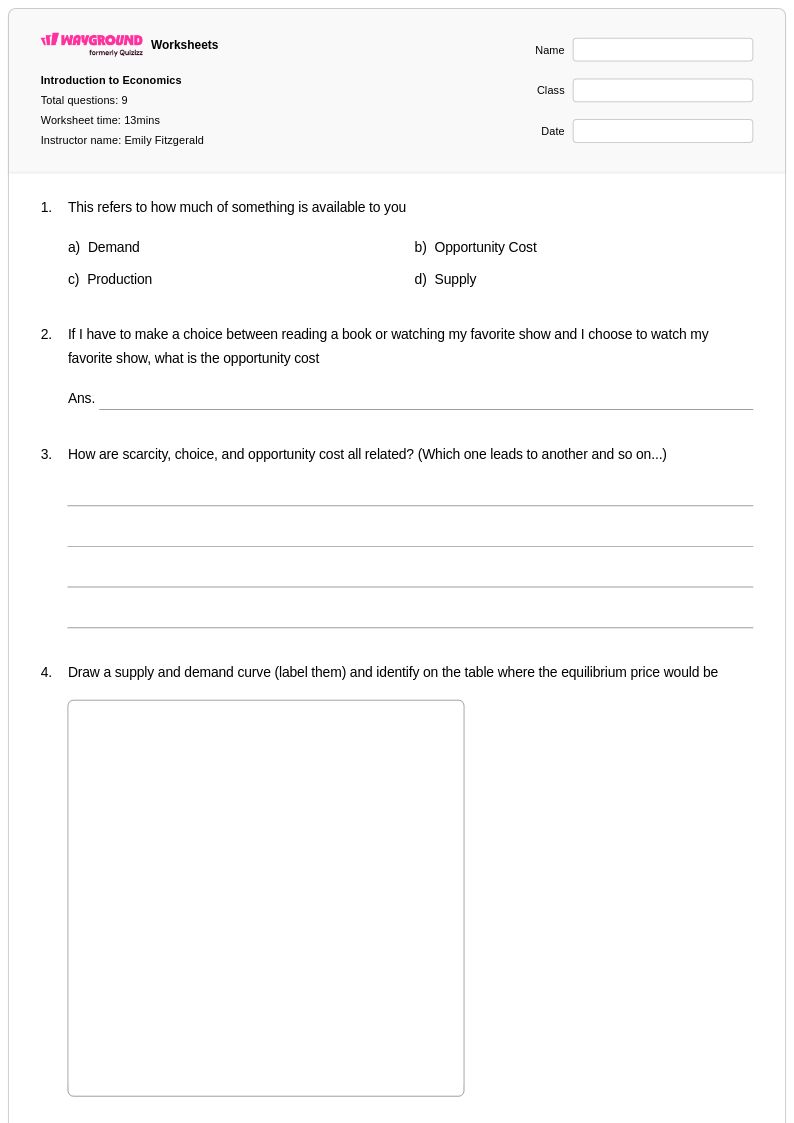
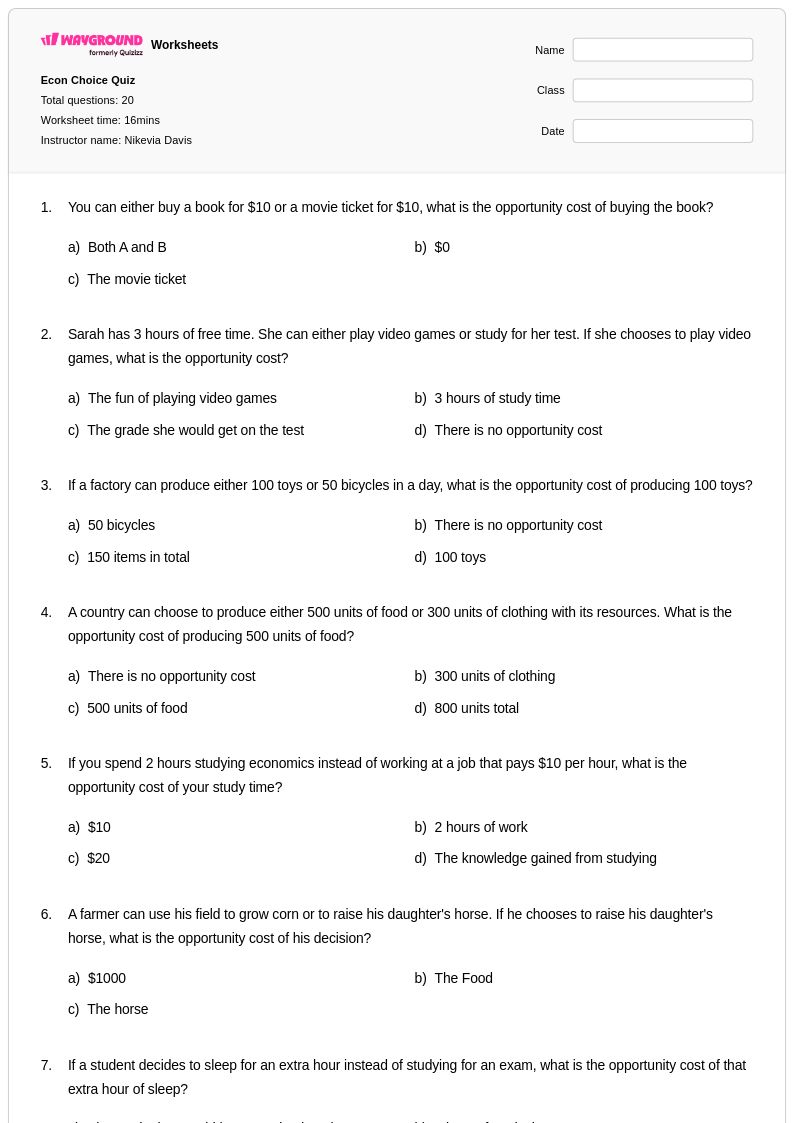
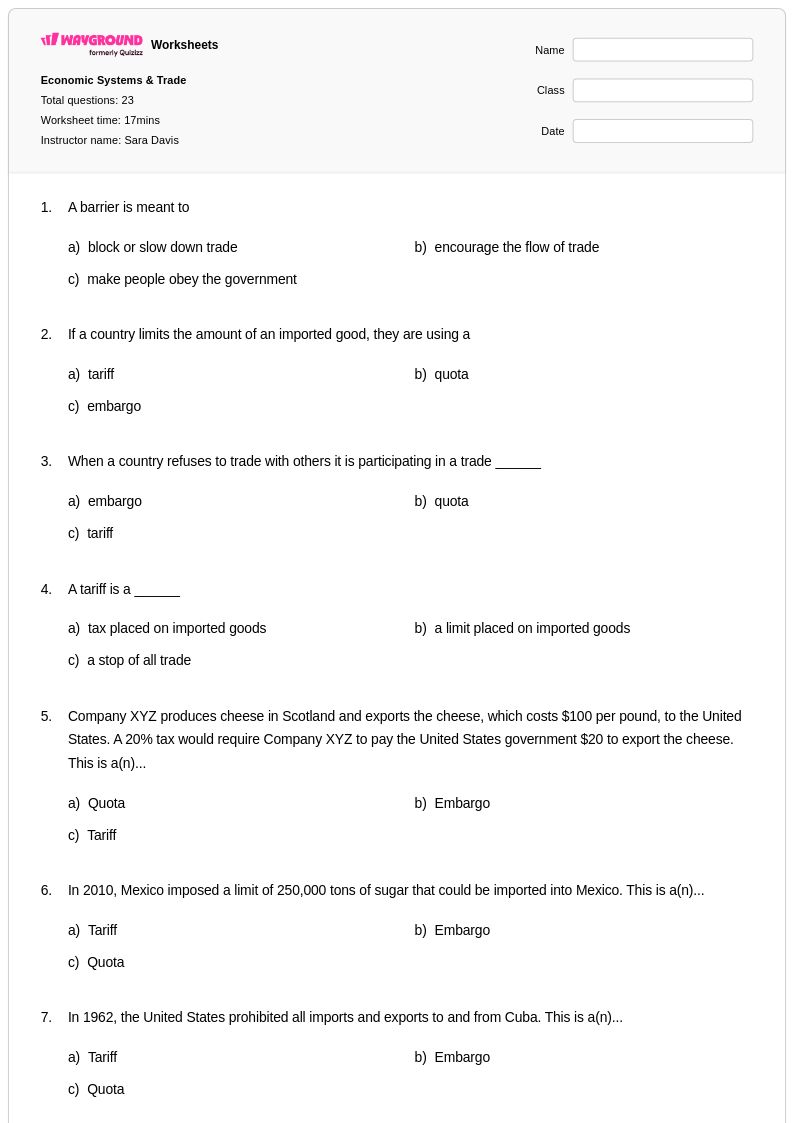
Costs and benefits analysis forms a fundamental cornerstone of economic decision-making that Year 7 students must master to develop critical thinking skills about resource allocation and trade-offs. Wayground's comprehensive collection of costs and benefits worksheets provides middle school educators with expertly crafted materials that guide students through systematic evaluation of economic choices, from personal spending decisions to community resource management. These practice problems challenge students to identify opportunity costs, weigh monetary and non-monetary factors, and apply cost-benefit frameworks to real-world scenarios including business investments, environmental policies, and consumer purchases. Each worksheet includes detailed answer keys that enable teachers to provide immediate feedback while helping students understand the reasoning behind optimal economic decisions, and the free printable pdf format ensures accessibility for diverse classroom environments and homework assignments.
Wayground's extensive library draws from millions of teacher-created resources specifically designed to support comprehensive costs and benefits instruction at the Year 7 level, with advanced search and filtering capabilities that allow educators to quickly locate materials aligned with state economics standards and curriculum objectives. The platform's differentiation tools enable teachers to customize worksheet difficulty levels, modify problem complexity, and adapt scenarios to match diverse student backgrounds and learning needs, making it ideal for remediation with struggling learners and enrichment for advanced students. Available in both digital and printable formats, these resources streamline lesson planning by providing ready-to-use materials for skill practice, formative assessment, and reinforcement of economic reasoning concepts. Teachers can seamlessly integrate these worksheets into unit planning, use them for targeted intervention with students who struggle with abstract economic concepts, or deploy them as independent practice to solidify understanding of how individuals, businesses, and governments evaluate competing alternatives through systematic costs and benefits analysis.
FAQs
How do I teach costs and benefits analysis to students?
Start by grounding costs and benefits analysis in decisions students already make, such as choosing how to spend free time or money, before scaling to business and policy contexts. Introduce the concept of opportunity cost early so students understand that every choice involves a trade-off with the next best alternative. From there, use structured scenarios that require students to list both quantitative factors, like dollar amounts, and qualitative factors, like personal values or community impact, before reaching a conclusion. This scaffolded approach builds the analytical framework students need for more complex economic reasoning.
What exercises help students practice costs and benefits analysis?
Scenario-based practice is the most effective format for costs and benefits analysis because it forces students to apply the framework rather than just recall definitions. Effective exercises include decision matrices where students list pros and cons with weighted values, short-answer problems that ask students to identify the opportunity cost of a given choice, and multi-step problems that move from personal spending decisions to business investment scenarios. Costs and benefits worksheets that progress in complexity help students build confidence with the concept before tackling real-world economic cases.
What mistakes do students commonly make when analyzing costs and benefits?
The most common error is focusing exclusively on financial costs while ignoring qualitative factors such as time, risk, environmental impact, or social consequences. Students also frequently confuse sunk costs with relevant costs, factoring in money already spent when it should not influence a forward-looking decision. Another persistent misconception is treating costs and benefits as equally weighted by default, rather than recognizing that different stakeholders assign different values to the same outcomes. Targeted practice problems that explicitly surface these errors help students recognize and correct flawed reasoning patterns.
How do I differentiate costs and benefits instruction for students at different skill levels?
For students newer to the concept, use familiar personal scenarios, limit the number of variables to weigh, and provide structured graphic organizers that guide them through each step of the analysis. Advanced students benefit from open-ended problems involving complex trade-offs, such as public policy decisions or multi-stakeholder business cases, where there is no single correct answer. On Wayground, teachers can apply accommodations such as reduced answer choices or read aloud support to individual students while the rest of the class works with standard settings, making differentiation manageable without separate lesson plans.
How do I use Wayground's costs and benefits worksheets in my classroom?
Wayground's costs and benefits worksheets are available as printable PDFs for traditional classroom use and in digital formats for technology-integrated or remote learning environments. Teachers can also host worksheets as a quiz directly on Wayground, enabling real-time student responses and instant scoring. The platform's search and filtering tools make it straightforward to find materials aligned to specific curriculum standards or difficulty levels, and all worksheets include comprehensive answer keys so teachers can use them for independent practice, guided instruction, or assessment with minimal preparation time.
How do I help students understand opportunity cost as part of costs and benefits analysis?
Opportunity cost is best introduced through concrete, relatable examples before moving to abstract economic contexts. Ask students to identify the single next-best alternative they give up when making a choice, emphasizing that opportunity cost is not the sum of all foregone options but only the most valued one. A common classroom technique is the 'what else could you do with that?' prompt applied to spending or time-use scenarios, which makes the concept tangible. Once students can identify opportunity cost reliably in simple cases, they are ready to incorporate it into broader costs and benefits analyses involving business or policy decisions.