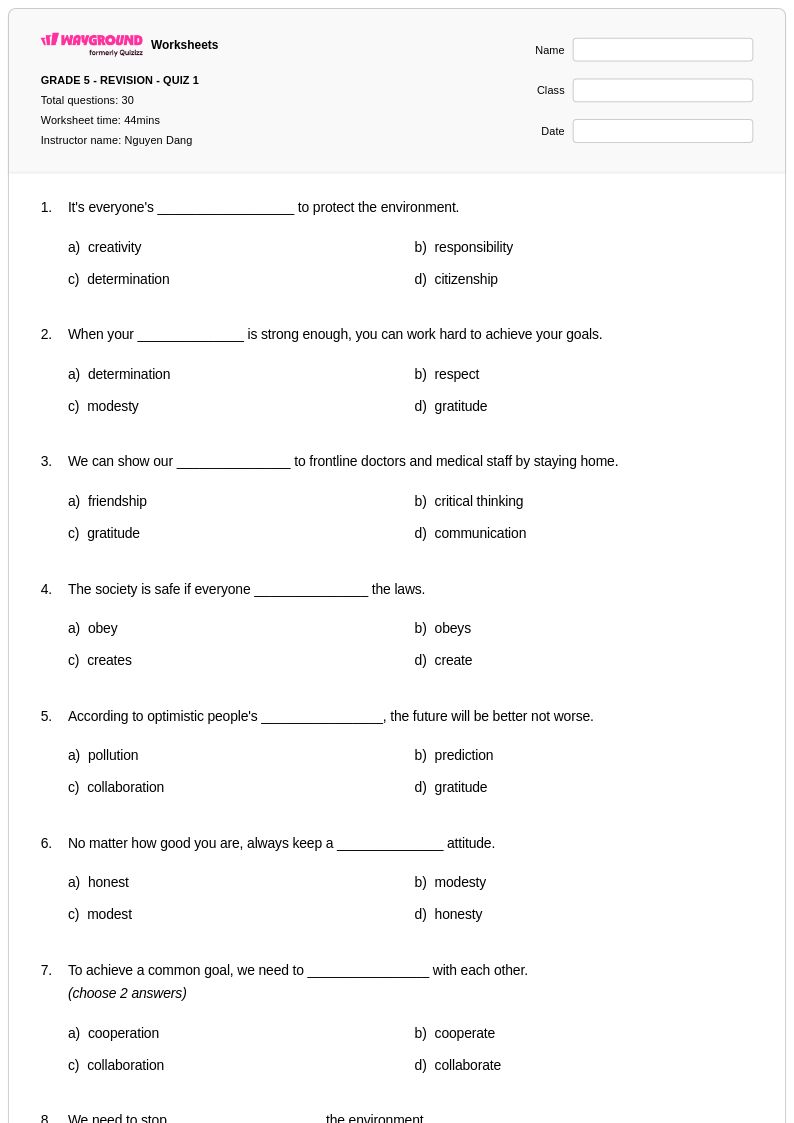
Free Printable Critical Thinking Worksheets for Year 5
Year 5 critical thinking worksheets from Wayground help students develop analytical skills through engaging printables and practice problems, complete with answer keys and free PDF downloads.
Explore printable Critical Thinking worksheets for Year 5
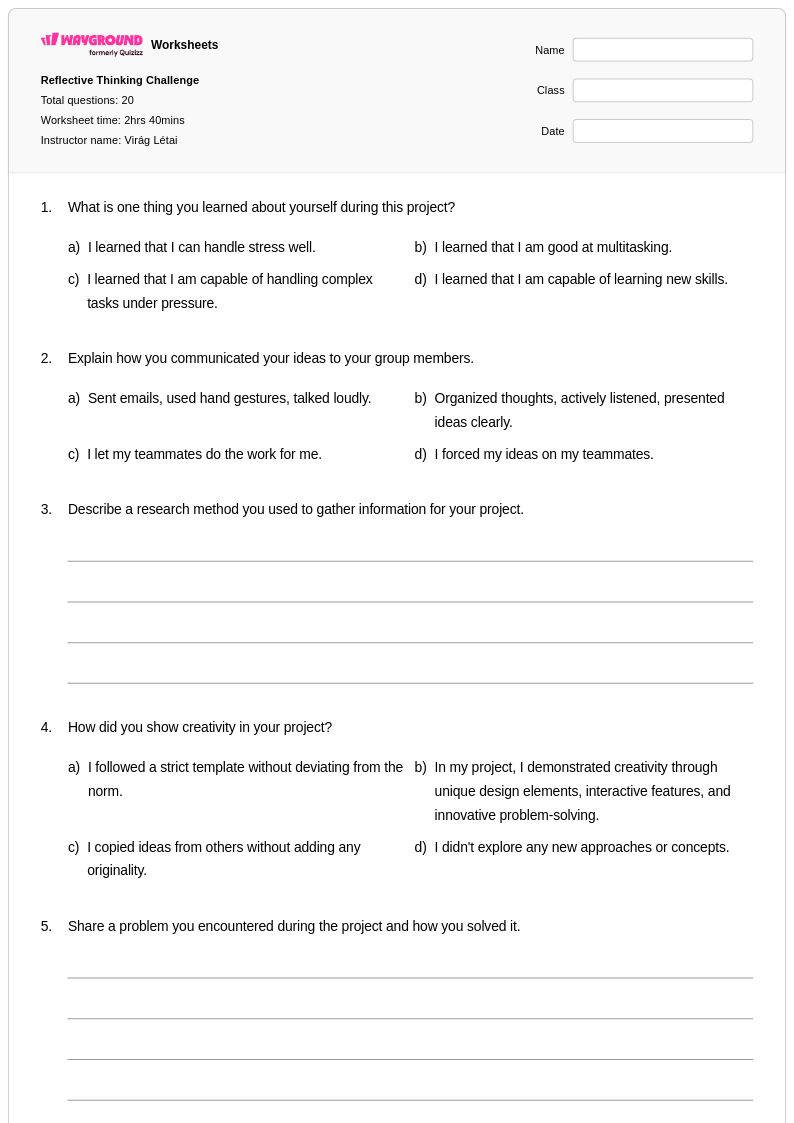
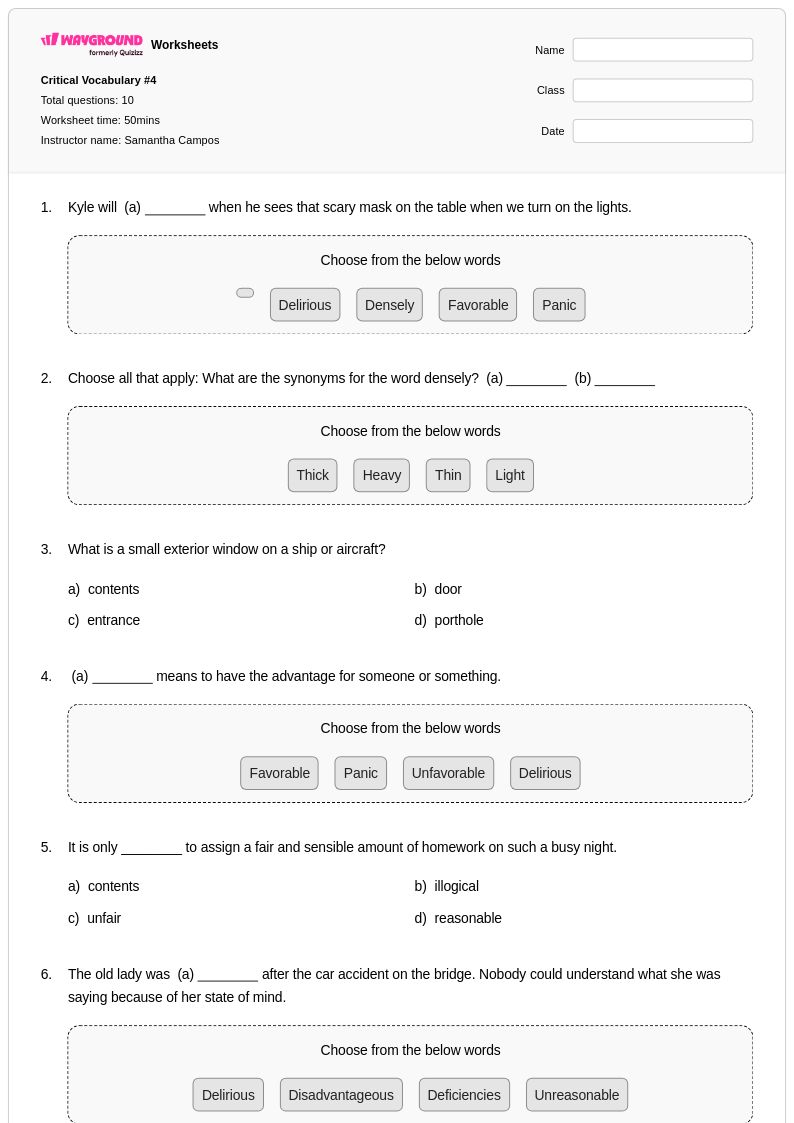
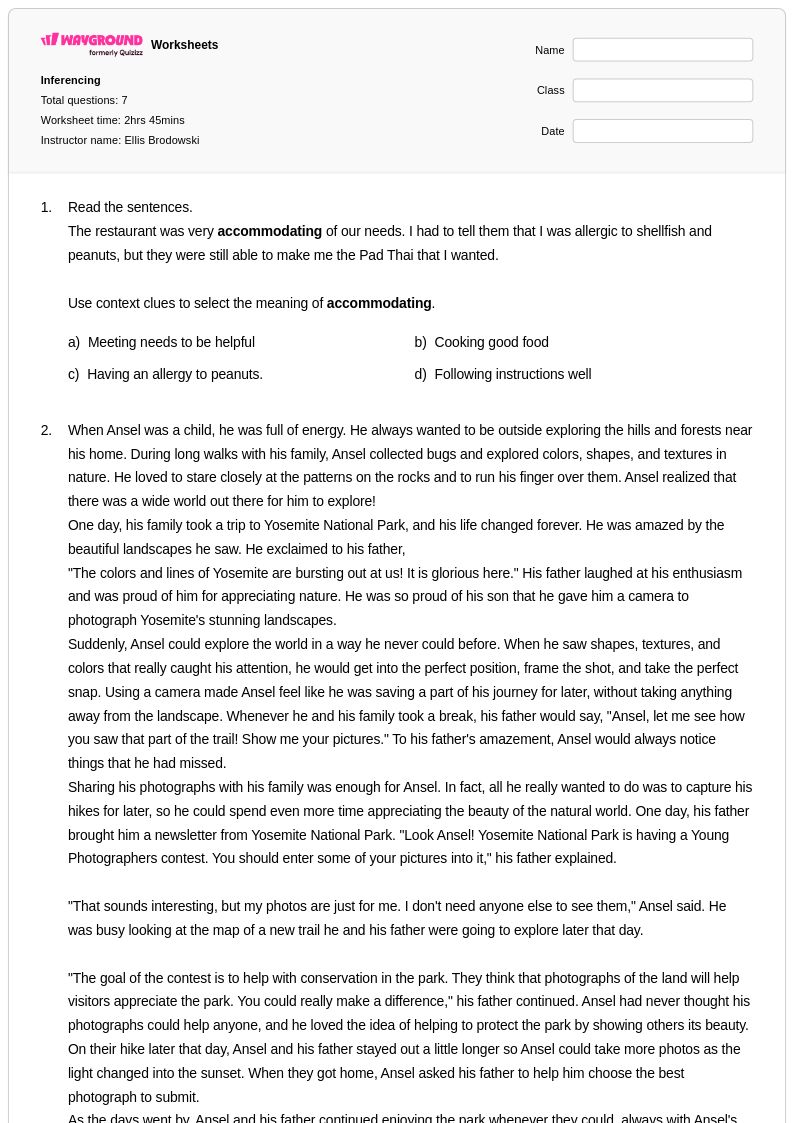
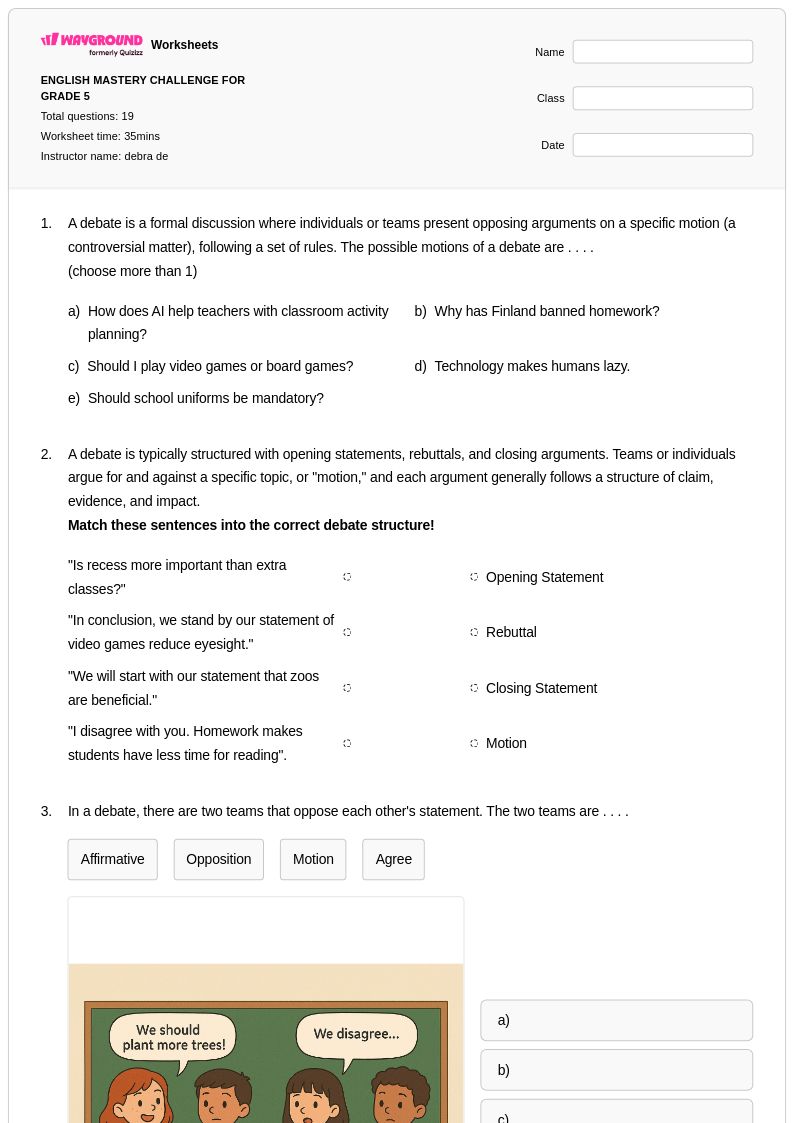
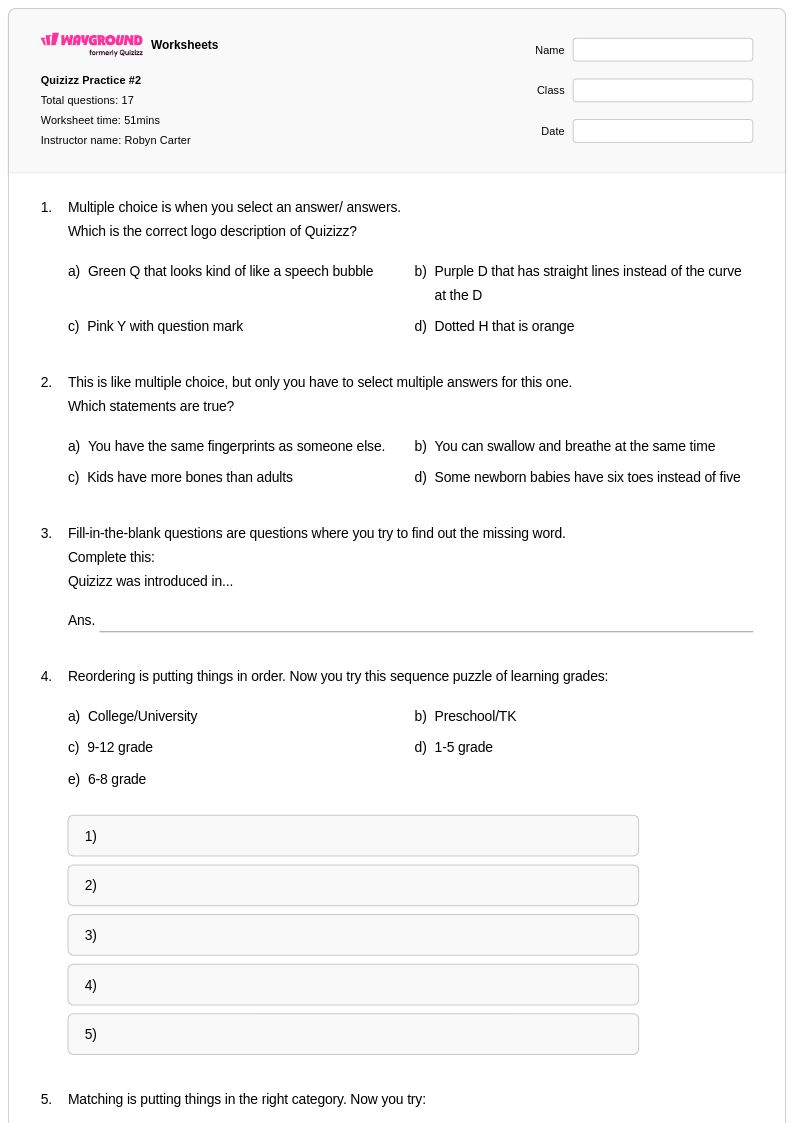
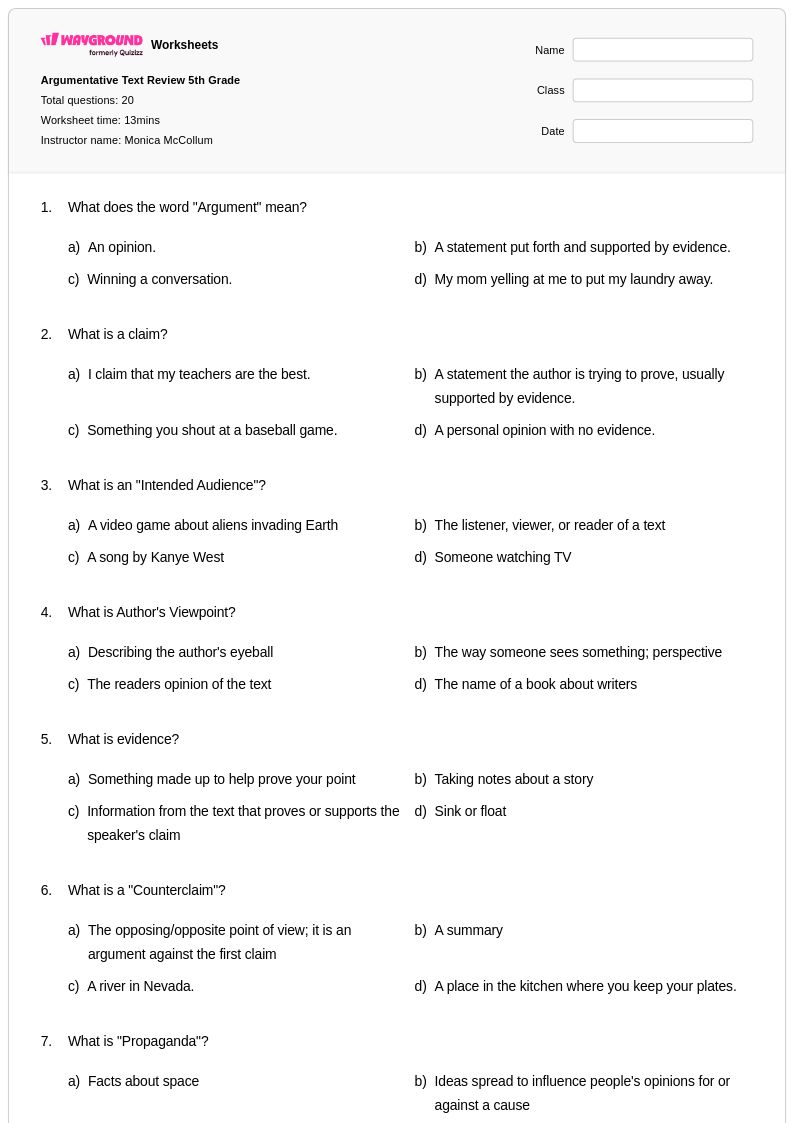
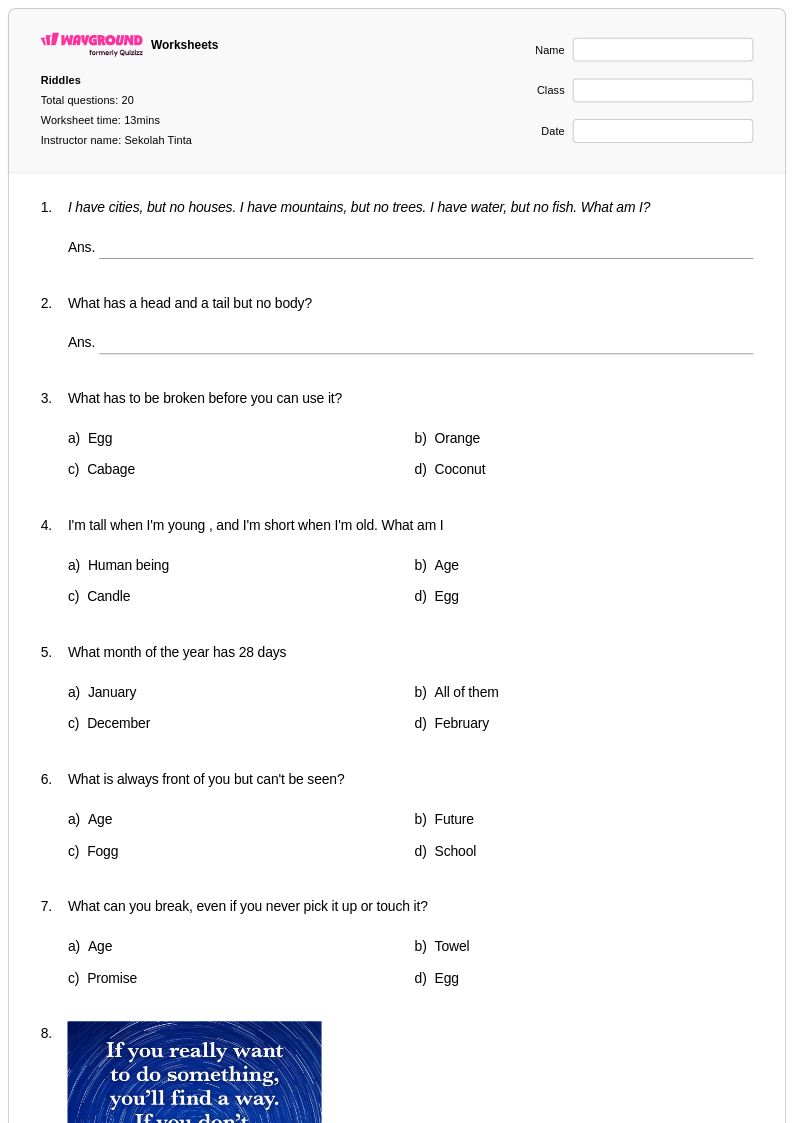
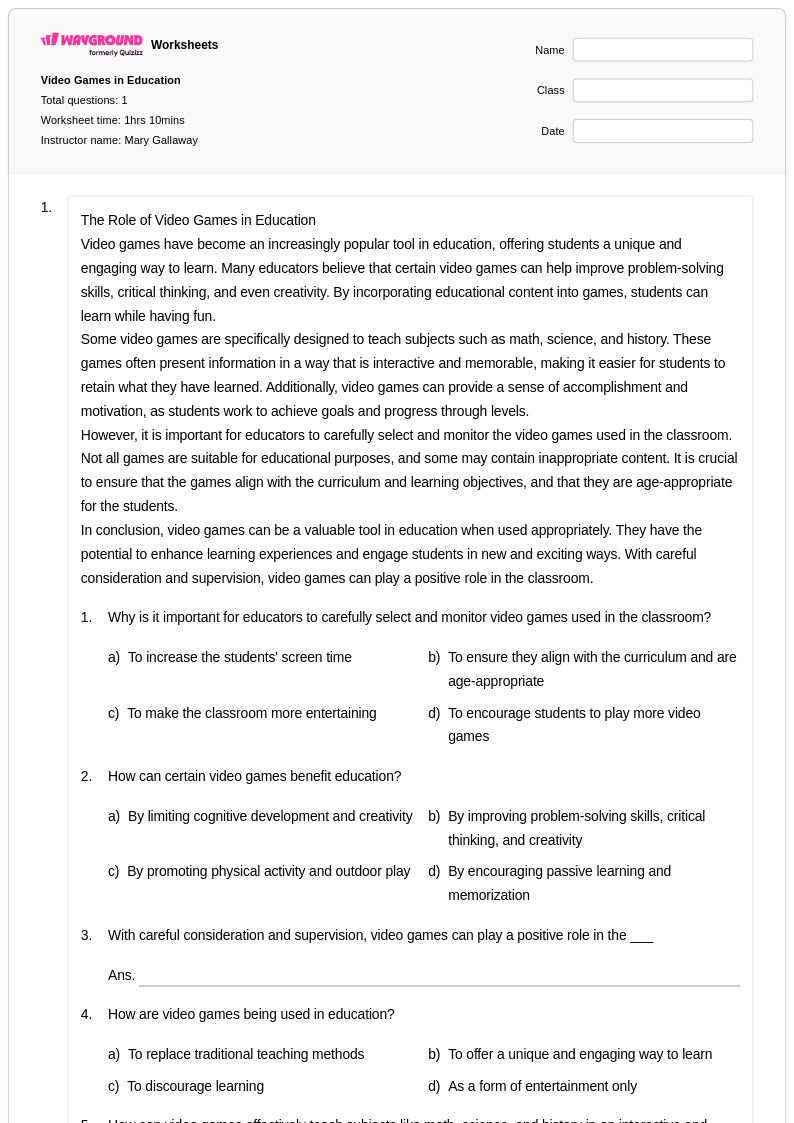
Critical thinking worksheets for Year 5 students available through Wayground (formerly Quizizz) provide comprehensive practice opportunities that develop essential analytical and reasoning skills within English Language Arts contexts. These carefully designed resources challenge fifth-grade learners to examine texts more deeply, make logical connections, evaluate evidence, and draw well-supported conclusions from their reading materials. The worksheets systematically strengthen students' abilities to identify cause and effect relationships, distinguish between fact and opinion, analyze character motivations, and synthesize information from multiple sources. Each printable resource includes detailed answer keys that support both independent practice and guided instruction, while the free pdf format ensures accessibility for classroom use, homework assignments, and targeted skill remediation.
Wayground's extensive collection draws from millions of teacher-created resources specifically focused on developing critical thinking abilities in Year 5 English Language Arts instruction. The platform's robust search and filtering capabilities allow educators to quickly locate worksheets aligned with specific learning standards and differentiate instruction based on individual student needs. Teachers can customize these digital and printable materials to match their curriculum pacing, modify difficulty levels for diverse learners, and seamlessly integrate critical thinking practice into daily lesson plans. Whether used for whole-class instruction, small group activities, or independent enrichment, these versatile pdf resources support comprehensive skill development while providing the flexibility educators need for effective remediation and advanced practice opportunities that strengthen students' analytical reasoning abilities across various text types and literary genres.
FAQs
How do I teach critical thinking skills in the classroom?
Teaching critical thinking requires moving students beyond recall and toward analysis, evaluation, and synthesis. Effective strategies include Socratic questioning, structured debate, and frameworks like Six Thinking Hats, which assign students distinct reasoning roles to examine a topic from multiple perspectives. Dialectical thinking exercises, where students construct and then challenge their own arguments, build the habit of intellectual self-correction. Consistency matters more than any single lesson — embedding critical thinking into regular practice across subjects is what builds lasting skill.
What kinds of exercises help students practice critical thinking?
Practice exercises that require students to evaluate evidence, identify logical fallacies, and construct reasoned arguments are among the most effective for developing critical thinking. Dialectical thinking tasks — where students examine opposing viewpoints and synthesize a position — push beyond surface comprehension into genuine analysis. Six Thinking Hats activities work well for group practice because each hat (e.g., facts, emotions, caution, creativity) isolates a specific mode of reasoning, making abstract thinking processes visible and structured.
What are the most common mistakes students make when developing critical thinking skills?
One of the most frequent errors is conflating opinion with evidence — students often assert claims without supporting them with logical reasoning or factual grounding. Another common pattern is binary thinking, where students see only two sides to an issue and struggle to hold complexity. In dialectical thinking tasks, students often fail to genuinely engage the opposing view, instead restating their original position. Identifying these patterns early allows teachers to target instruction before they become entrenched habits.
How can I use Six Thinking Hats worksheets effectively in class?
Six Thinking Hats worksheets are most effective when students are assigned specific hats rather than choosing freely, which prevents them from defaulting to their comfort zone. Each hat represents a distinct lens — factual, emotional, cautionary, optimistic, creative, and process-oriented — so structured rotation ensures students practice all six modes of reasoning. These worksheets work well as both individual written tasks and small-group discussion scaffolds, making them versatile across different classroom formats.
How do I use Wayground's critical thinking worksheets in my class?
Wayground's critical thinking worksheets are available as printable PDFs for traditional classroom use and in digital formats for technology-integrated environments, including the option to host them as a live quiz on Wayground. Each worksheet includes a detailed answer key, which helps teachers facilitate discussion around complex reasoning tasks rather than just checking for correct answers. For students who need additional support, Wayground's accommodation tools — including read aloud, extended time, and reduced answer choices — can be applied individually so every student can access the same rigorous content.
How do I differentiate critical thinking worksheets for students at different readiness levels?
Differentiation in critical thinking instruction often means adjusting the complexity of the reasoning task rather than simplifying the content itself. Teachers can scaffold by providing sentence frames for argument construction, worked examples of logical analysis, or partially completed graphic organizers for students who need more support. On Wayground, individual accommodations such as reduced answer choices, read aloud, and extended time can be assigned per student, allowing the same worksheet to serve a full range of learners without drawing attention to who is receiving support.

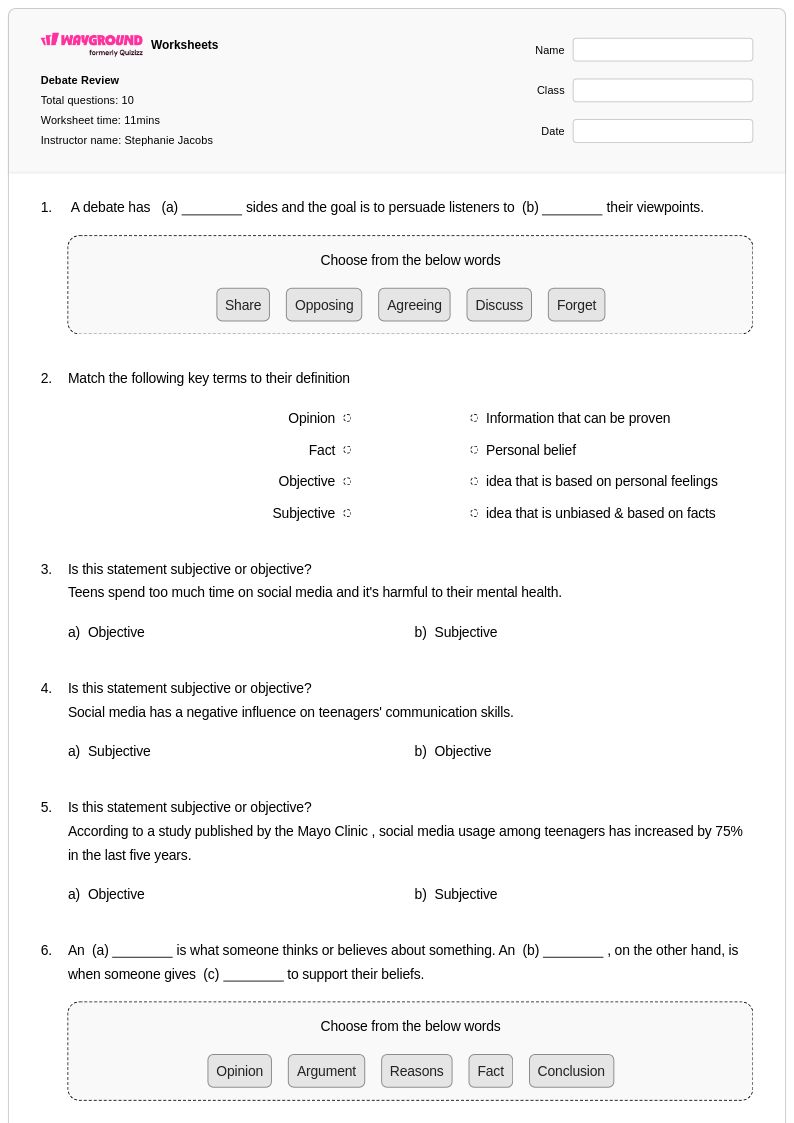
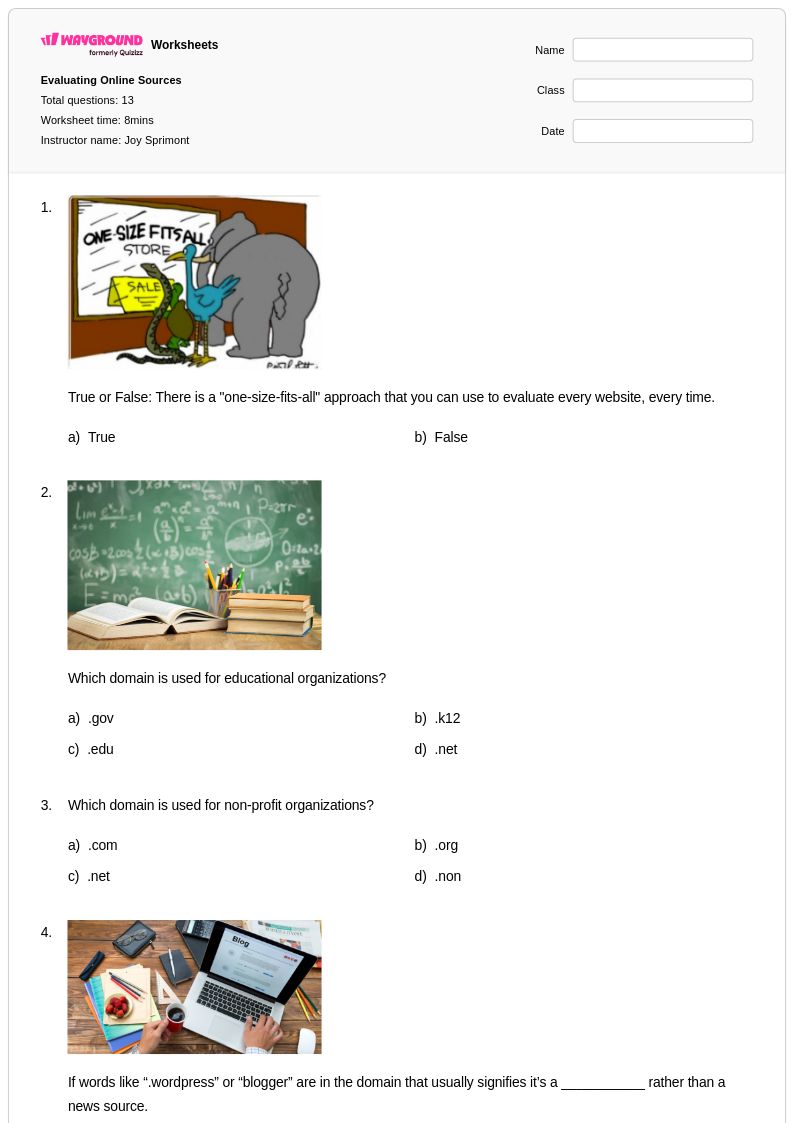
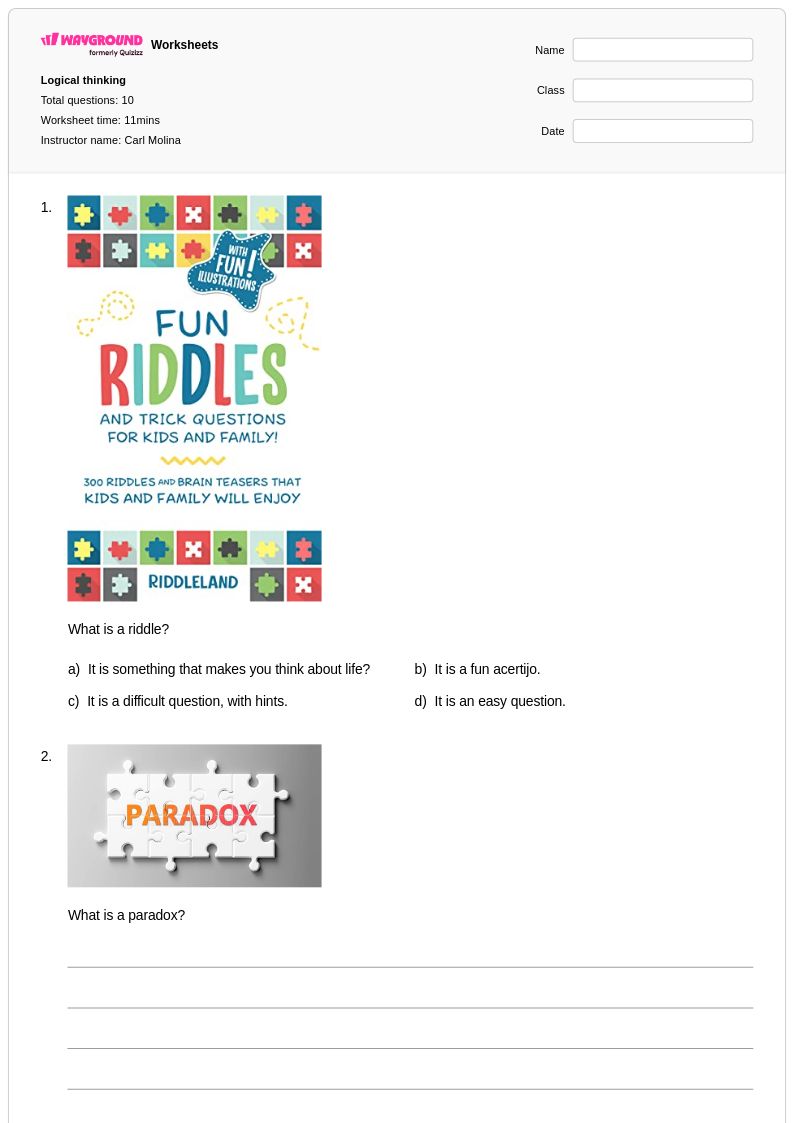
![[INTERMEDIATE] Class #001 - Social Bias Learning | February 29, - Printable Critical-thinking Worksheets Year 5 - Quizizz](https://quizizz-static.s3.amazonaws.com/_media/worksheets-new/65e0d89583f448739224be75-intermediate-class-001-social-bias-learning-february-29)
![[BASIC] Class #001 - Social Bias Learning | February 29, 2024 - Printable Critical-thinking Worksheets Year 5 - Quizizz](https://quizizz-static.s3.amazonaws.com/_media/worksheets-new/65de5d3dfda833325697e476-basic-class-001-social-bias-learning-february-29-2024)