
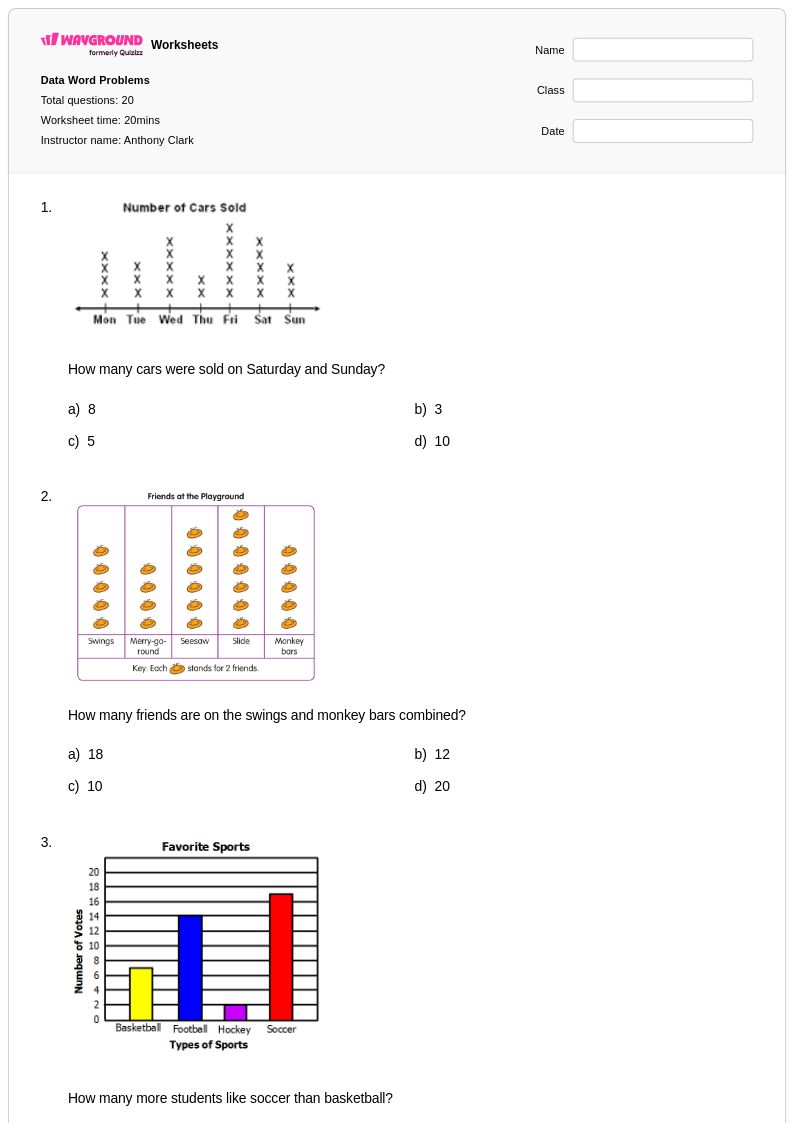
20 Q
3rd - Uni
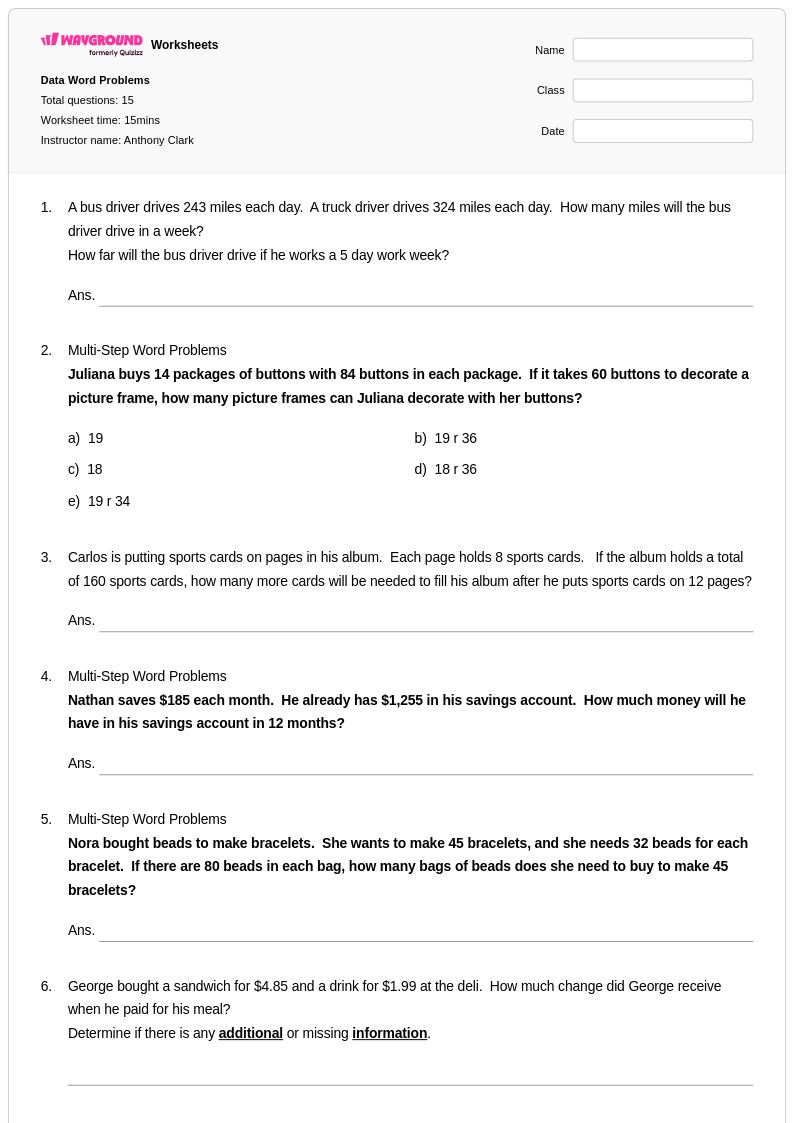
15 Q
3rd - Uni
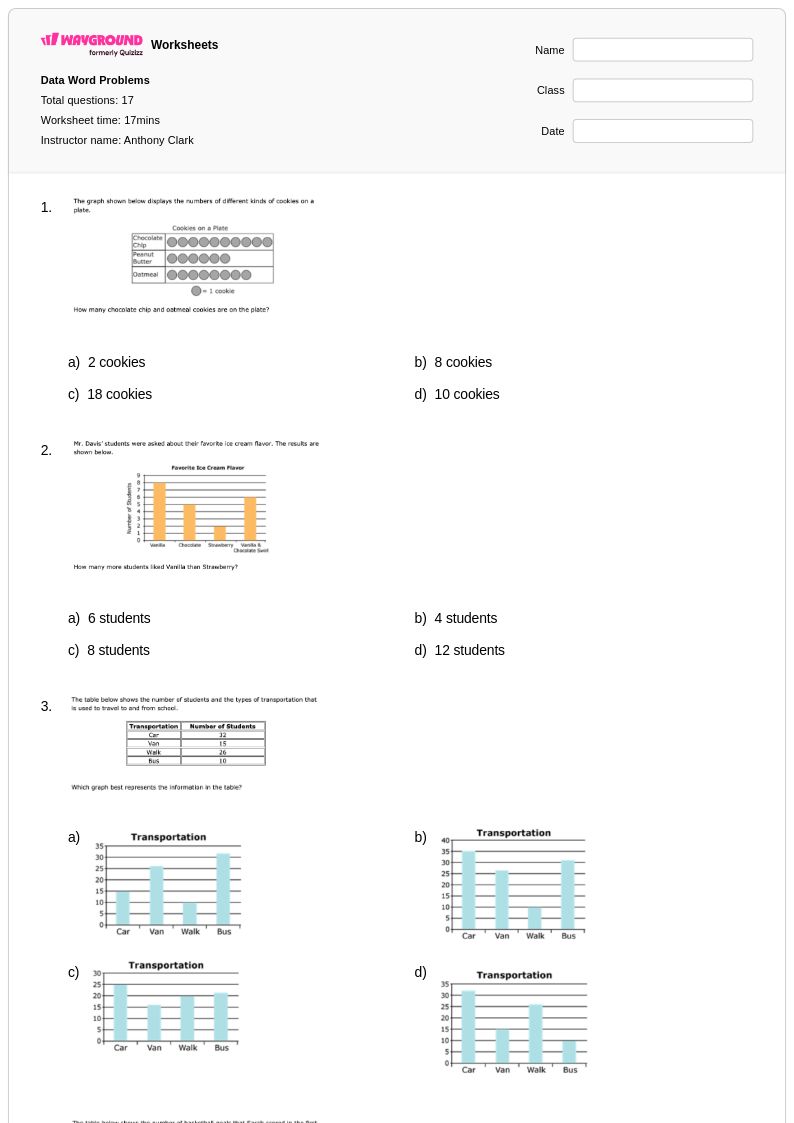
17 Q
3rd - Uni
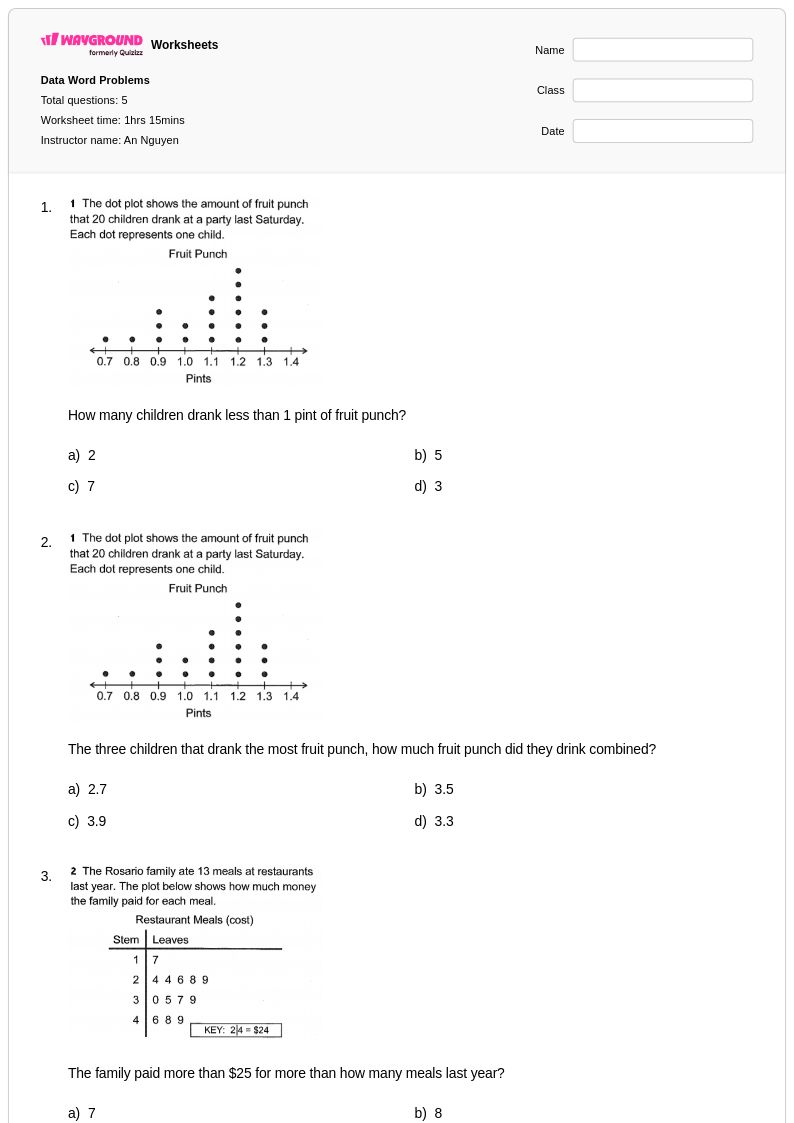
5 Q
4th
20 Q
3rd - Uni
17 Q
1st - PD
10 Q
3rd - 5th
15 Q
3rd - Uni
12 Q
1st - 5th
15 Q
4th
16 Q
4th
12 Q
4th
20 Q
4th - Uni
10 Q
4th
14 Q
4th
11 Q
4th
25 Q
4th
14 Q
4th
20 Q
3rd - Uni
10 Q
3rd - 4th
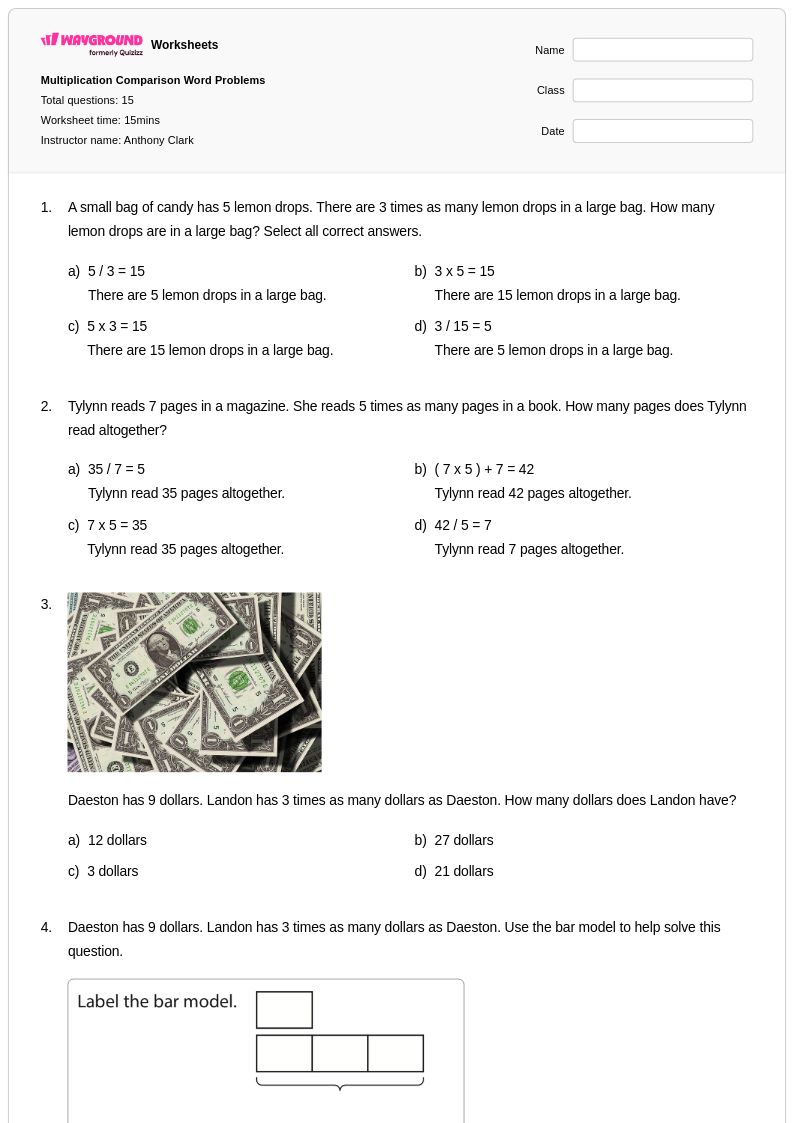
15 Q
4th - Uni
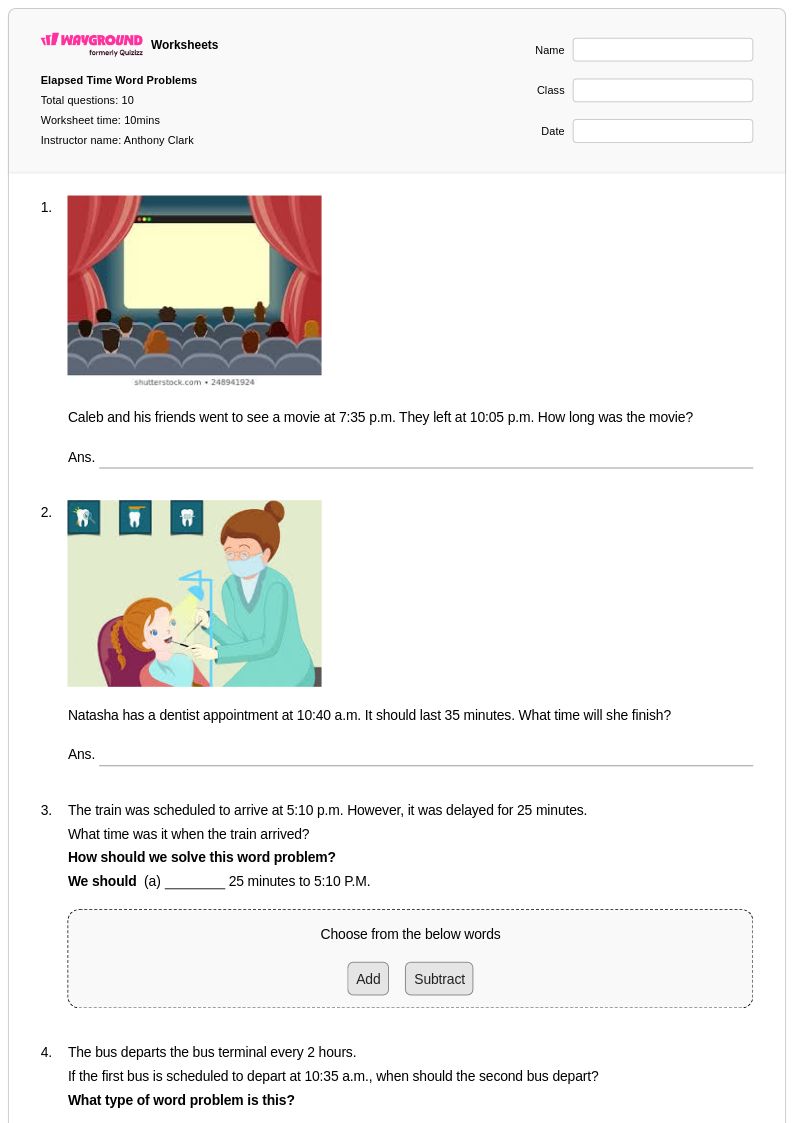
10 Q
4th - Uni
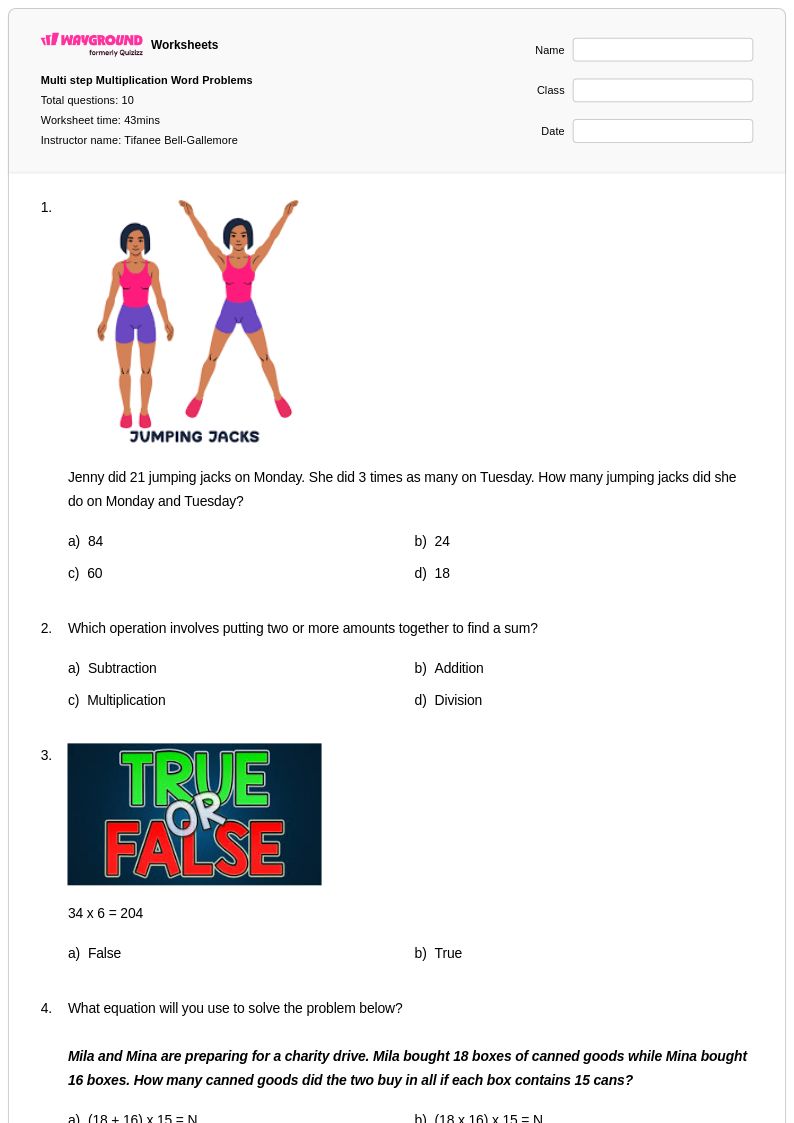
10 Q
4th
Explore Other Subject Worksheets for year 4
Explore printable Data Word Problems worksheets for Year 4
Data word problems for Year 4 students provide essential practice in interpreting graphs, charts, tables, and other visual representations while applying mathematical reasoning to real-world scenarios. These worksheets from Wayground (formerly Quizizz) strengthen critical thinking skills by challenging students to extract relevant information from data displays, perform calculations with the collected data, and draw meaningful conclusions from their analysis. Students work through practice problems that involve reading bar graphs, pictographs, line plots, and simple tables to answer questions about frequency, comparison, and trends. Each worksheet includes a comprehensive answer key to support independent learning and self-assessment, while the free printable format allows for flexible classroom and home use across various learning environments.
Wayground (formerly Quizizz) empowers teachers with an extensive collection of millions of teacher-created resources specifically designed for Year 4 data word problem instruction. The platform's robust search and filtering capabilities enable educators to quickly locate worksheets that align with specific curriculum standards and learning objectives, while differentiation tools allow for customization based on individual student needs and ability levels. Teachers can access these resources in both printable pdf format and digital versions, providing maximum flexibility for lesson planning, targeted remediation sessions, and enrichment activities. The comprehensive nature of these worksheet collections supports systematic skill practice, enabling educators to scaffold student learning through progressively challenging data interpretation scenarios that build confidence and mathematical proficiency.
FAQs
How do I teach data word problems to fourth graders?
What data word problem exercises are useful for Grade 4?
What mistakes do fourth graders commonly make with data word problems?
How can I use Grade 4 data word problem worksheets on Wayground?
How do Grade 4 data word problems fit the Common Core math curriculum?
How can I differentiate Grade 4 data word problem worksheets?
What grade level are these data word problem worksheets for?