
18 Q
5th - Uni
10 Q
7th - 8th
15 Q
6th - Uni
10 Q
8th
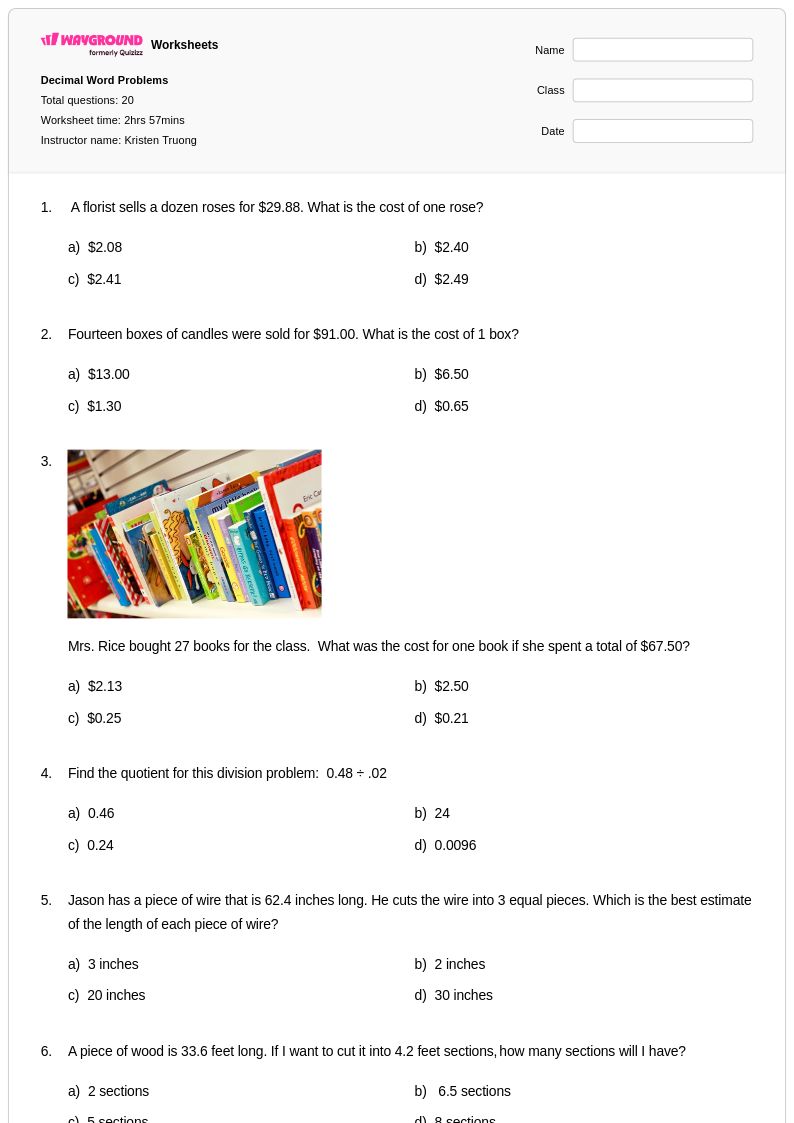
20 Q
6th - 8th
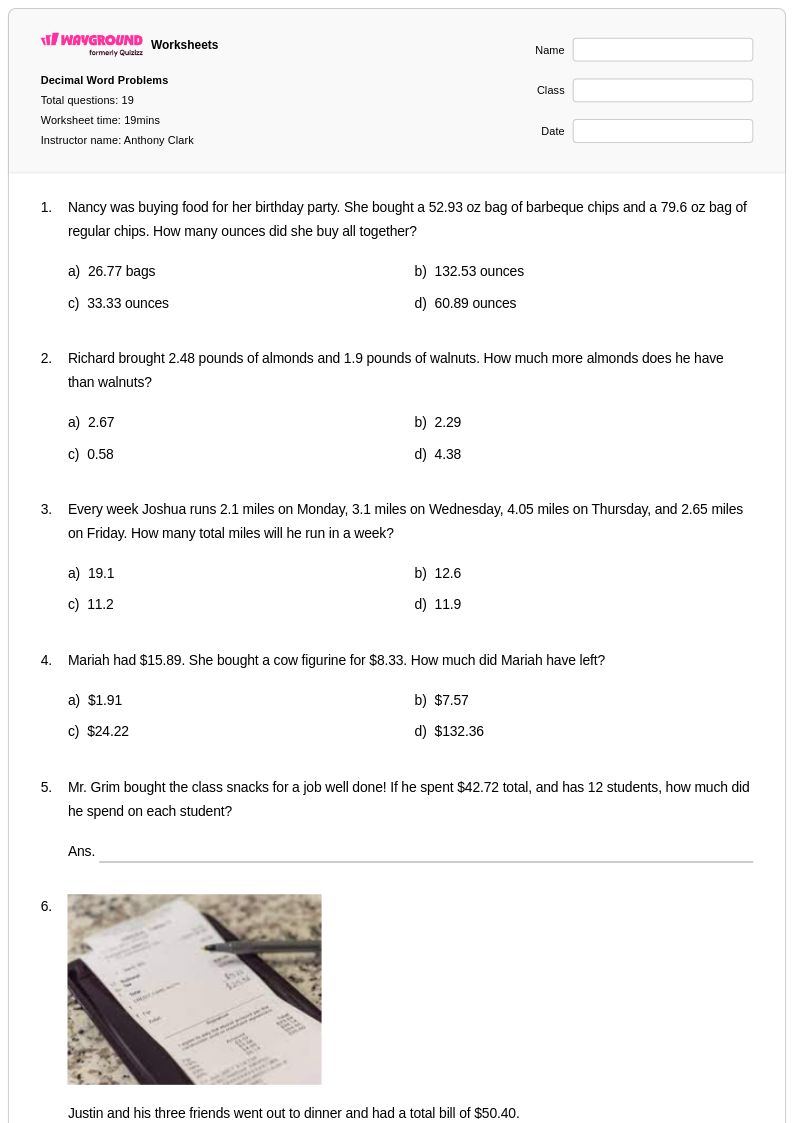
19 Q
6th - Uni
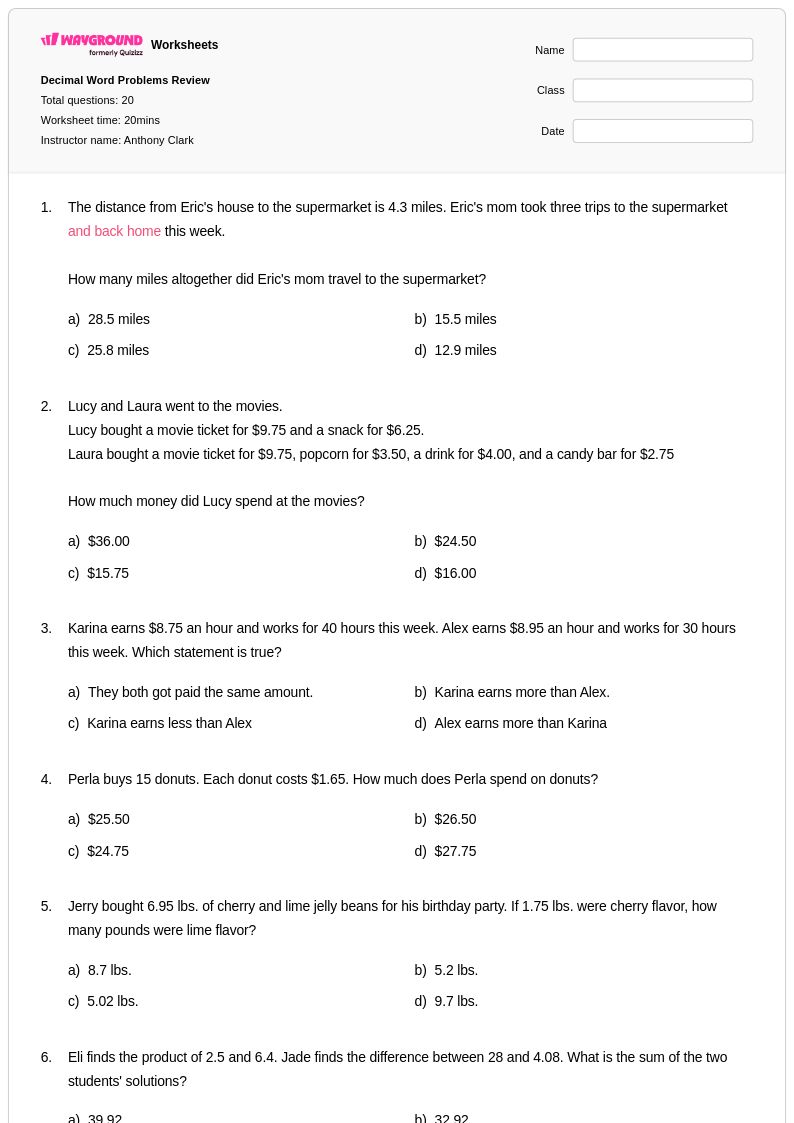
20 Q
6th - Uni
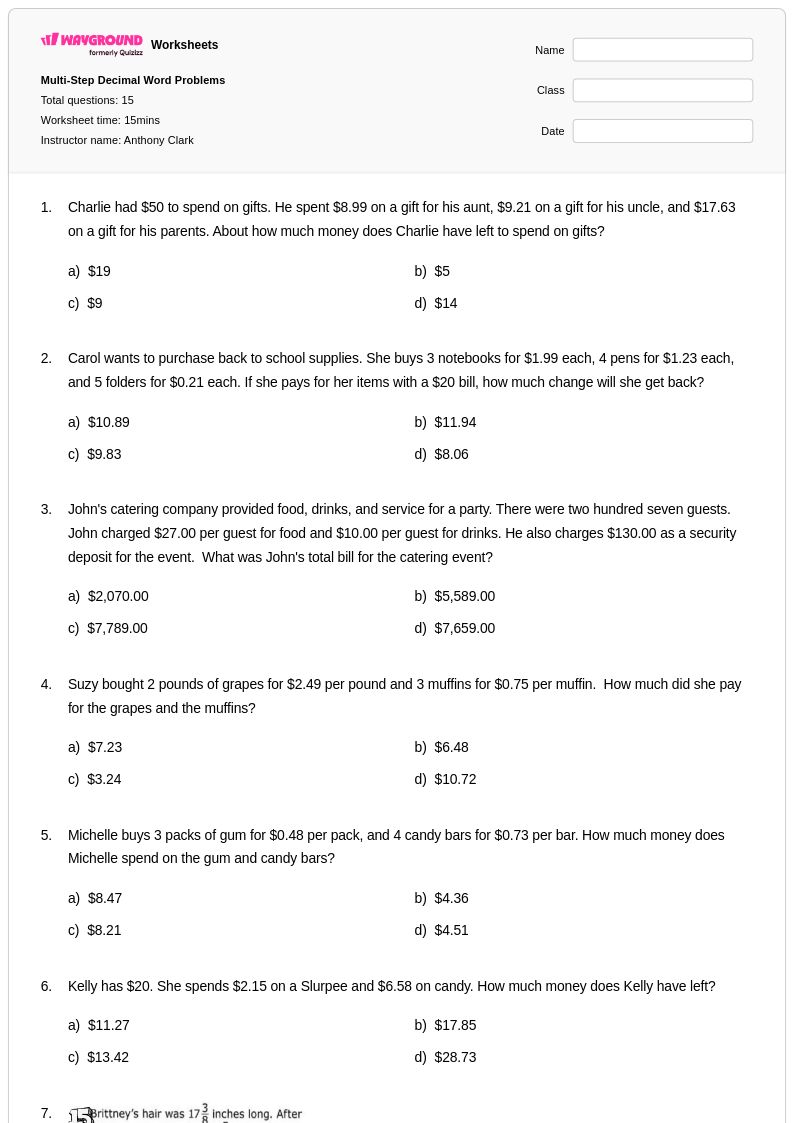
15 Q
5th - Uni
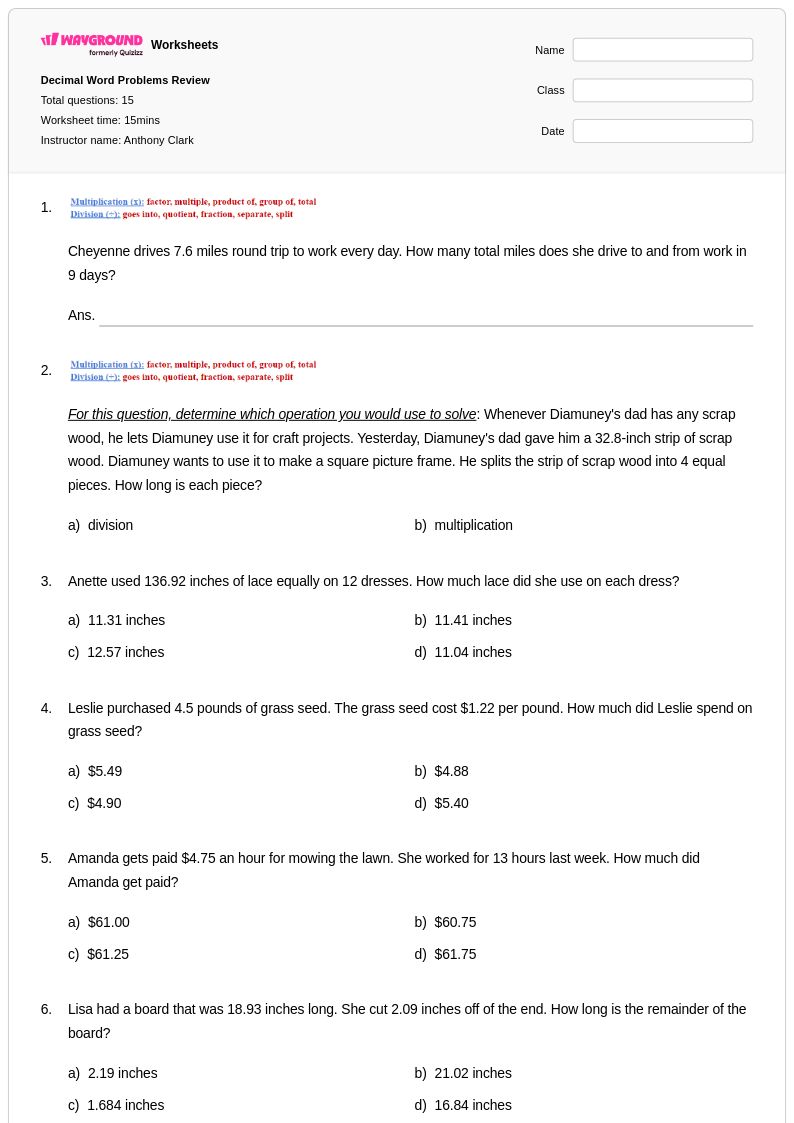
15 Q
6th - Uni
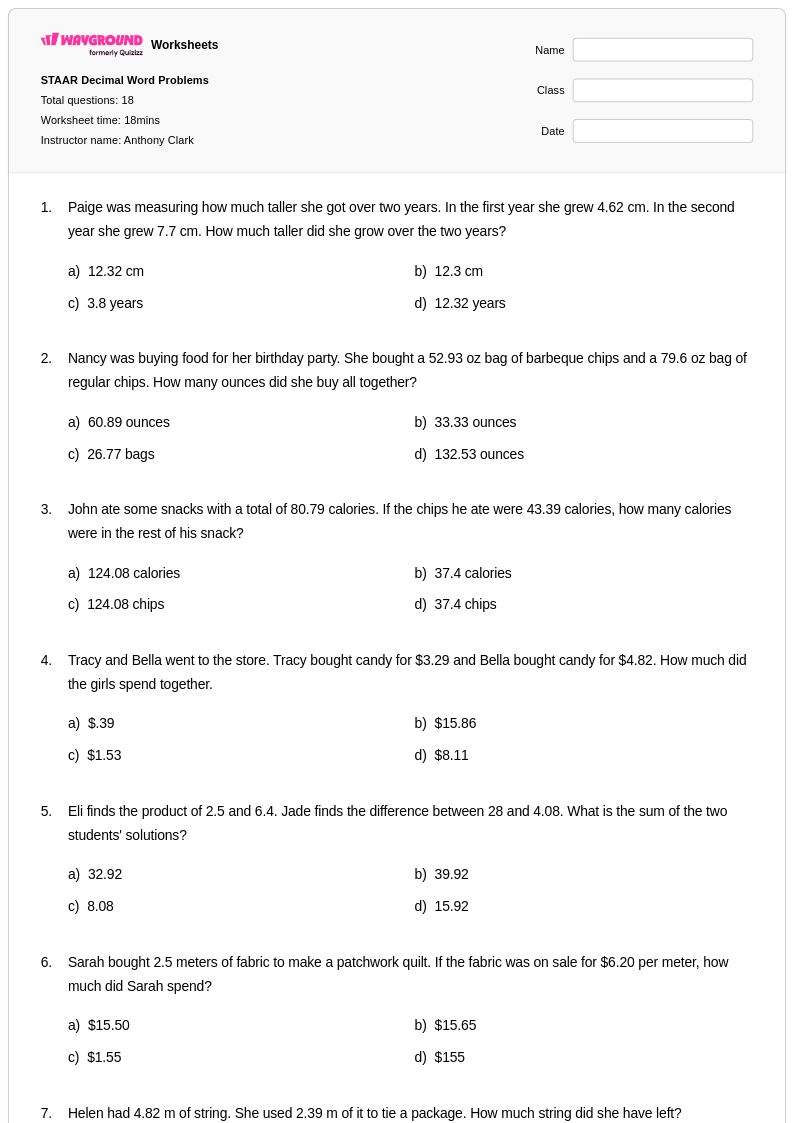
18 Q
6th - Uni
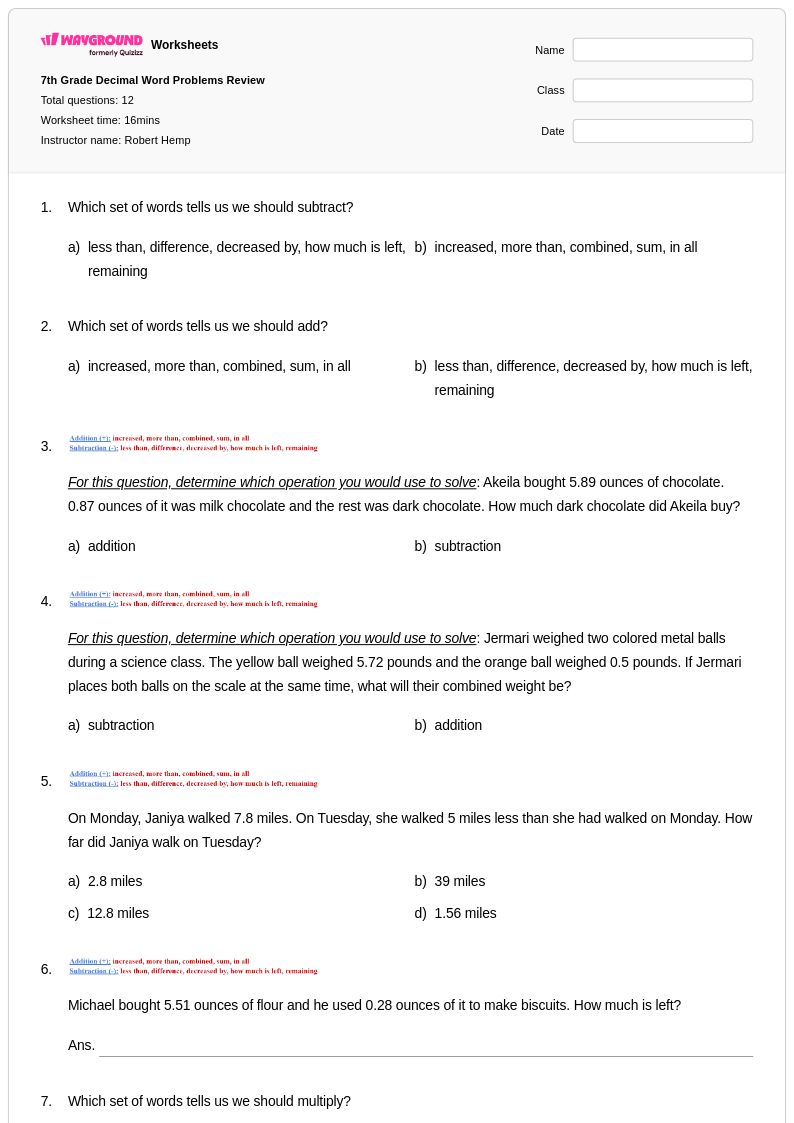
12 Q
6th - 8th
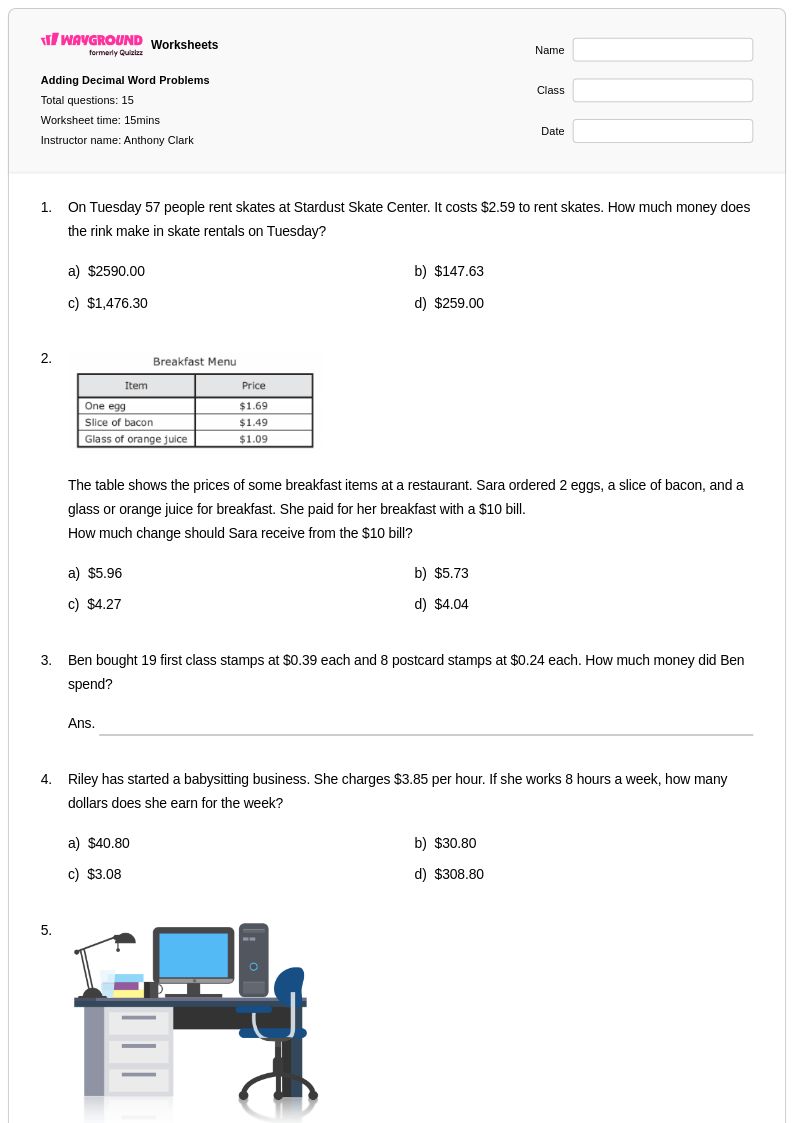
15 Q
5th - Uni
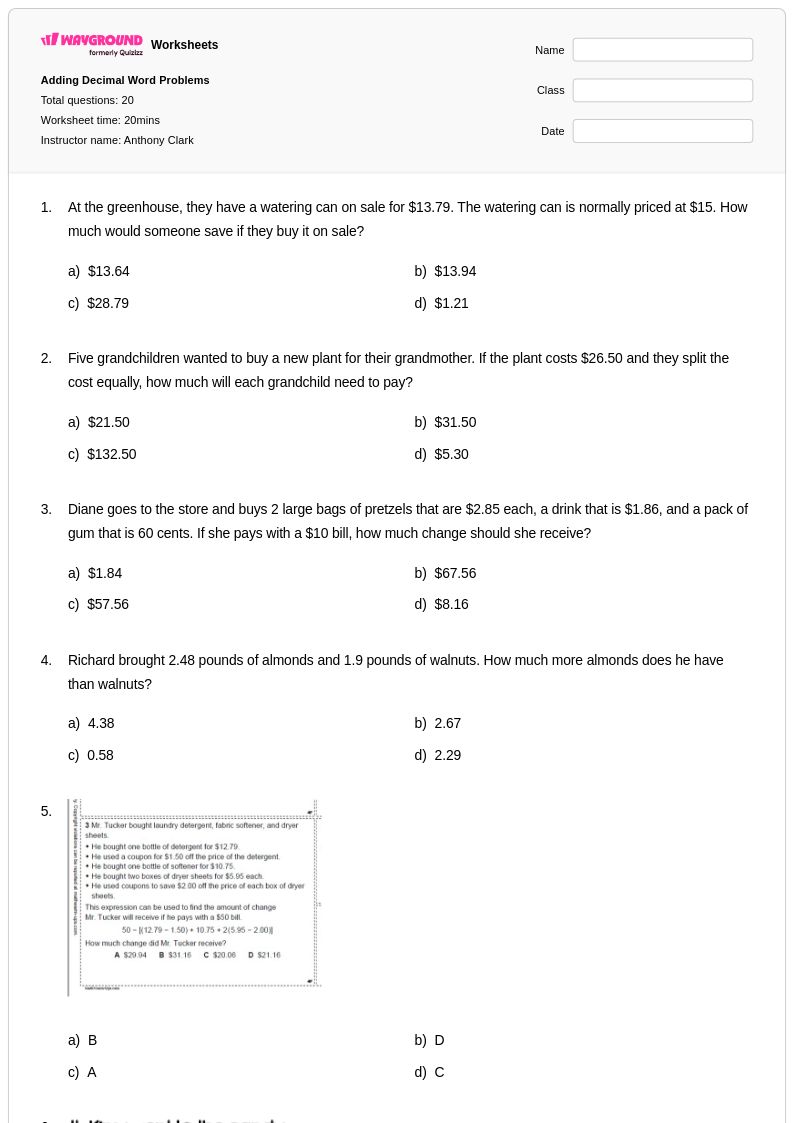
20 Q
5th - Uni
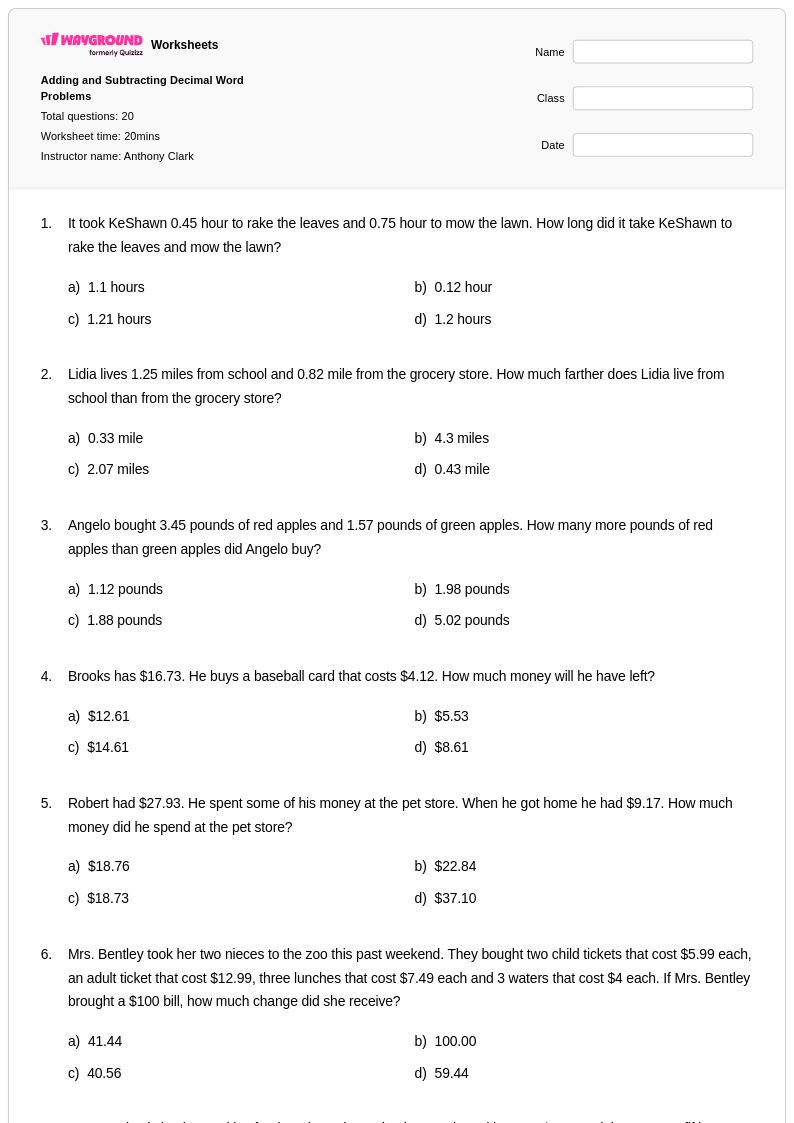
20 Q
5th - Uni
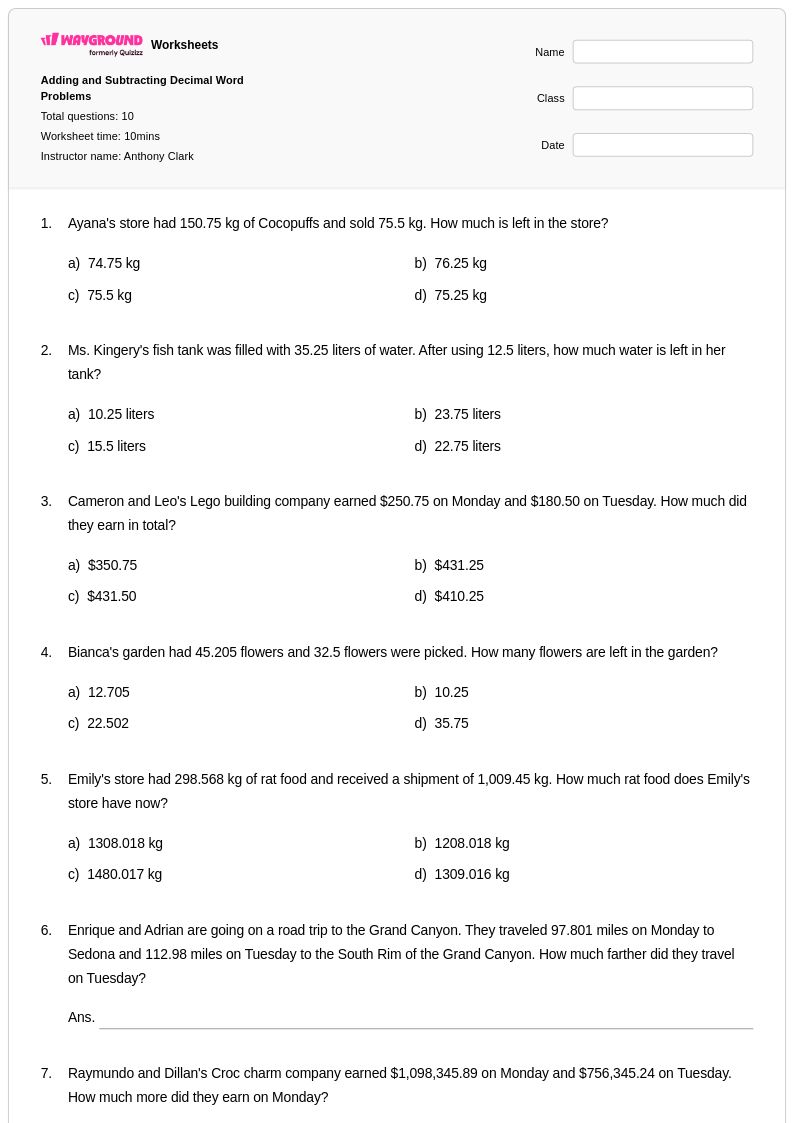
10 Q
5th - Uni
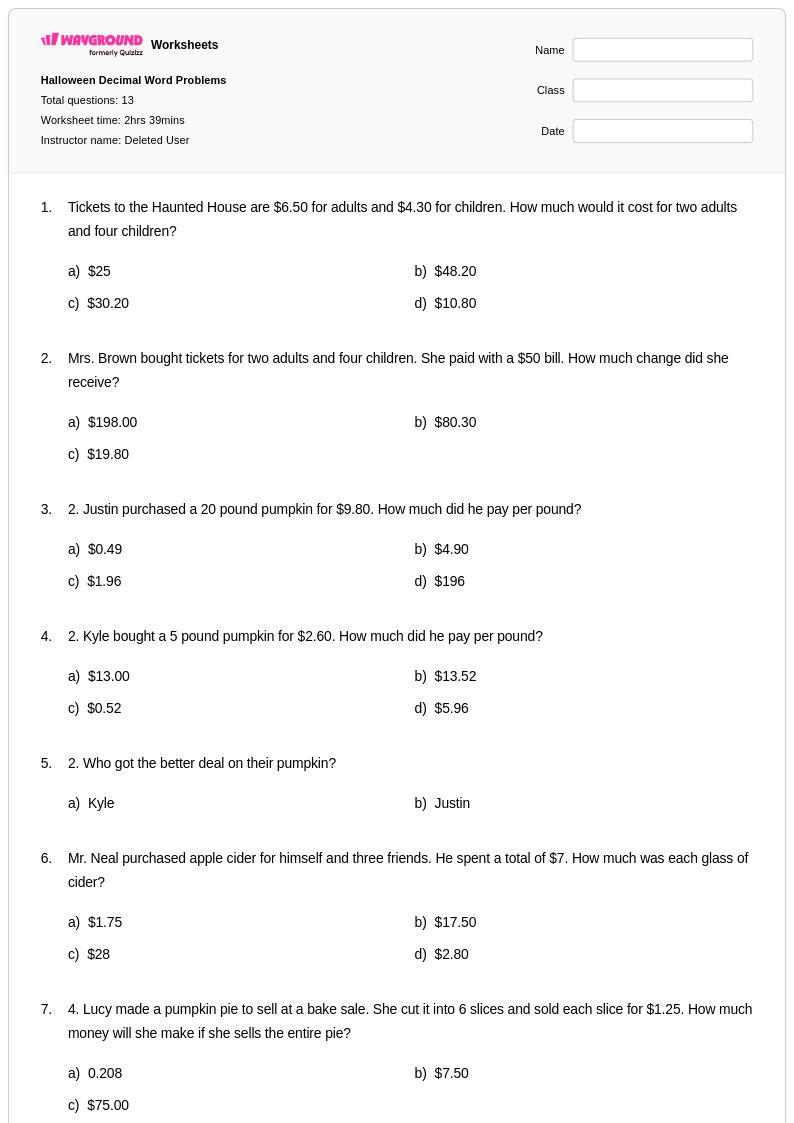
13 Q
5th - 8th
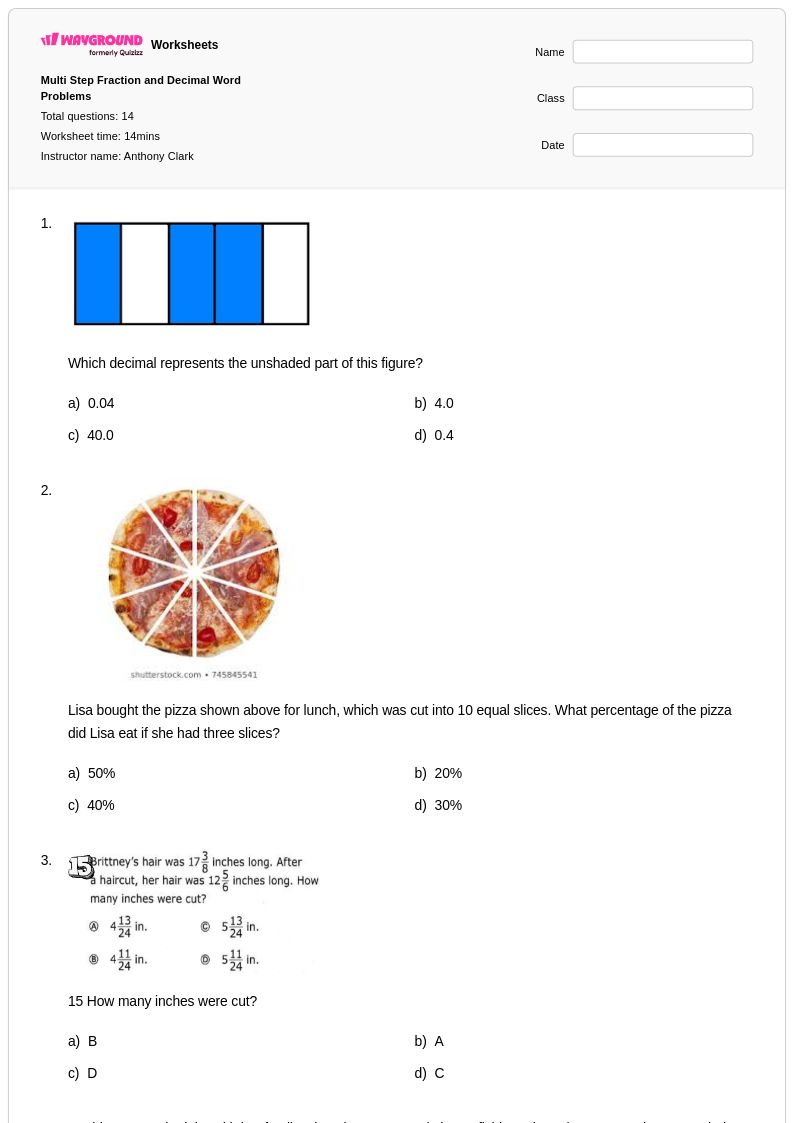
14 Q
7th - Uni
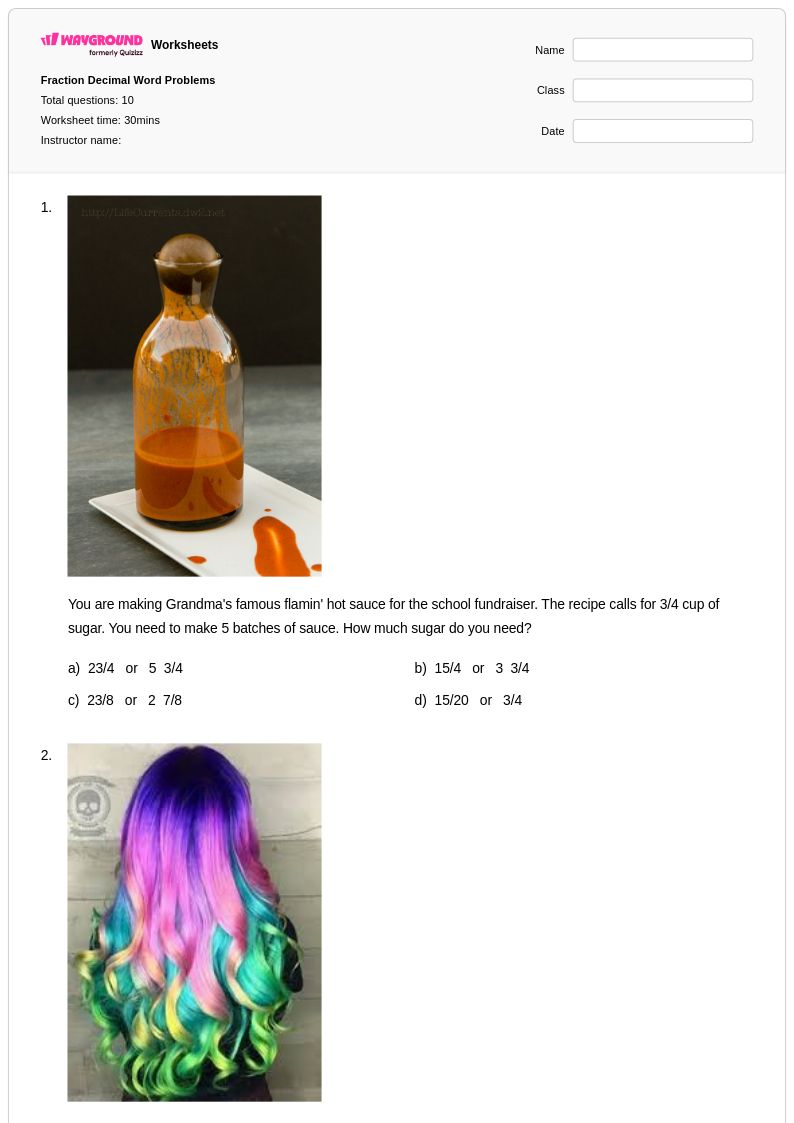
10 Q
6th - 8th
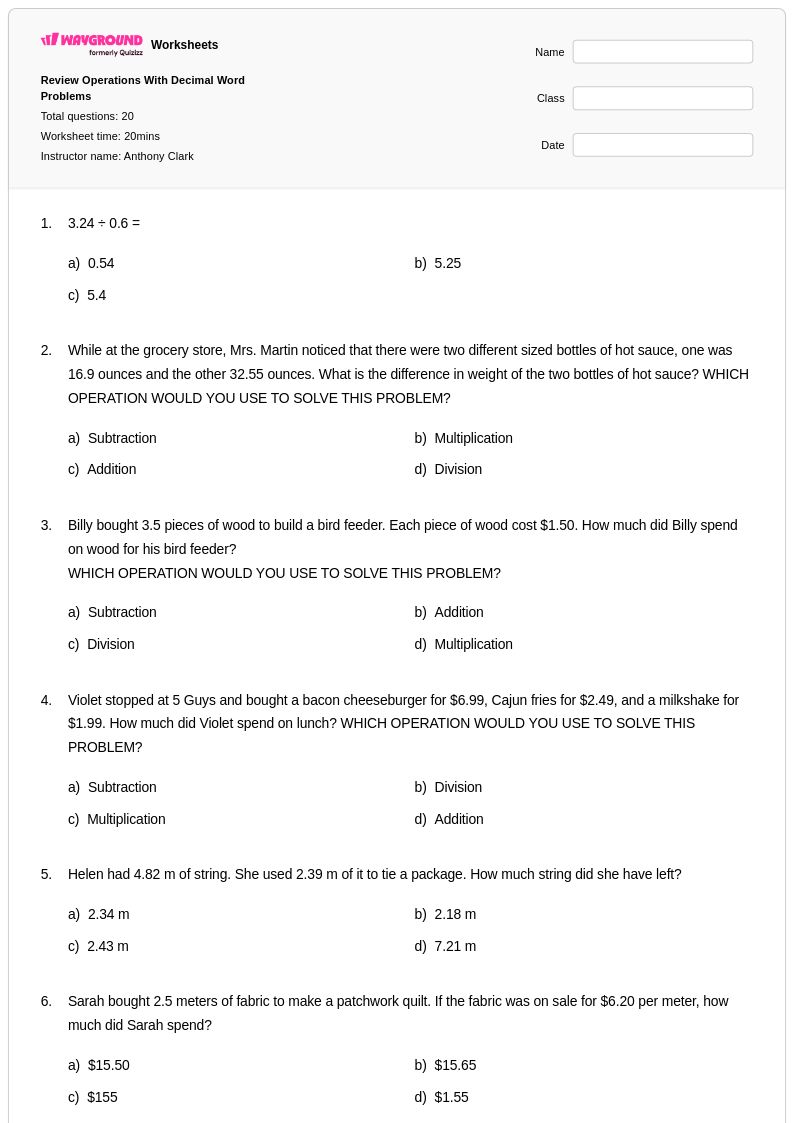
20 Q
7th - Uni
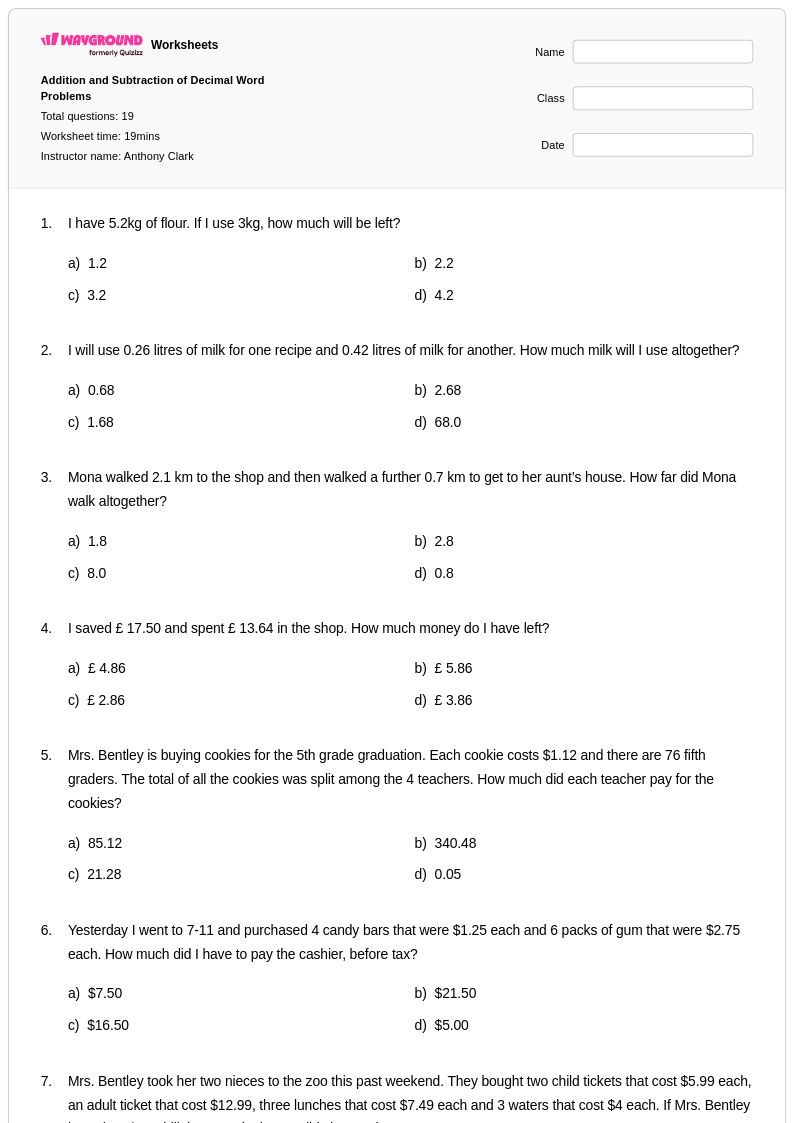
19 Q
6th - Uni
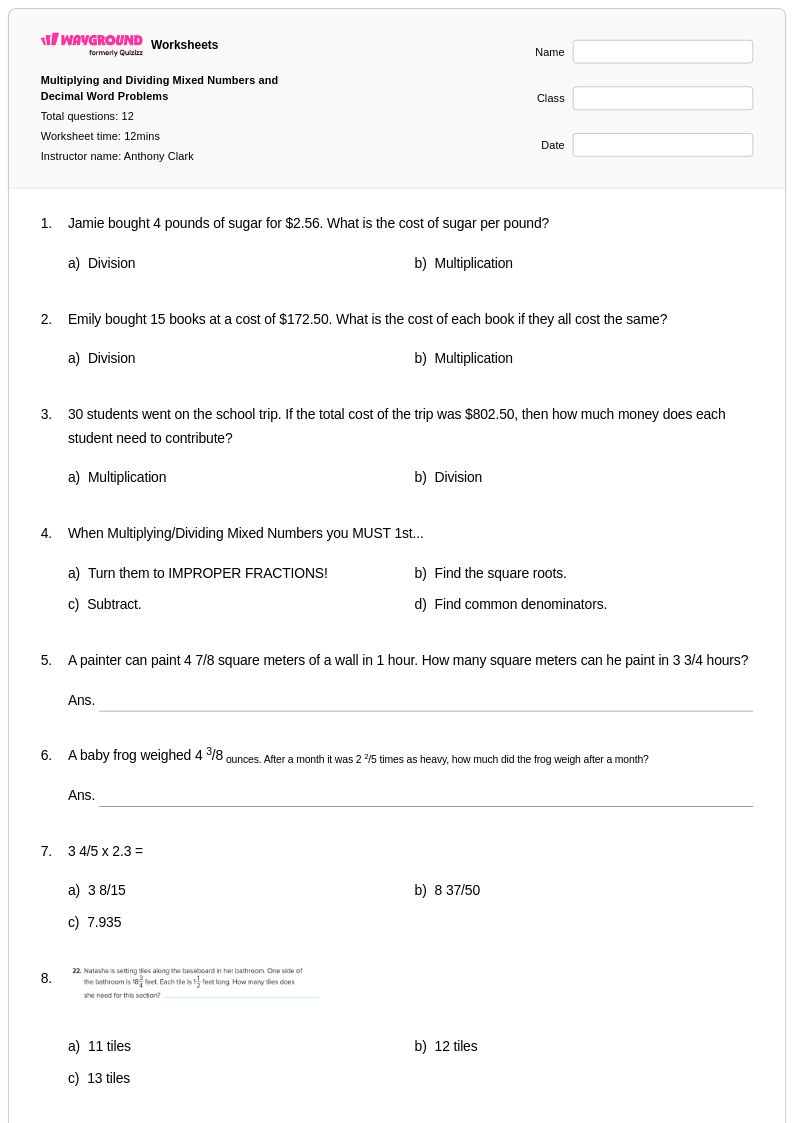
12 Q
6th - Uni
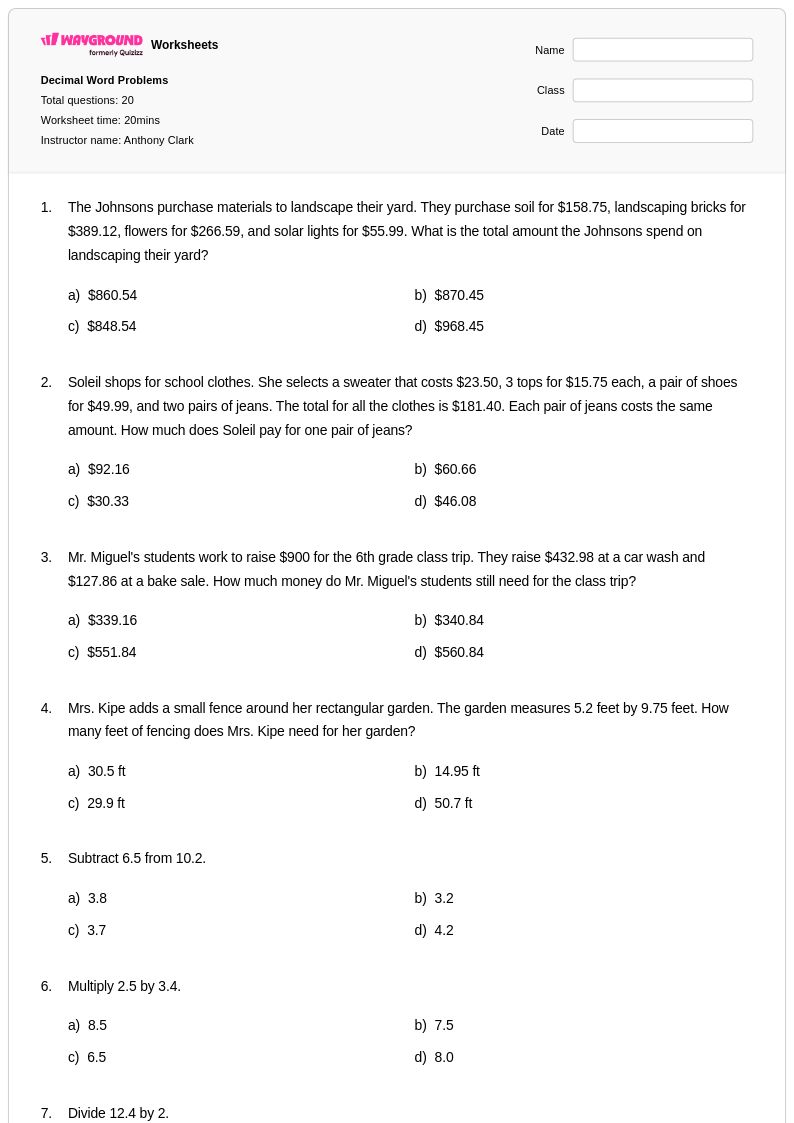
20 Q
6th - Uni
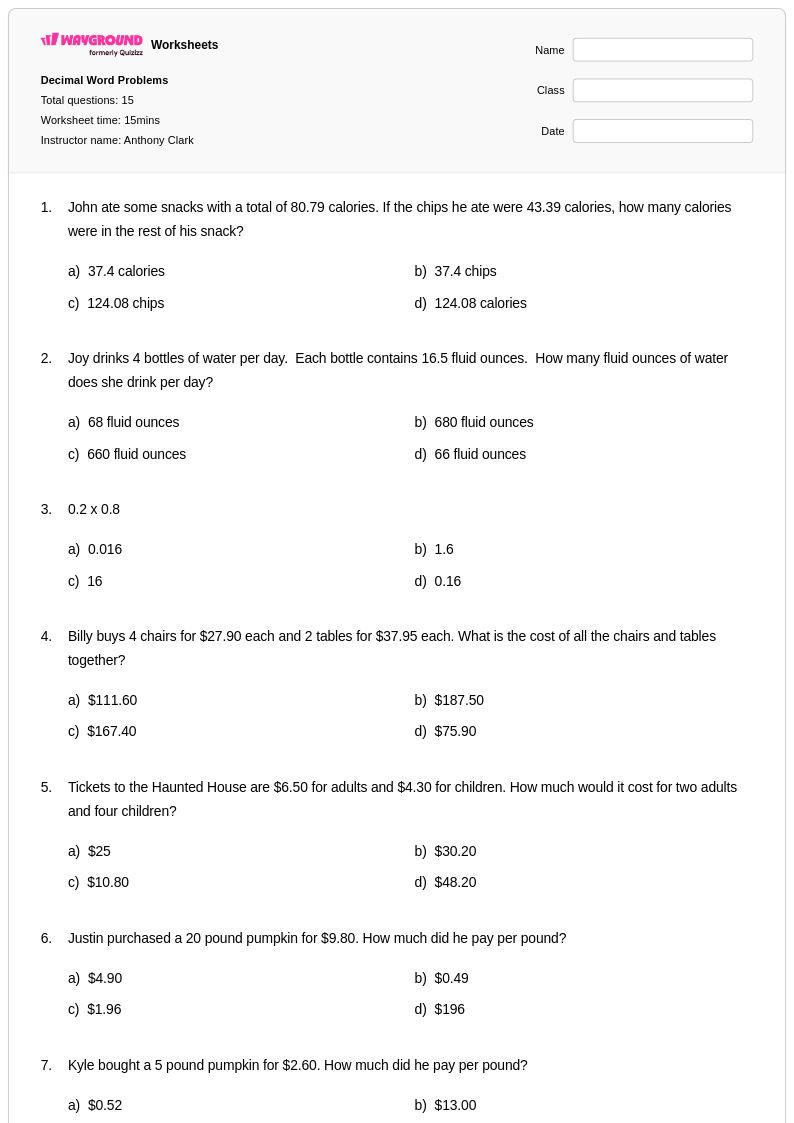
15 Q
7th - Uni
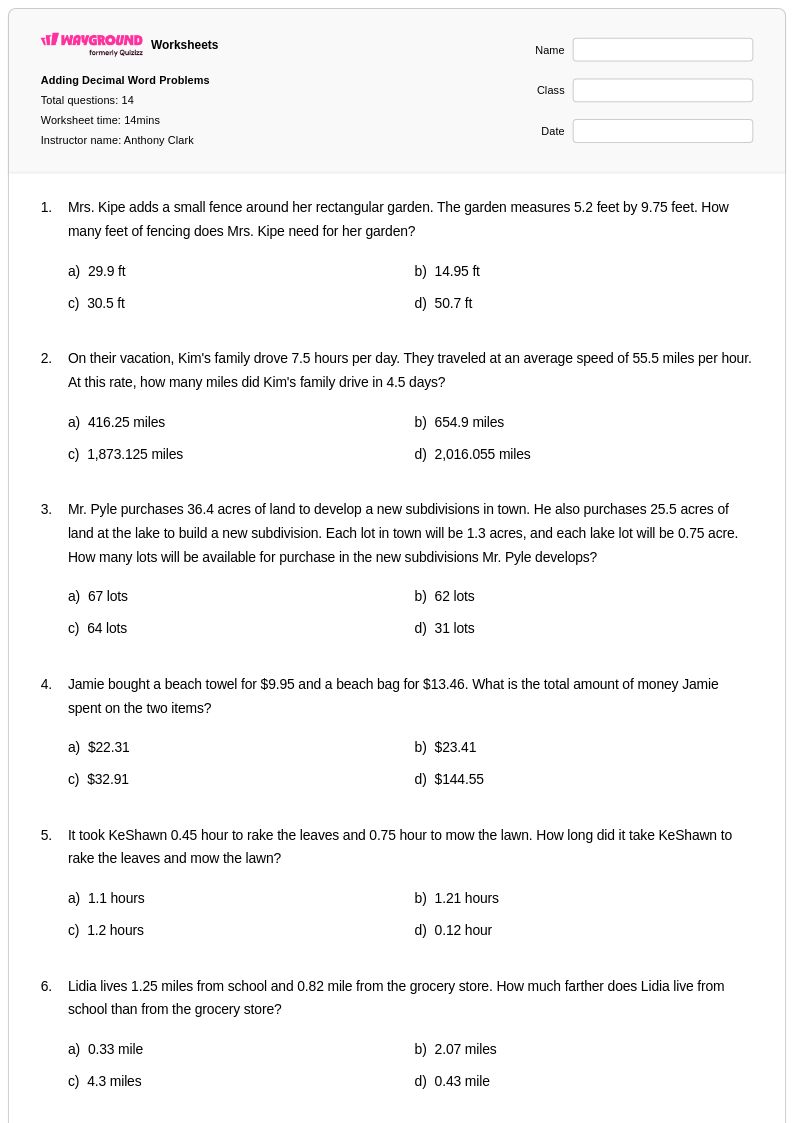
14 Q
5th - Uni
Explore Other Subject Worksheets for year 8
Explore printable Decimal Word Problems worksheets for Year 8
Decimal word problems for Year 8 students present complex real-world scenarios that require students to apply their understanding of decimal operations within authentic contexts. Wayground's comprehensive collection of decimal word problem worksheets challenges eighth graders to interpret multi-step problems involving money, measurements, rates, and proportional relationships while strengthening their computational fluency with decimal addition, subtraction, multiplication, and division. These carefully crafted practice problems guide students through the critical process of translating written scenarios into mathematical expressions, selecting appropriate operations, and communicating their reasoning clearly. Each worksheet includes detailed answer keys that support independent learning and self-assessment, while the free printable format ensures accessibility for both classroom instruction and home practice.
Wayground's extensive library of teacher-created decimal word problem resources provides educators with millions of expertly designed worksheets that align with Year 8 mathematics standards and support diverse instructional needs. The platform's advanced search and filtering capabilities enable teachers to quickly locate materials that match specific skill levels, problem types, and complexity requirements, facilitating seamless differentiation for students across the mathematical spectrum. These customizable worksheets are available in both digital and printable PDF formats, allowing for flexible implementation in traditional classrooms, remote learning environments, or blended instruction models. Teachers can efficiently plan targeted skill practice sessions, design remediation activities for struggling learners, create enrichment challenges for advanced students, and develop comprehensive assessment tools that accurately measure student progress in decimal problem-solving proficiency.
FAQs
How do I teach decimal word problems to eighth graders?
What exercises help Grade 8 students practice decimal word problems?
What mistakes do students commonly make with decimal word problems?
How can I use these decimal word problem worksheets in class?
Are Grade 8 decimal word problems aligned with Common Core?
How can I differentiate decimal word problem practice for a mixed-ability class?
What grade level are decimal word problems typically taught at?