Free Printable Dependent Variable Worksheets for Year 9
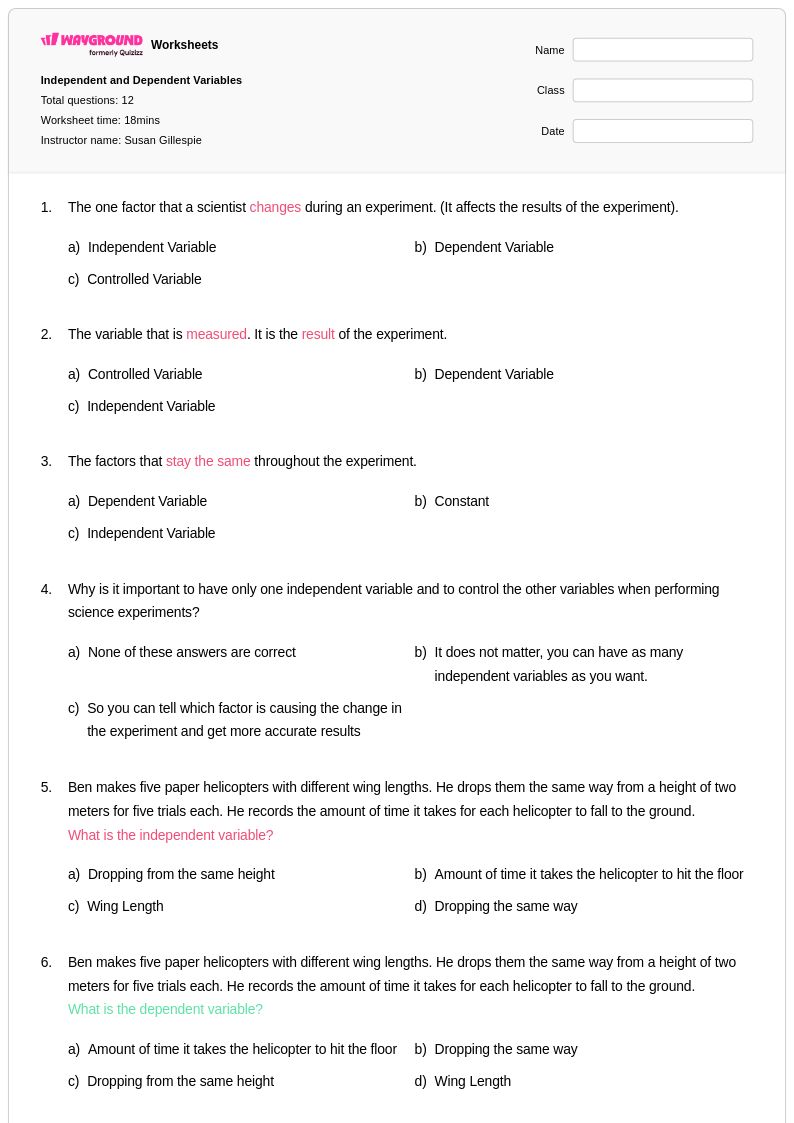
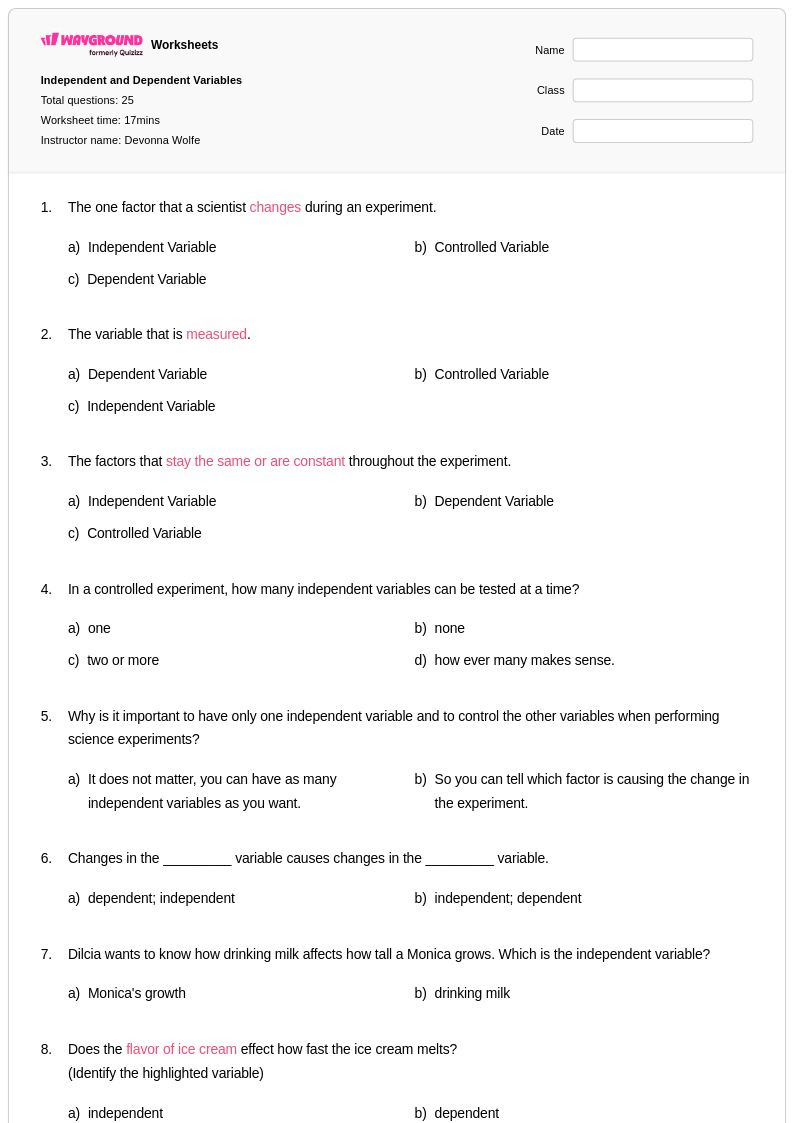
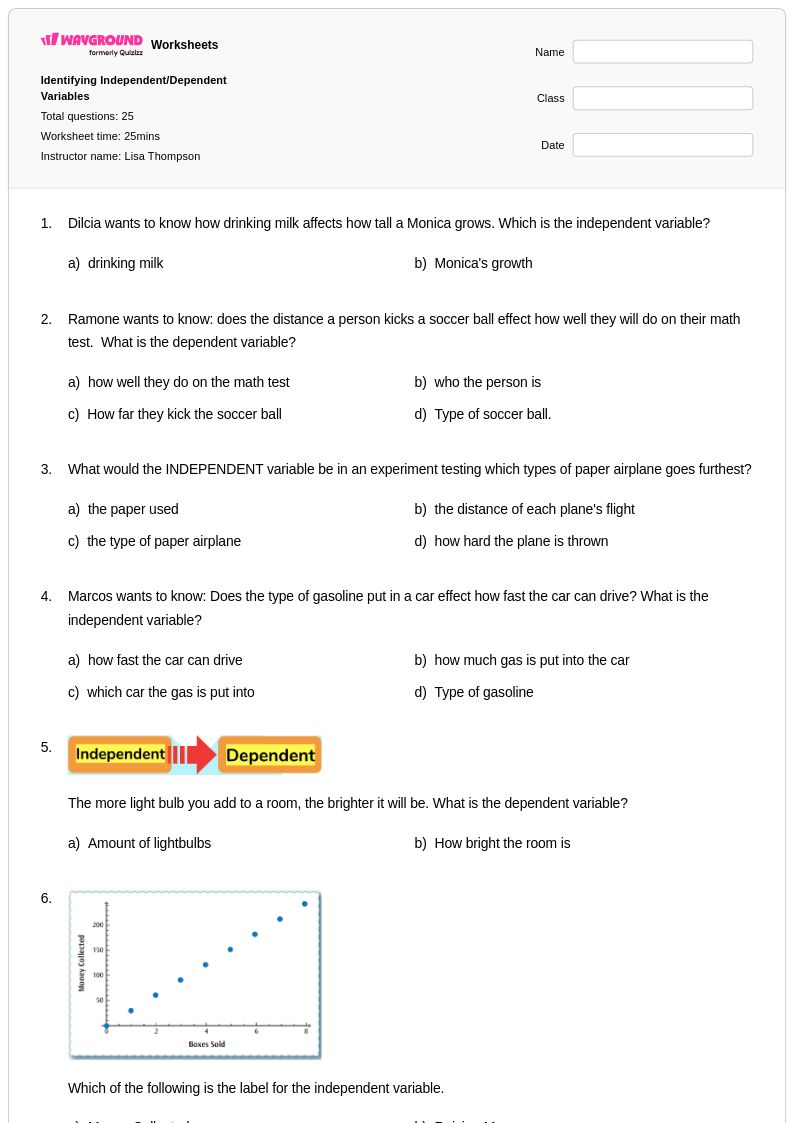
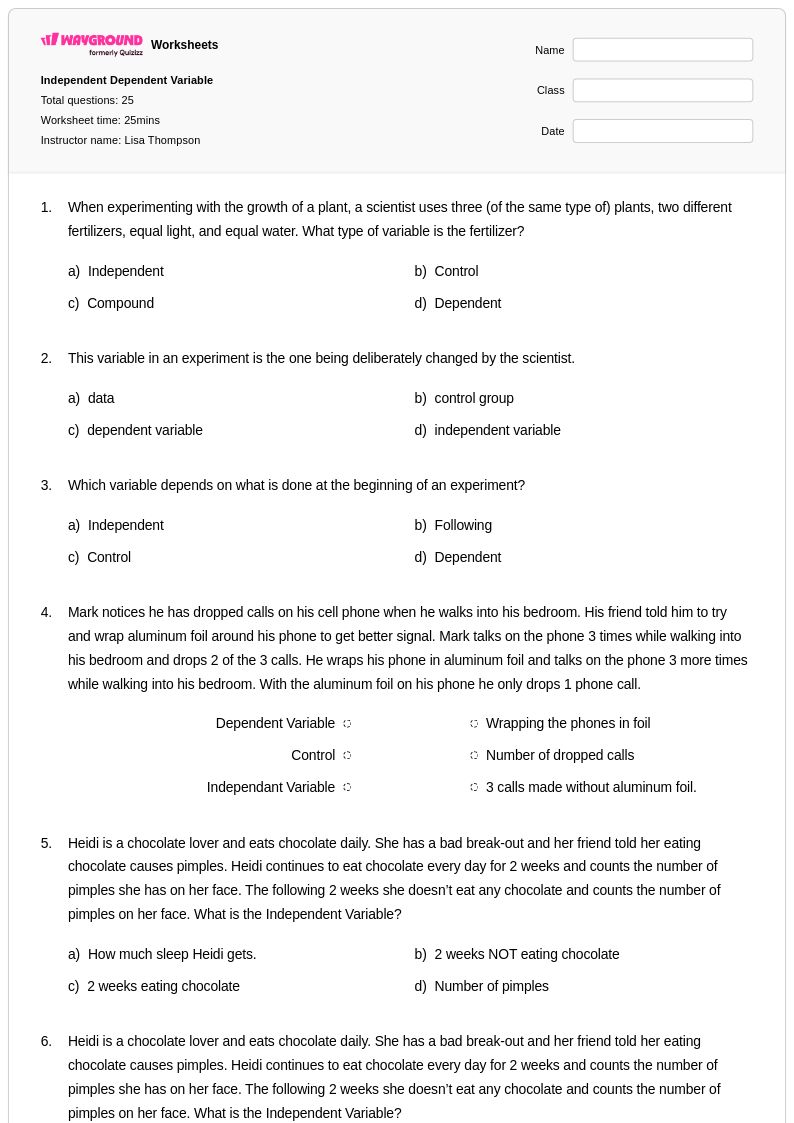
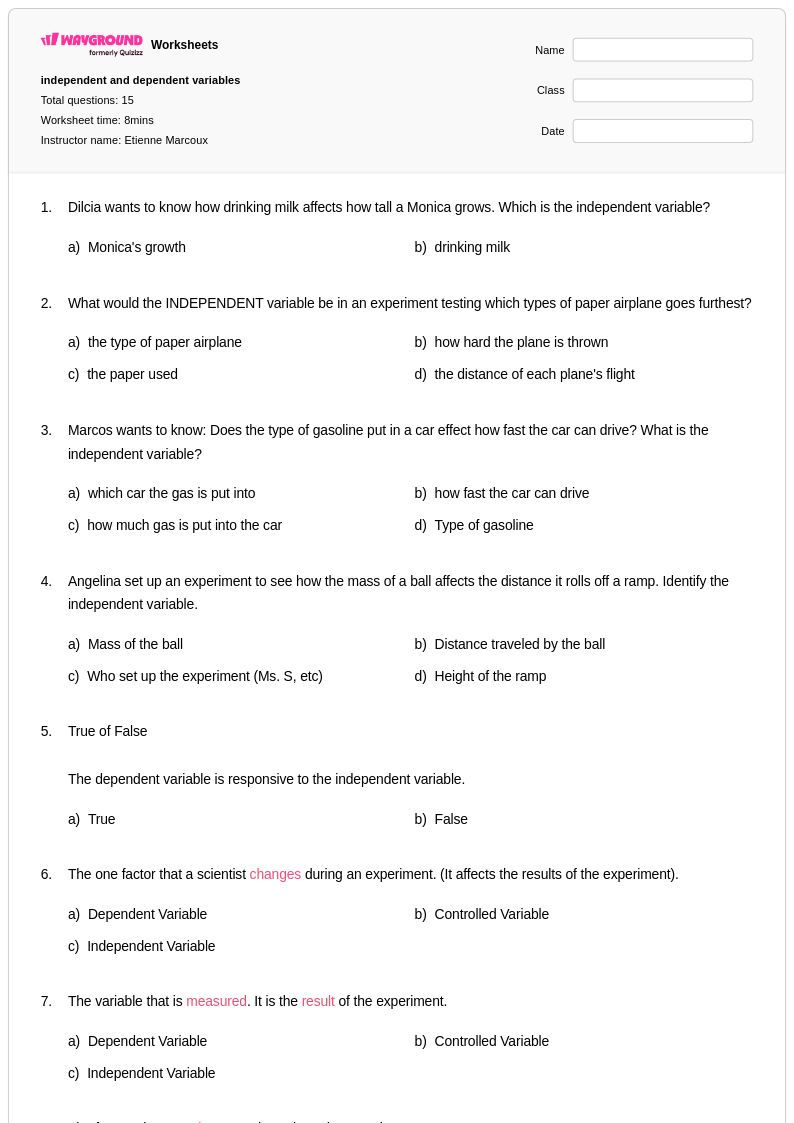
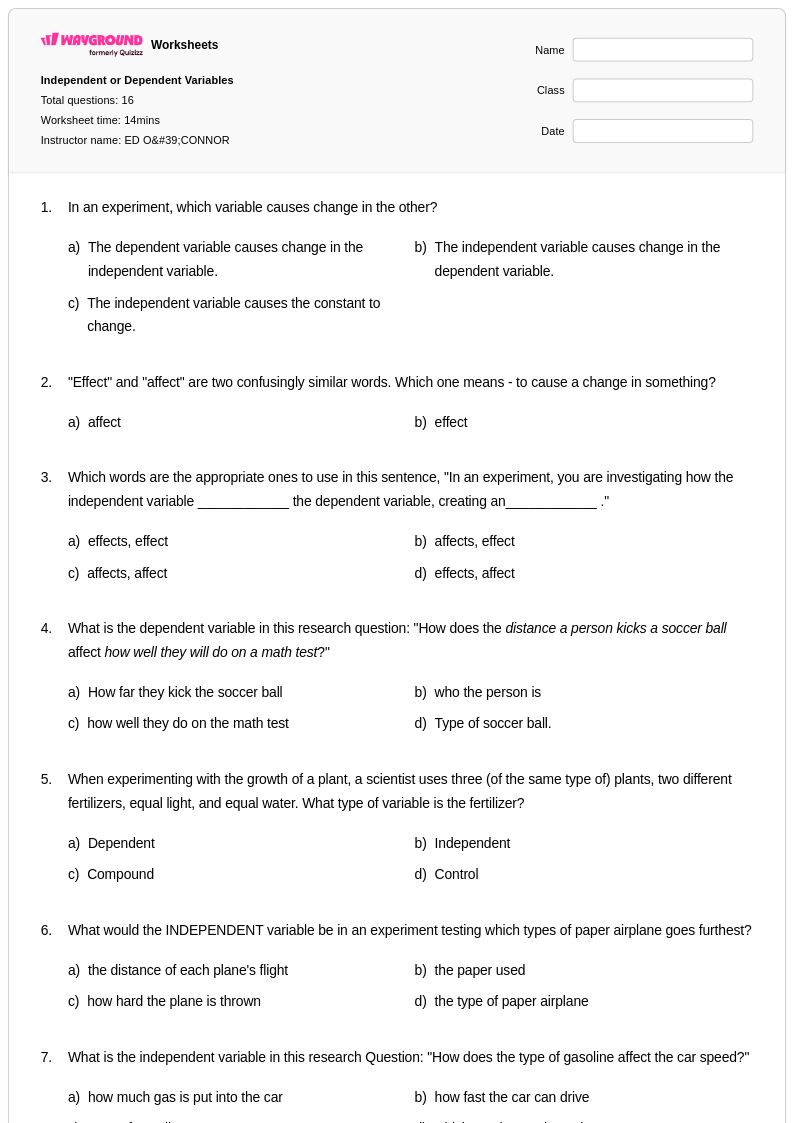
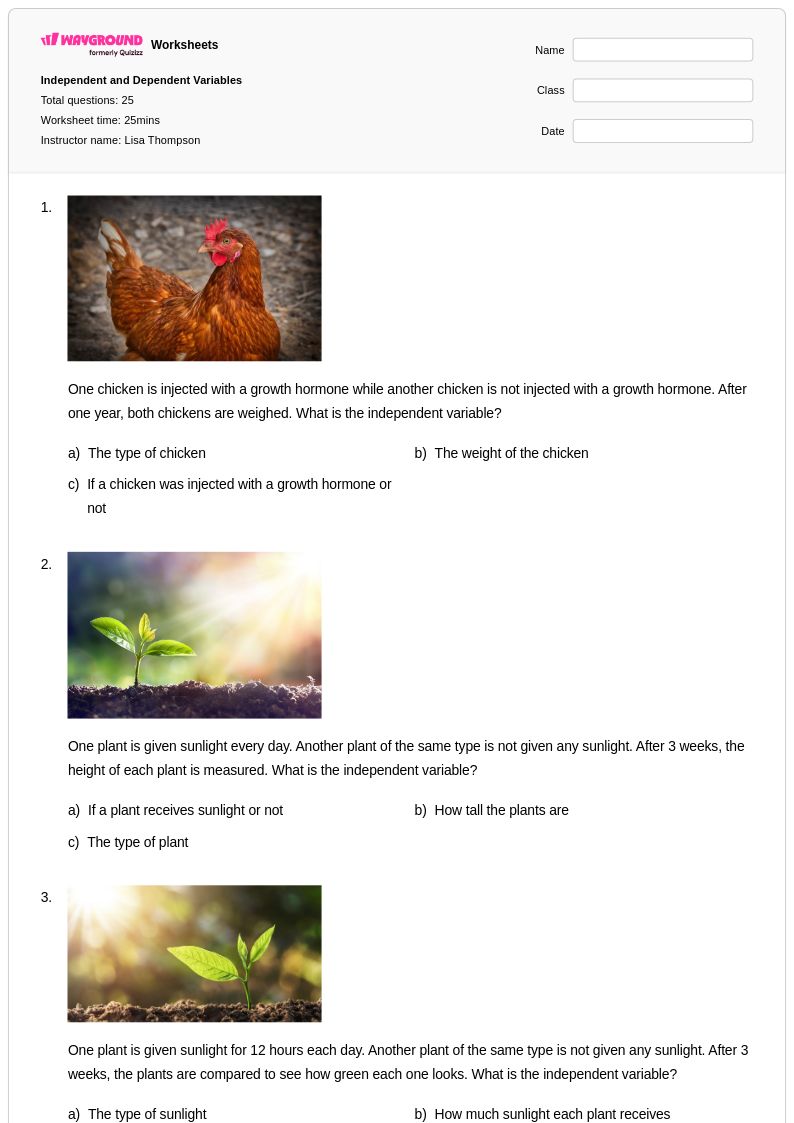
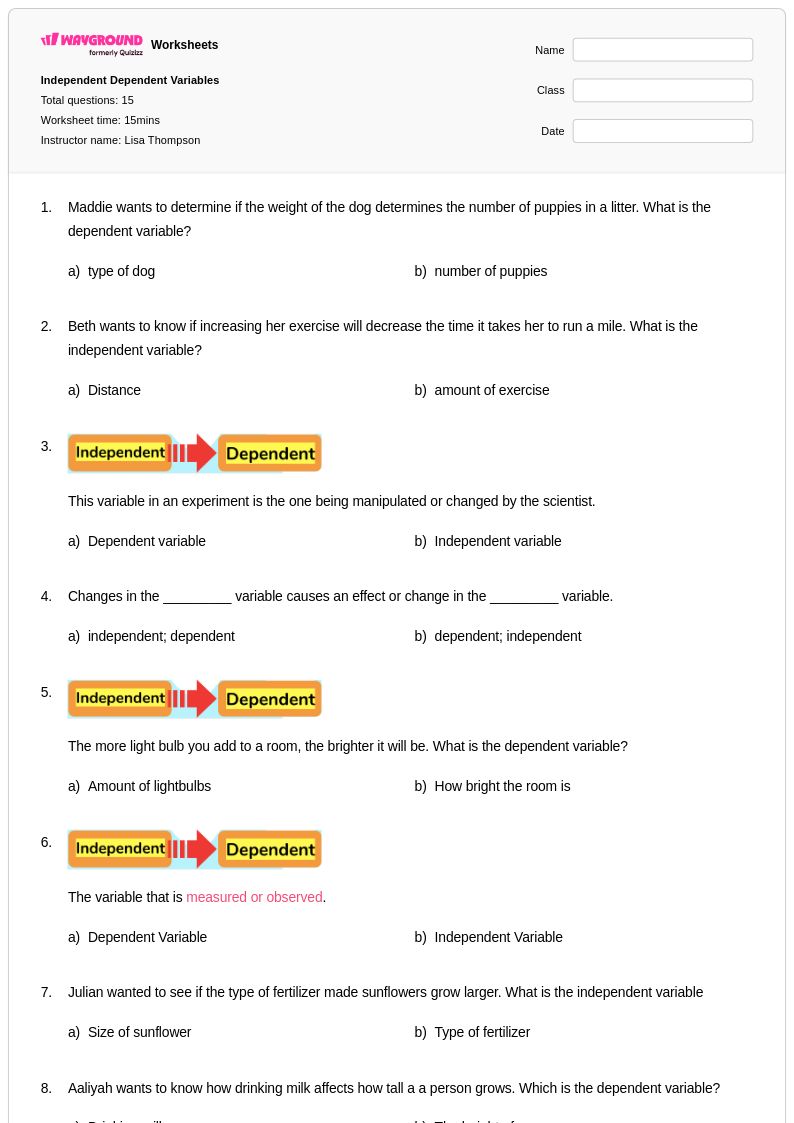
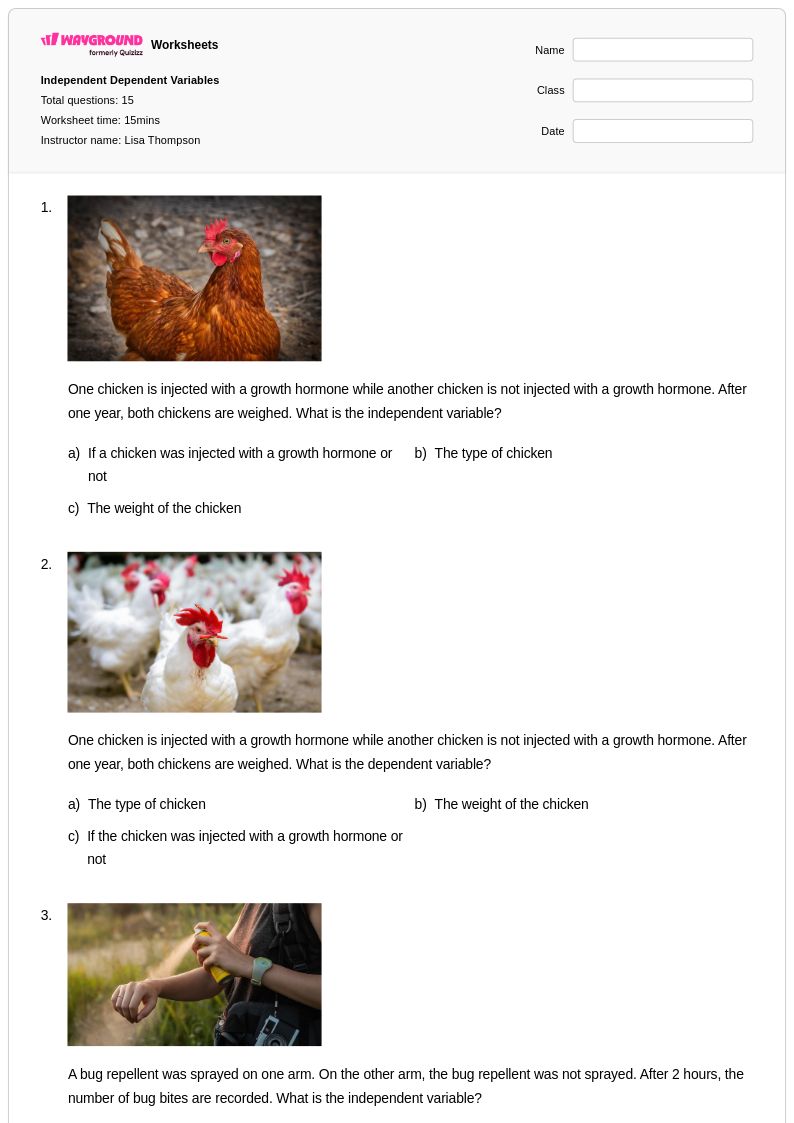
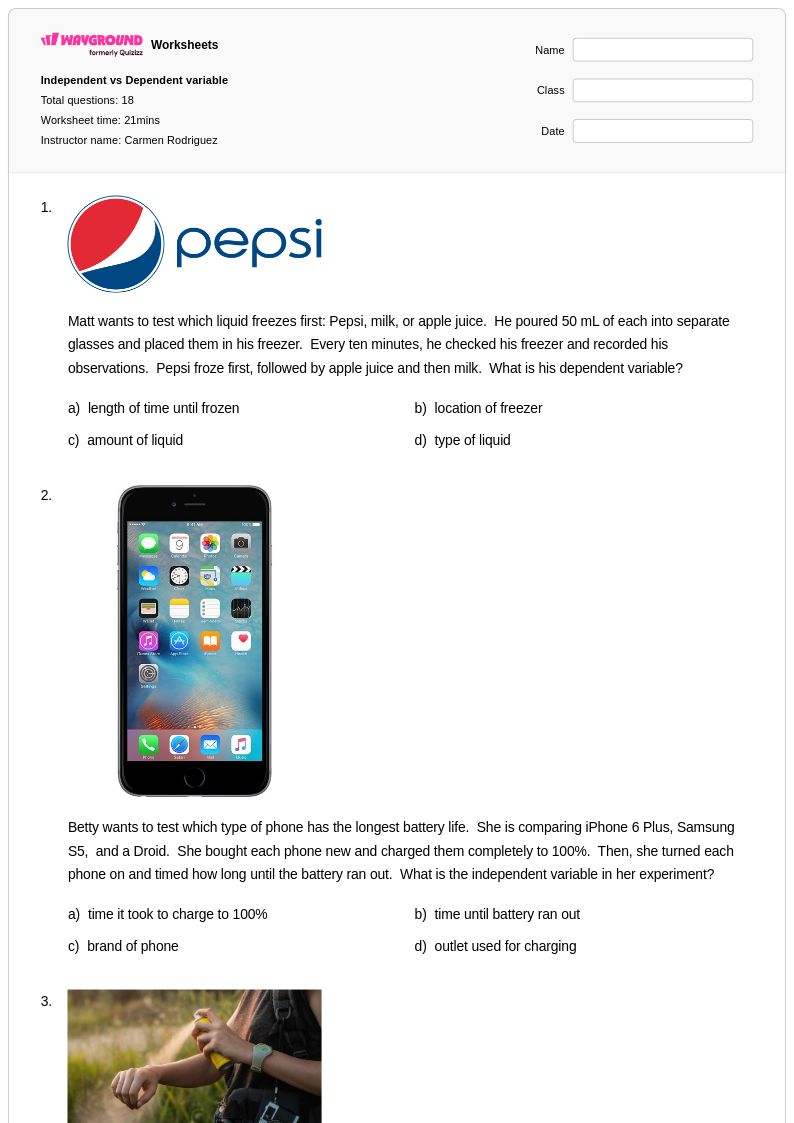
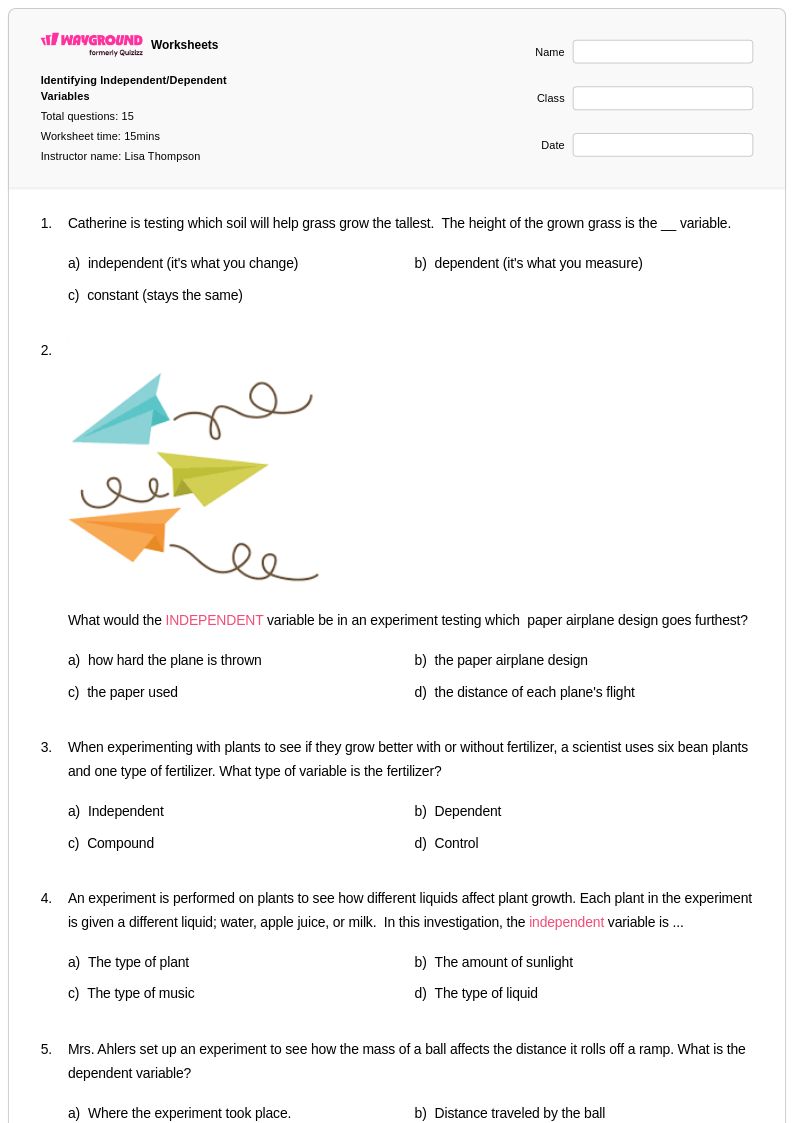
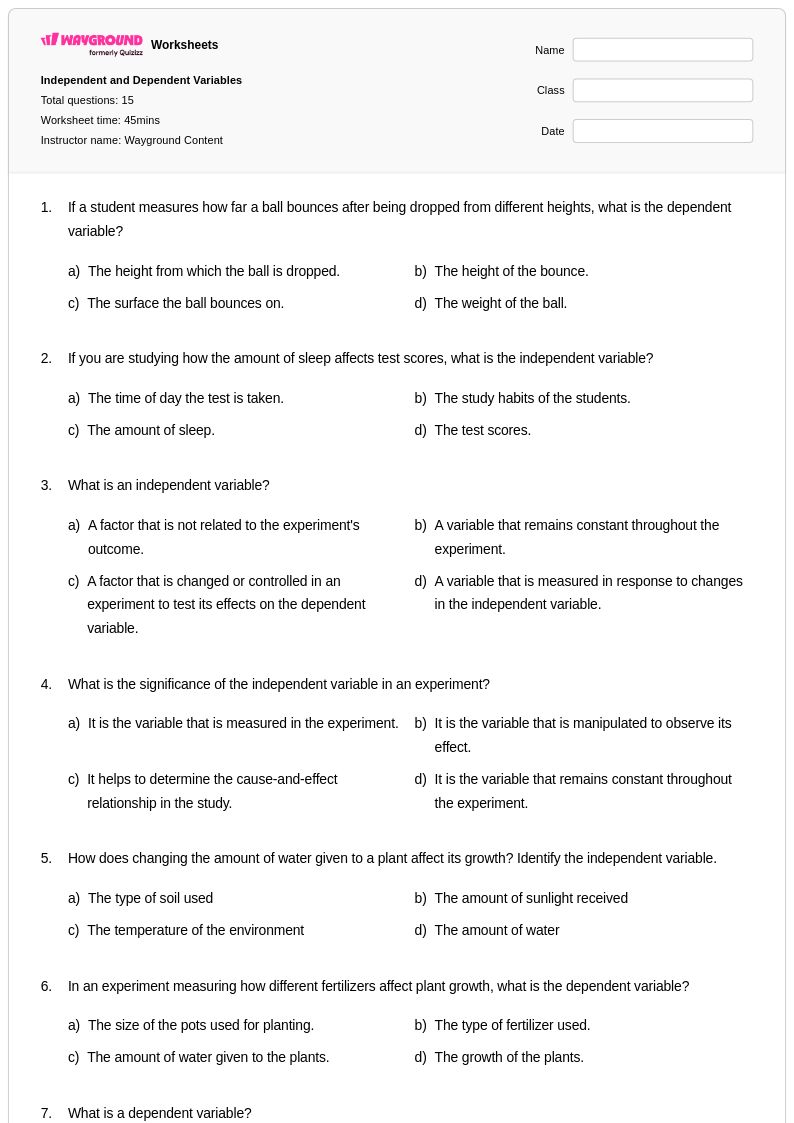
Year 9 dependent variable worksheets from Wayground help students master identifying and analyzing variables that respond to experimental changes through engaging printables, practice problems, and comprehensive answer keys.
Explore printable Dependent Variable worksheets for Year 9
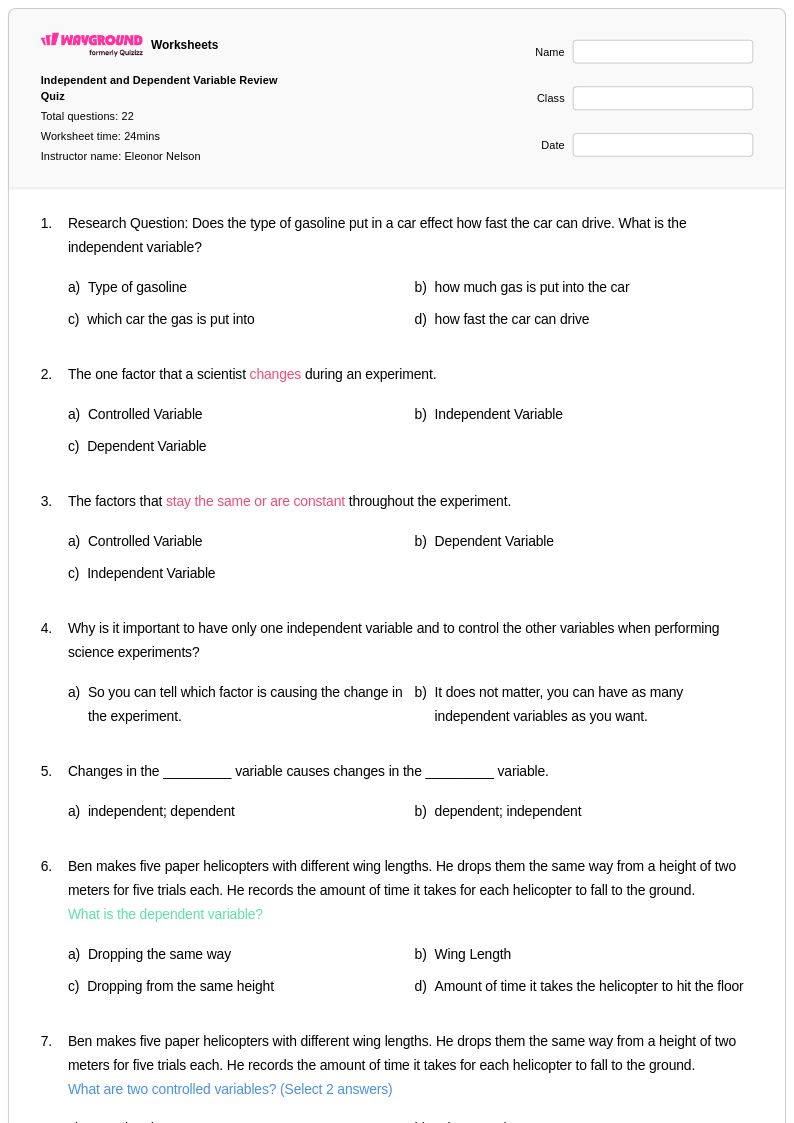
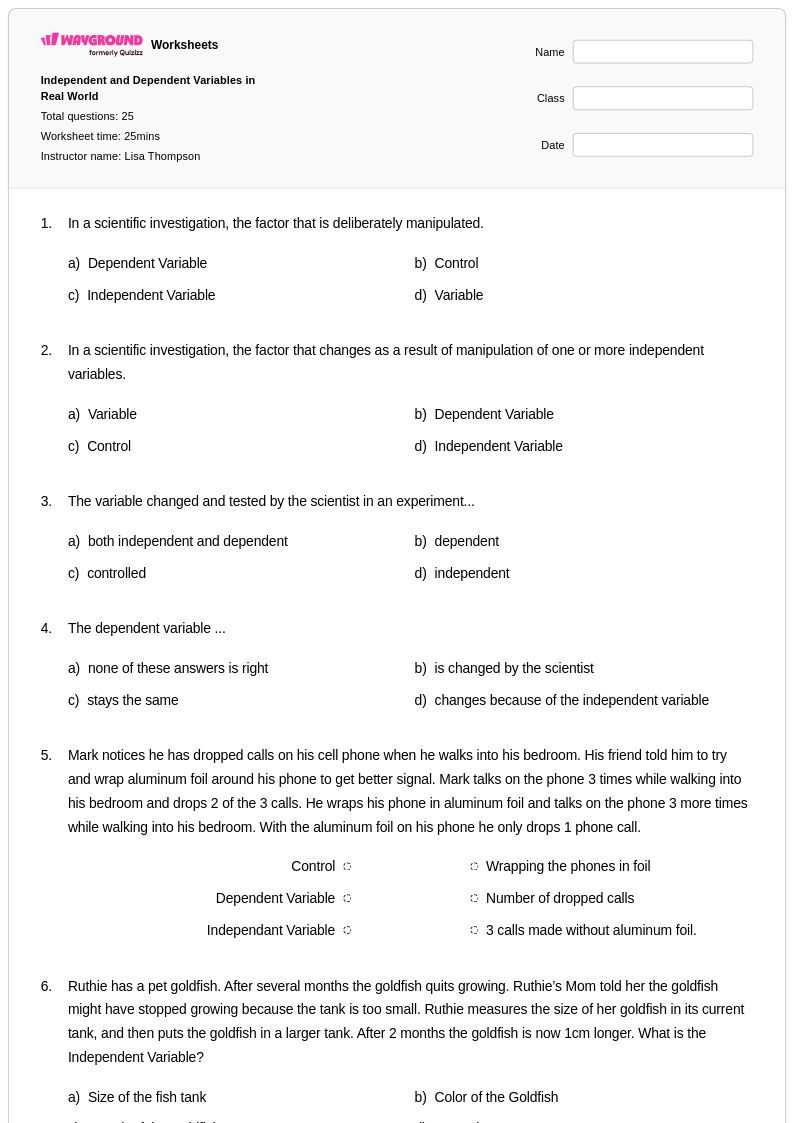
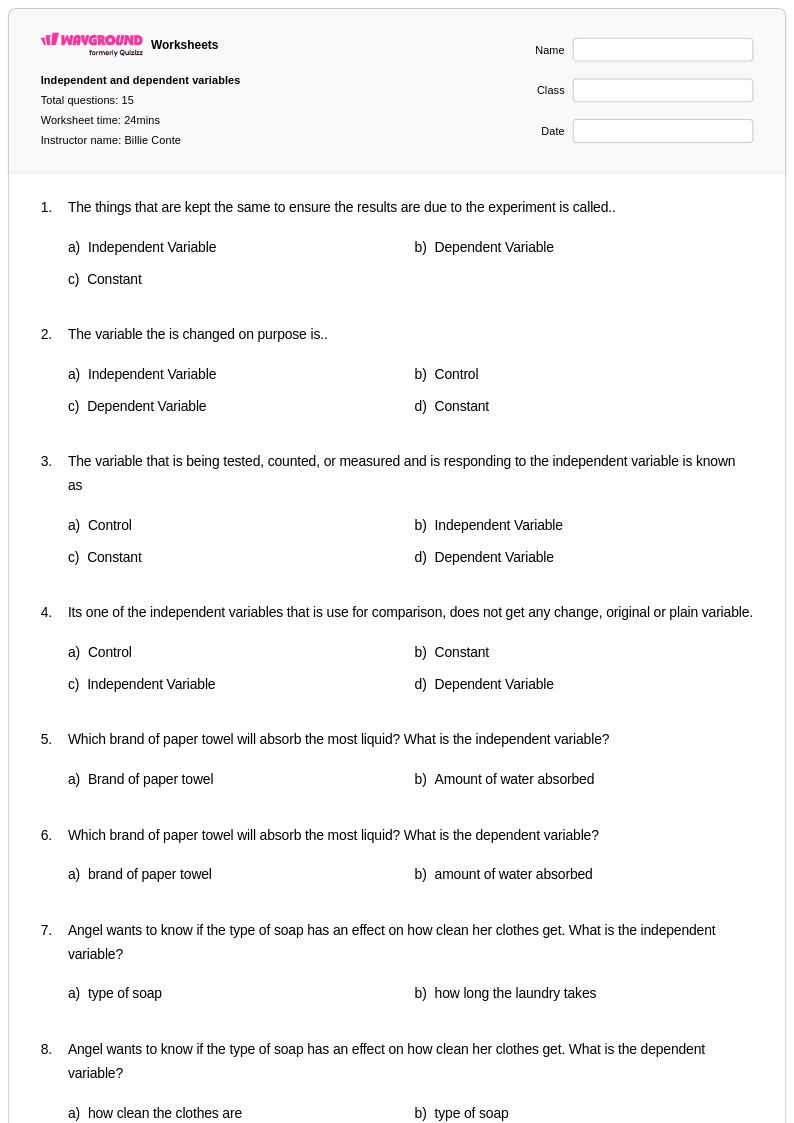
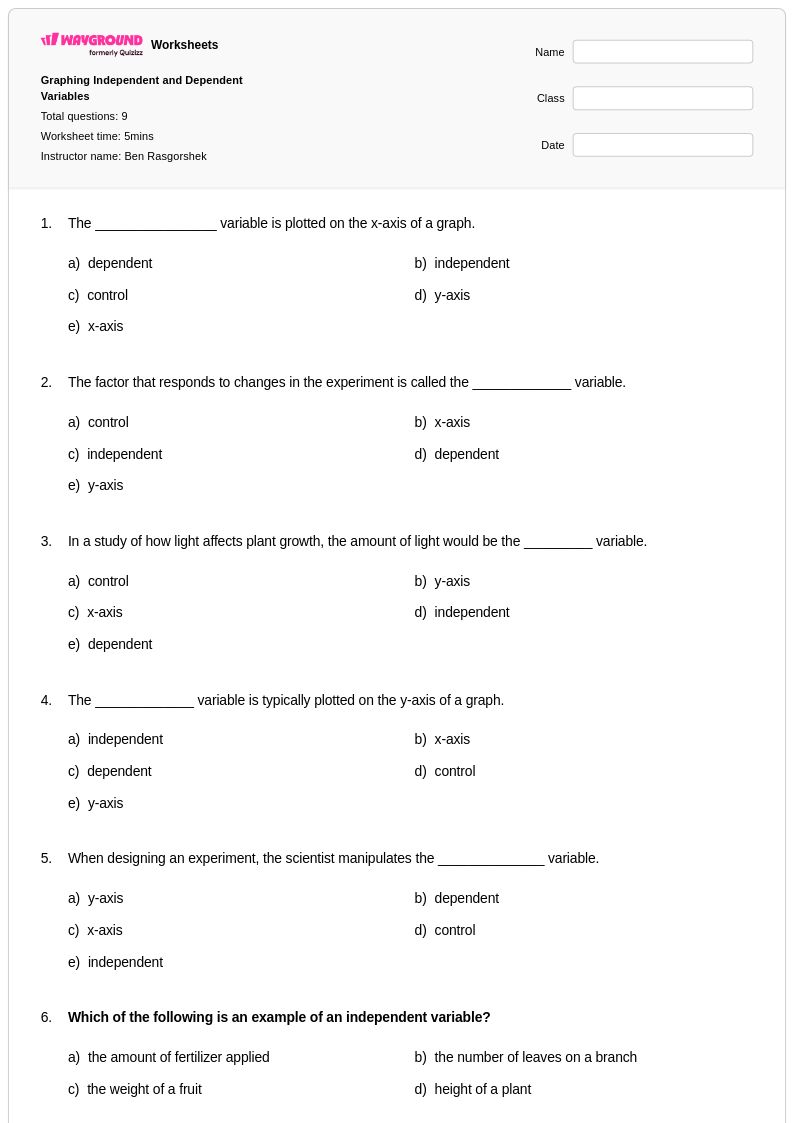
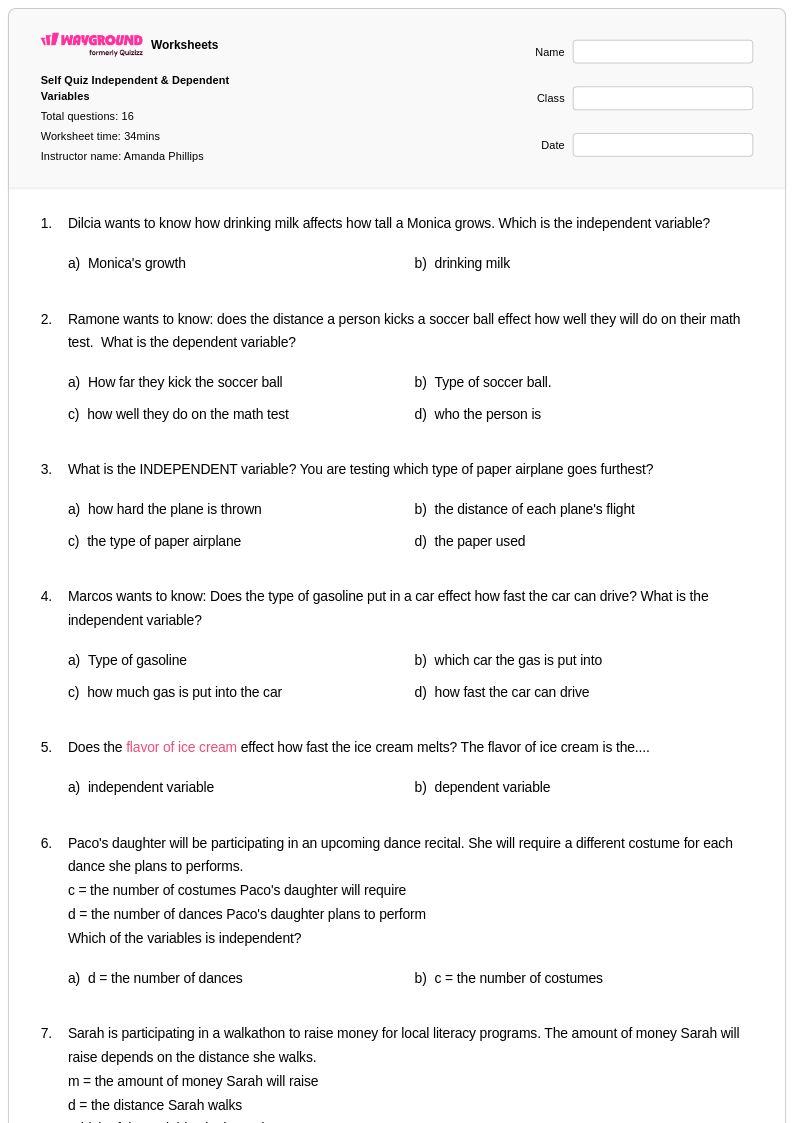
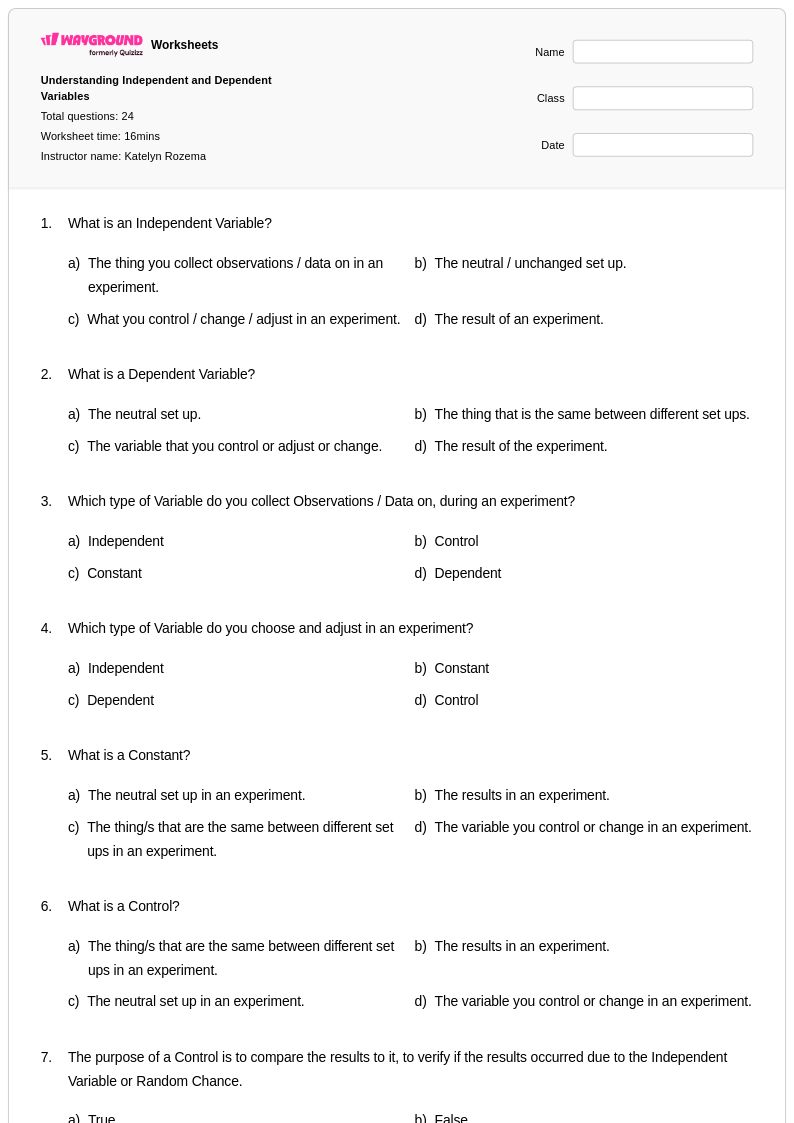
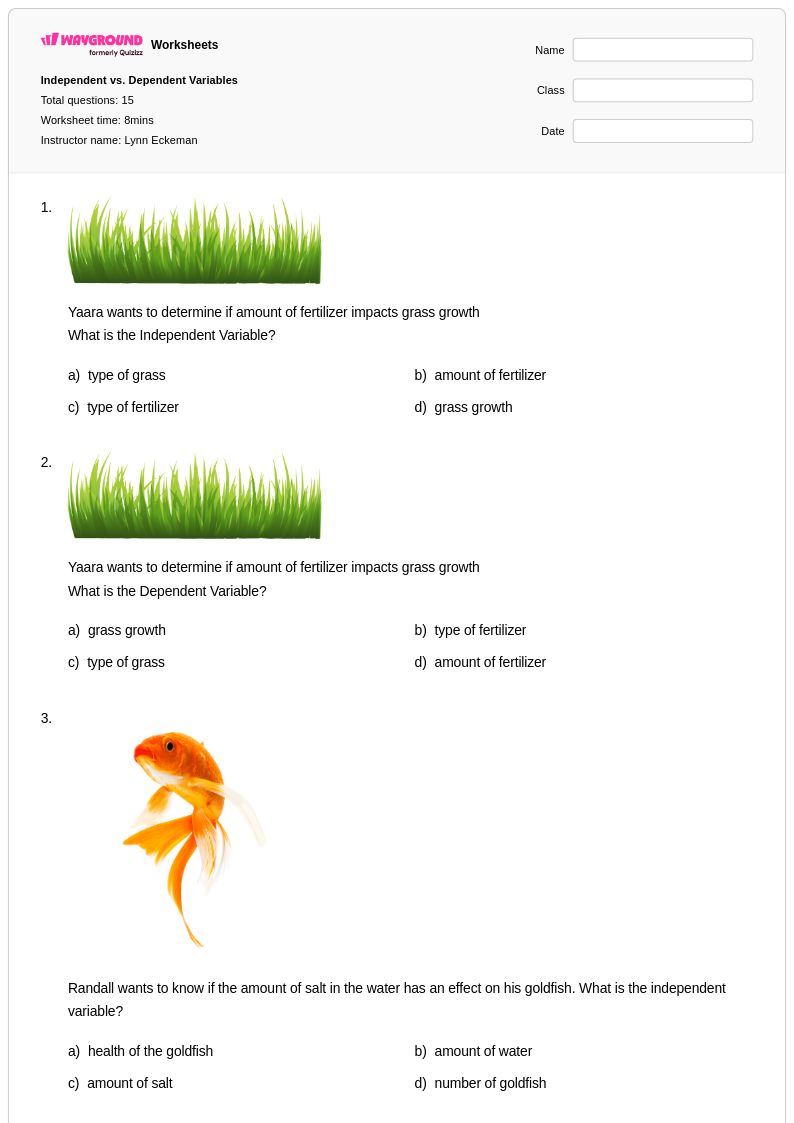
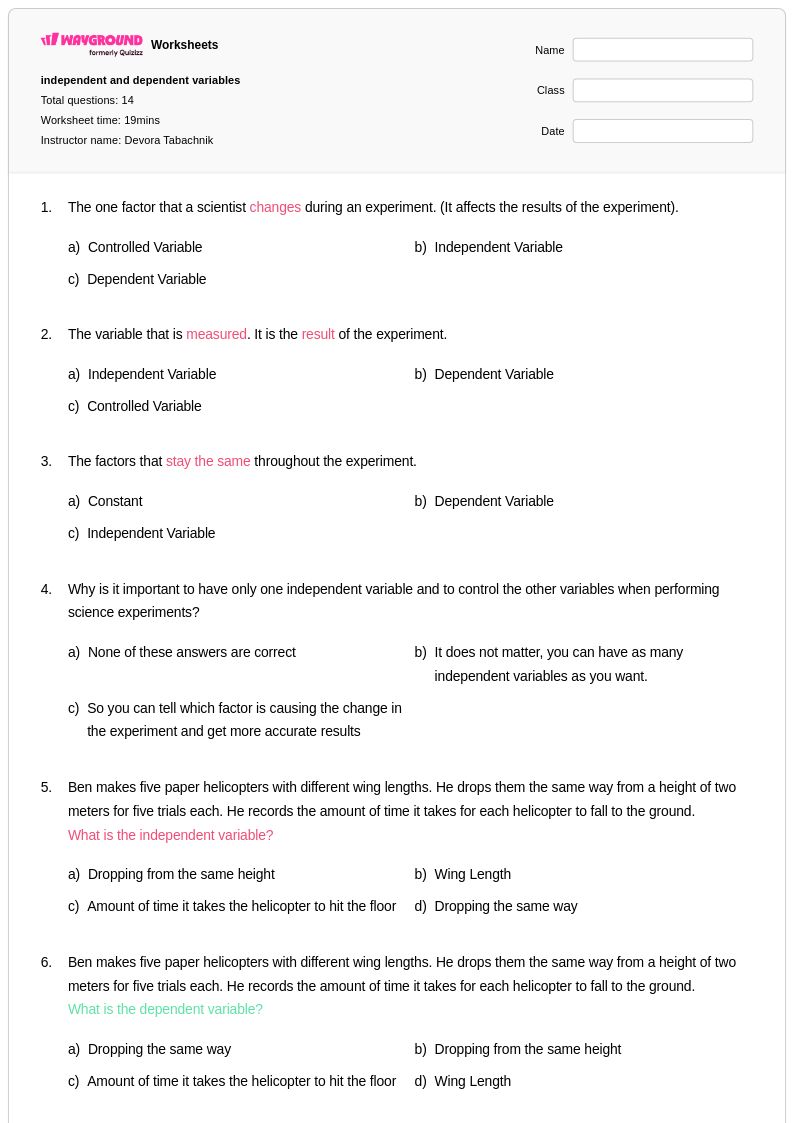
Dependent variable worksheets for Year 9 students available through Wayground (formerly Quizizz) provide comprehensive practice in identifying and analyzing the measurable outcomes in scientific experiments. These educational resources strengthen students' understanding of how dependent variables respond to changes in independent variables, building critical thinking skills essential for experimental design and data interpretation. The worksheet collections include detailed practice problems that guide students through real-world scenarios, helping them distinguish dependent variables from other experimental components while developing proficiency in scientific methodology. Each printable resource comes with a complete answer key, enabling both independent study and classroom instruction, and the free pdf format ensures accessibility for diverse learning environments.
Wayground (formerly Quizizz) empowers educators with an extensive library of millions of teacher-created dependent variable worksheets specifically designed to meet Year 9 science standards and curriculum requirements. The platform's advanced search and filtering capabilities allow teachers to quickly locate materials aligned with specific learning objectives, while built-in differentiation tools enable customization for students with varying skill levels and learning needs. These resources are available in both printable pdf format and interactive digital versions, providing flexibility for in-person instruction, remote learning, and hybrid classroom environments. Teachers can effectively utilize these worksheet collections for lesson planning, targeted remediation of misconceptions about experimental variables, enrichment activities for advanced learners, and systematic skill practice that builds students' confidence in designing and analyzing scientific investigations.
FAQs
How do I teach students to identify the dependent variable in an experiment?
Start by anchoring the concept to a simple question: 'What are you measuring?' The dependent variable is always the outcome that responds to changes in the independent variable. Use relatable examples first, such as plant height in response to sunlight, before introducing formal experimental scenarios. Consistently asking 'What changes because of what I did?' helps students internalize the distinction before moving to more complex multi-variable designs.
What is the difference between a dependent variable and an independent variable?
The independent variable is what a scientist deliberately changes or controls in an experiment, while the dependent variable is what is measured or observed as a result of that change. In a simple experiment testing how fertilizer amount affects plant growth, fertilizer amount is the independent variable and plant height is the dependent variable. A reliable test for students: the dependent variable 'depends on' the independent variable, not the other way around.
What exercises help students practice identifying dependent variables?
Structured practice with varied experimental scenarios is most effective, including both real-world examples and abstract setups so students cannot rely on memorized examples. Exercises that ask students to rewrite a hypothesis and label each variable, identify errors in an experimental design, or match variables to data tables reinforce conceptual understanding beyond simple identification. Dependent variable worksheets that progress from basic labeling to full experimental design interpretation are particularly useful for building this skill systematically.
What mistakes do students commonly make when identifying the dependent variable?
The most common error is confusing the dependent variable with the independent variable, especially when experimental scenarios are described in passive voice or ambiguous language. Students also frequently misidentify a controlled variable as the dependent variable, not recognizing that constants are held fixed rather than measured. Another persistent misconception is assuming the dependent variable is whatever is mentioned first in the experiment description rather than applying the cause-and-effect logic to identify which variable responds to manipulation.
How can I use dependent variable worksheets to support students with different learning needs?
Dependent variable worksheets on Wayground are available in both printable PDF and digital formats, making them easy to adapt for diverse classroom environments. In digital format, teachers can apply student-level accommodations such as read aloud support for students who need questions read to them, reduced answer choices to lower cognitive load, and extended time per question for students who need additional processing time. These settings can be assigned individually so every other student receives default settings without disruption, making differentiation seamless during practice sessions.
How do dependent variable worksheets fit into a unit on experimental design?
Dependent variable identification is a foundational skill that should be introduced early in an experimental design unit, before students attempt to write full hypotheses or design controlled experiments. Worksheets focused on this concept work well as a bridge between the initial lesson and more complex tasks like constructing data tables or writing conclusions. Revisiting dependent variable practice after lab activities reinforces transfer, helping students connect the abstract vocabulary to procedures they have already performed.